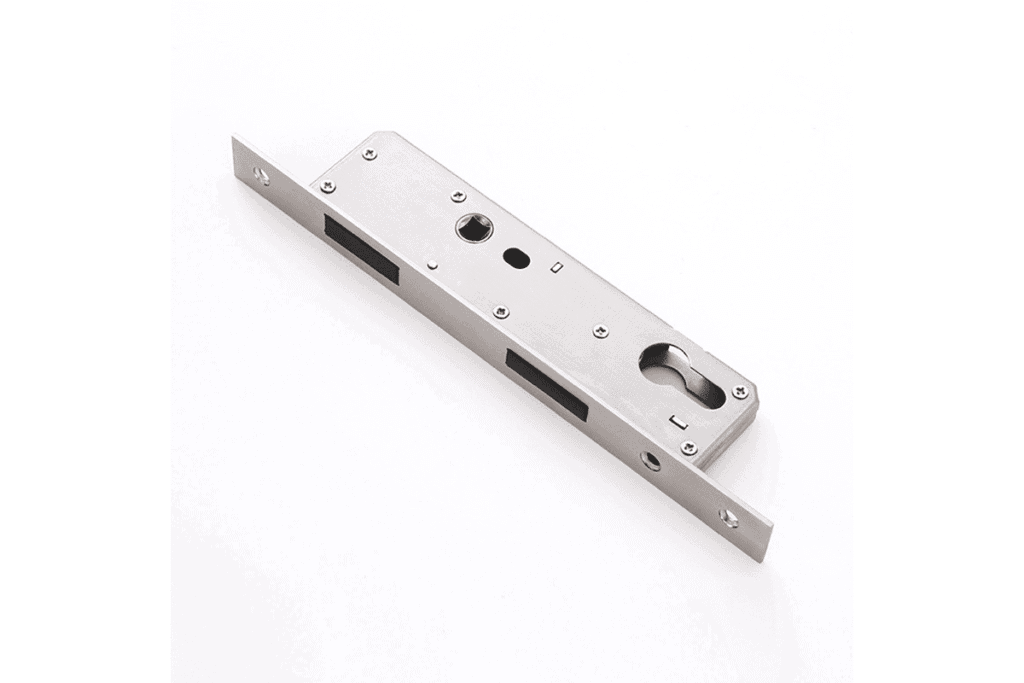
What Is a Narrow Stile Mortise Lock and What Kind of Lock Is Used on Aluminum Storefront Doors?
A narrow stile mortise lock can create real procurement risk when buyers treat it like a standard mortise lock. The door looks simple, but the aluminum stile often has very limited internal space. If the lock body, backset, faceplate, or strike does not match, the order may fail. The solution is to select by door structure, not by name alone.
A narrow stile mortise lock is a slim, elongated lock body designed for doors with limited stile depth1, especially aluminum storefront doors, ultra-narrow frame doors, commercial shop doors, and narrow steel-frame doors. Aluminum storefront doors commonly use this lock system2, but the correct type depends on the door profile, backset, cutout, lock tongue, cylinder, handle, and strike plate.
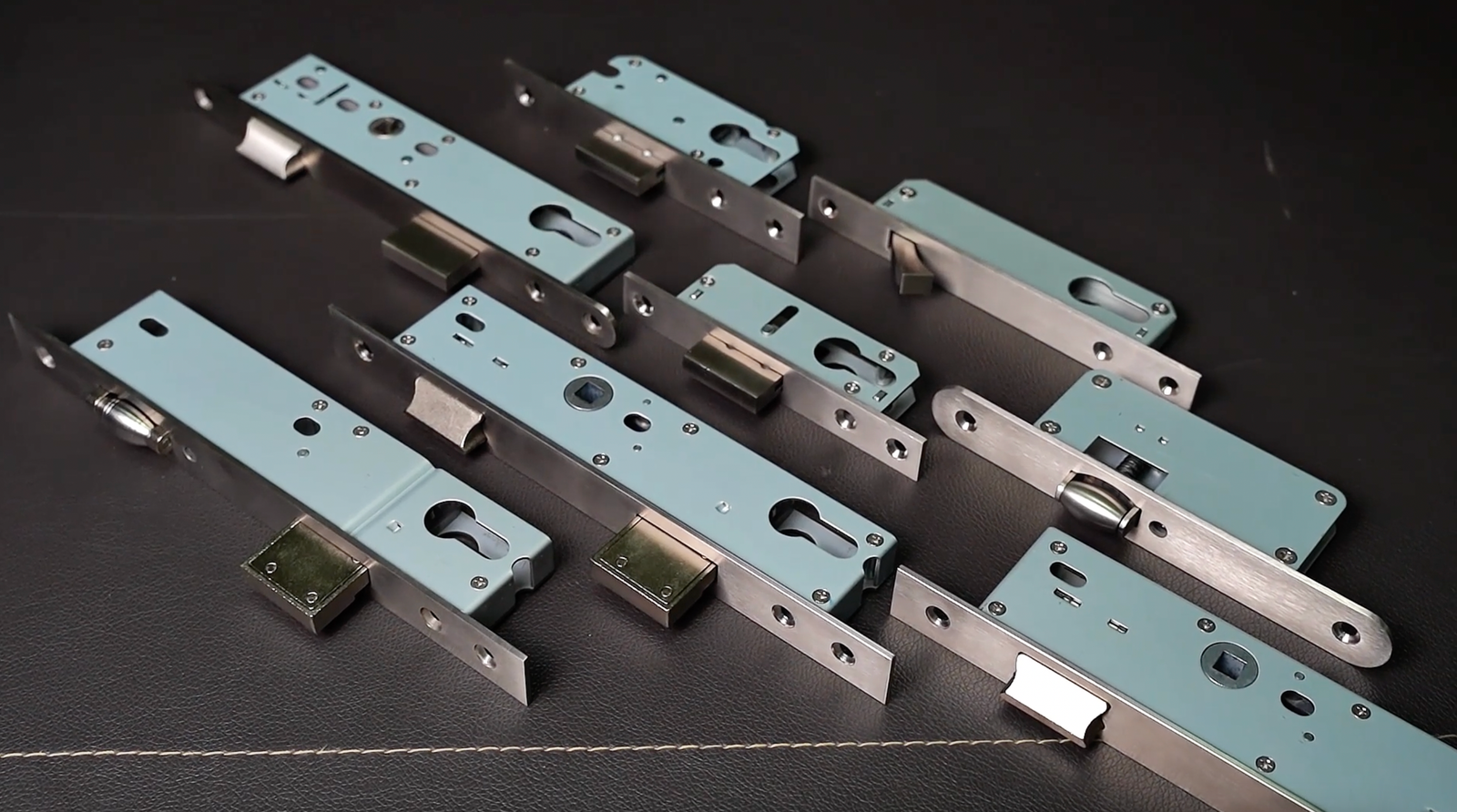
I have seen many buyers ask for a “storefront door lock” and expect one universal model. In real production and sourcing work, that phrase is too broad. A better approach is to confirm the door type first, then match the lock body and accessories step by step.
What Is a Narrow Stile Mortise Lock?
A narrow stile mortise lock causes confusion because it looks like a smaller lock, but it is not just a normal mortise lock with a reduced faceplate. The problem is the door stile itself. When the aluminum channel is slim, an ordinary lock body may be too deep, too wide, or incompatible with the cutout.
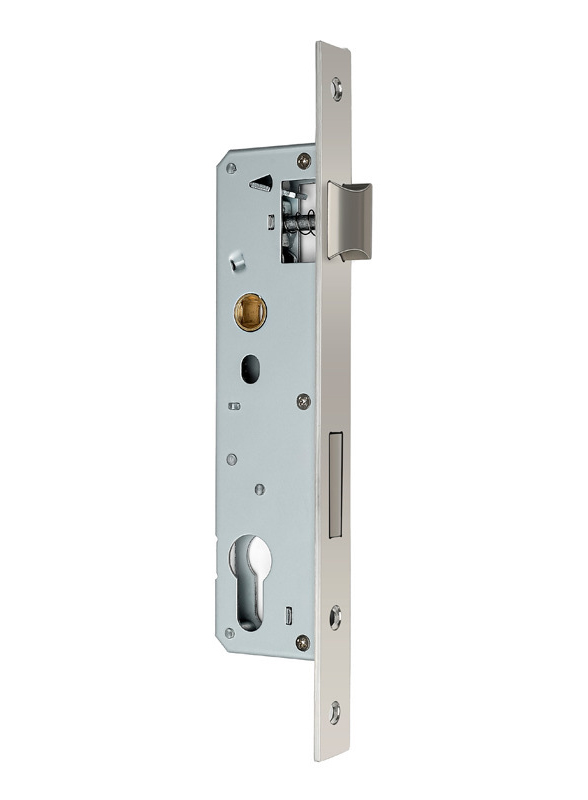
A narrow stile mortise lock is a slim mortise lock made for narrow door stiles where internal mounting space is limited. It usually has a long and narrow lock case, a smaller backset, and a faceplate designed to fit aluminum or steel-frame door profiles. Buyers should confirm dimensions before ordering.
Why the “narrow stile” structure matters
A standard wood-door mortise lock is usually designed for a thicker, wider door edge.3 It can have a larger case depth, wider body, and different handle or cylinder positions. That works well for many timber doors and some metal doors, but it often does not work for aluminum storefront doors.
A narrow stile door has a very different design logic. The aluminum profile may leave only a small internal cavity for the lock body.4 The lock must fit inside that cavity without damaging the profile, weakening the door, or forcing a non-standard cutout.
From a manufacturer’s point of view, I usually separate the evaluation into three basic questions:
- Can the lock body physically fit inside the stile?
- Does the lock’s backset or center distance match the door cutout?
- Can the cylinder, handle, pull, and strike plate work together as a complete set?
If one of these points is wrong, the lock may be technically good but still unusable for that door.
Narrow stile mortise lock vs standard mortise lock
| Item | Narrow Stile Mortise Lock | Standard Mortise Lock |
|---|---|---|
| Main application | Aluminum storefront doors, ultra-narrow frame doors, narrow steel-frame doors | Wood doors, wider metal doors, interior and exterior doors |
| Lock body shape | Slim and elongated | Wider and deeper |
| Backset | Usually smaller | Usually larger |
| Door stile requirement | Limited internal space | More internal space |
| Common hardware pairing | Profile cylinder, thumbturn, paddle, lever, pull, strike | Lever handle, cylinder, escutcheon, full mortise hardware |
| Procurement risk | High if door profile is not confirmed | Lower when door thickness and standard prep are known |
What buyers should not assume
Buyers should not assume that every slim lock is interchangeable. I have received inquiries where the buyer had a door photo but no measurement. That is a risky starting point. The faceplate looked similar, but the backset and case depth were different. In bulk orders, that small mismatch can become hundreds or thousands of unusable locks.
For door factories, importers, and wholesalers, the term narrow stile mortise lock should be treated as a product category, not a final specification. Within the category, there can be different:
- Backsets
- Faceplate sizes
- Case depths
- Hookbolt or deadbolt designs
- Cylinder requirements
- Handle or pull configurations
- Strike plate styles
- Finishes and material grades
The safest procurement method is simple: confirm the door profile first, then select the lock system.
This is especially important for aluminum storefront projects because the lock must match both the physical door structure and the daily use scenario.
Why Is a Narrow Stile Mortise Lock Commonly Used on Aluminum Storefront Doors?
A narrow stile mortise lock is commonly used on aluminum storefront doors because the door profile leaves limited room for hardware. The problem starts when buyers choose a lock based only on appearance. A lock may look correct in a catalog, but the lock body may not fit the aluminum stile.
A narrow stile mortise lock is usually selected for aluminum storefront doors because it fits the slim internal channel of the door profile. Ordinary wood-door mortise locks and many cylindrical locks may not match the stile depth, face preparation, cylinder position, or accessory system used on commercial aluminum doors.5
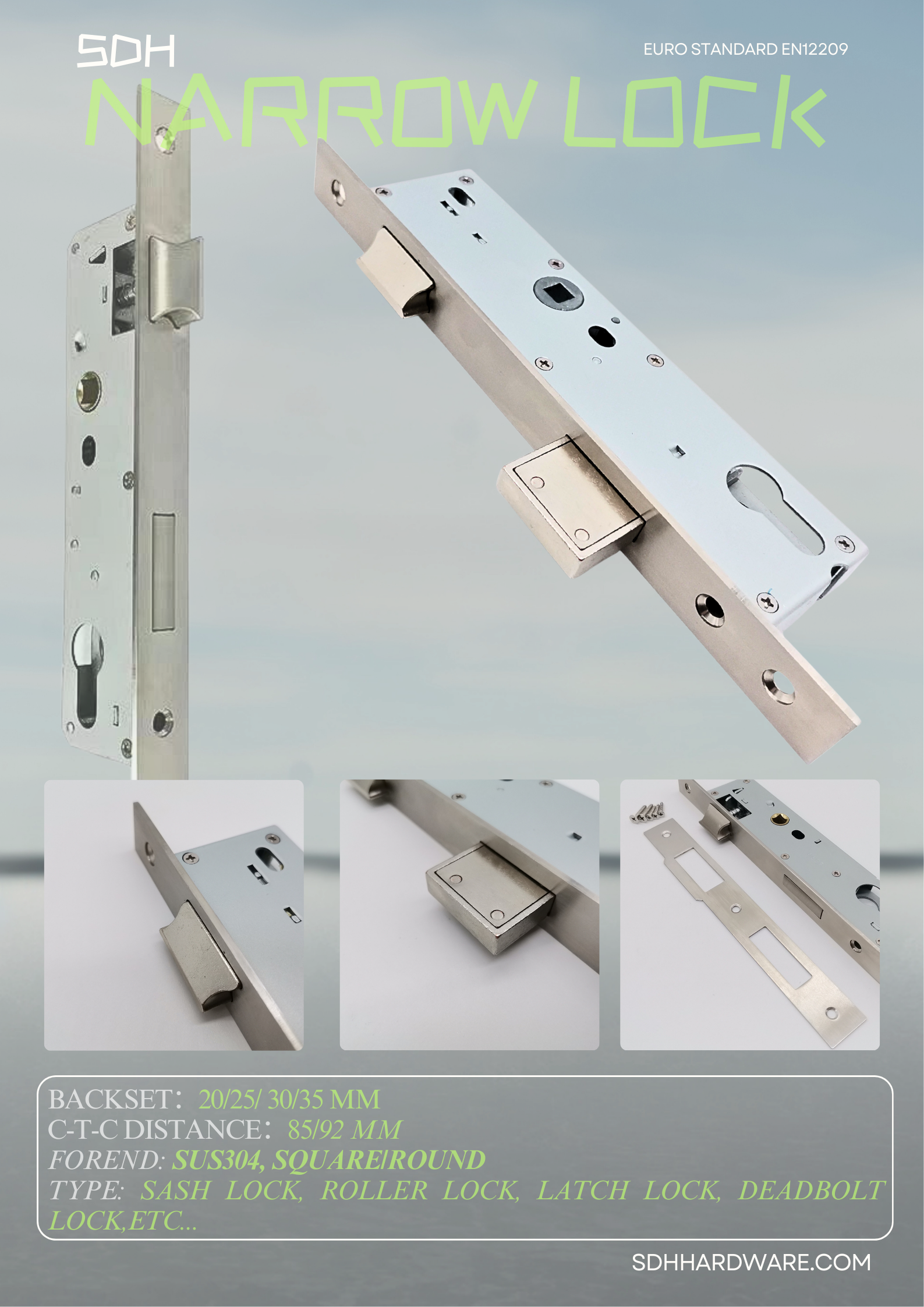
Aluminum storefront doors have limited internal space
Aluminum storefront doors are often designed with a narrow vertical stile to maximize glass area6 and create a clean commercial appearance. This design is common in shops, offices, showrooms, restaurants, and commercial entrances.
However, that visual benefit creates a hardware challenge. The stile may not have enough depth for a normal mortise lock body. The lock must fit inside the aluminum channel without interfering with the glass pocket, reinforcement, screw bosses, or frame connection.
This is why many storefront doors use a narrow stile lock system. The system is built around compact dimensions and matching accessories.
Common reasons standard locks may fail
A standard lock may fail for several reasons:
- The lock case is too deep for the aluminum profile.
- The backset does not align with the existing cutout.
- The faceplate is too wide or too short for the door edge.
- The cylinder position does not match the prepared hole.
- The latch or bolt does not align with the strike.
- The handle or pull cannot be installed without modification.
- The lock tongue type does not suit swing, sliding, or double-door use.
These issues do not always appear during quotation. They usually appear during installation, assembly, or after-sales service. That is why I prefer to ask for measurements before discussing price.
Storefront door lock selection is not one-size-fits-all
The phrase “aluminum storefront door lock” sounds specific, but it is still not enough. Different storefront doors use different opening methods and security functions.
| Door type | Common lock consideration | Typical lock tongue option |
|---|---|---|
| Swing storefront door | Daytime traffic and night locking | Deadlatch or straight deadbolt |
| Sliding aluminum door | Pulling and prying resistance at gap | Hookbolt |
| Double storefront door | Meeting stile engagement | Hookbolt or deadbolt, depending on structure |
| Access-control door | Automatic latching and electric release compatibility | Heavy duty deadlatch |
| Narrow steel-frame door | Slim case and strong engagement | Deadbolt, deadlatch, or hookbolt |
The final choice should depend on the door’s real task. A lock for a daytime retail entrance may need fast latching and access-control compatibility. A lock for after-hours security may need a stronger deadbolt function. A lock for a sliding door may need a hookbolt to engage the frame or keeper.
Why wholesalers and importers should care
For wholesalers, the biggest risk is not only one failed installation. The bigger risk is wrong inventory. If a distributor imports a large quantity of locks with the wrong backset or faceplate, the products may sit in stock for months.
For door manufacturers, the risk is production delay. If the lock does not match the door cutout, workers may need to rework the profile, change the strike, or delay shipment. That affects cost and delivery.
For hardware brands, the risk is customer complaints. A lock may be manufactured correctly, but if it was specified incorrectly, the end user still sees it as a product failure.
This is why I always suggest that buyers confirm the following before placing bulk orders:
- Door opening type
- Stile width
- Aluminum profile drawing or door photo
- Existing cutout size
- Backset or center distance
- Faceplate length and width
- Lock tongue type
- Cylinder type
- Handle, paddle, pull, or thumbturn requirement
- Strike plate design
- Finish requirement
- Compliance documents required by the market or project
Certifications such as CE or fire-rated documents should be checked against the actual product model, test scope, and market requirement. Buyers should not assume that one certificate covers every lock type or every door assembly.
Which Narrow Stile Mortise Lock Is Used for Swing, Sliding, and Double Storefront Doors?
A narrow stile mortise lock must match the door movement, not just the aluminum profile. The problem is that swing doors, sliding doors, and double doors place force on the lock in different ways. If the lock tongue type is wrong, the door may close poorly or provide weak engagement.
The correct narrow stile mortise lock for storefront doors depends on the opening type. Hookbolt locks are often used for sliding or double doors7, straight deadbolts are used for swing doors needing night security, and heavy duty deadlatches are used for daytime commercial traffic or access-control doors.
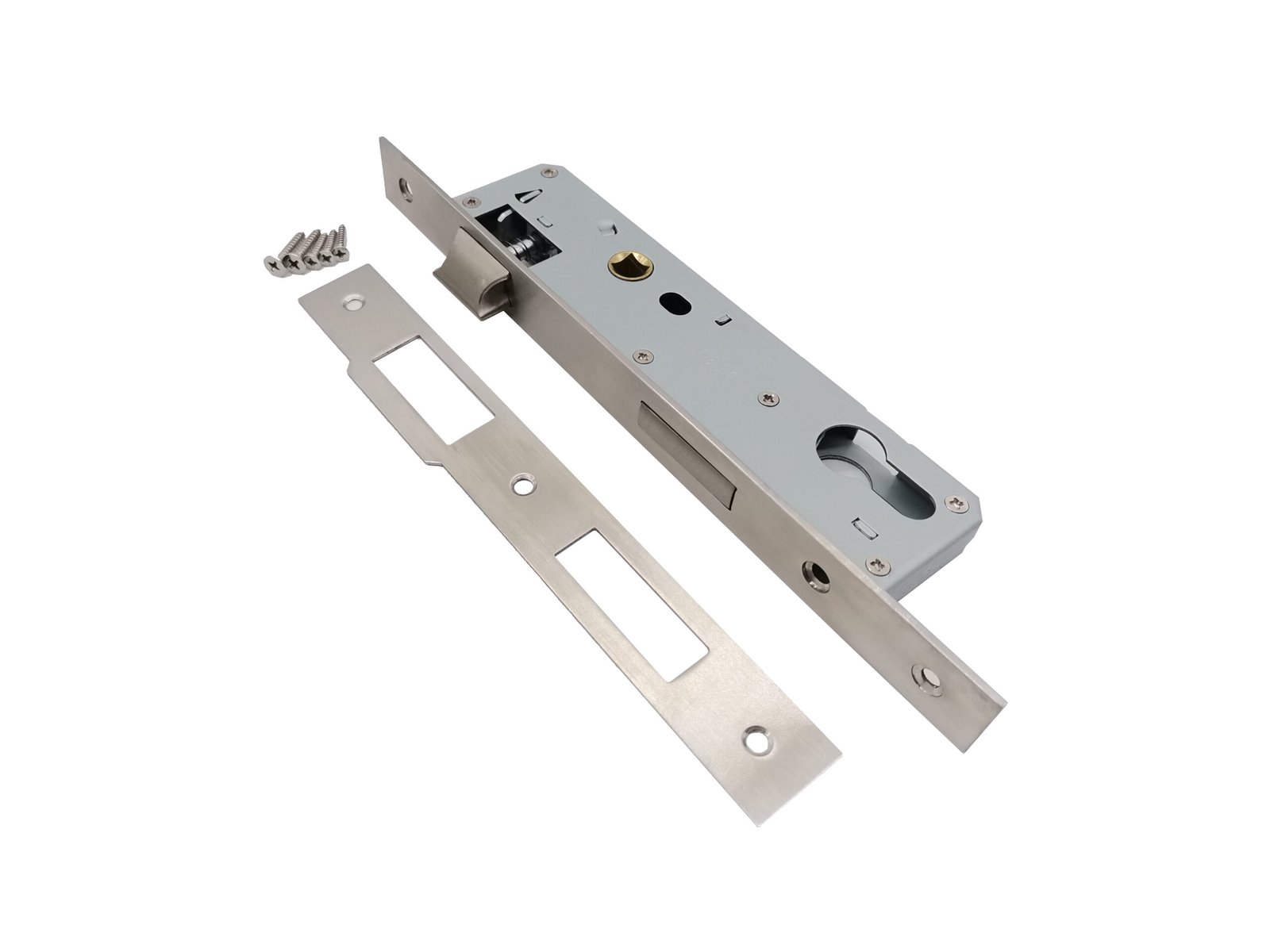
The lock tongue is the key decision
Many buyers focus on the lock body size first. That is necessary, but it is not enough. The lock tongue design also matters. In narrow stile storefront hardware, three common lock tongue styles are:
- Hookbolt deadlock
- Straight deadbolt
- Heavy duty deadlatch
Each type solves a different problem.
Hookbolt deadlock
A hookbolt projects outward and hooks into the strike or keeper. This design can be useful where the door needs resistance against pulling movement at the meeting gap.
Hookbolt deadlocks are commonly considered for:
- Sliding aluminum doors
- Double storefront doors
- Doors with meeting stiles
- Applications where the bolt must engage around a keeper
A hookbolt is not selected only because it looks stronger. It is selected because the door structure benefits from hooked engagement. For example, on a sliding door, a straight bolt may not control the same pulling direction as effectively as a hookbolt. The hook shape can help resist separation between the door and frame when properly matched with the strike.8
Straight deadbolt
A straight deadbolt extends directly into the strike. It is commonly used when a swing storefront door needs mechanical locking after business hours.
Straight deadbolts are often considered for:
- Swing aluminum storefront doors
- Shop doors with night locking requirements
- Doors using cylinder operation
- Simple locking systems without daytime latch function
A deadbolt can provide a clear locking function, but it is not always the best choice for high-traffic daytime use. If users must manually lock and unlock frequently, the operation may be inconvenient.
Heavy duty deadlatch
A heavy duty deadlatch provides automatic latching when the door closes.9 It is commonly used for commercial entrances where people enter and exit during the day.
Heavy duty deadlatches are often considered for:
- Daytime commercial traffic
- Storefront swing doors
- Access-control doors
- Doors using electric strikes or similar systems, depending on project design
- Entrances requiring convenience and controlled latching
A deadlatch can support smoother daily use because the door can latch automatically. However, access-control compatibility should be confirmed by a qualified project professional. The lock, strike, closer, frame, power system, and credential device must work as a system.10
Comparison table for storefront door lock selection
| Lock type | Best-fit door scenario | Main benefit | Key confirmation point |
|---|---|---|---|
| Hookbolt deadlock | Sliding doors, double doors, meeting stiles | Hooked engagement into strike or keeper | Keeper position and door gap |
| Straight deadbolt | Swing doors, night security | Direct mechanical locking | Bolt throw and strike alignment |
| Heavy duty deadlatch | Daytime traffic, access-control doors | Automatic latching and convenience | Latch function and accessory compatibility |
My practical selection logic
When I communicate with buyers, I usually ask about the door’s daily use before discussing the lock model. This saves time. A lock that fits the stile may still be wrong for the project.
I use this basic logic:
- If the door slides, I check whether a hookbolt is required.
- If the door swings and needs after-hours locking, I check whether a straight deadbolt is suitable.
- If the door has heavy daytime traffic, I check whether a deadlatch system is more practical.
- If the door is part of access control, I ask the buyer to confirm the electric strike, cylinder, handle, and project requirements.
- If the door is double-leaf, I check the active leaf, inactive leaf, meeting stile, and strike position.
This method keeps the selection tied to function. It also reduces the risk of ordering a lock that looks correct but performs poorly in the actual door.
A narrow lock body solves the space problem. The correct bolt or latch solves the door function problem.
For bulk procurement, both must be right.
What Specifications Should Buyers Confirm Before Ordering a Narrow Stile Mortise Lock?
A narrow stile mortise lock order can fail when the buyer provides only a product name or sample photo. The problem is that storefront door profiles vary by region, factory, and project. A small difference in backset, faceplate, or cylinder position can cause major installation trouble.
Before ordering a narrow stile mortise lock, buyers should confirm stile width, lock body depth, backset or center distance, faceplate size, cutout, door opening type, lock tongue, cylinder, handle or pull, strike plate, finish, and required compliance documents. These details should be verified before bulk production.
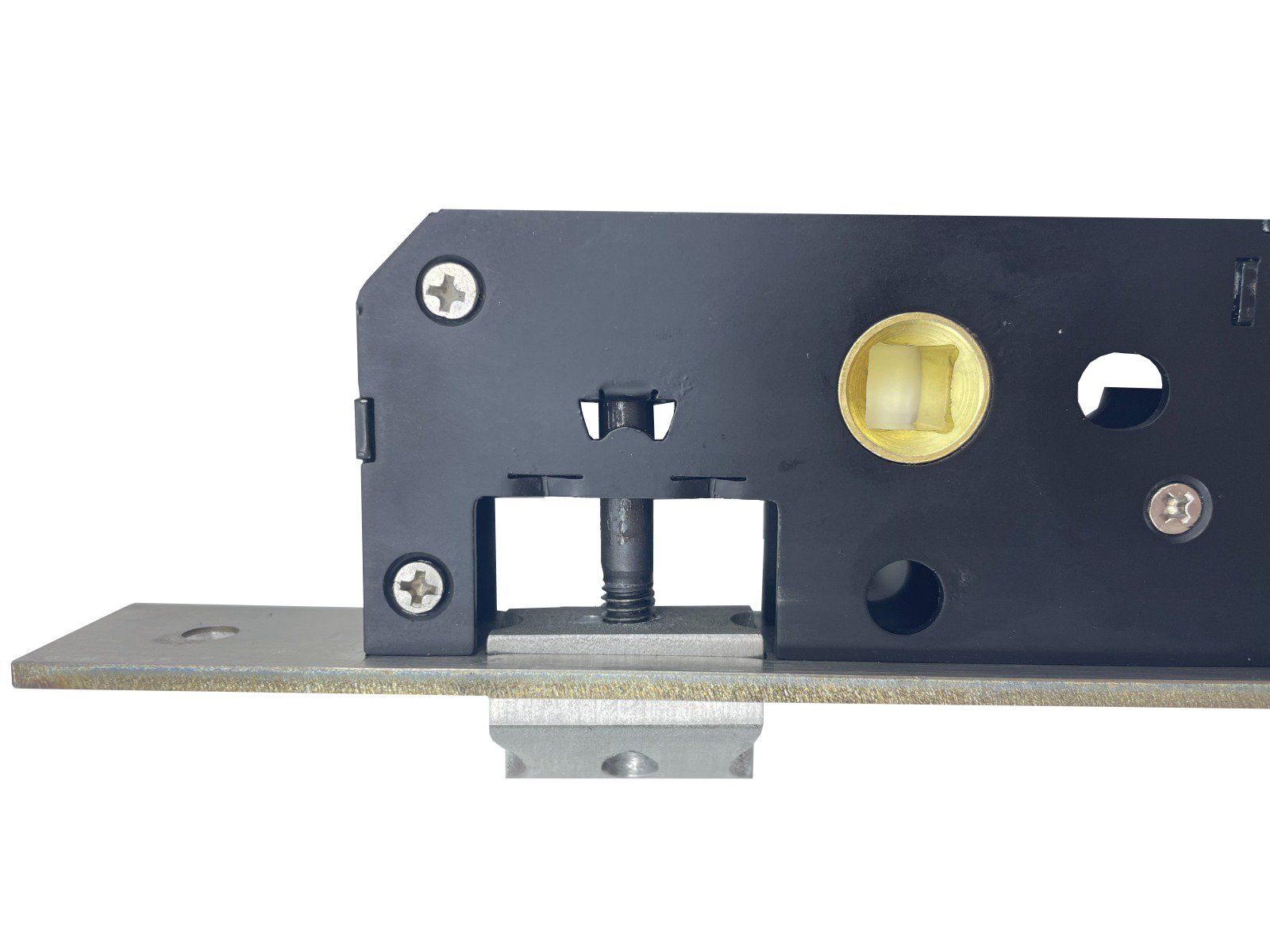
The most important dimensions
Dimensions are the first checkpoint. Without them, the supplier can only guess.
Buyers should confirm:
- Stile width: The visible width of the vertical door stile.
- Internal profile space: The cavity where the lock body will sit.
- Lock body depth: The case depth that must fit inside the stile.
- Backset: The distance from the faceplate edge to the cylinder or operating center.
- Center distance: The distance between cylinder center and handle or other operation points, when relevant.
- Faceplate size: Length, width, thickness, and screw hole positions.
- Cutout size: Existing preparation in the door edge and face.
- Door thickness: Required for cylinder length and accessory selection.
These details are especially important when the buyer is replacing an existing lock. A similar-looking lock may not match the old cutout.
Hardware matching points
A narrow stile lock does not work alone. It works as part of a hardware set.
The buyer should confirm:
Cylinder type
- Euro profile cylinder
- Oval cylinder
- Mortise cylinder
- Thumbturn cylinder
The correct choice depends on the lock design and market standard.
Handle or pull
- Lever handle
- Paddle handle
- Pull handle
- Thumbturn operation
The handle must match the lock function and door preparation.
Strike plate
- Flat strike
- Box strike
- Hookbolt keeper
- Electric strike, when used in access-control systems
The strike must align with the lock tongue and frame.
Opening direction
- Left hand
- Right hand
- Inward opening
- Outward opening
Some locks are reversible, but buyers should not assume this without confirmation.
Surface finish
- Satin stainless steel
- Polished stainless steel
- Black
- Aluminum finish
- PVD or other custom finishes
For bulk orders, finish consistency should be confirmed through approved samples.
Procurement checklist
| Specification | Why it matters | Buyer action |
|---|---|---|
| Door type | Determines latch or bolt function | Send door photo or drawing |
| Stile width | Confirms whether narrow lock fits | Measure visible stile |
| Internal profile depth | Prevents case interference | Provide profile drawing |
| Backset | Aligns cylinder and cutout | Measure from faceplate edge |
| Faceplate | Matches door edge preparation | Confirm length, width, screw holes |
| Lock tongue | Matches swing, sliding, or double door | Choose hookbolt, deadbolt, or deadlatch |
| Cylinder | Affects operation and market standard | Confirm profile and length |
| Handle or pull | Affects user operation | Confirm hole positions |
| Strike plate | Ensures proper engagement | Match frame and tongue |
| Finish | Affects appearance and brand consistency | Approve sample before bulk order |
| Certificates | Supports market or project compliance | Verify model and test scope |
Why drawings and photos reduce risk
I often ask buyers for a door profile drawing or clear photo. This is not just a sales habit. It helps avoid mistakes.
A good inquiry should include:
- Front view of the door
- Door edge photo
- Lock cutout photo
- Aluminum profile cross-section, if available
- Existing lock sample photo
- Measurements with a ruler or caliper
- Required quantity and market destination
For replacement projects, the existing lock sample is very useful. For new door production, the aluminum profile drawing is more important.
Compliance and quality control
For commercial hardware procurement, buyers may need CE documents, fire-rated documents, or other compliance materials. These documents should be verified carefully. A certificate should match the product model, testing standard, and intended market use.11
At the manufacturing level, quality control should cover:
- Raw material inspection
- Lock case dimensional checking
- Bolt or latch movement testing
- Faceplate finish inspection
- Cylinder compatibility checking
- Screw and accessory packing inspection
- Sample approval before mass production
- Final random inspection before shipment
This kind of process does not replace project-specific engineering judgment. For high-security, fire-rated, or access-control applications, qualified professionals should evaluate the complete door assembly.
How Can Importers and Door Factories Reduce Narrow Stile Mortise Lock Procurement Risk?
A narrow stile mortise lock can be a profitable product for importers and door factories, but it can also create avoidable after-sales disputes. The problem is that small specification errors multiply in bulk orders. One wrong dimension can affect every door in a shipment.
Importers and door factories can reduce narrow stile mortise lock procurement risk by standardizing specifications, approving samples before mass production, verifying certificates, checking accessory compatibility, and confirming packaging, finish, and inspection requirements. Bulk buyers should treat the lock as a system, not as a single metal component.
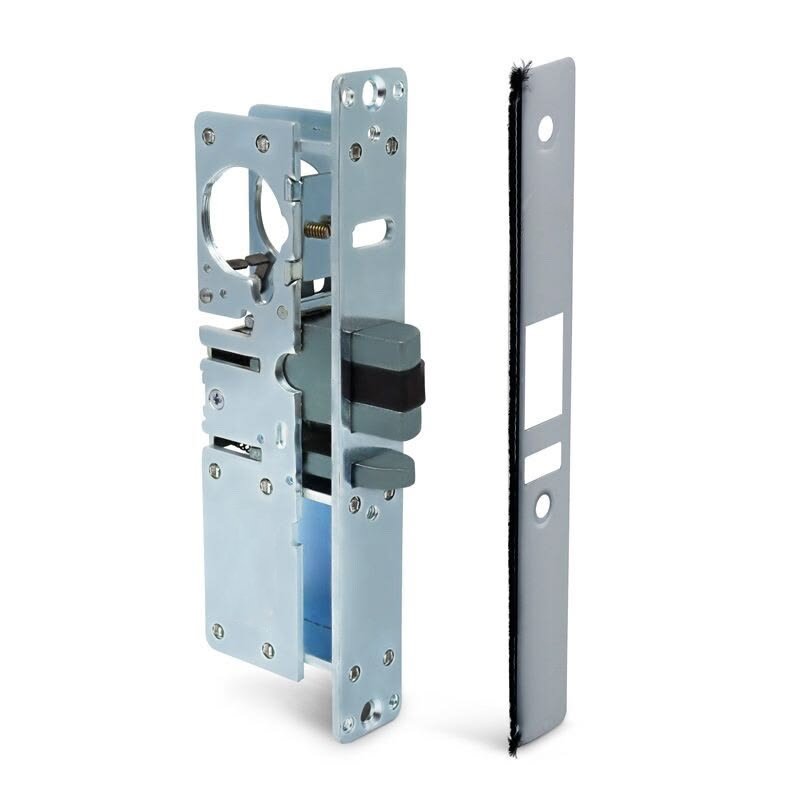
Build a standard specification sheet
A standard specification sheet is one of the best tools for repeat orders. It prevents the buyer, supplier, and factory team from using different meanings for the same product name.
A useful specification sheet should include:
- Product name
- Model number
- Lock body drawing
- Case depth
- Backset
- Faceplate size
- Bolt or latch type
- Cylinder type
- Handle or pull matching
- Strike plate drawing
- Material and finish
- Door application
- Packaging method
- Label requirement
- Certificate requirement
- Inspection standard
This may sound basic, but it prevents many problems. I have seen cases where a buyer approved a lock body but forgot to confirm the strike. The lock arrived correctly, but the strike plate did not match the frame. The installation team blamed the lock, but the real issue was incomplete specification.
Approve samples before mass production
Sample approval is important for both standardized and customized locks. Buyers should test the sample with the real door profile whenever possible.
During sample approval, check:
Physical fit
- The lock body should enter the stile smoothly.
- The faceplate should sit correctly.
- The screws should align.
Operation
- The bolt or latch should move smoothly.
- The cylinder should operate without binding.
- The handle or thumbturn should return properly, if applicable.
Strike engagement
- The lock tongue should enter the strike correctly.
- The door should close without forcing.
- The gap should be acceptable for the door design.
Finish
- The surface should match approved sample standards.
- Bulk finish should be consistent across parts.
Packing
- Accessories should be complete.
- Screws, strike, cylinder, and instructions should be packed as agreed.
Compare supplier capability, not only price
Price is important in hardware sourcing. However, the lowest unit price is not always the lowest total cost. A wrong lock order creates rework, shipping delay, customer complaints, and inventory pressure.
When evaluating a supplier, buyers should compare:
| Evaluation point | Why it matters |
|---|---|
| Production experience | Reduces technical communication gaps |
| Product range | Supports one-stop matching of locks, handles, hinges, cylinders |
| Customization ability | Helps fit regional door profiles and project needs |
| Quality control process | Improves consistency in bulk orders |
| Certificate documents | Supports market access when verified |
| Finish consistency | Protects brand image and project appearance |
| Delivery stability | Supports door factory production planning |
| Communication accuracy | Reduces specification mistakes |
As a China-based architectural door hardware manufacturer, I see many buyers focus on unit price first. I understand why. Margins are tight in wholesale and project supply. Still, I usually suggest that buyers calculate the cost of one failed shipment before finalizing the cheapest option.
Treat customization carefully
Customized narrow stile locks can be useful when buyers need a special faceplate, finish, accessory set, or regional configuration. However, customization should be controlled with drawings and approved samples.
Conclusion
A narrow stile mortise lock is the common lock system for many aluminum storefront doors, but it is not a one-model answer. The correct choice depends on the door profile, opening type, backset, faceplate, cutout, lock tongue, cylinder, handle, and strike plate. For bulk procurement, buyers should confirm specifications before price negotiation and sample approval before mass production. If you are selecting locks for aluminum storefront doors, send us your door type, stile width, profile photo or drawing, cutout, backset, faceplate size, lock tongue requirement, cylinder type, handle or pull configuration, strike requirement, and opening direction.
"Narrow Stile Mortise Lock, for Glass, Aluminum Doors and Commercial ...", https://www.camax.cn/what-is-a-narrow-stile-mortise-lock-on-aluminum-storefront-doors_2218.html. An architectural hardware glossary or standards body defines narrow-stile mortise hardware by its reduced case dimensions and use in doors with limited stile space. Evidence role: definition; source type: institution. Supports: A neutral architectural hardware source should define narrow stile mortise locks as lock bodies intended for limited-width stile applications.. Scope note: Such a source may define the category generally rather than verify every dimensional variant used by manufacturers. ↩
"087100 – DOOR HARDWARE - Facilities and Campus Services", https://fcs.cornell.edu/087100-door-hardware. Architectural hardware references describe narrow-stile locksets as a standard hardware category for aluminum storefront entrance doors. Evidence role: general_support; source type: education. Supports: A building technology or architectural hardware reference should show that narrow-stile locksets are typical hardware for aluminum-framed storefront entrance doors.. Scope note: The source would support common industry use, not prove that all aluminum storefront doors use this lock system. ↩
"SECTION 087111 - DOOR HARDWARE (SCHEDULED BY ...", https://fpm.usc.edu/wp-content/uploads/2021/11/087102-USC-HSC-door-hardware-Guide-Specification_1.pdf. Door-hardware standards and preparation guides specify mortise-lock dimensions for standard doors, providing context for why those lock bodies may not fit narrow aluminum stiles. Evidence role: general_support; source type: institution. Supports: A standards or hardware-training source should document typical mortise-lock preparations for standard doors and show that they differ from narrow-stile applications.. Scope note: The evidence is contextual because standard mortise-lock dimensions vary by lock grade, function, and regional preparation practice. ↩
"190/350/500 Standard Entrances | Storefront Doors - Kawneer", https://www.kawneer.com/products/doors-and-entrances/190-350-500-standard-entrances/. Storefront-system design references describe aluminum door stiles as framed profiles whose internal geometry constrains the depth and placement of installed hardware. Evidence role: mechanism; source type: institution. Supports: An architectural storefront-system reference should explain that aluminum entrance-door stiles are formed profiles with limited internal space for hardware installation.. Scope note: The exact cavity size depends on the specific extrusion and manufacturer profile. ↩
"Mortise vs Cylindrical Locks: Cost, Durability & Best Use Cases", https://oaksecurity.com/mortise-locks-vs-cylindrical-locks/. Door-hardware standards distinguish cylindrical, mortise, and narrow-stile preparations, supporting the conclusion that standard lock types are not automatically interchangeable with aluminum storefront doors. Evidence role: general_support; source type: institution. Supports: A hardware standard or training reference should document that cylindrical locks, standard mortise locks, and narrow-stile locks use different door preparations and hardware interfaces.. Scope note: The evidence would establish incompatibility risk by preparation type, while actual compatibility must still be checked against a specific door and lock model. ↩
"Division 08 - Aluminum Entrances & Storefronts", https://fdo.wwu.edu/division-08-aluminum-entrances-storefronts. Building-envelope references describe aluminum storefront assemblies as glazed framing systems in which narrow framing members are used to increase transparent glass area. Evidence role: general_support; source type: institution. Supports: A building-design source should describe storefront systems as glazed aluminum assemblies and explain the role of narrow framing members in increasing transparency.. Scope note: The source would support the design principle generally, not the exact prevalence of narrow stiles in every storefront market. ↩
"Pemko #3443 Meeting Stile, Aluminum, Locking Slide Bolt ...", https://www.tmhardware.com/Meeting-Stile-Locking-Double-Seal-Aluminum-Outswing-1.75-Thick-Door.html?srsltid=AfmBOoqMA3-mOUItfKznF8IdKiQzTEmsznS8ploXKJ5SQbZkb0z5D7N8. Architectural hardware references identify hookbolt deadlocks as suitable for door conditions requiring hooked engagement, such as sliding or meeting-stile applications. Evidence role: general_support; source type: institution. Supports: A neutral architectural hardware reference should identify hookbolt locks as hardware used where hooked engagement is needed, including sliding doors or meeting-stile conditions.. Scope note: The source would support typical use cases, not determine suitability for a specific door without checking the strike and frame design. ↩
"Class Definition for Class 70 - LOCKS - USPTO", https://www.uspto.gov/web/patents/classification/uspc070/defs070.htm. Technical descriptions of hookbolt mechanisms explain that the hooked bolt engages a keeper or strike in a way that can resist separation forces between the door and frame. Evidence role: mechanism; source type: government. Supports: A patent or technical record should describe how a hook-shaped bolt engages a keeper or strike to resist pulling or separation forces.. Scope note: A patent or mechanism description explains the operating principle but does not prove the performance of a particular commercial lock model. ↩
"Deadlock vs Deadbolt vs Dead Latch: What Are the Differences?", https://www.barrybros.com/2021/10/deadlocks-deadbolts-and-dead-latches-the-differences-explained/. Door-hardware glossaries define a deadlatch as a latch that automatically engages when the door closes and includes a mechanism intended to prevent simple retraction. Evidence role: definition; source type: institution. Supports: A hardware glossary or standard should define a deadlatch as a latch mechanism that secures automatically when the door closes.. Scope note: The definition supports the general function; heavy-duty ratings and performance depend on the applicable standard and product model. ↩
"Electronic Physical Access Control Systems", https://csrc.nist.gov/projects/risk-management/sp800-53-controls/overlay-repository/government-wide-overlay-submissions/physical-access-control-systems. Access-control and life-safety guidance treats controlled openings as integrated systems in which locks, strikes, door closers, frames, power supplies, and credentials must function together. Evidence role: expert_consensus; source type: government. Supports: A government or code-related access-control source should explain that controlled doors require coordinated hardware, power, locking, and egress components.. Scope note: The source would support the need for system coordination, while final compliance depends on local code adoption and project-specific design. ↩
"CE marking", https://en.wikipedia.org/wiki/CE_marking. Official conformity-assessment guidance states that compliance documentation is tied to the identified product, applicable standard or test basis, and declared intended use. Evidence role: general_support; source type: government. Supports: An official conformity-assessment source should state that declarations or certificates relate to identified products, standards, and intended uses.. Scope note: The source would support the compliance principle generally; requirements differ by jurisdiction and product category. ↩