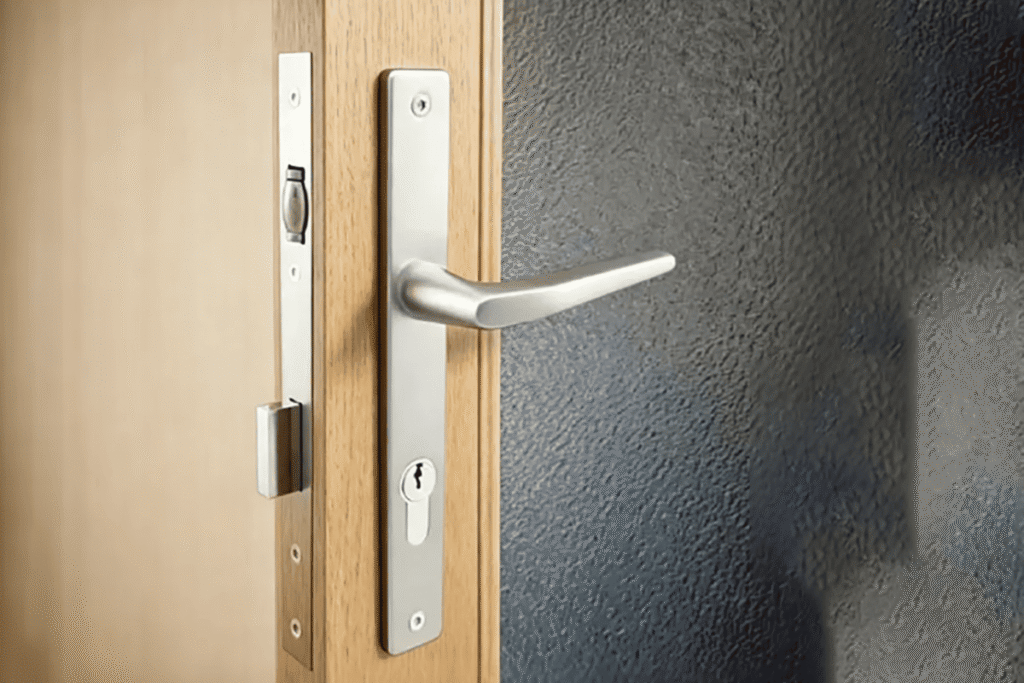
Why Choose a Roller Latch Mortise Lock in Modern Buildings?
A roller latch mortise lock can solve a common door problem in modern buildings: doors that look refined but feel noisy, stiff, or awkward in daily use. When this small detail is ignored, even a well-made door system can feel cheap. The right lock body helps create smoother closing, cleaner operation, and better user comfort.
A roller latch mortise lock is a mortise lock body installed inside the door leaf1 that uses a roller latch instead of a standard beveled latch. Buyers choose it for interior doors, push/pull-style doors, minimalist doors, and compatible glass door systems where smooth closing, lower friction2, quiet operation, and clean appearance matter more than high-security locking.
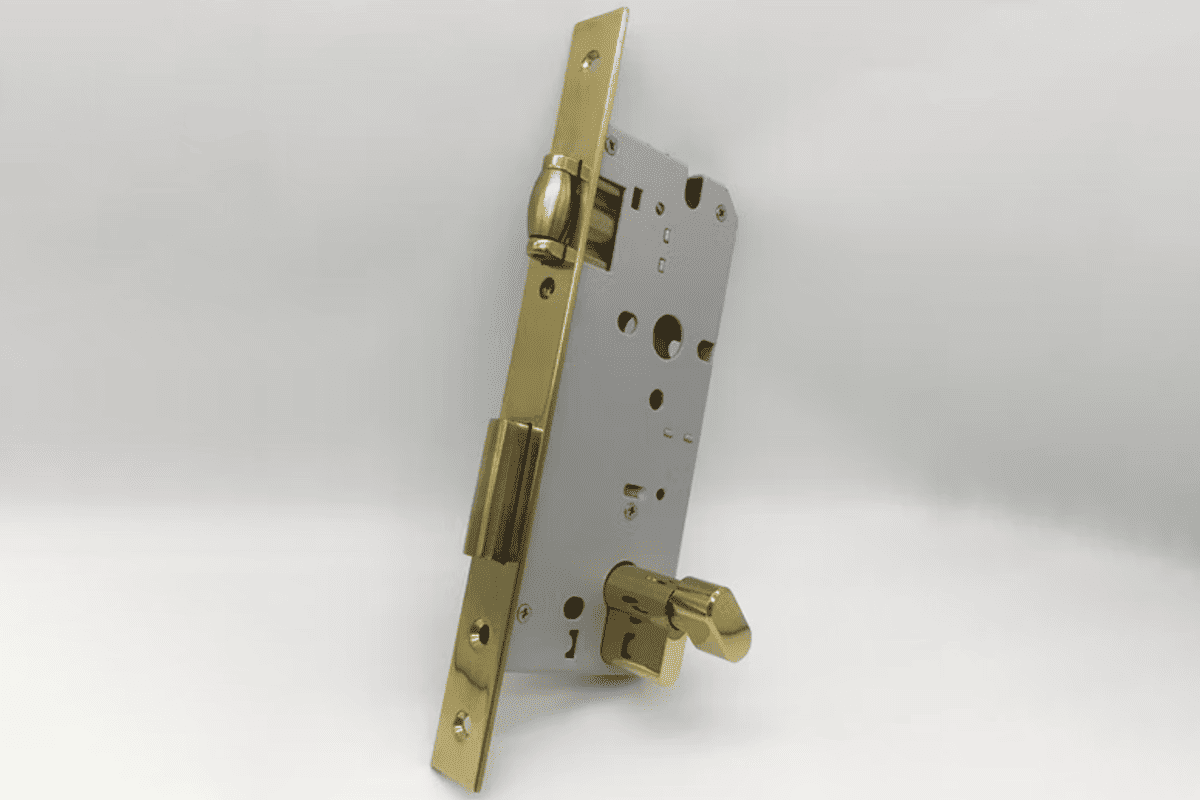
In my experience with door factories, hardware brands, and wholesalers, this product is often underestimated. Many buyers see it as only a latch variation. In real procurement work, however, the decision should connect the lock structure with the door scene, handle setup, strike plate, and user expectation.
What Is a Roller Latch Mortise Lock?
Many buyers first compare locks by size, finish, and price. That approach can miss the reason the mechanism exists. If the door needs light operation and refined closing, the latch type becomes important. A roller latch mortise lock changes the contact point between the lock and strike plate.
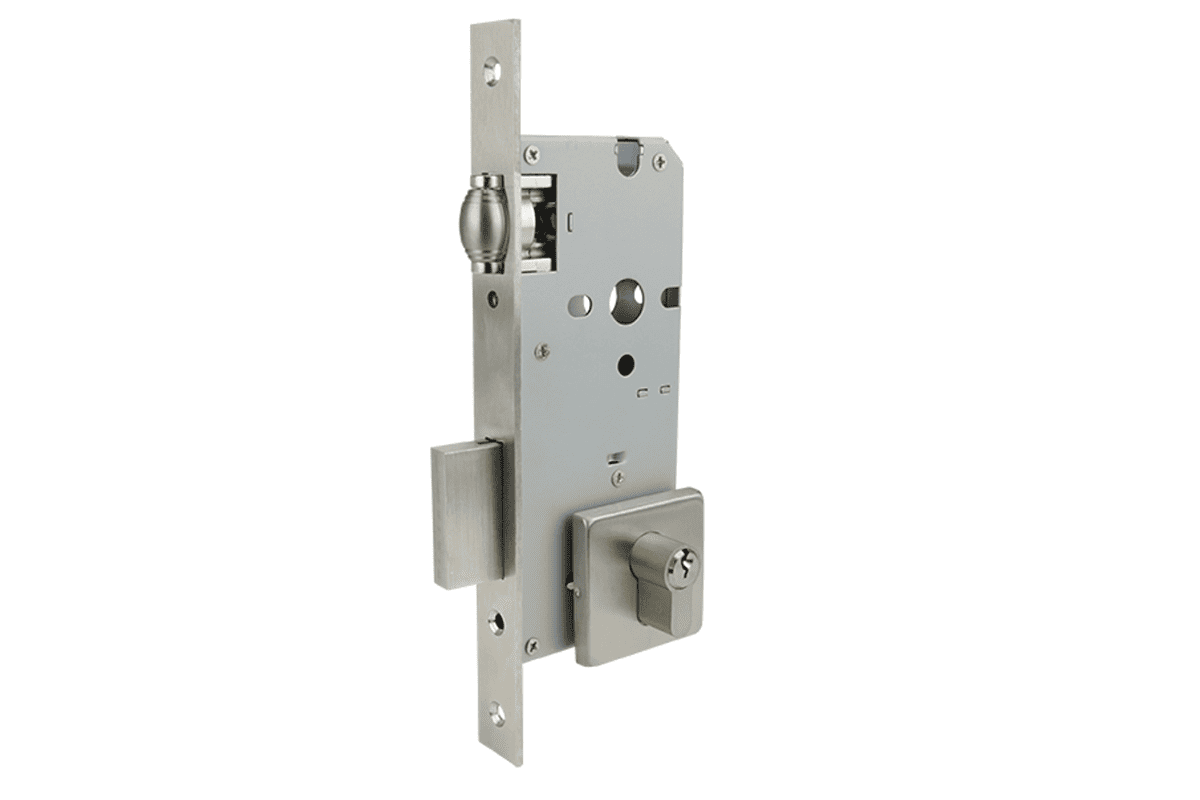
A roller latch mortise lock is a lock body installed inside a mortised pocket in the door leaf. Instead of using a beveled spring latch, it uses a rounded roller latch to engage with the strike plate. This roller helps the door close with less scraping resistance and a softer operating feel.
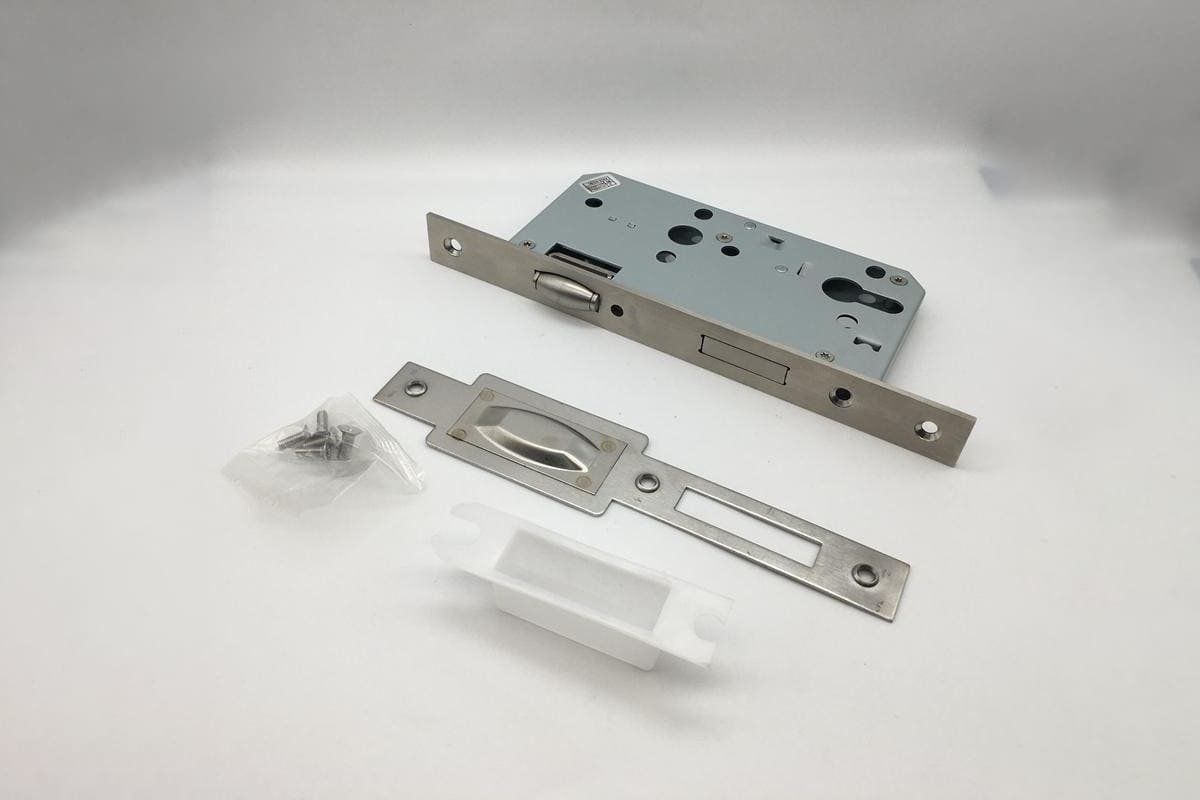
How the mechanism works
A standard beveled latch slides against the strike plate when the door closes. The sloped face pushes the latch back into the lock case, and the spring pushes it out again when it reaches the strike opening. This is simple and reliable, but it can create a noticeable clicking sound and more friction3.
A roller latch works differently. The rounded roller contacts the strike plate and turns or rolls slightly as the door reaches the closed position. This contact reduces the scraping effect. The result is often a smoother closing action4, especially on doors where users push or pull the door without turning a lever every time.
I usually explain it to customers this way:
The roller does not make the door “stronger” by itself. It mainly changes how the door feels when it closes.
That distinction matters. Buyers should not treat this lock as a high-security upgrade. They should treat it as an operation and experience upgrade for suitable doors.
Main components buyers should check
A typical product evaluation should include these parts:
- Lock body size: Backset, center distance, case depth, and faceplate dimensions.
- Roller latch structure: Roller material, spring strength, adjustment method, and smoothness.
- Strike plate: Opening position, plate thickness, screw holes, and finish matching.
- Handle or pull setup: Lever handle, pull handle, knob, or trim design.
- Door compatibility: Door thickness5, edge construction, material, and installation method.
- Finish consistency: Satin stainless steel, polished brass, black, PVD, or custom finish.
Roller latch versus standard latch
| Item | Roller Latch Mortise Lock | Standard Beveled Latch Mortise Lock |
|---|---|---|
| Closing feel | Smoother, lighter contact | More direct latch impact |
| Noise level | Usually quieter when correctly installed | Often produces clearer click sound |
| Common use | Interior, minimalist, push/pull doors | General interior and exterior doors |
| Security focus | Not the main advantage | Depends on lock design and deadbolt |
| Installation sensitivity | Requires accurate strike alignment | Also needs alignment, but more forgiving in some cases |
| Buyer priority | Feel, appearance, user comfort | General function, cost, broad use |
Why the structure matters in procurement
For door factories and hardware brands, a lock is not only a component. It affects the final door line. If a customer opens a showroom door and hears a harsh click or feels resistance, the entire door can seem less premium.
That is why I advise buyers to test the lock with the actual door sample. A catalog drawing is useful, but it cannot show closing feel. The door leaf weight, hinge adjustment, frame accuracy, gasket pressure, and strike plate position all affect the result.
Before confirming a bulk order, buyers should request:
- Technical drawings with complete dimensions.
- Physical samples for installation testing.
- Strike plate matching for the target frame system.
- Finish samples for batch color comparison.
- Clear packaging and accessory lists for production assembly.
At SDH Hardware, we often receive inquiries where the buyer asks only for a price list. I understand the pressure to control cost. Still, for this product type, the lowest quote can become expensive if the lock does not match the door structure. A small mismatch can create noise, poor closing, rework, or customer complaints.
Where Does a Roller Latch Mortise Lock Fit Best in Modern Buildings?
Some locks are chosen for strength. Some are chosen for appearance. A roller latch mortise lock is mainly chosen for door scenarios where the user expects a clean, smooth, and light daily operation. If buyers use it in the wrong scene, the result may disappoint the project team.
A roller latch mortise lock fits best on modern interior doors, push/pull-style doors, compatible glass door systems, office partitions, hotel room interior doors, and minimalist residential doors. It is most suitable where quiet closing6, lower friction, and clean visual design matter more than high-security or heavy-duty locking performance.
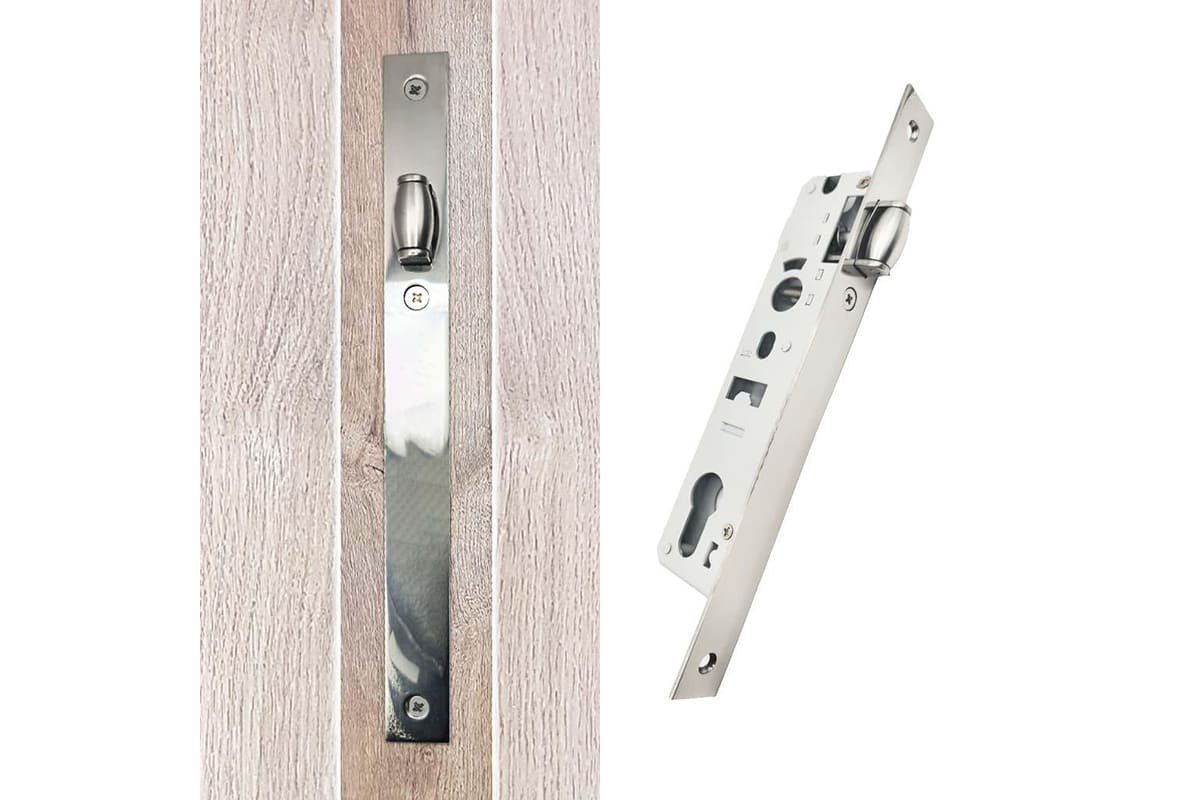
Interior doors and refined daily use
Modern buildings often place more attention on small user experiences. A meeting room door should close without disturbing nearby work.7 A hotel bathroom door should feel smooth and easy. A residential bedroom door should not create unnecessary noise at night.
In these applications, the value of the roller structure becomes clear. The roller reduces harsh contact with the strike plate. The user may not know why the door feels better, but they can feel the difference.
Good application examples include:
- Office interior doors
- Hotel interior doors
- Apartment bedroom doors
- Residential study room doors
- Showroom doors
- Minimalist wood doors
- Compatible aluminum or glass door systems
However, I always make one point clear: suitability depends on the door system. A buyer should not assume that every glass door, aluminum door, or wooden door can use the same mortise lock. The door profile, frame structure, cutout space, and fixing method all matter.
Push/pull-style doors
A push/pull door often does not rely on turning a lever each time. Users expect to push or pull the door open naturally. A standard latch can create more resistance because the latch must retract under pressure. A roller latch can make that movement lighter.
This is why the product often appears in modern commercial interiors. Designers want clean handles, concealed hinges, narrow frames, or flush door surfaces. The hardware should support the design rather than interrupt it.
Glass door systems require extra caution
Glass doors need careful evaluation.8 I do not recommend treating a glass door application as a simple substitution. The lock must match the installation method. Some glass door systems use patch fittings, aluminum frames, or special lock cases. Others cannot accept a typical mortise lock body at all.
For glass-related projects, buyers should confirm:
- Glass thickness and reinforcement method
- Door frame or rail structure
- Lock body fixing method
- Strike plate or receiver position
- Handle compatibility
- Safety and local compliance requirements
If the door structure is compatible, a roller latch mortise lock can support a clean appearance and soft closing feel. If the structure is not compatible, forcing the product into the system creates installation risk.
Application matching table
| Building Scene | Suitability | Reason |
|---|---|---|
| Office interior door | High | Smooth daily use and lower noise are valuable |
| Hotel bathroom or bedroom interior door | High | Comfort and refined operation matter |
| Minimalist residential door | High | Clean appearance and light closing support the design |
| Heavy exterior entrance door | Low to medium | Security, weather sealing, and strength may be more important |
| Fire-rated project door | Depends | Buyers must verify certified lock and door assembly documents |
| Compatible framed glass door | Depends | Door structure and lock installation must match |
| Warehouse or industrial heavy-use door | Usually low | Durability and heavy-duty latch strength may dominate |
Do not select it only for “modern style”
A modern appearance is not enough reason to choose this product. The door must also support the lock body size and closing method. For example, a very heavy door with strong gasket pressure may need a different latch design or stronger closing hardware. A door with poor frame alignment may still feel rough even with a roller.
In procurement, I suggest checking three things before choosing the lock:
- Door function: Is the door for privacy, passage, access control, or security?
- User behavior: Will users turn a handle, push/pull directly, or use a closer?
- Hardware package: Are hinges, frame, strike plate, and handle designed together?
A lock works as part of a door system. When buyers match the full system correctly, they reduce after-sales complaints and improve the perceived value of the finished door.
How Does a Roller Latch Mortise Lock Improve User Experience?
A buyer may ask why a small roller matters. That question is fair. In mass production, every hardware change affects cost, sourcing, and installation. The benefit must be practical. A roller latch mortise lock improves the daily touchpoint between the user and the door.
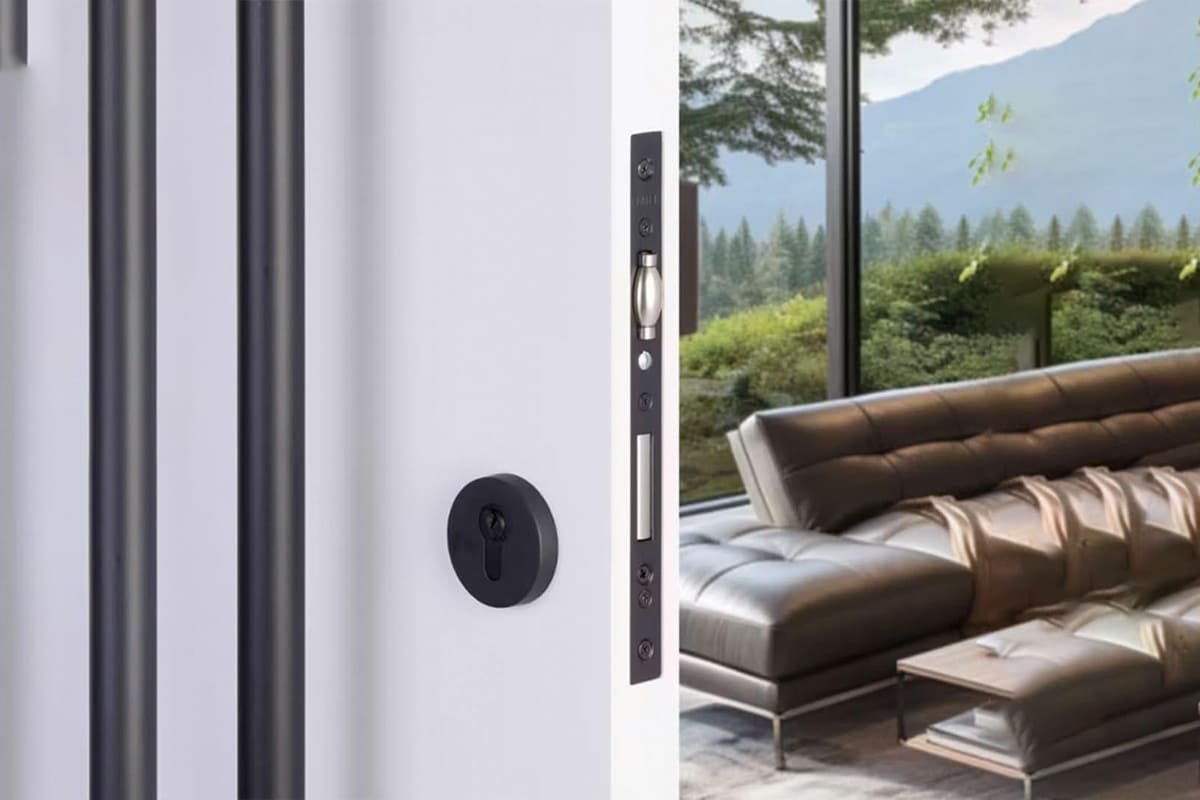
A roller latch mortise lock improves user experience by reducing friction between the latch and strike plate. This can make door closing smoother, reduce harsh contact noise, and allow easier push/pull operation. The effect is most noticeable on doors where light movement, quiet closing, and refined interior design are important.
Smoother closing feel
The first benefit is the closing feel. A standard latch can scrape across the strike plate before entering the strike opening. If the alignment is not perfect, the resistance becomes more obvious. A roller contact can reduce that scraping sensation.
This does not mean the lock will fix a bad door. Poor hinge alignment, twisted door leaves, tight gaskets, or inaccurate frame installation can still create problems. But when the door system is properly built, the roller structure supports a smoother result.
Lower operating noise
Noise is another reason buyers consider this product. In offices, hotels, apartments, and healthcare-style interiors, harsh closing noise can hurt the user experience. A roller latch can soften the contact between latch and strike plate.
Buyers should keep expectations realistic. Noise depends on many factors9:
- Door weight
- Frame material
- Strike plate accuracy
- Door closer speed
- Gasket pressure
- Wall and room acoustics
- Installation quality
So, I prefer to say the product can help reduce closing noise rather than guarantee silent closing. This is a more accurate way to present it in catalogs and project discussions.
Better match for minimalist hardware
Modern doors often use clean lever handles, slim pulls, concealed hinges, and simple trim. In that setting, a loud latch click can feel out of place. The roller latch supports a more refined door movement, which aligns with the design language.
This matters for hardware brands. When a brand sells a modern handle set, the lock body should support the same positioning. A premium-looking handle paired with a rough-feeling lock can damage the product image.
Important factors that affect the final feel
| Factor | Why It Matters | Buyer Checkpoint |
|---|---|---|
| Roller spring force | Affects resistance and holding feel | Test with real door sample |
| Strike plate position | Controls smooth entry and closing | Confirm drawings and installation tolerance |
| Door thickness | Determines lock body compatibility | Match product specification |
| Door weight | Influences closing pressure | Test with hinge and closer setup |
| Handle type | Changes user operation | Confirm lever, pull, or trim design |
| Finish quality | Affects visual consistency | Compare batch samples |
What I usually test before recommending it
When I help review a customer inquiry, I prefer to know the application before discussing price. I would rather ask a few basic questions first:
- What is the door material?
- What is the door thickness?
- Is the door interior or exterior?
- Will the user turn a handle or push/pull the door?
- Does the project require CE documents, fire-rated documents, or other compliance files?
- What finish does the full hardware set use?
- Is the buyer matching a new design or replacing an existing lock?
These questions help avoid a common mistake: selecting a lock by faceplate size only. Two locks can look similar in a catalog but perform differently after installation.
User experience becomes a commercial advantage
For door manufacturers and wholesalers, smoother operation is not only a comfort issue. It can affect sales. A showroom sample with better closing feel can help a buyer understand product quality faster than a technical sheet.
In my view, this is where the roller latch mortise lock earns its place. It gives the door a more controlled and elegant operation when matched correctly. It also helps brands differentiate interior door lines without changing the full door structure.
Still, buyers should present the value correctly. It is not a universal lock. It is not mainly a security lock. It is not a magic fix for installation errors. It is a scene-based hardware choice for modern interior doors where operation quality matters.
How Should Buyers Evaluate a Roller Latch Mortise Lock Supplier?
A product sample can look good on a table. The real test starts when a factory installs hundreds or thousands of pieces into actual doors. A roller latch mortise lock supplier should be evaluated not only by unit price, but also by production consistency, drawings, finish control, and customization support.
Buyers should evaluate a roller latch mortise lock supplier by checking product drawings, lock body dimensions, sample performance, finish consistency, strike plate matching, production capacity, inspection process, and relevant certification documents. For project use, buyers should verify all CE, fire-rated, or market access documents before making application-specific decisions.
Start with technical drawings
The first supplier check should be dimensional. A clear drawing reduces misunderstanding between the door factory and hardware supplier. At minimum, the buyer should request:
- Lock case height and depth
- Backset
- Center distance
- Faceplate length, width, and thickness
- Spindle hole size
- Cylinder hole type if applicable
- Roller latch size and projection
- Strike plate drawing
- Screw size and position
- Recommended door thickness
If a supplier cannot provide clear drawings, the procurement risk increases. The door factory may cut the door incorrectly, or the lock may not fit the existing production process.
Test samples under real conditions
A sample should not be checked only by hand. It should be installed into the target door or a realistic test door. The buyer should evaluate:
- Closing resistance
- Noise during closing
- Roller movement
- Strike plate engagement
- Handle operation
- Faceplate fit
- Screw fixing strength
- Finish appearance after installation
I often remind buyers that a good lock body must work with the strike plate. If the supplier sends a lock without a matched strike plate, the test is incomplete.
Compare supplier capabilities
| Evaluation Area | What to Check | Why It Matters |
|---|---|---|
| Manufacturing experience | Product category history and factory capability | Supports stable supply |
| Quality control | Raw material inspection, process checks, final inspection | Reduces batch variation |
| Customization | Size, finish, accessory, and branding support | Helps door lines and regional markets |
| Documentation | Drawings, certificates, inspection reports | Supports buyer verification |
| Delivery capacity | Production planning and lead time | Protects project schedule |
| Communication | Technical response and sample correction speed | Reduces sourcing friction |
Check quality control, not only claims
For technical hardware, I prefer restrained and verifiable supplier evaluation. A supplier may say the product is high quality, but buyers need proof through process and documents.
Useful checks include:
- Material specification confirmation
- Finish sample approval
- Batch inspection standards
- Packaging drop resistance for export
- Salt spray test reports10 if relevant to finish selection
- Function cycle test data if available
- Certificate copies where required
- Traceable order and inspection records
For CE or fire-rated project requirements, buyers should verify that the certificate applies to the correct product, lock type, door assembly, and market requirement. A certificate should not be treated as a general marketing claim. Application-specific decisions may require qualified professional evaluation, especially for fire-rated or regulated projects.
Why factory capability matters
SDH Hardware operates as a professional architectural door hardware manufacturer in China, with experience in mortise locks, lever handles, butt hinges, concealed hinges, and cylinders. From our side, I see that buyers gain efficiency when they source a compatible hardware package rather than forcing unrelated components together.
For example, a modern interior door line may need:
- Roller latch mortise locks
- Stainless steel lever handles
- Concealed hinges
- Butt hinges
- Cylinders for selected rooms
- Matching strike plates and accessories
- Unified finishes across the order
When the supplier can support these categories together, the buyer can reduce color mismatch, accessory confusion, and assembly delays. This is especially useful for door factories, hardware brands, and wholesalers serving Europe, the Middle East, and Southeast Asia.
Cost should be evaluated in context
Price is important. I never suggest ignoring it. But the unit price is only one part of total procurement cost. A cheaper lock can become costly if it creates:
- Recutting of door leaves
- Installation delay
- Finish mismatch
- Customer complaints
- Replacement orders
- Project acceptance issues
- Inventory that cannot match future batches
A better evaluation method is to compare landed cost plus risk. Buyers should ask whether the product reduces assembly problems, supports brand positioning, and remains stable across repeat orders.
What Procurement Risks Should Buyers Avoid With Roller Latch Mortise Lock Orders?
A small lock body can create big problems when the specification is unclear. Buyers may approve a sample too quickly, then discover issues during batch installation. With a roller latch mortise lock, the most common risks come from compatibility, alignment, finish variation, and unrealistic performance expectations.
Buyers should avoid ordering a roller latch mortise lock without confirming door thickness, lock body size, strike plate design, handle setup, door material, finish standard, and compliance requirements. They should also avoid presenting it as a high-security universal solution because its main value is smooth operation and refined interior use.
Risk 1: Wrong door and lock compatibility
The lock body must fit inside the door leaf. This sounds simple, but it is one of the most common sourcing issues. A door may be too thin, too narrow at the edge, or unsuitable for the required mortise depth.
Buyers should confirm:
- Door thickness
- Door edge material
- Internal core structure
- Frame rebate design
- Lock case depth
- Faceplate size
- Screw fixing position
If the door factory changes door structure after the lock is approved, the hardware specification should be reviewed again.
Risk 2: Strike plate mismatch
The strike plate is not a minor accessory. It controls how the roller engages when the door closes. If the strike opening is wrong, the roller may hit, scrape, or fail to hold the door properly.
A buyer should request the lock and strike plate as a matched set during sample testing. If the door frame supplier uses a different strike plate, both sides should confirm drawings before mass production.
Risk 3: Overstating security performance
A roller latch mortise lock should not be sold as the main security solution for high-risk doors. It can help keep a door closed, but high-security applications usually require different lock structures, stronger deadlocking features, certified systems, access control hardware, or project-specific security evaluation.
For exterior entrance doors, apartment entry doors, and heavy-duty commercial doors, buyers should define the security requirement first. Then they can select the correct lock type.
Risk 4: Ignoring finish consistency
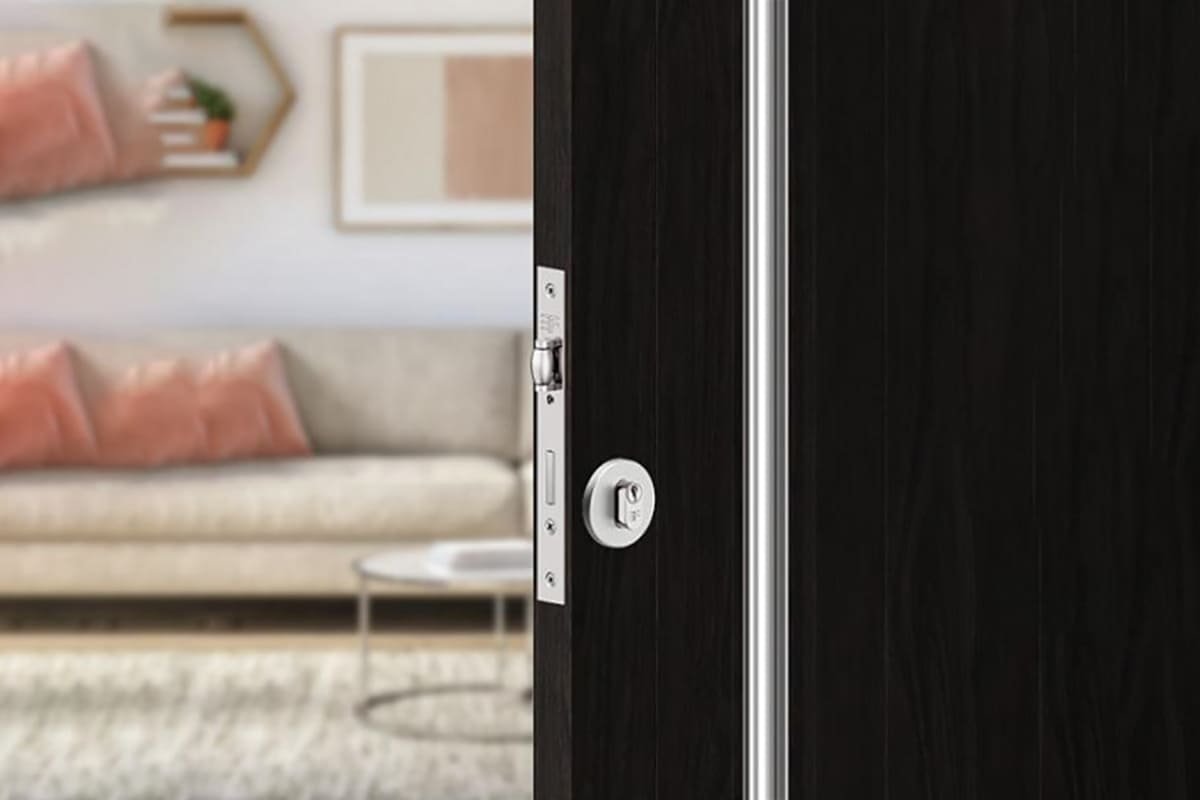
Modern buildings often use unified hardware finishes. One project may require the same finish across hinges, handles, locks, cylinders, and accessories. If the lock faceplate color differs from the handle or hinge, the door set can look inconsistent.
For bulk orders, buyers should approve:
- Master finish sample
- Acceptable color tolerance
- Surface texture standard
- Packaging protection
- Batch labeling method
Conclusion
A roller latch mortise lock is a smart choice when the door scenario requires smooth closing, lower friction, quieter operation, and a clean modern appearance. It works best when buyers match the lock body, strike plate, door structure, handle setup, and finish standard carefully. It should not be treated as a universal lock or a high-security shortcut. If you are developing modern interior door lines or sourcing hardware for project supply, SDH Hardware can help you evaluate compatible mortise lock solutions, samples, finishes, and bulk customization options.
"Mortise lock", https://en.wikipedia.org/wiki/Mortise_lock. A general door-hardware reference defines a mortise lock as a lock installed in a recess cut into the door edge, supporting the article’s description of the lock body being housed inside the door leaf. Evidence role: definition; source type: encyclopedia. Supports: A neutral reference should define a mortise lock as a lock fitted into a mortise or recess cut into the edge of a door.. Scope note: This supports the mortise-lock installation concept, but not the specific performance of roller latch variants. ↩
"Rolling resistance", https://en.wikipedia.org/wiki/Rolling_resistance. Engineering explanations of rolling and sliding contact generally show that rolling contact reduces frictional resistance relative to sliding contact, providing a mechanical basis for describing a roller latch as lower-friction. Evidence role: mechanism; source type: education. Supports: A technical source should explain that rolling contact generally produces less frictional resistance than sliding contact under comparable conditions.. Scope note: This is contextual mechanical support and does not directly measure friction in this specific lock model. ↩
"Door latches making too much noise when not rotated ...", https://www.reddit.com/r/DIY/comments/1ojml2s/door_latches_making_too_much_noise_when_not/. Door-latch mechanism references describe spring latches retracting against the strike plate during closing, a contact process that can create both sliding resistance and audible impact. Evidence role: mechanism; source type: research. Supports: A source should explain how a spring latch retracts against a strike plate during closing and why impact or sliding contact can produce sound and resistance.. Scope note: This supports the mechanical explanation but does not quantify the sound level for the specific products discussed. ↩
"The Ultimate Guide to Roller Latches for Modern Door ...", https://www.allwinhardware.com/blog/the-ultimate-guide-to-roller-latches-for-modern-door-hardware. Technical discussion of latch-strike contact and rolling contact supports the view that reducing sliding friction can contribute to a smoother closing action at the door interface. Evidence role: mechanism; source type: research. Supports: A neutral technical source should support that reduced sliding contact at a latch-strike interface can improve perceived smoothness of door closing.. Scope note: The source would support the mechanism generally, not guarantee identical smoothness across all door weights, strike alignments, and installations. ↩
"087100 – DOOR HARDWARE - Facilities and Campus Services", https://fcs.cornell.edu/087100-door-hardware. Architectural door-hardware specifications commonly identify compatible door thickness and lock-case dimensions as required installation parameters, supporting the article’s use of door thickness as a procurement checkpoint. Evidence role: general_support; source type: institution. Supports: A door-hardware standard or technical guide should show that mortise locks are specified by dimensions such as backset, case depth, and compatible door thickness.. Scope note: The source would support the general specification requirement, not the dimensions of the particular products mentioned in the article. ↩
"Guidance on environmental noise - World Health Organization (WHO)", https://www.who.int/tools/compendium-on-health-and-environment/environmental-noise. Research on indoor environmental quality links unwanted interior noise with reduced comfort and occupant satisfaction, supporting the article’s emphasis on quiet door closing as a user-experience factor. Evidence role: general_support; source type: research. Supports: A building-acoustics or indoor-environment source should support that unwanted indoor noise affects comfort, concentration, or occupant satisfaction.. Scope note: This provides contextual support for noise reduction in buildings, not direct proof that a roller latch achieves a specific decibel reduction. ↩
"The Effect of Noise Exposure on Cognitive Performance and ...", https://pmc.ncbi.nlm.nih.gov/articles/PMC6901841/. Studies of office acoustics report that unwanted or intermittent noise can impair concentration and perceived workplace comfort, providing context for specifying quieter meeting-room door operation. Evidence role: general_support; source type: paper. Supports: A peer-reviewed workplace or building-acoustics study should support that intermittent or unwanted office noise can distract workers or reduce perceived comfort.. Scope note: The evidence would support the importance of noise control generally, rather than evaluating meeting-room door latches specifically. ↩
"Glass Doors", https://vtechworks.lib.vt.edu/bitstreams/be392b2b-d18a-4ef6-bf5a-3b192ffa7258/download. Safety-glazing standards and building-code guidance treat glass doors as regulated assemblies requiring appropriate glazing and compatible installation details, supporting the article’s caution about evaluating glass-door lock applications carefully. Evidence role: expert_consensus; source type: institution. Supports: A glazing or building-code source should support that glass doors are subject to safety and installation requirements, including compatible hardware and glazing conditions.. Scope note: This supports the need for evaluation and compliance review, not the compatibility of any specific roller latch mortise lock with a given glass system. ↩
"Frequency domain characterisation of the sound insulation ...", https://pmc.ncbi.nlm.nih.gov/articles/PMC12307673/. Building-acoustics literature explains that interior noise depends on both the sound source and transmission conditions, including door and frame construction, seals, impact behavior, and room acoustics. Evidence role: mechanism; source type: research. Supports: A building-acoustics source should support that perceived door noise depends on impact source, transmission path, door/frame construction, seals, and room acoustic conditions.. Scope note: This supports the multifactor explanation of door noise, but it does not isolate the contribution of a roller latch in controlled testing. ↩
"Salt spray test", https://en.wikipedia.org/wiki/Salt_spray_test. Standards such as ASTM B117 and ISO 9227 describe neutral salt spray testing as a controlled method for evaluating corrosion behavior of coated or finished specimens, supporting its use as a finish-related quality-control document. Evidence role: definition; source type: institution. Supports: A standards source should define salt spray testing as a standardized corrosion-resistance test method used for coated or finished materials.. Scope note: Salt spray results are comparative laboratory indicators and do not alone predict exact service life in every building environment. ↩