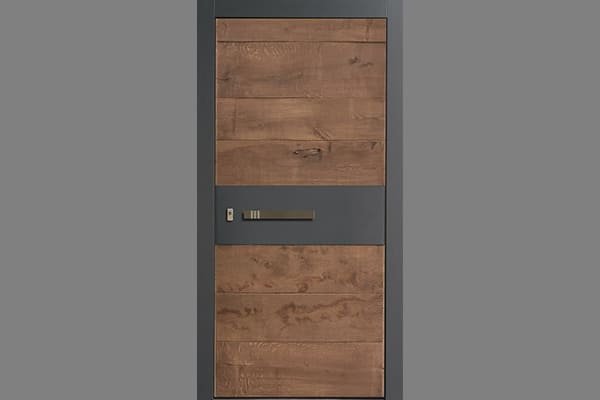
What Size Hinges for Exterior Door?
Exterior door hinges are easy to underspec when buyers treat hinge size as one fixed inch number. That creates sagging, poor alignment, finish mismatch, and after-sales complaints. I usually solve this by checking the door type, thickness, weight, opening structure, and load-bearing method before confirming hinge size.
For many heavy exterior flush doors, 5-inch butt hinges are commonly used, especially 2BB security butt hinges or oil-free heavy-duty hinges. However, the right hinge size for an exterior door is not universal. Buyers should match hinge size with door thickness, door weight, hinge type, installation position, and the required load capacity.
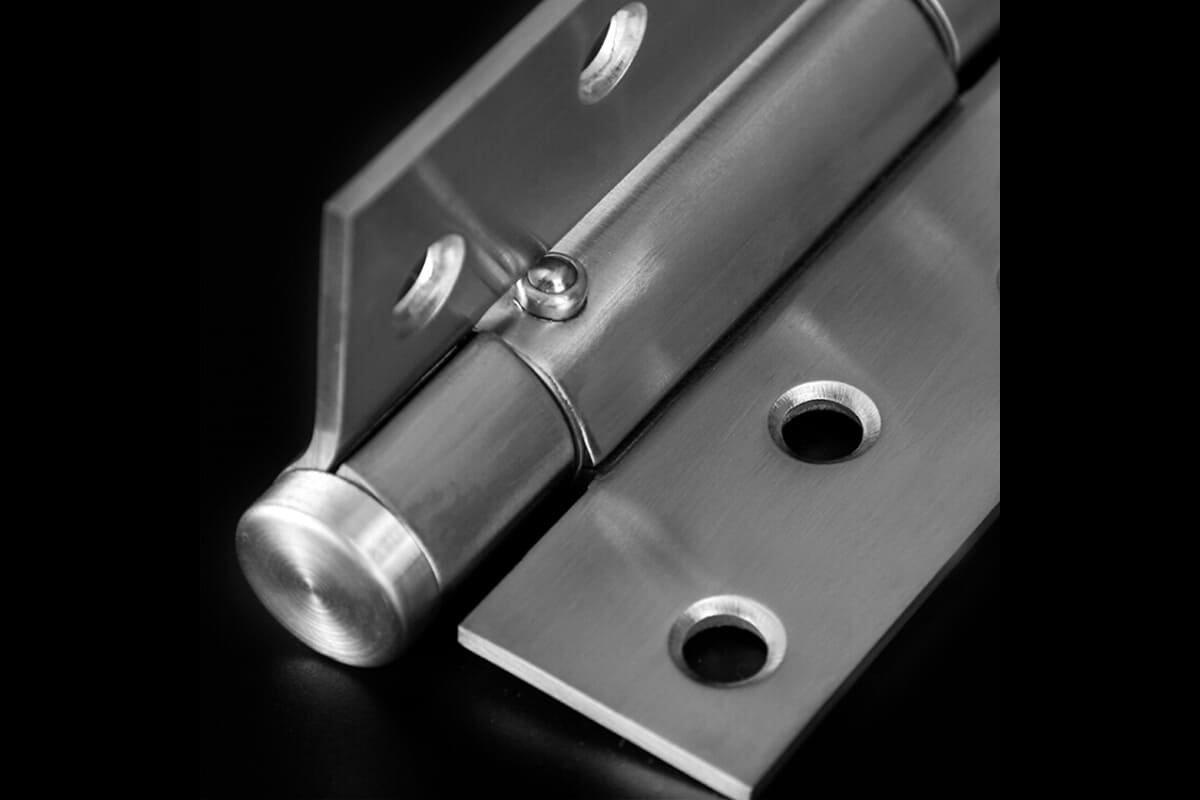
In my daily specification discussions with door factories and hardware buyers, the first question is rarely “Which inch size?” The better question is: “What door system are we supporting?” Once that is clear, hinge size becomes a practical engineering and procurement decision, not a guess.
What Size Exterior Door Hinges Are Commonly Used?
Many buyers ask for exterior door hinges by size first because it feels simple. The problem is that exterior doors are not simple. A villa entrance door, security door, rebated steel door, and concealed-hinge wooden door may all need different hinge structures.
The common answer is this: 5-inch hinges are widely used for heavier exterior flush doors1, but they are only a starting point. The final selection should follow the door leaf thickness, door weight, hinge material, bearing structure, and the number of hinges used on each door.2
Why 5-Inch Hinges Are Often Discussed First
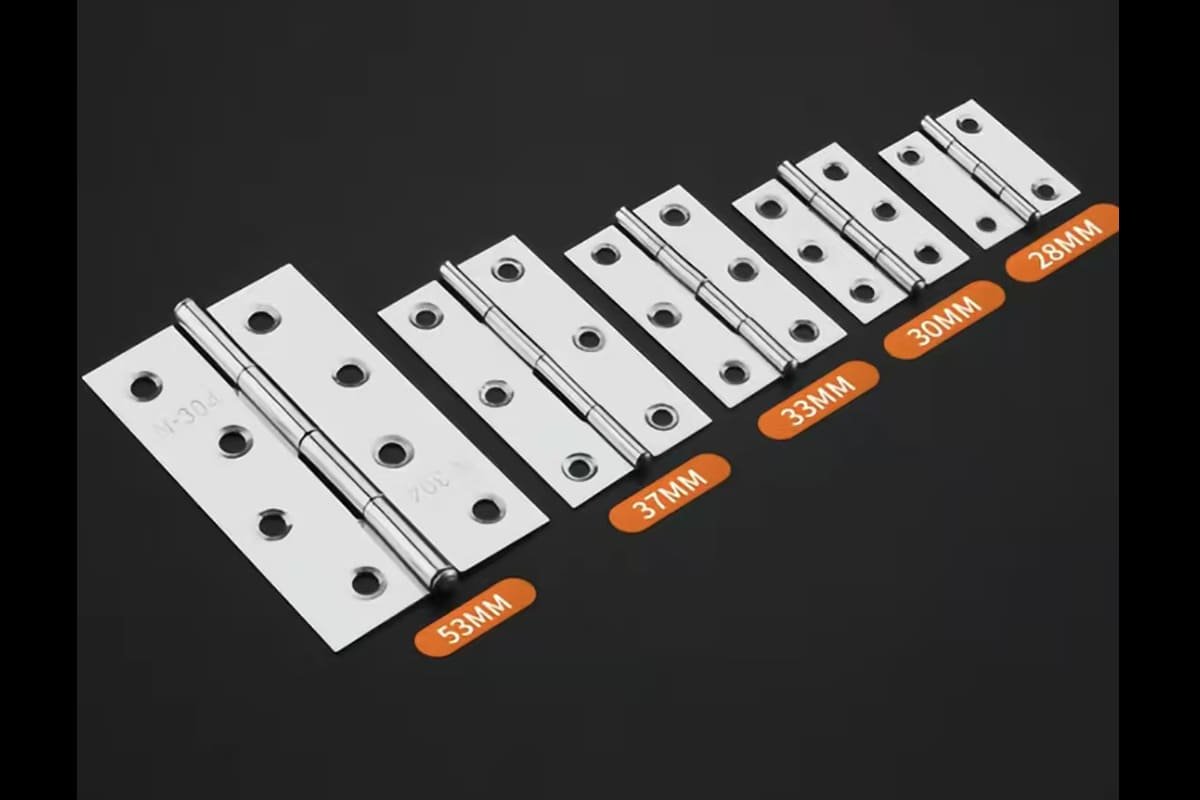
In exterior door hardware supply, I often see buyers start with 4-inch, 4.5-inch, and 5-inch butt hinges. For interior wooden doors, smaller hinges may be enough. For heavier exterior doors, especially flush entrance doors, 5-inch butt hinges are frequently requested because they offer a larger leaf size and more stable fixing area.
That said, I never treat 5 inches as a universal answer. A 5-inch hinge can still fail in the wrong application if:
- The door is too heavy for the hinge load rating.
- The door leaf is too thick or too wide for the opened hinge width.
- The screw position does not match the door frame structure.
- The hinge material or bearing structure is not suitable.
- The door requires special security, fire, or project certification.
In our factory discussions, I usually check five basic points first:
- Door type — flush, rebated, concealed-hinge, pivot, steel, wood, aluminum, or composite.
- Door thickness — common exterior doors may be thicker than interior doors.
- Door weight — this is more important than height alone.
- Opening structure — inward, outward, left/right hand, frame depth, and clearance.
- Hinge design — butt hinge, adjustable hinge, concealed hinge, or pivot hinge.
Common Exterior Door Hinge Size Reference
The table below gives a practical starting point. It is not a substitute for professional project evaluation, but it helps buyers compare options during supplier selection.
| Door Situation | Common Hinge Type | Common Size Direction | Procurement Note |
|---|---|---|---|
| Standard exterior flush door | Butt hinge | 4.5–5 inch | Check door weight and thickness |
| Heavy security flush door | 2BB security butt hinge or oil-free heavy-duty hinge | Often 5 inch or above | Confirm load rating and fixing strength |
| Rebated exterior door | Heavy-duty adjustable three-wing hinge | Size depends on rebate and axis | Rotation-axis matching is critical |
| Concealed-hinge exterior door | Heavy-duty concealed offset hinge | Size is secondary | Load rating may need around 200 kg or above |
| Oversized full-height door | Pivot hinge | Top and bottom pivot system | Floor load transfer becomes important |
Why Hinge Count Also Matters
Many exterior doors use three hinges3, while taller or heavier doors may need more. However, adding hinges does not automatically solve a poor specification. The hinge positions, frame strength, screw type, and load distribution also matter.
For bulk procurement, I suggest buyers avoid vague descriptions such as “strong hinge for exterior door.” A better inquiry includes:
- Door leaf size
- Door leaf thickness
- Estimated door weight
- Door material
- Frame material
- Opening direction
- Required finish
- Salt spray or corrosion resistance expectations
- Certification documents needed for the target market
This helps the supplier recommend the correct exterior door hinges instead of quoting a size that only looks right on paper.
How Do Door Thickness and Weight Decide Exterior Door Hinges?
Door height matters, but it should not be the only reference. I see mistakes happen when buyers choose exterior door hinges only because the door is 2.1 meters or 2.4 meters high. Weight and thickness often decide the real hinge requirement.
The thicker and heavier the door leaf is, the stronger and wider the hinge system usually needs to be. However, the opened hinge width must still suit the door thickness and frame condition. A hinge that is too wide can create clearance, installation, or appearance problems.
Door Thickness Affects Hinge Width
For butt hinges, the opened hinge width must match the relationship between the door leaf and frame. When the door leaf becomes thicker, the hinge often needs a wider opened size to create proper rotation and clearance.4 But wider is not always better.
A hinge must fit the door construction. If the opened width exceeds the applicable door leaf or frame condition, the hinge may cause:
- Poor closing clearance
- Visible misalignment
- Weak screw bite
- Edge deformation
- Unstable rotation
- Finish damage during operation
This is why I usually ask buyers for a door section drawing. Even a simple cross-section sketch is useful. It shows the door edge, frame rebate, gasket position, screw area, and opening clearance.
Door Weight Affects Load Capacity
Door weight is the more serious factor.5 A thick solid entrance door, steel security door, or full-height decorative door can place high stress on hinge knuckles, bearings, screws, and frame fixing points.
For heavy exterior flush doors, buyers often consider:
- 2BB butt hinges with ball bearing support
- Security butt hinges with anti-lift or security features
- Oil-free heavy-duty hinges for smoother operation and reduced maintenance
- Stainless steel hinges for better corrosion resistance in many exterior environments6
- Thicker hinge leaves for improved strength
Here is a simplified procurement view:
| Selection Factor | Why It Matters | What Buyers Should Ask |
|---|---|---|
| Door weight | Determines hinge load requirement | What is the rated load per set? |
| Door thickness | Affects opened hinge width | What thickness range does this hinge support? |
| Door material | Affects screw holding strength | Are screws and fixing plates suitable? |
| Door usage frequency | Affects wear and bearing design | Is the hinge designed for heavy daily use? |
| Exterior exposure | Affects corrosion and finish | What material and surface treatment are used? |
Hinge Material and Bearing Structure
In manufacturing, I pay close attention to the hinge body, pin, bearing, and surface finish. A hinge that looks heavy may not perform well if the bearing structure or material thickness is not suitable.
Common options include:
Stainless steel butt hinges
These are widely used where corrosion resistance and stable appearance are important.Steel hinges with surface treatment
These can be cost-effective, but buyers should verify finish consistency and corrosion performance.Brass or special alloy hinges
These may be used for specific design requirements, but the load rating must still be confirmed.Ball bearing hinges
These reduce friction and are common for heavier swing doors.7Oil-free heavy-duty hinges
These are often selected when buyers want smoother operation and reduced lubrication maintenance.8
My practical rule is simple: I do not confirm exterior door hinges by size until I know the door weight and thickness. Size gives shape. Load rating gives safety margin.
For special applications, such as fire-rated doors, security doors, or doors used in regulated projects, buyers should verify valid certification documents and confirm suitability with qualified professionals.9 A product certificate should be treated as a document to review, not as a verbal promise.
Which Exterior Door Hinges Fit Flush, Rebated, Concealed, and Pivot Doors?
A common procurement error is using one hinge logic for every exterior door. This creates mismatched samples, failed trial installation, and delayed bulk orders. Flush doors, rebated doors, concealed-hinge doors, and pivot doors each need different exterior door hinges.
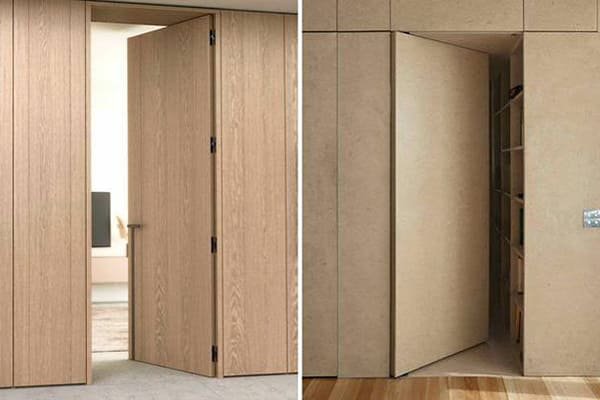
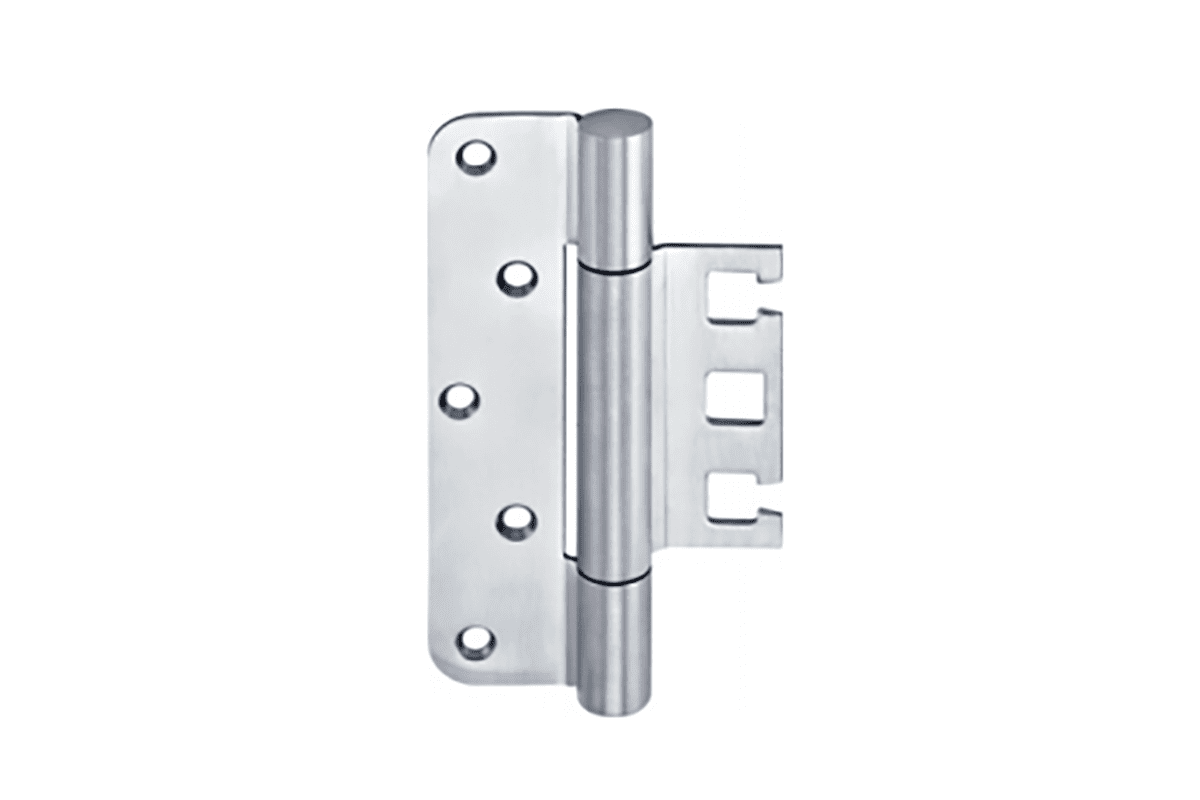
Flush exterior doors usually use butt hinges. Rebated doors often need heavy-duty adjustable three-wing hinges with precise rotation-axis matching. Concealed-hinge doors require load-rated concealed hinges. Oversized full-height doors may be better supported by pivot hinges because the load transfers toward the top and bottom.
Flush Exterior Doors: Butt Hinges Are Common
Flush doors have a simpler edge structure, so butt hinges are often the practical choice. In many heavy exterior flush door projects, buyers ask for 5-inch butt hinges because they want stronger support and a larger fixing surface.
Common flush door hinge choices include:
- 5-inch stainless steel butt hinges
- 2BB security butt hinges
- Heavy-duty ball bearing hinges
- Oil-free heavy-duty hinges
- Hinges with security pins or anti-lift design, where applicable
For bulk orders, the buyer should confirm leaf thickness, pin diameter, hole position, screw type, finish, and packaging method. A small mismatch in screw hole position can create big assembly problems on a door production line.
Rebated Exterior Doors: Axis Matching Is Critical
Rebated doors are more complex. The door edge overlaps or steps into the frame, so the hinge rotation axis must match the rebate profile. If the axis is wrong, the door may rub, bind, or fail to close smoothly.10
For these doors, I often see buyers use heavy-duty adjustable three-wing hinges. These hinges can provide better adjustment for height, side gap, and compression, depending on the design.
When selecting hinges for rebated exterior doors, buyers should check:
- Rebate depth and shape
- Door frame profile
- Rotation axis position
- Gasket compression
- Adjustment range
- Fixing plate strength
- Door weight and usage frequency
This is not only a hinge size issue. A large hinge with the wrong axis can perform worse than a smaller hinge with the correct geometry.
Concealed-Hinge Exterior Doors: Load Rating Comes First
For concealed hinges, size is secondary. The main question is whether the hinge system can carry the actual door weight and maintain alignment over time.
Heavy exterior concealed-hinge doors may require heavy-duty concealed offset hinges with load ratings around 200 kg or above11, depending on the actual door weight and the number of hinges used. Buyers should confirm the rating with the supplier’s technical documents and match it to the door construction.
Important concealed hinge questions include:
- What is the rated load per set?
- How many hinges are required per door?
- What door thickness range is supported?
- What milling depth is required?
- Is the hinge adjustable in 3D?
- Does the frame have enough fixing strength?
- Is the opening angle suitable?
Concealed hinges are popular because they create a clean appearance and can support premium door designs. However, they require precise machining. If the pocket depth, centerline, or frame reinforcement is wrong, even a high-quality concealed hinge can perform poorly.
Pivot Doors: Better for Oversized or Very Heavy Doors
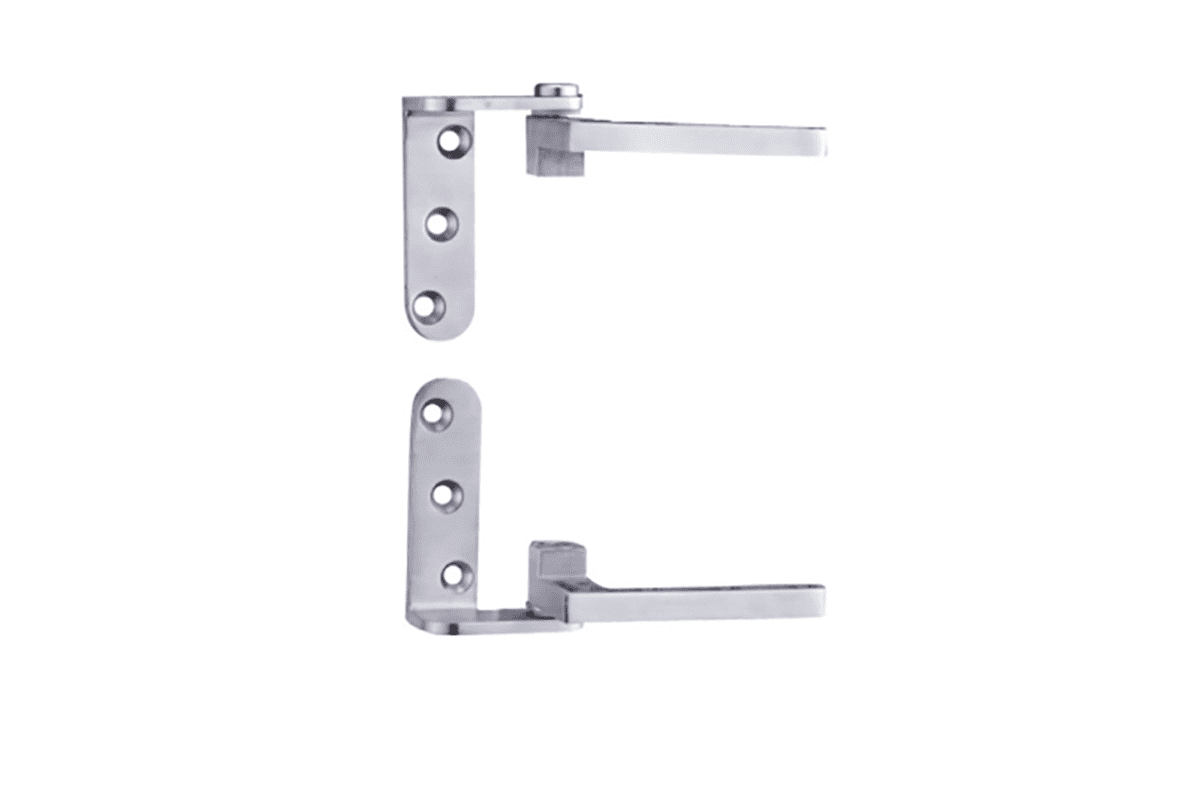
For large full-height exterior doors, pivot hinges may be more suitable than side-mounted butt hinges. A pivot system carries the door at the top and bottom. Much of the weight transfers toward the floor, which can reduce stress on the side frame.12
Pivot doors are common in:
- Large villa entrance doors
- High-end commercial entrance systems
- Oversized decorative doors
- Full-height architectural doors
However, pivot hinge selection should be handled carefully. Buyers should review door weight, floor structure, top fixing, closing control, opening angle, and project requirements. For large doors, professional evaluation is important because the hinge is only one part of the full door system.
How Should Buyers Specify Exterior Door Hinges for Bulk Orders?
Bulk buyers often need stable quality more than a single perfect sample. The problem is that vague hinge specifications lead to batch mismatch, inconsistent finishes, wrong screw holes, and supplier disputes. A clear exterior door hinges specification sheet reduces these risks.
Buyers should specify exterior door hinges by door type, thickness, weight, hinge structure, material, finish, load rating, certifications, packaging, and inspection standards. A complete specification helps the factory match production, quality control, and delivery expectations before mass production begins.
A Practical Specification Checklist
When I receive hinge inquiries from door manufacturers, hardware brands, and wholesalers, the best inquiries usually include a structured checklist. This saves time for both sides and prevents wrong quotations.
A strong hinge specification should include:
Door information
- Door type
- Door size
- Door thickness
- Door weight
- Door material
- Frame material
Hinge information
- Hinge type
- Opened size
- Leaf thickness
- Pin diameter
- Bearing type
- Load rating
- Opening angle
- Adjustment function, if needed
Finish information
- Stainless steel brushed finish
- Satin nickel
- PVD finish
- Powder coating
- Color sample reference
- Salt spray requirement, if applicable
Compliance documents
- CE certificate, where required
- Fire-rated certificate, where required
- Test reports or declarations
- Validity and product model matching
Bulk order details
- Quantity
- Packaging method
- Logo or ODM requirement
- Delivery schedule
- Spare parts and screws
- Inspection standard
Why Sample Approval Matters
I always recommend sample approval before bulk production. A hinge sample allows the buyer to verify not only size, but also rotation, finish, screw position, installation feel, and door compatibility.
For door manufacturers, sample testing should include:
- Trial installation on the real door section
- Door opening and closing check
- Gap and alignment inspection
- Finish matching with other door hardware
- Screw holding verification
- Packaging and label review
- Confirmation of inspection criteria
This is especially important for ODM orders. A buyer may request a custom hole position, special finish, different pin structure, or private-label packaging. These details must be locked before production.
Quality Control Points Buyers Should Verify
As a manufacturer, I look at hinge quality through production control, not only finished appearance. Buyers should also evaluate whether the supplier can maintain consistency across repeat orders.
Key quality control points include:
| QC Point | What to Check | Why It Matters |
|---|---|---|
| Raw material | Grade, thickness, hardness | Affects strength and stability |
| Stamping or machining | Dimensional accuracy | Affects installation fit |
| Bearing assembly | Smooth rotation | Affects long-term operation |
| Pin and knuckle fit | Tightness and alignment | Reduces sagging and noise |
| Surface finish | Color and texture consistency | Supports brand and batch matching |
| Load-related design | Supplier rating documents | Helps prevent underspecification |
| Packaging | Protection and labeling | Reduces damage and warehouse errors |
Supplier Evaluation for Exterior Door Hinges
A good supplier should do more than quote a low price. For B2B buyers, I suggest reviewing:
- Factory production experience
- Product category coverage
- Ability to support butt hinges, concealed hinges, and customized products
- Quality inspection procedures
- Export market experience
- Communication speed
- Certification document availability
- Customization capability
- Delivery reliability
At SDH Hardware, our experience comes from producing and supplying architectural door hardware for door factories, hardware brands, and wholesalers across markets such as the Middle East, Europe, and Southeast Asia. In real specification work, I still treat each project separately. I ask for door data first, then recommend hinge type, size, load capacity, finish, and packaging.
That method protects both sides. The buyer reduces after-sales risk. The supplier reduces mismatch and rework. Most importantly, the final door system works more reliably in the target market.
Frequently Asked Questions
Are 5-inch hinges always required for an exterior door?
No. 5-inch exterior door hinges are common for many heavy flush entrance doors, but they are not universal. The correct size depends on door thickness, door weight, door type, frame structure, hinge material, and load rating. Buyers should confirm these details before placing bulk orders.
How many hinges should be used on a heavy exterior door?
Many exterior doors use three hinges, but very tall or heavy doors may require more or a different hinge system. The correct number depends on the total door weight, hinge rating, fixing strength, and door structure. A qualified technical review is recommended for special or oversized doors.
Are concealed hinges suitable for exterior doors?
Yes, concealed hinges can be suitable for exterior doors if they are designed for the actual door weight and structure. For heavy exterior doors, buyers may need heavy-duty concealed offset hinges rated around 200 kg or above, depending on the door system and number of hinges.
What hinge type is best for rebated exterior doors?
Rebated exterior doors often need heavy-duty adjustable three-wing hinges because the rotation axis must match the rebate profile. Buyers should confirm rebate depth, frame design, gasket position, adjustment range, and load capacity before approving samples or bulk production.
Should oversized exterior doors use butt hinges or pivot hinges?
Oversized full-height exterior doors may be better suited to pivot hinges because the load is carried at the top and bottom, with much of the weight transferred toward the floor. However, the final choice should be reviewed according to door weight, structure, and project requirements.
Conclusion
The right size for exterior door hinges is not one fixed answer. A 5-inch butt hinge is common for many heavy exterior flush doors, but the correct specification depends on door type, thickness, weight, installation structure, and load-bearing method. Buyers should separate flush, rebated, concealed, and pivot door logic before choosing. If you need help matching hinge size, load capacity, finish, and bulk order requirements, contact SDH Hardware for a project-based hinge specification review.
"Hinge & Strike Spacing for Steel Doors & Frames", https://steeldoor.org/sdi-129/. Door and builders-hardware guidance commonly relates hinge size to door dimensions and mass, providing contextual support for the use of 5-inch hinges on heavier swinging doors. Evidence role: general_support; source type: institution. Supports: A neutral hardware or door-industry reference should support that larger hinge sizes, including 5-inch hinges, are commonly associated with heavier or larger swinging doors.. Scope note: Such sources may support common sizing practice without proving that 5-inch hinges are used in most exterior flush-door projects. ↩
"Understanding BS EN 1935:2002 single-axis hinge grades - SFS", https://uk.sfs.com/resources/article/understanding-bs-en-1935. Building-hardware standards such as EN 1935 and ANSI/BHMA A156.1 classify hinges by performance factors including load, durability, construction, and application conditions, supporting a multi-factor approach to hinge selection. Evidence role: expert_consensus; source type: institution. Supports: A building-hardware standard should support evaluating hinges by load, durability, construction, corrosion performance, and application conditions rather than by nominal size alone.. Scope note: Standards may not list the article's factors in the same wording or for every hinge type. ↩
"Decoded: NFPA 80 Requirements for Hinges, Pivots, and ...", https://idighardware.com/2016/07/decoded-nfpa-80-requirements-for-hinges/. Door-hardware installation guidance commonly specifies hinge quantity according to door height and use, with three hinges serving as a common baseline for many standard-height swinging doors. Evidence role: general_support; source type: institution. Supports: A door or fire-door hardware reference should support that three hinges are a common baseline for many full-height swinging doors, with additional hinges required in some conditions.. Scope note: This supports typical practice, not a universal requirement for all exterior doors. ↩
"Division 06 - Interior Architectural Woodwork", https://fdo.wwu.edu/division-06-interior-architectural-woodwork. Technical door-installation references explain that hinge dimensions and offset affect swing clearance and must be coordinated with door thickness and frame geometry. Evidence role: mechanism; source type: education. Supports: A technical woodworking, architectural, or building-science source should explain the relationship between hinge throw, door thickness, frame geometry, and swing clearance.. Scope note: The source may describe the geometric principle without prescribing a single hinge size. ↩
"Understanding BS EN 1935:2002 single-axis hinge grades", https://uk.sfs.com/resources/article/understanding-bs-en-1935. Hinge-performance standards classify hinges partly by the mass of the door they are intended to support, indicating that door weight is a central parameter in hinge specification. Evidence role: mechanism; source type: institution. Supports: A hinge-performance standard should support that door mass is a primary parameter for hinge grading and load capacity.. Scope note: This does not prove weight is always more important than height in every installation. ↩
"Measurements of thermophysical properties of solid and liquid ...", https://tsapps.nist.gov/publication/get_pdf.cfm?pub_id. Materials-science references describe stainless steel corrosion resistance as arising from a chromium-rich passive film, supporting its use where exterior moisture exposure is a concern. Evidence role: mechanism; source type: government. Supports: A government or university materials source should support that stainless steel's chromium-rich passive film improves corrosion resistance in many environments.. Scope note: Corrosion performance depends on alloy grade, pollutants, chloride exposure, surface finish, and maintenance. ↩
"INVESTIGATION OF ROLLING ELEMENT BEARING ...", https://hammer.purdue.edu/articles/thesis/INVESTIGATION_OF_ROLLING_ELEMENT_BEARING_LUBRICATION_AND_FRICTION/21842706. Mechanical-engineering literature on rolling-element bearings supports that ball bearings reduce friction compared with plain sliding contact, providing a mechanism for their use in heavier swinging-door hinges. Evidence role: mechanism; source type: research. Supports: A mechanical-engineering or hardware source should support that rolling bearings reduce sliding friction and are used where heavier or higher-frequency door operation is expected.. Scope note: Bearing theory supports the mechanism but does not by itself establish market prevalence for all heavy doors. ↩
"How do Self-lubricating Bearings Work to Eliminate Greasing?", https://www.tstar.com/blog/how-do-self-lubricating-bearings-work-to-eliminate-greasing. Tribology studies of self-lubricating bearing materials report reduced external lubrication requirements and lower friction under defined operating conditions, supporting the claimed maintenance rationale for oil-free hinge designs. Evidence role: mechanism; source type: paper. Supports: A tribology or bearing paper should support that self-lubricating bearing materials can reduce the need for external lubrication and lower friction under suitable conditions.. Scope note: The evidence would support the material mechanism, not every commercial oil-free hinge design. ↩
"NFPA 80: Fire Doors & Other Opening Protectives", https://usmadesupply.com/resources/building-codes-standards/emergency-life-safety/nfpa-80. Fire-door and building-hardware standards require that hardware used in regulated door assemblies be appropriately tested, listed, or certified for the relevant application. Evidence role: expert_consensus; source type: institution. Supports: A code or standards source should support that fire-rated or regulated door assemblies rely on tested, listed, or certified hardware matched to the approved assembly.. Scope note: Specific requirements vary by jurisdiction, door rating, hardware type, and project specification. ↩
"Adjust able Hinges - ca.sfs.com", https://ca.sfs.com/content/files/2510%20-%20ca/downloads%20pdfs/hinge%20downloads/catalogs/ajustable%20hinges%20catalogue.pdf. Door-design references on hinge geometry explain that the hinge axis determines the swing path of the door leaf, supporting the risk of rubbing or binding when the axis is incompatible with a rebate profile. Evidence role: mechanism; source type: education. Supports: A technical door-design source should support that hinge-axis position affects the clearance path of a rebated or profiled door leaf.. Scope note: The source may describe the general geometry rather than this exact hinge category. ↩
"Understanding BS EN 1935:2002 single-axis hinge grades", https://uk.sfs.com/resources/article/understanding-bs-en-1935. Hinge standards classify products by supported door mass and durability testing, supporting the need to verify concealed-hinge load ratings for heavy door leaves. Evidence role: general_support; source type: institution. Supports: A hinge standard or test-method source should support that hinges are rated by supported door mass and that heavy concealed systems require verified load ratings.. Scope note: A standard may support load-rating verification without directly proving that 200 kg is the appropriate threshold for a given concealed-hinge installation. ↩
"Mastering Pivot Doors: A Comprehensive Technical Overview", https://www.doornmore.com/blog/mastering-pivot-doors-a-comprehensive-technical-overview/?srsltid. Architectural door-design references describe pivot doors as rotating around top and bottom pivot points, which changes the load path compared with side-hinged doors and can shift substantial vertical load to the floor support. Evidence role: mechanism; source type: education. Supports: An architectural or structural source should explain that pivot doors are supported by pivots at the top and bottom rather than by side-mounted hinges alone.. Scope note: The actual stress reduction depends on pivot placement, floor structure, top fixing, closer design, and door mass. ↩