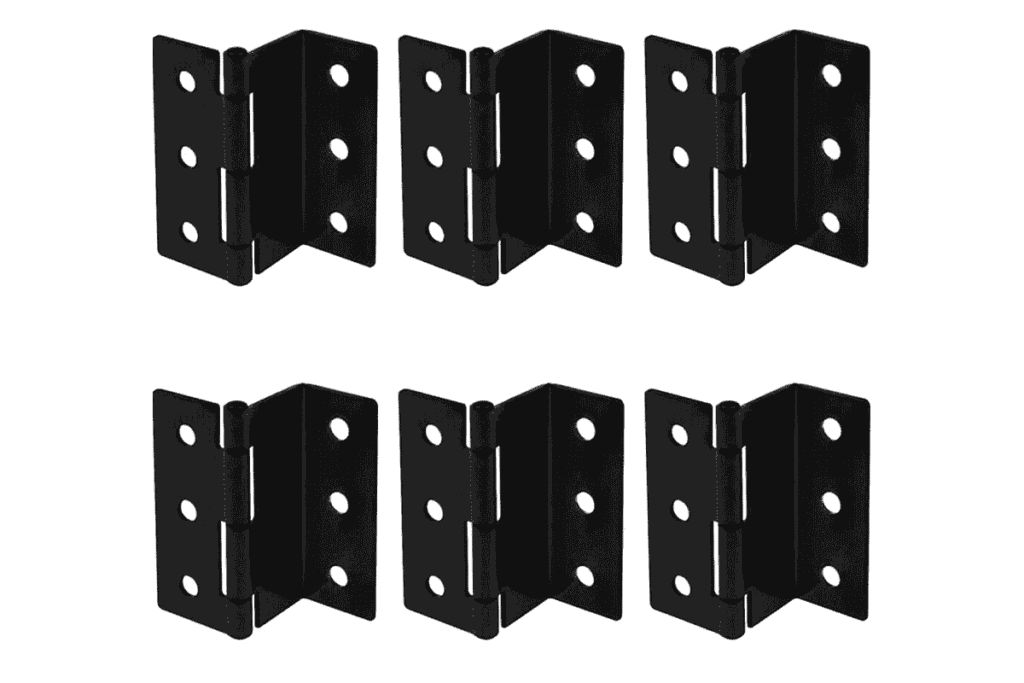
What Are Cranked Hinges Used For?
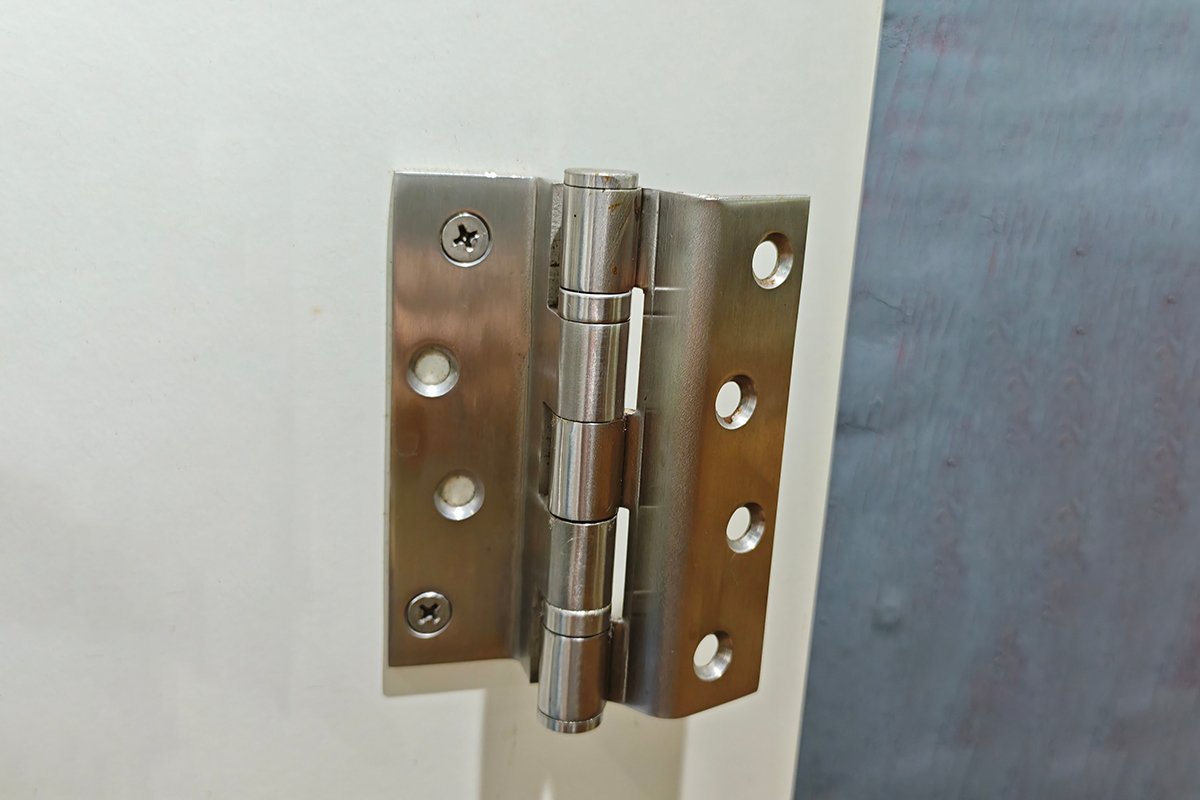
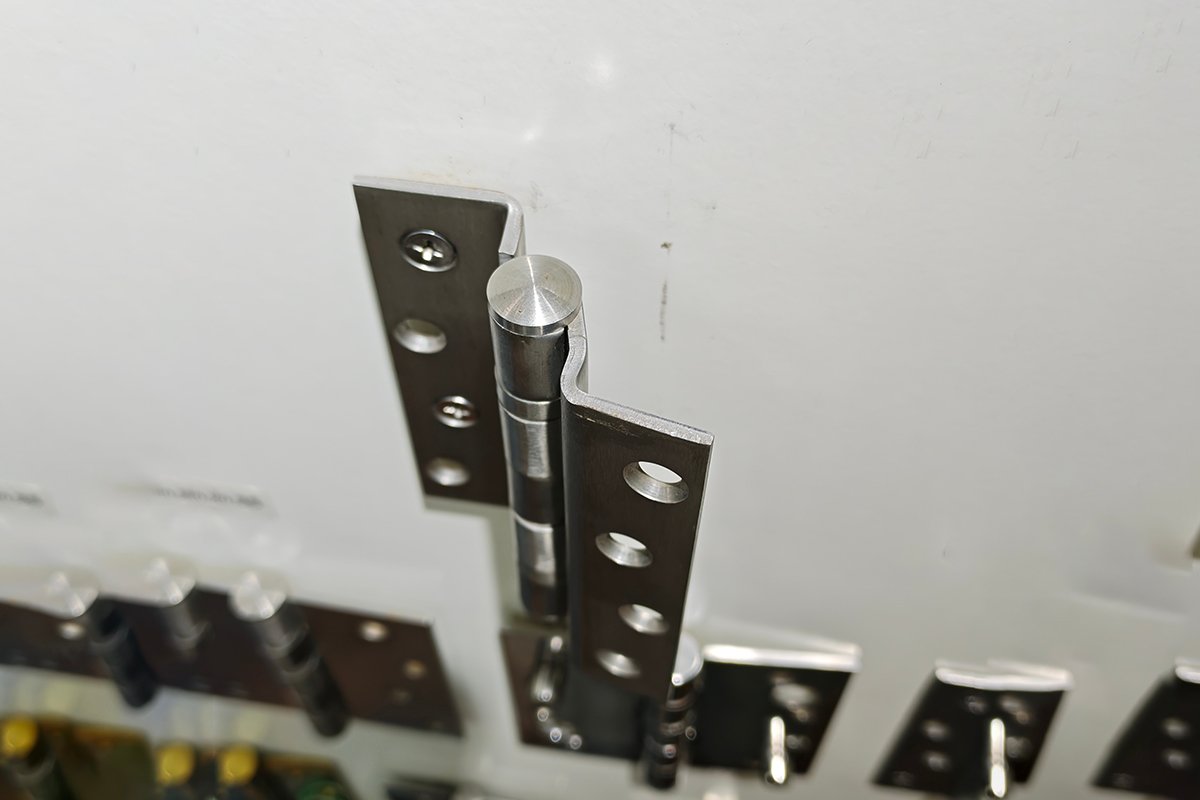
Cranked hinges are used when a door leaf and frame do not sit on the same plane, and that mismatch can create poor closing, rubbing, or limited opening clearance. I often see buyers focus on the bent shape first. I prefer to start with the real problem: fit, offset, clearance, and sometimes hinge-side security.
Cranked hinges are used to solve door-frame offset and clearance problems. They help position the door leaf correctly when the door, frame, trim, gasket, or nearby structure needs extra space. Some security-oriented models may also include fixed pins or security studs, but those anti-removal features depend on the specific hinge design.
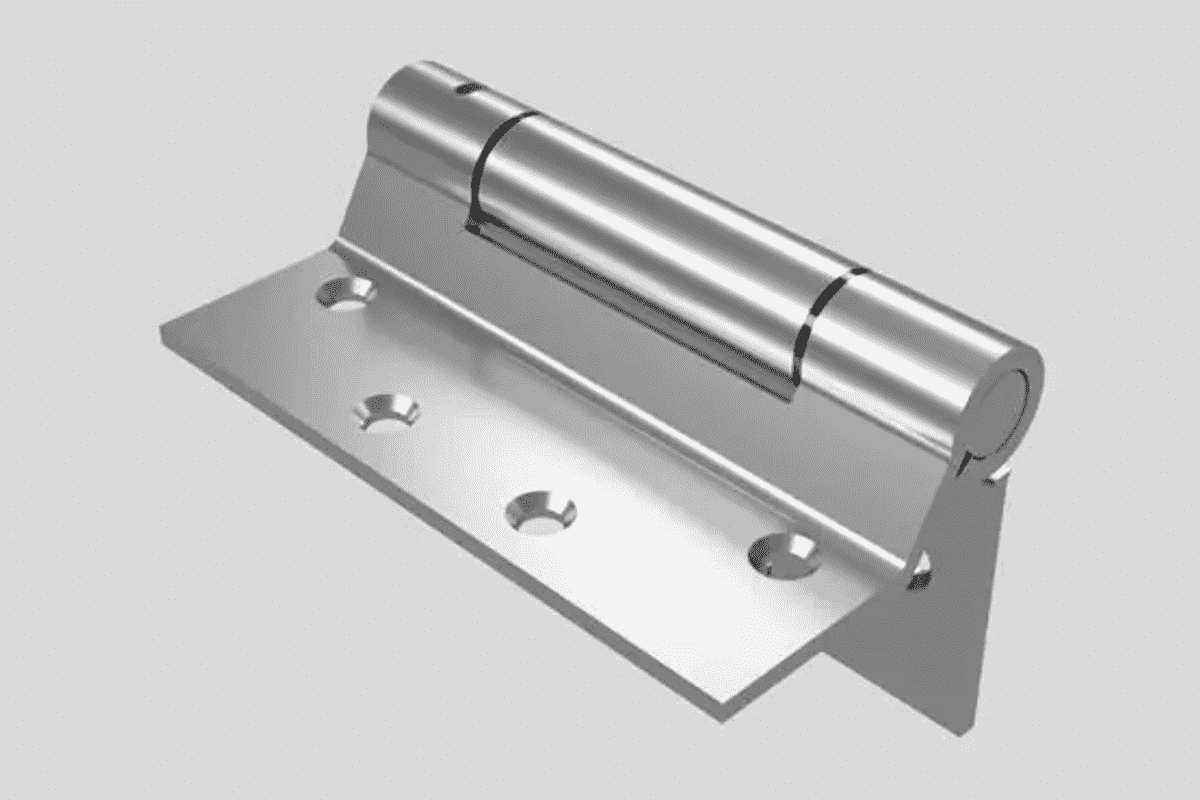
A cranked hinge is not only a hinge with a bent leaf. It is a selection solution. When I discuss hinge options with door factories and hardware brands, I always check the door structure, opening direction, offset, load, and security requirement before recommending a sample.
When Are Cranked Hinges Used for Door and Frame Offset?
Door offset creates small but costly problems. The door may not close cleanly, the hinge may pull at an angle, or the finished gap may look inconsistent. I see this often when a standard flat hinge is selected before the frame section is fully confirmed.
Cranked hinges are used when the door leaf and frame are not aligned on the same surface plane.1 The cranked form changes the hinge leaf position so the door can sit correctly against an offset frame, recessed frame, raised frame, or special door section without forcing an unsuitable flat hinge.
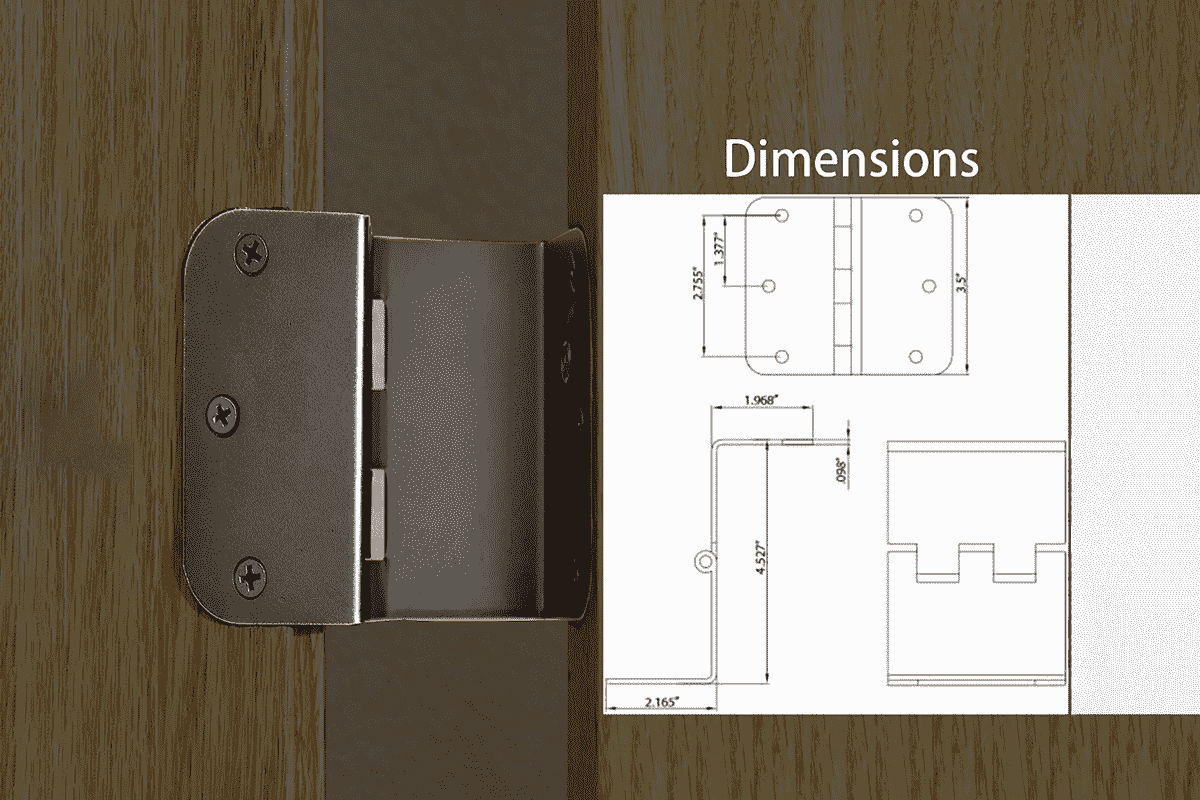
Why offset matters more than hinge shape
I treat offset as the first question because it controls the hinge geometry. A flat butt hinge works well when the hinge mounting surfaces are aligned in a predictable way.2 However, many entrance doors, villa doors, steel doors, aluminum doors, and engineered timber doors do not use a simple flat-to-flat relationship.
A cranked hinge helps bridge that difference. The hinge leaf is formed so one side can mount on one plane while the other side positions the door leaf on another plane.3 This can be useful when the door structure includes:
- A recessed frame rebate
- A raised door edge
- A decorative trim profile
- A weather seal or gasket
- A thicker cladding layer
- A special metal frame section
- A security door structure with offset hinge fixing points
In supplier conversations, I often ask for a door and frame section drawing before I comment on a cranked model. A photo alone can mislead both sides. The hinge may look right, but the door may still rub against the frame after assembly.
Common offset-related buyer checks
| Check item | Why I check it | Procurement risk if ignored |
|---|---|---|
| Door leaf thickness | It affects hinge projection and screw position | The hinge may not support the door correctly |
| Frame rebate depth | It determines required offset | The door may sit too deep or too proud |
| Hinge leaf width | It affects mounting contact area | The fixing strength may be insufficient |
| Knuckle position | It affects door swing and clearance | The door may rub during opening |
| Screw hole position | It must match production drilling | Batch assembly may require rework |
| Opening direction | It affects left/right hinge selection | The ordered hinge may be unusable |
A practical example from procurement work
I once reviewed an inquiry where the buyer called the product a “bent hinge.” The drawing showed a steel entrance door with a stepped frame profile. A standard butt hinge would have pulled the door edge too close to the frame rebate. The issue was not the hinge name. The issue was that the door leaf and the frame fixing surface were offset.
That is why I recommend describing the required function first:
“I need a hinge for a door leaf that sits 8 mm proud of the frame fixing surface.”
That sentence is more useful than only asking for a “cranked hinge.” It gives the supplier a measurable starting point. From there, I can check whether the hinge crank depth, leaf width, pin structure, material, and surface finish match the intended door.
How Do Cranked Hinges Improve Clearance Around Frames and Seals?
Clearance problems often appear after a door sample is assembled. The door may touch the seal, scratch the trim, or fail to open to the expected angle. I prefer to solve this at the drawing stage because hinge clearance is cheaper to correct before tooling or bulk drilling.
Cranked hinges improve clearance by shifting the hinge pivot or hinge leaf position relative to the door and frame.4 This adjustment can help the door move away from trims, seals, rebates, adjacent walls, or decorative structures during opening and closing, depending on the hinge geometry and door section.
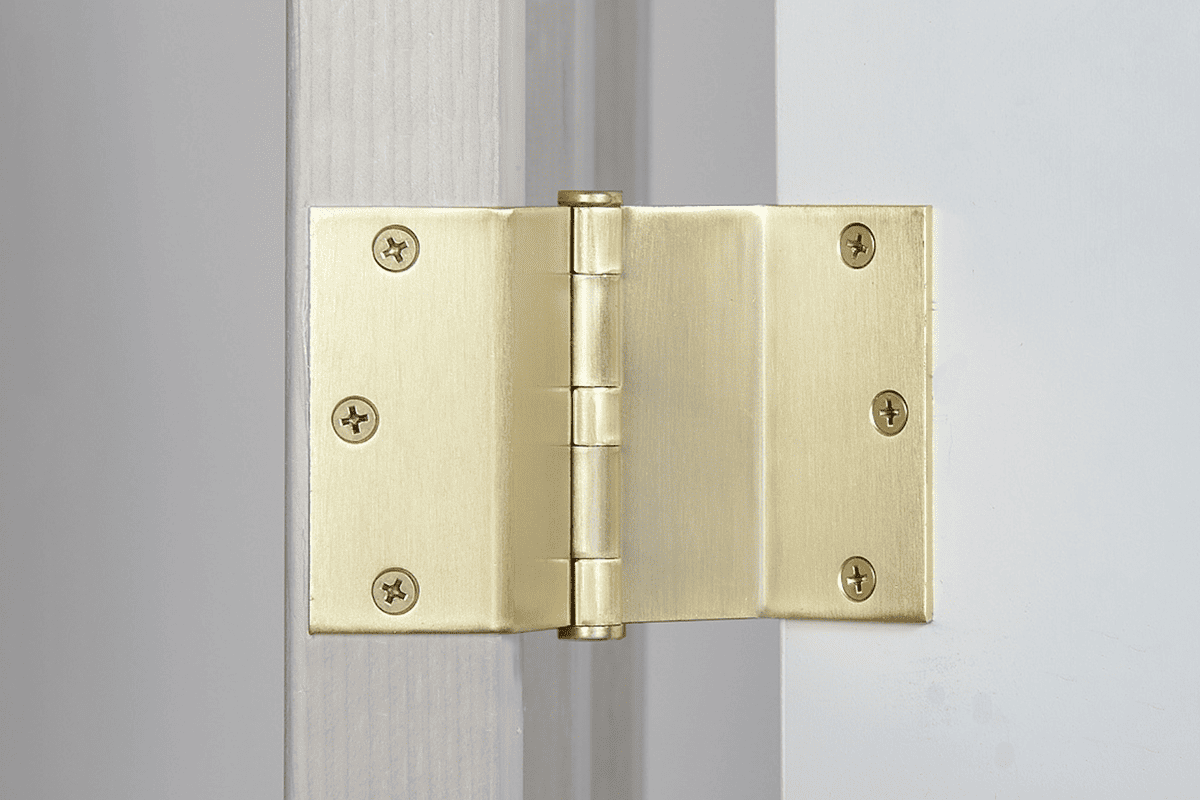
Clearance is a design requirement, not an afterthought
Door clearance affects both function and appearance. A buyer may approve a strong hinge, but the finished door can still fail if the door edge scrapes the frame or compresses a gasket too heavily. In repeated use, this can damage the finish and increase after-sales complaints.
Cranked hinges are often considered when the door needs controlled spacing around:
Frame trims
Decorative casing or metal profiles may interfere with the door swing.Weather seals
Rubber or magnetic seals need compression, but they should not block movement.5Fire or smoke seals
Certified door assemblies may include sealing systems that must remain intact.6Adjacent structures
Narrow corridors, wall returns, or shopfront frames can restrict swing space.Thicker door skins
Metal cladding, wood veneer, or decorative panels can change edge geometry.
I do not treat the hinge as a magic fix for every clearance problem. The hinge must match the full door system. If the frame design, stop position, or seal size is wrong, a different hinge alone may not solve the issue.
Clearance factors buyers should confirm
| Factor | Typical question I ask | Why it matters |
|---|---|---|
| Required opening angle | Does the door need 90°, 110°, or more? | The hinge pivot location affects swing clearance |
| Seal thickness | What gasket or seal is used? | Compression must not block smooth closing |
| Trim projection | How far does the trim extend from the frame? | The door may hit the trim during opening |
| Door edge profile | Is the edge square, rebated, or stepped? | The hinge shape must match the section |
| Finish type | Is the finish brushed, polished, PVD, painted, or plated? | Contact damage becomes visible quickly |
| Usage frequency | Is the door used daily in a commercial setting? | Clearance must remain stable under wear |
Why I ask for drawings before samples
Many international buyers want to move quickly to samples. I understand that. However, when clearance is involved, I usually ask for one of the following:
- A 2D door-frame section drawing
- A 3D model or hinge-side section
- A photo with measured dimensions
- A sample of the frame profile
- A clear statement of required offset and opening angle
This reduces misunderstanding. It also helps the manufacturer check whether existing models can work or whether a customized hinge is needed.
For example, a shop door may need a durable hinge with a satin stainless finish and clearance from a metal frame. A villa entrance door may need a more decorative surface finish and better alignment with a thick rebated frame. An office door may need stable operation and consistent batch finish more than a complex security structure.
The key point is simple. A cranked hinge should be selected because the door movement requires it. The visible cranked form is only the result of that requirement.
Are Cranked Hinges Used for Security Doors?
Security questions often create confusion. Some buyers ask whether cranked hinges are anti-theft hinges. I always answer carefully because the crank shape alone does not prove a hinge has anti-removal protection.7 Security depends on the complete hinge design and door structure.
Cranked hinges can be used on security doors when the door and frame require offset alignment, clearance, or hinge-side restraint. Some security-oriented models may include fixed pins, non-removable pins, or anti-lift security studs, but buyers should verify these features in the exact product design before ordering.
The security function is product-specific
I have seen buyers mix three ideas together: cranked shape, heavy-duty hinge, and anti-removal hinge. These ideas can overlap, but they are not the same thing.
A security-oriented hinge may include additional design features. Common examples include:
- Fixed pins that are not easily removed from the outside
- Non-removable pins designed to reduce pin extraction risk
- Security studs that engage with the frame or opposite hinge leaf
- Anti-lift structures that help restrain the door leaf when closed
- Thicker hinge leaves for higher mechanical strength
- Larger screw holes or reinforced fixing points
- Welded or specially formed hinge components
However, I do not assume every cranked hinge includes these features. A cranked model may be designed only for clearance. Another model may combine offset geometry with anti-removal construction. The buyer must confirm the drawing, specification, test information, and supplier statement.
How anti-removal features usually support security
When a door is closed, the lock side usually receives attention. However, the hinge side can also become a risk point if the hinge pin is exposed or if the door leaf can be lifted away. Security-oriented hinge designs aim to reduce that risk.8
| Security feature | What it may do | What buyers should verify |
|---|---|---|
| Fixed pin | It may reduce pin extraction risk | Pin construction and access direction |
| Non-removable pin | It may prevent simple pin removal | Whether the pin is truly non-removable after installation |
| Security stud | It may engage the frame when closed | Stud position, depth, and matching frame hole |
| Anti-lift design | It may restrain vertical lifting | Load capacity and engagement tolerance |
| Heavy leaf thickness | It may improve mechanical strength | Material grade and leaf thickness |
| Reinforced fixing | It may improve pull-out resistance | Screw type, hole pattern, and frame material |
Security must be evaluated as a door system
A hinge cannot make a weak door secure by itself.9 I always look at the system. The door leaf, frame, hinge fixing, lock body, cylinder, strike plate, and installation quality all affect security performance.
For project buyers, I recommend asking these questions:
- Is the hinge side exposed when the door is closed?
- Does the project require anti-removal hinge features?
- Does the hinge model include fixed pins or security studs?
- Does the frame have space for stud engagement?
- Does the door weight require a heavier hinge structure?
- Does the market require CE documents, fire-rated documents, or other compliance evidence?
- Does the supplier provide drawings and batch inspection support?
I also recommend qualified professional evaluation for application-specific security decisions. A door used in a private villa, a retail shop, a residential entrance, and a commercial office can have different risks. The hinge selection should reflect the application, not only the product photo.
In our supplier-side work at SDH Hardware, we often support overseas door factories and hardware brands that compare hinge types for entrance doors, villa doors, shop doors, and office doors. I usually tell buyers to separate the questions: first confirm the required offset, then confirm the load and material, and then confirm whether anti-removal features are needed.
How Should Buyers Specify Cranked Hinges Before Sampling?
Sampling becomes slow when the inquiry is vague. A buyer may send one photo and ask for the “same cranked hinge,” but the factory still needs dimensions, offset, hole positions, and door details. I prefer precise specifications because they reduce sample mistakes and later batch risk.
Buyers should specify cranked hinges by confirming door-frame section, required offset, hinge size, leaf thickness, hole position, opening direction, door weight, usage frequency, material, finish, and security requirement.10 If anti-removal features are needed, buyers should state whether fixed pins, non-removable pins, or security studs are required.
The core specification checklist
When I prepare a hinge recommendation, I usually request the following information. This checklist helps both technical teams and purchasing teams speak the same language.
| Specification item | What to provide | Why it matters |
|---|---|---|
| Door/frame section drawing | 2D or 3D drawing with dimensions | It confirms offset and fixing planes |
| Required offset | Exact millimeter value | It defines the crank geometry |
| Hinge dimensions | Length, open width, leaf width | It affects fit and strength |
| Leaf thickness | Measured in mm | It affects load capacity and durability |
| Pin diameter | Measured in mm | It affects strength and movement |
| Hole position | Hole diameter and spacing | It must match drilling or punching |
| Opening direction | Left, right, inward, outward | It prevents wrong-hand supply |
| Door weight | Total kg per leaf | It determines hinge quantity and strength |
| Door height and width | Full door size | It affects load distribution |
| Usage frequency | Residential, commercial, heavy traffic | It affects durability requirement |
| Material | Stainless steel, steel, brass, zinc alloy, etc. | It affects strength and corrosion resistance |
| Finish | SS, satin, polished, PVD, powder coating, etc. | It affects appearance and batch consistency |
| Security features | Fixed pin, security stud, anti-lift design | It confirms hinge-side protection |
| Documents | CE, fire-rated, test reports if required | Buyers should verify document validity |
Material and finish choices affect procurement risk
A hinge may look correct in a drawing, but material and finish still matter. For overseas supply, I pay close attention to consistency across bulk orders. Door manufacturers and hardware brands usually need all visible hardware to match. A slight color difference between hinge, lever handle, lock faceplate, and cylinder can create customer complaints.
Common procurement considerations include:
- Stainless steel for corrosion resistance and clean appearance
- Steel with surface treatment for cost-sensitive applications
- Brass or special alloys where appearance or product positioning requires it
- PVD finishes for premium visual matching, depending on the project
- Powder coating where color matching to doors or frames matters
I also recommend confirming packaging and surface protection. A good hinge can be damaged during transport if the packaging is weak. For export orders, buyers should check carton strength, inner protection, labeling, and pallet requirements.
Load and quantity should match door conditions
The number of hinges per door depends on door height, weight, width, material, and usage frequency.11 I avoid giving a universal rule without the door details. A light interior door and a heavy entrance door do not create the same load.
Still, buyers can use a practical evaluation method:
- Confirm door weight in kilograms.
- Confirm door height and width.
- Check whether the door has glass, steel core, or decorative panels.
- Check the daily opening frequency.
- Confirm the hinge manufacturer’s recommended load range.
- Consider a qualified professional review for heavy or public-use doors.
This approach protects both sides. The buyer reduces after-sales risk. The supplier can recommend a hinge that fits the real working condition.
Certifications and documents should be verified
For technical door hardware, I treat certifications as documents buyers should verify. If a market or project requires CE certification, fire-rated certification, or other test documentation, the buyer should request valid copies and confirm the scope.
Important questions include:
- Does the certificate apply to the exact hinge model?
- Does the certificate cover the required size or material?
- Does the fire-rated document apply to the complete door assembly or only a component test?
- Is the test standard accepted in the buyer’s market?
- Is the document still valid and traceable?
At SDH Hardware, our business focuses on standardized and customized door hardware products for overseas markets, including concealed hinges, mortise locks, butt hinges, lever handles, and lock cylinders. For any cranked hinge or security-oriented hinge request, I recommend confirming documents early, especially when the order is for a project, brand program, or regional distribution.
Frequently Asked Questions
Are cranked hinges the same as offset hinges?
Cranked hinges and offset hinges are often discussed together because both address alignment or clearance differences. However, names vary by market and product design. I recommend checking the drawing, crank depth, leaf shape, pivot position, and door-frame section instead of relying only on the product name.
Do all cranked hinges have anti-removal pins?
No. Not all cranked hinges have anti-removal pins. Some models are designed mainly for offset or clearance. Security features such as fixed pins, non-removable pins, anti-lift structures, or security studs must be confirmed in the exact hinge specification before sampling or bulk ordering.
What doors commonly use cranked hinges?
Cranked hinges may be used on entrance doors, villa doors, shop doors, office doors, residential doors, and commercial doors where the door leaf and frame have offset surfaces or clearance requirements. The final selection depends on door structure, weight, opening direction, hinge size, and security needs.
What information should I send to a hinge supplier?
I recommend sending the door/frame section drawing, required offset, hinge dimensions, hole position, opening direction, door weight, door size, material, finish, application scenario, usage frequency, and security requirements. If you need anti-removal features, you should state that clearly at the inquiry stage.
Can a cranked hinge solve every door clearance problem?
No. A cranked hinge can help with specific offset and clearance conditions, but it cannot correct every frame, seal, or door design issue. Buyers should evaluate the complete door system and request professional technical review when the application has heavy load, fire, safety, or security requirements.
Conclusion
Cranked hinges are used to solve practical door problems: offset alignment, clearance around frames or seals, and, in some product-specific designs, hinge-side security restraint. I do not select them only because they look bent. I select them after checking the door structure, load, opening direction, finish, and security requirement. If you are preparing a sample or bulk order, send SDH Hardware your door/frame section drawing, required offset, hinge dimensions, hole position, opening direction, door weight, application scenario, and whether fixed pins or security studs are required.
"Cabinet Hinge Glossary", https://quikdrawers.com/cabinet-hinge-glossary?srsltid=AfmBOorKAHnYncUsBW310rBgoCPGp8MnfcE0QaqbuF8pFJaHxZ3QQfAz. A technical architectural-hardware source describes cranked or offset hinge geometry as a means of positioning a door leaf relative to an offset frame or mounting surface. Evidence role: definition; source type: institution. Supports: A neutral architectural-hardware or standards source should define cranked or offset hinges as hinges shaped or configured to accommodate offset mounting planes between a door and frame.. Scope note: Terminology varies by market, so the source may support the functional concept under the term “offset hinge” rather than “cranked hinge.” ↩
"Finding the Ideal Position for Door Hinges: Key Tips and Guidelines", https://www.rockymountainhardware.com/door-hinge-placement/. Educational door-hardware references describe butt hinges as two-leaf hinges installed between a door and frame, supporting the view that they are most appropriate when the relevant mounting faces align for conventional installation. Evidence role: mechanism; source type: education. Supports: A source should explain that standard butt hinges consist of two leaves mounted to the door and frame and are normally used where the mounting faces permit a flush or aligned installation.. Scope note: The source may explain standard butt-hinge installation generally rather than directly comparing butt hinges with cranked hinges. ↩
"Cabinet Hinge Arm Types Explained: Straight vs Cranked", https://www.mrhardwares.com/cabinet-hinge-arm-shape-selection-guide/. Technical hinge documentation characterizes offset hinge leaves as shaped components that relocate the hinge fixing surfaces or pivot relationship, which supports the explanation that one leaf can mount on a different plane from the other. Evidence role: mechanism; source type: institution. Supports: A technical source should show or describe how offset or cranked hinge leaves place the door and frame fixing surfaces on different planes.. Scope note: The support is likely to be based on hinge geometry diagrams or product-neutral technical descriptions rather than laboratory testing. ↩
"Mastering Pivot Doors: A Comprehensive Technical Overview", https://www.doornmore.com/blog/mastering-pivot-doors-a-comprehensive-technical-overview/?srsltid=AfmBOorzad3surZ_JcsUpTqnwZuSa4comgMOHQ5rQWA2pgOcysqKf5af. Door-design and hinge-geometry references explain that the location of the hinge pivot influences the swing path of the door leaf and the clearance available around the frame. Evidence role: mechanism; source type: education. Supports: A source should explain that hinge pivot location and leaf geometry affect the path of a swinging door and its clearance from nearby frame elements or trim.. Scope note: The source may address hinge geometry generally and not cranked hinges as a named product category. ↩
"Gasket Compression Explained | Rubber Gaskets", https://www.elastoproxy.com/enclosure-gasket-compression/. Technical guidance on door weatherstripping describes seals as components that compress against the door or frame to close gaps, while proper installation must preserve operability of the door. Evidence role: mechanism; source type: institution. Supports: A source should support that weatherstripping or door seals are designed to compress to seal gaps while still allowing normal door opening and closing.. Scope note: The source would support the general seal-compression principle, not prove a specific cranked-hinge selection for a given door. ↩
"NFPA 80 Fire Door Checklist: 13 Critical Points - Fire Testing Solutions", https://www.firetestingsolutions.com/nfpa-80-fire-door-inspection-13-point-checklist. Fire-safety guidance treats fire doors as tested assemblies and emphasizes that seals and other components must be maintained so the assembly can perform its intended fire- or smoke-control function. Evidence role: expert_consensus; source type: government. Supports: A government or fire-safety authority should support that fire and smoke door assemblies rely on intact components, including seals where fitted, to maintain rated performance.. Scope note: The source supports the importance of intact seals in rated assemblies, but it may not discuss cranked hinges specifically. ↩
"That's a tiny piece of metal doing a huge job The video explains one of ...", https://www.facebook.com/Homeloveconstruction/videos/thats-a-tiny-piece-of-metal-doing-a-huge-job-the-video-explains-one-of-the-built/1311187470555143/. Door-security guidance identifies features such as non-removable pins, hinge bolts, or security studs as specific measures for resisting hinge-side attack, supporting the distinction between hinge shape and anti-removal function. Evidence role: definition; source type: institution. Supports: A neutral security or architectural-hardware source should identify anti-removal features such as non-removable pins or security studs as specific design elements, separate from hinge shape.. Scope note: The source may discuss security hinges broadly rather than cranked hinges specifically. ↩
"Common Problems of Removable Pin Hinges and How to ...", https://watersonusa.com/solutions/removable-pin-hinges. Security-door guidance notes that hinge-side protection, including non-removable pins or hinge bolts, can reduce the risk of door removal where hinges are exposed. Evidence role: general_support; source type: institution. Supports: A source should support that exposed or removable hinge pins can be a security concern and that security hinges, hinge bolts, or non-removable pins are used to mitigate hinge-side removal.. Scope note: Such guidance supports the risk-reduction rationale but does not quantify the effectiveness of any particular hinge model. ↩
"Doors and locks - King County, Washington", https://kingcounty.gov/en/dept/sheriff/courts-jails-legal-system/crime-prevention-safety/home-security/door-locks. Security guidance commonly treats an entry door as an assembly in which the door, frame, locks, hinges, and installation quality collectively determine resistance to forced entry. Evidence role: expert_consensus; source type: government. Supports: A government or institutional security source should support that effective door security requires the door leaf, frame, locks, hinges, and installation to work together.. Scope note: The source would support the general system-security principle rather than evaluate the specific cranked hinges described in the article. ↩
"Hinge Size Guide: Everything You Need to Know About Hinge Types ...", https://www.dkhardware.com/blog/hinge-size-guide-and-chart/?srsltid=AfmBOoot-0kA3NTYMdAOWVmwClgxXVWKieRqHAFguD98xQ-e5tXY52-R. Architectural-hardware specification guidance identifies door size, weight, frequency of use, hinge dimensions, material, finish, and installation conditions as relevant factors in selecting hinges. Evidence role: expert_consensus; source type: institution. Supports: A standards or architectural-hardware source should support that hinge selection depends on door dimensions, weight, use conditions, handing, material, finish, and installation details.. Scope note: The source may address hinge specification generally rather than cranked hinges only. ↩
"Hinge Size Guide: Everything You Need to Know About ...", https://www.dkhardware.com/blog/hinge-size-guide-and-chart/?srsltid=AfmBOopTqqndOPVGuVrAkmLPzO6bWv0topNBfnaWKpNaWorNByONoC4p. Architectural-hardware guidance bases hinge quantity and hinge capacity on factors such as door height, width, weight, construction, and expected service frequency. Evidence role: expert_consensus; source type: institution. Supports: A hardware standard or specification guide should support that hinge quantity and capacity depend on door height, weight, width, construction, and frequency of use.. Scope note: The guidance may provide conventional rules of thumb for standard hinges rather than direct calculations for custom cranked hinges. ↩