Stainless Steel Door Hinges Buying Guide: What Should B2B Buyers Check?
Stainless steel door hinges look simple, but bulk purchasing can become risky when buyers focus only on grade or unit price. A wrong match can lead to sagging doors, noisy movement, corrosion complaints, or certificate mismatch. I use this guide to show how I evaluate hinges for real project use.
A stainless steel door hinges buying decision should match material, tested load grade, finish, size, hole pattern, hinge quantity, and batch inspection to the actual door weight, door thickness, usage environment, and market requirements. Buyers should verify component materials, EN1935 or fire-related certificates, dimensional tolerance, and packaging before confirming bulk orders.
In my factory work, I often see buyers ask one question first: “Is it 304?” That question matters, but it is not enough. The better question is: Will this hinge perform consistently on my actual door, in my actual market, across the full batch?
How Should Buyers Choose Materials for Stainless Steel Door Hinges?
Material selection creates the first risk in stainless steel door hinges because many buyers treat the whole hinge as one material. That can cause confusion later. A hinge has leaves, bearings, pins, and screws, and each part may use different stainless steel depending on function and cost.1
The best way to choose hinge material is to confirm each component separately. Buyers should check the hinge leaf, bearing, pin, and screws against the supplier’s label, door application, corrosion environment, and agreed specification. 304 suits general use, 201 can suit dry interiors, and 316 is mainly for higher-corrosion locations.2
Why “304 stainless steel hinge” is not always specific enough
In production and order inspection, I have learned that the phrase “304 stainless steel hinge” can mean different things to different suppliers. Some suppliers use it to describe only the hinge leaf. Others may imply that the full hinge set, including screws and bearings, is 304. That difference matters when the buyer is importing for a brand, tender, or project.
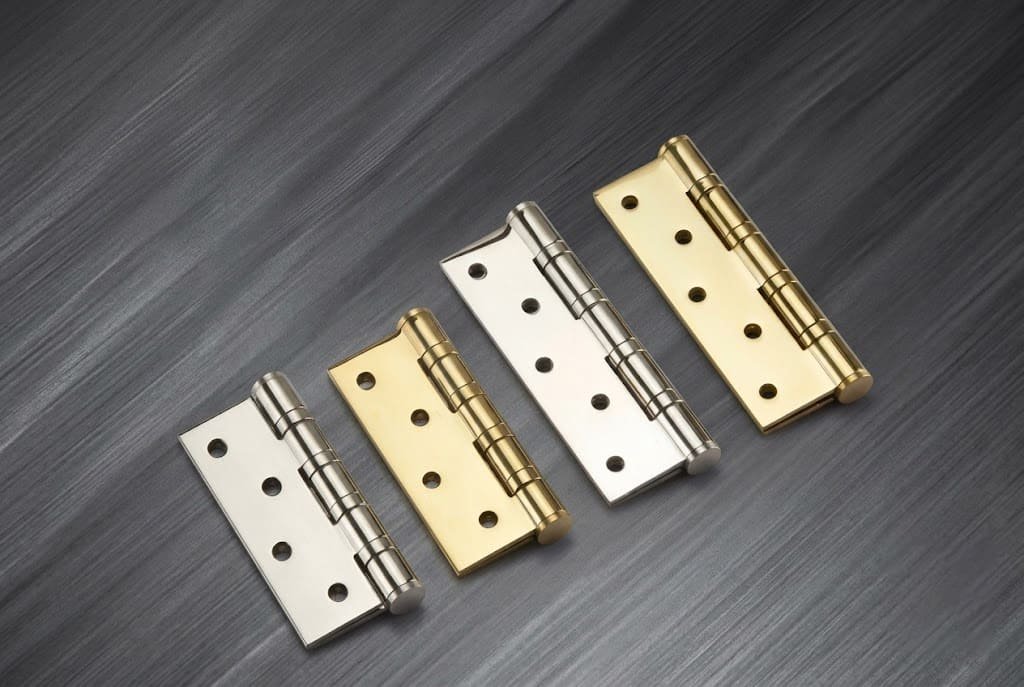
A stainless steel butt hinge usually includes:
- Hinge leaves: the two flat plates fixed to the door and frame
- Bearing or washer system: the moving support between knuckles
- Pin: the vertical shaft through the hinge knuckles
- Screws: the fasteners supplied with the hinge
- Finish layer: brushed, polished, PVD, electrophoresis, or other treatment
If a buyer only writes “304 hinge” on the purchase order, the supplier may still need clarification. I prefer to confirm the material structure in writing, especially for OEM and brand orders.
Common stainless steel material choices
| Component / Choice | Common Use | Buyer Evaluation Point |
|---|---|---|
| 201 stainless steel leaf | Dry indoor doors, cost-sensitive markets | Suitable only where corrosion risk is low |
| 304 stainless steel leaf | General architectural door hardware | Common standard for many markets |
| 316 stainless steel leaf | Coastal, humid, or higher-corrosion environments | Better corrosion resistance, but higher cost |
| 201 bearing | Often used in tested hinge structures | Confirm compatibility with test certificate |
| 304 or 201 screws | Depends on buyer requirement and cost target | Confirm screw material separately |
| Stainless steel pin | Depends on hinge design | Confirm strength and corrosion expectations |
How I balance 201, 304, and 316
I do not treat 316 as “always best.” It is better when the environment justifies it. For example, a hotel near the sea or a humid public building may need stronger corrosion resistance. However, for dry indoor wooden doors, a 304 hinge or even a properly specified 201 hinge may meet the commercial target.
For B2B purchasing, the real issue is not only the grade. The issue is material consistency across the batch. Buyers should ask:
- Does the physical material match the product label?
- Are the hinge leaves, bearings, pins, and screws clearly specified?
- Does the supplier offer material inspection records or internal QC checks?
- Are the components consistent across samples and mass production?
- Does the material selection match the project environment?
I usually recommend that buyers keep a simple specification sheet for each hinge model. This sheet should include leaf thickness, size, corner type, material by component, finish, hole pattern, screw type, packaging, and certificate requirements. This prevents disputes when the order moves from sample approval to mass production.
A good hinge specification should describe the hinge as a complete assembly, not as a single stainless steel grade.
How Do Stainless Steel Door Hinges Meet Load and Performance Standards?
Performance risk appears when buyers select stainless steel door hinges by appearance but ignore the actual door weight. A hinge may look strong, but if the tested load grade does not match the door, the result can be sagging, noise, friction, or warranty pressure after installation.
Buyers should evaluate hinge performance through recognized test documents and real door load. EN1935 is a key reference for mechanical durability, including 200,000-cycle testing.3 Grade 11 usually relates to 80 kg load, while Grade 13 usually relates to 120 kg load.4 Buyers should verify the actual certificate.
Why tested load matters more than appearance
A door hinge works under repeated movement. It carries the door weight every day, and it also deals with side forces from users, closers, seals, and installation conditions. For that reason, a hinge should not be evaluated only by weight in the hand or shiny surface.
For many architectural hardware buyers, EN1935 is the main reference standard for single-axis hinges. It includes durability testing, load grading, safety, corrosion resistance categories, and other classification items. In practical B2B discussions, two common load references are:
| EN1935 Grade Reference | Common Load Reference | Typical Application Direction |
|---|---|---|
| Grade 11 | Around 80 kg | Medium to heavy interior doors |
| Grade 13 | Around 120 kg | Heavier doors or higher-duty projects |
Buyers should not rely on a catalog sentence alone. They should request and review the actual certificate or test report. The hinge model, size, thickness, bearing structure, and test condition should match the product being ordered.
Fire-rated requirements need certificate matching
Fire-rated door hardware is another area where buyers must be careful.5 Fire-related requirements may involve reports for 30, 60, 120, or 260 minutes, depending on the door system, country, project, and certification route.6 However, a hinge cannot be judged in isolation without checking the relevant report and door assembly requirements.
I suggest buyers ask these questions before placing a fire-rated hinge order:
- Does the supplier provide the actual fire test report or certificate?
- Does the report cover the hinge model being purchased?
- Does the report match the required fire time?
- Does the market accept the test body and report format?
- Does the door manufacturer confirm compatibility with the door system?
As a manufacturer, I can prepare and provide test-related documents when they are available for the product line. Still, the buyer should always verify the documents against the project specification and local market requirements.
Real door load is not only the door weight
A common mistake is to say, “My door is 70 kg, so an 80 kg hinge is enough.” Sometimes that is true. Sometimes it is not. The final result also depends on:
- Door height
- Door width
- Door thickness
- Core material
- Door closer force
- Frame material
- Screw holding strength
- Number of hinges
- Installation accuracy
- Frequency of use
For example, a tall door creates more leverage than a short door. A wide door can apply more stress to hinge screws.7 A public building door may open far more often than a residential bedroom door. This is why I prefer to evaluate hinge load together with door dimensions and usage conditions.
Practical procurement checklist for performance
Before confirming a bulk order, I would check:
- Target load grade: Grade 11, Grade 13, or other project requirement
- Cycle test reference: commonly 200,000 cycles under EN1935
- Hinge size and thickness: matched to the tested model
- Bearing structure: ball bearing, washer, or other design
- Fire report: if required for fire door projects
- Salt spray report: if corrosion resistance must be documented
- Installation quantity: two or three hinges depending on door height and load
- Certificate identity: model number, size, and classification must match
In my experience, many after-sales problems begin before production starts. They begin when a buyer approves a hinge without connecting the test document to the real door. A professional door factory or importer should make performance verification part of the purchasing process, not a step after complaints arrive.
Which Surface Finish Is Best for Stainless Steel Door Hinges?
Surface finish is often treated as a design choice, but it also affects buyer expectations for stainless steel door hinges. A mismatch in finish can create brand complaints, visible batch differences, or corrosion concerns. The finish should match the door design, project environment, and quality control standard.
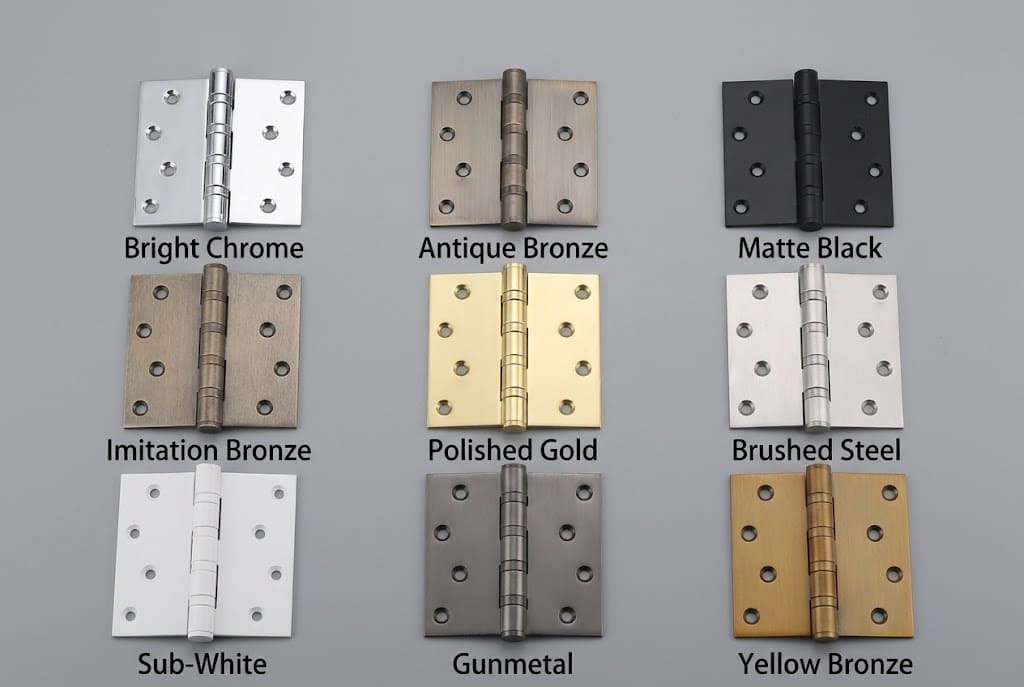
The best surface finish depends on the application. SSS brushed stainless steel gives a satin appearance, PSS polished stainless steel gives a mirror-like look, PVD finishes add decorative colors such as gold, and matt black electrophoresis supports modern design. Buyers should control color, corrosion expectations, and batch consistency.
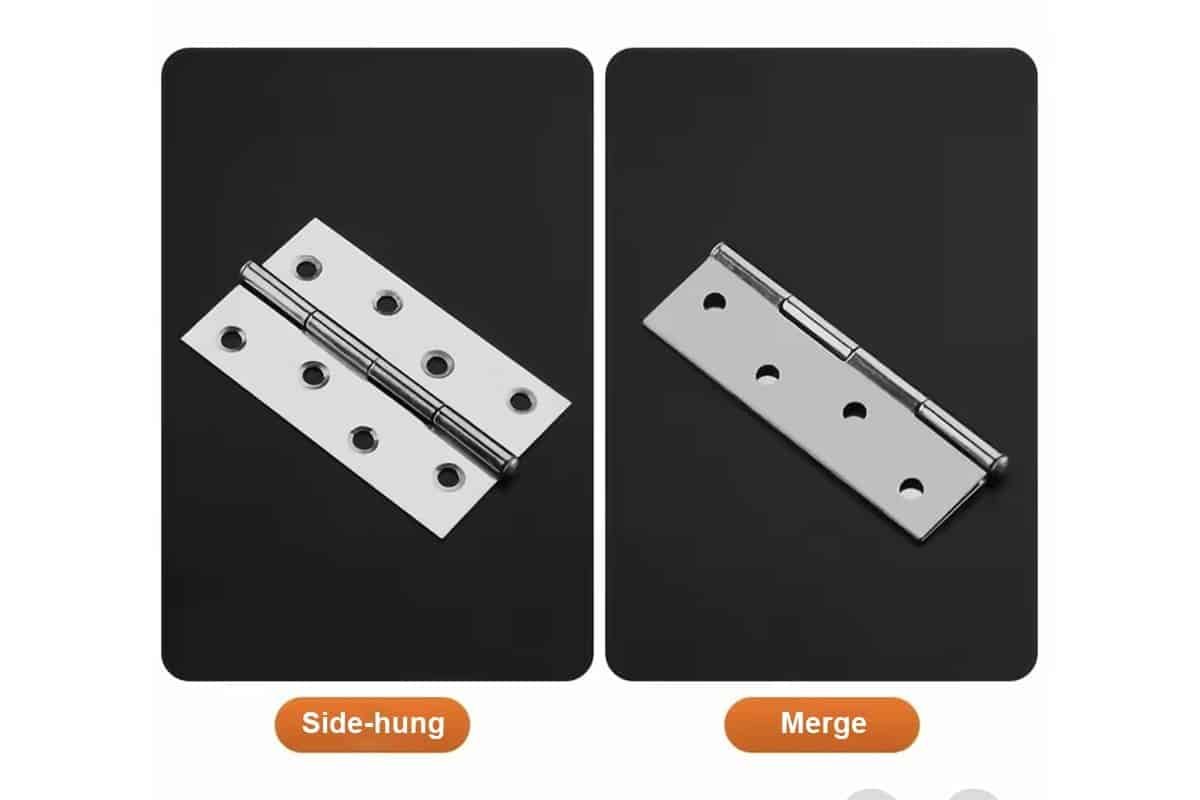
Common finish options for B2B hinge orders
Different markets prefer different finishes. In Europe, satin stainless steel is common for clean architectural projects. In the Middle East, decorative finishes such as PVD gold may be requested for premium interiors. In Southeast Asia, corrosion expectations can vary strongly depending on humidity and building type.
Here are common finish options I discuss with buyers:
| Finish | Appearance | Common Buyer Concern |
|---|---|---|
| SSS / Satin Stainless Steel | Brushed, matte metallic surface | Brush direction, scratch control, batch tone |
| PSS / Polished Stainless Steel | Bright, reflective surface | Mirror consistency, fingerprint visibility |
| PVD Gold | Decorative gold tone | Color stability, batch matching, cost |
| PVD Black / Other PVD colors | Premium modern look | Color tolerance and substrate preparation |
| Matt Black Electrophoresis | Smooth black surface | Chipping risk, color consistency, packaging protection |
Finish is not only color
I often tell buyers that the finish is part of the product promise. If a hardware brand sells a full door hardware series, the hinge finish should match lever handles, lock faceplates, cylinders, and accessories. A slight color difference may be acceptable in some wholesale markets, but it can be a serious issue for brand lines and project packages.
Buyers should consider:
- Design matching: Does the hinge match the lever handle and lock body faceplate?
- Corrosion expectations: Does the finish suit humidity, coastal air, or indoor dry use?
- Cleaning behavior: Will fingerprints, dust, or scratches be highly visible?
- Batch control: Can the supplier maintain color consistency across repeat orders?
- Packaging protection: Will the finish survive transport without scratches?
Salt spray reports and corrosion claims
Salt spray testing can be useful, but buyers should read it carefully.8 A supplier may mention a salt spray result, but the buyer should verify the actual test report, test duration, material, finish, and model. A salt spray result for one finish may not apply to every finish in the catalog.9
For example, brushed 304 stainless steel and matt black electrophoresis may have different performance behavior. PVD performance also depends on substrate preparation and process control.10 Buyers should ask for the specific report that matches the purchased item.
Batch appearance control
For B2B orders, the biggest finish issue is often not the sample. The sample may look excellent. The bigger question is whether the full batch matches the approved sample.
I recommend the following controls:
- Approve a sealed finish sample before production.
- Define acceptable color tolerance if the finish is decorative.
- Inspect brush direction for SSS hinges.
- Check visible scratches before packing.
- Require individual protective bags.
- Use cartons that reduce movement during transport.
- Keep a retained sample for repeat orders.
At SDH Hardware, we manufacture and inspect architectural door hardware in factory batches, so I pay close attention to surface protection after polishing, brushing, or finishing. A good finish can still be damaged by careless packaging. That is why I consider packaging part of surface quality, not a separate topic.
What Size, Corner Type, and Hole Pattern Should Stainless Steel Door Hinges Have?
Installation problems happen when stainless steel door hinges look correct but do not match the door preparation. A small difference in size, corner radius, thickness, or screw hole layout can slow down assembly, split wood, or reduce long-term stability.
Buyers should choose hinge size, corner type, and hole pattern based on door thickness, weight, routing method, and regional standard. Common 40 kg wooden doors often use 4-inch hinge models such as 433 or 443. Heavier or Grade 13 applications often need 5-inch models such as 533 or 543.
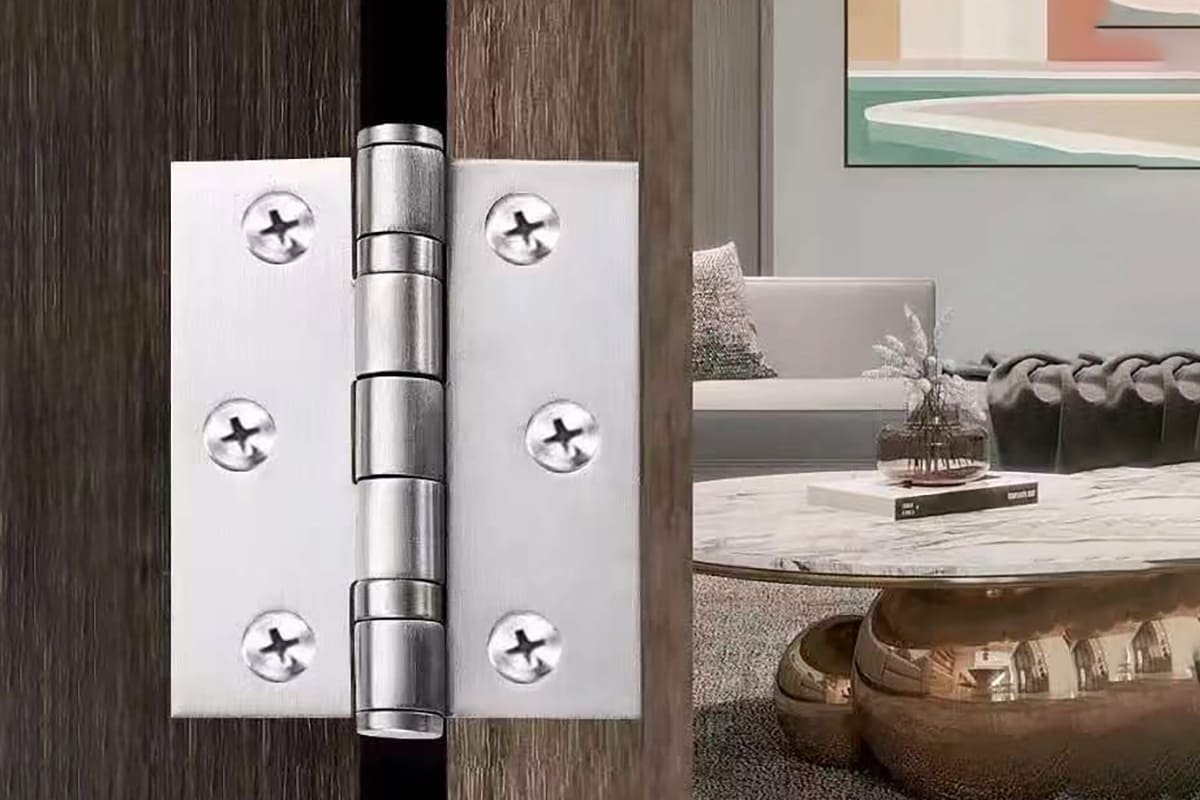
Understanding hinge size codes
In many hinge discussions, model codes such as 433, 443, 533, and 543 refer to size and thickness combinations. The exact meaning should be confirmed with the supplier’s drawing, but buyers commonly use these terms to discuss 4-inch and 5-inch stainless steel butt hinges.
A simplified reference looks like this:
| Common Model Reference | General Meaning | Typical Direction |
|---|---|---|
| 433 | 4-inch hinge, 3 mm thickness reference | Common wooden doors |
| 443 | 4-inch hinge, wider or different dimensional layout | Common wooden doors |
| 533 | 5-inch hinge, 3 mm thickness reference | Heavier doors |
| 543 | 5-inch hinge, wider or higher-duty layout | Heavy-duty or Grade 13 direction |
For a wooden door around 40 kg, 4-inch hinges such as 433 or 443 are often used. For heavier doors, taller doors, or applications targeting Grade 13 / 120 kg, 5-inch hinges such as 533 or 543 are usually more appropriate. However, buyers should always confirm the tested model and installation condition.
Square corners versus rounded corners
Corner type affects installation fit. The two common options are:
- Square corner hinges
- Rounded corner hinges
European rounded corner hinges commonly use R10 radius. This matters because many door factories use routing equipment or templates. If the hinge corner does not match the routing shape, installers may need extra manual work. That increases labor cost and creates inconsistent results.
I recommend buyers confirm:
- Corner type: square or radius
- Radius value: such as R10
- Leaf width and height
- Leaf thickness
- Knuckle diameter
- Screw hole position
- Drawing approval before mass production
Hole pattern affects installation and stability
Screw holes may look like a small detail, but they matter in wooden door production. Common options include straight holes and curved holes.
Straight hole designs can be left/right specific depending on the hinge structure and routing style. Curved hole patterns can help avoid direct alignment with wood grain and may reduce the risk of splitting during screw installation.
| Hole Pattern | Advantage | Buyer Concern |
|---|---|---|
| Straight holes | Simple, traditional layout | May be left/right specific |
| Curved holes | Can reduce wood splitting risk | Must match factory installation habits |
| Custom hole layout | Supports OEM door preparation | Requires accurate drawing approval |
Tolerance control matters in bulk
A hinge drawing is only useful if production follows it. For example, if the agreed thickness is 3.0 mm, the buyer may specify an acceptable tolerance such as 2.95–3.05 mm. That tolerance should be confirmed in advance. It should not be argued after goods are finished.
In factory inspection, I like to check:
- Leaf thickness with calipers
- Overall height and width
- Hole diameter
- Hole center distance
- Corner radius
- Pin alignment
- Opening and closing smoothness
- Surface condition
- Screw compatibility
For door factories, small dimensional differences can create large assembly problems. A hole position shift may slow down production. A thickness variation may affect the flush fit. A rough knuckle may create noise. These details do not look exciting in a catalog, but they determine whether the hinge works smoothly in bulk use.
How Many Stainless Steel Door Hinges Should Be Installed Per Door?
Hinge quantity is easy to overlook because buyers may assume the load rating applies in every installation. That assumption can be risky. Stainless steel door hinges are usually tested under specific conditions, and actual performance changes when the number of hinges, door height, and door weight change.
For stainless steel butt hinges, two hinges may meet tested load conditions when the door height is under 2.1 m and the door is within the rated load. However, three hinges are generally more stable.11 For doors over 2.1 m or heavier than 80 kg, buyers should normally treat three hinges as necessary.
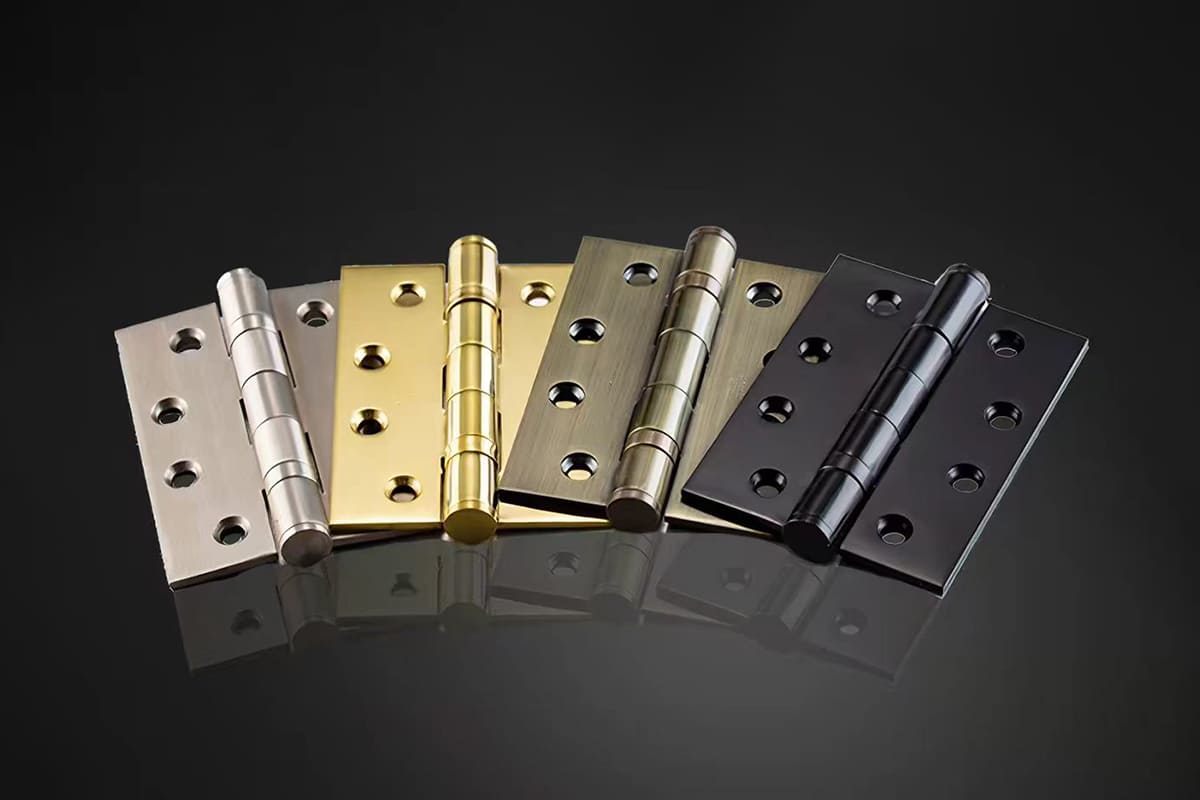
Why hinge quantity changes real performance
A door is not a static weight hanging on a wall. It moves, stops, swings, and sometimes gets pushed hard. The hinge at the top often carries high stress because it resists the door’s tendency to pull away from the frame. The bottom hinge supports alignment and load distribution. A third hinge can improve stability, especially on taller or heavier doors.
For doors under 2.1 m, two hinges may be acceptable if the tested load condition and door weight match. Still, many door factories prefer three hinges because the installation feels more stable and reduces long-term sagging risk.
For doors over 2.1 m, I usually recommend three hinges as the normal configuration. For doors heavier than 80 kg, three hinges should be treated as necessary unless a qualified professional or tested door system confirms another solution.
Simple hinge quantity guide
| Door Condition | Suggested Hinge Quantity | Notes |
|---|---|---|
| Under 2.1 m, light to medium door | 2 or 3 | Three gives better stability |
| Around 40 kg wooden door | Usually 3 in many production lines | 4-inch hinges often used |
| Over 2.1 m height | 3 | Better load distribution |
| Over 80 kg | 3 | Confirm load grade and certificate |
| Fire-rated door | Follow tested door system | Verify report and project rules |
| Heavy public-use door | 3 or project-specific | Professional evaluation recommended |
Load capacity and test conditions
Buyers should ask how the hinge load capacity was tested. For example, was the rating based on two hinges or three hinges? What was the door size? What standard was used? Which hinge model was tested?
This is especially important for importers and brand owners. If a catalog says “120 kg,” the buyer should not assume every hinge size, every finish, and every installation condition supports that value. The buyer should connect the load claim to a real document.
Installation quality also matters
Even the correct hinge can fail if installation is poor.12 The screws must fit the holes. The pilot holes should be correct for the wood. The hinge recess should be flat. The door and frame should align properly.
Common installation-related risks include:
- Screws not fully tightened
- Pilot holes too small, causing wood splitting
- Hinge recess too deep or uneven
- Door frame not square
- Door closer adding extra force
- Wrong hinge orientation
- Insufficient number of hinges
I have seen buyers focus heavily on hinge material but ignore screw quality and installation method. That is a mistake. A strong hinge leaf cannot compensate for weak screw holding or poor routing. For project doors, the hinge selection should be confirmed with the door manufacturer, installer, or qualified hardware consultant.
What Quality Checks Should B2B Buyers Require Before Ordering Stainless Steel Door Hinges?
Bulk purchasing risk increases when stainless steel door hinges are approved only by sample appearance. A good sample does not guarantee a good shipment. Buyers need order-level checks for certificates, materials, dimensions, function, finish, screws, and packaging before mass production and before shipment.
B2B buyers should require certificate verification, component material confirmation, dimensional tolerance checks, finish comparison, functional inspection, screw matching, and individual protective packaging. Important documents may include EN1935 certificates, fire test reports, and salt spray test reports, but buyers should always verify that each document matches the actual hinge model.
Pre-order document checks
Before placing a bulk order, buyers should request available documents and review them carefully. Depending on the project, documents may include:
- EN1935 certificate or test report
- Fire test report
- Salt spray test report
- Material declaration
- Product drawing
- Finish sample approval
- Packing specification
- Inspection checklist
These documents should be tied to the actual product. A general certificate from another model may not support the order. A fire report for one door system may not apply to a different system. A salt spray report for one finish may not apply to another finish.
Material consistency checks
As I mentioned earlier, the hinge is an assembly. Buyers should confirm:
- Hinge leaf material
- Bearing material
- Pin material
- Screw material
- Surface finish process
- Any customer-specific requirement
Conclusion
A good stainless steel door hinges buying decision is not based on stainless steel grade or low price alone. Buyers should match component material, load grade, surface finish, size, corner type, hole pattern, hinge quantity, certificates, and batch inspection to the real door and project requirement. In production and order inspection, these details usually decide whether a hinge performs consistently in bulk use. If you are sourcing hinges for door factories, hardware brands, or wholesale projects, contact SDH Hardware to review specifications, drawings, finishes, and OEM/ODM order requirements.
"What Is Butt Hinge and When to Use or Not to Use It? - SDH ...", https://sdhhardware.com/2026/08/05/what-is-butt-hinge-and-when-to-use-or-not-to-use-it/. A technical guide to architectural hinges identifies butt hinges as assemblies consisting of leaves joined around a pin or knuckle system and installed with fasteners, supporting the article’s treatment of the hinge as a component assembly rather than a single material item. Evidence role: definition; source type: institution. Supports: A hardware standard or technical guide should define the principal parts of a butt or single-axis hinge, including leaves, pin or knuckle assembly, bearings or washers, and fasteners.. Scope note: The source would define hinge construction generally and may not specify the exact material combinations used in commercial stainless-steel hinges. ↩
"Corrosion Behavior of Sensitized AISI 304 Stainless Steel in ...", https://pmc.ncbi.nlm.nih.gov/articles/PMC9740934/. A stainless-steel materials reference documents that molybdenum-bearing Type 316 stainless steel generally has greater resistance to chloride-related corrosion than Type 304, while lower-alloy alternatives are typically limited to less aggressive service conditions; this supports the article’s grade-selection guidance but does not validate any specific hinge supplier’s material quality. Evidence role: general_support; source type: institution. Supports: A neutral stainless-steel reference should support that Type 316 generally offers better chloride and marine corrosion resistance than Type 304, while lower-nickel grades such as 201 are more appropriate for less aggressive environments.. Scope note: Contextual support for material behavior, not direct proof of performance for a particular hinge batch. ↩
"What Should I Know About Fire Door Hinge Standards? UL, CE, and ...", https://sdhhardware.com/2026/08/13/what-should-i-know-about-fire-door-hinge-standards-ul-ce-and-en-requirements-explained/. A standards summary for EN 1935 describes the standard as covering single-axis hinges and includes durability testing at 200,000 cycles, supporting the article’s use of EN 1935 as a mechanical-performance reference. Evidence role: definition; source type: institution. Supports: A standards summary should confirm that EN 1935 applies to single-axis hinges and includes durability testing at 200,000 cycles.. Scope note: The source supports the standard’s scope and test framework, not the compliance of any hinge model unless an actual certificate is reviewed. ↩
"What is CE Certification? A Comprehensive Analysis of the EU CE ...", https://sdhhardware.com/2025/02/12/what-is-ce-certification-a-comprehensive-analysis-of-the-eu-ce-certification-standards-en-standards-for-door-lock-hardware-products/. An EN 1935 classification reference lists Grade 11 and Grade 13 hinge classifications with corresponding door-mass references of approximately 80 kg and 120 kg, respectively, supporting the article’s load-grade comparison. Evidence role: definition; source type: institution. Supports: A recognized standards or architectural hardware source should verify the load classifications associated with EN 1935 Grade 11 and Grade 13 hinges.. Scope note: The classification values do not prove that a specific product meets the grade without a matching test report. ↩
"What Should I Know About Fire Door Hinge ... - SDH hardware", https://sdhhardware.com/2026/08/13/what-should-i-know-about-fire-door-hinge-standards-ul-ce-and-en-requirements-explained/. Fire-door guidance from a code or certification institution states that hardware used on rated doors must be appropriate to the listed or tested fire-door assembly, supporting the article’s caution that a hinge should not be assessed apart from the relevant fire-rating documentation. Evidence role: expert_consensus; source type: institution. Supports: A fire-door code or certification source should support that hinges and other hardware on fire-rated doors must be compatible with the tested, listed, or certified door assembly.. Scope note: Fire-door rules vary by jurisdiction and certification route, so the source provides general compliance context rather than project-specific approval. ↩
"What Kind of Door Hardware for Fire Rated Doors Is Suitable ...", https://sdhhardware.com/2026/08/10/what-kind-of-door-hardware-for-fire-rated-doors-is-suitable/. Fire-door testing and certification references describe fire-resistance ratings as time-based classifications that vary under standards such as EN 1634 or UL fire-door listings, supporting the article’s statement that required fire times depend on the door system and market. Evidence role: historical_context; source type: institution. Supports: A fire-testing standard or certification source should support that fire doors are classified by time-based fire-resistance ratings and that accepted durations differ across standards and jurisdictions.. Scope note: The source may support the general use of minute-based ratings without confirming every duration listed in the article, especially where local certification schemes use different rating intervals. ↩
"Torque", https://en.wikipedia.org/wiki/Torque. An engineering mechanics text explains that moment or torque is proportional to applied force and lever-arm distance, providing the mechanical basis for the article’s claim that larger door dimensions can increase stress on hinges and fasteners. Evidence role: mechanism; source type: education. Supports: An engineering mechanics source should explain that moment or torque increases with the force and perpendicular distance from the pivot or support, providing the mechanical basis for higher hinge stress on larger doors.. Scope note: This supports the underlying mechanics and does not calculate the exact hinge load for a specific door design. ↩
"Salt Spray Test: How to Evaluate Door Hardware Corrosion ...", https://sdhhardware.com/2025/06/23/salt-spray-test-how-to-evaluate-door-hardware-corrosion-resistance/. Corrosion-testing literature notes that neutral salt spray testing is primarily an accelerated comparative method and does not necessarily correlate directly with outdoor service life, supporting the article’s caution that buyers should review test conditions and applicability. Evidence role: general_support; source type: paper. Supports: A corrosion-testing paper or standards commentary should support that salt spray tests are accelerated comparative tests and may not directly predict service life in real environments.. Scope note: The source supports interpretation of salt spray data generally, not the corrosion resistance of any specific hinge finish. ↩
"CLIA Program and HIPAA Privacy Rule; Patients' Access to ...", https://www.federalregister.gov/documents/2014/02/06/2014-02280/clia-program-and-hipaa-privacy-rule-patients-access-to-test-reports. Testing and accreditation guidance generally treats laboratory results as applying to the specific specimens and conditions described in the report, supporting the article’s statement that a salt spray result for one finish should not automatically be applied to other catalog finishes. Evidence role: general_support; source type: institution. Supports: A testing standard or accreditation guidance should support that test reports identify the tested specimen, coating, conditions, and duration, and that results are specific to those tested conditions.. Scope note: This is procedural support for test-report interpretation rather than evidence about any particular finish. ↩
"Advancements in Nanoparticle Deposition Techniques for ...", https://pmc.ncbi.nlm.nih.gov/articles/PMC10537803/. Materials-engineering studies of physical vapor deposition coatings report that coating adhesion and durability are strongly influenced by substrate preparation and deposition parameters, supporting the article’s statement that PVD performance depends on process control. Evidence role: mechanism; source type: paper. Supports: A peer-reviewed coating study or review should support that PVD coating adhesion, durability, and corrosion behavior are influenced by substrate cleaning, surface preparation, and deposition parameters.. Scope note: The evidence is general to PVD coatings and may not directly test decorative PVD finishes on door hinges. ↩
"How many concealed hinges should be installed on a door?", https://sdhhardware.com/2026/08/26/how-many-concealed-hinges-should-be-installed-on-a-door/. Architectural hardware installation guidance commonly recommends selecting hinge quantity according to door height and weight and often specifies additional hinges for taller or heavier doors, supporting the article’s practical statement that three hinges provide greater stability. Evidence role: expert_consensus; source type: institution. Supports: An architectural hardware institution or installation guide should support typical hinge-count guidance based on door height and weight, including the common use of three hinges for greater stability.. Scope note: Institutional guides may vary by hinge type, door construction, and jurisdiction, so the citation would provide general installation guidance rather than a universal rule. ↩
"A Step-by-Step Guide to Replacing or Installing Door Hinges", https://sdhhardware.com/2025/02/14/a-step-by-step-guide-to-replacing-or-installing-door-hinges/. Door-hardware installation guidance identifies screw fixing, pilot-hole preparation, hinge mortising, and frame alignment as factors affecting hinge performance, supporting the article’s statement that proper hinge selection can be undermined by poor installation. Evidence role: mechanism; source type: institution. Supports: A door installation or architectural hardware guide should support that screw installation, pilot holes, mortise preparation, and frame alignment affect hinge performance and service life.. Scope note: The source supports the installation mechanism generally and does not diagnose any specific field failure. ↩