A Complete Guide to Euro Cylinder Locks?
Euro cylinder locks are the most common lock cylinders on modern European-style doors1, yet they are easy to mis-specify. The problem is not the format — it is the details: size, keying, and security features. That confusion leads to poor fit and weak security. I break down the choices so you can specify the right cylinder the first time.
A Euro cylinder lock is a standardized, replaceable lock core used with Euro-profile mortise locks. To specify correctly, match the cylinder size to door and hardware thickness, choose the right type (double, thumbturn, half), select security features (anti-snap, anti-drill, anti-bump), and verify compliance with relevant standards (e.g., EN 1303, TS 007, SKG).
You now have the short answer. But procurement decisions hinge on subtleties like restricted keyways, master keying logic, regional certifications, and supplier quality control. I will walk you through each area with practical tips from the manufacturing floor so you can buy Euro cylinder locks with confidence.
What is a Euro cylinder lock and how does it work?
When projects go wrong, I usually find the issue started with a vague definition. “Cylinder is a cylinder” is not enough. That leads to wrong cams, sticky keys, and returns.
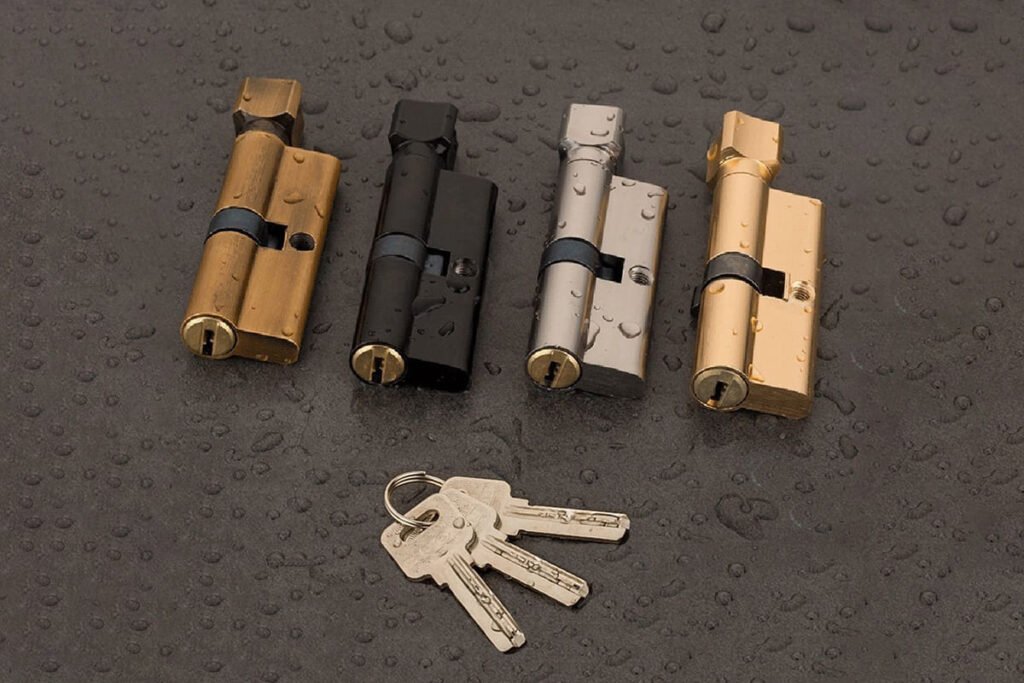
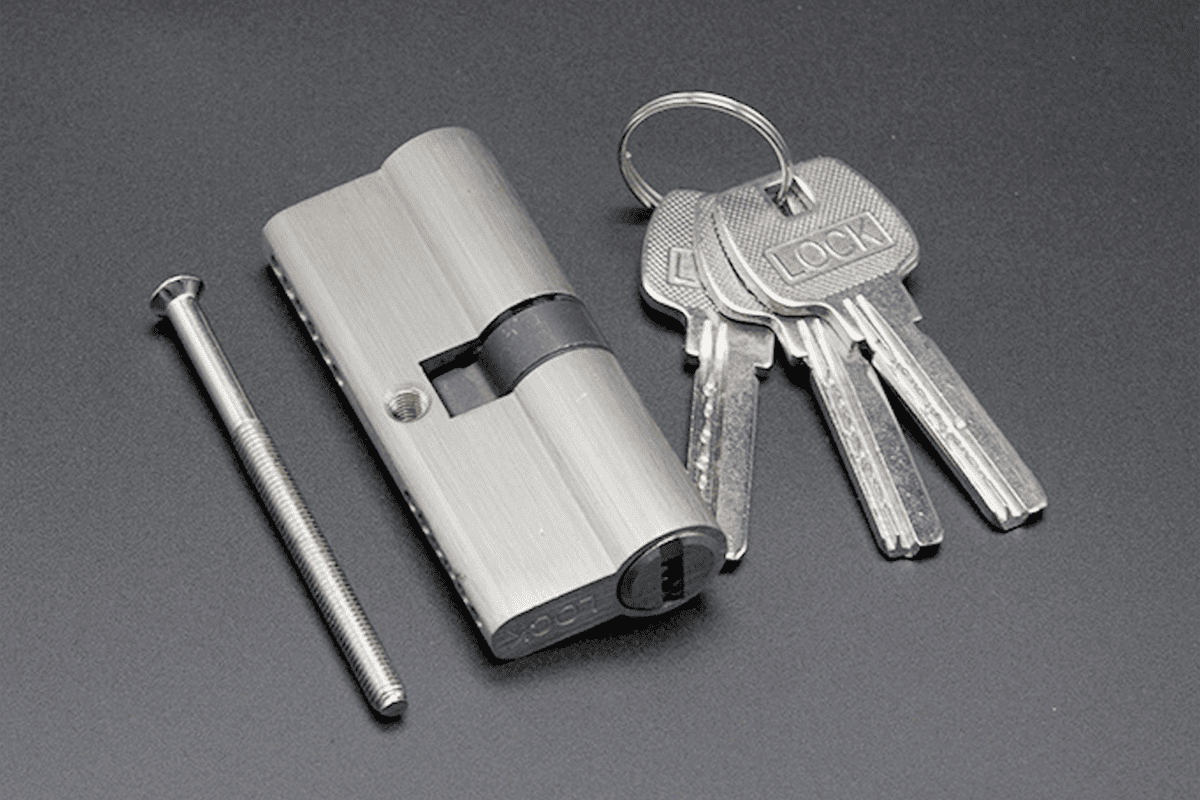
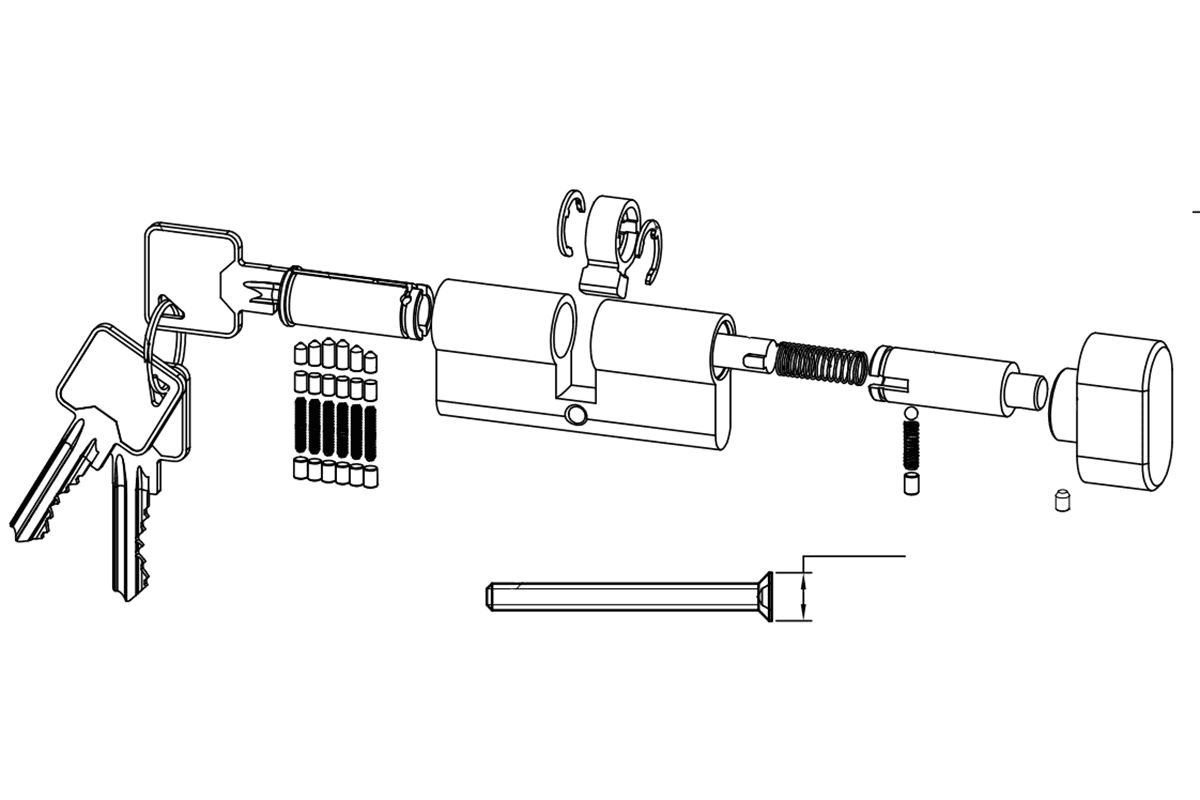
A Euro cylinder lock is a removable, standardized lock core that interfaces with a Euro-profile mortise lock via a central M5 fixing screw and a rotating cam2. Turning the key rotates the cam to retract or extend the mortise lock bolt. Its value is modular replacement, scalable security, and flexible keying options.
Dive deeper
The components that matter
- Body (usually brass): Houses plug and pin stacks.
- Plug: The rotating core that accepts the key.
- Pins and springs: Align at the shear line when the correct key is inserted.
- Cam: The actuator that turns to operate the mortise lock.
- Fixing hole: Takes an M5 screw through the lock case from the edge of the door.
Standardization is the Euro cylinder lock’s superpower. You can swap a cylinder without changing the mortise lock or handle set. In my factory, we keep dozens of keyway profiles and cam styles ready so OEM customers can standardize across door lines while tailoring security by market.
Core cylinder types you will choose
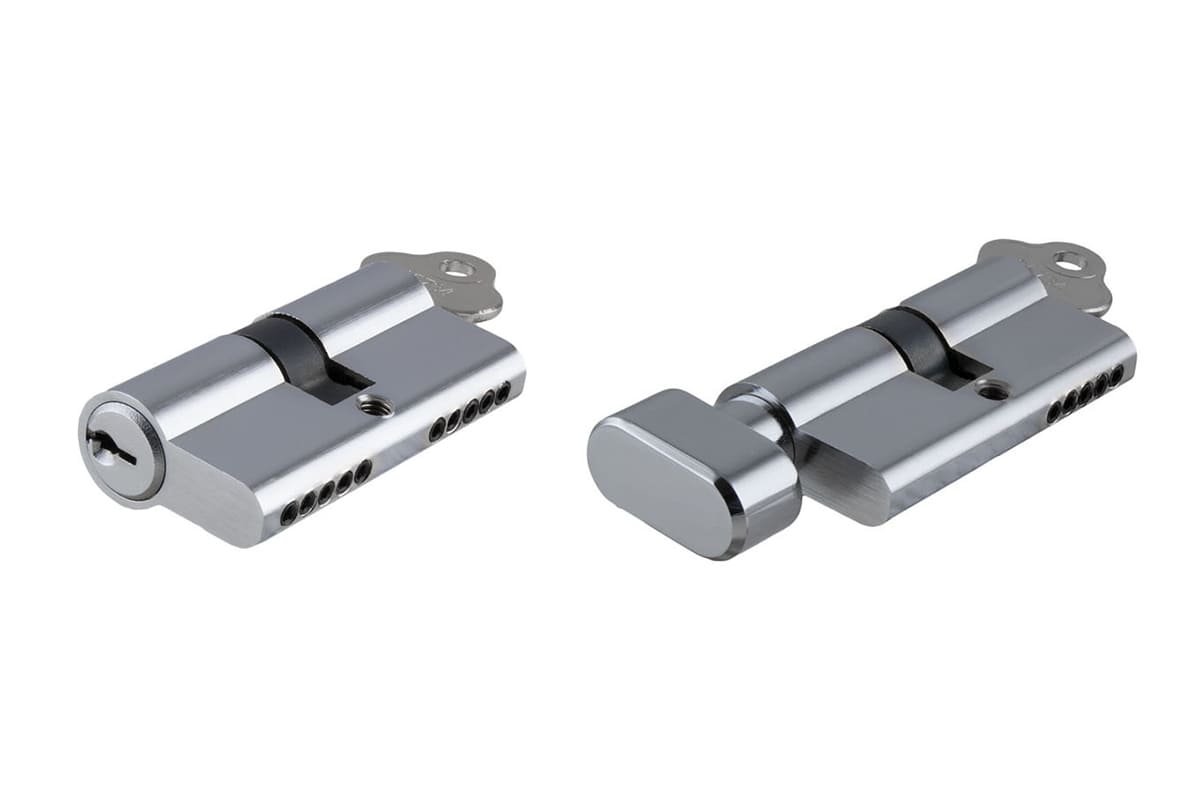
- Double cylinder (key/key): Operable by key from both sides.
- Thumbturn cylinder (key/turn): Key outside, thumbturn inside for egress.
- Half cylinder: Keyed from one side only (e.g., garage door, shutter).
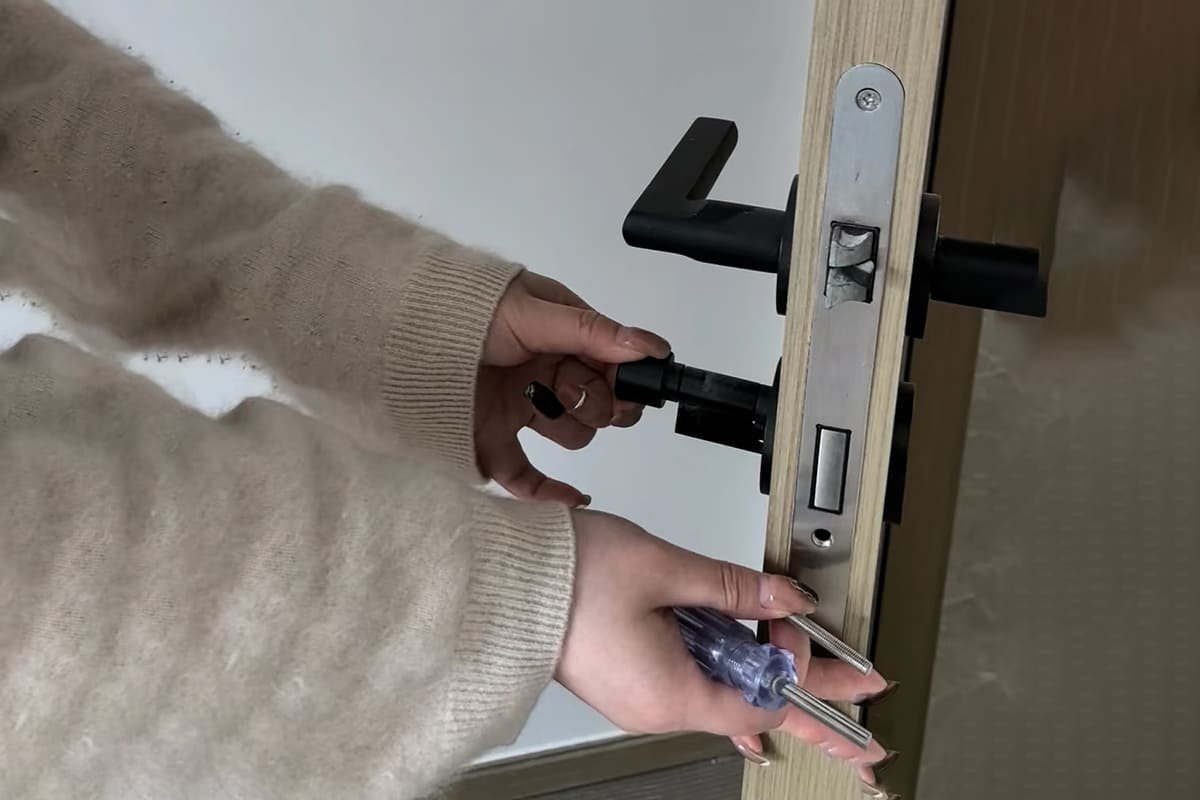
The interface is straightforward: align the cylinder, insert the M5 screw through the lock’s edge, lightly tighten, test the cam action, then fully torque. The wrong cylinder length or cam type, however, will bind, leave the cylinder proud, or reduce security. That is why the next step — sizing — is crucial.
Which Euro cylinder lock sizes fit your door and hardware?
Most cylinder complaints I hear come from poor sizing. An extra 5 mm can make a cylinder protrude beyond the escutcheon, inviting attacks or simply looking unprofessional.
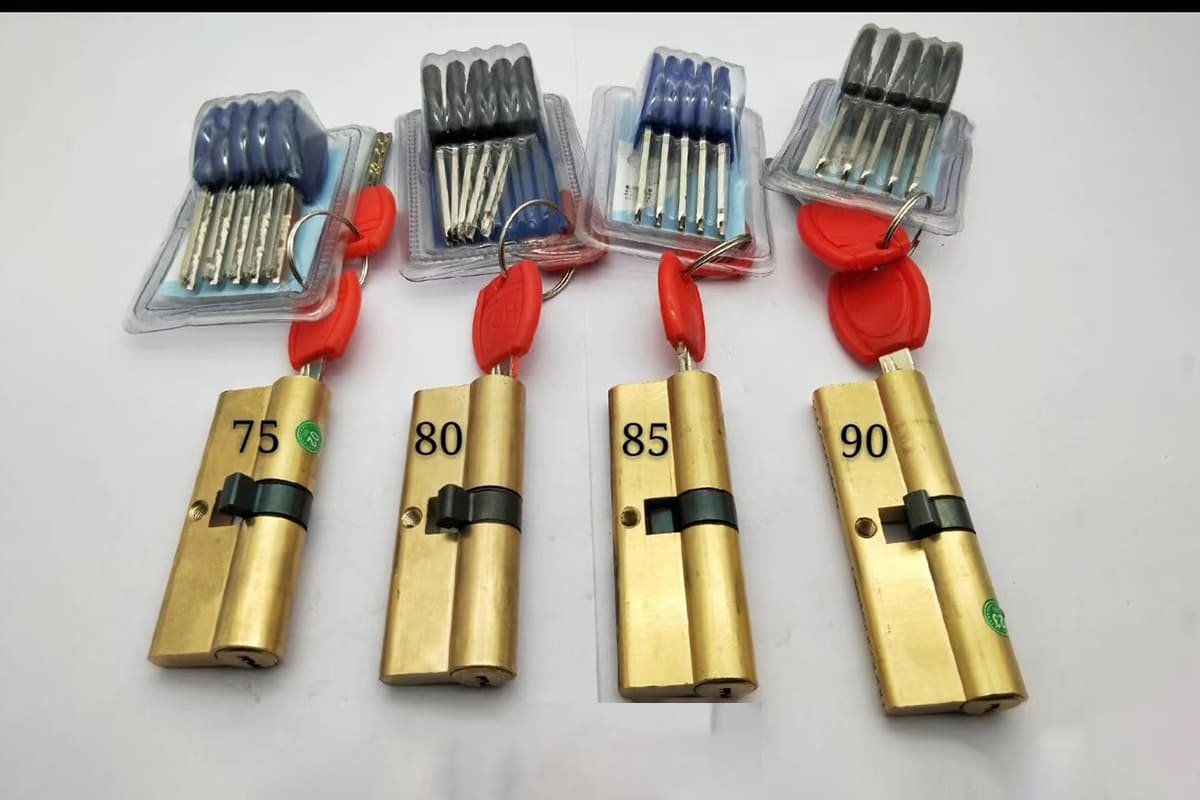
Measure from the center of the fixing hole to each face of the door furniture. Select a Euro cylinder lock size like 30/30, 35/45, etc., so the cylinder sits flush with the escutcheon on both sides. Avoid protrusion beyond 2–3 mm3; use the next size up if furniture thickness demands it.
Dive deeper
How to measure correctly
- Remove the old cylinder if present.
- Find the center of the fixing screw hole — this is your zero point.
- Measure to the outer face of the external escutcheon: this is side A.
- Measure to the outer face of the internal escutcheon or rose: this is side B.
- Choose the nearest standard lengths (increments of 5 mm): e.g., 30/30 (60 mm total), 35/45 (80 mm total).
I once audited a hotel project where 30/40 cylinders went into 44 mm doors with chunky pull handles. The external side protruded ~4 mm beyond the escutcheon. Security aside, guests noticed. We corrected to 35/45 and the issue disappeared.
Practical tips
- Aim for flush or recessed by ≤1 mm relative to the escutcheon.
- If one side has a thicker security escutcheon, choose an asymmetric size (e.g., 35/45).
- On thumbturn cylinders, plan the longer side for the exterior if the escutcheon there is thicker.
- For aluminum or steel doors, confirm profile channels and backplates; some need slightly different offsets.
- Verify cam clearance within the lock case. Some narrow-case locks have tight tolerances.
A well-fitted Euro cylinder lock not only looks right. It resists forced attack better and runs smoother because the fixing screw loads the body evenly.
What security grades and certifications should Euro cylinder locks have?
Security terms can overwhelm: anti-snap, stars, grades, classes. Buyers sometimes chase labels without checking application fit or documentation.
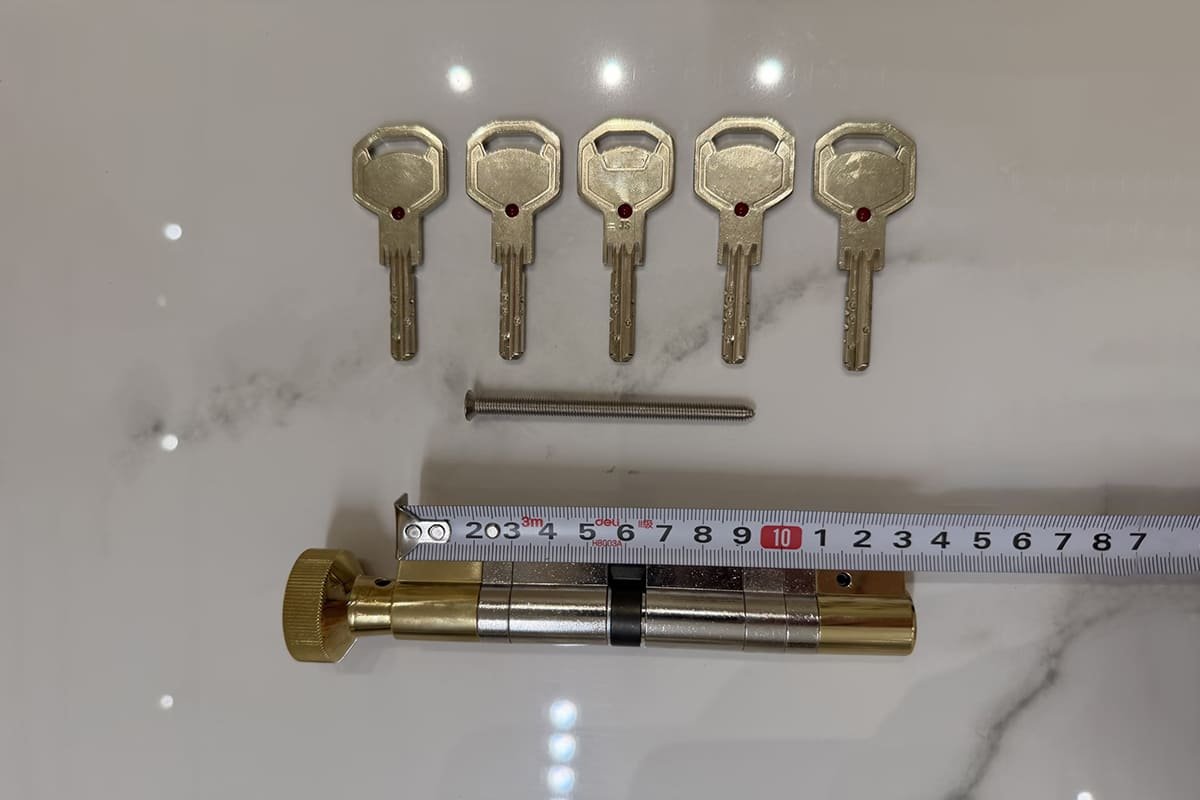
Use recognized standards to benchmark Euro cylinder locks. In Europe, ask for EN 1303 test reports. In the UK, TS 007 3-star cylinders (or 1-star paired with a 2-star handle) are common. In the Netherlands, SKG or SKG* ratings apply. Always verify model-specific reports, not generic claims.
Dive deeper
Key standards overview
- EN 1303: European performance standard for cylinders. Covers durability, key security (number of differs), and resistance to attack (drill, pull, torque).4 Ask for the classification code and test lab report tied to your exact model and size.
- TS 007 (UK): Star rating system. 3-star cylinders resist snapping without needing a security handle. 1-star cylinders must be paired with a 2-star security handle or escutcheon.5
- SKG (NL): Star ratings (up to 3 stars) indicating resistance to forced entry.6
- DIN 18252 (DE): Dimensional and classification guidance for profile cylinders used in German markets.7
Pro tip: not all doors need top-tier cylinders. A staff-store door with access control backing may accept EN 1303 compliance without TS 007 3-star, provided a strong security escutcheon is used.
Balancing certification with design
- Anti-snap: Look for sacrificial sections on the external side. After snapping, the remaining core should keep the cam locked or clutch-protected.8
- Anti-drill: Hardened pins and faceplates slow drilling into pin stacks.9
- Anti-bump/pick: Advanced pin stacks, paracentric or dimple keyways, side pins, and tight tolerances increase resistance.
Always confirm the door set as a system. A Euro cylinder lock with high ratings can be undermined by weak escutcheons, poor installation, or a flexible door leaf.
Double, thumbturn, or half: which Euro cylinders should you choose?
People often default to double cylinders, then realize they need emergency egress or only one-sided control. Choosing the wrong type creates safety and operational friction.
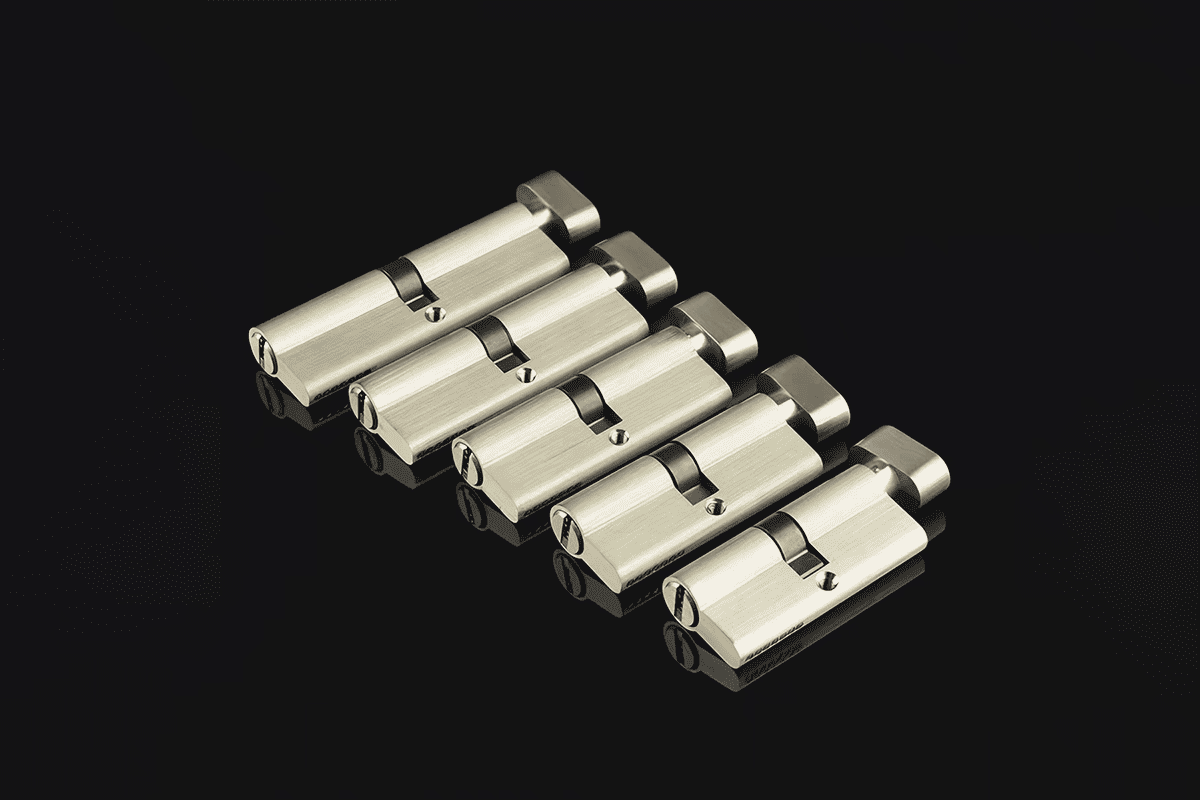
Pick the Euro cylinder lock type by access and egress needs. Use double cylinders for full control from both sides, thumbturn cylinders for fast internal egress without a key, and half cylinders for one-sided access (e.g., storage, shutters). Confirm emergency function and clutch design where required.
Dive deeper
Quick comparison
| Cylinder type | Typical use cases | Key considerations |
|---|---|---|
| Double (key/key) | External entrance, apartments, offices | Maximum control; consider emergency function if “key left inside” is common |
| Thumbturn (key/turn) | Bedrooms, apartments, offices with life-safety needs | Egress without key; verify thumbturn size and torque; consider outside key override |
| Half (single) | Garage doors, roller shutters, server cabinets | One-sided security; ensure the exposed side is protected by hardware |
Selecting the right option
- Double cylinder: Ideal when both sides need controlled access and key accountability. In multi-family buildings, this helps property managers. Consider cylinders with “emergency function” so an external key still works if a key remains in the inside plug.
- Thumbturn cylinder: Best for life safety and convenience. In healthcare or hospitality, a thumbturn reduces response time in emergencies. I recommend a low-profile turn that still meets accessibility torque requirements; overly tiny turns frustrate users.
- Half cylinder: Clean choice for service doors or shutters. Verify the cam engages correctly with the lock body in the intended orientation.
Don’t forget the hardware pairing. A Euro cylinder lock with a thumbturn needs a compatible escutcheon and enough internal clearance. In one retrofit, a bulky pull handle fouled the thumbturn arc — we swapped to a slimmer turn and avoided field grinding.
Which anti-snap, anti-drill, and anti-bump features matter in Euro cylinder locks?
Security feature lists can look impressive, but not all implementations are equal. I have seen “anti-drill” cylinders with soft pins you can score with a hand file.
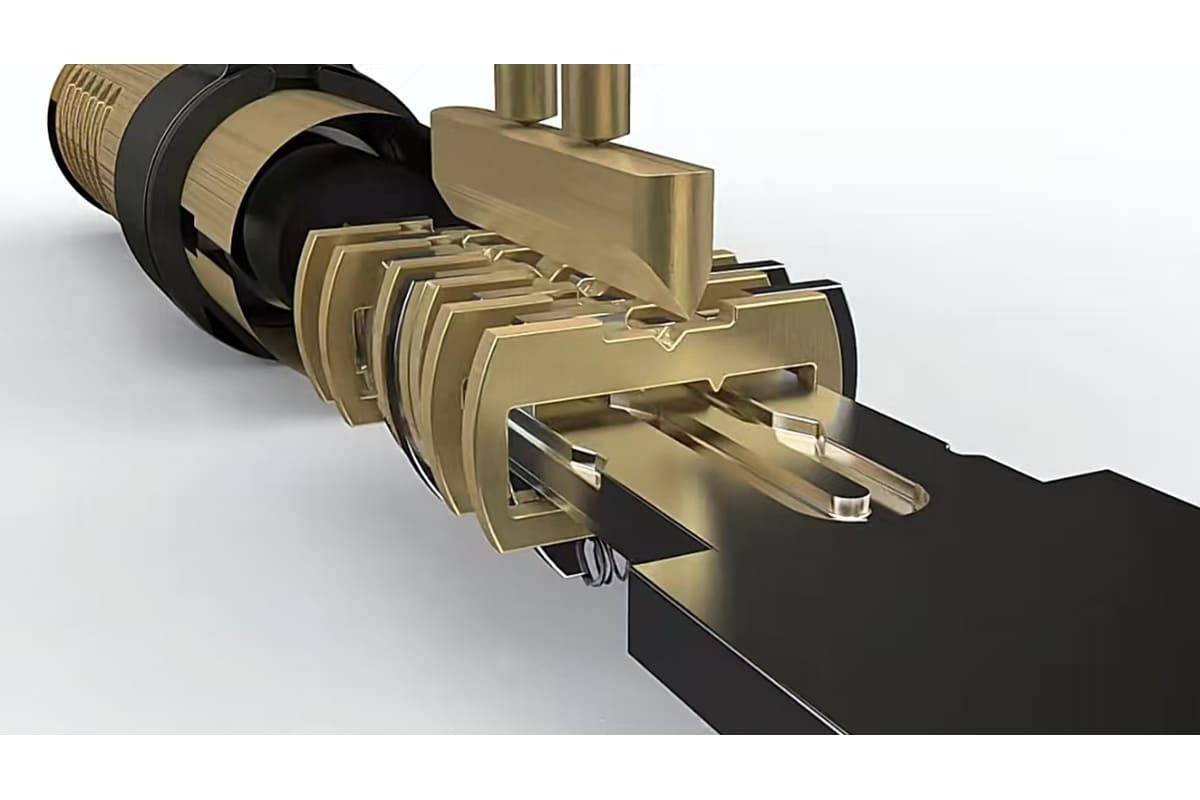
For Euro cylinder locks, prioritize tested anti-snap designs with sacrificial zones, hardened anti-drill pins and faceplates, and pinning systems that resist bumping and picking. Verify features through third-party test reports and inspect metal hardness, component geometry, and assembly tolerances.
Dive deeper
What to look for
- Anti-snap: External sacrificial cut lines that break in a controlled way. After snapping, the remaining mechanism should decouple the cam or keep it locked. Some 3-star cylinders do this elegantly; ask to see a cutaway sample.
- Anti-drill: Hardened steel pins in the first pin positions and a hardened faceplate or bar. A magnet test and visible color difference can be a quick check, but lab hardness data is better.
- Anti-bump/pick: Multi-row dimple keys, paracentric keyways, side pins, and tight tolerances.10 The goal is not “unpickable,” but a practical time-cost barrier.
Clutch and emergency functions
Thumbturn and key/key cylinders may include a clutch mechanism that allows outside operation even when a key is inside (emergency function). In procurement, ask whether the function is on both sides or outside-only, and test it with sample locks.
Realistic validation steps
- Request a destructive sample for internal review. Your technician can attempt basic snapping and drilling with common tools to validate the presence of hardened elements.
- Check torque smoothness pre- and post-cycling. Smooth action after 50,000 cycles indicates stable tolerances.
- Inspect pin and plug materials. Brass bodies with hardened anti-drill elements are standard; zinc bodies often perform worse under attack.
Security marketing is loud. Testing is quiet. Rely on the latter.
How to specify keying, restricted keyways, and master key systems for Euro cylinder locks?
Key management is where projects either sing or spiral. I have seen facility teams carry key rings with 30 keys because “no one planned MK properly.”
Define your keying scheme at the RFQ stage. For Euro cylinder locks, specify keyed alike vs. keyed different, master key (MK/GMK) structures, restricted keyways with patent protection, and key duplication controls. Align pin count and key platform with your required number of differs and expansion plan.
Dive deeper
Common keying structures
- KD (Keyed Different): Each door unique; master keys optional.
- KA (Keyed Alike): A group shares one key; great for hotel BOH zones.
- MK (Master Key): One master opens a defined group of KDs.
- GMK (Grand Master Key): Hierarchy across multiple MK groups.
- Construction keying: Temporary builder keys work during construction but are disabled upon handover when the facility key is first used.
Choosing the key platform
- 5- or 6-pin conventional keys: Cost-effective; typically tens of thousands of differs. Good for small projects.
- Dimple/side-pin systems: Higher differs, improved manipulation resistance, smoother feel. Suitable for brands and large facilities.
- Restricted keyways: Patent-protected profiles control duplication through authorized centers. Ask for patent expiry dates and territory coverage.
Practical procurement checklist
- Define how many unique groups you need now and in 5 years.
- Specify the number of keys per cylinder and spare blanks.
- Agree on duplication authorization rules (letter of authority, site card).
- Request a keying chart and bitting list handling procedure. Sensitive data should be transmitted securely.
- Confirm pin count and differs capacity. A large campus may need millions of differs; a small office will be fine with 6-pin.
A well-planned key system reduces operational headaches more than any single security feature. It is the difference between a “key culture” and chaos.
How do Euro cylinder locks integrate with mortise locks, handles, and fire doors?
A Euro cylinder does not work alone. I once saw a 3-star cylinder installed with a thin plate escutcheon on a hollow-core door — impressive cylinder, weak system.
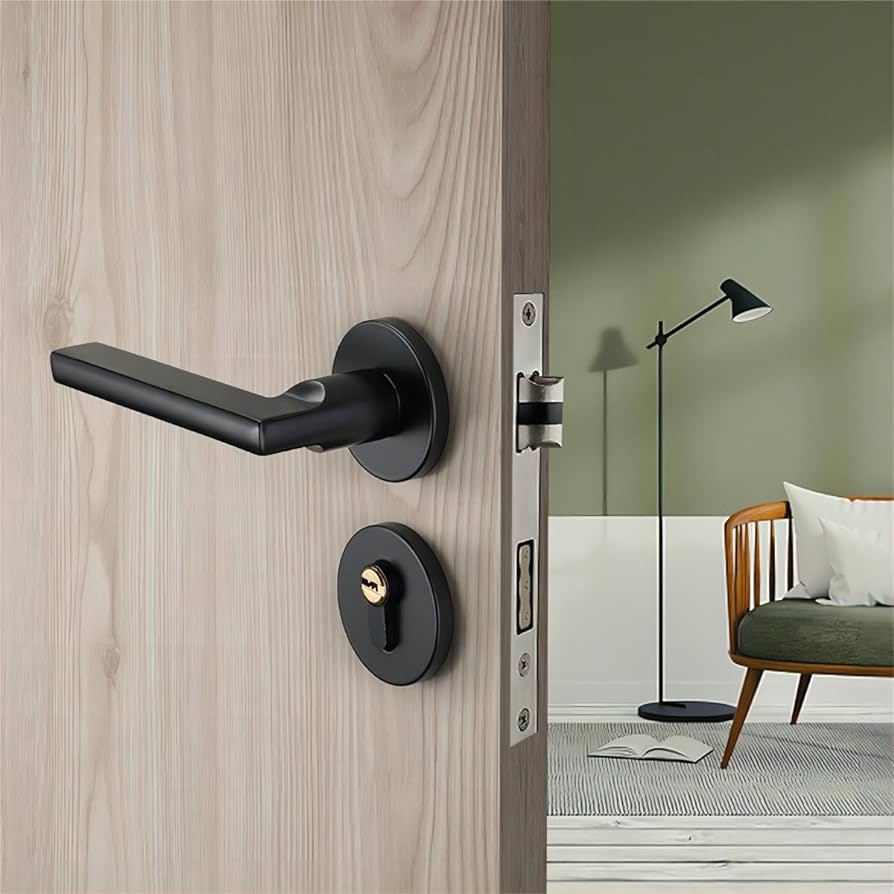
Treat the door as a system. Pair Euro cylinder locks with compatible Euro mortise locks, robust security escutcheons or handles, correct fixing screws, and—on fire doors—model-specific fire door evidence. Ensure cylinder projection is minimal and cam rotation is unobstructed.
Dive deeper
Mortise lock compatibility
- Euro-profile mortise locks are designed for the standard cam geometry and M5 fixing screw alignment.
- Check backset and case depth; tight cases can bind oversized cams.
- Function pairing: If the lock has a privacy function, ensure the cylinder’s clutch/emergency function behaves as intended.
Handles and escutcheons
- For high-security installations, use a 2-star security handle or a protective escutcheon to shield the cylinder from snapping and drilling.
- Confirm screw-through-fixing hardware so the set clamps the door from both sides, resisting prying.
Fire doors
- Request evidence that the exact Euro cylinder lock model (and length) has been used in a tested fire door assembly or has appropriate fire door assessment. Cylinders can be weak points in a fire; metal composition and heat behavior matter.
- Use intumescent protection kits where required by the door system supplier.
- Coordinate with the door manufacturer. Fire performance is a door-set property, not a single component claim.11
Finishes and environments
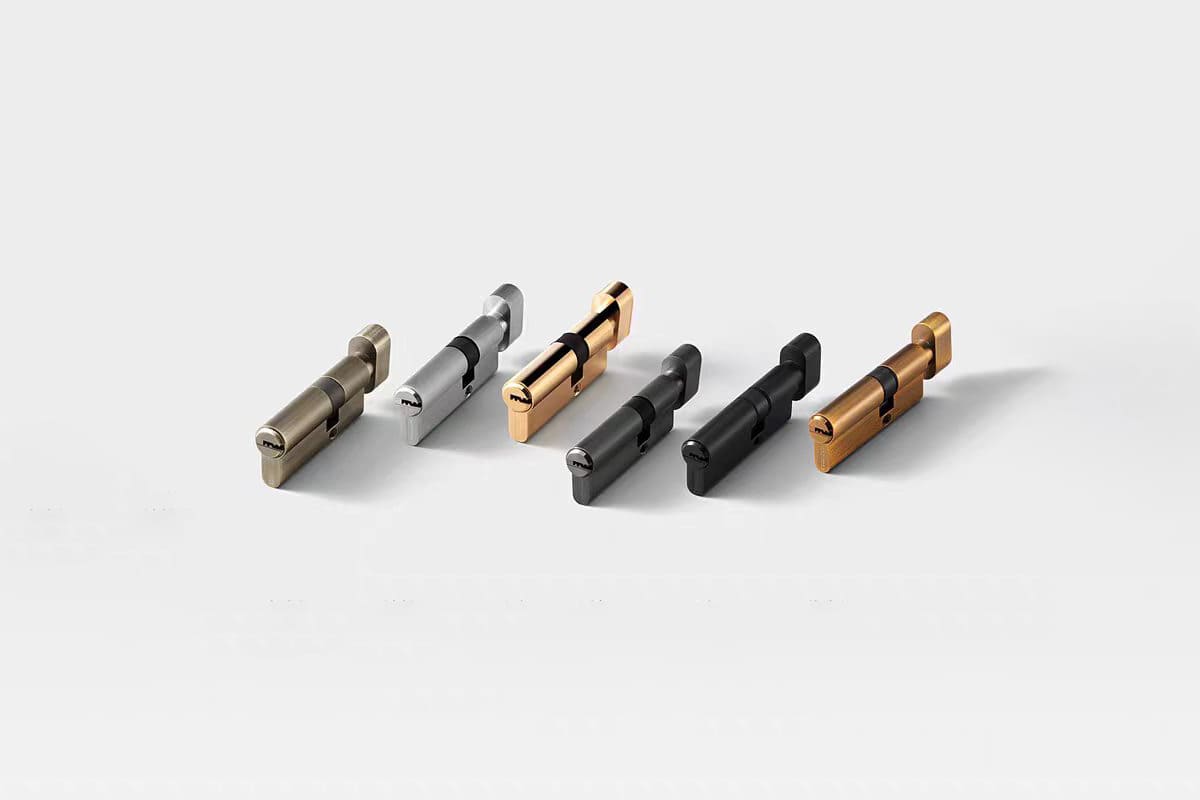
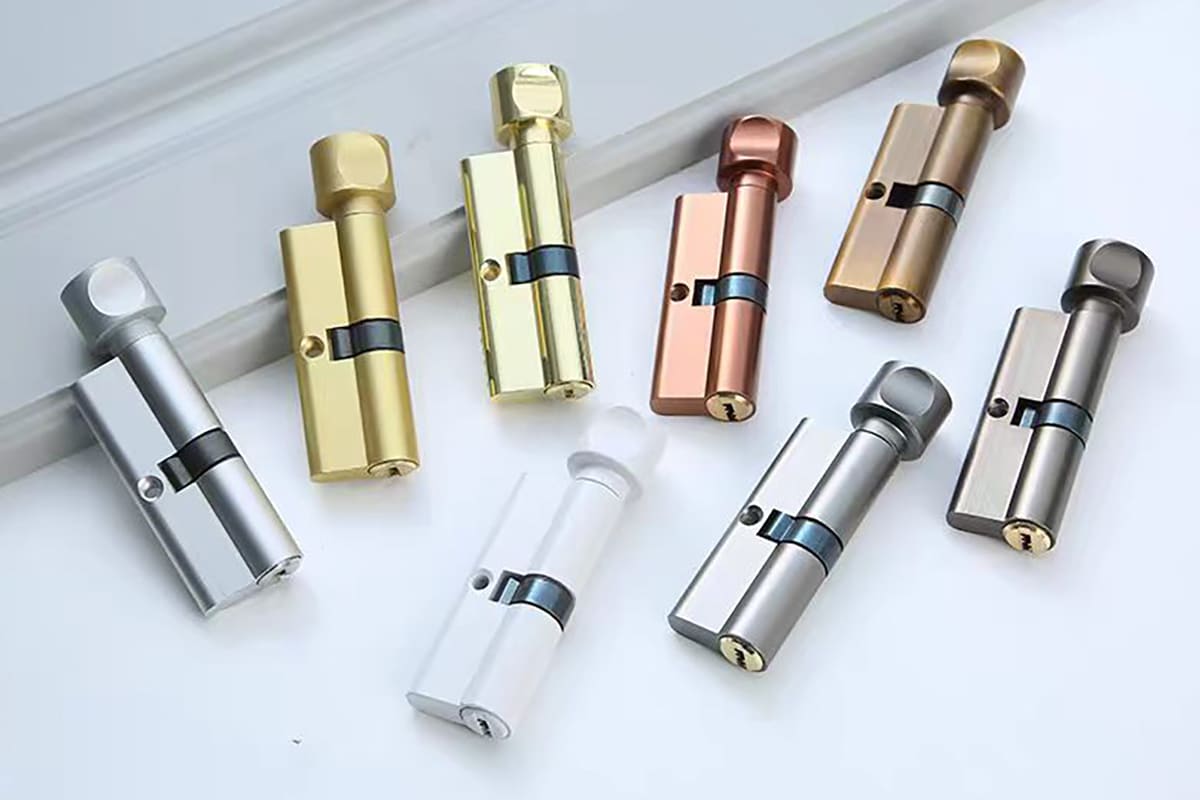
- Match finishes (satin nickel, chrome, PVD black, brass) to handles for visual consistency.
- In coastal or high-humidity sites, ask for corrosion-resistance data (e.g., 96-hour salt spray for finish) and consider protective escutcheons.
The best Euro cylinder lock will underperform if the system is not right. In our production, we test cylinders with standard Euro mortise locks and security escutcheons to validate real-world fit and feel.
What standards and documentation should you verify for Euro cylinder locks?
A line on a brochure is not a certificate. As a manufacturer, I encourage buyers to request documents early to avoid surprises.
For Euro cylinder locks, verify EN 1303 classification reports, any market-specific ratings like TS 007 or SKG, and fire-door evidence where applicable. Confirm that documents reference the exact cylinder model, size range, and key platform you are buying.
Dive deeper
Documentation to request
- EN 1303 test report and classification code.
- TS 007 star rating (for UK) or SKG report (NL), if required by the project.
- Fire door assessment or listing referencing the cylinder model/length, if installed on fire doors.
- Material specs (body/plug metal, hardened elements).
- Cycle test results (e.g., 100,000+ operations).
- Corrosion and finish data (salt spray hours if relevant).
Interpreting claims
- “CE marked” is not normally applicable to cylinders as standalone products.12 Instead, rely on EN 1303 and market marks. If a supplier shows CE for related hardware, make sure it is not misapplied to cylinders.
- Ensure the lab is accredited and the report is current. Watch for expired or mismatched model numbers.
A clean documentation package signals a mature supplier. It also helps you pass your own project submittal reviews without rework.
How to evaluate Euro cylinder lock suppliers and quality control?
Two cylinders can look identical but perform very differently. The difference shows up in tolerances, materials, and process discipline.
Assess Euro cylinder lock suppliers by their in-house manufacturing capability, pinning accuracy, cycle and torque testing, material hardness controls, and serialization of keying data. Audit sample cylinders for smoothness, key fit, and post-cycle consistency.
Dive deeper
What I look for on a factory floor
- In-house machining and finishing for bodies and plugs, not just assembly.
- Controlled pinning lines with measured spring forces and pin length calibration.
- Dedicated test rigs for:
- Plug rotational torque (smooth and consistent across samples).
- Cycle endurance (≥100,000 cycles for mainstream, more for premium).
- Attack simulations (snap/drill fixtures for engineering validation).
- Secure keying data management: encrypted storage of bitting lists, restricted access.
Sample evaluation protocol
- Receive three pre-production samples per size and key platform.
- Measure initial key insertion and turning torque; look for no “grit” or stickiness.
- Run a 5,000-cycle accelerated test on one sample. Re-measure torque and key fit.
- Attempt basic drilling on a sacrificial sample to confirm hardened elements.
- Check dimensional accuracy: overall length tolerance and center-hole alignment.
At SDH Hardware, I insist on “feel” as a metric. Smoothness is not subjective when you log torque curves. A Euro cylinder lock that feels right out of the box and after 50,000 cycles reflects good pinning and machining.
Buying guide: mapping Euro cylinder locks to use cases?
Choosing features without a use-case map invites overspec or underspec. I like to align decisions with door function, traffic, and risk.
Match Euro cylinder lock type, security grade, and keying to the door’s role. For main entrances, use high-security features and controlled keys. For interior offices, focus on smooth operation and master keying. For service doors, one-sided control with half cylinders often fits best.
Dive deeper
Quick mapping table
| Door/Area | Recommended cylinder | Security features | Keying plan | Notes |
|---|---|---|---|---|
| Main external entrance | Double or thumbturn (with emergency function) | Anti-snap, anti-drill, market certification (e.g., TS 007 3-star) | Restricted keyway, MK/GMK | Pair with security escutcheon/handle |
| Apartment entrance | Thumbturn (egress) | Anti-snap, anti-bump | Restricted keyway, MK per floor | Consider 35/45 or asymmetric sizes |
| Office corridor doors | Double or thumbturn | Bump/pick resistance, smooth operation | MK with departmental groups | Focus on durability and feel |
| Service/utility rooms | Half cylinder | Basic anti-drill | KA groups | Ensure cam compatibility |
| Server/IT rooms | Double cylinder | Anti-drill, restricted keys | MK with audit controls | Consider access control back-up |
Additional considerations
- Traffic frequency: High-cycle areas benefit from higher-grade pinning and plugs.
- Aesthetics: Finish coordination with lever handles and hinges matters in premium projects.
- Regional norms: UK specifiers often prefer TS 007 frameworks; Dutch specs lean on SKG; German projects reference DIN plus EN 1303.
Start with function and risk, then apply standards and features. This yields a specification that is defensible and cost-effective.
Frequently Asked Questions
How do I measure for a Euro cylinder lock replacement?
Measure from the center of the fixing screw hole to each outside face of your escutcheons. Choose the closest 5 mm increments (e.g., 30/30, 35/45) so the cylinder sits flush or slightly recessed. Avoid more than 2–3 mm protrusion on the exterior side for security.
What is the difference between 1-star and 3-star cylinders in the UK?
TS 007 3-star Euro cylinder locks provide standalone resistance to snapping and drilling. A 1-star cylinder relies on additional protection from a 2-star security handle or escutcheon. Both paths can meet security requirements; verify the chosen combination with documentation.
Are Euro cylinder locks suitable for fire doors?
Yes, but verify that the specific cylinder model and length have appropriate evidence for use on fire doors, aligned with the door-set. Coordinate with the door manufacturer and use required intumescent protection and compatible hardware.
Should I choose a restricted keyway?
Choose a restricted or patent-protected keyway if you need controlled duplication and long-term key management. This is common for multi-site facilities, hospitality, and branded hardware programs. Always check patent lifespan and authorized duplication networks in your region.
How many pins do I need: 5, 6, or more?
Five- or six-pin conventional cylinders serve many projects. Larger or higher-security systems benefit from dimple or multi-row platforms with more differs and better manipulation resistance. Let the number of required differs and security targets guide the choice, not pin count alone.
Conclusion
Specifying Euro cylinder locks is straightforward when you focus on system fit: correct size, appropriate type (double, thumbturn, or half), validated security features, and a planned keying strategy. Verify EN 1303 and market certifications, and assess supplier quality with real testing. If you want factory-direct support, custom key platforms, and documented QC, contact SDH Hardware for OEM/ODM Euro cylinder solutions and a consolidated door hardware package.
"Pin tumbler lock", https://en.wikipedia.org/wiki/Pin_tumbler_lock. A general reference on lock cylinders identifies the Euro-profile cylinder as a widely used replaceable cylinder format in European door hardware; this supports the article’s characterization of its common use, though it may not quantify market share. Evidence role: general_support; source type: encyclopedia. Supports: A neutral reference should support that Euro-profile cylinders are a widely used cylinder format for locks in Europe or European-style doors.. Scope note: Contextual support only; a general reference may not prove that Euro cylinders are the single most common cylinder type. ↩
"What Are Euro Profile Cylinders? - SDH hardware- China ...", https://sdhhardware.com/2026/08/07/what-are-euro-profile-cylinders/. Technical standards for profile cylinders describe the standardized cylinder interface used with mortise locks, including dimensional requirements and actuator geometry; this supports the definition of a Euro cylinder as a replaceable standardized lock core, although the exact M5 screw detail may require a manufacturer-neutral standard excerpt or technical drawing. Evidence role: definition; source type: institution. Supports: A standards or technical source should define profile cylinders and their interface with Euro-profile locks, including the fixing screw and cam arrangement.. Scope note: May require access to a paid standard for direct confirmation of the M5 fixing screw detail. ↩
"cylinder lock advice? | Screwfix Community Forum", https://community.screwfix.com/threads/cylinder-lock-advice.262186/. Crime-prevention guidance commonly advises that Euro cylinders should sit flush with, or project only minimally beyond, the protective furniture because exposed cylinders are more vulnerable to attack; this supports the 2–3 mm protrusion guidance as an installation rule of thumb rather than as a universal statutory limit. Evidence role: expert_consensus; source type: government. Supports: A police or crime-prevention source should support that excessive cylinder projection increases vulnerability and that minimal projection, often around 3 mm, is recommended.. Scope note: The exact permitted projection may vary by local guidance, hardware type, and security escutcheon design. ↩
"BS EN1303 for Euro profile lock cylinder - SDH hardware", https://sdhhardware.com/2022/12/02/bs-en1303-euro-profile-lock-cylinder/. EN 1303 is the European standard specifying requirements and classification for lock cylinders, including durability, key-related security, and resistance to attack; this supports the article’s standards summary, subject to the wording and categories in the current edition of the standard. Evidence role: definition; source type: institution. Supports: An institutional standards summary should confirm that EN 1303 specifies requirements and classification for lock cylinders, including durability, key-related security, and attack resistance.. Scope note: Direct clause-level verification may require consulting the official paid standard. ↩
"Lock Cylinder - SDH hardware- China professional door hardware ...", https://sdhhardware.com/lock-cylinder/. UK TS 007 guidance describes a star-rating framework in which a 3-star cylinder may achieve the required cylinder security level on its own, while a 1-star cylinder is commonly used with 2-star protective furniture; this supports the article’s explanation of UK cylinder/handle combinations. Evidence role: definition; source type: institution. Supports: A standards or accredited certification source should explain TS 007 star ratings for cylinders and protective door furniture.. Scope note: The source should be checked for the current TS 007 edition and any product-category-specific conditions. ↩
"What are SKG stars? | Mauer / ASSA ABLOY", https://www.mauerlocks.com/en/news/what-are-skg-stars. SKG-IKOB and Dutch security guidance use one-, two-, and three-star classifications to indicate tested burglary resistance of building hardware; this supports the article’s statement that SKG ratings apply in the Netherlands, although specific performance levels depend on the product category and test method. Evidence role: definition; source type: institution. Supports: An institutional source should confirm the SKG star-rating system and its relationship to burglary or forced-entry resistance.. Scope note: The rating interpretation may differ between cylinders, hinges, locks, and other hardware categories. ↩
"What Are Euro Profile Cylinders? - SDH hardware- China ...", https://sdhhardware.com/2026/08/07/what-are-euro-profile-cylinders/. DIN 18252 is a German standard for profile cylinders used in locks and includes dimensional and classification requirements; this supports the article’s reference to DIN 18252 for German-market cylinder specifications. Evidence role: definition; source type: institution. Supports: A standards catalogue or German institutional source should identify DIN 18252 as a standard for profile cylinders, including dimensional and classification aspects.. Scope note: Detailed requirements may require access to the official standard text. ↩
"Unlocking the Secrets: How to Choose a Durable Lock Cylinder", https://sdhhardware.com/2025/01/15/unlocking-the-secrets-how-to-choose-a-durable-lock-cylinder/. Security-testing guidance for anti-snap cylinders describes designs intended to fail at a controlled sacrificial section while retaining protection of the locking mechanism; this supports the article’s explanation of the anti-snap mechanism, though effectiveness must be verified for a specific tested model. Evidence role: mechanism; source type: institution. Supports: A standards or security-testing source should support the mechanism by which anti-snap Euro cylinders are designed to break at a sacrificial point while preserving lock security.. Scope note: General mechanism support does not prove that any particular cylinder implements the feature successfully. ↩
"What Are Euro Profile Cylinders? - SDH hardware- China ...", https://sdhhardware.com/2026/08/07/what-are-euro-profile-cylinders/. Technical descriptions of drill-resistant lock cylinders identify hardened steel inserts, pins, or protective plates as measures that increase the time and difficulty of drilling through the plug or pin stacks; this supports the article’s mechanism claim, without establishing a particular resistance grade unless a test report is cited. Evidence role: mechanism; source type: research. Supports: A technical source should explain that hardened components are used to increase drilling resistance in lock cylinders.. Scope note: The degree of resistance depends on material hardness, placement, drill tools, and tested standard level. ↩
"Dimple Locks Explained: How They Work and How to ...", https://www.lockpickworld.com/pages/dimple-locks-explained?srsltid=AfmBOorkQt-Xn1TaMRd4gI3RuD1qc-0ZMfuDCkfWS3BNQineUl_PY3d0. Research and technical analyses of mechanical lock security describe paracentric keyways, auxiliary side mechanisms, dimple arrangements, and tighter manufacturing tolerances as design features that can increase the difficulty of picking or bumping; this supports the article’s general mechanism claim, while not proving that any feature combination is immune to manipulation. Evidence role: mechanism; source type: paper. Supports: A research or technical paper should discuss how keyway geometry, additional pin rows, side pins, or tighter tolerances affect resistance to lock manipulation techniques.. Scope note: Manipulation resistance is technique- and product-specific; no mechanical cylinder should be treated as unpickable. ↩
"What Kind of Door Hardware for Fire Rated Doors Is Suitable ...", https://sdhhardware.com/2026/08/10/what-kind-of-door-hardware-for-fire-rated-doors-is-suitable/. Fire-door guidance treats fire resistance as a property of the tested door assembly or doorset, including compatible hardware and installation details; this supports the article’s caution that a cylinder alone cannot establish fire-door performance. Evidence role: expert_consensus; source type: government. Supports: A fire-safety or building-regulation source should confirm that fire-door performance depends on the tested door assembly, including compatible hardware and components.. Scope note: Specific acceptance depends on national regulations, test evidence, assessments, and the door manufacturer’s approved hardware schedule. ↩
"BS EN1303 for Euro profile lock cylinder - SDH hardware", https://sdhhardware.com/2022/12/02/bs-en1303-euro-profile-lock-cylinder/. EU construction-products guidance links CE marking to products covered by harmonised standards or European Technical Assessments; because EN 1303 for lock cylinders is not generally treated as a harmonised CE-marking route for standalone cylinders, this supports the article’s warning against relying on CE marks for cylinders alone. Evidence role: general_support; source type: institution. Supports: An EU or standards-body source should show whether lock cylinders under EN 1303 are covered by a harmonised standard requiring CE marking as standalone construction products.. Scope note: The applicability of CE marking may change with regulatory updates or when cylinders are supplied as part of another CE-marked door hardware assembly. ↩