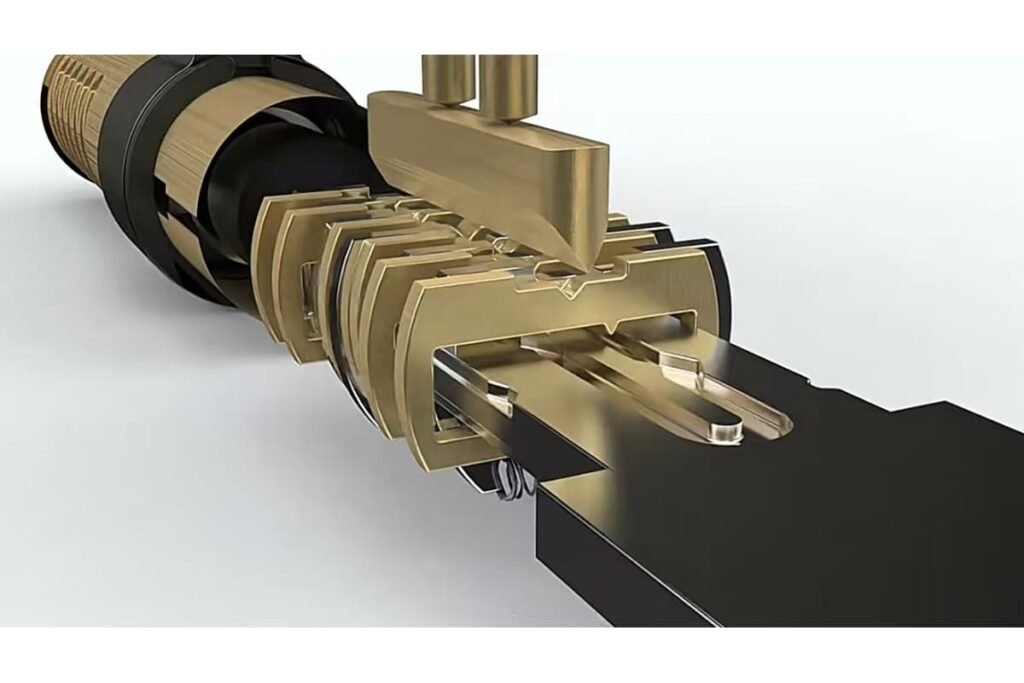
What Are Euro Profile Cylinders?
Euro profile cylinders are standardized lock cylinders used with euro-standard mortise lock systems, but buyers often underestimate how much specification matching is required. If the cylinder length, cam, clutch, or function type is wrong, a good door set can still fail in assembly or use. The better approach is to treat cylinder selection as a technical procurement decision.
Euro profile cylinders are lock cylinders with a standardized European profile shape and mounting format1, commonly used in mortise lock systems for residential, commercial, and project doors. Their value depends on correct matching with door thickness, lock body position, cylinder length, cam structure, key function, material quality, finish, and market compliance requirements.
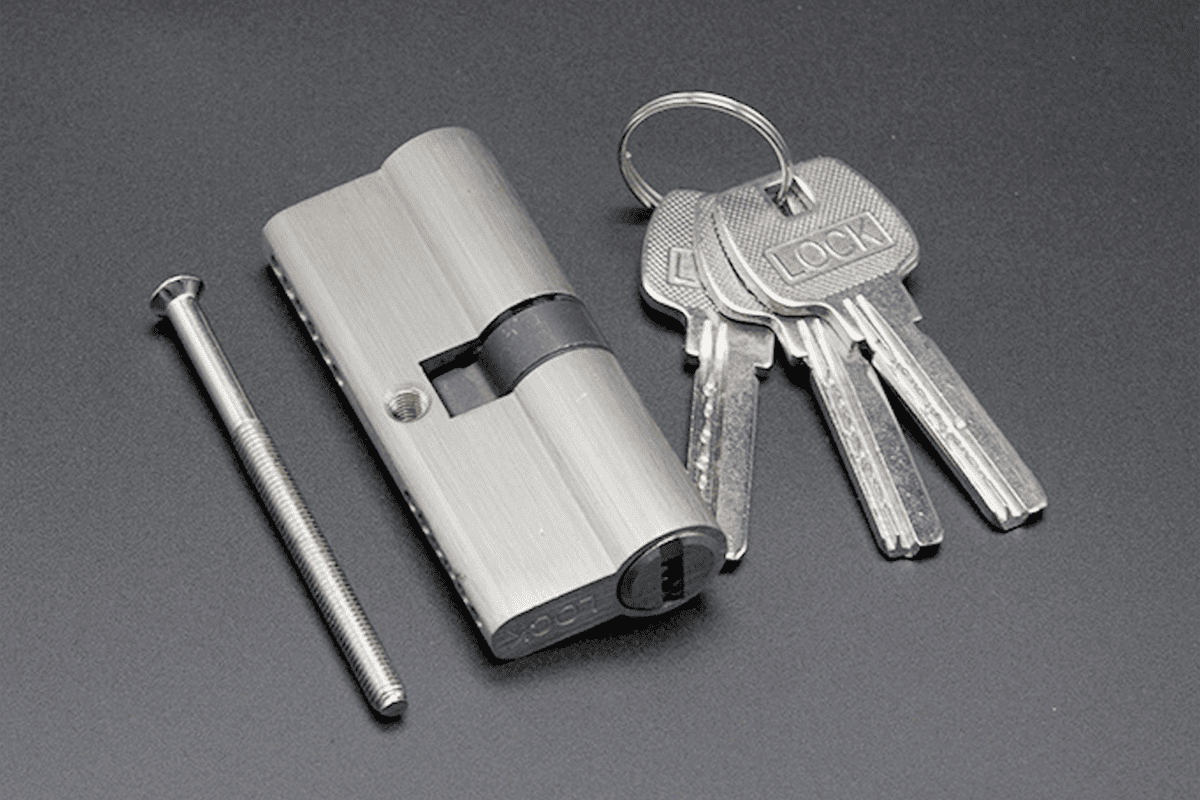
In my factory work with export customers, I rarely confirm a cylinder only by name. I usually ask for the door thickness, lock body drawing, A+B length, cam angle, key function, finish, and target market first. Those details decide whether the product fits smoothly or creates after-sales problems later.
How Do Euro Profile Cylinders Work in a Mortise Lock System?
Many buyers know that a key turns the cylinder, but they may not connect that action to the mortise lock body behind the door. This creates risk because a cylinder can look correct from outside but still operate poorly if the cam, clutch, or lock body interface is mismatched.
Euro profile cylinders work by using the correct key to align internal pins at the shear line2, allowing the cylinder plug to rotate. That rotation moves the cam, and the cam operates the euro-standard mortise lock body. In practical terms, the cylinder converts key movement into latch or deadbolt movement.
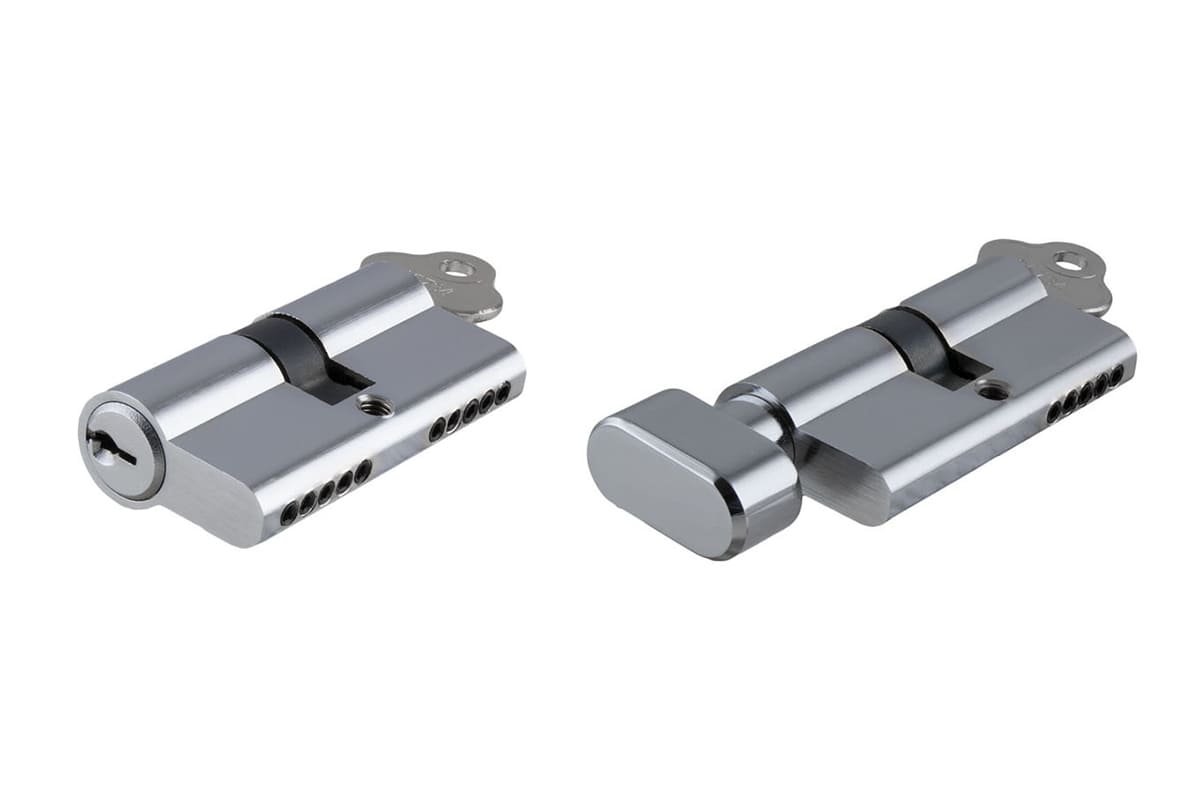
The practical working principle
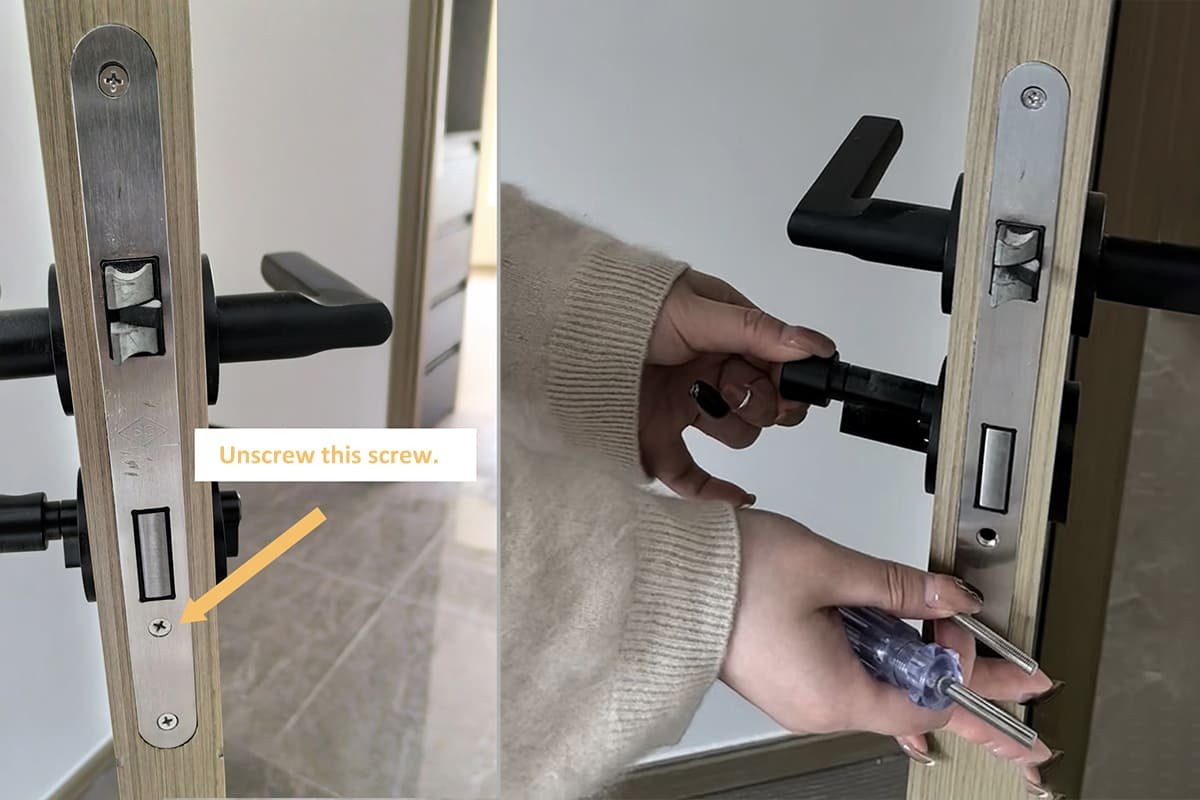
A euro profile cylinder is designed to sit through the lock case and door leaf. A long screw, usually fixed through the lock faceplate, holds the cylinder in position.3 When the correct key enters the keyway, the internal pin system allows rotation. The rotating plug then drives the cam.4 The cam engages the mortise lock mechanism.
For buyers, the important point is simple:
A euro cylinder does not work alone. It must work with the door, the escutcheon, and the mortise lock body as one hardware system.
This is why I do not recommend selecting a cylinder only by outside appearance. Two cylinders can share the same profile shape but have different internal structures, cam dimensions, key systems, and security features.
Common components buyers should understand
| Component | Buyer relevance | Common issue if ignored |
|---|---|---|
| Cylinder body | Determines length, material, and finish | Wrong size or weak surface consistency |
| Plug/core | Rotates when key is inserted | Rough turning or poor key feel |
| Pins and springs | Control key authorization | Low durability or weak manipulation resistance |
| Cam | Transfers rotation to lock body | Lock does not operate correctly |
| Clutch structure | Affects double-side operation | Free rotation or unreliable engagement |
| Fixing screw | Secures cylinder into lock body | Wrong screw length causes installation delays |
| Keys | Define user operation and access control | Wrong key quantity or keyway mismatch |
Standards and buyer verification
Standards such as DIN 18252 and EN 1303 are often referenced when discussing euro profile cylinders. However, I treat these as documents buyers should verify, not as general claims. A project may require specific test reports, grading, fire-related documentation, or local market compliance. Buyers should request current certificates, test reports, and product markings from suppliers when these documents affect procurement decisions.
From a manufacturing point of view, I also check the lock body before confirming the cylinder. A cylinder that fits one euro mortise lock is not automatically ideal for another. The cam slot width, cam angle, lock center position, and accessory thickness all matter.
What I usually confirm before production
When I receive an inquiry for export orders, I normally ask for:
- Door thickness
- Mortise lock model or drawing
- Cylinder length, such as 30/30, 35/35, or 30/40
- Equal or unequal cylinder requirement
- Cam angle, such as 30° or 45°
- Cam slot width and lock case compatibility
- Double key, thumbturn, half cylinder, or other function
- Material, finish, and key quantity
- Packing, screw length, and accessory requirements
- Target market requirements and certification expectations
This process may look detailed, but it prevents many common problems. In my experience, most cylinder complaints are not caused by the profile shape itself. They are caused by poor matching between the cylinder and the door hardware system.
How Should Buyers Size Euro Profile Cylinders for Door Thickness?
Cylinder sizing looks simple on paper, but it is one of the most common sources of procurement mistakes. If buyers only measure the door leaf and forget the escutcheon height or lock body position, the installed cylinder may protrude too much or sit too deep.
Euro profile cylinders should be sized according to door thickness, escutcheon or cover plate height, and the lock body center position. Buyers usually define the size as A+B length from the fixing screw center to each side5. If the lock body is not centered, an unequal cylinder is required.6
Understanding A+B cylinder length
The most common way to describe cylinder size is by two measurements:
- A side: distance from the fixing screw center to one cylinder end
- B side: distance from the fixing screw center to the other cylinder end
For example, a 30/30 cylinder usually means 30 mm on each side from the fixing screw center. A 30/40 cylinder means one side is 30 mm and the other side is 40 mm. This is why buyers should not only say “60 mm cylinder.” A total length can hide an unequal structure.
Sizing factors buyers should check
| Sizing factor | Why it matters | Procurement note |
|---|---|---|
| Door thickness | Main base measurement | Confirm actual door leaf thickness, not catalog estimate |
| Escutcheon thickness | Adds extra required length | Include both sides if covers are used |
| Lock body position | Decides equal or unequal length | Centered lock allows equal length more often |
| Cylinder projection | Affects appearance and safety | Avoid excessive protrusion where possible |
| Fixing screw center | Reference point for A+B | Use lock body drawing to confirm |
| Market habit | Some regions prefer certain lengths | Confirm local installer expectations |
Example sizing logic
If a door is 45 mm thick and has 8 mm escutcheons on both sides, the required cylinder length may need to cover:
- 45 mm door thickness
- 8 mm outside escutcheon
- 8 mm inside escutcheon
- suitable small allowance for installation and appearance
However, if the mortise lock case is not centered in the door leaf, the two sides may not be equal. In that case, a 35/45 cylinder may fit better than a 40/40 cylinder, even if the total length looks similar.
Why protrusion matters
A cylinder that projects too far outside the escutcheon can create several issues:
- It may look unprofessional on finished doors.
- It may increase exposure to external force.7
- It may fail buyer appearance inspection.
- It may create complaints from installers or project owners.
On the other side, a cylinder that is too short may be difficult to operate or may not sit correctly with the handle plate. Both problems are avoidable if the buyer confirms dimensions before ordering.
My practical advice for bulk orders
For bulk purchasing, I prefer to receive a door section drawing or a complete lockset sample before confirming final cylinder length. If that is not available, I ask for photos with measurements. This is especially important for door manufacturers that use different door thicknesses across product lines.
I also suggest buyers prepare a simple specification sheet:
| Item | Example |
|---|---|
| Door thickness | 45 mm |
| Lock body | Euro mortise lock, 85 mm center |
| Escutcheon | 8 mm each side |
| Cylinder type | Thumbturn cylinder |
| Cylinder size | 35/45 mm |
| Finish | Satin nickel |
| Cam angle | 30° |
| Key quantity | 3 keys |
| Screw | M5 × required length |
This small document saves time. It also reduces the chance that the supplier guesses. In B2B procurement, guessing is expensive.
What Types of Euro Profile Cylinders Should B2B Buyers Compare?
Buyers sometimes ask for “standard cylinders,” but that phrase can mean different things in different markets. If the wrong function type is selected, the product may fit mechanically but fail the end-user requirement for privacy, emergency access, or access control.
B2B buyers should compare euro profile cylinders by function type, including double cylinder, thumbturn cylinder, bathroom cylinder, half cylinder, security cylinder, AB key function, and master key system. Each type supports a different door application, user habit, and project access requirement.
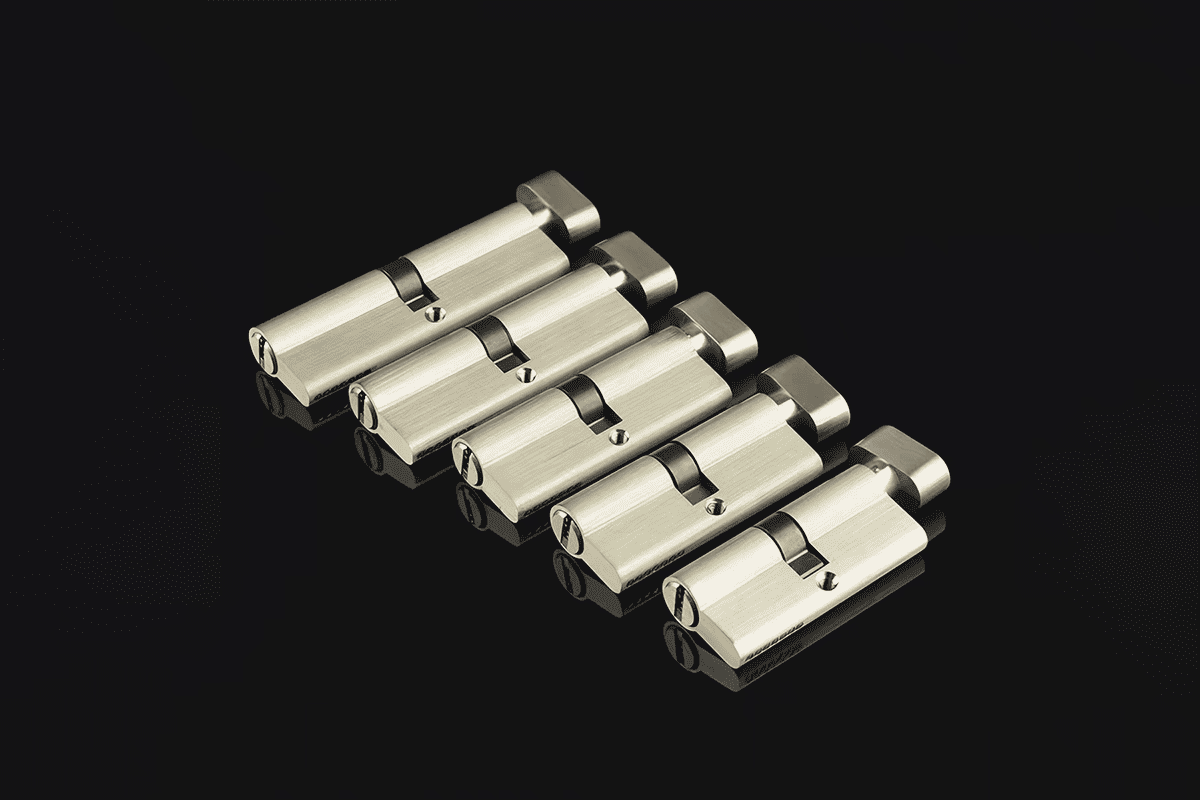
Main cylinder types and applications
| Cylinder type | Typical use | Buyer decision point |
|---|---|---|
| Double cylinder | Key operation from both sides | Common for entrance and commercial doors |
| Thumbturn cylinder | Key outside, turn knob inside | Useful for emergency exit convenience |
| Bathroom cylinder | Privacy function | Used for bathroom or interior privacy doors |
| Half cylinder | Operation from one side only | Suitable for cabinets, shutters, or special locks |
| Security cylinder | Higher protection design | Verify test data and certification level |
| AB key cylinder | Construction key and owner key sequence | Useful for projects before handover |
| Master key system | Hierarchical access control | Requires careful key plan management |
Double cylinder
A double cylinder has key operation on both sides. It is one of the most common formats for exterior doors and many commercial applications. Buyers should confirm whether both sides can operate smoothly when a key is inserted on the opposite side. This depends on the clutch structure.
Some markets require an emergency function, while others do not. Buyers should clarify local safety expectations and project requirements before selecting a double cylinder.
Thumbturn cylinder
A thumbturn cylinder uses a key on one side and a turning knob on the other side. It is common for apartments, hotel rooms, offices, and doors where fast inside opening is needed8. The thumbturn shape, finish, and grip feel may also matter for product line consistency.
For door manufacturers, thumbturn projection should be checked together with the handle design. A large thumbturn may interfere with some escutcheon or handle layouts.
Bathroom cylinder
Bathroom cylinders are used for privacy rather than high-security locking. They often work with bathroom mortise locks and emergency release functions. Buyers should verify the matching lock body, spindle, and accessory configuration. A bathroom cylinder should not be treated as a direct substitute for an entrance cylinder.
Half cylinder
A half cylinder operates from one side only. It is used in special applications such as roller shutters, electrical cabinets, storage rooms, or access panels. The length and cam structure still matter. Because one side is absent, buyers should confirm the exact lock case requirement before ordering.
Security cylinder
Security cylinders may include features such as anti-pick pins, anti-drill parts, anti-bump design, reinforced bars, or restricted keyways9. However, I avoid making broad claims without documents. If a buyer needs a specific security level, I suggest asking for EN 1303 grading, test reports, or other market-specific proof.
AB key and master key systems
AB key systems are common in project supply. During construction, workers use the A key. After handover, the owner uses the B key, and the A key becomes invalid.10 This reduces key control problems during installation.
Master key systems are more complex. They allow different keys to open different groups of doors while one master key opens many or all cylinders11. Buyers should prepare a key plan before production. Mistakes in master key planning can cause serious project problems.
A basic key plan may include:
- Building name or project phase
- Floor or area
- Room number
- User key group
- Master key level
- Cylinder size and finish per door
- Spare key quantity
- Packing label requirement
When I handle inquiries for master key orders, I always slow down the confirmation process. It is better to spend more time before production than to discover keying mistakes after shipment.
What Quality Risks Should Buyers Check Before Ordering Euro Profile Cylinders?
A cylinder can pass a quick visual check but still create operation problems after installation. Buyers face risk when suppliers simplify internal parts, change cam designs, or use weak materials without explaining the effect on function and durability.
Buyers should check euro profile cylinders for clutch and cam matching, cam angle consistency, material quality, key smoothness, finish stability, and anti-manipulation structure. Common risks include free rotation, broken cam or clutch parts, wrong cam angle, and simplified internal designs with higher opening risk.
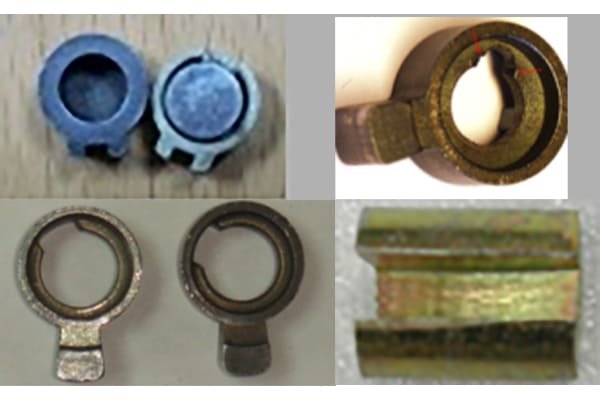
Risk 1: cylinder free rotation
Cylinder free rotation can happen when the clutch and cam fit is too tight, too loose, or poorly matched. In practical terms, the key turns but the lock does not operate correctly. This is a serious after-sales issue because the installer may blame the lock body, the cylinder, or both.
Free rotation may also result from poor-quality cam or clutch parts breaking during use. This is why material and part strength matter. Buyers should not evaluate only the outer brass body or surface finish.
Risk 2: cam angle mismatch
Some lock bodies are designed for a specific cam angle. In some markets, buyers commonly discuss 30° cam or 45° cam designs. Problems can occur if a factory changes a 30° cam design to 45° without proper matching with the lock body. The cylinder may still fit into the door, but the lock operation may feel wrong or fail.
Before confirming production, buyers should request:
- Cam angle specification
- Cam drawing or photo
- Lock body compatibility confirmation
- Sample testing before bulk order
- Written confirmation in the purchase specification
Risk 3: weak anti-manipulation performance
Some simplified clutch structures reduce cost, but they may also increase opening risk. I do not describe this as a universal defect because different products serve different price levels and applications. However, buyers should understand the trade-off.
For low-risk interior doors, a basic cylinder may be acceptable. For entrance doors, commercial projects, or branded product lines, buyers may need stronger anti-manipulation design and verified test data.
Risk 4: inconsistent key feel
Key feel is not only a comfort issue. It can reveal machining consistency, burr control, pin quality, and assembly accuracy. In factory inspection, I pay attention to:
- Smooth key insertion
- Stable rotation torque
- No obvious sticking
- No metal scraping sound
- Consistent function across samples
- Clean key cutting and numbering
A buyer can test this with a small sample batch. If 10 samples already show inconsistent turning, a 10,000-piece order may create many complaints.
Risk 5: finish and batch color variation
For door hardware brands and door manufacturers, finish consistency is important. A cylinder face must match handles, escutcheons, hinges, and other visible hardware. Common finishes include satin nickel, polished brass, antique brass, black, chrome, and stainless-steel-like finishes.
Buyers should confirm:
| Finish control item | Why it matters |
|---|---|
| Approved color sample | Prevents different interpretation |
| Salt spray expectation | Helps compare corrosion resistance |
| Batch inspection method | Reduces mixed-color shipment risk |
| Packaging protection | Prevents scratches during transport |
| Matching with handle finish | Supports complete door set appearance |
Practical inspection checklist
Before placing a large order, I suggest buyers check these points:
- Cylinder length and A+B marking
- Cam angle and cam slot width
- Key function and key quantity
- Clutch structure for double-side operation
- Material grade and component strength
- Surface finish and color consistency
- Fixing screw length
- Smooth turning test
- Sample installation with actual mortise lock
- Certification documents if required by the market
This type of inspection is simple, but it is effective. It connects product quality with real installation performance.
How Should I Evaluate a Supplier for Euro Profile Cylinders?
A low unit price can look attractive, but it may not reflect the full procurement cost. If the supplier cannot confirm drawings, tolerances, finish samples, certificates, and delivery stability, the buyer may pay later through rework, claims, or delayed projects.
Buyers should evaluate suppliers of euro profile cylinders by checking factory capability, specification confirmation process, material control, sample testing, certification documents, customization ability, finish consistency, delivery management, and export communication. A good supplier should help prevent mismatches before production starts.
What a professional supplier should ask
In my own export communication, I see a positive sign when a supplier asks technical questions before quoting. A professional supplier should not only ask for quantity and finish. They should clarify the application.
A useful inquiry process should cover:
- Door type and door thickness
- Mortise lock body model
- Cylinder size and A+B length
- Equal or unequal cylinder requirement
- Cam angle and cam dimensions
- Function type
- Keyway and key quantity
- Finish and packing
- Target market
- Certification or project documents
- Delivery schedule
- Sample approval process
If a supplier skips all of these points, the buyer may receive a fast quotation but not a reliable solution.
Factory capability and process control
For architectural door hardware, stable production depends on process control. A supplier should have procedures for raw material inspection, machining, assembly, surface treatment, finished inspection, and packing. Buyers do not need to inspect every part personally, but they should ask how the supplier controls repeatability.
For a cylinder order, I would pay attention to:
| Supplier capability | Why buyers should care |
|---|---|
| In-house production experience | Better control over specification changes |
| Drawing confirmation | Reduces misunderstanding |
| Sample production | Allows real fitting test |
| QC inspection records | Supports batch consistency |
| Finish control | Important for brand and project supply |
| Export packing experience | Reduces transport damage |
| ODM customization ability | Helps match regional product lines |
| Documentation support | Helps with market access checks |
Certificates and compliance documents
Many buyers ask for CE certification or fire-rated documentation. These documents can be important for project sales and market access. However, buyers should verify whether the certificate applies to the exact product, lockset configuration, and intended use. A certificate for one product family does not automatically cover every customized variation.
For application-specific decisions, buyers should involve qualified professionals, project consultants, or local compliance experts. A manufacturer can provide product documents and technical specifications, but final project approval may depend on local regulations and installation conditions.
Sampling before bulk order
I strongly recommend sample testing before bulk purchase, especially when:
- The buyer uses a new mortise lock body.
- The door thickness is not standard.
- The cylinder is unequal.
- The project requires thumbturn or emergency function.
- The order uses a special finish.
- The buyer needs master key or AB key function.
- The target market has strict certification requirements.
A good sample test should include actual installation. Turning the key in hand is not enough. The cylinder must be tested with the lock body, escutcheon, handle, and door thickness.
Total procurement value
The best supplier is not always the cheapest supplier. For B2B buyers, the better question is:
Which supplier reduces my total risk while keeping cost competitive?
Total value includes:
- Correct specification confirmation
- Stable product quality
- Reliable delivery
- Consistent finish
- Clear documentation
- Responsive communication
- Customization support
- After-sales problem solving
At SDH Hardware, our work as a China-based architectural door hardware manufacturer is mainly about helping buyers match complete door hardware systems. We produce and support products such as mortise locks, lever handles, butt hinges, concealed hinges, and brass profile cylinders. From that experience, I know that a euro cylinder should never be treated as an isolated item. It is one part of the complete door performance.
Frequently Asked Questions
Are euro profile cylinders universal?
Euro profile cylinders share a common profile format, but they are not always universally interchangeable in practical use. Buyers still need to confirm length, cam angle, cam dimensions, lock body compatibility, function type, and door thickness. A cylinder can have the correct shape but still be wrong for the application.
What is the most common euro cylinder size?
Common sizes include 30/30, 35/35, 30/40, and 35/45 mm, but the right size depends on the door thickness, escutcheon height, and lock body position. Buyers should measure from the fixing screw center to each side rather than relying only on total length.
What is the difference between a double cylinder and a thumbturn cylinder?
A double cylinder uses a key on both sides. A thumbturn cylinder uses a key on one side and a turn knob on the other side. Thumbturn cylinders are often selected where users need faster inside operation, but buyers should check local safety rules and project requirements.
Which standards apply to euro profile cylinders?
DIN 18252 and EN 130312 are commonly referenced standards for euro profile cylinders. However, buyers should verify current certificates, test reports, grades, and product coverage with the supplier. Project-specific requirements may vary by country, door type, fire rating, and installation condition.
What information should I send to a supplier before ordering?
You should send door thickness, lock body drawing, cylinder A+B length, equal or unequal requirement, cam angle, function type, key quantity, finish, screw length, target market, and certification needs. If possible, send a door section drawing or physical sample for confirmation.
Conclusion
Euro profile cylinders are standardized cylinder formats for euro mortise lock systems, but correct selection depends on much more than the outside profile shape. Buyers should confirm cylinder length, door thickness, lock body position, cam angle, clutch structure, function type, material, finish, and required documents before bulk ordering. If you are developing door sets, hardware product lines, or project supply orders, I recommend starting with a clear specification sheet and sample fitting test. For professional matching support, you can contact SDH Hardware with your lock body details and target market requirements.
"Pin tumbler lock", https://en.wikipedia.org/wiki/Pin_tumbler_lock. European lock-cylinder standards and technical references define profile cylinders by a standardized body profile and mounting arrangement for use with compatible lock cases. Evidence role: definition; source type: institution. Supports: A standards or institutional source should confirm that euro profile cylinders are defined by a standardized profile and are used as interchangeable lock cylinders within compatible lock cases.. Scope note: The source may establish the general standardized format but not guarantee interchangeability across every mortise lock design. ↩
"Pin tumbler lock", https://en.wikipedia.org/wiki/Pin_tumbler_lock. Descriptions of pin-tumbler lock operation state that the correct key positions the pin stacks at the shear line, permitting rotation of the plug. Evidence role: mechanism; source type: encyclopedia. Supports: A neutral technical source should explain that pin-tumbler locks operate when the correct key lifts pins to the shear line so the plug can rotate.. ↩
"Cylinder fixing screw for 60mm / 70mm backset, 3 inch - SS", https://www.allaboutdoors.com/Cylinder-fixing-screw-for-60mm-70mm-backset-3-inch-SS?srsltid=AfmBOorW4cPEckGMZ_IZ5YX8pHmA3d_TvUV0Z-DORZzYxdnQurr_3-p8. Installation references for euro profile cylinders describe a retaining screw through the lock faceplate as the normal method for securing the cylinder in the lock case. Evidence role: mechanism; source type: institution. Supports: An installation or technical reference should show that euro profile cylinders are retained in the lock case by a fixing screw through the faceplate.. Scope note: This supports common installation practice, while screw length and placement still depend on the specific lock case. ↩
"What Should I Know About European Cylinder Locks? | AKADA", https://akada-hardware.com/what-should-i-know-about-european-cylinder-locks/. Technical descriptions of profile-cylinder locks identify the cam as the component that transmits plug rotation to the lock case mechanism. Evidence role: mechanism; source type: institution. Supports: A technical or standards-based source should confirm that the cylinder plug transmits rotation to a cam or actuator that engages the lock case.. Scope note: The exact cam geometry and rotation angle may vary by lock design and regional standard. ↩
"How to Measure & Replace a Euro Cylinder Lock", https://www.lockshop-warehouse.co.uk/info/installing-your-locks/installing-euro-cylinders/. Technical measuring guides for euro cylinders describe cylinder length as two measurements taken from the fixing-screw centreline to the external ends of the cylinder. Evidence role: general_support; source type: institution. Supports: A locksmithing or technical guide should confirm that euro cylinders are measured from the central fixing screw to each end.. Scope note: This supports the common measuring convention, not the suitability of a specific size for a specific door assembly. ↩
"Euro Cylinder Locks Explained", https://www.masterkeysystems.co.uk/knowledge-hub/euro-cylinder-locks-explained/. Euro-cylinder measuring guidance explains that unequal cylinders are used where the fixing-screw centre is not equidistant from the two finished faces of the door assembly. Evidence role: mechanism; source type: institution. Supports: A measuring guide should explain that unequal cylinder lengths are selected when the distance from the fixing screw to each door face differs.. Scope note: The source would support the sizing principle, while final selection still depends on escutcheon thickness and required projection. ↩
"Euro-cylinder advice", https://www.westyorkshire.police.uk/advice/home-security/home-security/euro-cylinder-advice. Public security guidance on euro-cylinder attacks notes that cylinders should not project excessively beyond the door furniture because protrusion can provide purchase for forced manipulation. Evidence role: mechanism; source type: government. Supports: A police or public security source should state that excessive cylinder projection can make forced attacks, such as gripping or snapping, easier.. Scope note: The risk depends on the cylinder’s security design, door furniture, and attack method. ↩
"California Code of Regulations, Title 8, Section 3235. Doors.", https://www.dir.ca.gov/title8/3235.html. Building and life-safety codes commonly require egress doors in specified occupancies to be openable from the egress side without a key, supporting the functional rationale for thumbturn operation. Evidence role: general_support; source type: government. Supports: A building-code or life-safety source should support the principle that egress-side door hardware should allow opening from inside without a key in relevant occupancies.. Scope note: Applicable requirements vary by jurisdiction, occupancy, door type, and project approval authority. ↩
"Anti-Bump, Anti-Drill, Anti-Pick, Anti-Snap - What Are These?", https://www.masterkeysystems.co.uk/anti-bump-snap-pick-drill-locks/. Research and standards literature on cylinder-lock security describes picking, drilling, and bumping as recognized attack modes and identifies hardened components, security pins, and key-control features as mitigation measures. Evidence role: mechanism; source type: paper. Supports: A technical paper or standards-based source should describe common cylinder attack methods and the corresponding design features used to resist them.. Scope note: The presence of a named feature does not prove a specific resistance level without testing or certification. ↩
"Construction Master Keying: How It Works", https://www.doorwaysplus.com/blog/our-blog-1/construction-master-keying-procedures-how-the-temporary-key-system-works-and-when-it-must-be-invalidated-493?srsltid=AfmBOorKNscj-JJwE91xi8k1xAIFpcrfctx84oKOy-eUebQioZ6h3OcA. Technical descriptions of construction-keyed lock cylinders describe arrangements in which a temporary construction key operates the cylinder until an owner key is used, after which the construction key no longer operates it. Evidence role: mechanism; source type: other. Supports: A neutral technical or patent source should document construction-key systems in which temporary construction keys operate before turnover and are disabled by later owner-key use.. Scope note: Specific AB-key implementations differ by manufacturer and cylinder design. ↩
"Lock and Key Systems PY104.16 - eLearning Courses", https://www.cdse.edu/Training/eLearning/PY104/. Physical-security guidance defines a master-key system as a hierarchical keying arrangement in which individual keys operate assigned locks and a master key operates multiple locks within the system. Evidence role: definition; source type: government. Supports: A security-management or locksmithing source should define master key systems as hierarchical keying arrangements with master and change keys.. Scope note: The source supports the access-control concept, not the correctness of any particular project key plan. ↩
"Europrofile DIN Cylinders", https://www.assaabloy.com/nz/en/solutions/products/keying-systems-and-cylinders/abloy-cylinders/europrofile-din-cylinders. Standards catalogues identify DIN 18252 as a profile-cylinder standard and EN 1303 as a European standard specifying requirements and classification for cylinders for locks. Evidence role: historical_context; source type: institution. Supports: A standards body or standards catalogue should confirm that DIN 18252 and EN 1303 concern profile cylinders or cylinders for locks.. Scope note: The standards’ existence and scope do not by themselves verify compliance of any particular product. ↩