Master Keying: The Key to Efficient Access Control?
Master Keying often sounds simple until a project reaches procurement. Buyers ask for “one key for everything,” but unclear permissions can create installation delays, wrong cylinders, and frustrated end users. I treat Master Keying as a planned mechanical access-control hierarchy, so each door, user role, and lock cylinder matches the real building requirement.
Master Keying is a mechanical key management system that gives different users different access levels through a planned key hierarchy.1 A change key opens one assigned lock, while master-level keys open wider groups of doors.2 It works best when buyers define door zones, user roles, and cylinder compatibility before placing an order.
In my work with lock cylinders and door hardware orders, I have seen that the key question is not only “Can you supply a master key?” The better question is: Which doors should each person open, and which doors should remain restricted?
What Is Master Keying in Mechanical Access Control?
Master Keying can be confusing because many people describe it as a universal key. That description creates risk. If a buyer treats it like simple key duplication, the project may receive cylinders that do not match the building’s access plan.
Master Keying is a structured mechanical permission system. It allows ordinary keys to open only assigned doors, while higher-level master keys open broader door groups. The system depends on a planned hierarchy, compatible lock cylinders, and clear access rules before production or cylinder configuration begins.
Master Keying is not just “one key opens all doors”
I usually explain Master Keying as a mechanical version of role-based access control3. The hardware is physical, but the thinking is similar to assigning software permissions. A hotel cleaner, school teacher, hospital maintenance manager, and building owner should not all have the same access.
A well-planned Master Keying system answers questions like:
- Which key opens one guest room, classroom, office, or storage room?
- Which key opens all rooms on one floor?
- Which key opens one department or building zone?
- Which key opens all approved doors in one building?
- Which person is allowed to hold each level of key?
This matters because architectural projects often involve many stakeholders. A door manufacturer may order locks for a full project. A hardware brand may request customized cylinders under its own logo. A wholesaler may supply a project contractor who needs access grouping by floors or departments.
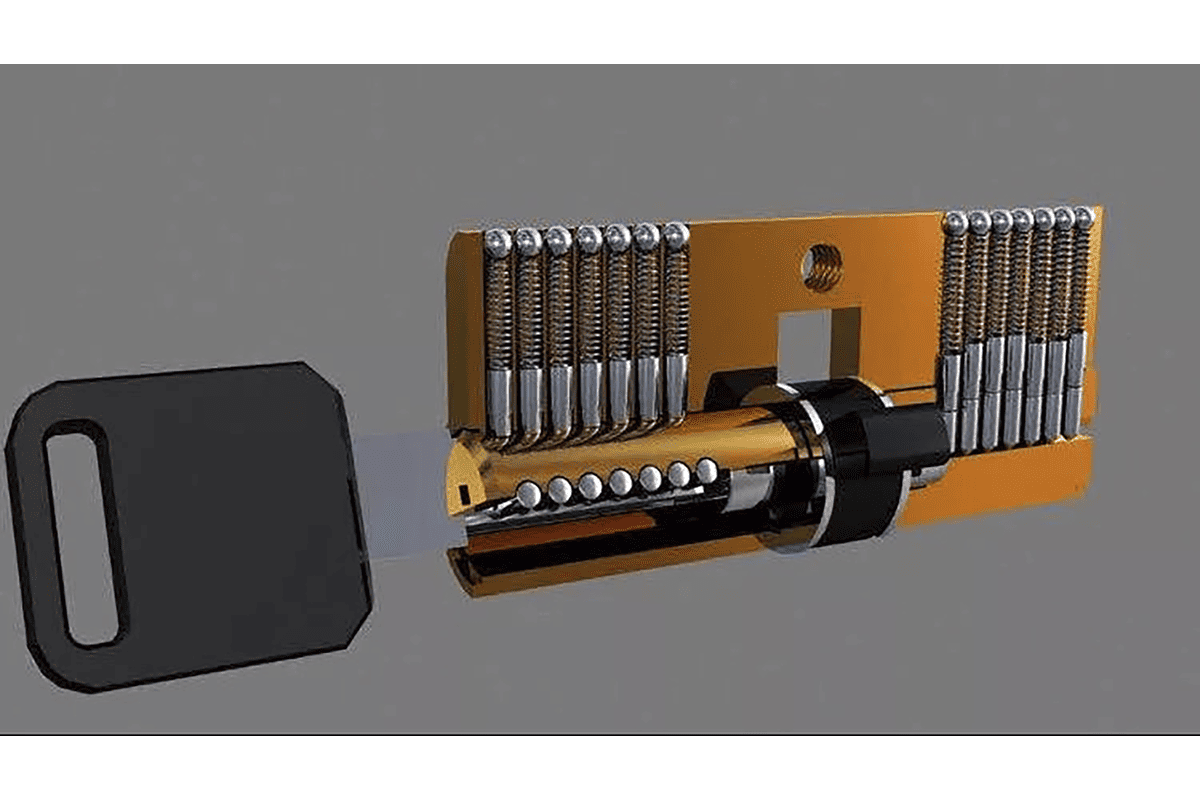
From the manufacturer side, I have learned that the technical cylinder work starts only after the access logic is clear. The lock cylinder must support the required keying structure. The keyway, pinning design, cylinder type, and quantity of combinations all affect feasibility.4
Simple comparison: ordinary keyed alike vs Master Keying
| Key system type | What it means | Best for | Main limitation |
|---|---|---|---|
| Keyed different | Each key opens only one lock | Individual rooms or private offices | Many keys are needed |
| Keyed alike | One key opens several identical assigned locks | Small groups of doors used by the same person | No tiered permission control |
| Master Keying | Different key levels open different door groups | Hotels, schools, hospitals, offices, campuses | Requires planning before ordering |
| Electronic access control | Cards, codes, or software permissions manage access | High-security or frequently changing access needs | Higher system cost and technical integration |
Master Keying does not replace every electronic access-control system. It is best understood as controlled mechanical access. It helps reduce key burden and organize permissions, but some projects still need electronic systems, audit trails, alarms, or specialist security design.5
I never recommend assuming that every existing lock or cylinder can be converted into a Master Keying system. Buyers should confirm cylinder compatibility before procurement.
For B2B buyers, this distinction is important. The ordering conversation should move from “I need a master key” to “I need a mechanical access hierarchy for these doors and users.” That shift prevents many avoidable mistakes.
How Does a Master Keying Hierarchy Work?
A Master Keying hierarchy can fail when buyers skip levels or use unclear names. The result is confusion during installation and handover. A building team may then discover that a manager key opens too much, or a staff key opens too little.
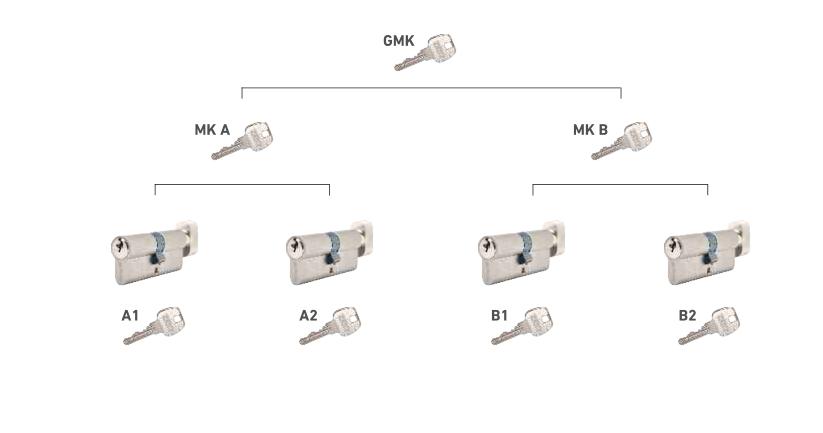
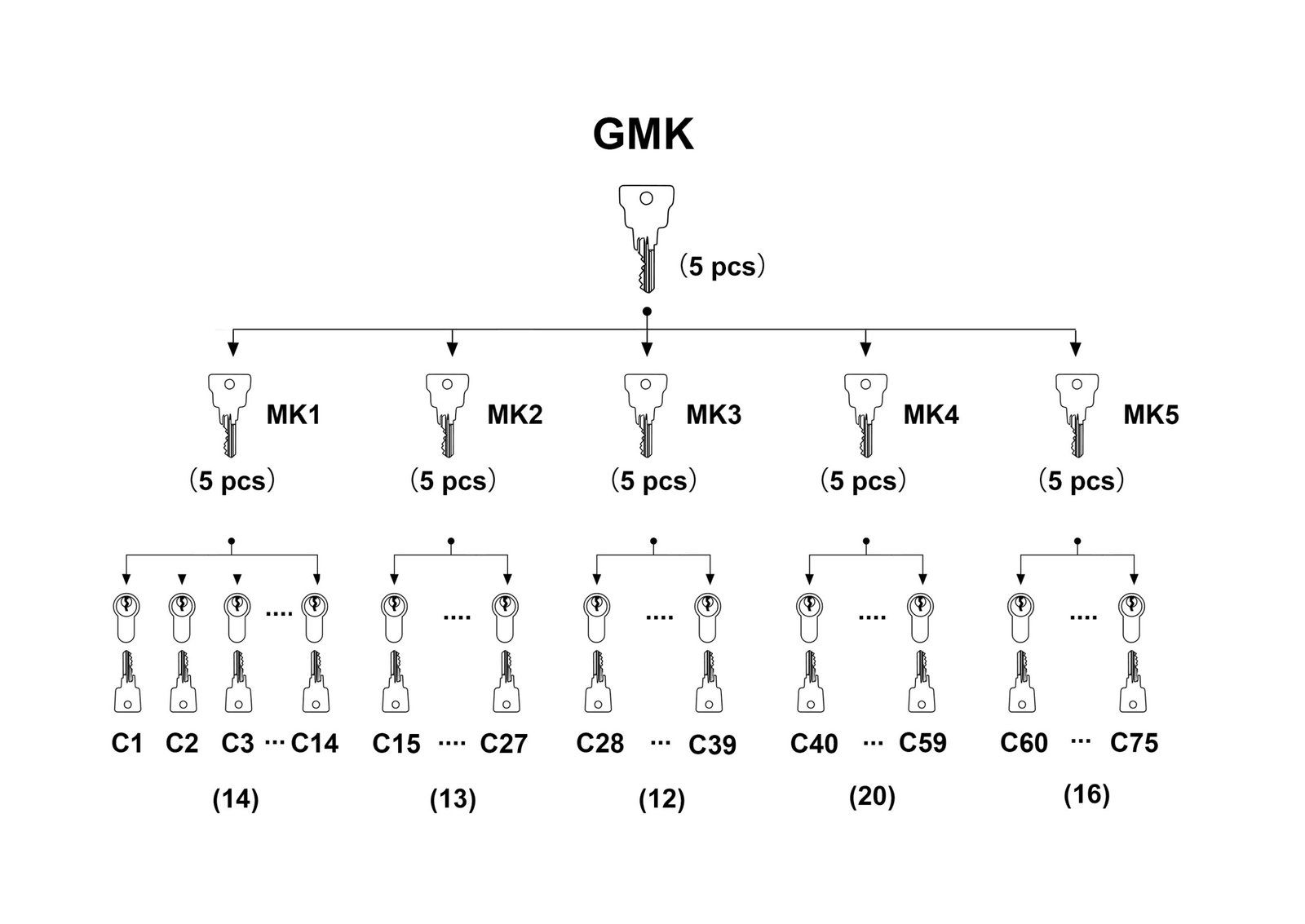
A Master Keying hierarchy works by assigning keys to levels. A Change Key opens one specific lock or room. A Master Key opens a defined group. A Grand Master Key opens larger areas, and a Great Grand Master Key can cover multiple buildings or a full campus when the cylinder system supports it.6
Common hierarchy levels
A clear hierarchy helps manufacturers, suppliers, and project teams speak the same language. In most procurement discussions, I use the following structure:
Change Key
- Opens one specific lock or one assigned room.
- Example: one office, one classroom, one apartment unit, or one storage door.
Master Key
- Opens a defined group of locks.
- Example: all doors on one hotel floor or all rooms in one department.
Grand Master Key
- Opens several master-keyed groups.
- Example: an entire school building, hospital wing, or office tower department group.
Great Grand Master Key
- Opens multiple Grand Master Key groups.
- Example: several buildings on a campus or a multi-building public facility.
This does not mean every project needs all four levels. A small office may only need Change Keys and one Master Key. A hotel may need room keys, housekeeping keys, floor master keys, maintenance keys, and management keys. A campus may need a more layered structure.
Example access planning table
| User role | Typical access need | Possible key level |
|---|---|---|
| Room user or tenant | One room or office | Change Key |
| Housekeeping staff | Assigned floor or zone | Master Key |
| Department manager | Several rooms in one department | Master Key or Grand Master Key |
| Facility manager | Full building maintenance areas | Grand Master Key |
| Owner or authorized director | Multiple buildings or campus zones | Great Grand Master Key |
The important point is that each key level must match a real operational need. A higher-level key should not be issued just because it is convenient.7 Convenience can create unnecessary exposure if the key is lost or misused.
Why the hierarchy must be planned early
Master Keying is built into the cylinder configuration.8 It is not just a packaging decision at the end of production. The supplier needs to know how many cylinders belong to each group and which key should operate each group.
For example, a project buyer may say:
- “We need 200 cylinders.”
- “We need one master key.”
- “The building has four floors.”
- “Each floor has 50 rooms.”
- “Each room needs its own key.”
- “Cleaning staff should access only one floor.”
- “The building manager should access all floors.”
This information is much better than saying only, “Please provide a master key.” It tells the supplier how to divide the system.
Buyer-friendly way to describe the hierarchy
When I help clarify an order, I prefer simple project language over locksmith-only terms. A buyer can prepare a list like this:
- Building A: 120 doors
- Floor 1: 30 doors, Floor Master Key A1
- Floor 2: 30 doors, Floor Master Key A2
- Floor 3: 30 doors, Floor Master Key A3
- Floor 4: 30 doors, Floor Master Key A4
- Building Manager Key: opens all 120 doors
- Individual Room Keys: open only one room each
This style is easy for procurement, sales, production, and inspection teams to understand. It also reduces the chance of mismatched labels or wrong key grouping during delivery.
How Should Buyers Plan Master Keying Before Ordering?
Master Keying problems usually begin before the purchase order. A buyer may focus on lock finish, handle design, price, and packaging, but leave the key schedule vague. Later, the factory must ask for missing details, and the delivery timeline can become tight.
Buyers should plan Master Keying by defining door quantity, door grouping, user roles, access levels, cylinder type, keyway requirements, and labeling needs before ordering. The clearer the access schedule is, the easier it is for the supplier to confirm feasibility, quote correctly, and prepare the lock cylinders.
Start with the door schedule
The door schedule is the foundation. It should show every door that needs a lock cylinder. In my experience, even a simple spreadsheet can prevent many problems.
A useful schedule includes:
- Door number
- Room name or area
- Floor or building
- Lock type
- Cylinder type
- Finish
- Key group
- User role
- Required quantity
- Special notes
Here is a simple example:
| Door No. | Area | Cylinder type | Key level needed | Notes |
|---|---|---|---|---|
| A-101 | Office 101 | Euro profile cylinder | Change Key + Floor Master | Staff office |
| A-102 | Office 102 | Euro profile cylinder | Change Key + Floor Master | Staff office |
| A-201 | Meeting room | Euro profile cylinder | Department Master | Shared space |
| A-ST1 | Storage | Euro profile cylinder | Facility Master only | Restricted access |
This table does not need to be perfect at the first inquiry stage. However, it gives the supplier enough information to ask the right technical questions.
Define user roles before defining keys
Many buyers start with keys. I prefer to start with people. The buyer should ask:
- Who uses each room daily?
- Who cleans or maintains the area?
- Who supervises the area?
- Who needs emergency access?
- Which users must be restricted from certain zones?
- Who will control and store spare keys?
This prevents the common mistake of giving too much access to too many people. A Master Keying system becomes more useful when it reflects real job responsibilities.
Confirm cylinder and keyway feasibility
Not every cylinder can support every Master Keying requirement. The supplier must confirm whether the cylinder type, keyway, pin system, and available key combinations can support the proposed hierarchy.
For architectural hardware buyers, this is especially important when ordering:
- Euro profile cylinders
- Brass cylinders
- Project locksets
- Hotel or school door hardware
- Replacement cylinders for existing doors
- OEM or private-label lock systems
If the project involves existing locks, the buyer should not assume that new master keys can operate old cylinders. Existing keyways may be restricted, incompatible, worn, or supplied by another manufacturer.9 A qualified locksmith or security professional may need to inspect the site.
Plan labels, packaging, and handover
Master Keying is also a management issue. Even if the cylinders are correct, poor labeling can cause confusion on site.
I recommend buyers clarify:
How keys should be tagged
- Room number
- Floor code
- Building code
- Key level
How cylinders should be packed
- By floor
- By department
- By door number
- By installation sequence
What documents should be provided
- Key schedule
- Cylinder list
- Packing list
- Inspection record
- Product drawings if required
At SDH Hardware, our business context includes OEM/ODM supply, custom packaging, product drawings upon order confirmation, and inspection service after order completion. For Master Keying discussions, these services are practical because the delivered hardware must match the project’s access plan, not only the product specification.
Procurement checklist for Master Keying
Before confirming an order, I suggest buyers prepare the following:
- Total number of doors and cylinders
- Cylinder profile and size requirements
- Door thickness and lock body compatibility
- Required key hierarchy levels
- Door groups by building, floor, or department
- Number of keys required per room or role
- Finish and surface treatment
- Branding or logo requirements
- Packaging and labeling method
- Certification documents to verify, such as CE or fire-rated documents where applicable to the product and project
Buyers should verify all certification documents against their project and regional requirements. Master Keying itself is a keying configuration, while CE or fire-rated documents usually relate to specific hardware products and tested assemblies.
Where Does Master Keying Create the Most Value?
Master Keying is valuable when a building has many doors and many user roles. Without it, managers may carry heavy key rings, staff may use the wrong keys, and emergency access may be slower than expected.
Master Keying creates the most value in hotels, schools, hospitals, office buildings, public facilities, campuses, and multi-department projects.10 These sites need centralized management but still require controlled access by room, floor, department, building, or user role.
Hotels and serviced apartments
Hotels often need many access levels. A guest key should open only one room. A housekeeping key may open rooms on one floor or in one assigned zone. A maintenance key may access technical rooms. A manager key may cover broader areas.
For hotel-type projects, the buyer should define:
- Guest room door groups
- Housekeeping zones
- Service areas
- Linen rooms
- Mechanical rooms
- Staff-only areas
- Emergency access rules
Master Keying can reduce the number of keys staff carry. It can also simplify daily operations. However, hotels may also use electronic hotel locks for guest access. In that case, mechanical Master Keying may still be relevant for back-of-house doors, service doors, emergency cylinders, and technical rooms.
Schools and universities
Schools need controlled access because different users move through the same building. Teachers, cleaners, maintenance staff, administrators, and security personnel may need different permissions.
A school might use:
- Change Keys for classrooms
- Master Keys for grade-level areas
- Department keys for laboratories or offices
- Grand Master Keys for building administration
- Restricted keys for storage, server rooms, or chemical rooms
For a campus, the hierarchy may extend across multiple buildings. A Great Grand Master Key may be considered for authorized top-level access, but the buyer should evaluate risk carefully.11 A lost high-level key can create a major management problem.
Hospitals and healthcare buildings
Hospitals are complex. Many doors require different access logic. Staff movement, patient privacy, medication storage, equipment rooms, and emergency access all matter.
Master Keying may help with:
- Ward access
- Consultation rooms
- Administrative offices
- Utility rooms
- Maintenance spaces
- Storage areas
- Restricted service zones
However, hospitals may have strict regulatory and operational requirements.12 I would never present Master Keying as a complete healthcare security design. Buyers should involve qualified project consultants, facility managers, or security professionals for application-specific decisions.
Office buildings and commercial projects
Office projects often involve tenants, departments, managers, cleaning teams, and property management. A simple keyed-different approach can create too many keys. A keyed-alike approach can give too much access.
Master Keying gives a middle path. It allows each office to have its own key while allowing authorized managers to open defined groups.
A commercial project may use:
| Area | Possible access method |
|---|---|
| Individual offices | Change Keys |
| One tenant area | Tenant Master Key |
| Shared meeting rooms | Department or building management key |
| Electrical rooms | Facility Master Key |
| Full building management | Grand Master Key |
This structure helps property teams manage access without giving every user the same key.
Public facilities and multi-building projects
Public facilities may include community centers, government offices, libraries, transport buildings, and mixed-use spaces. These projects often have long service lives. The keying plan should be easy to understand years after installation.
I often advise buyers to think about future management. A key schedule should not depend only on one person’s memory. It should be documented clearly so replacement orders, expansion orders, and maintenance work can be handled with less confusion.
How Can Buyers Evaluate a Master Keying Supplier?
A weak supplier may confirm a Master Keying request too quickly. That can feel efficient at first, but it can hide missing details. The buyer may later face wrong key groups, unclear labels, or cylinders that do not support the planned hierarchy.
Buyers should evaluate a Master Keying supplier by checking cylinder capability, technical communication, production control, inspection process, documentation support, customization options, and experience with project-based door hardware orders. A reliable supplier should ask detailed questions before confirming the system.
The supplier should ask configuration questions
When a buyer asks us about Master Keying, I expect the discussion to include practical questions. A supplier that never asks these questions may not understand the project deeply enough.
Key questions include:
- How many doors are included?
- How many buildings, floors, or departments are involved?
- Which doors should be grouped together?
- Which users need access to each group?
- How many key levels are required?
- What cylinder profile and size are needed?
- Is the project using new locks or existing locks?
- Are there keyway restrictions?
- How should the keys and cylinders be labeled?
- Are there future expansion requirements?
These questions may seem basic, but they protect the buyer. They also help the factory avoid rework.
The supplier should understand both products and projects
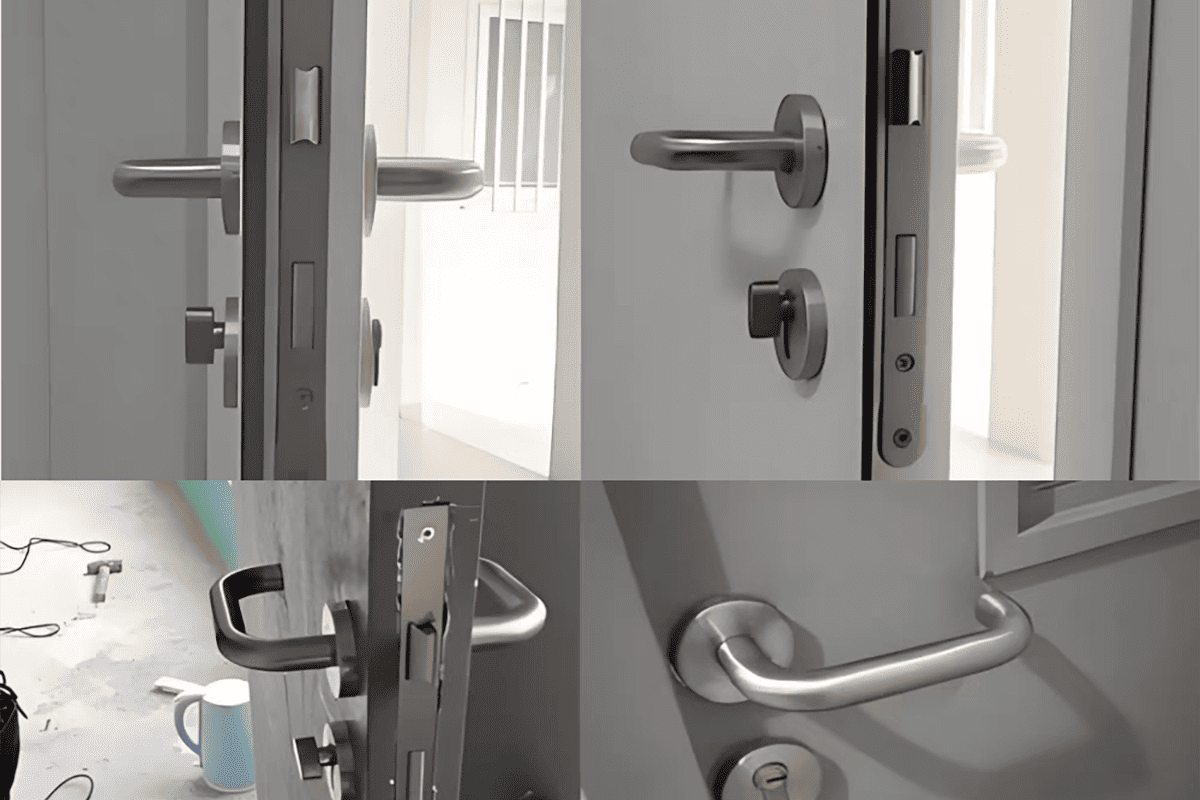
Master Keying is not only about cutting keys. It connects to the full door hardware package. A door project may include mortise locks, lever handles, hinges, cylinders, accessories, finishes, and packaging requirements.
At SDH Hardware, our product scope includes Euro mortise locks, stainless steel lever handles, butt hinges, concealed door hinges, Euro brass cylinders, and door accessories. This matters for project buyers because cylinder planning must align with lock bodies, door thickness, trim design, and regional specifications.
A project-oriented supplier should support:
- OEM or ODM requirements
- Product drawings after order confirmation
- Custom surface treatments
- Customer logo stamping or laser marking
- Custom color packaging
- Factory inspection after production
- Clear packing by project zone or door number
These services do not replace professional security consulting. They support procurement accuracy and manufacturing execution.
Quality control matters for lock cylinders
For lock cylinders, small dimensional or assembly problems can create major site issues. Keys must operate smoothly. Cylinders must fit the specified lock body. Finishes must match the door hardware set. Packaging must prevent mixed groups.
A buyer can ask about quality control steps such as:
Raw material screening
- Check brass, stainless steel, or other specified materials.
- Confirm incoming components match order requirements.
Production supervision
- Monitor machining, assembly, finishing, and marking.
- Confirm consistency across batches.
Function testing
- Test key operation.
- Check cylinder rotation.
- Confirm assigned keys operate the correct cylinders.
Finished product inspection
- Verify quantity, labeling, finish, and packaging.
- Compare against the approved order schedule.
SDH Hardware’s stated production context includes independent factory operations, complete production lines, and full-process quality control from raw material screening to finished product inspection. Buyers should still request order-specific inspection records and verify product documents against project needs.
Evaluate documents and certification claims carefully
For architectural hardware, buyers often need CE documents, fire-rated documents, or project compliance files. These should be treated as documents to verify, not as general claims that cover every configuration automatically.
Buyers should check:
- Which exact product model is covered
- Which test standard is referenced
- Which door assembly or application is relevant
- Whether the document is current
- Whether the certificate applies to the requested finish, size, or configuration
- Whether local project authorities require additional approval
This is especially important for fire-rated doors. A cylinder, lock, hinge, or door accessory may need to be part of a tested or approved assembly. Buyers should work with qualified professionals for fire, life safety, and security requirements.
Red flags during supplier selection
I would be cautious if a supplier:
- Says every cylinder can be master-keyed without checking details
- Does not ask for door grouping
- Cannot provide a clear key schedule format
- Treats Master Keying as simple key copying
- Cannot explain hierarchy levels in buyer-friendly language
- Offers no inspection or labeling process
- Cannot support replacement or expansion planning
- Makes broad security promises without project evaluation
A good supplier should be clear about what can be produced, what must be confirmed, and what needs professional project review.
Frequently Asked Questions
Is Master Keying the same as having one key for all locks?
No. Master Keying is not just one universal key. It is a planned access hierarchy. Some keys open only one lock, while higher-level keys open defined groups. The goal is controlled mechanical access, not unrestricted access for every user.
Can existing cylinders always be converted to a Master Keying system?
No. Existing cylinders may have incompatible keyways, limited combinations, worn parts, or brand restrictions. A supplier or qualified locksmith should inspect the cylinder type and key system before confirming whether conversion or replacement is possible.
What information should I send before requesting a Master Keying quotation?
You should send door quantity, cylinder type, door grouping, user roles, key hierarchy levels, finish, packaging needs, and any branding requirements. A door schedule or spreadsheet is very helpful because it shows how the building should be divided.
Is Master Keying suitable for high-security buildings?
Master Keying can support controlled mechanical access, but it is not a complete security solution for every high-security site. Some buildings need electronic access control, audit trails, alarms, or specialist security design. Buyers should seek qualified professional evaluation for application-specific requirements.
Which projects commonly use Master Keying?
Master Keying is common in hotels, schools, hospitals, office buildings, campuses, public facilities, and multi-department projects. These buildings usually need many individual keys plus higher-level access for managers, maintenance teams, or authorized emergency access.
Conclusion
Master Keying works best when it is planned as a structured access-control hierarchy, not as a last-minute request for a universal key. Buyers should define door zones, user roles, key levels, and cylinder feasibility before confirming production. If you are sourcing lock cylinders or complete architectural door hardware for a project, I can help you clarify the configuration requirements and prepare a more accurate Master Keying order with SDH Hardware.
"Master keying", https://en.wikipedia.org/wiki/Master_keying. Encyclopedic descriptions of pin-tumbler master keying explain that a master-keyed system permits selected keys to operate multiple locks while other keys operate only assigned locks. Evidence role: definition; source type: encyclopedia. Supports: A neutral source should define master keying as a lock system in which different keys operate different subsets of locks according to a hierarchy.. ↩
"Key Control Policy - Princeton Facilities", https://facilities.princeton.edu/document/2025. Facilities key-control glossaries commonly define a change key as a key for an individual lock and a master key as one that operates a designated group of locks. Evidence role: definition; source type: education. Supports: A university or facilities key-control glossary should support the difference between change keys, master keys, and broader master-key levels.. ↩
"role-based access control (RBAC) - Glossary", https://csrc.nist.gov/glossary/term/role_based_access_control. NIST descriptions of role-based access control define access as permissions associated with roles rather than with every individual user, which provides context for comparing master-key groups to role-based permission models. Evidence role: definition; source type: government. Supports: A government source should define RBAC as assigning permissions to roles, which contextualizes the comparison to master-key permission groups.. Scope note: The source supports the access-control analogy conceptually; it does not prove that mechanical master keying is itself an RBAC system. ↩
"13 Things", https://webhelper.brown.edu/joukowsky/courses/13things/7641.html. Technical treatments of pin-tumbler master keying describe how additional shear-line positions and key-bitting combinations enable hierarchical access while limiting the number and security of feasible key changes. Evidence role: mechanism; source type: paper. Supports: A technical paper or educational explanation should show that master key systems rely on pinning and key-bitting combinations and that these factors limit system design.. ↩
"physical access control system - Glossary", https://csrc.nist.gov/glossary/term/physical_access_control_system. Government guidance on physical access-control systems describes electronic credentials, access decisions, and event records as system functions, supporting the distinction between mechanical key control and electronic access-control capabilities. Evidence role: expert_consensus; source type: government. Supports: A government access-control source should support that electronic physical access-control systems can include credential management, event records, and integration features not inherent to mechanical keys.. Scope note: The source supports the functional distinction generally; project-specific security requirements still depend on local risk assessment and applicable regulations. ↩
"Campus Master Key Control - UW-Madison Policy Library", https://policy.wisc.edu/library/UW-401. University facilities key-control manuals commonly distinguish change keys, master keys, grand master keys, and great grand master keys by the increasing number of locks or areas each key can operate. Evidence role: definition; source type: education. Supports: An educational facilities key-control policy should define these hierarchy terms and their increasing scope of access.. ↩
"Key Control Policy - Princeton Facilities", https://facilities.princeton.edu/document/2025. Institutional key-control policies typically restrict master-key issuance to authorized personnel and require approval because such keys provide broad access beyond ordinary room keys. Evidence role: expert_consensus; source type: institution. Supports: A key-control policy should support that master keys are restricted to authorized personnel and require justification or approval.. Scope note: The source supports the general key-control principle; it does not determine the appropriate issuance rule for every building. ↩
"Pin tumbler lock", https://en.wikipedia.org/wiki/Pin_tumbler_lock. Descriptions of pin-tumbler master keying explain that the cylinder is configured with pin arrangements that permit more than one key bitting to create an operable shear line. Evidence role: mechanism; source type: encyclopedia. Supports: A neutral technical source should explain that master keying is created by internal cylinder pinning that allows different keys to align shear lines.. ↩
"Key Control Policies – Page 2 - Facilities - Williams College", https://facilities.williams.edu/policies-guidelines/keys/page/2/. Institutional key-control materials describe restricted keyways and controlled lock cores as mechanisms for limiting duplication and maintaining system integrity, supporting the need to verify compatibility before modifying an existing key system. Evidence role: general_support; source type: institution. Supports: A key-control or facilities source should support that keyways may be restricted and that existing lock cores or cylinders may be controlled by a specific system or manufacturer.. Scope note: The source supports the compatibility concern generally; actual compatibility requires inspection of the specific cylinders and keyways. ↩
"Chapter 41 – Building and Room Keys - Policy Manual", https://policy.uiowa.edu/administrative-financial-and-facilities-policies/building-and-room-keys. Facility key-control policies from large institutions describe master-key systems as tools for organizing access across rooms, departments, buildings, and authorized staff roles. Evidence role: general_support; source type: institution. Supports: Institutional key-control policies and facility-management sources should show that master-key systems are used to manage access across buildings, departments, floors, or operational roles.. Scope note: The source provides contextual support for multi-zone facilities; it may not directly cover every listed building type, such as hotels and hospitals. ↩
"Key Policy and Procedures | Facilities Management", https://facilities.uky.edu/key-policy-and-procedures. University key-control policies commonly classify grand master and higher-level keys as restricted credentials because their loss or misuse can affect many rooms or buildings. Evidence role: expert_consensus; source type: education. Supports: A university or institutional key-control policy should support that higher-level master keys are tightly controlled because they provide access to many spaces.. Scope note: The source supports the risk-management principle; the severity of risk depends on the actual key hierarchy and building use. ↩
"Summary of the HIPAA Security Rule - HHS.gov", https://www.hhs.gov/hipaa/for-professionals/security/laws-regulations/index.html. Healthcare regulatory guidance treats hospitals as controlled physical environments where patient safety, privacy, medication security, and emergency operations can affect access-control requirements. Evidence role: general_support; source type: government. Supports: A healthcare regulatory or government source should support that hospitals are subject to access, safety, privacy, and operational controls that affect physical security decisions.. Scope note: The source supports the general need for healthcare-specific review; it does not validate master keying as sufficient for a particular hospital. ↩