High-security lock cylinder comparison review: how should B2B buyers choose?
A high-security lock cylinder comparison can become confusing fast because every supplier has security terms, grades, and feature names. The risk is that buyers pay for labels that do not match the real attack risk. I prefer a structured review that connects cylinder functions, market standards, compatibility, and cost to the actual project need.
A high-security lock cylinder comparison should evaluate five areas: physical attack resistance, technical opening resistance, key control, cylinder compatibility, and verified test evidence. Buyers should not choose only by brand name or feature count. They should match anti-drill, anti-snap, anti-pick, anti-bump, and key protection functions to the target market and project risk.
In my export and presales conversations, I often see buyers ask for “the most secure cylinder.” That is not always the best question. A better question is: which security functions are worth paying for in this market, door type, and price level?
What should a high-security lock cylinder comparison include?
A high-security lock cylinder comparison can fail when it mixes every security feature into one score. This creates a problem because anti-drill, anti-snap, anti-pick, and anti-bump protection solve different risks. Buyers need a practical checklist before they compare models, prices, or supplier claims.
A high-security lock cylinder comparison should include physical attack resistance, technical opening resistance, key duplication control, body material, cam type, cylinder length, finish, certification documents, and supplier consistency1. The comparison should separate real security functions from marketing descriptions, and buyers should verify test reports before using standards in project specifications.
Physical attack resistance versus technical opening resistance
I like to separate cylinder security into two main groups:
Physical attack resistance
- Anti-drill protection
- Anti-snap protection
- Anti-pry or pull-out resistance
- Reinforced body or bridge design
- Hardened inserts or plates
Technical opening resistance
- Anti-pick pin design
- Anti-bump protection
- Double-row pins
- Side pins or sidebar systems
- Serpentine or restricted keyways
- Pin-in-pin structures
This distinction matters because a cylinder can look impressive but still be weak in the wrong area. For example, a cylinder with hardened anti-drill pins may resist drilling better, but that does not automatically mean it has strong key control or anti-bump resistance. In the same way, a complicated keyway can improve manipulation resistance, but it may not stop lock snapping if the cylinder body has no anti-snap structure.
A practical evaluation table for B2B buyers
| Evaluation area | What it protects against | Common design options | Buyer note |
|---|---|---|---|
| Anti-drill | Drilling through pins or plug | Hardened steel pins, tungsten carbide inserts, anti-drill plates | Ask for test evidence when a grade is claimed |
| Anti-snap | Breaking the cylinder body | Sacrificial break point, reinforced bridge, anti-snap bar | Important in markets where snapping is common |
| Anti-pick | Manual manipulation | Spool pins, mushroom pins, multiple pin rows | Useful for higher security product tiers |
| Anti-bump | Bump key attacks | Special pin springs, pin structure changes, blocking systems | Verify through supplier testing or reports |
| Key control | Unauthorized key copying | Restricted key blanks, patented key profiles, security card systems | Very important for projects and brand programs |
| Compatibility | Door and lock fit | Euro profile, cam type, length, finish | Critical for door factories and wholesalers |
In procurement, I do not recommend treating all security labels equally. A buyer should first define the application:
- Residential apartment doors may need balanced anti-snap, anti-drill, and key control.
- Commercial timber or steel doors may need stable durability and controlled key systems.
- Hotel or project doors may need cylinder compatibility with specific lock bodies and master key planning.
- Wholesale retail lines may need clear price tiers such as standard, mid-security, and premium security.
At SDH Hardware, I usually explain cylinder options in terms of risk, function, and evidence. This helps buyers avoid two common mistakes. The first mistake is buying the most complex model when the market only needs a reliable mid-tier cylinder. The second mistake is choosing a low-cost cylinder with attractive packaging but weak structure.
Certification and documentation should be verified
Standards such as EN13032 and market schemes such as TS0073 can be useful references, but buyers should treat them as documents to verify. I would not advise a purchaser to assume compliance because a catalog uses similar language. Standard requirements vary by market, and each specific cylinder model should have matching test documentation if the supplier claims a grade.
My practical rule is simple: if the standard is part of the sales promise, the document should be part of the procurement file.
This is especially important for hardware brands and project suppliers. If they resell products under their own brand, unsupported claims can create commercial risk. A safer approach is to compare product features first, then check whether the test reports support the claimed performance.
How do anti-drill, anti-snap, and anti-pry functions compare?
Physical attack features sound similar, but they protect against different force-based attacks. This causes confusion when buyers compare high-security cylinders only by a feature list. The real issue is whether the cylinder has the right reinforcement for the attack methods common in the target market.
Anti-drill protection resists drilling into the plug or pin chamber.4 Anti-snap protection reduces failure when force is applied to break the cylinder body. Anti-pry or pull-out protection helps resist extraction or pulling attacks. These functions are complementary, but they are not interchangeable in cylinder selection.
Anti-drill protection
Anti-drill protection is designed to make drilling slower, harder, or less effective. Common options include:
- Hardened steel pins inside the pin chamber
- Tungsten carbide inserts in vulnerable drilling zones
- Anti-drill plates near the front of the cylinder
- Hardened plug components depending on the structure
A buyer should not assume that all anti-drill designs perform the same. The location, material hardness, insert quantity, and cylinder construction all affect performance. If a supplier claims an EN1303 drill-resistance grade, the buyer should request the relevant test report and confirm that the tested item matches the ordered model.
In my experience, anti-drill protection is often easier for wholesalers to explain than technical opening resistance. A customer can understand the idea of hardened inserts quickly. However, the sales team should avoid saying “drill-proof.” A better phrase is drill-resistant under specified test conditions, if documentation supports it.
Anti-snap protection
Anti-snap protection is especially important in regions where lock snapping is a known burglary method.5 In a snapping attack, force is applied to break the cylinder at a weak point. Once the cylinder breaks, the attacker may access the cam or locking mechanism.6
Common anti-snap designs include:
Sacrificial break point
- The front section is designed to break away in a controlled location.
- The internal mechanism remains protected behind the break line.
Reinforced bridge
- The central body area is strengthened.
- This can reduce breakage around the screw hole area.
Stainless anti-snap bar
- A strong bar supports the cylinder body.
- This can improve resistance against snapping and pulling forces.
Pull-out protection
- The design resists extraction after force is applied.
- This may be combined with other anti-snap features.
Some buyers ask whether a cylinder is “TS007 3-star.” I treat that as a document-based question, not a marketing question. TS007 requirements should be verified with the exact certificate or test evidence for the specific cylinder model. A supplier can design anti-snap features, but that does not automatically mean it meets a market scheme.
Anti-pry and pull-out resistance
Anti-pry or pull-out resistance relates to attacks where the cylinder is pulled, gripped, or forced out. This can overlap with anti-snap design, but it is not the same thing. A cylinder with a sacrificial break point may still need additional structure if the market has extraction risks.
Buyers should consider the full door set. A cylinder does not work alone. The escutcheon, security rosette, lock case, handle set, and door material all affect the final resistance level.7 A high-security cylinder installed with a weak plate may not perform as expected.
Physical attack comparison table
| Feature | Main attack type | Best suited for | Procurement question |
|---|---|---|---|
| Anti-drill | Drill attack | General security upgrade | What material and location are used for inserts? |
| Anti-snap | Cylinder snapping | Residential and exterior doors in snapping-risk markets | Does the model have verified anti-snap performance? |
| Anti-pry / pull-out | Extraction attack | Doors with exposed cylinders | Is the cylinder paired with protective hardware? |
| Reinforced bridge | Body breakage | Higher security Euro cylinders | How is the screw-hole area strengthened? |
For door factories, I usually recommend checking cylinder projection after installation. Even a strong cylinder can become vulnerable if it extends too far beyond the door surface or escutcheon.8 For wholesalers, I recommend building clear product tiers. For example:
- Basic security cylinder: standard pin system, normal key profile
- Improved security cylinder: anti-drill pins, better key combinations
- High-security cylinder: anti-drill, anti-snap, anti-pick or anti-bump features
- Premium project cylinder: restricted keyway, verified test documentation, master key options
This tiering makes the product easier to sell without overclaiming performance.
How do anti-pick, anti-bump, and key control features affect a high-security lock cylinder comparison?
A high-security lock cylinder comparison should not stop at force resistance. Many buyers focus on anti-drill and anti-snap because those features are visible and easy to market. The problem is that technical opening risks require different internal designs, key profiles, and key control policies.
Anti-pick and anti-bump features increase resistance to manipulation attacks, while key control reduces unauthorized key duplication. Common technical protection options include special security pins, double-row pin systems, side pins, serpentine keyways, restricted blanks, and pin-in-pin concepts. Buyers should match these features to project risk and resale positioning.
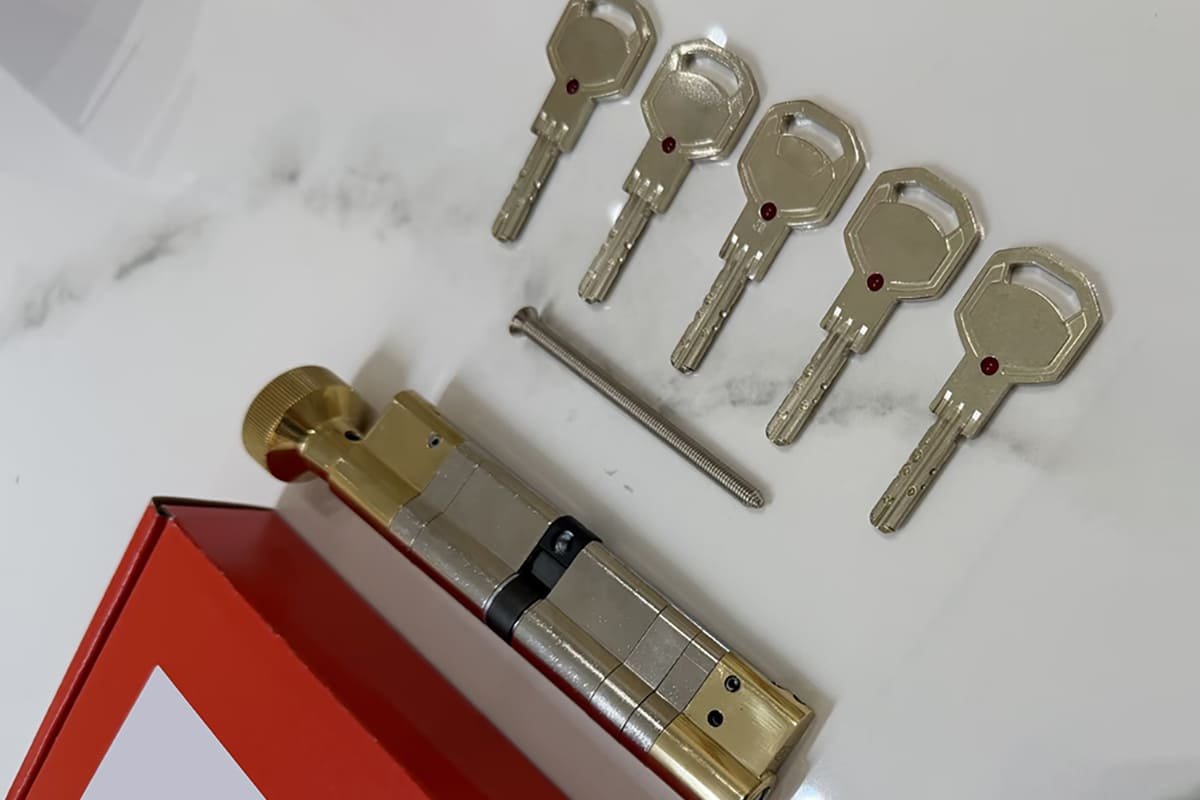
Anti-pick protection
Picking attacks target the pin system or locking elements. A basic cylinder with simple pins may be easier to manipulate than a cylinder with security pins or more complex internal elements. Common anti-pick design options include:
- Spool pins
- Mushroom pins
- Serrated pins
- Double-row pin layouts
- Side pins or sidebar mechanisms
- Complex keyway shapes
These designs can make manipulation more difficult9, but buyers should avoid vague language. A supplier should explain what the design actually does. For example, a “serpentine keyway” can restrict tool access and increase key complexity. A “double-row pin” system increases the number of locking elements. These features may improve resistance, but they do not replace tested performance evidence.
Anti-bump protection
Bumping is a manipulation method that uses a specially cut key and impact force.10 Anti-bump designs try to prevent or reduce this effect through pin structure, spring configuration, blocking elements, or special key systems.
When I discuss anti-bump functions with buyers, I usually ask three questions:
- Is bumping a known concern in your market?
- Will your customer understand and pay for anti-bump protection?
- Do you need test documentation to support the claim?
For some wholesale markets, anti-bump language helps create a higher security tier. For technical project supply, documentation is more important than wording. If a buyer plans to print “anti-bump” on packaging, the claim should be supported by the supplier’s technical file or test evidence.
Key control and duplication protection
Key control is often underestimated in cylinder comparisons. A strong cylinder loses value if keys can be copied freely at any local shop.11 For property managers, commercial projects, and hardware brands, key control can be as important as physical resistance.
Common key control options include:
- Restricted key blanks
- Security card duplication systems
- Patent-protected key profiles12
- Factory-controlled key cutting
- Master key system planning
- Customer-specific keyway programs
Recognized international brands such as ABUS, ISEO, and MUL-T-LOCK are often used as market references because buyers know their security positioning. However, I do not recommend comparing brands as if every model has the same level of protection. Each model has its own structure, documentation, and intended market. For example, MUL-T-LOCK is well known for pin-in-pin concepts in some product lines, but a buyer should compare actual model specifications rather than assume direct equivalence with another cylinder.
Technical feature comparison table
| Feature | Purpose | Commercial value | Buyer caution |
|---|---|---|---|
| Security pins | Increase pick resistance | Good for mid-to-high tiers | Ask which pin types are used |
| Double-row pins | Add locking combinations | Easy to explain in catalogs | Confirm key and cylinder complexity |
| Serpentine keyway | Restrict tool and key access | Strong visual selling point | Confirm blank availability |
| Pin-in-pin concept | Increase technical complexity | Premium security positioning | Compare specific model specs only |
| Restricted key blanks | Control duplication | Valuable for projects and brands | Requires key management process |
| Security card | Manage key copying | Strong for retail and project use | Needs clear user instructions |
For hardware brand customers, I often suggest a clear product story. A product line can include:
- Standard line: reliable function and competitive price
- Security line: anti-drill and anti-pick features
- Anti-snap line: market-specific snapping protection
- Project line: key control, master keying, and documentation support
This helps sales teams explain why a buyer should pay more. It also prevents the mistake of adding every feature into one expensive model that may not fit the target market.
Which high-security lock cylinder comparison factors matter most for door factories, brands, and wholesalers?
A high-security lock cylinder comparison should change based on the buyer type. Door factories, hardware brands, and wholesalers do not evaluate cylinders in the same way. The problem is that many product sheets focus only on features, while real purchasing decisions also depend on fit, supply stability, packaging, and after-sales clarity.
Door factories should prioritize compatibility, stable dimensions, and consistent supply. Hardware brands should prioritize product tiering, sellable security functions, and documentation. Wholesalers should prioritize clear price levels, simple feature explanations, and reliable inventory planning. Each buyer should match security functions to customer expectations and market standards.
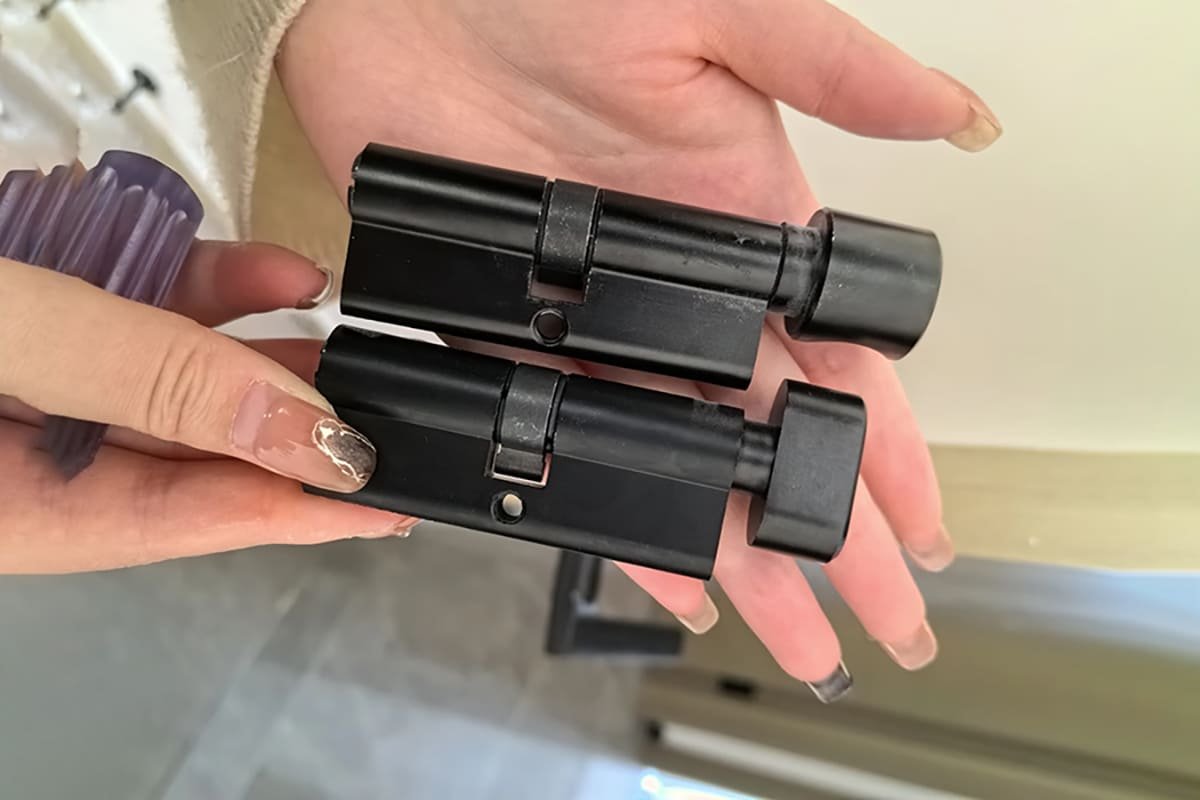
Door factories: compatibility first
Door factories usually need cylinders that work smoothly with lock bodies, handles, escutcheons, and door thicknesses. Security is important, but a technically strong cylinder that causes installation problems is not a good purchasing decision.
Key points for door factories include:
- Euro profile compatibility
- Cylinder length options, such as 30/30, 35/35, 40/40, or asymmetric sizes
- Cam type and cam position
- Finish matching with handles and accessories
- Smooth key operation
- Stable screw-hole alignment
- Packaging suitable for production lines
I have seen buyers focus on one premium security feature but forget to confirm cylinder length tolerance. That can create assembly delays. For factory supply, the best cylinder is often the one that combines enough security with repeatable installation quality.
Hardware brands: product tiering and brand promise
Hardware brands need cylinders that are easy to position. A brand may need one model for price-sensitive channels and another model for premium security. The important point is that the security claim must match the product evidence.
A practical brand lineup may look like this:
| Product tier | Main features | Target buyer | Documentation need |
|---|---|---|---|
| Standard | Basic Euro cylinder, common key profile | Price-sensitive market | Basic QC documents |
| Mid-security | Anti-drill pins, security pins | Retail and light project use | Supplier technical sheet |
| High-security | Anti-drill, anti-snap, anti-pick or anti-bump options | Higher risk markets | Test evidence if claims are printed |
| Project security | Key control, master key system, verified specifications | Commercial projects | Full technical file and order records |
Brand buyers should also consider logo and packaging support. At SDH Hardware, we support options such as customer stamping or laser logos, custom color packaging, detailed drawings after order confirmation, and inspection service after order completion. These services matter because a cylinder is not only a component. It is also part of a product line that must be sold, installed, and supported.
Wholesalers: simple explanations sell better
Wholesalers often need a product that their sales team can explain quickly. If a cylinder has ten technical claims, but the sales team cannot explain them, the value may be lost. I usually recommend three levels:
Good
- Smooth operation
- Reliable material
- Standard Euro profile
- Competitive price
Better
- Anti-drill protection
- Anti-pick pins
- More key combinations
- Better packaging
Best
- Anti-snap design
- Anti-bump or advanced pin system
- Restricted key options
- Verified documents when needed
This structure helps wholesalers defend higher prices. It also helps them avoid overstocking too many similar models.
Supplier selection checklist
A cylinder comparison should include the supplier, not only the product. B2B buyers should ask:
- Does the supplier have stable production capacity?
- Can the supplier provide consistent cylinder lengths and finishes?
- Can the supplier support ODM or OEM requirements?
- Can the supplier provide drawings after order confirmation?
- Can the supplier provide inspection records?
- Are certifications or test reports available for the claimed models?
- Can the supplier help match cylinders with mortise locks, handles, hinges, and accessories?
SDH Hardware operates as a factory-direct architectural door hardware manufacturer in China, with more than 10 years of specialized production experience. Our product range includes Euro mortise locks, stainless steel lever handles, butt hinges, concealed door hinges, Euro brass cylinders, and door accessories. I mention this because cylinder selection is often easier when the supplier understands the full door hardware set, not only one component.
Still, buyers should verify application-specific requirements with qualified professionals when a project has fire, escape, insurance, or local compliance requirements. A cylinder is one important part of the security system, but it is not the full system.
How should buyers balance security features, certification evidence, and cost?
A high-security lock cylinder comparison becomes more useful when it includes price logic. More features do not always mean a better purchase. The problem is that buyers may over-specify cylinders for low-risk markets or under-specify cylinders for markets where burglary methods are more aggressive.
Buyers should balance security features, certification evidence, and cost by defining the target market first. They should identify likely attack risks, required documents, expected retail price, and installation conditions. Then they should choose the cylinder structure that supports those needs without adding features that customers will not value.
Start with the risk level
I suggest buyers classify projects into three risk levels:
| Risk level | Typical use | Recommended focus |
|---|---|---|
| Low risk | Interior doors, basic residential, price-sensitive markets | Smooth function, stable quality, basic durability |
| Medium risk | Apartment doors, common exterior doors, retail security lines | Anti-drill, anti-pick, better key combinations |
| High risk | Markets with snapping risk, project doors, premium resale | Anti-snap, anti-bump, key control, documentation |
This framework prevents unnecessary cost. For example, a high-end key control system may be excessive for a low-cost wholesale cylinder. At the same time, a basic cylinder may be a poor choice for an exterior door in a market where snapping is common.
Understand the cost drivers
High-security cylinder cost is usually influenced by:
- Material selection, such as brass grade and reinforcement parts
- Machining precision
- Pin system complexity
- Number of keys supplied
- Restricted key blank management
- Surface finish requirements
- Testing and certification costs
- Packaging and branding
- Order quantity and customization level
Buyers should not compare only unit price. They should compare the full landed value. A slightly higher-priced cylinder may reduce complaints, improve brand positioning, or support better margins. However, the buyer should still avoid paying for features that the local market does not recognize.
Verify claims before printing them
This point is important for hardware brands and wholesalers. If a product package says “anti-snap,” “anti-bump,” or “tested to a standard,” the buyer should keep supporting evidence. The evidence may include:
- Supplier test report
- Third-party lab report
- Certificate showing exact model reference
- Technical drawing
- Material specification
- Internal inspection record
- Batch traceability information
Conclusion
A high-security lock cylinder comparison should not be a simple ranking of brands or feature counts. It should connect attack resistance, technical key protection, verified documents, compatibility, and price to the real market need. Buyers should separate anti-drill, anti-snap, anti-pry, anti-pick, anti-bump, and key control functions before choosing a model. If you need factory-direct Euro brass cylinders, OEM branding, or specification matching for door hardware projects, I can help you compare options and build a practical product line.
"What Should I Know About European Cylinder Locks? - SDH ...", https://sdhhardware.com/2026/08/18/what-should-i-know-about-european-cylinder-locks/. Independent lock-cylinder standards classify performance across several dimensions, including durability, key-related security, and resistance to physical attack, supporting a multi-factor comparison rather than a single feature score. Evidence role: general_support; source type: institution. Supports: Standards and certification schemes assess cylinders across multiple categories such as durability, key security, dimensions, and resistance to attack.. Scope note: This supports the general structure of the comparison, but it may not directly validate supplier consistency or every procurement factor listed. ↩
"BS EN1303 for Euro profile lock cylinder - SDH hardware", https://sdhhardware.com/2022/12/02/bs-en1303-euro-profile-lock-cylinder/. EN 1303 is a European standard for cylinders for locks that defines requirements and classification methods for characteristics such as durability, key security, and resistance to attack. Evidence role: definition; source type: institution. Supports: EN1303 specifies requirements and classification criteria for cylinders used in locks, including security and durability-related characteristics.. ↩
"A Complete Guide to Euro Cylinder Locks? - SDH hardware", https://sdhhardware.com/2026/09/04/a-complete-guide-to-euro-cylinder-locks/. TS 007 is a UK door-cylinder security specification that uses star ratings to indicate tested resistance levels for cylinders and associated hardware. Evidence role: definition; source type: institution. Supports: TS007 is a UK security standard or scheme for cylinders and associated door hardware, commonly expressed through star ratings.. Scope note: This supports the meaning of the TS007 reference, but the specific rating of any cylinder still depends on model-specific certification. ↩
"What components make up a door lock cylinder? - SDH hardware ...", https://sdhhardware.com/2026/06/05/what-components-make-up-a-door-lock-cylinder-2/. Lock-cylinder test standards and technical descriptions treat drilling resistance as protection against attempts to defeat the plug or pin chamber by drilling into vulnerable locking components. Evidence role: mechanism; source type: institution. Supports: Anti-drill protection addresses attacks in which drilling is used to defeat the plug, pins, or related locking components.. ↩
"A Complete Guide to Euro Cylinder Locks? - SDH hardware", https://sdhhardware.com/2026/09/04/a-complete-guide-to-euro-cylinder-locks/. Police and crime-prevention guidance identifies lock snapping as a recognized burglary technique against vulnerable Euro-profile cylinders, explaining why anti-snap protection is emphasized in affected markets. Evidence role: historical_context; source type: government. Supports: Police or crime-prevention guidance identifies lock snapping as a known method used in burglaries, especially against exposed Euro-profile cylinders.. Scope note: Such sources usually document regional concern rather than proving the risk level in every export market. ↩
"A Complete Guide to Euro Cylinder Locks? - SDH hardware", https://sdhhardware.com/2026/09/04/a-complete-guide-to-euro-cylinder-locks/. Technical security guidance on cylinder snapping explains that breaking or removing the cylinder can expose the cam or operating mechanism, allowing the lock to be manipulated. Evidence role: mechanism; source type: institution. Supports: Cylinder snapping can remove or break the cylinder in a way that permits access to the cam or lock mechanism.. ↩
"Door Security Hardware for Home Entry Protection? - SDH hardware ...", https://sdhhardware.com/2026/06/11/door-security-hardware-for-home-entry-protection/. Door-security standards and certification schemes assess resistance at the doorset level, indicating that cylinders, lock cases, protective furniture, and door construction jointly affect security performance. Evidence role: general_support; source type: institution. Supports: Door security standards and certification schemes evaluate the door assembly rather than the cylinder alone.. Scope note: This supports the system-level principle, but the relative contribution of each component depends on the tested doorset configuration. ↩
"A Complete Guide to Euro Cylinder Locks? - SDH hardware", https://sdhhardware.com/2026/09/04/a-complete-guide-to-euro-cylinder-locks/. Crime-prevention guidance commonly warns that Euro cylinders should not project excessively beyond the door furniture because exposed cylinder bodies are easier to grip and attack. Evidence role: mechanism; source type: government. Supports: Security guidance warns that protruding cylinders are easier to grip, snap, or otherwise attack.. Scope note: Exact acceptable projection limits vary by guidance document, product design, and local installation practice. ↩
"What components make up a door lock cylinder? - SDH hardware ...", https://sdhhardware.com/2026/06/05/what-components-make-up-a-door-lock-cylinder-2/. Technical descriptions of pin-tumbler locks explain that security pins and additional locking elements can increase manipulation difficulty by producing false feedback or requiring more complex alignment. Evidence role: mechanism; source type: encyclopedia. Supports: Security pins and additional locking elements can complicate picking by creating false feedback or adding locking interactions.. Scope note: General technical descriptions support the mechanism, but they do not prove the tested pick resistance of any specific cylinder model. ↩
"Lock bumping - Wikipedia", https://en.wikipedia.org/wiki/Lock_bumping. Descriptions of lock bumping define it as a manipulation technique using a specially cut bump key and impact force to momentarily align the pins in a pin-tumbler cylinder. Evidence role: definition; source type: encyclopedia. Supports: Lock bumping is a technique in which a bump key is struck to transfer force to the pins of a pin-tumbler lock.. ↩
"Protect", https://www.nist.gov/cyberframework/protect. Physical-security guidance treats key control as an access-control measure, noting that uncontrolled duplication or poor key management can undermine otherwise secure locking hardware. Evidence role: general_support; source type: government. Supports: Key-control policies are a recognized part of physical security because uncontrolled duplication can defeat access restrictions.. Scope note: This supports the security principle, but it does not quantify how much value is lost for any particular cylinder. ↩
"What Are Euro Profile Cylinders? - SDH hardware- China ...", https://sdhhardware.com/2026/08/07/what-are-euro-profile-cylinders/. Key-control literature describes patented or restricted key profiles as mechanisms for limiting unauthorized blank supply and duplication through legal and distribution controls. Evidence role: mechanism; source type: institution. Supports: Patents and restricted keyway systems can support key control by limiting who may manufacture or supply compatible blanks.. Scope note: This supports the general key-control mechanism, but enforcement and practical effectiveness depend on jurisdiction, patent status, and distributor procedures. ↩