
How to Identify a Commercial Mortise Lock?
A commercial mortise lock is easy to misidentify when buyers start with appearance, faceplate shape, or “heavy-duty” wording. That mistake can delay quotation, sampling, and production. The better solution is to identify the lock by standard, application function, and verified dimensions before you confirm any model.
To identify a commercial mortise lock, first confirm the lock standard, such as Euro EN 122091, ANSI/BHMA A156.132, or Chinese GB-related systems. Then confirm the door application and lock function. Finally, check key dimensions, including center distance, backset, faceplate size, lock body size, cylinder type, spindle hole, and door thickness.
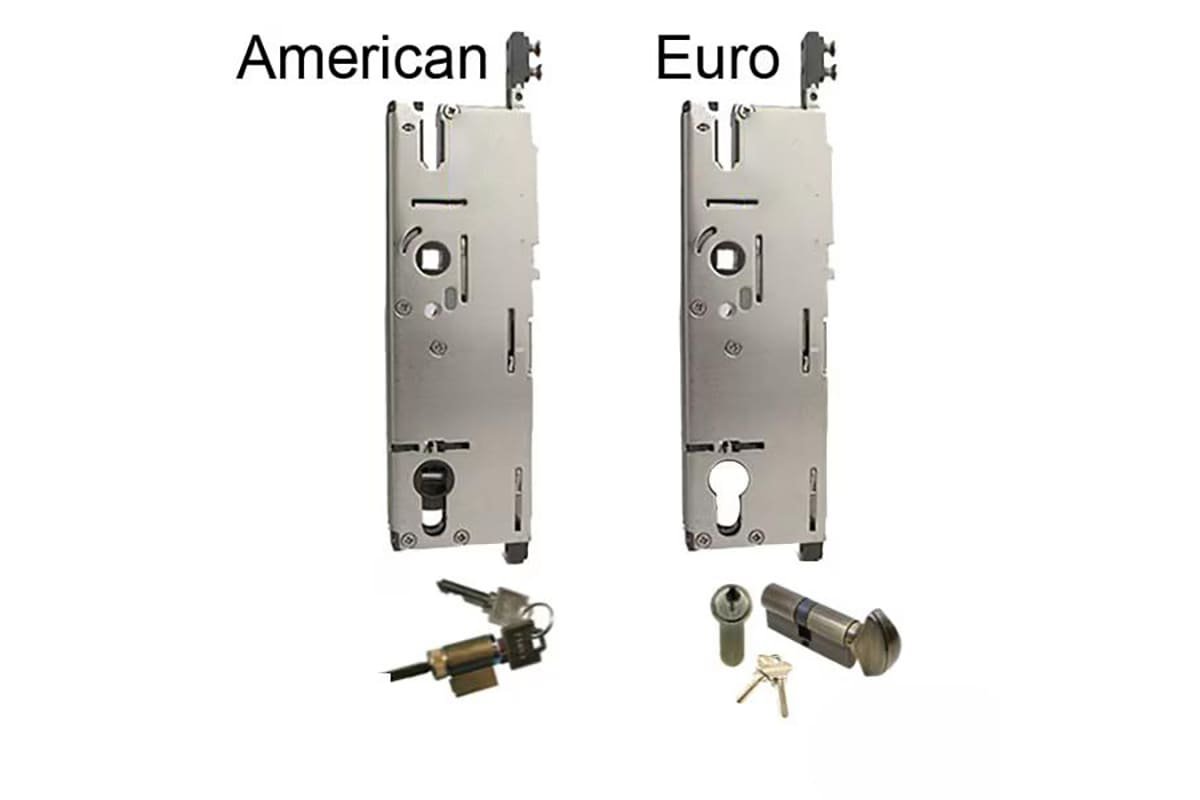
In my factory-side work, I rarely begin by asking customers for a photo only. A photo helps, but it does not complete the specification. I usually ask three practical questions first: Which standard does the project follow? What door function is required? What dimensions must match the drawing?
Why Should You Identify a Commercial Mortise Lock by Standard First?
A commercial mortise lock can look similar from the outside, but its internal system may follow very different standards. If buyers start with appearance, they may choose the wrong hole layout, cylinder type, handle position, or faceplate size. This causes problems during door machining, sample approval, and project installation.
A commercial mortise lock should be identified by standard first because Euro, American, and Chinese lock systems use different layouts and dimensional logic3. The standard usually determines the handle position, cylinder position, lock case structure, test requirements, and compatible accessories. Buyers should verify the applicable standard against project documents and target market requirements.
Start with the lock system, not the faceplate
In production discussions, I often see buyers send a lock body photo and ask, “Can you make this?” My first answer is usually, “Yes, but we need to confirm the standard.” The reason is simple. A faceplate may look familiar, but the hole layout behind the door leaf may belong to a completely different system.
For commercial projects, three common reference systems often appear in inquiries:
| Lock system | Common reference standard | Typical layout tendency | Buyer note |
|---|---|---|---|
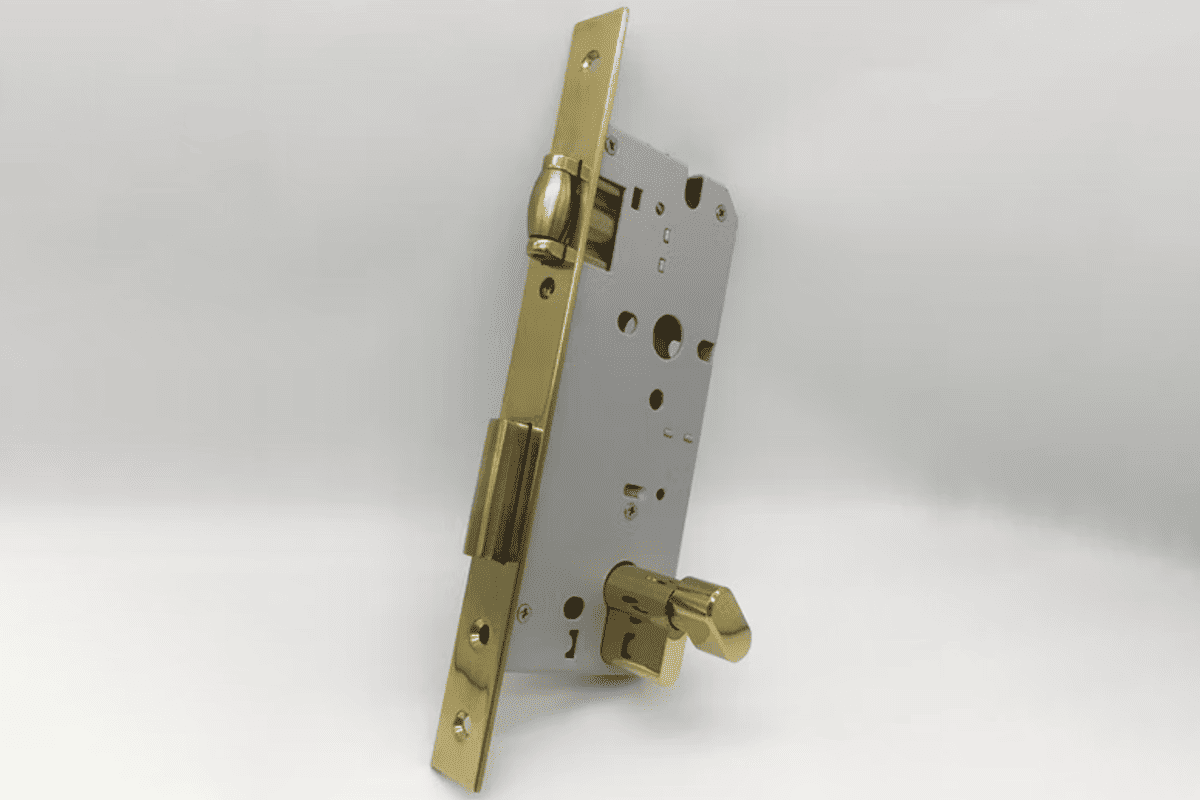
| Euro-type mortise lock | EN 12209 | Lever/handle above, Euro profile cylinder4 below | Common in Europe, Middle East, and many export projects |
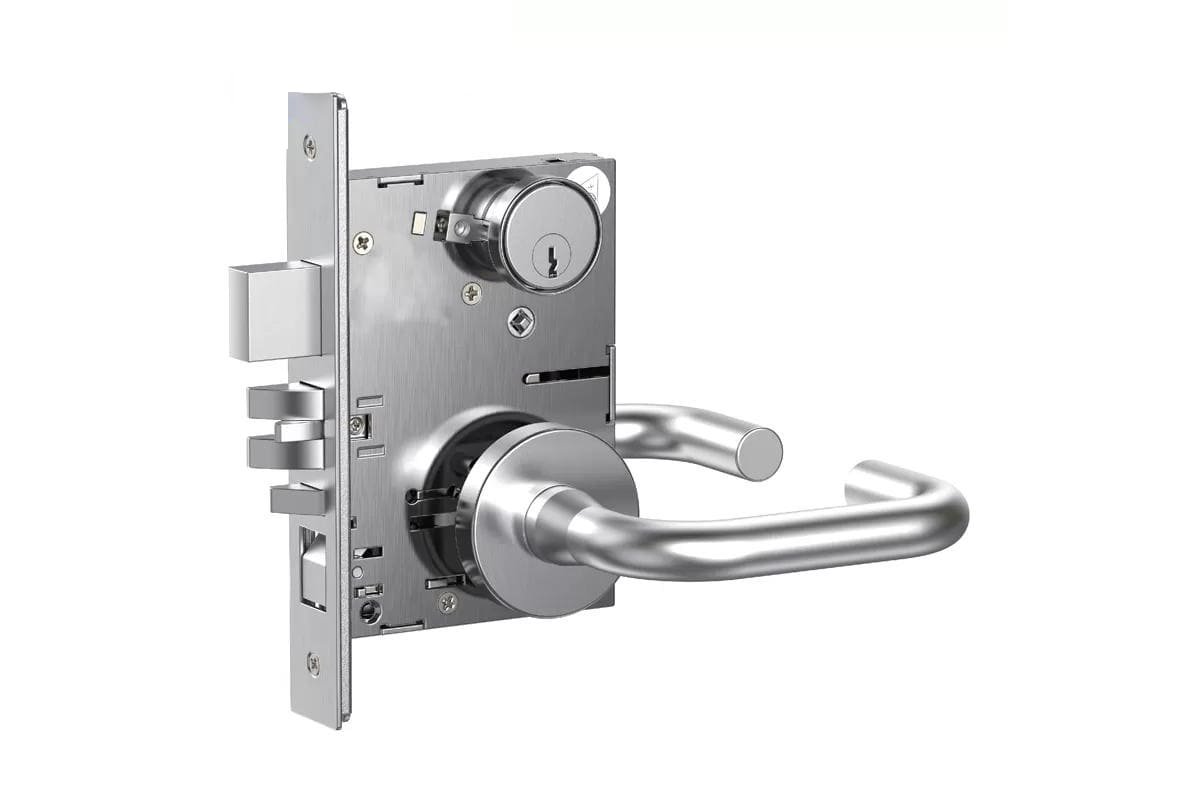
| American-style mortise lock | ANSI/BHMA A156.13 | Round cylinder often above, lever/handle below | Common in North American-style specifications |
| Chinese standard lock body | GB 6068, with GB 21556 / QB/T 2474 references5 | Handle above, cylinder below, with varied dimensions | Common in China-related supply chains and some regional projects |
These descriptions are practical references, not universal rules. The project specification, product drawing, and market requirement must always control the final choice.
Why appearance alone creates risk
A buyer may see a rectangular lock case and assume it is interchangeable with another one. That assumption can be expensive. The lock may not align with:
- Existing door preparation
- Lever handle spindle position
- Cylinder hole position
- Escutcheon or rose layout
- Strike plate position
- Fire-rated door requirements
- Panic or emergency exit hardware
- Local compliance documentation
For example, a Euro-type lock body commonly uses a Euro profile cylinder below the handle. An ANSI/BHMA mortise lock often uses a round cylinder and may place the cylinder above the lever. A Chinese standard lock body may look close to a Euro pattern, but the center distance, backset, and faceplate details may be different.
What I ask before checking dimensions
Before I match samples, I usually ask:
Which market is the lock for?
Europe, Middle East, Southeast Asia, North America, or another region?Which standard appears in the project document?
EN 12209, ANSI/BHMA A156.13, GB-related references, or customer-specific drawings?Is certification required?
CE, fire-rated documentation, or other third-party certificates may be required6. Buyers should verify certificates against the exact product model and intended application.Is this for replacement or new door production?
Replacement requires stricter matching of existing holes. New door production allows more flexibility.
I treat standards as the first filter because standards influence the whole product family. A lock body is not just a metal case. It is part of a door hardware system.
For procurement teams, this first step prevents many quotation errors. It also helps suppliers provide the correct drawing, sample, accessory package, and inspection plan.
How Does Door Function Change the Commercial Mortise Lock You Need?
A commercial mortise lock cannot be selected correctly until the door function is clear. A corridor door, classroom door, bathroom door, fire exit, sliding door, and service room may all use mortise-style locks, but their structures and operating logic can be very different.
Door function changes the commercial mortise lock because each application requires a different latch, deadbolt, cylinder, panic function, privacy function, roller latch, hook bolt, or magnetic mechanism. Buyers should identify the door type and usage before confirming the model, because locks with similar names are not automatically interchangeable7.
Function determines structure
When customers only say “mortise lock,” I usually cannot quote accurately. I need to know what the door must do. A hotel room entrance, an office corridor door, and a warehouse storage door may all need different functions.
Here are common commercial mortise lock functions that buyers should separate clearly:
| Function type | Typical application | Key identification point |
|---|---|---|
| Sash lock | Hinged entrance or room doors | Latch plus deadbolt, operated by handle and cylinder |
| Passage lock | Corridor or internal access doors | Latch function, often no locking cylinder |
| Deadbolt lock | Storage, service, or restricted rooms | Deadbolt-focused security function |
| Bathroom lock | Restroom or privacy doors | Privacy turn, emergency release, occupancy indicator in some cases |
| Anti-panic lock | Fire exits or emergency exits | Must coordinate with panic hardware and local code requirements8 |
| Night latch lock | Doors requiring automatic latch security | Latch may engage when door closes |
| Classroom lock | Schools and public buildings | Specific key control and locking operation |
| Roller lock | Pull doors or entrance doors | Roller latch instead of standard latch bolt |
| Hook lock | Sliding doors | Hook bolt engages into strike9 |
| Magnetic lock body | Interior doors with quiet closing needs | Magnetic latch action |
| Narrow lock | Aluminum profile doors | Narrow backset and slim case |
| X-ray room lock | Specialized medical rooms | Application-specific structure and project requirement |
These examples show why the label “commercial mortise lock” is not enough. The correct function must be confirmed before sampling.
Why the same name can hide different products
Two buyers may ask for a “commercial mortise lock,” but one may need a Euro sash lock for a wooden fire-rated door, while the other may need a narrow lock for an aluminum frame door. The outside wording is similar. The product is not.
This is where many cross-market inquiries become confusing. Different regions also use different product names. A “sash lock” in one market may be described as a “lock body with latch and deadbolt” in another. A “bathroom lock” may require different emergency release designs depending on the handle set and escutcheon.
Application questions I recommend before inquiry
Before quotation or sample production, I suggest that buyers prepare answers to these questions:
What type of door is it?
Wooden door, steel door, fire-rated door, aluminum door, glass-framed system, or sliding door?Where will the door be used?
Office, hotel, school, hospital, apartment, warehouse, restroom, or emergency exit?What operation is required?
Passage, privacy, key locking, deadbolt locking, panic exit, roller latch, hook bolt, or magnetic latch?Will the lock be used with other hardware?
Lever handle, knob, Euro cylinder, round cylinder, thumbturn, escutcheon, panic bar, door closer, or access control component?Is this a new project or replacement?
A replacement lock must match old machining. A new project should follow approved drawings.
A practical example from specification matching
I once received an inquiry where the buyer asked for a “72 mm commercial lock body.” At first, it looked like a standard Euro-type lock. After checking the door application, we found that the lock was for an emergency exit door and needed compatibility with panic hardware. That changed the discussion completely. The center distance alone did not define the correct lock.
For this reason, I always treat function as the second step after standard confirmation. The lock standard narrows the system. The application function defines the structure. Only then do dimensions confirm whether the product will fit.
Which Dimensions Confirm Commercial Mortise Lock Compatibility?
A commercial mortise lock must match the door preparation and accessory system. If the center distance, backset, faceplate, spindle hole, or cylinder cutout is wrong, the lock may not install even when the function and standard look correct. Dimension checking is the final confirmation step.
The key dimensions for a commercial mortise lock include center distance, backset, faceplate size, faceplate screw spacing, lock body size, follower or spindle hole, cylinder hole, latch and deadbolt position, strike alignment, and door thickness. Buyers should confirm these values from drawings, samples, or project specifications before ordering.
Key measurements buyers should verify
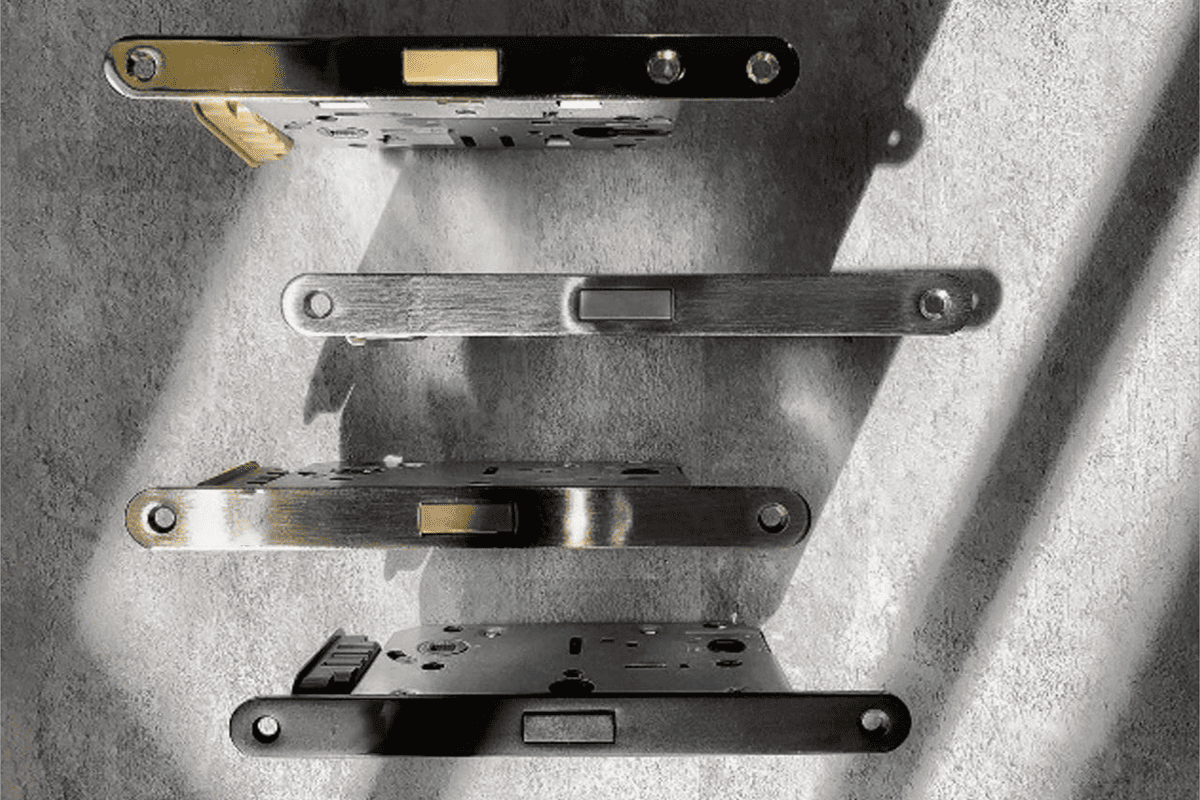
Dimensions are where identification becomes exact. In our factory work, I prefer to check a drawing over a photo whenever possible. A photo may show the faceplate, but it cannot reliably show the backset, lock case depth, or spindle position.
The most important dimensions include:
Center distance
This is usually the distance between the handle spindle center and the cylinder or keyhole center.Backset
This is the distance from the faceplate edge to the handle spindle center or key operating center, depending on the lock type.Faceplate size
Buyers should check width, length, thickness, corner shape, and finish.Faceplate screw spacing
This matters for replacement and for door machining.Lock body size
Case height, case depth, case thickness, and internal clearance must fit the door.Follower or spindle hole
Common spindle sizes vary by system and handle set.Cylinder hole type
Euro profile cylinder, round cylinder, oval cylinder, or other designs must match the trim.Latch and deadbolt position
The latch, deadbolt, roller, or hook bolt must align with the strike plate.Door thickness
Door thickness affects cylinder length, spindle length, screw length, and accessory compatibility.10
Common dimensional references by system
The following values are common references I have seen in manufacturing and sample matching. They are not universal specifications. Buyers should always confirm the product drawing and project requirement.
| System | Center distance reference | Backset reference | Faceplate reference |
|---|---|---|---|
| American-style mortise lock | Around 92 mm | Around 70 mm | 32 × 203 mm |
| Chinese standard lock body | Around 68 mm | Around 60 mm | 24 × 240 mm or 30 × 240 mm |
| Euro-type mortise lock | 72 mm or 85 mm | 55 mm or 60 mm common | 20 × 235 mm or 24 × 240 mm |
These values help buyers ask better questions. They should not replace the official door schedule, lock drawing, or sample confirmation.
Why dimension mixing causes mistakes
One common mistake is mixing dimensions from different lock systems. For example, a buyer may ask for a Euro-type 72 mm center distance but attach a photo of an American-style mortise lock with a round cylinder above the lever. Another buyer may request a Chinese standard faceplate size but need Euro cylinder compatibility.
These mixed requests create risk because production tooling, lock case punching, latch position, and accessory holes may not align.
A safer process is:
- Confirm the standard system
- Confirm the application function
- Confirm the full dimension set
- Confirm the accessory compatibility
- Approve the drawing
- Approve the sample
- Proceed with bulk production
Replacement requires stricter checking
For replacement projects, I recommend measuring the existing lock carefully. Buyers should not rely only on the old lock name. The same product name may have changed across batches, brands, or markets.
For replacement, check:
- Existing door cutout
- Existing handle position
- Existing cylinder cutout
- Existing strike plate position
- Existing faceplate recess
- Door thickness
- Handing or opening direction
- Finish and visible trim style
If possible, buyers should send the old lock sample or a detailed technical drawing. In my experience, one extra day of measurement can prevent weeks of correction.
What Should Buyers Prepare Before Requesting a Commercial Mortise Lock Quotation?
A commercial mortise lock inquiry becomes much faster and more accurate when the buyer prepares a pre-inquiry checklist. Without clear information, suppliers may quote the wrong model, prepare the wrong sample, or miss certification and accessory requirements. This creates avoidable cost and delay.
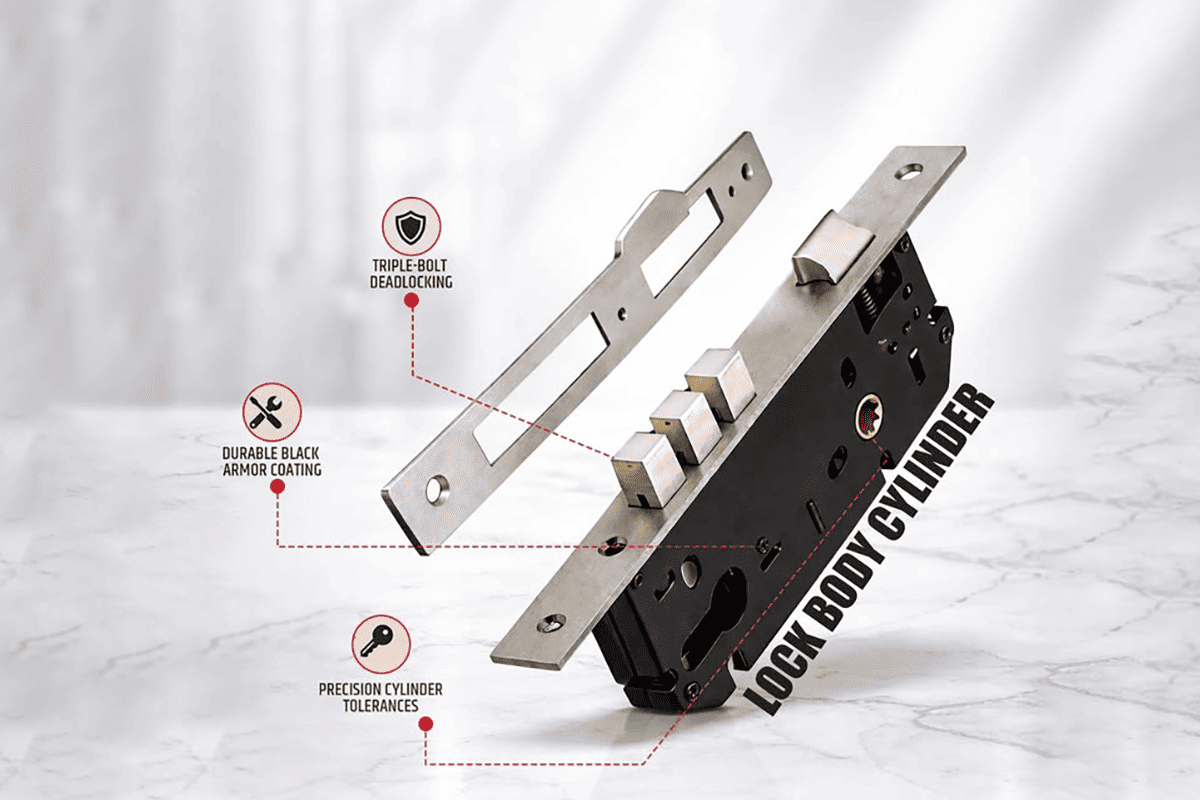
Before requesting a commercial mortise lock quotation, buyers should prepare the target standard, door type, lock function, door material, door thickness, opening direction, backset, center distance, faceplate size, cylinder type, handle and spindle specification, latch or deadbolt configuration, finish, certification requirement, quantity, and drawings or samples.
The pre-inquiry checklist I recommend
When I receive complete information, I can usually identify the product family much faster. When information is missing, we must go back and forth many times. That is normal in custom hardware work, but buyers can save time by preparing the core details first.
Here is the checklist I recommend for door manufacturers, hardware brands, importers, and project buyers:
| Category | Information to prepare | Why it matters |
|---|---|---|
| Standard | EN 12209, ANSI/BHMA A156.13, GB-related, or project-specific | Defines lock system and testing direction |
| Door type | Wooden, steel, aluminum, fire-rated, sliding | Affects lock structure and accessories |
| Function | Sash, passage, deadbolt, bathroom, panic, hook, roller, classroom | Determines internal mechanism |
| Door thickness | Exact thickness or range | Affects cylinder, spindle, and fixing screws |
| Opening direction | Left, right, inward, outward | Affects latch direction and handing |
| Backset | Confirmed measurement | Ensures door preparation fit |
| Center distance | Confirmed measurement | Ensures handle and cylinder alignment |
| Faceplate | Width, length, thickness, corner shape | Ensures recess and visual match |
| Cylinder type | Euro profile, round cylinder, thumbturn, other | Ensures locking compatibility |
| Handle/spindle | Spindle size, lever type, rose or plate | Ensures operation and fit |
| Bolt configuration | Latch, deadbolt, roller, hook, magnetic latch | Ensures correct function |
| Finish | SS, PVD, satin, black, brass color, custom | Affects project appearance |
| Certification | CE, fire-rated, or other required documents | Must match product and project use |
| Quantity | Sample, trial order, bulk order | Affects production planning and pricing |
Drawings are better than assumptions
A clear technical drawing is one of the best tools in hardware sourcing. A drawing removes many unclear points from the discussion. It also helps both buyer and supplier confirm tolerances, visible dimensions, hole positions, and accessory compatibility.
For OEM and ODM work, I prefer to confirm:
- Lock body drawing
- Faceplate drawing
- Strike plate drawing
- Cylinder specification
- Handle or trim drawing
- Door preparation drawing
- Finish requirement
- Packaging and logo requirements
- Inspection points after production
This process is especially useful when a buyer is building a full door hardware series. A lock body must coordinate with hinges, handles, cylinders, door closers, panic hardware, and sometimes access control components.
Certification documents should be verified
Commercial projects may require CE documentation, fire-rated certification, or other compliance files. As a manufacturer, I can explain available documents for specific products, but buyers should verify that the certificate applies to the exact model, configuration, door type, and target market.
This is important because a certificate is not a general label for every possible version11. A change in faceplate, latch structure, door material, or fire door assembly may affect the applicable requirement. For application-specific decisions, buyers should involve qualified project consultants, testing bodies, or local code professionals.
A practical quotation workflow
A good inquiry workflow can look like this:
- Buyer sends project standard, lock function, and target market.
- Buyer sends drawing, sample, or dimension checklist.
- Supplier confirms product family and possible model.
- Both sides confirm accessories and finish.
- Supplier provides drawing and quotation.
- Buyer approves sample or requests adjustment.
- Supplier performs production and inspection.
- Buyer verifies final goods against approved sample and order documents.
This workflow is not complicated, but it prevents many common mistakes. It also supports better quality control before bulk production.
How Can Suppliers Help Verify a Commercial Mortise Lock Before Production?
A commercial mortise lock should be verified before production through drawing review, sample matching, accessory confirmation, and inspection planning. If a supplier only matches the surface appearance, the buyer may still receive a lock that does not fit the door or meet the project function.
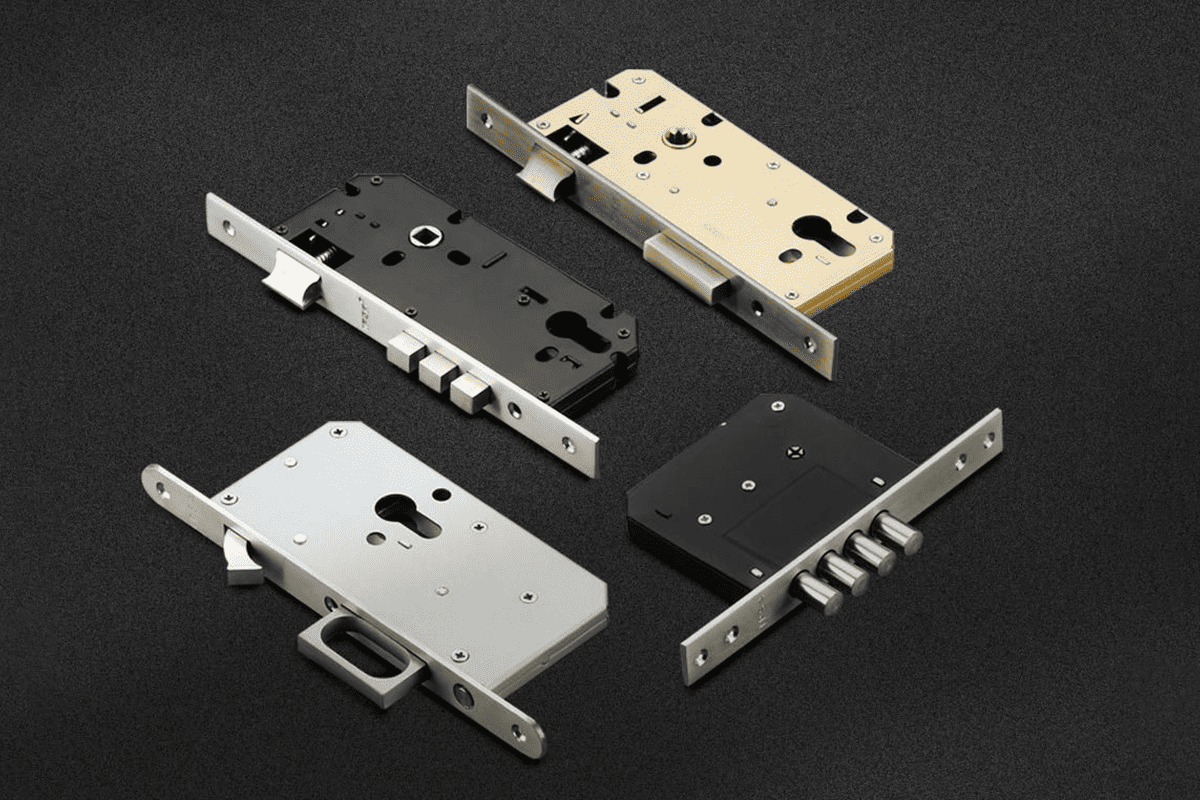
Suppliers can help verify a commercial mortise lock by checking the applicable standard, reviewing door drawings, confirming function, measuring critical dimensions, testing accessory compatibility, preparing samples, and documenting inspection criteria. Buyers should choose suppliers with production experience, testing equipment, and clear technical communication.
What I check on the factory side
In our production discussions, I usually treat verification as a joint process. The buyer knows the project requirement. The factory knows the production feasibility. Good identification happens when both sides share accurate information.
A capable supplier should help check:
- Whether the requested lock matches the stated standard
- Whether the function matches the door application
- Whether the dimensions match the door preparation
- Whether the cylinder and handle are compatible
- Whether the faceplate and strike plate align
- Whether the latch direction is correct
- Whether the finish can meet the project requirement
- Whether certifications or test documents need verification
- Whether packaging, logo, and labeling requirements are clear
Sample matching and production control
For replacement or cross-standard projects, sample matching is often useful. A physical sample allows the supplier to check the lock body, faceplate, spindle hole, latch, deadbolt, screw holes, and internal structure more accurately. However, even a sample should be supported by a drawing when bulk production is involved.
From a manufacturing quality control view, I prefer to separate checks into three stages:
| Stage | Main checks | Purpose |
|---|---|---|
| Pre-production | Drawing, sample, material, function, finish, packaging | Prevent wrong production |
| In-process inspection | Dimensions, machining, latch action, case assembly | Control manufacturing stability |
| Final inspection | Operation, appearance, accessories, quantity, packing | Confirm shipment readiness |
Conclusion
A commercial mortise lock should be identified through a clear three-step process: confirm the applicable standard, confirm the door function, and then verify all critical dimensions and accessories. Buyers should avoid relying on appearance, weight, or general “heavy-duty” descriptions. If you are preparing a quotation, sample request, replacement project, or OEM order, send the standard, function, drawings, dimensions, certification needs, and quantity first. My team at SDH Hardware can review your specification and help match the correct lock body for production discussion.
"What are mortice locks? - SDH hardware- China professional door ...", https://sdhhardware.com/2026/08/04/what-are-mortice-locks/. EN 12209 is described by standards bodies as a European standard for mechanically operated locks and latches, supporting its use as a reference point for Euro-type commercial lock identification. Evidence role: definition; source type: institution. Supports: A standards summary or national standards body page should define EN 12209 as covering mechanically operated locks and latches for building hardware.. ↩
"Are all mortise locks interchangeable? - SDH hardware- China ...", https://sdhhardware.com/2026/07/01/are-all-mortise-locks-interchangeable/. ANSI/BHMA A156.13 is identified by BHMA as the American National Standard for mortise locks and latches, supporting its citation as the principal U.S. reference standard for this lock category. Evidence role: definition; source type: institution. Supports: A BHMA or ANSI standards source should identify A156.13 as the American National Standard for mortise locks and latches.. ↩
"Classification of mortise lock - SDH hardware", https://sdhhardware.com/2022/10/25/know-all-information-about-mortise-lock-in-this-article/. Institutional standards for mechanically operated locks and mortise locks support the point that regional systems are governed by different dimensional and performance frameworks; however, they provide contextual support rather than proving every manufacturer follows a single layout. Evidence role: general_support; source type: institution. Supports: A standards-body or institutional source should show that different regional mortise-lock standards define different product requirements, preparations, or dimensional conventions.. Scope note: Contextual support only, because actual dimensions may vary by manufacturer, product series, and project specification. ↩
"Pin tumbler lock", https://en.wikipedia.org/wiki/Pin_tumbler_lock. Reference sources define the Euro profile cylinder as a standardized cylinder form widely used in European door locks, supporting the article’s identification of Euro-cylinder compatibility as a key feature of Euro-type mortise locks. Evidence role: definition; source type: encyclopedia. Supports: A neutral reference should define the Euro profile cylinder and describe it as a common cylinder format used with locks in Europe and other markets.. Scope note: Contextual support only, because the source defines the cylinder format rather than proving its position in every Euro-type mortise lock. ↩
"6068 mortise electronic lock", https://www.liliwise.com/application/6068-mortise-electronic-lock. Chinese national and industry standards databases identify GB and QB/T documents as formal technical references for lock products, supporting their use as China-related specification references; however, the source may not establish that all Chinese mortise locks follow one uniform dimensional pattern. Evidence role: definition; source type: government. Supports: A Chinese standards database or official standards notice should confirm the titles and scope of GB 6068, GB 21556, or QB/T 2474 in relation to locks or lock bodies.. Scope note: Contextual support only, because the standards may address different aspects of locks and may not all define the same dimensional scheme. ↩
"What Should I Know About EN Standard Fire Door Hardware ...", https://sdhhardware.com/2026/08/14/what-should-i-know-about-en-standard-fire-door-hardware-regulations/. Government and regulatory guidance on construction products and fire-door assemblies supports the statement that door hardware may require CE, fire-performance, or third-party documentation when specified for regulated applications; however, the requirement depends on jurisdiction, product role, and project documentation. Evidence role: general_support; source type: government. Supports: A regulatory source should show that construction products and fire-door components may be subject to CE marking, declared performance, fire testing, or certification requirements depending on application.. Scope note: Contextual support only, because certification requirements differ by country, code, and exact door assembly. ↩
"What is the world's favorite lock? - SDH hardware- China ...", https://sdhhardware.com/2026/06/24/what-is-the-worlds-favorite-lock/. BHMA and related hardware references classify mortise locks by function and operating behavior, supporting the article’s point that similar product names do not establish interchangeability. Evidence role: general_support; source type: institution. Supports: A hardware standard or institutional guide should show that mortise locks are classified into distinct functions with different operations.. ↩
"What Type of Fire Exit Hardware Do We Use on Fire Exits? - SDH ...", https://sdhhardware.com/2026/08/07/what-type-of-fire-exit-hardware-do-we-use-on-fire-exits/. Fire-safety and building-code references, including NFPA and model code materials, state that certain egress doors require panic or fire-exit hardware, supporting the need to coordinate anti-panic locks with the applicable code and door assembly. Evidence role: expert_consensus; source type: institution. Supports: A building-code or fire-safety institution should confirm that means-of-egress doors can require panic or fire-exit hardware and must comply with local code provisions.. Scope note: Contextual support only, because the exact requirement depends on occupancy type, door location, jurisdiction, and adopted code edition. ↩
"European Mortise Locks: What Are the Different Types? - SDH ...", https://sdhhardware.com/2026/08/13/european-mortise-locks-what-are-the-different-types/. Door-hardware technical references define hook bolts as locking bolts that engage a strike or keeper, supporting the article’s description of the mechanism used in sliding-door hook locks. Evidence role: mechanism; source type: institution. Supports: A door-hardware glossary or institutional technical guide should define a hook bolt as a bolt that hooks into a strike or keeper, commonly for sliding doors.. ↩
"How to Install Door Locks? - SDH hardware- China professional ...", https://sdhhardware.com/2026/08/07/how-to-install-door-locks/. Door-hardware installation guides explain that component lengths and fixing methods must correspond to door thickness, supporting the article’s statement that cylinder, spindle, screw, and accessory compatibility depend on the door leaf thickness. Evidence role: mechanism; source type: education. Supports: A technical education or door-hardware installation guide should explain that door thickness determines the sizing of cylinders, spindles, fasteners, and trim components.. ↩
"What Should I Know About Fire Door Hinge Standards? UL, CE, and ...", https://sdhhardware.com/2026/08/13/what-should-i-know-about-fire-door-hinge-standards-ul-ce-and-en-requirements-explained/. Certification and product-listing authorities describe fire and compliance approvals as applying to specified products or tested assemblies, supporting the article’s caution that a certificate should not be generalized to untested versions or configurations. Evidence role: expert_consensus; source type: institution. Supports: A certification or testing body should explain that listings, declarations, or fire-test certifications are tied to specific products, assemblies, configurations, or declared performances.. ↩