What Is a Mortise Lock With Occupancy Indicator?
A mortise lock with occupancy indicator sounds simple, but many buyers underestimate the details behind it. If the lock body, thumbturn, indicator, spindle, handle, and door preparation do not match, the set may not install or function correctly. I usually treat it as a complete privacy lock configuration, not just a red/green display.
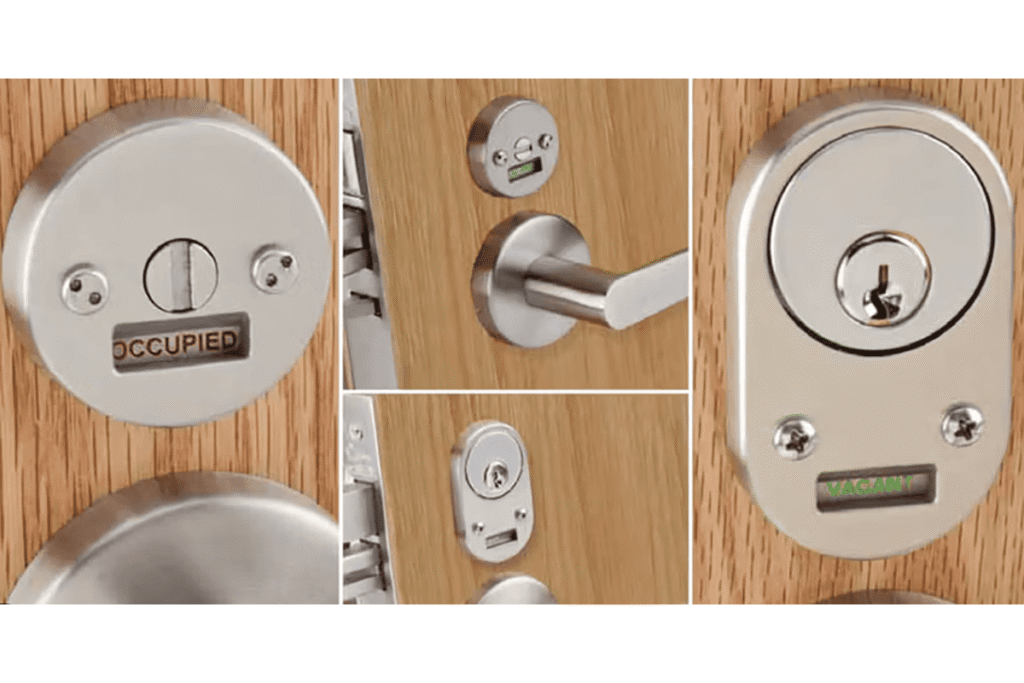
A mortise lock with occupancy indicator is an embedded door lock set1 that shows whether a room is vacant or occupied, usually through a green/red external indicator. The inside thumbturn or privacy button activates the mortise lock’s privacy function and turns the outside indicator.2 Many versions also include an emergency release for controlled access.3
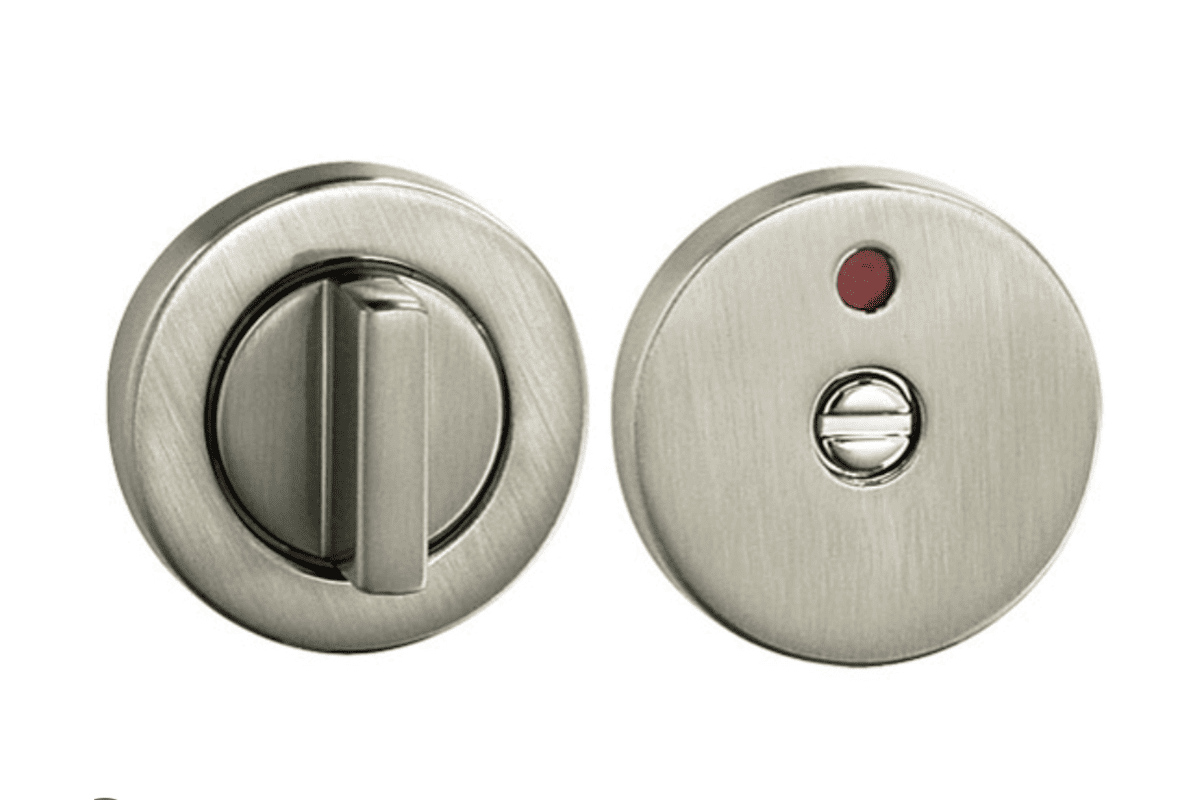
In my factory and export work, I often see customers ask for “a lock with indicator” as if it were one standard item. In practice, I need to confirm the full hardware configuration before quoting, sampling, or producing. The details below explain what buyers should check.
How Does a Mortise Lock With Occupancy Indicator Work?
A mortise lock with occupancy indicator can create confusion because the visible indicator looks like the main product. That misunderstanding can lead to wrong inquiries, wrong samples, and mismatched installation holes. I prefer to explain the working principle first, because function decides the correct hardware combination.
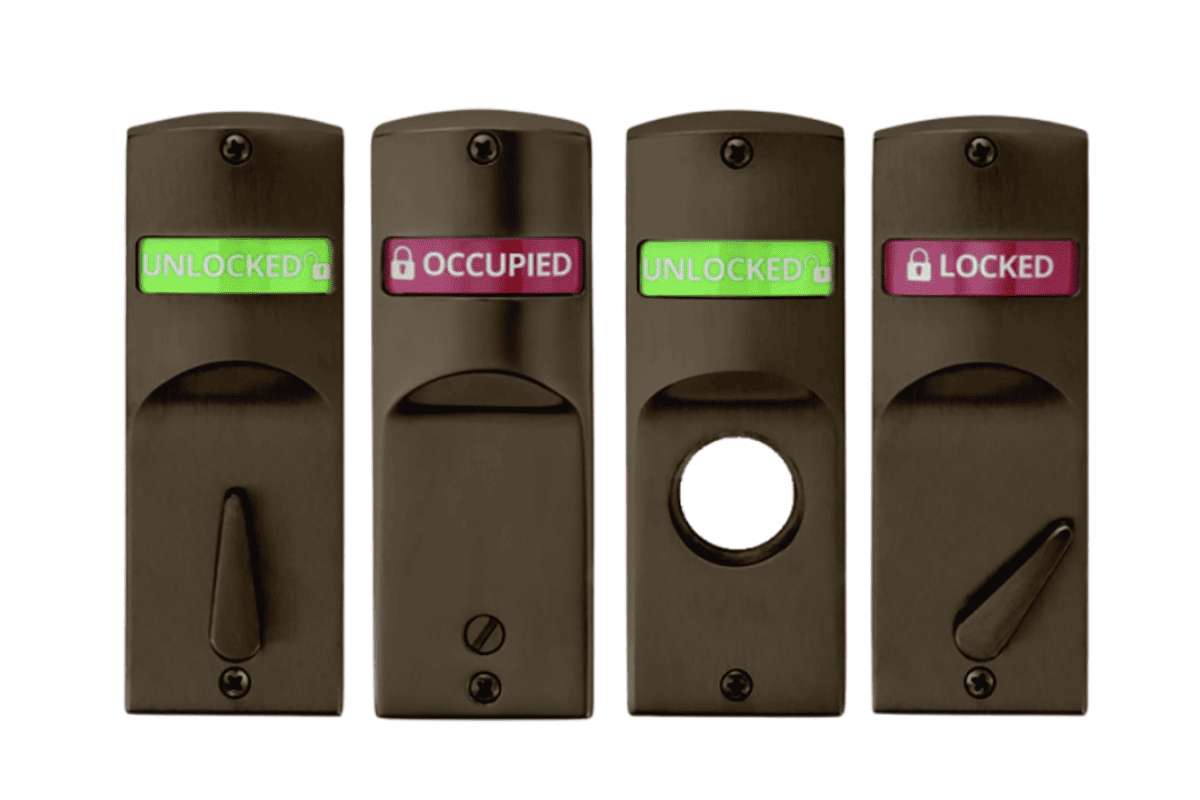
A mortise lock with occupancy indicator works when the inside thumbturn, turn knob, or privacy button engages the lock’s privacy function. At the same time, the external indicator rotates or changes position to show “occupied,” often in red. When unlocked, the indicator returns to “vacant,” often in green.
The indicator is part of the privacy function
I do not recommend treating the occupancy indicator as an independent lock. It is normally one part of a mortise privacy lock set. The lock body sits inside a mortised pocket in the door edge. The internal privacy mechanism connects to a thumbturn or button on the room side. The outside trim includes the indicator window and often an emergency release slot.
The user experience is simple:
- The user enters the room.
- The user turns the inside thumbturn or presses the privacy button.
- The lock engages the privacy function.
- The external indicator changes from vacant to occupied.
- A person outside can see the status before trying the handle.
That visible status helps reduce awkward interruptions in bathrooms, restrooms, changing rooms, nursing rooms, and similar spaces. However, I always remind buyers that the main purpose is privacy indication, not high-security protection.
Common operating formats
Different factories and markets use slightly different mechanisms. I usually ask the buyer to confirm the format before production.
| Operating type | Inside operation | Outside function | Common use |
|---|---|---|---|
| Thumbturn privacy | Turn knob rotates privacy spindle | Indicator plus emergency release | Bathrooms, public restrooms, changing rooms |
| Push-button privacy | Button engages privacy latch or lock | Indicator changes status | Light-duty interior privacy doors |
| Turn-and-release set | Inside turn controls lock and indicator | Coin release or tool release | Commercial washrooms and project doors |
The most common type I see in export inquiries uses an inside thumbturn and an outside indicator with emergency release. When the user turns the thumbturn, the mechanism rotates the indicator. Many designs show green for vacant and red for occupied, but color alone does not define the product. The internal motion, spindle position, door prep, and mortise lock body must all match.
I once received an inquiry that only said, “Please quote bathroom indicator lock.” Before I could quote responsibly, I had to ask for door thickness, lock body size, backset, handle style, finish, and whether emergency release was required.
Emergency release is controlled access, not high security
Many occupancy indicator locks include an external emergency release slot. In many designs, a coin, flat tool, or similar object can release the privacy lock from outside. This feature is useful when a child locks themselves in, a user feels unwell, or facility staff need emergency access.
However, I avoid calling this a security feature. It is better described as controlled emergency access4. Project buyers should evaluate it according to the building type, user group, and local requirements. If the door is part of a fire-rated assembly or regulated public facility, the complete hardware set and certificates should be verified by qualified professionals5 and according to the target market.
What Components Make Up a Mortise Lock With Occupancy Indicator?
A mortise lock with occupancy indicator can fail as a purchase if the buyer only specifies the visible trim. The problem is that several hidden parts must work together. If one dimension or spindle type is wrong, the indicator may look correct but fail during installation.
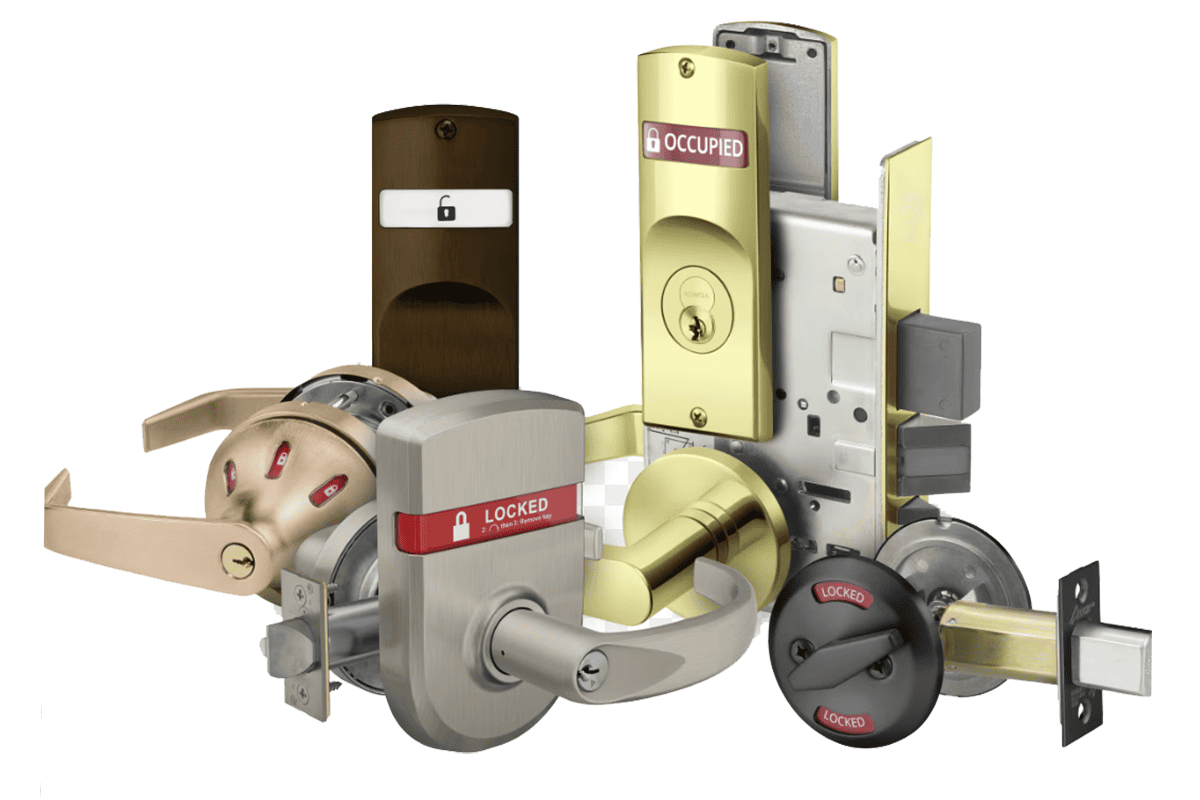
A complete mortise lock with occupancy indicator usually includes a mortise lock body, inside thumbturn or privacy control, outside occupancy indicator, emergency release, lever handles, spindles, fixing screws, strike plate, and matching door preparation. The exact configuration depends on door thickness, backset, center distance, faceplate size, and handle compatibility6.
Core components buyers should confirm
When I prepare a quotation or technical confirmation, I usually break the product into separate parts. This helps both the buyer and the supplier avoid assumptions.
| Component | What it does | What buyers should confirm |
|---|---|---|
| Mortise lock body | Fits inside door edge and controls latch/lock function | Case size, backset, center distance, latch direction, material |
| Faceplate | Visible plate on door edge | Length, width, radius or square corner, finish |
| Strike plate | Receives latch or bolt in frame | Size, lip length, finish, frame type |
| Inside thumbturn | Activates privacy function | Spindle size, turn direction, trim style |
| Outside indicator | Shows vacant/occupied status | Color display, shape, fixing method, finish |
| Emergency release | Allows external release in urgent cases | Coin slot, tool slot, release direction |
| Lever handles | Operate latch | Rose or plate style, spindle compatibility, spring support |
| Fixing screws | Secure trims and body | Screw length, material, visible or concealed fixing |
Lock body matching is the first technical checkpoint
The lock body is the foundation. If the lock case does not match the door preparation, the rest of the set cannot solve the problem. I normally ask buyers to confirm these dimensions:
- Backset: Distance from door edge to handle spindle center.
- Center distance: Distance between handle spindle and privacy spindle or cylinder center.
- Faceplate size: Length, width, and corner style.
- Case depth: Total mortise lock body depth inside the door.
- Follower size: Common handle spindle sizes vary by market.
- Door thickness: This affects spindle length, screw length, and trim fixing.
For architectural door hardware, these dimensions are not decorative details. They control whether the hardware can be installed without reworking the door.7 Door manufacturers especially need this information early because CNC routing, mortising, and drilling patterns may already be fixed.
Handle and indicator compatibility matters
A privacy lock set can include lever handles on roses, lever handles on plates, or separate indicator turns. Some buyers want the indicator integrated into a backplate. Others prefer a separate round indicator above or below the handle. Both can work, but the lock body must support the selected layout.
I normally ask these questions:
- Does the handle use a standard square spindle?
- Does the thumbturn use a separate privacy spindle?
- Is the indicator on the same axis as the thumbturn?
- Is the outside emergency release integrated into the indicator?
- Is the handle spring inside the lock body or inside the lever rose?
These details affect product selection, tooling, and packaging. They also affect after-sales risk. If a wholesaler sells to different installers, the safest choice is often a standard configuration with clear drawings and stable dimensions.
Finish and environment should not be ignored
The visible trims may be stainless steel, zinc alloy, brass, or aluminum, depending on product grade and market. Common surface finishes include:
- Satin stainless steel
- Polished stainless steel
- Satin nickel
- Polished chrome
- Black finish
- PVD finishes
- Customized color coatings
In humid areas such as restrooms and changing rooms, corrosion resistance matters. I usually suggest that buyers confirm material grade, surface treatment, salt spray expectations if required, and cleaning environment. For example, aggressive cleaning chemicals can affect some coatings over time.8
Where Is a Mortise Lock With Occupancy Indicator Commonly Used?
A mortise lock with occupancy indicator is often requested for bathrooms, but that description is too narrow. The problem is that different buildings have different user behavior, door materials, and privacy expectations. A one-model answer can create installation and maintenance issues later.
A mortise lock with occupancy indicator is commonly used on doors where people outside should see privacy status before entering. Typical applications include commercial bathrooms, public restrooms, changing rooms, fitting rooms, nursing rooms, staff rooms, lounges, and other semi-public interior spaces that need visible occupied/vacant indication.
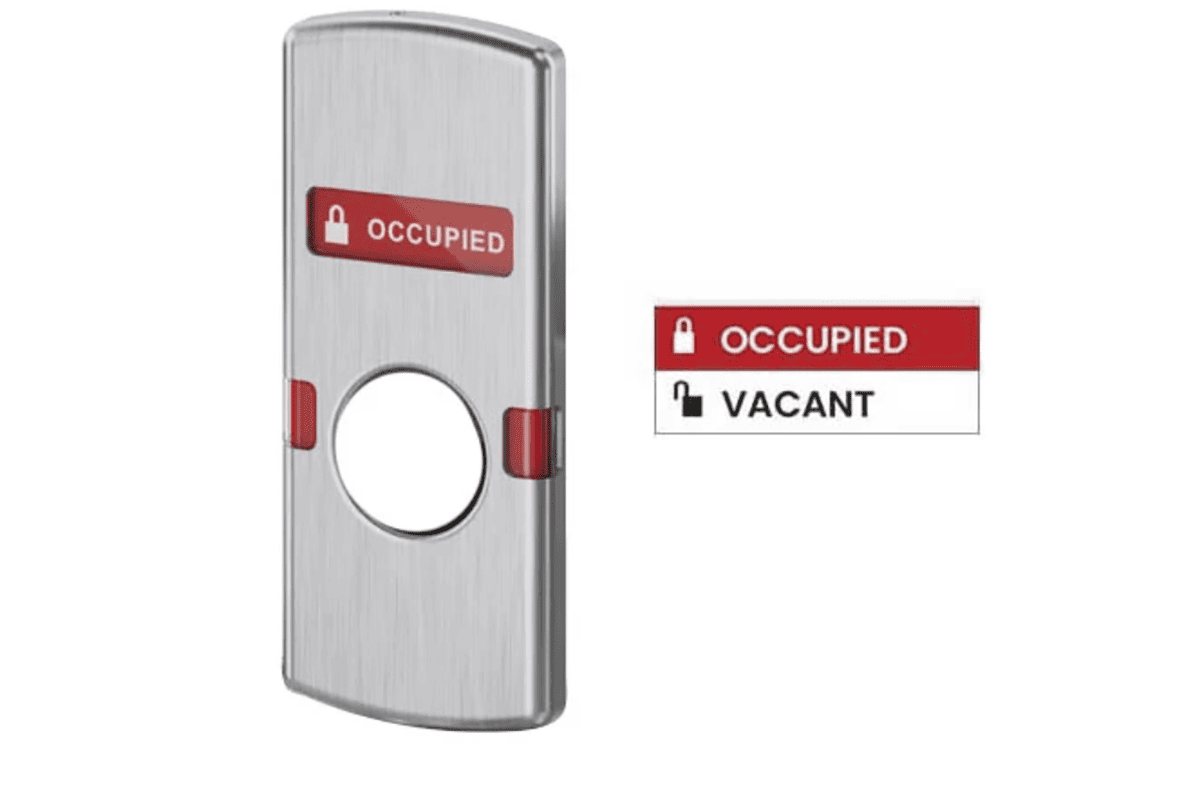
Common project applications
I see the highest demand from buyers who supply commercial and semi-public spaces. These spaces need simple privacy communication. The indicator helps users avoid unnecessary handle pulling or knocking.
Common applications include:
- Office washrooms
- Hotel public restrooms
- Shopping mall changing rooms
- Gym and spa facilities
- School or campus restrooms
- Hospitality staff areas
- Airport or station restrooms
- Nursing rooms
- Accessible washrooms, subject to project requirements
- Factory or warehouse restrooms
The product is also used by door factories that supply complete restroom door sets. In those projects, the buyer may need the lock body, lever handle, indicator, hinges, door closer, and accessories to work together as a complete door hardware package.
Application does not replace specification
I often hear buyers say, “This is for a bathroom, so please send your standard model.” I understand why they ask that way. They want speed. However, “bathroom” does not define the technical requirements.
A small residential bathroom door and a heavy commercial restroom door may need very different hardware. The door thickness may be different. The latch direction may be different. The handle design may be different. The surface finish may be different. The duty cycle may be very different.
Here is a practical comparison:
| Application | Typical concern | Specification focus |
|---|---|---|
| Office restroom | Clean design and reliable privacy | Standard backset, stable indicator, easy emergency release |
| Mall changing room | High user turnover | Durable lever handle, clear occupied/vacant display |
| Hotel public washroom | Finish consistency and brand appearance | Matching hardware series, surface quality, packaging |
| School restroom | Abuse resistance and simple operation | Strong fixing, safe release, easy maintenance |
| Healthcare facility | Emergency access and hygiene | Professional project review, suitable materials, easy cleaning |
Door type changes the decision
The door itself is a major factor. A timber door, steel door, aluminum-framed door, or compact laminate restroom door can require different preparation. Some doors have limited internal space for a mortise case. Others require special faceplate shapes or screw positions.
Before I recommend a specific model, I like to know:
- Door material
- Door thickness
- Door handing or opening direction
- Door edge construction
- Frame type
- Required backset
- Existing hole pattern, if replacing old locks
- Project country or market
- Expected finish and packaging requirement
This is especially important for importers and wholesalers. They may sell the same product into several regional markets. A model that fits one standard door preparation may not match another. For this reason, I prefer to provide drawings after order confirmation and ask buyers to verify them before mass production.
Public projects may need additional verification
Some projects ask for CE documentation, fire-rated certification, or compliance with regional standards. From a supplier position, I can provide available documents for relevant products, but the buyer should verify whether the complete door assembly and hardware set meet the project requirement. A certificate for one component does not automatically approve every door configuration.9
For fire-rated or accessibility-related applications, buyers should involve qualified professionals, project consultants, or local authorities. I can support with product drawings, test documents where available, material information, and sample confirmation. However, final suitability depends on the full door system and project rules.
How Should Buyers Specify a Mortise Lock With Occupancy Indicator?
A mortise lock with occupancy indicator is easy to describe in words but harder to buy correctly without a specification sheet. The risk appears when purchasing teams compare prices without comparing dimensions, materials, functions, and accessories. Then a cheaper offer may not be equivalent.
Buyers should specify a mortise lock with occupancy indicator by confirming the lock body dimensions, door thickness, backset, center distance, faceplate, strike plate, lever handle type, thumbturn mechanism, indicator style, emergency release, finish, certification needs, packaging, and quantity. A drawing or sample is the best way to avoid mismatch.
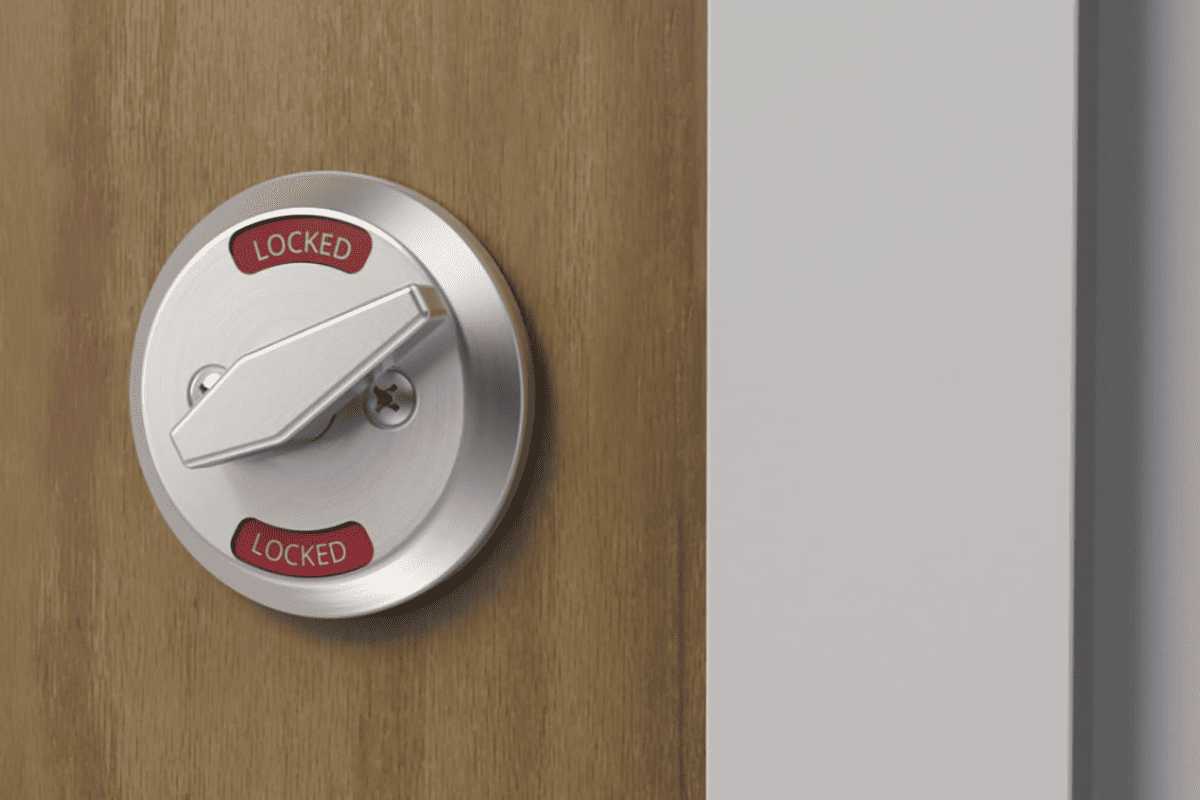
A practical inquiry checklist
When I receive a serious inquiry, I appreciate a clear checklist. It saves time and reduces the chance of misunderstanding. Buyers can use the following format when contacting a factory or supplier.
Basic door information
- Door material:
- Door thickness:
- Door height and width:
- Door handing:
- Door edge construction:
- New project or replacement:
Mortise lock body
- Backset:
- Center distance:
- Case depth:
- Faceplate length and width:
- Faceplate corner: square or radius
- Latch type:
- Latch direction: reversible or fixed
Privacy and indicator function
- Inside operation: thumbturn or button
- Outside display: red/green or custom marking
- Emergency release: coin slot, tool slot, or other
- Indicator shape: round, square, rectangular, or plate-integrated
- Required language or symbols, if any
Handle and trim
- Lever handle model:
- Rose or plate:
- Material:
- Finish:
- Spindle size:
- Screw fixing method:
- Logo requirement:
Commercial and quality requirements
- Quantity:
- Target market:
- Required documents:
- Packaging style:
- Sample requirement:
- Inspection requirement:
- Delivery schedule:
Price comparison should be based on equivalent configurations
In B2B sourcing, I often see price comparisons that are not fair. One quote may include only the lock body and indicator. Another quote may include lever handles, strike plate, screws, packaging, and customized finish. A third quote may use a different material or lighter component structure.
A useful price comparison table may look like this:
| Item to compare | Supplier A | Supplier B | Supplier C |
|---|---|---|---|
| Lock body included | Yes/No | Yes/No | Yes/No |
| Lever handles included | Yes/No | Yes/No | Yes/No |
| Indicator and release included | Yes/No | Yes/No | Yes/No |
| Material grade confirmed | Yes/No | Yes/No | Yes/No |
| Finish confirmed | Yes/No | Yes/No | Yes/No |
| Door thickness range | mm | mm | mm |
| Drawing provided | Yes/No | Yes/No | Yes/No |
| Certificates available for verification | Yes/No | Yes/No | Yes/No |
| Packaging included | Yes/No | Yes/No | Yes/No |
This table helps purchasing managers identify what is actually included. It also helps hardware brands protect their own reputation. If the product is sold under a brand name, consistency matters more than a small unit price difference.
OEM and ODM buyers should confirm branding details
For hardware brands and wholesalers, the lock is not only a functional item. It is also part of a product line. I usually confirm branding details before production because changes after packaging design can cause delays.
Typical OEM or ODM details include:
- Laser logo on lever handle, plate, or packaging
- Customer stamping, where suitable
- Custom color box
- Neutral export carton
- Barcode or SKU label
- Installation instruction sheet
- Product drawings
- Matching finish across hinges, handles, locks, and accessories
At SDH Hardware, my team works with standardized and customized architectural hardware products. For a privacy lock set with indicator, I prefer to confirm drawings, samples, and packing details before mass production. This process is slower than guessing, but it helps avoid expensive errors in international orders.
What Quality Checks Matter Before Ordering a Mortise Lock With Occupancy Indicator?
A mortise lock with occupancy indicator is used frequently in commercial spaces, so small quality problems become visible quickly. A loose thumbturn, unclear indicator, weak spring, or rough latch action can lead to complaints. Buyers should evaluate both appearance and function before bulk orders.
Quality checks for a mortise lock with occupancy indicator should cover lock body operation, indicator movement, emergency release, handle return, latch smoothness, finish consistency, corrosion resistance expectations, screw strength, door thickness fit, packaging protection, and document verification. Samples and finished-product inspection help reduce sourcing risk.
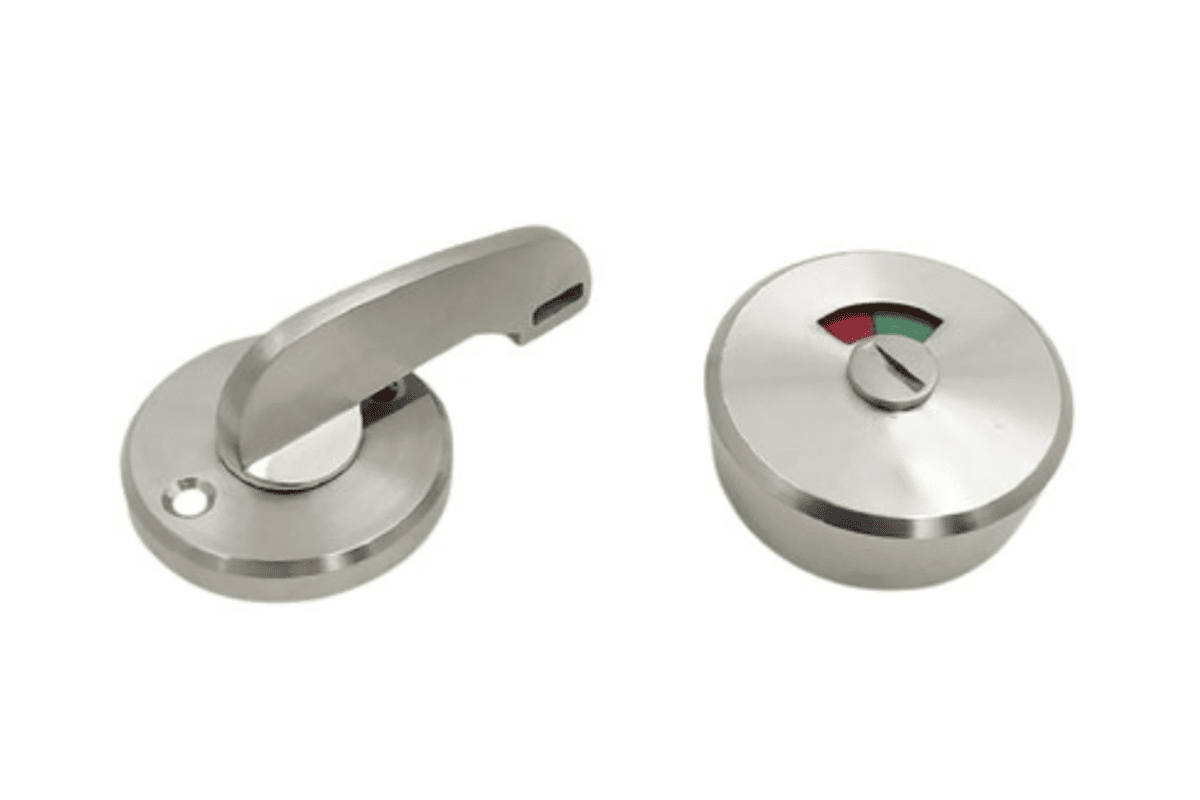
Functional checks
The first quality check is basic operation. I like to test the lock the same way an end user will use it. The movement should feel smooth, and the indicator should change clearly.
Important functional checks include:
Latch operation
The latch should extend and retract smoothly without scraping.Handle return
The lever should return to the horizontal position reliably.Thumbturn operation
The inside turn should engage and release privacy function without excessive force.Indicator movement
The outside display should change fully between vacant and occupied.Emergency release
The outside release should open the privacy function as designed.Door thickness fit
Screws and spindles should suit the stated door thickness range.Strike alignment
The latch should enter the strike plate smoothly after installation.
Appearance and finish checks
Appearance is important because indicator locks are visible on high-traffic doors. I usually inspect color consistency, surface defects, edge finishing, and logo position. For brand customers, small cosmetic differences can cause large market complaints.
Common appearance checks include:
- Scratches
- Burrs
- Color variation
- Uneven polishing
- Sharp edges
- Plating marks
- Coating bubbles
- Incorrect logo position
- Poor indicator printing or unclear color display
For projects in humid or coastal environments, buyers may request corrosion-related testing or material confirmation. The exact test method should be agreed in the purchase specification. If a buyer requires CE, fire-rated documentation, or other standard-related documents, those documents should be verified for the relevant product and project scope.
Manufacturing consistency matters in bulk orders
A sample can look good, but mass production must remain consistent. That is why I value production control. In my own experience, full-process quality control is more reliable than final inspection alone.10
A practical control process includes:
- Raw material screening
- Incoming parts inspection
- Machining and stamping control
- Assembly supervision
- Function testing
- Surface finish inspection
- Finished product inspection
- Packaging inspection
For large B2B orders, buyers can request pre-shipment inspection or factory inspection service. The inspection can verify quantity, finish, packaging, labeling, and basic function. It cannot replace professional project approval, but it can reduce common sourcing risks.
Sample approval is worth the time
I always recommend sample approval when the buyer is ordering a new model, new finish, or customized configuration. A sample allows the buyer to check the lock on an actual door or mock-up. This is especially useful for door manufacturers because they can confirm mortising, drilling, and handle alignment before mass production.
A good sample review should answer these questions:
- Does the lock body fit the door preparation?
- Does the handle height align with the project drawing?
- Does the indicator display clearly?
- Does the emergency release work as expected?
- Does the finish match other hardware?
- Does the packaging protect the product during transport?
- Does the installation team understand the fixing method?
This step may add several days, but it often prevents weeks of correction later.
Conclusion
A mortise lock with occupancy indicator is more than a lock with a red and green window. It is a complete privacy hardware configuration that combines the mortise lock body, inside thumbturn, outside indicator, emergency release, handles, spindles, strike plate, and door preparation. Buyers should confirm dimensions, application, finish, quality checks, and documentation before ordering. If you need factory-direct support for mortise locks, lever handles, hinges, cylinders, or complete door hardware sets, I can help you prepare a clear specification and reliable quotation.
"Mortise lock", https://en.wikipedia.org/wiki/Mortise_lock. An encyclopedic definition of a mortise lock describes it as a lock fitted into a mortise cut into the door, supporting the article’s description of the lock as embedded in the door rather than surface-mounted. Evidence role: definition; source type: encyclopedia. Supports: A mortise lock is installed into a pocket or mortise cut into the edge of a door.. ↩
"Bathroom Door Lock Guide: Privacy, Security & Safety ...", https://www.camax.cn/bathroom-door-lock-for-commercial-and-residential-application_2096.html. ANSI/BHMA-style lock-function descriptions identify privacy hardware as being controlled from the room side and commonly paired with outside emergency release or indication, supporting the article’s explanation of the thumbturn-to-indicator mechanism. Evidence role: mechanism; source type: institution. Supports: Privacy lock functions commonly use an inside turn or button and may provide outside indication or emergency release as part of the privacy hardware function.. Scope note: The source would support the general mechanism of privacy lock functions, not the internal design of every manufacturer’s indicator lock. ↩
"A156.39 - 2025 Residential Locksets and Latches", https://buildershardware.com/ANSI-BHMA-Standards/Hardware-Highlights/A15639-2015-Residential-Locksets-and-Latches. Door-hardware function standards describe privacy locksets as providing room-side locking with an outside emergency-release means, supporting the article’s statement that many such versions include emergency release for controlled access. Evidence role: definition; source type: institution. Supports: Privacy locksets are commonly defined as lock functions that can be released from the outside in an emergency.. Scope note: The source would establish the standard privacy-lock function; it would not prove that every occupancy-indicator model includes this feature. ↩
"A156.39 - 2025 Residential Locksets and Latches", https://buildershardware.com/ANSI-BHMA-Standards/Hardware-Highlights/A15639-2015-Residential-Locksets-and-Latches. Institutional lock-function descriptions distinguish privacy functions from security-oriented lock functions by noting room-side privacy control and outside emergency release, supporting the article’s characterization of the release as controlled emergency access rather than high-security protection. Evidence role: expert_consensus; source type: institution. Supports: Privacy lock functions are intended for privacy and emergency release, not for resisting unauthorized entry like security-rated locks.. Scope note: The source would support the functional distinction, not a tested security rating for any specific product. ↩
"Fire Doors and NFPA 80 FAQs", https://www.nfpa.org/news-blogs-and-articles/blogs/2025/04/11/fire-doors-faqs. Fire-door guidance such as NFPA 80 and listing-agency documentation treats doors, frames, and hardware as parts of a rated opening assembly, supporting the article’s advice that the full hardware set and certificate scope should be verified by qualified professionals. Evidence role: expert_consensus; source type: institution. Supports: Fire-door and regulated openings are evaluated as assemblies, and hardware must be compatible with the listing and applicable code requirements.. Scope note: The source would provide general compliance context; final approval still depends on the specific jurisdiction, assembly listing, and project conditions. ↩
"SECTION 087111 - DOOR HARDWARE (SCHEDULED BY ...", https://fpm.usc.edu/wp-content/uploads/2021/11/087102-USC-HSC-door-hardware-Guide-Specification_1.pdf. Door-preparation standards for mortise locks specify dimensions such as backset, centerline locations, faceplate preparation, and door thickness, supporting the article’s statement that these variables determine the correct lock configuration. Evidence role: general_support; source type: institution. Supports: Door-preparation standards specify lockset dimensions such as backset, centerline locations, faceplate size, and door thickness ranges as compatibility requirements.. Scope note: The source would support the importance of these specification variables generally, not the dimensions of the particular products discussed in the article. ↩
"SECTION 087111 - DOOR HARDWARE (SCHEDULED BY ...", https://fpm.usc.edu/wp-content/uploads/2021/11/087101-USC-UPC-door-hardware-Guide-Specification_1.pdf. Architectural hardware preparation standards define the mortises, holes, centerlines, and faceplate dimensions required for lock installation, supporting the article’s claim that dimensional mismatches can require reworking the door. Evidence role: general_support; source type: institution. Supports: Standardized door preparations define the holes, mortises, and centerlines required for lock installation; mismatched hardware may require door rework.. Scope note: The source would support the general installation principle rather than documenting a specific failed installation. ↩
"Review of Corrosion Inhibiting Mechanisms in Coatings", https://www.usbr.gov/research/publications/download_product.cfm?id=2609. Materials research on corrosion and surface coatings shows that aggressive cleaning agents, particularly chloride-containing disinfectants, can damage metal surfaces or protective finishes over time, supporting the article’s caution about cleaning environments. Evidence role: mechanism; source type: paper. Supports: Chemical cleaners, especially chloride-containing or otherwise aggressive agents, can contribute to corrosion or degradation of metal surfaces and protective coatings.. Scope note: The source would support the chemical-degradation mechanism generally; actual performance depends on the specific alloy, coating system, cleaner concentration, and exposure conditions. ↩
"Doors, Windows and Related Hardware Application Guide", https://www.ul.com/thecodeauthority/knowledge/ul-fire-rated-doors-guide. Fire-door listing and certification guidance limits approval to specified products, assemblies, and conditions of use, supporting the article’s warning that a certificate for one component does not automatically approve every door configuration. Evidence role: expert_consensus; source type: institution. Supports: Certification and listing documents apply to defined products, components, assemblies, and conditions of use; changing components or configurations may require separate verification.. Scope note: The source would establish the principle of certification scope; the approval status of a specific door depends on its listing, hardware schedule, and authority having jurisdiction. ↩
"ISO 9001:2015 explained: What is the process approach?", https://www.ideagen.com/thought-leadership/blog/iso-90012015-explained-what-is-the-process-approach. ISO quality-management guidance emphasizes a process approach, monitoring, and control throughout production, supporting the article’s claim that full-process quality control is more reliable than final inspection alone. Evidence role: expert_consensus; source type: institution. Supports: Quality-management frameworks emphasize process control, monitoring, and prevention across production rather than reliance solely on final inspection.. Scope note: The source supports a general quality-management principle rather than providing product-specific defect-rate data for mortise locks. ↩