Hinges: What Are Countersunk Mounting Holes?
Countersunk mounting holes can look like a small detail on hinges, lock forends, and other door hardware, but they often decide whether the screw sits properly. If buyers check only the hole diameter, screw heads may protrude, scratch nearby parts, or create uneven fitting. I use them as a simple but important specification point.
Countersunk mounting holes are screw holes with a conical recess at the surface, designed for countersunk screws.1 The screw head sinks into this recess so it can sit flush with the hinge, lock forend, or hardware surface.2 Buyers should confirm the hole diameter, countersink angle, screw head type, hole position, drawing, and sample before bulk orders.
In my factory-side communication with door manufacturers and hardware buyers, I often see one pattern: the drawing says “hole,” but the real question is “which screw and which surface finish must match this hole?” That is where countersunk mounting holes become more than a shape.
What Are Countersunk Mounting Holes in Hinges?
Countersunk mounting holes can confuse buyers because they look simple from the front. The problem starts when the screw head is not checked together with the recess. Then a hinge that looks correct on a sample table may not sit cleanly during installation.
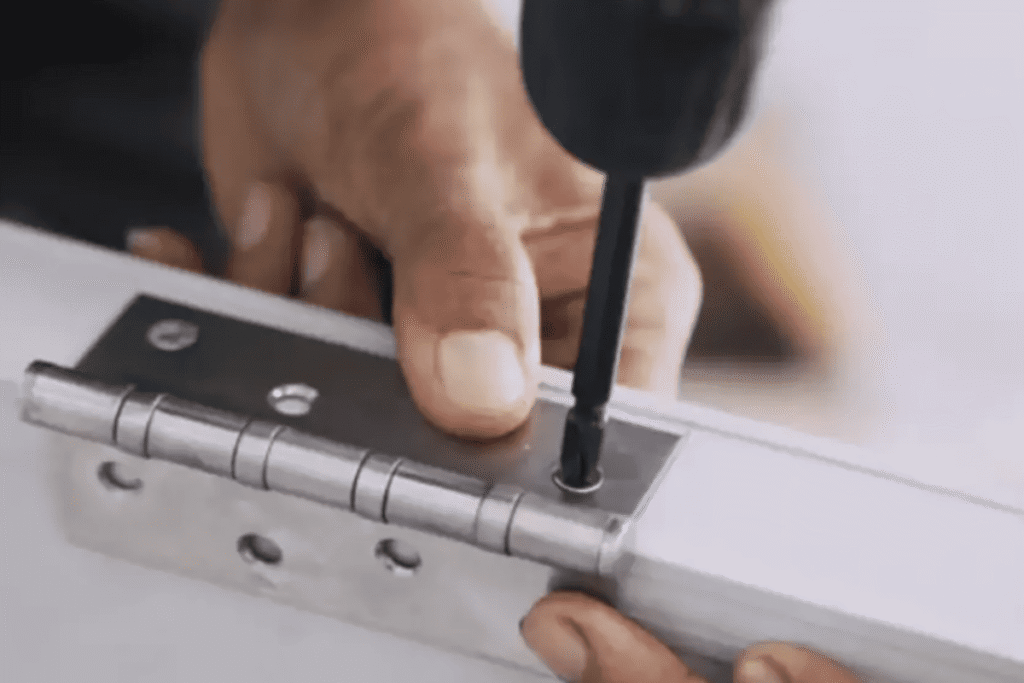
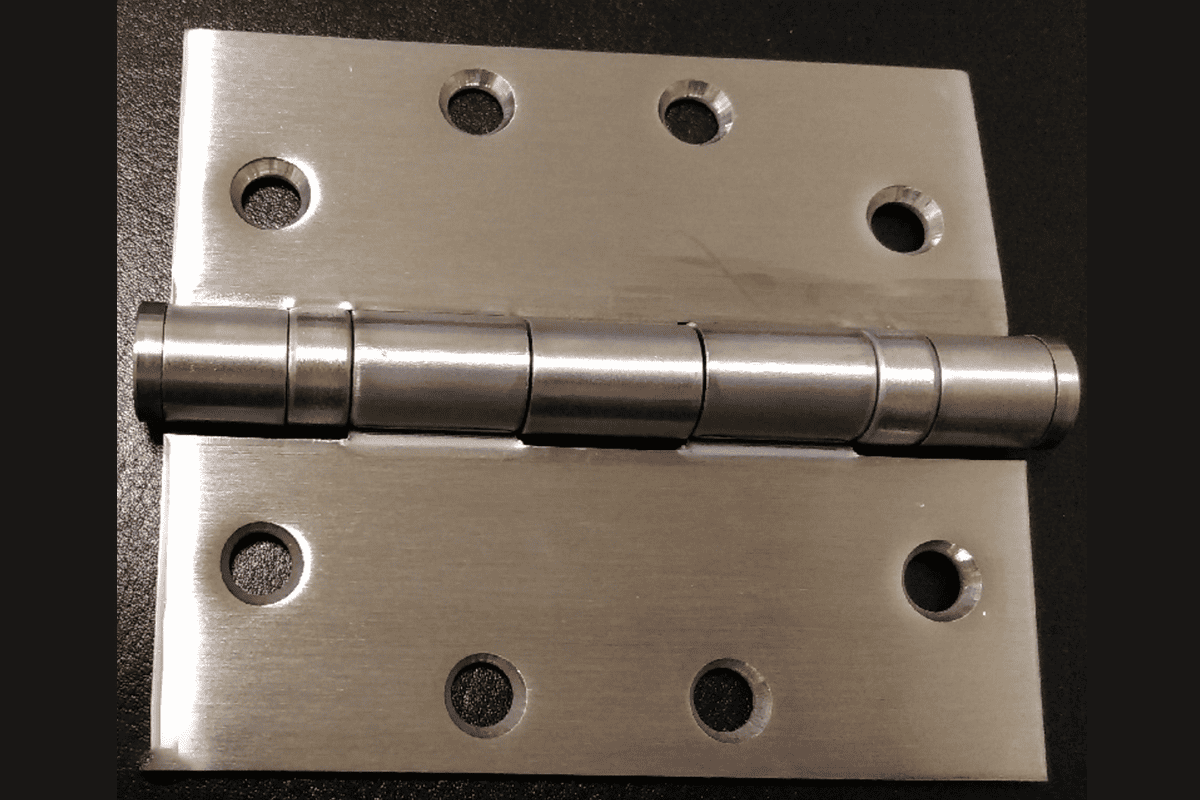
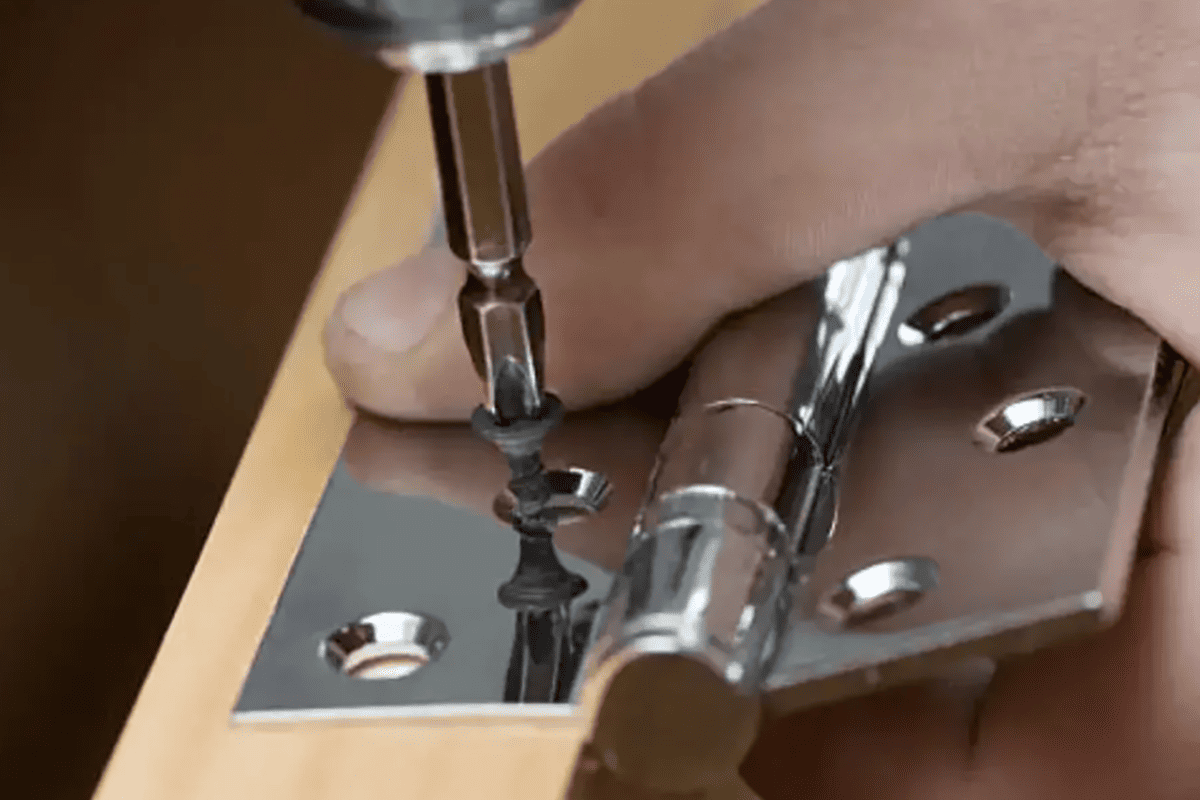
Countersunk mounting holes in hinges are mounting holes with a tapered, cone-shaped recess around the opening. This recess matches the angled head of a countersunk screw. When tightened, the screw head sits level with, or slightly below, the hinge leaf surface instead of standing above it.
A simple definition from a hardware manufacturing view
I explain it to buyers this way: a normal round hole allows the screw body to pass through. A countersunk hole adds a shaped seat at the top. That shaped seat is usually conical, and it is made for a screw with a matching angled head.
This detail is common on:
- Butt hinges
- Stainless steel lever handle plates
- Lock body forends
- Strike plates
- Door accessories with exposed mounting screws
In these products, the exposed metal surface should remain flat and neat after installation. If the screw head sits too high, it can look unfinished. It may also touch another moving or closing part.
Countersunk hole vs. straight hole
The difference is not only visual. The screw seat changes how the hardware surface works after fixing.
| Hole type | Surface shape | Common screw match | Typical purpose |
|---|---|---|---|
| Straight through hole | Flat opening | Pan head, round head, or other non-countersunk screws | Fixing where screw head may remain visible above the surface |
| Countersunk hole | Conical recess at opening | Flat head / countersunk screw | Flush or near-flush screw head installation |
| Counterbore hole | Cylindrical recess | Socket cap or similar screw | Recessed screw head with a flat-bottom seat |
When I review hinge drawings, I do not treat these as interchangeable. A countersunk screw in a straight hole may not seat properly. A pan head screw in a countersunk recess may leave a poor contact pattern or an uneven visual result.3
Why hinges often use this detail
Butt hinges often need a flat exposed surface because the hinge leaf sits between the door and frame.4 When the door moves, the hinge area has limited clearance. A screw head that protrudes too far can cause interference, scraping, or an uneven closing feel.5
That does not mean every hinge must use countersunk mounting holes. Some heavy-duty or special-purpose products may use other fixing designs. The correct choice depends on the product structure, customer standard, screw type, and installation environment.
In B2B supply, I usually ask for three things before confirming production:
- The hinge drawing
- The intended screw type
- The approved sample or reference product
This avoids a common mistake. Some buyers confirm only “hole diameter 5 mm,” but the hinge also needs the correct countersink angle, recess depth, screw head diameter, and hole position. These dimensions affect whether the final screw sits flush.6
Why Do Countersunk Mounting Holes Matter for Flush Installation?
Countersunk mounting holes matter because door hardware has very little tolerance for raised screw heads. A small protrusion can create cosmetic complaints, packing scratches, or installation interference. If the hole and screw are not matched, even a well-made hinge may look wrong.
Countersunk mounting holes help the screw head sit flush with the hinge or forend surface. This improves appearance, reduces the chance of scraping, and helps installers achieve more consistent fitting. The function depends on matching the countersink shape, screw head geometry, and confirmed drawing.
The main purpose is screw-head control
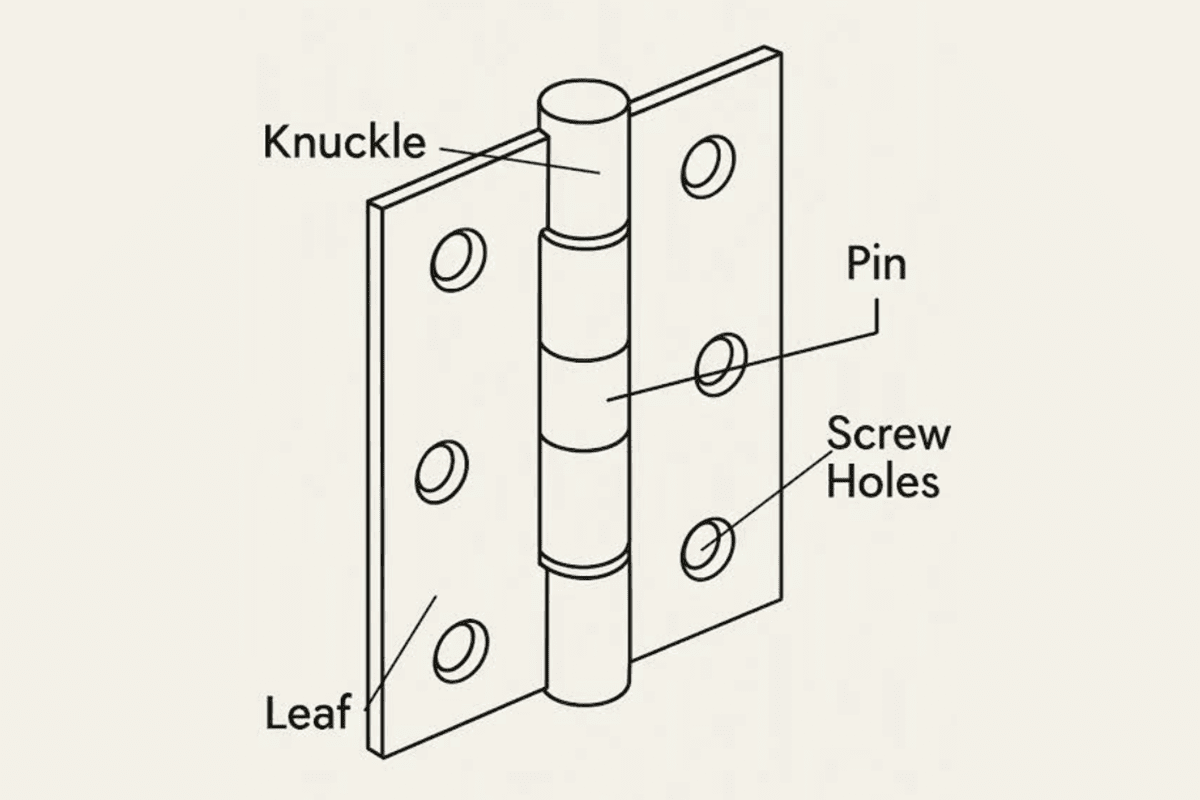
The first function is simple: the screw head should not stand above the hardware surface.
For a hinge, this can affect how the leaf sits against the door or frame. For a lock body forend, this can affect how neatly the metal plate sits on the door edge. For a strike plate, this can affect how the latch or deadbolt engages with the frame area.
I have seen buyers approve a finish, a thickness, and a hole diameter, but forget to confirm the screw. Later, the sample looks acceptable, yet the bulk installation uses a different screw head. That is when the same hardware can suddenly look inconsistent.
Flush surface benefits buyers usually care about
A flush screw head is not only about appearance. In procurement evaluation, I would connect countersunk mounting holes to four practical buyer concerns:
- Appearance: The hardware looks clean after installation.
- Surface protection: Raised screw heads may scratch nearby packed parts or contact surfaces.
- Fitting consistency: Installers can repeat the same result more easily when the screw and hole match.
- Product compatibility: The hinge, forend, or plate can follow the customer’s screw standard.
Common products that use countersunk mounting holes
| Product | Why countersunk holes are common | Buyer confirmation point |
|---|---|---|
| Butt hinges | Screw heads should sit flush with hinge leaf | Screw head diameter and countersink angle |
| Lock body forends | Door edge surface should remain neat | Hole position and plate thickness |
| Strike plates | Latch area should avoid obstruction | Screw type and recess depth |
| Door accessories | Exposed fixing points should look clean | Surface finish and screw color match |
A small detail with big specification impact
In manufacturing communication, I do not describe countersunk mounting holes as a decoration. They are a screw-matching feature.
The conical recess needs to suit the screw head. If the countersink is too shallow, the screw head may protrude. If it is too deep or too wide, the screw may sit below the surface too much, or the visible edge around the screw may look loose. If the angle does not match, contact may concentrate on a narrow line instead of seating evenly.
Common countersink angles vary by screw standard and market practice. For example, many metric flat head screws use a 90-degree countersink, while some other screw standards may use different angles.7 I avoid assuming the angle from appearance alone. I prefer to check the screw specification or the buyer’s reference sample.
My practical rule is simple: a countersunk hole should never be confirmed as “only a hole.” It should be confirmed as a hole plus a screw seat.
For buyers in Europe, the Middle East, or Southeast Asia, this point is especially useful because project screws may be sourced locally. If the door factory buys screws separately, the hinge supplier and buyer should agree on the screw standard before mass production. This is a procurement issue, not just a workshop detail.
How Should Buyers Confirm Countersunk Mounting Holes Before Ordering?
Countersunk mounting holes should be confirmed before ordering because small specification gaps can multiply in bulk production. If the sample, drawing, and screw do not match, the buyer may receive hardware that is technically well produced but not suitable for the intended assembly.
Buyers should confirm countersunk mounting holes by checking the drawing, hole diameter, countersink angle, recess depth, screw head type, hole position, material thickness, surface finish, and approved sample. The bulk order specification should match the confirmed sample and purchase order requirements.

Start with the drawing, not only the sample
Samples are useful, but drawings protect both sides. A sample can show the general appearance. A drawing records the actual specification.
When I confirm door hardware orders, I like to see the countersunk mounting holes clearly marked on the drawing. The drawing should not only show the center distance between holes. It should also define the countersunk profile.8
A good drawing confirmation may include:
- Hole diameter
- Countersink major diameter
- Countersink angle
- Countersink depth
- Hole center distance
- Distance from hole center to product edge
- Material thickness
- Screw type reference
- Surface treatment
- Tolerance requirements, if applicable
This may sound detailed, but it prevents many avoidable questions during production.
Confirm screw type and screw head shape
Countersunk mounting holes are designed for countersunk screws, but not every countersunk screw is identical. The buyer should confirm:
- Metric or imperial screw standard
- Thread size
- Head diameter
- Head angle
- Drive type, such as Phillips, Pozi, hex socket, or Torx
- Screw length
- Screw finish, especially if visible after installation
For hinges and lock forends, the screw finish may also matter. A stainless steel hinge with mismatched screw color can look like a quality issue even if the mechanical fit is acceptable.
Match the approved sample with the bulk order
I recommend a simple approval flow for B2B buyers:
| Step | What to check | Why it matters |
|---|---|---|
| 1. Drawing review | Hole dimensions and countersink details | Prevents unclear production standards |
| 2. Screw confirmation | Screw head angle and diameter | Ensures flush seating |
| 3. Sample inspection | Real visual and fitting result | Confirms the drawing works in practice |
| 4. Pre-production confirmation | Same specification as sample | Avoids silent changes |
| 5. Final inspection | Random check against drawing and sample | Supports order consistency |
In our factory work, I often ask customers to confirm product drawings after sample approval. This includes hinge holes, lock forend holes, accessory positions, and packaging details. I do this because small changes in hole shape can affect the buyer’s installation process.
Do not ignore hole position
Hole position is just as important as hole shape. If the countersunk mounting holes are slightly shifted, the screw may still sit flush, but the product may not align with the door preparation or frame drilling.9
For door factories, repeatability matters. A hinge with inconsistent hole position can slow installation. A lock forend with a wrong hole center can force rework. A wholesaler may also receive customer complaints if replacement hardware does not match the previous batch.
Important position checks include:
- Hole center-to-center distance
- Hole center to hinge edge
- Hole center to hinge knuckle
- Hole symmetry
- Left/right or top/bottom orientation
- Compatibility with existing drilling templates
Include inspection in the purchase discussion
For bulk hardware orders, I prefer to make inspection criteria clear before production. Buyers can request finished product inspection after order completion. They can also ask suppliers to provide photos, measurements, or sample checks before shipment.
This does not replace a qualified application-specific evaluation. Door weight, frame material, installation method, fire-rated door requirements, and project standards may need professional review. However, for procurement and supplier selection, clear confirmation of countersunk mounting holes reduces avoidable mismatch risk.
If certifications such as CE or fire-rated documents are involved, buyers should verify the documents, product scope, and applicable standards. A countersunk hole detail alone does not prove certified performance. It is one part of the full hardware specification.
When Are Countersunk Mounting Holes Not the Right Choice?
Countersunk mounting holes are useful, but they are not always the correct design. The problem appears when buyers assume every hinge, plate, or accessory should use them. That assumption can lead to mismatched screws, unsuitable surface contact, or unnecessary customization cost.
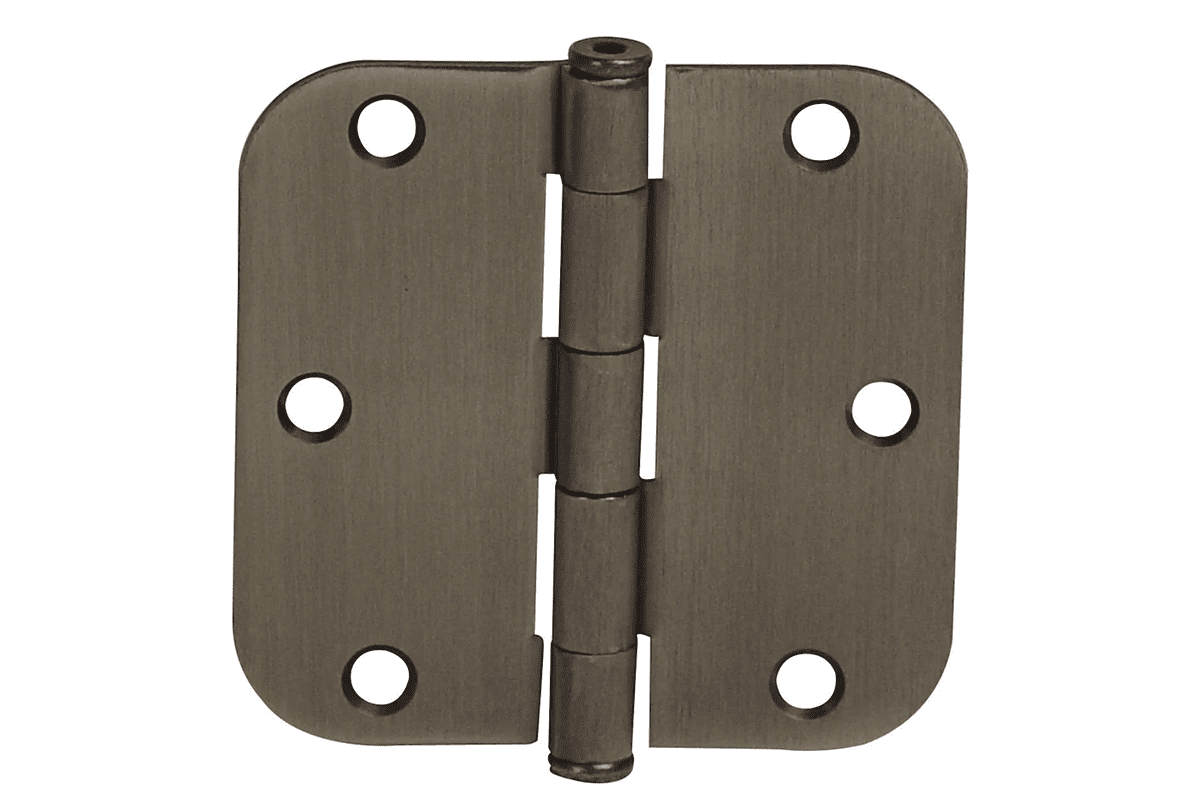
Countersunk mounting holes are not the right choice when the product design requires a different screw head, a flat-bottom recess, a concealed fixing system, or a raised screw style. The correct hole type depends on the hardware structure, application, screw standard, and installation requirements.
The correct hole depends on product design
I have learned not to push one hole type for every product. A butt hinge may commonly use countersunk holes, but a concealed hinge, a special bracket, or a decorative accessory may use another fixing method.
Some designs may need:
- Straight holes for pan head screws
- Counterbore holes for socket cap screws
- Slotted holes for adjustment
- Threaded holes for machine screws
- Hidden fixing plates for concealed installation
Each design has a purpose. The buyer should ask why the hole type is used, not only whether it looks familiar.
When pan head or round head screws are preferred
A pan head screw sits above the surface. This may be acceptable or even preferred in some applications. For example, a product may need a larger bearing surface under the screw head. Another product may have enough clearance and no need for a flush appearance.
If a buyer uses a pan head screw in a countersunk recess, the screw head may not seat as intended. The visible result can look uneven. The contact between screw and hardware may also differ from the original design expectation.
When counterbore holes may be better
A counterbore has a cylindrical recess instead of a conical one. It is often used when the screw head has a flat underside, such as some socket head screws.10 This is different from a countersink.
| Feature | Countersunk hole | Counterbore hole |
|---|---|---|
| Recess shape | Conical | Cylindrical |
| Screw head match | Flat head / countersunk screw | Socket cap or similar head |
| Final appearance | Angled head sits flush | Cylindrical head sits recessed |
| Common concern | Angle match | Recess diameter and depth |
This comparison matters when buyers send reference photos instead of drawings. A photo may not clearly show whether the hole is countersunk or counterbored. I usually ask for a section view, sample, or screw reference when the fixing point is important.
Customization should be controlled
As a manufacturer, I can support OEM and ODM customization, but I also believe customization should be controlled by clear specifications. Changing countersunk mounting holes may affect tooling, drilling, punching, machining, polishing, plating, and inspection.
Before changing a hole design, buyers should consider:
- Will the existing screw still match?
- Will the new recess affect the visible finish?
- Will the hole position still match the door factory template?
- Will the change require a new sample?
- Will the change affect packaging or screw accessory supply?
- Will any project documentation need updating?
This is especially important for hardware brand enterprises and wholesalers. Their customers may reorder based on previous batches. A small change in countersink shape can create compatibility questions later.
A practical way to decide
I suggest buyers use this quick decision method:
- Choose countersunk mounting holes when the screw head must sit flush and the screw type is confirmed.
- Choose straight holes when a raised screw head is acceptable and matches the design.
- Choose counterbore holes when the screw head needs a flat-bottom recess.
- Choose concealed fixing when the design should hide screws completely.
- Request professional evaluation when the hardware is used in a fire-rated, high-traffic, or application-specific project.
This approach keeps the discussion practical. It also keeps the supplier selection process focused on drawings, samples, and inspection instead of assumptions.
What Should Suppliers Show for Countersunk Mounting Holes Quality Control?
Countersunk mounting holes need quality control because the final appearance depends on small dimensional details. A hinge leaf may be polished beautifully, but if the recess is rough, off-center, or inconsistent, the buyer may still reject the visible surface.
Suppliers should show countersunk mounting holes through clear drawings, approved samples, measurement checks, surface inspection, and screw-fit confirmation. Buyers can ask for production photos, inspection reports, or sample comparisons to verify that bulk goods match the confirmed specification.
What I look for during factory inspection
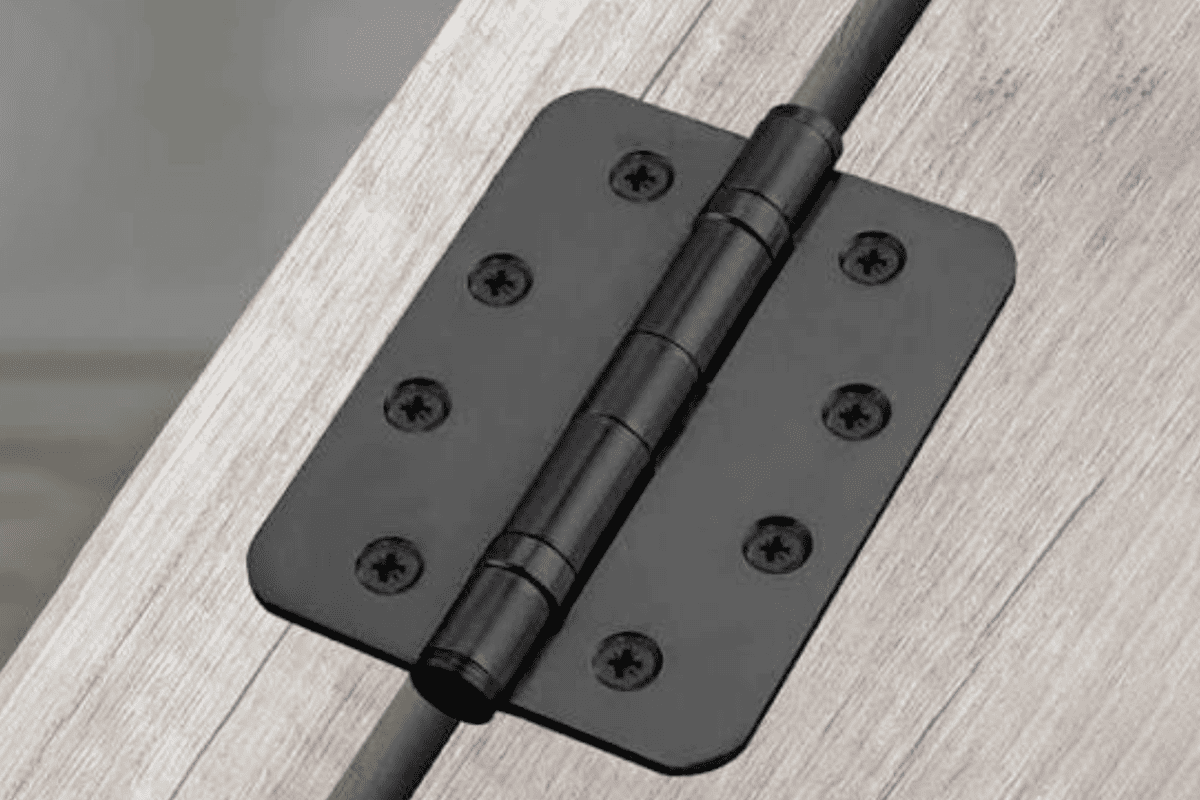
From a factory perspective, I check countersunk mounting holes as part of the full product, not as an isolated feature. The hole must fit the screw, but it must also match the product finish and hole layout.
Important inspection points include:
- Clean hole edge
- No obvious burrs
- Consistent countersink diameter
- Correct countersink angle
- Correct hole location
- No deformation around the hole
- Surface finish continuity
- Screw head sits flush during sample check
For stainless steel hinges, polishing around the countersunk recess also matters. If the polishing is uneven, the recess may catch light differently and look like a defect. For plated products, the recess should be checked after surface treatment, not only before finishing.
Why raw material and process control matter
A countersunk hole is formed by machining, punching, drilling, or combined processes depending on the product and production method. The material thickness and hardness can affect the result. A thin plate may have limited space for a deep recess.11 A thicker hinge leaf may allow a more defined countersink.
At SDH Hardware, our general production control follows a process of raw material screening, standardized production supervision, and finished product inspection. I mention this here because buyers should evaluate whether a supplier has a stable process, not only whether one sample looks acceptable.
For door hardware buyers, I recommend asking:
| Buyer question | Why it helps |
|---|---|
| Can you show the countersink detail on the drawing? | Confirms the specification is documented |
| Can you match our screw sample? | Reduces screw-seat mismatch |
| Can you provide a pre-production sample? | Confirms the design before mass production |
| Can you inspect hole position after production? | Supports fitting consistency |
| Can you confirm finish after countersinking? | Prevents visible defects around holes |
Avoid unsupported performance assumptions
A neat countersunk hole does not automatically prove higher load capacity, longer service life, or certified door performance. Those claims require relevant testing, standards, and application context. Buyers should treat CE certificates, fire-rated documents, and test reports as documents to verify for the exact product and project scope.
This distinction is important. Countersunk mounting holes support flush installation and screw matching, but they are not a substitute for complete hardware evaluation. For fire-rated doors, commercial projects, or special environments, qualified professional assessment is still necessary.
Supplier selection tip
When comparing suppliers, I would not ask only, “Can you make this hinge?” I would ask, “Can you confirm this hinge with my screw, drawing, sample, finish, packaging, and inspection requirement?”
That question reveals whether the supplier understands B2B specification control. It also helps prevent problems before the purchase order becomes a container shipment.
Frequently Asked Questions
Are countersunk mounting holes the same as chamfered holes?
No. A chamfered hole may have a small bevel mainly to remove sharp edges or help entry. A countersunk mounting hole has a defined conical recess designed to seat a countersunk screw head flush with the hardware surface.
Do all butt hinges need countersunk mounting holes?
No. Many butt hinges use countersunk mounting holes, but not all hinges require them. The correct hole type depends on the hinge design, screw type, clearance, installation method, and buyer specification. Buyers should confirm the drawing and screw before ordering.
What screw should I use with countersunk mounting holes?
You should use a countersunk screw with a head angle and diameter that match the recess. Buyers should confirm metric or imperial standard, screw size, head angle, drive type, length, and finish. A sample screw is often the safest reference.
Why does the countersink angle matter?
The countersink angle matters because the screw head must seat evenly inside the conical recess. If the angle does not match, the screw may protrude, sit unevenly, or create a poor visual result. Buyers should confirm the angle on the drawing.
Should I approve a sample before bulk ordering hinges with countersunk holes?
Yes. A sample helps confirm the real screw fit, surface appearance, and hole position. However, the approved sample should also match a clear drawing and purchase specification. This keeps the bulk order consistent with the buyer’s confirmed requirement.
Conclusion
Countersunk mounting holes are small, but they play a practical role in hinge and door hardware quality. They help countersunk screws sit flush, improve appearance, reduce protrusion risk, and support consistent installation when the screw, hole shape, drawing, and sample are confirmed together. Buyers should not check only hole diameter. They should also verify angle, position, screw type, and bulk order specification. If you are preparing a hinge, lock forend, or door hardware order, send us your drawing and screw details so we can help confirm the specification before sampling.
"Countersink", https://en.wikipedia.org/wiki/Countersink. A technical reference defining a countersink as a conical recess for seating a screw head flush with or below a surface supports the article's definition of countersunk mounting holes. Evidence role: definition; source type: encyclopedia. Supports: A countersink is a conical hole or recess used so a screw head can sit flush with or below a surface.. ↩
"Countersink Angles Explained: 82°, 90°, 100", https://severancetools.com/resources/countersink-angle-guide.html. An engineering design or manufacturing source explaining that countersinks receive flat-head screws to produce a flush or recessed surface supports the stated mechanism; it does not by itself verify performance for any specific hinge or lock product. Evidence role: mechanism; source type: education. Supports: Countersunk holes are used with flat or countersunk screw heads to provide a flush or recessed installed surface.. Scope note: Contextual support only; the source should explain the general mechanism rather than test the specific products described. ↩
"Countersink Angles Explained: 82°, 90°, 100", https://severancetools.com/resources/countersink-angle-guide.html. A machine-design reference describing how screw-head bearing surfaces and countersink geometry must correspond supports the claim that mismatched screws and holes can seat improperly; it does not quantify the visual defect in door hardware. Evidence role: mechanism; source type: education. Supports: Fastener seating depends on matching screw head shape to the mating recess or bearing surface.. Scope note: Contextual support only; the source should establish the engineering principle, not necessarily the cosmetic outcome. ↩
"Finish Hardware", https://facilities.upenn.edu/sites/default/files/pdfs/upenn_hardware_standard_087100_2a.pdf. An architectural hardware reference describing butt hinges as leaf hinges mounted to the door and frame supports the article's explanation of why hinge-surface clearance matters; it does not prove that all butt hinges require countersunk screws. Evidence role: definition; source type: education. Supports: A butt hinge consists of leaves mortised or mounted to the door and frame, creating a close interface where the leaves operate.. Scope note: Contextual support only; hinge construction is supported, while the need for countersunk holes depends on design. ↩
"How to fix protruding hinge screws on a cabinet door ...", https://www.facebook.com/groups/woodworkingforbeginner/posts/3714859415335323/. A door-hardware installation or standards-based guide noting that fasteners must be seated properly to avoid binding or interference supports this practical claim; it should be treated as general installation support rather than evidence for a measured failure rate. Evidence role: general_support; source type: institution. Supports: Door-hardware installation guidance commonly requires fasteners to be properly seated to avoid binding, interference, or contact problems.. Scope note: Contextual support only; the source may not specifically test protruding countersunk screws in the article's product examples. ↩
"Countersink Holes: Uses, Symbols, and Drawing Callouts", https://jlccnc.com/blog/countersink-hole-cnc. A drafting or fastener-standard reference identifying countersink angle, major diameter, and depth as specified features supports the claim that these dimensions affect flush seating; it does not validate any particular tolerance selected by the supplier. Evidence role: mechanism; source type: institution. Supports: Engineering drawing and fastener references specify countersink angle, diameter, and related screw-head dimensions because these control fit and seating.. Scope note: Contextual support only; the source should support the role of the dimensions, not the adequacy of a specific production drawing. ↩
"Buy M10 x 90mm Socket Countersunk Screws (ISO 10642)", https://accu-components.com/us/countersunk-socket-head-screws/5706-SSK-M10-90-A4?srsltid=AU7gw4W07ntdgf7VGycmjofUEyQNTUWb-VV4qmIDRfCGxlJaYSWTRFPZ. Fastener standards or standards summaries specifying countersunk-head angles support the article's statement that common metric flat-head screws often use 90 degrees while other standards may differ; access to full standards may be limited and secondary summaries should be checked against the original standard. Evidence role: expert_consensus; source type: institution. Supports: Fastener standards specify countersunk-head angles, including common 90-degree metric designs and different angles in some non-metric standards.. Scope note: Contextual support only if using a standards summary rather than the full ISO, DIN, or ASME text. ↩
"Countersink", https://www.gdandtbasics.com/countersink. An engineering drawing reference showing countersink callouts with diameter and angle supports the article's statement that the countersunk profile should be documented in drawings, not inferred only from hole spacing. Evidence role: general_support; source type: education. Supports: Engineering drawing guidance treats countersinks as features that should be dimensioned or called out with information such as angle and diameter.. ↩
"True Position - Position Tolerance", https://www.gdandtbasics.com/true-position. An engineering tolerancing reference explaining that hole-location variation affects assembly alignment supports the claim that shifted mounting holes can fit the screw but fail to match door or frame preparation; it does not address a specific door-hardware tolerance. Evidence role: mechanism; source type: education. Supports: Hole-position tolerances affect whether parts align during assembly and installation.. Scope note: Contextual support only; the source should establish the general tolerance mechanism rather than a door-industry threshold. ↩
"Drill and Counterbore Sizes for Socket Head Cap Screws ...", https://www.engineersedge.com/mechanical,045tolerances/drill_and_counterbore_sizes_14163.htm. A machining or mechanical-design reference defining counterbores as cylindrical recesses for recessed screw heads supports the article's distinction between counterbores and countersinks. Evidence role: definition; source type: education. Supports: A counterbore is a cylindrical, typically flat-bottomed recess used to receive certain screw heads, distinct from a conical countersink.. ↩
"Investigation on Effect of Material Hardness in High Speed ...", https://pmc.ncbi.nlm.nih.gov/articles/PMC4736218/. Manufacturing research or an academic machining reference discussing how material hardness and workpiece thickness influence countersinking or hole quality supports this process claim; it does not specify the limits for the article's particular hinge materials. Evidence role: mechanism; source type: research. Supports: Manufacturing literature explains that material properties and thickness affect hole-making and countersinking quality, including achievable recess geometry.. Scope note: Contextual support only; exact depth limits depend on material, tooling, screw geometry, and product thickness. ↩