What Affects the Load Capacity of a Hinge?
The load capacity of a hinge becomes a serious buying issue when a door starts sagging, rubbing, loosening, or making noise after installation. I have seen buyers compare hinges by material or size alone, then face warranty pressure later. The better solution is to evaluate size, material, structure, processing quality, and wear resistance together.
The load capacity of a hinge is affected by hinge size, material strength, structural design, processing quality, bearing or washer performance, installation method, door weight, door width, hinge quantity, and usage frequency. No single factor guarantees performance.1 Buyers should match the hinge specification to the door type, test conditions, and project requirements.
I usually tell buyers that two hinges can look almost identical in a catalog but perform very differently on the door. The difference often hides in leaf thickness, pin diameter, knuckle forming, arm design, machining method, and lubrication structure. Let me break these points down in a practical way.
How Does Hinge Size Affect the Load Capacity of a Hinge?
Hinge size is the first thing most buyers check, but it can also create false confidence. I have seen projects choose a larger hinge and still face door sagging because the door width, hinge quantity, and use frequency were not considered. Size matters, but it must match the full application.
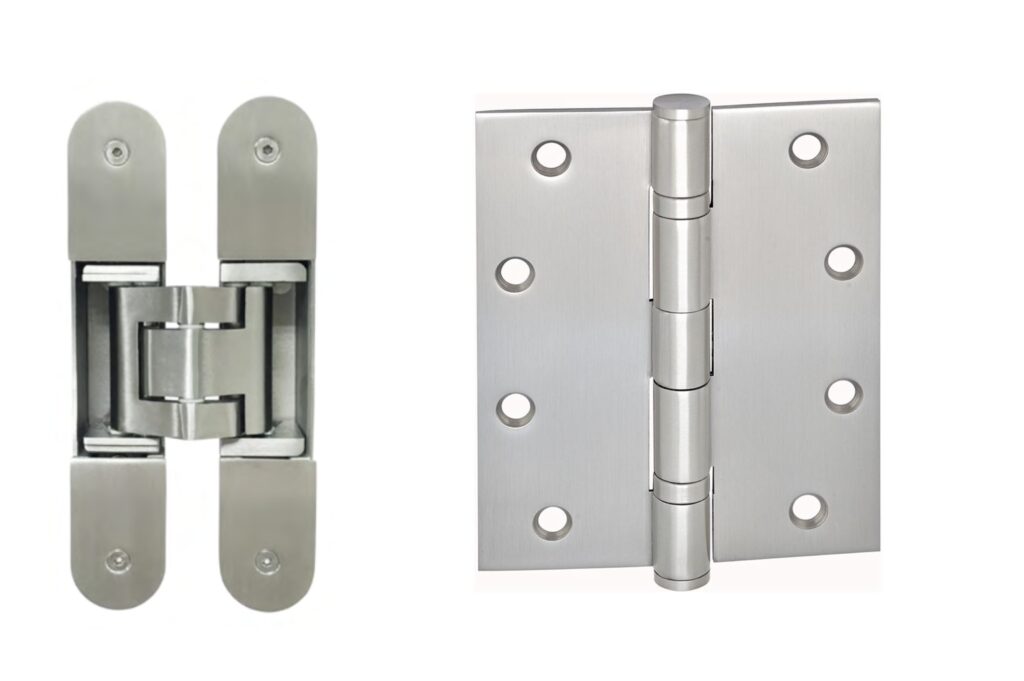
The load capacity of a hinge generally improves when the hinge has a suitable larger body, thicker load-bearing parts, and stronger pin or arm dimensions. For butt hinges, larger and thicker leaves plus a larger pin usually help. For concealed hinges, a larger body and thicker arms usually support heavier doors better.
Why Size Works Differently for Butt Hinges and Concealed Hinges
I always separate butt hinges and concealed hinges when I discuss size with door factories. The visible dimensions mean different things for each hinge type.
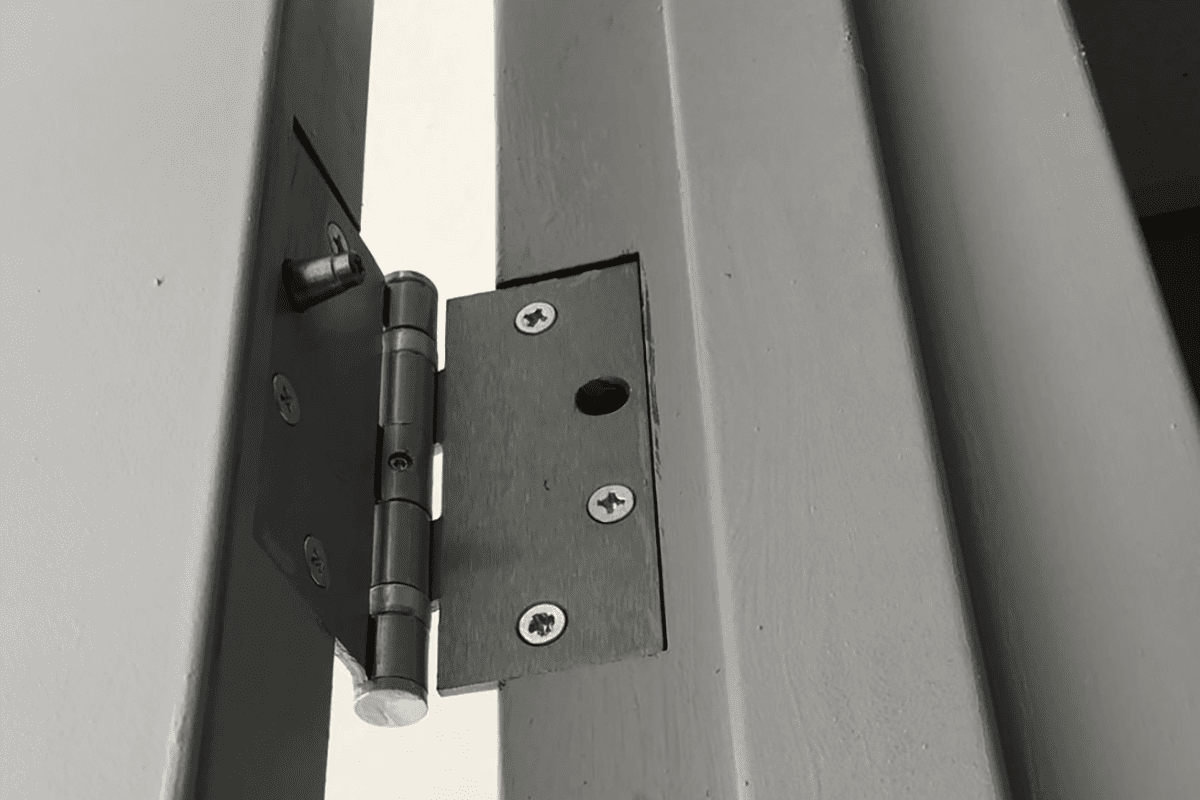
For butt hinges, the key visible size factors include:
- Leaf height
- Leaf width
- Leaf thickness
- Pin diameter
- Knuckle diameter
- Number of bearings
- Screw hole layout
- Screw size and fixing depth
A taller and thicker butt hinge leaf usually distributes force better across the door edge and frame. A larger pin diameter can also improve resistance to bending and wear. However, I do not treat a bigger butt hinge as an automatic answer. A heavy and wide door creates more leverage than a narrow door of the same weight.2 That leverage increases stress on the hinge side.
For concealed hinges, buyers should look at different size signals:
- Overall hinge body size
- Cup or mortise depth
- Arm thickness
- Linkage width
- Body wall thickness
- Adjustment screw strength
- Fixing plate area
- Machined contact surfaces
A concealed hinge carries load through internal arms and pivot points. So, the external face size does not tell the full story. I pay close attention to the thickness and geometry of the internal arms because these parts absorb repeated opening and closing stress.
Size Must Match the Door System
I recommend that buyers evaluate hinge size with the whole door system, not only with the door weight. The following table shows the main selection logic.
| Evaluation Factor | Why It Matters | Buyer Checkpoint |
|---|---|---|
| Door weight | It creates vertical load on the hinge | Confirm actual finished door weight, not estimated core weight |
| Door width | It increases leverage on hinges | Wider doors usually need stronger hinges or more hinges3 |
| Door height | It affects hinge spacing and stability | Check hinge quantity and placement |
| Opening frequency | It affects fatigue and wear | Public buildings need higher durability than private rooms |
| Door material | It affects screw holding strength | Solid wood, steel, aluminum, and fire doors behave differently |
| Installation accuracy | It affects load distribution | Misalignment can overload one hinge |
A Practical Example I Often See
I have seen a 100 kg door perform well with one hinge set in one project and poorly in another. The difference was not only the rated door weight. One door was narrow and installed in a low-frequency interior space. The other door was wider, heavier at the edge, and used in a busy corridor. The second door placed more stress on the hinge system.
That is why I prefer to ask buyers these questions before recommending hinge size:
- What is the finished door weight?
- What are the door height and width?
- How many hinges will be installed?
- What is the door material?
- Is the door used in a hotel, apartment, office, hospital, school, or commercial project?
- Does the door need fire-rated hardware?
- Will the hinge be surface mounted, mortised, or concealed?
I do not recommend choosing by one dimension alone. I recommend matching the hinge size to the actual door condition and confirming performance through supplier test data where possible.
How Does Material Affect Hinge Load Capacity?
Material is one of the most discussed factors, but it is also one of the most misunderstood. I often meet buyers who ask for “the strongest material” before they define the door type. That approach can lead to overspending, wrong expectations, or a hinge that is strong in material but weak in structure.
Material affects hinge load capacity because it influences strength, deformation resistance, corrosion resistance, and long-term wear. In my practical manufacturing experience, stainless steel is usually stronger than brass and aluminum alloy for butt hinges4. For concealed hinges, stainless steel usually outperforms zinc alloy and composite structures5, but design and processing still matter.
Practical Material Hierarchy for Butt Hinges
From my factory-side experience, I usually explain butt hinge materials with this practical order for load-bearing potential:
- Stainless steel
- Brass
- Aluminum alloy
This order does not mean every stainless steel hinge is automatically better than every brass hinge. A thin stainless steel hinge with poor knuckle forming can still perform worse than a well-designed brass hinge in a suitable application. However, when the size and processing quality are comparable, stainless steel usually offers better strength and durability for heavier doors.
Practical Material Hierarchy for Concealed Hinges
For concealed hinges, I usually explain material comparison like this:
- Stainless steel concealed hinges
- Zinc alloy concealed hinges
- Composite structures, such as aluminum alloy body with zinc alloy arms
Again, this is not a universal engineering law. Product design, machining accuracy, arm structure, screw strength, and test conditions all affect the final result. However, for heavy-duty doors, I usually advise buyers to review stainless steel concealed hinge options first because the internal arms and pivot areas must resist pressure over time.
Material Strength Is Only One Part of the Decision
I recommend that buyers avoid asking only, “What material is this hinge?” I prefer a better set of questions:
- What is the leaf thickness or body wall thickness?
- What is the pin diameter or arm thickness?
- What is the surface treatment?
- What is the bearing or washer structure?
- What test data supports the stated door weight?
- What installation condition was used in the test?
- What is the expected opening cycle?
- Is the hinge suitable for wood, metal, aluminum, or fire doors?
Material Comparison for Procurement Teams
| Hinge Material | Common Strength | Common Concern | Typical Buyer Use |
|---|---|---|---|
| Stainless steel | Good strength, corrosion resistance, and durability | Cost is usually higher | Heavy-duty doors, humid areas, commercial projects |
| Brass | Good appearance and stable performance in suitable sizes | Softer than stainless steel | Decorative doors, premium interiors |
| Aluminum alloy | Lightweight and easy to process | Lower load-bearing potential in many hinge applications | Light doors and specific aluminum systems |
| Zinc alloy | Good casting flexibility for concealed designs | Internal voids and deformation risk depend on casting quality | Medium-duty concealed hinge applications |
| Composite structures | Cost and design flexibility | Mixed material stress points need careful evaluation | Cost-sensitive concealed hinge projects |
Corrosion Also Affects Real Load Performance
I often remind buyers that corrosion resistance is not just about appearance. Rust, oxidation, or plating failure can affect movement, increase friction, and accelerate wear.6 In coastal areas, humid hotels, kitchens, bathrooms, and public buildings, stainless steel or well-protected surface finishes may reduce long-term maintenance risk.
Surface treatment also matters. A hinge may pass the first visual inspection, but poor plating can fail after repeated use or exposure. I suggest buyers request clear information about:
- Base material
- Surface finish
- Salt spray test conditions, if relevant
- Cleaning and maintenance requirements
- Packaging protection during shipping
- Compatibility with project environment
Material matters, but I never separate it from design and manufacturing quality. A good hinge is not just made from a strong material. It is engineered and produced so that the material works correctly under real door loads.
Why Does Processing Quality Change the Load Capacity of a Hinge?
Processing quality is easy to overlook because it hides behind similar dimensions and polished surfaces. I have handled samples that looked strong in photos but felt loose, rough, or uneven in hand. That small difference can become sagging, abnormal noise, or early wear after installation.
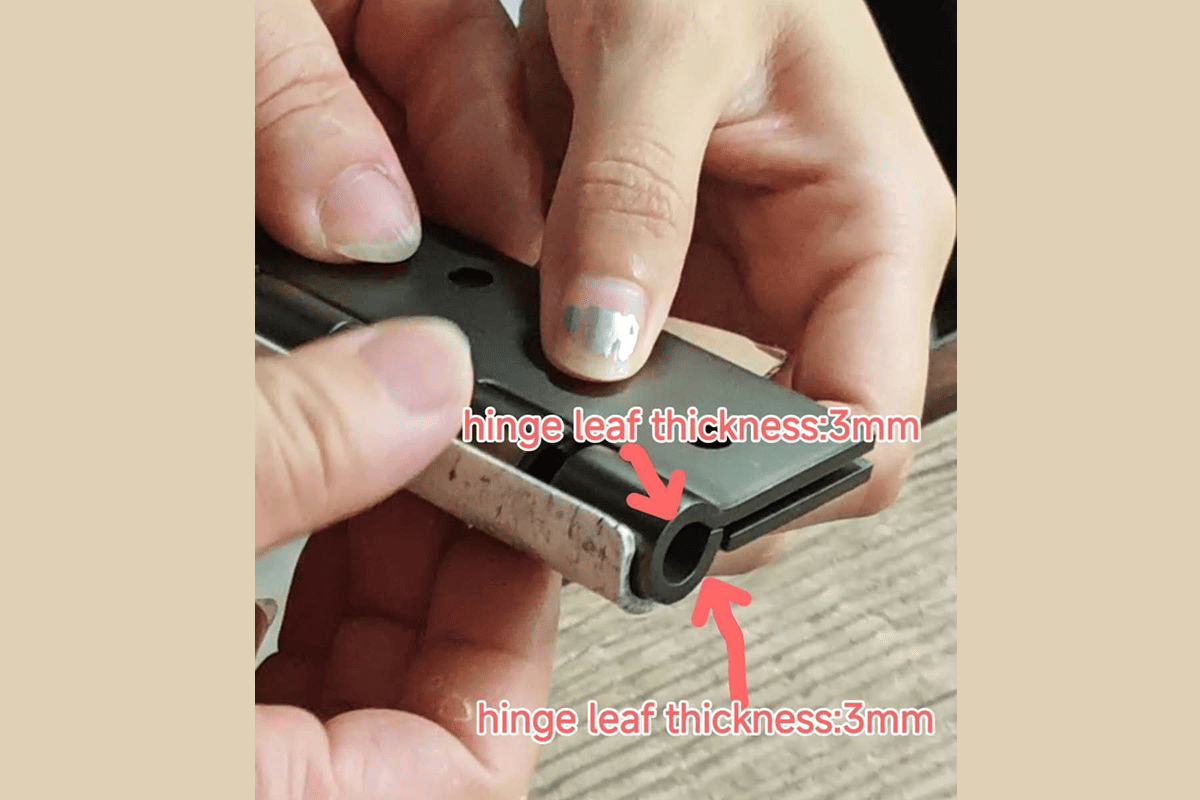
Processing quality changes the load capacity of a hinge because the hinge must transfer force smoothly through the knuckle, pin, bearing, arm, and fixing points. For butt hinges, a well-formed round knuckle, smooth pin, and wear-resistant bearing can improve load performance and movement stability.
Butt Hinge Processing Details Buyers Should Check
For butt hinges, I focus on three details before I trust the hinge’s real performance:
- Rolled knuckle quality
- Pin smoothness and fit
- Bearing wear resistance
The rolled knuckle should hold its round shape and resist opening under pressure. If the knuckle is poorly formed, it may not support the pin evenly. The pin should move smoothly without excessive looseness. The bearing should reduce friction and resist wear during repeated cycles.
A 2BB ball-bearing butt hinge can offer smoother operation and better long-term movement than a plain-bearing hinge in many medium to heavy applications. However, the bearing quality and installation still matter. A low-quality bearing can wear, flatten, or create noise.
What I Look for During Sample Evaluation
When I receive hinge samples, I do not only measure length and thickness. I also check movement by hand. This is not a substitute for lab testing, but it helps me identify obvious risks before bulk procurement.
I usually check:
- Whether the hinge opens smoothly
- Whether the pin feels loose
- Whether the leaves align correctly
- Whether the knuckle is round and tight
- Whether there is side play
- Whether the screw holes are clean
- Whether the surface has cracks, pits, or burrs
- Whether bearing movement feels stable
- Whether the hinge closes flat without twisting
Processing Quality and Real-World Load
A hinge under load does not fail only because the material is weak. It can also fail because force is concentrated in the wrong area. Poor rolling, rough pins, inaccurate punching, or uneven assembly can create stress points.
For example, if a butt hinge has uneven knuckles, the pin may not carry the load evenly. One knuckle area may wear faster than the others. Over time, this can create door drop, noise, and visible gaps. If the bearing is poorly made, the hinge may still support the door at first, but movement becomes rough after repeated cycles.
Inspection Points for B2B Buyers
| Inspection Item | Why It Matters | Practical Check |
|---|---|---|
| Leaf thickness tolerance | It affects strength and consistency | Measure several samples, not only one |
| Knuckle roundness | It affects pin support | Check side view and movement feel |
| Pin diameter and finish | It affects wear and stability | Confirm size and smoothness |
| Bearing quality | It affects friction and cycle life | Check bearing type and supplier test data |
| Hole accuracy | It affects installation fit | Compare screw position consistency |
| Surface finish | It affects corrosion and appearance | Review coating and packaging quality |
| Assembly tightness | It affects noise and sagging | Check looseness before installation |
Why Similar Hinges Can Perform Differently
I often see buyers compare two hinges that have the same size and material, then choose the cheaper one. That may work for light doors, but it creates risk for heavier projects. The cheaper hinge may use thinner actual material, rougher pins, loose bearings, or less accurate forming.
I recommend that procurement teams request:
- Technical drawings
- Material specification
- Sample approval before bulk order
- Test reports under defined conditions
- Production inspection photos or videos
- Pre-shipment inspection
- Packaging details
- Clear warranty and claim process
At SDH Hardware, I view processing quality as a practical manufacturing issue, not just a sales claim. Buyers should verify it through samples, measurements, and supplier quality control records.
How Do Concealed Hinge Structure and Lubrication Affect Hinge Load Capacity?
Concealed hinges look clean and premium, but their internal structure carries complex stress. I have seen buyers choose concealed hinges mainly for appearance, then discover that the hinge arms or body cannot handle the actual door weight. This is why structure and lubrication deserve serious attention.
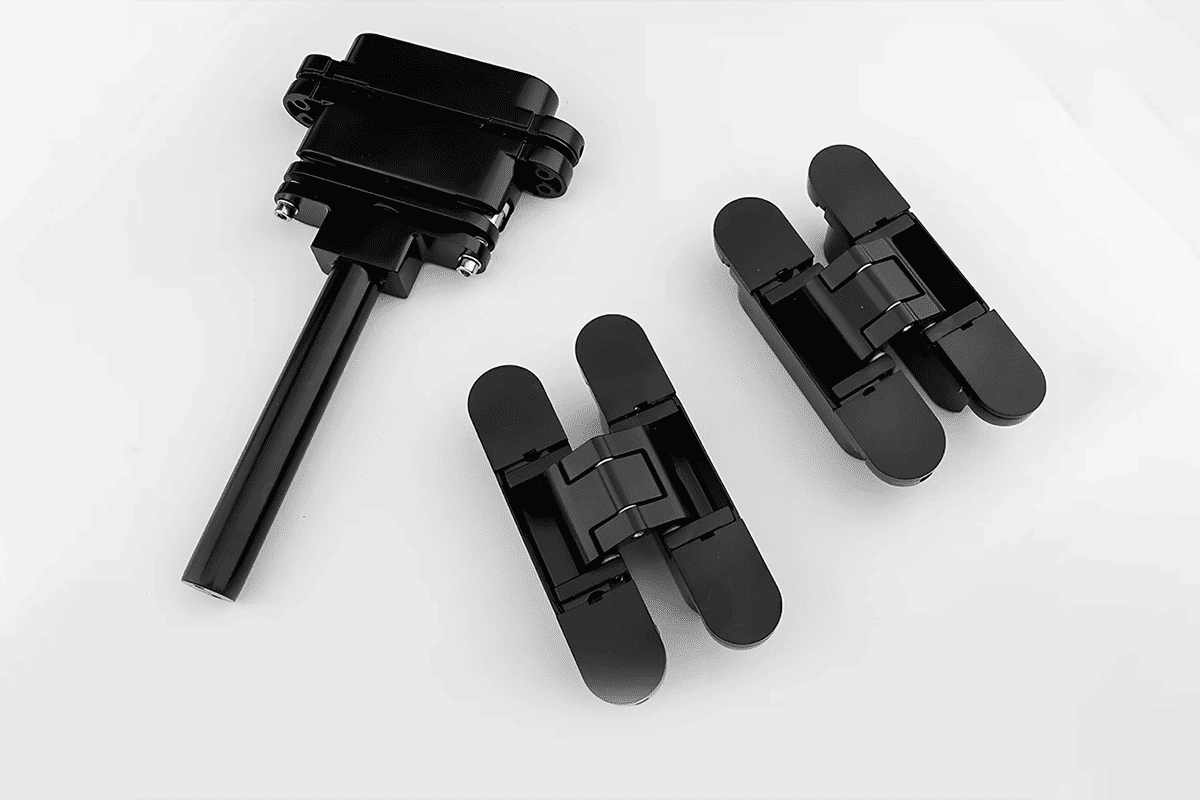
Concealed hinge structure affects hinge load capacity through arm thickness, pivot design, body density, machining accuracy, and fixing strength. CNC-machined concealed hinges often have denser structures and fewer internal voids than ordinary die-cast hinges7. Oil-free washer designs can also reduce loosening and deformation under pressure.
Why Internal Structure Matters More Than Appearance
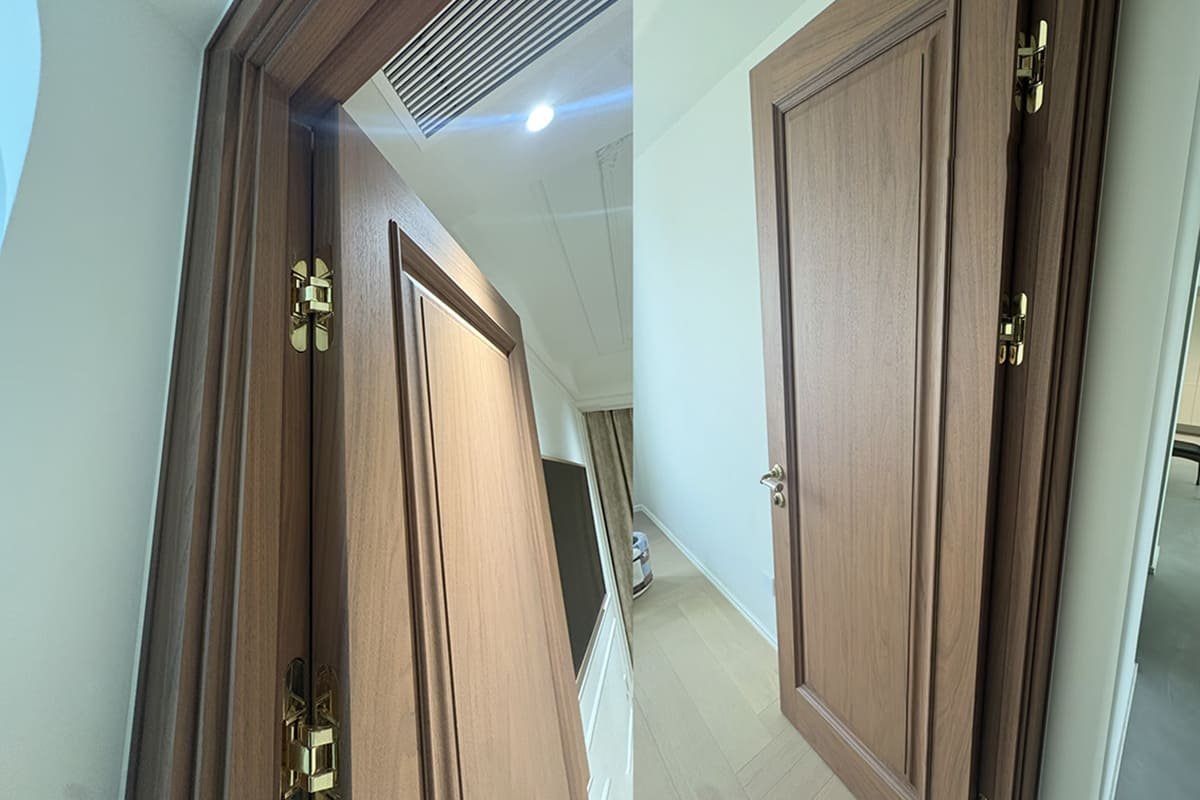
A concealed hinge hides most of its working parts inside the door and frame. That makes visual comparison difficult. Two concealed hinges may have the same outside dimensions, but one may have thicker arms, stronger pivots, and better internal support.
The most important concealed hinge structure factors include:
- Arm thickness
- Arm geometry
- Pivot diameter
- Body wall thickness
- Mortise depth
- Adjustment screw strength
- Fixing plate design
- Internal contact surface accuracy
- Washer or lubrication method
If the arms are too thin or the body has weak sections, the hinge may deform under repeated pressure. If the adjustment system is weak, the door may shift after installation. If the fixing screws do not hold properly, the whole hinge system can loosen even if the hinge body is strong.
CNC-Machined vs Die-Cast Concealed Hinges
I often explain the difference between CNC-machined and ordinary die-cast concealed hinges in simple terms. CNC machining removes material from a solid workpiece. Die casting injects molten metal into a mold. Both methods can produce useful hinges, but they create different internal structures.
| Manufacturing Method | Practical Advantage | Practical Concern | Buyer Evaluation |
|---|---|---|---|
| CNC-machined concealed hinge | Denser structure, fewer internal voids, accurate surfaces | Higher cost and longer processing time | Suitable for higher-load or premium projects |
| Die-cast concealed hinge | Efficient production and design flexibility | Internal voids may affect strength if casting quality is poor | Suitable for standard-duty applications if tested |
| Composite concealed hinge | Cost and material flexibility | Stress points may form between different materials | Check arm material and cycle test data carefully |
In my experience, CNC-machined concealed hinges often provide better load-bearing reliability for demanding doors because the structure is denser and more consistent. However, I still recommend buyers check actual product specifications and test data. Manufacturing method improves confidence, but it does not replace application-specific evaluation.
Why Oil-Free Washer Designs Matter
Traditional concealed hinges often depend on grease for smoother movement. Grease can work well, but it may also attract dust, dry out, or migrate over time.8 Some concealed hinges use oil-free washers instead of traditional grease lubrication. These washers can reduce friction at pivot points and help maintain stable movement under pressure.9
Oil-free washer structures may help reduce:
- Loosening caused by wear
- Deformation caused by uneven friction
- Abnormal noise
- Maintenance demand
- Grease contamination
- Movement inconsistency over time
I do not describe oil-free concealed hinges as perfect for every project. I describe them as a useful design option when buyers need smoother movement and more stable long-term performance. For heavy-duty concealed applications, I usually suggest reviewing stainless steel versions with strong arms and reliable washer systems.
Concealed Hinges Need Careful Installation
Even a strong concealed hinge can fail if installation is poor.10 Concealed hinges require accurate mortising, correct alignment, and stable screw fixing. If the pocket is cut too loose or too deep, the hinge body may shift. If the door and frame are not aligned, one hinge may carry more load than the others.
I recommend that buyers confirm:
- Mortise dimensions and tolerance
- Door and frame material compatibility
- Screw type and screw length
- Adjustment range
- Installation template availability
- Door clearance requirements
- Installer experience
- Post-installation adjustment method
A concealed hinge should be evaluated as part of the door system. I believe this is especially important for door manufacturers and hardware brands that supply projects at scale. A small installation mismatch can become a repeated after-sales problem across hundreds of doors.
How Should Buyers Evaluate the Load Capacity of a Hinge Before Ordering?
Buying hinges only from a catalog page can be risky. I have seen projects run into problems because the stated load rating was not connected to door size, cycle test conditions, or installation method. A careful evaluation process protects buyers from sagging doors, claims, and inconsistent quality.
Buyers should evaluate the load capacity of a hinge by confirming door weight, door width, hinge quantity, hinge type, material, structure, processing quality, installation method, and test evidence. The best selection comes from matching the hinge to real use conditions and verifying supplier claims with samples and documents.

Step 1: Define the Door Application
I always start with the door, not the hinge. The hinge is only one part of the door system. A good supplier should ask questions before recommending a product.
Buyers should prepare:
- Finished door weight
- Door height and width
- Door thickness
- Door material
- Frame material
- Opening direction
- Expected daily use frequency
- Indoor or outdoor environment
- Fire-rated requirement, if any
- Acoustic, security, or access-control requirements
- Target market standard
This information helps prevent mismatch. For example, a hinge for a private apartment bedroom door does not face the same stress as a hinge for a hotel corridor, hospital door, school door, or commercial entrance.
Step 2: Compare More Than the Rated Load
A hinge load rating can be useful, but it is only meaningful when buyers understand the test conditions.11 I recommend asking the supplier what the rating is based on.
Important questions include:
- How many hinges were used in the test?
- What was the door size?
- What was the door weight?
- What was the door material?
- What cycle count was tested?
- Was the test static or dynamic?
- Was the hinge installed according to a standard?
- Was the rating tested internally or by a third party?
- Does the report match the exact product model?
- Does the product require specific screws or installation methods?
I avoid giving one universal number for hinge capacity because different test conditions can create different results. A responsible buyer should treat load rating as a verified specification, not a marketing slogan.
Step 3: Request Samples and Inspect Them
Samples reveal details that catalog photos hide. I recommend that buyers inspect samples before confirming bulk orders, especially for OEM, ODM, or project supply.
A useful sample review includes:
- Measuring actual thickness
- Checking hinge weight consistency
- Opening and closing the hinge by hand
- Inspecting knuckle or arm movement
- Checking screw hole accuracy
- Reviewing surface finish
- Testing adjustment screws for concealed hinges
- Comparing samples from different batches, if available
- Asking for production tolerances
Conclusion
The load capacity of a hinge depends on much more than one label, one material, or one catalog number. I recommend that buyers evaluate hinge size, material, structure, processing quality, lubrication or bearing design, door dimensions, hinge quantity, and installation conditions together. This approach helps prevent sagging, loosening, noise, deformation, and early wear. If you are comparing butt hinges or concealed hinges for a project, you can share your door specifications with SDH Hardware, and we can help review suitable factory-direct hardware options for your application.
"BS EN 1935:2002 – Single Axis Hinges", https://www.hoppe.com/in-en/contacts-service/standards/bs-en-1935/. Standards for building hinges (e.g., EN 1935 and ANSI/BHMA A156.1) evaluate performance with defined combinations of door mass and size, number of hinges, installation details, and durability cycles, indicating that hinge capacity is a function of multiple parameters rather than a single factor. Evidence role: expert_consensus; source type: institution. Supports: That recognized standards define hinge performance using multiple variables such as door mass, dimensions, hinge count, installation, and durability cycles.. Scope note: Specific variables and thresholds differ by standard, edition, and hinge type; the citation contextualizes multifactor evaluation but does not validate a particular product. ↩
"Torque (Moment)", https://www.grc.nasa.gov/www/k-12/airplane/torque.html. In mechanics, torque is the product of force and the perpendicular distance to the pivot; for a swinging door, increasing the distance from the hinge to the door’s center of gravity increases the moment, explaining higher leverage for wider doors at equal weight. Evidence role: mechanism; source type: encyclopedia. Supports: That torque equals force times perpendicular distance from the pivot, so greater door width increases the moment at the hinge.. Scope note: This is a general physical principle and does not quantify the increase for a specific door geometry. ↩
"A156.1 - 2025 Butts and Hinges", https://buildershardware.com/ANSI-BHMA-Standards/Hardware-Highlights/A1561-2025-Butts-and-Hinges. Hinge selection criteria in standards and industry guides (e.g., ANSI/BHMA A156.1, EN 1935) tie door dimensions and mass to hinge grading and, where applicable, the number of hinges to distribute loads from wider leaves. Evidence role: expert_consensus; source type: institution. Supports: That industry standards and selection guides relate door dimensions and weight to hinge grade and sometimes to the number of hinges required.. Scope note: Exact prescriptions vary by standard, application class, and door construction; the support is general rather than a specific prescription. ↩
"Stainless steel", https://en.wikipedia.org/wiki/Stainless_steel. Reference materials show that many stainless steels have higher typical yield and tensile strengths than common brasses and aluminium alloys, supporting the general expectation of greater load-bearing potential for stainless components of comparable geometry. Evidence role: general_support; source type: encyclopedia. Supports: That common stainless steels have higher typical yield/tensile strengths than many brasses and aluminium alloys.. Scope note: Mechanical properties vary widely by alloy grade, heat treatment, and product form; material strength alone does not ensure hinge performance. ↩
"Zamak", https://en.wikipedia.org/wiki/Zamak. Zinc die-casting alloys typically exhibit lower strength than many stainless steels, and mixed-metal assemblies can introduce issues such as differential properties or galvanic coupling, which collectively support a cautious preference for stainless constructions in higher-load concealed hinges. Evidence role: general_support; source type: encyclopedia. Supports: That zinc die-casting alloys generally have lower mechanical strength than many stainless steels, and mixed-metal assemblies can introduce additional design considerations.. Scope note: Design geometry and manufacturing quality can offset or exacerbate material differences; this is contextual support, not a universal rule. ↩
"The Progress in Tribocorrosion Research (2010–21) - PMC", https://pmc.ncbi.nlm.nih.gov/articles/PMC10959289/. Tribology literature describes tribocorrosion, where corrosion and mechanical wear act synergistically to increase friction and material removal, supporting the observation that corrosion degrades hinge motion and durability. Evidence role: mechanism; source type: encyclopedia. Supports: That corrosion processes can interact with mechanical wear to raise friction and material loss (tribocorrosion).. Scope note: The magnitude of tribocorrosion depends on environment, materials, and loading; the support is general rather than hinge-specific. ↩
"Characterization and Analysis of Porosities in High Pressure ...", https://pmc.ncbi.nlm.nih.gov/articles/PMC7412358/. Materials engineering references note that die-cast parts are susceptible to porosity and shrinkage defects that can reduce mechanical integrity, whereas components machined from wrought stock typically contain fewer internal voids, supporting the reliability advantage attributed to CNC-machined hinge bodies. Evidence role: mechanism; source type: education. Supports: That die-cast components can contain porosity and shrinkage defects, while parts machined from wrought stock generally exhibit fewer internal voids.. Scope note: High-quality casting processes can mitigate porosity; not all castings exhibit significant defects. ↩
"Ways to avoid grease contamination in industrial machinery", https://www.plantengineering.com/ways-to-avoid-grease-contamination-in-industrial-machinery/. Lubrication references describe that greases can trap particulate contamination and may exhibit oil separation or drying under certain conditions, which can lead to migration and changes in lubrication performance. Evidence role: general_support; source type: encyclopedia. Supports: That greases can pick up contaminants and may dry or migrate (oil separation), affecting cleanliness and consistency over time.. Scope note: Behavior depends on grease formulation, environment, and service conditions. ↩
"Performance of PTFE-Lined Composite Journal Bearings", https://ntrs.nasa.gov/api/citations/19820009389/downloads/19820009389.pdf. Self-lubricating plain bearings, including PTFE-based washers, offer low coefficients of friction without supplemental grease, which supports reduced maintenance and stable movement at pivot interfaces. Evidence role: mechanism; source type: encyclopedia. Supports: That self-lubricating plain bearings/washers (e.g., PTFE-based) provide low friction without additional grease, contributing to consistent motion.. Scope note: Performance depends on load, temperature, and material pairing; not all oil-free designs perform equally. ↩
"Reliability-based tolerance redesign of mechanical ... - PMC", https://pmc.ncbi.nlm.nih.gov/articles/PMC10454794/. Mechanical design references explain that misalignment and tolerance errors introduce stress concentrations and uneven load sharing in joints, which can precipitate failure even when individual parts have adequate nominal strength. Evidence role: mechanism; source type: education. Supports: That misalignment and poor fit create stress concentrations and uneven load distribution that can induce premature failure.. Scope note: This is a general mechanical principle; it does not document a specific hinge failure mode. ↩
"Understanding DIN EN 1935: A Standard for Single-axis ...", https://umaylocks.com/understanding-din-en-1935/. Formal hinge standards (e.g., EN 1935 and ANSI/BHMA A156.1) establish ratings under defined test conditions—such as door mass and dimensions, number of hinges, installation details, and durability cycles—so ratings are interpretable only in the context of those conditions. Evidence role: definition; source type: institution. Supports: That formal standards define hinge ratings based on specified test conditions (door size/mass, hinge count, cycles, installation).. Scope note: Different standards and editions use different classifications and thresholds; this support is definitional, not product-specific. ↩