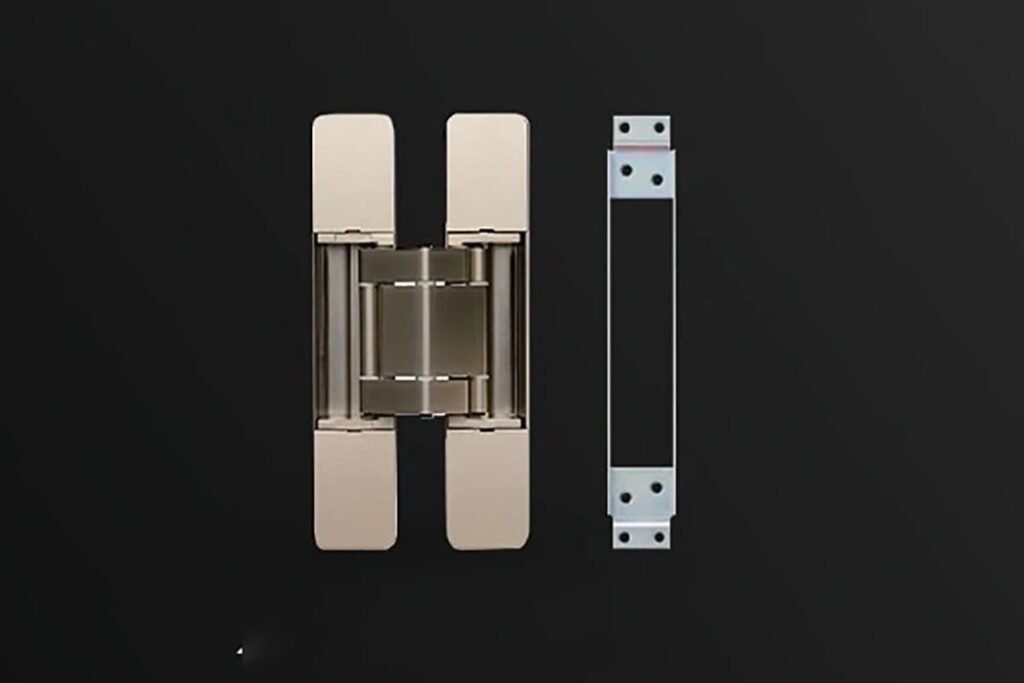
Hinge Accessories: What You Need to Know?
Hinge accessories can look like small supporting parts, but I have seen them create big problems when they are selected too late. A wrong screw, missing adjustment box, or weak fixing plate can turn a good hinge into an installation complaint. The solution is to confirm the accessory configuration before production, packing, and bulk shipment.
Hinge accessories are the screws, adjustment boxes, backing plates, covers, fixing parts, and related components that help a hinge install correctly and perform reliably. Buyers should select them according to door material, hinge type, frame thickness, door weight, wall structure, and installation method rather than treating them as universal add-ons.
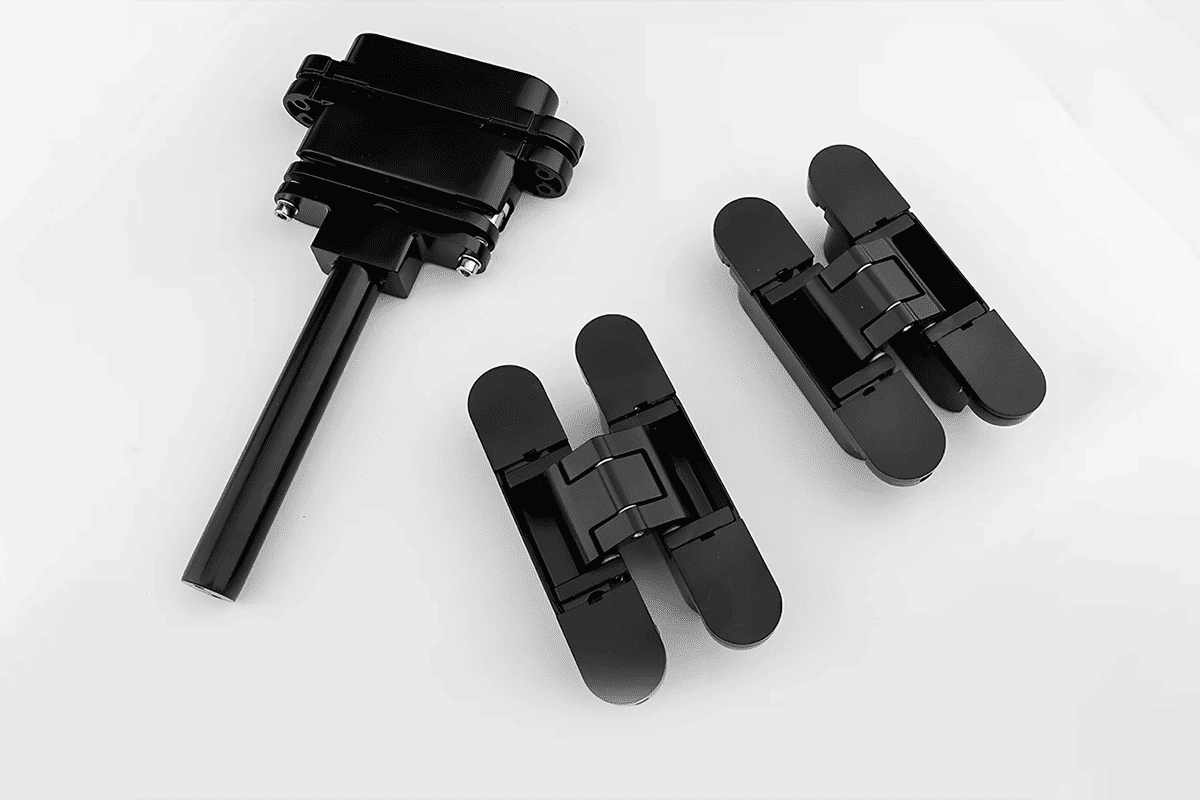
In my factory-side work with door factories, hardware brands, and importers, I often find that the hinge model gets most of the attention. However, the accessory configuration decides whether the installer can fix, adjust, and stabilize the hinge correctly on site.
What Are Hinge Accessories and Why Do They Matter in Bulk Door Hardware Orders?
A buyer may approve the hinge body, finish, and packaging first, but hidden configuration mistakes can still remain. If hinge accessories are incomplete or mismatched, the problem usually appears during installation. Then the issue becomes harder, slower, and more expensive to correct.
Hinge accessories are the supporting parts required for proper hinge installation, adjustment, and fixing.1 They matter in bulk orders because missing or incorrect accessories can cause weak fastening, poor alignment, installation delays, product returns, and after-sales complaints. Buyers should confirm them before mass production and shipment.
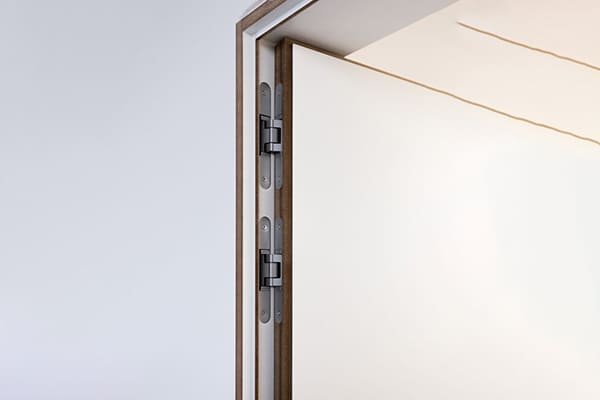
Hinge accessories are part of the installation system
I like to explain hinge configuration as a complete system. The hinge body carries the movement. The door and frame provide the structure. The screws, plates, boxes, and related fixing parts connect both sides together. If one part does not match, the whole system becomes less reliable.
For B2B procurement, this point is especially important. A door factory may install hundreds or thousands of sets in one project. A hardware brand may sell the same hinge into several regional markets. An importer may need to prepare ready-to-sell kits for wholesalers. In each case, the hinge is not only a product. It is also a configuration package.
Common hinge accessories include:
- Machine screws for many metal door applications
- Wood screws for wooden door applications
- Adjustment boxes for adjustable heavy-duty hinge systems
- Backing plates for concealed hinge installation where frame thickness is limited
- Fixing plates or reinforcement parts, depending on the structure
- Decorative covers or caps, when the hinge design requires them
- Installation templates or drawings, especially for concealed or project hinges
However, I never recommend choosing these parts from a generic list only. The real question is always: what risk does this accessory solve?
Procurement risks linked to wrong hinge accessories
| Procurement item | If buyer does not confirm it | Possible result |
|---|---|---|
| Door material | Wrong screw type may be packed | Weak fixing or later loosening |
| Frame thickness | Concealed hinge may not fix correctly | Installation failure or wall modification |
| Door weight | Accessory may not support adjustment needs | Sagging or misalignment |
| Hinge type | Wrong fixing kit may be supplied | Installer cannot complete mounting |
| Packaging list | Parts may be missing in bulk cartons | Claims, delays, repacking work |
| Project standard | Certification documents may not match use case | Buyer must re-check compliance |
In my daily quotation work, I ask for door material and installation details before I confirm accessory packing. This sometimes feels slow at the beginning, but it prevents costly confusion later. For example, if a buyer simply says “send screws with hinges,” I still need to know whether the door is metal, wood, or another construction. I also need to know whether the frame is prepared for direct fixing or needs reinforcement.
My practical rule is simple: a hinge order is not fully confirmed until the fixing method is confirmed.
What buyers should confirm before ordering
Before a bulk order, I suggest that purchasers confirm at least these points:
- Door material: metal, wood, aluminum, composite, or another structure
- Frame material and thickness: especially for concealed hinges
- Hinge type: butt hinge, concealed hinge, heavy-duty hinge, adjustable hinge, or specialty hinge
- Door weight and size: because load affects hinge and accessory selection
- Installation method: direct fixing, embedded fixing, backing plate, or adjustment system
- Accessory packing requirement: loose, per set, per carton, or customized kit
- Branding needs: logo, packaging design, labels, and installation instructions
- Required documents: CE, fire-rated certificates, test reports, or drawings, subject to product verification
At SDH Hardware, I treat certifications as documents that buyers should verify against the exact product, project, and market requirement. This is important because not every accessory configuration automatically falls under the same approval condition. A buyer should ask for the relevant documents and confirm them with a qualified professional when the project has fire-rated, safety, or code-related requirements.
Which Hinge Accessories Should Match Door Material?
A small screw mistake can damage a large order. If the screw does not match the door material, the installer may face stripped holes, loose fixing, or repeated adjustment work. This is why I always separate metal door and wooden door requirements during configuration.
Hinge accessories should match the door material, especially the screws. Metal doors typically require machine screws that fasten into prepared threaded holes or metal fixing structures.2 Wooden doors usually use wood screws designed to bite into timber.3 Buyers should not treat these screw types as interchangeable.
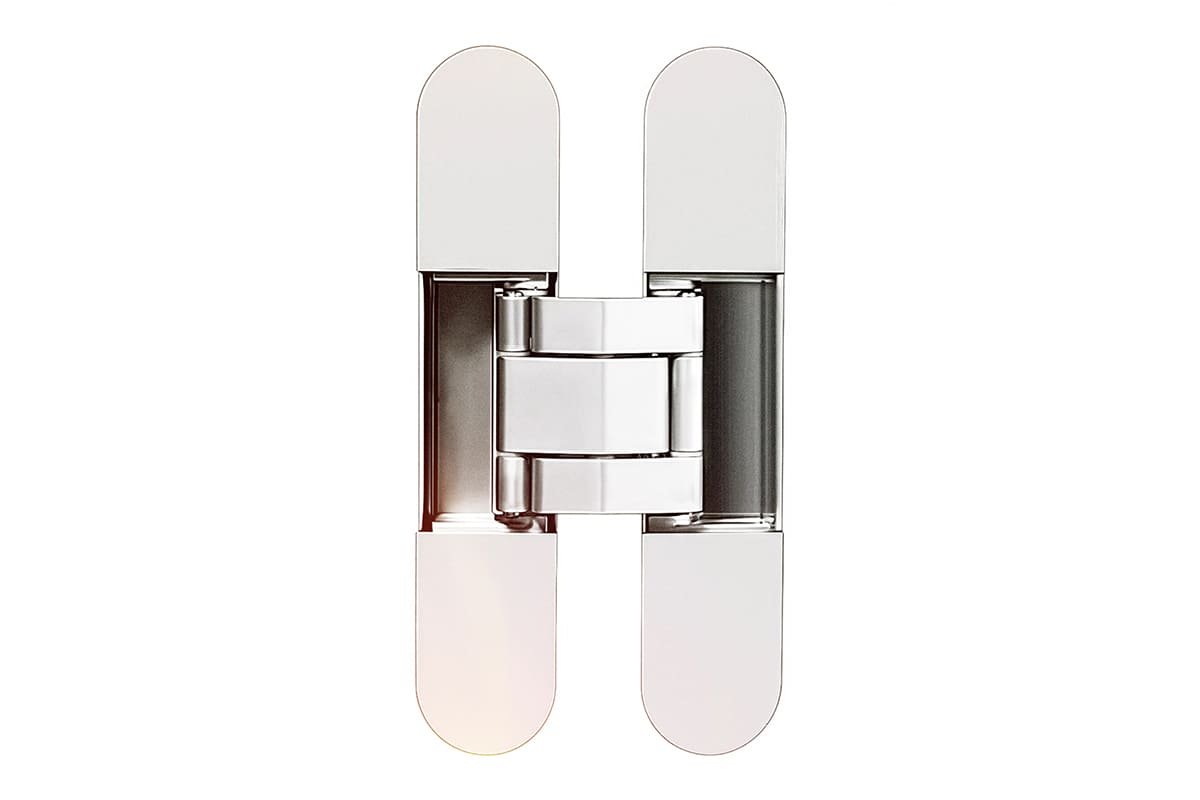
Machine screws and wood screws solve different problems
Screws are easy to overlook because they are cheap compared with hinges. However, they are often the first accessory to cause an installation issue. I have had buyers ask whether one screw pack can be used for all door types. My answer is usually no, unless the exact installation structure has been reviewed and approved.
For metal doors, installers typically use machine screws. These screws are designed to work with threaded holes, rivet nuts, welded plates, or other metal receiving structures. Their holding performance depends on thread engagement and the strength of the metal fixing point.4
For wooden doors, installers usually use wood screws. These screws cut or press into the wood fibers. Their holding performance depends on screw length, diameter, thread design, pilot hole preparation, and wood density.5
Screw comparison for hinge procurement
| Door material | Typical screw type | Main fixing principle | Procurement concern |
|---|---|---|---|
| Metal door | Machine screw | Thread engagement in metal structure | Confirm thread size, length, and receiving part |
| Wooden door | Wood screw | Grip into wood fibers | Confirm length, diameter, and wood density |
| Aluminum profile door | Often machine screw or special fixing screw | Depends on profile design | Confirm profile wall thickness and insert method |
| Composite door | Project-specific | Depends on internal reinforcement | Confirm fixing block or embedded plate |
| Fire-rated door | Must match tested assembly requirements | Depends on certified door set | Verify with project documentation |
This table is general. The final screw selection should always depend on the actual door construction and installation drawing.
Why interchangeable screws create hidden risk
A screw may look similar from the outside, but it behaves differently during installation. If a wood screw is used in a metal application, it may not engage properly with the prepared thread.6 If a machine screw is used directly in wood without a suitable receiving insert, it may not bite strongly enough.7 In both cases, the hinge may look installed at first, but the fixing can weaken after repeated opening cycles.
The main risks include:
- Weak fixing strength because the thread does not match the receiving material
- Screw loosening after repeated door movement
- Door sagging when the hinge side loses support
- Installer rework because holes must be repaired or modified
- After-sales claims when customers blame the hinge body instead of the fixing method
In my experience, the supplier and buyer can avoid many of these issues with a clear accessory checklist. For example, when I prepare hinge packing for a wooden door factory, I confirm whether the screws should be packed per hinge, per set, or separately by carton. When I work with metal door buyers, I ask about thread size and whether the frame already has a prepared fixing plate.
Practical screw confirmation checklist
Before confirming hinge accessories for screws, I recommend checking:
- Door leaf material
- Frame material
- Prepared hole size
- Thread size, if machine screws are used
- Screw length and whether it affects internal door parts
- Surface finish, especially for visible screws
- Corrosion resistance requirement, such as indoor, coastal, or humid use
- Packing quantity per hinge or per door set
For large orders, I also suggest approving a pre-production sample with the screw kit included. This gives the buyer, installer, and supplier one common reference before mass production.
Why Do Adjustable Heavy-Duty Hinge Accessories Need the Right Adjustment Box?
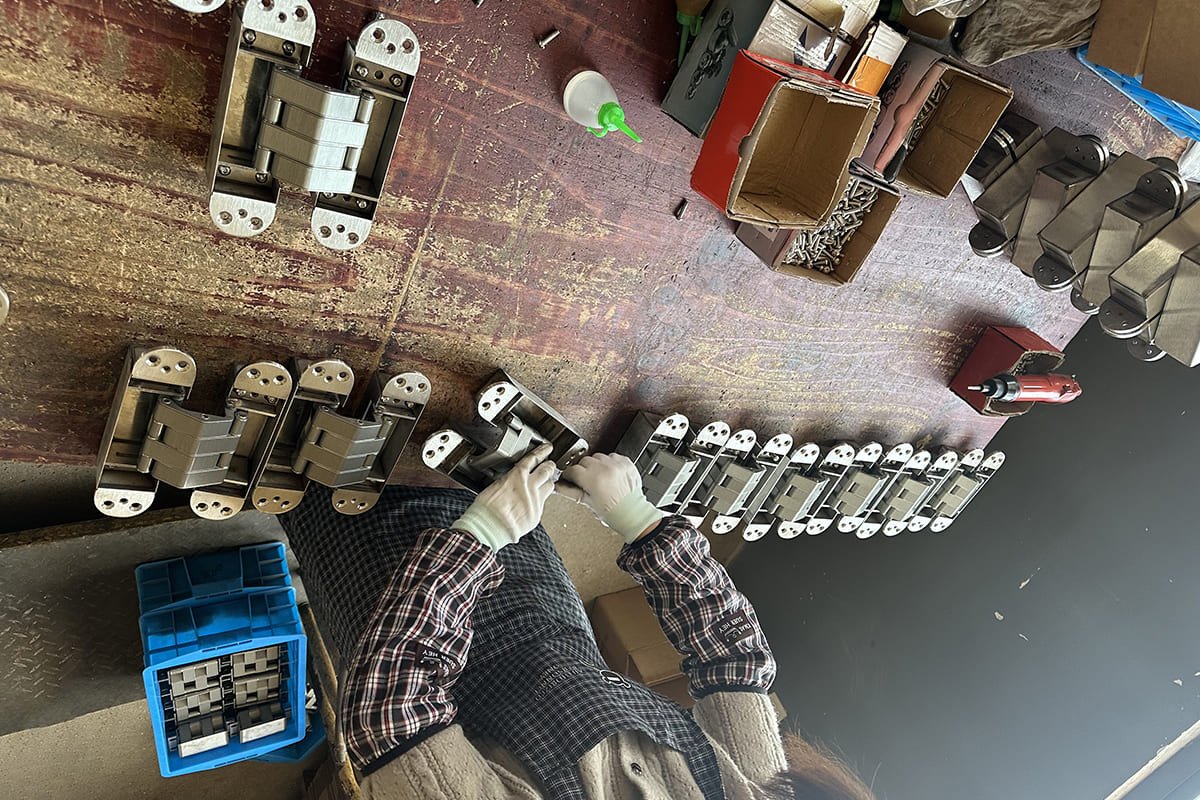
Heavy doors leave little room for installation error. If the hinge cannot be adjusted after mounting, even a small position difference may cause rubbing, uneven gaps, or closing problems.8 The adjustment box is therefore a functional part, not a decorative extra.
Adjustable heavy-duty hinge accessories need the correct adjustment box because it allows the installer to fine-tune the door position after installation. This is especially important for heavier doors, project doors, and applications where accurate alignment, stable gaps, and smooth operation are required.
The adjustment box supports field alignment
An adjustable heavy-duty hinge usually works as part of a larger adjustment system. The adjustment box gives the installer room to move or position the hinge body within a controlled range. Depending on the hinge design, this adjustment may help with side gap, vertical position, compression, or alignment.
I avoid calling the adjustment box optional when the hinge system is designed to use it. In that case, leaving it out can change how the product is installed and how the door performs. It may also create confusion on site because the installer expects an adjustment function that is not available.
Where adjustment matters most
Adjustment boxes are especially useful when projects involve:
- Heavy doors that are hard to lift and reposition manually
- Tall doors where a small angle error becomes visible quickly
- Commercial buildings with repeated use and strict appearance requirements
- Metal frames where correction after drilling is difficult
- Door sets shipped separately where final site conditions may vary
- Projects requiring consistent gaps across many door openings
A heavy-duty hinge may carry the load, but the adjustment system helps installers manage real-world tolerances. Door openings are not always perfect. Frames may have small deviations. Floors may not be fully level.9 Walls may shift slightly during construction. The adjustment box gives the installer a controlled way to compensate.
Typical adjustment questions for buyers
| Question | Why it matters |
|---|---|
| Is the hinge adjustable by design? | The accessory must match the hinge structure |
| Is the adjustment box included in the standard set? | Buyers need accurate packing lists |
| What adjustment directions are supported? | Installers need to understand alignment limits |
| What door weight is expected? | Heavier doors need more stable fixing |
| Is installation drawing available? | Site teams need correct preparation |
| Does the project need testing documents? | Buyers should verify documents for exact product use |
Why the wrong adjustment box creates problems
The adjustment box must match the hinge model. A similar-looking box may not fit the hinge body, screw position, or installation depth. If the box is too shallow, the hinge may not sit correctly. If the fixing holes are wrong, installers may need to drill new holes. If the box lacks the required strength, the door position may shift over time.
In factory supply, this creates several procurement problems:
Wrong kit assembly
The hinge and box may be packed together but not fit correctly.Installation delay
The site team may stop work while waiting for replacement parts.Rework cost
Frames or doors may need redrilling, welding, or modification.Brand reputation risk
End customers may judge the whole hardware set as poor quality.Unclear responsibility
The buyer, installer, and supplier may dispute whether the issue is product quality or configuration error.
This is why I prefer to confirm the adjustment box together with the hinge body during quotation. For ODM and OEM orders, I also recommend confirming drawings after order confirmation and before final production. At SDH Hardware, we can support customized configurations, but we still need project details to avoid mismatched parts.
Good practice for bulk buyers
When sourcing adjustable heavy-duty hinges, I suggest asking the supplier for:
- Hinge model and matching adjustment box model
- Installation drawing with key dimensions
- Door weight range, subject to product verification
- Recommended screw or fixing method
- Standard accessory packing list
- Optional accessory list, if any
- Sample set for installation testing before bulk order
- Relevant certificates or test documents, if required by the project
A qualified installer or project engineer should evaluate final suitability for application-specific decisions. The supplier can provide product information, but the project team should confirm whether the selected hardware meets the door set, wall structure, and local code requirements.
When Do Concealed Hinge Accessories Require Backing Plates?
Concealed hinges create a clean appearance, but they need accurate structural support inside the frame or wall. If the frame is too thin for the hinge body, the installer may not have enough material for safe fixing. This can make a strong hinge perform poorly.
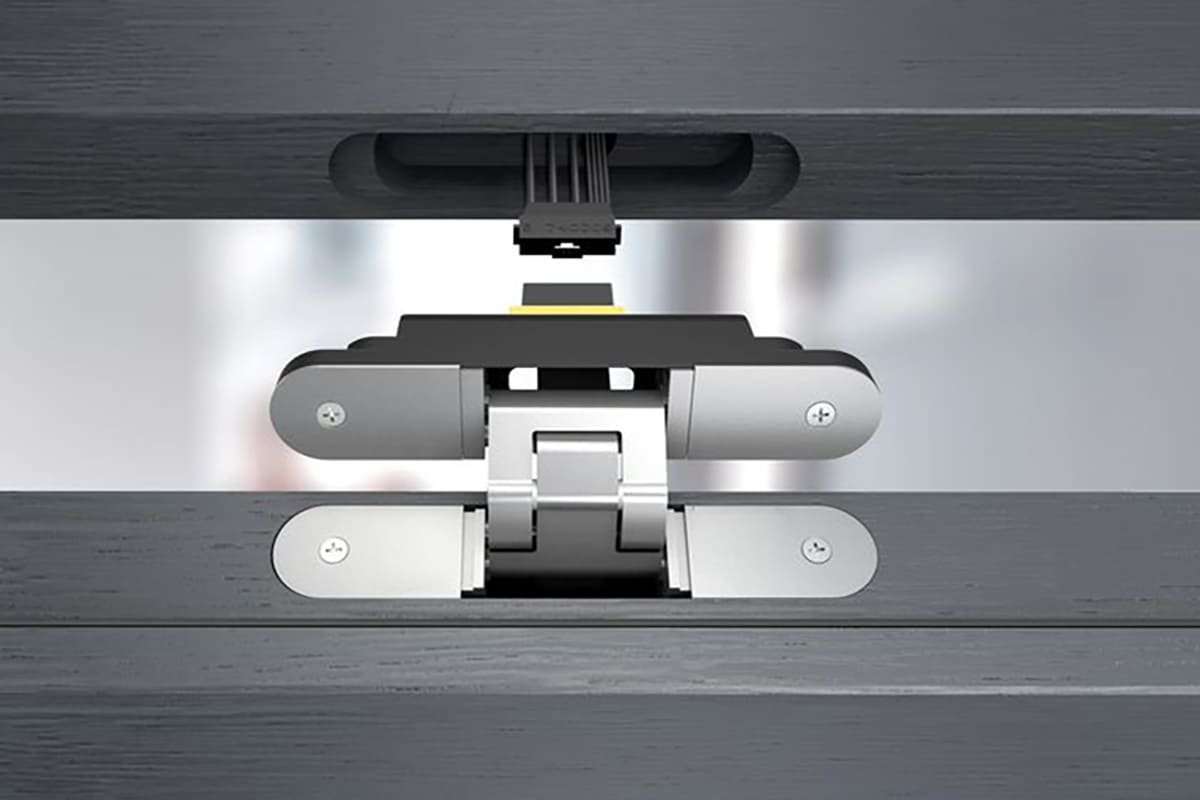
Concealed hinge accessories may require backing plates when the door frame thickness is smaller than the concealed hinge body or when the fixing structure is not strong enough.10 In this case, the backing plate should usually be installed into the wall or structure first, and hinge screws should fix into it.
Backing plates strengthen the fixing point
A concealed hinge is installed inside the door and frame, so the structure around the hinge matters greatly. Unlike a visible butt hinge, a concealed hinge often requires a deeper cut-out or pocket. If the frame does not provide enough thickness or strength, the screws may not have a reliable base.
This is where a backing plate becomes important. The backing plate can act as a reinforced receiving part behind the visible frame surface. The hinge screws then fix into the plate rather than relying only on a thin frame wall.
I often discuss this point with buyers during concealed hinge quotation. Some buyers focus on the hinge opening angle, finish, and load capacity first. Those points are important. However, I also ask about frame thickness because the installation can fail if the hinge body is deeper than the available fixing structure.
When a backing plate should be considered
A backing plate should be considered when:
- Frame thickness is smaller than the concealed hinge body
- The frame material is thin metal or light-gauge profile
- The wall or frame structure does not provide enough screw holding strength
- The door is heavy or tall
- The project needs long service life with frequent use
- The installer cannot access the rear side after installation
- The hinge manufacturer’s drawing recommends reinforcement
The exact requirement depends on the project structure. I recommend confirming it with installation drawings, site measurements, and a qualified professional when the door set has special safety or fire-rated requirements.
Concealed hinge installation comparison
| Installation condition | Backing plate need | Main reason |
|---|---|---|
| Thick solid frame with enough depth | May not be required | Screws may fix into strong material directly |
| Thin metal frame | Often recommended | Thin wall may not provide enough thread engagement11 |
| Frame thinner than hinge body | Usually required | Hinge needs deeper and stronger support |
| Heavy concealed door | Often recommended | Load creates higher stress on fixing points |
| Fire-rated door assembly | Must be verified | Hardware configuration should match tested assembly |
| Renovation project with unknown wall structure | Should be evaluated | Hidden structure may be weak or inconsistent |
Why frame thickness affects hinge performance
The concealed hinge body needs space. It also needs a stable fixing base. If the frame thickness is too small, several problems may occur:
The hinge pocket may break through the frame
The installer may not have enough material to cut and fix the hinge.Screws may not hold properly
A shallow or thin fixing point may loosen under repeated movement.Door alignment may shift
Weak fixing can allow small movements that affect the door gap.The wall may need modification
If the backing structure was not prepared, the site team may need extra work.After-sales risk increases
The end user may report noise, sagging, or poor closing, even if the hinge itself is not defective.
For concealed hinge orders, I suggest that buyers do not approve only the hinge model. They should also approve the installation drawing and accessory set. This is especially important for door factories that prepare machining before the hardware arrives. If the milling dimensions or backing plate position are wrong, the door and frame may need rework.
What I ask before supplying concealed hinge accessories
When I handle concealed hinge accessory configuration, I usually ask buyers to confirm:
- Door leaf thickness
- Frame thickness
- Frame material
- Wall structure, if the hinge fixes into the wall side
- Door height and weight
- Opening angle requirement
- Fire-rated or CE documentation needs, if applicable
- Whether backing plates should be supplied together
- Whether screws should be packed per hinge or per full door set
This process is not about making procurement complicated. It is about preventing unclear responsibility after installation. If the buyer confirms the structure early, the factory can prepare the correct accessory kit, packing method, and inspection checklist.
How Should Buyers Confirm Hinge Accessories Before Mass Production?
A sample hinge can look perfect, but bulk production can still go wrong if the accessory list is unclear. Missing screws, mixed kits, or unapproved plates can create warehouse and installation problems. Buyers need a simple confirmation process before mass production starts.
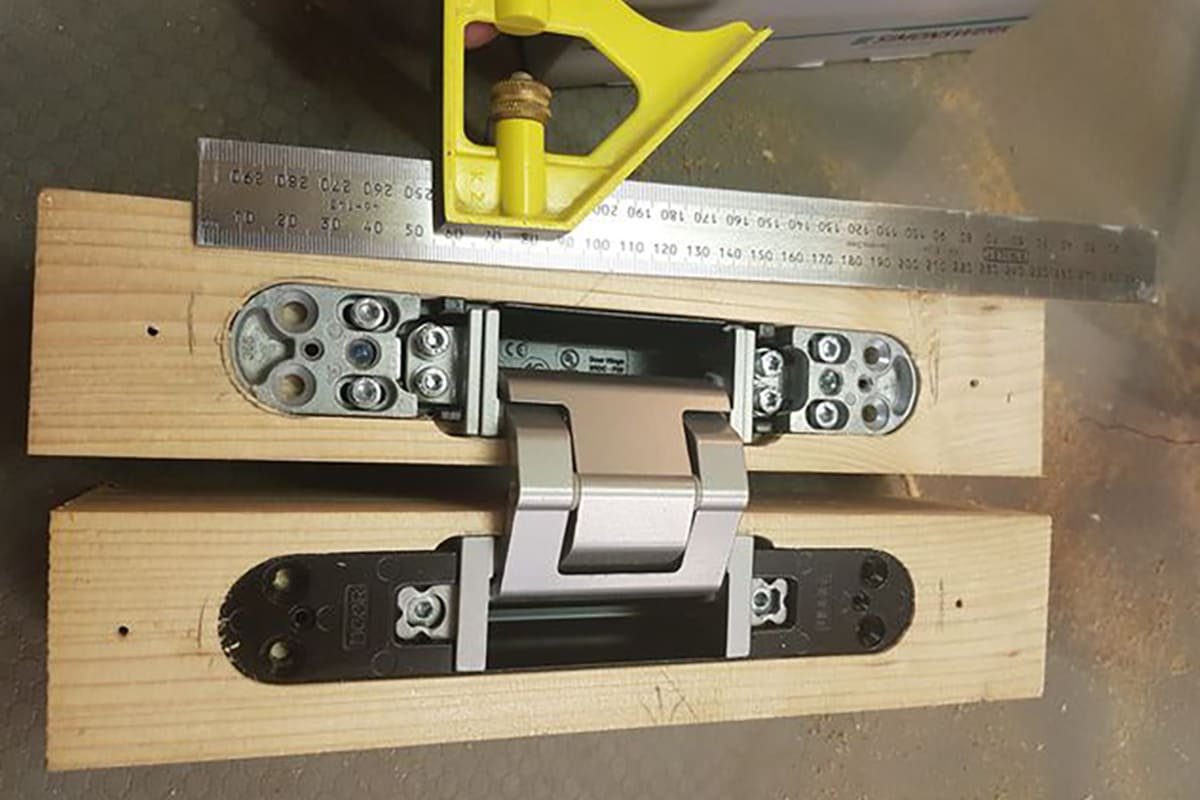
Buyers should confirm hinge accessories before mass production by reviewing the door material, frame thickness, hinge type, door weight, installation method, accessory packing list, drawings, samples, and required documents. A written configuration sheet helps prevent missing parts, wrong screws, and inconsistent bulk packing.
Configuration is a procurement control point
For B2B door hardware, I see accessory confirmation as part of quality control. It is not only a sales detail. The factory needs the confirmed configuration to guide purchasing, production, packing, inspection, and shipment.
At SDH Hardware, our work includes standardized and customized door hardware production. We handle Euro mortise locks, stainless steel lever handles, butt hinges, concealed door hinges, Euro brass cylinders, and related door accessories. Because our product range is broad, I know that “standard packing” can mean different things for different customers. One importer may want all accessories packed per set. A door factory may want screws packed separately for production-line control. A brand customer may need custom labels and color boxes.
Recommended confirmation workflow
I suggest using this workflow before bulk orders:
Confirm the hinge model
Check type, size, finish, load range, and application.Confirm door and frame details
Identify material, thickness, structure, and preparation method.Confirm accessory requirements
Decide screws, adjustment boxes, backing plates, covers, and templates.Confirm drawings
Review installation dimensions and fixing points.Confirm sample set
Test one complete kit before bulk production when possible.Confirm packing method
Decide per hinge, per door set, per carton, or customized retail/brand packaging.Confirm inspection checklist
Include accessory quantity, finish, dimensions, thread, and matching fit.Confirm documents
Request relevant CE, fire-rated, or test documents for the exact product where needed.
Example accessory confirmation sheet
| Item | Buyer confirmation | Supplier action |
|---|---|---|
| Door material | Metal door | Prepare suitable machine screws if required |
| Frame thickness | 1.5 mm steel frame with reinforcement | Check fixing method and plate requirement |
| Hinge type | Adjustable heavy-duty hinge | Match correct adjustment box |
| Door weight | 80 kg per leaf | Verify suitable hinge specification |
| Packing | One full set per box | Pack hinge and accessories together |
| Branding | Laser logo and color box | Prepare artwork approval |
| Documents | Fire-rated certificate requested | Provide available documents for buyer verification |
| Inspection | 100% accessory quantity check | Add packing checklist before shipment |
Conclusion
Hinge accessories are small parts with a large effect on installation quality, door alignment, and after-sales performance. I always advise buyers to confirm screws by door material, use the correct adjustment box for adjustable heavy-duty hinges, and check whether concealed hinges need backing plates based on frame thickness. If you are preparing a bulk hinge order, contact SDH Hardware for factory-direct support, accessory configuration review, drawings, samples, and customized packing options.
"Hinge", https://en.wikipedia.org/wiki/Hinge. A general architectural-hardware reference describes hinges as installed with associated fasteners and mounting components, supporting the article’s definition of hinge accessories as installation and fixing parts; the reference would provide category-level context rather than validate a specific supplier’s accessory list. Evidence role: definition; source type: encyclopedia. Supports: A neutral reference should define hinge-related hardware and describe screws, plates, or similar components as part of hinge installation and fixing.. Scope note: Contextual support only; definitions may not use the exact phrase “hinge accessories.” ↩
"Screw", https://en.wikipedia.org/wiki/Screw. Fastener references define machine screws as threaded fasteners designed to engage internally threaded holes or nuts, supporting the article’s distinction between machine screws and material-biting wood screws; this does not prove that every metal door installation uses machine screws. Evidence role: definition; source type: encyclopedia. Supports: A fastener reference should define machine screws as externally threaded fasteners intended for use with tapped holes or nuts, which supports their use in prepared metal fixing structures.. Scope note: General fastener definition; door-specific use can vary by frame design. ↩
"Impact of Drill Bit Wear on Screw Withdrawal Resistance in ...", https://pmc.ncbi.nlm.nih.gov/articles/PMC11642299/. Wood-engineering references describe wood screws as obtaining holding power through thread engagement in timber and withdrawal resistance, supporting the claim that wood screws are suited to wooden door fixing; the source would not determine the correct screw for a particular door construction. Evidence role: mechanism; source type: government. Supports: A wood-engineering reference should explain that wood screws obtain holding power through thread engagement and withdrawal resistance in wood.. Scope note: General material-mechanics support; engineered or composite doors may require different fixing methods. ↩
"Fastener Design Manual", https://ntrs.nasa.gov/api/citations/19900009424/downloads/19900009424.pdf. Mechanical fastener design guidance relates screw-joint capacity to thread engagement length and the strength of the internally threaded member, supporting the article’s explanation of machine-screw holding performance; the evidence is general and not a door-hinge load test. Evidence role: mechanism; source type: government. Supports: A mechanical design reference should explain the relationship between thread engagement, internal-thread strength, and fastener joint capacity.. Scope note: General fastener mechanics; actual hinge performance also depends on geometry, materials, and installation quality. ↩
"Wood Handbook: Wood as an Engineering Material", https://research.fs.usda.gov/fpl/wood-handbook. Wood-engineering literature reports that screw withdrawal and holding strength vary with screw dimensions, penetration, pilot-hole preparation, and wood density, supporting the article’s list of variables affecting wooden-door fixing; the evidence is material-level and not specific to any hinge package. Evidence role: mechanism; source type: government. Supports: A wood-engineering source should identify screw diameter, penetration length, pilot holes, and wood density as factors in withdrawal or holding strength.. Scope note: Directly supports wood fastener behavior, but not a specific door or hinge model. ↩
"Screw", https://en.wikipedia.org/wiki/Screw. Technical fastener references distinguish wood-screw thread geometry from machine-screw threads intended for tapped holes, supporting the warning that a wood screw may not properly engage a prepared metal thread; this is a compatibility principle rather than a documented failure case. Evidence role: mechanism; source type: education. Supports: A technical reference should distinguish wood-screw thread forms from machine-screw threads and explain why machine screws are used with tapped holes.. Scope note: Contextual mechanism support; some specialized self-tapping screws are designed for metal and would need separate evaluation. ↩
"Holding power of wood screws.", https://nvlpubs.nist.gov/nistpubs/nbstechnologic/nbstechnologicpapert319.pdf. Wood-fastening references explain that machine screws normally depend on an internally threaded receiving component, while wood screws are shaped to develop withdrawal resistance in timber, supporting the article’s warning about direct machine-screw use in wood; the point is general and may not apply to proprietary inserts or hybrid fasteners. Evidence role: mechanism; source type: research. Supports: A wood fastener or threaded-insert reference should show that machine screws generally require a nut, tapped insert, or threaded receiving component rather than relying on direct wood-fiber grip.. Scope note: General mechanism support; exact performance depends on wood species, screw size, and any predrilling or insert system. ↩
"Fix ANY Door Problems With These 7 Magic Tricks",
. Door-installation guidance links correct hinge alignment and clearance tolerances with smooth closing and even reveal gaps, supporting the article’s claim that small positioning errors can create rubbing or gap problems; this support is procedural rather than a controlled test of adjustment boxes. Evidence role: general_support; source type: institution. Supports: A door installation or construction-tolerances source should connect hinge alignment and frame/door tolerances with rubbing, inconsistent gaps, or poor closing.. Scope note: Contextual installation support; it does not quantify the allowable error for a specific hinge design. ↩"Title 210 – National Engineering Handbook Part 645 ...", https://directives.nrcs.usda.gov/sites/default/files2/1742296662/Appendix%20E%20-%20Construction%20Tolerances.pdf. Construction-tolerance references recognize permissible deviations in installed building components, including openings, frames, and floor levelness, supporting the article’s explanation that field conditions may require adjustment; the evidence is contextual and not specific to door hinges. Evidence role: general_support; source type: institution. Supports: A construction-tolerances reference should show that built openings, frames, and floors are subject to allowable deviations rather than perfect geometry.. Scope note: Contextual support; tolerance limits vary by jurisdiction, trade standard, and project specification. ↩
"Hinge Mounting Plates: When Door Frames Need Reinforcement", https://hinges-htan.com/hinge-mounting-plates-frame-reinforcement/. Architectural-hardware installation guidance describes reinforcement or backing plates as methods for providing secure hinge fixing where the frame material is thin or insufficiently strong, supporting the article’s recommendation for concealed hinges; the evidence supports the reinforcement principle rather than a universal requirement. Evidence role: mechanism; source type: institution. Supports: A door-hardware installation or architectural guide should state that thin or weak frames may require reinforcement plates or backing plates for hinge fixing.. Scope note: Contextual support; actual need depends on hinge design, frame construction, and tested assembly requirements. ↩
"Screw Pull-Out Strength: Factors & Calculations | SFS USA", https://us.sfs.com/learn-more/screw-pull-out-strength. Fastener-engineering studies and design references associate limited thread engagement in thin metal members with reduced pull-out or joint capacity, supporting the article’s statement that thin walls may not provide enough engagement; this evidence is mechanical and does not by itself define the safe thickness for a given hinge. Evidence role: mechanism; source type: paper. Supports: A fastener-engineering source should explain that reduced thread engagement in thin metal can reduce pull-out or joint strength.. Scope note: General mechanical support; required thickness depends on screw size, material strength, load, and installation details. ↩