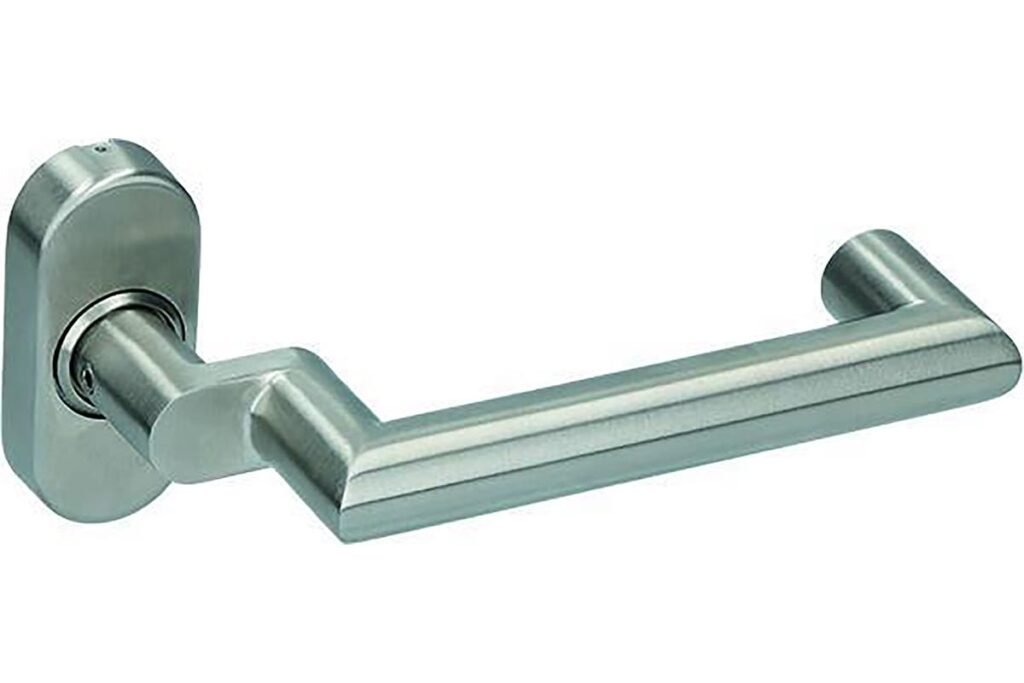
What to Consider When Choosing a Crank Handle?
A crank handle can solve a real clearance problem on narrow-frame glass profile doors. If buyers select only by surface finish or catalog photo, the user’s hand may hit the frame, the bend may face the wrong direction, or the door may feel unsafe. The solution is to evaluate application, handing, dimensions, material, and supplier control together.
A crank handle should be chosen by checking door application, left/right handing, grip clearance, spindle and center distance, frame width, material, and user ergonomics. For narrow-frame glass profile doors, the main purpose is to prevent hand collision with the frame while keeping the door easy, comfortable, and safe to operate.
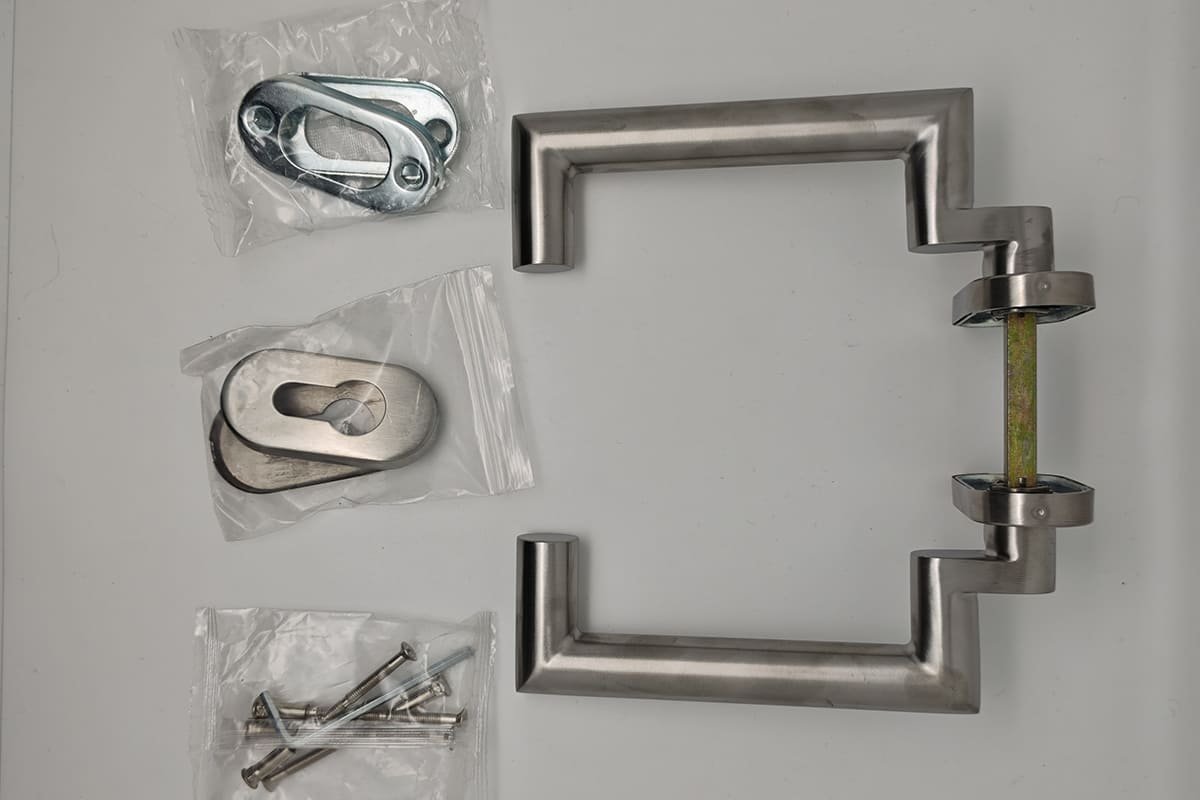
I see many buyers start with appearance because it is easy to compare photos. However, the real issues usually appear during installation. A small mistake in bend direction or clearance can create rework, complaints, or safety concerns after the shipment arrives.
Why Is a Crank Handle Used on Narrow-Frame Glass Doors?
A straight lever often looks simple on paper. The problem starts when the door profile is narrow and the frame sits close to the hand. The user may knock their fingers against the frame, especially on large glass doors. A crank handle moves the grip away from the collision area.
A crank handle is used on narrow-frame glass doors to create extra hand clearance between the grip and the door frame.1 Its offset bend helps reduce finger collision, improves operating comfort, and supports safer use when a straight handle would place the hand too close to the frame edge.
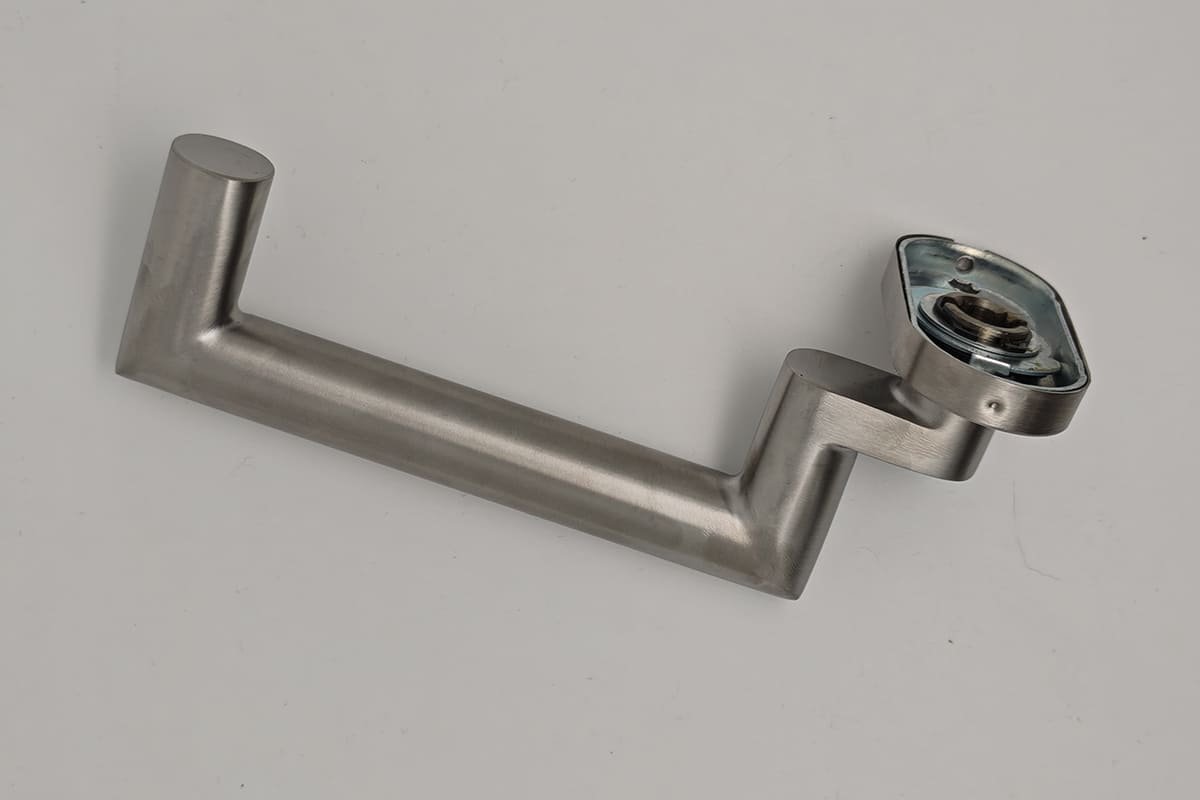
The main purpose is anti-collision, not decoration
In my factory-side experience, buyers sometimes describe this product as a “special shape handle.” That description is not wrong, but it can hide the main reason for using it. The bent shape is functional. It moves the gripping area away from the frame, the glass profile, or nearby trim.
This matters most for:
- Narrow-frame glass profile doors
- Large aluminum glass doors
- Office partition doors
- Commercial entrance doors
- Doors with closer frames or deep rebates
- Accessibility-related doors where comfort matters
A straight handle may work well on a wide timber door. It may also work on a metal door with enough stile width. But on a narrow glass profile door, the available gripping space can be limited. When the user pushes down the lever, the hand may travel close to the frame. If the gap is too small, the user may hit the knuckles or pinch the fingers.2
How the bend changes the user experience
A crank handle creates an offset between the spindle line and the grip area. This offset gives the hand more space. It can also make the handle feel easier to operate because the user does not need to twist the wrist around a tight frame.
Here is a simple comparison:
| Handle type | Best use case | Main risk on narrow frames |
|---|---|---|
| Straight lever handle | Standard timber or metal doors with enough stile width | Hand may hit the frame |
| Crank handle | Narrow-frame glass profile doors or tight clearance areas | Wrong handing may cause interference |
| Pull handle | Sliding or pull-only doors | May not operate a latch or lock |
| Knob3 | Traditional residential doors | Harder for some users to grip |
Start with the door, not the handle photo
Before choosing a model, I usually ask buyers about the door structure first. A good drawing or photo can prevent many mistakes. For B2B procurement, the following details help suppliers confirm the right product:
- Door type: glass profile door, aluminum door, timber door, or steel door
- Frame style: narrow frame, wide frame, flush frame, or rebated frame
- Lock type: mortise lock, profile lock, or special glass door lock
- Door opening direction: inward or outward
- Available clearance: distance from handle grip area to frame edge
- Market requirement: cost-focused, premium, coastal, commercial, or accessibility-focused
I treat the crank shape as a clearance solution first. The finish and style come after the functional fit is confirmed.
This approach is practical for door factory purchasers and hardware brand companies because it reduces the risk of receiving a beautiful handle that does not work on the actual door system.
How Do You Confirm Left-Hand or Right-Hand Crank Handle Direction?
Handing is one of the easiest details to overlook. It is also one of the most expensive mistakes to correct after production. If the bend faces the wrong way, the crank handle may block door closing, hit the frame, or feel awkward for the user.
You confirm left-hand or right-hand crank handle direction by checking the door opening direction, hinge side, lock side, and required bend orientation from the user’s operating side. The handle bend must create clearance away from the frame, not toward it, and it must not interfere with closing or locking.
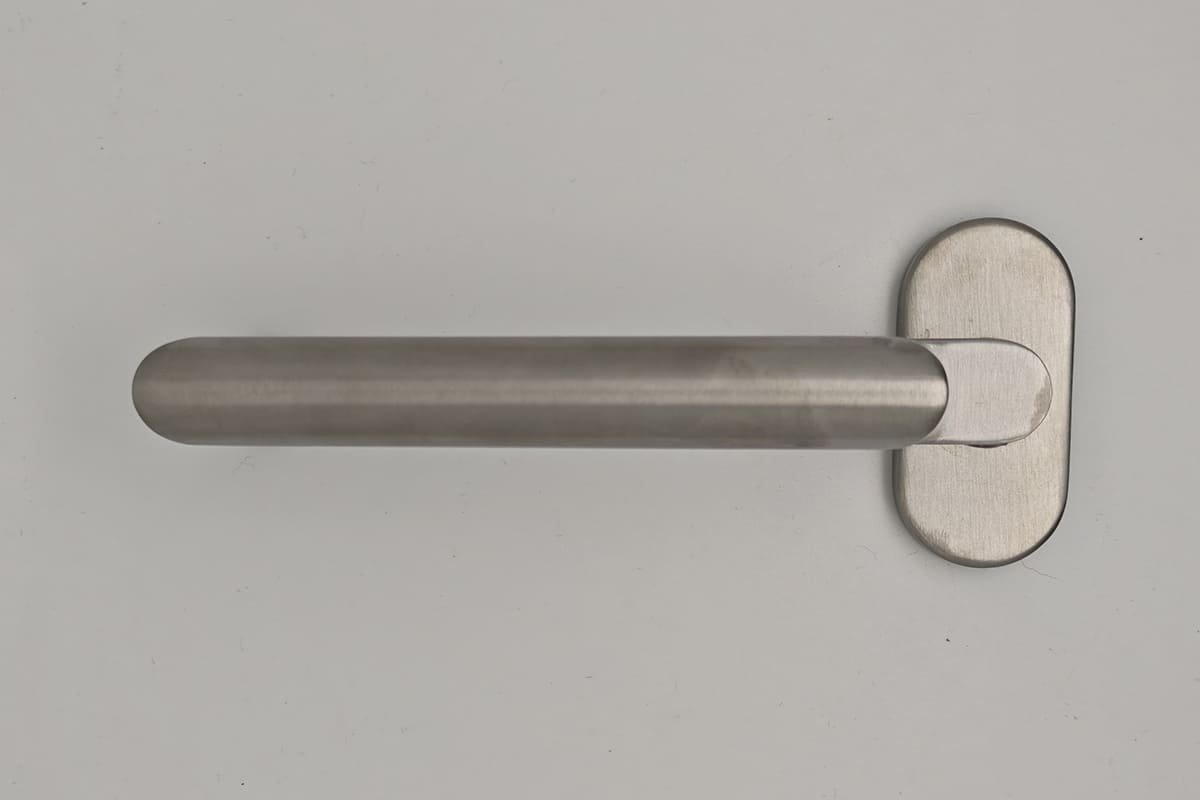
Why handing matters so much
A straight lever is often reversible. Many standard handles can be installed on either side by changing the direction or spring mechanism. A crank handle is different because the bend creates an offset. That offset has a direction.
If the direction is wrong, several problems can happen:
- The grip moves toward the frame instead of away from it.
- The handle bend may hit the door frame during operation.
- The user’s wrist position may feel unnatural.
- The handle may interfere with the lock escutcheon or profile.
- The door may not close smoothly.
- The installation team may need to reorder or modify parts.
From a manufacturing view, left-hand and right-hand versions may require different casting, bending, machining, or assembly planning. For stainless steel models, the bent section can be made by investment casting, depending on the design.4 That gives the shape and structure needed for the offset. However, the supplier still needs accurate handing information before production confirmation.
A simple way to discuss handing with suppliers
Different markets may use different naming habits for left-hand and right-hand doors.5 This can create confusion in international procurement. I prefer to confirm direction by using drawings and photos instead of relying only on words.
A clear confirmation package should include:
- Door elevation drawing
- Inside and outside view
- Hinge side marked clearly
- Lock side marked clearly
- Opening direction shown with an arrow
- Required handle bend direction marked
- Frame collision risk area highlighted
The buyer can also send a short video of the sample door operation. This is very useful when the frame shape is unusual.
Practical handing checklist
| Item to confirm | Why it matters |
|---|---|
| Hinge side | It helps define the door swing and installation side |
| Lock side | It shows where the lever operates the latch |
| Inside/outside position | It prevents confusion between interior and exterior handle direction |
| Bend direction | It ensures the grip moves away from the frame |
| Door swing | It avoids collision during opening and closing |
| Lock case position | It confirms spindle alignment and escutcheon fit |
Avoid relying on catalog photos alone
A catalog image usually shows only one version. The product may look correct, but the actual door may require the opposite hand. This is especially important when buyers order in bulk for door systems. One wrong assumption can affect hundreds or thousands of sets.
When I communicate with door factories, I prefer to freeze the handing detail before mass production. This step is small, but it protects both sides. It also supports smoother inspection after order completion because the QC team can compare finished goods with confirmed drawings.
What Crank Handle Dimensions and Clearances Should Buyers Check?
A crank handle must match the door, lock, frame, and user’s hand space. If buyers check only the overall length, they may miss critical dimensions. Small differences in spindle size, center distance, projection, and offset can decide whether the handle fits correctly.
Buyers should check grip-to-frame clearance, spindle size, center distance, door frame width, lever projection, rose or plate dimensions, and whether the crank curve exceeds the frame edge. A practical target is about 25–30 mm clearance between the grip area and frame to reduce hand collision and pinching risk.6
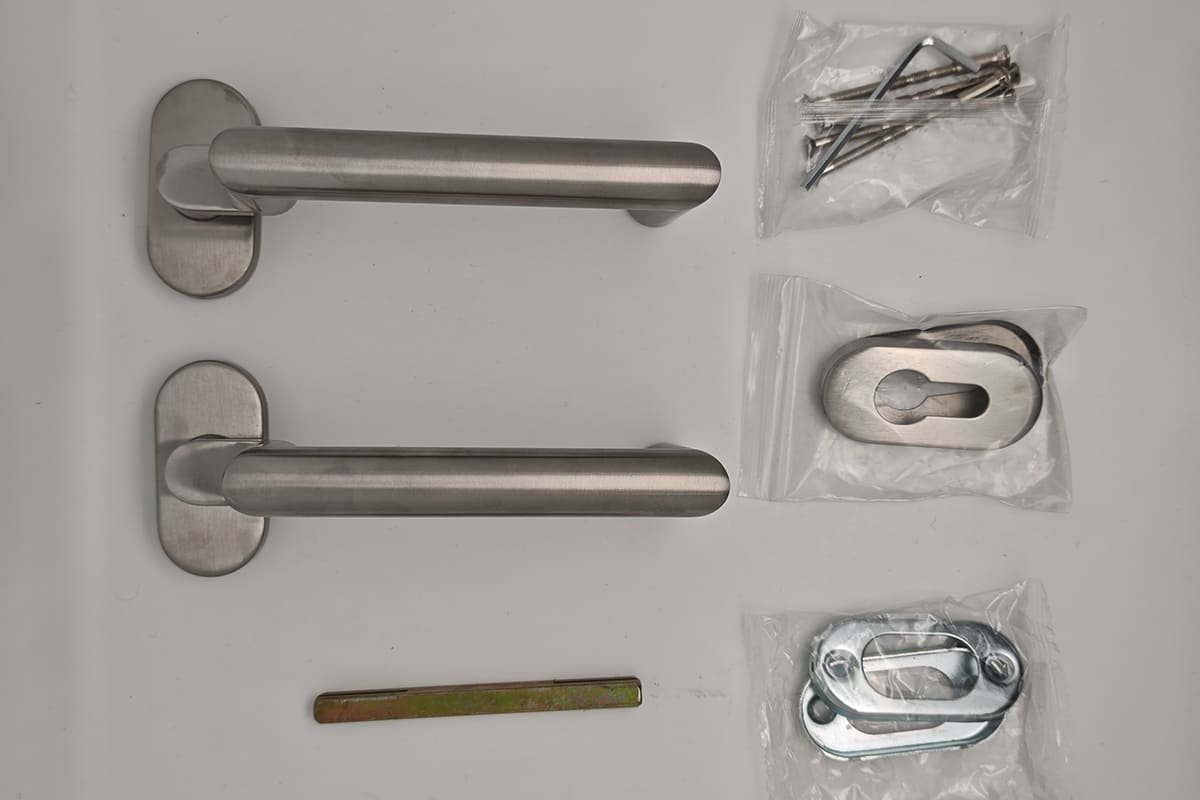
Clearance is the most important measurement
The most useful number is not always the total handle length. For narrow-frame glass doors, the key question is simple:
“Will the user’s hand have enough room when pressing the handle?”
As a practical procurement check, I recommend leaving about 25–30 mm between the hand grip area and the door frame where possible. This is not a universal legal rule for every market or application. It is a practical safety and comfort reference that buyers can use during evaluation. For application-specific requirements, especially public buildings or accessibility projects, buyers should ask a qualified professional or project consultant to confirm the final specification.
Dimensions to confirm before ordering
A technical drawing should include more than one or two measurements. For bulk orders, I suggest confirming these dimensions before sample approval:
| Dimension | What to check | Common issue if ignored |
|---|---|---|
| Spindle size | Match with lock follower, such as common square spindle formats | Handle cannot operate lock smoothly |
| Center distance | Match lock case and escutcheon or plate | Misalignment during installation |
| Handle projection | Distance from door surface to outer grip area | Handle may interfere with nearby wall or glass |
| Crank offset | Distance created by the bent section | Not enough hand clearance |
| Grip length | Comfortable usable area for the hand | Poor ergonomic feel |
| Rose or plate size | Match door profile width | Plate may exceed narrow stile |
| Door profile width | Available installation space | Screws or plate may not fit |
| Frame distance | Gap between grip and frame | Finger collision or pinching |
Check whether the curve exceeds the frame edge
The crank curve should move the grip away from the risk area. However, the bend itself should not create a new collision point. Some door profiles have raised edges, gaskets, trims, or adjacent panels. The handle curve must be checked against these parts.
A drawing with a side view helps a lot. A front view shows the shape, but a side view shows projection and clearance. If the door system supplier can provide a section drawing, the supplier can evaluate the actual clearance much more accurately.
Sample testing before mass production
For new projects, I prefer sample confirmation before bulk production. This is not because the product is unusually difficult. It is because the door system, lock, profile, and user clearance must work together.
A practical sample test can include:
- Install the handle on the actual door profile.
- Open and close the door several times.
- Check if the hand hits the frame.
- Confirm that the handle returns smoothly.
- Confirm that the latch retracts fully.
- Check if the escutcheon or plate sits flat.
- Check screw alignment and fixing strength.
- Confirm inside/outside handing again.
- Review the visual position from both sides.
For factory quality control, finished goods should be compared with approved samples, drawings, and surface requirements. Buyers should also define acceptable tolerances in advance when the project is sensitive. This avoids disputes caused by unclear expectations.
Which Material Should You Choose for a Crank Handle?
Material choice should follow the market, environment, design target, and budget. A crank handle used in a coastal hotel project may need different priorities from one sold through a cost-sensitive wholesale channel. No single material is best for every order.
Choose 304 stainless steel for corrosion-prone or coastal environments, zinc alloy for style flexibility and cost efficiency, and brass for premium or vintage market positioning. Buyers should match material to project conditions, expected durability, surface finish, and target price instead of treating one material as universally superior.
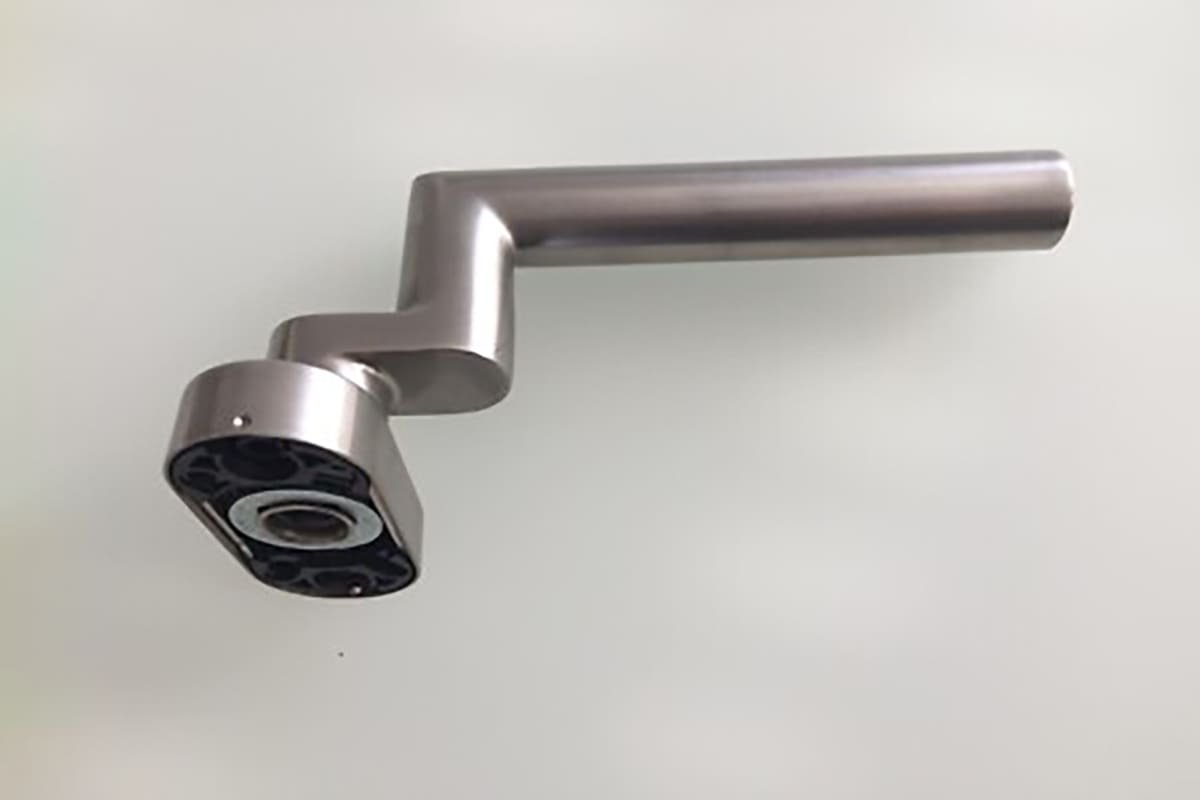
Stainless steel, zinc alloy, and brass each have a place
In architectural door hardware, material selection is always a balance. Buyers usually need to consider price, production method, finish, corrosion resistance, weight, and brand positioning.
Here is a practical comparison:
| Material | Main strengths | Typical buyer concern | Suitable market positioning |
|---|---|---|---|
| 304 stainless steel | Good corrosion resistance, clean modern look, strong market acceptance | Higher cost than some alternatives | Coastal areas, commercial doors, modern projects |
| Zinc alloy | Flexible shapes, many surface finish options, cost efficiency | Surface quality depends heavily on plating and QC | Retail, wholesale, decorative ranges |
| Brass | Premium feel, classic appearance, strong decorative value | Material cost and oxidation behavior | High-end, vintage, luxury-style projects |
304 stainless steel for harsh environments
304 stainless steel is often a good choice when the project requires better corrosion resistance.7 Coastal areas, humid environments, and commercial buildings may justify the higher cost.8 Many buyers in the Middle East, Europe, and Southeast Asia ask about stainless steel because climate and maintenance expectations can vary widely.
However, stainless steel still needs correct surface processing and quality control. Buyers should not assume that every stainless steel handle performs the same. The grade, surface treatment, welding or casting quality, polishing consistency, and packaging all matter.
For some crank shapes, the bent part can be produced through stainless steel investment casting. This method can support complex geometry and a clean shape. Still, buyers should verify actual product drawings, samples, and relevant test or certification documents when the project requires them.
Zinc alloy for style and cost balance
Zinc alloy is useful when buyers need more decorative designs or cost-efficient product lines. It works well for many hardware brand enterprises and wholesalers because it allows flexible shapes and surface finishes.
Common finish directions may include:
- Satin nickel look
- Chrome look
- Black finish
- Antique finish
- Champagne or gold-tone finish
- Custom color direction, depending on order requirements
The key risk is surface quality. Poor plating or weak surface preparation can lead to peeling, color inconsistency, or early wear.9 For B2B orders, buyers should define surface samples, packaging requirements, and inspection standards before mass production.
Brass for premium or vintage positioning
Brass has a different market feeling. It often appears in premium interiors, heritage-style doors, and vintage product ranges. It has weight, warmth, and a classic appearance that some customers prefer.
However, brass is not always the right answer. The cost can be higher, and the surface may change over time depending on finish and environment.10 If the buyer wants a stable appearance, the surface treatment must be specified clearly. If the buyer wants natural aging, that expectation should also be communicated.
Match material to procurement strategy
A door factory may prioritize installation stability and project compatibility. A hardware brand may prioritize finish consistency and packaging. A wholesaler may prioritize price, stock movement, and market acceptance. The correct material depends on the buyer’s business model.
I usually suggest this decision flow:
- Confirm the door application and clearance need first.
- Confirm the target market and environment.
- Set the price range.
- Choose the material.
- Approve surface samples.
- Confirm packaging for shipment protection.
- Verify inspection method before production completion.
This keeps material selection practical rather than emotional.
How Should a Crank Handle Be Evaluated for Accessibility and User Safety?
Accessibility is not only a legal topic. It is also a daily user experience issue. A handle may fit the door, but it may still be difficult for elderly users, children, or people with limited mobility. A crank handle should support safe, comfortable operation.
A crank handle for accessibility-related doors should provide enough hand clearance, a comfortable grip, smooth operation, and an ergonomic bend direction. Buyers should review local accessibility standards, confirm project requirements with qualified professionals, and test the handle with the actual door and lock system before final approval.
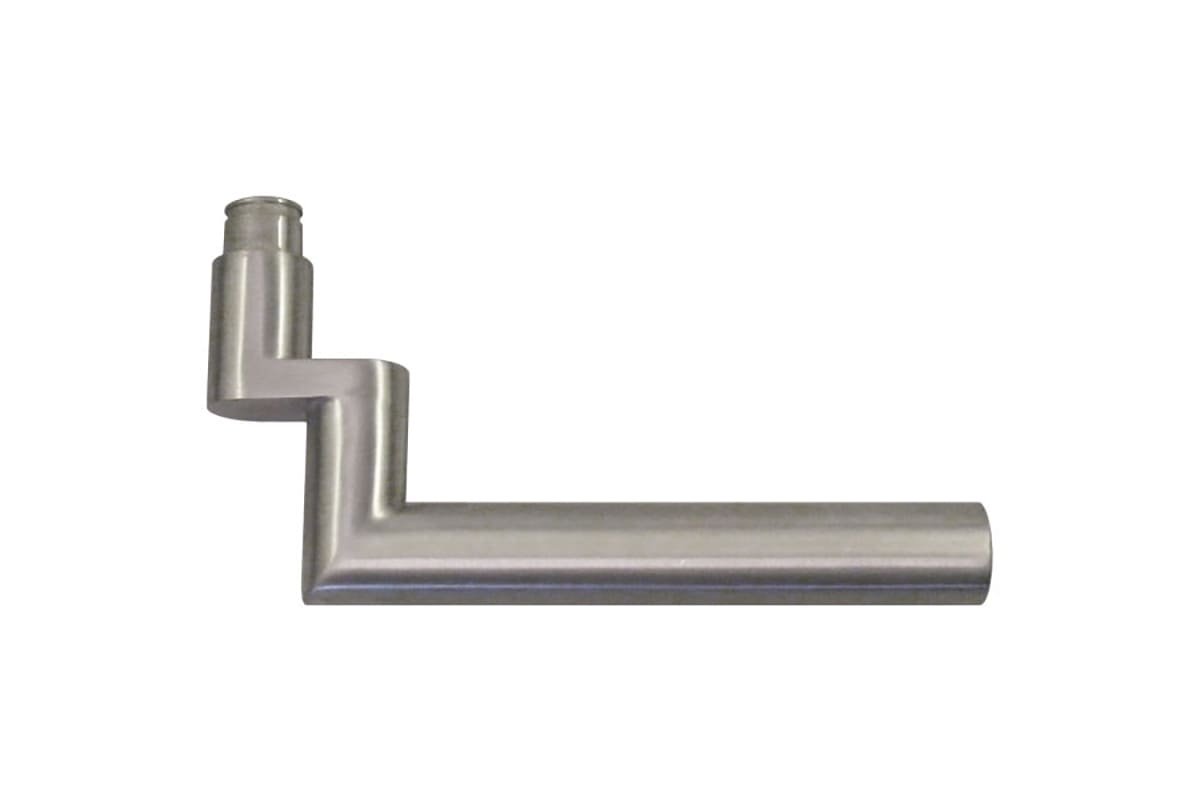
Ergonomics starts with the hand position
A good handle should be easy to find, grip, press, and release. On narrow-frame glass doors, the anti-collision function is especially important because users may not expect their fingers to meet the frame. If the user needs to twist the wrist or avoid a sharp edge, the handle is not fully comfortable.
For accessibility-related projects, buyers should look at:
- Grip comfort
- Lever length
- Required operating force11
- Clearance from frame
- Height position on the door12
- Bend direction
- Return movement
- Surface feel
- Edge smoothness
- Compatibility with the lock spring and latch
I do not recommend making accessibility decisions only from a catalog. Local regulations and project standards can be specific. A qualified architect, accessibility consultant, or project engineer should confirm the final specification.
Safety concerns buyers should not ignore
The main safety concern for crank handles on narrow-frame glass doors is finger collision or pinching. This happens when the hand grip area is too close to the frame. Another concern is awkward operation. If the bend direction is wrong, the user may press the handle in an uncomfortable posture.
There are also installation-related risks:
| Risk | Cause | Prevention |
|---|---|---|
| Finger collision | Insufficient grip-to-frame clearance | Check 25–30 mm practical clearance where possible |
| Awkward grip | Wrong bend direction | Confirm left/right handing with drawings |
| Poor latch operation | Mismatched spindle or lock follower | Confirm spindle size and lock compatibility |
| Loose handle | Weak fixing or wrong screws | Test on actual profile and inspect assembly |
| Finish damage | Poor packaging or surface control | Define packaging and QC requirements |
Accessibility and commercial procurement
For B2B buyers, accessibility is also a brand risk issue. If a door is hard to operate, the end user may blame the door factory, hardware brand, or installer. The cost of replacing installed hardware is much higher than the cost of checking samples before shipment.
A practical evaluation process can include:
- Install the sample on the real door system.
- Ask different users to operate it.
- Observe hand position near the frame.
- Check whether the user needs extra effort.
- Confirm the handle does not create sharp contact points.
- Review applicable local accessibility rules.
- Approve the final drawing and sample before bulk order.
Do not separate safety from quality control
A handle can pass a basic visual inspection and still fail the user experience. That is why I prefer combining dimensional inspection with functional checks. For example, QC can verify surface finish, packing, and quantity. But the buyer should also confirm functional fit with the door system before mass production.
This is especially important for custom orders. If the buyer requests a special bend, special plate, special spindle, or private logo, the first sample should be checked carefully. Customization gives flexibility, but it also requires clearer approval steps.
How Can Buyers Choose a Reliable Crank Handle Supplier?
A supplier should do more than quote a low price. A crank handle is connected to installation, door profile compatibility, handing, and user safety. If the supplier does not understand these details, the buyer may face hidden costs later.
Buyers should choose a crank handle supplier by reviewing manufacturing capability, drawing support, sample process, material control, inspection methods, packaging quality, customization ability, and communication accuracy. The best supplier for B2B orders should help confirm clearance, handing, lock compatibility, and market requirements before mass production.
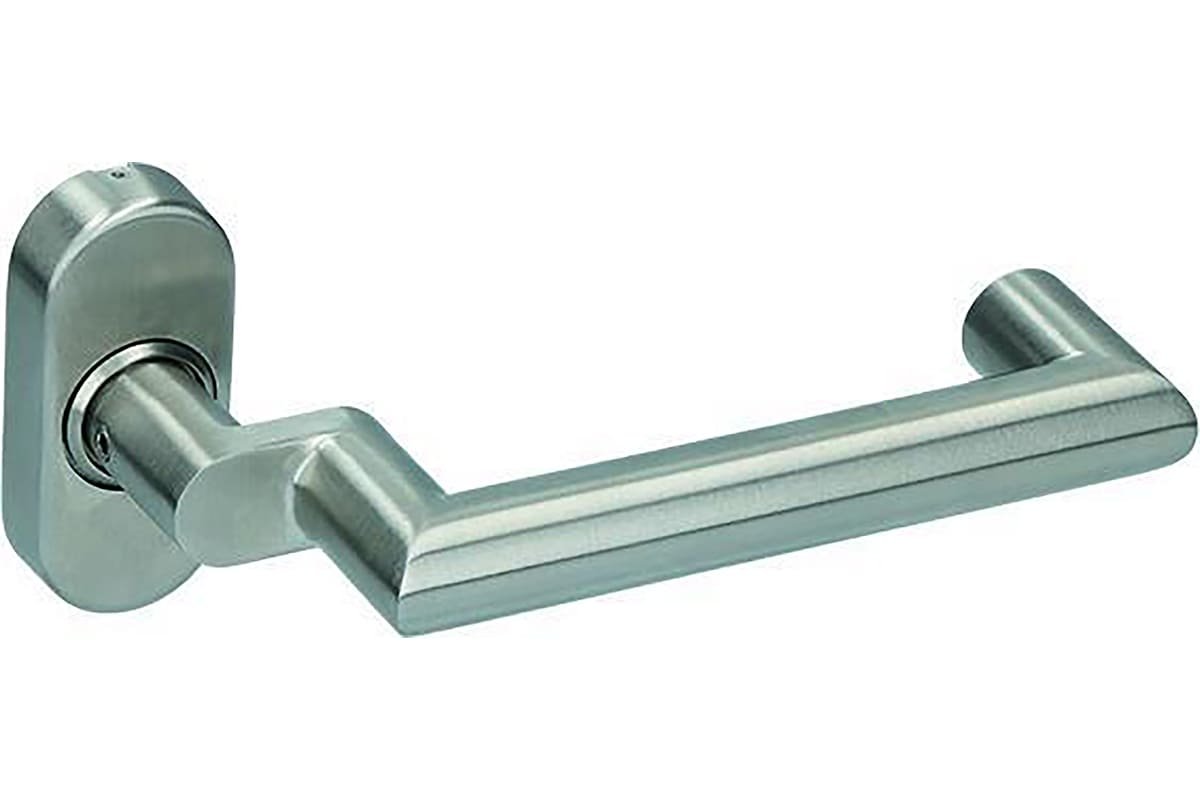
Factory capability matters for custom and repeat orders
For door factory purchasers, hardware brand companies, and wholesalers, supplier selection is part of risk control. A low unit price can become expensive if the product arrives with wrong handing, poor finish, mismatched spindle, or weak packing.
A capable supplier should provide:
- Technical drawings after order confirmation
- Sample confirmation before mass production
- Material and finish options
- OEM or ODM support
- Logo stamping or laser logo options
- Custom packaging support
- Inspection service after production
- Consistent communication on specifications
- Clear shipment packing information
Conclusion
Choosing a crank handle is mainly a compatibility and clearance decision, not just a style decision. Buyers should start with the door application, then confirm handing, safety clearance, key dimensions, material, accessibility needs, and supplier QC process. For narrow-frame glass profile doors, the right bend direction and grip clearance can prevent many installation and user problems. If you are evaluating crank handles for bulk orders, OEM projects, or complete door hardware sourcing, contact SDH Hardware to review drawings, samples, and project requirements before production.
"Chapter 4: Entrances, Doors, and Gates", https://www.access-board.gov/ada/guides/chapter-4-entrances-doors-and-gates/. Architectural door-hardware guidance describes offset or cranked lever geometry as a way to position the hand grip away from nearby frame elements or obstructions, supporting the use of crank handles as a clearance solution. Evidence role: mechanism; source type: institution. Supports: The source should support that offset or cranked lever geometry can move the gripping area away from adjacent frames or obstructions.. Scope note: Such sources may describe the mechanism generally and may not specifically address every narrow-frame glass-door profile. ↩
"Door Handle Ergonomics: Grip Diameter, Lever Return and ...", https://fschier.com/door-handle-ergonomics-grip-diameter-lever-return-and-accessibility/. Ergonomic and safety guidance on hand-operated controls identifies inadequate clearance and pinch points as factors that can cause hand contact injuries or uncomfortable operation. Evidence role: mechanism; source type: research. Supports: The source should support that inadequate hand clearance around operated hardware increases the risk of hand impact, pinching, or awkward use.. Scope note: The evidence is likely to be general ergonomic or safety guidance rather than a test of this specific crank-handle design. ↩
"Chapter 4: Entrances, Doors, and Gates", https://www.access-board.gov/ada/guides/chapter-4-entrances-doors-and-gates/. The ADA Standards for Accessible Design require operable door hardware to be usable with one hand and not require tight grasping, pinching, or twisting of the wrist, providing support for the accessibility concern associated with knobs. Evidence role: expert_consensus; source type: government. Supports: The source should support that accessible door hardware should not require tight grasping, pinching, or twisting of the wrist, which is a common issue with knobs.. Scope note: This supports the accessibility principle rather than proving that all knobs are difficult for every user. ↩
"Investment casting", https://en.wikipedia.org/wiki/Investment_casting. Manufacturing references describe investment casting as a process capable of producing stainless-steel components with complex shapes and relatively fine detail, which supports its use for some cranked handle geometries. Evidence role: mechanism; source type: education. Supports: The source should support that investment casting is suitable for producing stainless-steel parts with complex or intricate geometries.. Scope note: This supports process capability in general and does not verify the manufacturing method used for any particular handle model. ↩
"Right Hand vs. Left Hand Door: How to Tell the Difference", https://www.rockymountainhardware.com/right-hand-vs-left-hand-door-guide/. Door-hardware terminology references define handing by hinge side, swing direction, and viewing position, illustrating why left-hand and right-hand descriptions can require clarification in specifications. Evidence role: definition; source type: institution. Supports: The source should explain recognized door-handing terminology and show that left/right designations depend on viewpoint, swing direction, or regional convention.. Scope note: The source may document formal terminology rather than quantify how often naming confusion occurs in international purchasing. ↩
"The relationship between hand anthropometrics, total grip ...", https://pubmed.ncbi.nlm.nih.gov/26323777/. Anthropometric and ergonomic design data on hand clearances provide contextual support for specifying a minimum gap around a hand-operated handle to reduce contact with adjacent surfaces. Evidence role: general_support; source type: research. Supports: The source should provide anthropometric or ergonomic support for minimum hand clearances around handles and adjacent surfaces.. Scope note: The cited evidence may support the general need for clearance but may not directly establish 25–30 mm as a universal door-handle requirement. ↩
"Corrosion Behavior of Sensitized AISI 304 Stainless Steel in ...", https://pmc.ncbi.nlm.nih.gov/articles/PMC9740934/. Materials literature describes AISI 304 stainless steel as an austenitic stainless steel whose chromium-containing passive film provides useful corrosion resistance in many atmospheric and indoor service environments. Evidence role: general_support; source type: paper. Supports: The source should support that 304 stainless steel has corrosion resistance due to its chromium-rich passive film and is widely used where corrosion resistance is needed.. Scope note: This does not imply immunity to corrosion, especially in chloride-rich or poorly maintained environments. ↩
"Marine Atmospheric Corrosion of Carbon Steel: A Review - PMC", https://pmc.ncbi.nlm.nih.gov/articles/PMC5506973/. Atmospheric-corrosion studies identify humidity and chloride deposition in marine environments as major contributors to corrosion risk, supporting the use of more corrosion-resistant materials for exposed architectural hardware. Evidence role: mechanism; source type: paper. Supports: The source should support that humidity and chloride deposition in coastal atmospheres increase corrosion risk, making corrosion-resistant materials relevant for building hardware.. Scope note: The evidence supports the environmental mechanism, while the final cost justification depends on project budget, maintenance, and service-life expectations. ↩
"Why Is My Zinc Plating Peeling Off? 7 Root Causes and Fixes", https://plateco.net/blog/zinc-plating-peeling-causes-fixes/. Coatings research on electroplated zinc alloys shows that substrate preparation and plating-process control influence coating adhesion, appearance uniformity, and resistance to wear or failure. Evidence role: mechanism; source type: paper. Supports: The source should support that surface preparation and plating process control affect coating adhesion, appearance, and wear performance on zinc alloys.. Scope note: The evidence concerns plating mechanisms generally and may not evaluate a specific door-handle production line. ↩
"Tarnish", https://en.wikipedia.org/wiki/Tarnish. References on brass and copper-alloy corrosion describe tarnishing and patina formation as surface changes that can occur through oxidation and environmental exposure. Evidence role: mechanism; source type: encyclopedia. Supports: The source should support that brass, a copper-zinc alloy, can tarnish or develop surface films through environmental exposure.. Scope note: The exact visual change depends on alloy composition, coating, handling, and local environment. ↩
"Chapter 4: Entrances, Doors, and Gates", https://www.access-board.gov/ada/guides/chapter-4-entrances-doors-and-gates/. Accessibility standards address operable force for doors and hardware, showing that the force required to operate a handle is a recognized factor in accessible design. Evidence role: expert_consensus; source type: government. Supports: The source should support that operating force is a recognized accessibility consideration for doors or operable hardware.. Scope note: Specific force limits vary by jurisdiction, door type, and applicable building code. ↩
"Chapter 4: Entrances, Doors, and Gates", https://www.access-board.gov/ada/guides/chapter-4-entrances-doors-and-gates/. The ADA Standards specify mounting-height requirements for operable door hardware, supporting the article’s treatment of handle height as an accessibility consideration. Evidence role: expert_consensus; source type: government. Supports: The source should support that accessible door hardware must be installed within a specified height or reach range.. Scope note: The cited range applies where ADA requirements govern; other jurisdictions may set different accessibility requirements. ↩