Why Is PVD Coating Popular for Door Handles?
PVD coating is popular for door handles because buyers no longer judge a handle finish by color alone. A beautiful gold or black handle can become a complaint risk if it scratches, fades, or looks inconsistent after use. For door factories and hardware brands, the better solution is a finish that balances appearance, durability, and batch stability.
PVD coating is popular for door handles because it creates premium metallic finishes while improving surface hardness, wear resistance, corrosion resistance, scratch resistance, and color stability1. It is especially useful for stainless steel, zinc alloy, and aluminum alloy handles where long-term appearance, consistent color, and reduced after-sales risk matter.
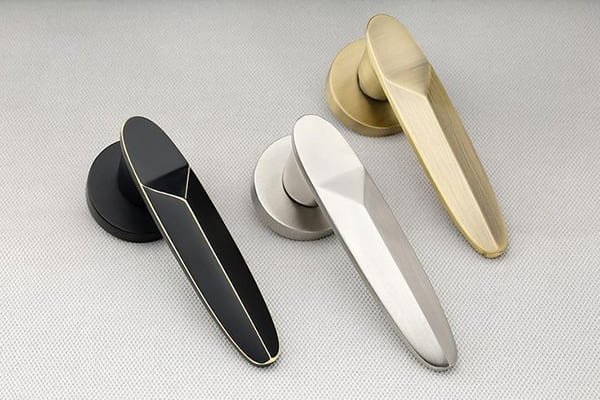
In my daily factory work, I often see buyers compare two handles that look almost identical in a showroom. However, the real question appears later: Will this finish still look stable after years of touch, cleaning, friction, and environmental exposure? That is where PVD becomes worth serious evaluation.
Why Does PVD Coating Improve Door Handle Durability?
A door handle finish faces constant friction, hand contact, cleaning agents, moisture, and sometimes outdoor exposure2. If the finish fails too early, the product may still function mechanically, but the buyer receives complaints. PVD coating helps reduce this risk by improving the surface performance of decorative hardware.
PVD coating improves door handle durability by depositing a hard, thin metallic layer onto the prepared handle surface. This layer can improve wear resistance, scratch resistance, corrosion resistance, and color stability compared with many conventional decorative finishes, depending on the base material, preparation quality, process control, and use environment.
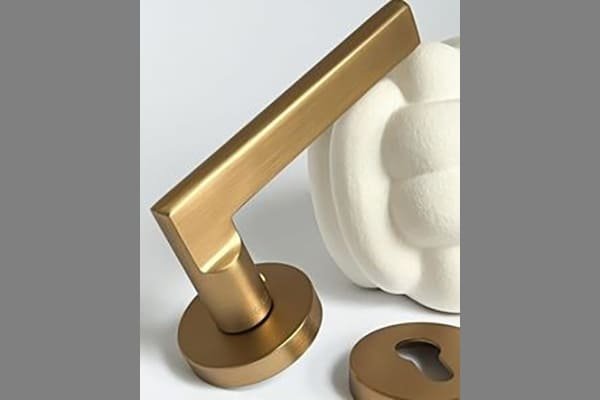
PVD is a functional decorative finish
PVD stands for Physical Vapor Deposition3. I usually explain it to buyers in simple terms: the handle is placed in a vacuum chamber, and a metallic coating is deposited onto the surface4. The purpose is not only to create a good-looking color. The purpose is also to make the surface more stable during use.
That is why I call it a functional decorative finish.
Door handles are touch products. They are not like cabinet ornaments that people rarely touch. In a hotel, apartment, office, school, or public building, a lever handle may be used many times per day. Over time, weak surface treatments may show:
- Hairline scratches
- Edge wear
- Color change near the grip area
- Dull patches caused by cleaning
- Uneven aging between different doors
- Corrosion spots in humid areas
- Fingerprint marks that become difficult to clean
PVD coating does not make a handle impossible to damage. I never present it that way to serious buyers. However, when the substrate, polishing, cleaning, coating parameters, and inspection are well controlled, PVD can offer a stronger surface than many basic decorative treatments.
What durability factors should buyers check?
A buyer should not only ask, “Is this handle PVD?” The better questions are more practical:
What is the base material?
Stainless steel, zinc alloy, and aluminum alloy behave differently before and after finishing.How is the surface prepared?
Polishing, brushing, degreasing, and cleaning directly affect the final result.What finish is required?
Mirror gold, brushed black, rose gold, champagne, and satin finishes all have different visual and inspection challenges.Where will the handle be used?
Indoor residential use is different from coastal, hospital, hotel, or high-traffic commercial use.What inspection standard applies?
Buyers should define acceptable color tolerance, surface defects, packaging protection, and batch consistency.
In our factory discussions, I often remind purchasing teams that a finish is a system. The coating is only one part of that system. A poor substrate with poor polishing will not become premium just because the final layer uses PVD.
Common durability considerations for door handle finishes
| Evaluation point | Why it matters for buyers | What to confirm with supplier |
|---|---|---|
| Scratch resistance | Handles face rings, keys, nails, and daily friction | Surface hardness checks and sample testing |
| Corrosion resistance | Humidity and cleaning chemicals can attack weak finishes | Intended environment and finish suitability |
| Color stability | Brand lines need consistent appearance over time | Batch control and approved color samples |
| Edge coverage | Edges often wear faster than flat surfaces | Process control and visual inspection |
| Cleaning resistance | Hotels and public projects clean hardware often | Cleaning guidelines and chemical limitations |
| Packaging protection | A good finish can still be damaged in transit | Individual wrapping and carton design |
PVD coating is popular because it helps buyers move beyond “nice color” and evaluate real surface performance. For B2B orders, that shift matters.
How Does PVD Coating Compare With Electroplating for Door Handles?
Many buyers compare PVD coating with electroplating because both can produce metallic colors such as gold, chrome, black, and rose gold. The problem is that the two finishes may look similar in photos, but they can behave differently in production, inspection, use, and environmental management.
PVD coating is often cleaner, harder, and more color-stable than traditional electroplating5 for many door handle applications. Electroplating can still be suitable for some products, costs, and colors, but buyers should compare durability, environmental requirements, finish appearance, substrate compatibility, and long-term complaint risk before choosing.
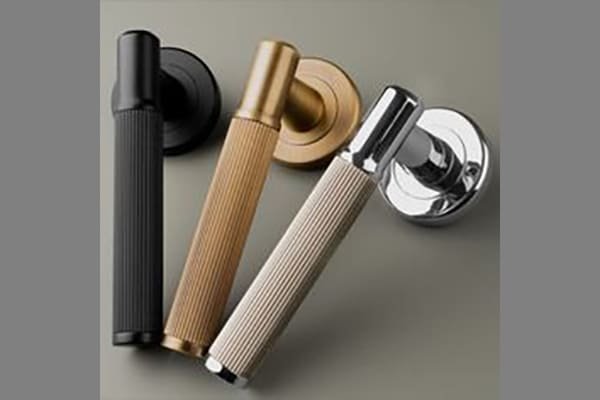
Buyer comparison, not a chemistry lesson
When I speak with door factories or hardware brand companies, they rarely want a deep lecture about surface chemistry. They want to know what choice will help them reduce problems in the market.
From a buyer’s perspective, the comparison usually includes five questions:
- Which finish gives the required premium look?
- Which finish can stay more stable after use?
- Which process supports consistent bulk order color?
- Which option fits the target price level?
- Which surface treatment creates less after-sales risk?
Electroplating has been used for many years. It can produce bright decorative finishes and can be cost-effective in certain product ranges. Some buyers still choose it for specific colors, product lines, or regional market habits.
However, traditional electroplating may face challenges related to wastewater treatment6, color stability, surface hardness, and corrosion resistance, depending on the process and supplier control. This is why many buyers now ask about PVD coating when developing higher-end door handle ranges.
Practical comparison table
| Factor | PVD coating | Electroplating |
|---|---|---|
| Appearance | Refined metallic colors, brushed or mirror effects | Bright metallic colors, often familiar to many markets |
| Surface hardness | Usually strong when process is controlled | Varies by plating system and thickness |
| Color stability | Often better for premium lines | Can vary by chemical control and batch |
| Environmental profile | Often considered cleaner because it is a vacuum deposition process | May involve more chemical wastewater management |
| Cost | Usually higher than basic finishes | Can be lower or competitive |
| Best use | High-end handles, stainless steel hardware, premium decorative lines | Cost-sensitive lines, traditional finish requirements |
| Buyer risk | Lower if supplier controls substrate and process well | Acceptable if plating quality and inspection are reliable |
This table should not be read as “PVD is always better.” That would be too simple. A well-controlled electroplated finish may perform better than a poorly prepared PVD finish. The supplier’s quality system still matters.
When electroplating may still make sense
A buyer may still choose electroplating when:
The target market expects a traditional finish.
Some regions are used to certain chrome or plated colors.The product line is price-sensitive.
A basic retail range may not support a premium surface cost.The application has low traffic.
A lightly used interior door may not require the same finish level as a hotel corridor handle.The supplier has strong plating control.
Good electroplating depends on process discipline, chemical management, and inspection.
Why PVD often wins in premium projects
PVD coating becomes attractive when buyers care about appearance lifespan. A door handle may look expensive on day one, but if the finish changes too quickly, the brand loses trust. For hotels, apartments, villas, and commercial projects, the visual life of the hardware is part of the product value.
In my experience, buyers ask more questions about:
- “Will black fade?”
- “Will gold become dull?”
- “Will rose gold look different between batches?”
- “Will the grip area become lighter after use?”
- “Will scratches show clearly on the surface?”
These are not small questions. They are purchasing risk questions. PVD coating is popular because it gives buyers a stronger answer when premium appearance and longer surface performance are important.
Is PVD Coating Better Than Electrophoresis for Door Handles?
Electrophoresis is also used on door hardware, especially when buyers want colored surfaces, protective layers, or cost-controlled finishes. However, some buyers expect electrophoresis to create the same metallic depth as PVD coating. That expectation can lead to wrong product decisions.
PVD coating is often more suitable than electrophoresis when buyers want a premium metallic texture, stronger scratch resistance7, and refined colors such as gold, rose gold, champagne, or black stainless effects. Electrophoresis may still be useful for protective or cost-sensitive finishes where deep metallic appearance is less important.
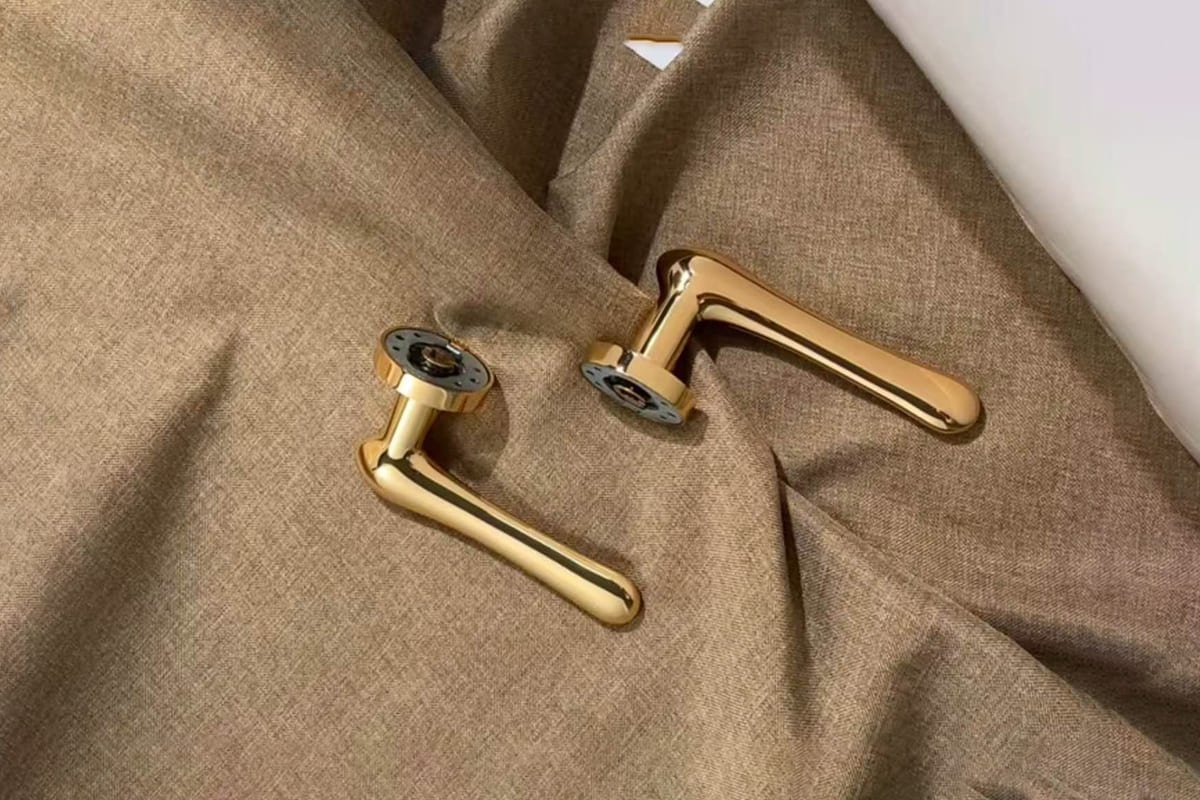
Different finishes serve different goals
Electrophoresis is often valued for coverage, protection, and relatively stable coating application8. It can be useful for certain architectural hardware products. It may also help achieve specific colors or protective surface layers.
However, from a door handle buyer’s perspective, electrophoresis and PVD coating often serve different product levels.
PVD is usually chosen when the buyer wants:
- A refined metallic effect
- Brushed gold, mirror gold, rose gold, black, or champagne tones
- A more premium visual feel
- Better resistance to daily abrasion
- A finish suitable for high-end handle series
Electrophoresis is often considered when the buyer wants:
- Cost-effective color coating
- Protective coverage
- Simpler decorative effects
- Stable coating on certain shapes
- A practical finish for mid-range or functional products
Comparing PVD and electrophoresis
| Buyer concern | PVD coating | Electrophoresis |
|---|---|---|
| Metallic texture | Strong metallic look | Usually less metallic depth |
| Premium appearance | Very suitable for high-end lines | More practical than luxury in many cases |
| Scratch resistance | Often stronger | Depends on coating system |
| Color options | Gold, rose gold, black, champagne, bronze, etc. | Broad colors, but different visual character |
| Surface feel | Thin, hard, metallic | Coated feel, sometimes softer visual effect |
| Cost position | Usually higher | Often more cost-controlled |
| Best application | Decorative door handles and premium hardware | Protective or colored hardware parts |
Again, the best choice depends on the product and market. I do not recommend choosing a surface treatment only because it sounds advanced. I recommend matching the finish to the handle material, price level, market expectation, and project risk.
A practical example from product development
When a buyer develops a high-end stainless steel lever handle, the visual requirement may include a brushed gold finish with a consistent grain direction. In that case, the surface must look refined when installed beside door hinges, locks, escutcheons, and other accessories.
If the handle has visible color variation or weak scratch resistance, the complete door hardware set looks unstable. Even if the lock body and hinge work well, the visible handle finish affects the buyer’s impression.
For this type of product, PVD coating often becomes the preferred option because it supports:
Metallic depth
The surface can look closer to metal rather than paint.Premium color expression
Gold, rose gold, and black can appear more refined.Better touch-area performance
The handle grip area may resist visible wear better when the process is controlled.Consistency across product families
A brand can develop matching handles, hinges, cylinders, and accessories.
However, if the buyer is developing a simple functional product for a price-sensitive market, electrophoresis may be enough. The decision should follow the product positioning.
The right question is not “Which finish is the newest?”
The right question is “Which finish fits the market level, performance expectation, and complaint tolerance?”
That is the practical reason PVD coating has become popular in premium architectural door hardware.
Which Door Handle Materials Work Well With PVD Coating?
PVD coating is often discussed as if the coating alone decides quality. That view is incomplete. The base material affects polishing quality, coating adhesion, final color, surface smoothness, and long-term appearance. Buyers should evaluate the material before they approve the finish.
PVD coating is commonly used on stainless steel, zinc alloy, and aluminum alloy door handles9. Stainless steel is especially suitable for premium metallic finishes, while zinc alloy and aluminum alloy can also work well when casting, machining, polishing, cleaning, and surface preparation are properly controlled before coating.
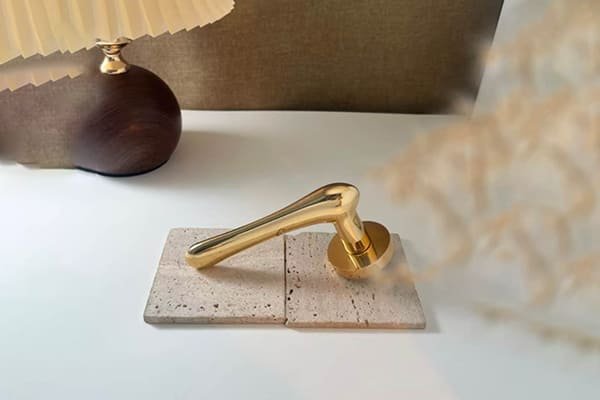
Stainless steel door handles
Stainless steel is one of the most popular substrates for PVD coating. It already has good strength and corrosion resistance10. It also supports brushed and mirror surface preparation, which makes it suitable for high-end architectural hardware.
Common stainless steel handle finish options include:
- Brushed gold
- Satin black
- Mirror gold
- Rose gold
- Champagne
- Bronze
- Gunmetal
- Brushed stainless PVD tones
For buyers, stainless steel plus PVD is often considered when the product line targets hotels, apartments, premium residential projects, and modern commercial buildings.
However, stainless steel still requires careful preparation. Poor brushing can create uneven lines. Poor polishing can create visible waves. Poor cleaning can affect coating quality. I have seen samples where the color was acceptable, but the base surface was not refined enough. The final product looked less premium because the preparation was weak.
Zinc alloy door handles
Zinc alloy is widely used for lever handles because it supports detailed shapes and efficient production11. It can be suitable for decorative designs, especially when buyers need complex handle forms.
PVD coating can be used on zinc alloy, but buyers should pay close attention to the surface system before coating. Zinc alloy may require proper pre-treatment, underlayers, and surface preparation to support a stable decorative result.
Important zinc alloy evaluation points include:
Casting quality
Porosity and surface defects can appear after polishing or finishing12.Polishing control
Decorative shapes need consistent polishing across curves and edges.Base layer quality
The layer below the final decorative finish may affect appearance and adhesion.Inspection criteria
Buyers should define acceptable pinholes, waves, shade differences, and edge marks.
Aluminum alloy door handles
Aluminum alloy handles are valued for lighter weight and flexible design. They can be used in certain interior door hardware lines and market-specific ranges. PVD coating may be applied when the process route supports it, but buyers should confirm technical suitability with the supplier.
Aluminum surfaces need proper preparation. The final finish may depend heavily on pre-treatment quality. For project orders, I suggest buyers approve physical samples rather than only digital color references.
Material comparison for buyers
| Material | Strengths | PVD coating considerations | Typical use |
|---|---|---|---|
| Stainless steel | Strong, corrosion-resistant, premium feel | Needs excellent brushing or polishing | Premium handles, hotels, commercial projects |
| Zinc alloy | Good for complex designs, efficient production | Needs strong casting and surface preparation | Decorative lever handles, branded ranges |
| Aluminum alloy | Lightweight, flexible design | Needs suitable pre-treatment and process control | Interior handles, selected market lines |
Why material choice affects buyer risk
A premium finish cannot hide every base defect. In fact, mirror or high-gloss finishes may reveal defects more clearly. Brushed finishes can hide some small marks, but they also require consistent grain direction.
This is why I recommend approving:
- Raw material specification
- Surface preparation standard
- Pre-production samples
- Color master sample
- Packaging method
- Final inspection checklist
When buyers treat PVD coating as part of a full production system, they make better sourcing decisions. The finish becomes more predictable, and the final door handle line becomes easier to control.
Why Is PVD Coating Important for Bulk Door Handle Orders?
A single sample can look excellent, but bulk production is where a finish proves its real value. Door factories and hardware brands need stable appearance across hundreds or thousands of handles. If color shifts between batches, even a durable finish can create installation problems.
PVD coating is important for bulk door handle orders because it supports premium appearance, better color stability, and stronger wear performance when process control is consistent. Buyers should still verify batch samples, inspection standards, packaging protection, and supplier quality systems before approving large production.
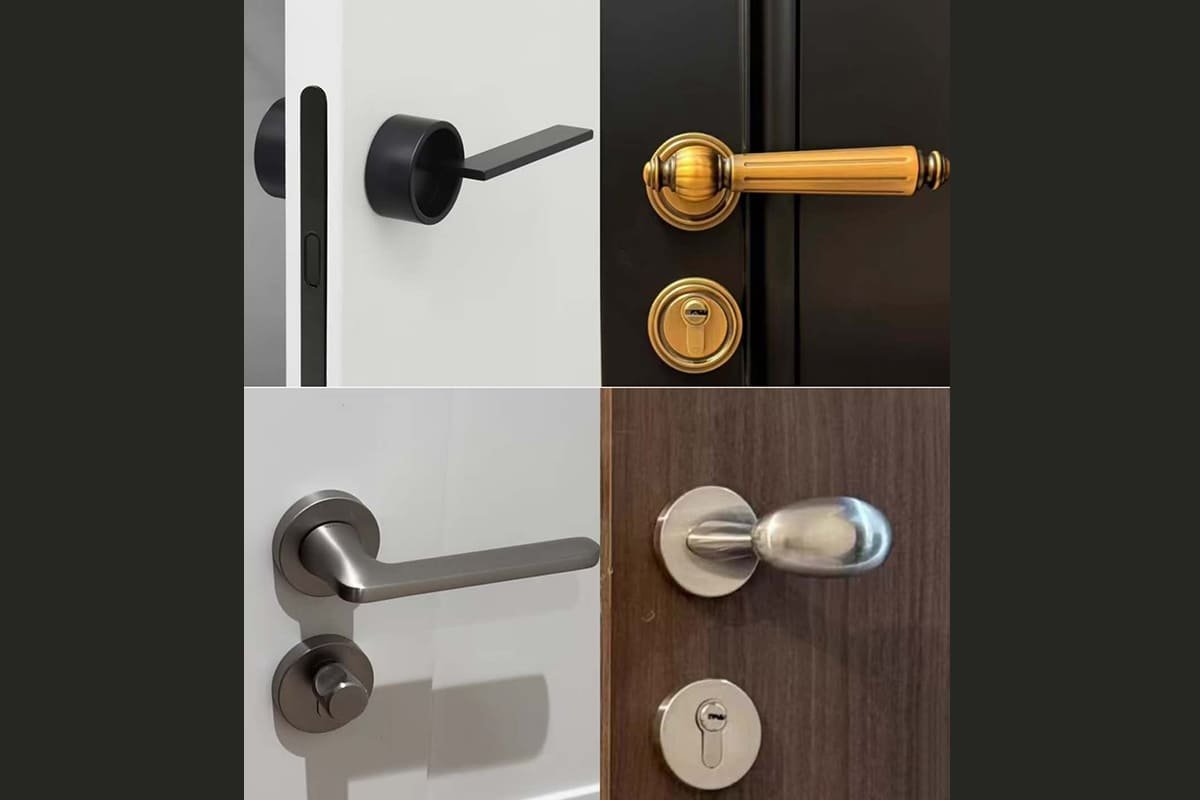
Bulk orders create different risks
When a buyer orders a few samples, the focus is often simple: Does the handle look good? Does the color match the catalog? Does the grip feel comfortable?
When the buyer places a container order or develops a full hardware series, the risk becomes wider. The buyer must consider:
- Color consistency between production batches
- Matching handles with hinges, locks, cylinders, and accessories
- Protection during packaging and shipping
- Installation appearance across many doors
- After-sales complaints from distributors or project owners
- Repeat order consistency after several months
In our factory-side work, I often see buyers bring one approved sample and ask for future production to match it. That is reasonable. However, it requires a clear control method. A verbal instruction such as “same gold as last time” is not enough for serious bulk supply.
What buyers should control before mass production
For bulk orders, I recommend that buyers confirm these items in writing:
Approved color sample
The supplier and buyer should keep a physical master sample.Finish name and code
A clear finish code reduces confusion between champagne, light gold, rose gold, and bronze.Surface texture
Brushed, satin, mirror, and matte finishes should be clearly defined.Inspection lighting
Different lighting can make the same finish look different.Acceptable color tolerance
Buyers should define what level of shade variation is acceptable.Packaging protection
Each handle should be protected from rubbing during transport.Spare parts and repeat order plan
Future orders should match the original project as closely as possible.
Bulk order evaluation checklist
| Stage | Buyer action | Why it matters |
|---|---|---|
| Sampling | Approve physical PVD sample | Digital photos are not enough |
| Pre-production | Confirm material and finish code | Prevents wrong process route |
| Production | Request process control and batch records | Supports consistency |
| Inspection | Check color, scratches, edges, and packaging | Reduces complaint risk |
| Shipment | Confirm carton protection | Prevents transit damage |
| Repeat order | Use retained master sample | Improves long-term consistency |
Matching a complete door hardware set
Door handle buyers often need matching products, not only handles. A complete door hardware set may include:
- Lever handles
- Rose escutcheons or long plates
- Mortise locks
- Euro profile cylinders
- Butt hinges
- Concealed hinges
- Door stops
- Accessories
If the visible parts have different shades of gold or black, the project may look inconsistent. This is why PVD coating is popular for high-end door hardware programs. It can support a coordinated metallic appearance when the supplier controls the process and when the buyer approves realistic tolerance standards.
At SDH Hardware, we manufacture a broad range of architectural door hardware, including lever handles, mortise locks, hinges, cylinders, and accessories. From that factory perspective, I see why buyers care about one-stop sourcing. It is not only about convenience. It is also about matching appearance, drawings, packaging, and inspection across the full set.
However, buyers should still verify certifications, finish samples, and product specifications for each project. A supplier’s general capability is useful, but application-specific decisions should be checked by qualified professionals when fire rating, building codes, or special environments are involved.
What Should Buyers Check Before Choosing PVD Coating?
PVD coating can reduce surface risk, but it is not a magic label. Not all gold, black, rose gold, brushed, or mirror door handles are equal. A buyer who only asks for color may miss the factors that decide real product quality.
Buyers should check the substrate, surface preparation, coating process, color consistency, inspection standards, packaging, certifications, and actual use environment before choosing PVD coating. They should approve physical samples and verify supplier documents instead of relying only on catalog photos or general finish descriptions.
Conclusion
PVD coating is popular for door handles because it helps buyers treat surface finish as a durability and risk-control decision, not only a color choice. It can deliver refined gold, rose gold, black, brushed, and mirror effects while improving surface performance when the substrate, preparation, coating process, and inspection are well controlled. If you are developing a door handle line or sourcing complete architectural hardware sets, I recommend comparing physical samples, confirming finish standards, and working with a factory that understands bulk quality control. Contact SDH Hardware to discuss OEM/ODM door hardware finishing options for your market.
"PVD for Decorative Applications: A Review - PMC - NIH", https://pmc.ncbi.nlm.nih.gov/articles/PMC10381906/. Materials-science reviews of physical vapor deposition coatings report that many PVD films can increase surface hardness and improve wear and corrosion performance; this supports the general performance rationale, although the degree of improvement depends on substrate, coating chemistry, film thickness, and processing conditions. Evidence role: general_support; source type: paper. Supports: PVD coatings are associated with improved hardness, wear resistance, and corrosion performance in many metallic coating systems.. Scope note: Contextual support rather than direct proof for every door handle material and finish. ↩
"High-touch surfaces: microbial neighbours at hand - PMC", https://pmc.ncbi.nlm.nih.gov/articles/PMC7087772/. Public-health and building-maintenance guidance commonly identifies door handles as high-touch surfaces subject to frequent hand contact and cleaning; this supports the exposure assumptions, although it does not quantify wear for a particular handle finish. Evidence role: general_support; source type: government. Supports: Door handles are high-touch surfaces that may be repeatedly contacted and cleaned, creating exposure relevant to finish durability.. Scope note: Contextual support for exposure conditions, not direct durability testing of PVD-coated handles. ↩
"Physical vapor deposition", https://en.wikipedia.org/wiki/Physical_vapor_deposition. Reference sources define PVD as physical vapor deposition, a group of vacuum-based coating processes in which material is vaporized and deposited as a thin film on a surface. Evidence role: definition; source type: encyclopedia. Supports: PVD is the abbreviation for Physical Vapor Deposition.. ↩
"Manufacturing: 7.5 Physical vapour deposition | OpenLearn", https://www.open.edu/openlearn/science-maths-technology/design-innovation/manufacturing/content-section-7.5. University and engineering references describe physical vapor deposition as a vacuum thin-film process in which coating material is vaporized or sputtered and then deposited on the substrate surface; this supports the simplified description used for door handles. Evidence role: mechanism; source type: education. Supports: PVD is a vacuum-based thin-film process in which vaporized material condenses on a substrate.. Scope note: The source would explain the general PVD mechanism, not a specific factory's door-handle process. ↩
"PVD for Decorative Applications: A Review - PMC - NIH", https://pmc.ncbi.nlm.nih.gov/articles/PMC10381906/. Comparative surface-engineering literature notes that PVD can produce hard decorative films and, as a vacuum process, may avoid some aqueous chemical wastes typical of electroplating; this supports the comparison in general terms, but it does not establish that every PVD finish outperforms every electroplated finish. Evidence role: general_support; source type: research. Supports: PVD processes are generally associated with hard thin films and may avoid some wet-chemical waste streams associated with electroplating.. Scope note: Contextual comparison; performance varies by coating system and supplier control. ↩
"Environmental Pollution Control Alternatives Economics Of ...", https://nepis.epa.gov/Exe/ZyPURL.cgi?Dockey=20008S8S.TXT. Environmental regulatory guidance describes electroplating wastewater as a waste stream that may contain metals and process chemicals requiring treatment before discharge; this supports the article's statement that wastewater management can be a challenge in electroplating. Evidence role: general_support; source type: government. Supports: Electroplating operations can generate wastewater requiring treatment for metals and other regulated contaminants.. ↩
"(PDF) Different Types Of PVD Coatings and their Demands", https://www.academia.edu/20204491/Different_Types_Of_PVD_Coatings_and_their_Demands_A_Review. Research on hard PVD coatings commonly reports scratch-testing methods and high resistance to abrasive or mechanical surface damage; this supports the general claim that PVD may be selected where scratch resistance is important, while not proving superiority over every electrophoretic coating system. Evidence role: general_support; source type: paper. Supports: Hard PVD coatings are commonly evaluated for scratch resistance and can provide high resistance to abrasive or mechanical surface damage.. Scope note: Contextual support; direct comparative testing for the exact coatings would still be needed. ↩
"Electrophoretic deposition", https://en.wikipedia.org/wiki/Electrophoretic_deposition. Reviews of electrophoretic deposition and electrodeposition coatings describe the process as capable of forming relatively uniform protective coatings on conductive substrates; this supports the stated functional advantages, although decorative appearance depends on the specific coating formulation. Evidence role: mechanism; source type: paper. Supports: Electrophoretic or electrodeposition coating can provide relatively uniform coating coverage and protective films on conductive substrates.. Scope note: Contextual support for electrophoretic coating behavior, not direct comparison with PVD on door handles. ↩
"PVD for Decorative Applications: A Review - PMC - NIH", https://pmc.ncbi.nlm.nih.gov/articles/PMC10381906/. Surface-engineering sources describe PVD coating applications on stainless steel and other metallic substrates, including aluminum and zinc-based alloys when appropriate pretreatment or interlayers are used; this supports substrate compatibility in general, but not the prevalence of these materials in any particular door-handle market. Evidence role: general_support; source type: research. Supports: PVD coatings can be applied to stainless steel and, with suitable preparation or interlayers, to aluminum and zinc alloy substrates.. Scope note: Supports technical compatibility more directly than market frequency. ↩
"Stainless steel", https://en.wikipedia.org/wiki/Stainless_steel. Reference materials describe stainless steel as an iron alloy containing sufficient chromium to form a passive oxide film, giving it corrosion resistance while retaining useful mechanical strength. Evidence role: definition; source type: encyclopedia. Supports: Stainless steel is known for corrosion resistance due to chromium-containing passive films and has useful mechanical strength.. ↩
"The Processes and Advantages of Zinc Die Casting", https://www.iqsdirectory.com/articles/die-casting/zinc-die-castings.html. Die-casting industry and materials references describe zinc alloys as suitable for producing complex, dimensionally accurate parts at high production rates; this supports the manufacturing rationale for zinc-alloy lever handles, although it does not independently measure their market share. Evidence role: mechanism; source type: institution. Supports: Zinc alloys are suited to die casting complex, detailed parts with efficient high-volume production.. Scope note: Supports the production mechanism rather than proving market prevalence. ↩
"Characterization and Analysis of Porosities in High Pressure ...", https://pmc.ncbi.nlm.nih.gov/articles/PMC7412358/. Studies of die-cast alloy defects identify porosity and surface discontinuities as quality issues that can affect subsequent finishing and visible surface quality; this supports the warning for zinc-alloy handles, though exact defect rates depend on casting parameters and inspection criteria. Evidence role: mechanism; source type: paper. Supports: Casting porosity and surface defects can affect the final appearance of finished zinc alloy components.. Scope note: Contextual support for the defect mechanism, not data from the article's factory. ↩