Door Hinge Screws Explained: Sizes, Materials, and When to Use Each Type?
Door hinge screws look simple, but the wrong choice can create loose hinges, damaged countersunk holes, poor corrosion resistance, or extra work on the production line. I have seen this issue often when matching hinges for door factory orders. The better solution is to treat each screw as part of the hinge, door, and frame system.
Door hinge screws should be selected by matching the hinge countersunk hole, screw head shape, thread type, door or frame material, environment, and whether the installation holes are pre-tapped. Common options include machine screws for tapped metal holes, wood screws for timber, and Tek self-drilling screws for suitable metal profiles.
A screw size chart is useful, but it is not enough. In my factory work, I usually start by asking where the hinge will be used, what material the door and frame use, and whether the buyer needs standard packing or project-specific accessories.
What Are the Main Types of Door Hinge Screws?
Choosing the wrong screw type creates a practical problem before the door even reaches installation. The hinge may look correct, but the screw may not bite, may not sit flush, or may require extra drilling. I solve this by separating hinge screws by thread function first.
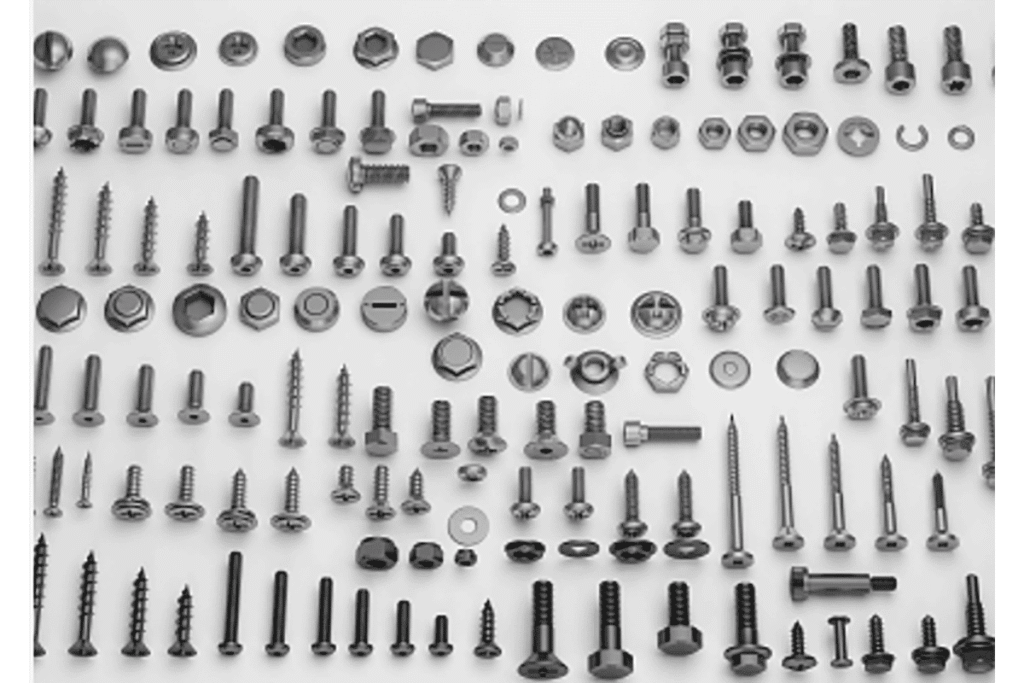
Door hinge screws commonly fall into three groups: machine screws, wood screws, and self-drilling Tek screws. Machine screws fit pre-tapped metal holes. Wood screws grip timber with coarse threads. Tek screws drill into suitable metal profiles with a drill-point tip and a thread design made for metal fastening.1
Machine Screws / MS
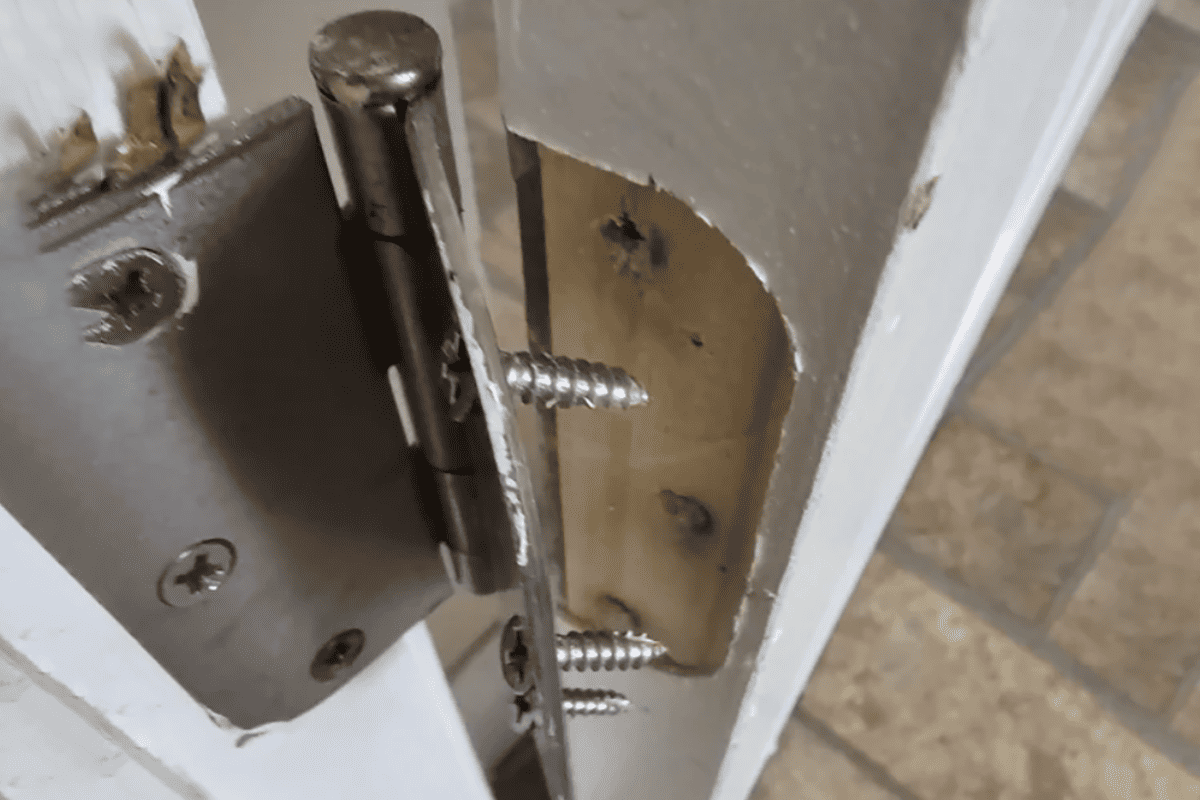
A machine screw, often marked as MS, has a flat end and a machine thread. It does not cut its own thread in the same way a wood screw or Tek screw does. It is used when the metal door, metal frame, equipment door, or hinge reinforcement plate already has pre-drilled and tapped holes.
In procurement terms, this means the buyer must confirm the thread standard. For example, a screw described as M5×30 mm usually suggests a metric machine thread with a 5 mm nominal thread diameter and 30 mm length. That naming is important because “M5” does not simply mean any 5 mm screw.
I normally recommend buyers confirm:
- Thread standard: metric, imperial, or local market preference
- Hole condition: tapped hole, through hole, or no hole
- Countersunk head fit: head diameter and angle must suit the hinge
- Material grade: especially for outdoor or humid environments
- Finish: visible screws should match hinge finish when required
Machine screws are common in metal applications because they give predictable assembly when the threaded receiving part is properly prepared. However, they should not be treated as a universal hinge screw. If the frame has no thread, a machine screw alone will not create a strong fastening.
Wood Screws / WS
A wood screw, often marked as WS, has a pointed end and a coarse, deep thread. The thread is designed to bite into timber fibers.2 This makes wood screws a common choice for wooden doors, wooden frames, and many indoor residential hinge applications.
A common misunderstanding is that a wood screw and a self-drilling screw are the same thing. They are not. A wood screw may be considered a type of self-tapping screw because it forms its own path in wood. But it does not have the drill-point geometry of a Tek screw.
Wood screws are usually selected when:
- The hinge is installed on a wooden door leaf
- The frame is solid wood or engineered wood
- The application is mostly indoor and dry
- The buyer wants simple installation without pre-tapped metal holes
- The screw must grip timber instead of thin steel profiles
For a common 4-inch butt hinge, I often see wood screws around 5 mm diameter × 30 mm length, with a head diameter around 9.3–9.8 mm. In many markets, I would write this as 5×30 mm wood screw, not M5×30 mm, because “M5” can imply a machine thread. Buyers should confirm naming before placing orders.
Self-Drilling Screws / Tek Screws
A self-drilling screw, also called a Tek screw, has a drill-point end. The tip helps drill into suitable metal profiles without separate pre-drilling or tapping in some applications.3 Tek screws usually have finer and denser threads than wood screws because they are intended for metal fastening.
Tek screws are often considered for:
- Profile doors
- Thin metal frames
- Hollow metal sections
- Industrial equipment doors
- Applications where pre-tapping is not practical
However, Tek screws must be matched carefully. The screw hardness should be higher than the target profile material4, and the surface treatment should match corrosion expectations. I do not recommend assuming one Tek screw will suit every metal door or every steel thickness.
Quick Comparison Table
| Screw Type | Tip Shape | Thread Style | Typical Use | Key Buyer Check |
|---|---|---|---|---|
| Machine Screw / MS | Flat end | Machine thread | Pre-tapped metal holes | Confirm thread size and tapped hole |
| Wood Screw / WS | Pointed end | Coarse, deep thread | Wooden doors and frames | Confirm timber type and pilot hole practice |
| Tek Screw | Drill-point end | Finer metal thread | Suitable metal profiles | Confirm steel thickness, hardness, and coating |
In factory supply, I treat these as different accessories, not interchangeable options. The hinge may be the same size, but the supplied screw set may need to change by door material and market usage.
How Should Door Hinge Screws Sizes Be Measured?
Screw size sounds easy until the drawing, packing list, and customer sample use different names. A small naming mistake can create wrong purchasing, poor hinge seating, or rejection during incoming inspection. I avoid this by measuring physical variables, not only relying on product names.
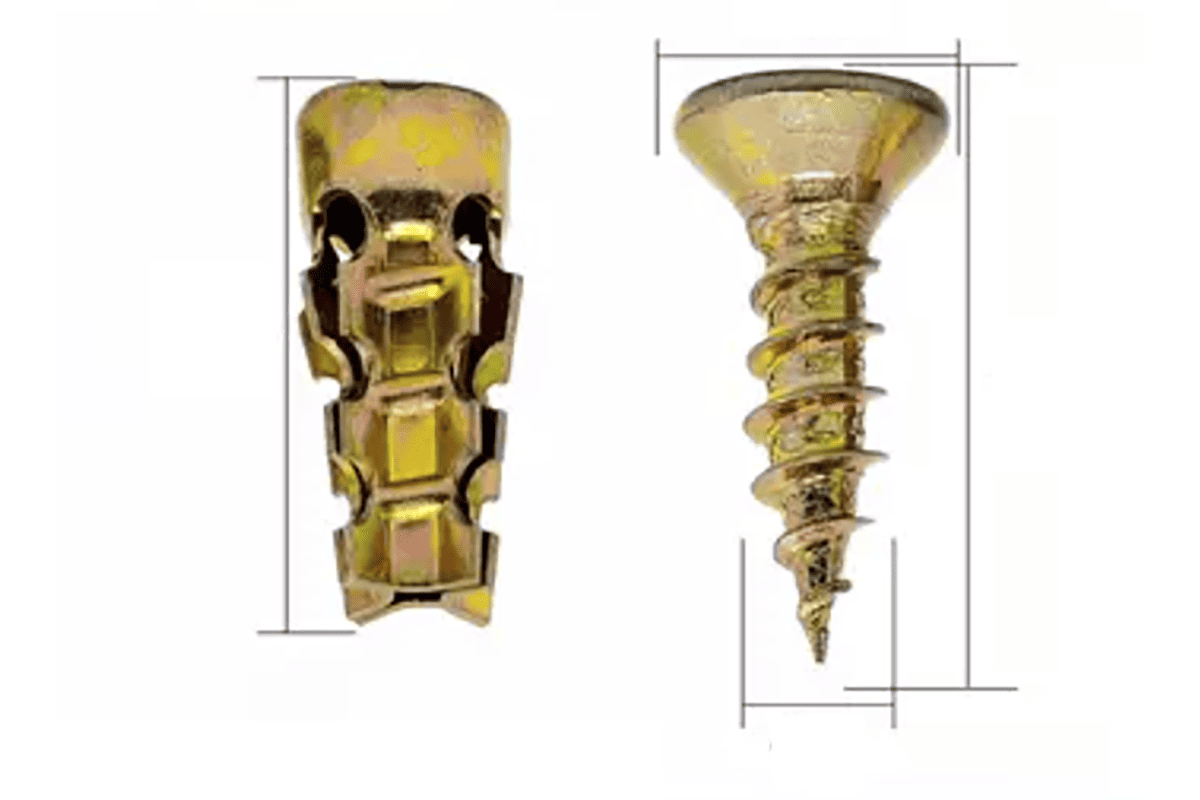
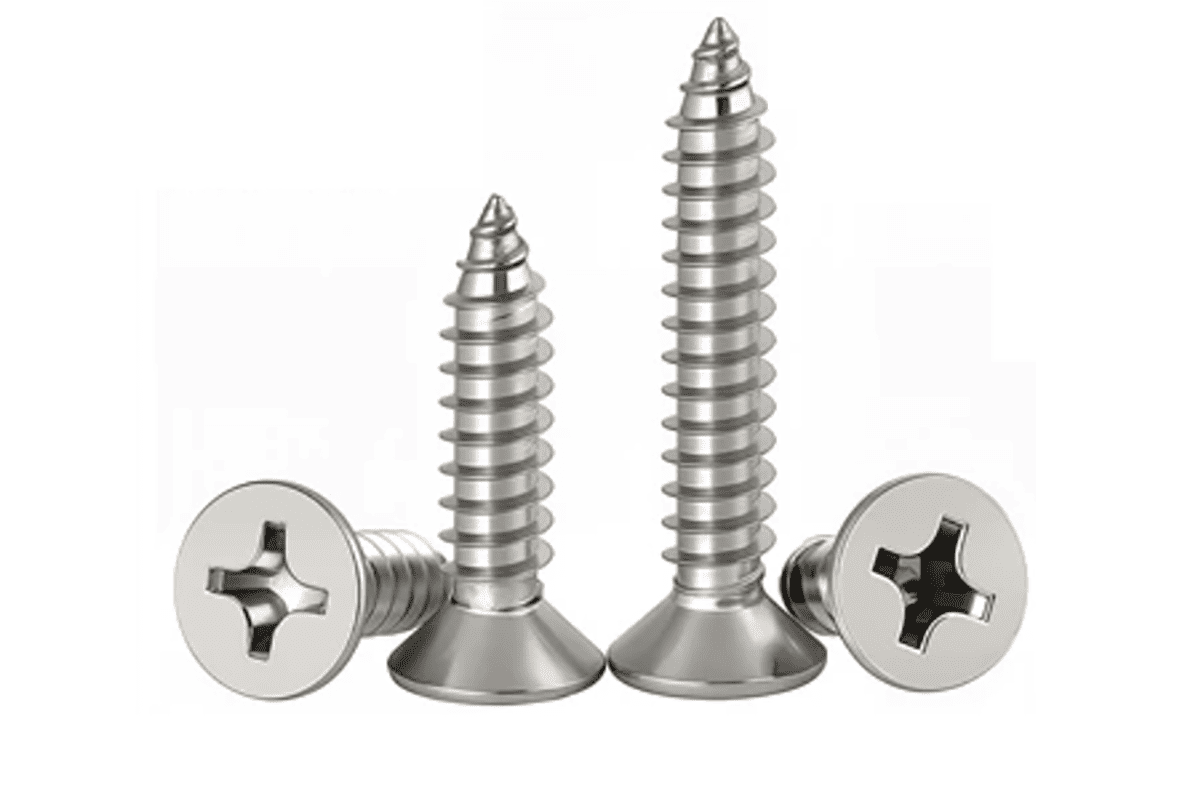
Door hinge screws should be measured by thread outside diameter / D, total length / L, and head diameter / DK. For countersunk hinge use, the head diameter and head shape are as important as length, because the screw must sit properly inside the hinge countersunk hole.
The Three Measurements I Check First
When I match screws with hinges, I usually start with three values:
D — Thread outside diameter
This is the outside diameter of the threaded body. For a wood screw described as 5×30 mm, the D value is about 5 mm.L — Total screw length
This is usually measured from the top of the countersunk head to the screw tip.5 For hinge screws, length affects holding depth and whether the screw can suit the door or frame material.DK — Head diameter
This is the diameter across the screw head. It must match the hinge countersunk hole. If it is too large, it may sit proud. If it is too small, it may not support the hinge leaf correctly.
For example, a common screw for a 4-inch hinge may be specified as:
| Variable | Example Value | Why It Matters |
|---|---|---|
| D | Around 5 mm | Affects thread grip or tapped hole compatibility |
| L | Around 30 mm | Affects fastening depth |
| DK | Around 9.3–9.8 mm | Affects countersunk hinge fit |
I would describe this carefully as 5×30 mm wood screw if it is a wood screw. I would not automatically call it M5×30 mm, because M5 often indicates a metric machine screw. This wording matters when the buyer has both wooden and metal door projects.
Why Head Fit Matters More Than Many Buyers Expect
A hinge screw is usually a countersunk flat head screw. The flat head should sit flush with the hinge leaf after fastening. If the head sits too high, it can interfere with door closing, hinge movement, or the visual finish.6 If the head sits too deep, it may deform the countersunk hole or reduce proper clamping.
I always remind buyers that the screw does not work alone. It works with:
- The countersunk hole angle
- The hole diameter
- The hinge leaf thickness
- The screw head diameter
- The surface finish thickness
- The door or frame base material
This is why a “standard screw” can fail in a non-standard application. A supplier may include screws that are common for one market, but another market may use different frames, pilot hole practices, or hardware standards.
Size Selection Is Not Just About Longer Screws
Some buyers ask for longer screws because they assume longer means stronger. I understand the idea, but I avoid making that promise. A longer screw may help in some wooden applications, but it can also split timber, hit internal reinforcement, or be unsuitable for a thin metal profile.7
For procurement evaluation, I suggest checking:
- Door material: solid wood, MDF, aluminum profile, steel profile, stainless panel
- Frame material: wood, steel, aluminum, composite
- Hinge thickness: thinner hinges may need different head geometry
- Countersunk hole: actual hole must match the screw head
- Installation method: hand tools, power tools, pre-drilling, pre-tapping
- Project requirement: indoor, outdoor, fire-rated door set, decorative door
For application-specific door strength, fire performance, or load-bearing decisions, buyers should involve a qualified engineer, door system supplier, or testing authority. A screw alone does not determine the full door assembly performance.
Which Door Hinge Screws Material Should You Choose?
Material mistakes often appear later, not during first assembly. A screw may fit perfectly at the factory, but corrosion, head damage, or poor hardness can appear after transport or use. I choose screw material by screw type, environment, and visible finish requirements.
Door hinge screws may be made from stainless steel, carbon steel, or brass. Wood screws may use 201 stainless steel for dry indoor wood applications when hardness and cost-performance matter. Machine screws often use 304 or 316 stainless steel for corrosion resistance. Tek screws commonly use hardened carbon steel with protective coating.
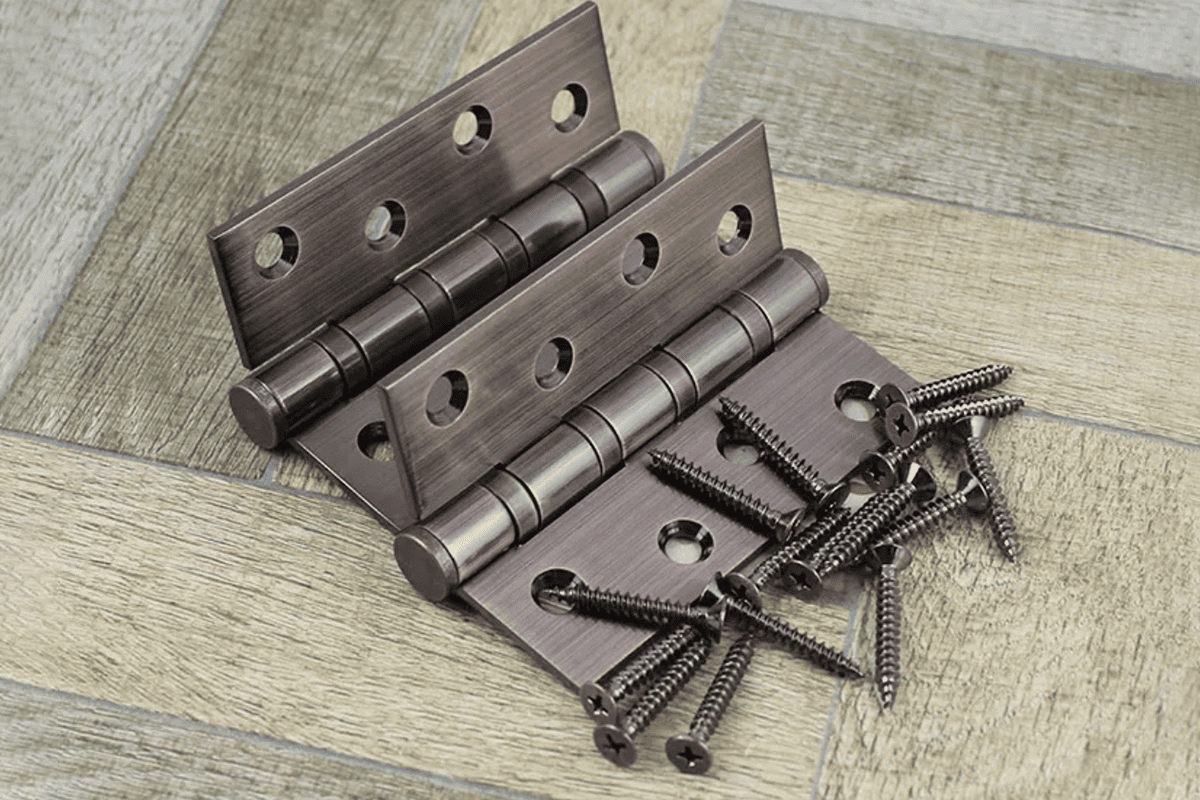
Stainless Steel Screws
Stainless steel screws are popular because buyers often associate them with corrosion resistance. That is generally reasonable, but the exact grade matters. For outdoor or humid environments, 304 stainless steel or 316 stainless steel may be considered, depending on the corrosion exposure and project requirement.
I also pay attention to one detail: some source notes may mistakenly mention “306 stainless steel.” Before publishing specifications or confirming a purchase order, buyers should verify whether the intended grade is 304, 316, or another valid grade. Grade wording must be accurate in drawings, packing lists, and supplier communication.
Typical stainless steel use cases include:
- Metal door machine screws
- Outdoor door hardware
- Coastal or humid markets, subject to project evaluation
- Stainless steel hinges that need matching visible screws
- High-end projects where corrosion resistance is a selling point
For wood screws, 201 stainless steel can be used in dry indoor wooden applications where hardness and cost-performance are important. I have seen this requested for dense wood or hardwood frames. However, 201 stainless steel is not the same as 304 or 316 in corrosion resistance8, so the environment must be considered.
Carbon Steel Screws
Carbon steel is common for Tek screws because self-drilling performance requires hardness.9 A Tek screw must drill into the target profile, so its hardness must be higher than the substrate. If the screw is too soft, the drill point can wear or fail before forming the hole.
However, carbon steel needs surface protection.10 Common finishes may include:
- Zinc plating
- Nickel plating
- Dacromet-type coatings
- Black oxide for limited decorative use
- Other project-specific anti-corrosion coatings
The coating should be selected based on the environment. A dry indoor profile door may not need the same corrosion protection as an exterior metal door. Buyers should ask for salt spray test data or coating specifications when corrosion resistance is part of procurement evaluation.
Brass Screws
Brass screws are usually chosen for appearance rather than maximum mechanical performance. They are common for decorative doors, vintage-style interiors, and hinges with brass or antique finishes.
Brass screws may be suitable when:
- The screw head is visible
- The hinge finish is brass, antique brass, or bronze style
- The project values traditional appearance
- The door is decorative rather than heavy industrial use
However, brass is softer than many steel options. It can be damaged by aggressive power-tool installation. I suggest buyers confirm torque control, pilot holes, and application suitability before using brass screws in production.
Material Selection Table
| Material | Common Screw Type | Strength Point | Limitation | Typical Application |
|---|---|---|---|---|
| 201 stainless steel | Wood screw | Cost-performance and hardness | Lower corrosion resistance than 304/316 | Dry indoor wooden doors |
| 304 stainless steel | Machine screw, wood screw | Good general corrosion resistance | Not always enough for severe marine exposure | Indoor/outdoor general use |
| 316 stainless steel | Machine screw, exposed screw | Better corrosion resistance | Higher cost | Coastal, humid, exterior projects |
| Carbon steel coated | Tek screw | Hardness for drilling | Needs coating protection | Metal profiles and thin steel sections |
| Brass | Decorative screw | Appearance | Softer material | Vintage and decorative doors |
In SDH Hardware’s hinge accessory matching work, I usually consider screw type, material, finish, and application together. I do not treat material as a separate decision, because the wrong material can affect both assembly and long-term buyer satisfaction.
When Should Buyers Change the Door Hinge Screws Supplied With Hinges?
Included screws save time, but they can also create false confidence. A hinge supplier may include screws for a common use case, while the buyer’s door material, market, or project environment is different. I recommend reviewing supplied screws before mass packing.
Buyers should change the supplied door hinge screws when the door or frame material changes, the hinge countersunk hole does not match the screw head, the installation uses tapped metal holes, the environment requires better corrosion resistance, or the visible screw finish must match a decorative hardware set.
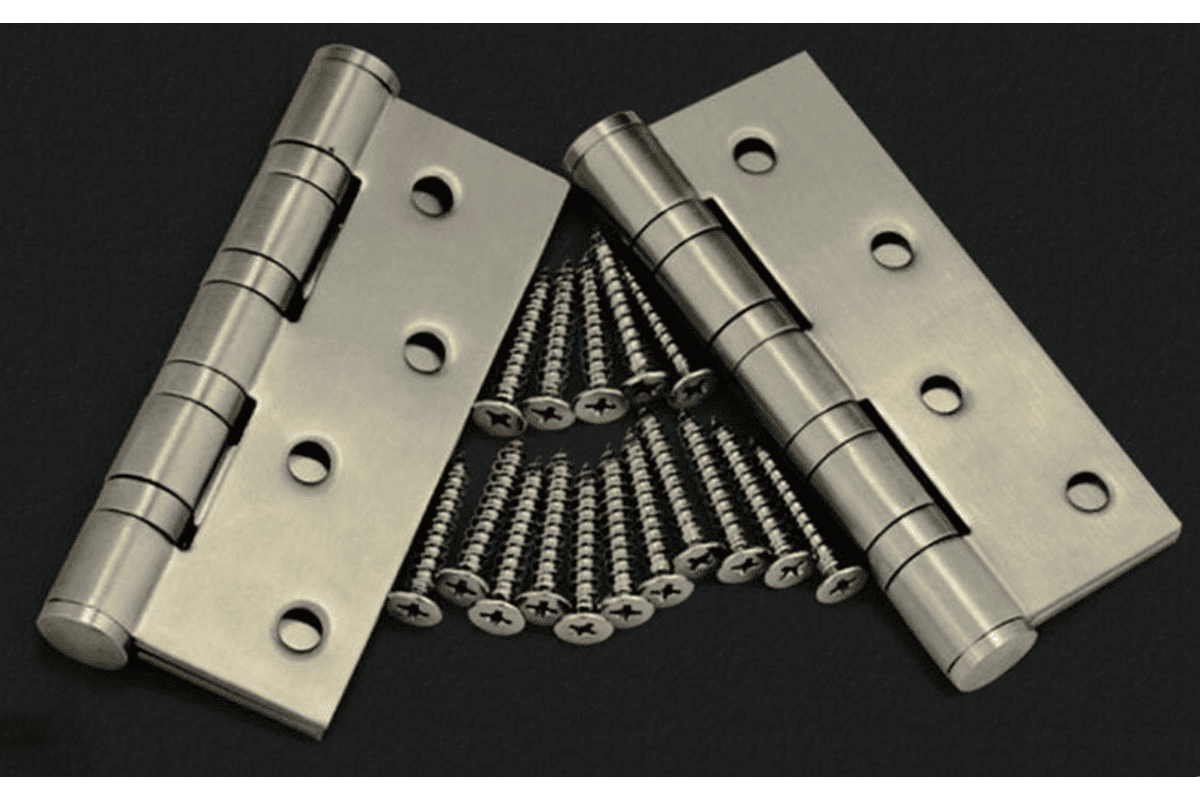
Change Screws When the Door Material Changes
The most common reason to adjust the screw set is a change in the base material. A wooden door and a metal profile door may use the same hinge size, but they usually should not use the same screw type.
For example:
- A wooden frame may need wood screws
- A pre-tapped metal frame may need machine screws
- A thin metal profile may need Tek screws
- A decorative brass hinge may need brass-colored screws
- A humid exterior project may need higher-grade stainless steel screws
This is why I ask buyers to tell me the door and frame material before confirming hinge accessory packing. A drawing of the hinge is helpful, but it does not always reveal the installation substrate.
Change Screws When the Countersunk Hole Does Not Match
The screw head must sit correctly in the hinge countersunk hole. If the head diameter is wrong, the hinge may not look clean or perform as expected.
A buyer should check:
- Head diameter / DK
- Head angle
- Head height
- Drive type
- Finish thickness
- Compatibility with hinge countersink
Common drive types include Phillips, Pozidriv, slotted, hex socket, and Torx-type drives. The drive type may be chosen by market preference or production efficiency. For example, a door factory using automated screwdrivers may prefer a drive type that reduces cam-out and head damage.
Change Screws When the Environment Changes
A screw that works indoors may not be suitable outdoors. This is especially important for buyers supplying hardware into the Middle East, Europe, or Southeast Asia, where humidity, coastal exposure, and climate variation can be very different.
For outdoor applications, I suggest buyers verify:
- Stainless steel grade, such as 304 or 316
- Coating specification for carbon steel screws
- Salt spray test requirements, if applicable
- Finish compatibility with the hinge
- Packaging protection during sea freight
I avoid saying a screw automatically guarantees project compliance. Instead, I treat corrosion resistance as one part of supplier evaluation. Buyers should request documents, test reports, and samples when the project has strict requirements.
Change Screws When Certification or Fire-Rated Projects Are Involved
For fire-rated doors, screws should not be selected casually. A hinge may have fire-rated documentation, but the complete door set, hinge model, screw configuration, installation method, and tested assembly details all matter.
At SDH Hardware, we can provide products with CE certification and fire-rated certification documents for applicable product lines. Buyers should still verify:
- Whether the certificate covers the exact hinge model
- Whether the screw type is described in the tested configuration
- Whether the door set supplier has matching test evidence
- Whether local regulations require additional evaluation
- Whether the project authority accepts the documentation
I recommend treating certifications as documents to verify, not as assumptions to repeat blindly in a purchase order.
Packing List Best Practices
For B2B orders, the packing list should clearly state the screw configuration. This reduces disputes between purchasing, warehouse, and installation teams.
A useful packing list may include:
- Screw type: MS, WS, or Tek
- Size: D × L, or metric machine thread if applicable
- Head type: countersunk flat head
- Head diameter: DK range if important
- Material: 201, 304, 316 stainless steel, carbon steel, brass
- Finish: satin, polished, zinc plated, black, brass color
- Quantity: screws per hinge or per box
- Application note: wood door, tapped metal frame, profile door
This simple step helps buyers avoid one of the most common problems I see: the hinge is correct, but the accessory screws do not match the final application.
How Can Door Factories Evaluate a Door Hinge Screws Supplier?
Supplier evaluation becomes difficult when every quotation says “standard screws included.” That phrase sounds convenient, but it hides important technical choices. I prefer suppliers who can explain the screw type, dimensions, material, finish, and packing details clearly.
Door factories should evaluate a door hinge screws supplier by checking product matching ability, dimensional control, material verification, surface treatment quality, packing accuracy, and willingness to support customized hinge accessory sets. A good supplier should not assume one screw type fits all door and frame applications.
Ask for Matching, Not Only Price
A low screw price is not useful if the screw does not fit the hinge or door material. In factory-direct supply, I usually look at the complete hinge package. The screw must support the hinge specification, customer market, and production process.
A practical supplier evaluation checklist includes:
- Does the supplier identify machine screw, wood screw, and Tek screw correctly?
- Does the supplier avoid calling every screw “self-tapping” without detail?
- Does the supplier confirm D, L, and DK?
- Does the supplier understand the hinge countersunk hole?
- Does the supplier provide material grade information?
- Does the supplier support finish matching with hinges?
- Does the supplier allow customized packing by project?
- Does the supplier provide inspection support after production?
At SDH Hardware, our team often configures screws together with butt hinges, concealed hinges, lever handles, mortise locks, and other door hardware sets. This one-stop approach helps door factories and wholesalers reduce mismatch risk across a full hardware order.
Compare Supplier Capabilities
| Evaluation Item | Basic Supplier | Professional Door Hardware Factory |
|---|---|---|
| Screw type naming | May use generic terms | Separates MS, WS, Tek, brass, stainless |
| Size control | Lists length only | Checks D, L, DK, head shape |
| Hinge matching | May provide standard pack | Matches countersunk hole and hinge finish |
| Customization | Limited | Supports ODM/OEM packing and branding |
| Quality inspection | Visual only | Uses incoming, production, and final inspection |
| Documentation | Limited | Provides drawings, certificates, and test documents where applicable |
Confirm Samples Before Mass Production
I always suggest sample confirmation for new hinge-and-screw combinations. A sample check does not need to be complicated. It can include:
- Fit the screw into the hinge countersunk hole.
- Check whether the head sits flush.
- Confirm the drive type suits production tools.
- Test the screw in the intended door or frame material.
- Inspect the surface finish after tightening.
- Confirm the packaging quantity and label.
This process is simple, but it prevents many costly mistakes. It also helps purchasing teams communicate clearly with technical teams.
Do Not Overlook Market Habits
Different markets may have different expectations. Buyers in Europe may ask more about CE documentation, fire-rated configurations, stainless grade, and precise metric descriptions. Buyers in the Middle East may focus on finish durability, cost-performance, and mixed hardware sets for project supply. Buyers in Southeast Asia may need moisture-conscious material choices and flexible packing for wholesalers.
These are general patterns, not fixed rules. The best approach is still to match the screw to the actual door, frame, hinge, and project environment.
Conclusion
Door hinge screws should be selected as part of a complete hinge and door system, not as a small generic accessory. I recommend checking screw type, D × L size, head diameter, material, finish, door or frame material, and installation method before confirming production. If you need factory-direct hinge supply with matched screws, customized packing, drawings, and inspection support, contact SDH Hardware for a project-based door hardware quotation.
"Screw", https://en.wikipedia.org/wiki/Screw. A general fastener reference distinguishes machine screws, wood screws, and self-drilling screws by their threads, points, and intended mating materials; this supports the article’s taxonomy, although it does not verify any particular door-hinge application. Evidence role: definition; source type: encyclopedia. Supports: A neutral source should define machine screws, wood screws, and self-drilling screws and distinguish their thread or tip functions.. Scope note: Contextual support only; the source would define screw categories rather than test hinge-specific performance. ↩
"Wood Handbook, Chapter 08: Fastenings", https://research.fs.usda.gov/download/treesearch/37424.pdf. Wood-fastener references describe wood screws as developing holding power through thread engagement and withdrawal resistance in the surrounding wood material. Evidence role: mechanism; source type: education. Supports: A technical woodworking or engineering source should explain that wood screws develop holding power by thread engagement with wood.. Scope note: The support is general to wood fasteners and does not establish performance for every timber species or pilot-hole condition. ↩
"Self-Tapping vs Self-Drilling Screws: What are the Differences?", https://www.easylink-usa.com/self-tapping-vs-self-drilling/. Technical fastener references describe self-drilling screws as screws with drill-point ends that can form holes in appropriate metal substrates during installation. Evidence role: mechanism; source type: institution. Supports: A fastener standard or technical source should state that self-drilling screws have drill-shaped points that make their own holes in suitable metal substrates.. Scope note: The support is conditional because allowable substrate thickness and material hardness depend on the screw design and application. ↩
"How Self-Drilling Screws Work", https://www.strongtie.com/products/fastening-systems/technical-notes/self-drilling-screws. Engineering discussions of self-drilling fasteners treat drill-point hardness as a requirement for penetration of the substrate material, supporting the need to match screw hardness to the profile being fastened. Evidence role: mechanism; source type: research. Supports: A technical or research source should support the principle that the drilling point must be sufficiently hard relative to the substrate to cut or penetrate it.. Scope note: The source would support the engineering principle, while exact hardness values require the relevant fastener specification and substrate data. ↩
"Fastener Guides - Measuring Screws and Bolts", https://www.fastenersuperstore.com/fastener-guides/measuring-screws-bolts?srsltid=AU7gw4W1bq_9TagmuQEUnCXXmRhjLaCZ1Q6Is-mKlPo6hiEduHRuWc63. Fastener measurement guides commonly state that flat countersunk screws are measured over their total length, including the head, because the head is intended to sit flush with the work surface. Evidence role: definition; source type: institution. Supports: A fastener reference should explain that countersunk flat-head screws are measured by total length including the head.. Scope note: This supports the general measurement convention; individual drawings or standards may specify different measurement details. ↩
"Asking for a little help. The hinges to my front door are ...", https://www.reddit.com/r/Carpentry/comments/s5cq6i/asking_for_a_little_help_the_hinges_to_my_front/. Door-hardware installation references generally require countersunk hinge screws to seat flush with the hinge leaf, which supports the concern that proud screw heads may affect fit or operation. Evidence role: general_support; source type: institution. Supports: A door-hardware or installation source should state that hinge screws should sit flush in countersunk holes to avoid interference.. Scope note: The source would support standard installation practice rather than quantify the amount of protrusion that causes failure. ↩
"Wood Handbook, Chapter 08: Fastenings", https://research.fs.usda.gov/download/treesearch/37424.pdf. Wood-fastener guidance links screw performance to embedment length, pilot-hole practice, and wood properties, and notes that inappropriate installation can split the wood. Evidence role: mechanism; source type: education. Supports: A woodworking or engineering source should explain that screw length, pilot holes, and wood properties affect splitting and holding performance.. Scope note: The support is general to wood fastening; it does not address every door construction or hidden reinforcement layout. ↩
"What's the Difference? Type 304, 201 and 316 Stainless ...", https://indmetalstrap.com/whats-the-difference-type-304-201-and-316-stainless-steel-banding/. Metallurgical references distinguish 201 stainless steel from 304 and 316 by composition and corrosion behavior, supporting the article’s warning that these grades should not be treated as equivalent for corrosion exposure. Evidence role: general_support; source type: research. Supports: A metallurgical source should compare 201, 304, and 316 stainless steels in terms of composition and corrosion resistance.. Scope note: Actual service performance also depends on surface condition, contaminants, and environment. ↩
"Self-Drilling Screw Selection Guide", https://www.tannerbolt.com/self-drilling-screw-selection-guide. Fastener specifications and technical references commonly identify hardened or heat-treated steel as necessary for self-drilling screw points to cut into metal substrates. Evidence role: mechanism; source type: institution. Supports: A fastener technical source should state that self-drilling screws are commonly made from hardened steel or heat-treated carbon steel to enable drilling.. Scope note: The support is about typical self-drilling screw construction; some specialty screws may use different alloys or coatings. ↩
"NACE Standards and Specifications ...", https://www.energy.gov/oe/articles/nace-standards-and-specifications-related-oil-natural-gas-infrastructure. Corrosion references describe carbon steel as susceptible to atmospheric corrosion and commonly protected by metallic or organic coatings, including zinc-based systems. Evidence role: mechanism; source type: research. Supports: A corrosion or materials source should explain that carbon steel is susceptible to corrosion and is often protected by coatings such as zinc plating.. Scope note: The source would support the general need for protection; coating adequacy depends on coating thickness, exposure, and test requirements. ↩