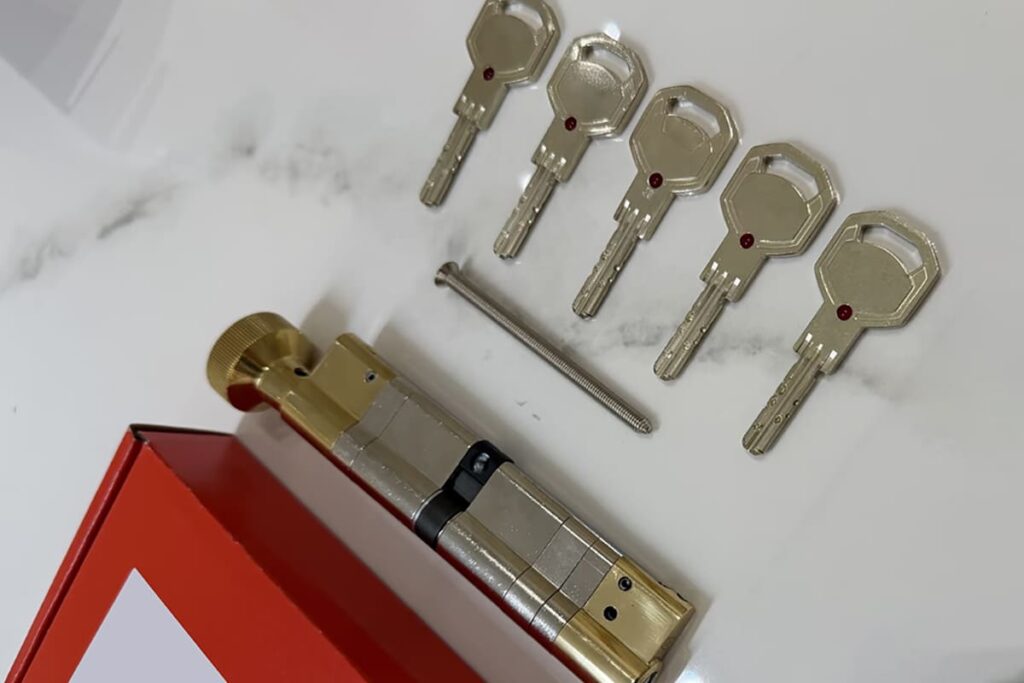
EN 1303-2015 Cylinder Standard Explained: What Requirements, Test Methods, and Supplier Checks Matter?
EN 1303-2015 cylinder standard confusion often starts when a buyer sees one line in a catalog and assumes it means “approved.” That can create real risk when the cylinder grade does not match the project. I use this guide to explain the standard in practical buyer language, so door factories and hardware brands can evaluate claims with more confidence.
EN 1303:2015 is a European performance and test standard for building cylinders and keys.1 It is not a single pass/fail certificate.2 Buyers should read its 8-digit classification code to evaluate use category, durability, door mass, fire resistance, safety, corrosion and temperature resistance, key-related security, and attack resistance3.
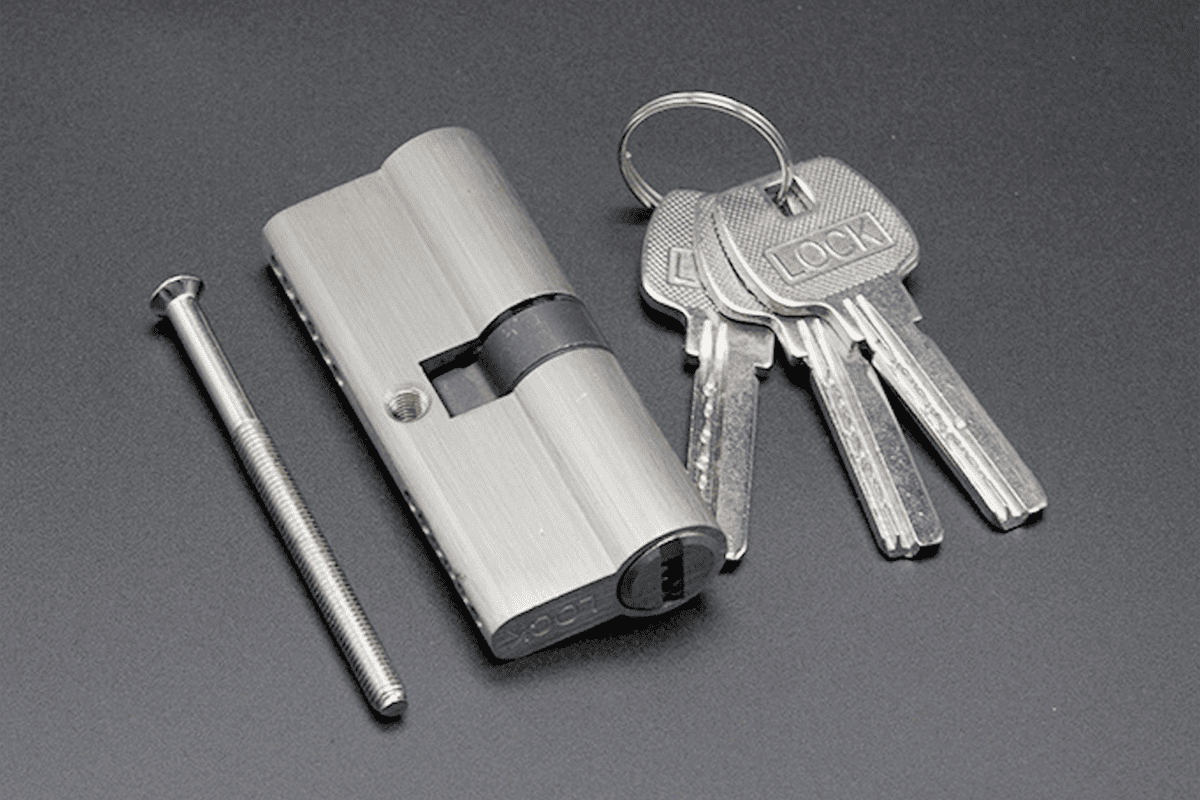
Many tender files, supplier catalogs, and third-party reports still refer to EN 1303:2015. However, buyers should also know that EN 1303:2015 has been replaced by EN 1303:20264. I will focus on the 2015 version here because it remains common in purchasing documents, but I will also point out where the update matters.
What Is the EN 1303-2015 Cylinder Standard?
Many buyers ask, “Do you have EN 1303?” That question sounds simple, but it can hide important details. If I only answer yes or no, I may miss the real procurement issue: whether the cylinder’s tested grade fits the door type, market, and security risk.
The EN 1303-2015 cylinder standard defines performance requirements and test methods for cylinders and their keys used in building locks. It classifies cylinders using an 8-digit code. Each digit represents a different performance area, so buyers should evaluate the full code instead of treating EN 1303 as one general certificate.
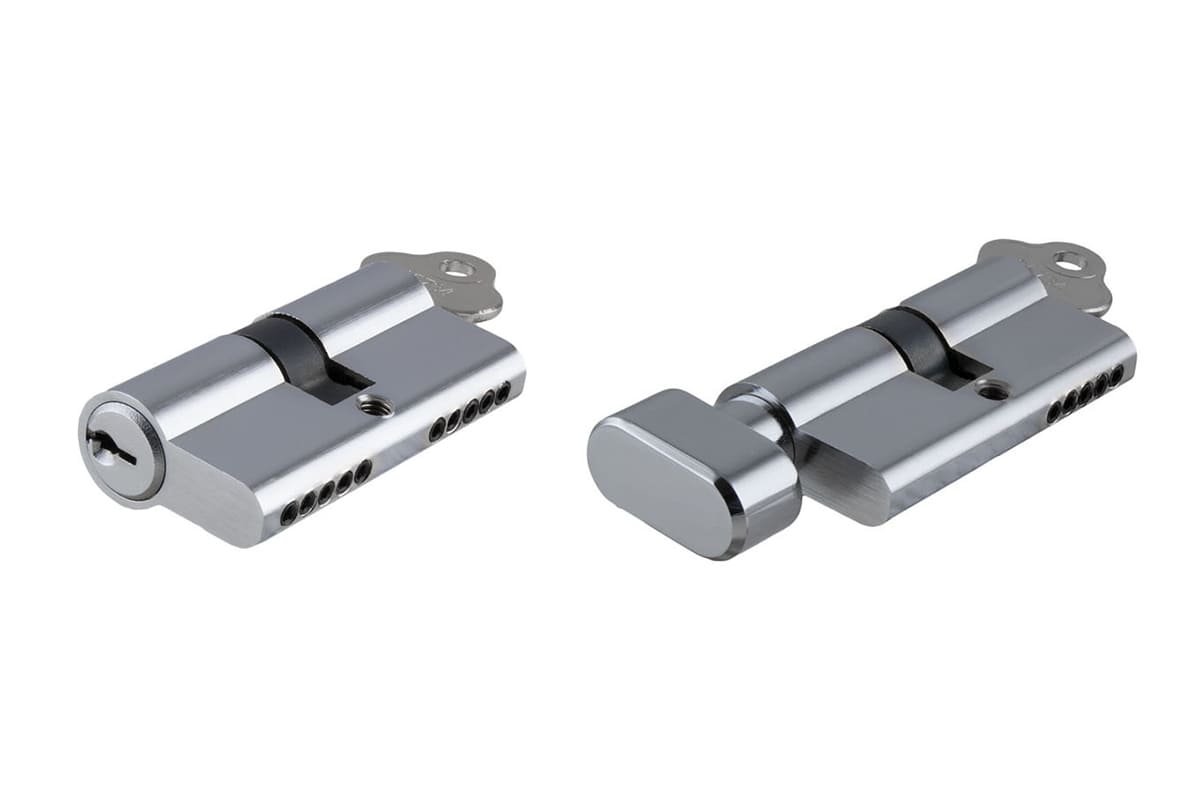
EN 1303:2015 in practical buyer terms
When I speak with door factories and hardware brands, I usually explain EN 1303:2015 as a common technical language. It helps both sides discuss durability, corrosion resistance, key security, and attack resistance with more structure.
However, the standard does not mean every certified cylinder is suitable for every project. A basic cylinder and a high-security cylinder can both be tested under EN 1303:2015, but their classification codes may be very different.
In buyer language, the standard helps answer questions such as:
- How many operating cycles has the cylinder been tested for?
- Can the cylinder work after corrosion or temperature exposure?
- How resistant is the key system to picking, manipulation, or unauthorized key duplication?
- How much resistance does the cylinder provide against physical attack?
- Is the cylinder suitable for fire or smoke door assemblies when used with matching certified hardware?
I have seen cases where a buyer received a report, but the report covered a different model than the one being ordered. That is why I always recommend checking the tested model name, cylinder structure, length range, finish, cam type, and key system against the purchase specification.
A report is only useful when it clearly matches the actual cylinder supplied.
EN 1303:2015 versus EN 1303:2026
Buyers should also note an important standards update. EN 1303:2015 has been superseded by EN 1303:2026. Many existing reports and tender files still mention the 2015 version, so it remains commercially relevant. Still, new projects may begin requesting the 2026 version.
One reported change is that the 2026 classification system adjusts the meaning of the third digit.5 In EN 1303:2015, the third digit refers to door mass. In EN 1303:2026, this position is understood to change to mechanical coding. Buyers should verify this point against the official EN 1303:2026 text or an accredited third-party report.
| Topic | EN 1303:2015 buyer focus | EN 1303:2026 buyer note |
|---|---|---|
| Standard status | Superseded, but still widely referenced | Current replacement version |
| Classification | 8-digit performance code | Updated classification details |
| Third digit | Door mass | Mechanical coding, subject to official verification |
| Procurement action | Check report validity and model match | Ask supplier which version applies |
For procurement teams, the key point is simple. Do not only ask whether a cylinder is “EN 1303.” Ask which version, which grades, and which exact cylinder model was tested.
How Should Buyers Read the EN 1303-2015 Cylinder Standard 8-Digit Code?
The 8-digit code can look technical, so buyers sometimes skip it. That is risky. If the project requires corrosion resistance, fire-door suitability, or higher attack resistance, one weak digit can matter more than the general claim printed on the box.
The EN 1303-2015 cylinder standard uses eight classification digits: use category, durability, door mass, fire resistance, safety, corrosion and temperature resistance, key-related security, and attack resistance. Buyers should read each digit as a decision point and compare the grade with the actual application risk.
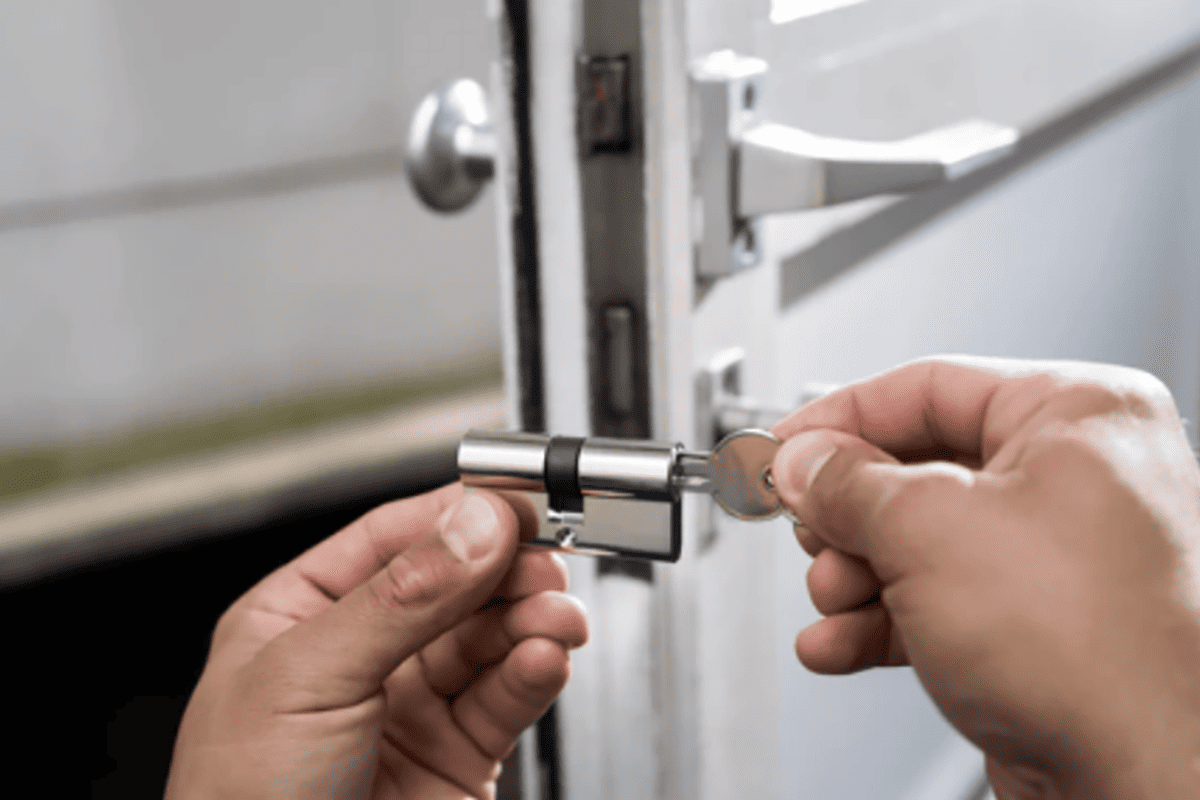
The 8 digits explained in procurement language
I prefer to translate the code into buyer questions. That approach is easier for purchasing managers, engineers, and sales teams who need to compare quotations from different suppliers.
| Digit | EN 1303:2015 category | Buyer question |
|---|---|---|
| 1 | Use category | Is the cylinder suitable for normal building use? |
| 2 | Durability | How many cycles has it been tested for? |
| 3 | Door mass | What type of door application does it support under the standard? |
| 4 | Fire resistance | Is it suitable for fire or smoke door assemblies when properly tested? |
| 5 | Safety | Does the category apply to user safety requirements? |
| 6 | Corrosion and temperature resistance | Can it handle humid, coastal, or temperature-variable markets? |
| 7 | Key-related security | How secure is the key system against unauthorized operation or duplication? |
| 8 | Attack resistance | How resistant is the cylinder to physical attack methods? |
The most important digits vary by application. For many residential projects, buyers focus on durability, corrosion resistance, and normal key security. For commercial or high-security applications, buyers should look much more carefully at key-related security and attack resistance.
Which digits matter most for common buyers?
For door manufacturers, I usually suggest checking these five areas first:
Durability grade
A cylinder used in a hotel, apartment block, office, or school may operate many times per day. A low durability grade can create warranty pressure.Corrosion and temperature resistance
Buyers in the Middle East, Southeast Asia, coastal Europe, or humid regions should not ignore this digit. Finishes and internal components can behave differently after exposure.Key-related security
This area relates to the security of the key and cylinder mechanism. Buyers should verify the exact test results in the report.Attack resistance
Higher-risk doors may need stronger resistance against drilling, pulling, or other simulated attack methods. The exact grade requirements should come from the project specification.Fire resistance
Fire-door applications require careful system-level verification.6 A cylinder alone does not make a complete door assembly compliant.
Why the code should match the ordered product
One common mistake is assuming that one EN 1303 report covers all possible cylinder variations. Buyers should be careful. A report for one cylinder type may not automatically apply to:7
- Different cylinder lengths
- Different key systems
- Different cam designs
- Thumb-turn versions
- Knob cylinders
- Different finishes or plating systems
- Anti-snap or reinforced versions
- Master key configurations
- Fire-rated door hardware sets
At SDH Hardware, we regularly help buyers compare their order requirements with available report documents. We do not act as a testing laboratory, and buyers should always verify official documents. But as a factory, we can help explain which models, drawings, materials, and configurations relate to the report.
What EN 1303-2015 Cylinder Standard Test Methods Should Buyers Understand?
Test reports can feel difficult to read because they include laboratory language. If buyers skip the test method section, they may miss the difference between a cylinder tested for normal use and one tested for demanding security or environmental conditions.
The EN 1303-2015 cylinder standard includes practical performance tests for durability, temperature operation, corrosion exposure, key security, cylinder security, and resistance to attack. Buyers do not need to memorize every laboratory condition, but they should verify grade thresholds and exact test details in the official standard or third-party report.
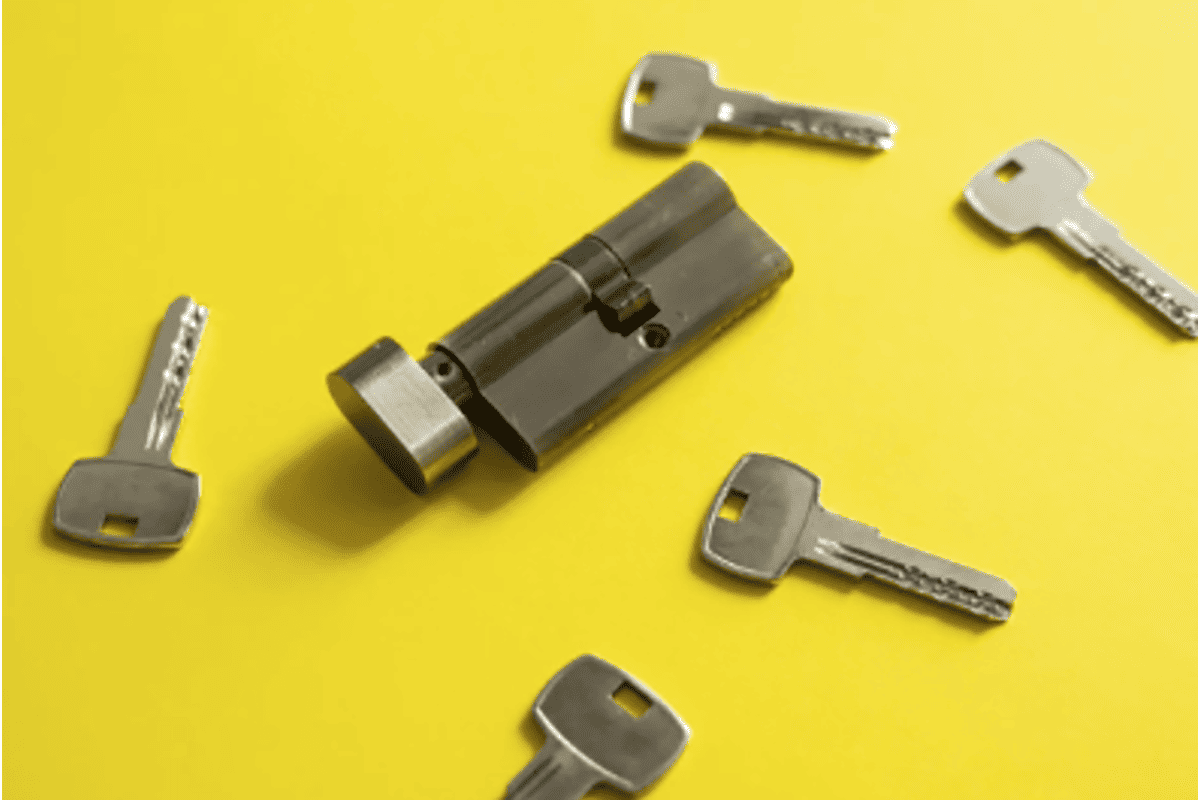
Durability testing
Durability testing checks whether the cylinder can continue operating after repeated key cycles.8 In simple terms, the test simulates long-term use. For a building with heavy daily traffic, this matters because the cylinder is not just opened once or twice per week.
A buyer should check:
- The tested cycle grade
- Whether the test covered the same cylinder model
- Whether the report notes any failures or limitations
- Whether lubrication, operating force, or key wear was evaluated
In real procurement, I often see buyers compare only price. However, a lower-cost cylinder with poor durability can increase after-sales claims. A door factory may save a small amount per unit but lose more in replacement labor, complaints, and brand reputation.
Corrosion and temperature testing
Corrosion and temperature resistance are especially important for export markets.9 A cylinder shipped to a dry indoor apartment project has different risk than a cylinder used in a humid coastal market.
The standard includes exposure and operation-related requirements. Depending on the report and applicable grade, buyers may see references to corrosion exposure, temperature conditions, and continued operation after testing. Exact test durations, salt spray conditions, and grade thresholds should be checked in the official EN 1303 text or the laboratory report.
For buyers, the practical question is:
Will the cylinder still operate smoothly after realistic environmental exposure in the target market?
This is important for:
- Coastal residential projects
- Hotels near the sea
- Outdoor entrance doors
- Humid Southeast Asian markets
- High-temperature Middle East markets
- Projects with aggressive cleaning chemicals nearby
Key-related security tests
Key-related security evaluates how difficult it is to operate or reproduce the locking function without authorization.10 The exact grading depends on the standard and report. Buyers should not rely only on phrases like “high security key.” That phrase means little unless it connects to a tested classification.
Buyers should ask the supplier:
- What key-related security grade does the cylinder achieve?
- Does the tested key system match the ordered key system?
- Is the key profile restricted, patented, or open?
- Are there master keying requirements?
- Does the report cover the supplied configuration?
For hardware brands, this area can affect market positioning. A basic open-profile cylinder may be suitable for standard residential distribution. A restricted profile may be better for controlled commercial projects. The EN 1303 classification helps start that discussion, but legal key protection and local market rules may also matter.
Attack resistance testing
Attack resistance relates to physical attack methods.11 Reports may include tests connected with drilling, pulling, twisting, or other simulated attack conditions depending on cylinder design and grade. Buyers should verify exact methods and grade results against the report.
This area is important when the project involves:
- Apartment entrance doors
- Commercial premises
- Storage rooms
- Utility areas
- Schools
- Offices
- High-risk residential doors
A supplier should not simply say, “This is anti-burglary.” The supplier should explain which tested feature supports that claim. For example, the cylinder may include hardened pins, reinforced bars, anti-drill components, anti-pick design, or anti-snap structure. But the buyer should still verify whether those features were included in the tested sample.
How Can Buyers Match EN 1303-2015 Cylinder Standard Grades to Applications?
A high grade is not always necessary, and a low grade is not always acceptable. The right choice depends on door usage, security risk, climate, fire-door requirements, and local market expectations. If buyers ignore the application, the grade can become meaningless.
The EN 1303-2015 cylinder standard should be matched to the actual door application. Residential, commercial, coastal, high-security, and fire-door projects may require different grade combinations. Buyers should define the application first, then ask suppliers to recommend a cylinder with matching tested classifications.
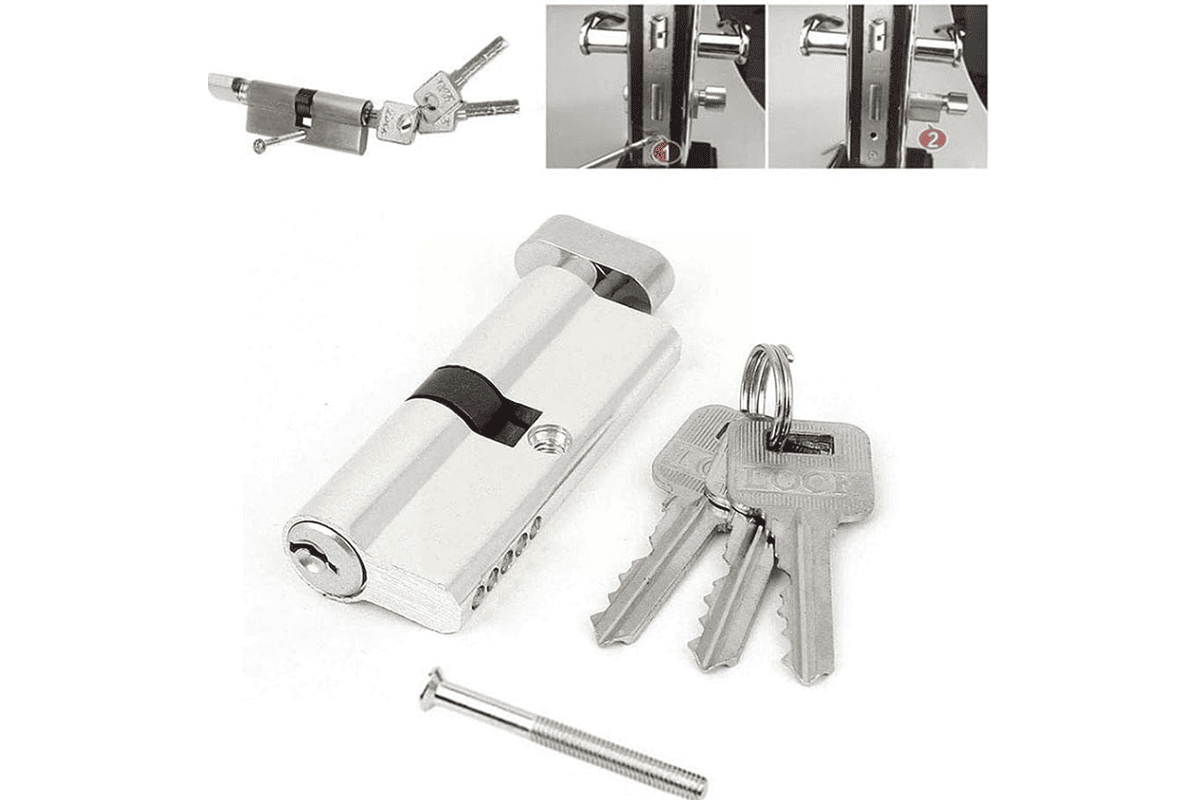
Application-based cylinder selection
When I help buyers shortlist Euro cylinders, I usually start with a simple project profile. The cylinder is one part of a larger door hardware system, so the selection should follow the door’s real use case.
| Application | Key buyer concern | Grade areas to check carefully |
|---|---|---|
| Standard residential doors | Cost, smooth operation, basic security | Durability, corrosion, key security |
| Apartment entrance doors | Higher traffic and security | Durability, attack resistance, key security |
| Commercial buildings | Frequent use and brand reliability | Durability, key control, corrosion |
| Coastal or humid projects | Rust, sticking, finish failure | Corrosion and temperature resistance |
| High-security areas | Forced entry risk | Key-related security, attack resistance |
| Fire-door assemblies | Compliance and life safety | Fire resistance, matching hardware reports |
This table should not replace project engineering review. It is a procurement starting point. For application-specific fire, security, or regulatory decisions, buyers should consult qualified professionals and verify the applicable standards.
Residential projects
For general residential doors, buyers often balance cost and performance. A standard Euro cylinder may be acceptable when the door is used in a low-risk indoor location. However, the buyer should still check durability and corrosion resistance.
A residential cylinder should not fail early because the internal mechanism wears quickly or the finish corrodes. If the project is in a humid region, corrosion performance can become more important than buyers expect.
Questions I would ask include:
- Is the cylinder used indoors or outdoors?
- Is the door exposed to rain or sea air?
- How many users will operate the door daily?
- Is key duplication control important?
- Is the project specification asking for EN 1303:2015 or EN 1303:2026?
Commercial buildings
Commercial doors often see more frequent use. Offices, hotels, schools, clinics, and public buildings can create higher cycle demands. In these cases, durability becomes a major procurement factor.
For hardware brands, commercial projects also affect reputation. If a cylinder begins sticking after installation, the complaint may go to the brand before it reaches the factory. That is why I prefer to match commercial jobs with more conservative grade choices.
Commercial buyers should check:
- Cycle test grade
- Key system compatibility
- Master keying requirements
- Finish durability
- Corrosion resistance
- Project documentation needs
High-security areas
High-security areas require a stronger review process. EN 1303:2015 attack resistance and key-related security digits become more important. However, buyers should remember that cylinder security also depends on the door leaf, lockcase, escutcheon, strike plate, installation quality, and surrounding hardware12.
A high-grade cylinder installed without proper protection may still be vulnerable. In many markets, buyers use reinforced escutcheons, security handles, or anti-pull protection with the cylinder. The supplier should explain how the cylinder design fits the complete door hardware package.
Fire-door assemblies
Fire-door applications need extra care. A cylinder may have fire-related classification in a report, but buyers should verify how it fits the complete assembly. Fire performance is often evaluated as part of a door set or hardware combination.
Buyers should ask for:
- Fire-related test documents
- CE or declaration documents where applicable
- Exact model matching
- Door hardware compatibility
- Installation requirements
- Applicable regional rules
At SDH Hardware, we supply Euro cylinders and related architectural door hardware. When a buyer asks about fire-door use, we recommend checking all relevant documents and confirming suitability with the project’s responsible technical party.
How Should Buyers Verify EN 1303-2015 Cylinder Standard Supplier Claims?
Supplier claims can sound similar, even when the tested performance is different. A catalog line may say “EN 1303,” but the report may show another model, another finish, or another classification. That gap can create procurement and compliance problems.
Buyers should verify EN 1303-2015 cylinder standard claims by requesting the full classification code, the test report, the tested model details, the applicable standard version, and confirmation that the ordered cylinder matches the tested sample. Buyers should also check certification documents with qualified third parties when project risk is high.
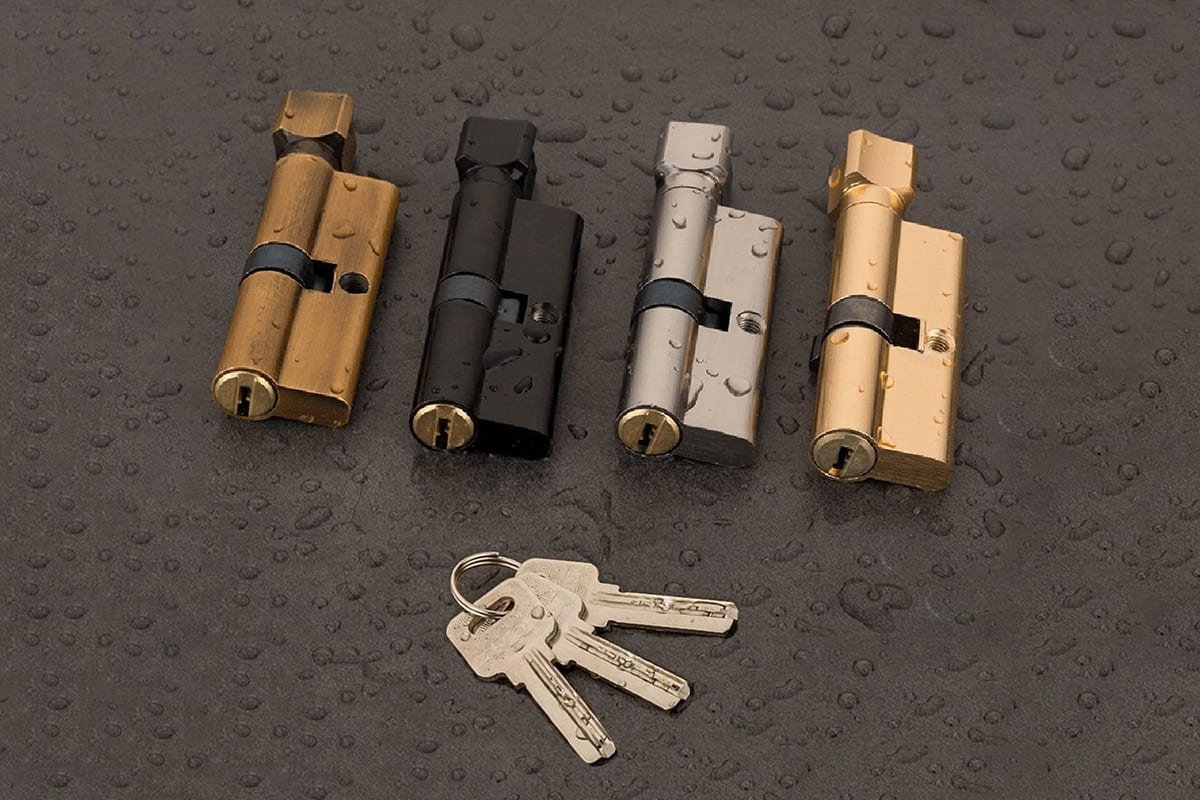
A practical supplier verification checklist
I recommend using a structured checklist before placing a bulk order. This helps purchasing teams compare suppliers fairly.
Ask the supplier for:
Full EN 1303 classification code
The supplier should provide the 8-digit code, not only a general claim.Test report copy
The report should show the testing body, tested model, test date, standard version, and grade results.Model matching confirmation
The supplied cylinder should match the tested model, including structure and key system.Cylinder length coverage
The buyer should verify whether the tested model covers the ordered length range.Configuration details
The report may not cover every thumb-turn, knob, cam, finish, or reinforced variation.Fire-related documents if needed
Fire-door projects require careful document review.2026 standard position
The supplier should explain whether the report is based on EN 1303:2015 or EN 1303:2026.
Red flags in supplier documents
Some issues should make buyers pause. They do not always mean the supplier is unreliable, but they require clarification before order confirmation.
| Red flag | Why it matters |
|---|---|
| Only “EN 1303 certified” is stated | The buyer cannot evaluate grade suitability |
| Report model differs from quoted model | The claim may not apply to the order |
| No standard version is shown | The buyer cannot know whether 2015 or 2026 applies |
| No 8-digit code is provided | The core classification is missing |
| Fire-door claim has no matching document | Fire suitability may be unsupported |
| One report is used for many unrelated models | Coverage may be too broad or unclear |
| Supplier cannot explain grades | Technical support may be weak |
How I evaluate a supplier claim as a manufacturer
When I review cylinder documentation, I look for consistency. The product drawing, bill of materials, report model, and customer order should tell the same story. If the customer orders a brass Euro profile cylinder with a specific key system and finish, the supporting documents should not refer only to a different structure.
For ODM and OEM orders, the check becomes even more important. A custom logo or packaging usually does not affect EN 1303 performance. But a changed key system, changed cylinder body, changed reinforcement, or changed finish may affect whether the old report remains relevant.
As a China-based architectural door hardware manufacturer, SDH Hardware supports door factories, hardware brands, and wholesalers with standardized and customized Euro cylinders. We can provide product drawings, inspection support, and document coordination after order confirmation. Still, I always tell buyers that official conformity decisions should rely on the applicable standard, third-party reports, and qualified professional review.
Questions buyers should ask before confirming an order
Before placing a cylinder order, buyers can use these questions:
- Which version applies: EN 1303:2015 or EN 1303:2026?
- What is the full classification code?
- Which model was tested?
- Does the report cover this cylinder length?
- Does the report cover the ordered key system?
- Does the report cover the ordered finish?
- Does the cylinder need fire-door suitability?
- Does the project require attack resistance?
- What inspection process will be used before shipment?
- Can the supplier explain the grade selection for the target market?
These questions help convert a vague claim into a measurable procurement decision.
Frequently Asked Questions
Is EN 1303:2015 a pass/fail certificate?
No. EN 1303:2015 is not a simple pass/fail certificate. It is a performance classification standard for building cylinders and keys. Buyers should read the 8-digit code and verify which grades the cylinder achieved in the actual test report.
Has EN 1303:2015 been replaced?
Yes. EN 1303:2015 has been replaced by EN 1303:2026. Many tenders and existing reports still reference the 2015 version, but buyers should confirm which version applies. They should also verify updated classification details against the official EN 1303:2026 text.
Does one EN 1303 report cover all cylinder models?
Not necessarily. One report may not cover every cylinder length, key system, finish, thumb-turn version, cam type, or reinforced structure. Buyers should check whether the tested sample matches the exact cylinder being ordered.
Which EN 1303 grades are most important for Euro cylinder buyers?
The most important grades depend on the application. Many buyers focus on durability, corrosion and temperature resistance, key-related security, attack resistance, and fire resistance. Residential, commercial, coastal, high-security, and fire-door applications usually require different grade priorities.
Can a cylinder alone make a fire door compliant?
No. A cylinder alone does not make a complete fire door compliant. Fire-door suitability depends on the full door assembly, including lockcase, hinges, handles, seals, installation, and relevant test evidence. Buyers should verify all documents with qualified professionals.
Conclusion
The EN 1303-2015 cylinder standard is best understood as a structured performance language, not a simple approval mark. Buyers should check the 8-digit classification code, confirm the tested model, review durability and security grades, and note that EN 1303:2015 has been superseded by EN 1303:2026. If you need Euro cylinders for residential, commercial, coastal, high-security, or fire-door-related projects, I recommend sharing your application details early. SDH Hardware can help match cylinder specifications, documents, and factory supply options for your procurement review.
"SIST EN 1303:2015 - Cylinders for locks", https://standards.iteh.ai/catalog/standards/sist/67315cd0-347e-4a4f-8a9e-995f66f7760c/sist-en-1303-2015?srsltid=AU7gw4ULj4EswRWQg0CF_sL2SNvSHENUp9cAeFNx6Wyxx0M1JwLJxAHo. A standards catalogue entry for EN 1303:2015 describes the document as specifying requirements and test methods for cylinders for locks and their associated keys, supporting its characterization as a European performance and testing standard for building lock cylinders. Evidence role: definition; source type: institution. Supports: The source should identify EN 1303:2015 as the European standard specifying requirements and test methods for cylinders for locks and their keys.. ↩
"Guide to EN 1303:2015 - Cylinders for Locks Coding System", https://www.dirock.com/Guide-to-EN-1303-2015-Cylinders-for-Locks-Coding-System-id44113496.html. The EN 1303 classification framework presents cylinders through graded performance categories, which supports treating the standard as a classification system rather than as a single pass-or-fail certificate. Evidence role: definition; source type: institution. Supports: The source should show that EN 1303:2015 assigns classified grades to cylinder performance characteristics rather than issuing a single approval result.. Scope note: The source may describe the classification structure but may not explicitly use the phrase “not a pass/fail certificate.” ↩
"Guide to EN 1303:2015 - Cylinders for Locks Coding System", https://www.dirock.com/Guide-to-EN-1303-2015-Cylinders-for-Locks-Coding-System-id44113496.html. The EN 1303:2015 classification scheme lists eight graded categories for cylinders, including use, durability, door mass, fire resistance, safety, corrosion and temperature resistance, key-related security, and attack resistance. Evidence role: definition; source type: institution. Supports: The source should list the eight EN 1303:2015 classification categories and their order.. ↩
"DS/EN 1303:2026 - Building hardware - Cylinders and ...", https://webstore.ansi.org/standards/ds/dsen13032026?srsltid=AU7gw4X5zmdQFW1BVVNOphC7I7Wgx2YIsjunTSihrgQysiIAef_4fabX. A standards-body catalogue entry identifying EN 1303:2026 as the current edition and EN 1303:2015 as superseded would support the statement that the 2015 version has been replaced by the 2026 version. Evidence role: historical_context; source type: institution. Supports: The source should confirm that the 2026 edition is the current replacement for the 2015 edition of EN 1303.. ↩
"BS EN 1303 – Cylinders", https://www.hoppe.com/in-en/contacts-service/standards/bs-en-1303/. The official EN 1303:2026 classification table should be cited to substantiate any change in the meaning of the third digit relative to the 2015 edition. Evidence role: historical_context; source type: institution. Supports: The source should document how the third classification digit is defined in EN 1303:2026 and whether it differs from EN 1303:2015.. Scope note: Because detailed standards text is often paywalled, an accessible catalogue or summary may only confirm the revision generally and may not directly verify the third-digit change. ↩
"Important Tips for Specifying Fire Door Assemblies", https://steeldoor.org/tips-for-specifying-fire-door-assemblies/. Fire-door guidance and codes generally treat fire performance as an assembly property involving the door leaf, frame, hardware, seals, and installation, which supports the need for system-level verification when using a cylinder on a fire door. Evidence role: expert_consensus; source type: government. Supports: The source should support that fire-door performance depends on the tested or certified door assembly and compatible hardware components, not on one component in isolation.. Scope note: The source may address fire-door assemblies generally rather than EN 1303 cylinders specifically. ↩
"16 CFR Part 1112 -- Requirements Pertaining to Third ...", https://www.ecfr.gov/current/title-16/chapter-II/subchapter-B/part-1112. Conformity-assessment requirements for laboratory reports emphasize identification of the tested item and the conditions of testing, providing contextual support for limiting an EN 1303 report to the cylinder configuration actually evaluated unless the report states broader coverage. Evidence role: general_support; source type: institution. Supports: The source should support that accredited test reports identify the tested item and that results are tied to the sample or configuration tested.. Scope note: This supports the general reporting principle and may not specify every cylinder variant listed in the article. ↩
"Standards - BS EN 1303", https://www.aldridgesecurity.co.uk/standards-bs-en-1303. EN 1303 durability provisions classify cylinders according to repeated operating-cycle testing, supporting the statement that durability testing evaluates continued operation after repeated key use. Evidence role: mechanism; source type: institution. Supports: The source should describe durability grades or tests in EN 1303 as involving repeated operating cycles of the cylinder.. ↩
"Corrosion Risk Assessment in Coastal Environments Using ...", https://pmc.ncbi.nlm.nih.gov/articles/PMC12252465/. Research on metallic corrosion in humid or chloride-rich environments shows that environmental exposure can degrade hardware materials and finishes, providing contextual support for treating corrosion and temperature resistance as important in export markets. Evidence role: general_support; source type: research. Supports: The source should show that humidity, salt exposure, or temperature variation can affect metallic hardware performance and corrosion behavior.. Scope note: Such research may address metallic hardware or materials broadly rather than EN 1303 cylinders specifically. ↩
"BS EN 1303 – Cylinders", https://www.hoppe.com/in-en/contacts-service/standards/bs-en-1303/. The EN 1303 key-related security category addresses characteristics of the key and cylinder mechanism relevant to unauthorized operation or key-system compromise, supporting the article’s explanation of this classification area. Evidence role: definition; source type: institution. Supports: The source should explain that key-related security grades assess aspects of resistance to unauthorized operation, key coding, or key duplication risk.. ↩
"BS EN 1303 – Cylinders", https://www.hoppe.com/in-en/contacts-service/standards/bs-en-1303/. EN 1303 includes an attack-resistance classification for lock cylinders, which supports describing this grade as a measure of resistance to physical attack methods. Evidence role: definition; source type: institution. Supports: The source should identify attack resistance as an EN 1303 classification category and describe its connection to physical attack testing.. ↩
"PHYSICAL SECURITY OF DOOR ASSEMBLIES AND ...", https://ojp.gov/pdffiles1/nij/32269.pdf. Physical-security guidance commonly treats forced-entry resistance as a function of the complete door opening, including locks, strikes, frames, protective hardware, and installation quality, supporting the statement that cylinder security depends on the surrounding assembly. Evidence role: expert_consensus; source type: government. Supports: The source should support that door security is affected by multiple components, including the lock, frame, strike, hardware protection, and installation.. Scope note: The source may discuss door security generally rather than EN 1303 cylinder grading specifically. ↩