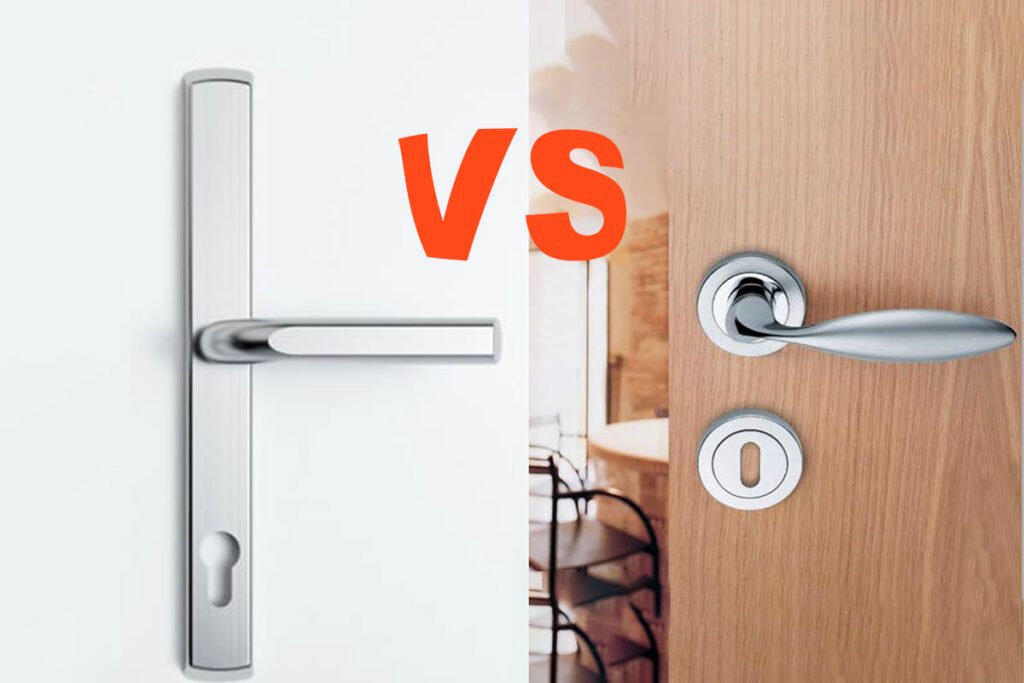
Split Handle vs. Plate Handle: The Ultimate Showdown — Which One Is Your Final Choice?
Split Handle vs. Plate Handle looks like a design debate at first, but the wrong choice can create lock-body mismatch, re-drilling, delayed installation, and after-sales complaints. I see this often during sample confirmation. The solution is simple: start with lock center distance1, door preparation, and market standard before choosing the handle style.
Split Handle vs. Plate Handle should be decided by lock compatibility and application fit, not appearance alone. Plate handles work best when the lock center distance is clearly confirmed, such as 85 mm or 92 mm. Split handles offer wider flexibility because the lever rose and key or cylinder escutcheon are separate.
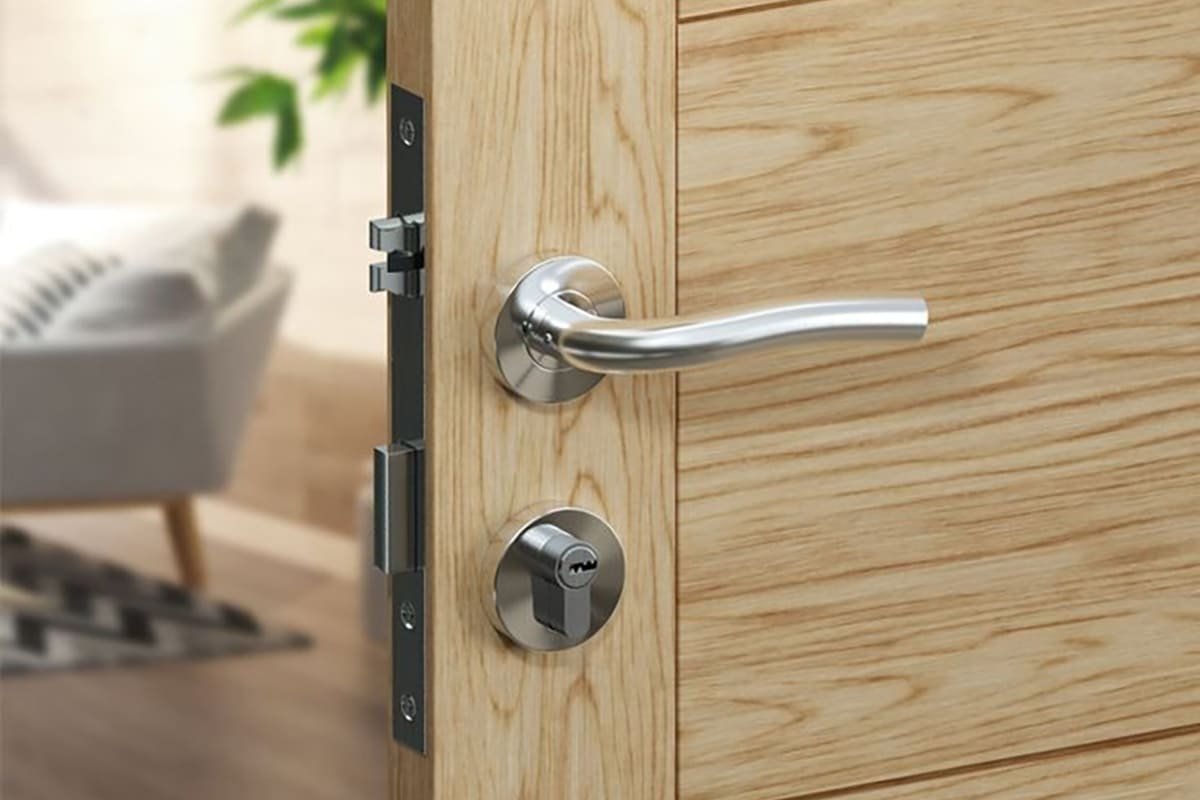
I manufacture architectural door hardware in China, so I look at this question from the factory side. A beautiful handle drawing is not enough. The buyer also needs to confirm the lock body, hole positions, fixing method, door thickness, surface finish, and installation standard.
Why Is Split Handle vs. Plate Handle Really a Lock-Center-Distance Decision?
Many buyers start with style, but style does not solve installation problems. If the handle does not match the mortise lock center distance, the door factory may need re-drilling or replacement parts. That small mistake can become expensive when the order includes thousands of doors.
Split Handle vs. Plate Handle is mainly a lock-center-distance decision because plate handles combine the lever and key or cylinder position on one plate, while split handles separate them. Plate handles require a matching center distance. Split handles can adapt more easily to different mortise lock standards and hole positions.
What does lock center distance mean?
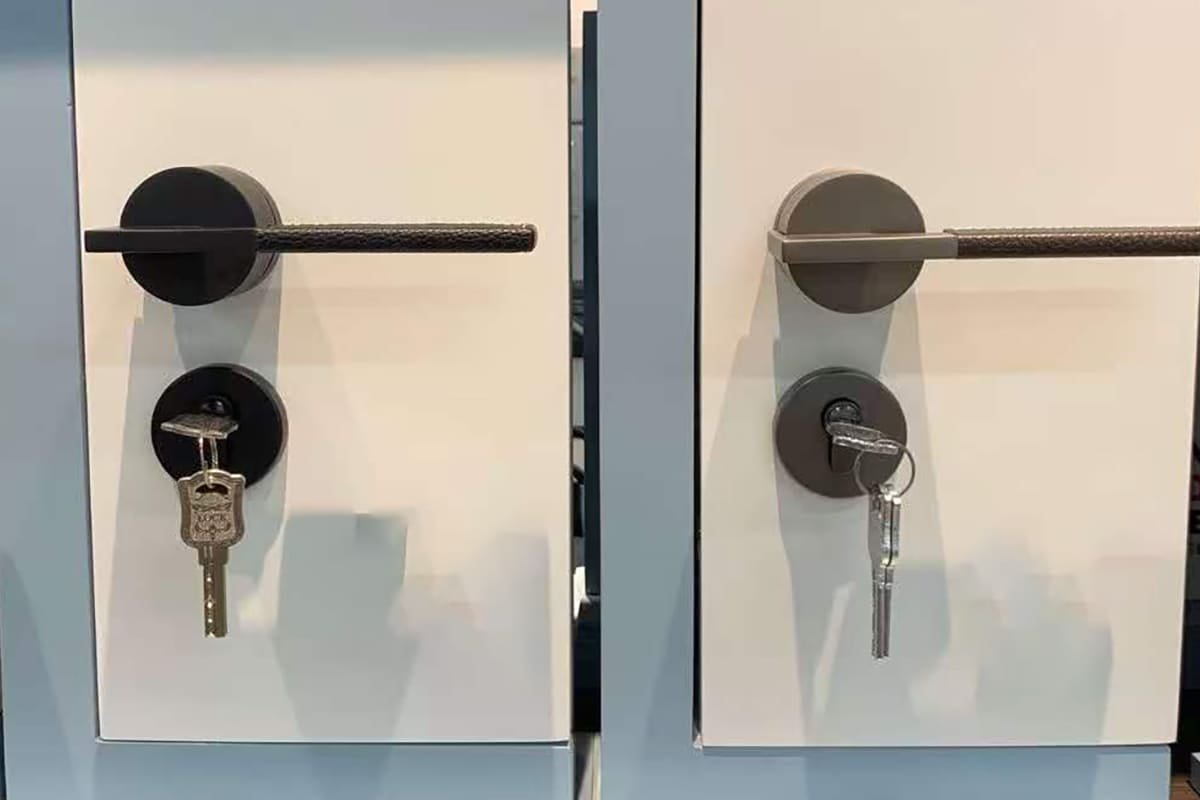
In door hardware procurement, lock center distance usually refers to the vertical distance between the lever spindle center and the keyhole or cylinder center. This distance must match the lock body and handle set.
Common examples include:
- 85 mm center distance2 for many sash lock applications
- 92 mm center distance3 for many narrow lock applications
- 72 mm center distance under DIN 18251 mortise lock standards
- 70 mm, 90 mm, or other center distances in some regional markets
When I review customer drawings, I usually check this point before I discuss finish, packing, or logo marking. The reason is practical. A surface finish can be adjusted. A packaging layout can be revised. But a wrong plate hole distance can make a whole batch unsuitable for the intended lock.
Why plate handles need more precise confirmation
A plate handle has the lever and lock opening integrated into one backplate. That creates a clean and stable layout, but it also means the hole positions are fixed. If the plate is made for an 85 mm center distance, it cannot correctly fit a 92 mm lock without changing the plate design.4
Here is a simple comparison:
| Handle type | Main structure | Center distance flexibility | Best use case |
|---|---|---|---|
| Split handle | Separate lever rose and escutcheon | Higher | Multiple lock standards or uncertain markets |
| Plate handle | Lever and key/cylinder hole on one plate | Lower | Confirmed lock body and fixed center distance |
| Narrow plate handle | Slim backplate with fixed openings | Medium to low | Narrow stile doors with known 92 mm lock |
| Long plate handle | Full or longer plate layout | Low | Projects with stable door and lock specifications |
Why split handles solve more compatibility problems
A split handle uses separate parts: one rose for the lever and another escutcheon for the keyhole, cylinder, or bathroom turn. This separation gives buyers more freedom. If the lock center distance changes from 72 mm to 85 mm, the rose and escutcheon can often still be positioned correctly, depending on the door preparation and fixing method.
That flexibility matters for B2B buyers who sell to different regions. For example, a hardware brand may serve Europe, the Middle East, and Southeast Asia with different mortise lock habits. If the buyer does not want to carry too many plate handle SKUs, split handles may reduce complexity.
In many order-confirmation cases, I ask buyers to send the lock body drawing before we confirm the handle drawing. This small step prevents many installation problems later.
The key point is not that one handle is always better. The key point is that Split Handle vs. Plate Handle starts with the lock body, not the catalog photo.
When Should You Choose a Plate Handle in Split Handle vs. Plate Handle?
Plate handles can be a good choice when the application is clear. The problem appears when buyers choose them without confirming the lock center distance. A plate handle looks simple, but it depends heavily on correct hole spacing, plate length, plate width, and lock-body position.
You should choose a plate handle when you know the exact mortise lock center distance, door preparation, and fixing standard. Plate handles are commonly used with 85 mm sash locks and 92 mm narrow locks. They are suitable for stable product lines where the lock body and door design will not change often.
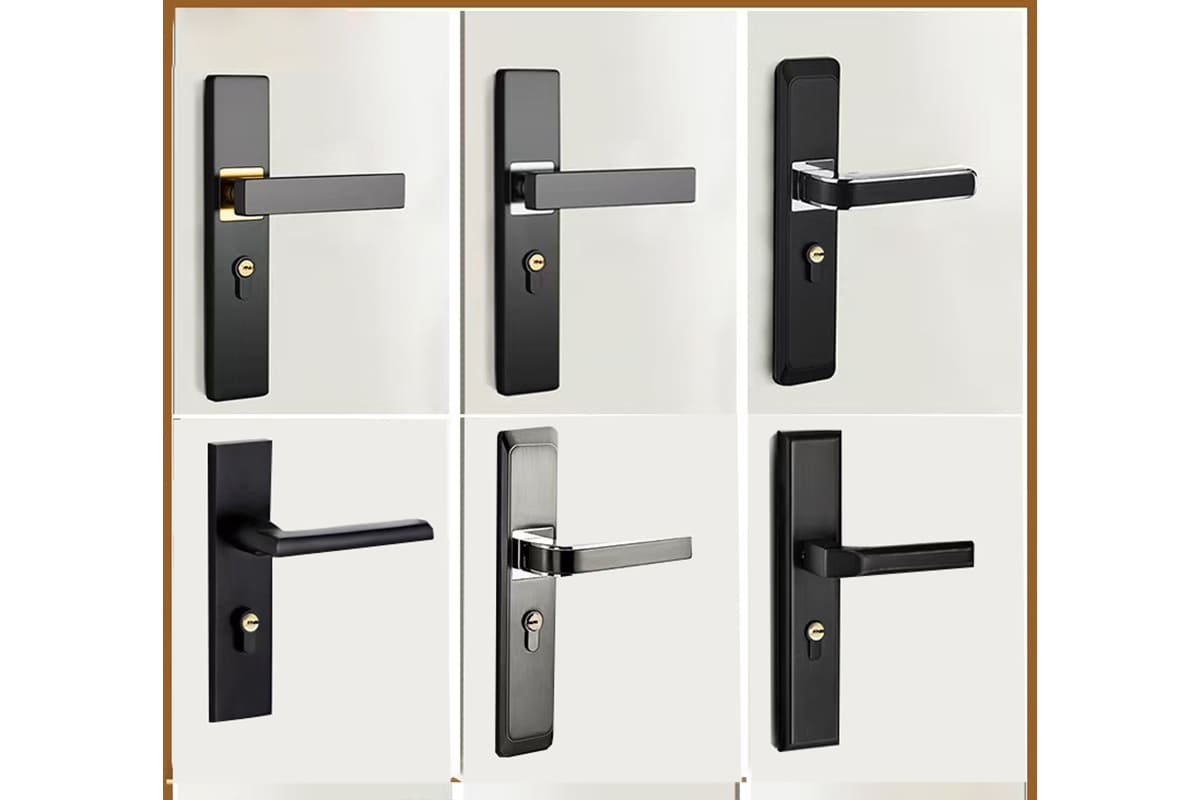
Plate handles work well with confirmed lock standards
A plate handle has one major advantage: it creates a unified hardware appearance. The lever, keyhole, cylinder opening, or bathroom turn can sit neatly on one backplate. For door factories and project suppliers, this can create a consistent visual line across a door series.
However, the buyer must confirm several details before approving the sample:
Lock center distance
The buyer should confirm whether the lock is 85 mm, 92 mm, 72 mm, 70 mm, 90 mm, or another distance.Lock type
The handle may be used with a sash lock, narrow lock, bathroom lock, cylinder lock, or key lock.Door thickness
Common interior door thickness may range from around 35 mm to 45 mm5, while project doors may differ. The spindle and screws must match the final door thickness.Backplate dimensions
The plate length, width, edge radius, and screw positions must match the door design and market preference.Cylinder or keyhole shape
Euro profile cylinder, keyhole, bathroom indicator, and thumb turn designs require different openings.
Common plate handle applications
Plate handles are often selected for projects or door series with repeated specifications. They can be efficient when the buyer controls the lock and door preparation.
| Application | Common center distance | Why plate handle may fit |
|---|---|---|
| Sash lock doors | 85 mm | Standardized lever and keyhole layout |
| Narrow stile doors | 92 mm | Slim backplate can match narrow lock body |
| Hotel or apartment doors | Depends on lock | Consistent visual appearance across units |
| Regional door series | Fixed by market | Stable SKU planning when standards are clear |
The main risk: fixed geometry
The strength of the plate handle is also its limitation. The geometry is fixed. If the customer later changes from an 85 mm sash lock to a 72 mm DIN lock, the same plate handle may not be usable. The factory may need to redesign the plate, adjust tooling, or create a new SKU.
For importers, this can create hidden procurement costs:
- Extra sample rounds
- New packaging artwork
- Mixed inventory
- Wrong model shipped to the wrong market
- Installation complaints from downstream customers
- Rework at the door factory
I have seen buyers focus heavily on the surface finish, such as satin nickel, matte black, polished chrome, or PVD color. Finish matters, of course. But for plate handles, hole position matters first.
When plate handles make procurement easier
Plate handles can still simplify procurement when all parameters are stable. If a door factory uses the same lock body for a full product line, one matching plate handle can be easy to specify, pack, inspect, and install.
For B2B buyers, I suggest this basic approval process:
- Confirm the lock body drawing.
- Confirm the door drilling drawing.
- Confirm the handle backplate drawing.
- Confirm the spindle and screw length.
- Confirm the finish sample.
- Confirm the packed set configuration.
This process is not complicated. It just needs discipline. In my factory work, I prefer to solve these questions before mass production, not during final inspection.
When Is a Split Handle Better in Split Handle vs. Plate Handle?
Split handles become attractive when the buyer serves multiple markets or cannot fully control the lock standard. The problem with a fixed backplate is that one wrong center distance can block installation. A split layout reduces that risk because each functional part is positioned separately.
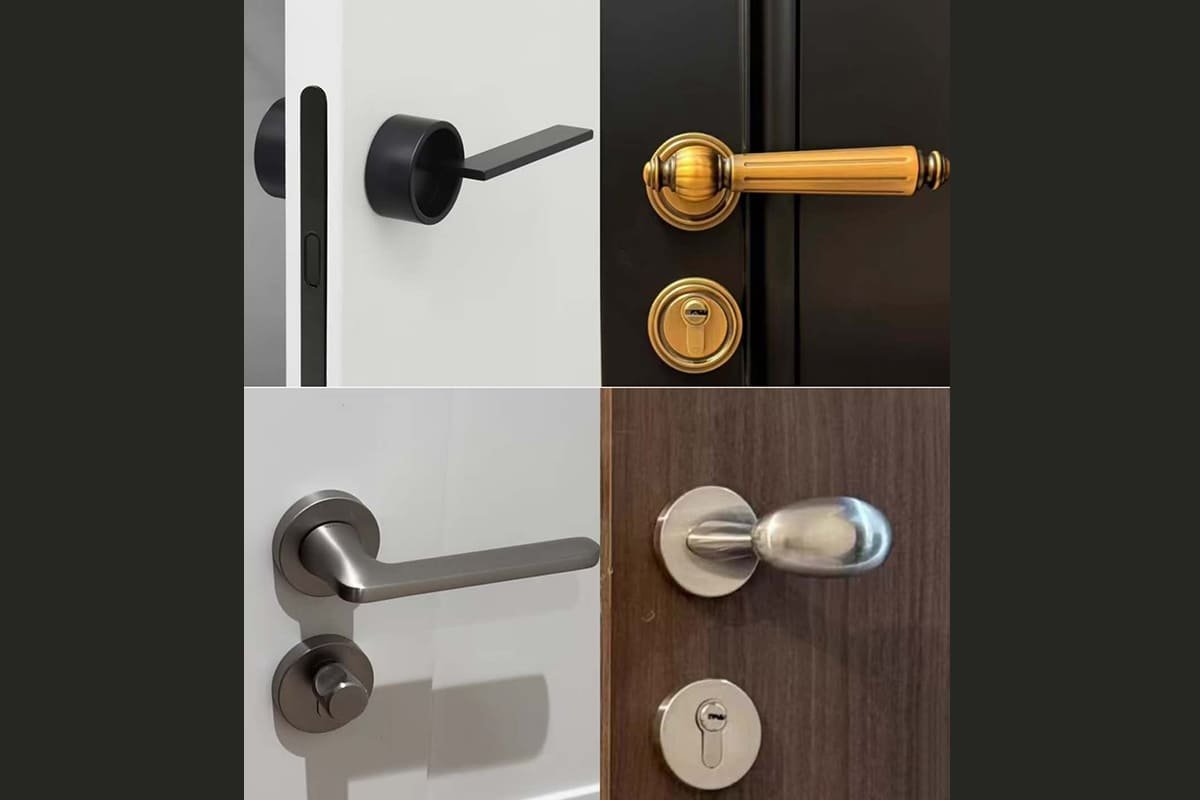
A split handle is better when lock standards vary, when the buyer needs broader compatibility, or when the final door preparation may differ by market. Because the lever rose and escutcheon are separate, split handles can fit 72 mm, 85 mm, 92 mm, 70 mm, 90 mm, and other center-distance layouts more easily.
Split handles help with regional variation
Different markets often prefer different mortise lock standards.6 In Europe, DIN-related specifications are common in many product categories.7 DIN 18251 fixes the mortise lock center distance at 72 mm for relevant lock types. In other markets, buyers may use 85 mm sash locks, 92 mm narrow locks, 70 mm locks, 90 mm locks, or other regional formats.
A split handle gives the buyer more room to manage this variation. The lever rose can align with the spindle. The escutcheon can align with the keyhole or cylinder. The parts do not need to be connected by one long plate.
This flexibility is especially useful for:
- Hardware brand enterprises selling to several markets
- Wholesalers that stock general-purpose handle sets
- Door factories with multiple lock suppliers
- Importers that need one design family across different countries
- ODM/OEM customers still finalizing door and lock combinations
Split handles are not just “modern”
One common misconception is that split handles are automatically more modern. Many split handle designs do look minimal, but that is not the technical reason to choose them. The real advantage is layout flexibility.
A split handle can use different rose shapes:
| Rose type | Typical appearance | Procurement note |
|---|---|---|
| Round rose | Soft and universal | Common for residential and commercial interiors |
| Square rose | Clean and geometric | Needs careful alignment during installation |
| Oval rose | Less common | May suit specific design collections |
| Concealed screw rose | Cleaner look | Assembly quality and clip fit should be checked |
The escutcheon can also change depending on the lock function:
- Euro profile cylinder escutcheon
- Keyhole escutcheon
- Bathroom turn and release
- Privacy indicator
- Blank rose for dummy function
This modularity helps buyers build a product series with fewer visual changes. The lever design can remain the same, while the escutcheon changes for different lock functions.
Split handles still need quality control
A split handle is flexible, but it is not automatically better in quality. Buyers should still evaluate material, fixing method, spring structure, surface treatment, and assembly precision.
Important inspection points include:
Lever return function
The handle should return smoothly without sagging when matched with the intended lock and spring structure.Rose cover fit
The rose cover should not loosen easily during normal operation.Screw fixing
Through-bolt fixing can improve installation stability in many applications8, but the final method should match the door and lock design.Surface finish consistency
Multiple small parts must match in color and texture. This is important for matte black, antique finishes, and PVD colors.Spindle fit
The spindle size and tolerance should match the lock follower. A loose spindle can create poor user experience.
From my factory-side view, split handles require careful packing control. A complete set may include levers, roses, escutcheons, spindle, screws, Allen key, and installation accessories. If one small part is missing, the installer cannot finish the door.
So the Split Handle vs. Plate Handle decision should not become a shortcut. Split handles offer broader compatibility, but buyers still need clear specifications and inspection standards.
What Quality Factors Matter Most in Split Handle vs. Plate Handle?
Some buyers ask whether plate handles are stronger than split handles. I do not like that question because it is too broad. Strength depends on structure, material, fixing method, door preparation, and assembly quality. The handle type alone does not prove performance.
The most important quality factors in Split Handle vs. Plate Handle are material grade, handle structure, spindle and screw configuration, surface treatment, lock compatibility, and assembly consistency. Buyers should not assume that plate handles are always stronger or that split handles are always higher-end. The complete system matters more.
Material and structure
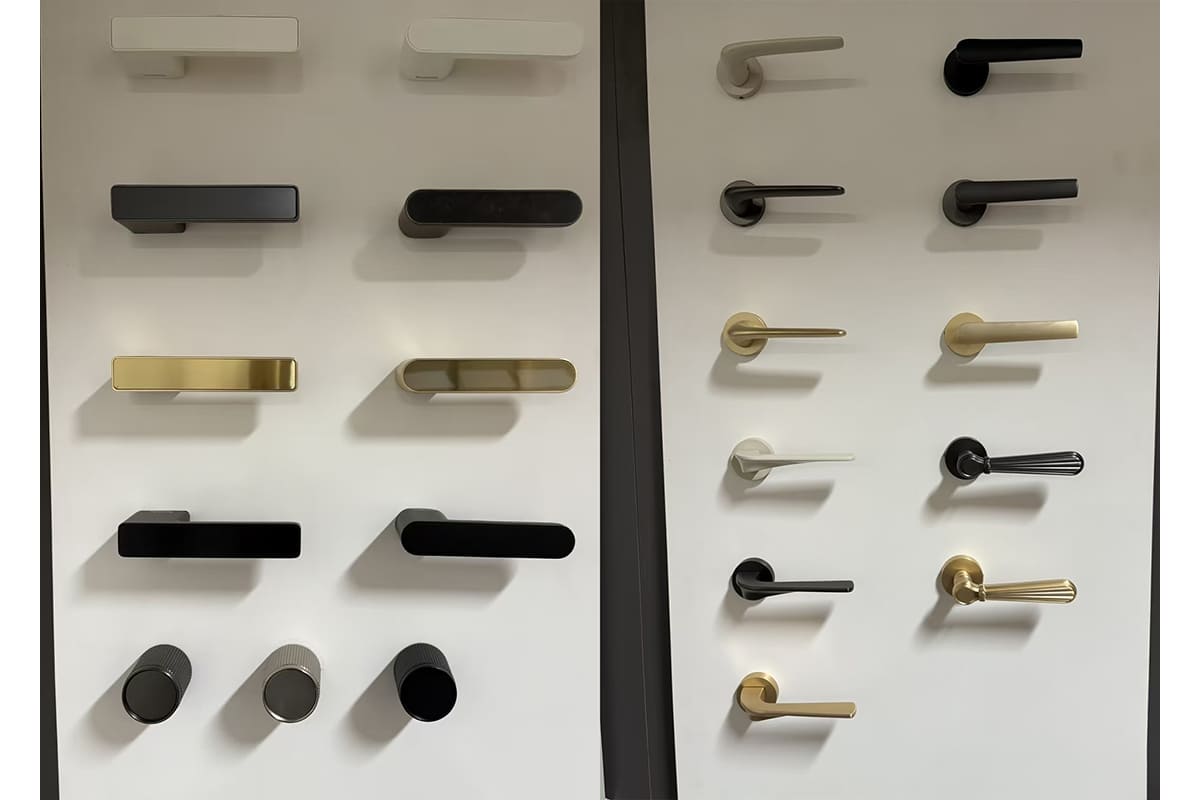
Architectural door handles are commonly made from stainless steel, zinc alloy, aluminum alloy, or brass, depending on the product grade and market requirement. Each material has its own procurement logic.
| Material | Common advantage | Buyer should check |
|---|---|---|
| [Stainless steel | Corrosion resistance and durability](https://pmc.ncbi.nlm.nih.gov/articles/PMC9920300/)%%%FOOTNOTE_REF_9%%% | Grade, wall thickness, finish consistency |
| [Zinc alloy | Flexible shapes and competitive cost](http://www.mntap.umn.edu/industries/facility/metalcast/resources/zincalloy/)%%%FOOTNOTE_REF_10%%% | Plating quality and structural design |
| Aluminum alloy | Lightweight and modern appearance | Anodizing or coating quality |
| Brass | Premium feel and machinability | Material cost and finish protection |
A heavy handle does not always mean a better handle. A light handle does not always mean a weak handle. The internal structure, fixing points, and production consistency matter.
Surface treatment
Surface finish is both visual and functional. Common options include:
- Satin stainless steel
- Polished stainless steel
- Satin nickel
- Polished chrome
- Matte black
- Antique bronze
- PVD finishes
- Powder coating
For B2B orders, buyers should approve physical finish samples. Digital photos are useful, but they cannot fully show gloss, texture, or color difference under different lighting.11
In our production work, I treat finish approval as a separate step from structure approval. A handle may be technically correct but visually unacceptable if the finish does not match the buyer’s door series.
Fixing method and installation stability
The fixing method is critical for both split handles and plate handles. Common methods include:
Wood screws
These are simple, but the strength depends heavily on door material.Through-bolts
These can provide better clamping force across the door thickness in many applications.Concealed fixing
This improves appearance, but the cover and internal fixing must be reliable.Grub screw fixing
This secures the lever to the spindle or base structure. The screw quality and thread fit matter.
The best fixing method depends on the door type, user frequency, and lock body. A commercial door with high traffic may need different hardware evaluation from a residential interior door.
Assembly quality
I always remind buyers that a door handle is a moving product, not just a decorative product. The user touches it every day. Small quality issues become obvious quickly.
During inspection, buyers or third-party inspectors can check:
- Lever movement
- Spring return
- Screw alignment
- Surface scratches
- Sharp edges
- Burrs around holes
- Color difference between parts
- Packaging completeness
- Logo position
- Accessory count
For technical and project-specific decisions, buyers should use qualified professional evaluation. Certifications, when required, should be verified by checking the exact document, product model, scope, and issuing body. A certificate for one product family should not be assumed to cover every handle variation.
How Should B2B Buyers Make the Final Split Handle vs. Plate Handle Choice?
The final choice can feel confusing when many suppliers show attractive catalogs. The risk is that buyers compare only design and price. That approach may miss the practical factors that decide installation success, after-sales cost, and long-term SKU management.
B2B buyers should make the final Split Handle vs. Plate Handle choice by confirming lock center distance, door drilling, market standard, fixing method, material, finish, packaging, and inspection requirements. If the lock standard is fixed, plate handles can work well. If compatibility is uncertain, split handles may be safer.
Start with the lock body drawing
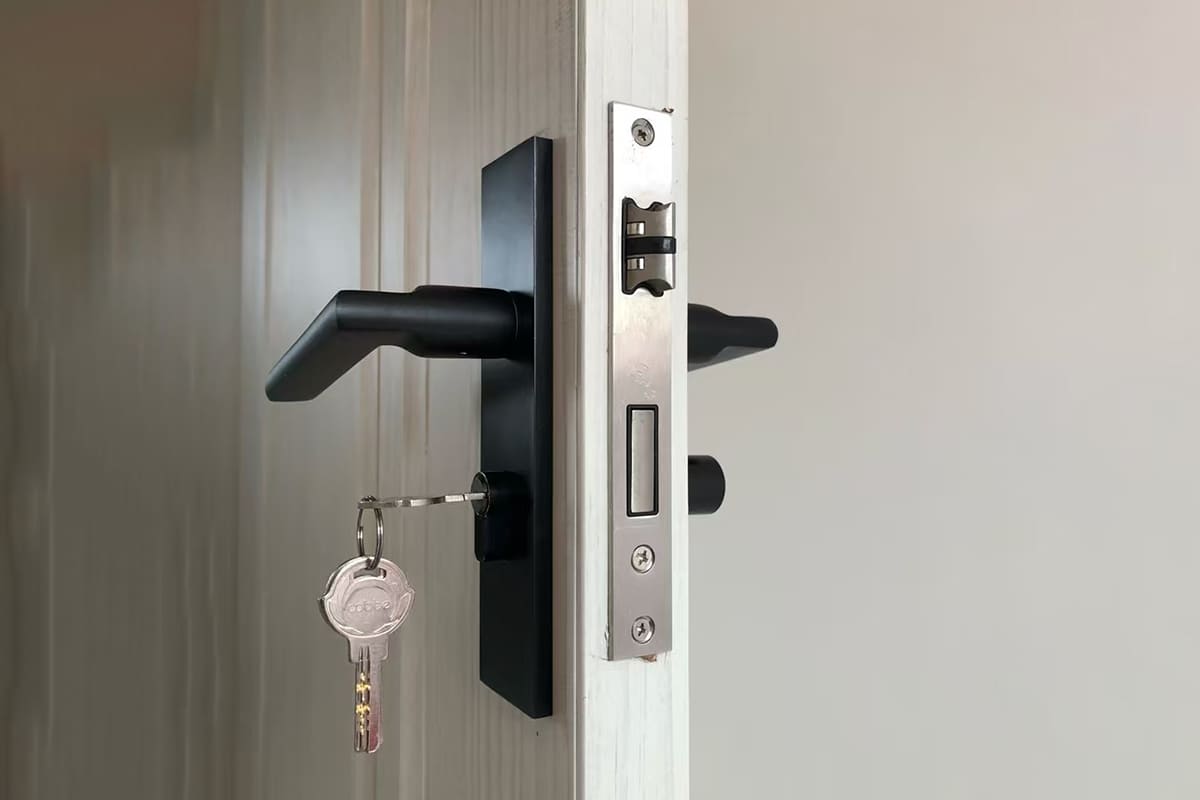
The lock body drawing should show:
- Backset
- Center distance
- Forend size
- Spindle follower size
- Cylinder or keyhole position
- Screw holes
- Lock case dimensions
- Door handing requirements, if any
If the buyer cannot provide a drawing, a physical sample can help. In many order-confirmation cases, I ask for both. The drawing gives dimensions. The sample shows real tolerance and assembly behavior.
Confirm the door preparation
The handle and lock do not work alone. The door must be drilled correctly. A mismatch between the door drilling and handle set can create rework.
Buyers should confirm:
- Door thickness
- Door material
- Hole diameter
- Spindle hole position
- Cylinder or keyhole position
- Screw hole position
- Edge preparation for the lock body
- Required installation accessories
This is especially important for door factories that use CNC drilling. Once the drilling program is set, a wrong hardware assumption can affect a full production batch.
Decide based on application risk
A simple decision table can help.
| Procurement situation | Better starting option | Reason |
|---|---|---|
| Exact 85 mm sash lock confirmed | Plate handle or split handle | Plate handle can match if drawing is fixed |
| Exact 92 mm narrow lock confirmed | Narrow plate or split handle | Plate must match slim lock layout |
| DIN 18251 72 mm lock required | Split handle often easier | Separate escutcheon adapts to 72 mm layout |
| Multiple markets with mixed locks | Split handle often safer | Higher center-distance flexibility |
| One project with fixed lock and door | Plate handle can be efficient | Stable specification reduces risk |
| Wholesale stock for unknown doors | Split handle often safer | Broader compatibility for customers |
Consider SKU management
SKU complexity is a real cost. A buyer may think a plate handle is cheaper per set. But if the buyer needs separate versions for 72 mm, 85 mm, 90 mm, and 92 mm locks, the inventory burden may increase.
Split handles may allow a more modular product strategy. For example, the same lever rose can be paired with different escutcheons. That can reduce visual fragmentation in a product line.
However, split handles also need careful accessory control. More components mean more packing details. The supplier must manage the bill of materials clearly.
Ask the supplier the right questions
Before confirming an order, I suggest buyers ask suppliers these questions:
- Which lock center distance does this handle support?
- Is the plate opening for keyhole, Euro cylinder, or bathroom turn?
- What door thickness does the supplied spindle and screw set support?
- Can you provide a product drawing before order confirmation?
- Can the surface finish be matched across handles, hinges, and accessories?
- What inspection steps do you perform after assembly?
- Can you pack by door set, project set, or customer SKU?
- Are CE or fire-rated documents available for the relevant product scope, if required?
At SDH Hardware, we usually handle these topics during product development, sampling, order confirmation, manufacturing, assembly, and final inspection. I mention this not as a hard sell, but because these steps are where most avoidable mistakes are found.
For B2B door hardware, the final choice is not about declaring a universal winner. The final choice is about reducing installation risk while meeting the buyer’s market and product strategy.
Frequently Asked Questions
Is a plate handle stronger than a split handle?
A plate handle is not automatically stronger than a split handle. Strength depends on material, internal structure, fixing method, door preparation, screw quality, and assembly precision. Buyers should evaluate the complete handle-and-lock system instead of judging only by the handle format.
What center distance is common for plate handles?
Plate handles are commonly used with 85 mm sash locks and 92 mm narrow locks, depending on the market and door type. However, buyers should not assume compatibility. The exact lock body drawing and handle plate drawing should be confirmed before sampling or mass production.
Can split handles fit DIN 18251 locks?
Split handles can often fit DIN 18251 lock applications more easily because DIN 18251 fixes the mortise lock center distance at 72 mm, and the rose and escutcheon are separate. Buyers should still confirm spindle size, screw positions, door thickness, and escutcheon type.
Which handle type is better for wholesalers?
Split handles are often safer for wholesalers because they can cover more lock center-distance variations, including 72 mm, 85 mm, 92 mm, 70 mm, and 90 mm layouts. Plate handles can work well when the wholesaler serves a clearly defined market with stable lock standards.
What should I confirm before ordering door handles in bulk?
You should confirm the lock body drawing, center distance, door thickness, drilling position, fixing method, material, surface finish, packaging configuration, and inspection standard. If certification documents are required, you should verify the model scope, issuing body, and applicable product category.
Conclusion
Split Handle vs. Plate Handle is not a battle with one absolute winner. The better choice depends on lock center distance, door preparation, market standard, fixing method, material, finish, and assembly quality. Plate handles work well when the lock specification is fixed. Split handles offer more flexibility when standards vary. If you are developing a door hardware series or confirming a bulk order, I recommend starting with the lock body drawing. SDH Hardware can support OEM/ODM buyers with product drawings, sampling, manufacturing, inspection, and one-stop architectural door hardware sourcing.
"How to measure a mortice lock for timber doors", https://www.eraeverywhere.com/news/how-to-measure-a-mortice-lock/. A technical reference on mortise locks defines lock centres as the measurement between the handle follower or spindle axis and the keyhole or cylinder axis, supporting the article’s use of “lock center distance” as a compatibility dimension. Evidence role: definition; source type: institution. Supports: A neutral technical glossary or standards-related source should define lock centres as the distance between the follower or spindle and the keyhole or cylinder centre.. ↩
"85mm Sashlock", https://www.yalehome.com/kz/en/products/mechanical-range/mortice-locks/classica-series/85mm-sashlock. Technical references for mortice sash locks list 85 mm centres among standard lock-case configurations, supporting the statement that this dimension is commonly encountered in sash-lock applications. Evidence role: general_support; source type: other. Supports: A neutral technical catalogue or architectural ironmongery reference should show that 85 mm centres are used in sash-lock products.. Scope note: Such sources usually document available standard product dimensions rather than providing statistical market-share data. ↩
"Mortise locks", https://www.yalehome.com/it/en/products/mechanical/architectural-solutions/mortise-locks. Standards-related technical references for profile-door and narrow-stile mortise locks identify 92 mm centres as a common configuration, providing contextual support for the article’s use of this dimension in narrow-lock applications. Evidence role: general_support; source type: institution. Supports: A standards-related or institutional technical reference should document the use of 92 mm centres in narrow-profile or profile-door lock applications.. Scope note: The evidence would support common technical usage, not prove that 92 mm is dominant in every regional market. ↩
"SECTION 087111 - DOOR HARDWARE (SCHEDULED BY ...", https://fpm.usc.edu/wp-content/uploads/2021/11/087101-USC-UPC-door-hardware-Guide-Specification_1.pdf. Technical guidance on mortise-lock installation explains that the spindle and key or cylinder openings must align with the lock-case centres; therefore, a fixed backplate drilled for 85 mm centres would not align with a 92 mm lock without altering the plate or preparation. Evidence role: mechanism; source type: education. Supports: A technical source should explain that backplate openings are fixed relative to the spindle and must correspond to the lock-case centre distance.. Scope note: This supports the geometric mechanism rather than documenting a specific failed installation case. ↩
"08 01 00 Steel Doors & Frames.pdf - Yale Facilities", https://facilities.yale.edu/sites/default/files/files/Design%20Standards/Updated%20Design%20Standards/08%20Openings/08%2001%2000%20Steel%20Doors%20%26%20Frames.pdf. Building and door-specification references commonly list internal door leaves in the approximate 35–45 mm thickness range, supporting the article’s use of this range for spindle and screw-length planning. Evidence role: general_support; source type: institution. Supports: A construction or building-products reference should show that common internal door leaves fall near the 35–45 mm range.. Scope note: Door thickness varies by country, fire rating, acoustic rating, and project specification, so the range is contextual rather than universal. ↩
"ANSI vs DIN: Understanding the Standards in Door Hardware", https://umaylocks.com/ansi-vs-din/. Standards references for architectural hardware show that mortise locks and door furniture are specified under different national and regional systems, providing contextual support for the article’s claim that market preferences and dimensions vary. Evidence role: historical_context; source type: institution. Supports: A standards or architectural-hardware source should show that different standards systems, such as DIN, EN, BS, and ANSI/BHMA, govern door locks and hardware in different markets.. Scope note: This would support the existence of regional standards variation, not quantify buyer preference in each market. ↩
"Deutsches Institut für Normung", https://en.wikipedia.org/wiki/Deutsches_Institut_f%C3%BCr_Normung. General references on DIN describe it as Germany’s national standards organization with standards covering a wide range of products and technical fields, giving context to the article’s reference to DIN-related specifications in European door-hardware procurement. Evidence role: historical_context; source type: encyclopedia. Supports: A neutral overview should explain DIN’s role as Germany’s national standards body and the broad use of DIN standards across industrial and product categories.. Scope note: This supports the general standards context, not the prevalence of any single DIN lock specification in a particular market. ↩
"087100 – DOOR HARDWARE - Facilities and Campus Services", https://fcs.cornell.edu/087100-door-hardware. Engineering references on mechanical fasteners distinguish through-bolted connections, which clamp across the full member thickness, from screws that depend more on local withdrawal resistance; this supports the article’s statement that through-bolts can improve installation stability in appropriate door applications. Evidence role: mechanism; source type: government. Supports: An engineering or government construction reference should explain that through-bolts clamp members across their thickness and can avoid reliance solely on screw withdrawal resistance.. Scope note: The improvement depends on door core material, bolt placement, hardware design, and installation quality. ↩
"Revealing the Corrosion Resistance of 316 L Stainless Steel ...", https://pmc.ncbi.nlm.nih.gov/articles/PMC9920300/. Materials-science references explain that stainless steels resist corrosion through the formation of a chromium-rich passive oxide layer, supporting the article’s characterization of stainless steel as corrosion-resistant and durable for architectural hardware. Evidence role: mechanism; source type: education. Supports: A materials-science source should explain that stainless steel corrosion resistance is associated with chromium-rich passive oxide films.. Scope note: Actual durability depends on alloy grade, environment, surface finish, maintenance, and exposure to chlorides. ↩
"Reusing Zinc Alloy Die Cast Scrap", http://www.mntap.umn.edu/industries/facility/metalcast/resources/zincalloy/. Manufacturing literature on zinc die casting notes that zinc alloys can produce complex, dimensionally accurate components efficiently, supporting the article’s description of zinc alloy as suitable for flexible handle shapes and cost-sensitive production. Evidence role: mechanism; source type: research. Supports: A manufacturing source should show that zinc alloys are suited to die casting complex shapes with good dimensional accuracy and cost efficiency at production scale.. Scope note: Cost competitiveness depends on design, tooling, production volume, finish requirements, and local material prices. ↩
"Reflectance, illumination, and appearance in color constancy", https://pmc.ncbi.nlm.nih.gov/articles/PMC3901009/. Color-science literature shows that perceived color and gloss vary with illumination, viewing conditions, surface reflectance, and display reproduction, supporting the article’s advice to approve physical finish samples rather than relying only on digital photographs. Evidence role: mechanism; source type: research. Supports: A color-science or imaging source should explain that color appearance and gloss perception depend on illumination, viewing geometry, display calibration, and surface reflectance.. Scope note: The source would support the visual-perception mechanism, not a door-hardware-specific finish approval protocol. ↩