What You Need to Know About Lower Rosettes in Door Handles?
Lower rosettes in door handles look like small trim parts, but they can create big procurement problems when the wrong type is ordered. A misaligned cylinder hole, incorrect WC turn, or mismatched fixing pattern can delay production and cause returns. The solution is simple: treat the lower rosette as a compatibility item, not a decorative afterthought.
Lower rosettes are separate escutcheons fitted below split lever handles to cover a keyhole, Euro-profile cylinder, WC privacy turn, or blank function. They are not universal. Buyers should verify the lockcase standard, PZ center distance, hole type, fixing method, and screw specification before confirming any lower rosette SKU.
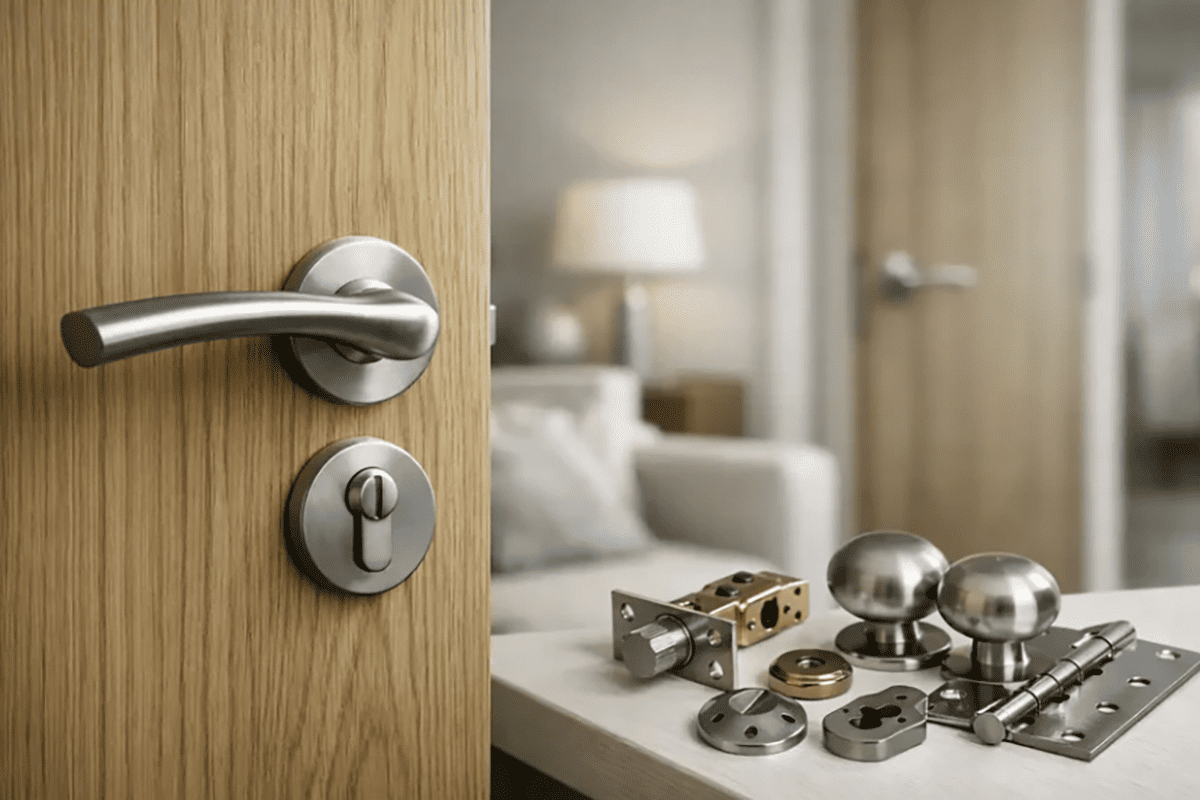
I have handled enough split lever handle projects to know one thing clearly: most lower rosette problems start before production, not during installation. The drawing looked “close enough.” The sample looked similar. Then the lockcase arrived, and the opening did not line up.
What Are Lower Rosettes in Door Handles?
Lower rosettes in door handles are often misunderstood because they are small, separate, and easy to confuse with other trim parts. This creates a simple but costly problem. If a buyer names the wrong component, the supplier may quote the wrong SKU, and the whole handle set may fail at assembly.
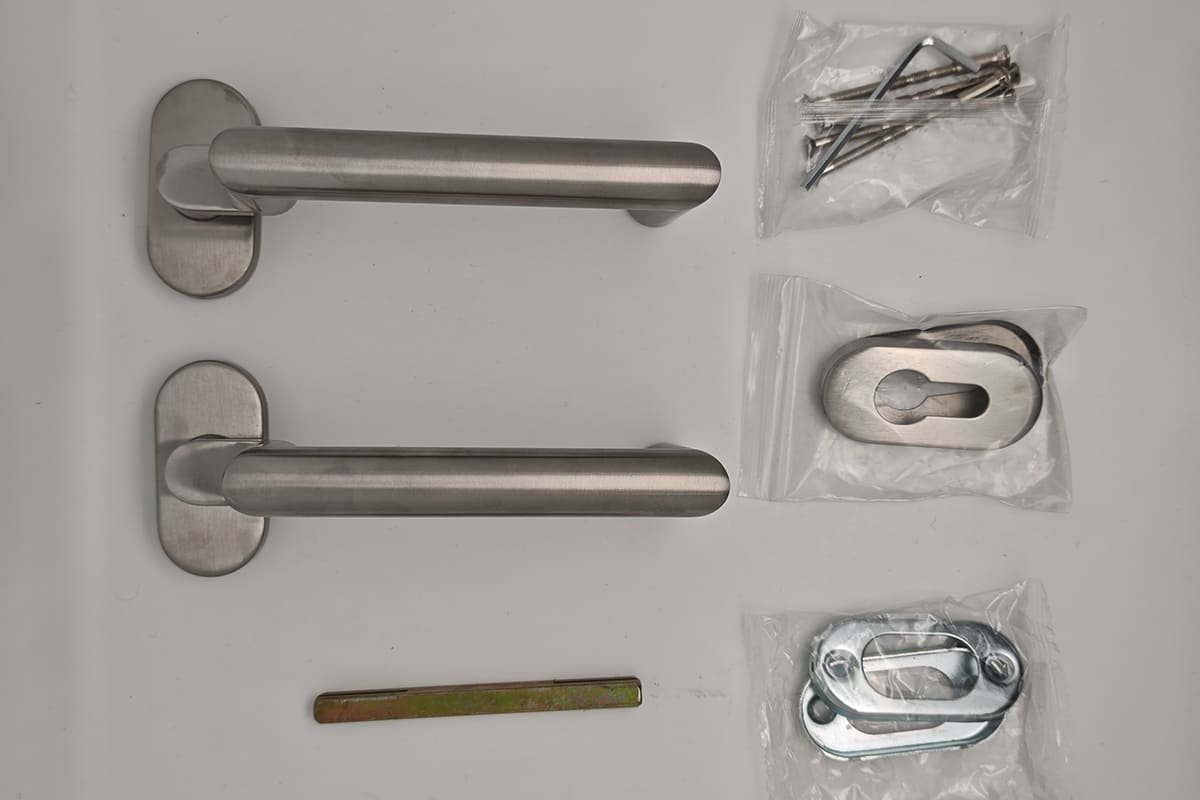
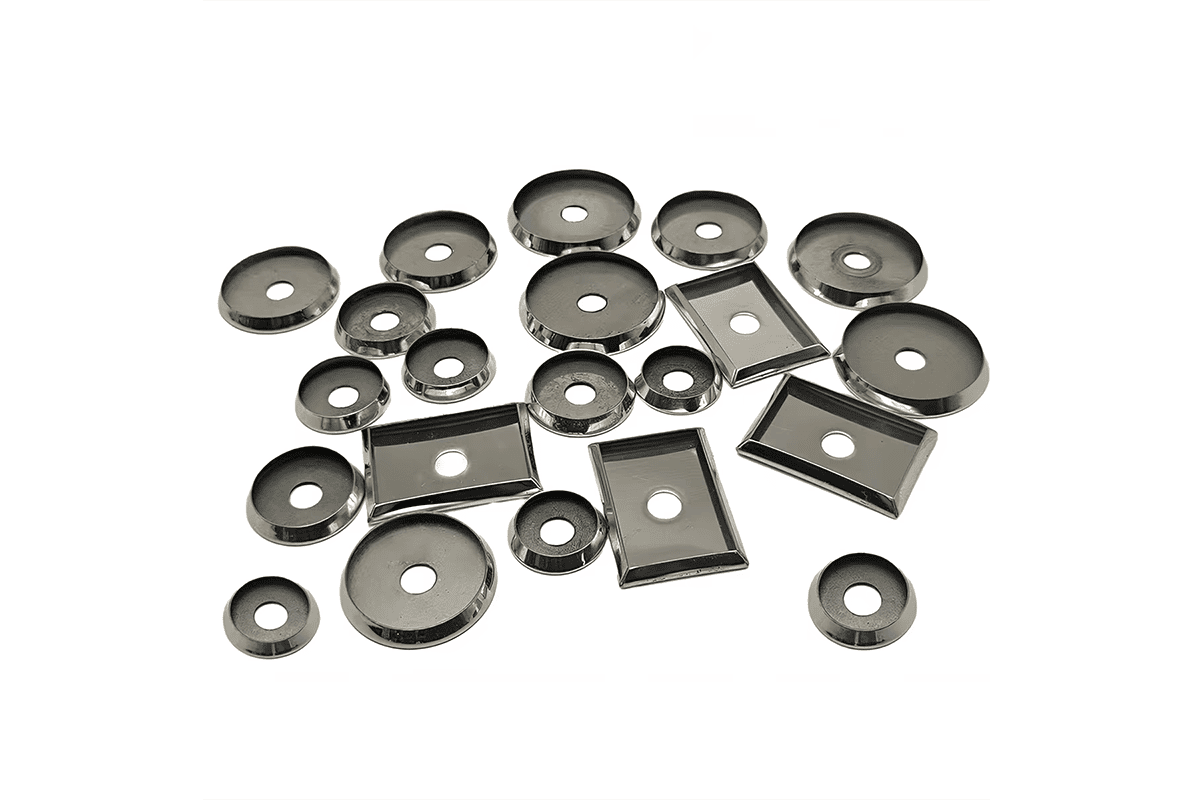
Lower rosettes are the separate escutcheon plates below a split lever handle rose.%%%FOOTNOTE_REF1%%% [They cover or support the lower lock function, such as a Euro-profile cylinder, standard keyhole, WC privacy turn, emergency release, or blank plate.](https://en.wikipedia.org/wiki/Escutcheon(furniture))2 They are different from the lever rose, internal rose structure, and long backplate.
A precise definition matters
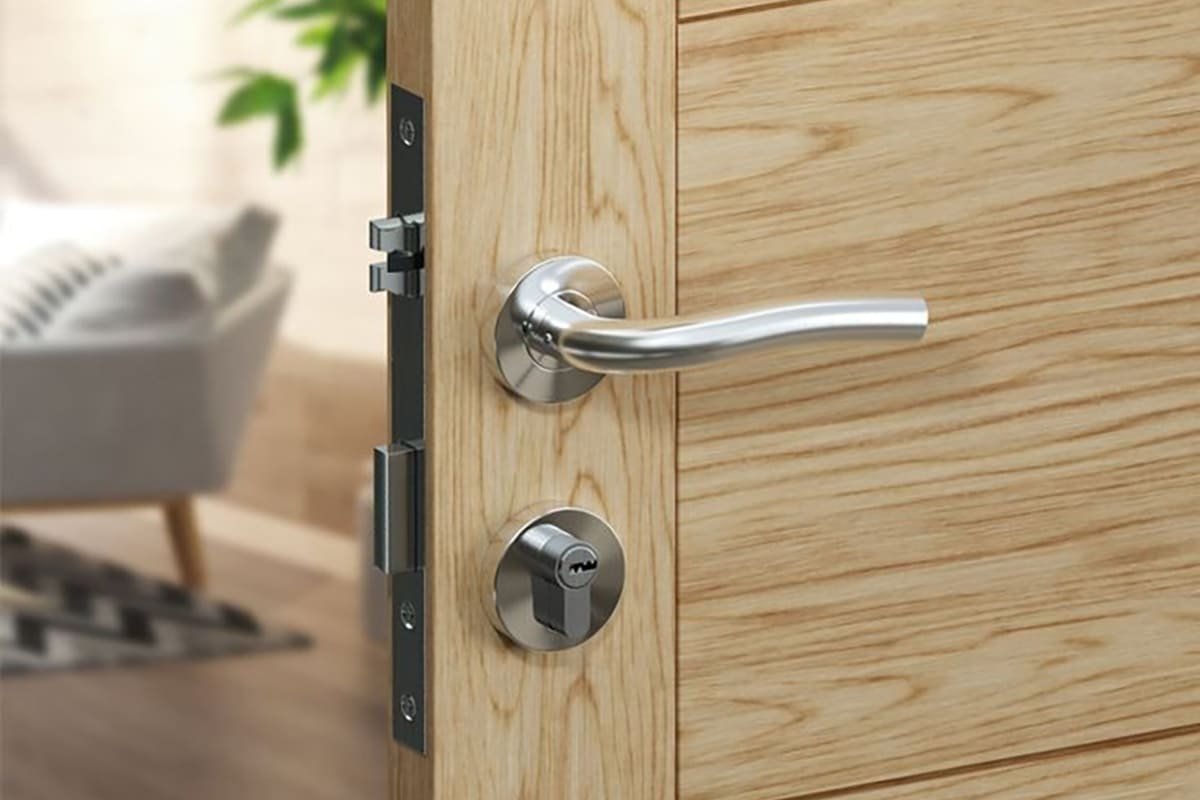
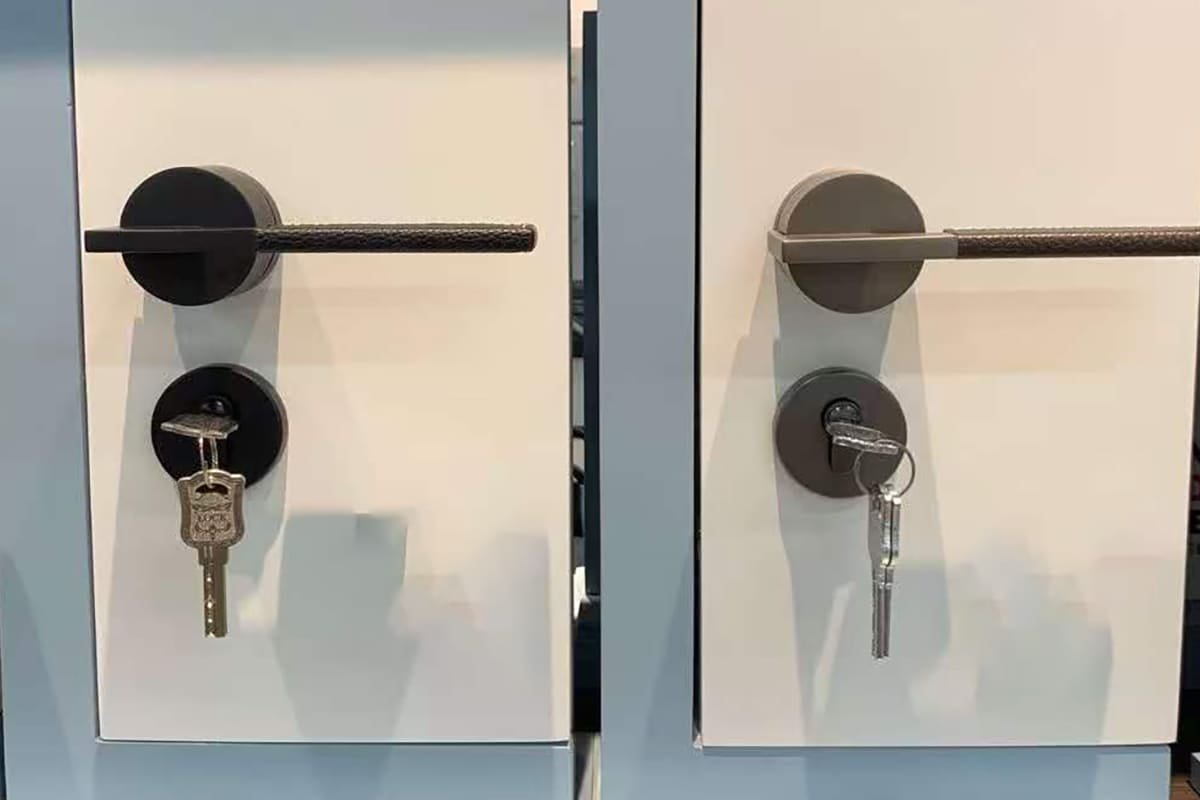
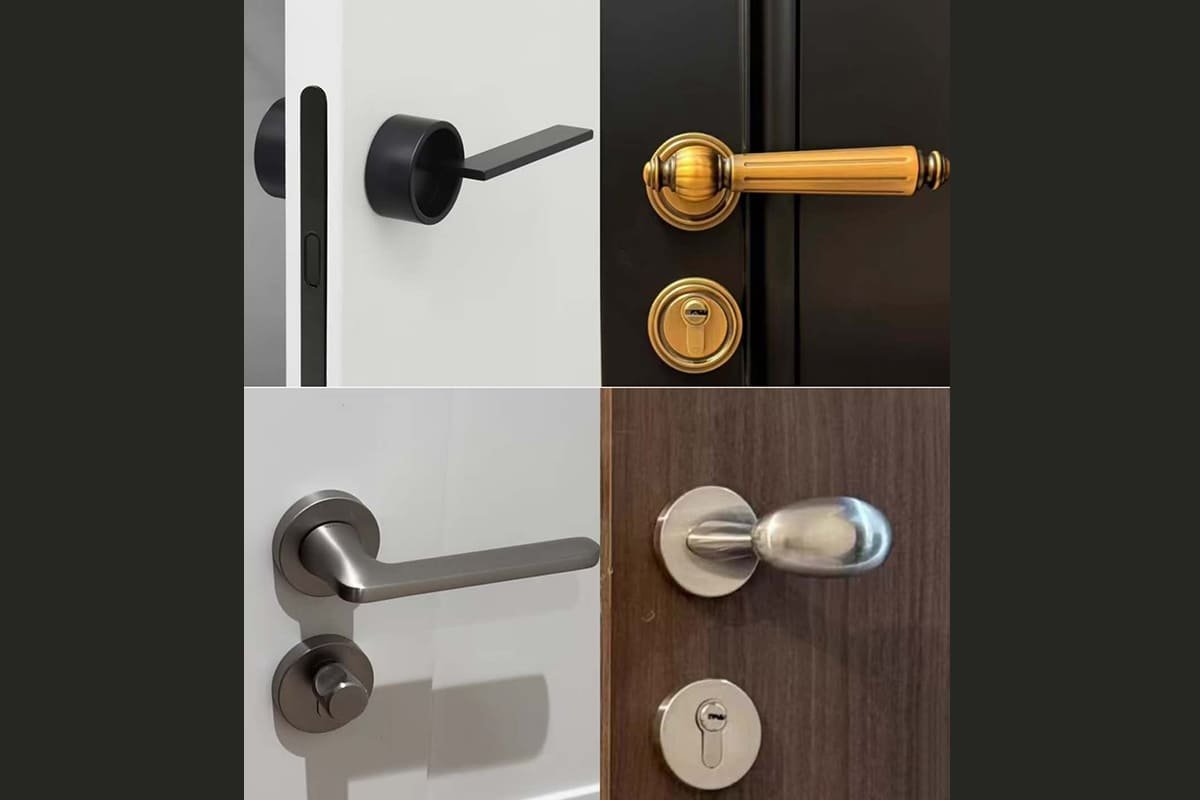
In a split lever handle set, the lever usually sits on an upper rose. The lower rosette sits below it and aligns with the lockcase function. It may be round, square, oval, or custom-shaped. Its visible purpose is to cover the cutout in the door face. Its practical purpose is to align correctly with the lockcase and provide stable trim around the operating point.
A lower rosette is not:
- The lever rose around the handle spindle
- The inner structural rose or mounting plate behind the lever
- A long backplate that combines lever and keyhole into one plate
- A decorative cap that can be selected without checking dimensions
I once reviewed a project where the customer asked for “round roses for the handle.” The sample request did not specify the lower escutcheon. When the parts arrived, the lever rose was correct, but the cylinder rosette was for a different opening. The lockcase was correct. The handle was correct. The door preparation was correct. The lower rosette was the weak link.
Common lower rosette function types
Buyers usually need one of these types:
| Lower rosette type | Typical use | Key compatibility point |
|---|---|---|
| Euro-profile cylinder rosette | Doors with Euro cylinders | Euro-profile opening and cylinder clearance |
| Standard keyhole rosette | Traditional key-operated locks | Keyhole shape and lockcase interface |
| WC privacy turn rosette | Bathroom or privacy doors | Turn spindle, emergency release, lock function |
| Blank lower rosette | Decorative or non-keyed side | Shape, fixing, and visual matching |
| Special project rosette | Custom lock or market-specific trim | Drawing confirmation required |
Why the name affects procurement
In B2B supply, names guide drawings, samples, quotations, and packing lists. If the buyer says “escutcheon,” one supplier may think of a Euro cylinder cover. Another may think of a keyhole plate. Another may include both sides. This is why I prefer clear wording in purchase discussions:
“We need a split lever handle set with matching lower rosettes for Euro-profile cylinders, suitable for the specified lockcase PZ and fixing pattern.”
That sentence is not fancy, but it prevents mistakes. It tells the supplier that the part must match the function, lockcase, and fixing method.
For door factories, hardware brands, and wholesalers, this clarity also helps stock control. A lower rosette may look like a low-value part, but if it is missing or wrong, the full set becomes incomplete. In export hardware programs, I always recommend assigning separate SKU codes for different lower rosette functions, even when the outer design is the same.
Why Are Lower Rosettes in Door Handles Not Universal?
Lower rosettes in door handles are not universal because door lock systems are built around different standards, dimensions, and fixing layouts. The part may appear visually similar across suppliers, but the critical interface is hidden in the geometry. This is where many bulk orders go wrong.
Lower rosettes are not universal because they must match the lockcase standard, PZ center distance, hole or function type, and fixing method. EU lock systems commonly use PZ dimensions such as 72 mm, 85 mm, or 92 mm, while US patterns use different references. Similar appearance does not confirm compatibility.
PZ is not decoration
In many EU-style systems, PZ refers to the center distance between the lever spindle and the cylinder or keyhole center. Typical EU examples include 72 mm, 85 mm, and 92 mm, but buyers should always verify the lockcase datasheet. I do not treat these numbers as assumptions. I ask for the lockcase drawing.
If the lower rosette geometry does not align with the lockcase interface, several problems can appear:
- The cylinder opening sits too high or too low.
- The key cannot turn freely.
- The rosette edge covers part of the lock opening.
- The visible trim looks off-center.
- The installer reports “bad handle quality,” even when the real issue is specification mismatch.
EU and US systems should not be mixed casually
I often see buyers search for one design and then ask whether it can be used across markets. The answer depends on the interface. EU-style systems and US-style patterns do not use the same selection logic.3 PZ is not the same as backset. PZ is not a general spacing term for every market. It has a specific meaning in the lockcase relationship.
Here is a simplified comparison for procurement discussion:
| Item | EU-style split lever systems | US-style systems |
|---|---|---|
| Common reference | PZ center distance | Different bore and latch patterns4 |
| Lower rosette role | Aligns with cylinder, keyhole, WC turn, or blank | Depends on trim and lock design |
| Buyer check | Lockcase datasheet and PZ | Lock preparation and trim specification |
| Risk | Wrong PZ or cutout type | Wrong bore pattern or trim interface |
This table is not a substitute for technical drawings. It is a reminder that standards should be named clearly. When a customer tells me, “This is for Europe,” I still ask for the lockcase drawing. When a customer says, “This is for the US market,” I avoid using PZ language unless the lockcase itself is an EU-style product.
Visual similarity is not enough
Lower rosettes are easy to misjudge from photos. A round Euro-profile rosette from one set may look almost identical to another. But the hidden details may differ:
- Opening size
- Cylinder clearance
- Cover cap thickness
- Base plate structure
- Screw hole spacing
- Concealed or visible fixing
- Compatibility with the lever rose base
- Door thickness range
For wholesalers, this matters because stock mixing can happen. A warehouse may place two similar rosette types in nearby bins. Later, a customer receives a split handle set with the correct lever but the wrong lower trim. The return is not only about the product cost. It also affects trust.
At SDH Hardware, our team usually checks the project drawings and confirms the requested function before mass production. I still encourage buyers to verify samples against their own lockcase and door preparation. The correct choice should be confirmed before the order, not adjusted after the goods arrive.
How Do You Choose the Correct Lower Rosette Function Type?
Choosing the correct lower rosette function type matters because the visible opening must match the real lock function behind it. A Euro cylinder rosette cannot replace a WC turn set.5 A standard keyhole cannot replace a Euro-profile cutout. The wrong choice creates immediate misfit.
Buyers should choose lower rosettes by confirming the door function first: Euro-profile cylinder, standard keyhole, WC privacy turn, emergency release, or blank plate. Each function requires a matching cutout, operating clearance, and hardware pairing. The lower rosette should be selected from the lockcase and lever set drawings.
Start with the door function
Before discussing finish, shape, or price, I ask one basic question: What does this lower point need to do? That question usually decides the function type.
A simple selection path looks like this:
Is the door locked with a Euro cylinder?
Choose a Euro-profile cylinder lower rosette.Is the door locked with a traditional keyhole lock?
Choose a standard keyhole lower rosette.Is the door a bathroom, bedroom, or privacy door?
Choose a WC privacy turn set with the matching emergency release side.Is the lower point decorative or inactive?
Choose a blank lower rosette, if the design requires it.Is the lockcase special or project-specific?
Confirm by drawing and sample before bulk purchase.
Function types are not interchangeable
This point seems obvious, but it is a common source of after-sales cases. The rosette shape may be the same outside, while the working interface is completely different.
| Function | What the lower rosette must match | Common mistake |
|---|---|---|
| Euro cylinder | Cylinder profile, clearance, PZ alignment | Using a keyhole rosette because it looks close |
| Standard keyhole | Keyhole shape and lockcase position | Ordering Euro rosette for non-Euro lock |
| WC privacy | Turn spindle, emergency release, lock function | Pairing turn with incompatible privacy lock |
| Blank | Surface coverage and fixing | Assuming blank can hide wrong door preparation |
| Custom | Project drawing | Ordering standard stock without verification |
WC privacy sets need extra care
WC lower rosettes are more than decorative plates. A privacy set usually includes a thumb turn on one side and an emergency release on the other.6 These parts must match the privacy lock function. They also need proper spindle compatibility and alignment.
In one case I reviewed, the customer selected a beautiful square lower rosette for a hotel bathroom door. The problem was that the WC turn spindle did not match the privacy lock body. The set looked correct in the showroom photo, but the turn could not operate the lock smoothly. The order required part replacement, repacking, and delayed delivery.
That case taught me to ask for three details before confirming privacy trim:
- The privacy lockcase drawing
- The turn spindle size and shape
- The emergency release type required by the project
Euro-profile cylinders need clearance
Euro-profile cylinder rosettes also need careful checking. The opening must allow the cylinder to pass and operate without scraping.7 The rosette should sit cleanly around the profile. If the lower rosette is too thick, too narrow, or poorly aligned, the cylinder installation can feel tight or unstable.
For procurement teams, I suggest creating a simple confirmation sheet:
| Check item | Buyer confirmation |
|---|---|
| Lockcase model | Confirmed by datasheet |
| PZ distance | Confirmed, not assumed |
| Function type | Euro / keyhole / WC / blank |
| Door thickness | Confirmed against screw length |
| Finish | Matched with lever handle |
| Fixing method | Visible / concealed / through-bolt |
| Sample test | Completed before bulk order |
This checklist may feel basic, but it prevents expensive errors. The lower rosette is not a part I like to “decide later.” It should be confirmed at the same time as the lever handle, lockcase, cylinder, and door preparation.
How Should Buyers Check PZ Centers and Lockcase Compatibility for Lower Rosettes?
Buyers should check PZ centers and lockcase compatibility because lower rosette alignment depends on the lockcase interface. A wrong PZ can make the rosette hole sit in the wrong position.8 This affects function, appearance, and assembly quality, especially in factory-scale door production.
Buyers should measure or verify the PZ center distance on the lockcase drawing, then confirm that the lower rosette opening aligns with the cylinder, keyhole, or WC function. Typical EU PZ examples include 72 mm, 85 mm, and 92 mm, but the final value must come from the actual lockcase specification.
My basic verification process
When I support customers on split lever handle selection, I usually follow the same sequence. It is simple, but it catches most problems early.
- Confirm the lockcase standard and model
- Check the datasheet or technical drawing
- Identify the spindle center
- Identify the cylinder, keyhole, or WC center
- Confirm the PZ distance
- Confirm the lower rosette function type
- Check the fixing layout
- Approve a sample or pre-production drawing
This process keeps the conversation technical rather than subjective. Instead of saying, “It should fit,” we can say, “The lower rosette is selected for this lockcase drawing and this PZ center distance.”
PZ examples should be treated as examples
Many buyers recognize 72 mm, 85 mm, and 92 mm PZ as common EU examples. These values are useful for discussion, but they are not enough to approve an order. Lockcase design, cylinder shape, faceplate style, and trim structure can still affect compatibility.
I recommend avoiding these assumptions:
- “Our previous door used 85 mm, so this one must be 85 mm.”
- “The market is Europe, so the PZ must be standard.”
- “The photo looks like a Euro lock, so the rosette will fit.”
- “The supplier’s standard rosette should match any lockcase.”
Those statements create risk. A professional procurement file should include the actual lockcase reference.
What happens when PZ is wrong?
When the PZ center is wrong, the failure is usually visible immediately. The lever may align with the spindle, but the lower rosette does not align with the cylinder or keyhole. The door factory then faces difficult choices. They may need to stop assembly, replace parts, or rework door preparation. None of these options are good in a production schedule.
Here is a practical risk table:
| Compatibility issue | Likely result | Procurement impact |
|---|---|---|
| Wrong PZ distance | Hole misalignment | Returns or urgent replacement |
| Wrong function cutout | Cylinder or key cannot operate | Assembly stoppage |
| Wrong rosette thickness | Cylinder clearance issue | Customer complaints |
| Wrong door side pairing | WC turn/release mismatch | Repacking and sorting |
| Wrong standard assumption | Entire batch incompatibility | High rework cost |
Use drawings before samples
Samples are useful, but drawings should come first. A sample can show finish, weight, and general quality. A drawing shows whether the product should work with the lockcase. For OEM and ODM projects, I prefer to confirm the drawing before arranging sample production.
At SDH Hardware, we can provide detailed product drawings upon order confirmation and support inspection after order completion. Buyers should still verify application-specific compatibility through their own engineering team or qualified project professionals. This is especially important for fire-rated doors, security doors, and regulated building projects, where the full door assembly may require documented approval.
Why Do Fixing Method and Screw Specification Matter for Lower Rosettes?
Fixing method and screw specification matter because lower rosettes must stay stable through repeated door use.9 A rosette with the wrong through-bolt layout or screw gauge can feel loose, rotate, or fail to clamp properly. This problem often appears after installation, which makes it costly.
Buyers should match the lower rosette fixing method to the lever rose base, lockcase support, door thickness, and screw specification. Common screw gauges may include M4 or M5, depending on the design.10 Visible-fix, concealed-fix, and through-bolt patterns should be confirmed on drawings before committing SKUs.
Fixing style changes the assembly
Lower rosettes may use different fixing systems. The most common categories include:
- Visible screw fixing
- Concealed fixing with cover caps
- Through-bolt fixing
- Base plate plus snap-on cover
- Project-specific concealed structures
Each method has its own screw position, screw length, and base design. If the lower rosette is not matched correctly, the trim may not clamp tightly to the door. It may also conflict with the lockcase body or internal support points.
Screw gauge is not a small detail
In many hardware discussions, screw size is treated casually. I do not recommend that approach. If the design uses M4 screws and the buyer assumes M5, the fixing parts will not match. If the through-bolt spacing differs from the lever rose base or lockcase support, the rosette may not sit flat.
A simplified fixing confirmation table helps:
| Check item | Why it matters |
|---|---|
| Screw gauge | Confirms correct threaded connection |
| Screw length | Matches door thickness and rosette depth |
| Through-bolt spacing | Aligns with base plate and support holes |
| Fixing style | Avoids mixing visible and hidden systems |
| Cover cap method | Ensures clean appearance after fixing |
| Door thickness range | Prevents loose or short fixing |
Hidden-fix and visible-fix parts should not be mixed
A common mistake is mixing a hidden-fix lever rose with a visible-fix lower rosette because the surface design looks similar. This may pass a quick photo review, but it creates inconsistency in installation and appearance. It may also create different screw access requirements.
For hardware brands, this affects packaging and customer experience. A handle set should feel like a complete system. The lever rose, lower rosette, screws, spindle, and accessories should be selected together. If one part uses a different fixing logic, the installer may lose confidence in the brand.
A real failure mode I have seen
In one after-sales case, the customer reported that the lower rosette became loose after repeated operation. The finish was acceptable. The rosette shape was correct. The lockcase PZ was correct. The problem was the fixing kit. The screw specification did not match the intended base structure, and the clamp force was poor.
The rework process required:
- Sorting affected sets
- Checking the fixing kits
- Matching the correct screw gauge and length
- Repacking the corrected accessories
- Updating the confirmation drawing for future orders
The lesson was direct. Fixing parts should never be treated as generic accessories. They are part of the compatibility decision.
What I ask buyers to confirm
Before confirming a bulk order, I recommend buyers provide or approve:
- Lockcase drawing
- Lever rose drawing
- Lower rosette drawing
- Door thickness range
- Screw gauge requirement
- Through-bolt spacing
- Fixing method preference
- Surface finish and packaging requirement
This process is especially useful for ODM/OEM orders. SDH Hardware supports customized specifications, surface treatments, accessory configurations, customer logos, and custom packaging. However, customization should be based on verified dimensions. A custom lower rosette still needs to match the lockcase and lever set correctly.
How Should Hardware Brands and Door Factories Stock Lower Rosettes?
Hardware brands and door factories should stock lower rosettes carefully because similar-looking parts can create confusion in warehouses and assembly lines. A wrong bin label or mixed function type can turn into misfit, repacking work, and customer complaints. Stock planning should follow compatibility logic.
Brands and factories should stock lower rosettes by function, standard, PZ compatibility, fixing pattern, finish, and matching lever series. Each SKU should clearly identify whether it is for Euro cylinder, keyhole, WC, or blank use. Samples and drawings should be linked to each SKU for procurement control.
SKU naming should prevent confusion
A good SKU system saves time. A poor SKU system creates avoidable claims. I suggest including key technical information in the product code or item description.
For example, a lower rosette description may include:
- Shape: round, square, oval
- Function: Euro, keyhole, WC, blank
- Compatible series: lever handle model
- Fixing method: visible, concealed, through-bolt
- Finish: SS, PVD, black, satin, polished
- Market standard: EU-style or project-specific
- PZ compatibility note, if applicable
This is not only for engineers. Sales teams, warehouse staff, and customers also benefit.
Stock by system, not by appearance
Lower rosettes should be stocked as part of a system. The system includes the lever handle, lockcase, cylinder or privacy function, screws, and door preparation. If a wholesaler stocks rosettes only by shape and finish, mistakes become more likely.
Here is a practical stocking structure:
| Stock category | Recommended grouping |
|---|---|
| Lever series | Match lower rosette design to handle family |
| Function | Euro / keyhole / WC / blank |
| Fixing method | Keep different fixing systems separate |
| Finish | Separate by coating and color code |
| Market | EU-style, project-specific, or other |
| Documentation | Link each SKU to drawing and sample |
Conclusion
Lower rosettes in door handles may be small, but they are important compatibility parts in split lever handle systems. Buyers should verify the lockcase standard, PZ center distance, function type, fixing method, and screw specification before placing bulk orders. I do not recommend choosing by appearance alone. If you need Euro cylinder, keyhole, WC, or customized lower rosettes for your door hardware program, contact SDH Hardware with your drawings and project requirements so we can help you confirm the right specification.
"A rose by any other name is still door hardware", https://www.martinpierce.com/blog/2016/4/21/a-rose-by-any-other-name-is-still-door-hardware. An architectural-hardware glossary defining an escutcheon or rose as a plate fitted around a lock, keyhole, or handle opening supports the article’s description of lower rosettes as separate trim plates. Evidence role: definition; source type: institution. Supports: A neutral hardware glossary should define escutcheons or roses as plates used around lock or handle openings, supporting the article's terminology for lower rosettes.. Scope note: The source may define escutcheons and roses generally rather than using the exact commercial term “lower rosette.” ↩
"Escutcheon (furniture)", https://en.wikipedia.org/wiki/Escutcheon_(furniture). A door-hardware terminology source distinguishing cylinder escutcheons, keyhole escutcheons, privacy turns, emergency releases, and blank plates supports the classification of lower rosettes by lock function. Evidence role: definition; source type: institution. Supports: A door-hardware or architectural-ironmongery glossary should confirm that cylinder escutcheons, keyhole escutcheons, privacy turns, emergency releases, and blank plates are distinct trim functions.. Scope note: The source would support the functional categories, but not necessarily the exact procurement practices of any one supplier. ↩
"A156.115 - 2016 Hardware Preparation in Steel Doors and Frames", https://buildershardware.com/ANSI-BHMA-Standards/Hardware-Highlights/A156115-2016-Hardware-Preparation-in-Steel-Doors-and-Frames. Standards references for ANSI/BHMA door preparations and European mortise-lock dimensions support the article’s contextual distinction between US bore/backset conventions and European PZ-based lockcase selection. Evidence role: historical_context; source type: institution. Supports: Standards references for ANSI/BHMA door preparations and European lockcase dimensions should show that US systems use bore, backset, latch, and strike preparation conventions, while European mortise systems commonly refer to center distances such as PZ.. Scope note: The evidence would be comparative and contextual; it would not cover every hybrid or imported lock system sold in either market. ↩
"SECTION 087111 - DOOR HARDWARE (SCHEDULED BY ...", https://fpm.usc.edu/wp-content/uploads/2021/11/087101-USC-UPC-door-hardware-Guide-Specification_1.pdf. ANSI/BHMA door-preparation standards describing bored-lock and latch preparations support the article’s statement that US-style systems are commonly specified by bore and latch patterns. Evidence role: general_support; source type: institution. Supports: An ANSI/BHMA door preparation standard should support that US door hardware specifications commonly refer to bore locations, latch preparation, strike preparation, and backset.. Scope note: The source would support common US preparation terminology, not the full range of all specialty commercial locksets. ↩
"Europrofile Cylinder Escutcheon", https://www.assaabloy.com/az/en/solutions/products/door-hardware/architectural-hardware/level-handles/accesories1/escutcheons/europrofile-cylinder-escutcheon. A door-hardware reference distinguishing Euro-profile cylinder trim from privacy-turn and emergency-release functions supports the article’s claim that these lower rosette types are not mechanically interchangeable. Evidence role: mechanism; source type: institution. Supports: A hardware glossary or standards guide should explain that Euro cylinder trim accommodates a profile cylinder, while WC/privacy turn hardware operates a privacy lock with a turn and emergency-release function.. Scope note: The source would support the functional distinction; actual interchangeability still depends on the exact lockcase and trim design. ↩
"Lockset", https://en.wikipedia.org/wiki/Lockset. A lock-function reference describing privacy hardware as having an interior thumb turn with exterior emergency access supports the article’s description of typical WC privacy sets. Evidence role: definition; source type: institution. Supports: A door-hardware glossary or lock-function reference should define privacy hardware as using an inside thumb turn and an outside emergency release or similar access feature.. Scope note: The term “usually” reflects common practice; products may vary by jurisdiction, project specification, or manufacturer. ↩
"EN1303 Euro Lock Cylinder Manufacturer", https://www.dirock.com/Lock-Cylinder.html. Dimensional standards for Euro-profile cylinders support the article’s statement that cylinder rosettes require adequate profile clearance for installation and operation. Evidence role: mechanism; source type: institution. Supports: A Euro-profile cylinder standard or technical dimensional reference should establish the profile geometry that rosette openings must accommodate.. Scope note: The source would support the dimensional basis for clearance, not diagnose every possible scraping issue in installed products. ↩
"How to Measure a Door's PZ",
. Technical lockcase drawings showing the fixed center distance between the handle spindle and lower operating point support the article’s explanation that an incorrect PZ causes lower rosette misalignment. Evidence role: mechanism; source type: institution. Supports: A technical drawing guide or lockcase standard should show that the lower operating point is located at a fixed center distance from the handle spindle, so trim openings must be aligned to that distance.. Scope note: The source would support the geometric mechanism, while the severity of the misalignment depends on the particular door preparation and trim tolerances. ↩"087100 – DOOR HARDWARE - Facilities and Campus Services", https://fcs.cornell.edu/087100-door-hardware. Door-furniture performance standards that include durability and strength testing support the article’s statement that lower rosette fixing systems must remain stable under repeated door use. Evidence role: expert_consensus; source type: institution. Supports: A door-furniture standard should show that lever-handle and trim hardware are evaluated for durability, static strength, security, or repeated-use performance.. Scope note: The standard would support the general performance principle; it may not test the exact lower rosette model described in the article. ↩
"ISO metric screw thread", https://en.wikipedia.org/wiki/ISO_metric_screw_thread. ISO metric-thread references defining M4 and M5 as distinct standardized thread sizes support the article’s point that screw gauge is a precise compatibility requirement. Evidence role: definition; source type: institution. Supports: An ISO metric-thread reference should confirm that M4 and M5 are standardized screw thread sizes with different nominal diameters.. Scope note: The source would verify the screw-size terminology, not prove that M4 or M5 is common in every lower rosette design. ↩