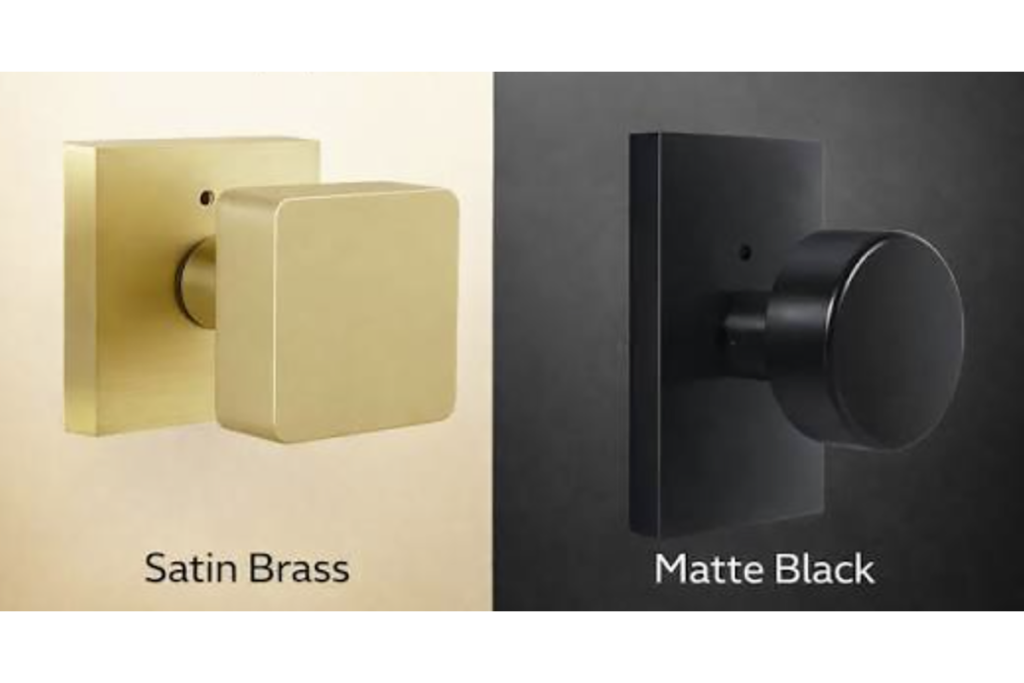
Satin Brass vs Matte Black: Which Works Best?
Satin Brass vs Matte Black can become a costly decision when buyers treat it as a simple color choice. A finish may look perfect in a catalog, but it may fail to match the project style, local market taste, or daily maintenance expectations. I compare both finishes through design fit, production process, and B2B purchasing risk.
Satin Brass vs Matte Black is not about one finish being universally better. Satin Brass usually works best for warm, classic, retro, hospitality, and premium interiors, while Matte Black fits minimalist, modern, industrial, and high-contrast spaces. The better choice depends on project style, target market preference, finish performance expectations, and maintenance tolerance.
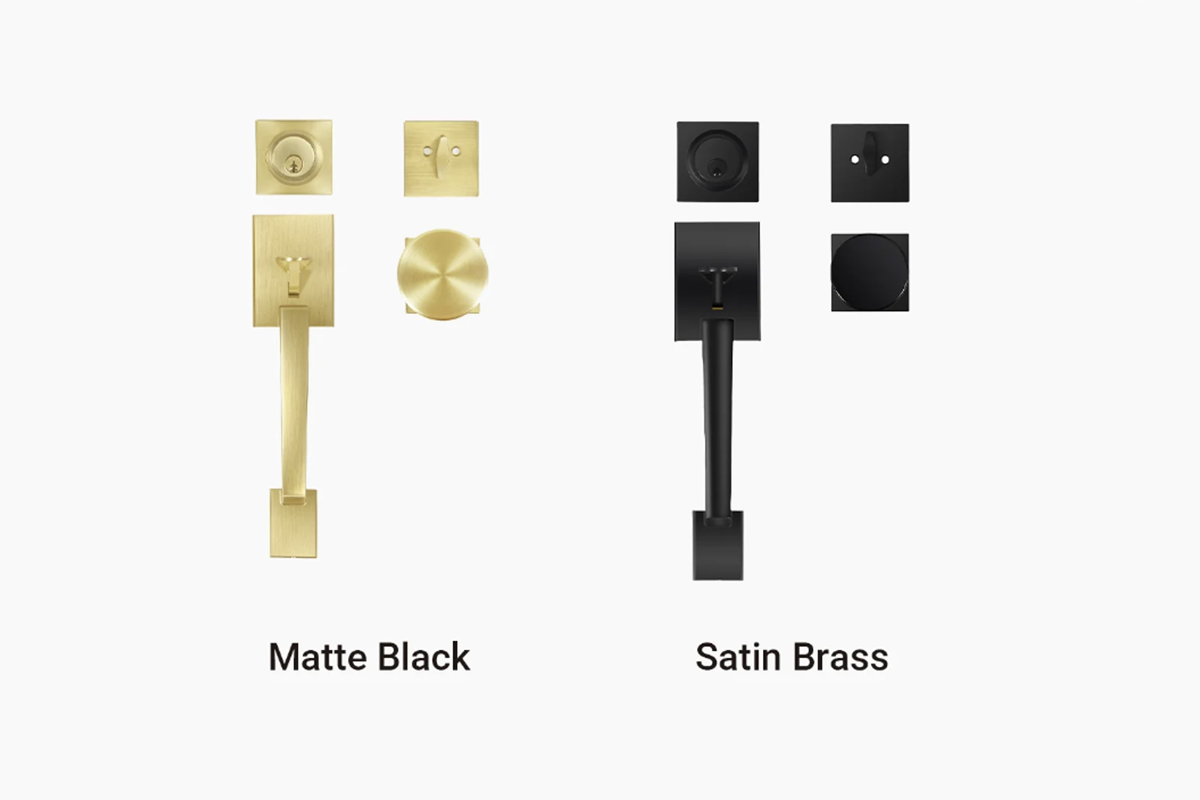
I have seen buyers approve a finish too quickly from a photo and then slow down after receiving samples. The reason is simple. Door hardware finishes are physical surfaces, not screen colors.1 Light, touch, batch consistency, and matching across handles, locks, hinges, and accessories all matter.2
Satin Brass vs Matte Black: How should buyers compare appearance first?
A door hardware finish can attract attention for the right reason or the wrong reason. Satin Brass vs Matte Black often starts with personal taste, but B2B buyers need to think beyond taste. If the finish does not match the end user’s interior style, the product line becomes harder to sell.
Satin Brass is usually better for warm, classic, retro, luxury, and hospitality-style spaces.3 Matte Black is usually better for minimalist, modern, industrial, and high-contrast interiors.4 I recommend that buyers compare the finish against door color, wall tone, lighting, furniture style, and the customer’s local market preference before choosing.
Why appearance comes before technical details?
I always start with appearance because buyers cannot sell a finish that the market does not want. A technically strong finish can still create inventory pressure if it does not fit the local design language.5 In my experience supplying architectural door hardware, Satin Brass and Matte Black often serve different customer emotions.
Satin Brass feels warm. It gives a softer visual result than polished brass. It does not feel too shiny, but it still carries a premium feeling. Many buyers use it for:
- Hotels and serviced apartments
- Premium residential projects
- Retro-style interiors
- Warm wood doors
- White, cream, beige, or dark green interior schemes
- Projects that need a classic but updated finish
Matte Black feels sharp. It creates contrast and clear lines. It often suits spaces where the designer wants the hardware to stand out as a graphic detail. Buyers often select it for:
- Modern apartments
- Minimalist interiors
- Industrial-style buildings
- Black-framed glass doors
- White, grey, or concrete-style spaces
- High-contrast door and wall combinations
Appearance comparison table
| Decision factor | Satin Brass | Matte Black |
|---|---|---|
| Visual temperature | Warm | Cool or neutral |
| Common design fit | Classic, retro, premium, hospitality | Modern, minimalist, industrial |
| Contrast level | Medium | High |
| Fingerprint visibility | Usually softer visually | Often more noticeable |
| Best matching door colors | Wood, white, cream, dark green, navy | White, grey, black, oak, concrete tones |
| Market positioning | Warm premium style | Modern design style |
I do not tell buyers that Satin Brass is “old” or that Matte Black is “always premium.” That is too simple. In some European markets, Satin Brass supports a refined interior trend. In many Middle East projects, warm metal tones can work very well with luxury interior details. In Southeast Asian urban projects, Matte Black often matches modern apartment concepts. However, each buyer should still confirm local preference.
I once reviewed a sample board where the Satin Brass handle looked excellent under warm showroom lighting, but it looked too yellow under cooler office lighting. That small difference changed the buyer’s final finish direction.
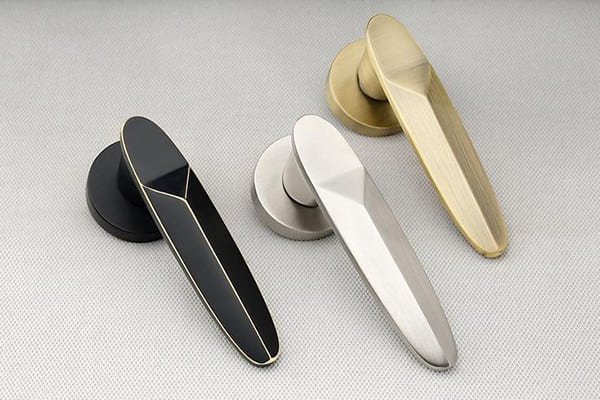
For this reason, I recommend a physical finish board or complete sample set before mass orders. A single lever handle is useful, but a complete set is better. Buyers should compare the lever handle, mortise lock faceplate, cylinder, hinge, escutcheon, and accessories together. A good finish decision should work across the full door hardware series, not only on one product.
Satin Brass vs Matte Black: Which finish performs better in daily use?
Performance problems often appear after installation, not during catalog selection. Satin Brass vs Matte Black should therefore include surface treatment, coating thickness, corrosion resistance expectations, and wear points. If buyers ignore these factors, a beautiful finish can create after-sales complaints.
In my production process, Matte Black can be positioned as a more performance-oriented finish when it uses a thicker electroplated layer and controlled surface treatment for stronger wear and corrosion resistance.6 This is a process-specific advantage, not a universal rule for all black hardware. Buyers should verify samples, specifications, and test documents.
Why process matters more than the finish name?
The finish name does not tell the whole story. “Matte Black” from one supplier may not equal “Matte Black” from another supplier. The same applies to Satin Brass. The real question is how the finish is produced, inspected, and matched across batches.
At SDH Hardware, I look at finish performance from a factory-side point of view. I care about:
Base material preparation
The surface must be properly polished, cleaned, and prepared before plating or coating. Poor preparation can lead to uneven color, weak adhesion, or visible defects.7Surface treatment process
The finish result depends on the actual process route. This may include electroplating, coating, sealing, or other controlled finishing steps depending on the item and order requirement.Layer control
In our specific Matte Black process, a thicker electroplated layer can support stronger wear and corrosion resistance expectations. I do not claim this for every Matte Black product on the market because each supplier’s process may differ.Wear points
Door handles face hand contact every day.8 Lock faceplates face key contact. Hinges face friction and alignment stress. Accessories may face cleaning chemicals or moisture. Each part has a different risk.Inspection method
Buyers should ask how the supplier checks finish consistency, adhesion, corrosion resistance, and appearance defects.9 They should not rely only on photos.
Practical performance comparison
| Performance concern | Satin Brass | Matte Black |
|---|---|---|
| Daily touch marks | Often visually softer | More visible due to contrast |
| Edge wear visibility | Depends on process and base tone | Can be more visible if coating is thin |
| Corrosion resistance | Depends on surface treatment | Strong when process and layer control are well managed |
| Batch color control | Important because tone differences show in sets | Important because black depth and gloss level must match |
| Cleaning sensitivity | Should avoid harsh chemicals | Should avoid abrasive cloths and aggressive cleaners |
What should buyers ask suppliers?
I suggest buyers ask direct, technical questions before ordering:
- What is the exact surface treatment process for this finish?
- What base material is used for the lever handle, hinge, lock, or accessory?
- What inspection steps are used after finishing?
- Can the supplier provide salt spray test references or internal test records if required?
- Can the supplier match the same finish across different product categories?
- Can the supplier provide pre-shipment inspection photos or reports?
- Are CE or fire-rated certificates available for the relevant product type, and can the buyer verify them?
I always remind buyers that certifications are documents to verify, not marketing decorations. For application-specific decisions, especially fire-rated openings or project compliance requirements, buyers should involve qualified professionals and review the correct certificate scope.
Performance also depends on the installation environment. An indoor apartment door does not face the same conditions as a coastal hotel project.10 A high-traffic public building does not face the same handling frequency as a private bedroom door. I treat finish selection as a risk-control decision. The buyer should match the finish process to the use environment, not only to a design mood board.
Satin Brass vs Matte Black: How do maintenance expectations differ?
Maintenance is where many finish complaints begin. Satin Brass vs Matte Black looks different not only on day one but also after repeated touching, cleaning, and exposure to dust or water marks. If buyers sell into markets with limited maintenance habits, this point becomes very important.
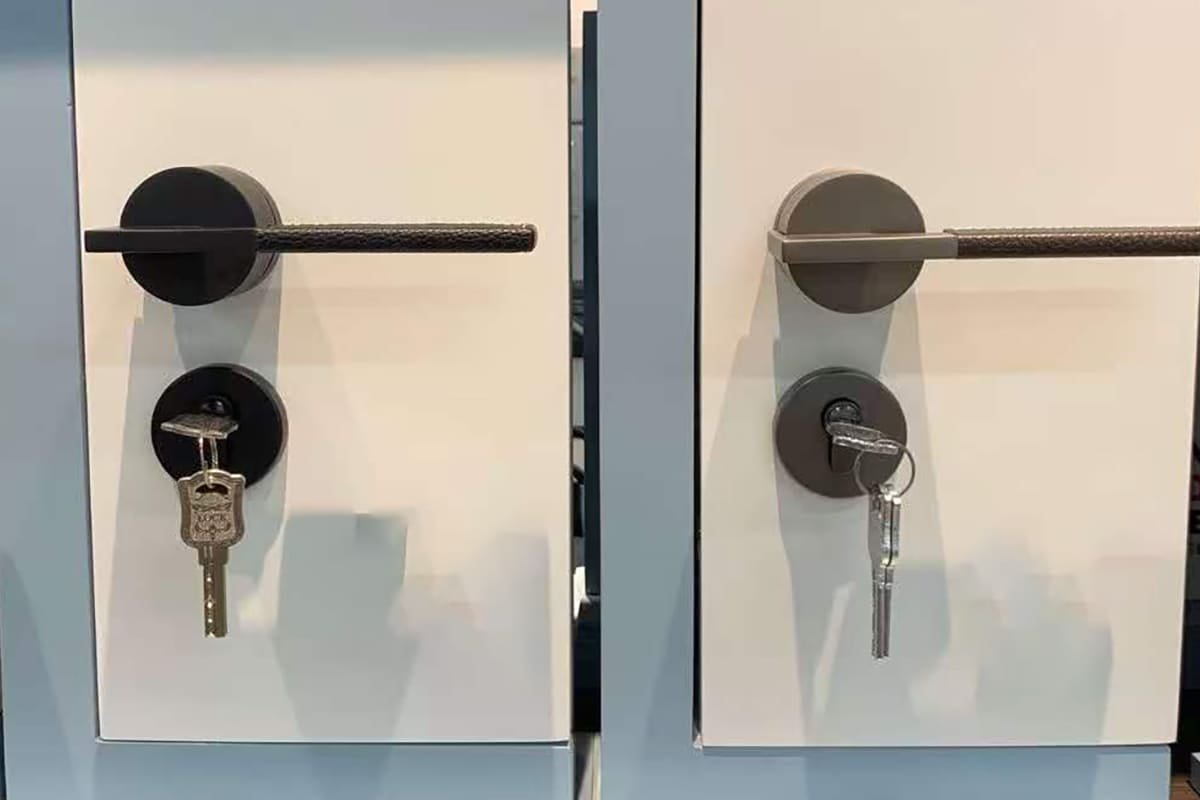
Satin Brass can visually soften fingerprints, light stains, and small daily marks because its warmer tone and lower contrast hide them better. Matte Black has stronger contrast, so dust, water spots, hand oils, and fingerprints may appear more obvious.11 Neither finish is maintenance-free, but they age visually in different ways.
Why Matte Black can show marks more easily?
Matte Black creates a high-contrast surface. That contrast is the reason designers love it, but it is also the reason daily marks can stand out. Light dust may appear grey. Water drops may dry as pale marks. Hand oils may create shiny spots on frequently touched areas. This does not always mean the finish is poor. It often means the surface is showing normal daily contact more clearly.
Satin Brass usually hides these small marks better because the tone is warmer and less contrast-heavy. A light fingerprint may blend into the finish instead of standing out. This can be useful in hotels, rental apartments, showrooms, and public-facing interiors where hardware is touched often.
Maintenance guidance for buyers
I recommend that B2B buyers share simple maintenance instructions with their own customers. This reduces unnecessary complaints and helps the product keep its intended appearance.
For Satin Brass door hardware:
- Use a soft dry cloth for regular cleaning.
- Use a slightly damp cloth for mild stains.
- Avoid strong acidic or alkaline cleaners.12
- Avoid abrasive pads.
- Keep chemical cleaning agents away from the finish.
For Matte Black door hardware:
- Use a soft microfiber cloth to remove dust.
- Wipe water marks soon after they appear.
- Avoid rough cloths that may polish the matte surface.
- Avoid oil-based cleaners unless approved.
- Do not use aggressive chemicals that may affect coating appearance.
Maintenance risk by project type
| Project type | Satin Brass maintenance fit | Matte Black maintenance fit |
|---|---|---|
| Private residential | Good if style matches | Good if users accept visible dust or marks |
| Hotel guest rooms | Strong fit for warm luxury design | Strong fit for modern design, but cleaning guidance matters |
| Office projects | Good for premium executive areas | Good for minimalist office interiors |
| Rental apartments | Good because marks can be less obvious | Good if the market expects modern style and accepts cleaning needs |
| Coastal projects | Requires process verification | Requires process verification and corrosion evaluation |
I do not suggest choosing Satin Brass only because it hides marks better. I also do not suggest avoiding Matte Black only because it shows marks more clearly. The better approach is to match maintenance expectations with user behavior.
For example, a boutique hotel with trained cleaning staff can maintain Matte Black very well. A high-volume rental project may prefer finishes that look cleaner between maintenance cycles. A premium villa project may use Satin Brass because it supports warm interior materials like walnut, marble, and beige stone. A modern apartment developer may choose Matte Black because it matches black aluminum doors, slim frames, and minimalist kitchens.
I have seen sample approvals move faster when the buyer physically touches the handle, wipes it, and checks it again under light. That simple test tells more than a polished catalog image.
Buyers should also check whether cleaning instructions can be included in packaging or project handover documents. For OEM and ODM orders, I often see brands care about this detail because it protects both the brand and the end user experience.
Satin Brass vs Matte Black: How should B2B buyers choose for inventory and projects?
Inventory mistakes can be expensive. Satin Brass vs Matte Black is not just a design discussion for wholesalers, door factories, and hardware brands. It is also a stocking decision, a market positioning decision, and a supplier control decision.
B2B buyers should choose Satin Brass or Matte Black based on target customer style, local market demand, project use environment, and supplier finish consistency. They should confirm physical samples, complete hardware set matching, batch color control, maintenance expectations, and relevant certificates before mass production or bulk purchasing.
How I evaluate finish decisions for bulk orders?
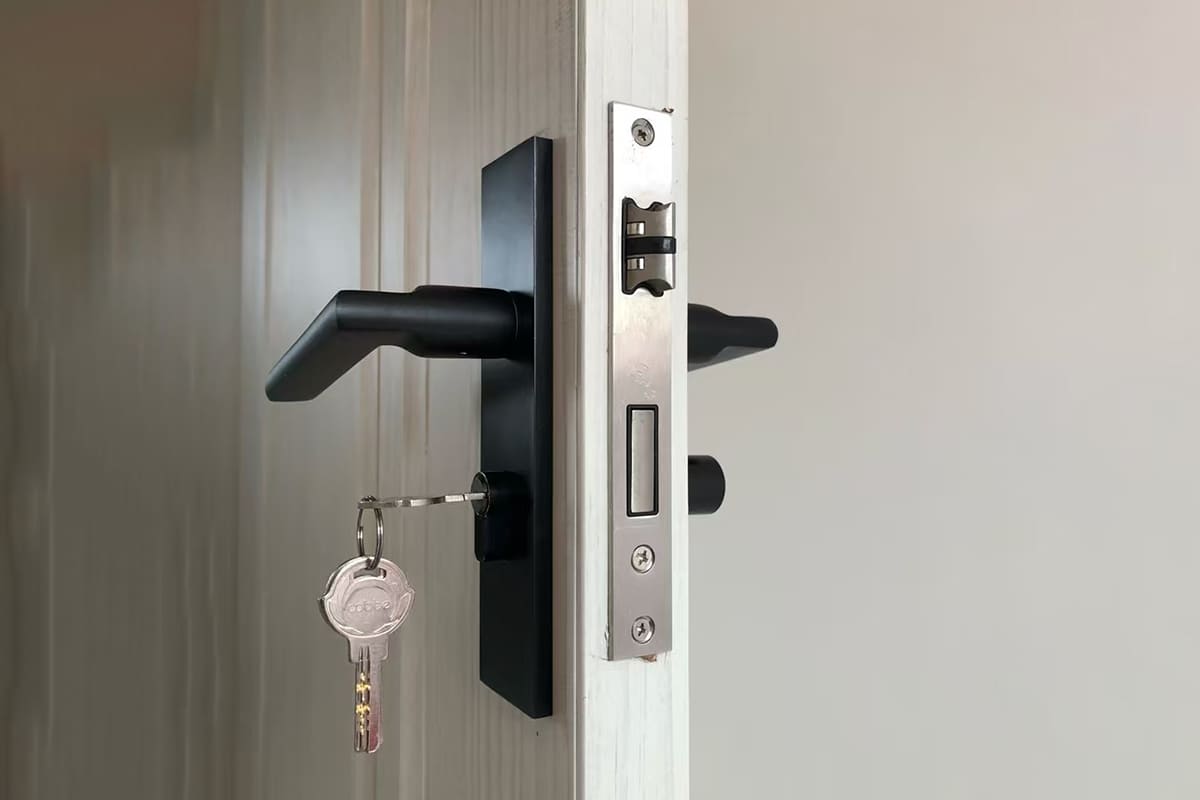
When I support B2B buyers, I try to separate the decision into five layers. This makes the choice more practical and less emotional.
1. Target market preference
A finish that sells well in one country may move slowly in another. Buyers should review:
- Current local interior trends
- Existing sales data
- Competitor product lines
- Project tender requirements
- Architect and designer preferences
- Retail showroom feedback if available
If the buyer sells to Europe, Middle East, and Southeast Asia, the answer may not be the same for every market. Satin Brass may work better in one product series, while Matte Black may work better in another.
2. Product category matching
Door hardware buyers rarely purchase one item only. They need a complete set. A finish choice should be available and consistent across:
- Stainless steel lever handles
- Euro mortise locks
- Butt hinges
- Concealed door hinges
- Euro brass cylinders
- Escutcheons and rosettes
- Door stops and other accessories
This is where factory capability matters. A supplier may produce a beautiful lever handle sample but struggle to match hinges or lock faceplates. Buyers should not approve one sample and assume the full series will match.
3. Sample confirmation
I strongly recommend physical sample approval before mass orders. Photos can be useful, but they can hide important differences.
Buyers should check:
- Finish tone under warm and cool lighting
- Gloss level or matte level
- Edge coverage
- Surface smoothness
- Fingerprint visibility
- Matching between different products
- Packaging protection after transport
- Logo marking effect if branding is required
For OEM and ODM orders, sample confirmation should include the final branding method. Stamping, laser logo, and packaging design can all affect the final product impression.
4. Batch consistency
Batch consistency is critical for wholesalers and hardware brands. If one shipment looks different from the next, the buyer may face complaints from distributors or project installers.
A professional supplier should control:
- Color range standards
- Incoming material quality
- Polishing process stability
- Plating or coating parameters
- Final inspection criteria
- Packaging protection
- Pre-shipment inspection records
At SDH Hardware, I view finish consistency as part of full-process quality control. It begins with raw material screening and continues through standardized production supervision and finished product inspection. I still recommend that buyers define their acceptance standards clearly before production.
5. Project and compliance needs
Some projects require more than appearance approval. Fire-rated doors, commercial buildings, and regulated markets may require documentation. Buyers should verify whether CE certification, fire-rated certification, or other documents apply to the specific product and use case. A certificate should match the product type, test scope, and project requirement.
B2B decision table
| Buyer priority | Better starting point | Reason |
|---|---|---|
| Warm premium interior range | Satin Brass | It supports classic, retro, and hospitality styles |
| Minimalist modern product line | Matte Black | It creates strong contrast and clean lines |
| Lower visible daily marks | Satin Brass | Its tone can visually soften fingerprints and light stains |
| Performance-oriented black finish | Matte Black from a controlled process | In my process, thicker electroplating can support stronger wear and corrosion resistance |
| One-stop sourcing across full series | Either finish | The supplier must match locks, handles, hinges, cylinders, and accessories |
| Lower inventory risk | Market-dependent | Buyers should confirm local taste and sales data |
I advise buyers not to choose only one finish because it looks good in a trend report. A wholesaler may need both finishes, but in different quantities. A door manufacturer may use Satin Brass for premium wood door packages and Matte Black for modern apartment door packages. A hardware brand may test both finishes with small initial orders before expanding stock.
The safest sourcing process is simple:
- Shortlist the finish direction.
- Request physical samples.
- Check complete set matching.
- Confirm process and inspection standards.
- Review maintenance expectations.
- Verify documents if required.
- Approve production samples.
- Arrange pre-shipment inspection after completion.
This process protects both the buyer and the supplier. It reduces misunderstanding, improves product positioning, and supports more stable long-term cooperation.
Frequently Asked Questions
Is Satin Brass better than Matte Black for door hardware?
Satin Brass is not universally better than Matte Black. It usually works better for warm, classic, retro, hospitality, and premium interiors. Matte Black usually works better for modern, minimalist, industrial, and high-contrast spaces. I recommend choosing based on project style, target market, and maintenance expectations.
Does Matte Black door hardware scratch easily?
Matte Black scratch resistance depends on the supplier’s surface treatment process, base material, coating control, and inspection standards. In my production process, a thicker electroplated Matte Black finish can support stronger wear resistance expectations. Buyers should still confirm physical samples and request relevant test information when needed.
Does Satin Brass show fingerprints?
Satin Brass can show fingerprints, but its warm tone often makes light marks less obvious than high-contrast finishes. This can make Satin Brass practical for hotels, residential projects, and interiors where users want a softer appearance between cleanings.
Should wholesalers stock Satin Brass or Matte Black?
Wholesalers should stock based on local market demand, customer style preferences, and existing sales data. Matte Black may move faster in modern design markets, while Satin Brass may perform better in warm premium or hospitality-focused segments. I suggest testing samples and small batches before large inventory commitments.
Can Satin Brass and Matte Black be matched across handles, locks, hinges, and accessories?
Yes, they can be matched, but buyers should verify this before mass orders. Different product categories may use different materials and production methods. I recommend approving a complete hardware set, including lever handles, mortise locks, hinges, cylinders, and accessories, not only one sample handle.
Conclusion
Satin Brass vs Matte Black works best as a structured sourcing decision, not a simple style vote. Satin Brass usually supports warm, classic, retro, and premium interiors, while Matte Black fits modern, minimalist, and high-contrast spaces. Buyers should also compare surface treatment, maintenance expectations, batch consistency, full hardware set matching, and market demand. If you are sourcing architectural door hardware for a project or product line, I can help you confirm samples, finishes, customization options, and factory-direct supply requirements through SDH Hardware.
"Perfect appearance match between self-luminous and surface ...", https://pmc.ncbi.nlm.nih.gov/articles/PMC7591860/. Research on color appearance and material perception shows that perceived color and finish vary with illumination, viewing geometry, surface gloss, and reproduction medium, supporting the article’s distinction between catalog images and physical finish samples. Evidence role: mechanism; source type: paper. Supports: Physical surface appearance depends on illumination, viewing conditions, surface texture, and display reproduction limits.. Scope note: This evidence supports the visual-perception mechanism generally rather than testing Satin Brass or Matte Black door hardware specifically. ↩
"Perception and Appreciation of Tactile Objects - PMC - NIH", https://pmc.ncbi.nlm.nih.gov/articles/PMC10019098/. Institutional guidance on coating and finish quality control treats visual appearance, color consistency, adhesion, and component-to-component uniformity as relevant inspection criteria, supporting the article’s emphasis on evaluating complete hardware sets rather than isolated photos. Evidence role: general_support; source type: institution. Supports: Finish evaluation commonly considers appearance under lighting, consistency between production lots, and coating quality across related components.. Scope note: The support is contextual because general coating-quality guidance may not address every door hardware component named in the article. ↩
"Key Properties of Metals in Interior Design: Strength, Finish ...", https://www.graduateschool.edu/learn/interior-design/key-properties-metals. Interior-design and design-history sources describe brass and brass-toned metal finishes as warm materials frequently used in traditional, decorative, and upscale interior contexts, providing contextual support for the article’s positioning of Satin Brass in classic and hospitality-oriented spaces. Evidence role: historical_context; source type: education. Supports: Brass-toned metals are historically and visually associated with warm, traditional, decorative, and upscale interiors.. Scope note: The source would support the design association broadly, not prove that Satin Brass is commercially superior in every hospitality or luxury project. ↩
"High contrast vs low contrast home design", https://www.facebook.com/FlooringAmericaMA/posts/a-high-contrast-color-scheme-infuses-energy-and-helps-to-create-focal-points-in-/815714517236167/. Design scholarship and educational sources on modern, minimalist, and industrial interiors identify restrained palettes, dark metal elements, and strong contrast as recurring visual strategies, giving contextual support to the article’s association of Matte Black hardware with those styles. Evidence role: general_support; source type: education. Supports: Black elements are often used in modern, minimalist, industrial, and high-contrast design schemes.. Scope note: The evidence would establish a design-context relationship, not a universal rule that Matte Black is the best finish for all modern or industrial interiors. ↩
"A Demand Estimation Procedure for Retail Assortment ...", https://faculty.wharton.upenn.edu/a-demand-estimation-procedure-for-retail-assortment-optimization-with-results-from-implementations-workingpaper-file-file/. Research on retail assortment planning and product-market fit shows that matching offerings to local consumer preferences is associated with inventory performance, supporting the article’s claim that a technically acceptable finish may still create stocking risk when it conflicts with local design expectations. Evidence role: general_support; source type: paper. Supports: Product assortment decisions are affected by local consumer preferences, and misalignment can contribute to slow-moving inventory.. Scope note: The evidence is likely to address assortment and localization generally, rather than door hardware finishes specifically. ↩
"(PDF) Effect of SiC size dimensions on the corrosion wear ...", https://www.academia.edu/81777352/Effect_of_SiC_size_dimensions_on_the_corrosion_wear_resistance_of_the_electrodeposited_composite_coating. Materials-science studies of electrodeposited metal coatings report that coating thickness, adhesion, microstructure, and process control affect corrosion behavior and wear performance, supporting the article’s conditional claim that a controlled, thicker electroplated finish may improve durability. Evidence role: mechanism; source type: paper. Supports: Electroplated coating thickness and process control can influence wear resistance and corrosion protection.. Scope note: The evidence supports the coating mechanism generally and may not validate the performance of any specific supplier’s Matte Black process. ↩
"Achieving Better Adhesion with Proper Surface Preparation", https://fpg.phys.virginia.edu/fpgweb/useful_info/Master_Bond-Proper_Surface_Preparation_Bonding.pdf. Coating-failure and metal-finishing literature identifies cleaning, surface preparation, and substrate condition as major determinants of coating adhesion and appearance, supporting the article’s claim that poor preparation can produce weak adhesion, uneven color, or visible defects. Evidence role: mechanism; source type: research. Supports: Surface preparation affects coating adhesion, visual uniformity, and defect formation.. ↩
"Microbial Contamination of Door Handles: A Global ... - PMC", https://pmc.ncbi.nlm.nih.gov/articles/PMC12035165/. Public-health guidance on environmental cleaning commonly lists door handles among high-touch surfaces, supporting the article’s premise that handles experience frequent hand contact and therefore warrant attention to wear and maintenance. Evidence role: general_support; source type: government. Supports: Door handles are commonly classified as high-touch surfaces requiring attention in cleaning and maintenance.. Scope note: Public-health guidance supports frequency of touch and cleaning relevance, not the comparative durability of Satin Brass versus Matte Black. ↩
"Guide to Protective Coatings, Inspection, and Maintenance", https://www.usbr.gov/tsc/techreferences/mands/mands-pdfs/GuideToProtectiveCoatingsInspectionMaintenance2012_508.pdf. Standards organizations and coating-inspection references describe visual assessment, adhesion testing, and corrosion-resistance testing as established methods for evaluating coating quality, supporting the article’s list of finish checks for supplier review. Evidence role: expert_consensus; source type: institution. Supports: Recognized coating inspection practices include visual inspection, adhesion testing, corrosion testing, and consistency assessment.. Scope note: The evidence supports categories of inspection; the applicable test method depends on the specific substrate, coating system, and project requirement. ↩
"Marine Atmospheric Corrosion of Carbon Steel: A Review - PMC", https://pmc.ncbi.nlm.nih.gov/articles/PMC5506973/. Atmospheric-corrosion standards and studies identify chloride deposition, humidity, and marine exposure as important drivers of corrosion severity, supporting the article’s distinction between ordinary indoor apartment use and coastal hotel conditions. Evidence role: mechanism; source type: institution. Supports: Coastal environments with salt and humidity can increase corrosion risk compared with many indoor environments.. Scope note: The source would support environmental risk differences generally, not predict failure for a particular hardware finish without product-specific testing. ↩
"Contrast and depth perception: effects of texture ... - PubMed", https://pubmed.ncbi.nlm.nih.gov/17624115/. Research on visual contrast and mark visibility indicates that contaminants or residues become more noticeable when their luminance or reflectance differs strongly from the background surface, supporting the article’s explanation that dust, water spots, oils, and fingerprints may stand out on Matte Black finishes. Evidence role: mechanism; source type: paper. Supports: Visual contrast between surface contamination and a dark background can increase the perceptibility of marks.. Scope note: The evidence supports the visual mechanism and may not quantify mark visibility for the exact coating formulations used in door hardware. ↩
"Cleaning & Rinsing - Minnesota Technical Assistance Program", http://www.mntap.umn.edu/industries/facility/metalfinish/cleaning/. Conservation and architectural-metal maintenance guidance cautions that harsh acidic, alkaline, or abrasive cleaning agents can alter protective coatings and finished metal surfaces, supporting the article’s cleaning warning for Satin Brass and Matte Black hardware. Evidence role: general_support; source type: institution. Supports: Aggressive acidic or alkaline cleaners can harm coated or finished metal surfaces.. Scope note: The guidance is general; approved cleaning methods can vary by coating chemistry and manufacturer instructions. ↩