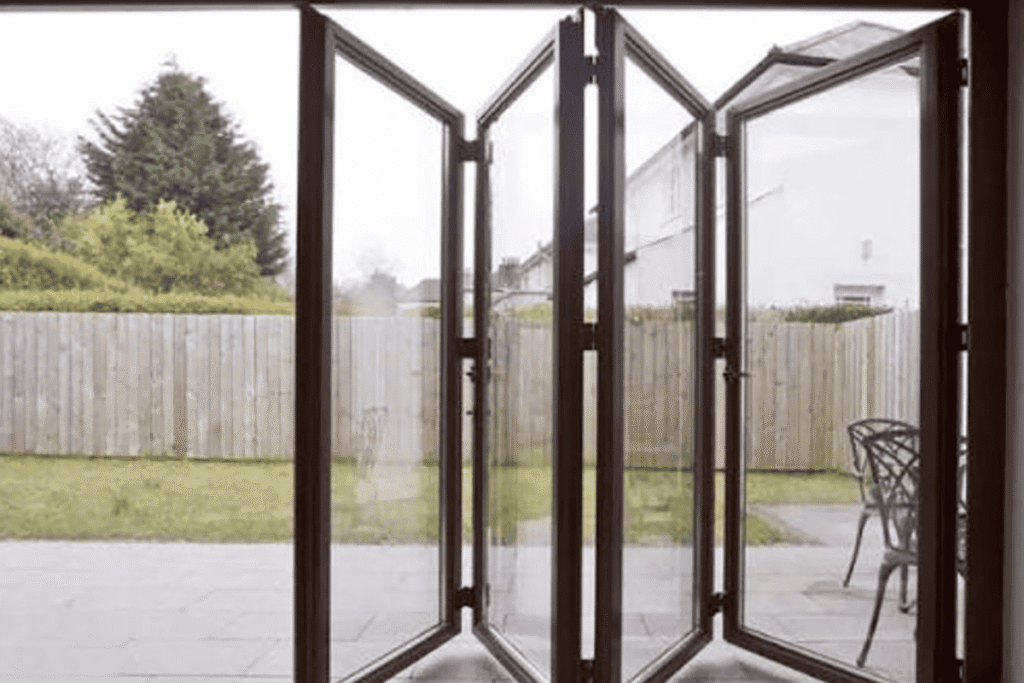
Choosing the Right Handle for Slim Aluminium & Bi-Fold Doors?
A handle for slim aluminium and bi-fold doors can look perfect on a catalogue page but fail during installation. The problem becomes costly when the handle clashes with the profile, hook lock, frame, or moving panel. I have seen this happen in door-factory inquiries, so I always start with compatibility before appearance.
Choosing the right handle for slim aluminium and bi-fold doors means checking the door system, profile dimensions, hook lock type, fixing position, handle projection, and movement clearance before confirming the design. The best handle is not only attractive; it must fit the aluminium profile, operate the lock correctly, and allow the door to slide or fold smoothly.
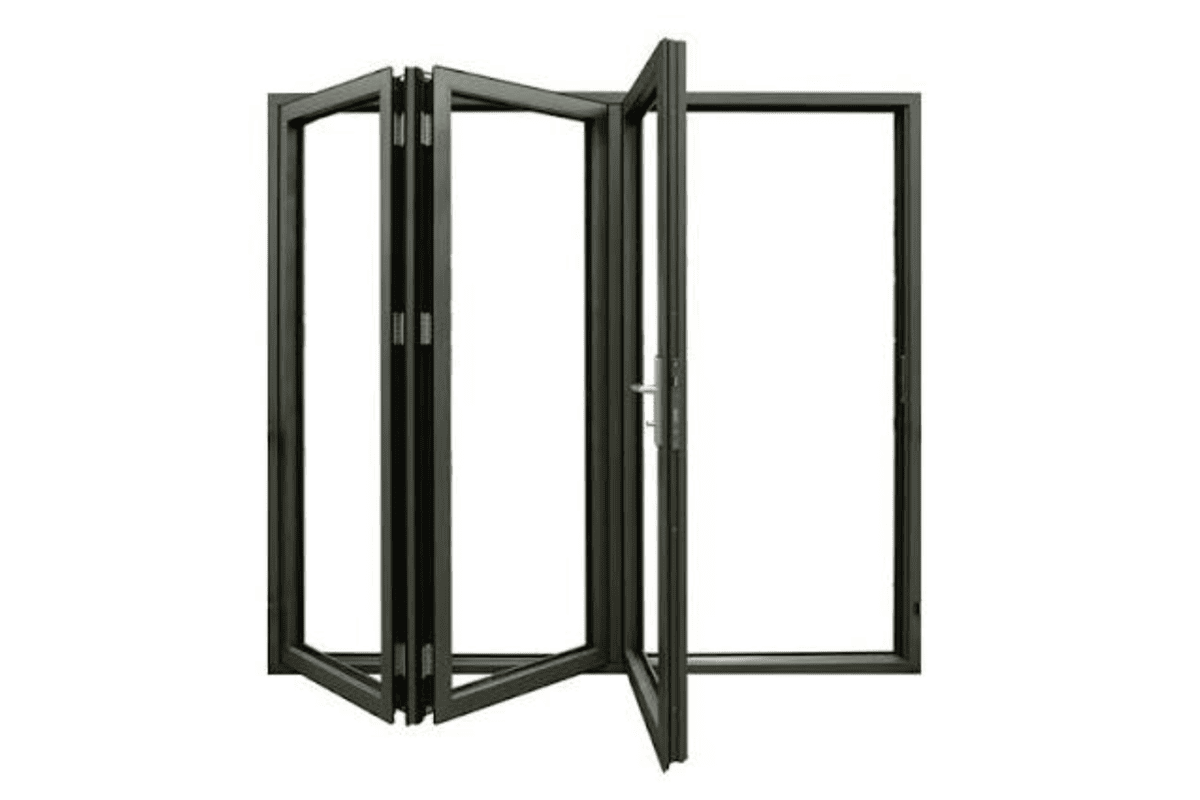
Many buyers begin with surface finish, shape, or price. I understand why, because those details are visible. However, for slim aluminium, sliding, and folding systems, hidden measurements decide whether the handle works. Let me walk through the practical checks I use when discussing samples with door factories.
Why Should You Start with the Door System Before Choosing a Handle for Slim Aluminium and Bi-Fold Doors?
A handle for slim aluminium and bi-fold doors cannot be selected in isolation. The wrong starting point creates rework, because sliding, folding, and hinged aluminium systems move differently1. If the door type is unclear, the handle may be too wide, too projecting, or unsuitable for the lock.
The first step is to confirm the door system: sliding, bi-fold, hinged aluminium, lift-slide, or another structure. Each system affects handle shape, projection, lock operation, fixing screws, and clearance.2 A good handle choice starts with door movement, not with decoration.
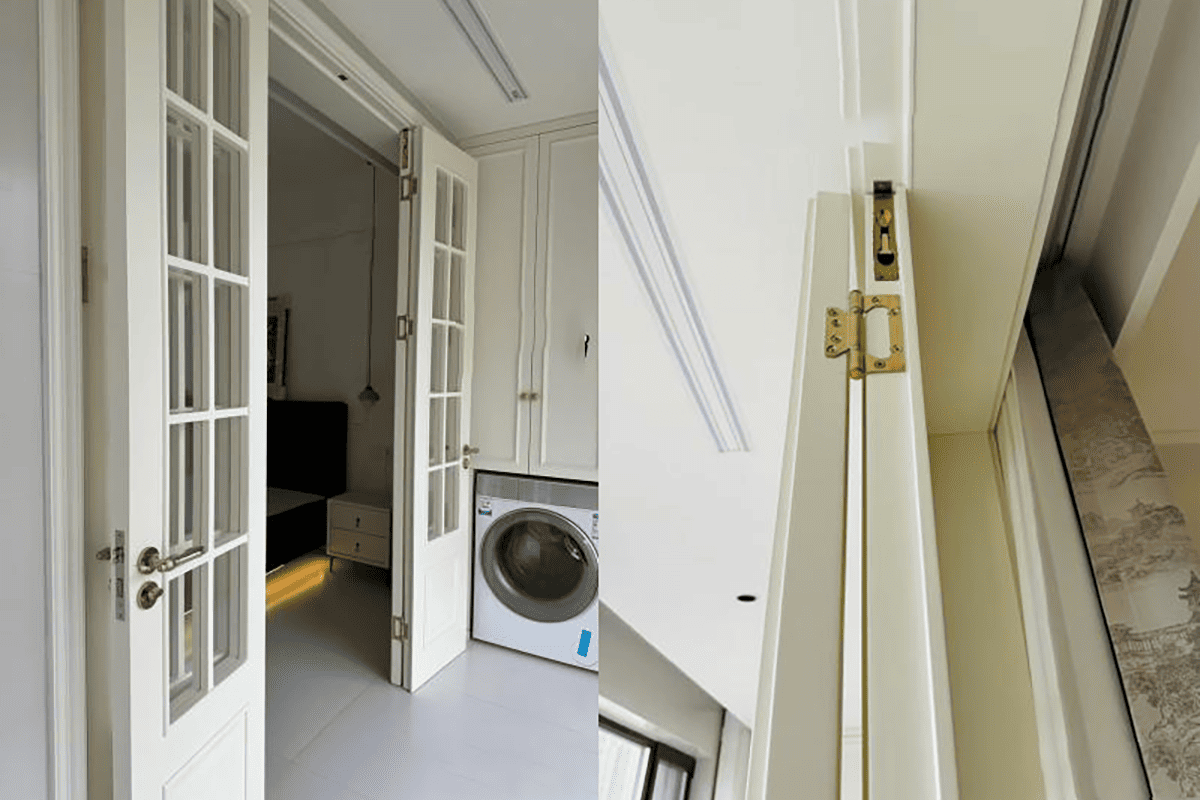
The door movement changes the handle requirement
When I review a handle inquiry, I usually ask one simple question first: How does the door open? This sounds basic, but it prevents many mistakes. A handle that feels comfortable on a hinged door may block a sliding panel. A pull handle that looks elegant on one bi-fold leaf may collide with the next leaf when the panels stack.
Different aluminium door systems create different hardware conditions:
| Door system | Common handle concern | Compatibility risk |
|---|---|---|
| Slim sliding door | Low projection and narrow fixing area | Handle may hit frame or adjacent panel |
| Bi-fold door | Folding clearance and hand space | Handle may interfere when panels stack |
| Hinged aluminium door | Lock body and cylinder alignment | Handle may not match mortise lock position |
| Lift-slide door | Operating force and special mechanism | Standard handle may not engage hardware correctly |
| Interior slim partition door | Minimal profile width | Rosette or base plate may be too large |
The word “slim” also means different things in different markets. Some factories use very narrow aluminium sightlines for modern villa doors. Others use slightly wider profiles for commercial projects. The handle choice should follow the actual profile drawing, not only the product name.
I separate appearance approval from fit approval
In our manufacturing-side communication, I often see buyers approve a handle style too early. The finish may be black, satin nickel, brushed stainless steel, or custom color. The shape may be square, rounded, recessed, or minimalist. These details matter for branding, but they do not prove fit.
I prefer to separate the decision into two approvals:
Technical fit approval
- Door type
- Profile width
- Mounting space
- Lock type
- Spindle or turn function
- Screw fixing position
- Projection clearance
Commercial and visual approval
- Finish
- Logo
- Packaging
- Market preference
- Matching accessories
- Target price range
This order helps door factories avoid beautiful samples that cannot enter production. It also helps hardware suppliers recommend realistic options.
My rule is simple: if I do not understand the door movement, I do not recommend the handle yet.
Slim aluminium systems need a full hardware view
A door handle works with other components. For aluminium sliding and folding systems, the handle often connects with a hook lock, cylinder, turn snib, strike plate, or pull accessory. If one part changes, the handle requirement may change as well.
Before selecting a handle for slim aluminium and bi-fold doors, I suggest preparing these details:
- Door system type
- Opening direction and movement path
- Profile section drawing
- Available flat mounting area
- Lock body drawing
- Hook lock operation method
- Cylinder requirement, if any
- Finish and branding needs
- Expected quantity and project market
This information saves time before sampling. It also makes supplier communication more accurate.
How Does a Hook Lock Affect the Handle for Slim Aluminium and Bi-Fold Doors?
A hook lock can completely change the required handle for slim aluminium and bi-fold doors. If the handle does not match the hook lock mechanism, the door may look finished but fail to lock correctly. This creates risk during installation, inspection, and customer use.
A hook lock requires the handle set to match the lock body, spindle or turning function, fixing hole position, backset, cylinder option, and available installation space. The hook-shaped latch must engage the frame or strike smoothly, so the handle and lock must be evaluated together.
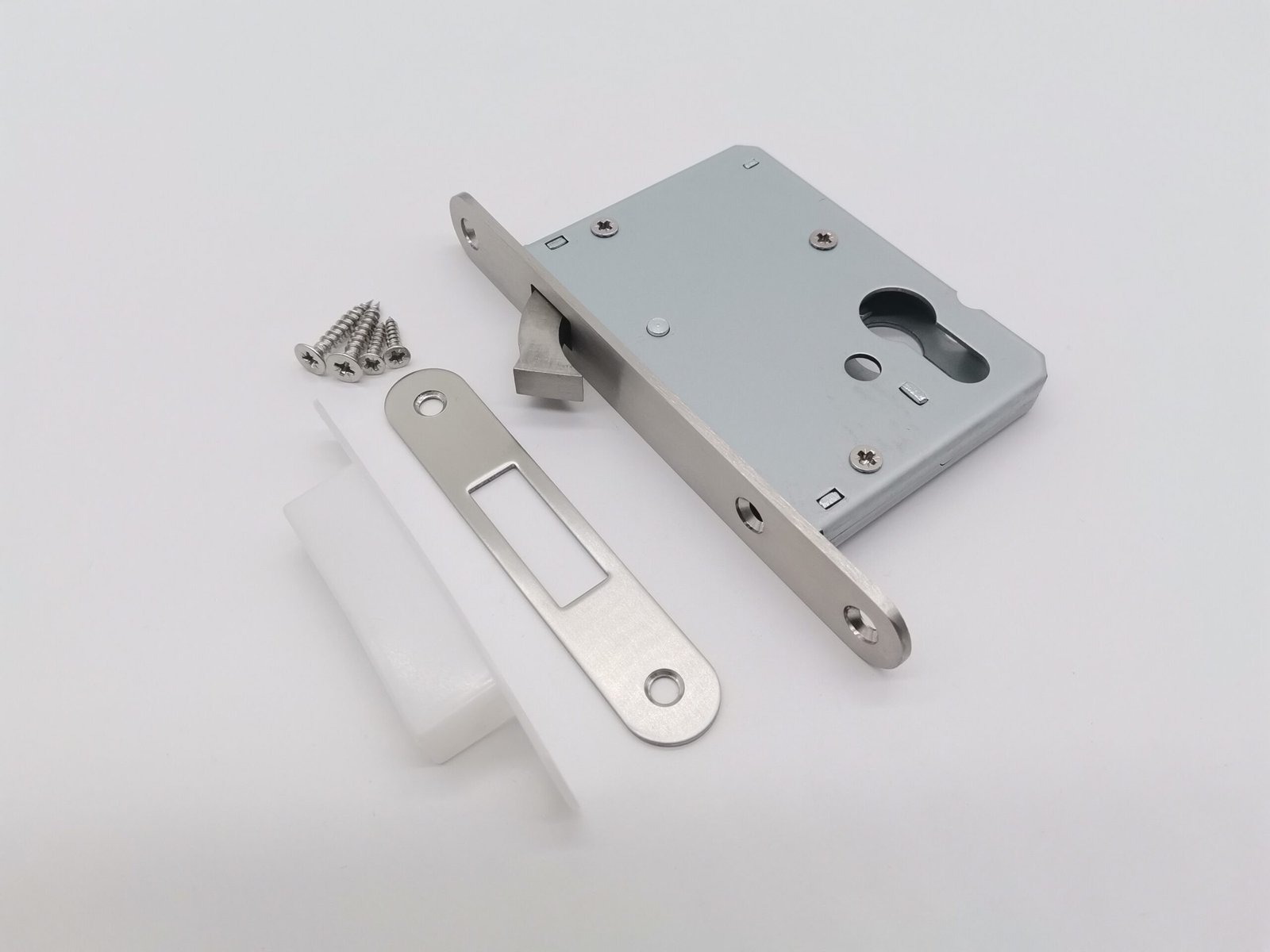
A hook lock is not the same as a standard latch lock
A common latch lock usually moves a bevel latch into the strike plate. A hook lock uses a hook-shaped locking point that rotates or projects into the frame keeper.3 This design is common in aluminium sliding doors and some folding systems because it helps hold the panel in position.4
However, the handle must operate that mechanism correctly. The buyer cannot assume that any lever or pull handle will work.
Key hook lock details include:
- Backset: distance from profile edge to spindle or key center
- Lock body depth: whether the lock fits inside the slim aluminium profile
- Spindle size: common markets may use different spindle dimensions
- Turning angle: the handle may need a specific rotation to engage the hook
- Cylinder position: the handle plate or escutcheon must allow cylinder access
- Fixing hole distance: screw positions must avoid the lock case and profile walls
- Keeper alignment: the hook must match the frame strike location
When a door factory sends only a handle photo and asks, “Can you supply this?” I usually cannot give a reliable answer. I need the lock context.
The handle may be a pull, lever, or flush type
Not every slim aluminium system uses the same handle form. The correct option depends on the lock mechanism and door movement.
| Handle type | Typical use | Main check |
|---|---|---|
| Lever handle | Hinged or some folding doors | Spindle, spring, projection, lock match |
| Slim pull handle | Sliding or folding panels | Fixing space, grip comfort, clearance |
| Recessed/flush handle | Sliding doors needing low projection | Cut-out size, lock access, hand depth |
| Turn snib handle | Internal locking operation | Turn function and hook lock compatibility |
| Handle with cylinder hole | Lockable aluminium door | Cylinder center and escutcheon clearance |
I always remind buyers that the visible handle is only one part of the system. The internal motion matters more. If the hook lock requires a turn operation, then a simple fixed pull may not be enough. If the lock needs a spindle, then the handle must match the spindle size and working angle.
Installation space can limit the lock and handle combination
Slim aluminium profiles look elegant because they reduce visible frame width. That same advantage creates a hardware challenge.5 The lock body must fit into a narrow chamber. The handle base plate must sit on a narrow surface. The fixing screws must not conflict with the lock case.
A practical check should include:
Profile face width
- Is there enough flat area for the handle base?
- Will the handle overlap the profile edge?
Internal profile cavity
- Can the hook lock body fit inside?
- Are screw holes blocked by profile ribs?
Lock and handle centerline
- Does the spindle align with the handle?
- Does the cylinder hole align with the escutcheon?
Frame keeper position
- Does the hook enter the keeper without rubbing?
- Does the door need adjustment tolerance?
Panel movement
- Does the handle avoid the adjacent door panel?
- Does the user have enough hand space?
In SDH Hardware’s order communication, I have seen some projects where the buyer selected a narrow handle but forgot to confirm the hook lock body. The result was a handle that looked correct but had no suitable locking function. I would rather slow down the inquiry stage than create a failed sample.
Do not separate security language from fit checks
Buyers often ask whether a lock is “secure.” That question is reasonable, but the answer depends on the complete door system, installation, application, and verified documents. As a manufacturer, I can support buyers with product drawings, samples, and quality inspection service after order completion. For project-specific security or regulatory decisions, buyers should involve qualified door system engineers or local code professionals.
For procurement, the practical point is clear: a hook lock changes the handle selection from a style choice into a mechanism-matching task.
What Profile Dimensions Matter When Selecting Slim Aluminium Door Handles?
Slim profiles create the main challenge for aluminium door handles. If the base plate is too wide, the screw position is wrong, or the projection is too large, installation becomes difficult. The mistake may not appear until the sample is mounted on the real profile.
The most important profile dimensions are face width, profile thickness, internal cavity size, flat mounting area, lock backset, screw fixing area, and clearance to the frame or adjacent panel. These measurements decide whether the handle can be installed and operated correctly.
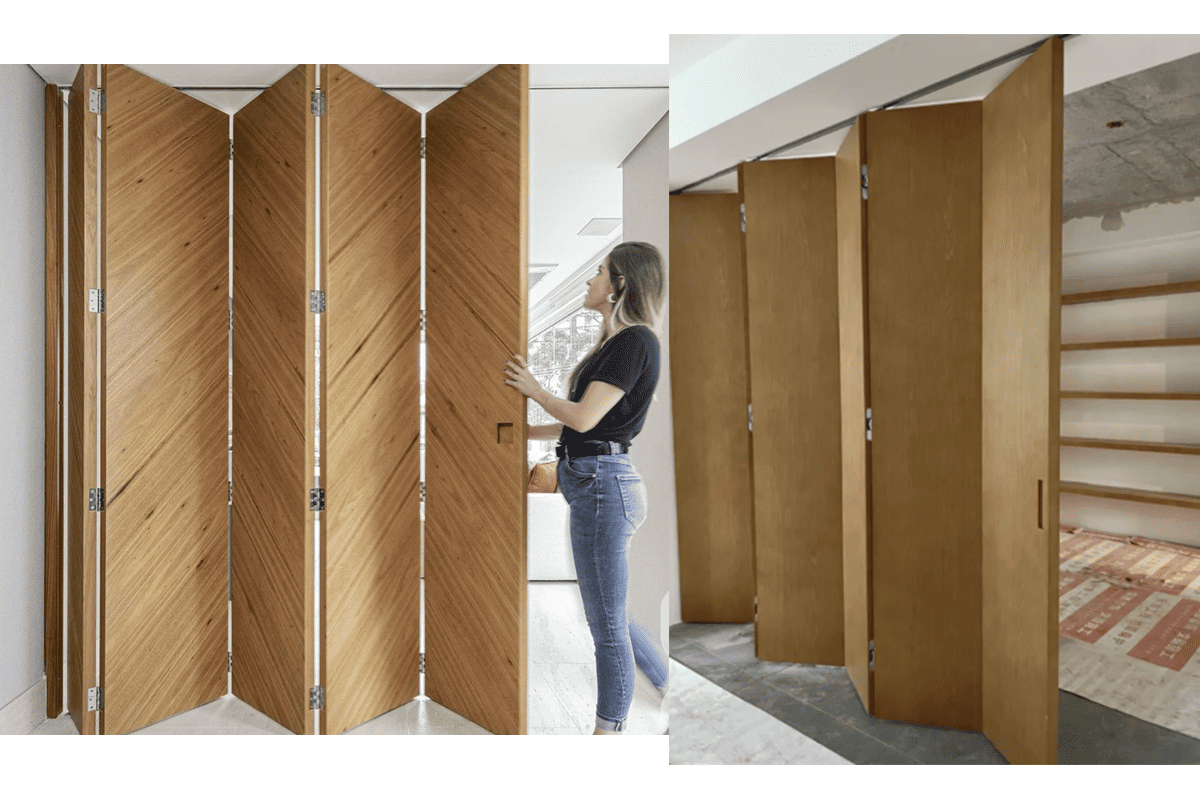
The visible face width is only the first measurement
Many buyers first tell me the profile width. That is useful, but it is not enough. A profile may have grooves, bevels, decorative ridges, thermal break structures, or narrow flat zones.6 The handle needs a stable mounting surface, not just a total width number.
For example, a 35 mm visible profile may not provide 35 mm of usable mounting area. The real flat area may be much smaller. If the handle base is 28 mm wide and the flat area is only 24 mm, the handle will not sit properly.
A useful profile check includes:
- Total visible profile width
- Flat mounting width
- Profile wall thickness
- Internal chamber size
- Distance from edge to lock center
- Distance from edge to fixing holes
- Any grooves or raised lines
- Frame overlap or gasket position
Mounting space affects both production and after-sales
A handle that barely fits may pass a quick sample check but still cause production problems.7 Screws may pull unevenly. The base may sit at a slight angle. The lock spindle may bind. Workers may need extra time during assembly. In bulk production, small fit issues become expensive.
I suggest door factories evaluate handle installation from three angles:
| Evaluation point | Question to ask | Why it matters |
|---|---|---|
| Assembly | Can workers install it quickly and repeatably? | Reduces factory rework |
| Operation | Does the handle move the lock smoothly? | Reduces functional complaints |
| Appearance | Does the base sit cleanly on the profile? | Protects brand perception |
When I discuss ODM or OEM handle options, I also ask whether the buyer needs logo stamping, laser marking, or custom packaging. These branding details should come after mounting space is confirmed. A logo on the wrong handle does not solve the fit issue.
Surface treatment should match the application
Surface finish matters for aluminium door systems because the handle is highly visible. Common options include black, white, satin nickel, brushed stainless steel, PVD-like tones, and other customized finishes depending on production feasibility. However, buyers should evaluate surface treatment together with application environment.8
For procurement, I recommend asking:
- Will the door be used indoors or outdoors?
- Is the market coastal, humid, or dry?
- Will the handle face frequent public use?
- Does the finish need to match hinges, cylinders, and locks?
- Does the supplier provide finish samples before bulk order?
I avoid making universal finish-life promises without project conditions and test documents. Instead, I prefer practical confirmation: sample review, surface specification, batch inspection, and clear communication before production.
A compact handle still needs ergonomic space
Some buyers request the smallest possible handle. That makes sense for slim aluminium doors, but the handle still needs enough grip area.9 If the grip is too shallow, users may feel uncomfortable. If the recess is too small, fingers may not enter easily. If the lever is too short, operation may feel awkward.
A good slim aluminium door handle balances:
- Narrow base
- Low projection
- Comfortable grip
- Correct fixing position
- Lock compatibility
- Clean appearance
This is why I do not recommend choosing only by the smallest dimension. The best hardware is compact enough to fit but still usable in daily operation.
Why Do Bi-Fold Doors Need Extra Clearance Checks for Handle Projection?
A standard handle may work well on one door but fail on a bi-fold system. The problem is movement. When panels fold, stack, and rotate, the handle can touch another panel, reduce hand space, or block smooth operation.
Bi-fold doors need extra clearance checks because each panel moves relative to another panel. The handle projection, grip position, fixing height, hinge side, lock side, and panel stacking direction must be checked before sampling.10 Clearance is as important as style.
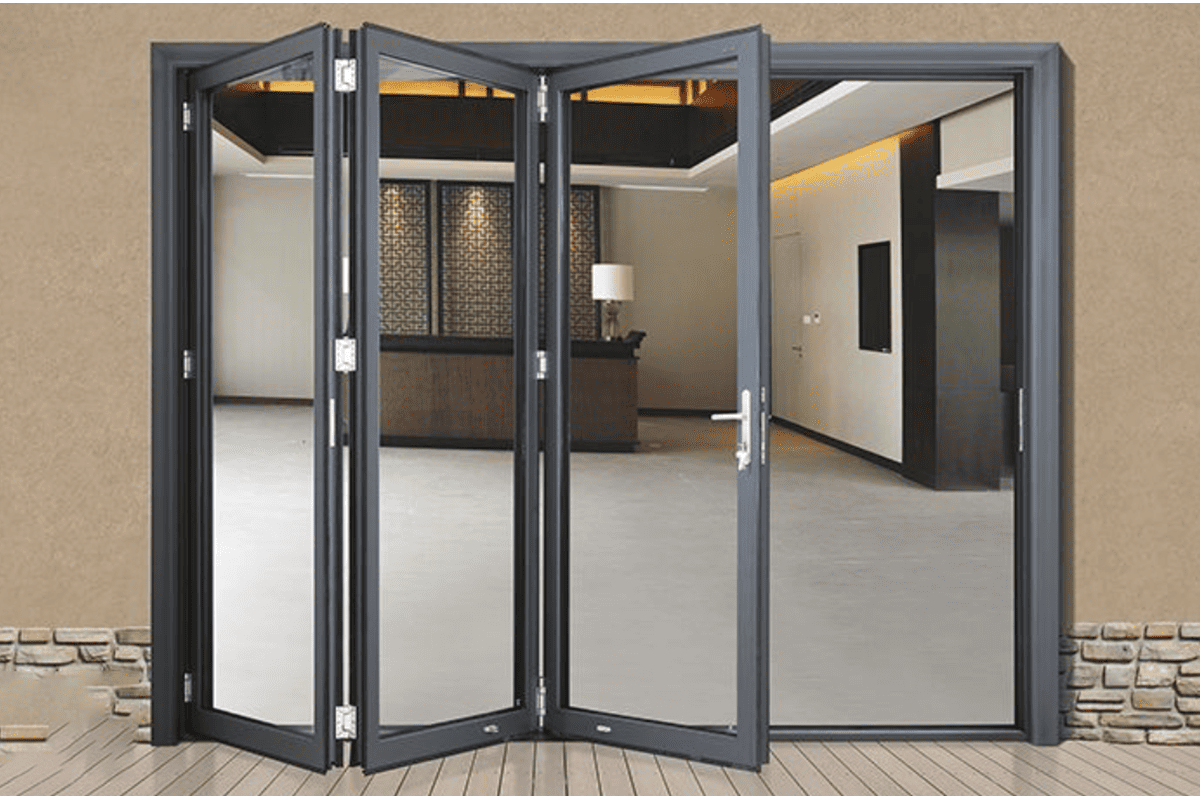
Bi-fold panels create changing gaps
A hinged door has a relatively simple swing path. A sliding door moves along a track. A bi-fold door is more complex because the panels pivot and fold together.11 The gap around the handle changes during operation.
This creates several possible problems:
- The handle may touch the adjacent panel.
- The user’s fingers may not have enough space.
- The handle may hit a frame, gasket, or wall.
- The folded panel stack may become too thick.
- The lock operation may be awkward when panels are partly folded.
I have seen door-factory discussions where the handle looked acceptable on a single panel drawing. But once the factory checked the full folding movement, the projection became a concern. This is why movement simulation, even a simple workshop mock-up, can be very helpful.
Projection is not only the handle depth
When buyers ask for low-projection hardware, they often focus on the distance from the profile face to the outermost handle point. That number is important, but it is not the only one.
For bi-fold doors, I would check:
| Dimension | What it means | Why it matters |
|---|---|---|
| Handle projection | How far the handle extends outward | Prevents panel contact |
| Grip depth | Space for fingers | Supports comfortable use |
| Base thickness | Thickness of plate or rose | Affects stack clearance |
| Lever length | Distance from spindle to end | May contact adjacent panel |
| Handle height | Vertical installation position | May conflict with other hardware |
| Door stack depth | Total folded panel thickness | Affects opening area |
The handle may have a low base but a long lever. Or it may have a short lever but a thick grip. Both can create interference depending on the folding direction.
Bi-fold handle selection should consider user behavior
Door hardware is not operated in a laboratory. People pull, push, turn, and sometimes use more force than expected. In busy residential, hospitality, or commercial environments, the handle should feel intuitive.
A bi-fold door handle should answer these practical questions:
- Can the user grip it when the panels are close together?
- Can the user lock and unlock it without awkward wrist movement?
- Can the door fold fully without the handle hitting another panel?
- Can the handle avoid contact with glass, gasket, or frame parts?
- Can installers access screws and adjustment points?
If the answer is unclear, I suggest testing a sample on the real aluminium system before bulk production.
Low-profile does not always mean flush
Some buyers think every bi-fold handle should be flush. That is not always true. A recessed handle can reduce projection, but it may require a larger cut-out. It may also limit lock compatibility. A slim pull or compact lever may be more practical depending on the door design.
Here is a simple selection guide:
| Requirement | Possible handle direction | Caution |
|---|---|---|
| Minimum projection | Recessed or flush pull | Check cut-out and hand depth |
| Lock operation needed | Slim lever or turn handle | Check hook lock compatibility |
| Brand visual impact | Slim pull handle | Check folding clearance |
| Narrow profile | Compact base handle | Check fixing screw position |
| Public use | Strong grip design | Check profile support and application needs |
There is no universal answer. The right solution depends on the door system, profile, and lock. That is why I treat a handle for slim aluminium and bi-fold doors as part of a complete door hardware package, not as a single decorative item.
What Should Door Factories Include When Inquiring About a Handle for Slim Aluminium and Bi-Fold Doors?
An incomplete inquiry slows down handle selection. If the supplier only receives a photo, the recommendation may be uncertain. The risk becomes higher for slim aluminium, sliding, and bi-fold systems because small dimensional differences can change the right hardware choice.
A good inquiry for a handle for slim aluminium and bi-fold doors should include door type, movement direction, profile drawings, mounting space, hook lock type, lock body dimensions, cylinder needs, finish requirements, quantity, and target market. Clear technical context improves sampling accuracy.
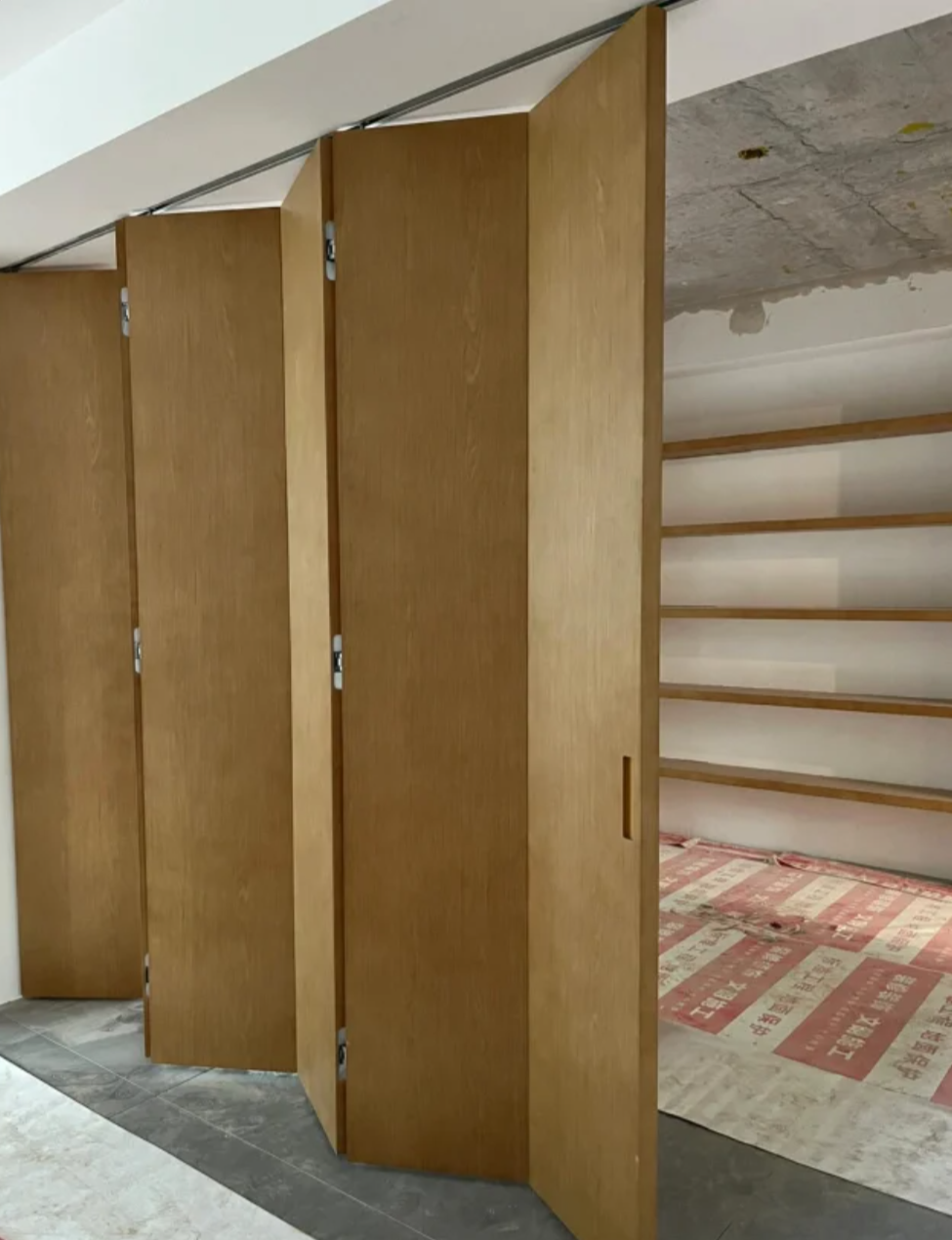
A complete inquiry reduces sampling mistakes
I understand that buyers sometimes want a fast quote. However, a fast quote based on incomplete details can lead to the wrong sample. In B2B hardware supply, the sample stage should confirm production feasibility, not reveal basic compatibility problems.
When a door factory contacts us, I prefer to receive the following information:
- Door type: sliding, bi-fold, hinged aluminium, lift-slide, or other
- Opening direction: left, right, inward, outward, sliding path, folding stack direction
- Profile drawing: width, thickness, flat mounting area, internal chamber
- Lock type: hook lock, mortise lock, latch lock, multi-point mechanism
- Lock dimensions: backset, center distance, case depth, fixing holes
- Handle requirement: lever, pull, flush, turn, cylinder hole, logo
- Cylinder requirement: Euro profile cylinder, thumb turn, key-key, or no cylinder
- Finish: black, silver, stainless steel, custom color, project requirement
- Accessory matching: strike plate, screws, spindle, escutcheon, packaging
- Order context: sample quantity, trial order, bulk order, market
This information allows the supplier to check fit before production. It also helps avoid sending several unsuitable samples.
Photos help, but drawings decide
Photos are useful for understanding style. Videos are useful for understanding movement. But technical drawings decide compatibility.
A strong inquiry package may include:
- Profile section drawing
- Door elevation drawing
- Lock body drawing
- Existing handle drawing, if replacing
- Short video of door movement
- Target handle style reference
- Required finish sample or color code
If a buyer does not have all drawings, I suggest sending at least clear measurements. Even a hand-marked profile photo can help at the early stage, as long as dimensions are accurate.
Supplier evaluation should include manufacturing control
For bulk wholesalers, brand companies, and door factories, the supplier decision should not stop at catalogue range. The supplier should support technical discussion, sample confirmation, and quality control.
At SDH Hardware, we manufacture architectural door hardware with independent factory operations and a portfolio covering locks, lever handles, hinges, cylinders, and accessories. From our perspective, buyers should evaluate suppliers by asking:
| Supplier capability | Why buyers should check it |
|---|---|
| Product drawing support | Helps confirm dimensions before sampling |
| ODM/OEM experience | Supports custom profile or brand requirements |
| Full-category hardware range | Helps match handle, lock, cylinder, and accessories |
| In-house quality control | Reduces variation before shipment |
| Surface treatment options | Supports market and project matching |
| Inspection process | Helps buyers verify finished goods |
| Certification documents | Buyers should verify documents for their target market |
I mention certification carefully because buyers should always review the actual documents, product scope, and market requirements. CE or fire-rated documentation can be important in architectural hardware procurement, but it should be verified against the exact product and intended application.
A practical inquiry template
Door factories can use this simple message structure:
We are selecting a handle for a slim aluminium bi-fold/sliding door system. The profile face width is mm, flat mounting area is mm, and profile thickness is mm. The door uses a hook lock with mm backset and spindle/cylinder requirement. The panel folds/slides toward . We need a low-profile handle in finish with ___ logo/packaging requirement. Please check compatible handle and lock options.
This kind of inquiry saves everyone time. It also gives the supplier enough context to recommend a realistic solution, not just a similar-looking product.
Frequently Asked Questions
Can I use a normal door handle on slim aluminium bi-fold doors?
A normal handle may not fit slim aluminium bi-fold doors because the profile is narrow and the panels move in a folding path. You should check base width, fixing holes, projection, hook lock operation, and panel clearance before using any standard handle.
What is the most important measurement for slim aluminium door handles?
The flat mounting area is one of the most important measurements. Total profile width can be misleading if the profile has grooves, bevels, or narrow edges. You should also check lock backset, internal cavity, screw position, and handle projection.
Conclusion
Choosing the right handle for slim aluminium and bi-fold doors is mainly a structural compatibility decision. The handle must match the door system, slim profile, hook lock, fixing position, projection clearance, and daily operation path. I recommend confirming drawings and movement details before approving samples or bulk orders. If you are developing aluminium sliding, slim profile, or bi-fold door systems, contact SDH Hardware with your profile and lock details. I can help review practical handle and hardware matching options for your project.
"Design and Prototyping of Powered Sliding Door for Light ...", https://www.academia.edu/84759924/Design_and_Prototyping_of_Powered_Sliding_Door_for_Light_Commercial_Vehicles. A building-technology reference describes sliding doors as translating along a track, hinged doors as rotating about hinges, and folding doors as panels that pivot and stack, supporting the statement that these systems impose different hardware movement conditions; the source provides general mechanism context rather than testing any specific handle. Evidence role: mechanism; source type: education. Supports: A neutral building-technology source should explain the distinct movement mechanisms of sliding, folding, and hinged doors.. Scope note: Contextual support only; it would not prove that a particular handle fits a particular aluminium system. ↩
"SECTION 087111 - DOOR HARDWARE (SCHEDULED BY ...", https://fpm.usc.edu/wp-content/uploads/2021/11/087102-USC-HSC-door-hardware-Guide-Specification_1.pdf. Architectural-hardware guidance treats door handles, locks, fixing points, and clearances as interdependent specification items, supporting the article’s claim that the door system affects handle geometry and installation requirements; the guidance is general and does not validate a specific product configuration. Evidence role: general_support; source type: institution. Supports: An architectural-hardware reference should show that handle selection and installation depend on door type, lock operation, fixing positions, and clearances.. Scope note: Contextual support only; final compatibility still depends on the exact profile, lock, and installation drawing. ↩
"Patio Door Lock", https://articulate.strayer.edu/patio-door-lock. Architectural-hardware references define hook locks or hook bolts as locks that secure a door by engaging a hook-shaped bolt with a keeper or strike, supporting the mechanism described here. Evidence role: definition; source type: institution. Supports: A neutral lock or architectural-hardware reference should define a hook lock or hook bolt as a locking element that engages a keeper or strike.. ↩
"C1003 Black Aluminum - Sliding Door Handle Set With ...", https://fhc-usa.com/c1003?srsltid=AU7gw4V8C2iTud8NV1NiPGTOOVPAzO26FPIF7xIlr4Ao89mR-cgCIDdN. Door-hardware references identify hook bolts as common locking elements for sliding-door applications because they engage a keeper and resist panel movement, supporting the article’s functional explanation; the source gives general application context rather than market-frequency data for every aluminium bi-fold system. Evidence role: general_support; source type: institution. Supports: A neutral hardware source should document the use of hook bolts or hook locks in sliding door systems and their role in engaging the frame or keeper.. Scope note: Contextual support only; it may not establish how common the design is in all regional markets or all folding systems. ↩
"Ultra-Narrow Sliding Door System – 40 Perfect Slim ...", https://www.tiktok.com/@waybom_aluminum/video/7672238289167944974. Fenestration guidance on narrow-sightline aluminium systems notes that smaller frame profiles reduce visible frame area while constraining hardware cavities and fixing zones, supporting the article’s compatibility warning; this evidence is contextual and does not assess the exact profile dimensions in the article. Evidence role: general_support; source type: research. Supports: A fenestration or building-envelope source should explain that narrow aluminium profiles reduce sightlines while limiting available space for hardware components.. Scope note: Contextual support only; the severity of the hardware constraint depends on the specific extrusion and door system. ↩
"State-of-the-Art Highly Insulating Window Frames", https://digital.library.unt.edu/ark:/67531/metadc895212/m2/1/high_res_d/941673.pdf. Educational fenestration materials describe aluminium profiles as extruded sections that may include chambers, thermal breaks, grooves, and shaped surfaces, supporting the article’s point that total visible width may differ from usable mounting width; the source supplies construction context rather than a measurement rule for every profile. Evidence role: general_support; source type: education. Supports: A neutral fenestration source should show that aluminium door and window profiles can include thermal breaks, chambers, grooves, and non-flat surfaces.. Scope note: Contextual support only; exact usable mounting width must be verified from the project profile drawing. ↩
"Variability characterization and tolerancing for automotive body ...", https://deepblue.lib.umich.edu/items/5f7968bc-5bdb-488f-a2ff-04e15e62ef4c. Manufacturing-engineering references on tolerance stack-up explain that parts that appear to fit in a single trial can fail or require rework when dimensional variation accumulates across production batches, supporting the article’s caution about marginal handle fit; the evidence is a general manufacturing principle rather than door-handle-specific test data. Evidence role: mechanism; source type: education. Supports: A manufacturing-engineering source should explain that tolerance stack-up and marginal clearances can create assembly variation and rework in production.. Scope note: Contextual support only; it does not quantify the failure rate for slim aluminium door handles. ↩
"Marine Atmospheric Corrosion of Carbon Steel: A Review - PMC", https://pmc.ncbi.nlm.nih.gov/articles/PMC5506973/. Corrosion-protection standards classify environments by factors such as humidity, salinity, and atmospheric exposure, supporting the article’s statement that surface treatment should be evaluated against the intended application environment; the standard provides environmental durability context and does not certify any particular finish mentioned here. Evidence role: mechanism; source type: institution. Supports: A corrosion or coatings standard should explain that environmental exposure conditions affect coating selection and durability.. Scope note: Contextual support only; actual finish performance requires the relevant coating specification and test results. ↩
"Ergonomics and Design A Reference Guide", https://ehs.oregonstate.edu/sites/ehs.oregonstate.edu/files/pdf/ergo/ergonomicsanddesignreferenceguidewhitepaper.pdf. Human-factors studies of handle design associate usability with hand anthropometry, grip clearance, and operating posture, supporting the article’s claim that compact hardware must still provide adequate grip area; the evidence is ergonomic context rather than a direct assessment of the handle designs discussed. Evidence role: expert_consensus; source type: paper. Supports: Human-factors literature should support that handle usability depends on hand dimensions, grip clearance, and the force or posture required to operate the handle.. Scope note: Contextual support only; preferred grip dimensions may vary by user population and handle type. ↩
"How to Install Interior Bifold Doors",
Folding-door installation guidance typically requires verification of panel stacking direction, hardware positions, and operating clearances, supporting the article’s checklist for projection and placement checks before sampling; such guidance is system-specific and should be applied to the actual door manufacturer’s drawings. Evidence role: general_support; source type: institution. Supports: Installation or specification guidance for folding doors should support checking panel stack, hardware location, operating clearances, and handle projection.. Scope note: Contextual support only; clearance requirements differ by door system, panel size, and hardware set. ↩"Folding door", https://en.wikipedia.org/wiki/Folding_door. Reference sources define folding or bi-fold doors as systems of panels that are hinged so they fold together as they open, supporting the article’s explanation of the movement path. Evidence role: definition; source type: encyclopedia. Supports: A neutral encyclopedia or building reference should define a bi-fold or folding door as a door whose panels fold against each other while pivoting.. ↩