What Makes Stainless Steel Floor Door Stops Essential for High-Traffic Public Buildings?
Stainless Steel Floor Door Stops often look like small accessories, but in high-traffic public buildings, uncontrolled door impact becomes a daily damage point. Walls crack, handles hit surfaces, hinges loosen, and facility complaints grow. A well-selected floor door stop turns that repeated force into a controlled, durable, low-maintenance protection point.
Stainless Steel Floor Door Stops are essential because they protect doors, walls, hinges, handles, and nearby fixtures from repeated impact in busy public buildings. Their corrosion resistance, strength, clean appearance, and low maintenance needs make them a practical choice for schools, hospitals, hotels, offices, transport facilities, and commercial spaces.
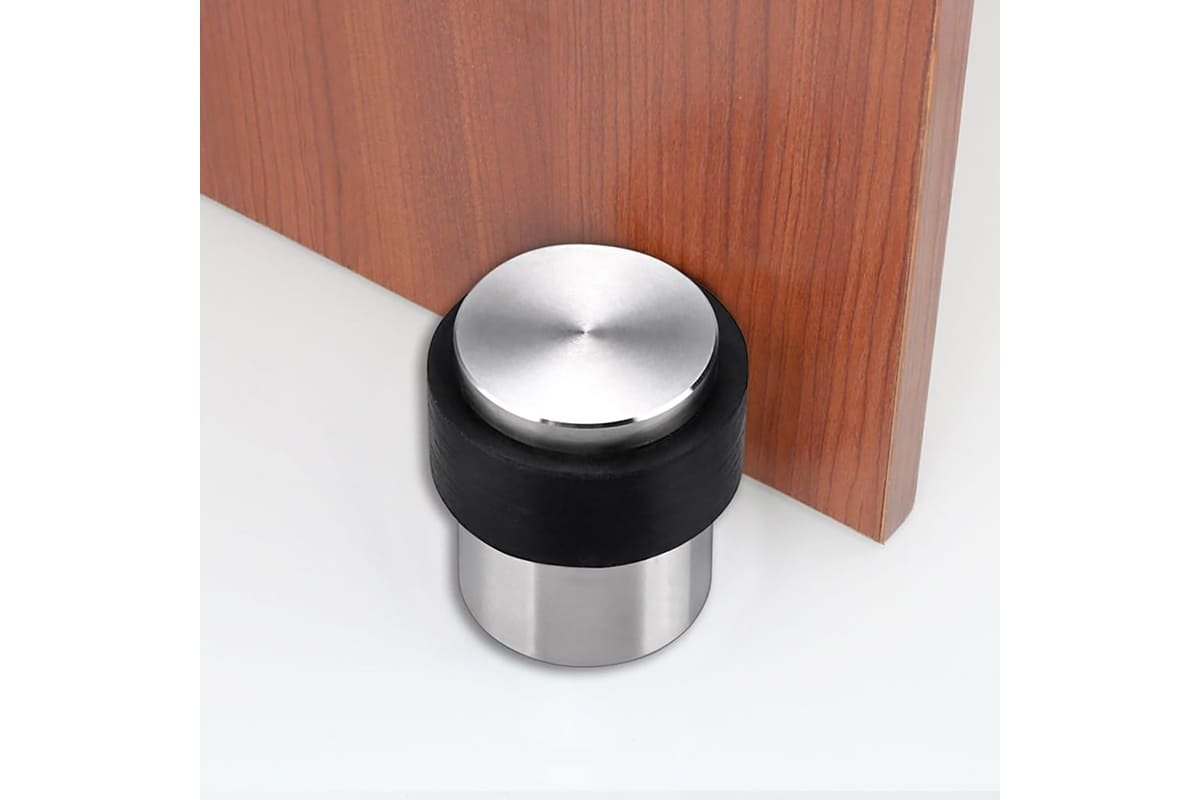
I have seen many buyers first treat door stops as a small line item. Then they return to the topic after wall damage, loose hardware, or customer complaints appear. The real question is not whether a door stop is cheap. The better question is whether it controls impact reliably for the building’s actual traffic conditions.
Why Are Stainless Steel Floor Door Stops More Than Small Accessories?
Door stops seem simple, so buyers sometimes leave them until the end of a hardware schedule. That creates a problem. In public buildings, doors open thousands of times, and every uncontrolled swing can damage finishes, hardware, and safety conditions.1 Stainless Steel Floor Door Stops help manage that risk before it becomes expensive.
Stainless Steel Floor Door Stops are more than accessories because they act as impact-control components. They limit door travel, protect wall surfaces, reduce stress on hinges and handles, and help preserve the appearance of high-traffic spaces. In public buildings, this small product can prevent frequent maintenance issues.
The hidden cost of repeated door impact
In factory-side conversations with door manufacturers and hardware buyers, I often hear similar concerns: “The door hardware is good, but the wall still gets damaged,” or “The handle keeps hitting the surface behind it.” These are not always lock or hinge problems. Many of them come from uncontrolled door movement.
In a public building, a door does not open gently every time. People push doors with bags, trolleys, cleaning equipment, wheelchairs, luggage, or emergency movement.2 Children may push doors harder than expected. Hotel guests may carry suitcases. Hospital staff may move quickly with carts. A busy office door may swing open hundreds of times per day.
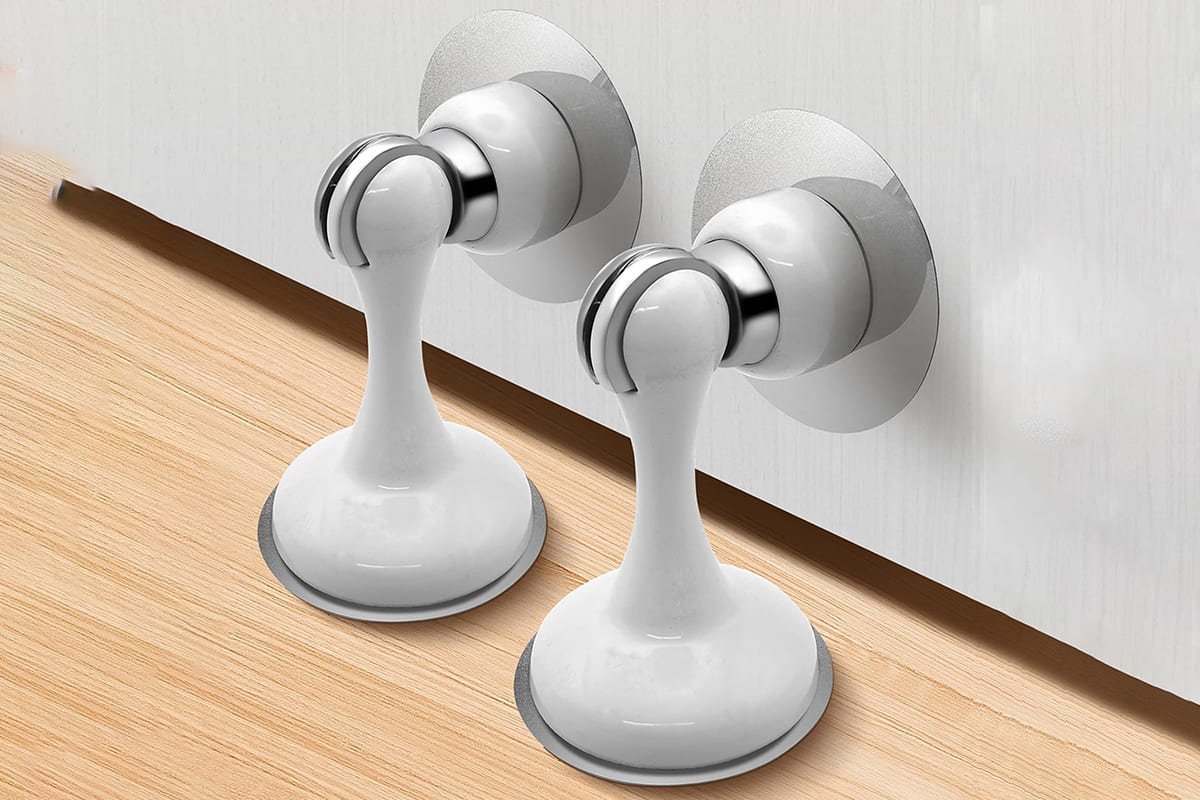
A floor-mounted door stop helps absorb and control this repeated movement.
What can happen without proper door stops?
Common issues include:
- Wall dents and cracks behind the door leaf
- Damaged lever handles from direct impact
- Loose hinges caused by repeated over-swing stress
- Scratched floor or wall finishes from uncontrolled contact
- Noisy door operation in corridors and rooms
- Higher service calls for facility management teams
- Poor building appearance in public-facing spaces
These problems may not appear on the first day. They build up over time. That is why procurement teams should look beyond the unit price.
Why floor-mounted stops are used in public spaces
Floor door stops are often selected when wall-mounted stops are not suitable or when the door swing path needs firm control at floor level. For example, a glass partition, decorative wall finish, or weak wall substrate may not be ideal for a wall stop.
A floor stop can provide a clear stop position, as long as the fixing method and floor material are suitable.
| Evaluation Point | Why It Matters in Public Buildings |
|---|---|
| Door weight | Heavier doors create stronger impact force |
| Traffic level | Frequent use increases wear and loosening risk |
| Opening angle | The stop must meet the door at the correct position |
| Floor substrate | Concrete, tile, stone, or wood need different fixing approaches |
| Cleaning method | Wet cleaning or chemical exposure affects material choice |
| Visual standard | Public interiors need hardware that stays clean and presentable |
From a manufacturer’s view, the best result comes when the door stop is considered with the full door set: leaf, hinge, handle, closer, floor material, and user behavior. One small part cannot solve every design problem, but it can remove a very common source of damage.
How Do Stainless Steel Floor Door Stops Protect Doors, Walls, and Hardware?
High-traffic doors face constant force. If that force has no controlled stopping point, the door system absorbs it through the handle, wall, hinge, or frame. Stainless Steel Floor Door Stops protect the opening by receiving the swing impact at a planned location and reducing direct damage to surrounding surfaces.
Stainless Steel Floor Door Stops protect buildings by limiting door travel, preventing handle-to-wall contact, reducing hinge overextension, and keeping repeated impact away from fragile finishes. They are especially useful in public areas where doors are used frequently and maintenance teams need predictable, durable protection.
Impact control is the main function
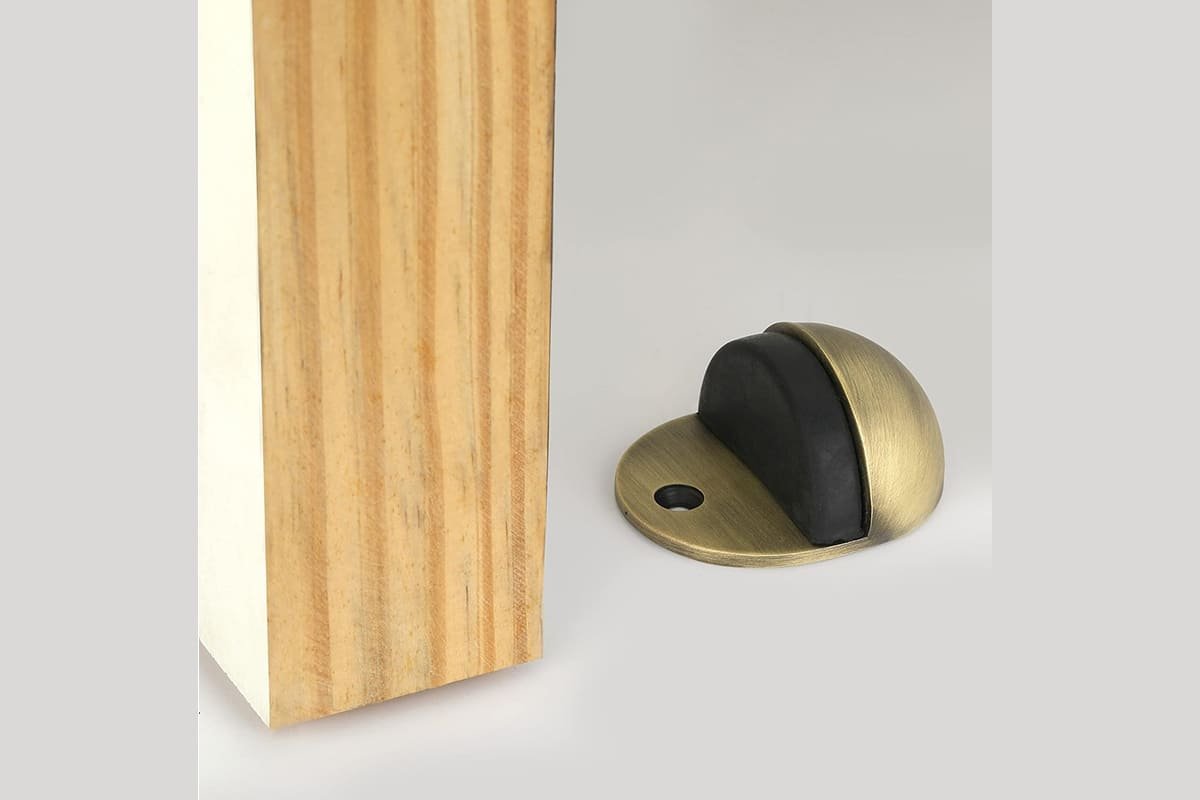
A door stop should not be viewed only as a block on the floor. It is part of the impact path. When a door swings open, kinetic energy must go somewhere.3 If the door stop is correctly placed, that energy meets a controlled contact surface instead of a wall, handle, or hinge limit.
In practice, this helps protect:
- Door leaves from edge impact and surface damage
- Lever handles from striking walls or furniture
- Hinges from repeated over-opening stress
- Wall finishes such as plaster, paint, tiles, panels, or wallpaper
- Nearby fixtures such as cabinets, glass partitions, and sanitary equipment
This matters most in public buildings because damage repeats quickly.
Why stainless steel is preferred in demanding spaces
Stainless steel is widely used in architectural hardware because it combines strength, corrosion resistance, and a clean visual appearance.4 I do not describe stainless steel as “rust-proof,” because that would be too broad. Performance depends on the grade, environment, surface finish, cleaning chemicals, and maintenance.5 However, properly specified stainless steel offers strong resistance to corrosion in many interior and semi-demanding environments.
For public buildings, that balance matters.
| Feature | Practical Value for Buyers |
|---|---|
| Corrosion resistance | Helps maintain appearance under regular cleaning and moisture exposure |
| High strength | Supports repeated impact better than weak materials |
| Surface stability | Keeps a cleaner look in visible public spaces |
| Long service life | Reduces replacement frequency when properly selected |
| Hygiene-friendly surface | Smooth finishes are easier to wipe and inspect6 |
| Batch consistency | Helps brand buyers maintain uniform product quality |
Protection is also about safety and appearance
Door impact is not only a maintenance issue. It can create safety concerns. A loose or broken door stop can become a trip hazard. A sharp-edged damaged fitting can injure users. A door that swings too far may block circulation or strike nearby users.
That is why I always suggest buyers evaluate the full shape and installation condition, not only the material.
A good floor door stop should have:
- Stable fixing design
- Rounded or safe exposed edges
- Suitable height for the door bottom or contact point
- Durable rubber or buffer component
- Consistent surface finish
- Correct screw or anchor selection
- Packaging that protects the finish during transport
Common buying mistake: focusing only on the visible part
Many buyers compare samples by appearance only. That is understandable, especially for brand companies and wholesalers. But in production and quality inspection, I pay close attention to less visible details.
For example:
- Is the base thick enough for stable fixing?
- Is the stainless steel surface finished evenly?
- Does the rubber buffer sit securely?
- Are screw holes clean and accurate?
- Does the item rock on a flat surface?
- Are edges deburred properly?
- Is the batch finish consistent from carton to carton?
These details affect performance in the field. A beautiful sample is not enough if the batch quality is unstable. For bulk procurement, consistency is often more important than a single good-looking piece.
What Material and Manufacturing Factors Make Stainless Steel Floor Door Stops Reliable?
Some door stops look similar in photos, but they do not perform the same after months of use. The problem often starts with weak material control, poor machining, thin structures, or unstable surface finishing. Stainless Steel Floor Door Stops become reliable when material quality, structure, finish, and inspection are managed together.
Reliable Stainless Steel Floor Door Stops depend on the stainless steel grade, body thickness, impact surface, fixing base, machining accuracy, surface finish, and batch inspection. Buyers should evaluate both the visible design and the hidden manufacturing details that affect strength, corrosion resistance, and long-term stability.
Material selection matters, but it is not the only factor
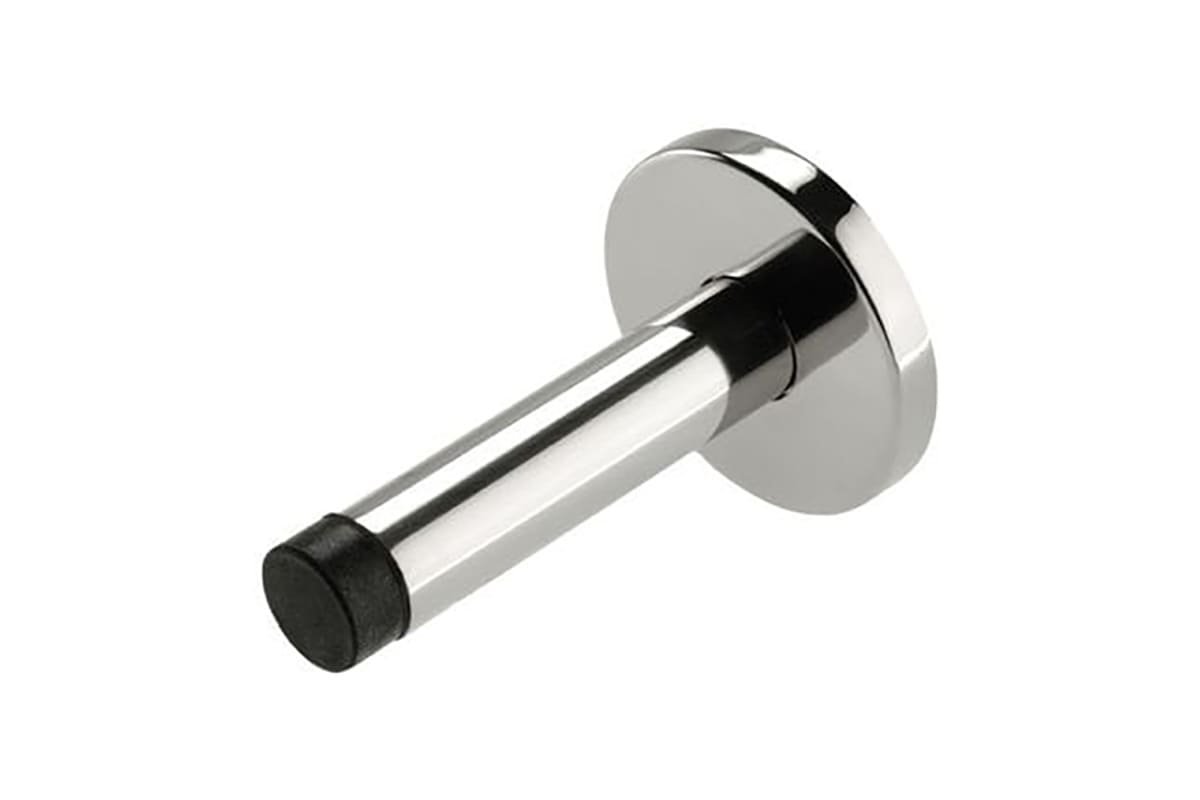
Stainless steel is the starting point. It is not the whole story. In door hardware production, I look at material selection, forming, machining, surface treatment, assembly, and final inspection as one connected process.
A buyer may ask, “Is it stainless steel?” That is a useful first question. A better question is, “What stainless steel is used, what is the structure, and how is the batch inspected?”
Different public buildings may need different levels of corrosion resistance and strength. Interior office spaces have different conditions from humid washrooms, coastal hotels, hospital corridors, or transport facilities.
Key manufacturing factors to check
| Factor | What Buyers Should Check | Why It Matters |
|---|---|---|
| Stainless steel grade | Ask supplier to specify material | Affects corrosion resistance and cost |
| Body thickness | Review drawings or samples | Thin parts may deform under impact |
| Base stability | Check fixing area and screw position | Weak bases may loosen |
| Buffer quality | Inspect rubber or elastomer part | Poor buffers crack or detach |
| Surface finish | Compare batch samples | Inconsistent finish affects brand quality |
| Edge treatment | Check for burrs or sharp edges | Important for safety and handling |
| Hole accuracy | Inspect screw alignment | Affects installation efficiency |
| Packaging | Review carton and internal protection | Prevents scratches before installation |
Surface finish and cleaning conditions
Public buildings are cleaned often. Hospitals, schools, hotels, and transport facilities may use stronger cleaning processes than private homes.7 A smooth stainless steel finish is easier to wipe, but the finish still needs proper care.
Buyers should consider:
- Will the floor be wet-mopped daily?
- Will disinfectants or chemicals contact the door stop?
- Is the building near a coastal or humid environment?
- Is the door stop installed in a washroom, corridor, lobby, or service area?
- Will cleaning staff use abrasive pads?
Stainless steel can stain or corrode if exposed to unsuitable chemicals, iron contamination, or neglected deposits.8 This is why product selection and maintenance guidance should match the real environment.
Factory-side quality control points
At SDH Hardware, our business context includes in-house manufacturing, inspection after order completion, and full-process quality control from raw material screening to finished product inspection. I mention this not as a universal guarantee for every application, but to explain how a factory thinks about repeatable quality.
For bulk orders, I recommend buyers ask suppliers about:
Incoming material checks
The supplier should control material source and confirm specifications.Dimensional inspection
The stop must match the drawing, especially height, diameter, fixing holes, and contact position.Surface inspection
Visible scratches, color inconsistency, stains, and burrs should be controlled.Assembly inspection
Rubber inserts, screws, and accessories should fit correctly.Packaging inspection
Each item should arrive without surface damage.Batch consistency checks
A product manager needs the 1,000th piece to match the approved sample, not just the first piece.
Certifications and documents
For architectural hardware procurement, buyers often ask about CE, fire-rated documents, and other certificates. For door stops, certification requirements depend on the project, market, and product category.9 I always suggest buyers verify the exact documents with the supplier and confirm whether they apply to the specific product model, application, and project requirements.
A certificate should not replace professional judgment. For application-specific decisions, especially in regulated public buildings, buyers should consult qualified project professionals, door system engineers, or local code specialists.
How Should Buyers Specify Stainless Steel Floor Door Stops for Public Buildings?
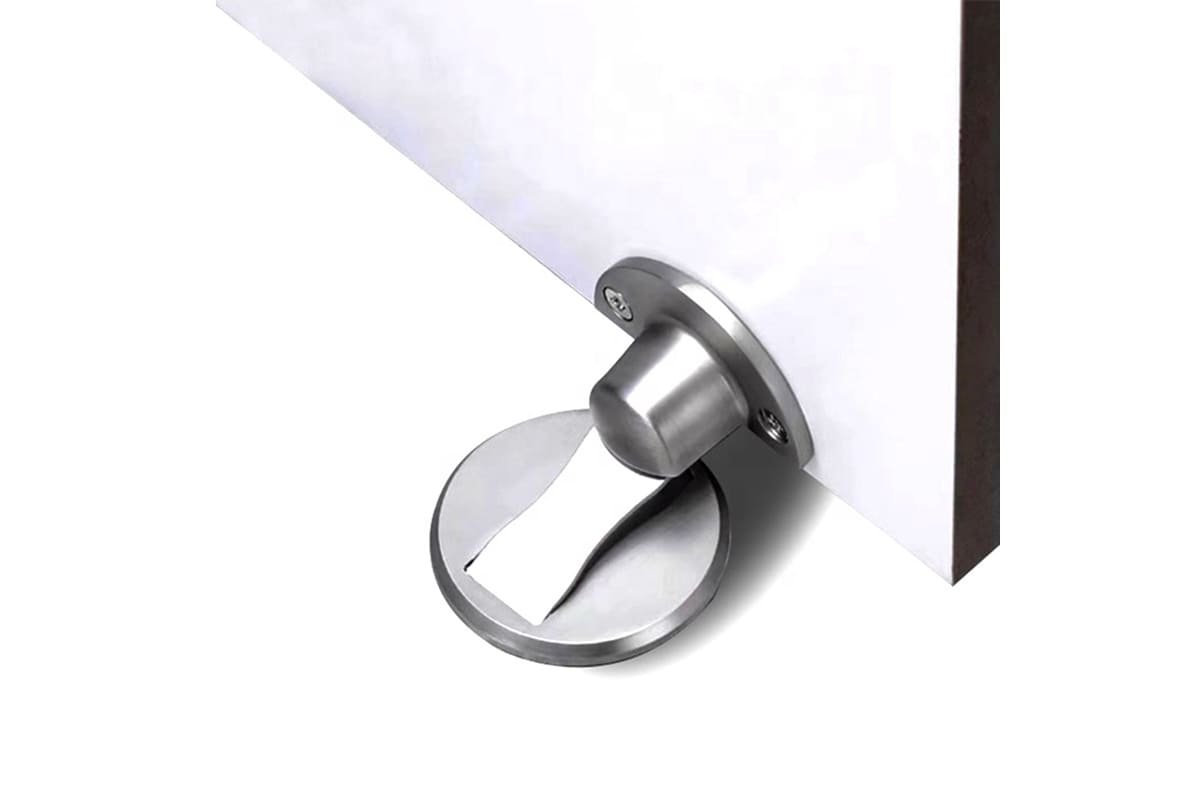
A door stop can fail in service even when the product itself is not poor. The real issue may be wrong placement, weak floor fixing, unsuitable height, or mismatch with the door weight. Stainless Steel Floor Door Stops should be specified according to the door system and the building environment, not selected only from a catalog image.
Buyers should specify Stainless Steel Floor Door Stops by checking door weight, swing angle, door closer force, floor material, fixing method, traffic volume, cleaning conditions, safety requirements, and visual design. No single model fits all public buildings, so the specification should match the actual use conditions.
Start with the door and opening condition
A floor stop works only if it meets the door correctly. If it is too close to the hinge, it may create strong leverage and stress.10 If it is too far away or placed at the wrong angle, the handle may still strike the wall. If the floor substrate is weak, the stop may loosen.
Before purchasing, I suggest buyers collect basic information:
- Door leaf width and height
- Door weight or estimated weight class
- Door material, such as wood, steel, aluminum, or glass
- Hinge type and door closer type
- Opening angle required
- Handle projection
- Wall or fixture position behind the door
- Floor material and thickness
- Expected traffic level
- Cleaning and hygiene requirements
This information helps the supplier recommend a more suitable model and fixing system.
Match the stop to the public building type
Different public buildings create different demands.
| Building Type | Common Concern | Door Stop Selection Focus |
|---|---|---|
| Schools | Heavy daily use, rough operation | Impact resistance and stable fixing |
| Hospitals | Hygiene, cleaning, trolley traffic | Smooth finish, corrosion resistance, safe shape |
| Hotels | Appearance and quiet operation | Clean design, finish consistency, buffer quality |
| Offices | Medium to high traffic | Balanced durability and appearance |
| Transport facilities | Very high traffic | Strong structure and secure anchoring |
| Commercial spaces | Brand appearance and maintenance | Finish quality and replacement consistency |
Consider floor material and fixing method
The fixing system is one of the most important parts of floor door stop performance. A strong stainless steel body will not help if the anchor fails.
Common floor conditions include:
- Concrete floors: usually suitable for stronger anchoring when drilled correctly
- Tile or stone floors: require care to avoid cracking and poor anchor hold
- Wood floors: may need different screws and load evaluation
- Raised floors: may not provide enough holding strength without reinforcement
- Wet areas: require attention to sealing and corrosion risk around fixings
Installation should be handled by qualified professionals who understand the floor material and door swing. I avoid giving one universal installation rule because the correct method depends on the project condition.
Evaluate safety and user movement
In public buildings, floor-mounted components can create trip concerns if poorly placed.11 A door stop should be visible enough, shaped safely, and located outside main walking paths where possible. Buyers should also check local accessibility and safety requirements.
Important questions include:
- Will the stop sit in a common walking path?
- Can cleaning machines or carts hit it?
- Is the height suitable for the door bottom and user safety?
- Is the edge rounded and smooth?
- Will the door stop create an obstacle for wheelchairs, trolleys, or luggage?
These questions do not mean floor door stops are unsafe. They mean specification must be thoughtful.
Do not ignore design consistency
For hardware brand enterprises and bulk wholesalers, design consistency matters. A project may include locks, lever handles, hinges, cylinders, and door accessories from the same supplier or product family. If the door stop finish looks different, the whole set can feel inconsistent.
At SDH Hardware, our broader product range includes Euro mortise locks, stainless steel lever handles, butt hinges, concealed door hinges, Euro brass cylinders, and door accessories. From a procurement view, one-stop sourcing can help buyers keep finish, packaging, drawings, and inspection expectations aligned across product categories.
Do Stainless Steel Floor Door Stops Reduce Maintenance Costs Over Time?
Many buyers compare door stops by unit price, especially in large orders. That is reasonable, but it can be incomplete. A cheaper product may cost more if it loosens, rusts, cracks, scratches easily, or fails to protect the wall. Stainless Steel Floor Door Stops can reduce long-term maintenance when selected and installed correctly.
Stainless Steel Floor Door Stops can reduce maintenance costs by lowering wall repairs, hardware damage, replacement frequency, and service complaints. Their value comes from durable material, stable fixing, impact resistance, and easier cleaning. Buyers should evaluate total cost of ownership, not only purchase price.

The difference between purchase cost and ownership cost
The lowest-priced door stop is not always the lowest-cost option. Public building maintenance includes labor, repair materials, downtime, complaint handling, replacement products, and sometimes damage to other hardware.
A slightly better floor stop may reduce:
- Wall patching and repainting
- Handle replacement
- Hinge adjustment
- Door leaf edge repair
- Reinstallation labor
- Cleaning difficulty
- Brand complaints from end users
- Repeat purchasing and stock issues
For wholesalers and brand buyers, product failure also affects reputation. If a batch of accessories performs poorly, customers may question the entire hardware package.
A simple procurement comparison
| Procurement Question | Low-Quality Choice | Better-Specified Stainless Steel Choice |
|---|---|---|
| Initial price | Lower | Usually higher |
| Impact performance | Uncertain | More predictable |
| Finish consistency | May vary | Controlled through inspection |
| Corrosion resistance | Often unclear | Matched to material and environment |
| Replacement frequency | May increase | Can be reduced |
| Customer complaints | Higher risk | Lower risk when correctly specified |
| Total value | Short-term saving | Better long-term control |
Maintenance value in hygiene-sensitive spaces
In hospitals, clinics, hotels, schools, and food-related commercial spaces, hardware must be easy to clean. Stainless Steel Floor Door Stops with smooth surfaces and stable finishes support routine cleaning better than rough, weak, or easily damaged materials.
However, proper maintenance still matters. Cleaning teams should avoid harsh chemicals that are not suitable for stainless steel. They should also avoid leaving chemical residue or wet dirt around the base. Even corrosion-resistant materials need correct care.
What I recommend buyers ask suppliers
Before placing a bulk order, I recommend asking practical questions:
What stainless steel grade is used?
The answer should be clear, not vague.Can you provide drawings after order confirmation?
Drawings help buyers check size and installation fit.What surface finishes are available?
Satin, polished, or other finishes should match the project.Can the product be customized?
Some buyers need different sizes, rubber colors, packaging, or logos.How is the finished product inspected?
Inspection should include dimensions, surface, assembly, and packaging.What fixing accessories are included?
Screws and anchors must match the intended installation condition.Can batch samples be reviewed before shipment?
This is useful for brand buyers and bulk wholesalers.
Frequently Asked Questions
Are Stainless Steel Floor Door Stops suitable for hospitals and schools?
Yes, Stainless Steel Floor Door Stops are commonly suitable for hospitals and schools when the model, fixing method, and finish match the environment. Buyers should consider hygiene needs, cleaning chemicals, traffic volume, door weight, safety placement, and floor material before confirming the specification.
Can stainless steel floor door stops rust?
Stainless steel has strong corrosion resistance, but it is not absolutely rust-proof. Grade selection, humidity, cleaning chemicals, salt exposure, iron contamination, and maintenance all affect performance. Buyers should match the stainless steel type and finish to the building environment.
How do I choose the right floor door stop for a heavy door?
You should check the door weight, opening angle, door closer force, floor substrate, and impact position. A heavy door usually needs a stronger structure, stable base, secure fixing, and durable buffer. A qualified installer or project professional should confirm the final installation method.
Are floor door stops better than wall door stops?
Floor door stops are better when wall fixing is not suitable or when the door needs controlled stopping at floor level. Wall door stops may be better in some layouts. The best choice depends on wall strength, floor material, traffic flow, door swing, and safety requirements.
What should bulk buyers inspect before shipment?
Bulk buyers should inspect material specification, dimensions, surface finish, edge treatment, rubber buffer assembly, screw accessories, packaging, and batch consistency. For brand buyers, sample approval and pre-shipment inspection help reduce customer complaints and replacement risk.
Conclusion
Stainless Steel Floor Door Stops are essential in high-traffic public buildings because they control repeated door impact before it becomes wall damage, hardware failure, safety concern, or maintenance cost. Buyers should evaluate material quality, structural strength, fixing stability, surface finish, cleaning conditions, and batch consistency. No single model fits every project. If you are sourcing door hardware for public buildings, SDH Hardware can support factory-direct OEM/ODM supply, product drawings, customization, and inspection for complete architectural hardware packages.
"The Best Doors and Hardware for High-Traffic Facilities", https://www.samorman.com/blog/the-best-doors-and-hardware-for-high-traffic-facilities. Institutional door-hardware standards and testing guidance describe repeated-cycle operation as a core durability condition for door assemblies, supporting the article’s point that high-traffic openings can experience substantial repeated mechanical stress; such standards contextualize the risk rather than quantifying every building’s daily door-use count. Evidence role: general_support; source type: institution. Supports: A neutral source should support that high-traffic door hardware is evaluated for repeated cycles and that repeated operation and impact are relevant durability considerations.. Scope note: Contextual support; actual daily door cycles vary by building type, location, and occupancy. ↩
"Chapter 4: Entrances, Doors, and Gates", https://www.access-board.gov/ada/guides/chapter-4-entrances-doors-and-gates/. Government accessibility standards address door clearances, maneuvering space, and wheelchair passage in public accommodations, supporting the article’s broader point that public-building doors are used by people and equipment requiring reliable swing control; these standards do not specifically enumerate every item such as luggage or cleaning carts. Evidence role: general_support; source type: government. Supports: A government accessibility or building-design source should support that doorways in public facilities must accommodate wheelchair users and circulation needs.. Scope note: Contextual support; accessibility standards directly address wheelchair access but may not directly discuss all listed objects. ↩
"Kinetic energy", https://en.wikipedia.org/wiki/Kinetic_energy. Introductory mechanics sources define kinetic energy as the energy of motion and explain that impacts transfer or dissipate this energy, supporting the article’s description of a swinging door requiring a controlled stopping path; the source supports the physical principle rather than testing a specific door stop. Evidence role: mechanism; source type: education. Supports: A university physics source should explain that moving objects possess kinetic energy and that impacts transfer or dissipate that energy.. Scope note: Contextual support; the source would explain the physics principle, not the performance of a particular hardware product. ↩
"Stainless steel", https://en.wikipedia.org/wiki/Stainless_steel. Materials references on stainless steel describe its corrosion resistance, useful mechanical properties, and common architectural applications, supporting the article’s statement that it is suitable for visible building hardware; such sources address the material class generally, not every grade or product design. Evidence role: general_support; source type: institution. Supports: A materials or architectural metals institution should support stainless steel’s corrosion resistance, mechanical properties, and use in architectural applications.. Scope note: Contextual support; stainless-steel performance depends on grade, finish, exposure, and maintenance. ↩
"Measurements of thermophysical properties of solid and ...", https://tsapps.nist.gov/publication/get_pdf.cfm?pub_id=928362. Corrosion guidance for stainless steels explains that corrosion resistance varies with alloy grade, surface condition, environmental exposure, chemical contamination, and maintenance, supporting the article’s caution that stainless steel is not universally rust-proof. Evidence role: mechanism; source type: research. Supports: A neutral materials source should explain that stainless steel corrosion resistance varies with alloy composition, exposure environment, surface condition, chloride contamination, and maintenance.. ↩
"Environmental Cleaning Procedures | HAIs", https://www.cdc.gov/healthcare-associated-infections/hcp/cleaning-global/procedures.html. Environmental-cleaning guidance commonly emphasizes smooth, intact, cleanable surfaces for effective wiping and inspection, supporting the article’s claim that smooth stainless-steel hardware can aid routine cleaning; this supports cleanability generally rather than proving reduced contamination for a specific door-stop model. Evidence role: general_support; source type: government. Supports: A public-health or cleaning guidance source should support that smooth, nonporous, intact surfaces are easier to clean and inspect.. Scope note: Contextual support; cleanability also depends on cleaning method, disinfectant compatibility, soil load, and maintenance practice. ↩
"Environmental Cleaning Procedures | HAIs", https://www.cdc.gov/healthcare-associated-infections/hcp/cleaning-global/procedures.html. Government and public-health cleaning guidance sets out routine and enhanced cleaning or disinfection practices for healthcare, school, and public settings, supporting the article’s statement that institutional environments may impose more demanding cleaning exposure than homes. Evidence role: general_support; source type: government. Supports: Government cleaning guidance should support that hospitals, schools, and public facilities use structured cleaning and disinfection procedures.. Scope note: Contextual support; cleaning intensity differs by facility policy, risk level, jurisdiction, and time period. ↩
"How to Clean Stainless Steel and Prevent Corrosion", https://www.reliance-foundry.com/blog/how-to-clean-stainless-steel?srsltid=AU7gw4VSPYuhbkOY3W-1g6iMw8rtrDrbTMT5M7k8wtPj8nf8FkicUGGO. Stainless-steel care and corrosion guidance identifies chloride-containing chemicals, iron contamination, and retained surface deposits as contributors to staining or corrosion, supporting the article’s warning that corrosion-resistant hardware still requires compatible cleaning and maintenance. Evidence role: mechanism; source type: institution. Supports: A stainless-steel industry or materials institution should support that iron contamination, chlorides, deposits, and unsuitable cleaning chemicals can cause staining or corrosion.. ↩
"Building Codes, Standards, and Regulations: Frequently ...", https://www.congress.gov/crs-product/R47665. Construction-product regulatory guidance links certification or marking obligations to the product’s intended use, applicable harmonized standards or technical assessments, and the market where it is placed, supporting the article’s statement that door-stop documentation requirements are project- and market-specific. Evidence role: historical_context; source type: government. Supports: A government or regulatory source should support that construction-product compliance and marking depend on applicable product standards, intended use, and market jurisdiction.. Scope note: Contextual support; the exact obligation for a particular door stop must be determined from the applicable local code and product standard. ↩
"Choosing the Right Door Stop for Your Home", https://www.stoneharborhardware.com/blogs/articles/choosing-the-right-door-stop-for-your-home?srsltid=AU7gw4XfSSzHO6MzUqfuGW9xpaXzFvnFeTlDToh8FdPVAh7KntvtOYIL. Mechanics texts explain that torque about a hinge depends on the applied force and its lever arm, supporting the article’s concern that door-stop placement changes the stresses transmitted through the door system; this is a physical rationale rather than a door-stop installation test. Evidence role: mechanism; source type: education. Supports: A mechanics source should support that torque and force effects around a hinge depend on lever arm distance and contact point.. Scope note: Contextual support; the exact stress depends on door geometry, closer force, impact speed, and hardware design. ↩
"Chapter 3: Protruding objects", https://www.access-board.gov/ada/guides/chapter-3-protruding-objects/. Accessibility and building-safety guidance regulates objects and walking-surface conditions in circulation paths, supporting the article’s statement that floor-mounted hardware can raise trip or access concerns when poorly placed; the guidance establishes a design concern rather than evaluating floor door stops specifically. Evidence role: general_support; source type: government. Supports: A government accessibility or building-safety source should support that objects in circulation routes and walking surfaces must be located and designed to avoid hazards and accessibility barriers.. Scope note: Contextual support; whether a particular stop is hazardous depends on location, height, contrast, route width, and local code requirements. ↩