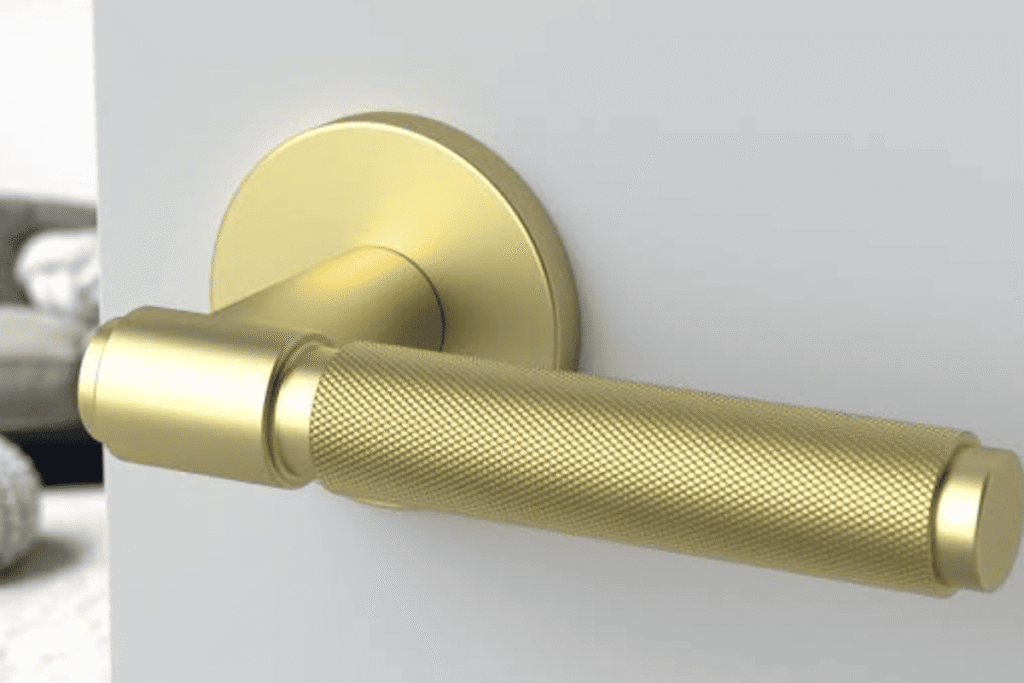
What Makes A Good Quality Door Handle?
A good quality door handle can reduce complaints, rework, and after-sales costs1, but many buyers still judge handles by photos, material names, or price alone. That is risky because a nice-looking handle can feel loose, corrode early, or fail in busy buildings. I prefer a practical evaluation method: match material, performance, finish, components, and certificates to the actual door application.
A good quality door handle is one that fits the use scenario, performs reliably, feels stable in the hand, keeps a consistent finish, and is supported by suitable components and verified documents. Buyers should not judge quality by material alone. Stainless steel, zinc alloy, durability grades, fire-rated requirements, and bulk production consistency all matter.
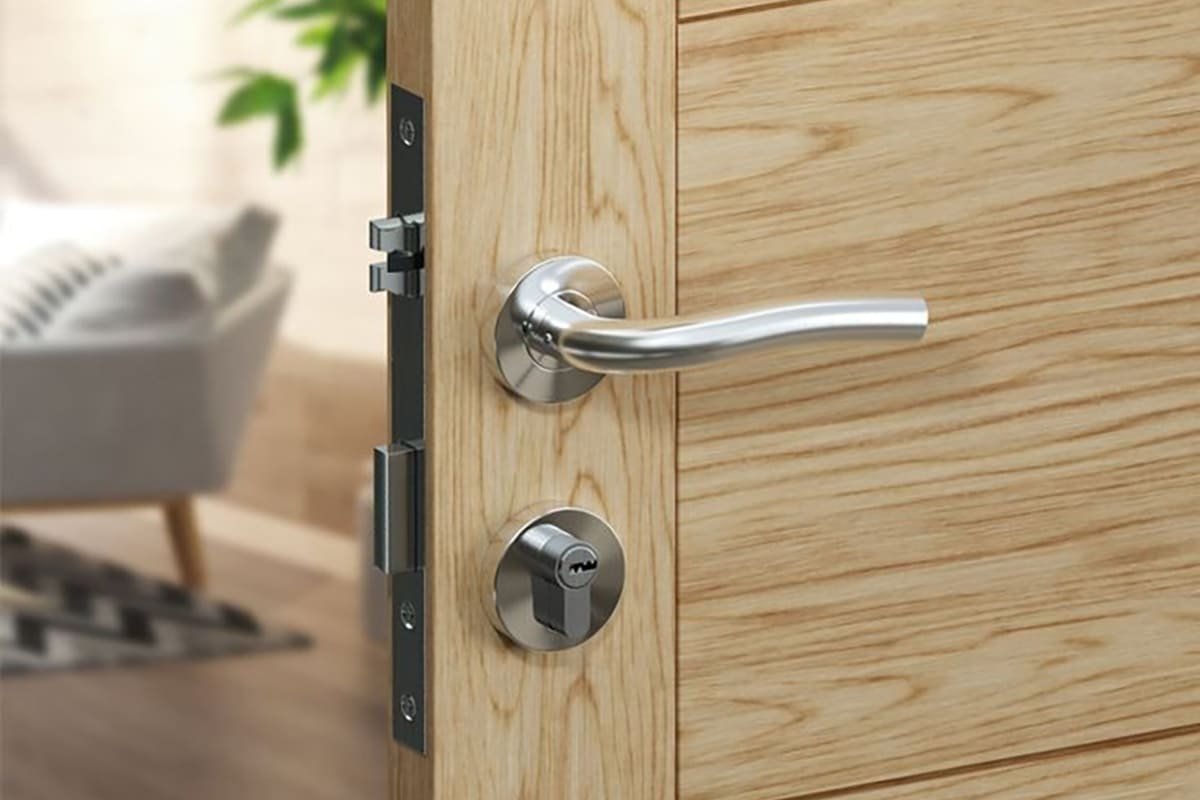
I have seen buyers approve a beautiful sample and later face problems in mass production because the finish, screws, spring cassette, or spindle fit changed. So, I recommend a structured checklist before ordering. The sections below explain what I check from a manufacturer-side quality control perspective.
What Materials Make A Good Quality Door Handle?
A good quality door handle starts with suitable material selection, but material is often misunderstood. Some buyers assume stainless steel is always better. Others choose zinc alloy only because it offers more styles. Both decisions can create problems if the door type, traffic level, and market expectations are ignored.
A good door handle material should match the door’s environment, frequency of use, target price, and design requirement. Stainless steel usually fits public or high-use doors where corrosion resistance and service life matter.2 Zinc alloy can fit standard interior doors where rich shapes, comfortable hand feel, and decorative finishes are important.
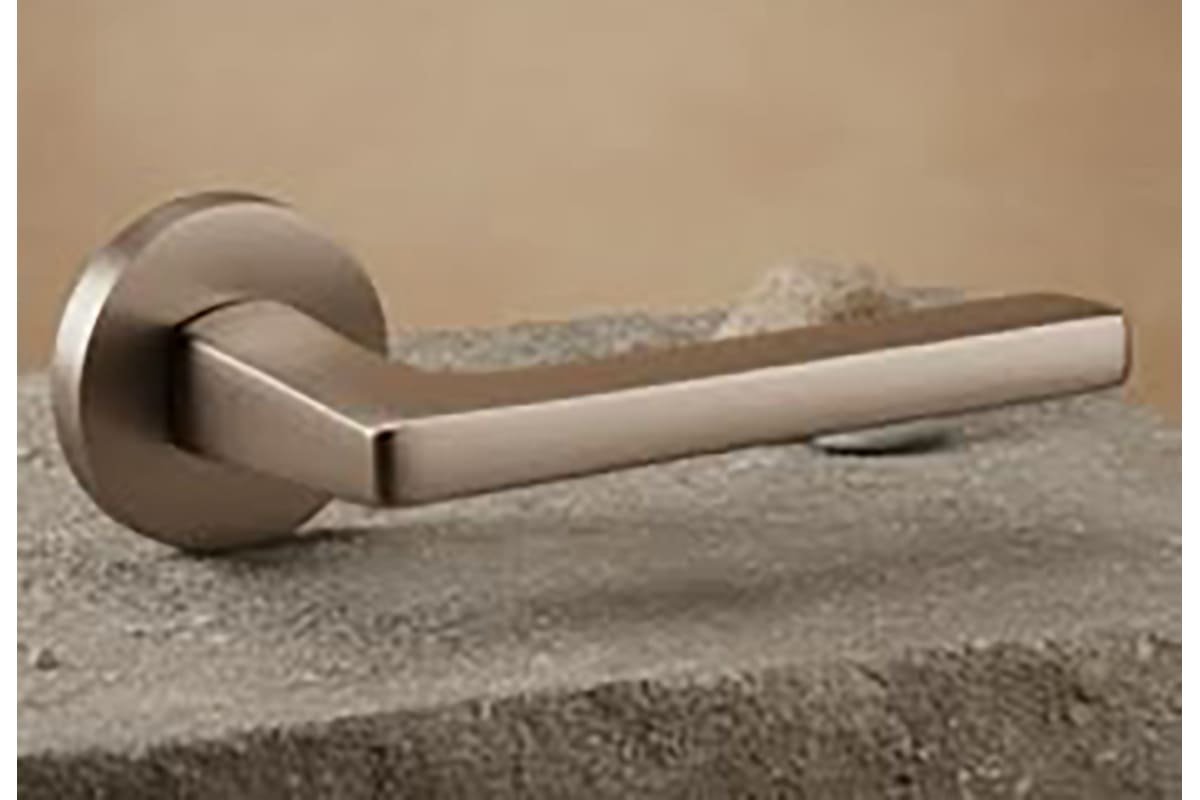
Stainless steel is strong for demanding environments
In my experience, stainless steel lever handles are often preferred for commercial buildings, schools, hospitals, offices, hotels, and public areas. These places create more stress on the handle because users open and close the door many times each day. Many users also pull the lever roughly, hang bags on it, or push it from awkward angles.
Stainless steel is valued because it usually offers:
- Good corrosion resistance3, especially in humid or coastal markets when the correct grade and finish are selected.
- Stable strength, which helps the lever keep its shape under repeated use.
- Clean appearance, which suits modern architectural projects.
- Long service life, especially when paired with good internal components.
However, I do not tell buyers that stainless steel is always the best choice. Stainless steel handles can have more limited shapes than zinc alloy handles because the manufacturing process affects design freedom.4 Some stainless steel handles also look simple, which may not fit decorative interior markets.
Zinc alloy is practical for many interior doors
Zinc alloy handles are widely used for residential interior doors, apartments, light commercial spaces, and decorative product lines. They can offer a heavier hand feel and more flexible designs. Buyers can choose curved shapes, classic patterns, modern square designs, and many surface colors.
Zinc alloy can be a good choice when the buyer wants:
- Richer shapes and decorative details.
- More finish options, such as black, nickel, chrome, antique brass, or special colors.
- Competitive pricing for standard interior applications.
- A comfortable weight and hand feel.
The key point is that zinc alloy quality depends heavily on casting quality, plating or coating control, internal structure, and component selection5. A zinc alloy handle with poor surface treatment may discolor, blister, or scratch too easily. A handle with weak internal structure may loosen after use.
Material comparison for purchasing decisions
| Material | Best Fit | Main Advantages | Main Risks To Check |
|---|---|---|---|
| Stainless steel | Public buildings, commercial doors, high-frequency areas | Corrosion resistance, durability, clean appearance | Surface scratches, welding quality, grade selection, lever return |
| Zinc alloy | Interior doors, decorative lines, residential projects | Rich shapes, good hand feel, many finishes | Plating stability, casting defects, looseness, finish consistency |
| Aluminum alloy | Light-duty interior use, cost-sensitive designs | Lightweight, easy processing | Lower strength in some designs, denting, finish wear |
| Brass | Premium decorative projects | Classic appearance, good machining | Higher cost, oxidation behavior, finish maintenance |
My practical material rule
I usually ask three questions before recommending a material:
Where will the handle be installed?
Public corridor, hotel room, apartment bedroom, office door, or fire door?How often will the door be used?
A school classroom door is not the same as a private bedroom door.What complaints would damage the buyer’s brand?
Surface discoloration, loose levers, installation problems, or inconsistent color between batches?
A good quality door handle is not “the strongest material at any cost.” It is the right material with the right production control for the buyer’s target market.
How Should A Good Quality Door Handle Perform Under Daily Use?
A good quality door handle must do more than look good on the sample board. Poor performance creates real problems after installation. The lever may sag, the spring may weaken, the spindle may fit badly, or the handle may become loose. These issues hurt the buyer’s reputation even when the material itself looks acceptable.
A good handle should return smoothly, stay firm, resist loosening, and meet a suitable durability expectation for its use environment. For standard interior doors, 100,000 cycles may be enough in many cases6. For higher-traffic commercial areas, buyers often consider stronger durability expectations such as 200,000 cycles7, depending on standards and project requirements.

Use performance thinking, not vague quality claims
When I discuss handle quality with door factories and hardware brand buyers, I try to avoid vague words like “premium,” “heavy duty,” or “top quality” unless they are supported by test logic. A better approach is to think in the style of EN 1906 performance categories, while remembering that exact grade wording and requirements should be verified against the latest official standard and certificate documents.
EN 1906 is commonly used in Europe for lever handles and knob furniture.8 It classifies performance through categories such as use, durability, door mass, fire resistance, safety, corrosion resistance, security, and type of operation.9 The exact classification should be checked by qualified professionals and official test reports before publication or procurement approval.
Durability expectations should match traffic level
A project buyer should not automatically choose the highest specification for every door. That may increase cost without real benefit. However, a buyer should also avoid low-duty handles in high-use environments because the after-sales cost can exceed the product savings.
Here is a practical way to think about durability:
| Application | Typical Use Intensity | Practical Durability Thinking |
|---|---|---|
| Bedroom or private office | Low to medium | 100,000 cycles may be sufficient for many projects |
| Apartment entrance interior side | Medium | Stronger spring and spindle fit should be checked carefully |
| Hotel room | Medium to high | Smooth feel, finish stability, and batch consistency are very important |
| School, hospital, public office | High | Higher use category and 200,000-cycle durability expectation may be suitable |
| Public entrance or corridor door | Very high | Professional specification review is recommended |
What I check during factory-side performance review
In routine quality control, I pay close attention to several physical signs. These signs often reveal future complaints before the handle reaches the project site.
I check:
- Lever return: The handle should return to the horizontal position smoothly.
- Free play: The lever should not shake excessively.
- Spindle fit: The spindle should match the lock body and handle hub well.
- Spring strength: The spring mechanism should support repeated operation.
- Fixing strength: Screws, through bolts, and rosettes should hold firmly.
- Base stability: The rosette or backplate should not deform easily.
- Noise: Operation should not feel rough, dry, or metallic in a bad way.
- Installation tolerance: The handle should fit normal door preparation without forcing.
The real cost of poor performance
For B2B buyers, product failure is only one part of the risk. The larger risk is often brand damage.
A weak handle can cause:
- Installer complaints because screws do not align or components do not fit.
- End-user complaints because the handle feels loose or cheap.
- Project delays because replacement parts are needed.
- Extra inspection costs because the buyer must sort defective goods.
- Lost trust because the customer questions the buyer’s product line.
I once reviewed a handle sample that looked acceptable in photos, but the lever had too much movement after repeated operation. The issue was not obvious in a catalog. It only appeared when the sample was installed and operated many times. That experience confirmed my view: a good quality door handle must be evaluated by use, not by appearance alone.
What Surface Treatment Should A Good Quality Door Handle Have?
A good quality door handle can fail in the market if the finish is unstable. Buyers often focus on color because color is easy to compare. However, finish quality is more than color. It includes adhesion, corrosion resistance, scratch resistance, gloss level, coating thickness, and consistency between the approved sample and mass production.
A good surface treatment should match the material, environment, and target market. Buyers should check finish consistency, corrosion resistance, coating adhesion, edge coverage, and batch-to-batch color stability. The approved sample should become the reference standard for mass production, packing inspection, and future repeat orders.
Finish quality affects first impressions
The handle is one of the few door hardware parts that users touch and see every day. A poor finish makes the entire door system feel lower quality. Even if the lock body works well, the user may judge the product by the handle surface.
Common finish issues include:
- Color difference between handles in the same order.
- Uneven polishing marks.
- Black spots or pinholes.
- Weak coating adhesion.
- Scratches caused by poor packing.
- Corrosion after short exposure to humidity.
- Sharp or rough edges after processing.
Different finishes require different controls
Surface treatment varies by material and market requirement. Stainless steel handles may use satin, polished, PVD, or powder-coated finishes. Zinc alloy handles may use electroplating, painting, powder coating, or other decorative treatments.
| Finish Type | Common Use | Key Quality Checks |
|---|---|---|
| Satin stainless steel | Commercial and modern doors | Brushing direction, scratch control, weld or joint marks |
| Polished stainless steel | Decorative or premium interiors | Mirror consistency, fingerprint visibility, surface waves |
| PVD finish | Higher-end decorative applications | Color stability, coating adhesion, corrosion resistance |
| Electroplated zinc alloy | Interior decorative handles | Plating thickness, adhesion, pinholes, salt spray performance |
| Powder coating | Black or custom color handles | Edge coverage, impact resistance, gloss level, curing quality |
| Painted finish | Cost-sensitive or decorative use | Scratch resistance, color matching, adhesion |
Corrosion resistance should fit the market
Buyers in humid regions, coastal cities, and hot climates should be more careful with corrosion resistance. The Middle East, Southeast Asia, and some European coastal markets may expose handles to humidity, salt, cleaning chemicals, or temperature changes.
A salt spray test can help evaluate corrosion resistance, but buyers should avoid treating one test number as the only definition of quality.10 Real use conditions vary. Cleaning habits, installation location, packaging moisture, and storage time can all affect the final result.
I recommend that buyers ask suppliers for:
- Material specification
- Finish process description
- Salt spray test report when relevant
- Approved color sample
- Mass production color tolerance
- Packing method for surface protection
- Inspection photos or videos before shipment
Mass production must match the approved sample
This is one of the most important points for B2B buyers. A beautiful sample has limited value if bulk goods are not controlled against it.
Before mass production, I suggest that buyers confirm:
- A signed physical sample or approved reference sample.
- Finish name and code, not only a photo.
- Gloss level, especially for black, satin, or custom colors.
- Packaging protection, including foam bag, paper sleeve, or inner box.
- Inspection method, such as AQL sampling or buyer-specific checklist.
- Replacement rule, if color deviation or surface damage exceeds tolerance.
A good quality door handle should look stable across a complete shipment. Door factories and wholesalers cannot easily explain color differences to their customers. They need repeatable production, not only a nice first sample.
What Components Make A Good Quality Door Handle Reliable?
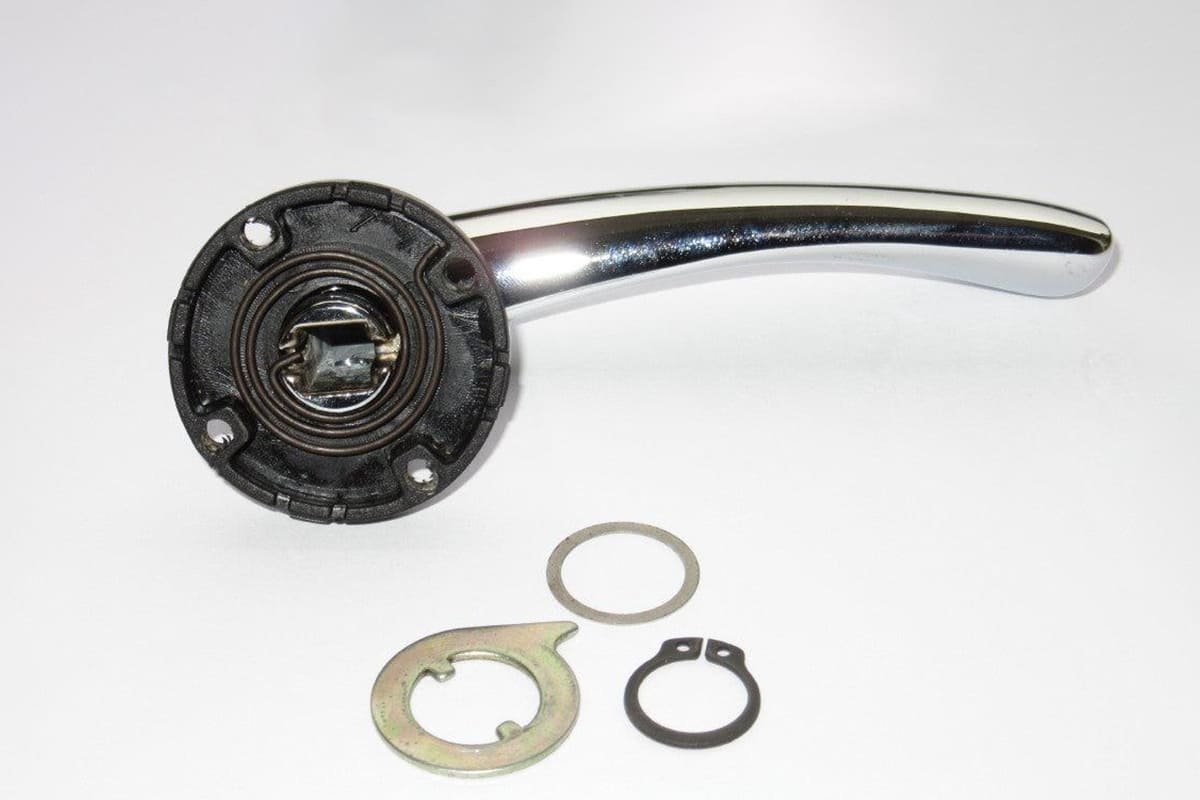
A good quality door handle depends on hidden components as much as visible material. Buyers may see only the lever and rosette, but the user feels the result of the spring, spindle, screws, washers, and internal structure. If these parts are weak, the handle may loosen even when the visible surface looks excellent.
Reliable handle components should create stable installation, smooth operation, and long-term lever return. Buyers should check the spindle, spring cassette, fixing screws, rosette or backplate, washers, grub screws, and accessory compatibility. Component quality often decides whether the handle feels solid after months of use.
Small parts create big quality differences
In factory production, I have seen that many handle complaints come from small parts. A buyer may negotiate hard on the lever material but forget to check the screws. Then the installer finds that screws strip easily or do not match the door thickness. This creates avoidable complaints.
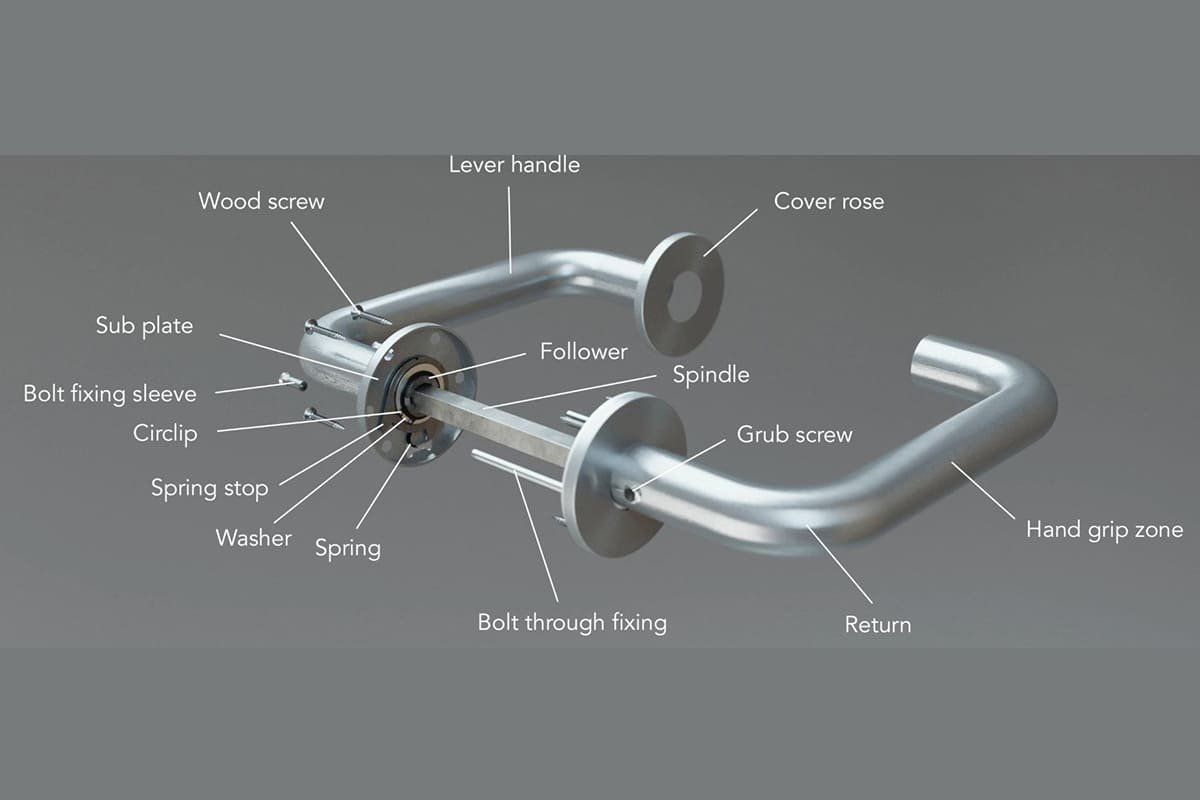
Important components include:
- Spindle: Transfers movement from the handle to the lock body.
- Spring mechanism: Helps the lever return to position.
- Grub screw: Fixes the lever to the spindle or hub.
- Through bolts: Improve fixing strength on many handle sets.
- Rosette or backplate: Supports the handle and covers the door preparation.
- Washers or nylon rings: Reduce friction and improve operation feel.
- Screws: Must match the application, material, and installation method.
Component checklist for B2B inspection
| Component | What To Check | Why It Matters |
|---|---|---|
| Spindle | Size, straightness, material, fit | Poor fit causes looseness or lock operation problems |
| Spring | Return force, cycle performance | Weak spring causes lever sagging |
| Screws | Length, head type, hardness | Poor screws create installation complaints |
| Rosette | Thickness, strength, finish | Weak rosette bends or loosens |
| Backplate | Flatness, hole accuracy | Poor alignment makes installation difficult |
| Grub screw | Thread quality, holding strength | Loose grub screw causes handle movement |
| Accessories | Compatibility with lock and cylinder | Mismatch delays assembly and shipment |
Door thickness and lock compatibility matter
A handle should not be evaluated alone. It works as part of a complete door hardware set. Buyers should check compatibility with:
- Door thickness.
- Mortise lock case.
- Euro cylinder or bathroom turn.
- Escutcheon or keyhole cover.
- Fire-rated door requirement if applicable.
- Regional installation habits.
- Project drawings and door preparation.
For example, a handle may work well with one lock body but feel loose with another because the follower size, spindle tolerance, or fixing pattern is different. Door factories should test the handle together with the actual lock, cylinder, and door sample when possible.
Fire doors are a separate decision
A fire door handle is not simply a stronger normal handle. If the handle will be used on a fire-rated door, the buyer should confirm the relevant fire-rated certification, the complete hardware set compatibility, and the door assembly requirements.
I recommend that buyers verify:
- The fire test certificate or classification document.
- The product model covered by the certificate.
- The door type and material covered by the test.
- The lock, hinge, closer, and accessory combination.
- The local code or project specification.
- The validity and issuing body of the documents.
SDH Hardware can provide products with CE and fire-rated certification where applicable, but I always advise buyers to verify the exact documents for their market and project. Certification is important, but it should support a full quality review. It should not replace sample inspection, component checking, and professional specification evaluation.
A good quality door handle is reliable because the full assembly is reliable. The lever, internal mechanism, and fixing accessories must work together.
How Can B2B Buyers Verify A Good Quality Door Handle Before Ordering?
A good quality door handle should be verified before bulk production, not after customer complaints appear. Many purchasing teams only compare price lists and product photos. That process is too weak for door factories, hardware brands, and wholesalers because inconsistent bulk orders can create expensive rework.
B2B buyers should verify quality through sample testing, material review, finish approval, component inspection, certificate checking, and pre-shipment inspection. The approved sample should be the benchmark for mass production.11 Buyers should also confirm the supplier’s process control, testing equipment, packaging method, and ability to maintain repeat orders.

Step 1: Define the application first
Before requesting a quotation, I suggest that buyers define the door application clearly. A supplier cannot recommend the right handle if the buyer only says, “Please quote your best quality.”
A clear inquiry should include:
- Door type: interior, entrance, hotel, commercial, fire door.
- Door material: wooden, steel, aluminum, composite.
- Door thickness.
- Lock body type.
- Target market.
- Expected finish.
- Required certification.
- Target price level.
- Expected annual quantity.
- Packaging and branding requirement.
This information helps the supplier recommend stainless steel, zinc alloy, or another material more responsibly.
Step 2: Inspect the sample like an installer and end user
A sample should not stay inside the carton. I recommend installing it on a test door or fixture. Buyers should operate it many times and check how it feels.
Use this quick sample checklist:
- Does the lever return fully?
- Does the handle feel loose?
- Does the spindle fit well?
- Are the screws strong and correct?
- Is the rosette flat against the door?
- Is the surface smooth and even?
- Are there sharp edges?
- Is the finish consistent between left and right handles?
- Does the packing protect the surface?
- Does the set include all promised accessories?
I also suggest taking photos and videos during approval. These records help avoid arguments during mass production inspection.
Step 3: Review certifications carefully
Certificates can be useful, but buyers should read them carefully. A certificate should match the exact product model, material, finish when relevant, and intended use. For CE or fire-rated documents, buyers should verify the issuing organization, scope, validity, and connection to the product being purchased.
Certification review should include:
| Document | Buyer Should Check |
|---|---|
| CE documentation | Product scope, standard reference, model coverage |
| Fire-rated certificate | Door type, hardware set, duration, test conditions |
| EN 1906 test report | Grade classification, test lab, model details |
| Material report | Material grade, supplier batch, chemical composition if needed |
| Salt spray report | Finish type, test hours, result criteria |
| Factory inspection report | Quantity, appearance, function, packing, defects |
I do not recommend relying on a logo printed in a catalog. Buyers should request the actual documents and, when needed, ask a qualified professional or testing body to review them.
Step 4: Confirm mass production control
Mass production consistency is one of the biggest quality risks in B2B purchasing. A supplier may deliver a good sample, but the order can still fail if production control is weak.
I recommend confirming:
Incoming material inspection
The factory should check raw material before production.In-process inspection
The factory should monitor machining, polishing, assembly, and finishing.Functional inspection
The handle should be checked for lever return, looseness, and fit.Surface inspection
The finish should be compared with the approved sample.Packing inspection
The product should be protected from scratches and moisture.Final inspection
The buyer or supplier should inspect finished goods before shipment.
At SDH Hardware, my manufacturing-side perspective comes from routine production and QC work across stainless steel lever handles, zinc alloy handles, mortise locks, hinges, cylinders, and door accessories. I do not present factory QC as a replacement for independent laboratory testing. Instead, I see it as a necessary daily control layer that helps make certified and customized products stable in real shipments.
Step 5: Evaluate the supplier, not only the product
For repeat B2B orders, supplier capability matters as much as a single handle sample.
Buyers should ask:
- Does the supplier have stable production lines?
- Can the supplier support OEM or ODM drawings?
- Can the supplier maintain finish consistency across repeat orders?
- Can the supplier provide branded packaging?
- Can the supplier support inspection after production?
- Can the supplier communicate clearly when a technical issue appears?
- Can the supplier handle mixed orders across locks, hinges, cylinders, and handles?
A good quality door handle comes from good product design and good process control. A reliable supplier helps reduce purchasing risk across the full order cycle.
Conclusion
A good quality door handle is not defined by material, price, or appearance alone. It is defined by application fit, durability, surface treatment, component reliability, verified documents, and mass production consistency. I recommend that B2B buyers evaluate samples carefully, confirm certification scope, and inspect bulk goods before shipment. If you need factory-direct support for stainless steel lever handles, zinc alloy handles, or complete architectural door hardware sourcing, SDH Hardware can help you review options for your market and project requirements.
"Effect of QA/QC and Total Quality Management Processes ...", https://www.academia.edu/145200579/Effect_of_QA_QC_and_Total_Quality_Management_Processes_on_Cost_Efficiency_in_Construction_Projects. Studies on the cost of poor quality in manufacturing and construction link defects and inadequate process control with rework, warranty costs, and customer complaint handling; this supports the article’s business rationale, although it is contextual rather than door-handle-specific evidence. Evidence role: general_support; source type: paper. Supports: Quality defects and inadequate product/process control are associated with rework, warranty claims, complaint handling, and higher post-sale costs.. Scope note: Contextual support; the source may address manufacturing or construction products broadly rather than door handles specifically. ↩
"Technical Literature Summary", https://ptacts.uspto.gov/ptacts/public-informations/petitions/1473577/download-documents?artifactId=nKw0Fxfrb5ube_YrlP3_SUgcitsYFppc0q8aXjSjeIdlJ-g0QXliMvc. Technical guidance from stainless-steel industry and architectural materials sources describes stainless steel as a durable building material with grade-dependent corrosion resistance, supporting its use where service life and environmental exposure are important; the evidence supports the material rationale rather than proving suitability for every public door installation. Evidence role: general_support; source type: institution. Supports: Stainless steel is used in architectural and building applications because appropriate grades provide corrosion resistance and durability.. Scope note: Contextual support; specific suitability still depends on grade, finish, environment, and hardware design. ↩
"Examining the Relationship Between Post-Build ...", https://www.nist.gov/publications/examining-relationship-between-post-build-microstructure-and-corrosion-resistance. Materials guidance explains that stainless steel resists corrosion through a chromium-rich passive film and that performance depends on alloy grade, surface condition, and exposure environment; this supports the article’s qualification that the correct grade and finish must be selected. Evidence role: mechanism; source type: institution. Supports: Stainless steel corrosion resistance is linked to alloy composition, passive film formation, grade selection, and exposure environment.. ↩
"Zinc Casting vs Other Processes - Die Cast Manufacturing", https://decoprod.com/materials/zinc-casting-vs-other-processes/. Engineering materials sources describe zinc die casting as suitable for complex, detailed shapes and note that formed or machined stainless steel parts are constrained by process and tooling conditions; this supports the article’s manufacturing explanation, although actual design freedom depends on the specific production method used. Evidence role: mechanism; source type: education. Supports: Die casting of zinc alloys can produce complex shapes with high dimensional detail, while stainless steel forming or machining processes may impose different design constraints.. Scope note: Contextual support; individual factories may use processes that expand or reduce achievable shapes. ↩
"EC-515 Die Casting Defects (PDF)", https://www.academia.edu/50795213/EC_515_Die_Casting_Defects. Research on zinc alloy die casting and surface finishing shows that casting defects, porosity, surface preparation, and coating or plating adhesion influence final part quality; this supports the article’s explanation that visible material choice alone does not determine handle performance. Evidence role: mechanism; source type: paper. Supports: Zinc alloy product quality is affected by casting defects, porosity, surface preparation, coating adhesion, and finishing control.. ↩
"BS EN 1906 – Lever Handle and Knob Furniture", https://www.hoppe.com/gb-en/contacts-service/standards/bs-en-1906/. EN 1906 classifies lever-handle durability through cycle testing and includes defined durability grades, providing a standards-based context for discussing 100,000-cycle expectations; the citation supports the framework, while the adequacy of 100,000 cycles for a specific project remains application-dependent. Evidence role: general_support; source type: institution. Supports: Recognized door-furniture standards classify lever-handle durability using cycle-test thresholds, including lower and higher durability categories.. Scope note: Contextual support; the standard provides classifications, not a universal rule that 100,000 cycles is sufficient for every interior door. ↩
"BS EN 1906 – Lever Handle and Knob Furniture", https://www.hoppe.com/gb-en/contacts-service/standards/bs-en-1906/. Door-furniture standards such as EN 1906 use durability cycle testing to classify lever handles, including higher cycle categories relevant to heavier use; this supports using 200,000 cycles as a standards-based benchmark, although project specifications may require different thresholds. Evidence role: general_support; source type: institution. Supports: Door-furniture standards use cycle-test grades that include higher durability classifications relevant to high-use applications.. Scope note: Contextual support; the source should not be treated as proving that 200,000 cycles is required for all commercial doors. ↩
"EN 1906:2012 - Building Hardware Lever Handles Knob ...", https://standards.iteh.ai/catalog/standards/cen/98620aed-cd49-4257-aad1-4767b82e8c08/en-1906-2012?srsltid=AU7gw4XM_rPIajCf1RRFgPtnYLRN_kMCDq1gsEhmy_DMSGMg7-MtIML2. EN 1906 is the European building-hardware standard that specifies requirements and test methods for lever handles and knob furniture, supporting the article’s reference to it as the relevant performance-classification framework. Evidence role: definition; source type: institution. Supports: EN 1906 specifies requirements and test methods for lever handles and knob furniture for building hardware.. ↩
"DIN EN 1906 - HOPPE | United States & Canada", https://www.hoppe.com/us-us/door-handles/standards-and-solutions-door-handles/din-en-1906/. Authoritative summaries of EN 1906 describe a multi-digit classification system covering use category, durability, door mass, fire resistance, safety, corrosion resistance, security, and operation type, supporting the article’s description of the standard’s performance categories. Evidence role: definition; source type: institution. Supports: EN 1906 uses a multi-category classification system for lever handles and knob furniture, including durability, fire resistance, corrosion resistance, security, and related categories.. ↩
"ASTM B117 vs. ISO 12944: Which Corrosion Test Matters?", https://www.heresite.com/astm-b-117-salt-spray-test-does-not-correlate-to-real-world-environments/. Corrosion-testing standards and technical guidance describe salt spray testing as a controlled comparative method and caution that exposure hours do not necessarily predict performance under all service environments; this supports the article’s warning against using one salt-spray number as the sole quality measure. Evidence role: mechanism; source type: institution. Supports: Salt spray standards provide controlled corrosion test methods, but technical guidance cautions that results do not necessarily predict all real-service corrosion behavior.. ↩
"46 CFR § 164.019-13 - Production quality control requirements.", https://www.law.cornell.edu/cfr/text/46/164.019-13. Quality-management guidance such as ISO 9001 emphasizes controlled specifications, documented acceptance criteria, and verification of production output, supporting the use of an approved reference sample as a production benchmark; the support is procedural rather than specific to door handles. Evidence role: general_support; source type: institution. Supports: Quality-management systems emphasize controlled requirements, documented criteria, verification, and conformity checks during production.. Scope note: Contextual support; ISO quality-management principles do not prescribe a door-handle-specific sample-approval workflow. ↩