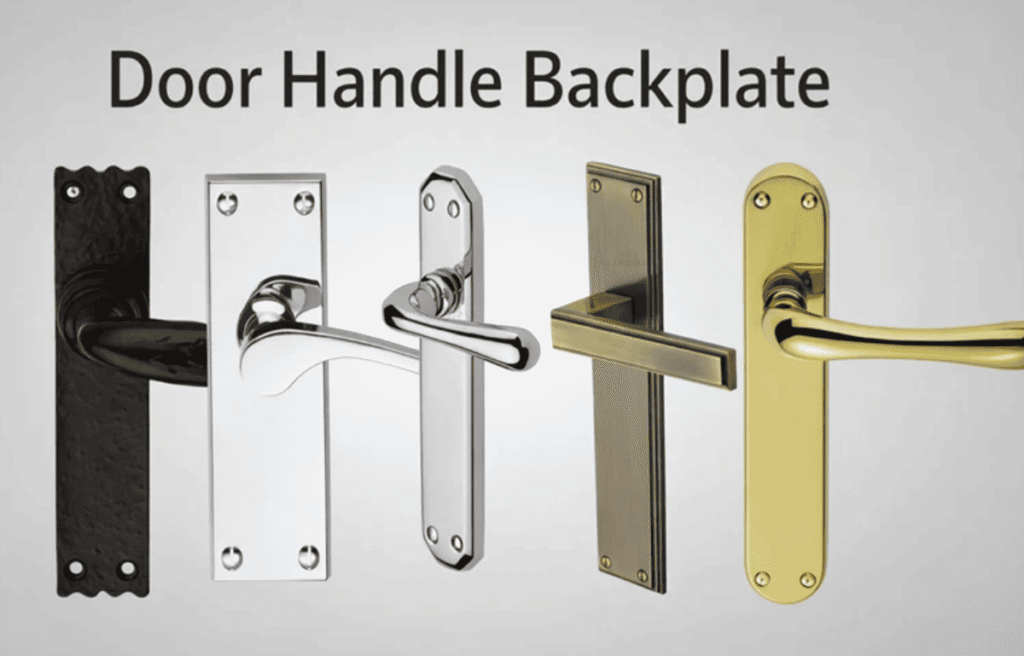
Door Handle Backplate Styles for Every Scheme?
Door handle backplate styles can look like a small design choice, but I often see them create big procurement problems. A plate that looks perfect on a drawing may clash with the lockcase, door thickness, fixing method, or compliance route. The solution is to treat backplate selection as a coordinated hardware decision.
Door handle backplate styles should be selected by matching the door type, lockcase standard, C-C centers, fixing method, traffic level, and visual scheme.1 Split narrow plates suit aluminum profiles, one-piece plates suit standard interior and entrance doors, and ultra-thin plates suit minimal schemes when the substrate and compliance path support them.
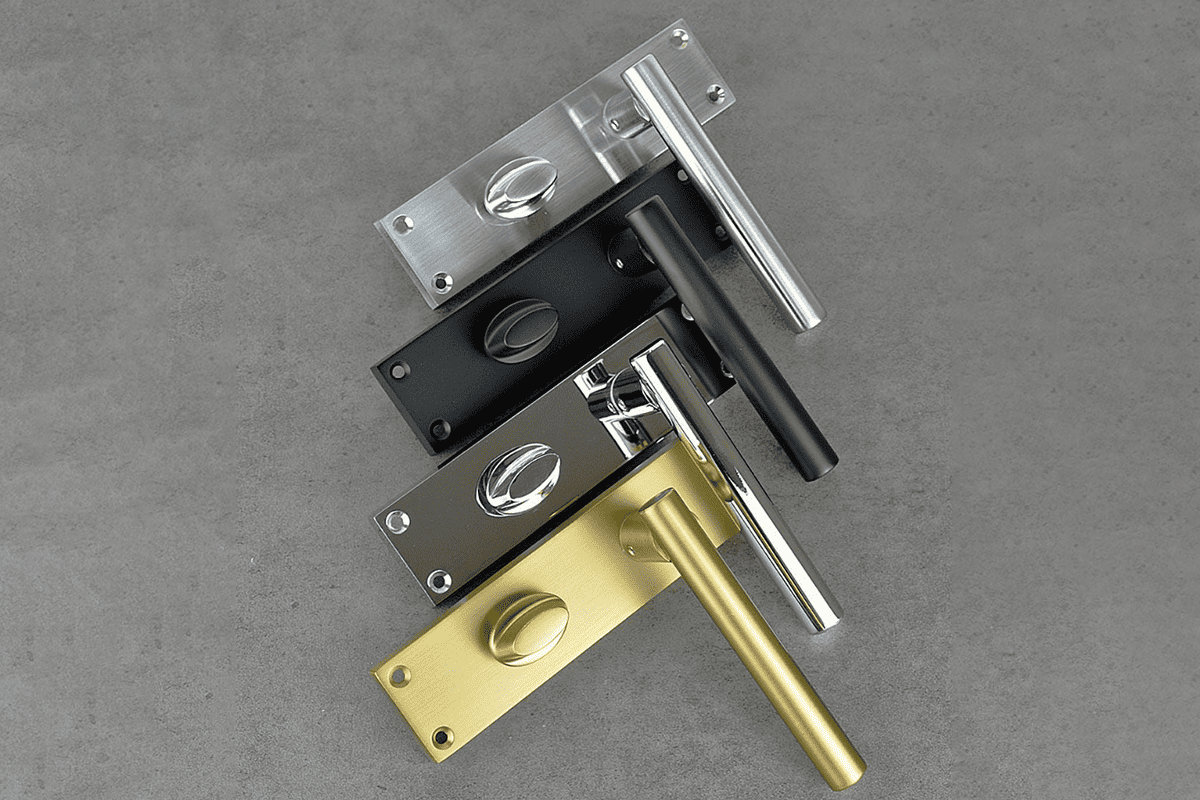
I usually start with the technical limits first, then I refine the appearance. This method helps door factories, hardware brands, and project buyers avoid rework, wrong hole patterns, weak fixing, and delayed approvals.
What Are the Main Door Handle Backplate Styles for Every Scheme?
Backplates are often specified late because they look simple on a schedule. That creates risk. If the chosen plate does not match the lockcase, profile width, or project standard, the buyer may face remachining, rejected samples, or inconsistent product families.
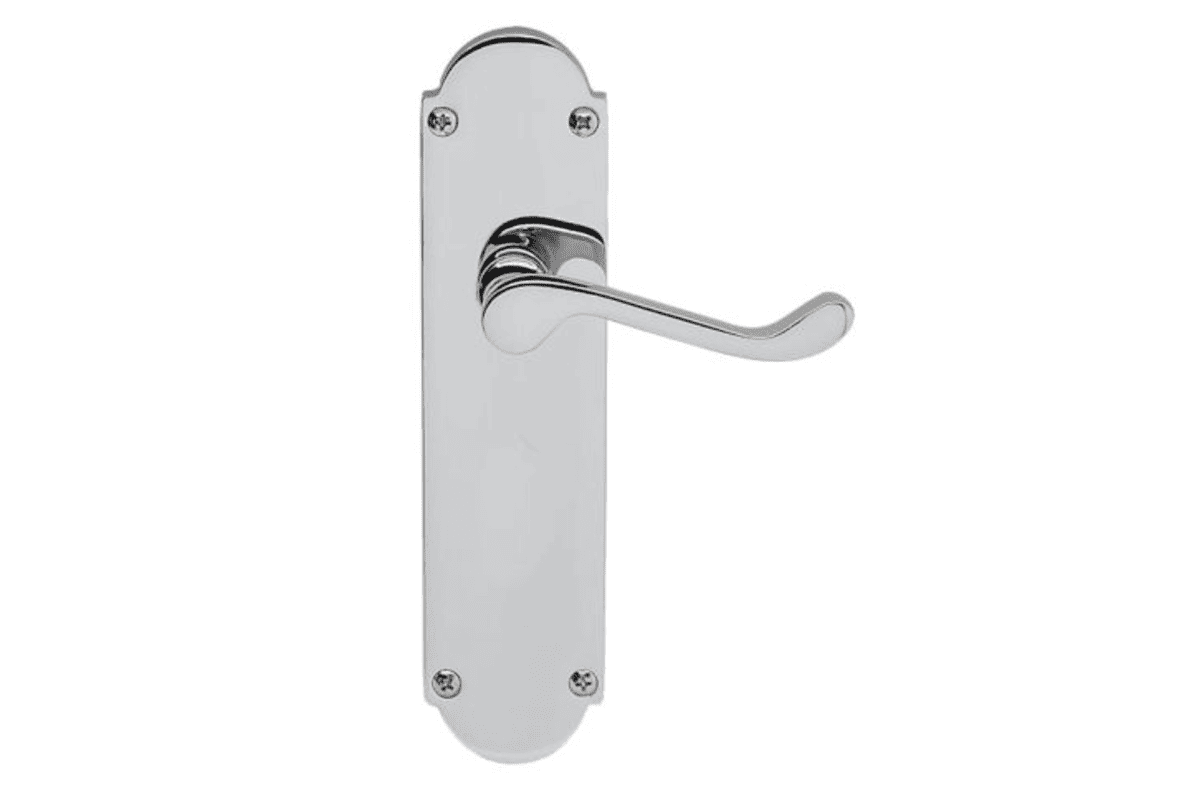
Door handle backplate styles usually fall into three practical groups: split or narrow escutcheon plates, one-piece long backplates, and ultra-thin minimal plates.2 Each style has a best-use case. I select them by checking centers, door construction, fixing strength, finish durability, and compliance needs before confirming the appearance.
The three practical backplate families
When I guide OEM or ODM customers, I do not begin with “modern” or “classic.” I begin with the door set. A backplate is part of a working hardware system. It must support the handle, align with the lockcase, and suit the door leaf.
Here is the basic selection map I use:
| Backplate style | Typical width/thickness | Best use | Main risk to check |
|---|---|---|---|
| Split or narrow escutcheon | About 24–32 mm3 wide | Narrow aluminum profiles, slim stile doors | Edge clearance, lockcase geometry, frame rebate |
| One-piece long backplate | Standard long plate format | Interior doors, entrance doors, high-security sets | C-C centers, fixing method, door thickness |
| Ultra-thin plate | Often 3 mm or 5 mm | Minimal interiors, UK-style design briefs | Substrate flatness, reinforcement, fixing strength |
1. Split or narrow escutcheon plates
I use split or narrow plates when the door stile cannot accept a wide backplate. This situation appears often on aluminum profile doors. The plate may need to sit within a limited face width while still clearing the frame rebate.
Typical considerations include:
- Plate width: often around 24–32 mm
- Shape: elongated oval, slim rectangle, or narrow rosette style
- Door type: aluminum profile doors or slim framed doors
- Main check: whether the plate edge interferes with the profile edge or rebate
I have seen narrow plates prevent rework when a standard plate would have crossed the profile edge by only a few millimeters. That small mismatch can still ruin the installation.
2. One-piece long backplates
One-piece plates are common for standard interior doors and many entrance doors. They can combine the lever and key cylinder or bathroom turn in one visual line. They are also useful when a project needs consistent hardware across many door types.
However, this style depends heavily on the lockcase center distance. Common European and UK-related dimensions are not universally interchangeable.
Typical checks include:
- EU centers: often 72 mm or 85 mm
- Common entrance/security centers: often 92 mm
- UK-related formats: often include 57 mm or 92 mm, depending on lock type
- Fixing: through-bolt fixing or visible/concealed screw fixing
- Door thickness: spindle length and screw length must match
3. Ultra-thin plates
Ultra-thin backplates are common in minimal design schemes. I often see 3 mm and 5 mm plate requests in UK-style specifications. They can create a flush and clean look, but they are not automatically suitable for every door.
The substrate must be flat and stable. The fixing must have enough strength. If the door is fire-rated, public-facing, or high-frequency, the full hardware set should follow the project’s compliance route.
I treat ultra-thin plates as a controlled specification choice, not a universal upgrade.
This approach keeps the design attractive while protecting the buyer from performance and approval issues.
How Do Door Handle Backplate Styles Match Lockcase Centers and Standards?
A backplate can look correct in a catalog but fail on site because the hole pattern does not match the lockcase. This mistake is expensive. It can affect drilling, lock alignment, cylinder position, privacy function, and final inspection.
Door handle backplate styles must match the lockcase standard and center-to-center distance. For many EU applications, buyers often check 72 mm, 85 mm, or 92 mm centers. For UK-related projects, buyers may also see 57 mm or 92 mm formats. I always verify the actual lockcase drawing before confirming production.
Why C-C centers matter
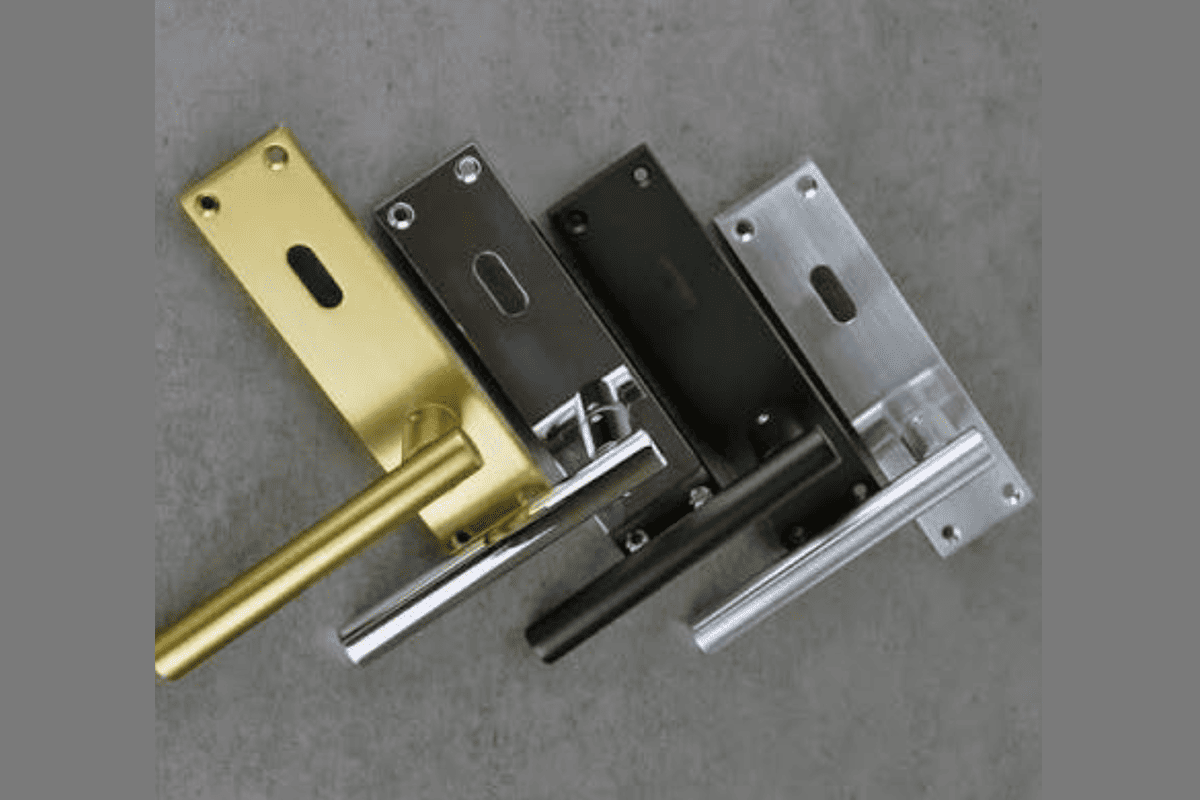
The C-C center distance controls the relationship between the lever spindle and the keyhole, cylinder hole, turn, or indicator.4 If the backplate is wrong, the lever may fit but the key function will not align.
I have handled presales checks where a buyer selected the correct finish and shape but gave only a photo of the lock. That is not enough. A backplate drawing should be checked against the lockcase drawing.
Key dimensions include:
- Lever spindle center
- Cylinder or keyhole center
- Plate length and width
- Screw hole position
- Door edge distance
- Backset and lockcase body clearance
- Door thickness range
Common center formats to verify
The table below is not a universal standard sheet. It is a procurement guide for discussion and verification.
| Market or project type | Common center examples | What I verify before quoting |
|---|---|---|
| EU interior doors | 72 mm, 85 mm | Lockcase drawing, spindle size, keyhole type |
| Entrance or security sets | 92 mm | Cylinder type, through-bolts, security requirement |
| UK-style projects | 57 mm, 92 mm | Lock type, bathroom function, plate thickness |
| Aluminum profile systems | Project-specific | Profile width, narrow lockcase, rebate clearance |
Function split is also important
The same visual backplate may need different functions. A hotel corridor door, a bathroom door, and a storeroom door can share one design language but require different cut-outs.
Common function variants include:
- Lever only
- Lever with keyhole
- Lever with Euro profile cylinder
- Lever with bathroom turn and release
- Fixed pull plate or entrance function
- Emergency or panic-related hardware, where applicable
I prefer to build a backplate family instead of selecting one item at a time. A family approach helps buyers keep the same style while changing the function.
Fixing method can change the plate choice
The fixing method is not only an installation detail. It affects strength, appearance, maintenance, and compatibility with the door core.
Common fixing options include:
- Through-bolt fixing: stronger and better for higher traffic5, when the door and lockcase allow it
- Surface screws: simple, but may be less suitable for high-abuse public areas
- Concealed fixing: clean appearance, but it needs accurate machining and compatible parts
For entrance doors, public buildings, and high-use doors, I usually ask for the project duty level before I recommend a fixing method. If fire-rated or security-rated performance is required, I ask the buyer to verify the exact tested or approved hardware combination with the project authority, consultant, or AHJ.6
Which Door Handle Backplate Styles Work Best for Narrow Aluminum Profiles?
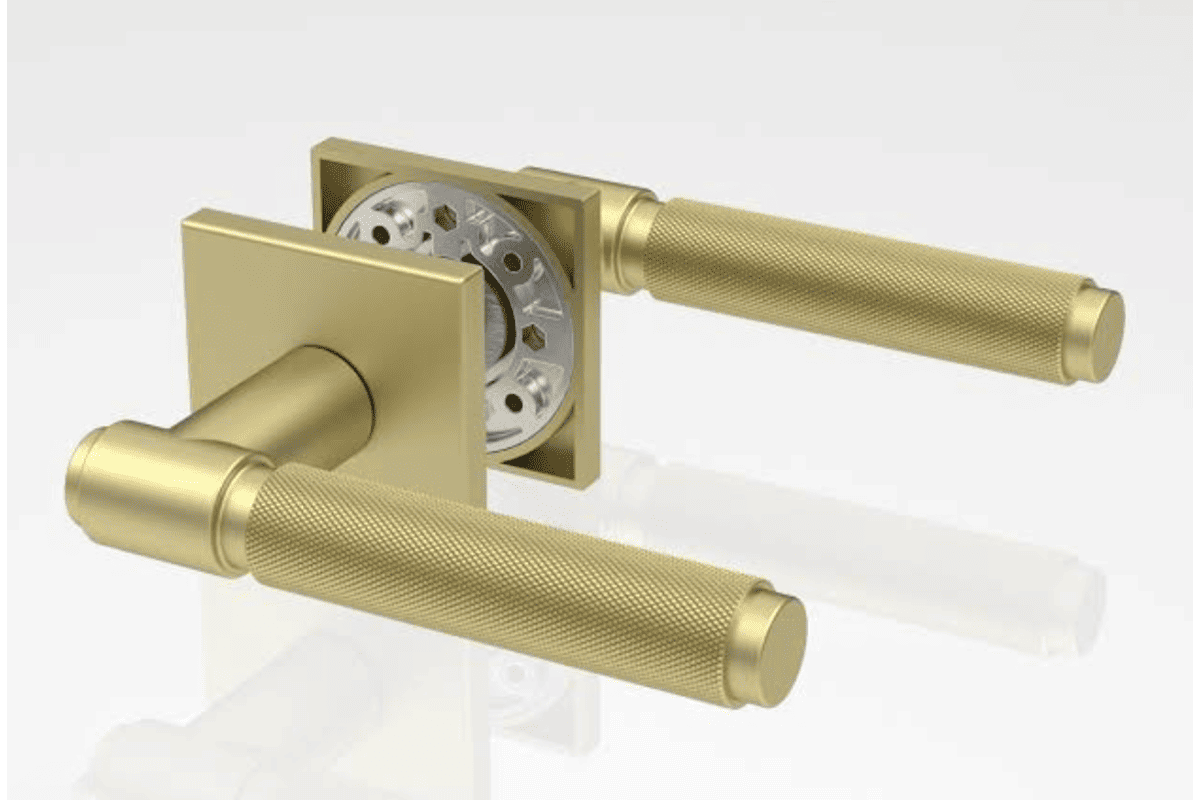
Narrow aluminum profile doors create a common backplate problem. The designer wants a clean lever set, but the available stile width may be limited. If the plate is too wide, it can hit the profile edge, look unbalanced, or interfere with the frame rebate.
For narrow aluminum profiles, I usually recommend split or narrow door handle backplate styles, such as elongated oval or slim rectangular plates around 24–32 mm wide. The buyer should verify profile face width, lockcase geometry, spindle position, and frame rebate clearance before confirming the plate design.
The main constraint is edge clearance
Aluminum profile systems can look similar but vary in face width and rebate design. A backplate that works on one profile may fail on another. I have seen projects where a 35 mm plate looked safe in a rendering but left almost no visible margin on the actual profile.
I prefer to check these dimensions early:
| Checkpoint | Why it matters |
|---|---|
| Profile face width | Confirms maximum plate width |
| Lockcase centerline | Confirms lever and cylinder alignment |
| Frame rebate clearance | Prevents collision when the door closes |
| Handle return shape | Prevents knuckle or lever clash |
| Screw position | Avoids weak fixing near profile edges |
| Cylinder projection | Ensures the trim does not interfere |
Why split plates help
Split or narrow escutcheon plates reduce the visible footprint. They allow the handle and cylinder trim to sit separately, which is useful when the stile does not support a long plate.
Common options include:
- Narrow lever plate with separate cylinder escutcheon
- Slim rectangular plate with lever-only function
- Oval narrow plate for softer visual schemes
- Separate turn and release trim for bathroom or privacy use
This approach gives the project more flexibility. It also reduces the risk that one long plate will cover areas that cannot be drilled or reinforced.
Lockcase geometry must still lead the choice
A narrow plate does not solve every problem. The lockcase must also fit the profile. Narrow stile locks have their own backsets, case depths, and spindle locations. I do not recommend confirming the backplate until the lockcase drawing is available.
A simple verification path is:
- Confirm the aluminum profile drawing.
- Confirm the lockcase model and backset.
- Confirm lever spindle size and position.
- Confirm the cylinder or keyhole format.
- Check plate width against available face width.
- Check the frame rebate and door swing.
- Approve a sample or technical drawing before bulk production.
Finish choice for aluminum systems
Many aluminum profile doors are used in commercial, coastal, or semi-exterior settings. Finish durability matters. Stainless steel, PVD finishes, and tested coatings may be considered depending on the environment.
For coastal or humid markets, I recommend that buyers discuss:
- Salt spray expectations
- Cleaning routine
- Indoor or outdoor exposure
- Grade of stainless steel or coating system
- Maintenance intervals
- Packaging protection during shipment
No finish is maintenance-free in every environment. I prefer to set a realistic expectation before production, especially when the project is near the sea or exposed to frequent cleaning chemicals.
When Should One-Piece Door Handle Backplate Styles Be Used for Interior and Entrance Doors?
One-piece plates are familiar and efficient, but they can also hide technical risk. If the centers, fixing screws, or spindle length are wrong, the full door set may need rework. This is especially serious for entrance and high-security doors.
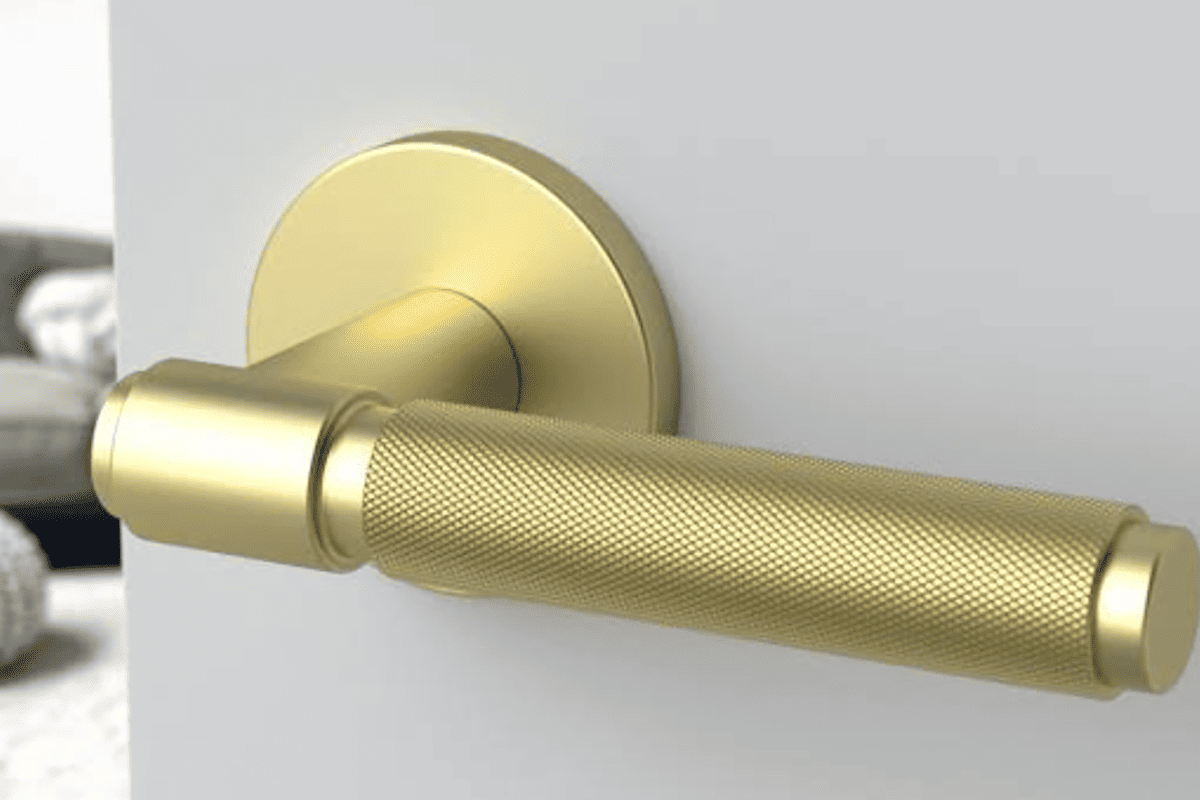
One-piece door handle backplate styles work best on standard interior doors and entrance doors when the lockcase centers, door thickness, fixing method, and compliance path are confirmed. I commonly check 72 mm, 85 mm, and 92 mm centers, plus through-bolt positions and cylinder format, before recommending production.
Where one-piece backplates perform well
One-piece long backplates are practical when the door has enough face area and the lockcase follows a known pattern. They create a clean vertical line and can cover lever and key functions in one component.
I often recommend them for:
- Standard timber interior doors
- Apartment entrance doors
- Office doors
- Hotel room doors, depending on lock system
- Fire door projects, when the full tested route supports the set
- Security doors, when fixing and cylinder protection are properly specified
Centers and standards cannot be assumed
I always ask for the lockcase center distance. A buyer may say “European standard,” but that phrase is not precise enough. EU-style lockcases may use different centers. UK-related locks may follow another arrangement. Entrance locksets may require 92 mm centers, but the exact format still needs confirmation.
Here is a practical comparison:
| Application | Common center to check | Backplate concern |
|---|---|---|
| Interior room door | 72 mm or 85 mm | Keyhole or cylinder alignment |
| Apartment entrance | 85 mm or 92 mm | Cylinder format, through-bolts |
| High-security entrance | Often 92 mm | Reinforcement, fixing, certification route |
| UK-style bathroom lock | Often 57 mm or project-specific | Turn/release position |
| Fire-rated door | Project-approved format | Tested hardware combination |
Through-bolts versus surface screws
One-piece plates can be fixed in different ways. Through-bolting is often stronger because the screws pass through the door and connect both sides. Surface screws may be acceptable in light-duty settings, but they need good substrate holding strength.
I usually ask:
- What is the door thickness?
- Is the door timber, steel, composite, or fire-rated?
- Does the lockcase allow through-bolt holes?
- Is the project high-frequency or low-frequency?
- Will the plate need concealed fixing?
- Are there security or fire requirements?
The answers affect the final recommendation.
Door thickness affects spindle and fixing parts
Door thickness is easy to overlook. A handle set that works on a 40 mm interior door may not work on a 55 mm entrance door without different spindle and screw lengths.
Common procurement checks include:
- Door thickness range
- Spindle length
- Spindle section size
- Screw length
- Sleeve nut length
- Cylinder length
- Escutcheon or plate thickness
- Handle projection
For OEM and wholesale customers, I prefer to standardize these details into a product series sheet. This reduces mistakes when the same visual style is sold across different markets.
Compliance requires verified combinations
For fire-rated, public, or high-security applications, I avoid broad claims. A CE document or fire-related certificate should be treated as something the buyer verifies against the exact project requirement. Mixing a handle, backplate, lockcase, hinge, closer, and door leaf from different tested routes can create approval problems.
At SDH Hardware, I can support buyers with technical drawings, product inspection after order completion, and certification documents where available. Still, the project consultant, testing body, or AHJ should confirm the final acceptance path.
Are Ultra-Thin Door Handle Backplate Styles Suitable for Minimal Schemes?
Ultra-thin plates are attractive because they reduce visual weight. However, minimal hardware can become a performance problem if the door surface is uneven, the fixing is weak, or the application is too demanding. I never treat thinness alone as a quality sign.
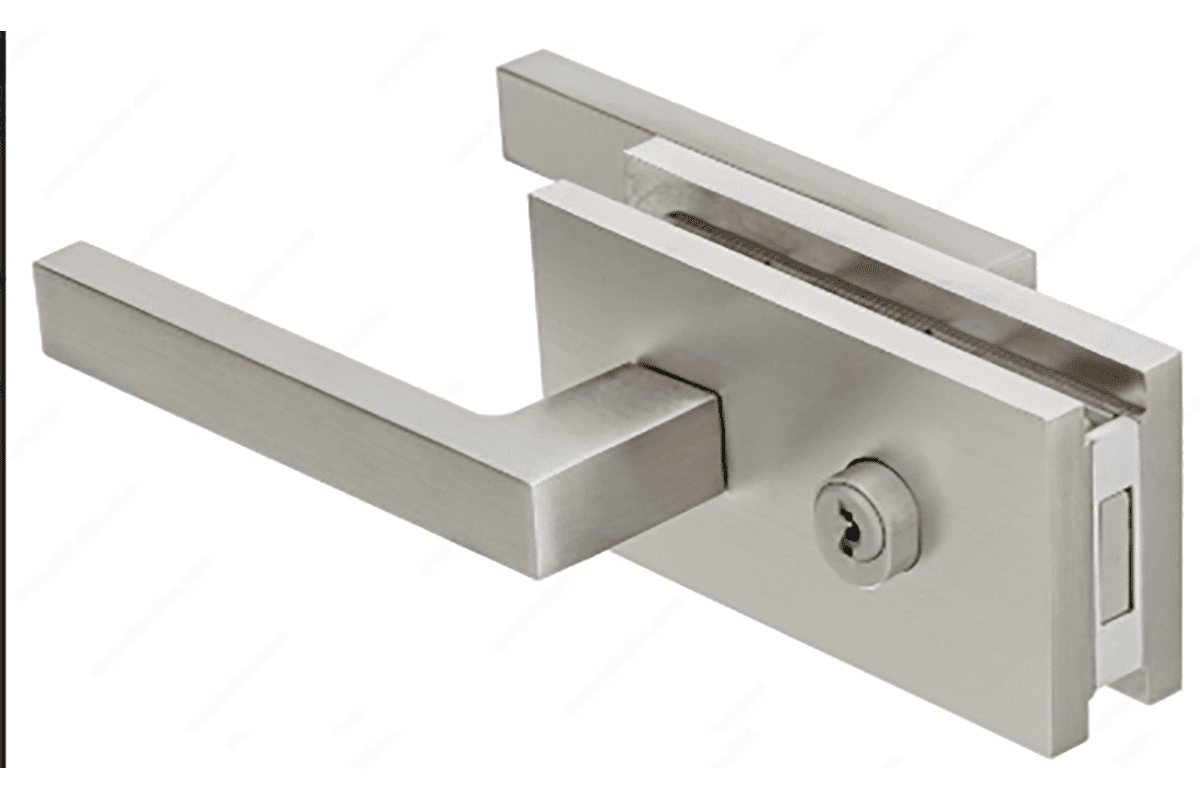
Ultra-thin door handle backplate styles can suit minimal schemes, especially where 3 mm or 5 mm plates are requested. They require flat substrates, accurate machining, and suitable reinforcement. For heavy-duty, fire-rated, or high-frequency doors, buyers should verify fixing strength and the project compliance route before approval.
Why ultra-thin plates are specified
Minimal interiors often call for hardware that almost disappears. A thin plate can make the lever appear more refined. I see these requests often in UK-style residential and commercial briefs, where the door face should remain clean.
The visual benefits include:
- Reduced projection
- Cleaner shadow line
- More modern appearance
- Better match with concealed hinges or flush doors
- Consistent look across premium interiors
However, the plate still carries mechanical load. The lever is touched thousands of times. The screws must resist movement. The door surface must stay stable.
Substrate flatness is critical
A thick plate can sometimes hide small surface irregularities. A thin plate cannot. If the substrate is not flat, the plate may rock, gap, or show uneven shadows.
I ask buyers to check:
- Door face flatness
- Door core material
- Reinforcement position
- Screw pull-out resistance
- Lockcase cut-out accuracy
- Handle spring support
- Final finish tolerance
This is especially important for veneer doors, steel doors, and fire doors with specific construction layers.
Thin does not always mean weak, but it must be validated
I do not make blanket claims about ultra-thin backplates. A 3 mm or 5 mm plate can be suitable in the right environment, but the whole assembly matters.7 Material grade, screw design, lever return spring, door reinforcement, and usage frequency all affect performance.
A useful selection table is:
| Use case | Ultra-thin plate suitability | Extra check |
|---|---|---|
| Low-traffic residential room | Often suitable | Door flatness and fixing |
| Premium apartment interior | Often suitable | Series consistency and finish |
| Office meeting room | Possible | Traffic level and fixing strength |
| Public corridor door | Caution | Through-bolts and durability |
| Fire-rated door | Project-dependent | Tested or approved route |
| Coastal entrance | Caution | Corrosion resistance and maintenance |
Finish and maintenance expectations
Thin plates often use high-end finishes, such as satin stainless steel, black coating, PVD tones, or custom finishes. These finishes must match the environment. A dark coating in a high-frequency public area may show scratches faster than a brushed stainless finish.8 A coastal project may need more corrosion-resistant material and more frequent cleaning.9
I recommend that buyers define:
- Expected daily operation cycles
- Cleaning chemicals
- Indoor or exterior exposure
- Required salt spray performance, if any
- Replacement and spare part plan
- Packaging method to avoid surface damage in transit
Lead time and MOQ can be different
Ultra-thin products may require special tooling, stricter surface control, or custom packaging. I advise buyers to flag MOQ and lead time early. If the project needs 500 sets plus future spares, the selected style must be deliverable at scale, not just attractive as a sample.
How Should Buyers Control Risk When Selecting Door Handle Backplate Styles?
Backplate mistakes are usually preventable. They happen when style, lockcase, door construction, and supply planning are handled separately. This creates mismatched SKUs, late sample revisions, and unclear responsibility between the door factory and hardware supplier.
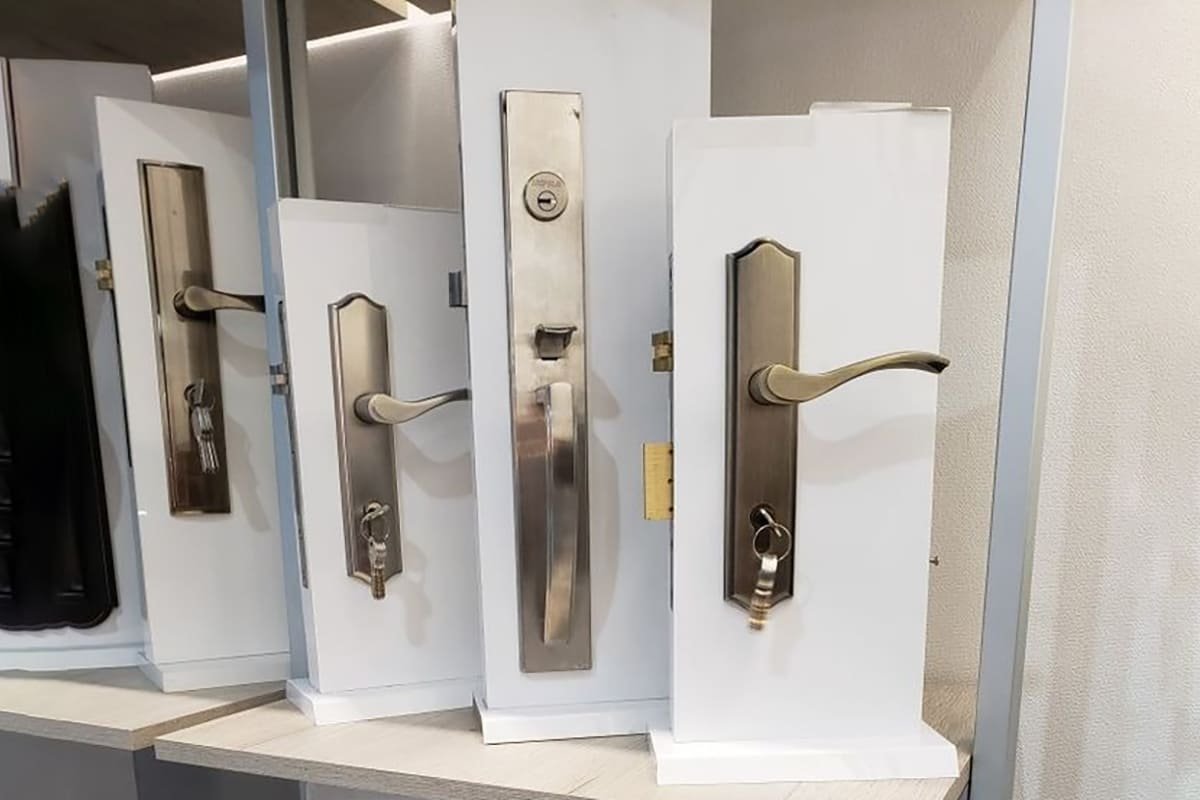
Buyers should control risk by using a compatibility-first checklist for door handle backplate styles. I recommend confirming lockcase centers, door thickness, substrate, fixing method, traffic level, finish environment, certification route, MOQ, lead time, and spare capacity before approving samples or bulk production.
My compatibility-first checklist
I use this checklist before I move from style discussion to quotation or sampling.
1. Lockcase and function
- What lockcase standard is used?
- What is the C-C distance?
- Is the function lever only, cylinder, keyhole, bathroom, or privacy?
- Are there left/right handing issues?
- Is there a panic, access control, or special function?
2. Door construction
- What is the door thickness?
- Is the door timber, steel, aluminum, composite, or fire-rated?
- Is there reinforcement behind the plate?
- Is the surface flat enough for thin plates?
- Is the door leaf already machined?
3. Fixing method
- Is through-bolt fixing possible?
- Are surface screws acceptable?
- Are concealed fixings required?
- Do screw holes conflict with the lockcase?
- Is the project high-frequency?
4. Environment
- Is the project residential, commercial, public, or industrial?
- Is it coastal or high humidity?
- Will cleaning chemicals be used often?
- Is vandal resistance a concern?
- What finish durability is expected?
5. Compliance and documentation
- Is CE documentation required?
- Is fire-rated documentation required?
- Is the backplate part of a tested set?
- Who will confirm project acceptance?
- Does the AHJ require specific evidence?
Scene-driven risk control
Different scenes need different priorities.
| Scene | Best backplate approach | Main risk control |
|---|---|---|
| Narrow aluminum profile | Split or narrow plate | Check 24–32 mm width range and rebate clearance |
| Standard interior door | One-piece or standard plate family | Confirm 72/85 centers and door thickness |
| Entrance door | One-piece robust plate | Confirm 85/92 centers, cylinder, through-bolts |
| Minimal interior | Ultra-thin 3/5 mm plate | Confirm flat substrate and fixing strength |
| Fire or public door | Verified hardware set | Confirm compliance route with project authority |
| Coastal/high humidity | Corrosion-resistant finish | Define maintenance and salt exposure expectations |
Series consistency reduces lifecycle cost
For distributors and door manufacturers, I always recommend a family-based selection. A single style should cover enough variants to support real orders.
A strong backplate family may include:
- Lever-only version
- Euro cylinder version
- Keyhole version
- Bathroom turn/release version
- Multiple C-C centers
- Multiple finishes
- Matching lever handles
- Matching hinges and accessories
- Spare screws, spindles, and fixing kits
This approach reduces inventory pressure. It also makes replacement easier after the project is delivered.10
Supply discipline matters as much as style
A backplate that cannot be supplied consistently can damage a brand’s reputation. I advise buyers to check MOQ, production lead time, finish batch consistency, packaging, and spare part availability before final selection.
At SDH Hardware, I work with standardized and customized architectural door hardware across product lines such as Euro mortise locks, stainless steel lever handles, butt hinges, concealed hinges, Euro brass cylinders, and door accessories. This full-category view helps me check how the backplate fits into the complete door hardware set.
Still, I recommend that every project buyer verify final technical and compliance details against the actual specification. Good procurement is not only about choosing a good-looking plate. It is about choosing a plate that can be produced, installed, inspected, maintained, and reordered.
Conclusion
Door handle backplate styles should be selected through both design and risk control. I start with lockcase centers, door thickness, fixing method, substrate, traffic level, finish environment, and compliance route. Then I refine the visual scheme. Split narrow plates suit aluminum profiles, one-piece plates support many standard and entrance doors, and ultra-thin plates work when the application allows them. If you need factory-direct support for architectural door hardware, I can help review drawings, match backplates to locks, and prepare OEM/ODM options for your project.
"SECTION 087111 - DOOR HARDWARE (SCHEDULED BY ...", https://fpm.usc.edu/wp-content/uploads/2021/11/087102-USC-HSC-door-hardware-Guide-Specification_1.pdf. Building-hardware standards for mechanically operated locks and lever furniture treat dimensional compatibility, fixing, durability grading, and application conditions as interrelated specification variables, supporting the article’s compatibility-first approach. Evidence role: expert_consensus; source type: institution. Supports: Building-hardware standards and specification guidance classify locksets and lever furniture by dimensions, fixing, durability, door application, and corrosion or use categories.. Scope note: This would support the general specification logic rather than prove that every listed variable is mandatory for every backplate. ↩
"Door furniture", https://en.wikipedia.org/wiki/Door_furniture. Reference works on architectural hardware define escutcheons and backplates as door-furniture trim associated with handles, keyholes, cylinders, or lock functions, providing terminology context for the article’s practical grouping. Evidence role: definition; source type: encyclopedia. Supports: A neutral reference should define escutcheons and door backplates as trim components used around handles, keyholes, cylinders, or locks, giving context for the article’s grouping.. Scope note: Such a source would define the component categories but may not use the exact three-family taxonomy used in the article. ↩
"Escutcheon (furniture)", https://en.wikipedia.org/wiki/Escutcheon_(furniture). Technical documentation for narrow-stile door furniture commonly lists slim escutcheon widths in the approximate 25–30 mm range, supporting the article’s stated 24–32 mm procurement range. Evidence role: general_support; source type: institution. Supports: Technical references or standards-adjacent hardware data should show that narrow escutcheons for slim-stile doors commonly fall in roughly the mid-20 mm to low-30 mm width range.. Scope note: Dimensional ranges vary by manufacturer, market, and lockcase geometry, so the citation would contextualize typical practice rather than establish a universal standard. ↩
"How to measure a mortice lock for timber doors", https://www.eraeverywhere.com/news/how-to-measure-a-mortice-lock/. Technical diagrams of mortice lockcases define the follower or spindle center and the cylinder or keyhole center as related reference points, explaining why center-to-center distance governs backplate cut-out alignment. Evidence role: mechanism; source type: education. Supports: An educational or standards-based diagram should show that the follower or spindle center and cylinder/keyhole center are measured in relation to each other and control trim alignment.. ↩
"Wood Handbook, Chapter 08: Fastenings", https://research.fs.usda.gov/download/treesearch/37424.pdf. Fastener mechanics literature shows that bolted joints can transfer load through the full member thickness and avoid reliance solely on local screw withdrawal resistance, supporting the article’s preference for through-bolts in higher-use applications. Evidence role: mechanism; source type: paper. Supports: A fastener or building-hardware source should explain that through-bolts distribute load through the door thickness and are less dependent on local screw pull-out strength.. Scope note: Actual performance still depends on door core material, bolt spacing, lockcase clearance, and installation quality. ↩
"Fire Doors and NFPA 80 FAQs", https://www.nfpa.org/news-blogs-and-articles/blogs/2025/04/11/fire-doors-faqs. Fire-door regulations and certification guidance require hardware to be compatible with the tested or listed door assembly and subject to acceptance by the relevant authority, supporting the article’s caution against unverified substitutions. Evidence role: expert_consensus; source type: government. Supports: Fire-door guidance should confirm that fire-door hardware must be compatible with, listed for, or approved as part of the rated door assembly and accepted by the relevant authority.. ↩
"BS EN 1906 – Lever Handle and Knob Furniture", https://www.hoppe.com/gb-en/contacts-service/standards/bs-en-1906/. Lever-furniture performance standards evaluate complete assemblies for durability, strength, fixing security, and category of use, supporting the article’s statement that thin backplates must be judged within the full hardware assembly. Evidence role: mechanism; source type: institution. Supports: A door-furniture performance standard should show that lever-handle assemblies are assessed for durability, strength, fixing, and category of use rather than by plate thickness alone.. Scope note: The standard would support assembly-based evaluation but may not specifically approve 3 mm or 5 mm backplates. ↩
"Surface Characterization of Stainless Steel 316L Coated with ...", https://pmc.ncbi.nlm.nih.gov/articles/PMC9891840/. Studies of coated metal surfaces show that abrasion resistance, coating thickness, and color contrast influence scratch visibility, providing materials-context support for the article’s caution about dark finishes in high-use areas. Evidence role: mechanism; source type: paper. Supports: Materials research should explain that coating wear, color contrast, and abrasion resistance affect the visibility of scratches on dark finishes compared with brushed metal surfaces.. Scope note: This would be contextual support; actual scratch visibility depends on the specific coating system, substrate, cleaning regime, and lighting. ↩
"Marine Atmospheric Corrosion of Carbon Steel: A Review - PMC", https://pmc.ncbi.nlm.nih.gov/articles/PMC5506973/. Corrosion research on coastal atmospheres identifies chloride deposition and humidity as drivers of accelerated metal corrosion, supporting the article’s statement that coastal projects may require more resistant materials and maintenance. Evidence role: mechanism; source type: research. Supports: A corrosion-science source should show that coastal chloride exposure accelerates corrosion risk and that material selection and cleaning affect stainless steel or coated metal performance.. ↩
"Systematic Configurator for Complexity Management in ... - PMC", https://pmc.ncbi.nlm.nih.gov/articles/PMC11605224/. Research on product-family design and component commonality finds that standardization can reduce part variety, simplify inventory management, and support replacement logistics, providing supply-chain support for the article’s family-based selection approach. Evidence role: general_support; source type: paper. Supports: Supply-chain or product-platform research should show that component commonality and product-family standardization can reduce inventory complexity and improve serviceability.. Scope note: The evidence would apply generally to manufactured products and spare-parts systems, not specifically to door-handle backplates. ↩