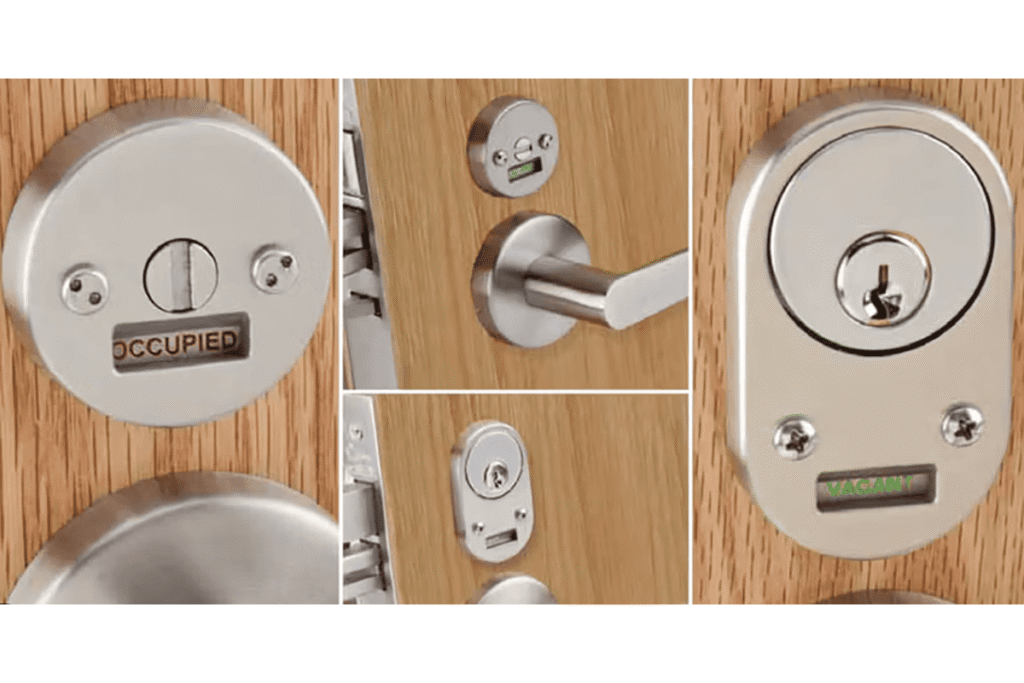
What Commercial Toilet Door Lock Features Ensure Reliable Privacy and Emergency Access Compliance?
A commercial toilet door lock can look simple, but a poor choice can create privacy complaints, forced operation, and emergency access problems. In busy offices, malls, schools, and hotels, small hardware failures become daily user issues.1 I recommend evaluating privacy locking, occupancy indication, and external emergency release together.
A reliable commercial toilet door lock should allow secure inside locking, show clear red/green occupancy status, and provide authorized emergency opening from outside2. These features help protect user privacy, reduce confusion in public restrooms, and support safer facility management. Buyers should still verify local project standards, accessibility rules, and certification requirements3 before final approval.
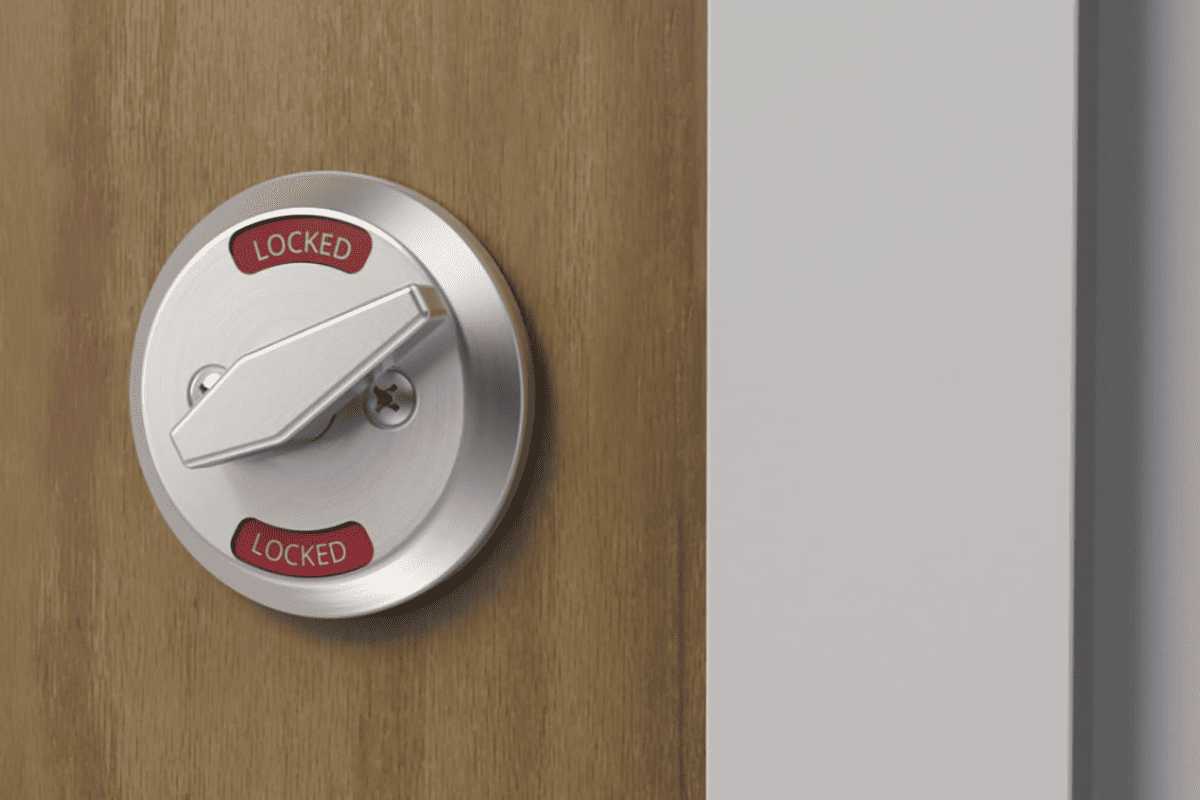
Many buyers first ask whether the lock “can lock.” I think that question is too narrow. For commercial toilet projects, the better question is whether the lock remains clear, safe, and mechanically reliable after thousands of public-use cycles4.
Why Is Privacy Locking the Baseline Feature in a Commercial Toilet Door Lock?
Privacy is the first problem a commercial toilet door lock must solve. If users cannot lock the door easily from inside, they feel exposed. If the mechanism is too complex, they may misuse it. Both situations create complaints and increase maintenance pressure for building operators.
A commercial toilet privacy lock should let the user lock the door securely from inside with a simple, intuitive action. The function should not require training, force, or multiple steps. For B2B projects, buyers should check the locking feel, latch engagement, fixing strength, and long-term operation under repeated use.
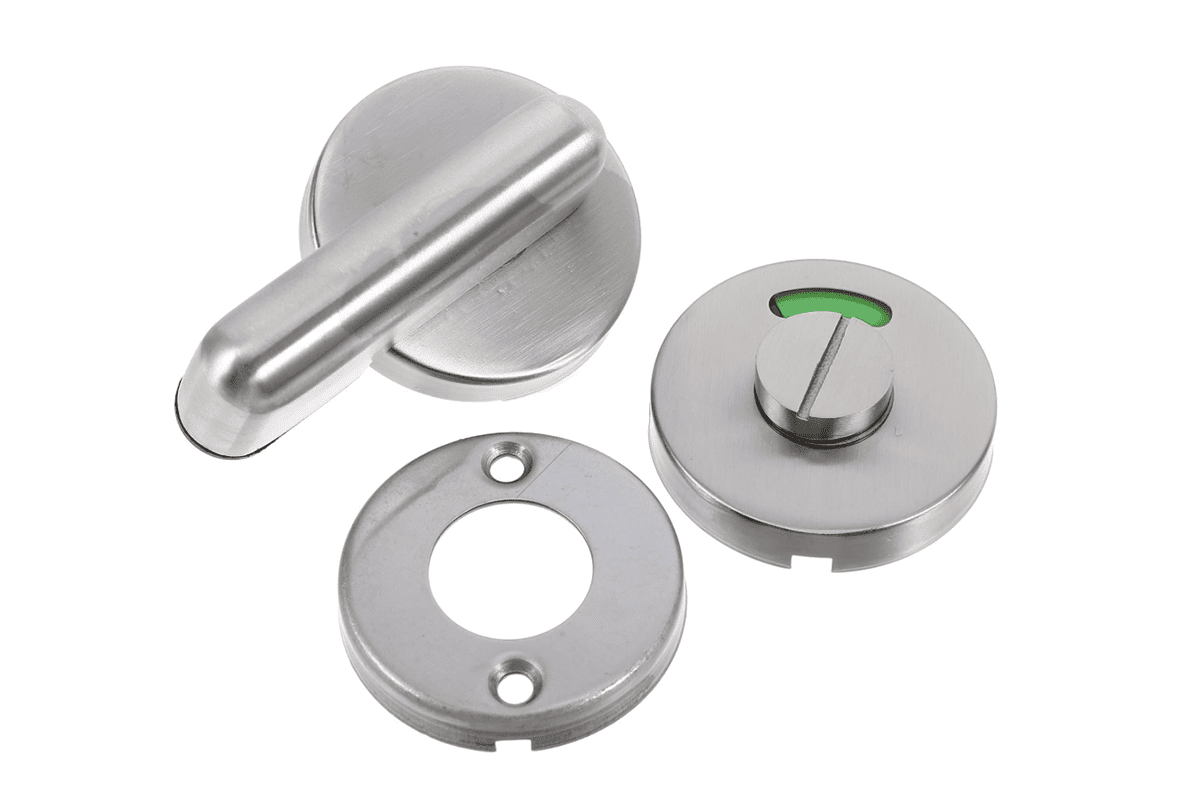
What “privacy” really means in commercial projects
In residential bathrooms, privacy often means a light-duty thumbturn and a simple latch. In commercial toilet projects, the requirement is different. The lock may be used by hundreds of people each day. Some users are careful. Some users are impatient. Some users pull the handle before reading the indicator.5 So the lock must be easy to understand and strong enough for repeated operation.
From my factory and quality-control perspective, I look at privacy locking in three layers:
User action
The user should be able to lock the door from inside with one clear movement.Mechanical engagement
The locking part should fully engage without requiring special alignment or excessive force.Durability under public use
The lock should resist loosening, deformation, and inconsistent function during high-frequency use.
A commercial toilet door lock with privacy function should also match the door or partition system6. Metal toilet partitions, compact laminate doors, timber doors, and aluminum-framed systems may require different fixing methods and spindle lengths. A lock that works well on one door type may not perform correctly on another.
Practical procurement checks
When I review a toilet lock sample, I do not only turn it once. I check how it feels after repeated operation. Buyers can use a simple checklist before confirming bulk orders.
| Evaluation Point | What Buyers Should Check | Why It Matters |
|---|---|---|
| Inside locking action | Smooth thumbturn or lever operation | Reduces misuse and user confusion |
| Latch or bolt engagement | Full locking without door movement | Improves privacy and reliability |
| Fixing strength | Screws, plates, and mounting points | Prevents loosening in high-use areas |
| Door compatibility | Door thickness, material, and handing | Avoids installation problems |
| Surface finish | Corrosion resistance and wear appearance | Supports longer service life |
| Sample consistency | Multiple pieces tested, not only one sample | Reduces batch quality risk |
Common privacy lock mistakes
I often see buyers focus on price first. That is understandable in bulk projects, but it can cause hidden costs. A low-cost lock may pass a quick visual check, yet fail in everyday public use.
Common mistakes include:
- Choosing a light-duty lock for high-traffic restrooms.
- Ignoring door thickness and fixing requirements.
- Selecting a privacy lock without considering emergency opening.
- Approving samples without repeated function testing.
- Treating a residential bathroom lock as suitable for commercial toilets.
A dependable commercial toilet door lock should feel simple to the user and predictable to maintenance staff. That balance is important. A lock should not feel “clever.” It should feel obvious, stable, and repeatable.
How Does a Red/Green Indicator Improve Commercial Toilet Door Lock Usability?
A commercial toilet door lock with a red/green indicator solves a common public restroom problem: uncertainty. Without a clear occupancy signal, users knock, push, pull, or force the handle. That creates embarrassment for the person inside and unnecessary stress on the hardware.
A red/green occupancy indicator improves restroom usability by showing whether the cubicle is occupied or vacant before the user touches the door. Red usually means occupied, and green usually means vacant.7 The indicator does not guarantee compliance by itself, but it helps reduce confusion, handle abuse, and user complaints.
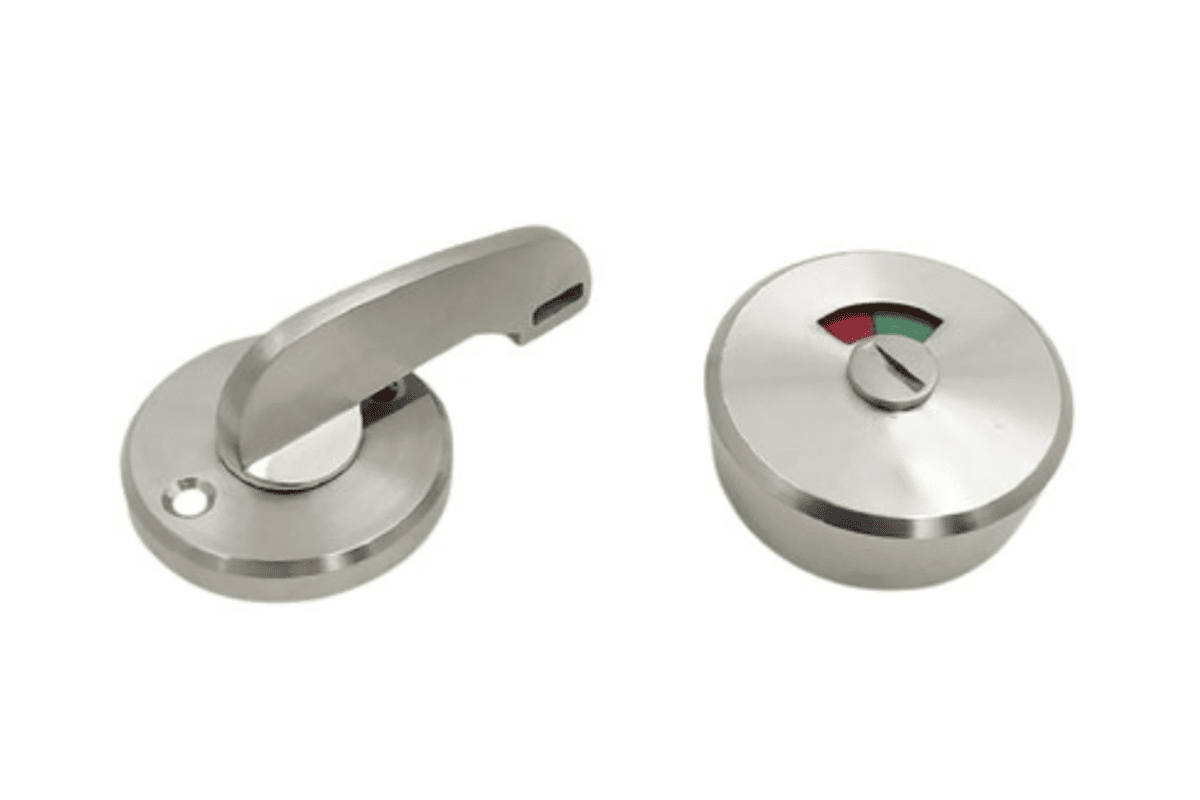
Why visual indication matters in public restrooms
In commercial buildings, users make quick decisions. They may not know the door layout. They may not speak the local language. They may be in a hurry. A visual indicator gives a fast and universal signal.
A red/green indicator supports:
- User privacy because people are less likely to try an occupied door.
- Better traffic flow because users can identify vacant cubicles faster8.
- Lower hardware stress because fewer people force handles and doors.
- Fewer complaints because the status is visible before contact.
However, I always remind buyers that an indicator is not only a color window. It is part of the lock mechanism. If the internal locking action and indicator movement are not synchronized, the visual signal becomes unreliable.9 A lock that shows green while the door is locked creates confusion. A lock that shows red after the user leaves wastes capacity and causes frustration.
Mechanical reliability behind the indicator
The red/green display must move consistently with the locking function. In manufacturing, this depends on several details:
Accurate internal parts
The cam, spindle, and indicator plate must align correctly.Stable tolerances
Small tolerance problems can make the indicator stick or show a half-position.Strong return action
The display should shift clearly between occupied and vacant.Protected viewing window
The color display should resist scratches, dirt, and cleaning chemicals.Consistent batch assembly
The same smooth action should appear across the full production batch.
Here is a useful comparison for buyers:
| Indicator Type | Typical Benefit | Procurement Concern |
|---|---|---|
| Basic red/green window | Simple and widely understood | Must sync correctly with lock |
| Larger viewing window | Easier to see in public areas | Must resist impact and scratching |
| Integrated indicator lock | Cleaner installation | Requires accurate door preparation |
| Separate indicator set | Flexible for some partition systems | More installation points to align |
Indicator function is not the same as compliance
This point is important. A red/green indicator can improve usability, but it does not automatically make a project compliant with local building codes, accessibility standards, or safety regulations.10 Buyers should verify project requirements with architects, consultants, contractors, or local authorities.
At SDH Hardware, we approach this from a manufacturing and quality-control angle. We can explain product structure, material options, finish choices, and inspection points. Still, application-specific compliance must be checked against the project location and specification documents.
A good commercial toilet door lock should make the restroom easier to use without creating false confidence. The indicator should be clear, but the mechanical lock body behind it must also be durable.
Why Is External Emergency Release Essential for a Commercial Toilet Door Lock?
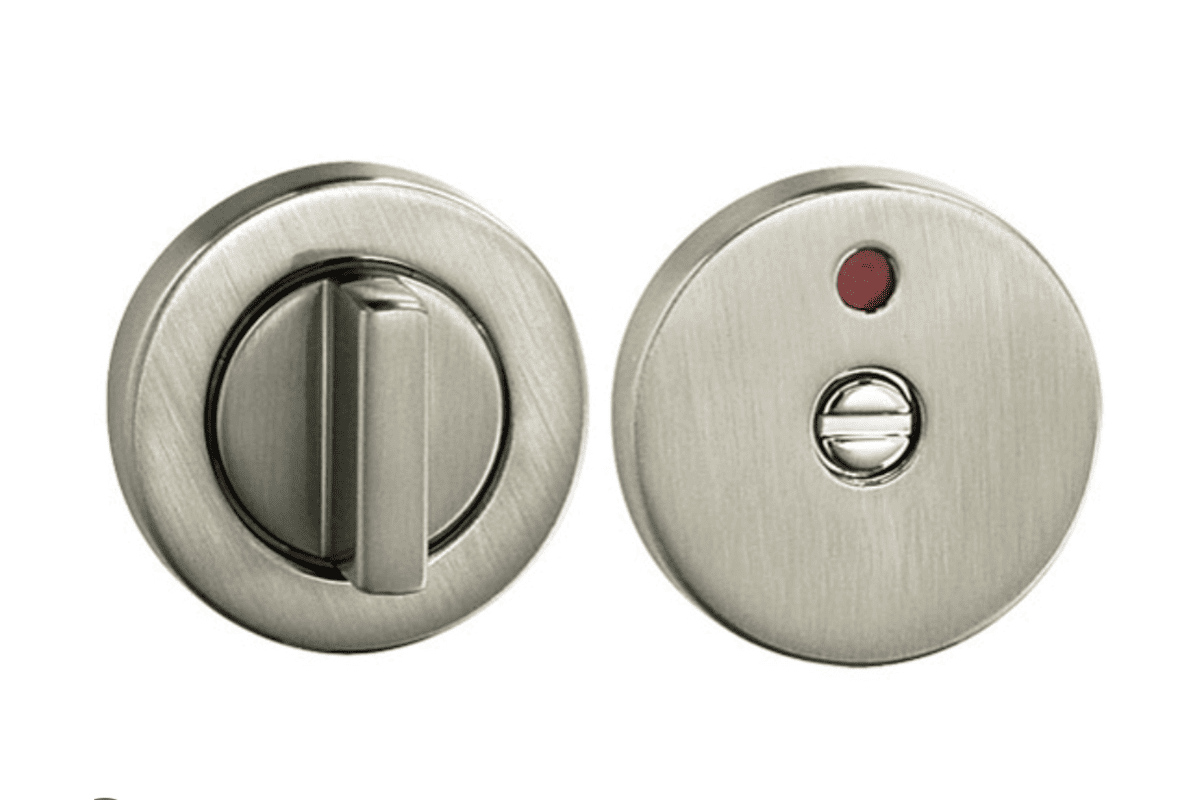
A commercial toilet door lock should protect privacy, but it should not trap a user during an emergency. In public buildings, facility staff may need to open a locked toilet door from outside11. If the lock has no proper emergency release, staff may damage the door, partition, or lock.
External emergency release allows authorized staff to unlock the toilet door from outside when necessary. This function helps protect users and property while reducing project risk. Buyers should check the release method, access tool, mechanical strength, and local emergency access requirements before specifying any commercial toilet lock.
Privacy and emergency access must work together
A restroom lock has a special challenge. It must be private during normal use, yet accessible during abnormal situations. That balance matters in:
- Shopping malls
- Office towers
- Schools and universities
- Hotels
- Hospitals and clinics
- Airports and transport facilities
- Public service buildings
Emergency access may be needed if a user feels unwell, a child locks the door accidentally, or the mechanism is misused. I avoid dramatic claims because each project has different conditions. But from a hardware evaluation view, I can say this clearly: a lock without external release creates unnecessary operational risk in commercial spaces.
Common emergency release options
Different markets and partition systems may use different release methods. Buyers should not assume one design fits all projects.
| Emergency Release Type | How It Usually Works | Best-Fit Consideration |
|---|---|---|
| Coin release | Staff turns an outside slot with a coin or flat tool | Simple, but access control is limited |
| Special key release | Staff uses a dedicated emergency key | Better controlled access |
| Screwdriver slot release | Staff opens with a flat tool | Common, but may be misused |
| Integrated indicator release | Emergency release is built into indicator side | Clean appearance and fewer components |
| Custom release design | Supplier develops project-specific solution | Requires careful sample approval |
The right choice depends on the project standard, user profile, maintenance plan, and local requirements. For example, a school may prefer controlled staff access. A shopping mall may prefer a design that maintenance personnel can operate quickly. A hotel may care more about appearance and finish consistency.
What buyers should verify
External emergency opening should be evaluated before mass installation. I suggest buyers ask suppliers these questions:
- Can the lock be opened from outside when locked from inside?
- What tool or key is required for emergency release?
- Can unauthorized users easily tamper with the release?
- Does emergency opening damage the lock or door?
- Does the release work after repeated locking cycles?
- Is the function available for the required door thickness and material?
- Are drawings or installation instructions provided?
These questions are simple, but they prevent many procurement mistakes. A buyer may see an emergency slot on a sample and assume the function is reliable. I prefer to test it. The release should operate smoothly without excessive force. The lock should return to normal use after opening. The external parts should remain secure.
Emergency access and compliance
No supplier should casually promise global compliance for every project. Standards vary by country, building type, and project specification. Some projects may also require accessibility review, fire-rated door compatibility, or local inspection approval.
As a manufacturer, SDH Hardware can provide product information, drawings upon order confirmation, and relevant certification documents where applicable. Buyers should verify CE documents, fire-rated certificates, and project-specific requirements with qualified professionals before final selection.
A strong commercial toilet door lock does not treat emergency access as an afterthought. It builds the function into the product decision from the beginning.
How Should Buyers Evaluate Commercial Toilet Door Lock Quality Before Bulk Orders?
A commercial toilet door lock may look acceptable in a catalog, but real quality appears during installation and repeated use. If buyers approve only appearance and price, they may miss weak internal parts, poor indicator movement, or unreliable emergency release.
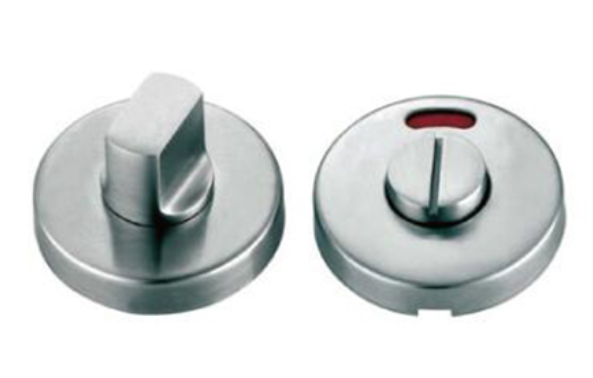
Buyers should evaluate commercial toilet lock quality through samples, drawings, material checks, function testing, installation fit, finish review, and supplier capability. The best decision combines privacy function, red/green indication, emergency release, and manufacturing consistency instead of treating each feature as a separate item.
Start with the application, not the catalog
I recommend that buyers define the use environment first. A toilet door lock for a small office is not the same as one for a mall restroom. The expected traffic level, cleaning frequency, user behavior, door material, and local project rules all affect the correct choice.
Before requesting a quotation, buyers should prepare:
- Door or partition material
- Door thickness
- Opening direction
- Required finish
- Indicator requirement
- Emergency release requirement
- Quantity and delivery schedule
- Branding or packaging needs
- Any certification or project documentation requirements
This helps the supplier recommend a suitable model instead of guessing.
Quality-control points that matter
At SDH Hardware, we manufacture architectural door hardware with full-process quality control. In my experience, the most important checks for toilet locks include raw material screening, dimensional inspection, function testing, finish inspection, and final product review. Buyers should ask how the supplier controls these steps.
| QC Stage | What Should Be Checked | Buyer Benefit |
|---|---|---|
| Raw material screening | Base metal, stainless steel grade, component quality | Reduces early failure risk |
| Machining and assembly | Fit, alignment, spindle movement, indicator action | Improves functional consistency |
| Surface treatment | Finish color, corrosion resistance, coating uniformity | Supports project appearance |
| Function testing | Locking, unlocking, indicator, emergency release | Confirms real usability |
| Final inspection | Quantity, packaging, labels, accessories | Reduces shipment problems |
A supplier should be able to explain these controls clearly. If a supplier only says “good quality” but cannot describe inspection steps, buyers should be cautious.
Supplier capability questions
For B2B buyers, the lock is only part of the decision. The supplier must also support stable delivery, customization, and documentation. I suggest asking:
- Do you operate your own factory or only trade products?
- Can you provide ODM or OEM support?
- Can surface finishes and packaging be customized?
- Can you provide product drawings after order confirmation?
- Can you support inspection after production?
- Can you supply related door hardware for one-stop sourcing?
- Can you provide CE or fire-rated documents where applicable?
SDH Hardware supports factory-direct B2B supply, OEM/ODM orders, logo stamping or laser marking, custom color packaging, and inspection service after order completion. We also produce related architectural hardware, including Euro mortise locks, stainless steel lever handles, butt hinges, concealed hinges, Euro brass cylinders, and door accessories. This matters when a buyer wants consistent hardware across a full door package.
Do not evaluate features separately
The strongest point in this article is simple: privacy, indication, and emergency access should be evaluated together.
A lock with privacy only may create emergency access risk. A lock with a red/green indicator but weak internal mechanics may fail in daily use. A lock with emergency release but poor privacy feel may still create user complaints. The complete assembly must work as a system.
A practical sample approval process can look like this:
- Confirm drawings and door compatibility.
- Check surface finish and visible quality.
- Test inside locking action repeatedly.
- Confirm red/green indicator synchronization.
- Test outside emergency release.
- Install the sample on the actual door or partition material.
- Review packaging, accessories, screws, and instructions.
- Approve pre-production sample before mass order.
This process is not complicated, but it helps buyers avoid preventable problems. In commercial restroom projects, small lock details affect daily user experience and long-term maintenance cost.
What Specifications Should Buyers Confirm for a Commercial Toilet Door Lock Order?
A commercial toilet door lock order should not rely on a model number alone. If project details are unclear, the lock may arrive with the wrong spindle, finish, handing, fixing accessories, or emergency release style. That can delay installation and increase project cost.
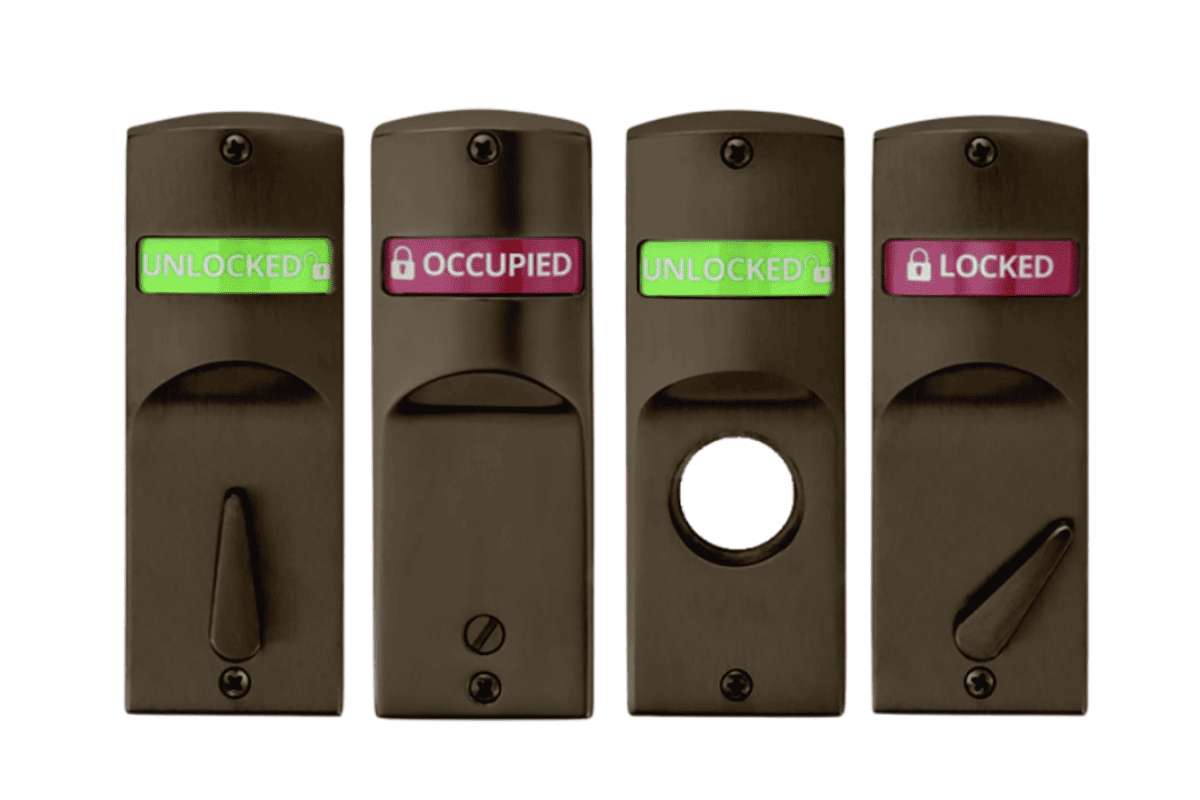
Buyers should confirm door thickness, material, lock dimensions, indicator style, emergency release method, finish, fixing accessories, packaging, certification documents, and inspection requirements before placing a commercial toilet lock order. Clear specifications reduce misunderstandings between the buyer, factory, contractor, and installer.
Key specifications to confirm
Commercial toilet hardware is often installed late in the project schedule. That means mistakes create pressure. I have seen buyers rush approval because the site needs products quickly. I understand that pressure, but I still prefer a clear specification sheet before production.
Here are the most common items to confirm:
| Specification | Why It Matters |
|---|---|
| Door thickness | Determines spindle, screws, and fitting compatibility |
| Door material | Affects fixing strength and installation method |
| Lock body size | Must match preparation and design requirements |
| Indicator design | Must be visible and synchronized with locking |
| Emergency release type | Must suit facility management and project rules |
| Finish | Must match other hardware and resist wear |
| Handing | Prevents installation mismatch |
| Accessories | Screws, strike plates, tools, and instructions must be complete |
| Logo or branding | Important for hardware brands and wholesalers |
| Packaging | Protects finish during shipping and site storage |
| Documents | Supports buyer verification and project submission |
Finish and material considerations
Commercial restrooms are cleaned often. They may face moisture, chemicals, and frequent hand contact.12 So finish selection matters. Stainless steel, satin nickel, chrome, black, and other finishes can all work, but the choice should match the environment and design intent.
Buyers should consider:
- Corrosion resistance in humid areas
- Fingerprint visibility in premium interiors
- Scratch resistance in high-traffic buildings
- Color consistency across different hardware items
- Cleaning chemical exposure in public facilities
A beautiful sample is not enough. The finish must be repeatable across the order and suitable for the building environment.
Documentation and verification
For technical B2B products, documents matter. SDH Hardware can supply products that comply with EU standard specifications, and core products are available with authoritative CE certification and fire-rated certification. However, buyers should verify certificates, test reports, and project requirements before using them for formal approval.
I recommend that buyers request:
- Product specification sheet
- Installation drawing
- Material and finish details
- Packing information
- Relevant certification documents, if required
- Sample approval record
- Final inspection arrangement
This step protects both sides. The buyer gets clarity. The manufacturer gets a confirmed production target. The project gets fewer surprises.
Bulk order risk control
For large orders, buyers should also consider batch consistency. A commercial toilet project may require hundreds or thousands of locks. If half the locks operate smoothly and half feel stiff, the project team will notice.
Useful risk-control steps include:
- Approving a golden sample
- Confirming pre-production samples
- Setting an acceptable finish range
- Checking random samples during production
- Performing final inspection after order completion
- Confirming spare parts or extra units for site replacement
These steps are common in professional procurement. They are especially useful for door factories, toilet partition suppliers, contractors, hardware brands, and wholesalers that manage repeated projects.
A commercial toilet door lock is small, but the order process should be professional. Clear specifications lead to better production, smoother installation, and fewer disputes.
Frequently Asked Questions
Is a commercial toilet door lock different from a residential bathroom lock?
Yes. A commercial toilet door lock is designed for public or high-frequency use, while a residential bathroom lock is usually lighter duty. Commercial projects often require clearer occupancy indication, stronger fixing, more durable finishes, and external emergency release for authorized staff.
Does a red/green indicator make a toilet lock compliant?
No. A red/green indicator improves usability by showing occupied or vacant status, but it does not guarantee compliance. Buyers should verify local building codes, accessibility rules, project specifications, and any required certification documents before final approval.
Why is emergency release important for public restroom doors?
Emergency release allows authorized staff to unlock the door from outside when needed. This helps reduce the need to damage the door, partition, or lock during urgent situations. Buyers should confirm the release method and verify whether it meets project requirements.
What should I test before approving a commercial toilet lock sample?
You should test inside locking, red/green indicator synchronization, external emergency release, fixing strength, door compatibility, finish quality, and repeated operation. You should also check accessories, installation drawings, packaging, and any required documentation before confirming a bulk order.
Can SDH Hardware customize commercial toilet door locks?
Yes. SDH Hardware supports OEM and ODM orders, surface treatment customization, logo stamping or laser marking, custom packaging, product drawings upon order confirmation, and post-production inspection services. Buyers should share project specifications so we can evaluate the suitable solution.
Conclusion
A commercial toilet door lock should do more than lock a door. It should protect user privacy, show clear occupancy status, and allow authorized emergency access when needed. Buyers should evaluate these features as one system, then verify local requirements, documents, and project conditions before ordering. If you are sourcing toilet locks for door factories, partition systems, contractor projects, or wholesale programs, contact SDH Hardware to discuss samples, customization, and factory-direct supply.
"Business Operations & Customer Services", https://facilities.utdallas.edu/about/business-operations-customer-services/. Facility-management research on high-use building components supports the view that small hardware defects can produce recurring maintenance demands and user-service interruptions in public or commercial facilities. Evidence role: general_support; source type: research. Supports: High-use building components, including restroom hardware, are subject to frequent wear and can create recurring maintenance and user-service issues.. Scope note: Such evidence may address building hardware or facility maintenance broadly rather than commercial toilet door locks specifically. ↩
"Chapter 6: Toilet Rooms - U.S. Access Board", https://www.access-board.gov/ada/guides/chapter-6-toilet-rooms/. Government accessibility and building-control guidance commonly treats emergency access to locked sanitary facilities as a safety consideration, supporting the inclusion of an outside release mechanism where required by the project context. Evidence role: expert_consensus; source type: government. Supports: Some accessibility and building-safety guidance recognizes the need for emergency access to locked toilet or sanitary-compartment doors from outside.. Scope note: Requirements vary by jurisdiction and building type, so this source would support the design principle rather than prove universal legal necessity. ↩
"Chapter 6: Toilet Rooms", https://www.access-board.gov/ada/guides/chapter-6-toilet-rooms/. Government accessibility and construction-product guidance shows that restroom door hardware may be subject to jurisdiction-specific accessibility, building-code, and certification requirements. Evidence role: general_support; source type: government. Supports: Restroom doors, hardware, accessibility features, and product certifications can be governed by official regulations and project-specific standards.. Scope note: The source would establish the need for verification, not determine compliance for any specific lock model or project. ↩
"087100 – DOOR HARDWARE - Facilities and Campus Services", https://fcs.cornell.edu/087100-door-hardware. Architectural-hardware standards such as ANSI/BHMA and European lock standards use repeated operating cycles to assess durability, supporting the article's emphasis on performance under sustained public use. Evidence role: expert_consensus; source type: institution. Supports: Door hardware durability is commonly evaluated through repeated-cycle testing in recognized hardware standards.. Scope note: A standards citation would support the relevance of cycle durability testing, but the exact cycle count required depends on the applicable product category and grade. ↩
"Women's Perceptions of Public Restrooms and the ... - PubMed", https://pubmed.ncbi.nlm.nih.gov/32096679/. Human-factors literature on doors and affordances supports the observation that users may act on visible handles or learned door-use cues before reading adjacent signage or indicators. Evidence role: general_support; source type: paper. Supports: Users often rely on immediate physical affordances such as handles before processing signs or indicators.. Scope note: The evidence is likely contextual, because studies may address door usability generally rather than toilet-cubicle occupancy indicators specifically. ↩
"SECTION 087111 - DOOR HARDWARE (SCHEDULED BY ...", https://fpm.usc.edu/wp-content/uploads/2021/11/087102-USC-HSC-door-hardware-Guide-Specification_1.pdf. Architectural-hardware specification guidance supports the principle that locks and latching hardware must be matched to door thickness, handing, preparation, and substrate to function correctly. Evidence role: mechanism; source type: institution. Supports: Architectural hardware selection depends on door construction, thickness, handing, preparation, and mounting conditions.. Scope note: This would support the technical principle of compatibility rather than validate a particular lock design. ↩
"Human Factors Design Guidelines for Advanced Traveler ...", https://www.fhwa.dot.gov/publications/research/safety/98057/ch03a.cfm. Color-coding standards and human-factors guidance associate red with stop or restricted status and green with go or safe status, providing contextual support for red/green occupied-vacant indicators. Evidence role: definition; source type: institution. Supports: Standard color-coding conventions commonly associate red with stop, prohibition, or occupied status and green with go, safe condition, or availability.. Scope note: This is contextual support; red/green conventions are not universally sufficient because color perception, lighting, culture, and accessibility needs can affect interpretation. ↩
"Visual attention allocation between social and navigational ...", https://pmc.ncbi.nlm.nih.gov/articles/PMC12929869/. Human-factors research on visual status cues supports the claim that clear indicators can reduce search uncertainty and help users identify available options more efficiently. Evidence role: general_support; source type: paper. Supports: Clear visual status cues can reduce uncertainty and improve the speed of identifying an available option in a public-use environment.. Scope note: The evidence may concern visual indicators and wayfinding generally rather than direct experiments on commercial restroom cubicles. ↩
"Forensic DNA Interpretation and Human Factors", https://www.nist.gov/publications/forensic-dna-interpretation-and-human-factors-improving-practice-through-systems. Human-factors guidance on displays and controls supports the principle that an indicator must correspond accurately to the system state; otherwise, it can mislead users and reduce operational reliability. Evidence role: mechanism; source type: research. Supports: Status displays and indicators are useful only when they accurately reflect the state of the controlled system.. Scope note: This source would support the display-control principle, not provide direct testing data for a specific toilet lock mechanism. ↩
"Chapter 6: Toilet Rooms", https://www.access-board.gov/ada/guides/chapter-6-toilet-rooms/. Official accessibility standards specify multiple requirements for restroom doors and operable parts, supporting the caution that an occupancy indicator alone does not establish project compliance. Evidence role: general_support; source type: government. Supports: Accessibility and building-code compliance for restroom doors involves several criteria, not merely the presence of an occupancy indicator.. Scope note: The applicable requirements depend on the jurisdiction, edition of the standard, and project scope. ↩
"Building Access Control Devices | New York State ...", https://www.nysed.gov/facilities-planning/building-access-control-devices-electromagnetic-locking-devices. Public-building and accessibility guidance recognizes that locked sanitary compartments may require emergency or assisted opening from outside, supporting the operational need for staff-accessible release mechanisms. Evidence role: case_reference; source type: government. Supports: Emergency or assisted access to locked toilet rooms or compartments is recognized in public-building and accessibility guidance.. Scope note: This supports the general need for emergency access; the specific acceptable release method depends on local rules and facility policy. ↩
"Environmental Cleaning Procedures | HAIs", https://www.cdc.gov/healthcare-associated-infections/hcp/cleaning-global/procedures.html. Public-health cleaning guidance identifies restroom fixtures and door hardware as high-touch surfaces requiring regular cleaning or disinfection, supporting the article's discussion of moisture, chemical exposure, and finish durability. Evidence role: mechanism; source type: government. Supports: Restrooms contain high-touch surfaces that require regular cleaning and disinfection, and hardware in such spaces can be exposed to moisture and cleaning chemicals.. Scope note: Public-health guidance establishes the cleaning-exposure context but may not directly evaluate the durability of a particular lock finish. ↩