Ball Bearing Hinges vs Plain Bearing Hinges for Commercial Doors?
Ball bearing hinges vs plain bearing hinges is a common sourcing question for commercial door projects, and the wrong choice can create noise, rough operation, cost pressure, or after-sales complaints1. I usually solve this by comparing plain bearing, 2BB, and 4BB hinges against the door weight, use frequency, budget, and risk level.
For most commercial door buyers, the best hinge is not simply the one with more bearings2. Plain bearing hinges can be cost-effective and strong for basic applications3, 2BB ball bearing hinges often provide the best balance of smooth operation and value4, and 4BB hinges suit selected specifications where the project truly requires them.
I have seen many buyers focus too quickly on bearing count. That makes sense at first, but it can lead to over-specification or under-performance. A better approach is to match the hinge structure to the actual commercial door application.
Why should buyers compare ball bearing hinges vs plain bearing hinges as plain bearing vs 2BB vs 4BB?
Many commercial buyers frame the decision as a simple choice between ball bearing hinges and plain bearing hinges. That shortcut can cause problems. It ignores the real middle option, which is the 2BB ball bearing hinge, and it also makes 4BB hinges look automatically superior.
The better comparison is plain bearing vs 2BB vs 4BB. Plain bearing hinges can control cost and support basic commercial use. 2BB hinges often improve smoothness and user experience at a practical price. 4BB hinges can fit certain specifications, but bearing count alone does not define hinge quality.
Why the usual comparison is too narrow
When I speak with door manufacturers and hardware importers, I often hear one question: “Should I buy ball bearing hinges or plain bearing hinges?” I understand the question, but I usually suggest a more precise one:
“Which hinge construction gives the right balance of movement, load performance, cost, and project risk?”
That question matters because commercial doors are not all the same. A hotel room door, a school corridor door, a fire-rated steel door, an office door, and a warehouse service door may all require different hardware logic.
The three practical hinge categories
For commercial procurement, I normally separate the choice into three groups:
| Hinge type | Basic structure | Main advantage | Common limitation | Typical buyer concern |
|---|---|---|---|---|
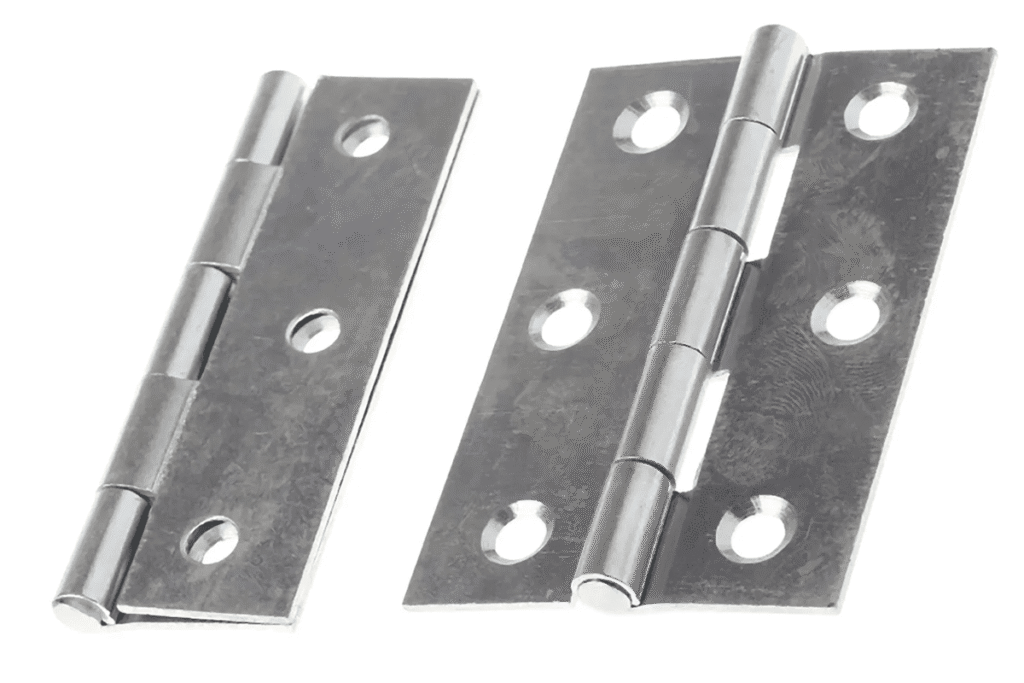
| Plain bearing hinge | Knuckle rotation without ball bearings | Competitive price and simple structure | Less smooth operation under frequent use | Cost control |
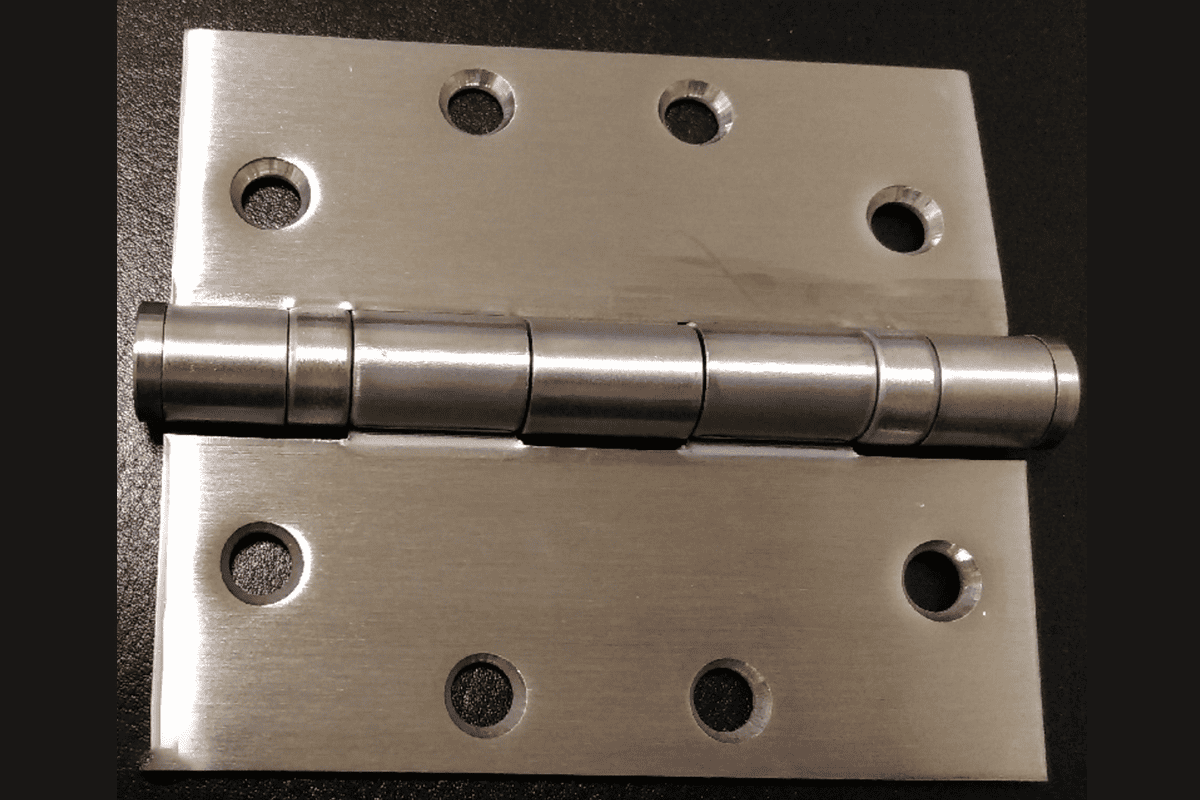
| 2BB ball bearing hinge | Two ball bearing points | Good smoothness and practical value | Must match door size and project needs | Balance of feel and cost |
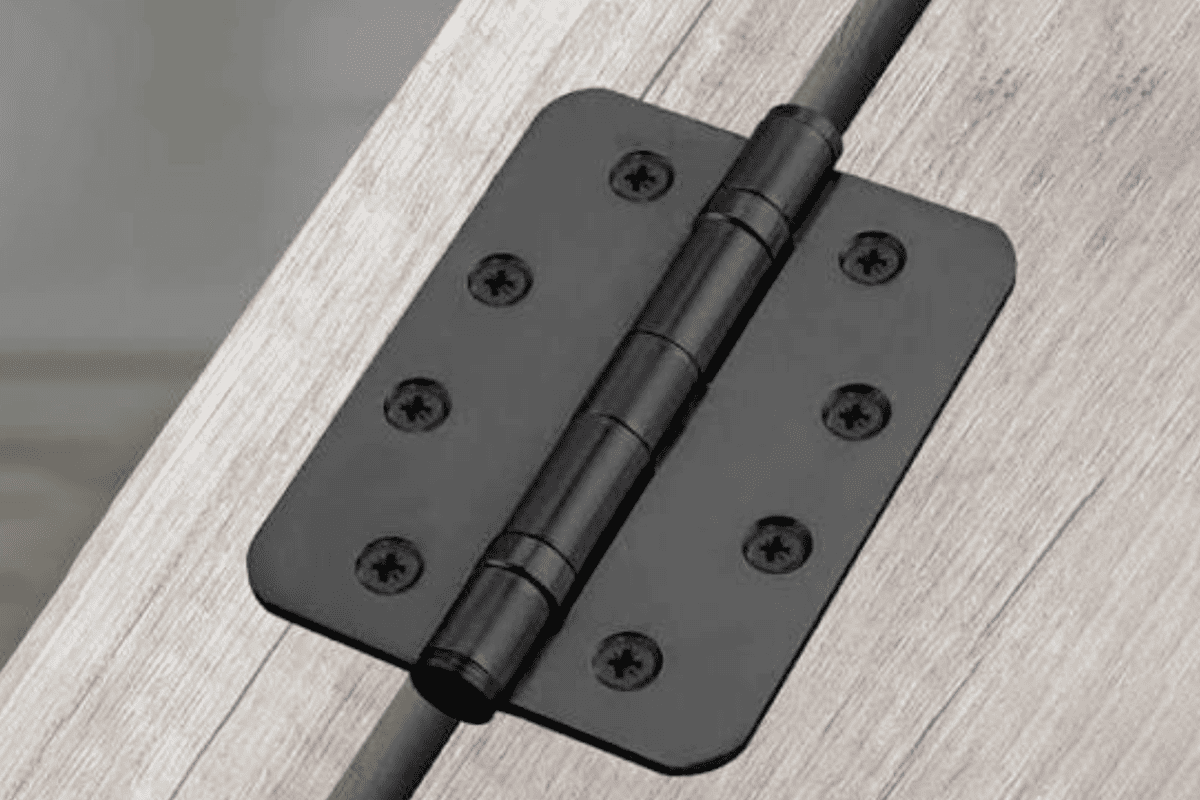
| 4BB ball bearing hinge | Four ball bearing points | Can suit selected higher-spec lines | Higher cost and not always necessary | Avoiding over-specification |
Why “more bearings” is not always better
A 4BB hinge has more bearing points than a 2BB hinge. However, that does not automatically mean it is the correct choice for every commercial door. Hinge performance also depends on:5
- Material thickness
- Leaf size
- Pin design
- Knuckle accuracy
- Bearing quality
- Screw hole pattern
- Surface treatment
- Door weight
- Door closer force
- Installation quality
- Testing standard and grade
In our manufacturing work at SDH Hardware, I have seen projects where a properly specified 2BB hinge gives a better commercial balance than a more expensive 4BB option. This is especially true when the buyer needs stable quality, smooth movement, and controlled landing cost across large-volume orders.
A practical way to define the project need
Before choosing between ball bearing hinges vs plain bearing hinges, I recommend that buyers list five points:
- Door material: timber, steel, aluminum, or composite.
- Door size and thickness: for example, 40 mm, 45 mm, or project-specific sizes.
- Opening frequency: occasional, regular, or heavy daily use.
- Required documents: CE, fire-rated certification, or project test reports.
- Market position: economy, mid-range, or premium hardware line.
This simple framework avoids emotional buying. It also helps a supplier recommend a hinge that matches the project instead of only promoting the highest-priced option.
When do plain bearing hinges make sense for commercial doors?
Plain bearing hinges can be overlooked because they do not sound as advanced as ball bearing hinges. That is a mistake. For some commercial doors, the buyer needs dependable basic hardware at a competitive price, and the operating smoothness requirement is not the top priority.
Plain bearing hinges make sense when the project is cost-sensitive, the door is not exposed to heavy daily traffic, and the buyer accepts a more basic opening feel. They can offer practical load support, but they may not deliver the same smooth operation as 2BB or 4BB ball bearing hinges.

Where plain bearing hinges can be suitable
I would not dismiss plain bearing hinges. In many procurement conversations, they remain a rational option. Buyers often use them for doors where price, simple installation, and acceptable function matter more than premium movement.
Typical examples may include:
- Low-traffic internal commercial doors
- Utility rooms
- Storage areas
- Certain light-duty office doors
- Cost-sensitive wholesale product lines
- Markets where the end user prioritizes price
The key phrase is suitable use case. A plain bearing hinge should not be selected only because it is cheaper. It should be selected because the door environment does not require the smoother movement of a bearing hinge.
Strength and smoothness are not the same thing
Many people confuse strength with smoothness. A plain bearing hinge can have good structural support when the material, size, pin, and installation are appropriate. However, it usually does not offer the same low-friction movement as a ball bearing hinge6.
This distinction matters for commercial doors because the user experience becomes part of the product quality. If a door feels rough, noisy, or heavy during movement, the end user may blame the door set, the installer, or the hardware brand.
Procurement advantages of plain bearing hinges
Plain bearing hinges can help B2B buyers in several ways:
- Lower unit cost for large-volume projects
- Simple construction with fewer components
- Broad compatibility for basic door applications
- Easier positioning in economy hardware ranges
- Reduced over-specification where premium movement is unnecessary
However, buyers should check whether the saving is worth the possible trade-off. A small hinge cost reduction may not be valuable if it creates complaints in a high-use building.
What I check before recommending plain bearing hinges
When a customer asks me whether plain bearing hinges are enough, I usually check the following:
| Evaluation point | Why it matters |
|---|---|
| Door weight | Heavier doors create more stress on the hinge system7 |
| Opening frequency | Frequent movement makes smoothness more important |
| Door closer use | Closers can add operating force and cycle demand |
| Fire rating requirement | Certified hinge documents may be required |
| Market expectation | Some markets expect ball bearing hinges as standard |
| After-sales tolerance | Lower risk projects can accept simpler hardware |
Important caution for commercial buyers
Plain bearing hinges should not be treated as a universal low-cost replacement. If the door is heavy, frequently opened, or connected with a door closer, buyers should evaluate the hinge more carefully. They should request drawings, material specifications, finish details, and applicable test documents.
At SDH Hardware, we manufacture both plain bearing hinges and ball bearing hinges. This gives us a practical view of the trade-off. I would recommend plain bearing hinges where they fit the project, but I would not use them to replace 2BB hinges in every commercial door package.
Why are 2BB ball bearing hinges often the practical middle choice?
Many buyers want smoother operation than plain bearing hinges but do not want to raise the project cost too much. This is where the 2BB hinge becomes important. It is often the overlooked middle option in commercial door hinge selection.
A 2BB ball bearing hinge often gives the most practical balance for many standard commercial doors. It is usually smoother than a plain bearing hinge, more cost-effective than many 4BB options, and suitable when buyers want reliable operation without overspecifying the hinge package.
Why I often recommend 2BB for standard commercial applications
Based on our product experience at SDH Hardware, 2BB ball bearing hinges are often a strong recommendation for commercial door buyers who need a balanced solution. I do not mean that 2BB is always the best hinge for every door. I mean that it often fits the real purchasing equation.
That equation includes:
- Smooth opening and closing
- Reasonable load performance
- Controlled unit price
- Lower complaint risk
- Easier market acceptance
- Practical stock management
For many door factories and hardware brands, 2BB hinges can become the default commercial-grade option. They allow the buyer to offer an improved operating feel without moving into a higher-cost hinge structure that may not be needed.
The user experience difference
The main advantage of ball bearing hinges is smoother rotation. The ball bearings reduce friction during movement. This can make the door feel lighter and more controlled, especially when the door is opened many times each day.
This matters in projects such as:
- Offices
- Hotels
- Apartment public areas
- Schools
- Clinics
- Retail interiors
- Commercial timber door sets
- Light to medium commercial steel doors
If the end user opens the door once a day, smoothness may not matter much. If the door opens hundreds of times a week, the operating feel becomes more important.
Why 2BB can be more practical than 4BB in many cases
A 4BB hinge can be useful. Still, a buyer should ask whether the extra bearing points create a meaningful project benefit. In many standard commercial applications, a well-made 2BB hinge may already provide the smoothness and performance that the project needs.
Here is a practical comparison:
| Factor | Plain bearing | 2BB ball bearing | 4BB ball bearing |
|---|---|---|---|
| Opening smoothness | Basic | Good | Very good, depending on design |
| Cost level | Lowest | Medium | Higher |
| Common commercial fit | Selective | Broad | Selective |
| Best value range | Economy doors | Standard commercial doors | Higher-spec product lines |
| Risk of overspecification | Low | Low to medium | Higher if not required |
What makes a good 2BB hinge?
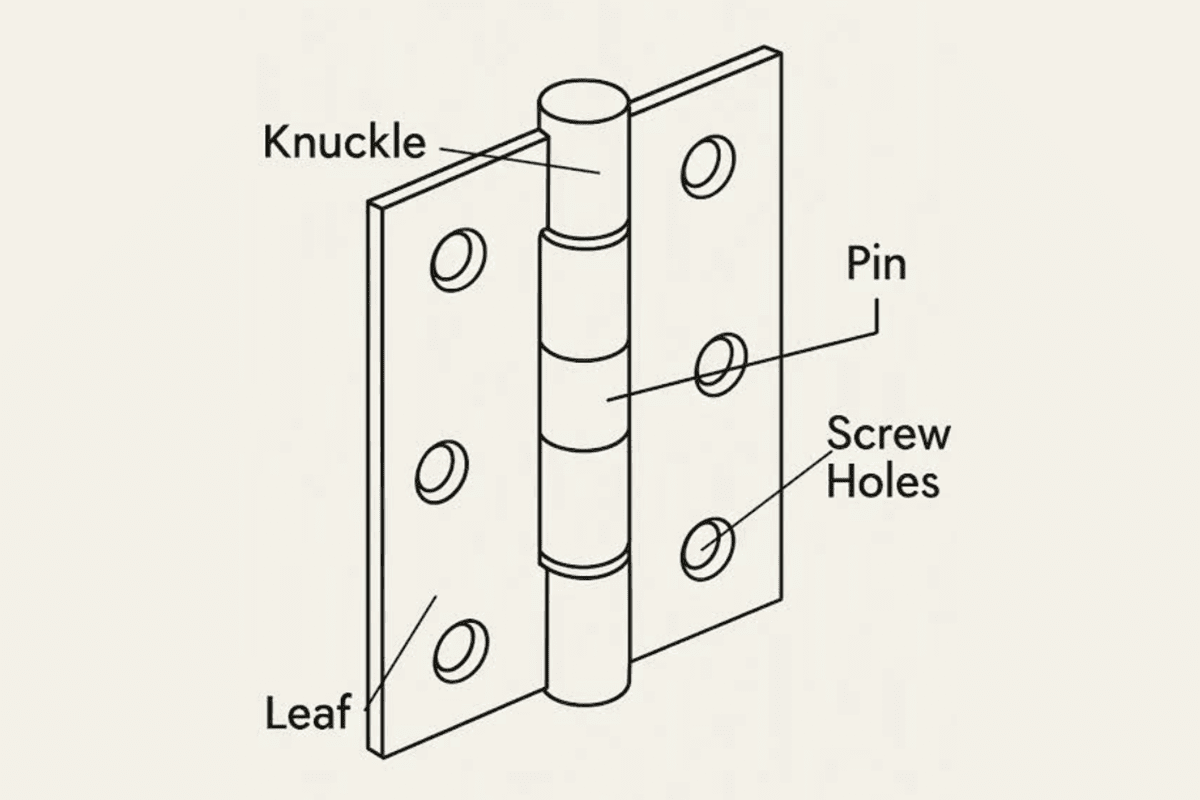
The bearing count is only one part of the product. A good 2BB hinge also needs strong production control. I usually look at:
Consistent leaf thickness
The hinge leaf should match the confirmed drawing and tolerance.Accurate knuckle forming
Poor knuckle alignment can cause rough movement even with bearings.Stable pin quality
The pin must fit properly and support smooth rotation.Reliable bearing placement
Bearings should be assembled correctly and consistently.Surface treatment control
Finishes such as satin stainless steel, polished stainless steel, PVD, powder coating, or electroplating should match the market requirement.Packaging protection
Hinges can be damaged during bulk shipping if packaging is weak.
Common sizes and project matching
Commercial hinge sizes vary by market, but buyers often discuss sizes such as:
- 4" × 3"
- 4" × 4"
- 4.5" × 4"
- 5" × 4"
- Custom sizes for project doors
The correct size depends on the door height, width, thickness, weight, and frame construction.8 Buyers should not select a 2BB hinge only by looking at a catalog photo. They should request a technical drawing and confirm the screw hole pattern, leaf thickness, radius or square corner, pin type, and finish.
For large B2B orders, I also suggest sample approval before mass production. A small sample check can prevent a large batch problem later.
Are 4BB hinges better in ball bearing hinges vs plain bearing hinges decisions?
Some buyers assume 4BB hinges must be better because they have more bearings. That assumption is too simple. A 4BB hinge may be the right choice for certain product lines, but it should be selected because the specification requires it, not because the bearing count looks stronger.
4BB hinges can suit selected commercial door requirements, especially where the buyer wants a higher-spec hinge design or a specific product positioning. However, in ball bearing hinges vs plain bearing hinges decisions, 4BB should not be treated as automatically superior to a well-designed 2BB hinge.
When 4BB can be a good choice
I see 4BB hinges as a valid option, not as a universal upgrade. They may be suitable when the project or product strategy calls for a stronger premium message, smoother operating feel, or a specific technical requirement.
Possible 4BB use cases include:
- Higher-positioned commercial hardware lines
- Doors with stricter buyer specifications
- Projects where the tender document calls for 4BB
- Hardware brands that want a premium hinge family
- Applications where sample testing confirms the benefit
- Markets where 4BB is expected as a sales feature
In these cases, the 4BB structure can support the buyer’s product positioning. However, the buyer should still check the complete hinge design.
What 4BB does not prove by itself
A 4BB label does not automatically prove:9
- Higher load capacity
- Longer service life
- Better fire performance
- Better corrosion resistance
- Better installation result
- Better value for money
Those results depend on the full product configuration and verified test data. For example, a 4BB hinge made with poor materials or loose tolerances may perform worse than a carefully manufactured 2BB hinge.
How to evaluate 4BB hinges properly
When a buyer asks me about 4BB hinges, I suggest the following checklist:
| Question | Why the answer matters |
|---|---|
| Is 4BB required by the project specification? | If yes, compliance may be more important than cost |
| Is the door heavy or high-frequency? | The hinge should be evaluated against real use conditions |
| Are test documents available? | Certifications and reports should be verified |
| Does the price fit the product line? | A premium hinge may not fit an economy door set |
| Is the finish consistent? | Premium products need premium appearance control |
| Is the supplier stable? | Batch consistency matters more than one good sample |
The risk of overselling 4BB
Overselling 4BB can create two problems. First, the buyer may pay more without gaining a meaningful benefit. Second, the sales team may make claims that are difficult to support with documents.
For B2B buyers, this is risky. If a hardware brand tells its customer that a 4BB hinge is always stronger or always more durable, the claim may be challenged later. I prefer more careful language:
- “This 4BB hinge is designed for this specification.”
- “This model has test documents for buyer review.”
- “This configuration may suit higher-frequency doors.”
- “The final selection should match the door weight, closer, and project standard.”
4BB vs 2BB: the practical procurement view
From a procurement perspective, 4BB may be the right choice when the buyer can justify the extra cost. That justification may come from tender requirements, premium branding, specific test data, or customer expectations.
However, for many standard commercial doors, 2BB remains a very practical middle choice. It often gives smoother movement than plain bearing hinges while keeping cost and sourcing risk under control. That is why I usually recommend that buyers compare 2BB and 4BB with samples, drawings, and documents rather than relying on bearing count alone.
How should buyers evaluate suppliers in a ball bearing hinges vs plain bearing hinges purchase?
Choosing the hinge type is only half of the decision. The supplier behind the hinge matters just as much. A good design can still fail commercially if the factory cannot control materials, tolerances, finish consistency, packaging, or delivery communication.
Buyers should evaluate suppliers by checking manufacturing capability, quality control, technical drawings, sample consistency, certification documents, customization support, and inspection process. In ball bearing hinges vs plain bearing hinges sourcing, the right factory should explain trade-offs clearly instead of pushing only the most expensive option.
What I believe a serious hinge supplier should provide
As a manufacturer, I believe a commercial hinge supplier should do more than quote a price. The supplier should help the buyer reduce project risk. This is especially important for door manufacturers, hardware brands, importers, and wholesalers who sell into competitive markets.
A capable supplier should provide:
- Product drawings after order confirmation
- Material and thickness options
- Surface treatment options
- Packaging design support
- Logo stamping or laser marking
- Sample approval process
- Finished product inspection
- Clear production communication
- Relevant certificates for buyer verification
At SDH Hardware, we produce architectural door hardware directly in our own factory. Our main hinge range includes plain bearing hinges, 2BB ball bearing hinges, and 4BB ball bearing hinges, along with other door hardware such as mortise locks, lever handles, cylinders, concealed hinges, and door accessories.
Quality control points buyers should verify
Commercial hinge quality depends on small details. I recommend that buyers inspect these points before placing a large order:
| QC point | What to check |
|---|---|
| Raw material | Grade, thickness, flatness, and supplier consistency |
| Stamping or forming | Burrs, deformation, and dimensional accuracy |
| Knuckle alignment | Smooth rotation and correct pin fit |
| Bearing assembly | Correct quantity, placement, and movement |
| Screw holes | Position, countersink quality, and market compatibility |
| Surface finish | Color consistency, scratches, corrosion resistance expectation |
| Packaging | Protection during sea freight and warehouse handling |
| Final inspection | Random inspection records and buyer-approved standards |
Certification and document review
Many commercial projects require CE documents, fire-rated certification, or test reports.10 Buyers should verify these documents carefully. I suggest checking:
- The exact product model covered by the report
- The test standard referenced
- The certificate validity and issuing body
- The door type or assembly conditions
- Whether the hinge supplied matches the tested configuration
This point is important because a certificate is not just a marketing image. It is a document that should match the actual product and application.11 For fire-rated doors, buyers should also consult qualified professionals or project authorities because the complete door assembly matters, not only the hinge12.
Factory-direct sourcing advantages
Factory-direct sourcing can help B2B buyers control both cost and customization. For example, buyers may need:
- Different hinge sizes
- Different leaf thicknesses
- Square or radius corners
- Removable or fixed pins
- Custom screw packs
- Satin stainless steel or polished finish
- Branded packaging
- Private logo marking
- OEM or ODM product development
Because SDH Hardware operates independent production lines, we can support standardized and customized hinge projects. We also support one-stop sourcing for broader door hardware packages. This can help buyers reduce supplier coordination work, especially when they need hinges, locks, handles, cylinders, and accessories in one commercial series.
The sample approval step
I strongly recommend sample approval before mass production. The sample should not only look good in a photo. The buyer should physically check:
- Opening smoothness
- Surface finish
- Leaf thickness
- Screw hole fit
- Pin tightness
- Packaging quality
- Logo position
- Match with the door and frame
For large orders, buyers can also request pre-shipment inspection. This does not replace factory quality control, but it adds another layer of risk reduction.
Frequently Asked Questions
Are ball bearing hinges always better than plain bearing hinges?
No. Ball bearing hinges usually offer smoother operation, but they are not automatically better for every door. Plain bearing hinges can be suitable for cost-sensitive or lower-frequency commercial doors. The best choice depends on door weight, opening frequency, budget, and project requirements.
Is a 4BB hinge always stronger than a 2BB hinge?
No. A 4BB hinge has more bearing points, but strength depends on the full hinge design, material, thickness, pin, manufacturing accuracy, and verified test data. A well-made 2BB hinge may be more practical than a 4BB hinge in many standard commercial applications.
When should I choose a 2BB ball bearing hinge?
You should consider a 2BB hinge when you need smoother operation than a plain bearing hinge but still need cost control. It is often a good option for standard commercial doors where user experience, purchase price, and after-sales risk must stay balanced.
What documents should I request when buying commercial door hinges?
You should request technical drawings, material specifications, finish details, inspection standards, and any applicable CE or fire-rated documents. You should verify that certificates match the exact hinge model and intended door application, especially for regulated commercial or fire-rated projects.
How many hinges does a commercial door need?
Many commercial doors use three hinges, but the correct number depends on the door height, width, weight, material, closer use, and project standard. Buyers should follow the door manufacturer’s specification, applicable standards, and qualified professional guidance for final selection.
Conclusion
Ball bearing hinges vs plain bearing hinges should not be reduced to a simple “more bearings is better” decision. I prefer to compare plain bearing, 2BB, and 4BB hinges based on door use, smoothness, cost, documentation, and project risk. For many standard commercial door applications, 2BB ball bearing hinges offer the most practical balance, while plain bearing and 4BB hinges each have clear best-fit cases. If you are sourcing commercial door hinges, SDH Hardware can help you evaluate specifications, samples, customization, and factory-direct supply options for your market.
"SECTION 087111 - DOOR HARDWARE (SCHEDULED BY ...", https://fpm.usc.edu/wp-content/uploads/2021/11/087102-USC-HSC-door-hardware-Guide-Specification_1.pdf. Industry guidance on commercial door hardware selection describes hinges as load-bearing components whose sizing, type, and installation affect door operation and maintenance, supporting the article’s claim that poor hinge selection can create operational and service issues; the evidence is contextual rather than a quantified complaint study. Evidence role: general_support; source type: institution. Supports: A neutral industry source should support that hinge selection affects door operation, serviceability, and maintenance outcomes.. Scope note: Contextual support; the source is likely to discuss performance and maintenance implications, not after-sales complaints as a measured outcome. ↩
"A156.1 - 2025 Butts and Hinges", https://buildershardware.com/ANSI-BHMA-Standards/Hardware-Highlights/A1561-2025-Butts-and-Hinges. ANSI/BHMA A156.1 and EN 1935 classify hinges by tested performance characteristics such as durability, mass, corrosion resistance, and fire-door suitability, supporting the point that the appropriate hinge is not determined by bearing count alone; these standards do not directly rank all 2BB and 4BB commercial products. Evidence role: expert_consensus; source type: institution. Supports: A hinge standard should show that hinge performance is classified by tested attributes such as grade, load, durability, corrosion, and fire suitability rather than bearing count alone.. Scope note: Contextual support; standards define performance criteria but do not prove that any specific 2BB model outperforms any specific 4BB model. ↩
"How to Choose a Commercial Door Hinge | McKinney", https://www.mckinneyhinge.com/content/mckinney/us/en/resource-library/knowledge-center/blog/blog-post.aehdynamic-how-to-choose-a-commercial-door-hinge-633c8974d5c7b1003db5d8e9_mckinney.html. Door-hardware guidance commonly distinguishes plain-bearing hinges from ball-bearing hinges and associates plain-bearing designs with lighter-duty or lower-frequency use, supporting their suitability for basic applications; such guidance usually provides contextual product-selection support rather than independent cost data. Evidence role: general_support; source type: institution. Supports: A neutral hardware guide should distinguish plain-bearing hinges from ball-bearing hinges and indicate their suitability for lighter-duty or lower-frequency applications.. Scope note: Contextual support; external sources may support appropriate use cases more directly than the article’s cost-effectiveness claim. ↩
"The Ultimate Guide to Ball Bearing Commercial Door Hinges", https://doorhub.com/blog/the-ultimate-guide-to-ball-bearing-commercial-door-hinges?srsltid=AU7gw4U2oc0rWyKFYvUVrfkD66_zqOLJdkbPaxrM3JcfgcZPh1A7Hbjv. Commercial door-hardware guidance identifies ball-bearing hinges as suitable where smoother operation and more frequent cycling are expected, supporting the article’s view that 2BB hinges can occupy a practical middle position; the source does not establish a universal best-value ranking across suppliers or markets. Evidence role: general_support; source type: institution. Supports: A source should support that ball-bearing hinges are commonly specified where smoother operation or more frequent use is expected, while cost-benefit language remains procurement-contextual.. Scope note: Contextual support; the source can support the smooth-operation rationale but not universal pricing or value superiority. ↩
"Understanding BS EN 1935:2002 single-axis hinge grades", https://uk.sfs.com/resources/article/understanding-bs-en-1935. EN 1935 and ANSI/BHMA A156.1 evaluate hinges through multiple characteristics, including load-related classification, durability cycling, corrosion resistance, and product construction, supporting the article’s multi-factor approach to hinge performance; the standards may not mention every listed manufacturing variable in the same terminology. Evidence role: expert_consensus; source type: institution. Supports: A hinge standard or institutional guide should support that hinge performance is evaluated through multiple construction, load, durability, and installation-related criteria.. Scope note: Contextual support; standards validate the multi-factor concept but may not directly address each listed item such as packaging or screw-hole pattern. ↩
"Precision Machine Design", https://web.mit.edu/2.70/Lecture%20Materials/Documents/Week%2004/PMD%20Topic%2015%20Rolling%20rotary.pdf. Educational tribology references explain that rolling-element bearings reduce friction by substituting rolling contact for sliding contact, supporting the claim that ball-bearing hinges can provide lower-friction movement than plain-bearing hinges; this mechanism does not quantify the friction difference for a particular hinge model. Evidence role: mechanism; source type: education. Supports: A technical or educational source should explain that ball bearings reduce friction by replacing sliding contact with rolling contact.. Scope note: Direct mechanism support; product-specific friction depends on hinge geometry, lubrication, materials, and manufacturing quality. ↩
"Understanding BS EN 1935:2002 single-axis hinge grades", https://uk.sfs.com/resources/article/understanding-bs-en-1935. EN 1935 classifies single-axis hinges in part by test-door mass, and institutional hinge-selection guidance similarly treats door weight as a key selection variable, supporting the claim that heavier doors impose greater demands on hinges; the standard classifies products rather than calculating stress for every installation. Evidence role: mechanism; source type: institution. Supports: A hinge standard or institutional guide should support that door mass is a recognized criterion in hinge classification or selection.. Scope note: Contextual technical support; the source supports weight as a selection factor but not the exact stress level in a specific door assembly. ↩
"STANDARD STEEL DOORS AND FRAMES", https://www.plu.edu/construction/wp-content/uploads/sites/128/2014/10/div-008.pdf. Institutional door-hardware sizing guidance bases hinge selection on variables such as door height, width, thickness, weight, and frame or door construction, supporting the article’s sizing criteria; such guidance may provide typical rules rather than a universal calculation for every commercial project. Evidence role: general_support; source type: institution. Supports: A door-hardware selection guide should support that hinge dimensions and quantity depend on door size, thickness, weight, and frame conditions.. Scope note: Contextual support; final sizing may still depend on the applicable standard, manufacturer’s tested assembly, and project specification. ↩
"A156.1 - 2025 Butts and Hinges", https://buildershardware.com/ANSI-BHMA-Standards/Hardware-Highlights/A1561-2025-Butts-and-Hinges. Hinge standards such as ANSI/BHMA A156.1 and EN 1935 assign performance classifications through defined tests and product requirements, supporting the claim that a 4BB label alone does not prove strength, durability, fire suitability, corrosion resistance, or installed performance; the standards do not evaluate marketing labels as such. Evidence role: expert_consensus; source type: institution. Supports: A standard should show that hinge performance attributes are established by specified tests and classifications, not by a bearing-count label alone.. Scope note: Contextual support; the source supports the need for tested classifications but does not specifically test the phrase “4BB label.” ↩
"Standard: EN 1935: Building hardware - Single-axis hinges", https://www.intertek.com/building/standards/en-1935/. European construction-product rules and harmonized hardware standards require conformity documentation for covered products, while fire-door regulations and standards commonly require evidence that hardware is suitable for the rated assembly, supporting the article’s statement about CE documents, fire-rated certification, and test reports; requirements vary by jurisdiction and product scope. Evidence role: historical_context; source type: government. Supports: A regulatory or standards source should support that construction products and fire-door hardware may require conformity documentation, CE marking, or test evidence in relevant markets.. Scope note: Contextual support; CE requirements apply in specific regulatory markets and may not cover every hinge or commercial project worldwide. ↩
"BUILDING MATERIALS AND PRODUCTS APPROVAL ...", https://dbs.lacity.gov/sites/default/files/efs/forms/pc17/IB-PBC-2023-119-Alternate-Building-Materials-and-Products-approval_Draft_20240212.pdf. Conformity-assessment standards such as ISO/IEC 17065 treat product certification as scope-bound to specified products and requirements, supporting the article’s point that a certificate should match the actual hinge model and application; this is a general certification principle rather than hinge-specific proof. Evidence role: expert_consensus; source type: institution. Supports: A conformity-assessment or certification source should support that certificates have a defined scope and must correspond to the product and conditions being supplied.. Scope note: Contextual support; ISO/IEC 17065 explains certification scope generally and does not provide hinge-selection instructions. ↩
"Bldg #7 Install Fire-rated Door Assembly", https://legacy.sba.gov/opportunity/bldg-7-install-fire-rated-door-assembly. NFPA 80 addresses fire doors as assemblies and includes requirements for installed hardware and inspection of the complete opening, supporting the claim that fire-rated performance depends on the door assembly rather than the hinge alone; the standard does not determine suitability for a particular proprietary hinge without the relevant listing or test evidence. Evidence role: expert_consensus; source type: institution. Supports: A fire-door standard should support that fire doors are regulated and maintained as assemblies with listed or approved components, including hardware.. Scope note: Direct fire-safety context; project-specific compliance depends on the listed assembly, local code adoption, and authority having jurisdiction. ↩