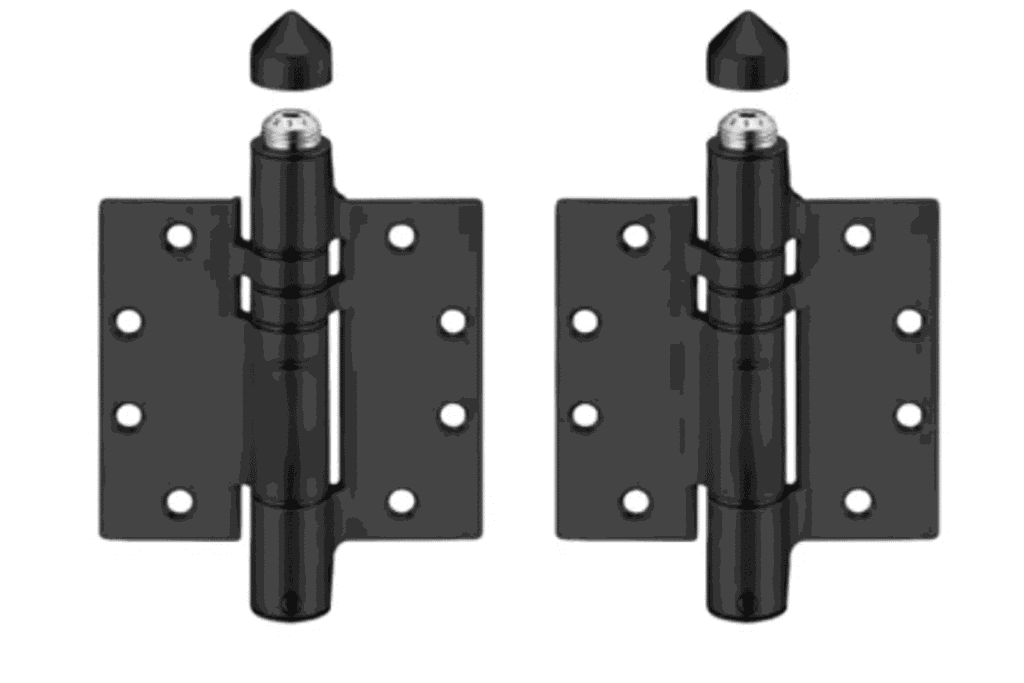
Only the Strongest Weld-On Hinges for Commercial and Industrial Gates?
Weld-on hinges look simple, but I have seen buyers lose time and money when a gate hinge is chosen only by size or a rough load number. A weak match can lead to sagging, deformation, rework, and complaints. The better solution is to evaluate hinge structure, welding contact, material consistency, and real gate conditions together.
The strongest weld-on hinges for commercial and industrial gates are the ones that match the gate’s weight, width, usage frequency, environment, and fabrication method. In many steel gate projects, a weld-on barrel hinge with a water-drop lip or tab can support stronger, easier fillet welding without requiring a pre-cut slot, but final performance still depends on material, design, welding quality, and installation conditions.
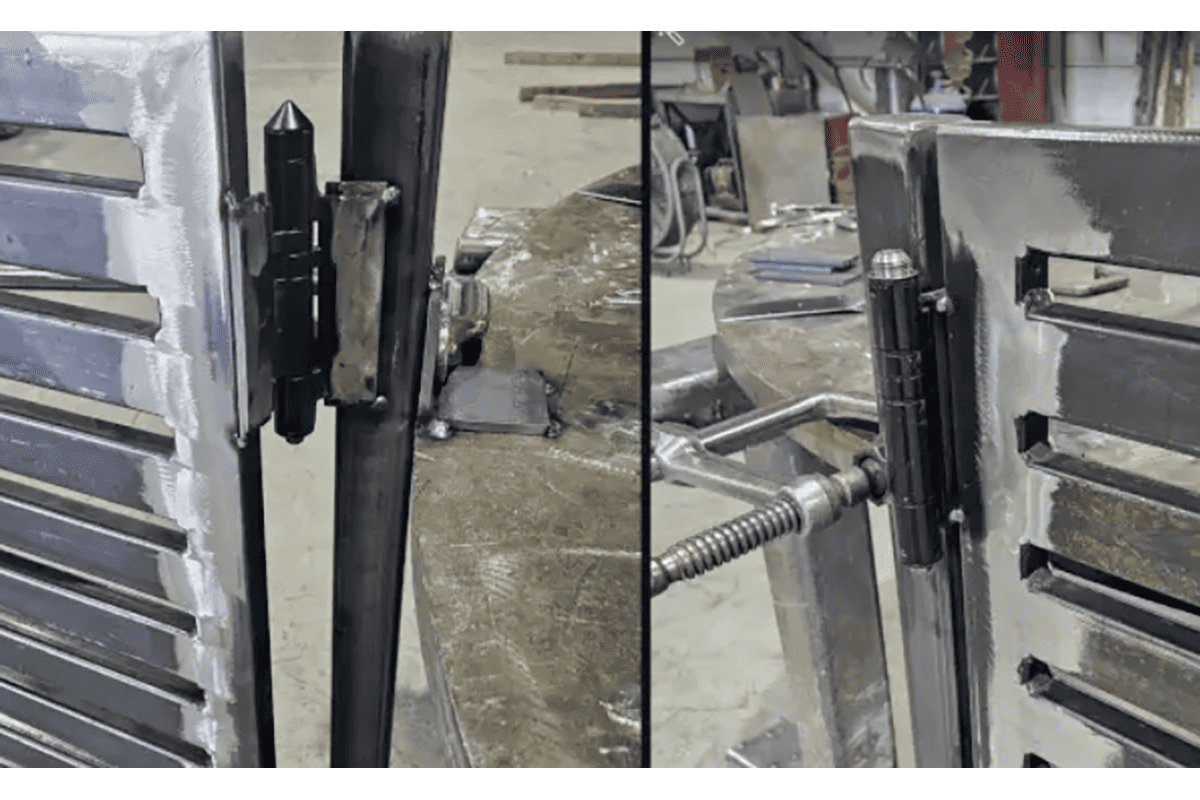
I write from a factory-side view, not as a field installer. At SDH Hardware, I focus on how heavy-duty door and gate hardware is produced, checked, packed, and shipped in stable batches. That perspective helps me explain what buyers should inspect before they call any hinge “the strongest.”
What Makes Weld-On Hinges Strong Enough for Industrial Gates?
Industrial gate buyers often ask for the “strongest” hinge, but I think that question can be too narrow. If I only look at hinge thickness or a catalog load rating, I may miss the real causes of failure: long gate leaves, poor weld contact, high cycle use, corrosion, or inconsistent production.
The strength of weld-on hinges depends on the complete application. Buyers should evaluate gate weight, gate width, hinge spacing, opening frequency, wind load, steel frame design, welding method, pin strength, sleeve quality, material grade, surface treatment, and safety margin before approving a hinge for commercial or industrial use.
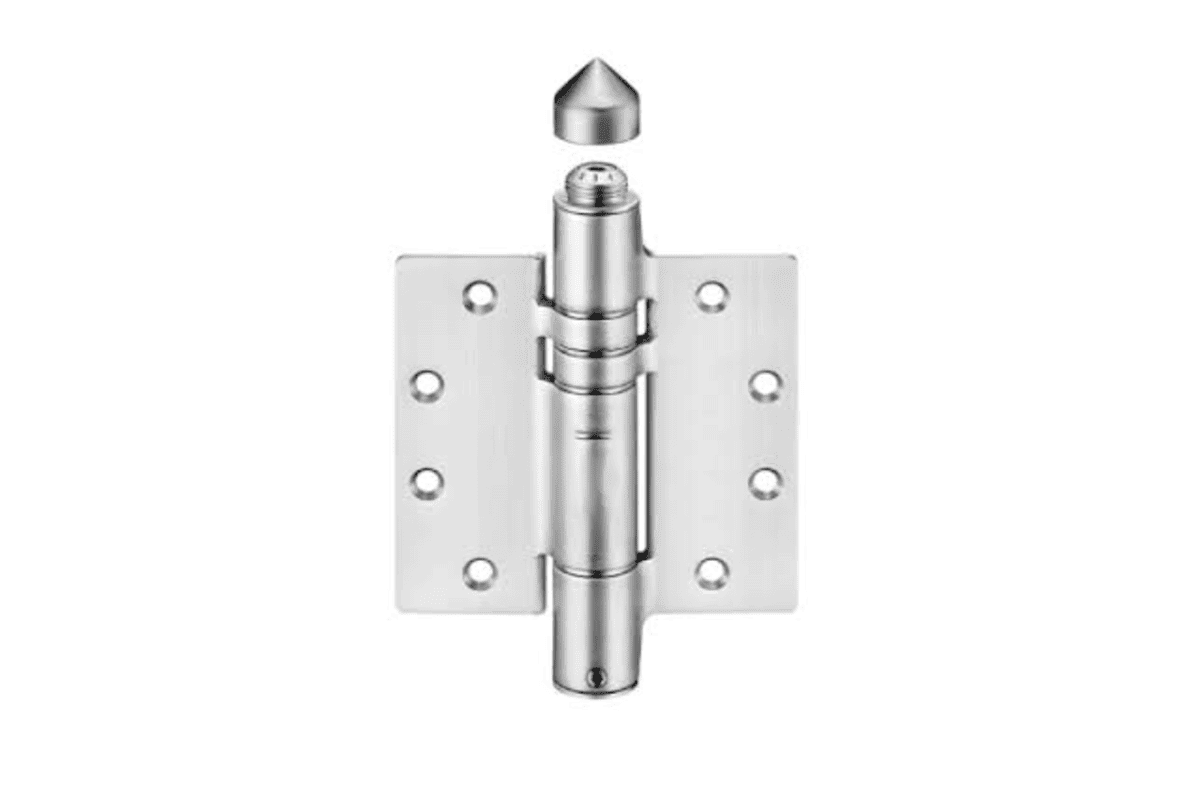
Strength Is Not One Number
I always remind buyers that a hinge does not work alone. A hinge carries load through a system:1
- Gate frame
- Gate post
- Weld bead
- Hinge sleeve
- Hinge pin or core
- Bearing or washer structure
- Surface protection
- Installation alignment
A hinge with a high theoretical load value can still fail if the weld is short, the post is weak, or the gate is too wide for the hinge spacing. A lighter-rated hinge can sometimes perform well when the gate design is balanced and the fabrication is correct. This is why I treat “strongest” as an engineering-fit question, not a marketing phrase.
Main Factors Buyers Should Check
| Evaluation Factor | Why It Matters | Procurement Risk If Ignored |
|---|---|---|
| Gate weight | Determines static load on hinges | Sagging, pin wear, hinge deformation |
| Gate width | Increases leverage and twisting force | Weld cracking, post bending |
| [Opening frequency | Affects fatigue and wear](https://hammer.purdue.edu/articles/A_SYSTEMATIC_METHODOLOGY_FOR_FATIGUE_ANALYSIS_OF_MACHINE_ELEMENTS_WITH_CHARACTERIZED_DYNAMIC_LOADS/7774661/files/14485694.pdf)%%%FOOTNOTE_REF_2%%% | Loose rotation, noise, premature failure |
| [Wind exposure | Adds side force on large gates](https://www.fema.gov/sites/default/files/2020-07/2018-ibc-compliation-wind-resistant-provisions.pdf)%%%FOOTNOTE_REF_3%%% | Sudden stress, frame distortion |
| Environment | Impacts corrosion and service life | Rust, seizure, customer complaints |
| Welding method | Controls attachment strength | Weak connection, rework on site |
| Batch consistency | Matters for OEM and wholesale supply | Mixed quality, delayed projects |
Why Gate Width Can Matter as Much as Weight
I often see buyers focus heavily on the gate’s weight. That is reasonable, but gate width also matters because it increases leverage4. A wide gate creates more bending moment at the hinge line. A 200 kg narrow gate and a 200 kg wide gate do not stress the hinge system in the same way.
For example, a large industrial swing gate exposed to wind may need more than a “heavy-duty” label. It may need:
- A larger hinge diameter
- A stronger pin or core
- A shaped weld-on structure
- Better hinge spacing
- A reinforced post
- Qualified welding and alignment
Factory-Side Quality Checks I Care About
From my side, I look at repeatable production details. These details are less dramatic than a load test video, but they matter in bulk orders.
I usually pay attention to:
- Pin diameter tolerance
- Sleeve roundness
- Weld-on tab geometry
- Body thickness consistency
- Rotation smoothness
- Surface finish adhesion
- Packaging protection
- Batch inspection reports
For door factories, hardware brands, and wholesalers, one excellent sample is not enough. The real question is whether the supplier can make the same hinge again and again. That is where factory-side process control becomes important.
Why Do Water-Drop Weld-On Hinges Simplify Fabrication?
Some hinge designs look strong on paper but slow down fabrication in the workshop. If the fabricator must cut slots, adjust poor contact surfaces, or correct unstable alignment, the total production risk increases. I like water-drop weld-on hinge structures because their shaped lip can make welding more practical on steel gate surfaces.
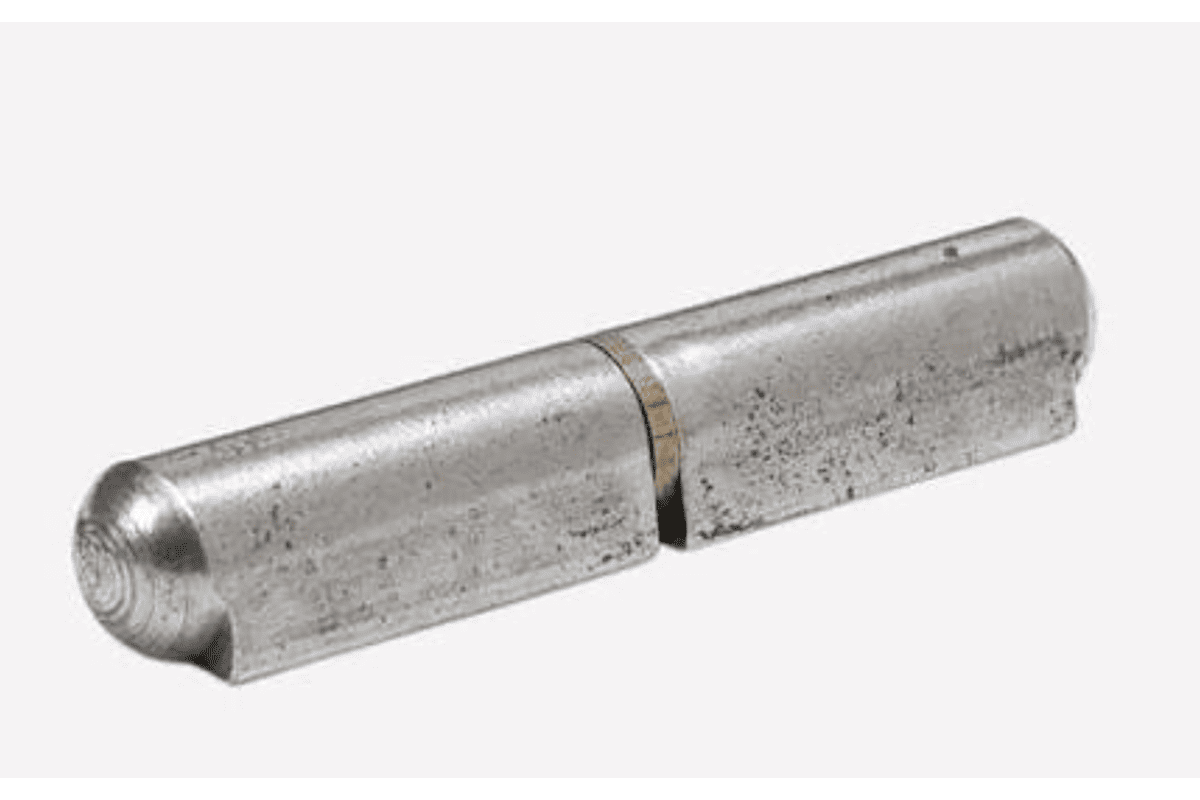
Water-drop weld-on hinges use a front protruding point, lip, or tab that contacts the steel plate directly. This shaped area can be fillet-welded to the gate or post surface without cutting a pre-slot. The design can improve weld access, contact stability, and fabrication speed when matched correctly to the gate structure.
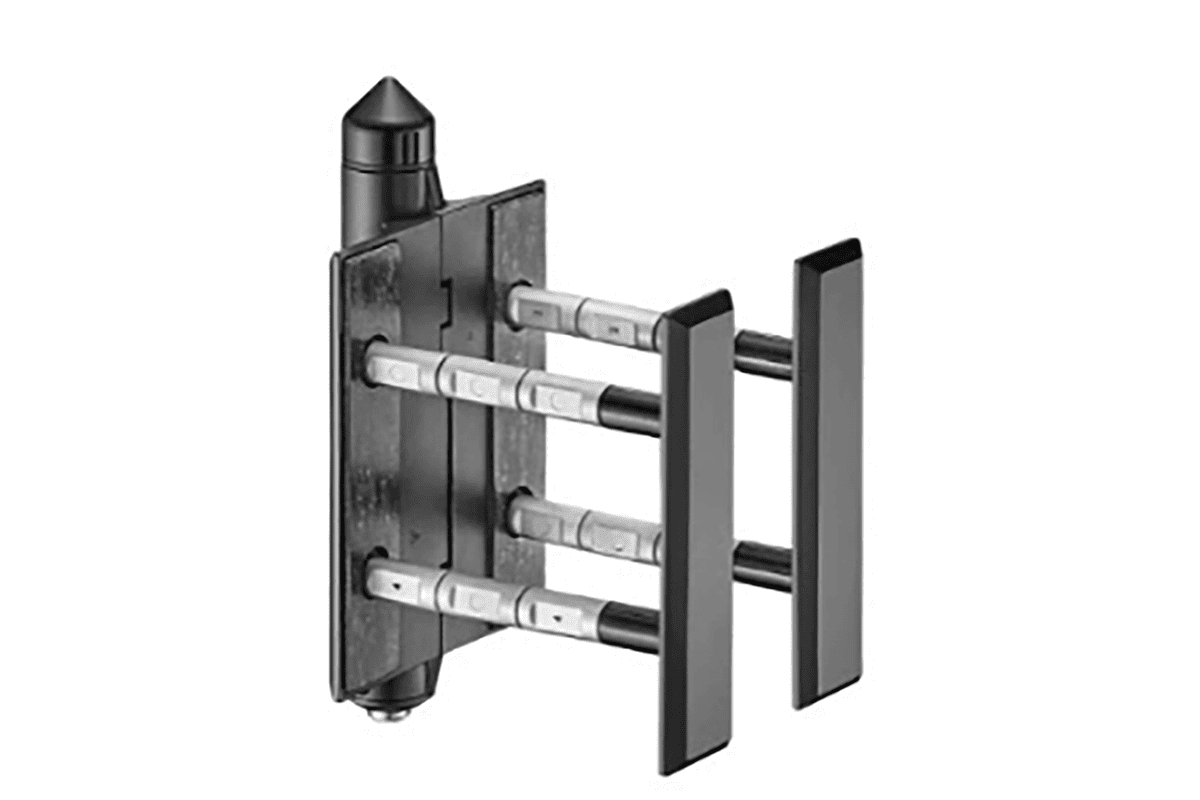
What Is a Water-Drop Weld-On Hinge?
In simple terms, a water-drop weld-on hinge is usually a barrel-style hinge with a shaped welding lip or protruding tab. When viewed from the side, the hinge body may have a form that resembles a drop or a rounded body with a pointed welding contact.
That front point or tab is not just decorative. It gives the fabricator a defined area to position against the steel plate. Then the fabricator can make a fillet weld along the contact area. This can reduce the need for slotting the gate frame before welding.5
I do not treat this design as a magic solution. I treat it as a practical fabrication feature that can support better attachment when the material, welding, and gate design are also suitable.
Why Direct Fillet Welding Can Help
Direct fillet welding can be useful for commercial and industrial gate workshops because it can simplify several steps.
A water-drop lip design may help with:
- Surface contact: The tab can sit against the steel plate more predictably.6
- Weld access: The weld area is visible and reachable.
- Alignment: The hinge can be positioned without hidden slot fitting.
- Production speed: Fabricators may reduce cutting and fitting time.
- Batch repeatability: Standardized hinge geometry can support repeatable assembly.
Water-Drop Lip vs. Flat Hinge Contact
| Feature | Water-Drop Weld-On Hinge | Flat or Poorly Supported Weld Area |
|---|---|---|
| Welding contact | Defined lip or tab | May depend on installer adjustment |
| Slot requirement | Often no pre-cut slot needed | May require cutting or extra fitting |
| Alignment support | Easier visual positioning | Can shift during welding |
| Fabrication speed | Can be faster in batch production | May need more preparation |
| Strength dependency | Still depends on weld and material | Still depends on weld and material |
Where This Design Fits Best
I usually see this structure as suitable for steel gate fabrication where the buyer wants a practical balance between strength and workshop efficiency. It can be especially relevant for:
- Commercial entrance gates
- Industrial swing gates
- Steel fence gates
- Warehouse gates
- Utility area gates
- Fabricated metal doors
- Heavy-duty service openings
However, I would not say that water-drop weld-on hinges are always the strongest choice for every gate. A very large gate, a high-security gate, or a special industrial environment may need a custom hinge calculation, special bearing structure, or professional engineering review.
Questions I Ask Before Recommending This Structure
When a buyer asks me whether this hinge type is suitable, I usually ask:
- What is the approximate gate weight?
- What is the gate leaf width and height?
- How many hinges will be used per gate?
- What is the gate frame material and thickness?
- Is the gate installed indoors, outdoors, coastal, or industrial?
- How often will the gate open each day?
- What surface treatment is required?
- What welding method will the fabricator use?
- Does the project require testing documents or certification documents?
These questions help avoid a common mistake: choosing only by appearance. A strong-looking hinge is not enough. The hinge must fit the actual gate system.
How Should Buyers Evaluate Weld-On Hinges Before Bulk Orders?
Bulk buyers face a different risk from one-time installers. A single hinge failure is bad, but inconsistent batches can damage a brand, delay a project, and create warranty costs across multiple customers. I believe buyers should evaluate weld-on hinges through samples, drawings, inspection points, and supplier process control before placing volume orders.
Buyers should evaluate weld-on hinges by checking material grade, pin diameter, sleeve thickness, weld-on lip geometry, rotation smoothness, surface treatment, dimensional consistency, packaging, and batch inspection procedures. Samples should be tested against real gate conditions, and application-specific decisions should be confirmed by qualified technical professionals when safety risk is high.
Start With the Application Data
Before I discuss price, I prefer to confirm the gate application. This saves time for both sides. A hardware wholesaler may only know the market segment, while a gate manufacturer may know the exact drawing. Both cases are workable, but the level of recommendation changes.
I suggest preparing:
- Gate weight range
- Gate width range
- Number of hinges per leaf
- Post and frame material
- Indoor or outdoor use
- Expected daily cycles
- Surface finish requirement
- Regional market standard
- Packaging and branding needs
This information helps a supplier recommend a hinge family rather than a random item from a catalog.
Check the Physical Structure
For heavy-duty commercial and industrial gates, I pay close attention to the structure around the pin and sleeve. This area carries movement and load over time.
Important physical checks include:
- Pin/core strength: The pin should match the load and rotation demand.
- Sleeve wall thickness: Thin or inconsistent sleeves can deform.
- Clearance control: Too much looseness can create sag and noise.
- Weld-on lip shape: The tab should support stable contact and welding.
- End cap or washer design: These details can affect rotation and wear.
- Body straightness: Misalignment can create binding during movement.
Inspect Surface Treatment for the Real Environment
Surface finish is not only about appearance. Outdoor gates face rain, dust, humidity, and sometimes salt air.7 Industrial sites may expose hinges to chemicals or abrasive particles.
Common options may include:
| Surface Treatment | Typical Use | Buyer Notes |
|---|---|---|
| Plain steel / oil protection | Short-term storage or immediate fabrication | Needs final coating after welding |
| Zinc plating | General corrosion resistance | Welding may damage local coating8 |
| Black finish | Aesthetic or market preference | Confirm corrosion performance |
| [Hot-dip galvanizing | Outdoor and more corrosive use](https://www.waru.edu/artifact/how-zinc-metal-coatings-including-hot-dip-galvanizing-can-protect-and-extend-life-and)%%%FOOTNOTE_REF_9%%% | Check tolerance impact and finish expectations |
| Powder coating | Finished gate systems | Usually applied after welding |
I recommend that buyers confirm the full fabrication sequence. If the hinge is welded after plating, the weld area may need repair coating. If the whole gate is coated after welding, the hinge material and rotation clearance should still allow smooth movement after finishing.
Sample Approval Is Not Enough Without Batch Control
A beautiful sample can be made carefully. A bulk order tests the supplier’s real production discipline. At SDH Hardware, I see this issue often across many hardware categories. Buyers should ask not only, “Can you make this?” but also, “Can you keep making this consistently?”
Useful batch control points include:
- Incoming raw material inspection
- Dimensional checks during production
- Pin and sleeve fitting inspection
- Rotation and noise testing
- Surface treatment inspection
- Final random inspection
- Packing protection review
For OEM or ODM buyers, drawings are also important. I recommend confirming product drawings after order details are agreed. That helps reduce disputes about dimensions, tolerances, hole positions if any, surface finish, and packaging.
Supplier Questions That Reduce Procurement Risk
When I evaluate a supplier, I would ask:
- Can you provide product drawings or specifications?
- What material is used for the body and pin?
- What inspection points are controlled during production?
- Can you keep batch dimensions stable?
- What surface treatments are available?
- Can you support custom packaging or branding?
- Can you provide inspection photos or reports after production?
- Can you support repeat orders with the same specification?
These questions are simple, but they reveal whether the supplier understands B2B supply. For gate manufacturers and wholesalers, stable supply is often as important as a strong individual hinge.
Are the Strongest Weld-On Hinges Always the Thickest Hinges?
It is tempting to choose the thickest hinge in the catalog and call the decision finished. I understand that instinct because thicker hardware feels safer. Still, I have seen cases where oversimplified selection creates unnecessary cost, welding difficulty, or poor fit with the gate frame.
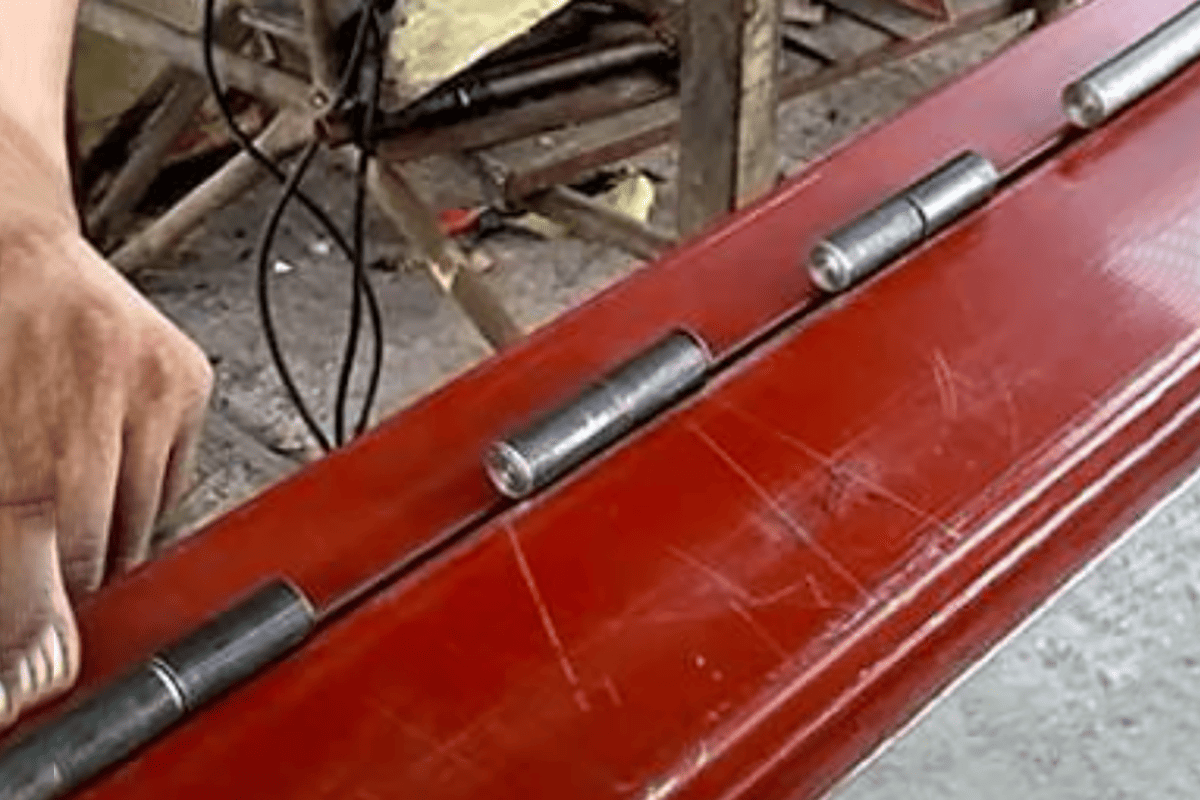
The strongest weld-on hinges are not always the thickest hinges. Proper strength comes from a balanced design that matches hinge diameter, pin strength, sleeve structure, weld-on contact area, material quality, gate geometry, welding quality, corrosion resistance, and safety margin. Overbuilding one feature does not solve weaknesses elsewhere in the system.
Thickness Helps, But It Has Limits
A thicker hinge body can improve strength in many situations. It may resist deformation better and provide more material around the pin. However, thickness alone does not answer all key questions.
For example:
- A thick sleeve with a weak pin can still fail.10
- A strong hinge with poor weld contact can detach.
- A large hinge on a thin gate frame can overload the frame.
- A heavy hinge with poor clearance can bind after coating.
- A plated hinge can corrode at the weld zone if not repaired.
This is why I prefer a balanced specification.
Balanced Hinge Design Checklist
| Design Area | What I Look For | Why It Matters |
|---|---|---|
| Body size | Suitable diameter and length | Supports load distribution |
| Pin/core | Strong and consistent | Resists bending and wear |
| Sleeve | Proper wall thickness and roundness | Maintains rotation |
| Lip/tab | Stable contact for welding | Supports attachment |
| Clearance | Controlled movement | Prevents binding or looseness |
| Finish | Suitable for environment | Reduces corrosion risk |
| Packaging | Prevents transport damage | Protects batch quality |
The Role of Safety Margin
A safety margin is not just an engineering concept. It is also a procurement protection tool. Commercial and industrial gates may face misuse, wind, vibration, dust, and irregular maintenance. A hinge selected at the very edge of its capacity may pass at first but fail earlier than expected.11
I prefer to leave room for real-world variation. That may mean using:
- More hinges per gate leaf
- A stronger hinge series
- Better post reinforcement
- A corrosion-resistant finish
- A more suitable welding design
- A professional review for large or risky installations
When Professional Evaluation Is Necessary
Some gate projects should not rely only on supplier catalog guidance. Buyers should seek qualified professional evaluation when the gate is:
- Very large or very heavy
- Installed in a public safety area
- Exposed to strong wind
- Automated with motor operators
- Used in high-cycle industrial sites
- Installed in corrosive coastal or chemical environments
- Part of a regulated project
As a manufacturer, I can explain product structure, quality control, and available specifications. I can also help buyers compare options. But I cannot guarantee field performance without knowing the full gate design, welding method, installation quality, and environment.
How Can Weld-On Hinges Reduce B2B Procurement Risk?
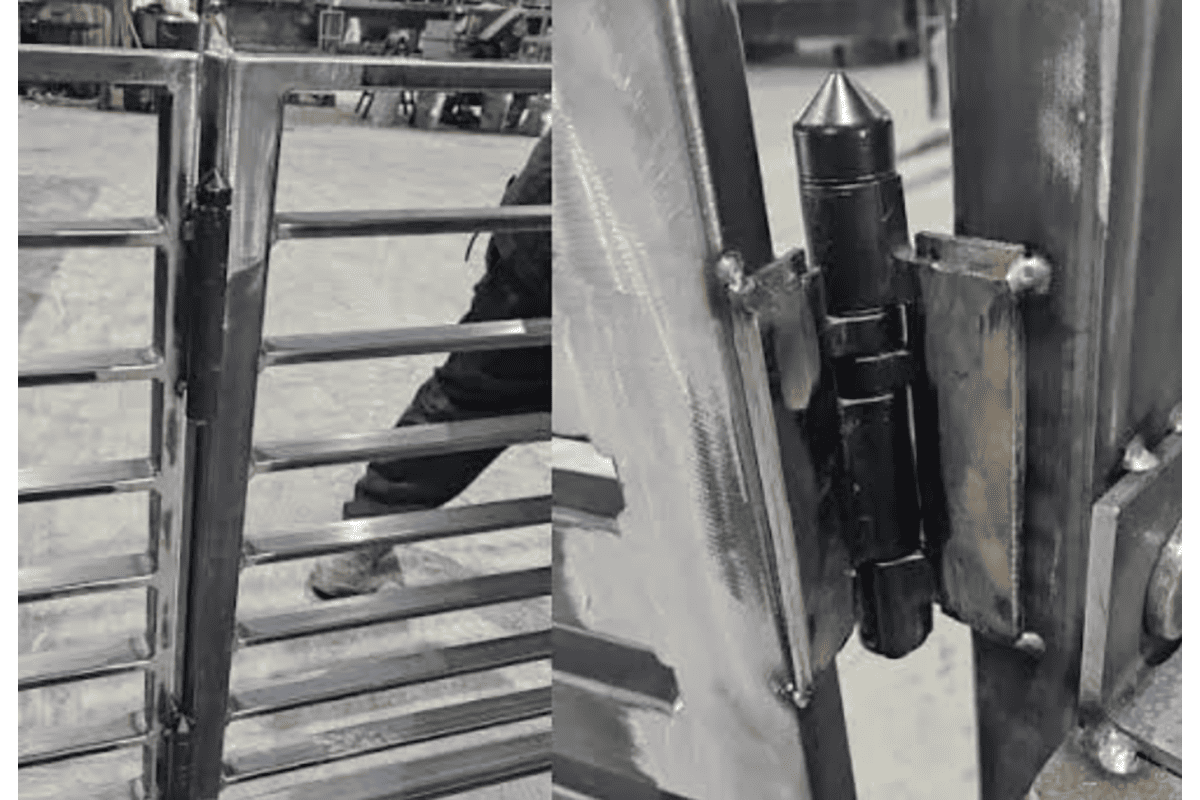
For B2B buyers, hinge failure is rarely just a technical problem. It becomes a delivery problem, a customer service problem, and sometimes a brand reputation problem. I think this is why strong weld-on hinges must be evaluated through both product design and supply reliability.
Weld-on hinges reduce B2B procurement risk when they combine suitable structure, stable materials, consistent dimensions, reliable surface treatment, practical welding design, and repeatable factory quality control. For wholesalers, brand owners, and gate manufacturers, batch consistency can be as important as the strength of a single hinge sample.
Common Failure Costs Buyers Want to Avoid
A low-cost hinge can become expensive if it creates field problems. The visible product cost is only one part of the decision.
Potential costs include:
- Gate sagging repair
- Re-welding labor
- Replacement hinge shipments
- Project delay penalties
- Customer complaints
- Brand damage
- Stock returns
- Extra inspection time
- Lost repeat orders
I have learned that serious buyers often prefer predictable quality over the lowest price. They want fewer surprises after the container arrives.
Why Batch Consistency Matters
For a gate manufacturer, inconsistent hinge dimensions can disrupt production. Workers may need to adjust jigs, grind parts, or rework weld positions. For a wholesaler, inconsistent quality can create complaints from multiple downstream customers.
Batch consistency depends on:12
- Stable raw material sourcing
- Controlled forming or machining
- Repeatable welding-lip geometry
- Pin and sleeve tolerance control
- Standardized surface treatment
- Final inspection before packing
At SDH Hardware, our broader production experience in architectural door hardware has taught me that small dimensional differences can become big production headaches for customers. This applies to mortise locks, lever handles, hinges, cylinders, and heavy-duty weld-on hardware alike.
What I Would Include in a Purchase Specification
A good purchase specification does not need to be complicated. It only needs to be clear.
I would include:
- Product name and hinge type
- Main dimensions
- Material requirement
- Pin diameter
- Sleeve diameter and length
- Water-drop lip or tab design requirement
- Surface finish
- Packaging method
- Logo or branding needs
- Inspection requirements
- Sample approval process
- Required documents, if any
If the project requires CE, fire-rated, or other certification documents for related door hardware, buyers should verify the actual documents and applicable product scope. Certifications should be treated as documents to review, not slogans to accept without checking.
Why Factory-Direct Communication Helps
Factory-direct communication can reduce misunderstanding. A trading chain may still work well, but technical details can be lost when too many people translate the requirement. When I speak directly with a buyer, I can clarify drawings, surface treatment, packaging, and inspection expectations faster.
At SDH Hardware, we support OEM and ODM orders, custom specifications, customer stamping or laser logos, custom color packaging, product drawings after order confirmation, and inspection service after order completion. I mention this only after explaining the selection logic because the right hinge choice should come before the sales offer.
Frequently Asked Questions
What are weld-on hinges used for?
Weld-on hinges are used on steel gates, metal doors, fence panels, industrial enclosures, machinery guards, and fabricated frames. I usually see them chosen when buyers need a strong permanent attachment to steel structures through welding instead of screws or bolts.
Are water-drop weld-on hinges stronger than normal barrel hinges?
Water-drop weld-on hinges can offer better welding contact and easier surface fillet welding than some flat or poorly supported designs. However, I would not say they are always stronger. Final strength depends on material, pin design, sleeve structure, weld quality, gate size, and installation conditions.
How many weld-on hinges should an industrial gate use?
Many commercial and industrial gates use two or three hinges per leaf, but the correct number depends on gate weight, width, frame stiffness, hinge rating, wind exposure, and usage frequency. I recommend checking the gate design and using qualified technical evaluation for heavy or safety-critical gates.
Do weld-on hinges need surface treatment after welding?
In many cases, yes. Welding can damage local plating or protective coating around the weld zone. Buyers should confirm the fabrication sequence and apply suitable repair coating, galvanizing, primer, paint, or other corrosion protection based on the gate environment.
Can I order customized weld-on hinges in bulk?
Yes, customized weld-on hinges can be produced in bulk when the buyer confirms dimensions, material, surface finish, welding structure, packaging, and inspection requirements. At SDH Hardware, I can support OEM and ODM discussions for suitable B2B orders based on drawings or project specifications.
Conclusion
The strongest weld-on hinges for commercial and industrial gates are not defined by thickness alone. I believe buyers should evaluate the full hinge system: gate weight, width, usage frequency, wind exposure, material, pin strength, sleeve quality, water-drop welding lip design, surface treatment, and batch consistency. A well-matched weld-on hinge can reduce fabrication difficulty and procurement risk. If you source gate hardware in bulk, contact SDH Hardware to review your specifications, samples, drawings, and OEM or ODM requirements.
"Support and Connection Types", https://web.mit.edu/4.441/1_lectures/1_lecture13/1_lecture13.html. Structural engineering references on load paths explain that forces are transferred through connected members and joints; this supports treating a welded gate hinge as part of a frame-post-weld-pin system rather than as an isolated component. Evidence role: mechanism; source type: education. Supports: A source should explain that loads in structural assemblies are transferred through connected members and joints, so hinge performance depends on the surrounding frame, post, welds, and pin rather than the hinge body alone.. Scope note: This would support the engineering principle, not prove the performance of any specific weld-on hinge model. ↩
"A SYSTEMATIC METHODOLOGY FOR FATIGUE ...", https://hammer.purdue.edu/articles/A_SYSTEMATIC_METHODOLOGY_FOR_FATIGUE_ANALYSIS_OF_MACHINE_ELEMENTS_WITH_CHARACTERIZED_DYNAMIC_LOADS/7774661/files/14485694.pdf. Fatigue and tribology literature describes how repeated cyclic loading and repeated relative motion promote fatigue damage and wear in mechanical components, supporting the link between hinge operating frequency and service-life risk. Evidence role: mechanism; source type: paper. Supports: A source should explain that repeated cyclic loading can initiate fatigue damage and that repeated sliding or rotational motion contributes to wear in mechanical joints.. Scope note: The support would be general to mechanical joints and cyclic loading, not specific to this hinge design unless a hinge-focused study is found. ↩
"A Compilation of Wind Resistant Provisions", https://www.fema.gov/sites/default/files/2020-07/2018-ibc-compliation-wind-resistant-provisions.pdf. Wind-loading standards and guidance describe wind pressure as a lateral load on exposed structural surfaces, supporting the claim that large gates can impose additional side forces on hinges and posts under wind exposure. Evidence role: mechanism; source type: institution. Supports: A source should document that wind pressure applies lateral loads to exposed structural surfaces, which can affect attached components and supporting frames.. Scope note: A general wind-loading source would not calculate the force for a particular gate without dimensions, location, exposure category, and design wind speed. ↩
"moment arm - Modeling Applied to Problem Solving", https://wikis.mit.edu/confluence/display/RELATE/moment+arm. Engineering mechanics texts define moment or torque as the product of force and its perpendicular lever arm, supporting the statement that increasing gate width can increase leverage at the hinge line. Evidence role: mechanism; source type: education. Supports: A source should define torque or bending moment as force multiplied by perpendicular distance, showing why a wider gate can impose greater moment at the hinge line.. ↩
"Welding Joint Types: Butt, Lap, Tee, Edge Joints & More", https://www.uti.edu/blog/welding/joint-types. Welding references describe fillet welds as standard joints for lap and tee connections, supporting the fabrication rationale that a suitable surface tab can be welded without slotting the frame. Evidence role: mechanism; source type: institution. Supports: A source should explain that fillet welds are commonly used to join members in lap, tee, and corner configurations without full penetration groove preparation.. Scope note: This supports the welding principle only; it does not independently verify that every water-drop hinge profile eliminates slotting in all gate designs. ↩
"WELD-702", https://msjc.edu/catalog/documents/cor/weld/WELD-702%20-%20eff2025-26.pdf. Welding quality guidance identifies joint fit-up, alignment, and access as factors affecting weld execution, giving contextual support to the claim that a defined tab can aid positioning before fillet welding. Evidence role: general_support; source type: institution. Supports: A source should show that joint fit-up, alignment, and accessibility influence weld quality and repeatability.. Scope note: The source would support the general importance of fit-up, not directly test the water-drop tab geometry described in the article. ↩
"Marine Atmospheric Corrosion of Carbon Steel: A Review - PMC", https://pmc.ncbi.nlm.nih.gov/articles/PMC5506973/. Government and standards-based corrosion references identify moisture, chloride salts, and atmospheric contaminants as important factors in steel corrosion, supporting the article’s discussion of outdoor exposure risks for gate hardware. Evidence role: general_support; source type: government. Supports: A source should document that atmospheric moisture, salt, and contaminants accelerate corrosion or degradation of exposed steel components.. ↩
"Repair of Galvanizing After UIT Application (5-4178-01-1)", https://library.ctr.utexas.edu/ctr-publications/5-4178-01-1.pdf. Guidance on welded galvanized or coated steel notes that welding can damage adjacent protective coatings and that affected areas should be repaired, supporting the warning that weld zones may need post-weld corrosion protection. Evidence role: mechanism; source type: institution. Supports: A source should state that welding can burn, remove, or otherwise damage protective coatings and that damaged areas require repair or recoating.. ↩
"How Zinc Metal Coatings, Including Hot-Dip Galvanizing ...", https://www.waru.edu/artifact/how-zinc-metal-coatings-including-hot-dip-galvanizing-can-protect-and-extend-life-and. Standards and technical guidance on hot-dip galvanizing describe zinc coatings as corrosion protection for steel in atmospheric exposure, supporting the table’s association of galvanizing with outdoor and more corrosive uses. Evidence role: general_support; source type: institution. Supports: A source should describe hot-dip galvanizing as a zinc coating process used to protect steel from atmospheric corrosion, especially in exterior service.. Scope note: The expected service life still depends on coating thickness, local atmosphere, maintenance, and damage after fabrication. ↩
"Stress Calculations – Example 1", https://wp.optics.arizona.edu/optomech/wp-content/uploads/sites/53/2016/10/OPTI_222_W2.pdf. Machine-design references on pinned joints identify pin shear, bending, and bearing stresses as governing failure modes, supporting the claim that a thick sleeve can still fail if the pin is weak. Evidence role: mechanism; source type: education. Supports: A source should explain that pinned joints must be checked for pin shear, bending, and bearing stress, so a strong sleeve alone cannot assure joint strength.. ↩
"A Safety Factor Method for Reliability-Based Component Design", https://scholarworks.indianapolis.iu.edu/bitstream/1805/26844/1/Yin2021Safety-AAM.pdf. Engineering design texts describe factors of safety as allowances for uncertainty in loads, materials, workmanship, and service conditions, supporting the warning that components selected at nominal capacity may fail prematurely under real use. Evidence role: expert_consensus; source type: education. Supports: A source should explain that factors of safety account for uncertainties in loads, materials, fabrication, and service conditions.. Scope note: This supports the safety-margin principle but does not establish a specific numerical margin for weld-on gate hinges. ↩
"Statistical Process Monitoring for Autocorrelated Data", https://www.nist.gov/programs-projects/statistical-process-monitoring-autocorrelated-data. Quality-management standards and statistical process-control references emphasize process control, inspection, and conformity monitoring as means of reducing production variability, supporting the article’s claim that batch consistency depends on controlled manufacturing steps. Evidence role: expert_consensus; source type: institution. Supports: A source should support the idea that repeatable manufacturing quality depends on controlled processes, inspection, and conformity checks.. Scope note: This would support general manufacturing quality practice rather than verify the supplier’s actual controls. ↩