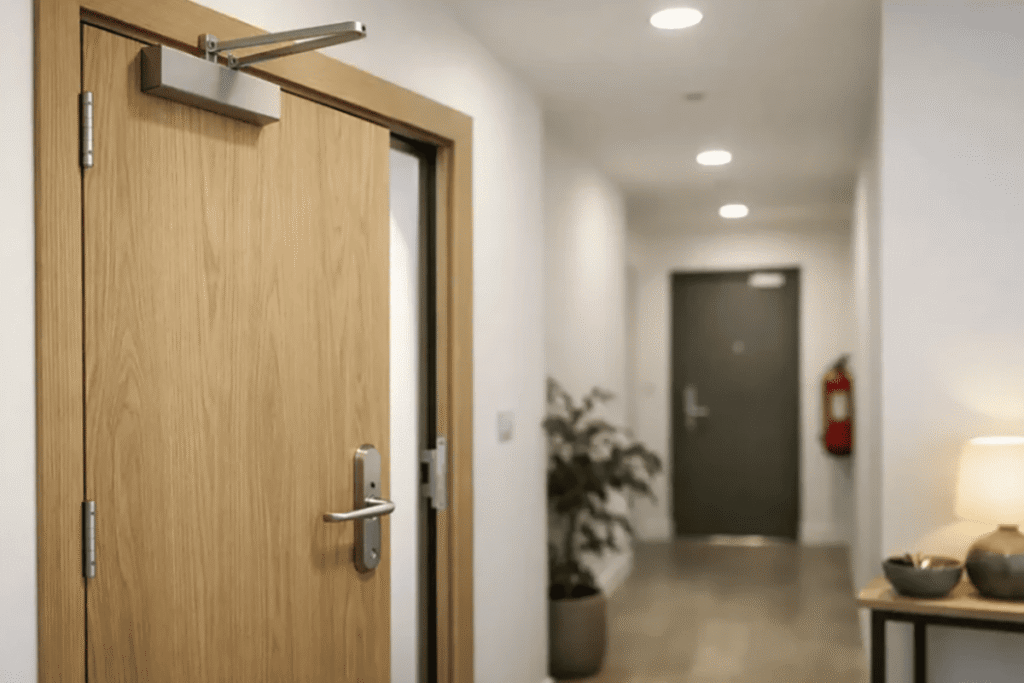
The Benefits of Installing Door Closers in High-Traffic Areas: Why Do They Matter More Than You Think?
Door closers in high-traffic areas often get treated as small accessories, but I see them as building-performance components. When a busy door stays open, slams shut, or fails to latch, the result can be noise, wear, comfort complaints, and safety risk. A properly selected door closer helps control that daily movement.
Door closers matter in high-traffic areas because they help doors close reliably, latch correctly, reduce slamming, limit outdoor air intrusion, and protect connected hardware from repeated impact1. They are most effective when buyers match the closer to door weight, door width, traffic frequency, installation conditions, and the full door hardware system.
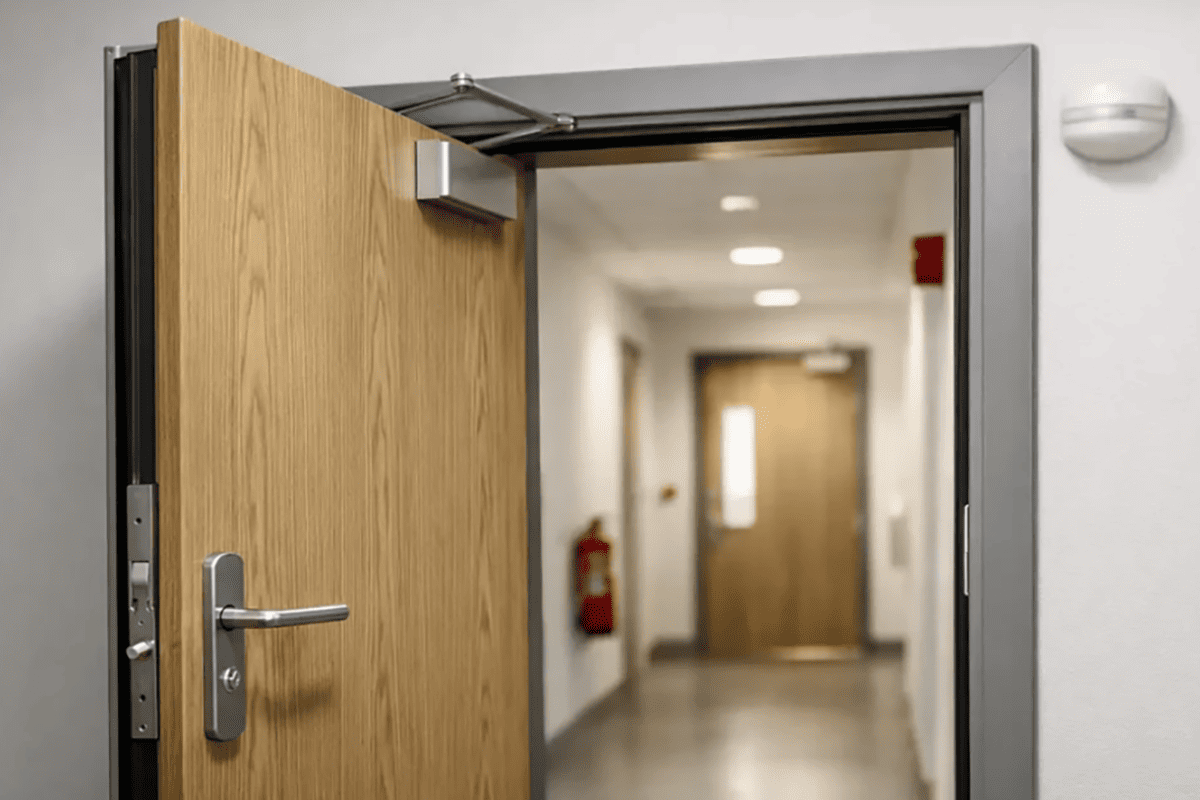
I have seen many procurement discussions focus on price, appearance, or certificates first. Those points matter, but they do not tell the full story. In busy buildings, the real question is whether the closer can control the door again and again under real-use conditions.
Why Do Door Closers in High-Traffic Areas Matter for Safety and Daily Control?
Busy doors create repeated risk because users move through them quickly, unevenly, and often without thinking2. If the door closes too fast, it can hit people or goods. If it closes too slowly, it may stay open. I consider controlled closing the first practical benefit.
Door closers in high-traffic areas improve safety by controlling closing speed, reducing sudden slamming, and helping the door return to a normally closed position3. They do not remove all risk, but they support predictable door movement when selected and adjusted for the door size, user flow, and site conditions.
Controlled Closing Is More Than Automatic Closing
I often remind buyers that a door closer is not simply a device that “pulls the door shut.” A good configuration gives the door a controlled closing cycle. That cycle usually includes:
- Opening resistance that feels acceptable to users
- Main closing speed that avoids delay and impact
- Latching action that helps the lock engage
- Backcheck or opening control4 in suitable applications
- Hold-open or non-hold-open selection depending on fire, safety, and usage requirements
When these details are ignored, a closer can create new problems. A door may slam because the closing speed is too high. A door may fail to latch because the final latching force is too weak. A door may feel too heavy because the closer strength is not suitable for the user group or door design.
Common High-Traffic Safety Concerns
In high-traffic entrances, I usually look at practical use first. A door may serve office workers, hotel guests, students, warehouse staff, or shoppers. Each group uses the door differently. A good specification considers these patterns before selecting a closer.
| Evaluation Point | Why It Matters | Procurement Question |
|---|---|---|
| Door weight | Heavier doors require stronger control | Can the closer handle the actual door leaf weight? |
| Door width | Wider doors create more leverage | Is the closer size suitable for the door width? |
| Traffic frequency | More cycles increase wear | Is the closer suitable for frequent daily use? |
| User type | Children, elderly users, or staff with goods need safer movement | Is the opening force practical for the site? |
| Latching requirement | A closed door still needs to latch | Does the closer work with the lock and strike plate? |
I Focus on the Whole Door Set
From a manufacturer and supplier perspective, I rarely evaluate the closer alone. I look at the door leaf, frame, hinges, lock, fixing position, and installation surface. The closer can only perform well when the connected parts also support the movement5.
For example, weak hinges may sag under traffic stress. A misaligned frame can prevent the latch from entering the strike plate. Poor fixing screws may loosen on heavy doors. In these cases, the closer may get blamed, but the root cause may be the full door hardware system.
I usually tell buyers: a door closer controls motion, but the whole door set determines whether that motion becomes reliable performance.
That is why I recommend buyers confirm installation drawings, door specifications, and hardware compatibility before bulk orders. For project-specific safety requirements, I also suggest evaluation by a qualified door hardware consultant, architect, or fire-safety professional.
How Do Door Closers in High-Traffic Areas Support Energy Efficiency and Indoor Comfort?
A door that stays open in a busy entrance can waste heating or cooling effort6. It can also let in wind, dust, humidity, rain, or hot outdoor air. I do not treat the closer as an energy-saving miracle, but I do treat it as a practical control point.
Door closers in high-traffic areas support indoor comfort by helping exterior or transition doors return to a closed position after use. This helps limit unwanted air exchange, reduce drafts, and support heating or cooling control when the closer is correctly matched to the door and entrance conditions.
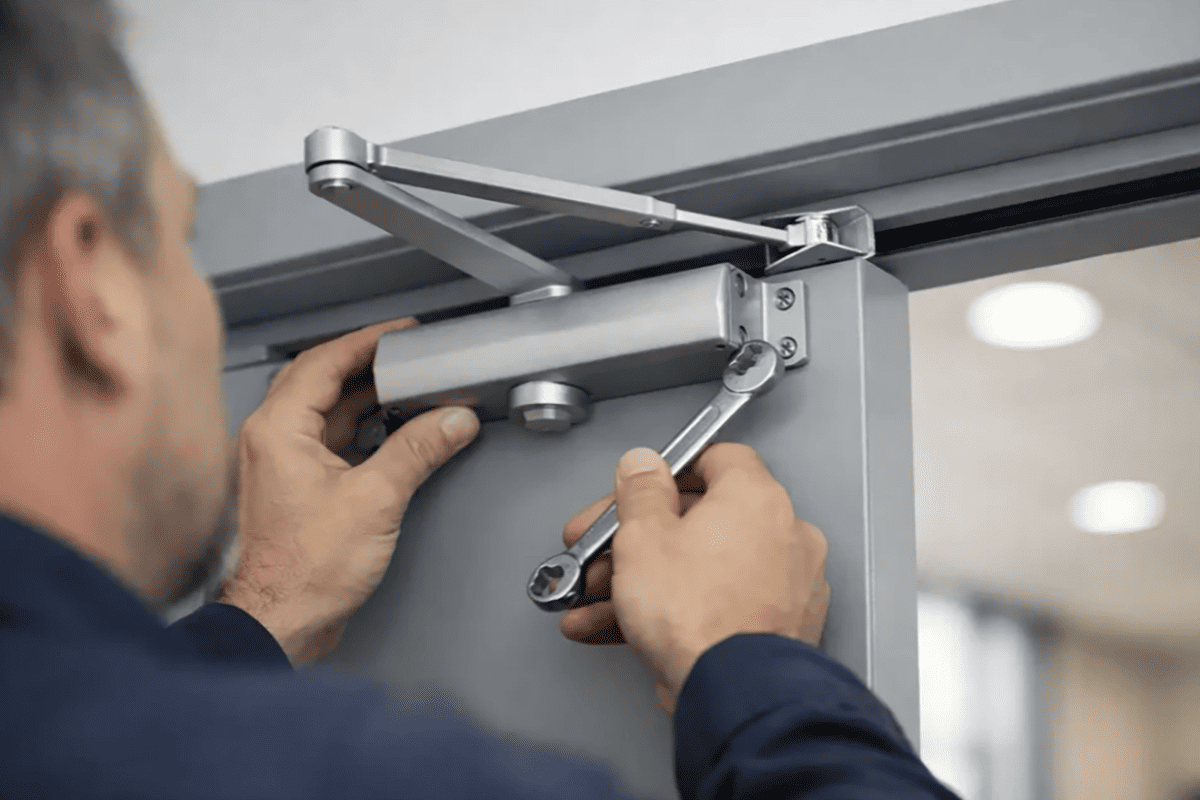
A Closed Door Protects the Indoor Environment
I have walked through commercial entrances where the door stays half open after every few users. In winter, people complain about cold air. In summer, air conditioning works harder. In windy locations, the door may move unpredictably. These issues are not only comfort problems. They also create maintenance and facility-management concerns.
A door closer helps maintain a normally closed door state. This matters most in places such as:
- Retail entrances
- Office lobby doors
- School corridor doors
- Hotel service doors
- Hospital support areas
- Factory or warehouse pedestrian doors
- Apartment building entrances
- Interior doors between conditioned and unconditioned zones
The closer does not seal the door by itself. Weatherstripping, threshold design, frame accuracy, and door alignment also matter. However, even the best seal cannot work if the door remains open7.
Why Outdoor Exposure Changes the Selection
High-traffic doors near outdoor areas face more than repeated use. They also face wind pressure, temperature variation, dust, rain, and sometimes corrosion risk8. I pay close attention to whether the door is:
- Fully exterior-facing
- Semi-exposed under a canopy
- Inside an entrance lobby
- Between two indoor climate zones
- Installed in a humid or coastal region
Each condition affects the closer choice. A closer installed on a sheltered interior office door has different needs from a closer on a windy building entrance. The surface finish, arm type, fixing strength, and adjustment range may all become important.
Energy Claims Should Stay Practical
I avoid making exact energy-saving claims unless a project has verified measurement data. A door closer can support energy control, but the actual result depends on many factors:
- Door opening frequency
- HVAC system design
- Building envelope quality
- Climate zone
- User behavior
- Entrance vestibule design
- Door seals and thresholds
- Door closer adjustment
For B2B procurement, I think the better argument is simple and honest: a door that closes reliably gives the building a better chance to control indoor conditions. That message is easier for door manufacturers, hardware brands, and wholesalers to explain to their customers.
Comfort Also Affects Complaints
Indoor comfort complaints often sound subjective. A user may say, “This entrance is always cold,” or “The door bangs all day,” or “Dust keeps coming in.” A properly selected closer cannot solve every complaint, but it can reduce one common cause: uncontrolled door position.
When buyers source door closers for high-traffic areas, I suggest they ask suppliers for clear application guidance instead of only a catalog picture. A reliable supplier should help confirm the closer type, mounting method, door size range, and compatibility with locks, hinges, and door construction.
What Configuration Mistakes Make Door Closers in High-Traffic Areas Fail Early?
Many closer problems start before installation. The buyer may select by price, finish, or general door type without checking door weight, width, traffic level, or hardware compatibility. I have seen this mistake many times in sourcing conversations, and it often leads to avoidable complaints.
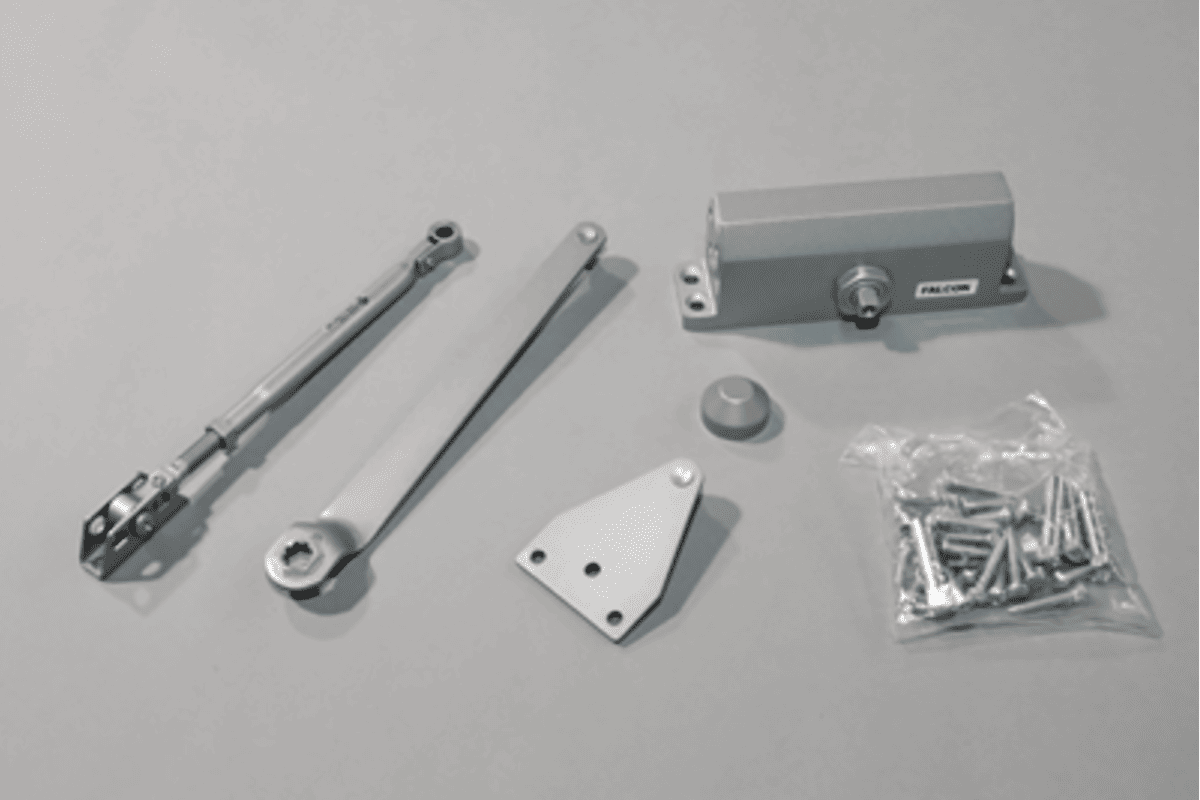
Door closers in high-traffic areas fail early when they are undersized, poorly adjusted, installed on weak fixing points, or mismatched with hinges, locks, frames, or site exposure9. Buyers should treat the closer as part of a door system, not as a separate accessory selected only by appearance.
Mistake 1: Selecting Only by Door Type
A buyer may say, “This is for a wooden door,” or “This is for a metal door.” That information helps, but it is not enough. I still need to know:
- Door leaf width
- Door leaf weight
- Door thickness
- Opening angle
- Traffic frequency
- Interior or exterior location
- Fire-rated or non-fire-rated requirement
- Arm type and mounting position
- Lock and latch type
- Hinge type and condition
A light office door and a heavy commercial entrance door can both be “wooden doors,” but they need different closer decisions.
Mistake 2: Ignoring Latching Performance
A door closer must not only close the door. It must help the door latch. If the latch does not engage, the door may look nearly closed but still remain unsecured or non-compliant for its intended function.
Latching failure may happen because:
- The closer has weak final closing force
- The strike plate is misaligned
- The door seal creates too much resistance
- The hinges sag
- The lock body is not installed correctly
- The closer speed is adjusted too slow near the final angle
This is why I always connect closer performance with lock and frame quality. At SDH Hardware, our product scope includes mortise locks, lever handles, hinges, cylinders, and accessories, so I naturally think in complete door sets. Buyers should do the same during specification.
Mistake 3: Overlooking Repeated Stress
High-traffic use creates repeated force on every connected part. The closer body, arm, fixing screws, hinge knuckles, door frame, and latch area all receive stress. Even a suitable closer can perform poorly if the installation base is weak.
| Common Error | Likely Result | Better Procurement Practice |
|---|---|---|
| Undersized closer | Slamming, weak latching, early wear | Match closer strength to door size and weight |
| Weak fixing surface | Loose screws, unstable arm movement | Confirm reinforcement or fixing method |
| Poor speed adjustment | Noise, impact, user complaints | Require installation and adjustment guidance |
| Mismatched lock/latch | Door fails to latch | Check lock, strike, seal, and closer together |
| Wrong exposure choice | Corrosion or unstable control | Consider climate and outdoor conditions |
Mistake 4: Treating Certificates as the Whole Evaluation
Certificates matter, especially in regulated markets. However, I treat certificates as documents that buyers should verify, not as a replacement for application evaluation. For fire-rated doors, for example, buyers should confirm that the closer, door leaf, hinges, lock, seals, and installation method all fit the required fire-door assembly and local rules10.
I recommend asking for:
- Relevant certificates or test documents
- Product drawings
- Door size and weight application range
- Installation instructions
- Packaging and labeling details
- Inspection options before shipment
- Compatibility notes for locks, hinges, and accessories
This approach reduces mismatch risk. It also helps hardware brand companies and wholesalers explain product selection more clearly to downstream customers.
How Should B2B Buyers Evaluate Door Closers in High-Traffic Areas Before Ordering?
Procurement teams often need to balance cost, delivery time, certificates, appearance, and supplier reliability. I understand that pressure. However, when buyers skip technical matching, the lowest-cost closer can become expensive through complaints, returns, and field adjustments.
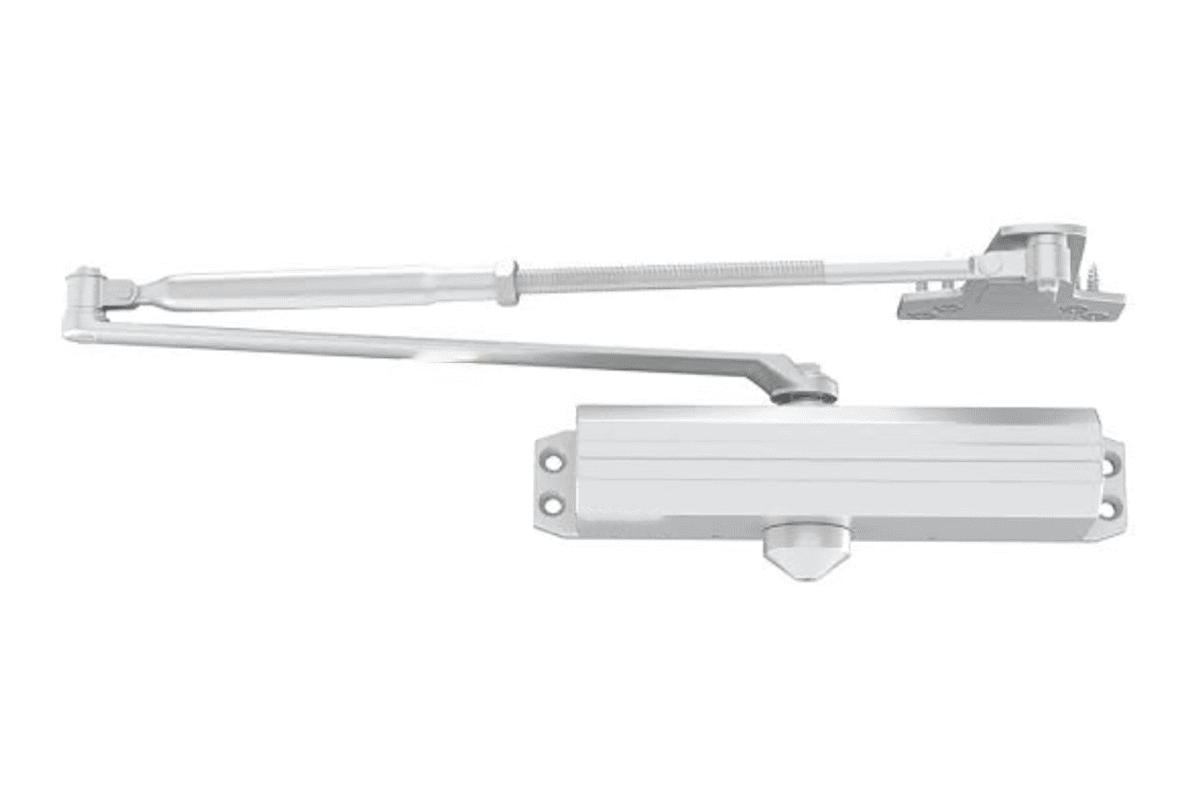
B2B buyers should evaluate door closers in high-traffic areas by confirming door weight, door width, usage frequency, opening angle, indoor or outdoor exposure, fire or safety requirements, finish durability, fixing conditions, and compatibility with hinges, locks, frames, and accessories before placing volume orders.
A Practical Evaluation Checklist
I prefer a simple checklist because it reduces assumptions between buyer and supplier. Before selecting a closer, I suggest collecting these details:
- Door material: wood, steel, aluminum, glass-framed, or composite
- Door weight: actual or estimated with construction details
- Door width: measured in millimeters
- Door height and thickness: useful for full set review
- Traffic level: low, medium, high, or very high
- Opening direction: left/right and push/pull side mounting
- Opening angle: normal or wide opening requirement
- Installation location: indoor, outdoor, semi-exposed, or coastal
- Fire-rated requirement: yes/no, with market-specific documents verified
- Arm style: regular arm, parallel arm, slide track, or concealed solution
- Finish requirement: silver, black, stainless look, custom finish, or brand color
- Packaging and branding: neutral, OEM, ODM, logo, or retail-ready packaging
Comparing Common Door Closer Options
Different closer types serve different buyer needs. I usually explain the choice in simple application terms.
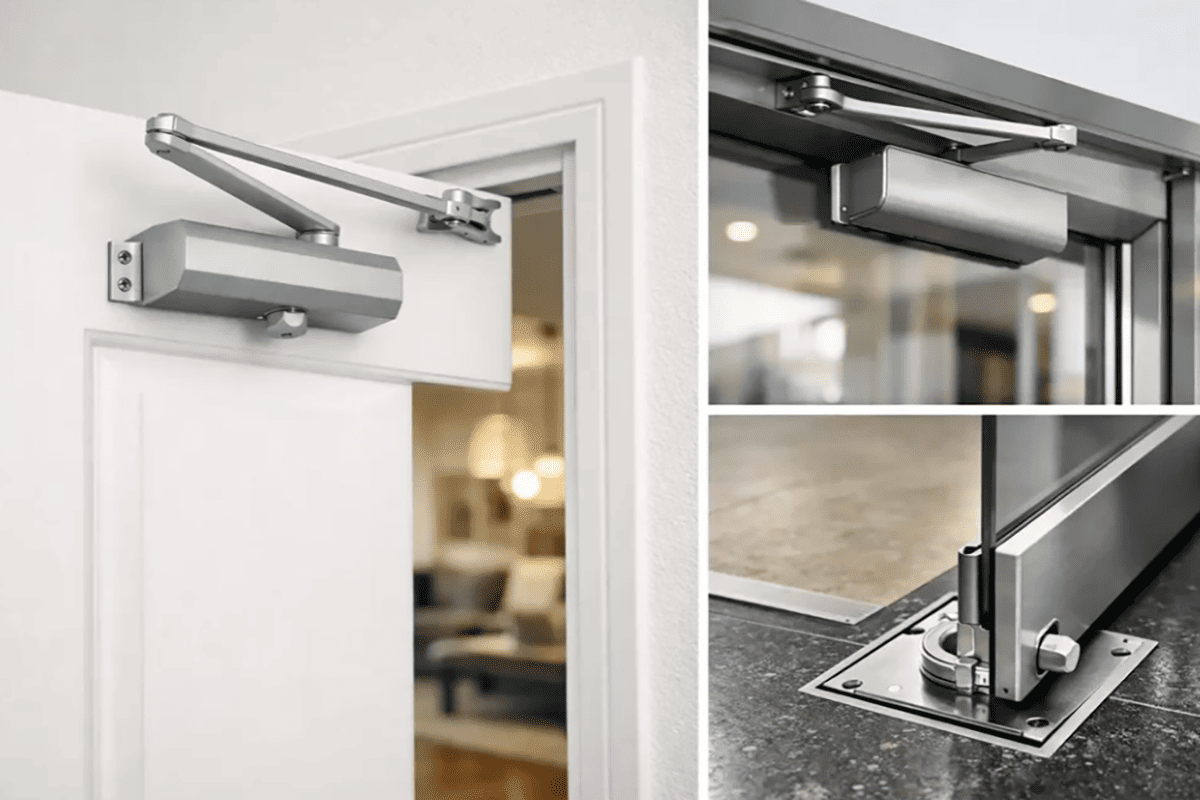
| Door Closer Type | Common Use | Main Advantage | Key Procurement Concern |
|---|---|---|---|
| Surface-mounted closer | Commercial and public doors | Easy installation and maintenance | Appearance and exposure |
| Slide-track closer | Offices, hotels, modern interiors | Cleaner look and controlled movement | Opening force and compatibility |
| Concealed closer | Premium doors or design-sensitive areas | Hidden appearance | Door preparation and installation accuracy |
| Floor spring | Glass doors and heavy entrance doors | Strong control for certain entrance designs | Floor preparation and maintenance access |
| Fire-rated closer | Fire door assemblies | Supports required self-closing function | Certificate and assembly compatibility |
No single type is best for every project. I always connect the closer type to the door set, building use, and installation skill available.
Supplier Evaluation Matters
For bulk buyers, the supplier is part of the product. A good supplier should not only provide a unit price. A good supplier should help prevent incorrect selection.
At SDH Hardware, our role as a China-based architectural door hardware manufacturer gives us a practical view of production and supply. We support standardized and customized hardware products, and we work with buyers who need OEM, ODM, packaging, surface treatment, and complete hardware matching. I would still encourage every buyer to verify documents, samples, inspection results, and application suitability before final approval.
Questions I Would Ask a Door Closer Supplier
When I source or evaluate a closer, I would ask:
- What door width and weight range does this model support?
- What traffic level is it intended for?
- What mounting methods are available?
- Does the closer have adjustable closing and latching speed?
- Is backcheck available or required for this application?
- Can the finish handle the installation environment?
- What certificates or test reports are available for verification?
- Can the supplier provide drawings and installation instructions?
- Can the closer be matched with locks, hinges, cylinders, and accessories?
- Can pre-shipment inspection be arranged?
These questions help buyers avoid vague decisions. They also help suppliers recommend a realistic product instead of simply quoting the cheapest model.
Why Should Door Closers Be Evaluated with the Full Door Hardware System?
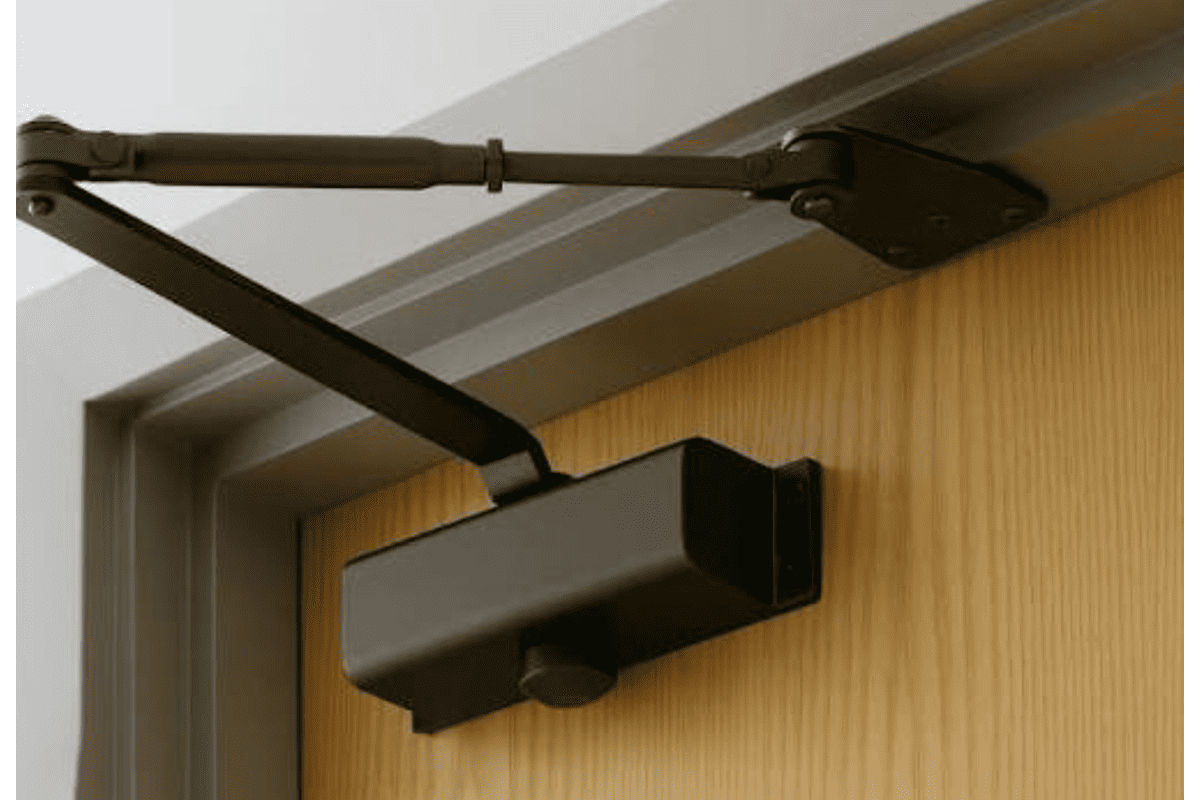
A door closer may look like an independent item, but it works through the door leaf, hinges, frame, lock, latch, seals, and fixing points. If one part is misaligned or weak, the closer may not perform as expected. I always evaluate the system.
Door closers should be evaluated with the full door hardware system because reliable closing depends on hinge alignment, lock engagement, frame accuracy, seal resistance, door weight, and fixing strength. A closer can control movement, but the complete system determines whether the door closes, latches, and lasts.
The Door Closer Depends on Hinges
Hinges carry the door. If hinges are undersized, worn, or poorly installed, the door may sag11. Once the door sags, the closer must work against misalignment. This may create symptoms such as rubbing, incomplete latching, or uneven closing speed.
For high-traffic doors, I suggest reviewing:
- Hinge load capacity
- Hinge quantity
- Hinge material
- Screw quality
- Frame reinforcement
- Door leaf stability
- Alignment after installation
Butt hinges and concealed hinges can both work well when they are selected correctly. The best choice depends on door design, load, opening frequency, and aesthetic requirements.
The Door Closer Depends on the Lock and Latch
The final part of the closing cycle is especially important. The door must overcome seal pressure and latch resistance. If the lock body or strike plate is poorly matched, the closer may close the door but fail to secure it.
This issue is common in projects where different suppliers provide different parts without coordination. One factory supplies the door. Another supplier provides the lock. Another supplier provides the closer. Another installer adjusts the final set. If nobody checks the complete system, the final result can be inconsistent.
The Door Closer Depends on the Frame and Seals
Frames and seals affect closing resistance. A tight seal may improve air control, but it can also increase the force needed for latching. A warped frame may create friction. A poorly positioned strike plate may prevent smooth engagement.
I recommend that buyers confirm the closer after considering:
| System Component | Effect on Closer Performance |
|---|---|
| Hinges | Door alignment and smooth swing |
| Lock body | Latching resistance and security |
| Strike plate | Final engagement accuracy |
| Door seals | Air control and closing resistance |
| Frame | Alignment and fixing strength |
| Door leaf | Weight, stability, and movement |
| Fixings | Long-term installation reliability |
One-Stop Sourcing Can Reduce Matching Risk
One-stop sourcing is not only about convenience. It can reduce mismatch risk when the supplier understands complete door hardware. At SDH Hardware, our portfolio includes Euro mortise locks, stainless steel lever handles, butt hinges, concealed door hinges, Euro brass cylinders, door accessories, and related architectural hardware products. This helps us discuss door closers as part of a broader door solution.
However, I still believe buyers should request samples, drawings, inspection support, and document verification. A complete supplier can help, but project-specific decisions should match local standards, door construction, and qualified professional evaluation.
Frequently Asked Questions
Are door closers required on all high-traffic doors?
No. I would not treat door closers as universal for every high-traffic door. The requirement depends on door function, safety rules, fire-rating needs, climate-control goals, user type, and building design. Buyers should check local codes and consult qualified professionals for regulated applications.
What is the biggest mistake when buying door closers in bulk?
The biggest mistake is selecting only by price or appearance. I suggest buyers confirm door weight, width, traffic frequency, installation method, outdoor exposure, and compatibility with hinges, locks, frames, and seals before ordering large quantities.
Can a door closer stop a door from slamming?
Yes, a suitable and correctly adjusted door closer can reduce slamming by controlling closing speed. However, slamming may still happen if the closer is undersized, poorly adjusted, installed incorrectly, or used on a door with hinge, frame, or wind-pressure problems.
Do door closers help with heating and cooling control?
Yes, door closers can help maintain a normally closed door position, which supports indoor temperature control. I avoid claiming exact energy savings without measured data, because results depend on climate, HVAC design, door seals, traffic level, and building layout.
What documents should B2B buyers request from a door closer supplier?
I recommend requesting product drawings, installation instructions, application range, finish details, certificates or test reports for verification, packaging details, and inspection options. For fire-rated doors, buyers should verify that the full door assembly meets relevant local requirements.
Conclusion
Door closers in high-traffic areas matter because they help control safety, comfort, latching, hardware wear, and indoor environmental stability. I recommend that B2B buyers evaluate the closer as part of a complete door hardware system, not as a standalone accessory. Door weight, width, traffic frequency, exposure, hinges, locks, frames, seals, and certificates all deserve attention. If you need factory-direct architectural door hardware support, SDH Hardware can help you review configurations, customization options, and complete hardware sourcing for your market.
"Energy Saving Impact of ASHRAE 90.1 Vestibule ...", https://www.pnnl.gov/main/publications/external/technical_reports/pnnl-20026.pdf. Institutional standards and building-science guidance support the view that controlled door closing can reduce impact at the latch area and that keeping exterior doors closed helps limit uncontrolled air exchange; this evidence is contextual because actual performance depends on installation, adjustment, seals, and traffic conditions. Evidence role: general_support; source type: institution. Supports: Door closers are designed to control closing motion, while closed exterior doors reduce uncontrolled air exchange and door hardware standards address durability under repeated cycles.. Scope note: Contextual support rather than direct proof for every listed benefit in every high-traffic installation. ↩
"Human Factors Assessment of Pedestrian Roadway Crossing ...", https://www.fhwa.dot.gov/publications/research/safety/13098/index.cfm. Research on pedestrian movement through doorways documents variability in speed, spacing, and flow behavior, supporting the claim that busy entrances can create recurring operational and safety concerns; the evidence is contextual because it addresses pedestrian dynamics generally rather than door-closer performance specifically. Evidence role: general_support; source type: paper. Supports: Pedestrian movement through doorways is variable and can create congestion or contact risks, especially where flow is dense or users are distracted.. Scope note: Supports the risk context, not a quantified injury reduction from door closers. ↩
"How to Adjust a Door Closer | Step-by-Step Guide for Speed & ...",
. Door-control standards define closers as devices that regulate a door’s closing cycle, including closing and latching action, which supports the article’s description of their role in controlled return to the closed position; the source does not by itself prove reduced injury rates. Evidence role: definition; source type: institution. Supports: Door closers are door-control devices with adjustable closing and latching functions intended to return a door to the closed position.. Scope note: Defines and contextualizes closer function, but does not directly quantify safety outcomes. ↩"What Is Backcheck On Door Closer?", https://www.doorclosersusa.com/What-Is-Backcheck-On-Door-Closer-s/34450.htm?srsltid=AU7gw4VlUcs54iTs3c8O3IoXlQhaqX1Z3WzcXiD0C2zxL9pfIuN_YBoG. Door-closer technical standards and institutional guidance identify backcheck as an opening-control feature that adds resistance near the end of the opening swing, supporting its inclusion among closer configuration considerations; applicability depends on door type, mounting, and site conditions. Evidence role: definition; source type: institution. Supports: Backcheck is a recognized door-closer function that resists or cushions the door during the opening portion of the swing.. Scope note: Supports the feature definition, not that every high-traffic door should use backcheck. ↩
"INSPECTION CHECKLIST FOR SWINGING DOOR WITH ...", https://statefire.llr.sc.gov/osfm/forms/enforcement/Fire%20Door%20Inspection%20Checklist%20and%20Form.pdf. Door-assembly inspection guidance evaluates self-closing and latching performance together with hinge condition, frame alignment, latch engagement, and hardware attachment, supporting the article’s system-level view of closer performance; this evidence is contextual outside regulated fire-door inspections. Evidence role: general_support; source type: institution. Supports: Reliable closing and latching are evaluated at the door-assembly level, including hinges, frame, latch, closer, and alignment.. Scope note: Directly applicable to inspection contexts, with broader relevance to non-fire commercial doors. ↩
"Energy Saving Impact of ASHRAE 90.1 Vestibule ...", https://www.pnnl.gov/main/publications/external/technical_reports/pnnl-20026.pdf. Government building-science guidance explains that uncontrolled air infiltration can increase heating and cooling demand, supporting the article’s claim that an exterior door left open may waste conditioned air; the magnitude depends on climate, door use, HVAC design, and envelope leakage. Evidence role: mechanism; source type: government. Supports: Uncontrolled air infiltration and exfiltration increase heating and cooling loads in buildings.. Scope note: Supports the physical mechanism, not a project-specific energy-savings amount from installing a closer. ↩
"2019 Envelope Air Sealing", https://www.energy.ca.gov/sites/default/files/2020-06/2020-CEC-Air_Sealing_Fact_Sheet_F_ADA.pdf. Energy-efficiency guidance describes weatherstripping as a method for sealing gaps around doors to reduce air leakage, supporting the article’s point that such seals require a closed door to function effectively; this does not measure the independent effect of the closer. Evidence role: mechanism; source type: government. Supports: Weatherstripping and door seals reduce air leakage by closing gaps around shut doors.. Scope note: Supports the mechanism of seals, not the durability or adjustment quality of a particular closer. ↩
"Marine Atmospheric Corrosion of Carbon Steel: A Review - PMC", https://pmc.ncbi.nlm.nih.gov/articles/PMC5506973/. Building-envelope and materials-corrosion research documents that exterior components are exposed to wind, moisture, temperature cycling, and corrosive atmospheres, supporting the article’s use of exposure conditions as selection factors; the evidence is general and does not evaluate a specific door closer model. Evidence role: general_support; source type: research. Supports: Exterior building components are affected by environmental loads such as wind-driven rain, temperature variation, humidity, and corrosive exposure.. Scope note: General environmental durability support rather than product-specific performance evidence. ↩
"How To Fix A Door That Won't Latch",
. Door-hardware inspection and maintenance guidance identifies closer sizing, adjustment, secure attachment, hinge condition, latch alignment, and frame condition as factors in reliable closing and latching, supporting the article’s explanation of common failure mechanisms; the source may not assign relative importance to each cause. Evidence role: mechanism; source type: institution. Supports: Proper sizing, installation, adjustment, and coordination with hinges, latches, frames, and seals are necessary for reliable self-closing door operation.. Scope note: Supports plausible failure mechanisms, not a ranking or quantified failure rate. ↩"Fire Doors and NFPA 80 FAQs", https://www.nfpa.org/news-blogs-and-articles/blogs/2025/04/11/fire-doors-faqs. Fire-door standards treat the door, frame, hardware, seals, self-closing device, and installation as parts of a rated assembly, supporting the article’s statement that buyers must verify component compatibility and local requirements; the exact obligation varies by jurisdiction and listing. Evidence role: expert_consensus; source type: institution. Supports: Fire-door assemblies are regulated systems whose components, installation, self-closing, and latching functions must meet applicable standards or listings.. Scope note: Authoritative for the assembly concept, but local code adoption and product listings must be checked separately. ↩
"Easy Fix For Sagging Doors",
. Technical door-hardware guidance explains that hinges support the door leaf and that insufficient capacity, wear, or poor installation can lead to sagging and misalignment, supporting the article’s link between hinge condition and closer/latch performance; it does not quantify how often this occurs in high-traffic buildings. Evidence role: mechanism; source type: education. Supports: Hinge wear, inadequate hinge capacity, or poor installation can lead to door misalignment or sag, which affects swing and latching.. Scope note: Mechanistic support only; frequency and severity depend on door weight, use, and installation quality. ↩