
The Role of Certification in Door Hardware?
Certification in door hardware can feel confusing when buyers face project deadlines, public-building requirements, and supplier claims that sound similar. The risk grows when a certificate does not match the actual product or application. I see certification as a practical selection tool that helps buyers reduce compliance, acceptance, and performance risks.
Certification in door hardware verifies that a specific product, model, or product family has been assessed against defined mechanical, safety, or fire-performance requirements.1 Its real role is not decoration. It helps buyers confirm whether locks, hinges, handles, cylinders, or accessories fit the intended door type, market, and project use scenario.
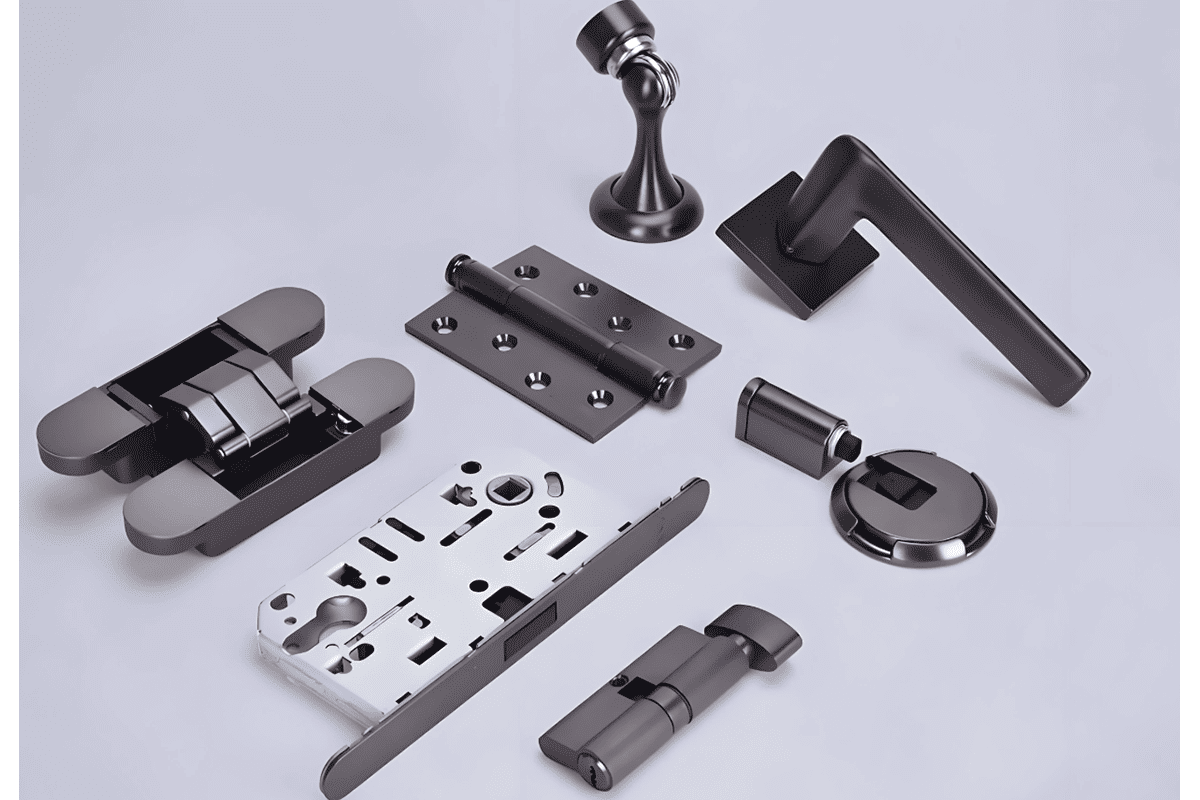
Many buyers ask me, “Do you have CE?” or “Do you have fire certification?” Those are useful starting questions. But they are not enough. The better question is whether the certificate scope, tested product, documentation, and production control match the exact order and project requirement.
What Does Certification in Door Hardware Really Prove?
A certificate can look impressive, but an unclear certificate can create false confidence. Buyers may assume one document covers every lock, hinge, handle, or cylinder in a catalog. That assumption can lead to wrong product selection, project delays, or rejection during inspection.
Certification in door hardware proves that defined products were assessed according to specific requirements, within a stated scope. It does not automatically prove that every product from the same supplier is suitable for every door, market, or project.2 Buyers should check the model, material, application, and certification limits.

Certification Is a Selection Tool, Not a Decoration
In my factory-side experience, certification becomes most useful when buyers use it to answer practical procurement questions:
- Is this product type covered?
- Is this exact model or series listed?
- Does the certificate match the door application?
- Does the document support the target market requirement?
- Does the supplier have consistent production control behind the certificate?
A certificate should not be treated as a badge placed beside every catalog page. It should be treated as a technical document that supports product selection.
For example, a mortise lock may have certification for a certain configuration, but that does not mean every size, material, latch type, or accessory variation is automatically included. A hinge may be tested for a certain door weight, door type, or fire-rated assembly3, but that does not mean it suits every heavy-duty commercial door.
What Certification Can Usually Help Buyers Evaluate
Different door hardware products raise different performance questions. Buyers should connect each product category with the correct evaluation purpose.
| Product Type | Common Buyer Concern | What Certification May Help Verify |
|---|---|---|
| Euro mortise locks | Durability, security function, latch performance | Mechanical suitability and defined product performance |
| Stainless steel lever handles | Daily use strength, corrosion resistance, fit with lock body | Product consistency and application suitability |
| Butt hinges | Door weight, cycle durability, alignment stability | Load and endurance suitability within tested scope |
| Concealed hinges | Installation precision, door movement, hidden structure strength | Mechanical performance and application fit |
| Euro brass cylinders | Key operation, security level, durability | Product function and defined security performance |
| Door accessories | Compatibility, safety, project acceptance | Supporting role within the door hardware set |
What Certification Does Not Prove
Buyers should also know the limits. Certification does not always prove:
- Universal project approval4 in every country or city.
- Automatic compatibility with every door leaf, frame, or fire-door system.
- Identical performance for untested materials, sizes, or configurations.
- Good long-term supply quality without ongoing manufacturing control.
- Correct installation at the job site.
This is why I often recommend that buyers review certificates together with drawings, test reports where available, product specifications, and project documents. For application-specific decisions, especially fire-door use, buyers should seek qualified professional evaluation from the project side, door manufacturer, or local compliance consultant.
A certificate gives direction. It does not replace product matching, engineering judgment, or supplier quality control.
Why Does Certification in Door Hardware Matter More for Public Buildings?
Public buildings create higher pressure because many people use the same doors every day. If hardware fails, the issue is not only inconvenience. It may affect safety, access control, evacuation routes, maintenance cost, and project acceptance.5 This makes careless selection risky.
Certification in door hardware matters more for public buildings because these projects often require documented proof of mechanical durability, safety suitability, and sometimes fire-performance compatibility. Buyers need traceable documents that connect the selected locks, hinges, handles, cylinders, and accessories to the exact door application and project requirement.
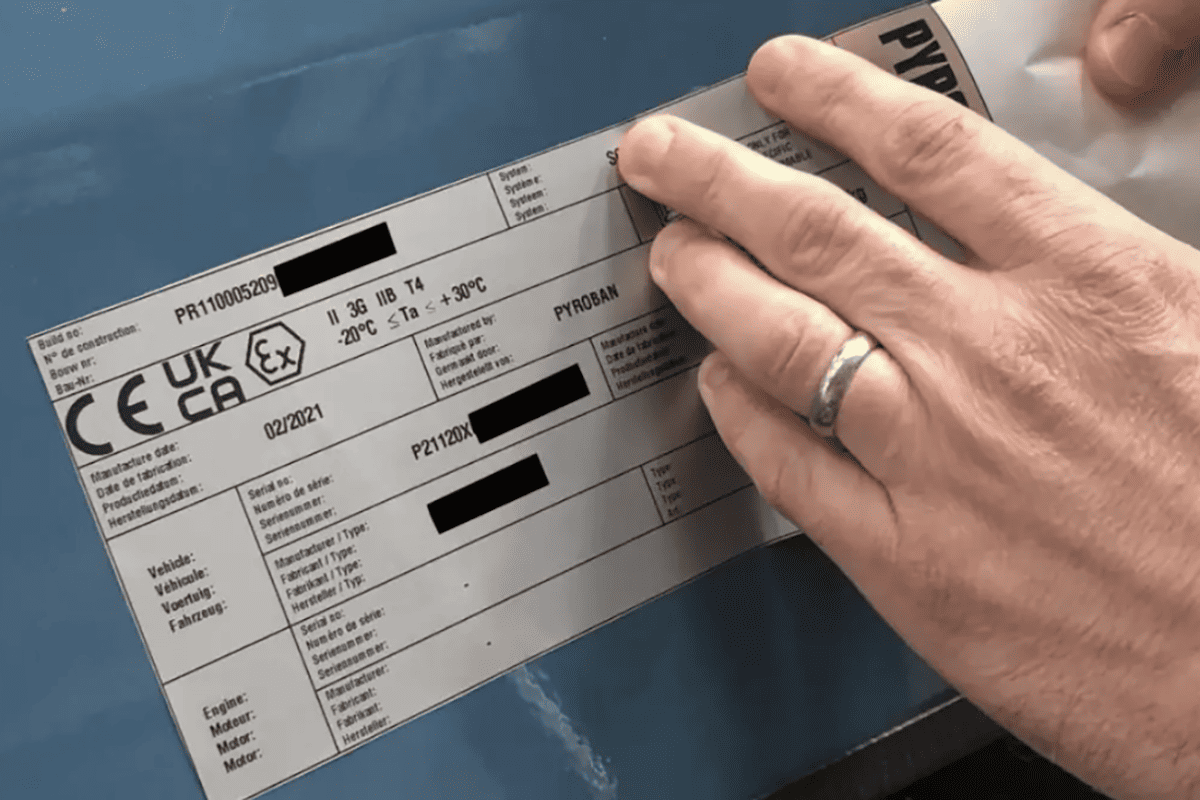
Public Buildings Put More Stress on Hardware
A residential door may be opened a few dozen times per day. A public-building door can be operated hundreds or even thousands of times depending on location.6 Doors in hotels, schools, hospitals, offices, airports, and shopping centers carry different stress patterns.
Common high-use locations include:
- Entrance doors
- Corridor doors
- Stairwell doors
- Fire-rated doors
- Hospital ward doors
- Hotel room doors
- Commercial washroom doors
- Emergency exit routes
Each location can require different hardware performance. A hinge for a light interior door may not suit a heavy fire-rated door. A handle set for normal use may not be ideal for a high-traffic corridor. A lock body may function well in one market but require different documentation or configuration in another.
Fire-Door Applications Raise the Stakes
Fire-rated doors are a special case. The hardware is part of a door assembly, not just a separate accessory.7 Hinges, locks, closers, cylinders, and other components may affect the door’s behavior during a fire-rated application.8
I do not present myself as a testing authority or legal regulator. However, from manufacturing and export documentation experience, I know buyers should be careful with fire-rated certification because the details matter.
Key questions include:
- Was the hardware tested for fire-rated use?
- What door type or assembly does the document refer to?
- Does the certificate cover the exact product model?
- Are there limitations on size, material, installation, or accessories?
- Does the project require local acceptance or additional documentation?
A Practical Public-Building Evaluation Table
| Project Area | Common Hardware Need | Buyer Risk if Certification Is Unclear |
|---|---|---|
| Stairwell fire doors | Fire-rated hinges, locks, closers | Rejection during inspection or unsafe assembly |
| Hotel corridors | Durable locks and lever handles | High maintenance cost or guest complaints |
| Hospitals | Smooth operation and stable function | Operational delays and frequent repair |
| Schools | Durable and safe hardware | Premature failure due to high daily use |
| Office towers | Consistent hardware sets | Mixed documentation and difficult maintenance |
| Shopping centers | Heavy-duty hinges and handles | Wear, sagging doors, and product replacement |
Documentation Helps Project Acceptance
Public-building buyers often need more than a quotation. They may need documents for internal review, consultant approval, tender files, or final inspection. In many export orders, I have seen buyers request:
- CE-related documents
- Fire-rated certification documents
- Product drawings
- Material descriptions
- Finish information
- Installation references
- Packing details
- Inspection reports
- Model matching lists
Good documentation does not guarantee acceptance by itself. But incomplete or mismatched documentation can slow down the process. This is why I prefer to check documents early, before mass production, instead of waiting until the shipment date.
How Should Buyers Check the Scope of Door Hardware Certification?
Many procurement problems start with a simple misunderstanding. A buyer asks for certified products, and a supplier sends a certificate. But nobody checks whether the listed model, product range, tested configuration, or application matches the actual order.
Buyers should check door hardware certification by comparing the certificate scope with the exact product model, material, size, finish, door type, test application, and target project requirement.9 They should also confirm whether the certificate belongs to the supplier, the product family, or a specific tested item.

Start With the Product Model
The model number is one of the first details to verify. In door hardware, similar-looking products can have different internal structures, materials, dimensions, or performance levels.
For example:
- Two mortise locks may share the same appearance but use different latch structures.
- Two lever handles may have different base materials or spindle systems.
- Two hinges may look similar but carry different weight ratings.
- Two cylinders may use different key systems or security features.
A certificate that covers one model may not cover another model. If a supplier provides a general product photo but no model reference, the buyer should ask for clarification.
Match the Certificate to the Application
The application matters as much as the product. A lock used on a hotel room door may not have the same requirement as a lock used on a fire-rated stairwell door. A hinge for a timber door may not automatically apply to a steel fire door.
Buyers should review these points:
Product category
The certificate should match the actual product type, such as lock, hinge, handle, cylinder, or accessory.Specific model or series
The document should clearly connect to the quoted product.Door type
The buyer should check whether the certificate relates to timber, metal, glass, composite, or fire-rated doors where relevant.Use environment
Public buildings, coastal areas, hospitals, and high-traffic areas may require different material or finish performance.Market requirement
A document accepted in one market may not satisfy another market without additional review.10
A Simple Certificate Review Checklist
| Review Item | Question to Ask | Why It Matters |
|---|---|---|
| Certificate holder | Who owns the certificate? | It helps confirm source and traceability |
| Product model | Is the ordered model listed? | It avoids wrong product substitution |
| Product scope | What product range is covered? | It prevents overextending claims |
| Test application | What was the product tested for? | It connects performance to use scenario |
| Validity | Is the document current? | Expired or outdated documents create risk |
| Supporting report | Is a test report available if needed? | It gives more technical detail |
| Factory consistency | Can production match tested samples? | It supports reliable repeat orders |
Do Not Stop at “Do You Have CE?”
I understand why buyers ask this question first. It saves time. But the question is too broad. A better version would be:
“Can you provide CE-related documentation for this exact model, and can you confirm whether the scope matches our door type and project application?”
For fire-rated hardware, a better question would be:
“Can you provide fire-rated certification documents for this model, and can you help us check whether the tested application matches our door assembly requirement?”
These questions change the conversation. They move the supplier away from general claims and toward product-specific verification.
Ask for a Document Package
For important projects, buyers should request a complete document package instead of one isolated certificate. A practical package may include:
- Product quotation with model numbers
- Product specification sheet
- Technical drawings
- Certificate copy
- Test report reference where available
- Finish and material description
- Installation notes
- Packing list and labeling plan
- Inspection report after production
At SDH Hardware, I often see that buyers who prepare a clear model list and project requirement at the beginning have smoother order progress. The reason is simple. The factory can match products, documents, drawings, and inspection criteria before production starts.
What Supplier Controls Make Certification in Door Hardware More Reliable?
Certification can lose value when production is inconsistent.11 A tested sample may perform well, but mass-produced goods must still match the approved design, material, and process. Buyers should evaluate the factory system behind the document.
Certification in door hardware becomes more reliable when a supplier supports it with raw material control, standardized production, in-process inspection, finished product testing, model traceability, and complete export documentation. A certificate is strongest when factory quality control keeps regular shipments consistent with certified product specifications.
Certification Needs Manufacturing Discipline
A certificate is not a replacement for production management. It is part of a larger quality system. In our own factory operations, I have learned that consistent door hardware depends on many small controls that buyers may not see from a catalog photo.
Important controls include:
- Raw material screening
- Dimensional inspection
- Machining accuracy
- Surface treatment control
- Assembly inspection
- Function testing
- Salt spray or corrosion-related checks where applicable
- Fire-rated document matching where required
- Final product inspection
- Packing and labeling verification
If a supplier cannot control these steps, certification alone may not protect the buyer from quality variation.
Why Material Control Matters
Door hardware performance begins with material. Stainless steel lever handles, brass cylinders, steel lock bodies, and hinge components all depend on stable material selection. Wrong material can affect strength, corrosion resistance, finish quality, and long-term use.12
Buyers can ask suppliers to confirm:
- Main material
- Surface finish
- Thickness or key dimensions
- Weight where relevant
- Corrosion resistance expectation
- Compatibility with the intended environment
For example, a coastal project may need more careful finish and material consideration than an indoor apartment project. A hospital may need smoother operation and easier maintenance. A hotel may care about both durability and appearance consistency.
Testing Should Match Product Function
Different products need different inspection methods. A lever handle should be checked for surface finish, spring return, spindle fit, and assembly stability. A mortise lock should be checked for latch action, deadbolt movement, hole position, and matching accessories. A hinge should be checked for leaf thickness, pin structure, opening movement, and load suitability.
| Product | Factory Inspection Focus | Buyer Benefit |
|---|---|---|
| Mortise lock | Function, dimensions, latch/deadbolt movement | Easier installation and fewer site complaints |
| Lever handle | Finish, return spring, fit, visual consistency | Better user experience and brand presentation |
| Butt hinge | Thickness, hole position, pin movement, load match | Stable door movement and reduced sagging risk |
| Concealed hinge | Precision machining, adjustment, movement | Cleaner installation and reliable alignment |
| Brass cylinder | Key operation, cam movement, finish | Smooth access control and fewer failures |
| Accessories | Compatibility and finish consistency | Complete hardware set matching |
Documentation Should Follow Production
A reliable supplier should not send certificates as isolated sales material. The documentation should match the order. That means the model list, drawings, packing labels, and inspection records should all point to the same products.
For B2B buyers, this matters because many orders are not one-time retail purchases. Door factories, hardware brands, and wholesalers need repeatable supply. They need to know that the next container will match the approved sample and document package.
At SDH Hardware, our production model includes independent factory operations, in-house manufacturing capacity, and full-process quality control from raw material screening to finished product inspection. I mention this not as a claim that every item suits every market, but as an example of the factory-side support that makes certification more useful for procurement teams.
How Can Buyers Use Certification in Door Hardware During Procurement?
Procurement teams often work under pressure. They need prices, samples, delivery schedules, and documents at the same time. If certification is checked too late, the buyer may discover a mismatch after samples, tooling, or production decisions are already made.
Buyers can use certification in door hardware during procurement by building it into the sourcing process from the first inquiry. They should define the project requirement, request model-specific documents, compare certificate scope, approve samples, confirm production standards, and inspect finished goods before shipment.

Step 1: Define the Requirement Before Asking for Price
A low price is not useful if the product cannot meet the project requirement. Before asking suppliers for quotations, buyers should prepare a basic requirement sheet.
The sheet can include:
- Product category
- Door type
- Door material
- Door thickness
- Door weight where relevant
- Fire-rated requirement if applicable
- Target market
- Finish requirement
- Packaging requirement
- Expected order quantity
- Required documents
- Branding or logo needs
- Sample deadline
- Delivery schedule
This information helps the supplier recommend suitable products instead of guessing.
Step 2: Ask for Model-Specific Certification Documents
Buyers should avoid general statements like “all products are certified” unless the supplier can show exact scope. A more professional request is:
“Please provide certification documents and scope details for the quoted models. Please also mark which products are covered and which products require separate confirmation.”
This gives the supplier a clear task. It also makes comparison between suppliers easier.
Step 3: Compare Samples With Documents
Samples are useful, but they should not be evaluated only by appearance. Buyers should check whether the sample model matches the quotation and certificate package.
A simple sample review can include:
- Confirm model number.
- Check dimensions against drawing.
- Test basic function.
- Review material and finish.
- Compare accessories.
- Confirm packaging plan.
- Record any changes before mass production.
If a sample is changed after approval, the buyer should ask whether the certification scope is still valid for the changed configuration.
Step 4: Confirm Quality Control Before Production
Before placing a bulk order, buyers should confirm inspection standards with the supplier. This is especially important for OEM and ODM orders. Customization can affect dimensions, surface treatment, accessories, packaging, and sometimes product performance.
A practical pre-production confirmation includes:
| Item | What to Confirm |
|---|---|
| Approved sample | Which sample is the final reference? |
| Drawing | Are all dimensions confirmed? |
| Material | What material and thickness are used? |
| Finish | What color, texture, and surface treatment are required? |
| Logo | Is stamping or laser marking approved? |
| Packaging | Is color box or bulk packing confirmed? |
| Certification | Which models are covered by documents? |
| Inspection | What checks happen before shipment? |
Step 5: Keep a Traceable Record
For importers, hardware brands, and door factories, traceability protects future business. If a customer asks about one batch six months later, the buyer should be able to find the model, supplier, certificate, inspection record, and shipment information.
Useful records include:
- Purchase order
- Model list
- Product drawings
- Certification copies
- Sample approval record
- Production photos where needed
- Final inspection report
- Packing list
- Shipment documents
This process may sound detailed, but it saves time when the buyer handles repeat orders, warranty questions, or project documentation requests.
Frequently Asked Questions
Is CE certification enough for all door hardware projects?
No. CE-related documentation may be important, but it is not a universal approval for every market, door type, or project. Buyers should check the exact product model, certificate scope, application, and local project requirements before making a final selection.
Does fire-rated certification mean a hinge or lock can be used on any fire door?
No. Fire-rated certification must be reviewed according to its tested scope and application. The exact hardware model, door assembly, installation condition, and project requirement matter. Buyers should verify details with the supplier, door manufacturer, or qualified project professional.
What should I ask a supplier before buying certified door hardware?
You should ask for the product model list, certificate scope, technical drawings, material details, test report reference if available, and confirmation that the documents match your project application. You should also ask about production inspection and finished goods quality control.
Can customized door hardware still be certified?
Customized door hardware may need careful review. Changes in material, size, structure, finish, or accessories can affect whether an existing certificate still applies. Buyers should confirm certification scope before approving ODM or OEM changes, especially for public-building or fire-rated applications.
Why should I check supplier quality control if the product already has certification?
Certification reflects assessment within a defined scope, but regular orders still depend on consistent manufacturing. Raw material control, machining accuracy, assembly checks, function testing, and final inspection help ensure shipped products remain consistent with approved specifications.
Conclusion
Certification in door hardware plays an important role in compliant product selection, especially for public buildings, fire-rated doors, and regulated markets. Buyers should treat certificates as technical documents, not decorative sales claims. The most important step is matching the certificate scope to the exact product, model, door type, and project requirement. If you need factory-direct support for certified locks, hinges, handles, cylinders, or complete door hardware sets, I can help you review the product match and documentation before production.
"Conformity Assessment Basics | NIST", https://www.nist.gov/standardsgov/conformity-assessment-basics. ISO/IEC 17065 describes product certification as third-party attestation that specified requirements are fulfilled for defined products under a certification scheme, supporting the article’s treatment of door-hardware certificates as scope-bound evidence rather than general endorsements. Evidence role: definition; source type: institution. Supports: A product certification source should support that certification is an attestation against specified requirements for defined products or product scopes.. Scope note: The source is a general product-certification standard, so it supports the certification principle rather than any particular door-hardware certificate. ↩
"ISO/IEC 17065 Accredited Product Certification Services", https://www.celectronics.com/certifications/iso-iec-17065-accreditation. Accreditation guidance for product certification treats the certificate scope as the basis for determining which products and requirements are covered, supporting the article’s warning that certification should not be extended to unrelated supplier products or applications. Evidence role: general_support; source type: institution. Supports: A certification or accreditation source should explain that product certification applies only to the certified product scope and scheme requirements.. Scope note: The source would support the certification-scope principle generally, not assess any specific supplier’s catalog. ↩
"Understanding BS EN 1935:2002 single-axis hinge grades", https://uk.sfs.com/resources/article/understanding-bs-en-1935. Hinge standards such as EN 1935 classify single-axis hinges by criteria including category of use, durability, door mass, corrosion resistance, and suitability for fire or smoke doors, supporting the article’s point that a tested hinge scope may not transfer to every door condition. Evidence role: mechanism; source type: institution. Supports: A hinge standard should show that hinge classification or testing can be tied to door mass, endurance cycles, and fire or smoke door suitability.. Scope note: The source supports the classification mechanism for hinges, not the suitability of a particular hinge model. ↩
"Certificate of Approval", https://nyc-business.nyc.gov/nycbusiness/description/certificate-of-approval. European Commission guidance on CE marking for construction products distinguishes declared product performance from compliance with national or project-specific building requirements, supporting the article’s statement that certification is not universal project approval. Evidence role: general_support; source type: government. Supports: A government or regulatory source should support that product marking or certification does not automatically override local building or project approval requirements.. Scope note: This evidence is strongest for CE-marked construction products in the European regulatory context and may not describe every jurisdiction. ↩
"1910.36 - Design and construction requirements for exit ...", http://www.osha.gov/laws-regs/regulations/standardnumber/1910/1910.36. Government and life-safety rules for exit routes require egress doors and their hardware to allow safe and reliable evacuation, supporting the article’s claim that hardware failure can have safety implications beyond inconvenience. Evidence role: general_support; source type: government. Supports: A code or government safety source should support that door and hardware operation can affect safe egress and evacuation routes.. Scope note: The source would directly support safety and evacuation implications, while maintenance cost and project acceptance are contextual consequences. ↩
"A STUDY OF REVOLVING DOOR USAGE ON THE ...", https://web.mit.edu/~slanou/www/shared_documents/366_06_REVOLVING_DOOR.pdf. Door-hardware durability standards classify some products by high cycle-count endurance tests, which provides contextual support for the article’s claim that public-building doors may be operated far more frequently than low-use residential doors. Evidence role: statistic; source type: institution. Supports: A standards or research source should show that hardware for high-use doors is tested to high cycle counts, providing context for frequent operation in public buildings.. Scope note: Cycle-test requirements demonstrate expected endurance levels and use categories, but they do not directly measure daily openings for a specific building type. ↩
"Important Tips for Specifying Fire Door Assemblies", https://steeldoor.org/tips-for-specifying-fire-door-assemblies/. NFPA 80 treats fire doors, frames, glazing, hardware, and related components as parts of a fire-door assembly, supporting the article’s statement that fire-rated hardware is not merely a separate accessory. Evidence role: definition; source type: institution. Supports: A fire-door standard should define fire-door assemblies as including hardware or builders hardware components.. ↩
"NFPA 80 Fire Door Requirements: Code Guide", https://www.cdfdistributors.com/blog/post/nfpa-80-fire-door-requirements?srsltid=AU7gw4UkQlUxp_m0oK5I4ypmfm0xPKWfGEx8V5doDhe4MV4R1bVxNlZ4. Fire-door standards require appropriate listed or labeled hardware to be installed and maintained as part of the fire-door assembly, supporting the article’s point that hinges, locks, closers, and related components can influence rated performance. Evidence role: mechanism; source type: institution. Supports: A fire-door standard or testing body should show that hardware components are specified, listed, or installed as part of the fire-door assembly performance system.. Scope note: The source supports the assembly-level role of hardware but does not prove that every listed component has the same effect in every fire scenario. ↩
"FAQs - Certification and Third Party Testing", https://www.cpsc.gov/Business--Manufacturing/Testing-Certification/Third-Party-Testing/FAQs-Certification-and-Third-Party-Testing-OLD. Conformity-assessment guidance links product certification to defined requirements, product identification, and certification scope, supporting the article’s recommendation to compare the certificate with the exact model, configuration, and application before relying on it. Evidence role: general_support; source type: institution. Supports: A conformity-assessment source should support that certified status depends on documented product requirements and scope, making model and application comparison necessary.. Scope note: The evidence is procedural and general; it does not prescribe the full buyer checklist for every door-hardware product. ↩
"Construction Products Regulation in Great Britain", https://www.gov.uk/guidance/construction-products-regulation-in-great-britain. Government guidance on CE and UKCA marking shows that product conformity documentation and market-access requirements can differ by jurisdiction, supporting the article’s warning that a document accepted in one market may require further review in another. Evidence role: general_support; source type: government. Supports: Government guidance should support that market access documentation can differ between jurisdictions, such as CE and UKCA regimes.. Scope note: The source provides jurisdictional examples rather than a complete survey of all global door-hardware markets. ↩
"General Use Products: Certification and Testing", https://www.cpsc.gov/Business--Manufacturing/Testing-Certification/General-Use-Products-Certification-and-Testing. Product-certification schemes commonly require ongoing surveillance or factory production control to maintain conformity with the certified specification, supporting the article’s claim that inconsistent production weakens the practical value of certification. Evidence role: mechanism; source type: institution. Supports: A product certification or factory production control source should show that ongoing conformity depends on consistent production and surveillance.. Scope note: Requirements vary by certification scheme, so the source supports the general mechanism rather than every certificate type. ↩
"Understanding Corrosion Resistance: Which Metals Work ...", https://bluerivermetal.com/understanding-corrosion-resistance/. Materials-engineering references explain that alloy composition and material selection determine mechanical strength, corrosion behavior, and surface durability, supporting the article’s statement that incorrect material selection can compromise door-hardware performance over time. Evidence role: mechanism; source type: education. Supports: A materials engineering source should support that alloy choice and material properties influence strength, corrosion resistance, surface finish durability, and service life.. Scope note: The source would support the materials principle generally and may not test the specific hardware items discussed in the article. ↩