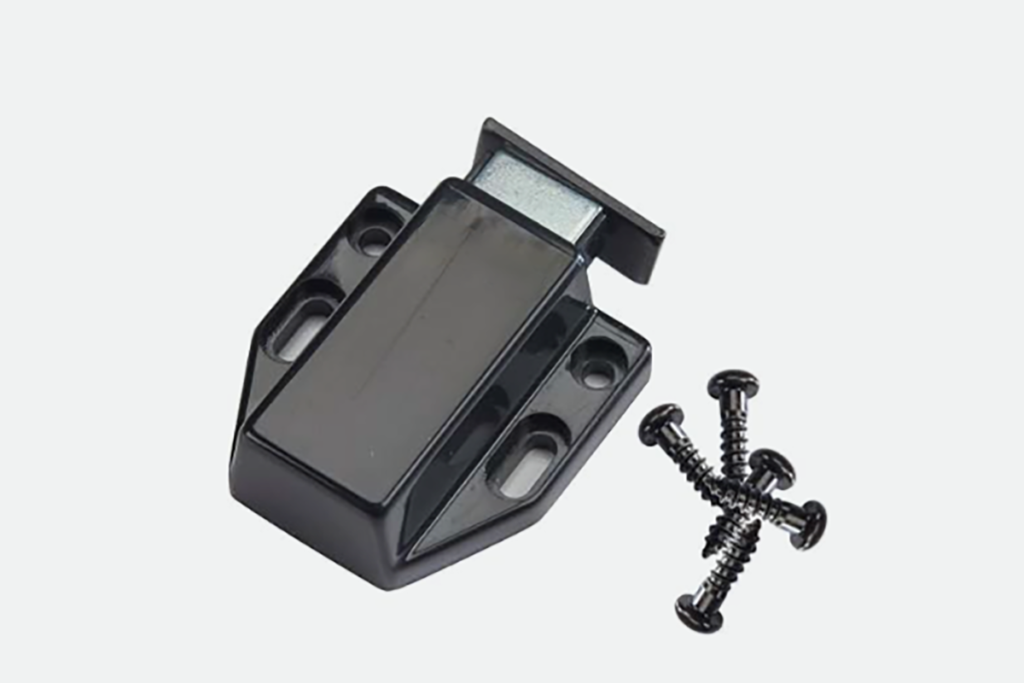
Is There A Door Stopper That Can Keep Doors Open?
A door stopper is often the first product buyers ask about when a door needs to stay open. The problem is that this name can be misleading. If the hardware only prevents wall impact, it may not hold the door. The better solution is usually a proper door holder.
Yes, there is hardware that can keep doors open, but it is usually a door holder rather than a basic door stopper. A door stopper mainly prevents collision between the door, wall, handle, or skirting. A door holder is designed to stop the door and hold it open using magnetic or mechanical force.1
I often see this confusion in buyer inquiries. A customer says “door stopper,” but after two or three questions, I learn they need the door to remain open during daily use. That difference matters for product selection, installation, safety, and long-term performance.
What Is The Difference Between A Door Stopper And A Door Holder?
Many buyers use one product name for two different functions. That creates a procurement risk. If the item only buffers impact, the door may still swing back. If the project needs hold-open control, the correct part must be selected from the beginning.
A door stopper mainly protects the wall, door leaf, handle, or hinge area from impact. A door holder can protect the door and also keep it open. In simple terms, a stopper is for anti-collision, while a holder is for anti-collision plus hold-open function.
The simple definition I use with buyers
When I discuss this with door factories or wholesalers, I usually separate the products by function first, not by appearance.
| Product term | Main function | Can it keep a door open? | Common installation |
|---|---|---|---|
| Basic door stopper | Prevents impact | Usually no | Wall, floor, baseboard, door |
| Magnetic door holder | Stops and holds | Yes, within suitable conditions | Wall-to-door or floor-to-door |
| Mechanical door holder | Stops and locks/catches | Yes, within suitable conditions | Floor-to-door or wall-to-door |
| Door closer hold-open arm | Holds at a set angle | Sometimes, depending on closer type | Door closer arm system |
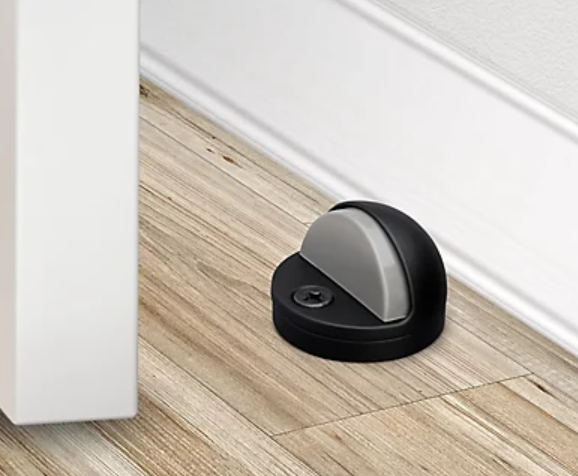
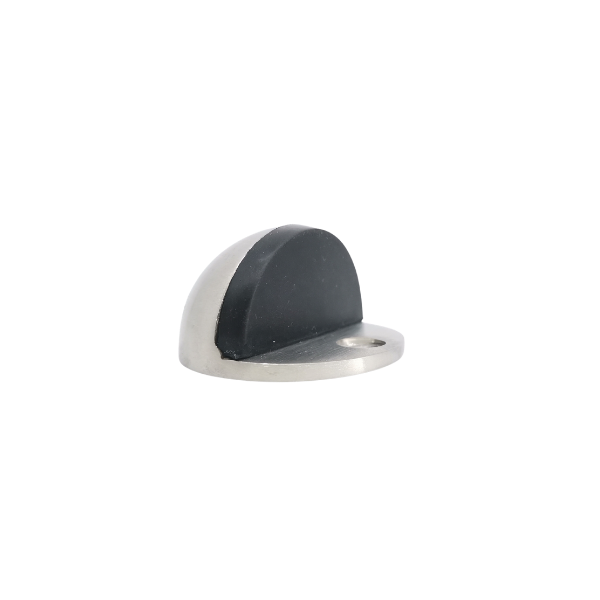
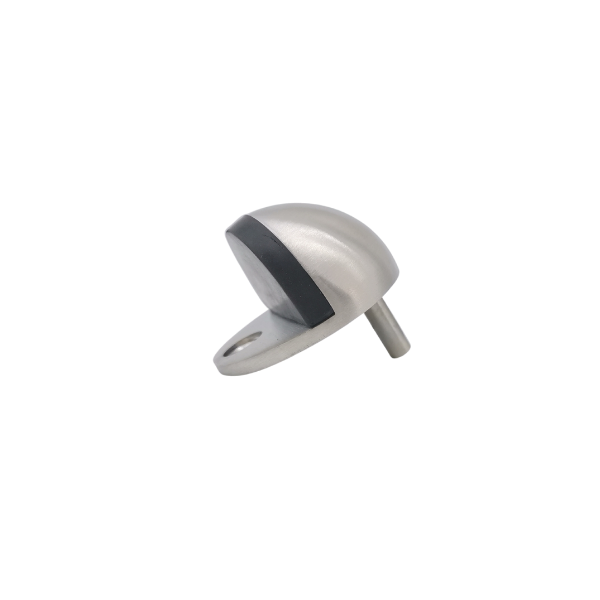
A basic door stopper is a protective accessory. It may be made from stainless steel, zinc alloy, rubber, plastic, or brass.2 It normally absorbs impact when the door opens too far. It helps prevent damage such as:3
- Handle hitting the wall
- Door leaf edge striking furniture
- Hinge stress from over-opening
- Wall dents near the handle position
- Noise from repeated door impact
However, that does not mean the stopper will hold the door open. Some stoppers have a soft rubber head. Some have a spring body. Some are designed for floor mounting. Their job is still mainly to stop movement at the end of swing, not to resist the door closing again.
A door holder has an extra holding mechanism. It may use:
- Magnetic attraction
- Mechanical catch or latch
- Foot-operated release
- Push-to-lock and push-to-release logic
- Dedicated hold-open linkage in a closer system
Why this distinction matters in B2B sourcing
In procurement, a wrong product name can lead to wrong samples, wrong drawings, and wrong installation holes. I have seen customers request a door stopper for hotel service doors, school utility rooms, and warehouse access doors. After reviewing the use case, many actually needed a magnetic or mechanical holder.
For bulk orders, I suggest buyers define the required function in writing:
“The door accessory must prevent impact and keep the door leaf in an open position under normal indoor use.”
That sentence is clearer than simply writing “door stopper.” It helps the supplier recommend the right category. It also helps the project team check door weight, opening angle, fixing surface, and whether a door closer is installed.
For architectural hardware, small accessories often affect user experience. A basic stopper may cost less, but it cannot replace a proper holder when the door must stay open for ventilation, moving goods, maintenance access, or high-frequency passage.
Can A Magnetic Door Stopper Keep A Door Open?
A magnetic option is often what buyers imagine when they ask for a door stopper that keeps doors open. The problem is that not every magnetic-looking accessory is suitable for every door. The magnet must match the door size, opening position, and real site conditions.
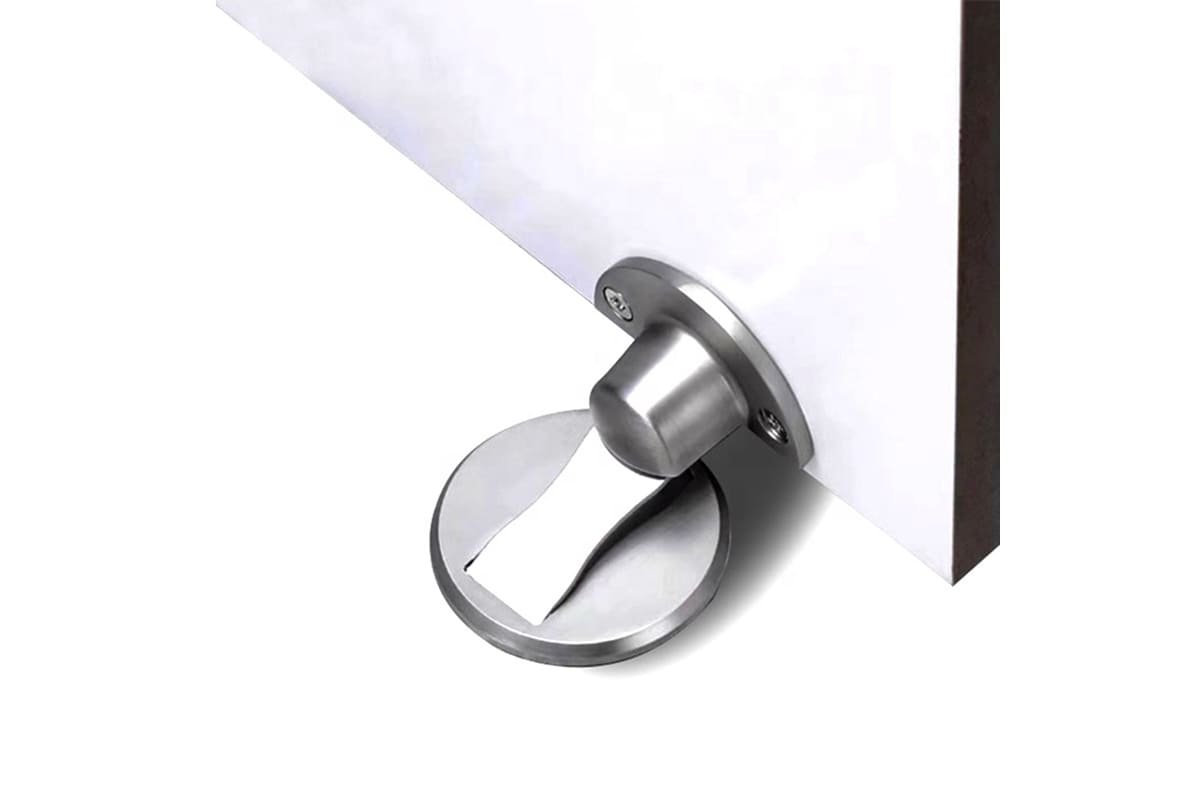
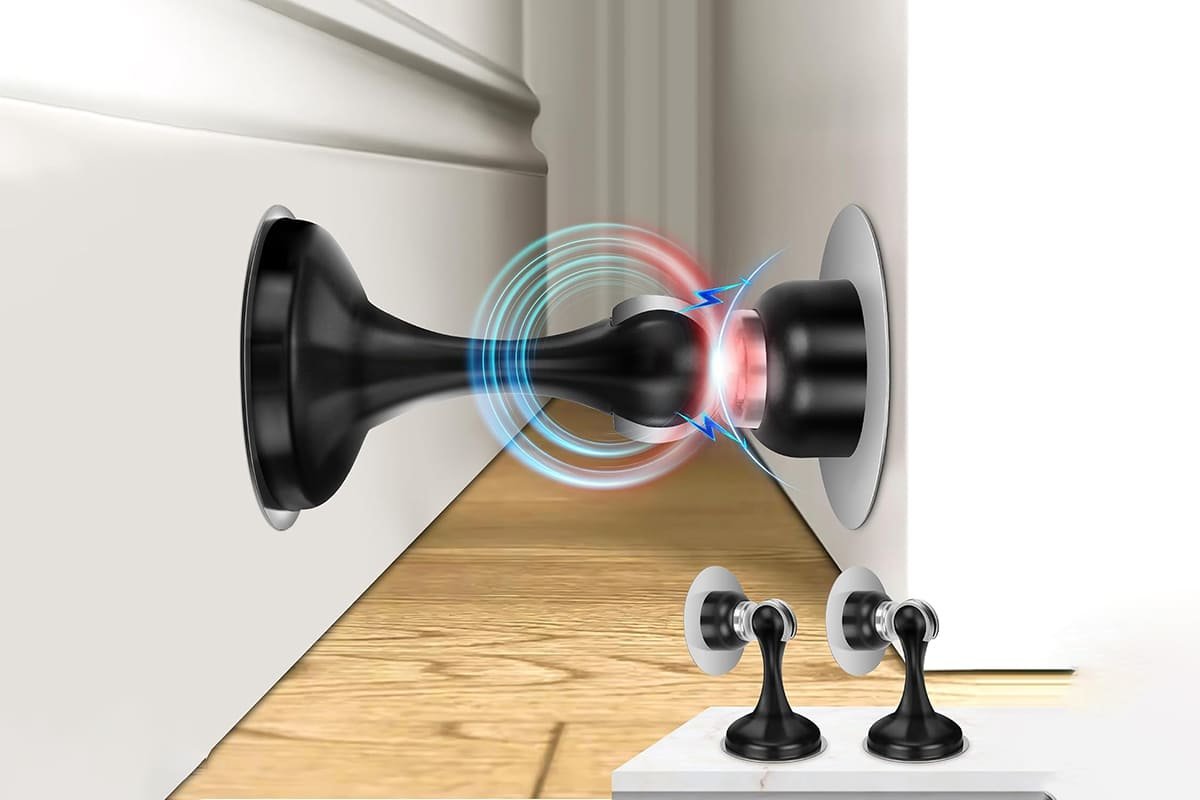
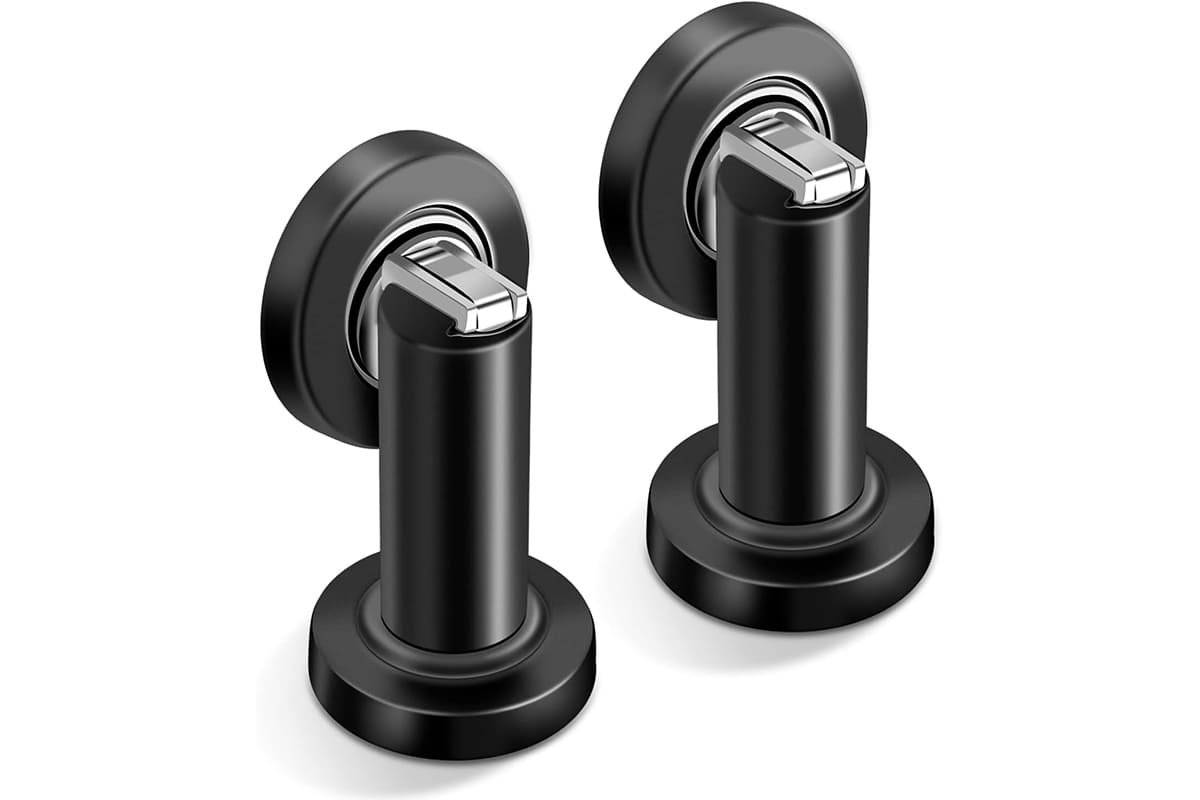
A magnetic door holder can keep a door open by using magnetic force between a door-mounted part and a wall-mounted or floor-mounted part.4 When the door opens fully, the two parts connect. The user pulls the door to release it. It is simple, convenient, and common in many indoor applications.
How a magnetic holder works
A magnetic holder usually has two parts:
- Magnet body installed on the wall or floor
- Strike plate or metal receiver installed on the door leaf or door bottom
When the door is pushed open, the plate contacts the magnet. The magnet holds the door in position. When the user wants to close the door, they pull the door away from the magnet.
This is why some buyers call it a magnetic door stopper. It looks like a stopper because it stops the door at the end of travel. But functionally, it is closer to a door holder because it also holds the door open.
Typical advantages
Magnetic holders are popular because they are easy to understand and easy to operate. For many commercial buyers, they are also easy to explain to installers and end users.
Key benefits include:
- Simple operation: Push open to hold, pull to release
- No complex latch: The holding logic is intuitive
- Clean appearance: Many designs are compact and modern
- Quiet use: Magnetic contact can be smoother than some mechanical catches
- Common installation styles: Wall-mounted and floor-mounted versions are available
In my supplier-side conversations, magnetic holders are often requested for offices, apartment interiors, light commercial rooms, and general passage doors. They can work well when the door is not too heavy, the fixing surface is strong, and there is limited wind pressure.5
Practical limits to check
A magnetic holder is not a universal replacement for every door stopper or mechanical holder. Buyers should confirm several site conditions before ordering.
| Selection factor | Why it matters |
|---|---|
| Door weight | Heavier doors may require stronger holding or a different mechanism |
| Door closer force | A closer may pull the door away from the magnet6 |
| Wind pressure | Airflow can overcome weak holding force |
| Mounting surface | Weak walls or hollow floors may loosen over time |
| Door opening angle | The magnet and strike plate must align accurately |
| Traffic frequency | High-use doors need durable fixing and stable release |
One common issue is misalignment. If the door-mounted plate does not meet the magnet flatly, the holding effect becomes weaker. Another issue is the fixing base. Even if the magnet is adequate, poor screws or weak wall material can cause failure.
Good procurement questions
Before choosing this type, I suggest buyers ask:
- What is the door material and approximate weight?
- Is there a door closer installed?
- Is the door used indoors or exposed to wind?
- Should the holder be mounted on the wall or floor?
- What opening angle must be held?
- Is the fixing surface concrete, tile, wood, gypsum board, or metal?
These questions help suppliers recommend a suitable product form. They also reduce the chance of receiving a sample that looks right but performs poorly on site.
When Is A Mechanical Door Holder Better Than A Door Stopper?
Some projects need more than a gentle magnetic hold. A heavy door, frequent airflow, or a door closer can challenge a magnetic design. In those cases, buyers may need a mechanical door holder instead of a basic door stopper.
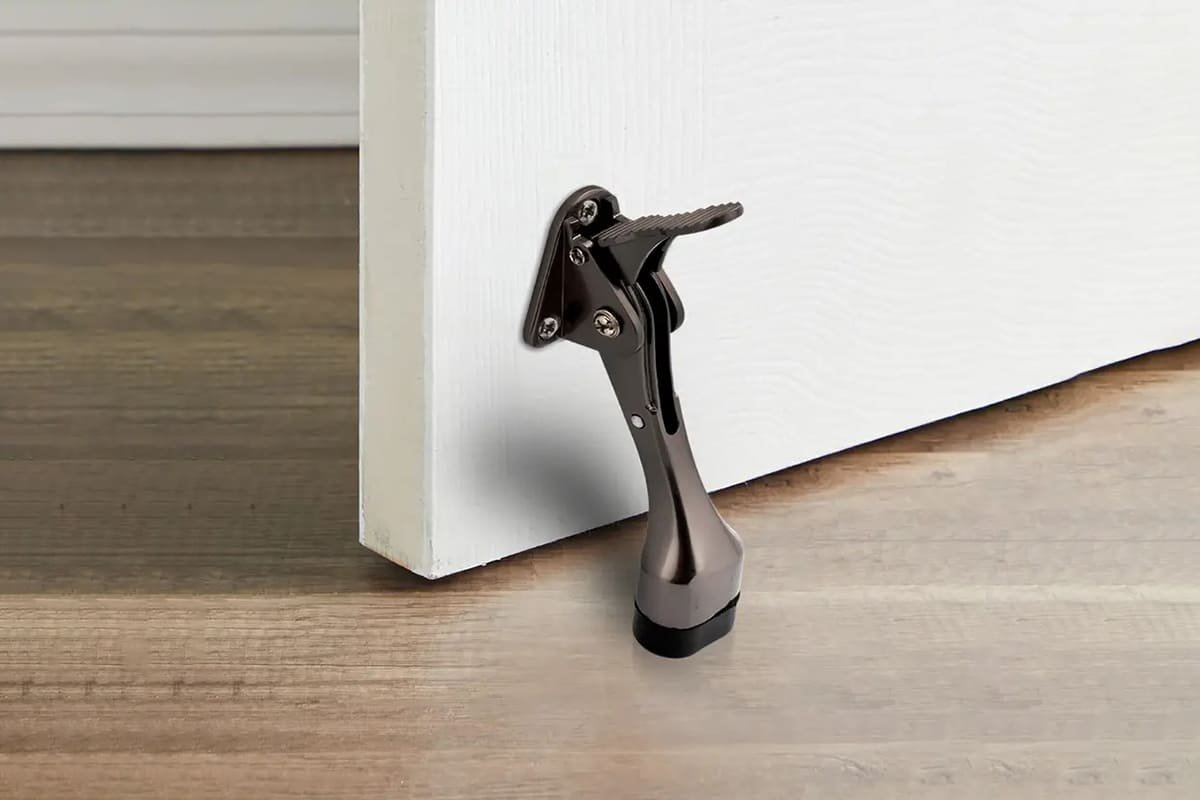
A mechanical door holder uses a catch, latch, hook, or locking mechanism to hold the door open.7 When the door reaches the holding position, the mechanism engages automatically or manually. The user releases it by pushing again, lifting a catch, or stepping on a pedal, depending on the design.
How mechanical holding works
Mechanical holders use physical engagement instead of magnetic attraction. The exact design varies, but the basic logic is similar.
Common mechanical forms include:
- Floor-mounted door catchers
- Wall-mounted catch holders
- Kick-down door holders
- Pedal-release holders
- Push-to-catch mechanical holders
- Door-mounted friction holders
Some product types, such as LAMP-style mechanical door catcher designs, are often used as references by buyers when they describe the function they want. I mention this only as a product-type reference, because every manufacturer’s model, load capacity, and installation requirement must be checked from its own technical documents.
Why mechanical holders may be preferred
A mechanical holder can be useful when the door must remain open with more certainty. Because the holding action relies on a catch or latch, the user can often feel when the mechanism has engaged.
Mechanical holders may be preferred when:
- The door is heavier than a standard interior door
- The door is used in a high-traffic area
- A door closer creates constant closing force
- Air pressure or wind may move the door
- Users need a clear locked-open position
- The project wants to avoid concerns about magnet weakening over time8
That said, mechanical does not automatically mean better. It means different. A mechanical holder can require more precise installation. It may also create more noise if the catch is not well designed. Some users may find foot release more convenient, while others may prefer a simple pull-release magnetic holder.
Magnetic vs mechanical holding logic
| Feature | Magnetic holder | Mechanical holder |
|---|---|---|
| Holding method | Magnet attracts metal plate | Catch, latch, hook, or pedal mechanism |
| Operation | Push to hold, pull to release | Push, step, lift, or press depending on design |
| User feel | Smooth and simple | More positive locking feel |
| Suitable for | Light to medium general doors | Doors needing stronger retention |
| Main concern | Magnet alignment and holding strength | Mechanical wear and installation precision |
| Appearance | Often compact | Can be more visible depending on type |
Installation precision matters
Mechanical holders often need exact alignment.9 If the catch and receiver do not meet correctly, the door may not lock. If the floor level varies, the latch may scrape or fail to engage. If the fixing screws are too weak, the repeated force may loosen the holder.
In a factory-direct hardware discussion, I usually ask for:
- Door thickness
- Door weight range
- Door material
- Floor clearance
- Opening angle
- Mounting surface photos
- Door closer model, if available
- Expected operation frequency
Those details help prevent selection mistakes. They also help decide whether the project needs a concealed, semi-concealed, or visible holder design.
Where a basic stopper still makes sense
A basic door stopper is still the right product when the door does not need to stay open. For example, a hotel room door may only need wall protection. An apartment bedroom door may only need handle impact prevention. A warehouse office door may only need a floor stop to protect the hinge and wall.
The key is not to force one category to do another category’s job. If the buyer wants impact protection only, use a stopper. If the buyer wants impact protection plus hold-open, use a holder.
How Should Buyers Choose A Door Stopper Or Door Holder?
The wrong accessory can create installation complaints even when the product itself is not defective. A buyer may order a nice-looking door stopper, but the door still moves. The issue is usually not appearance. The issue is that the function was not matched to the application.
Buyers should choose a door stopper or door holder by checking the required function first, then the door weight, opening angle, mounting location, traffic frequency, wind pressure, and door closer condition. If the door only needs impact protection, use a stopper. If it must stay open, use a holder.
Step 1: Define the function
I recommend starting with one simple question:
“Do we only need to stop the door, or do we need to keep it open?”
This avoids most purchasing confusion.
Use this basic decision guide:
| Project need | Better product direction |
|---|---|
| Prevent handle from hitting wall | Basic door stopper |
| Prevent door leaf from over-opening | Floor or wall stopper |
| Keep light interior door open | Magnetic door holder |
| Hold heavier door open | Mechanical holder may be better |
| Hold door open against closer force | Check mechanical holder or approved closer hold-open solution |
| Fire-rated or regulated door | Check local regulations and project requirements first |
Step 2: Check door weight and construction
Door weight affects holding performance. A hollow-core interior door is very different from a solid timber door, steel door, or fire-rated door assembly. A heavy door creates more momentum when opened and more force when pulled by a closer.
Buyers should collect basic door data before confirming samples:
- Door leaf height and width
- Door thickness
- Door material
- Approximate weight
- Hinge type
- Opening direction
- Required opening angle
- Door closer presence
At SDH Hardware, our conversations with buyers often become smoother when we receive a door schedule or hardware schedule. Even a simple drawing helps us understand whether the buyer needs a stopper, holder, hinge accessory, or closer-related solution.
Step 3: Confirm wall or floor mounting
The installation position affects both function and durability. A wall-mounted holder may work well when the wall is solid and the door meets it cleanly. A floor-mounted holder may be better when the wall is too far away or not suitable for fixing.
However, floor mounting has its own concerns:
- Floor drilling may affect waterproofing or heating systems
- Raised thresholds may block alignment
- Cleaning machines may hit floor hardware
- Public areas may require trip-hazard consideration
- Tile or stone floors may need special anchors
Wall mounting also needs checking:
- Gypsum board may need reinforcement
- Skirting boards may interfere
- Door handle projection may affect placement
- Glass walls may not allow standard fixing
- Decorative panels may limit screw depth
A door stopper looks small, but fixing strength is not a small issue. Repeated impact can loosen poor anchors. For bulk projects, buyers should ask suppliers for installation drawings and recommended screw specifications.
Step 4: Consider traffic frequency and user behavior
A private office door and a school corridor door do not face the same use pattern. High-frequency doors need hardware that can tolerate repeated operation. Users may kick the holder, pull the door sharply, or release it without care.
For busy applications, buyers should consider:
- Durable body material, such as stainless steel or zinc alloy where suitable
- Replaceable rubber or buffer parts, if the design allows
- Secure fixing method matched to the substrate
- Clear user operation, especially for mechanical release
- Easy maintenance access for screws and moving parts
I do not recommend selecting only by catalog photo. A sample can look attractive but still be unsuitable if the fixing base is weak, the magnet alignment is poor, or the release method is inconvenient.
Step 5: Match finish and product family
For wholesalers and brand enterprises, appearance consistency also matters. A door accessory should match lever handles, hinges, cylinders, and other visible hardware. Common finishes include satin stainless steel, polished stainless steel, black, brass tone, and custom colors depending on product material and production process.
As a manufacturer, I see many buyers prefer one-stop sourcing because it helps keep finishes and packaging consistent across a project or product line. For customized orders, buyers may also request:
- Laser logo
- Stamped logo
- Custom packaging
- Product drawings after order confirmation
- Surface treatment adjustment
- Accessory configuration changes
These commercial details should come after the technical selection. First choose the correct function. Then confirm finish, branding, packaging, and bulk order details.
Are Door Stoppers Safe For Fire-Rated Doors Or Doors With Closers?
Hold-open hardware can become a safety issue if it is used in the wrong place. A buyer may want convenience, but a fire-rated door or public-building door may have rules that limit whether it can be held open. This must be checked before product approval.
A door stopper or door holder should not be added to fire-rated doors, closer-controlled doors, or public-building doors without checking local regulations and project requirements.10 Some doors must close automatically for safety. Buyers should verify fire-rated documents, door closer requirements, and project specifications before using hold-open hardware.
Why the safety boundary matters
Fire-rated doors are usually designed as part of a complete assembly. The door leaf, frame, hinges, lock, closer, seals, and accessories may all affect performance. If a door is required to close during an emergency, a non-approved hold-open device can conflict with that requirement.
I avoid giving global code advice because fire regulations differ by country, city, project type, and building use. A hardware supplier can provide product documents, but the buyer or project professional should verify the final application.
For regulated projects, buyers should check:
- Local fire safety regulations
- Project hardware schedule
- Architect or consultant requirements
- Fire-rated door assembly documents
- Door closer specifications
- Approved hold-open device requirements
- Inspection and acceptance rules
Doors with closers need extra attention
A door closer is designed to close the door automatically.11 If a buyer adds a magnetic holder or mechanical holder, the holder must resist the closer’s force during hold-open use. If it cannot, the door will release by itself or fail to stay open.
There is also a functional conflict. In some applications, the closer exists because the door should not remain open. In other applications, a hold-open closer arm or approved electromagnetic release system may be required instead of a simple holder.
That is why I ask buyers whether the door has:
- Overhead door closer
- Concealed door closer
- Floor spring
- Hold-open closer arm
- Fire alarm linked release system
- Access control hardware
A normal door stopper cannot solve these system-level questions. It only answers the anti-collision question.
Fire-rated certifications should be verified
SDH Hardware supplies core architectural door hardware with CE certification and fire-rated certification available for relevant product categories. However, buyers should always verify the exact certificate, test report, product model, door assembly, and project requirement before approval.
This is especially important because a certification document may apply to:
- A specific product model
- A specific material
- A specific size
- A specific fire test standard
- A specific installation condition
- A complete door assembly rather than one accessory alone
For technical B2B purchasing, I suggest treating certificates as documents to be reviewed, not as marketing slogans. If the project involves fire doors, life safety, public access, or heavy traffic, a qualified professional should evaluate the application-specific decision.
Practical rule for procurement teams
A simple rule works well:
If holding the door open could affect fire safety, smoke control, access control, or building operation, do not approve the hardware by catalog name alone.
Instead, request drawings, installation instructions, certificates where applicable, and written confirmation against project requirements. The cost of checking early is much lower than replacing installed accessories later.
Which Door Stopper Materials And Finishes Should Buyers Compare?
Material selection can look like a small detail, but it affects durability, appearance, and long-term maintenance. If buyers only focus on whether the door stopper can hold the door, they may miss corrosion resistance, finish matching, and impact absorption.
Buyers should compare door stopper and door holder materials by installation environment, door weight, finish requirements, and expected service conditions. Stainless steel is common for corrosion resistance, zinc alloy supports many decorative shapes, brass offers a premium look, and rubber or plastic parts help absorb impact.
Common material options
Different markets prefer different materials. In the Middle East, Europe, and Southeast Asia, I often see buyers request stainless steel finishes for modern doors, black finishes for contemporary interiors, and brass-tone finishes for decorative projects.
| Material | Common use | Strengths | Points to check |
|---|---|---|---|
| Stainless steel | Commercial and modern interiors | Corrosion resistance, clean appearance | Grade, surface finish, screw quality |
| Zinc alloy | Decorative accessories | Flexible shapes, cost-effective | Coating quality, base strength |
| Brass | Premium hardware lines | Classic appearance, solid feel | Cost, finish maintenance |
| Rubber | Buffer parts | Impact absorption, noise reduction | Hardness, aging resistance |
| Plastic/nylon | Light-duty components | Low noise, light weight | Wear resistance, UV exposure |
Conclusion
A door stopper can protect a door from impact, but it is not always the right product for keeping a door open. If the project needs hold-open function, buyers should evaluate magnetic and mechanical door holders based on door weight, closer force, wind pressure, mounting position, and safety rules. For fire-rated or public-building doors, always check local regulations and project requirements. If you are sourcing architectural door hardware for bulk orders, I can help you compare the correct accessory type, drawings, finishes, and OEM/ODM options for your market.
"Doorstop", https://en.wikipedia.org/wiki/Doorstop. Authoritative builders’ hardware glossaries (e.g., BHMA/ANSI terminology) define door stops as devices that limit impact and door holders as devices intended to maintain a door in an open position, often using magnetic or mechanical retention. Evidence role: definition; source type: institution. Supports: That industry terminology distinguishes door stops (impact-limiting) from door holders (hold-open devices), commonly via magnetic or mechanical means.. Scope note: Terminology can vary by region and manufacturer, but industry standards use this functional distinction. ↩
"Doorstop", https://en.wikipedia.org/wiki/Doorstop. Reference descriptions of door stops indicate that metal bodies are commonly used in combination with elastomeric (rubber or plastic) tips or buffers to absorb impact and reduce noise. Evidence role: general_support; source type: encyclopedia. Supports: That door stops typically use metal bodies (e.g., stainless steel, brass, zinc alloys) combined with elastomeric parts (rubber/plastic) to absorb impact.. Scope note: Specific materials vary by product design and performance requirements; sources illustrate common but not exhaustive options. ↩
"American Automobile Association", https://en.wikipedia.org/wiki/American_Automobile_Association. Standard references describe door stops as devices that restrict the swing of a door to prevent impact damage to adjacent walls and door-mounted hardware. Evidence role: mechanism; source type: encyclopedia. Supports: That door stops restrict door swing to prevent collisions that could damage walls or fittings.. Scope note: Examples of specific damage types are illustrative and can vary by room layout. ↩
"Electromagnetic door holder", https://en.wikipedia.org/wiki/Electromagnetic_door_holder. Technical standards and guides describe magnetic door holders as paired components—typically a magnet and a ferromagnetic strike—that hold the door at an open position until intentionally released. Evidence role: mechanism; source type: institution. Supports: That magnetic door holders comprise a magnet and a ferromagnetic plate which engage to hold the door open until manual or automatic release.. Scope note: Electrically released models add fire-safety integration, but the core magnetic holding principle is the same. ↩
"What Is a Door Holder, How Does It Work, and How Can I ...", https://akada-hardware.com/what-is-a-door-holder-how-does-it-work-and-how-can-i-choose-the-right-one/. Facilities and engineering guidance emphasizes matching a holder’s rated holding force and fixings to the door’s mass and environmental loads (e.g., wind or HVAC pressure) and ensuring suitable substrates for long-term anchorage. Evidence role: expert_consensus; source type: education. Supports: That selecting door-holding devices requires considering door weight, substrate strength, and environmental loads such as air pressure and closer forces.. Scope note: Quantitative thresholds are product-specific and should be verified against manufacturer data. ↩
"Door Hold Open Devices - Facilities and Operations", https://fo.umich.edu/fosg/door-hold-open-devices/. Closer standards specify size-related closing torques; if a holder’s rated retention is lower than the closer’s restoring force, the closer can pull the door free of the magnet. Evidence role: mechanism; source type: institution. Supports: That door closers apply defined closing torque per standards (e.g., EN 1154/ANSI A156.4), which can exceed the holding force of weak magnets.. Scope note: Actual performance depends on closer size/adjustment and the holder’s rated holding force. ↩
"Latch", https://en.wikipedia.org/wiki/Latch. Hardware reference materials define mechanical door holders as devices that maintain a door open by engaging a catch, latch, or hook rather than by magnetic attraction. Evidence role: definition; source type: encyclopedia. Supports: That mechanical door holders employ catches, latches, or hooks to maintain the door in an open position.. ↩
"Demagnetization in permanent magnet motors", https://ecommons.udayton.edu/cgi/viewcontent.cgi?article=5559&context=graduate_theses. Physics and materials references note that permanent magnets can gradually demagnetize, particularly with elevated temperatures, mechanical impacts, or exposure to opposing fields; resistance to demagnetization depends on magnet material and conditions. Evidence role: mechanism; source type: education. Supports: That permanent magnets can lose magnetization over time due to heat, mechanical shock, or opposing magnetic fields, with stability dependent on material properties.. Scope note: High-coercivity magnets used indoors often exhibit negligible loss over normal service lifetimes. ↩
"2100 ELECTROMAGNETIC DOOR HOLDER, RECESSED ...", https://www.abhmfg.com/content/documents/0000227_2100.pdf. Installation guides for mechanical door holding and catching devices emphasize precise alignment of mating parts to ensure consistent engagement and release. Evidence role: general_support; source type: education. Supports: That manufacturer-neutral installation guidance stresses accurate alignment for mechanical holding/catching devices to function properly.. Scope note: Exact tolerances vary by product design and should be verified in specific installation instructions. ↩
"Fire Doors and NFPA 80 FAQs", https://www.nfpa.org/news-blogs-and-articles/blogs/2025/04/11/fire-doors-faqs. Fire and life-safety standards (e.g., NFPA 80 and NFPA 101, as adopted by local codes) require self-closing fire doors and limit hold-open hardware to approved automatic-release devices, so compliance must be verified prior to adding such hardware. Evidence role: expert_consensus; source type: institution. Supports: That codes/standards require fire and certain egress doors to be self-closing and restrict hold-open devices to approved types, necessitating code checks before installation.. Scope note: Requirements and enforcement vary by jurisdiction and adopted code edition. ↩
"Door closer", https://en.wikipedia.org/wiki/Door_closer. Standard definitions describe a door closer as a mechanical device that closes a door automatically after it has been opened. Evidence role: definition; source type: encyclopedia. Supports: That a door closer is a device that automatically closes a door after opening.. ↩