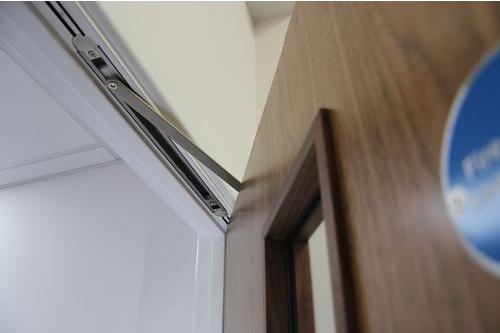
Door Closer Arm Types & Mounting Options: REG, PA, CUSH?
Door closer arm types can be confusing when a buyer only sees short codes like REG, PA, or CUSH on a quotation sheet. The problem gets worse when these codes are treated like quality grades. The better solution is to connect each code to the actual installation side, frame condition, and opening-control requirement.
REG, PA, and CUSH are door closer arm types and mounting configurations, not quality levels.1 REG means regular arm mounting on the pull side or hinge side.2 PA means parallel arm mounting on the push side.3 CUSH means a cushion-style parallel arm with a built-in mechanical stop or limiting function for opening control.4
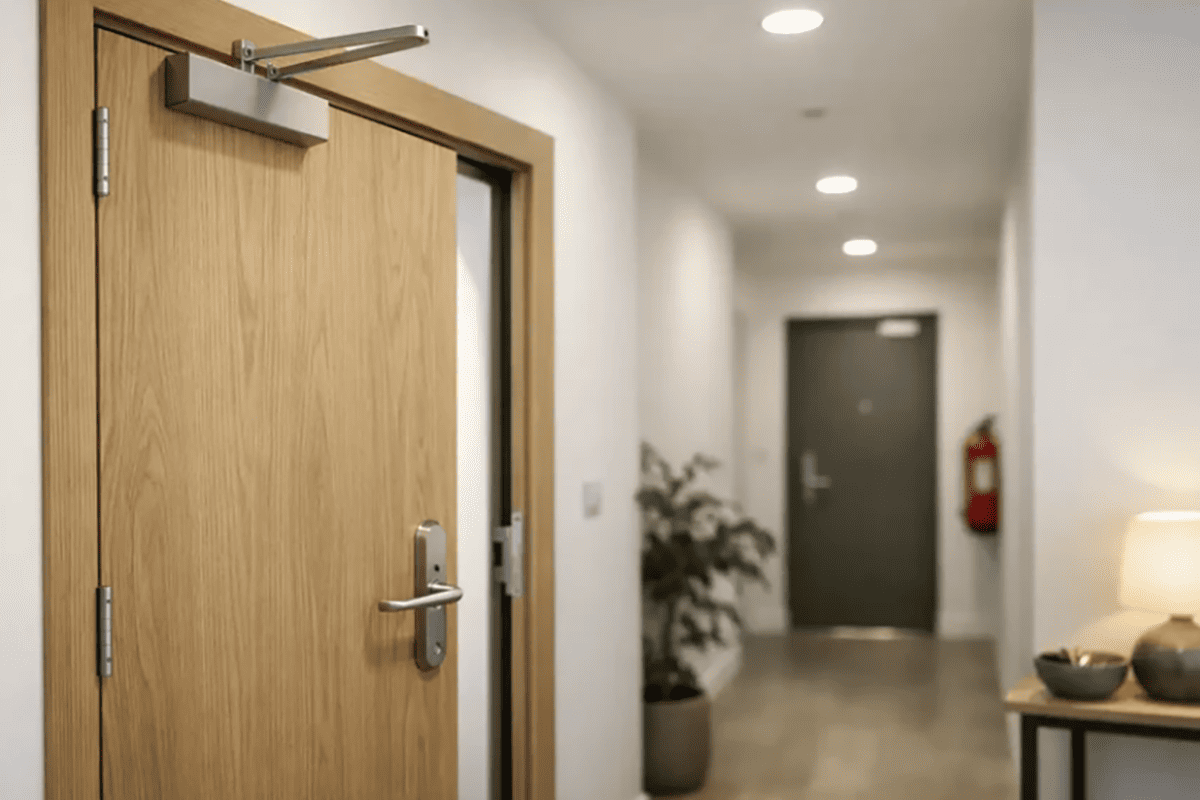
In my daily communication with door factories, hardware brand owners, and importers, I often see buyers ask for “REG” or “PA” directly. I understand why. The codes look simple. However, a professional selection needs more than the abbreviation. The sections below explain how I evaluate these configurations before confirming an order.
What Do Door Closer Arm Types REG, PA, and CUSH Mean?
Door closer arm types become difficult when a buyer expects one code to answer every installation question. That creates risk because REG, PA, and CUSH do not describe the same decision layer. I always start by defining each term before discussing the project condition.
REG, PA, and CUSH describe common door closer arm configurations. REG is a regular arm for pull-side mounting. PA is a parallel arm for push-side mounting. CUSH is usually a cushion parallel arm with a built-in mechanical stop or limiting function for door opening control.
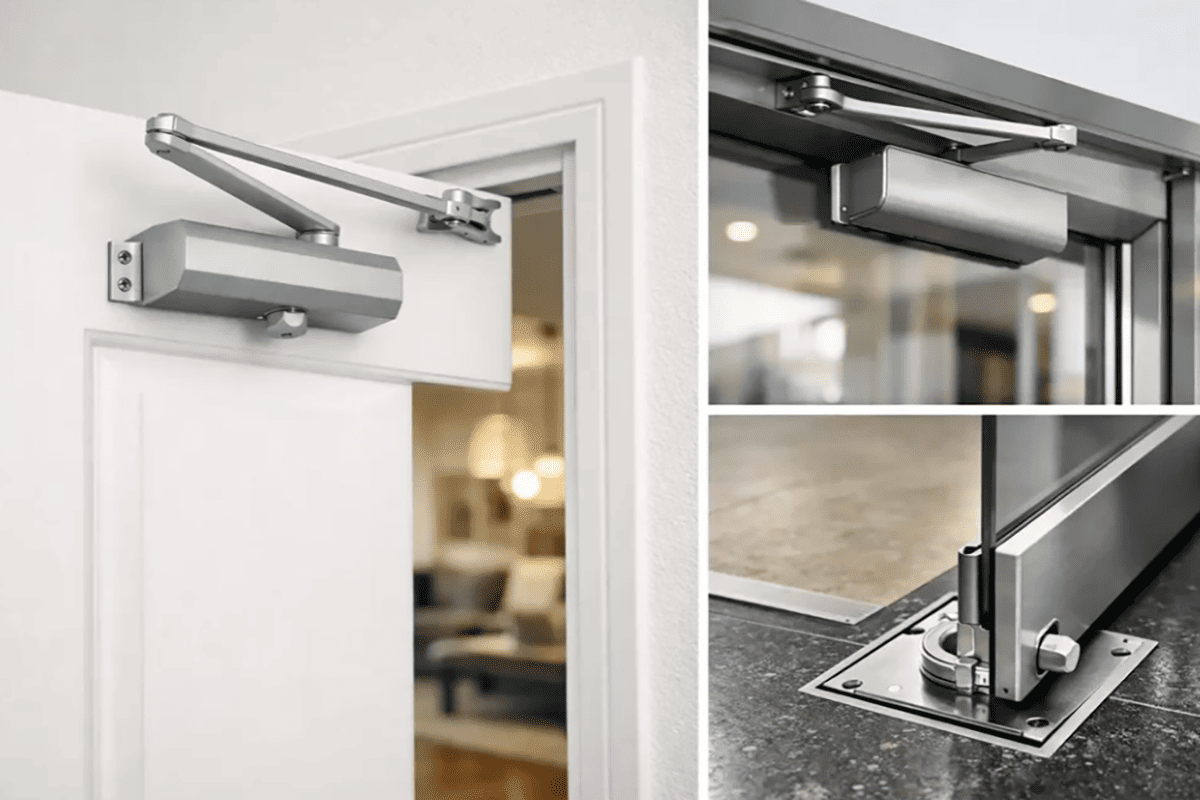
REG / Regular Arm
REG normally means regular arm mounting. In this setup:
- The closer body is installed on the pull side of the door.
- The arm is fixed to the frame.
- The arm projects outward when the door is closed.5
This configuration is common because it is straightforward and easy to understand. However, it needs suitable space on the pull side. It also leaves the arm more visible, which may matter for some commercial or architectural projects.
From a procurement point of view, REG should not be selected only because it is “standard.” The buyer still needs to confirm:
- Door handing and swing direction
- Pull-side access
- Frame depth and top rail condition
- Product model compatibility
- Required opening angle from the project drawing
PA / Parallel Arm
PA means parallel arm mounting. In this setup:
- The closer body is installed on the push side of the door.
- A parallel arm bracket or plate is fixed to the frame.
- The arm sits more parallel to the door when closed.6
This option is often requested where pull-side mounting is not suitable or where the visual position of the arm is important. It is also common for doors where the closer must be installed on the push side because of site conditions.
However, PA is not automatically better than REG. It is simply different. The door, frame, and installation side decide whether PA is appropriate.
CUSH / Cushion Arm
CUSH normally refers to a cushion arm, which is a push-side, parallel-arm style configuration with a built-in mechanical stop or limiting function. It helps cushion or stop the door during opening.
This is important because CUSH is not just “PA with another name.” It adds an opening-control function. Buyers often ask for CUSH when they want extra protection against the door opening too far. However, the actual suitability depends on the closer model, door weight, opening angle requirement, and manufacturer catalogue.
I do not treat CUSH as a universal substitute for a wall stop, floor stop, or project-specific door control solution. I always recommend checking the exact product data and installation conditions before confirming it.
How Should Buyers Choose Door Closer Arm Types by Mounting Side?
Door closer arm types should first be chosen by installation side, not by habit or price. If a buyer starts with the wrong side of the door, the order can include the wrong arm, wrong bracket, or wrong SKU. That creates rework before the product is even installed.
Buyers should choose REG when the closer body is installed on the pull side and the arm mounts to the frame. They should choose PA when the closer body is installed on the push side with a parallel arm bracket. CUSH should be considered when push-side mounting also needs mechanical opening control.
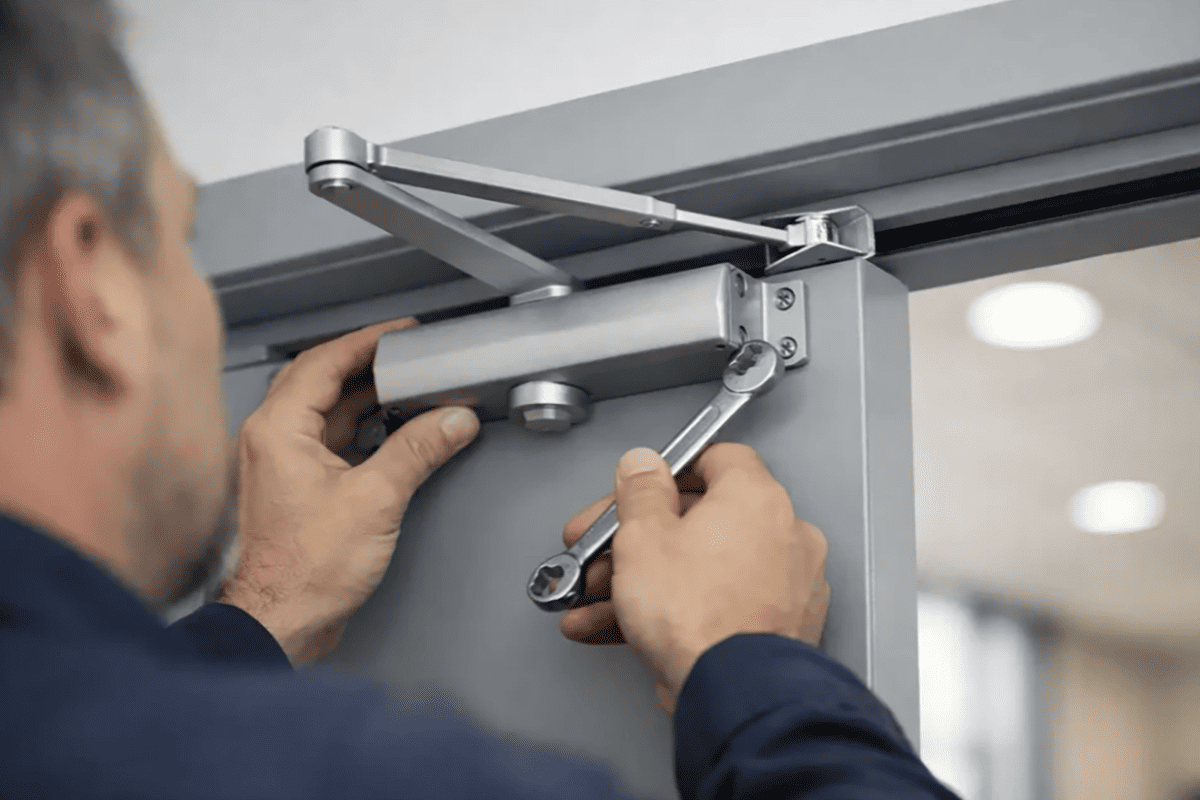
Start With the Door Side
The first question is simple:
Will the closer body be installed on the pull side or the push side?
This single question prevents many ordering mistakes. In my experience, some customers send only “PA arm needed” without a door drawing. When I ask for the installation side, they sometimes realize that the project actually needs regular arm mounting. This small clarification can prevent a full batch of incorrect arm sets.
Here is a practical comparison:
| Configuration | Typical mounting side | Basic arm position | Main selection question |
|---|---|---|---|
| REG / Regular Arm | Pull side / hinge side | Arm mounts to frame and projects outward | Is pull-side mounting possible? |
| PA / Parallel Arm | Push side | Arm sits more parallel to door | Is push-side mounting required? |
| CUSH / Cushion Arm | Push side | Parallel-style arm with stop function | Is opening control required? |
Check the Frame and Top Rail
The door closer does not work alone. The frame and door structure matter. A buyer should confirm:
- Top rail height
- Frame face width
- Frame depth
- Door material
- Reinforcement position
- Clearance above the door
- Nearby walls, glass, or hardware
For example, a parallel arm bracket needs proper frame space.7 If the frame is too narrow or the header condition is unusual, the installer may need additional assessment. A professional supplier can explain the standard mounting logic, but the final application should be checked against the actual project drawing and product instruction sheet.
Match Stock Planning With Mounting Demand
For wholesalers and hardware brand owners, the mounting side also affects SKU planning. If a market mainly uses push-side installation, PA arms may need stronger stock coverage. If the market uses standard pull-side installations, REG arms may be the main configuration.
However, mixed inventory needs careful labeling. I recommend separating:
- Door closer body model
- Arm type
- Bracket type
- Finish
- Packaging code
- Instruction language
- Certification documents available for verification
This helps sales teams explain products correctly. It also reduces confusion for downstream customers.
How Do Door Closer Arm Types Differ From Mounting Position, Arm Function, and Closing Behavior?
Door closer arm types are often mixed with other codes, and this causes incorrect orders. The issue is not only language. It is category confusion. Buyers may compare REG, CUSH, and DA as if they belong to one group, but they describe different things.
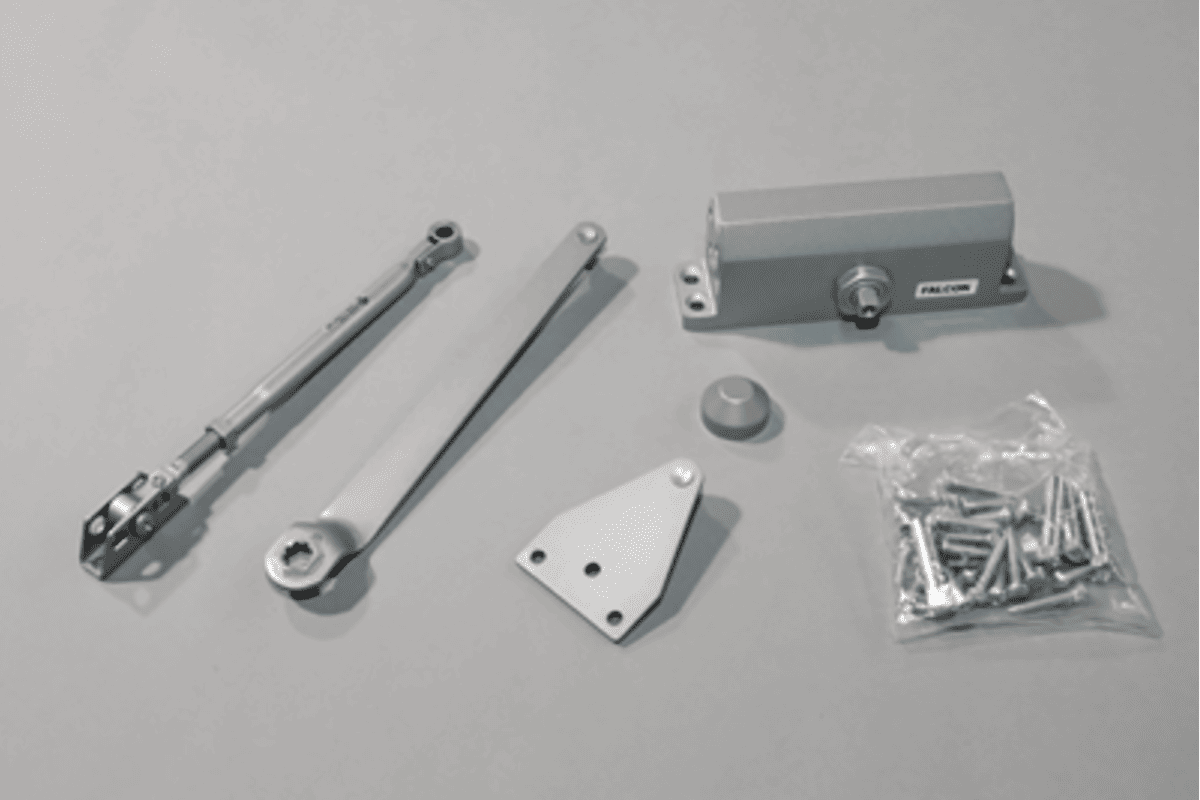
Buyers should separate three decision layers: mounting position such as REG, PA, or TJ; arm or function configuration such as CUSH or H; and closing behavior such as DA. This separation helps buyers specify the closer correctly and avoid mixing installation method with optional functions.
Layer 1: Mounting Position
Mounting position describes where the closer body and arm are installed. REG and PA belong mainly to this layer. TJ may also appear in some catalogues as a top jamb type, depending on the manufacturer’s terminology.
Common mounting questions include:
- Is the closer installed on the pull side?
- Is the closer installed on the push side?
- Is the frame suitable for the bracket?
- Is the closer body installed on the door or frame?
- Does the installation match the door swing?
This layer is physical. It answers the installation location question.
Layer 2: Arm or Function Configuration
CUSH and H usually belong more to the arm/function layer, depending on catalogue definitions.
- CUSH usually means cushion arm with a built-in mechanical stop or limiting function.
- H often indicates hold-open function in many door closer contexts, but buyers should confirm the supplier’s code.
- Some arms may combine mounting style with an added function.
This layer answers the control-function question. It does not replace the mounting question.
Layer 3: Closing Behavior
Closing behavior describes how the door closes after opening. DA is commonly used to mean delayed action in many door closer discussions, but the exact abbreviation should always be verified against the product catalogue.
Delayed action may be relevant for places where users need more time to pass through the doorway.8 However, application-specific use should be checked carefully, especially for fire-rated doors, accessibility requirements, and local building rules.
Why the Separation Matters
When buyers mix these layers, they may write unclear specifications such as:
- “Need PA DA CUSH, same as REG”
- “Please quote CUSH closer, normal mounting”
- “Need hold-open delayed action parallel regular arm”
These requests are difficult to confirm without drawings or product model references. A better format is:
“Door closer model: [model code]. Mounting: push side parallel arm. Arm function: cushion stop required. Closing function: delayed action required if compatible. Please confirm catalogue compatibility and documents.”
This format gives the supplier enough information to respond responsibly.
At SDH Hardware, I see this as a configuration communication issue. My role is not to guess the site condition. My role is to help buyers turn unclear abbreviations into clear product requirements that our production and sales teams can verify against actual catalogue options.
What Procurement Risks Come From Ordering Door Closer Arm Types by Abbreviation Only?
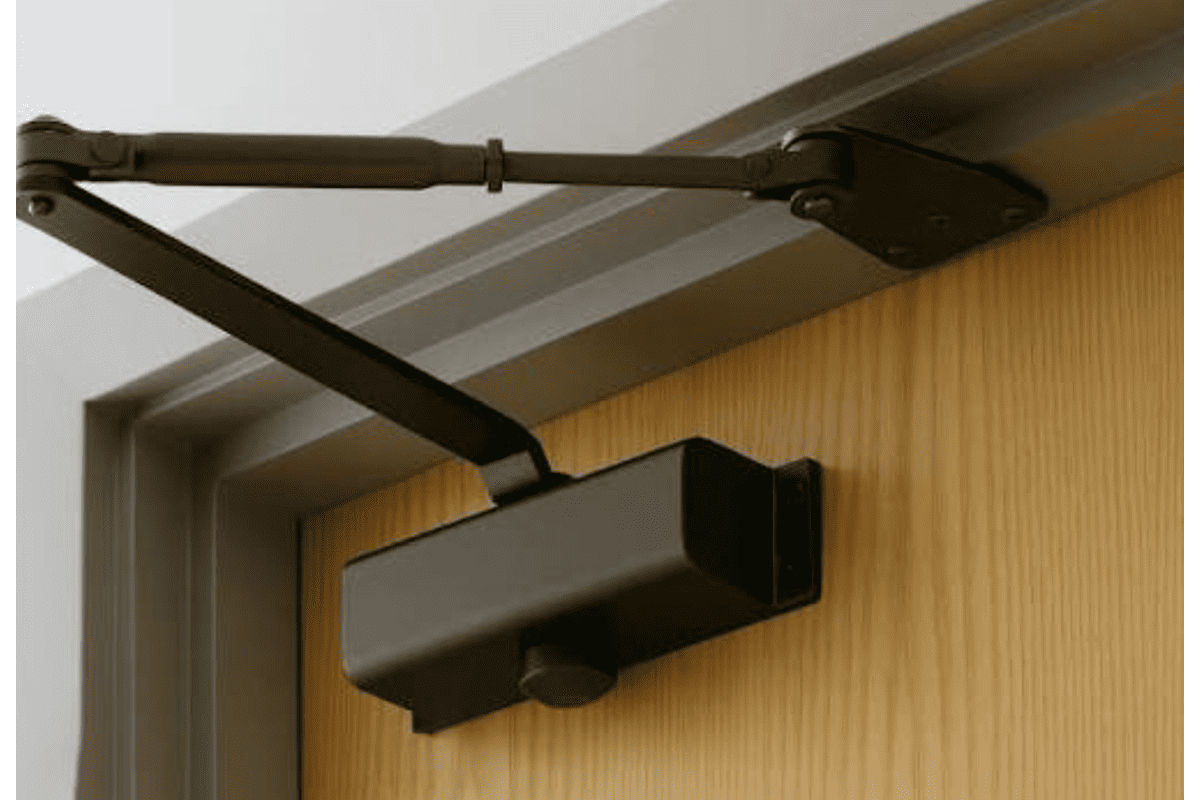
Door closer arm types look simple on a quotation sheet, but abbreviation-only ordering can create expensive mistakes. A buyer may think “PA” is enough information. Then the goods arrive, and the installer finds the bracket is wrong or the mounting side does not match the door.
Ordering by abbreviation only can cause wrong arm supply, wrong bracket selection, failed installation, site rework, unclear SKU planning, and sales confusion. Buyers should confirm door side, frame condition, required function, finish, packaging, and catalogue compatibility before approving mass production or shipment.
Risk 1: Wrong Arm or Bracket
The most direct risk is receiving the wrong arm package. A closer body may be compatible with different arm sets, but each arm set has its own installation logic. If the bracket is missing or incorrect, the installer cannot finish the job properly.
This becomes more serious for bulk orders. A small misunderstanding in a sample order may be easy to solve. A wrong configuration in a container shipment is different. It can affect:
- Site installation schedule
- Customer complaints
- Local repacking work
- Replacement parts cost
- Brand reputation
Risk 2: Failed Installation on Site
A closer can be well manufactured and still fail as a selection if the installation condition is wrong. For example, push-side mounting needs the correct parallel arm bracket and enough frame space. A cushion arm needs proper coordination with opening angle expectations and project conditions.
A buyer should not assume that every door closer supports every arm configuration. The correct method is to ask the supplier to confirm compatibility with:
| Check item | Why it matters |
|---|---|
| Closer body model | Not every model supports every arm |
| Door width and weight | Closer power and application need review |
| Mounting side | REG and PA depend on installation side |
| Frame condition | Bracket installation needs proper space |
| Opening-control need | CUSH may be needed for stop function |
| Certification documents | Buyers should verify CE or fire-rated documents when required |
Risk 3: Unclear Sales Explanation
Hardware brand owners and wholesalers do not only buy products. They also need to explain products. If a sales team cannot explain REG, PA, and CUSH clearly, downstream customers may lose confidence.
I have seen product lists where the same closer is described in three different ways by three different salespeople. That creates confusion in the market. A simple internal training note can help:
- REG = pull-side regular arm
- PA = push-side parallel arm
- CUSH = cushion parallel-style arm with stop function
- H = hold-open function, if catalogue confirms
- DA = delayed action, if closer model supports it
This kind of language makes quotations cleaner and reduces after-sales questions.
Risk 4: Certification Misunderstanding
Many architectural hardware buyers need CE certification, fire-rated certification, or other compliance documents. However, buyers should verify whether the specific door closer model and configuration match the document scope.9
At SDH Hardware, our core product categories are supplied with relevant certification options, and buyers can request documents for review. Still, I prefer careful wording: certification is not a decoration on a catalogue page. It is a document that should be checked against the actual product, intended application, and market requirement.
For fire-rated doors or regulated projects, buyers should involve qualified professionals and local code reviewers.10 The supplier can provide product information and documents, but the project approval depends on the full door assembly and local rules.
How Can B2B Buyers Specify Door Closer Arm Types Clearly to Suppliers?
Door closer arm types should be specified in a way that production, sales, inspection, and the buyer’s warehouse team can all understand. If the specification only says “CUSH arm,” the supplier may still need to ask several follow-up questions before confirming the order.
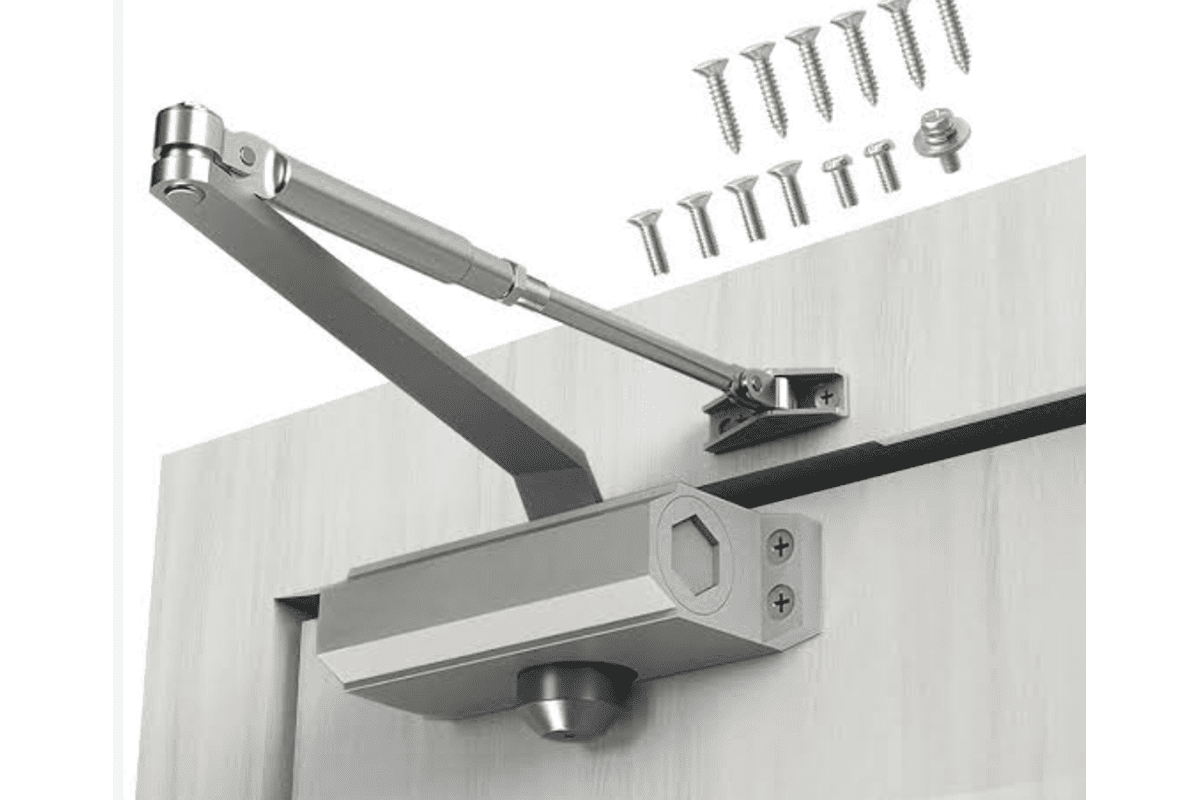
A clear B2B specification should include closer model, mounting side, arm type, function requirement, door direction, frame condition, finish, quantity, packaging, logo needs, and document requirements. Buyers should also request catalogue confirmation before mass production, especially for CUSH, hold-open, delayed action, or fire-rated applications.
Use a Practical Specification Template
I recommend that buyers use a short but complete format. It does not need to be complicated. It only needs to answer the right questions.
Example specification format:
| Specification item | Buyer should provide |
|---|---|
| Door closer model | Supplier model code or drawing reference |
| Mounting side | Pull side, push side, or top jamb if applicable |
| Arm type | REG, PA, CUSH, or other catalogue option |
| Required function | Hold-open, cushion stop, delayed action, backcheck, etc. |
| Door information | Door width, weight, material, and swing direction if available |
| Frame condition | Frame type, available mounting space, special restrictions |
| Finish | Silver, black, stainless look, custom color, etc. |
| Packaging | Neutral, brand box, project label, barcode |
| Documents | CE, fire-rated certificate, test report, installation sheet |
| Inspection | Pre-shipment inspection requirements |
This format helps both sides avoid assumptions. It also helps factory production teams prepare the correct accessories.
Ask Better Questions Before Ordering
Instead of asking, “Which is better, REG, PA, or CUSH?” I encourage buyers to ask:
- Is the closer installed on the pull side or push side?
- Is there enough frame space for the selected bracket?
- Does the door need a mechanical stop or limiting function?
- Does the door need hold-open or delayed closing?
- Does the closer model support this configuration?
- Are certification documents required for this exact project?
- Will the same SKU be sold to multiple markets?
These questions create a much better procurement discussion. They also protect the buyer from ordering a configuration that sounds correct but does not fit the actual door.
Align OEM and ODM Requirements
SDH Hardware works with door factories, hardware brand enterprises, importers, and bulk wholesalers. Many customers request OEM or ODM supply with custom packaging, logos, finishes, and product drawings. In these cases, configuration clarity becomes even more important.
For example, a brand owner may want one door closer body with several arm options under different SKUs. That can be practical, but the packaging and carton labels must be clear. Otherwise, the warehouse may ship PA arms to a REG order or send CUSH arms where a normal parallel arm was requested.
For custom orders, I suggest confirming:
- Product drawing after order confirmation
- Arm and bracket packing method
- Laser logo or stamping position
- Color box artwork
- Instruction sheet language
- Carton label and SKU code
- Inspection method after production
Work With a Supplier Who Checks Details
A professional supplier should not confirm a configuration only from an abbreviation. If a buyer sends “Need CUSH,” I believe the responsible response is to ask for more context. The supplier should confirm the mounting condition, desired function, and product model compatibility.
This is also where factory-direct communication helps. Because SDH Hardware operates independent production lines and handles door hardware manufacturing directly, we can connect sales discussion with product configuration and inspection more efficiently. However, the buyer should still verify product-specific details in the current catalogue and request relevant documents before final approval.
Frequently Asked Questions
Are REG, PA, and CUSH quality grades?
No. REG, PA, and CUSH are not quality grades. They describe door closer arm types, mounting styles, or arm functions. Product quality depends on material, design, manufacturing control, testing, certification scope, and supplier consistency, not only on the arm abbreviation.
When should I choose a PA parallel arm?
You should consider a PA parallel arm when the closer body must be installed on the push side of the door. You should also confirm frame space, bracket suitability, closer model compatibility, and project requirements before ordering.
Is CUSH the same as PA?
No. CUSH is usually a cushion-style parallel arm with a built-in mechanical stop or limiting function. PA describes push-side parallel arm mounting. CUSH often uses a parallel-style installation, but it adds an opening-control function that standard PA may not include.
Can one door closer body use REG, PA, and CUSH arms?
Some closer models may support multiple arm configurations, but buyers should not assume universal compatibility. The correct answer depends on the supplier’s catalogue, closer body design, arm set, bracket, opening requirement, and certification scope.
What information should I send before asking for a quotation?
You should send the closer model if known, door mounting side, required arm type, door size, door weight if available, frame condition, finish, quantity, packaging needs, logo requirements, and certification document requirements. Drawings or photos are very helpful.
Conclusion
Door closer arm types such as REG, PA, and CUSH should be selected by installation logic, not by guesswork. REG usually means pull-side regular arm mounting. PA usually means push-side parallel arm mounting. CUSH usually means a cushion parallel-style arm with a mechanical stop or limiting function. Before ordering, I recommend confirming the door side, frame condition, required function, SKU plan, and catalogue compatibility. If you need factory-direct support for door closer configurations or complete architectural door hardware sourcing, contact SDH Hardware for a clear B2B quotation and selection check.
"Types of Commercial Door Closers: How to Choose the ...", https://www.pdqlocks.com/blog/types-of-commercial-door-closers. An institutional door-hardware glossary or ANSI/BHMA door-control standard classifies door closer arms by mounting arrangement and function, supporting the point that such labels are configuration descriptors rather than quality grades. Evidence role: definition; source type: institution. Supports: A neutral hardware standard or institutional glossary should show that door closer arm labels refer to mounting or functional configurations, not inherent quality grades.. Scope note: The source may not use the exact commercial shorthand REG, PA, and CUSH together, so it would support the classification principle rather than every abbreviation directly. ↩
"Door Hardware · Section 08710", https://www.weber.edu/wsuimages/facilities/Campus%20Planning/OPR/WSU%20Door%20Hardware.pdf. Institutional door-hardware training materials describe regular-arm door closer installation as a pull-side arrangement, supporting the article’s identification of REG with pull-side or hinge-side mounting. Evidence role: definition; source type: institution. Supports: The source should define or diagram regular arm mounting as the configuration used when the closer is installed on the pull side of the opening.. Scope note: The source may use the term regular arm rather than the abbreviation REG. ↩
"STANLEY D-1610 Door Closer Parallel Arm Installation",
. Door-hardware reference materials identify parallel-arm mounting as a push-side door closer configuration, supporting the article’s interpretation of PA as a push-side mounting arrangement. Evidence role: definition; source type: institution. Supports: The source should define parallel arm mounting as a push-side door closer arrangement using a frame-mounted bracket or shoe.. Scope note: The source may not discuss the abbreviation PA specifically, only the full term parallel arm. ↩"Door closer", https://en.wikipedia.org/wiki/Door_closer. Technical door-hardware references describe cushion-stop closer arms as arm assemblies that incorporate an opening stop, supporting the article’s explanation that CUSH adds a mechanical opening-control function. Evidence role: definition; source type: institution. Supports: The source should explain that cushion-stop or cushion-style closer arms include a mechanical stop intended to limit or cushion door opening.. Scope note: Terminology varies by manufacturer, so the source would support the general meaning of cushion-stop arms rather than prove every supplier’s use of the abbreviation CUSH. ↩
"Door Closer Guide -", https://resources.locksandsafes.com/door-closer-guide/. Door closer installation diagrams for regular-arm mounting show the arm extending away from the door/frame plane when the door is closed, supporting the article’s description of the arm’s visible position. Evidence role: mechanism; source type: institution. Supports: The source should show or describe the closed-door geometry of a regular-arm door closer installation.. Scope note: The exact projection angle depends on the closer model, template, and frame geometry. ↩
"STANLEY D-1610 Door Closer Parallel Arm Installation",
Standard installation diagrams for parallel-arm door closers depict the arm lying near-parallel to the closed door, supporting the article’s contrast between PA and regular-arm geometry. Evidence role: mechanism; source type: institution. Supports: The source should show that the parallel arm configuration places the arm closer to the plane of the door when closed.. Scope note: The source would support the general geometry; exact alignment varies by closer design and installation template. ↩"Parallel Arm Vs. Standard Arm Door Closer Fitting", https://www.merlinarc.com/parallel-arm-vs-standard-arm-door-closer-fitting/. Door closer installation instructions specify frame or header mounting locations for parallel-arm brackets, supporting the article’s statement that adequate frame space is necessary. Evidence role: mechanism; source type: institution. Supports: The source should document that parallel arm brackets require sufficient frame/header surface and clearance for installation.. Scope note: Required dimensions are model-specific, so the source would establish the general installation dependency rather than a universal measurement. ↩
"Chapter 4: Entrances, Doors, and Gates", https://www.access-board.gov/ada/guides/chapter-4-entrances-doors-and-gates/. Accessibility guidance from public authorities treats door closing force, speed, and timing as factors affecting usable passage through doorways, providing contextual support for the relevance of delayed action where users need more time. Evidence role: general_support; source type: government. Supports: The source should support the broader accessibility principle that door closing speed and timing affect passage through doorways, especially for users who need more time.. Scope note: Accessibility standards may regulate closing speed or force without specifically requiring a delayed-action feature. ↩
"Frequently Asked Questions Regarding Product Evaluations", https://www.tdi.texas.gov/wind/faqprodeval.html. Certification and listing guidance explains that conformity documents apply to defined products, configurations, and intended uses, supporting the article’s instruction to match documents to the exact closer model and configuration. Evidence role: expert_consensus; source type: institution. Supports: The source should explain that product certifications, listings, or declarations apply to specified models, configurations, intended uses, or tested assemblies.. Scope note: The relevant document type varies by market, such as UL listing, CE documentation, or fire-test certification. ↩
"Door Locks Educational Occupancies - DSPS - Wisconsin.gov", https://dsps.wi.gov/a-z-programs-list/fire-prevention/references/door-locks-educational-occupancies/. Fire and building-code guidance treats fire-rated doors as assemblies subject to inspection and approval under applicable codes, supporting the article’s statement that regulated projects require qualified professional and local-code review. Evidence role: expert_consensus; source type: government. Supports: The source should show that fire-rated door assemblies and related hardware are subject to code compliance, inspection, and authority review.. Scope note: Specific approval procedures differ by jurisdiction and by the fire-rating system used. ↩