
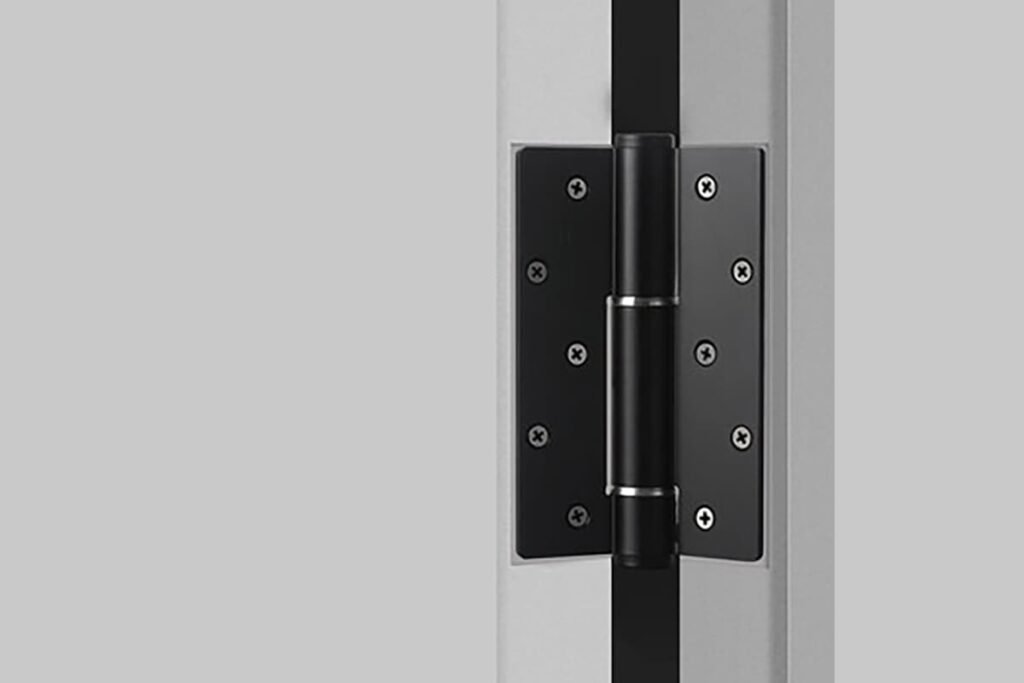
Why Is There Black Dust Around Industrial Hinges?
Black dust around industrial hinges can worry buyers because it looks like a defect, spreads near the hinge pin, and may raise questions about door safety. If the residue keeps appearing, the concern becomes larger. In my experience with door factory customers, the better solution is to evaluate wear, lubrication, load, alignment, and hinge structure together.
Black dust around industrial hinges is usually a sign of friction-related wear mixed with lubricant1, not automatic proof of poor hinge quality. Fine metal particles can form during long-term rotation%%%FOOTNOTE_REF2%%%, combine with grease or oil, and leak through gaps near the hinge pin or end cap. [Heavy use, poor alignment, overload, or cap looseness should trigger inspection.](https://19january2021snapshot.epa.gov/lead/my-firm-installs-replacement-doors-we-simply-remove-hinge-bolts-unscrew-and-remove-hinges-and.html)3
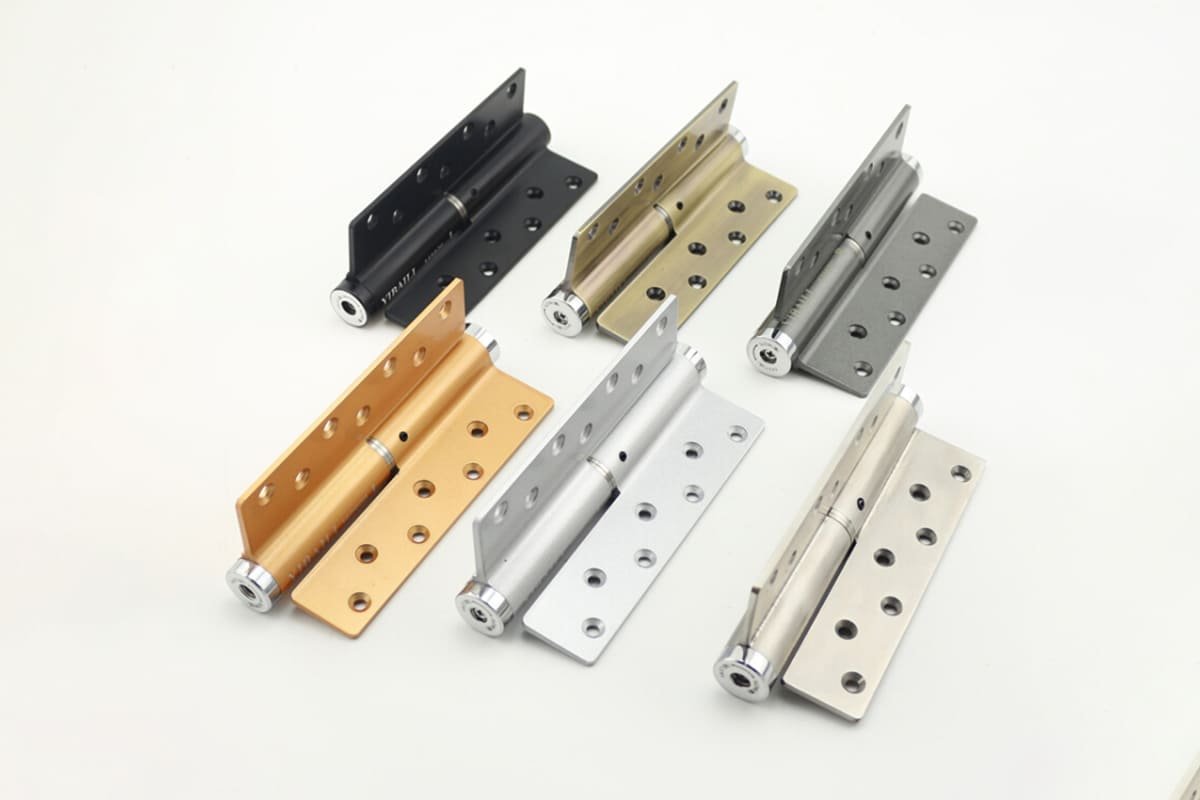
This topic is easy to misunderstand. A small amount of residue after long service may be normal4, but heavy black oily dust with noise, sagging, or resistance is different. I will explain how I judge these cases from a hinge manufacturing and supplier evaluation perspective.
Is Black Dust Around Industrial Hinges Always a Quality Defect?
Black dust around industrial hinges often creates immediate concern during site inspection. Buyers may assume the hinge material is poor, the plating has failed, or the supplier made a manufacturing mistake. That reaction is understandable. However, the real cause is often more mechanical and needs careful judgment.
Black dust around industrial hinges is not always a quality defect. It can come from normal friction between the hinge pin and knuckle after long-term use, especially when fine wear particles mix with lubricant. However, continuous heavy residue, abnormal movement, cap looseness, or door sagging may indicate improper selection, installation, or product failure.
Why the Dust Looks Black
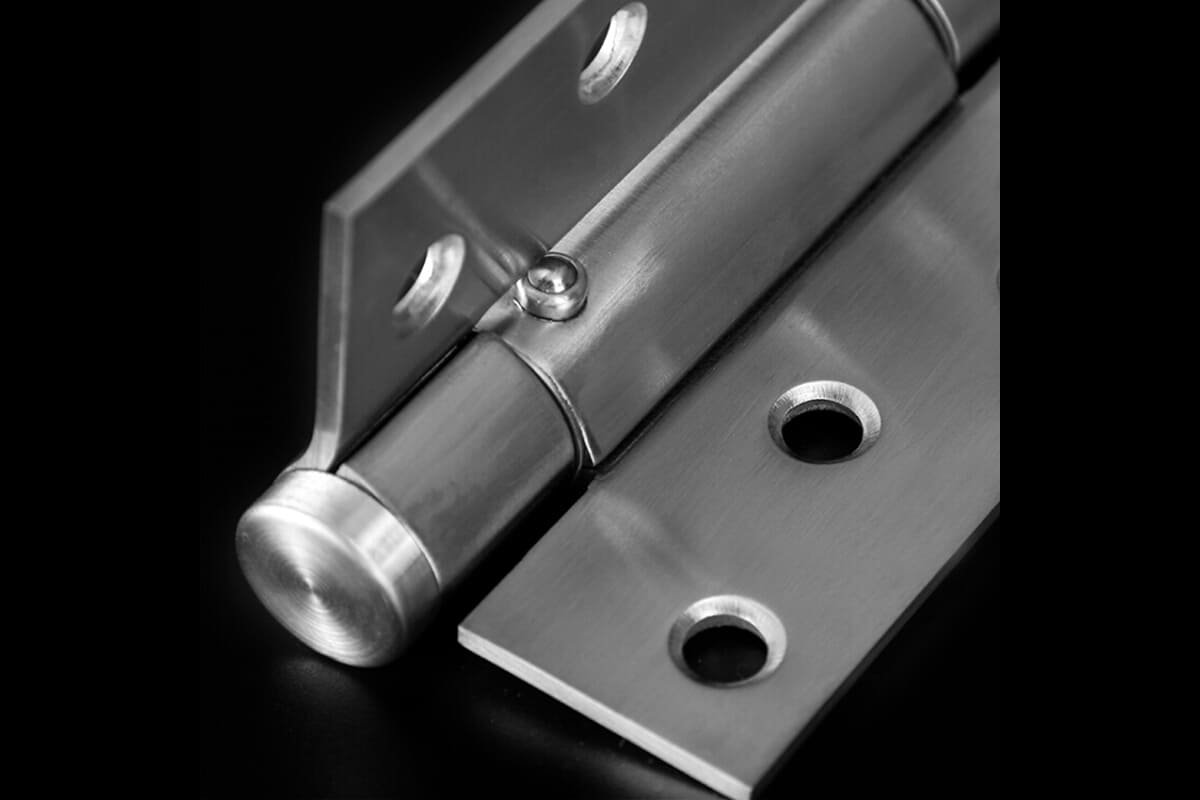
In many hinge structures, the door rotates around a pin or shaft inside hinge knuckles. During repeated opening and closing, the contact surfaces rub against each other. Over time, that friction can create very small wear particles.
These particles may be:
- Fine iron or steel particles from moving contact surfaces
- Darkened lubricant mixed with dust from the environment
- Residue from worn bushings, washers, or surface films
- Contamination from nearby construction dust, air pollution, or cleaning chemicals
I cannot confirm the exact composition without laboratory testing. However, when customers share photos of black oily residue around the hinge pin or cap area, the most common preliminary judgment is wear particles mixed with grease or oil.
That distinction matters. If the dust is linked to normal long-term operation, the answer may be better maintenance or scheduled replacement. If the dust appears quickly after installation, the answer may involve load calculation, hinge quantity, alignment, or structure selection.
Normal Wear vs. Problem Wear
A hinge is a moving hardware component. It is not a static plate fixed to a door forever. Even a well-made hinge can show wear after long use, especially in industrial or commercial buildings.
Here is a practical way I separate normal wear from problem wear:
| Observation | Possible Meaning | Buyer Action |
|---|---|---|
| Small dark residue after years of use | Normal wear mixed with lubricant | Clean, monitor, and maintain |
| Black oily dust soon after installation | Load, alignment, or lubrication issue | Inspect installation and hinge selection |
| Dust with squeaking noise | Insufficient lubrication or high friction | Lubricate or inspect pin area |
| Dust with door sagging | Hinge overload or deformation | Replace or upgrade hinge specification |
| Dust with loose cap | Cap retention issue | Stop using and inspect hinge structure |
Why Buyers Should Avoid One-Word Conclusions
I often hear one direct question from customers: “Is the hinge bad?” I understand why they ask. They need to decide whether to complain, replace stock, or change suppliers.
However, the better question is:
“Is this hinge suitable for the door weight, opening frequency, installation condition, and maintenance plan?”
A hinge can be manufactured correctly but still perform poorly in the wrong application.5 For example, a hinge designed for moderate door weight may wear faster on a heavy metal door with high daily traffic. A hinge installed slightly out of alignment may create side pressure on the pin. A door with too few hinges may overload the top hinge. These conditions can all increase black residue.
What I Check First
When I receive a hinge dust issue from a customer, I usually ask for:
- Door weight and size
- Number of hinges per door
- Opening frequency per day
- Photos of the hinge pin, cap, and knuckles
- Whether the door is sagging or rubbing
- Whether there is noise during rotation
- Installation time and maintenance history
- Indoor, outdoor, humid, or dusty environment
These details help separate a product issue from an application issue. They also help buyers make a fair supplier evaluation.
Why Does Black Dust Around Industrial Hinges Appear Near the Pin or Cap?
Black dust around industrial hinges often appears near the pin, flat head, or end cap instead of covering the whole hinge leaf. That pattern is important. It suggests the residue is coming from the hinge’s rotating center, where friction, lubricant, and internal movement are concentrated.
Black dust around industrial hinges appears near the pin or cap because that area has gaps where internal lubricant and fine wear particles can escape. As the hinge rotates, pressure and movement can push oily residue outward through the end cap or shaft area, making the dust more visible around the hinge barrel.
The Hinge Barrel Is the Working Area
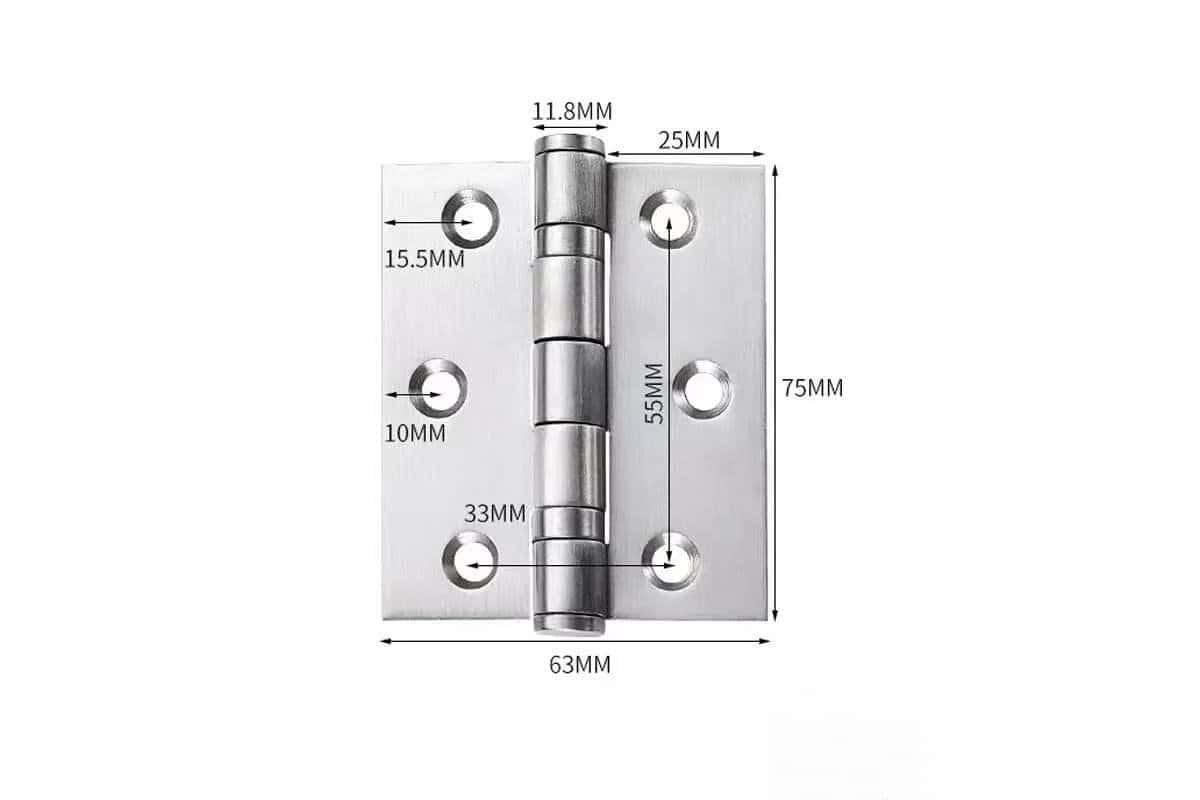
The visible hinge leaf is only one part of the product. The most active area is the barrel, also called the knuckle area6. This is where the hinge pin, shaft, bearing surface, washer, bushing, and cap design come together.
In a typical butt hinge or industrial hinge structure, the door rotates through contact between:
- The hinge pin or shaft
- The inner surface of the knuckles
- Bearing washers or bushings, if included
- Lubricant film between moving surfaces
- End caps or flat heads that close the hinge barrel
That is why black residue often gathers around the barrel. The leaf surface may still look clean because it is not the main friction zone.
Why Gaps Matter
Most hinge assemblies have small gaps. These gaps may be necessary for rotation, production tolerance, or assembly. They are not automatically defects. However, they can become exit points for lubricant and wear particles.
Common leakage points include:
- Gap between the pin head and the top knuckle
- Gap near the flat head or end cap
- Clearance between knuckle sections
- Area around a loose or moving cap
- Bottom end of a vertical hinge shaft
When the door opens and closes repeatedly, the hinge pin moves under load. This movement can create pressure inside the barrel. If lubricant carries fine particles, it may slowly migrate outward.
Cap Retention and Structural Stability
The hinge cap is a small detail, but it can affect long-term appearance and stability. Some hinges use simple pressed caps. Some use pins through the hinge shaft. Some use welded fixed caps. Some designs may be oil-free and reduce the need for internal grease.
From a manufacturing perspective, cap retention is one area I pay attention to because it affects both function and buyer confidence.
| Cap / Pin Structure | Main Purpose | Typical Buyer Concern |
|---|---|---|
| Press-fit cap | Basic closure of barrel end | May loosen under vibration or heavy use |
| Pinned hinge shaft | Helps retain shaft or cap position | Better structural security |
| Welded fixed cap | Reduces risk of cap drop | Stronger retention, less service access |
| Oil-free hinge structure | Reduces lubricant leakage | Requires suitable bearing or material design |
A buyer should not choose one structure blindly. The right option depends on the door type, project budget, environment, and maintenance expectation.
A Practical Example From Customer Discussions
I have seen customer-shared photos where black dust formed mainly at the top cap area. The first reaction was that the entire hinge surface treatment had failed. But the hinge leaves still looked clean, and the residue was concentrated around the end of the barrel.
In that case, the most reasonable preliminary judgment was not coating failure. It was internal wear residue mixed with lubricant leaking through the cap area. The next step was to check the load, installation alignment, opening frequency, and whether the cap had any movement.
That kind of structured evaluation avoids unnecessary blame. It also helps the buyer decide whether to improve maintenance, change hinge quantity, select a different cap structure, or upgrade the hinge design.
Can Load, Alignment, and Usage Cause Black Dust Around Industrial Hinges?
Black dust around industrial hinges can increase when the hinge works harder than expected. A heavy door, poor alignment, high opening frequency, or insufficient hinge quantity can place extra pressure on the pin and knuckles. The result may be faster wear and more visible residue.
Load, alignment, and usage can cause black dust around industrial hinges by increasing friction inside the hinge barrel. When the door is too heavy, misaligned, or opened frequently, the hinge pin and knuckles experience higher contact stress. This can accelerate wear, darken lubricant, and create more black residue.
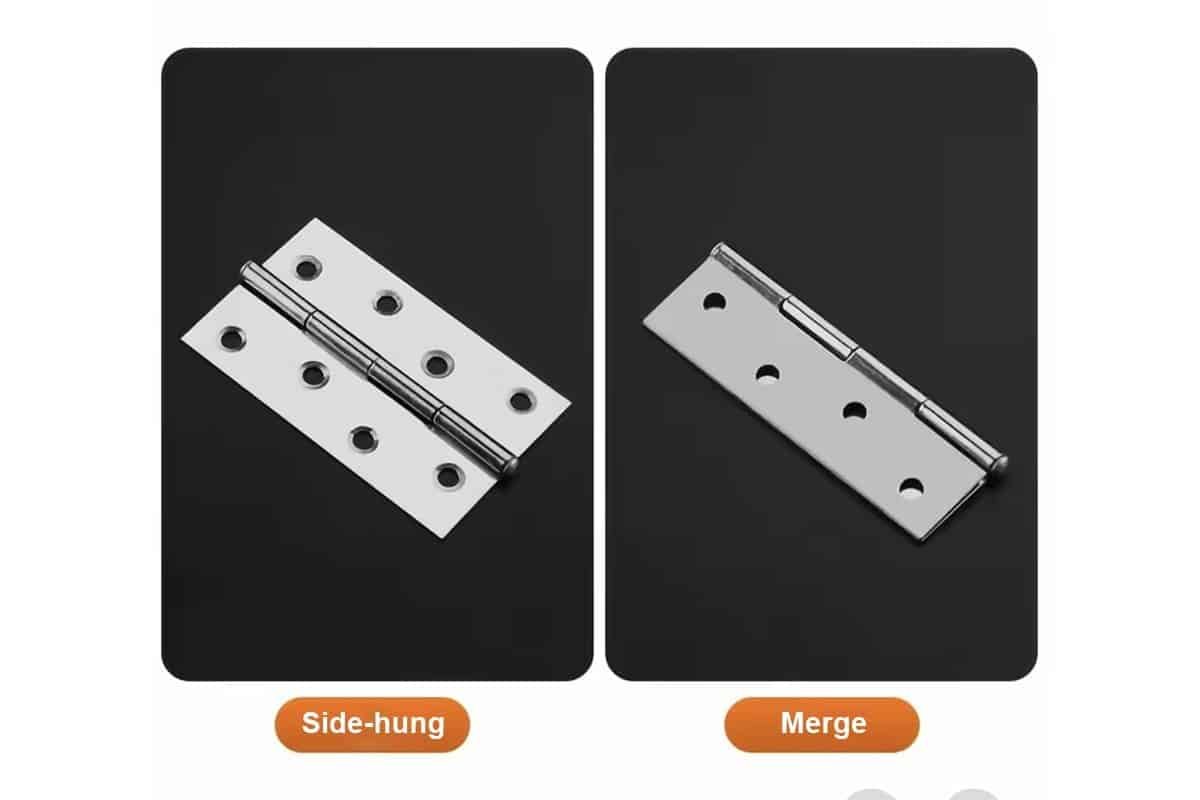
Door Weight Is Only One Part of the Calculation
Many buyers ask for a hinge “for a heavy door.” That description is useful, but it is not enough. A 100 kg door used twice per day is different from a 100 kg door used hundreds of times per day in a factory, school, or hospital.
A proper hinge evaluation should consider:
- Door weight
- Door height and width
- Door material
- Number of hinges installed
- Opening angle
- Daily opening cycles
- Indoor or outdoor environment
- Fire-rated or smoke-control requirement
- Frame strength and screw holding power
If one of these factors is ignored, the hinge may wear faster even if the material and production quality are acceptable.
Misalignment Creates Side Pressure
Installation alignment is one of the most underestimated causes of hinge problems. When the hinge leaves are not aligned correctly, the hinge pin may experience side pressure7. The door may still open and close, but the rotation is no longer smooth.
Common installation issues include:
- Hinges not placed on the same vertical line
- Frame or door leaf not flat
- Screws tightened unevenly
- Hinge recess depth inconsistent
- Door weight pulling the top hinge forward
- Door rubbing against the frame or floor
This side pressure can increase friction between the pin and knuckles. Over time, the lubricant may darken faster, and black dust may appear around the hinge barrel.
Hinge Quantity Matters
A common mistake is using too few hinges for a tall or heavy door. The top hinge often carries the highest load because the door creates a lever effect.8 If the top hinge is overloaded, wear can become concentrated there.
A simple procurement check is to compare the supplier’s recommended hinge quantity with the actual door specification. Buyers should ask for written confirmation when the door is heavy, tall, fire-rated, or used in high-traffic locations.
| Door Condition | Evaluation Focus | Possible Specification Change |
|---|---|---|
| Tall timber door | Door height and warping risk | Add hinge or use stronger model |
| Heavy steel door | Static load and screw strength | Heavy-duty hinge or more hinges |
| High-traffic commercial door | Cycle life and lubrication | Bearing hinge or oil-free option |
| Fire-rated door | Certification and test compatibility | Verify fire-rated documents |
| Exterior door | Corrosion and contamination | Suitable material and finish |
Usage Frequency Changes Everything
A hinge in a private storage room may last many years with little visible residue. A hinge in an industrial workshop may rotate thousands of times in a short period. High-frequency use increases heat, friction, lubricant movement, and wear.9
This is why I encourage buyers to describe the application clearly. “Industrial hinge” can mean many things. It may refer to a warehouse door, machine room door, metal cabinet door, fire exit, or production area access door. Each situation has different load and cycle requirements.
When Dust Becomes a Warning Signal
Black residue deserves closer inspection when it appears with other symptoms. Buyers should not ignore these signs:
- Continuous heavy black dust
- Squeaking or grinding noise
- Door sagging
- Door rubbing against frame or floor
- Increased opening resistance
- Loose hinge cap
- Visible pin movement
- Cracks around screws or frame
- Uneven gap between door and frame
If these symptoms appear, the buyer should stop treating the issue as cosmetic. The hinge should be inspected by a qualified technician, installer, or project engineer. For fire-rated doors or safety doors, the buyer should also verify whether replacement hardware must match certified configurations.
Should Buyers Choose Oil-Free Hinges to Prevent Black Dust Around Industrial Hinges?
Black dust around industrial hinges is sometimes linked to lubricant movement. For buildings where appearance, cleanliness, or low maintenance is important, buyers may consider oil-free hinge options. However, oil-free does not mean friction-free10. The hinge design must still match the door load and usage cycle.
Buyers can choose oil-free hinges to reduce lubricant-related black dust around industrial hinges, especially in clean environments or high-visibility projects. However, the hinge must use suitable bearing materials, structure, and load capacity. Oil-free design should be evaluated together with door weight, traffic frequency, certification needs, and supplier test data.

What “Oil-Free” Usually Means
An oil-free hinge is designed to reduce or eliminate the need for added lubricant during normal use. It may use special bushings, washers, bearing materials, or low-friction contact surfaces11. The goal is to lower maintenance and reduce oily residue leakage.
Oil-free hinges can be useful in:
- Hotels and offices where visible residue is unacceptable
- Hospitals, schools, or public buildings with regular cleaning
- Interior doors where staining around the hinge is a concern
- Projects where maintenance access is limited
- Brand customers who want a cleaner long-term appearance
However, buyers should be careful. “Oil-free” should be supported by structure, testing, and application suitability. It should not be only a marketing phrase.
Oil-Free vs. Lubricated Hinges
Both designs have a place in the market. A lubricated hinge can perform well when the door load is suitable and maintenance is planned. An oil-free hinge can reduce dust leakage, but it still needs correct installation and proper load matching.
| Hinge Type | Strength | Limitation | Best Fit |
|---|---|---|---|
| Lubricated hinge | Smooth movement and common structure | Grease may darken and leak over time | General commercial and industrial doors |
| Oil-free hinge | Less oily residue and lower maintenance | Must verify bearing structure and load | Clean or high-visibility projects |
| Ball bearing hinge | Good for smoother rotation under load | May still need grease depending on design | Heavy or high-frequency doors |
| Pinned or welded cap hinge | Better cap retention | May affect serviceability or cost | Projects concerned about cap loosening |
Questions Buyers Should Ask Suppliers
When buyers evaluate oil-free or low-maintenance hinges, they should ask specific questions instead of accepting broad claims.
Useful questions include:
- What structure makes the hinge oil-free?
- What is the recommended door weight?
- How many opening cycles were tested?
- Is the hinge suitable for fire-rated doors?
- What certificates or reports can be verified?
- Does the design include anti-cap-drop measures?
- What surface treatment is used?
- What maintenance is still required?
For B2B procurement, these answers are more useful than a simple product photo.
Certification and Test Documents
At SDH Hardware, our core architectural hardware products are produced to EU standard specifications, and relevant products can be supplied with CE certification and fire-rated certification documents. However, I always recommend that buyers verify certificates for the exact product model, door type, and project requirement.
This is especially important for:
- Fire-rated doors
- Smoke-control doors
- Public building projects
- Government projects
- Export markets with strict compliance checks
- Brand customers who require traceability
A hinge may have a certification document, but the buyer still needs to confirm whether the exact size, material, structure, and application are covered.
Oil-Free Is Not the Only Solution
Oil-free hinges are helpful in many cases, but they are not the only answer. Sometimes the better solution is:
- Add one more hinge to distribute load
- Correct door and frame alignment
- Use a heavier-duty hinge model
- Select a hinge with stronger cap retention
- Improve screw fixing and frame reinforcement
- Create a maintenance schedule
- Replace worn hinges before failure
This is why I prefer an application-based discussion. The goal is not simply to remove black residue. The goal is to make sure the door operates safely, smoothly, and predictably over time.
How Should Buyers Inspect Black Dust Around Industrial Hinges Before Replacing Them?
Black dust around industrial hinges should be inspected before buyers make a replacement decision. A quick visual judgment may lead to unnecessary returns or, worse, missed safety risks. The best approach is to check the amount of residue, hinge movement, door alignment, cap condition, and application load.
Buyers should inspect black dust around industrial hinges by cleaning the area, recording how quickly residue returns, checking for noise, sagging, resistance, cap looseness, and pin movement. If heavy dust continues or mechanical symptoms appear, the hinge should be professionally evaluated and replaced with a structure matched to the door application.
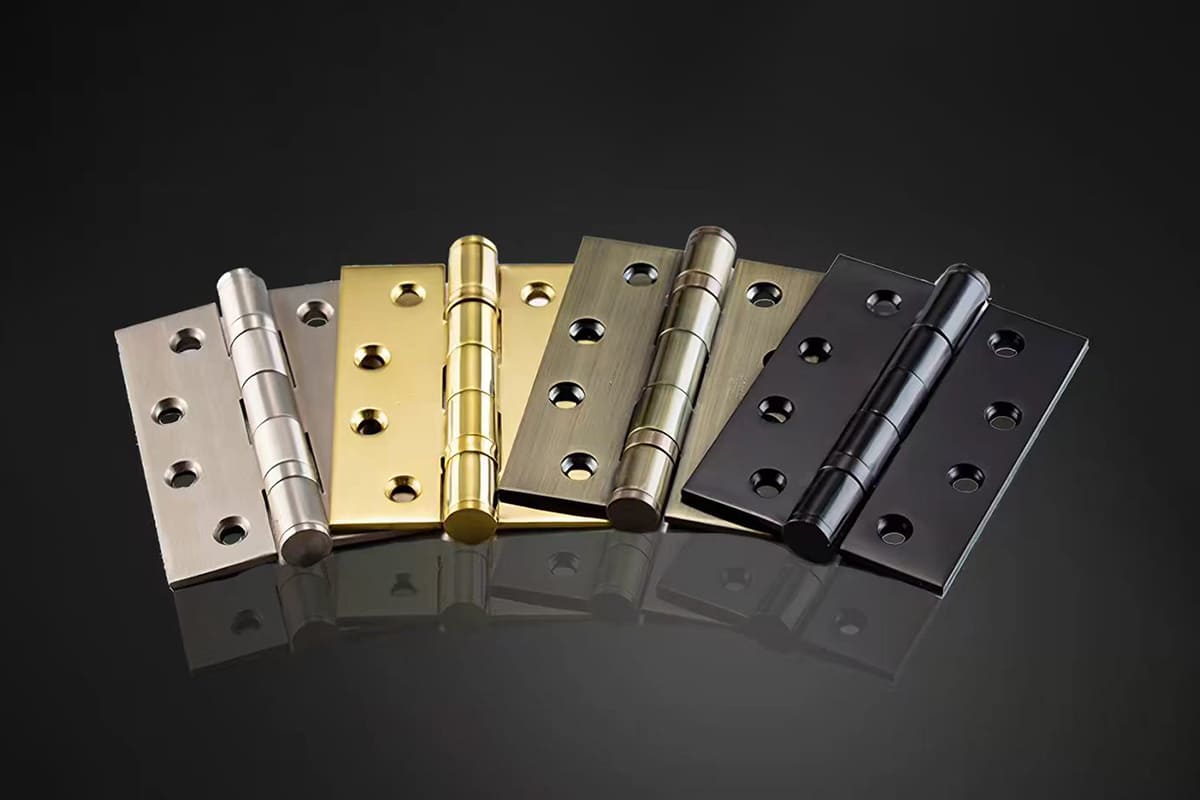
Step-by-Step Inspection Method
A simple inspection process can help buyers make a more objective decision.
Take photos before cleaning
Record the location and amount of dust. Focus on the top cap, bottom cap, knuckle gaps, screw area, and door gap.Clean the residue carefully
Use a suitable cloth and avoid harsh chemicals that may damage the finish. The goal is to see whether the dust returns quickly.Operate the door slowly
Listen for squeaking, grinding, clicking, or rubbing. Feel whether the door moves smoothly.Check the door gaps
Look at the top, bottom, and lock side gaps. Uneven gaps may indicate sagging or poor alignment.Check the hinge cap and pin
Look for cap movement, pin drop, looseness, or visible deformation.Check screw fixing
Loose screws can increase movement and accelerate wear.Review application data
Compare door weight, size, hinge quantity, and usage frequency with the hinge specification.
When Replacement Is Recommended
Replacement should be considered when black dust appears with mechanical problems. The hinge is part of the door’s operating system, so safety and reliability matter.
Replacement may be needed if:
- Dust returns heavily after cleaning
- The hinge makes grinding noise
- The door sags or rubs
- The cap is loose or dropped
- The pin has visible movement
- The hinge leaf is bent
- Screws cannot hold firmly
- The hinge was underspecified for the door
- The door is part of a fire-rated assembly and the hinge no longer performs correctly
For fire-rated doors, buyers should not replace hinges casually with a random model. The replacement should be checked against project specifications, test evidence, and local code requirements.
What to Include in a Supplier Inquiry
When contacting a hinge manufacturer or supplier, buyers should provide clear information. This reduces back-and-forth and helps the supplier give a better recommendation.
| Information to Provide | Why It Matters |
|---|---|
| Door weight and size | Determines load requirement |
| Door material | Affects screw holding and deformation risk |
| Number of hinges | Shows load distribution |
| Installation photos | Reveals alignment or fixing issues |
| Dust location | Helps identify leakage point |
| Usage frequency | Indicates wear cycle demand |
| Environment | Affects corrosion and contamination |
| Required certificates | Confirms compliance scope |
I often find that one good photo of the hinge barrel and one photo of the full door can save several rounds of communication.
How Manufacturers Can Help
A professional hinge manufacturer should help buyers evaluate the application instead of giving only a yes-or-no answer. In our factory work, we look at hinge structure, pin design, cap retention, surface treatment, and testing requirements together.
For OEM or ODM customers, the discussion may include:
- Hinge thickness
- Knuckle diameter
- Pin diameter
- Washer or bushing design
- Surface finish
- Cap fixing method
- Logo stamping or laser marking
- Packaging requirements
- Inspection standards after production
- Fire-rated or CE documentation needs
Conclusion
Black dust around industrial hinges is usually a wear-and-lubrication signal that needs proper evaluation, not an instant verdict of poor quality. Buyers should check residue amount, pin and cap structure, door load, alignment, hinge quantity, usage frequency, and maintenance history. Oil-free hinges, pinned shafts, and welded fixed caps can help in the right applications. If you are sourcing hinges for door production, brand distribution, or project supply, contact SDH Hardware with your door specifications and inspection photos. I can help you evaluate the suitable hinge structure before procurement.
"Wear", https://en.wikipedia.org/wiki/Wear. Tribology literature describes sliding contacts as sources of fine wear debris and notes that lubricants may carry such particles away from the contact interface; this supports interpreting black hinge residue as a wear-and-lubricant symptom, although it does not identify the composition of residue from any specific hinge without testing. Evidence role: mechanism; source type: paper. Supports: Sliding metal contacts can generate wear debris, and lubricants can entrain or transport that debris from the contact area.. Scope note: Contextual support only; laboratory analysis would be needed to prove the residue composition in an individual case. ↩
"An exploration of debris types and their influence on wear ...", https://www.academia.edu/85713512/An_exploration_of_debris_types_and_their_influence_on_wear_rates_in_fretting. Peer-reviewed tribology sources identify adhesive and abrasive wear in repeated sliding or rotating metal contacts as mechanisms that generate wear debris; this supports the general claim that hinge rotation can produce fine particles over long service. Evidence role: mechanism; source type: paper. Supports: Repeated sliding or rotational contact between metallic surfaces can produce small wear particles through recognized wear mechanisms.. Scope note: The source would support the general wear mechanism, not the rate of particle formation in a particular hinge model. ↩
"My firm installs replacement doors. We simply remove the ...", https://19january2021snapshot.epa.gov/lead/my-firm-installs-replacement-doors-we-simply-remove-hinge-bolts-unscrew-and-remove-hinges-and_.html. Door-hardware maintenance guidance commonly recommends inspection when hinges or associated components are loose, misaligned, damaged, or subject to heavy service; this supports using those conditions as practical triggers for further assessment. Evidence role: general_support; source type: institution. Supports: Door-hardware maintenance guidance treats loose, misaligned, damaged, or heavily used hardware as conditions that require inspection or corrective action.. Scope note: The source may address door hardware generally rather than black dust specifically. ↩
"Behavior of Wear Debris and Its Action Mechanism on ... - PMC", https://pmc.ncbi.nlm.nih.gov/articles/PMC6337587/. Maintenance and tribology references describe wear debris as a normal by-product of mechanical contact and emphasize assessing severity by operating symptoms and service context; this supports treating small residue after long service as potentially normal, while not excluding product defects in a specific installation. Evidence role: general_support; source type: research. Supports: Mechanical systems can produce limited wear debris during normal service, and wear severity is assessed in context rather than by residue alone.. Scope note: Contextual support only; it does not establish an acceptable residue amount for industrial hinges. ↩
"SECTION 087111 - DOOR HARDWARE (SCHEDULED BY ...", https://fpm.usc.edu/wp-content/uploads/2021/11/087102-USC-HSC-door-hardware-Guide-Specification_1.pdf. Architectural hardware guidance treats hinge suitability as dependent on door weight, dimensions, traffic level, and installation conditions; this supports the claim that a correctly manufactured hinge can perform poorly when misapplied. Evidence role: expert_consensus; source type: institution. Supports: Hinge selection guidance considers door weight, size, traffic frequency, and installation conditions when determining suitable hardware.. Scope note: The source would support general selection principles rather than diagnose any individual product failure. ↩
"Hinge", https://en.wikipedia.org/wiki/Hinge. A neutral hinge terminology source defines the barrel or knuckles as the cylindrical interlocking portions of a hinge that surround the pin; this supports the article's use of barrel and knuckle-area terminology. Evidence role: definition; source type: encyclopedia. Supports: Hinge terminology uses barrel and knuckle to describe the cylindrical interlocking portions around the pin.. ↩
"Door Hinge Wear Problems", https://www.aspwindows.com/blog/door-hinge-wear-problems. Mechanical design and door-installation references describe misalignment as a cause of binding and increased loading at hinge bearing surfaces; this supports the article's statement that a misaligned hinge can place side pressure on the pin. Evidence role: mechanism; source type: education. Supports: Misalignment in hinged assemblies can create binding or side loading that increases friction at the pin and bearing surfaces.. Scope note: The support is mechanical and contextual; actual side load would depend on door geometry and installation error. ↩
"Support and Connection Types", https://web.mit.edu/4.441/1_lectures/1_lecture13/1_lecture13.html. Structural mechanics explanations of hinged doors show that the door weight produces moments and reaction forces at the hinges; this supports the practical view that the upper hinge is often a critical load-bearing point, although exact load sharing depends on hinge spacing, stiffness, and installation. Evidence role: mechanism; source type: education. Supports: A swinging door creates moments about the hinge line, and hinge reactions can be uneven, often making the upper hinge critical in resisting sagging or moment loads.. Scope note: The source may model ideal hinge reactions and may not provide a universal percentage of load carried by the top hinge. ↩
"Temperature‑Dependent Friction, Wear, and Life of MoS₂ Dry ...", https://pmc.ncbi.nlm.nih.gov/articles/PMC12316733/. Tribology research relates repeated sliding cycles and cumulative frictional work to wear, heat generation, and lubricant redistribution; this supports the statement that high-frequency hinge use can increase wear-related residue. Evidence role: mechanism; source type: paper. Supports: Repeated motion increases cumulative sliding distance and frictional energy, which are associated with heat generation, lubricant redistribution, and wear.. Scope note: The source would establish a general mechanism, not a specific service-life prediction for any hinge. ↩
"Self-Lubricating Composite Materials", https://ntrs.nasa.gov/api/citations/19810004473/downloads/19810004473.pdf. Research on dry and self-lubricating bearings explains that such materials can reduce the need for added lubricant while retaining finite friction coefficients and application-specific load limits; this supports the caution that oil-free hinge designs are not friction-free. Evidence role: mechanism; source type: research. Supports: Self-lubricating or dry bearing systems reduce the need for external lubrication but still operate with friction and load limits.. Scope note: The source would support the material principle generally, not verify the performance of a particular oil-free hinge product. ↩
"Self-Lubricating Bearings: Essentials for Selection & Design", https://www.tstar.com/self-lubricating-bearings-overview. Engineering references on self-lubricating plain bearings describe the use of specialized bushing materials and low-friction contact surfaces to reduce or eliminate routine external lubrication; this supports the article's description of common oil-free hinge design approaches. Evidence role: definition; source type: research. Supports: Self-lubricating bearing systems commonly use specialized bearing materials, bushings, or low-friction interfaces to reduce external lubrication needs.. Scope note: The source would describe common design principles rather than confirm the construction of any specific hinge offered in the market. ↩
