
Why Do Industrial Hinges Use Countersunk Mounting Holes?
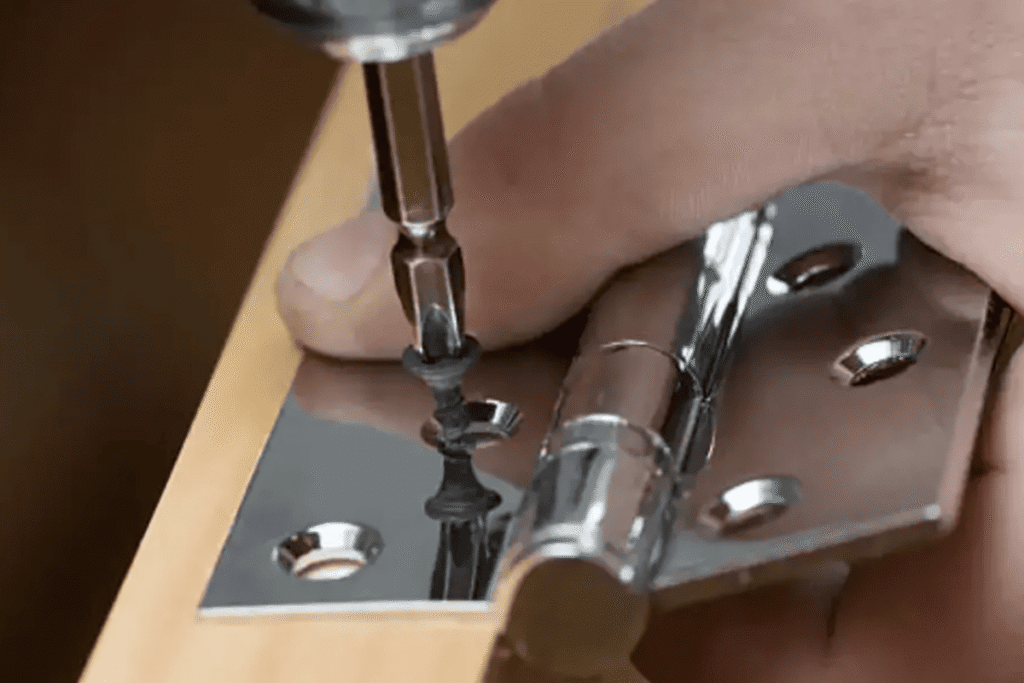
Industrial hinges often look simple, but one small detail can affect the whole door assembly: the mounting hole. If the screw head sits too high, it can rub, block closing, or widen the door gap. A countersunk mounting hole solves this by letting the screw head sit flush with the hinge leaf.1
Industrial hinges use countersunk mounting holes mainly to create clearance.2 A countersunk screw head sits level with the hinge surface, so it is less likely to interfere with the opposite hinge leaf, door frame, or door edge. This supports smoother closing, tighter gaps, and a cleaner finished appearance.
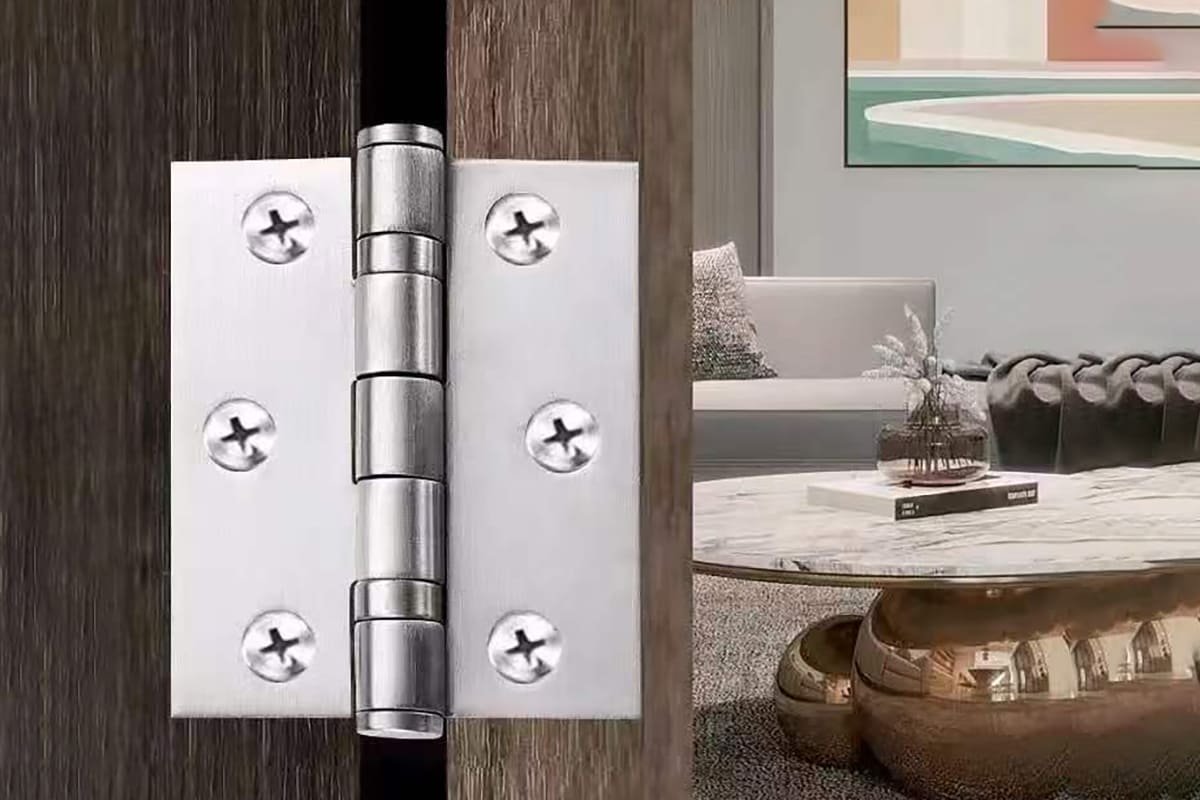
In door hardware manufacturing, I have learned that hinge quality is not only about material thickness or surface finish. It is also about small fit details. The countersunk hole is one of those details that quietly protects door performance.
How Do Countersunk Mounting Holes Help Industrial Hinges Control Clearance?
A door hinge works in a tight space. If one part sits too high, the problem quickly becomes visible. The door may rub, the gap may change, or the installer may need extra adjustment. Countersunk holes help industrial hinges avoid this common issue.
Countersunk mounting holes help industrial hinges control clearance by allowing flat-head screws to sit flush inside the hinge leaf. This reduces the risk of screw-head interference during opening and closing. The result is a more predictable hinge assembly, a cleaner door edge, and better control over the finished door gap.
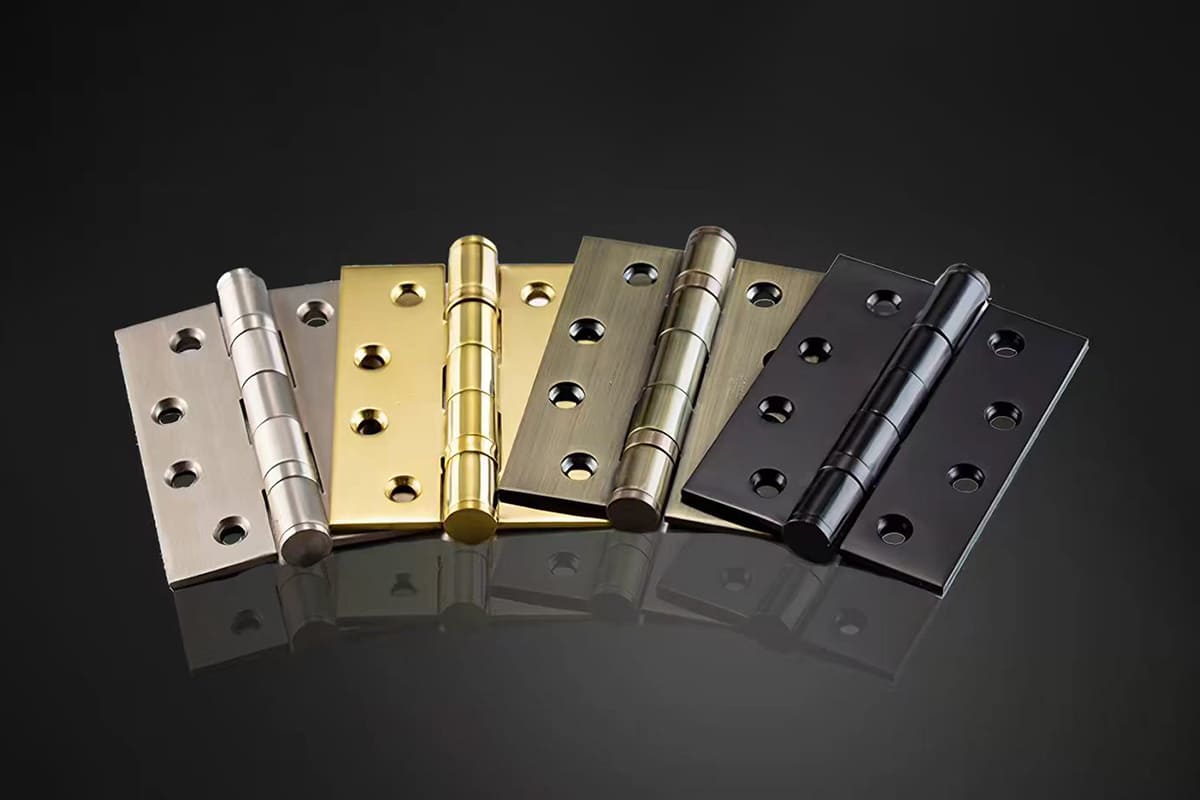
Why clearance matters in hinge installation
In hinge production and inspection, one key point is whether the screw head can sit fully flush with the hinge surface. This sounds basic, but it has a direct effect on door movement.
A hinge normally has two leaves. One leaf attaches to the door, and the other attaches to the frame or cabinet structure.3 When the door closes, the hinge leaves move close to each other. In many assemblies, the space between moving parts is limited.
If the screw head rises above the hinge leaf, it may touch:
- The opposite hinge leaf
- The door frame
- The door edge
- The surrounding mounting surface
- Paint, veneer, laminate, or gasket material
This is why countersunk hinge holes are common in many door hardware designs.4 They create a shaped recess for the screw head. The screw head does not remain proud of the surface. It drops into the hole and becomes level with the hinge plate.
Countersunk screw vs raised screw head
The difference becomes clearer when I compare screw-head types.
| Screw type | Head position after installation | Common effect on hinge clearance |
|---|---|---|
| Countersunk / flat-head screw | Flush with hinge leaf | Better clearance and lower interference risk |
| Round-head screw | Raised above hinge leaf | May rub or block movement in tight assemblies |
| Pan-head screw | Raised above hinge leaf | May require more space around hinge area |
| Oval-head screw | Partly raised | Cleaner than round head, but still not fully flush |
A raised screw head is not automatically wrong. Some hinge designs are made for it. However, when the hinge design expects a flush surface, using the wrong screw head can create a real installation problem.
Why this matters for industrial buyers
For door manufacturers and bulk hardware buyers, clearance is not a cosmetic issue only. It affects consistency. A single sample may appear acceptable, but problems can appear during production when hundreds or thousands of doors are assembled.
I usually suggest buyers check three practical points:
- Does the screw head sit fully flush after tightening?
- Does the hinge close without screw-head contact?
- Does the door maintain the specified gap after installation?
These checks are simple, but they show whether the countersunk geometry, screw selection, and hinge thickness are working together. For project-specific doors, buyers should also ask qualified installation or engineering professionals to evaluate the hinge design under real loading and clearance conditions.
What Happens When Industrial Hinges Use Raised Screw Heads?
A raised screw head may look harmless at first. But once the door is installed, small protrusions can create big fitting problems. In tight assemblies, even a slight height difference can affect how industrial hinges move and how the door closes.
When industrial hinges use raised screw heads in a design that needs flush mounting, the screw head can interfere with the opposite hinge leaf, frame, or door edge. This may prevent full closing, create rubbing marks, increase the visible gap, or force installers to make unwanted adjustments.
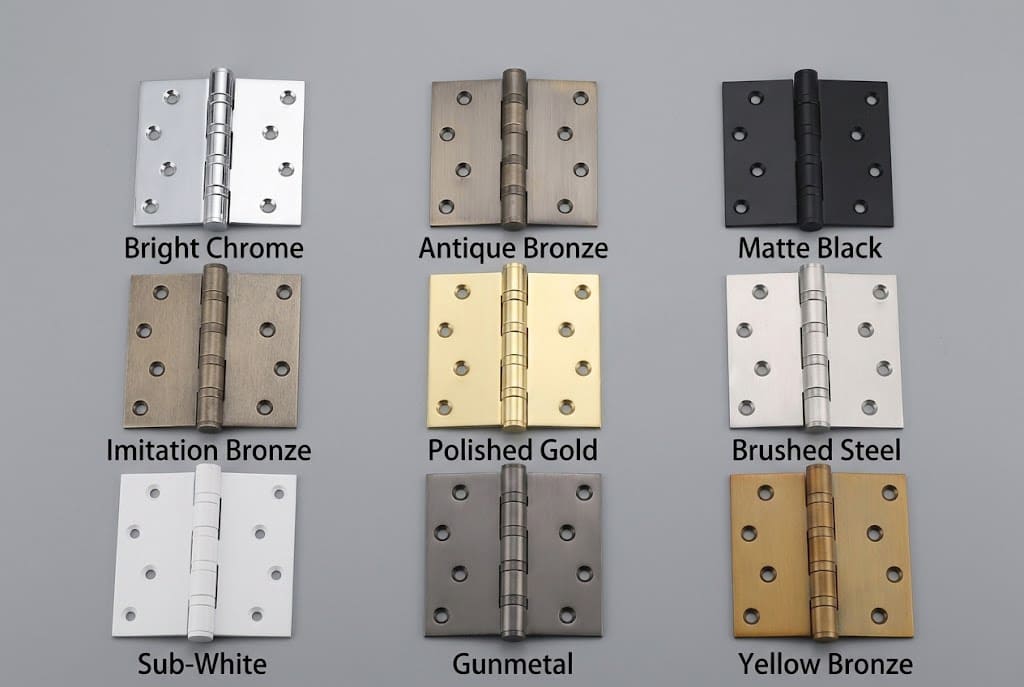
Common problems caused by protruding screw heads
In manufacturing, I like to look for problems that installers will see later. Raised screw heads are one of those details. They may pass a quick visual check, but they can fail during final door fitting.
Here are the most common issues:
- Door does not close fully because the screw head contacts another surface.
- Visible door gap becomes larger because the hinge cannot sit or rotate correctly.
- Hinge movement feels rough due to rubbing between screw head and hinge leaf.
- Surface finish gets scratched near the hinge area.
- Installer needs extra adjustment to compensate for the interference.
- Customer perceives poor quality even when the hinge material itself is acceptable.
These issues are especially important for doors where the design target is a small and clean reveal. A few millimeters can change the look and function of the finished door.5
Raised heads are not always wrong
I do not want to suggest that raised-head screws are always bad. They are useful in many mechanical assemblies. Some hardware products are designed around pan-head or round-head fasteners. In those cases, the raised head may be part of the intended fixing method.
The problem happens when the hinge leaf, countersink angle, screw type, and door clearance do not match.
For example:
| Situation | Likely result |
|---|---|
| Countersunk hinge hole + flat-head screw | Flush surface and stable clearance |
| Countersunk hinge hole + round-head screw | Head sits proud and may interfere |
| Plain round hole + flat-head screw | Poor seating and weak contact area |
| Plain round hole + pan-head screw | Correct only if design allows raised head clearance |
The key lesson is simple: the hole shape and screw-head shape must match.
Why buyers should specify screw compatibility
For B2B procurement, I recommend buyers avoid vague specifications such as “standard hinge holes.” It is better to confirm the exact mounting method.
A good supplier discussion should include:
Hole type
Is it countersunk, counterbored, or plain drilled?Countersink angle
Does it match the intended screw standard in the buyer’s market?6Screw-head type
Is the hinge designed for flat-head countersunk screws?Final head position
Should the screw sit perfectly flush, slightly below, or slightly above the leaf surface?Application environment
Will the hinge be used on wood doors, metal doors, fire-rated doors, or architectural entrance systems?
I have seen buyers focus heavily on hinge finish and packaging, then overlook screw-head fit. That creates trouble later. The better approach is to treat screw compatibility as part of the hinge quality standard, not as a small accessory detail.
How Do Countersunk Holes Improve Door Gap and Closing Quality in Industrial Hinges?
Door gap control is one of the first things people notice after installation. If the gap is uneven or too large, the whole door looks less precise. Countersunk holes support industrial hinges by removing screw-head height from the movement area.
Countersunk holes improve door gap and closing quality by keeping the screw head level with the hinge surface. This helps the hinge leaf sit flat, reduces unwanted contact, and allows the door to close closer to the intended position. The result is a smoother closing action and a more refined door reveal.
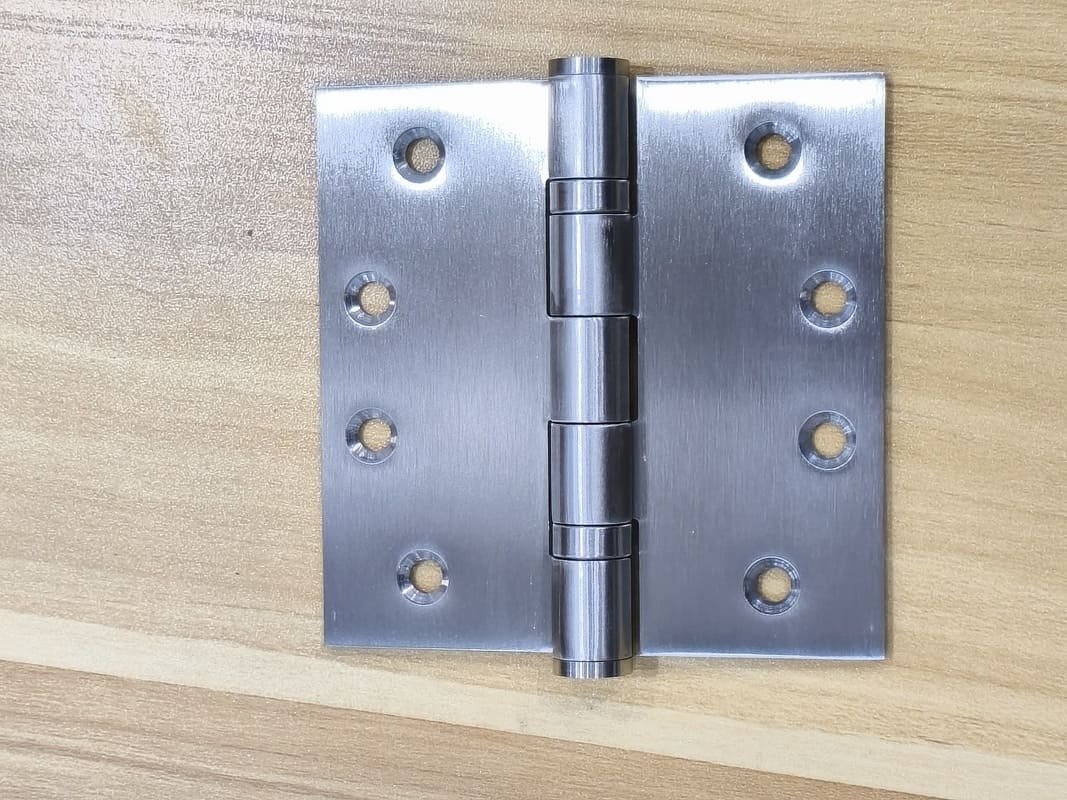
The link between flush screws and door fit
Door gaps depend on several factors. The hinge is only one part of the system, but it is an important part.
A proper door gap depends on:7
- Door leaf dimensions
- Frame accuracy
- Hinge thickness
- Hinge knuckle design
- Screw seating
- Mortise depth, if the hinge is recessed
- Door weight and alignment
- Installation workmanship
Countersunk mounting holes help by controlling one specific variable: screw-head height.
If the screw head remains above the hinge surface, the hinge may not close to the expected position. The installer may see a gap that looks too wide near the hinge side. In some cases, the door may spring back slightly or feel tight before it reaches the fully closed position.
A flush screw head removes that obstruction. It allows the hinge geometry to work as designed.
A practical inspection example
When I inspect hinge samples, I like to run a simple finger test after installing the correct screw. I pass my finger across the hinge leaf. If I can feel the screw head standing proud, I know the assembly may create problems in a tight installation.
This is not a replacement for professional testing. It is just a practical first check. It tells me whether the countersunk hole and screw head are working together.
A more complete buyer inspection may include:
Visual flushness check
The screw head should sit flat and centered in the countersink.Touch check
The head should not catch the finger when moving across the hinge surface.Closing clearance check
The hinge should close without rubbing at the screw positions.Door gap review
The installed door should meet the buyer’s gap requirement.Finish protection check
The screw head should not scratch the opposite leaf or nearby surface.
Door gap expectations vary by application
Not every door needs the same gap. A residential interior door, a commercial fire door, a metal utility door, and an aluminum system door may all have different requirements.8 Local standards, project specifications, and installation methods may also affect the acceptable gap.
This is why I avoid saying countersunk holes are always better for every hinge type. They are widely used because they solve a common clearance problem. But the final decision should match the door construction and project specification.
For industrial hinges used in architectural door hardware, the main benefit is repeatability. Buyers want hinges that help production teams achieve the same fit again and again. A proper countersunk hole makes that easier because the screw head has a defined seating position.
In simple terms, a flush screw head gives the hinge more room to work and gives the door manufacturer more control over the final fit.
Are Countersunk Mounting Holes Mainly an Aesthetic Choice?
Many people first notice the appearance of countersunk screws. The hinge surface looks flatter and cleaner. But appearance is not the main reason for using countersunk mounting holes. The main reason is still functional clearance.
Countersunk mounting holes are not mainly an aesthetic choice. Their first purpose is to let the screw head sit flush, preventing interference and supporting proper closing. The aesthetic benefit is secondary but valuable because a flat screw surface makes the finished door look more professional and better assembled.
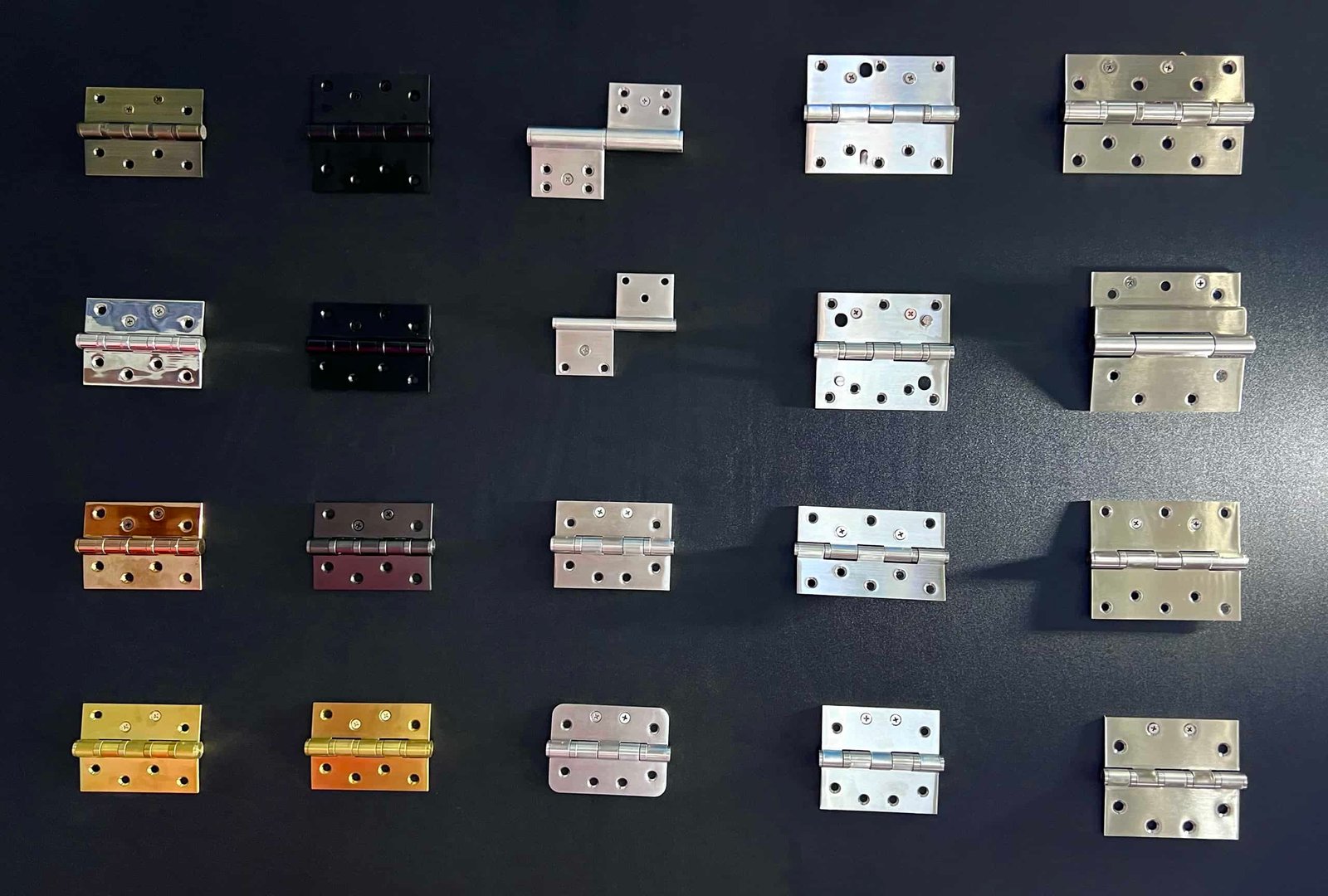
Appearance still matters in quality perception
Even though function comes first, I do not dismiss appearance. In door hardware, appearance often becomes the customer’s first quality signal. A hinge may be technically acceptable, but if screw heads sit unevenly, the finished door can look poorly made.
A clean countersunk screw installation gives the hinge surface a more finished look. It can also make the surface easier to clean and less likely to catch cloth, packaging, or protective film.
For door manufacturers and hardware brands, this affects perceived value. Their customers may not know the technical reason behind the countersink. They simply see a flatter, neater hinge.
Functional benefit vs visual benefit
The two benefits should be separated clearly.
| Benefit type | What countersunk holes do | Why it matters |
|---|---|---|
| Functional clearance | Recess the screw head into the hinge leaf | Helps prevent rubbing and closing interference |
| Door gap control | Allows the hinge to close closer to design position | Supports cleaner and more consistent reveals |
| Installation quality | Guides the screw head into a defined seat | Helps installers achieve repeatable fit |
| Visual neatness | Creates a flatter hinge surface | Improves perceived product quality |
| Surface protection | Reduces raised edges around fixing points | May reduce scratching in tight contact areas |
This table shows why the countersunk hole is a small design feature with several effects. However, buyers should not evaluate it by appearance alone.
What a poor countersink looks like
A countersunk hole can also be made poorly. If the angle is wrong or the hole is not centered, the screw may not seat correctly.9 If the countersink is too shallow, the screw head may remain proud. If it is too deep, the screw may sit too low or reduce the effective bearing area.
A buyer should watch for:
- Off-center countersunk holes
- Uneven chamfer edges
- Burrs around the hole
- Surface coating buildup inside the countersink10
- Screw heads that do not sit flat
- Deformation after tightening
Surface finish also matters. For example, stainless steel lever handles and hinges often need consistent brushing or polishing. If the countersink area is rough, it can stand out after plating, painting, PVD coating, or other surface treatment.
At SDH Hardware, our own manufacturing and inspection experience has taught me that small details around holes often reveal the process discipline of a supplier. I would still encourage buyers to verify samples, drawings, and inspection criteria before placing large orders.
How Should Buyers Evaluate Countersunk Holes in Industrial Hinges?
A hinge sample can look acceptable on a desk but behave differently on a real door. Buyers need a practical evaluation method. Countersunk holes in industrial hinges should be checked together with screw type, hinge movement, door gap, and supplier quality control.
Buyers should evaluate countersunk holes by confirming screw-head compatibility, flush seating, hole consistency, burr control, surface finish, and real installation clearance. The best inspection uses the intended screws and door application, not only a visual check of the hinge leaf before assembly.

A practical buyer checklist
When I help buyers think through hinge procurement, I prefer simple checks that connect directly to installation performance. A countersunk hole is not only a drawing feature. It must work with the screw and the door.
Here is a practical checklist:
Confirm the screw standard.
The screw head must match the countersink geometry used in the hinge.Install the actual screw.
Do not judge the countersink without the screw that will be used in production.Check flushness after tightening.
The head should sit level with the hinge surface unless the drawing says otherwise.Inspect the hole edge.
The countersink should be clean, smooth, and free from heavy burrs.Close the hinge fully.
The screw head should not touch the opposite leaf.Test on the intended door type.
A wood door, metal door, and fire-rated door may behave differently.Review the finish after assembly.
Screw installation should not damage the coating or visible surface.
Supplier evaluation for B2B procurement
For bulk buyers, the supplier’s process matters as much as the sample. One perfect sample does not guarantee stable mass production.11 Buyers should ask how the factory controls hole punching, drilling, countersinking, deburring, polishing, finishing, and final inspection.
A useful supplier comparison may look like this:
| Evaluation item | What buyers should ask | Why it matters |
|---|---|---|
| Drawing control | Are countersink dimensions clearly specified? | Prevents inconsistent interpretation |
| Screw compatibility | Which screw type is recommended? | Reduces installation mismatch |
| In-process inspection | Are holes checked before finishing? | Finds defects early |
| Surface treatment control | Does coating affect screw seating? | Prevents buildup inside countersinks |
| Final inspection | Are assembled screws checked for flushness? | Confirms real-world fit |
| Certification documents | Can CE or fire-rated documents be provided for relevant products? | Helps buyers verify compliance needs |
For technical door projects, buyers should verify certification documents directly and confirm that the tested configuration matches the intended product.12 CE and fire-rated documents are important, but they should be reviewed carefully. A hinge’s hole design, screw type, door material, and installation method can all affect application suitability.
What I would request before a large order
Before a large OEM or ODM order, I would request:
- Technical drawing with countersink details
- Recommended screw specification
- Pre-production samples
- Installed screw photos or videos
- Surface finish sample
- Inspection standard for hole position and screw flushness
- Packaging method to protect finished hinge leaves
- Relevant certification documents, if required by the project
These steps are not complicated. They simply reduce risk. For door factories, hardware brands, and wholesalers, the goal is not to over-engineer the hinge. The goal is to make sure the hinge can be installed smoothly and repeatedly.
As a manufacturer, I see countersunk mounting holes as a small but important quality-control point. They connect production accuracy with the installer’s real experience. When the screw sits flush, the door has a better chance to close cleanly and look right.
Frequently Asked Questions
Are countersunk screws stronger than round-head screws in industrial hinges?
Countersunk screws are not automatically stronger than round-head screws. Their main benefit in many industrial hinges is flush seating and clearance control. Strength depends on screw material, size, thread engagement, hinge design, substrate, and installation method. Buyers should evaluate strength according to the specific door application.
Can I use round-head screws in countersunk hinge holes?
You should not use round-head screws in countersunk hinge holes unless the hinge design specifically allows it. A round-head screw will usually sit above the hinge surface. This can cause rubbing, poor closing, wider gaps, or an unfinished appearance.
Why does my door gap increase after hinge installation?
A door gap may increase because of frame tolerance, hinge thickness, mortise depth, screw-head interference, or door alignment. If the screw head sits proud of the hinge leaf, it may stop the hinge from closing fully. Checking screw flushness is a good first step.
Do all industrial hinges need countersunk mounting holes?
Not all industrial hinges need countersunk mounting holes. Some hinge designs are made for raised-head screws, counterbored screws, welding, or special fasteners. The best choice depends on the door structure, clearance requirement, load, finish, and installation method.
What should I check when buying countersunk hinges in bulk?
You should check screw compatibility, countersink depth, hole centering, burr control, surface finish, hinge closing clearance, and sample performance on the intended door. You should also review technical drawings, inspection criteria, and any required CE or fire-rated certification documents.
Conclusion
Industrial hinges use countersunk mounting holes because flush screw heads help protect clearance, reduce interference, and support cleaner door gaps. The visual benefit is important, but it is secondary to fit and closing performance. For buyers, the best approach is to evaluate the hinge, screw, and door as one system. If you need factory-direct architectural door hardware with controlled production and inspection support, I welcome you to contact SDH Hardware for samples, drawings, and OEM/ODM discussion.
"Countersink", https://en.wikipedia.org/wiki/Countersink. A technical definition of a countersink describes it as a conical recess used so that a flat-head fastener can sit flush with, or below, the surrounding surface. Evidence role: definition; source type: encyclopedia. Supports: A countersink is a conical recess that allows a matching screw head to sit flush with or below the surrounding surface.. ↩
"How to Countersink Your Parts",
Engineering references on countersunk fasteners support that recessing a flat-head screw removes head protrusion from the mounting surface, which can help maintain clearance in close-fitting assemblies. Evidence role: mechanism; source type: education. Supports: Flush-mounted countersunk screws reduce protrusions above the mounting surface and therefore help preserve clearance in assemblies with moving or mating parts.. Scope note: This supports the mechanical principle but may not quantify clearance improvement for the specific hinge model described. ↩"Hinge", https://en.wikipedia.org/wiki/Hinge. Standard descriptions of hinges identify the leaves as the plates fastened to the two connected members, such as a door and its frame. Evidence role: definition; source type: encyclopedia. Supports: A hinge commonly has two leaves joined by a pin or knuckle arrangement, with one leaf fixed to each member being connected.. ↩
"1 SECTION 087100 - DOOR HARDWARE PART 1", https://www.fitchburgma.gov/DocumentCenter/View/10469. Institutional door-hardware specifications that identify countersunk holes or flush flat-head fasteners in hinge assemblies provide contextual support that this design is common in architectural hardware. Evidence role: general_support; source type: institution. Supports: Door hardware standards or institutional specifications commonly describe hinges with countersunk fastener holes or fasteners intended for flush installation.. Scope note: Such standards show accepted design practice but may not establish prevalence across all industrial hinge categories. ↩
"QQ/WWYD? Excessive Clearance on Fire Doors", https://idighardware.com/2017/06/qq-wwyd-excessive-clearance-on-fire-doors/. Door installation and fire-door standards specify allowable clearances within small dimensional ranges, indicating that millimeter-scale deviations can affect compliance, fit, or appearance. Evidence role: general_support; source type: institution. Supports: Door standards and installation guides often specify allowable clearances in millimeters or fractions of an inch, showing that small gap changes can be significant.. Scope note: Clearance limits vary by door type and jurisdiction, so the source provides contextual significance rather than a universal tolerance. ↩
"Countersunk Hole Size for Flat Head Screws (ISO)", https://engineersbible.com/countersunk-iso/. Fastener standards specify countersunk screw-head geometry, including head angle and related dimensions, supporting the need to match countersink geometry to the intended screw standard. Evidence role: general_support; source type: institution. Supports: Fastener standards specify dimensions such as countersunk head angles, so a countersunk hole must be compatible with the selected screw standard.. Scope note: The source would support dimensional compatibility in general, not the suitability of any particular supplier’s hinge. ↩
"SDI 122-21", https://steeldoor.org/sdi-122/. Door installation guidance from public or standards-based sources identifies frame alignment, hinge placement, mortise preparation, and door dimensions as variables that affect final door clearances. Evidence role: general_support; source type: government. Supports: Door installation guidance identifies frame alignment, hinge placement, mortising, door dimensions, and installation workmanship as factors affecting door fit and clearance.. Scope note: The evidence supports the general installation relationship, not a measured effect for countersunk hinge holes alone. ↩
"Fire Doors and NFPA 80 FAQs", https://www.nfpa.org/news-blogs-and-articles/blogs/2025/04/11/fire-doors-faqs. Door and fire-door standards distinguish installation and clearance requirements by application and rated assembly, supporting the statement that different door types may have different requirements. Evidence role: general_support; source type: institution. Supports: Door requirements vary by application, especially where fire-rated, commercial, metal, or architectural system doors are governed by specific standards or manufacturer-tested assemblies.. Scope note: The source would not define every requirement for every door category mentioned; local codes and project specifications may differ. ↩
"Countersink Holes: Uses, Symbols, and Drawing Callouts", https://jlccnc.com/blog/countersink-hole-cnc. Machining and fastener-design references explain that countersunk screw seating depends on matching cone angle and alignment between the screw head and countersink, so angular or centering errors can impair seating. Evidence role: mechanism; source type: education. Supports: Countersunk screw seating depends on matching conical geometry and alignment between the screw head and countersunk hole.. Scope note: This supports the mechanism generally and does not measure defect rates in hinge production. ↩
"How Thickness Impacts Diameter #fasteners #engineering",
. Research and technical literature on coating thickness and dimensional tolerance show that applied finishes can change local dimensions, providing a mechanism by which buildup inside a countersink may affect screw seating. Evidence role: mechanism; source type: paper. Supports: Surface coatings add measurable thickness and can alter local dimensions in holes or recesses, which may affect fit between fasteners and machined features.. Scope note: The evidence is contextual unless the source specifically tests coated countersunk hinge holes. ↩"AM Machine and Process Control Methods for Additive ...", https://www.nist.gov/programs-projects/am-machine-and-process-control-methods-additive-manufacturing. Statistical quality-control literature explains that manufacturing processes exhibit variation and that process capability or sampling plans are needed to assess production consistency, so a single conforming sample cannot demonstrate stable mass production. Evidence role: expert_consensus; source type: research. Supports: Manufacturing quality assurance relies on sampling, process control, and variation analysis because individual samples do not establish ongoing process stability.. ↩
"Important Tips for Specifying Fire Door Assemblies", https://steeldoor.org/tips-for-specifying-fire-door-assemblies/. Regulatory guidance for construction products and fire-rated assemblies links declared or certified performance to specified intended uses and tested configurations, supporting the need to verify that certification documents match the proposed product assembly. Evidence role: general_support; source type: government. Supports: Regulatory and certification guidance commonly ties product performance evidence to declared intended use or tested assemblies, making configuration matching important.. Scope note: Specific requirements depend on jurisdiction, certification scheme, and the exact product standard. ↩
