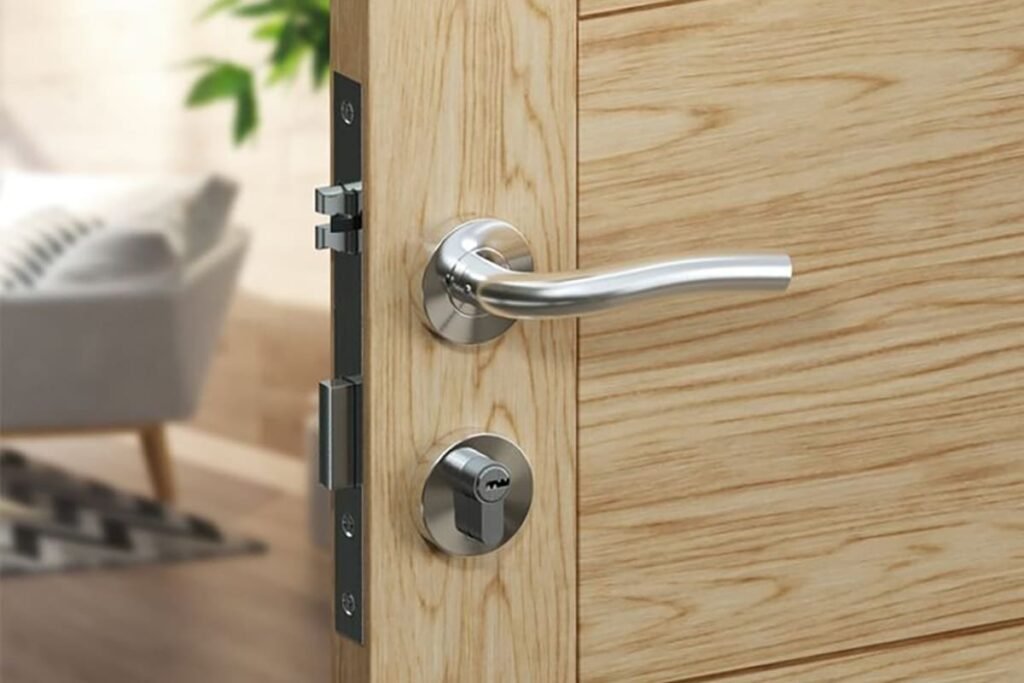
Things to Consider When Choosing Your Internal Door Handle?
An internal door handle can look perfect in a catalog, but it may still cause problems if it does not match the door, lock body, spindle, screws, or usage environment. I have seen buyers lose time on rework because style came first. A better approach is to match function, finish, material, and maintenance before confirming the order.
When choosing an internal door handle, I recommend checking door compatibility first, then finish, material, application environment, installation details, and price. The right handle should fit the door system, match the interior design, resist expected wear, support easy maintenance, and reduce after-sales risk for door factories, wholesalers, and project buyers.

Many buyers start with appearance because the handle is visible every day. I understand that. However, from a manufacturer’s order-configuration point of view, the handle is also a working component in a larger door system. The details below can help you avoid common purchasing mistakes.
Why Should Internal Door Handle Compatibility Come Before Style?
A beautiful internal door handle can become a costly problem if it does not fit the door system. I often see inquiries where the buyer shares only a photo or finish requirement, but the missing technical details delay the quotation and increase the risk of mismatch.
The first step is to confirm door type, door thickness, opening direction, lock body, cylinder, spindle size, screw position, rosette or backplate dimensions, and accessory requirements. Compatibility should come before style because installation failure creates rework, project delay, and avoidable after-sales claims1.
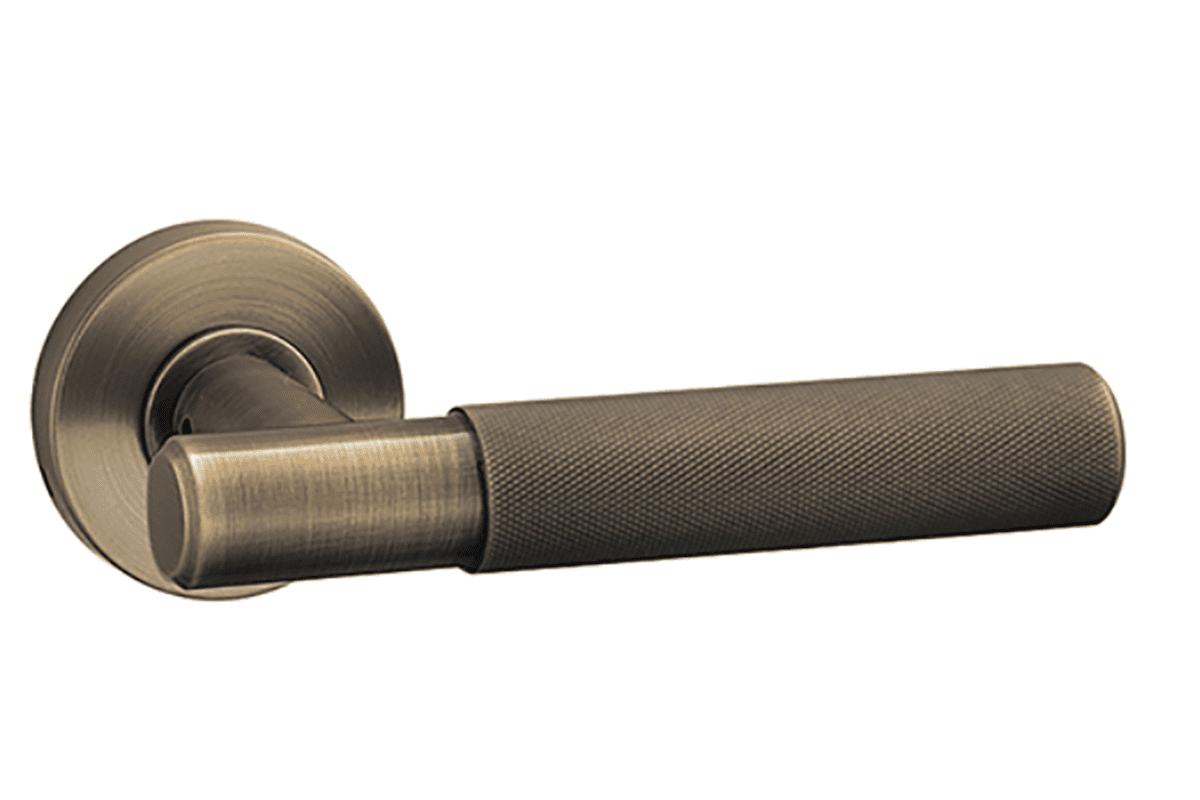
Dive Deeper
When I help buyers configure an internal door handle, I usually begin with a simple question: What door system will this handle work with? This question sounds basic, but it controls almost every later decision.
A handle does not work alone. It connects with the latch, lock body, cylinder, spindle, screws, escutcheon, rose, or backplate. If one dimension is wrong, the handle may still look correct but fail during installation.
Key Compatibility Checks
I recommend confirming these points before selecting the final design:
Door type
The handle requirement may change for wooden doors, MDF doors, aluminum doors, flush doors, or fire-rated interior doors.Door thickness
Many internal doors fall around 35–45 mm2, but project doors may differ. The screw length, spindle length, and fixing structure should match the actual thickness.Lock body type
Euro mortise locks, tubular latches, privacy locks, and passage latches all create different handle requirements.Cylinder or key function
A bedroom door, bathroom door, office door, and passage door may need different accessories.Hole spacing and center distance
Backplate handles must match the lock body center distance. Rose handles also need correct boring and screw positions.Spindle size
The common square spindle size varies by market and lock system.3 A mismatch can create looseness or installation failure.Opening direction and handing
Some lever handles are reversible, but some decorative or ergonomic designs may require left-hand or right-hand confirmation4.
Compatibility Table for Buyers
| Item to Confirm | Why It Matters | Common Risk if Ignored |
|---|---|---|
| Door thickness | Controls screw and spindle length | Handle cannot tighten properly |
| Lock body | Controls lever movement and fixing | Handle does not operate latch |
| Center distance | Affects backplate alignment | Holes do not match |
| Spindle size | Transfers handle rotation | Loose lever or no function |
| Opening direction | Affects lever orientation | Wrong handing on site |
| Accessories | Completes the door set | Missing escutcheon or screws |
I like to tell buyers that style selection becomes easier after compatibility is clear. A supplier can then recommend suitable lever shapes, rose types, backplates, finishes, and packaging options without guessing.
For B2B purchasing, this is especially important. A wholesaler may need one handle to suit many common doors. A door factory may need the handle to match its pre-drilled production line. A hardware brand may need consistent dimensions across multiple SKUs. In each case, compatibility protects the buyer’s reputation.
My practical rule is simple: I do not compare handle designs seriously until I know the door system they must fit.
This step also makes quotation more accurate. If I know the door thickness, lock body, finish, packing method, and accessory configuration, I can help reduce back-and-forth communication. That saves time for both sides.
How Should an Internal Door Handle Finish Match the Interior and Environment?
An internal door handle finish should support the interior style, but it should also suit the use environment. I have seen buyers choose a color only from a showroom board, then later discover that fingerprints, cleaning chemicals, or high traffic make the finish harder to maintain5.
The finish should match the design scheme and the maintenance reality. Popular choices include satin stainless steel, polished chrome, matte black, antique brass, brushed nickel, and custom PVD-style colors. The best option depends on décor style, cleaning frequency, humidity, hand contact, and expected wear.
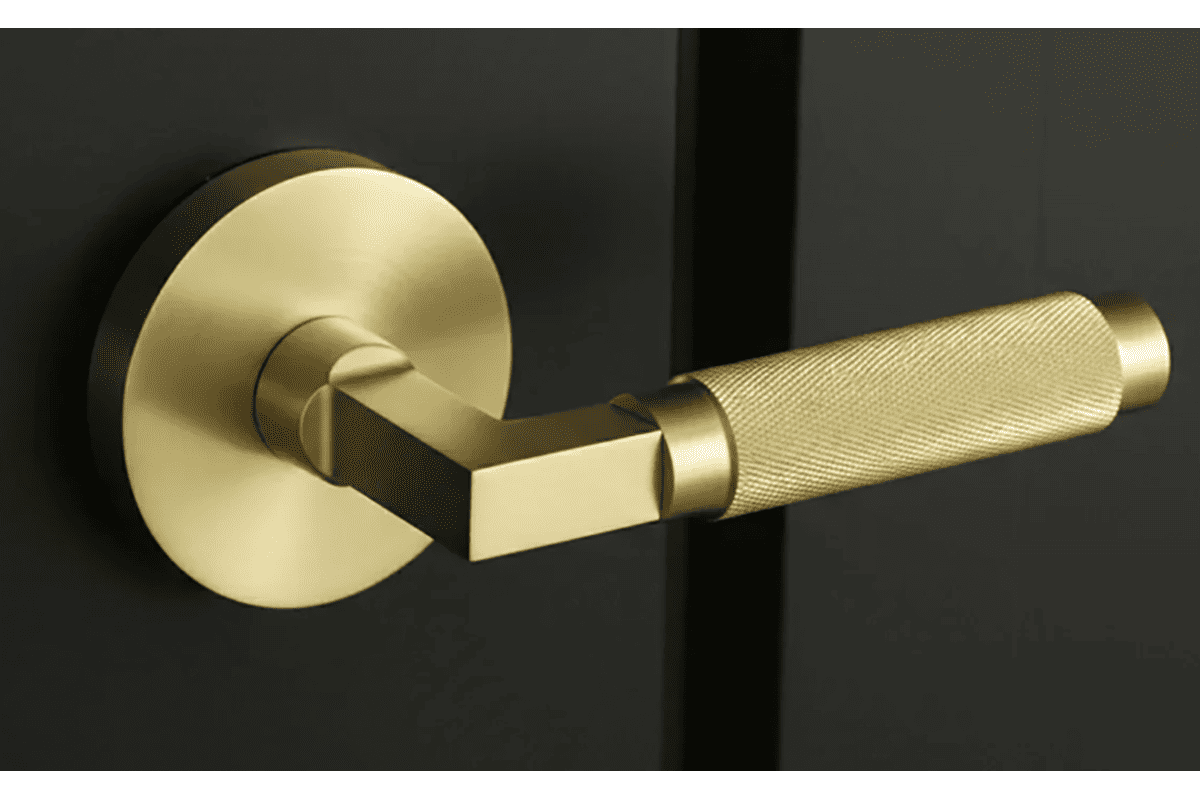
Dive Deeper
Finish selection is partly visual and partly practical. I always encourage buyers to look at both sides. A finish that works beautifully in a low-use apartment may not be the right option for a public corridor, school, hotel, or office building.
Match Finish to Interior Style
Interior designers often coordinate door handles with hinges, locks, bathroom accessories, lighting, furniture pulls, and wall colors. I am not an interior design authority, but I do see repeated market preferences in buyer inquiries.
| Interior Style | Common Finish Direction | Practical Note |
|---|---|---|
| Modern minimalist | Satin stainless steel, matte black, brushed nickel | Clean look, but matte colors need finish control |
| Classic residential | Antique brass, polished brass, bronze tones | Decorative style, but color consistency matters |
| Hotel or apartment | Satin nickel, chrome, black, PVD tones | Buyers often require batch consistency |
| Public building | Satin stainless steel or brushed finish | Easier to clean and less visually sensitive |
| Warm residential | Wood-style, leather-style, stone accents | Often used with zinc alloy decorative handles |
Think About Maintenance
Every finish ages. The question is whether it ages in a way the buyer can accept. In my experience, B2B buyers should ask:
- Will the handle be touched hundreds of times per day?
- Will cleaners use alcohol, disinfectant, or strong chemicals?
- Will the handle be installed near a bathroom or humid area?
- Will dark finishes show scratches more clearly?
- Will polished finishes show fingerprints more often?
- Will replacement orders need to match the original color?
For high-touch spaces, a brushed or satin finish often hides small marks better than a mirror finish6. For residential projects, decorative finishes can be attractive, but the buyer should still confirm coating method, surface treatment, and cleaning recommendations.
Common Finish Methods
The exact process depends on the material and factory capability, but buyers often compare:
Brushed finish
This finish gives a soft linear texture. It is common on stainless steel handles.Polished finish
This finish creates a bright reflective surface. It can look premium, but it may show fingerprints.Powder coating or painting
This method supports matte black and custom colors. Surface preparation and coating adhesion matter.Electroplating
This method is common on zinc alloy and brass-tone decorative handles.PVD-style coating
This method is often used for decorative metal colors7, but buyers should verify actual coating specifications with the supplier.
I suggest asking for physical samples before bulk orders. Photos can mislead because lighting, screen color, and camera settings change the appearance.8 A sample also lets the buyer test feel, surface texture, and cleaning response.
A finish is not just decoration. It affects customer satisfaction, maintenance cost, and replacement consistency. For that reason, I treat finish as a procurement decision, not only a style decision.
Which Internal Door Handle Material Suits Your Application?
An internal door handle material should be selected according to the application, not only the price. I often compare stainless steel and zinc alloy with buyers because both can be suitable, but they serve different needs in different door hardware projects.
Stainless steel is often suitable for public-building interior doors because it resists rust, supports easier cleaning, and performs well under frequent use. Zinc alloy is often suitable for residential interior doors when buyers need more design flexibility, decorative shapes, and varied finish combinations.
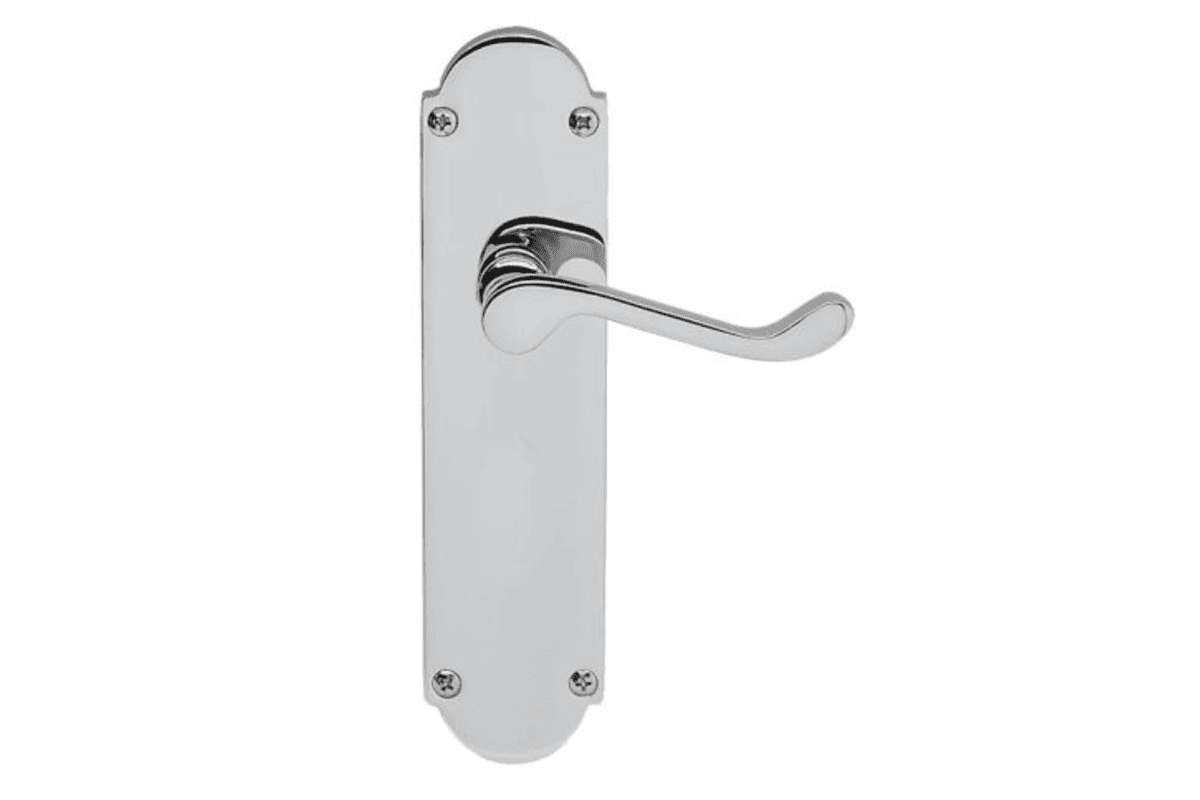
Dive Deeper
Material choice is one of the most important parts of handle selection. I do not like saying one material is always the best. That would be too simple. Instead, I prefer to ask where the handle will be used and what the buyer expects from it.
Stainless Steel Handles
Stainless steel is widely used for architectural door hardware because it has good corrosion resistance and a clean appearance.9 For public interiors, I often see buyers choose stainless steel lever handles for:
- Office doors
- School doors
- Hospital interior doors
- Hotel service areas
- Apartment corridors
- Commercial washroom doors
- High-frequency passage doors
Stainless steel can be easier to clean than many decorative materials.10 This matters in public spaces. It also tends to suit simple, modern interior projects where the buyer wants a stable, practical finish.
However, stainless steel still needs correct grade selection, proper surface treatment, and suitable manufacturing quality. Buyers should not assume that every stainless steel handle performs the same. They should confirm material grade, tube or solid structure, wall thickness if relevant, fixing structure, spring mechanism, and finish.
Zinc Alloy Handles
Zinc alloy is common in residential door handles because it supports more complex shapes and decorative surface treatments.11 It can be molded into curved, detailed, or heavier-looking designs. It can also combine with decorative elements such as:
- Stone-look inserts
- Leather-style details
- Wood-style patterns
- Decorative grooves
- Chrome or brass-tone plating
- Matte painted finishes
For residential buyers, this flexibility can be valuable. A homeowner may care more about the handle’s visual relationship with furniture, flooring, and door color. A hardware brand may use zinc alloy to build a wider design collection.
However, zinc alloy selection still requires discipline. Buyers should confirm finish durability, internal structure, screw fixing, spring performance, and packaging protection. Decorative handles can be more sensitive to scratches during transport and installation.
Material Comparison Table
| Material | Common Strength | Common Use Case | Buyer Should Check |
|---|---|---|---|
| Stainless steel | Corrosion resistance, cleanability, practical appearance | Public interiors, offices, high-use doors | Grade, thickness, finish, fixing strength |
| Zinc alloy | Design flexibility, decorative shapes, finish variety | Residential doors, design-focused collections | Plating quality, coating adhesion, structure |
| Aluminum alloy | Lightweight and corrosion resistant | Some modern interior doors | Strength, finish, compatibility |
| Brass | Traditional appearance, good machining | Premium residential or classic styles | Cost, finish aging, market requirement |
I recommend matching material to project risk. If the handle will face frequent use and cleaning, stainless steel is often a practical direction. If the handle must support a unique residential style, zinc alloy can be a strong option.
The best decision comes from sample evaluation, technical drawings, and clear usage expectations. If the project has fire-rated, accessibility, or public-safety requirements, I suggest that buyers verify applicable standards with qualified professionals and request the correct documentation from suppliers.
How Do Residential and Public-Building Internal Door Handle Needs Differ?
An internal door handle for a residence does not face the same expectations as one used in a public building. I have learned from customer inquiries that residential buyers often focus on design and comfort, while project buyers usually focus more on consistency, durability, cleaning, and replacement control.
Residential handles usually need stronger design flexibility, comfortable touch, and finish variety. Public-building handles usually need better resistance to frequent use, easier cleaning, stable supply, and reliable installation. The right choice depends on traffic level, user behavior, maintenance plan, and door hardware system requirements.
Dive Deeper
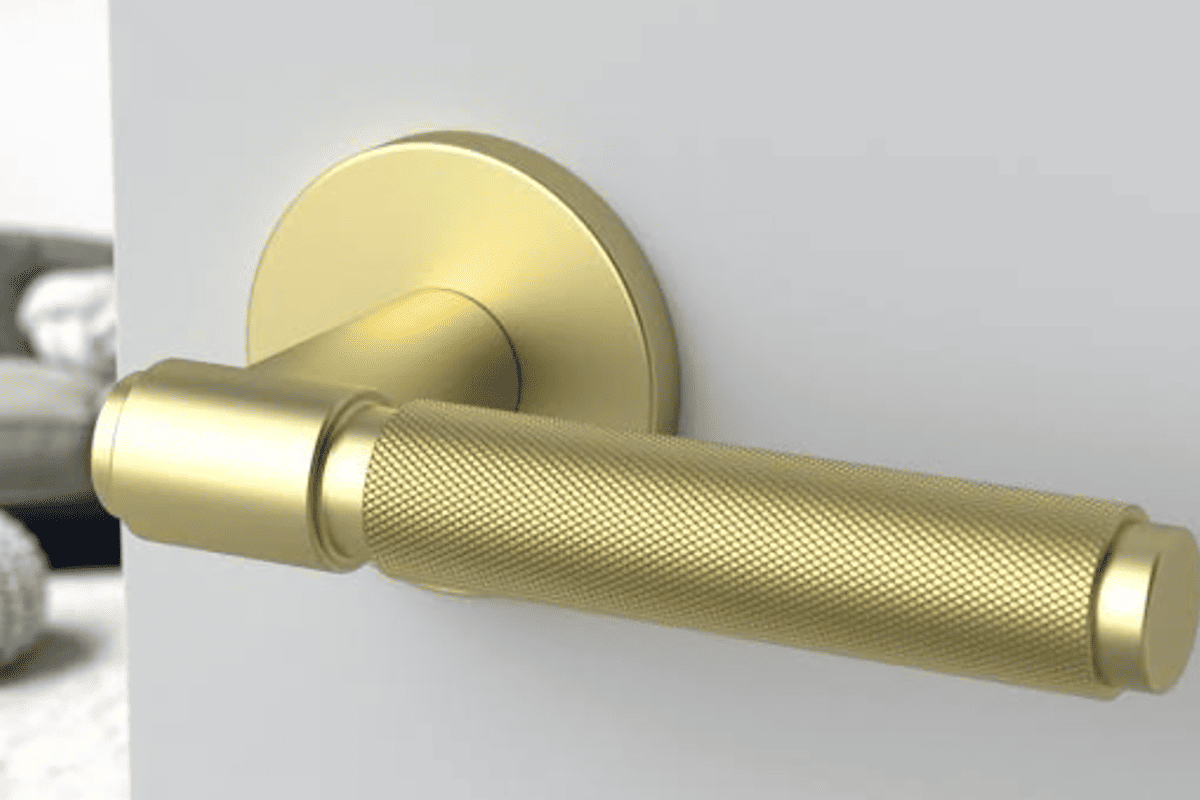
The same handle photo can create two different results in two different environments. I see this often when buyers send reference images. A lever handle that looks excellent for a bedroom may not be suitable for a busy school corridor. A simple stainless steel lever that works well in an office may feel too plain for a decorative apartment project.
Residential Interior Doors
Residential projects usually give more space for design choice. Buyers may choose handles to match:
- Door panel color
- Wardrobe hardware
- Lighting fixtures
- Floor tone
- Cabinet pulls
- Bathroom accessories
- Overall room theme
Comfort also matters. A bedroom handle should feel pleasant in daily use. A bathroom privacy handle should be easy to operate. A child’s room may need a smooth shape without sharp edges.
For residential markets, zinc alloy handles can be attractive because they allow more shapes and finishes. A buyer can create a wide product range with different roses, backplates, colors, and decorative details. This helps hardware brands and wholesalers serve different price levels and style preferences.
Public-Building Interior Doors
Public buildings create a different challenge. The user may not care about the handle. They may pull it roughly, hit it with bags, clean it often, or use it many times per day. In this case, the buyer should focus on practical performance.
For public-building projects, I suggest checking:
Lever strength and return spring performance
The handle should return smoothly after repeated use.Surface cleanability
The finish should tolerate the expected cleaning routine.Fixing structure
Through-bolt fixing may be preferred in some heavy-use situations.Spare part availability
Project buyers should plan for replacement handles, screws, spindles, and accessories.Batch consistency
The finish and dimensions should remain stable across large orders.Document verification
If the project requires CE, fire-rated, or other compliance documents12, the buyer should verify the specific document scope and product applicability.
Residential vs Public-Building Comparison
| Factor | Residential Interior Door | Public-Building Interior Door |
|---|---|---|
| Main concern | Style, comfort, finish variety | Use frequency, cleaning, durability |
| Common material direction | Zinc alloy, stainless steel, brass options | Stainless steel often preferred |
| Finish priority | Decoration and matching | Maintenance and wear visibility |
| Order risk | Style mismatch, finish complaint | Installation failure, after-sales volume |
| Supplier need | Design range and customization | Stable quality and repeat supply |
I often advise buyers to divide their product line by application. One handle range can serve decorative residential projects. Another range can serve public buildings with more practical specifications. This avoids the mistake of forcing one product to satisfy every customer.
A good internal door hardware program does not only include attractive handles. It includes the correct lock bodies, hinges, cylinders, accessories, drawings, installation guidance, and quality inspection steps.
When Should Price Enter Your Internal Door Handle Decision?
An internal door handle price should be compared only after the technical and design requirements are clear. I understand that price matters in B2B purchasing, but early price comparison can mislead buyers when the products differ in material, finish, structure, accessories, and packaging.
Price should come after compatibility, material, finish, application, and order configuration. A cheaper handle may become expensive if it causes installation rework, finish complaints, missing accessories, poor matching with lock hardware, or inconsistent replacement supply.
Dive Deeper
I receive many inquiries that ask only for “best price.” I understand the pressure. Door factories, wholesalers, and brand owners all need margin control. However, a handle quotation is only meaningful when the buyer compares the same specification.
A low price can come from many factors. Some are reasonable. Some are risky. For example, a supplier may offer a better price because of efficient production, stable material purchasing, or factory-direct supply. Another supplier may reduce price by changing wall thickness, simplifying accessories, lowering finish quality, or using weaker packaging.
What Should Be Fixed Before Comparing Price?
Before comparing quotations, I suggest fixing these details:
- Material and grade
- Handle structure
- Rose or backplate type
- Finish and surface process
- Lock body compatibility
- Spindle size and length
- Screw type and quantity
- Escutcheon or privacy turn configuration
- Packaging method
- Logo or branding requirement
- Inspection standard
- Order quantity and delivery schedule
Without these details, two prices may represent two different products.
Example of Hidden Cost
A buyer may save a small amount per set by choosing a handle with a weaker fixing system. If the handle loosens after installation, the buyer may face:
- Installer return visits
- Replacement part shipping
- Customer complaints
- Brand reputation damage
- Project delay
- Internal labor cost
The direct product price is only one part of total cost. For B2B buyers, after-sales cost can be more damaging than the original saving.
Price Comparison Table
| Price Factor | Low-Risk Approach | Higher-Risk Approach |
|---|---|---|
| Material | Confirm grade and structure | Compare only by appearance |
| Finish | Approve physical sample | Approve only by photo |
| Accessories | List every component | Assume screws and spindle are standard |
| Packaging | Match shipping route | Use weak cartons for heavy goods |
| Quality control | Define inspection points | Inspect only after complaints |
| Supplier | Confirm production ability | Choose only the lowest quote |
Factory-Direct Consideration
A factory-direct supplier can sometimes help buyers control cost because communication is closer to production. At SDH Hardware, our work often includes confirming drawings, finishes, accessories, packaging, and inspection requirements before order completion. I still recommend that buyers verify all documents, samples, and technical details before committing to bulk production.
Price matters, but timing matters more. If the buyer chooses by price first, the technical discussion becomes a repair process. If the buyer defines the requirement first, price comparison becomes clear and fair.
How Can You Evaluate an Internal Door Handle Supplier Before Ordering?
An internal door handle supplier should be evaluated by more than catalog range. I have seen buyers avoid many problems by checking whether the supplier can confirm specifications, support customization, control quality, and provide clear documentation before shipment.
A good supplier should help verify product drawings, door hardware compatibility, material options, finish samples, accessory lists, packaging, inspection steps, and document availability. For B2B buyers, supplier capability affects not only price but also consistency, delivery, and long-term after-sales control.

Dive Deeper
Supplier selection is part of product selection. A handle may look simple, but bulk orders require stable production and careful configuration. This is especially true for door factories, hardware brand enterprises, and wholesalers who sell under their own customer relationships.
Supplier Evaluation Checklist
I recommend asking these questions before placing an order:
Can the supplier confirm drawings?
Drawings help prevent misunderstanding about size, hole spacing, rose diameter, lever length, and accessory configuration.Can the supplier match related hardware?
The handle may need to match mortise locks, cylinders, hinges, and accessories.Can the supplier provide finish samples?
Color approval should happen before mass production when possible.Can the supplier support OEM or ODM?
Branding, logo stamping, laser marking, custom packaging, and adjusted specifications may be important.Can the supplier inspect finished products?
Inspection should cover appearance, function, accessories, packaging, and quantity.Can the supplier provide relevant documents?
If CE, fire-rated, or other documents are required, buyers should verify the exact product scope and application.
What I Look for in a Practical Supplier
A practical supplier should not only say “yes.” The supplier should also ask the right questions. In my experience, a responsible manufacturer will ask about door thickness, lock type, finish, market, application, packaging, and order quantity.
That discussion protects the buyer. It also helps the supplier avoid producing the wrong configuration.
At SDH Hardware, we manufacture architectural door hardware in China and support B2B buyers with factory-direct supply, OEM and ODM orders, and one-stop sourcing across product categories such as Euro mortise locks, stainless steel lever handles, butt hinges, concealed hinges, Euro brass cylinders, and door accessories. I mention this here because handle selection often connects with the full door hardware set, not because every project needs the same solution.
Conclusion
Choosing an internal door handle is not only a style decision. I suggest starting with compatibility, then checking finish, material, application environment, maintenance, supplier capability, and price. Stainless steel and zinc alloy can both be good choices when they match the right use case. If you are a door factory, hardware brand, or wholesaler planning a handle range or project order, contact SDH Hardware to discuss specifications, samples, customization, and complete door hardware matching.
"Review study for rework causes in construction industry", https://www.academia.edu/45589967/Review_study_for_rework_causes_in_construction_industry. Peer-reviewed construction-management literature documents that installation defects and rework are associated with additional cost and schedule delay, supporting the article’s rationale for verifying handle compatibility before design selection; the evidence is contextual rather than specific to internal door handles. Evidence role: general_support; source type: paper. Supports: Installation defects and rework are associated with added project cost, schedule delay, and downstream corrective work.. Scope note: Contextual support from construction rework research, not direct proof about door-handle orders. ↩
"Door", https://en.wikipedia.org/wiki/Door. Technical guidance from a building-products or standards-oriented source identifies common internal-door thicknesses in the approximate 35–45 mm range, supporting the article’s dimensional example while recognizing that thickness varies by country, door type, and fire rating. Evidence role: statistic; source type: institution. Supports: Common interior-door thicknesses fall near the 35–45 mm range in several markets or product categories.. Scope note: The range is market-dependent and may not apply to all project doors or certified fire doors. ↩
"What is a Spindle and what kind do I need? - Our Blog", https://www.morehandles.co.uk/blog/more-handles-technical-guides-what-is-spindle-and-how-do-i-know-what-kind-i-need/. Architectural-hardware technical references describe spindle dimensions as part of the handle-and-lock interface and show that sizes differ across hardware systems, supporting the article’s warning that spindle compatibility must be confirmed; the evidence is technical context rather than a survey of all markets. Evidence role: definition; source type: institution. Supports: Door-handle spindle dimensions are specified by lock or hardware systems and may differ between standards or regions.. Scope note: Supports the need to check spindle size, but may not quantify global market frequency. ↩
"How to understand lever and door handing.", https://www.schlage.com/en/blog/product_updates/door-handing.html. Architectural-door-hardware guidance defines door handing and notes that some hardware is handed rather than reversible, supporting the article’s instruction to confirm left-hand or right-hand requirements for certain lever designs. Evidence role: definition; source type: institution. Supports: Door hardware can be handed, and some lever designs are not reversible without specifying left-hand or right-hand orientation.. ↩
"High-touch surfaces: microbial neighbours at hand - PMC", https://pmc.ncbi.nlm.nih.gov/articles/PMC7087772/. Materials-science literature on coated metal surfaces reports that repeated contact, abrasion, and exposure to cleaning agents can alter surface appearance or coating performance, supporting the article’s maintenance concern; the evidence is general to coatings and high-touch surfaces rather than specific to every handle finish listed. Evidence role: mechanism; source type: paper. Supports: Frequent handling, abrasion, and cleaning agents can affect the appearance or durability of coated metal surfaces.. Scope note: General materials evidence; actual performance depends on coating chemistry, substrate, and cleaning protocol. ↩
"Analysis of Physical Features Affecting Glossiness and ... - PMC", https://pmc.ncbi.nlm.nih.gov/articles/PMC12028133/. Educational materials on surface metrology and optical appearance explain that smoother, high-gloss surfaces reflect light more specularly while textured surfaces scatter light, supporting the article’s claim that brushed or satin finishes may make minor marks less conspicuous; the evidence explains the mechanism rather than testing door handles directly. Evidence role: mechanism; source type: education. Supports: Surface roughness and gloss influence light reflection and the visual visibility of scratches or small marks.. Scope note: Mechanistic support; perceived visibility also depends on lighting, color, coating, and scratch type. ↩
"PVD for Decorative Applications: A Review - PMC - NIH", https://pmc.ncbi.nlm.nih.gov/articles/PMC10381906/. Reviews of physical vapor deposition coatings describe their use for decorative metallic colors as well as surface-performance purposes, supporting the article’s description of PVD-style finishes; the support is general because suppliers may use different coating systems under similar commercial terminology. Evidence role: mechanism; source type: paper. Supports: Physical vapor deposition coatings are used to produce decorative metallic appearances and functional surface finishes.. Scope note: Does not verify the exact coating specification of any particular supplier’s product. ↩
"Editorial: Advances in color science: From color perception to ...", https://pmc.ncbi.nlm.nih.gov/articles/PMC9927385/. Color-science and digital-imaging references explain that illumination, camera processing, and display calibration affect perceived color, supporting the article’s caution that photographs may not reliably represent a hardware finish; the evidence is general to color reproduction rather than specific to door-handle samples. Evidence role: mechanism; source type: education. Supports: Lighting conditions, image capture settings, and display color management can change perceived color and appearance.. Scope note: General color-science support; it does not measure error rates for hardware catalog images. ↩
"Revealing the Corrosion Resistance of 316 L Stainless Steel ...", https://pmc.ncbi.nlm.nih.gov/articles/PMC9920300/. Institutional stainless-steel references describe corrosion resistance, durability, and architectural appearance as reasons for using stainless steel in building applications, supporting the article’s material rationale for stainless-steel door hardware; the evidence is broader than internal handles alone. Evidence role: general_support; source type: institution. Supports: Stainless steel is used in architectural applications because of corrosion resistance, durability, and aesthetic qualities.. Scope note: Supports architectural use generally, not market share or performance of a specific handle model. ↩
"When and How to Clean and Disinfect a Facility", https://www.cdc.gov/hygiene/about/when-and-how-to-clean-and-disinfect-a-facility.html. Institutional guidance on hygienic materials commonly identifies properly finished stainless steel as a cleanable surface, supporting the article’s statement that it can be easier to maintain in public interiors; the evidence is contextual and does not prove superiority over every decorative material or coating. Evidence role: general_support; source type: institution. Supports: Stainless steel is commonly described as a cleanable, hygienic, nonporous surface material when properly finished and maintained.. Scope note: Cleanability depends on surface finish, contamination, cleaning method, and comparison material. ↩
"Zinc Alloy Die Casting Parts - USA Manufacturing", https://decoprod.com/zinc-die-casting-parts/. Die-casting technical sources describe zinc alloys as suitable for producing detailed, complex shapes with finishable surfaces, supporting the article’s explanation of zinc-alloy design flexibility for residential handles; the evidence concerns material and process capability rather than residential market prevalence. Evidence role: mechanism; source type: institution. Supports: Zinc alloys used in die casting allow detailed shapes, dimensional accuracy, and surface finishing suitable for decorative hardware.. Scope note: Supports manufacturability, not a quantified claim about how common zinc-alloy handles are in residential markets. ↩
"CE marking of fire doors: what to know across Europe", https://www.heinen-doors.com/en/ce-marking-fire-doors/. Government guidance on construction-product conformity and fire-door requirements shows that some door assemblies and related hardware require documented compliance or evidence of suitability, supporting the article’s caution about CE, fire-rated, or similar documents; the applicability depends on jurisdiction, product category, and project specification. Evidence role: historical_context; source type: government. Supports: Construction products and door-related hardware may be subject to regulatory documentation or conformity requirements depending on product type and jurisdiction.. Scope note: Regulatory requirements vary by market and may apply to a door assembly or specific hardware category rather than every internal door handle. ↩