
Anti-Ligature Door Hardware: How Do You Choose the Right Products for Care?
Anti-ligature door hardware can reduce avoidable risk, but only when buyers match the product set to the room, supervision level, and legal egress needs. If teams select by label alone, they may over-spec costly areas or miss hidden hazards. I prefer a risk-tiered system approach that is practical, verifiable, and maintainable.
Anti-ligature door hardware should be selected as a complete door system, not as separate parts. For behavioral health bedrooms and en-suite bathrooms, buyers should evaluate handles, backplates, lock functions, cylinders, hinges, and closers by risk tier, staff access, fire-door status, egress requirements, cleanability, and verified certificates or test reports.
In real tenders, I often see the same question appear in different wording: “Which product is safest?” My answer is usually: “For which door, under which supervision pattern, and under which local code?” That is where a better specification begins.
Why Should Anti-Ligature Door Hardware Be Selected by Risk Tier?
Anti-ligature door hardware becomes confusing when every room is treated as high risk. This creates pressure, delays, and sometimes the wrong product choice. A bedroom door, an en-suite bathroom door, and a staff-only store door do not carry the same exposure, so they should not receive the same hardware schedule.
The best way to select anti-ligature products is to define the target space, risk tier, and supervision level before choosing components. A minimum specification may use low-projection sloped handles and cleanable backplates, while a preferred specification may add compatible anti-ligature lock functions, staff override, and closer solutions that avoid new hanging points.
Dive deeper: risk tiering before product selection
I work on factory-side pre-sales and configuration for door hardware tenders, and I have learned one lesson repeatedly: “anti-ligature” is not the same as “anti-suicide.”1 No product removes all risk. Hardware can reduce ligature opportunities within a defined use case, but it must sit inside a wider safety plan that includes observation, staffing, policies, and room design.2
For procurement teams, the first useful step is to separate spaces by use.
Typical target spaces
| Space | Typical concern | Minimum hardware focus | Preferred hardware focus |
|---|---|---|---|
| Patient bedroom | Privacy, egress, staff access, ligature reduction | Sloped handle/backplate, smooth edges, compatible lock | Staff override, single-action egress where required, matched closer/hinge set |
| En-suite bathroom | Lower supervision, privacy, wet environment | Low-projection fittings, cleanable surfaces, corrosion-resistant finish | Full anti-ligature set, controlled privacy function, reduced projection closer solution |
| Corridor access door | High traffic, fire compartmentation | Durable lever set, certified lock, fire-rated compatibility | Anti-ligature trim where patient-accessible, verified fire/egress documents |
| Staff-only room | Controlled access, lower patient exposure | Standard commercial hardware may be suitable | Upgrade only if patient access is possible |
This table is not a universal rule. It is a starting point for discussion with the facility team, door supplier, and local authority having jurisdiction, often called the AHJ.
Minimum versus preferred features
For a lower or moderate-risk patient bedroom, a “minimum” anti-ligature door hardware set often focuses on:
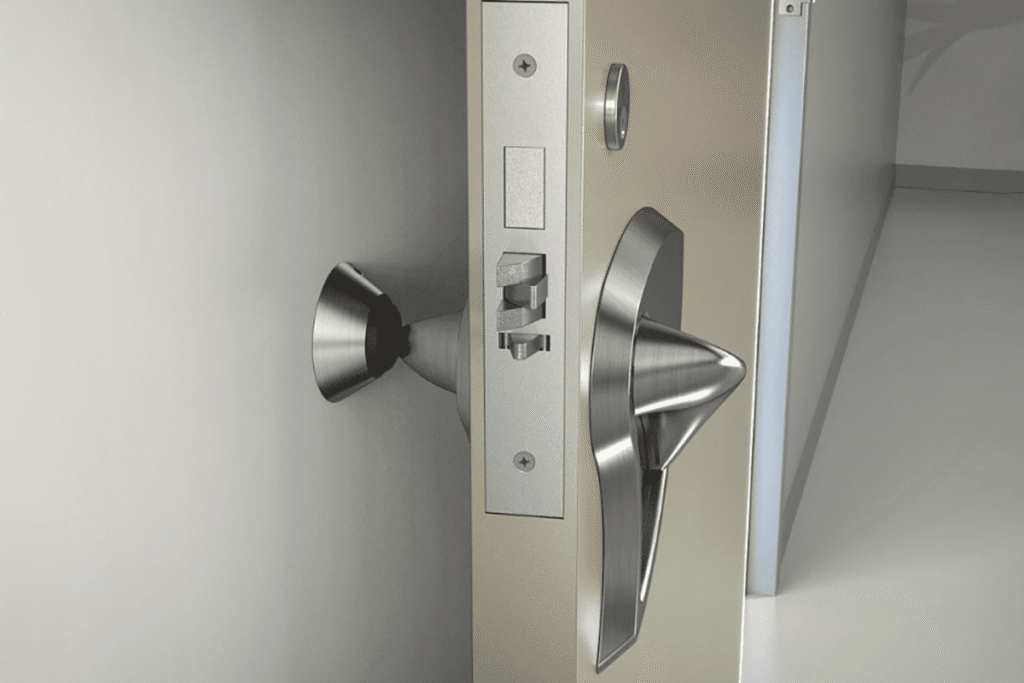
- Sloped or radiused handle geometry
- Low projection from the door face
- A backplate with no sharp lips or open gaps
- Smooth surfaces for cleaning
- Compatibility with the lock follower and spindle
- Durable finish suitable for frequent use
For a higher-risk bedroom or en-suite bathroom, the preferred set may add:
- Staff override from the corridor side.
- Single-action egress where required by local code.
- A privacy function that does not trap staff outside.
- A closer arrangement that does not create a hanging point.
- Fire-rated compatibility if the door is part of a fire compartment.
- Written supplier confirmation that the components are intended to work together.
I avoid recommending one-size-fits-all SKU lists because they create false confidence. A door in a high-observation ward may need a different solution from a bathroom in a low-supervision area. Likewise, a fire-rated bedroom door may require different lock and closer documentation from a non-fire-rated internal bathroom door.
In my own tender reviews, the most common misunderstanding is simple: a buyer asks for “the anti-ligature handle,” but the actual risk may sit in the lock function or closer arm. The handle is only one part of the decision.
This is why I begin with risk tiering. It keeps the project team from over-specifying every door and under-specifying the one door that matters most.
How Should Anti-Ligature Door Hardware Be Matched as a System?
Anti-ligature door hardware can fail as a specification when buyers mix parts from different product families. A sloped handle may look appropriate, but an unmatched backplate, spindle, lock follower, or closer arm can create gaps, edges, or protrusions that reduce the value of the original choice.
Anti-ligature hardware should be specified as a compatible system: handle and backplate, lock body, spindle, cylinder or thumbturn, hinges, and closer. Each part should support the same risk tier and door function. Buyers should ask suppliers to confirm mechanical compatibility, egress behavior, fire-door suitability, and maintenance requirements in writing.
Dive deeper: why matched components matter
A door set is mechanical. Every component changes how the door behaves. I have seen project teams focus on the visible trim because it is easy to judge from a drawing. However, the hidden details often decide whether the installed door is safe, durable, and code-compliant.
1. Handles and backplates
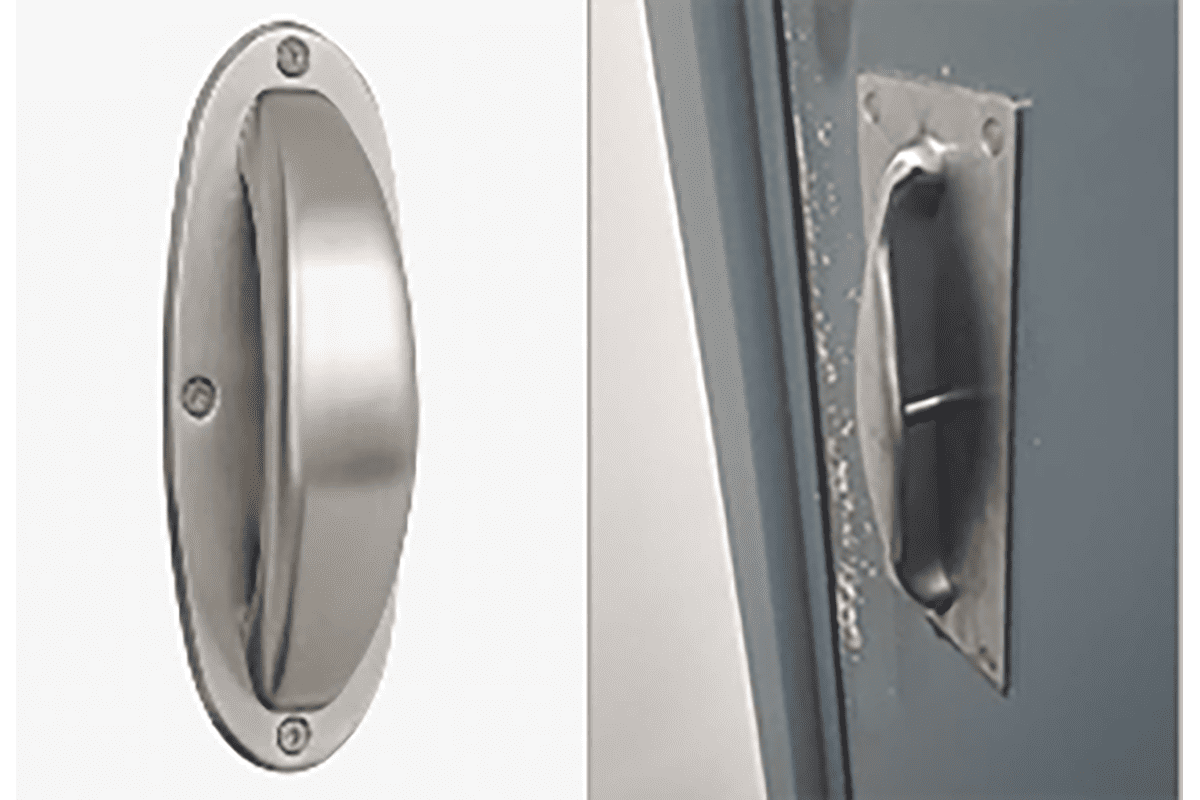
For behavioral health bedrooms and en-suite bathrooms, I usually look at the handle and backplate together. A well-designed handle can be undermined by a backplate with a hard ledge or an exposed fixing gap.
Useful design criteria include:
- Sloped profile rather than flat horizontal projection
- Short projection from the door face
- Radiused corners to reduce sharp contact points
- Concealed or tamper-resistant fixing
- Backplate edges that sit tightly against the door
- Surface finish that tolerates cleaning chemicals
Stainless steel is common because it offers strength, corrosion resistance, and cleanability.3 In wet en-suite bathrooms, I pay closer attention to finish durability and edge sealing.
2. Lock body and function
The lock is not just a security item. In care settings, the lock function affects both risk and response time.
Common evaluation questions include:
- Can staff override the lock from outside?
- Can a patient exit in one action where required?
- Does the latch retract reliably with the selected lever?
- Is the spindle compatible with the lock follower?
- Does the lock suit the door thickness and handing?
- Is the lock suitable for fire-rated use if required?
For example, a Euro mortise lock may be suitable in one behavioral health project, but the function must be selected carefully. Privacy, classroom, passage, deadlock, escape, and staff override functions behave differently. I never assume that a familiar lock body is automatically suitable for a patient bedroom.
3. Door closers and arms
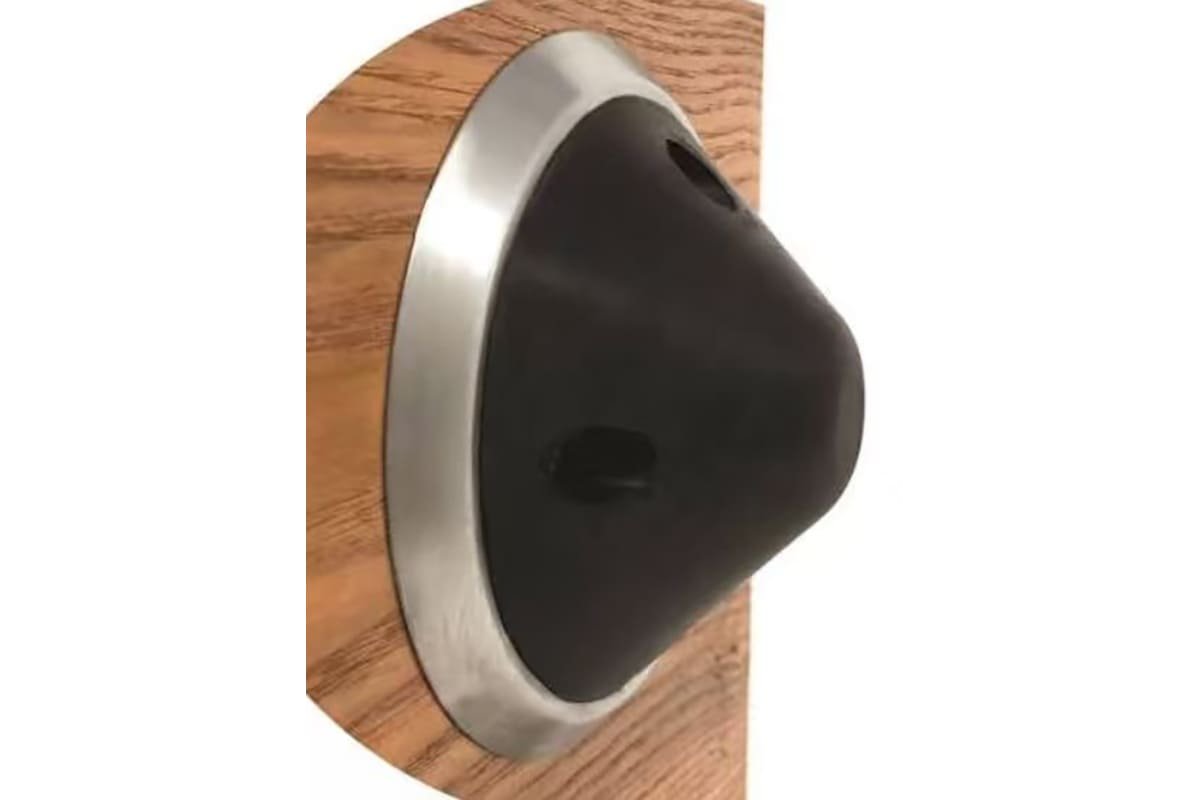
Door closers are sometimes overlooked. That is risky. A standard projecting arm can create a new ligature opportunity4, especially on the patient side of the door.
Possible options may include:
| Closer type | Potential benefit | Caution |
|---|---|---|
| Concealed closer | Reduces exposed hardware | Must suit door construction, fire rating, and maintenance access |
| Anti-ligature arm closer | Reduces hanging points versus standard arms | Must be verified as compatible with the door and risk tier |
| Floor spring | Removes overhead arm | May not suit all fire, accessibility, or maintenance requirements |
| Standard arm closer | Familiar and cost-effective | May introduce unacceptable projection in patient-accessible spaces |
The correct choice depends on door position, swing direction, fire rating, and whether patients can access the closer side.
4. Hinges and door gaps
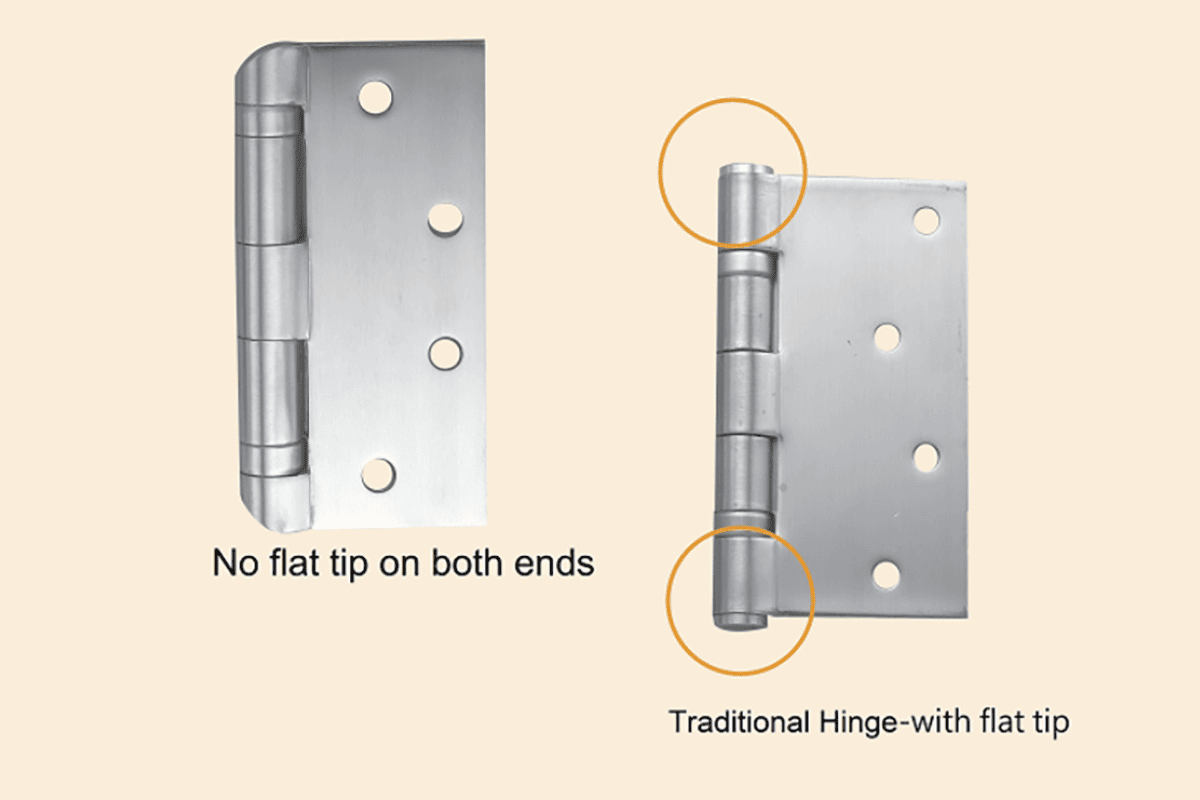
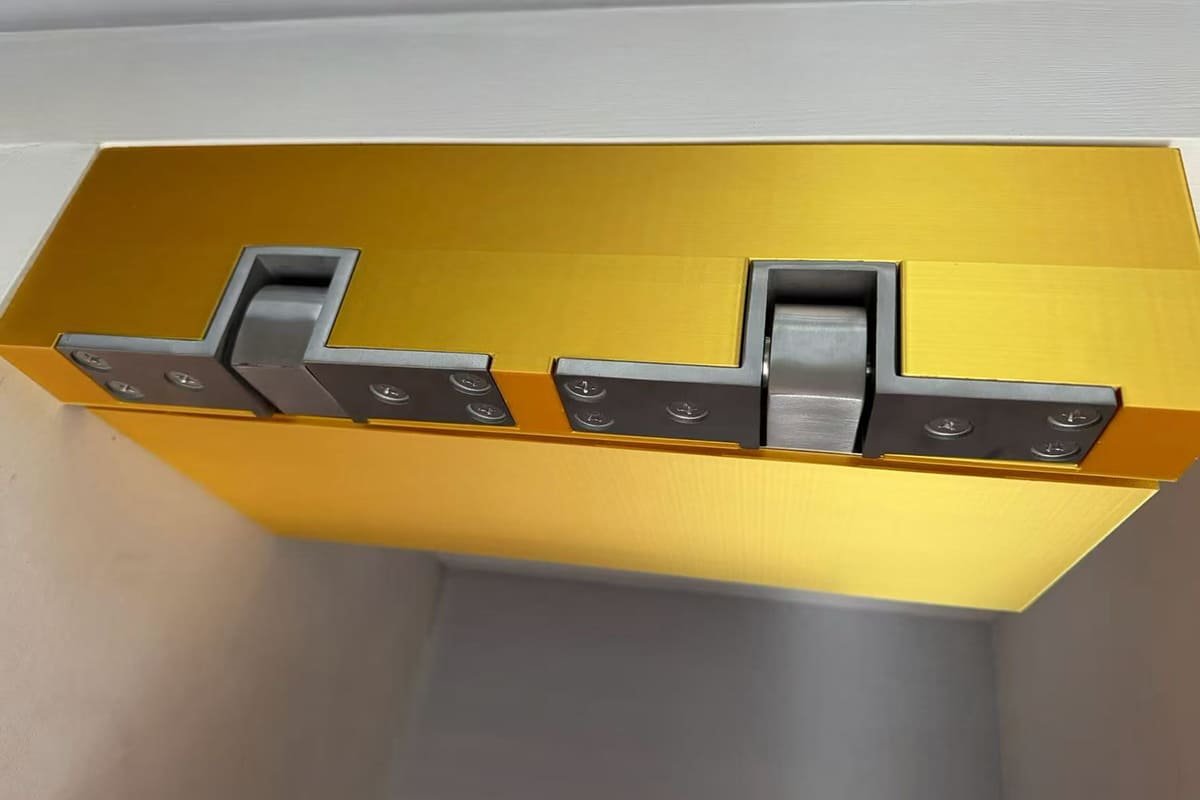
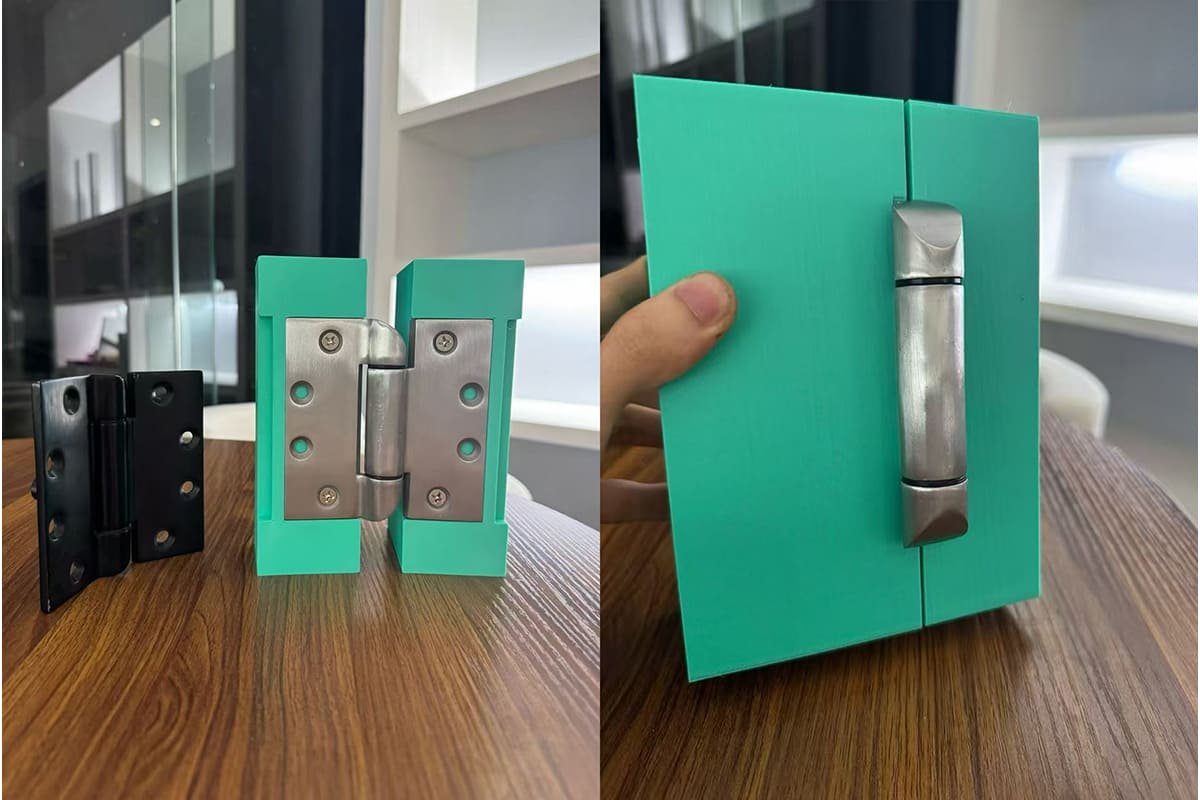
Hinges can also affect the full anti-ligature door hardware package. Butt hinges, concealed hinges, and continuous hinges each have different installation, maintenance, and fire-door implications. For patient-accessible hinges, the project team should check:
- Knuckle projection
- Tip shape
- Gap between door and frame
- Load rating
- Fire certificate compatibility
- Door leaf weight and opening cycle expectations
At SDH Hardware, our role is factory-side. We can support procurement teams with product drawings, material options, samples, and test documentation for applicable products. However, the final door set should still be reviewed by the project’s qualified door professional, safety team, and AHJ.
What Compliance Checks Matter for Anti-Ligature Door Hardware?
Anti-ligature door hardware should not be approved only because it looks safe in a catalogue. A product may have good geometry but still fail the project if it lacks relevant certification, fire-door compatibility, egress suitability, or local approval. Compliance should be a gate at the beginning, not a late paperwork step.
Buyers should verify CE or EN conformity where applicable5, local fire and egress requirements, behavioral health guidance, and project-specific rules before finalizing anti-ligature hardware. Certificates, test reports, declarations, and written egress statements should be requested from suppliers and checked with the AHJ or qualified consultant.
Dive deeper: documents buyers should request
I treat compliance as a filtering stage. If a product cannot pass the documentation review, it should not move to the mock-up stage. This protects the buyer, the facility, and the supplier.
Key documents to request
For technical B2B procurement, I suggest asking for a structured document pack. The exact documents depend on the product and jurisdiction, but the list below is a practical starting point.
| Document | Why it matters | Buyer action |
|---|---|---|
| CE declaration or applicable conformity document | Shows declared compliance for relevant markets | Verify scope, product model, and issuing details |
| EN test report, where applicable | Supports performance claims | Match report to exact product and configuration |
| Fire-rated certificate, where required | Confirms use on fire doors under tested conditions6 | Check door type, rating time, installation details |
| Product drawing | Confirms dimensions, projection, fixing, and handing | Review with door manufacturer and safety team |
| Installation instructions | Controls how the product performs after fitting | Ensure installer follows approved method |
| Maintenance guide | Supports long-term function | Plan inspection intervals and replacement parts |
| Written egress compatibility statement | Clarifies lock behavior | Verify with AHJ and project code consultant |
| Surface finish specification | Supports cleaning and durability review | Confirm chemical resistance needs |
SDH Hardware can provide certificates and test documents for applicable CE-certified and fire-rated door hardware products. Still, I always tell buyers to match the certificate to the exact product, lock function, finish, door type, and installation condition. A certificate is useful only when it covers the actual configuration being purchased.
Standards and guidance: verify locally
Behavioral health hardware guidance varies by market. For example, UK projects may refer to NHS guidance and local trust requirements.7 European projects may focus on CE/EN conformity and national fire-door rules. Middle East and Southeast Asia projects often combine international standards with local civil defense or ministry requirements.
Because requirements differ, I avoid universal claims such as “this product is compliant everywhere.” A better statement is:
“This product has documents available for the listed standard or test condition. The project team should verify acceptance with the AHJ before final specification.”
This language may feel cautious, but it is practical. It prevents costly substitution disputes after the tender is awarded.
Egress cannot be sacrificed
Anti-ligature intent does not remove the need for legal egress.8 In many patient bedrooms, users must be able to exit without keys, special knowledge, or multiple actions9, depending on the jurisdiction and occupancy classification. Staff also need reliable override in emergencies.
When evaluating a lock function, I ask:
- Does the inside action release the latch as required?
- Can staff enter quickly from the outside?
- Does privacy create a delay during emergency response?
- Does the cylinder, thumbturn, or emergency release introduce a new risk?
- Does the hardware remain compatible with the fire-door label?
These questions should be answered before samples are ordered. A beautiful anti-ligature trim set is not acceptable if the lock function conflicts with egress law.
How Can Anti-Ligature Door Hardware Work in Bedrooms and En-Suite Bathrooms?
Anti-ligature door hardware for bedrooms and en-suite bathrooms must balance privacy, observation, emergency access, and wet-area durability. These rooms often receive the highest scrutiny because patients spend more unsupervised time there.10 A small hardware detail can affect both risk reduction and daily maintenance.
For bedrooms and en-suite bathrooms, the hardware set should match the room’s risk tier. Bedrooms often need durable low-projection handles, staff override, and legal egress. En-suite bathrooms may need more careful control of privacy, corrosion resistance, and closer selection because supervision is lower and surfaces face moisture.
Dive deeper: field-tested selection notes and one anonymized case
A bedroom with an en-suite bathroom is one of the most sensitive door hardware configurations in behavioral health projects. It contains two different privacy expectations. The bedroom door connects the patient to staff-controlled circulation. The bathroom door creates a more private and often less observed space.
Patient bedroom door
For a typical behavioral health bedroom, I would discuss these requirements with the buyer:
- Risk tier: low, moderate, high, or project-defined
- Observation pattern: regular checks, continuous observation, or step-down care
- Fire-door status: yes or no
- Door swing: inward, outward, or special arrangement
- Staff override: required in most care discussions I see
- Patient egress: to be verified with local code
- Hardware durability: expected cycles, cleaning, abuse resistance
- Replacement plan: spare parts and compatible future supply
A moderate-risk bedroom may use a sloped lever/backplate set, compatible mortise lock with staff override, suitable cylinder or emergency release, butt hinges or concealed hinges as specified, and an approved closer arrangement if the door needs self-closing.
A higher-risk bedroom may require a more controlled hardware package. The project team may choose lower projections, more concealed fixings, and a closer solution that avoids exposed arms on the patient side. However, this should be confirmed against the door construction and fire certificate.
En-suite bathroom door
The bathroom door is different. Moisture, privacy, and lower supervision all matter.11
Typical points include:
- Corrosion-resistant material, often stainless steel or suitable plated brass
- Smooth surfaces for cleaning
- Privacy function that staff can override quickly
- No unnecessary hooks, stops, or projections
- Closer or pivot solution that does not add a hanging point
- Hardware that remains usable with wet hands
- Clear maintenance access for cleaning teams
I also check whether the bathroom door needs a full lock or a controlled privacy latch. In some projects, a full lock is not wanted because it may delay staff response. In other projects, privacy expectations require a specific function. The facility’s safety lead should define this before procurement.
An anonymized project case
One anonymized behavioral health unit I supported involved a patient bedroom with an en-suite bathroom. The facility team described the risk level as moderate to high for selected rooms. Staff response time was a key concern. The bedroom door was fire-rated, while the en-suite door had separate privacy and maintenance requirements.
The first schedule included:
- Sloped stainless steel handle and backplate set
- Compatible mortise lock with staff override
- Single-action egress requirement to be verified locally
- Fire-rated door hardware documents for the bedroom door
- A standard overhead closer arm on one patient-accessible side
During review, the handle and lock combination looked appropriate. However, the closer arm created a concern because its geometry introduced a possible ligature point. The project team revised the specification and moved to a compatible concealed closer or anti-ligature arm arrangement, subject to door and fire-rating verification.
After installation, the feedback was practical rather than dramatic. Staff reported that the revised hardware was easier to clean than previous fittings, and maintenance appreciated having matched drawings and spare-part references. The key lesson was clear: the most important risk was not the handle; it was the system detail above the door.
That case changed how I review tenders. I now ask about closers earlier, especially for bedroom and en-suite layouts. The earlier this question appears, the easier it is to avoid late substitutions and site delays.
How Should Procurement Teams Compare Anti-Ligature Door Hardware Suppliers?
Anti-ligature door hardware procurement is not only about unit price. A low-cost item can become expensive if the supplier cannot provide drawings, certificates, compatible locks, finish options, packaging, inspection records, or replacement parts.12 Behavioral health projects need suppliers who understand system selection and documentation.
Procurement teams should compare suppliers by product compatibility, certification support, manufacturing quality control, customization ability, inspection process, and after-sales continuity. A suitable supplier should help configure matched handles, locks, hinges, and closers by risk tier, while clearly stating which claims require local verification.

Dive deeper: factory-side supplier evaluation checklist
From the factory side, I see two procurement patterns. Some buyers send a clear door schedule with room types, fire ratings, lock functions, finishes, and certificate requirements. These projects move faster. Other buyers send only a photo and ask for “anti-ligature hardware.” Those projects need more clarification before pricing can be meaningful.
Supplier evaluation criteria
A capable supplier should be able to answer these questions:
Can the supplier provide a matched set?
Handles, backplates, lock bodies, cylinders, hinges, and closers should be compatible.Can the supplier provide drawings?
Door manufacturers need dimensions, fixing points, spindle sizes, handing details, and projection data.Can the supplier support certification review?
CE, EN, fire-rated, or other documents should be available where applicable.Can the supplier customize without breaking compatibility?
Surface finish, logo, packaging, and accessories should not alter the safety or performance function.Does the supplier inspect finished goods?
A behavioral health project cannot rely only on visual approval. Functional testing matters.Can the supplier maintain continuity?
Hospitals and care facilities need spare parts years after installation.
Factory quality control points
At SDH Hardware, our architectural door hardware production includes raw material screening, production supervision, and finished product inspection. For B2B buyers, the practical value is not only that products can be made. The value is that product batches can be checked against drawings and order requirements.
A useful inspection process may include:
- Material verification
- Dimensional inspection
- Surface finish check
- Lock function testing
- Lever return testing
- Spindle and follower compatibility check
- Packaging and label review
- Quantity and accessory confirmation
Conclusion
Anti-ligature door hardware selection works best when buyers treat it as a risk-tiered system decision. The right set depends on the patient bedroom or en-suite bathroom, supervision level, lock function, egress requirements, closer arrangement, fire-door status, and verified documentation. I recommend reviewing matched components early, requesting certificates and drawings, and confirming local approval before purchase. If you need factory-side support for compatible door hardware configurations, SDH Hardware can help you review product options, drawings, samples, and B2B supply requirements.
"Mental Health Environment of Care Checklist (MHEOCC)", https://www.patientsafety.va.gov/professionals/onthejob/mentalhealth.asp. Institutional guidance on suicide-risk reduction in behavioral health settings supports the distinction between reducing ligature opportunities and eliminating suicide risk, noting that environmental controls are only one part of broader clinical risk management. Evidence role: expert_consensus; source type: institution. Supports: The source should support that ligature-resistant environmental design is one component of suicide-risk mitigation and does not remove all self-harm risk.. Scope note: The support is contextual because it addresses environmental suicide-risk mitigation generally, not this article’s specific door-hardware configurations. ↩
"Patient safety in inpatient mental health settings - PMC - NIH", https://pmc.ncbi.nlm.nih.gov/articles/PMC7008434/. A review of inpatient suicide prevention literature supports the view that environmental modification should be combined with clinical observation, staffing practices, and institutional policies rather than treated as a stand-alone control. Evidence role: expert_consensus; source type: paper. Supports: The source should support that inpatient suicide prevention relies on combined environmental, clinical, staffing, and policy measures.. Scope note: The source would support the safety-management approach broadly and may not discuss door hardware specifically. ↩
"Stainless Steel Leaches Nickel and Chromium into Foods ...", https://pmc.ncbi.nlm.nih.gov/articles/PMC4284091/. Materials references describe stainless steel as an alloy family valued for corrosion resistance, mechanical durability, and cleanable surfaces, which explains its common use in frequently handled architectural hardware. Evidence role: definition; source type: education. Supports: The source should support the general material properties of stainless steel, including corrosion resistance, durability, and suitability for cleaning.. Scope note: The source would support material properties generally, not the performance of every stainless-steel grade, finish, or fabricated product. ↩
"Patient Safety Standards, Materials and Systems Guidelines", https://omh.ny.gov/omhweb/patient_safety_standards/guide.pdf. Mental health environmental safety guidance identifies protruding fixtures and door hardware as potential ligature points, supporting the concern that exposed closer arms may introduce avoidable hazards in patient-accessible areas. Evidence role: mechanism; source type: government. Supports: The source should support that protruding fixtures, including door hardware or closer arms, can function as ligature points in mental health environments.. Scope note: The source may discuss protrusions and door hardware as a class rather than testing the particular closer design described in the article. ↩
"Construction products (CPD/CPR) - Internal Market, Industry ...", https://single-market-economy.ec.europa.eu/single-market/goods/european-standards/harmonised-standards/construction-products-cpdcpr_en. European regulatory material on construction products supports the need to verify CE marking and conformity documentation when door hardware falls within applicable harmonised standards or market rules. Evidence role: general_support; source type: government. Supports: The source should support that products covered by European harmonised standards or applicable rules may require conformity documentation such as CE marking or declarations of performance.. Scope note: Applicability varies by product type, standard coverage, market, and date of regulation. ↩
"Fire Doors and NFPA 80 FAQs", https://www.nfpa.org/news-blogs-and-articles/blogs/2025/04/11/fire-doors-faqs. Fire-door standards and listing guidance support the principle that hardware used on rated doors must be compatible with the tested or listed assembly and installed within the conditions of certification. Evidence role: mechanism; source type: institution. Supports: The source should support that fire-door assemblies and their hardware must correspond to tested, listed, or certified configurations and installation conditions.. Scope note: The citation would support the certification principle generally; the exact permitted configuration must be verified against the specific certificate or listing. ↩
"QSO 19-12 Ligature Risk", https://www.cms.gov/Medicare/Provider-Enrollment-and-Certification/SurveyCertificationGenInfo/Downloads/QSO-19-12-Hospitals.pdf. NHS and UK health-estate guidance provides jurisdiction-specific context for ligature-risk management in mental health facilities, including attention to fixtures, fittings, and local trust procedures. Evidence role: historical_context; source type: government. Supports: The source should support that NHS or UK health-estate documents address ligature risks, fixtures, fittings, and local governance in mental health environments.. Scope note: The source may not prescribe a single hardware product and should be used to contextualize, not replace, project-specific local approval. ↩
"2012 LIFE SAFETY CODE HEALTHCARE", https://www.cms.gov/Medicare/CMS-Forms/CMS-Forms/downloads/cms2786R.pdf. Life-safety code guidance supports the principle that door hardware must maintain compliant means of egress even when other safety objectives, such as ligature reduction, are being addressed. Evidence role: general_support; source type: institution. Supports: The source should support that means-of-egress requirements continue to apply to door hardware, including in healthcare occupancies with special safety concerns.. Scope note: The exact egress obligation depends on jurisdiction, occupancy classification, and approved locking arrangement. ↩
"Basic Requirements for Means of Egress", https://umdearborn.edu/environmental-health-and-safety/fire-and-life-safety/basic-requirements-means-egress. Model building and life-safety codes use the principle that egress doors should be readily openable from the egress side without keys, special knowledge, or unusual effort, with exceptions only where specifically permitted. Evidence role: definition; source type: institution. Supports: The source should support the code concept that egress doors generally must be openable without keys, special knowledge, or unusual effort, subject to permitted exceptions.. Scope note: The citation would establish the general code principle; local amendments and healthcare locking exceptions must still be checked. ↩
"18-06- Hospitals DATE", https://www.cms.gov/Medicare/Provider-Enrollment-and-Certification/SurveyCertificationGenInfo/Downloads/Survey-and-Cert-Letter-18-06.pdf. Research on inpatient psychiatric suicide and self-harm locations provides contextual support for heightened scrutiny of bedrooms and bathrooms, where privacy and reduced direct observation can affect detection and response. Evidence role: general_support; source type: paper. Supports: The source should support that private or less directly observed patient spaces such as bedrooms and bathrooms are important locations for inpatient self-harm or suicide-risk management.. Scope note: The support is contextual because the source may document risk locations without measuring the exact amount of unsupervised time in each room. ↩
"QSO 19-12 Ligature Risk", https://www.cms.gov/Medicare/Provider-Enrollment-and-Certification/SurveyCertificationGenInfo/Downloads/QSO-19-12-Hospitals.pdf. Behavioral health facility guidance treats bathrooms as distinct risk areas because privacy, reduced observation, and fixture design can affect self-harm risk, while wet conditions also influence material selection and maintenance. Evidence role: general_support; source type: institution. Supports: The source should support that bathrooms in mental health facilities require special ligature-risk and observation consideration because they are private spaces, often with wet-area materials and fixtures.. Scope note: The source may emphasize clinical and environmental risk more than corrosion or hardware-material performance. ↩
"QII.2 Raising economic efficiency in view of life-cycle costs", https://www.worldbank.org/en/programs/quality-infrastructure-investment-partnership/brief/qii-2-raising-economic-efficiency-in-view-of-life-cycle-costs1. Lifecycle-costing guidance in procurement supports evaluating acquisition price together with maintenance, documentation, compatibility, and spare-parts availability, since these factors can determine total cost over the product’s service life. Evidence role: general_support; source type: institution. Supports: The source should support that procurement decisions should consider lifecycle costs, maintenance, documentation, and supportability rather than purchase price alone.. Scope note: The support is general procurement evidence and does not quantify the cost impact for anti-ligature door hardware specifically. ↩
