
Lever on Rose vs Lever on Backplate: What Are the Differences and How to Install?
Lever on Rose vs Lever on Backplate decisions often look like style choices, but I see installation problems when buyers ignore hole patterns, fixing methods, and lock compatibility. That small mistake can create misaligned handles, loose fixing points, or site rework. The practical solution is to evaluate the lock case, door, drilling template, and inspection needs first.
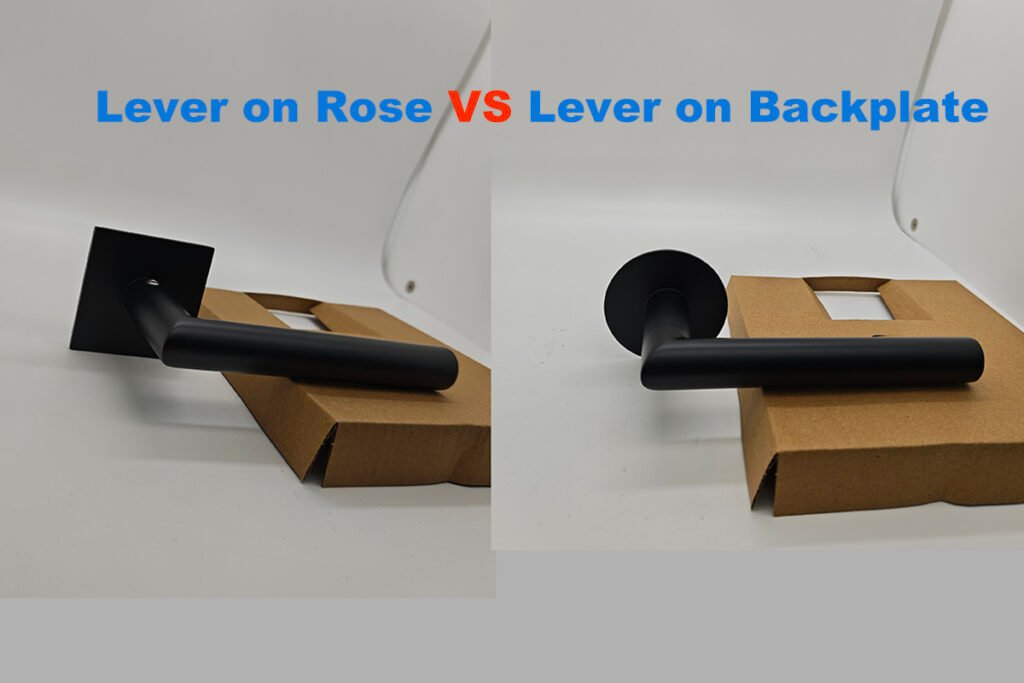
Lever on rose separates the handle rose from the cylinder or turn escutcheon, while lever on backplate integrates the handle and key or turn opening into one plate.1 The main difference is the hole pattern and fixing method. This affects EU PZ/BB compatibility, center distance, installation complexity, retrofit coverage, and rework risk.
I handle many customer installation questions at SDH Hardware, and the pattern is clear. Most issues start before drilling. If I confirm the lock standard, center distance, spindle length, door thickness, and fixing method early, the installation becomes much easier and return risk drops sharply.
Lever on Rose vs Lever on Backplate: What Structural Differences Matter?
A handle set may look simple, but its structure controls the whole installation. If I treat a rose set and a backplate set as interchangeable, I increase the risk of wrong drilling, weak fixing, and poor alignment. The safer approach is to understand the construction first.
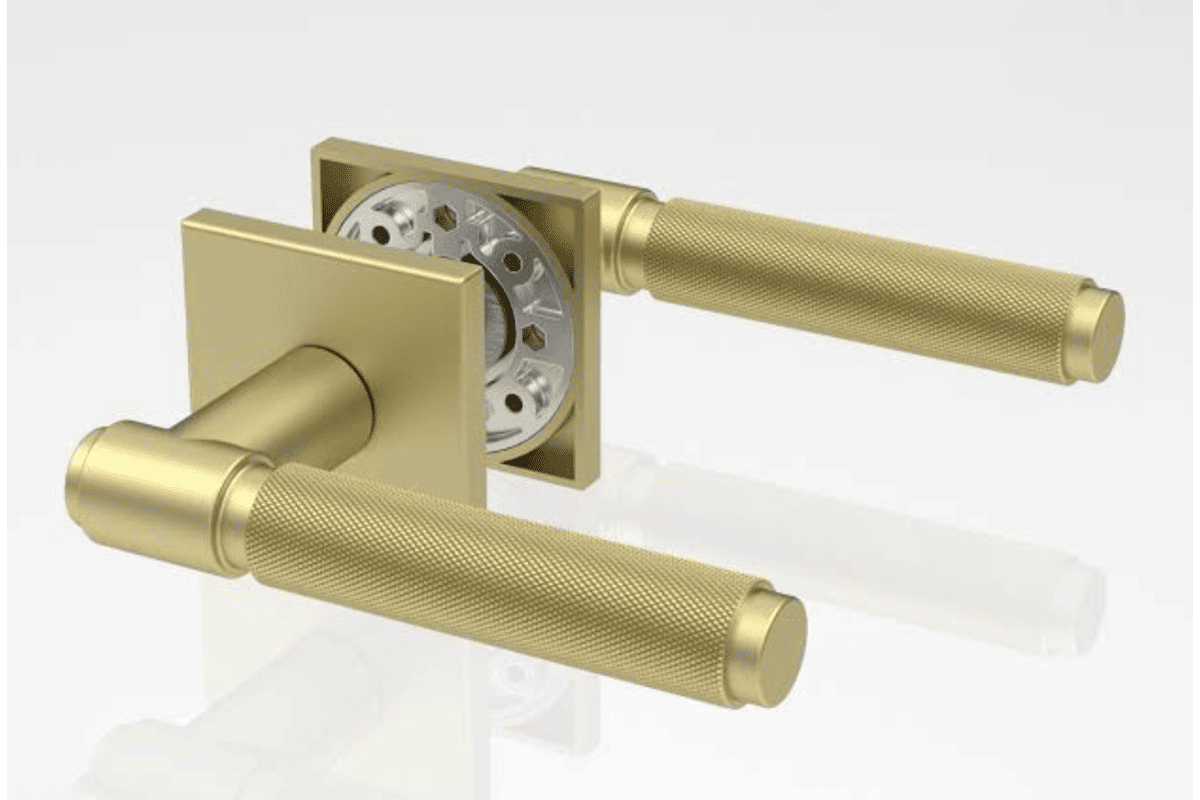
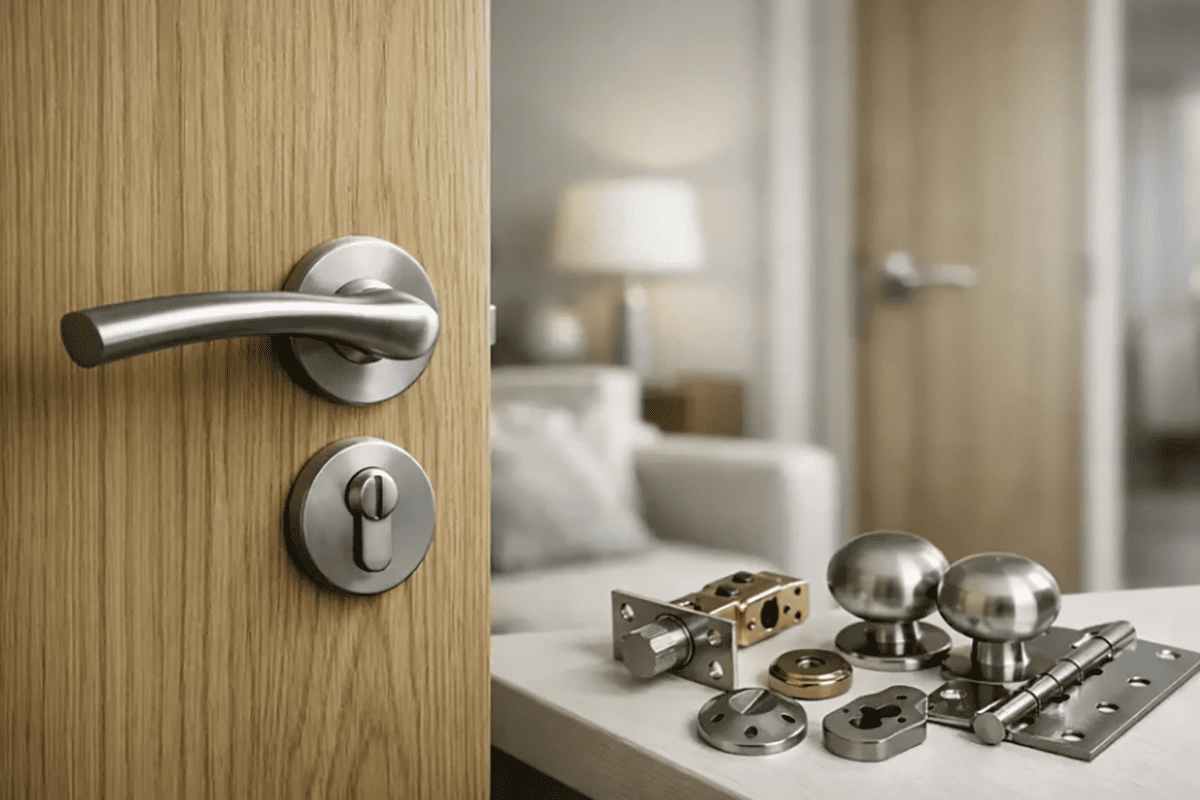
Lever on rose uses separate components: the lever rose, cylinder escutcheon, or turn escutcheon. Lever on backplate uses one integrated plate for the lever and key or turn opening. This difference controls flexibility, center distance requirements, hole concealment, and fixing strategy.
The core structural difference
In my experience, the most important difference is not “modern versus classic.” It is separate geometry versus fixed geometry.
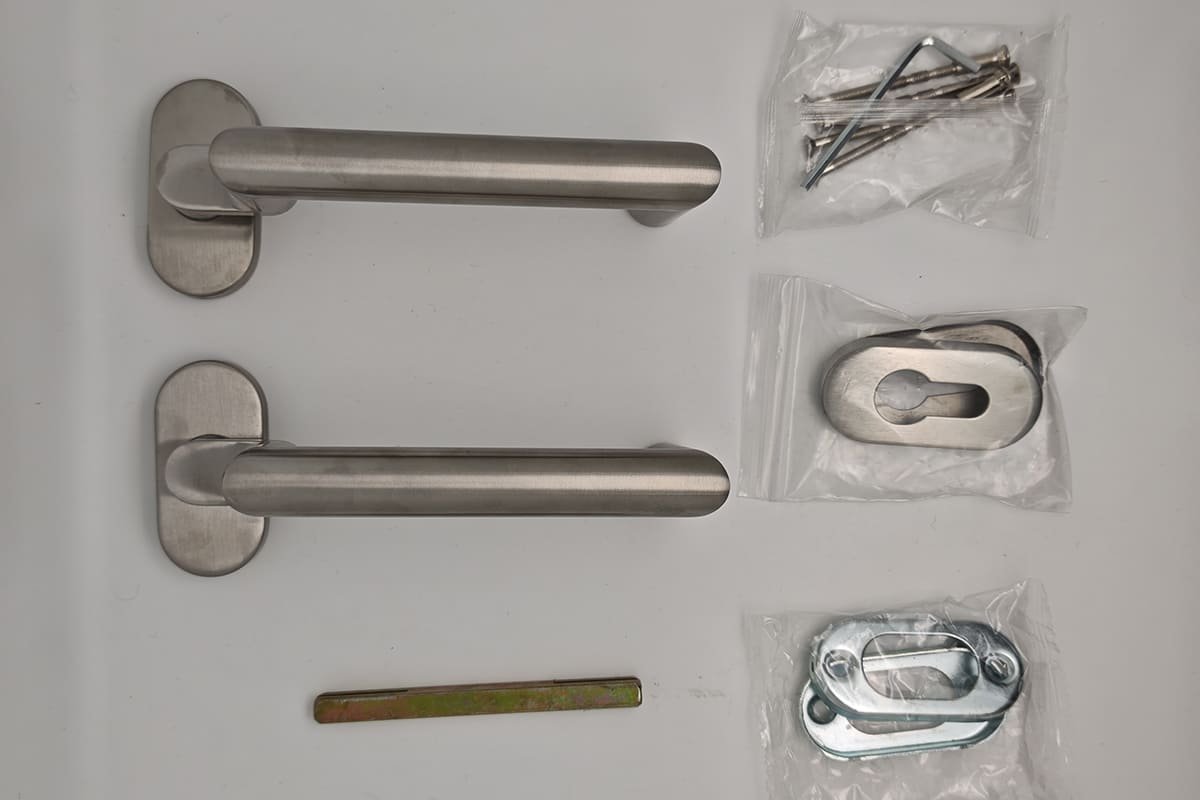
A lever on rose set usually includes:
- One pair of lever handles
- One pair of round, square, or oval roses
- Separate cylinder escutcheons, key escutcheons, or bathroom turn/release sets
- Through-bolts or concealed fixing screws
- Spindle and grub screws
- Return springs, depending on the model
A lever on backplate set usually includes:
- One pair of lever handles
- One pair of long plates
- Integrated PZ, BB, WC, or blank function openings
- Through-bolts or visible/covered screws, depending on design
- Spindle and fixing accessories
The difference matters because a rose set allows the lever and escutcheon to be positioned separately according to the lock template. A backplate set fixes the relationship between the lever spindle hole and the cylinder or keyhole. If that relationship does not match the lock case, the hardware will not install correctly.
Comparison table
| Item | Lever on Rose | Lever on Backplate |
|---|---|---|
| Main structure | Separate rose and escutcheon | One integrated plate |
| Center distance flexibility | More flexible with correct templates | Must match exact PZ/BB center distance |
| Common EU examples | PZ, BB, WC with separate escutcheons | PZ 72, PZ 90, BB, WC, blank plates |
| Visual result | Minimal and modern | Traditional, formal, or project-style |
| Retrofit coverage | Limited unless large roses are used | Better at covering old holes or marks |
| Fixing style | Often concealed through-bolts | Through-bolts or approved screws |
| Main risk | Wrong spindle length or escutcheon placement | Wrong PZ distance or plate geometry |
Why separate parts can reduce rework
I often recommend lever on rose hardware for new doors or pre-bored production because the drilling can follow a clear template. The installer marks the lock centerline, sets the lever rose, and then positions the escutcheon according to the lock function.
This helps when a buyer needs one lever design across several lock functions. For example, a door factory may use the same stainless steel lever on rose with:
- PZ cylinder escutcheons for entrance doors
- BB key escutcheons for internal doors
- WC turn/release escutcheons for bathroom doors
- Blank roses for passage doors
That SKU strategy can reduce stock pressure, but it still requires correct templates. A rose set does not fit every center distance automatically. The separate escutcheon must still align with the lock case.
Why one-piece backplates can prevent visible defects
Backplates are useful when the door already has holes, paint marks, timber damage, or old handle footprints. The longer plate can hide old fixing points and create a clean final appearance.2
I once reviewed a customer’s retrofit photos where an old plate had left visible marks on a painted timber door. A lever on rose would have exposed the old footprint. A correctly matched backplate covered the damage and avoided repainting the door leaf. That saved site labor, but only because the backplate PZ distance matched the lock case.
My rule is simple: choose by hole pattern first, fixing method second, appearance third.
How Does Lever on Rose vs Lever on Backplate Compatibility Work Under EU PZ/BB Standards?
Compatibility problems become expensive because they appear late. The door may already be drilled, painted, packed, or installed. If I miss the lock case standard or center distance, the handle may bind or fail to align. So I always start with EU PZ/BB confirmation.
For EU applications, Lever on Rose vs Lever on Backplate compatibility depends on the lock case function, PZ or BB type, center distance, spindle size, door thickness, cylinder or turn arrangement, and approved fixing pattern. Roses allow separate placement, while backplates require exact center-distance matching.3
What PZ and BB mean in practical buying
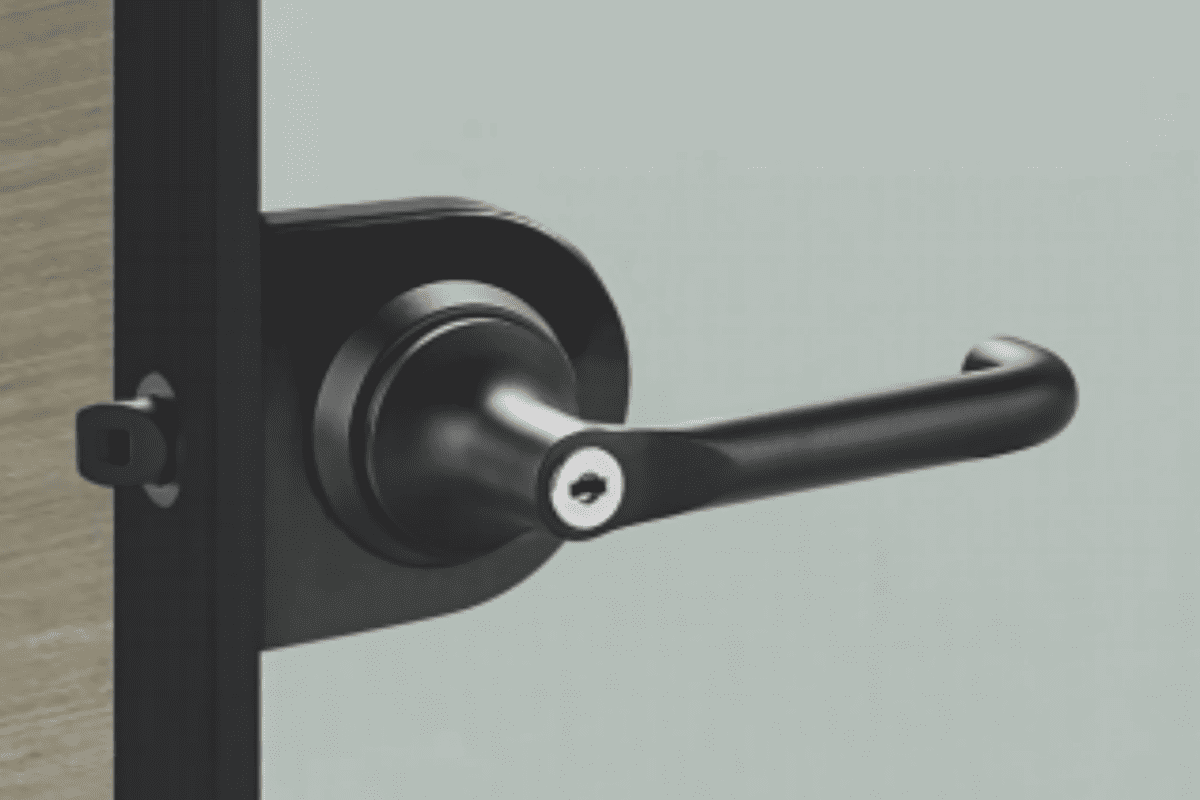
For EU-style architectural hardware, I usually ask buyers to confirm whether the lock is:
- PZ: Profile cylinder function
- BB: Standard keyhole function
- WC: Bathroom turn and emergency release function
- Blank / passage: Latch-only function without cylinder or keyhole
The center distance is the distance between the lever spindle center and the cylinder/key/turn center.4 Common project references include 72 mm and 90 mm, but I never advise drilling from a general number alone. The actual lock case drawing and handle template must control the final drilling.
Compatibility checklist
Before I quote or confirm a handle set, I prefer to check the following:
| Checkpoint | Why It Matters | Risk If Ignored |
|---|---|---|
| Lock case standard | Confirms EU PZ/BB/WC baseline | Wrong opening type |
| Center distance | Aligns lever and cylinder/keyhole | Backplate cannot fit |
| Spindle size | Ensures lever engagement | Loose handle or binding |
| Door thickness | Determines spindle and bolt length | Weak fixing or short engagement |
| Door material | Affects fixing strength | Screw pull-out or deformation |
| Existing hole pattern | Controls retrofit feasibility | Visible holes or weak re-drilling |
| Fire rating requirement | Controls approved combinations | Inspection or compliance risk |
| Surface finish | Matches project specification | Batch inconsistency |
Common compatibility traps
I see several repeated problems in customer maintenance records and installation photos.
1. Assuming rose and backplate can swap freely
A buyer may want to replace a backplate with a rose set for a modern look. That may work on a new door, but it can fail on a retrofit door because the old plate footprint remains visible. Also, the old fixing holes may interfere with the rose through-bolts.
2. Choosing the wrong PZ distance on a backplate
This is one of the most common errors. A PZ 72 backplate cannot replace a PZ 90 backplate just because the lever style looks similar.5 The plate openings are fixed. If the center distance is wrong, the lever spindle and cylinder hole will not align.
3. Mixing EU, UK, and US standards
Different markets use different lock bodies, latch positions, door preparations, and spindle systems.6 I keep this article anchored on EU PZ/BB and DIN-style project requirements. If a buyer is working with UK or US systems, I ask for the lock case drawing before giving any selection advice.
4. Ignoring door thickness and spindle length
For lever on rose hardware, short spindle engagement can cause loose operation after repeated use. For thicker doors, especially fire-rated or acoustic doors, the standard spindle may not be suitable. The installer must verify the actual door thickness and follow the supplied hardware set.
5. Reusing old holes without checking fixing strength
Old holes may be oversized, cracked, or poorly positioned. A backplate can cover cosmetic damage, but it cannot guarantee structural strength if the substrate is weak. In soft timber or composite doors, reinforcement or approved fixing methods may be needed.
Fire-rated and steel door caution
For fire-rated doors, steel doors, and inspected projects, I do not treat hardware as a standalone product. The buyer should confirm the listed combination of lock case, handle set, cylinder, hinges, door core, and closer where relevant.
At SDH Hardware, our core products can be supplied with CE and fire-rated documentation for applicable items, but I always tell buyers to verify the actual certificates, test reports, and scope of use. A certificate should match the product, material, finish, function, and project requirement. For inspected projects, I recommend retaining all documents for site review.
How Do I Install Lever on Rose Hardware Correctly?
Lever on rose installation looks clean, but it punishes careless marking. If the sub-rose is off-center or the spindle is too short, the handle may bind or loosen. I reduce that risk by treating the manufacturer template as the installation baseline.
To install lever on rose hardware, confirm the lock case, mark the lock centerline with the supplied template, drill the spindle and fixing holes as specified, mount the sub-rose with through-bolts, verify spindle engagement, fit the lever, install the escutcheons, and test latch return before final tightening.

Basic installation sequence
I recommend this general sequence for EU-style lever on rose hardware. The actual drilling must follow the product template and lock drawing.
Confirm the lock case
- Check PZ, BB, WC, or passage function.
- Confirm the spindle centerline.
- Confirm the escutcheon position.
Check door thickness
- Confirm that spindle length is suitable.
- Confirm that through-bolts can clamp properly.
- Check whether special accessories are required.
Mark the door
- Use the manufacturer drilling template.
- Align the template to the lock centerline.
- Mark the spindle hole and fixing points.
Drill carefully
- Drill straight and square to the door face.
- Avoid breakout on veneered or painted doors.
- Use the correct pilot strategy for the substrate.
Fit the spindle and sub-rose
- Insert the spindle through the lock follower.
- Mount the sub-rose with through-bolts where supplied.
- Keep the rose centered and level.
Install lever handles
- Fit the lever onto the spindle.
- Tighten grub screws according to the supplier instructions.
- Check that the lever does not rub the rose cover.
Fit escutcheons
- Position the PZ, BB, or WC escutcheon using the template.
- Confirm cylinder, key, or turn clearance.
- Secure and cover as designed.
Test before final torque
- Press the lever several times.
- Confirm latch retraction.
- Check lever return.
- Tighten gradually and evenly.
Why through-bolts matter
For B2B projects, I prefer through-bolt fixing where the door and lock preparation allow it. Through-bolts clamp both sides of the door together and reduce reliance on short face screws.7 This is useful in high-frequency use areas such as offices, apartments, hotels, and public corridors.8
However, through-bolt holes must align with the lock case and template. If an installer drills through-bolt holes without checking the lock body, the bolt may hit the lock case or miss the fixing boss. I have seen this problem in customer photos, and the repair can involve plugs, filler, repainting, or even door replacement.
Common lever on rose installation failures
| Failure Mode | Likely Cause | Prevention |
|---|---|---|
| Lever feels loose | Short spindle engagement or weak fixing | Verify spindle length and through-bolts |
| Lever binds | Rose is off-center or over-tightened | Align before final torque |
| Cover does not snap on | Sub-rose is distorted | Tighten evenly and avoid over-compression |
| Cylinder escutcheon misaligns | Wrong template position | Mark from lock centerline |
| Handle does not return | Spring, latch, or alignment issue | Test lock and handle separately |
My practical field habit
When I troubleshoot a lever on rose complaint, I separate the system into parts. I first test the lock case without the handle. Then I test the handle pair without final cover pressure. After that, I test the spindle engagement. This step-by-step method shows whether the issue comes from the lock, rose fixing, spindle, or lever spring.
For production lines, I suggest a simple pre-installation station:
- One printed drawing per hardware set
- One sample lock case for checking
- One go/no-go check for spindle length
- One finished door inspection sheet
- One photo record before packing
This small process helps door factories reduce warranty arguments. It also gives brand buyers and wholesalers better evidence when they evaluate suppliers.
How Do I Install Lever on Backplate Hardware Correctly?
Lever on backplate installation can look easier because the plate is one piece. But that one-piece geometry creates a strict requirement. If the PZ or BB center distance is wrong, the plate cannot be adjusted enough to solve the problem.
To install lever on backplate hardware, confirm the exact lock and plate center distance, align the spindle and cylinder or key opening, mark the plate position with the template, drill approved fixing points, mount the plate evenly, tighten in a balanced pattern, and test smooth latch and cylinder operation.
Basic installation sequence
The backplate process starts with confirmation, not drilling.
Confirm plate function
- PZ for profile cylinder
- BB for keyhole
- WC for bathroom turn
- Blank for latch-only doors
Confirm center distance
- Match the backplate center distance to the lock case.
- Do not assume visual similarity means compatibility.
- Check the drawing, not only the sample photo.
Place the plate on the door
- Insert the spindle loosely.
- Align the cylinder, key, or turn opening.
- Check that the plate sits flat.
Mark fixing points
- Use the manufacturer template or plate as directed.
- Check whether through-bolts or approved screws are required.
- Avoid old damaged holes where possible.
Drill and prepare
- Drill pilot holes according to the door material.
- Avoid drilling into the lock case.
- Check reinforcement if the substrate is soft.
Mount and tighten
- Fit both plates.
- Tighten screws or through-bolts gradually.
- Use a cross-pattern approach to avoid twisting the plate.9
Test operation
- Press the lever repeatedly.
- Check latch travel.
- Insert and turn the cylinder key if applicable.
- Confirm the plate does not interfere with trim or seals.
Why center distance is stricter on backplates
A backplate fixes the lever hole and cylinder/keyhole in one part. This means the PZ 72 or PZ 90 relationship must be correct from the start. With a rose set, the escutcheon is separate, so the installer has more placement flexibility. With a backplate, the plate decides the geometry.
This is why I ask for lock case drawings when buyers place ODM or OEM orders. If a customer sends only a door photo, I cannot safely confirm a backplate. I need the lock case standard, center distance, door thickness, spindle details, and fixing expectations.
Backplates and retrofit work
Backplates are often strong candidates for renovation and replacement projects because they can cover:
- Old screw holes
- Paint shadows
- Timber dents
- Oversized spindle holes
- Previous long-plate footprints
- Minor finish damage around the lock area
But I avoid saying that a backplate is “always stronger.” Strength depends on material, plate thickness, fixing method, door substrate, screw engagement, through-bolt use, and lock support. A wide plate can distribute surface pressure, but poor fixing still creates failure.10
Backplate installation risk table
| Risk | Example | Control Method |
|---|---|---|
| Wrong PZ center | PZ 72 plate used on PZ 90 lock | Check lock drawing before order |
| Plate rocks on door | Uneven surface or debris | Clean and check door face |
| Screws loosen | Weak substrate or wrong pilot | Use approved fixing method |
| Cylinder rubs plate | Misaligned opening | Align before final tightening |
| Visible old holes remain | Plate too narrow or short | Measure existing footprint |
| Fire inspection issue | Unlisted combination | Keep certificates and test documents |
My advice for assembly engineers
For factory installation, I like backplates when the door design is stable and standardized. A production line can use a fixed drilling jig when the lock case, backplate, and door thickness do not change. This improves speed and consistency.
For mixed projects, I prefer more caution. If one order includes multiple lock cases or regional specifications, backplates can increase SKU complexity. A buyer may need separate PZ 72, PZ 90, BB, WC, and blank versions. That increases inventory risk if the forecast is wrong.
Lever on Rose vs Lever on Backplate: Which Should I Choose for a Project?
The wrong choice creates more than an appearance problem. It can create delayed installation, extra drilling, rejected doors, or customer complaints. I choose by task and risk first because style cannot solve a mismatched lock case or weak fixing condition.
Choose lever on rose for new or accurately pre-bored doors, flexible escutcheon placement, concealed fixing, and minimalist design. Choose lever on backplate for retrofit coverage, exact matched PZ/BB lock cases, broader visual coverage, and classic project aesthetics. Final selection should follow compatibility, fixing strength, inspection needs, and rework risk.
Selection framework
I use this framework when I help customers compare Lever on Rose vs Lever on Backplate options.
| Project Condition | Better Starting Option | Reason |
|---|---|---|
| New doors with clean drilling | Lever on rose | Flexible escutcheon placement and clean design |
| Retrofit with old plate marks | Lever on backplate | Better footprint coverage |
| Multiple lock functions under one style | Lever on rose | Same lever can pair with different escutcheons |
| Exact PZ lock case already standardized | Lever on backplate | Simple plate alignment if PZ matches |
| Minimalist interior design | Lever on rose | Smaller visible hardware |
| Classic or formal design | Lever on backplate | Traditional long-plate appearance |
| Soft substrate needing surface coverage | Case-by-case, often backplate | Wider plate may help distribute load |
| Fire-rated inspected door | Listed combination only | Documentation controls the decision |
Choose lever on rose when
I usually recommend lever on rose when the buyer has good control over door preparation. This includes door factories, OEM production lines, and new project doors where the lock case and drilling template are confirmed before machining.
Lever on rose is a good fit when:
- The door is new or cleanly prepared.
- The buyer wants a modern architectural appearance.
- The project uses multiple functions with one lever design.
- The installer can use accurate templates.
- Through-bolt fixing is available and approved.
- Separate escutcheons help match PZ, BB, or WC needs.
- The door surface does not need a large cover plate.
Choose lever on backplate when
I recommend lever on backplate when the buyer needs coverage, fixed geometry, or a traditional design language. It is especially useful in renovation work when old marks would remain visible with rose hardware.
Lever on backplate is a good fit when:
- The existing door has old holes or surface damage.
- The lock center distance is confirmed and stable.
- The project style prefers long plates.
- The door substrate benefits from a larger bearing surface.
- The buyer wants easier visual alignment on site.
- The old hardware footprint needs to be covered.
- The SKU plan can support exact PZ/BB variants.
Pre-sale questions that reduce returns
Before I confirm production or recommend a model, I ask these questions:
- What is the lock case standard: PZ, BB, WC, or passage?
- What is the exact center distance shown on the lock drawing?
- What is the door thickness and material?
- Is the door new, pre-bored, or already drilled?
- What is the existing hardware footprint?
- What spindle size and length are required?
- Are through-bolts required or possible?
- Is this a fire-rated or steel door?
- Are CE, fire-rated, or project documents required?
- Does the buyer need OEM branding, logo stamping, or custom packaging?
Conclusion
Lever on Rose vs Lever on Backplate selection should start with compatibility, hole pattern, center distance, fixing method, and inspection requirements. Style matters, but it should come last. I choose lever on rose for clean new preparations and flexible escutcheon layouts. I choose lever on backplate for exact PZ-matched installations and retrofit coverage. If you need factory-direct EU-standard door hardware, SDH Hardware can help review your lock drawings, door conditions, and OEM/ODM requirements before production.
"Door handle", https://en.wikipedia.org/wiki/Door_handle. Reference descriptions of door furniture distinguish rose-mounted handles, which use separate roses and escutcheons, from long backplates that integrate the lever with a keyhole or cylinder opening, supporting the definitional contrast presented here. Evidence role: definition; source type: encyclopedia. Supports: That rose-mounted door handles use separate roses/escutcheons, while backplate-mounted handles combine the lever and key/cylinder opening in a single long plate.. Scope note: Terminology and product conventions can vary by region and manufacturer. ↩
"Escutcheon (furniture)", https://en.wikipedia.org/wiki/Escutcheon_(furniture). Encyclopedic discussions of escutcheons and backplates describe their role in covering and protecting holes or openings in doors and furniture, which supports the assertion that longer plates can conceal old fixing points in retrofit situations. Evidence role: general_support; source type: encyclopedia. Supports: That escutcheons/backplates serve to cover and protect openings, thereby concealing prior holes or surface defects.. ↩
"Handles on Rose vs Handles on Backplate: Which Door ...", https://www.baigapi.com/blog/post/handles-on-rose-vs-handles-on-backplate?srsltid=AU7gw4VE2dHfM6kchxnWaUk0NiLROZi3ifMQeCF9-_5Rb5hUtuWwiZc6. Reference descriptions of rose-mounted door furniture describe independent roses and escutcheons, whereas long backplates integrate the lever and key/cylinder openings at fixed centres, aligning with the stated difference in placement flexibility. Evidence role: general_support; source type: encyclopedia. Supports: That rose/escutcheon systems are separate components placed independently, while backplates have fixed centres linking the lever hole and key/cylinder opening.. Scope note: Some products offer limited adjustability, but the basic geometry of backplates remains fixed. ↩
"How to measure and choose the right mortise lock size", https://www.blue-id.com/en/blog/mortise-lock-mass. Technical summaries of lock dimensions define ‘centres’ (also termed the distance) as the measurement from the spindle centre to the centre of the keyhole or cylinder, matching the definition provided. Evidence role: definition; source type: encyclopedia. Supports: That ‘center distance’ (often called ‘centres’ or ‘distance’) is the measurement between the handle spindle and the key/cylinder/turn centre in a lock.. Scope note: Terminology may differ by region; some standards use local-language terms such as ‘distance’ or ‘Entfernung’. ↩
"Pz Kpfw VII & VK 72 01 K - The Big VK Brothers Back To Back",
. Reference material on euro-profile lock furniture explains that backplates are produced with fixed centre distances and are intended to match the corresponding lock case centres, supporting the statement that PZ 72 and PZ 90 plates are not interchangeable. Evidence role: general_support; source type: encyclopedia. Supports: That euro-profile backplates are manufactured to fixed centre distances (e.g., 72 mm versus 90/92 mm) and must match the lock case centres.. Scope note: Centre values vary by national practice (e.g., 92 mm is also common); check the specific lock standard. ↩"ANSI Grade 1 vs. Grade 2 Door Hardware", https://www.pdqlocks.com/blog/a-guide-to-ansi-grade-1-vs.-grade-2-door-hardware. Reference material summarising lock and hardware standards notes that ANSI/BHMA, BS, and DIN systems specify different case dimensions and preparation conventions, supporting the claim that markets use different lock bodies and preparations. Evidence role: historical_context; source type: encyclopedia. Supports: That regional standards (e.g., ANSI/BHMA in North America, BS in the UK, DIN in much of Europe) define differing lock case dimensions, spindle arrangements, and preparation templates.. Scope note: Specific dimensions and practices vary within each standard family and by manufacturer. ↩
"SECTION 087111 - DOOR HARDWARE (SCHEDULED BY ...", https://fpm.usc.edu/wp-content/uploads/2021/11/087101-USC-UPC-door-hardware-Guide-Specification_1.pdf. Trade-institution installation guidance explains that through-bolting fasteners pass through the door to clamp trim from both sides, providing more secure retention than face screws alone, especially for higher-use installations. Evidence role: mechanism; source type: institution. Supports: That through-bolting passes fasteners through the door to clamp the assembly, improving resistance to loosening compared to face-screw-only attachment.. Scope note: Not all door constructions or lock cases accommodate through-bolts, and specific compliance may depend on the product and listing. ↩
"ANSI/BHMA Standards", https://buildershardware.com/ANSI-BHMA-Standards. Industry guidance links robust fixings such as through-bolting with higher-use environments to maintain performance and reduce loosening, supporting the recommendation for offices, apartments, hotels, and public corridors. Evidence role: expert_consensus; source type: institution. Supports: That institutional guidance recommends through-bolting or similar robust fixings for higher-use or higher-abuse locations.. Scope note: Specific requirements depend on the product’s grade and the door construction; always follow the product’s listed installation. ↩
"Bolt Tightening Sequence: Why it Matters", https://blog.enerpac.com/bolt-tightening-sequence-why-it-matters/. Mechanical assembly guidance teaches that cross-pattern tightening distributes clamping loads more evenly and reduces the likelihood of component distortion, supporting the recommendation to avoid twisting a backplate. Evidence role: mechanism; source type: education. Supports: That cross-pattern or diagonally alternating tightening sequences help distribute clamping forces evenly and reduce the risk of distortion.. Scope note: Exact sequences may vary with hardware design; follow the manufacturer’s instructions. ↩
"NASA-STD-5020", https://s3vi.ndc.nasa.gov/ssri-kb/static/resources/nasa-std-5020.pdf. Educational treatments of mechanics of materials explain that wider bearing surfaces distribute contact pressure, but joint integrity still depends on appropriate fastener strength and engagement, aligning with the statement that a wide plate alone does not prevent failure. Evidence role: mechanism; source type: education. Supports: That increasing the contact area of a plate distributes bearing stress, while fastener adequacy remains critical to prevent joint failure.. Scope note: This is a general mechanical principle; specific performance depends on material properties and installation quality. ↩
