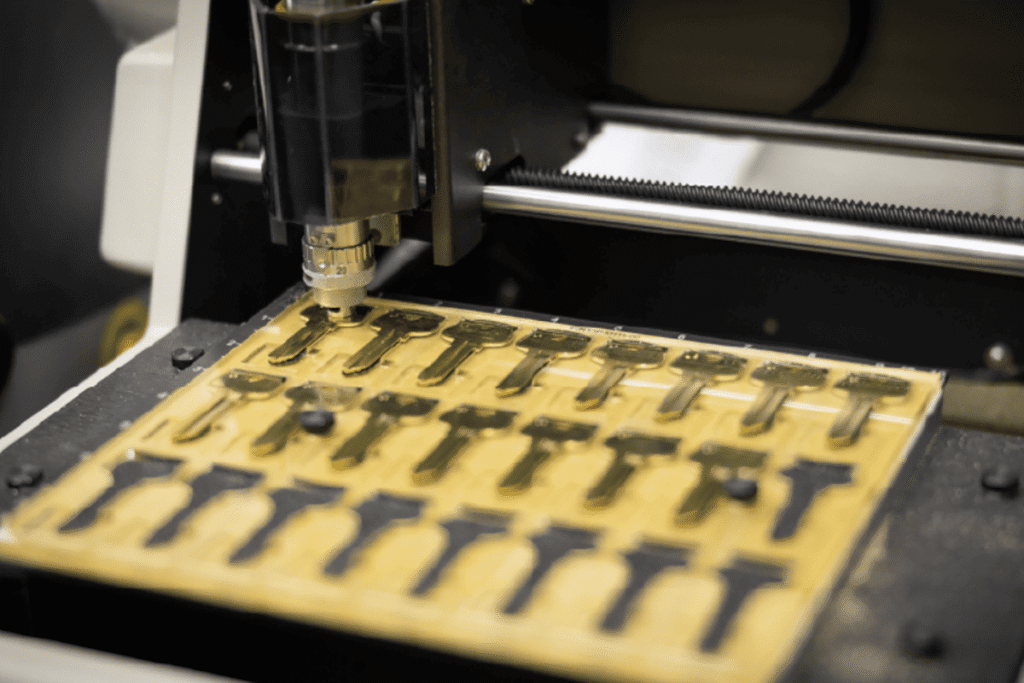
Restricted Keyways & Patented Keys Explained
Restricted keyways and patented keys often sound like simple “high security” upgrades, but that shortcut creates confusion for buyers. When a project team treats key control as the same thing as cylinder attack resistance, specifications become unclear. I use this guide to separate both ideas so door manufacturers, hardware brands, and importers can evaluate them correctly.
Restricted keyways and patented keys are key-control solutions, not automatic proof of a stronger lock cylinder.1 A restricted keyway limits access to matching key blanks and authorized duplication channels2, while a patented key may add legal protection against unauthorized copying of the key design, depending on patent status, market, and remaining term.
I have seen many B2B buyers ask for “uncopyable keys” when they actually need a controlled replacement-key process. The better question is not only “Can someone copy this key?” It is also “Who controls the blanks, records, authorization, supply chain, and after-sales service?”
What Are Restricted Keyways & Patented Keys?
Many project buyers first hear these terms from tenders, distributors, or brand catalogs. The problem starts when both terms are used as if they mean the same thing. That creates risk because the wrong specification can affect pricing, lead time, legal claims, and replacement-key support.
Restricted keyways and patented keys are two different key-control mechanisms. A restricted keyway controls access to the physical key blank and duplication channel. A patented key may control the legal right to manufacture or copy a protected key profile. Both can support better key management, but they work in different ways.

The basic difference buyers should remember
In simple terms:
- A restricted keyway is about distribution control.
- A patented key is about legal design protection.
- A high-security cylinder is about physical attack resistance.
These points overlap in some product systems, but they are not identical.
A restricted keyway normally uses a special profile inside the cylinder plug. The matching key blank is not widely sold in open locksmith channels. If a person wants a duplicate key, they usually need permission from the project owner, system manager, authorized dealer, or appointed supplier. This helps reduce casual unauthorized copies.
A patented key focuses on whether the key shape, blade profile, moving element, groove arrangement, or another design feature is protected by a valid patent.3 If it is protected, unauthorized manufacturing may infringe that patent. However, buyers should verify this carefully because patent protection is territorial and time-limited.
Here is a practical comparison:
| Feature | Restricted Keyway | Patented Key |
|---|---|---|
| Main purpose | Control blank access and duplication | Control legal copying of protected design |
| Main control method | Supplier channel and authorization | Patent rights and enforcement |
| Depends on | Blank distribution policy | Valid patent status and jurisdiction |
| Common B2B value | Project key control and after-sales management | Brand protection and stronger copy-control claims |
| Automatically improves picking resistance? | No | No |
| Needs local verification? | Yes | Yes |
From a factory and supply communication perspective, I find that the most valuable benefit is usually accountability. If a hotel, office project, school, or commercial building needs replacement keys, the responsible party should be clear. The buyer should know:
- Who can order extra keys?
- Which documents are required?
- Which supplier can cut or provide blanks?
- How long will replacements take?
- What happens if the project changes property managers?
- Can the same key system be supported for future phases?
These questions matter more in B2B purchasing than a simple marketing phrase like “cannot be copied.” In real procurement, no serious buyer should rely on that phrase alone.
I usually tell buyers to ask for the key-control policy in writing, not just a product photo or sample key.
That policy should explain blank ownership, duplication approval, system registration, dealer restrictions, and reorder procedures. For brand enterprises and importers, this also protects market channels. If every shop can copy the same blank, the product may be easier to sell at first, but harder to control after installation.
Unauthorized duplication is a quiet problem.4 It rarely appears during the first purchase order, but it can damage a project later. If any user can copy keys freely, the owner loses control over who has access. Then responsibility becomes unclear when keys are lost, staff change, or tenants move.
Restricted keyways and patented keys control duplication by making replacement keys harder to obtain without approval. Restricted systems limit blank distribution through authorized suppliers. Patented systems may restrict unauthorized production through legal protection. The strongest result usually comes from combining product design, documentation, supplier discipline, and clear authorization rules.
How restricted keyways work in practice
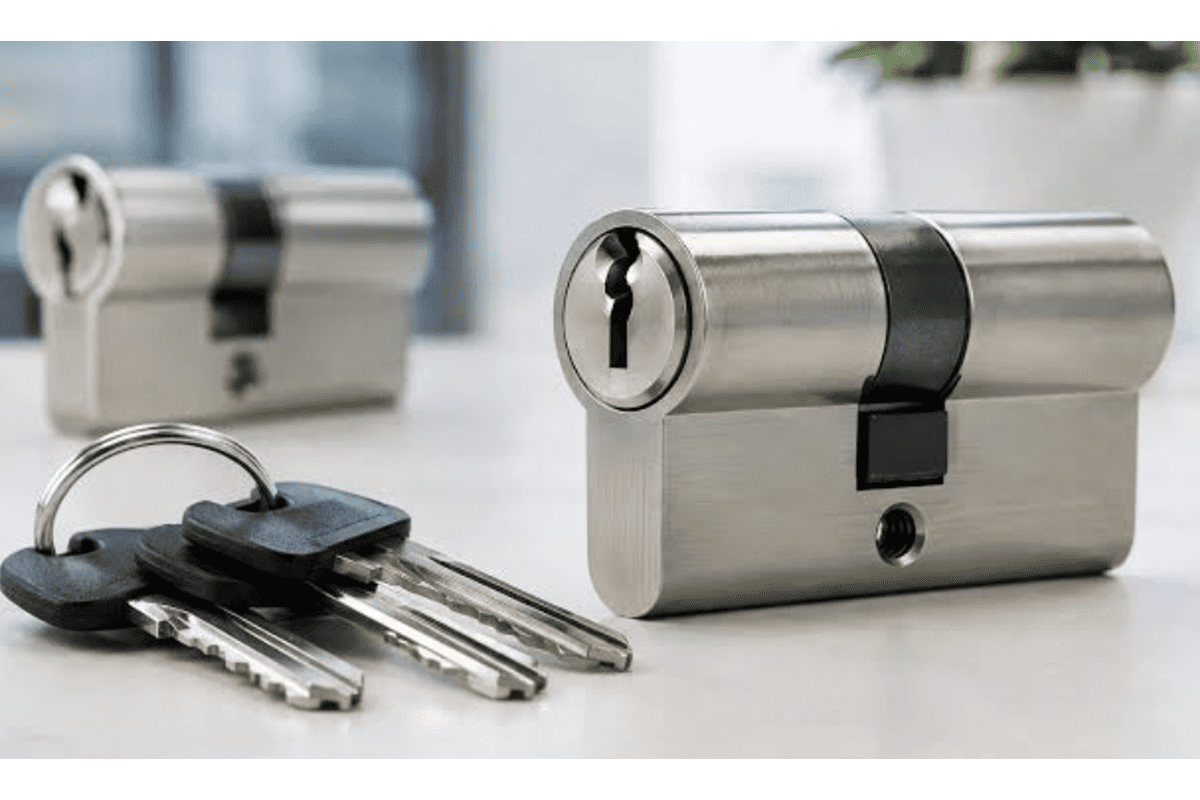
A restricted keyway starts with the cylinder and key blank profile. The keyway is the shaped slot inside the cylinder.5 The key blade must match that internal profile before it can even enter the lock.
For common open keyways, matching blanks are often available from many locksmiths or hardware stores. That can be convenient for residential use, but it may be a problem for commercial projects and brand-controlled distribution.
For restricted keyways, the matching blanks are controlled. That control may happen through:
- Exclusive blank supply
- Dealer-only access
- Project registration
- Authorization cards
- Signed key schedules
- Factory or distributor approval
- Restricted cutting machines or codes
- Controlled replacement-key order forms
The exact process depends on the supplier and market. I always recommend that buyers check the process before approving the sample.
Where patented keys add another layer
Patented keys can add legal pressure against unauthorized blank makers or copy services.6 If a key design is still protected in a certain country or region, another party may not be allowed to manufacture or sell that key profile without permission.
However, this point needs careful wording. A patented key is not “protected everywhere forever.” Patent rights depend on:
| Patent factor | Why it matters |
|---|---|
| Country or region | Patents are usually territorial |
| Filing and grant status | A pending application is different from a granted patent7 |
| Remaining term | Expired patents normally lose protection |
| Claim scope | Protection depends on the actual patent claims |
| Enforcement ability | Legal rights still need practical enforcement |
| Local law | Buyers should verify with qualified local professionals |
For importers and brand owners, this matters because they may sell into several markets. A key profile may be protected in one region and not protected in another. The buyer should not assume global coverage based on a catalog statement.
A useful B2B evaluation checklist
When I discuss cylinder supply with door factories or hardware brands, I like to separate the evaluation into two columns: technical control and commercial control.
Technical control questions:
- Is the key blank profile unique or limited?
- Can common blank suppliers provide similar blanks?
- Can the key be cut on standard machines?
- Does the system use side pins, movable elements, or special milling?
- Is the keyway compatible with the cylinder platform required by the project?
Commercial control questions:
- Who owns the right to order blanks?
- Can the importer control distribution in its territory?
- Can dealers request replacement keys directly?
- Are authorization cards used?
- Can the supplier support future repeat orders?
- What happens if the original distributor changes?
This is why restricted keyways and patented keys are useful for project supply. They reduce uncontrolled duplication and support more professional after-sales management. Still, they are not magic. If the supplier releases blanks loosely, even a restricted-looking system may fail in practice.
Do Restricted Keyways & Patented Keys Make Lock Cylinders More Secure?
Many buyers ask for restricted keyways and patented keys because they want a “more secure lock.” That is understandable, but the phrase is too broad. Security includes access control, duplication control, picking resistance, drilling resistance, bump resistance, forced-entry resistance, and installation quality.
Restricted keyways and patented keys improve key control, but they do not automatically prove stronger cylinder attack resistance. A cylinder may have a restricted or patented key and still need separate evidence for anti-pick, anti-drill, anti-bump, torque resistance, fire-rated suitability, and standard compliance.8
Key control is not the same as attack resistance
This distinction is important in procurement. A project can fail in two different ways:
- Unauthorized key copy: Someone gets a duplicate key without approval.
- Physical attack: Someone attacks the cylinder, door, frame, or hardware.
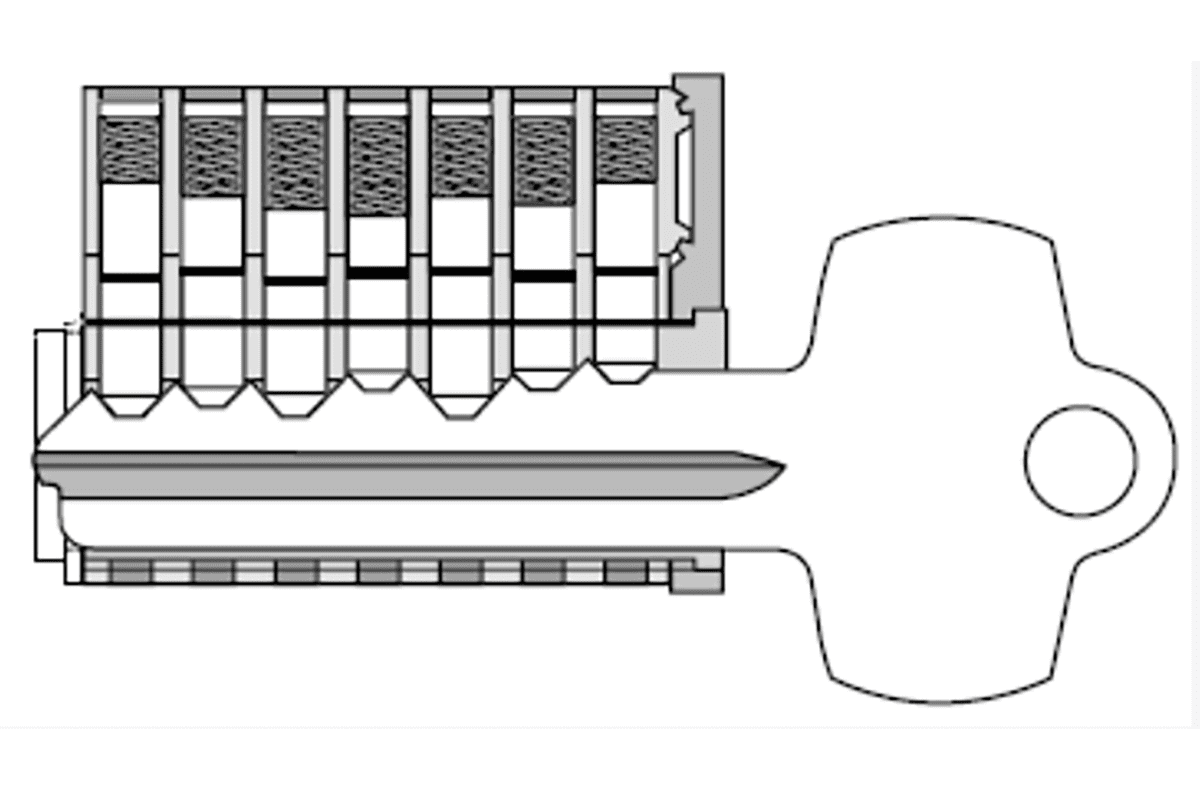
Restricted keyways and patented keys mostly address the first risk. Cylinder construction addresses the second risk.
A lock cylinder may include features such as:
- Anti-pick pin design
- Hardened anti-drill pins
- Anti-snap construction
- Anti-bump pin combinations
- Reinforced cam or tailpiece design
- High key differs
- Precision plug and housing tolerances
- Tested cycle life
- Fire-rated door compatibility when applicable
- Relevant standards and certification documents
These are separate evaluation points. Buyers should ask for test reports, product drawings, standard references, and samples when the application requires verified performance.
How confusion happens in real purchasing
In my experience, this confusion often starts with a simple phrase in a customer inquiry:
“We need a patented key cylinder because the project requires high security.”
That sentence may contain two different requirements. The project may need controlled duplication, and it may also need tested cylinder strength. If the supplier only responds with a key photo, the buyer still does not know whether the cylinder meets the performance requirement.
A better specification would say:
- The system should use restricted key blanks or patented key profiles for controlled duplication.
- Replacement keys should require written authorization.
- The cylinder should meet the required European or project standard.9
- Fire-rated certification should be available if used on fire-rated doors.
- Security performance claims should be supported by valid documentation.
- Patent claims should be verified for the target sales market.
This kind of wording protects both sides. It helps suppliers quote correctly, and it helps buyers avoid overpromising to their customers.
What buyers should verify separately
Here is a simple table I use when explaining this issue to customers:
| Buyer requirement | Related evidence to request |
|---|---|
| Controlled key copying | Key-control policy, authorization process, blank supply rules |
| Patent-based copy protection | Patent number, territory, status, remaining term, legal verification |
| Picking resistance | Test data, design details, standard references |
| Drilling resistance | Hardened inserts, test reports, material specifications |
| Bump resistance | Pin design information, test evidence |
| Fire door use | Fire-rated certification and compatibility documents |
| Long-term supply | Replacement key policy, cylinder platform continuity, MOQ details |
| Brand channel control | Territory agreement, logo/packaging rules, dealer policy |
At SDH Hardware, we manufacture and supply architectural door hardware, including Euro brass cylinders, mortise locks, lever handles, hinges, and door accessories. When buyers ask about restricted systems, I try to keep the conversation practical. I do not treat key control as a substitute for proper cylinder testing.
For application-specific security decisions, I recommend that buyers involve a qualified security consultant, door hardware specialist, or local certification professional. This is especially important for public buildings, hotels, schools, hospitals, and fire-rated door projects.
How Should B2B Buyers Specify Restricted Keyways & Patented Keys?
A vague specification creates supply problems. If a buyer only writes “patented key” or “restricted keyway,” suppliers may quote different systems with different control levels. Then samples, prices, lead times, and after-sales responsibilities become difficult to compare.
B2B buyers should specify restricted keyways and patented keys by defining the required key-control process, legal verification needs, cylinder performance standard, replacement-key procedure, branding requirements, and long-term supply arrangement. A clear specification should cover both the product and the management system behind it.
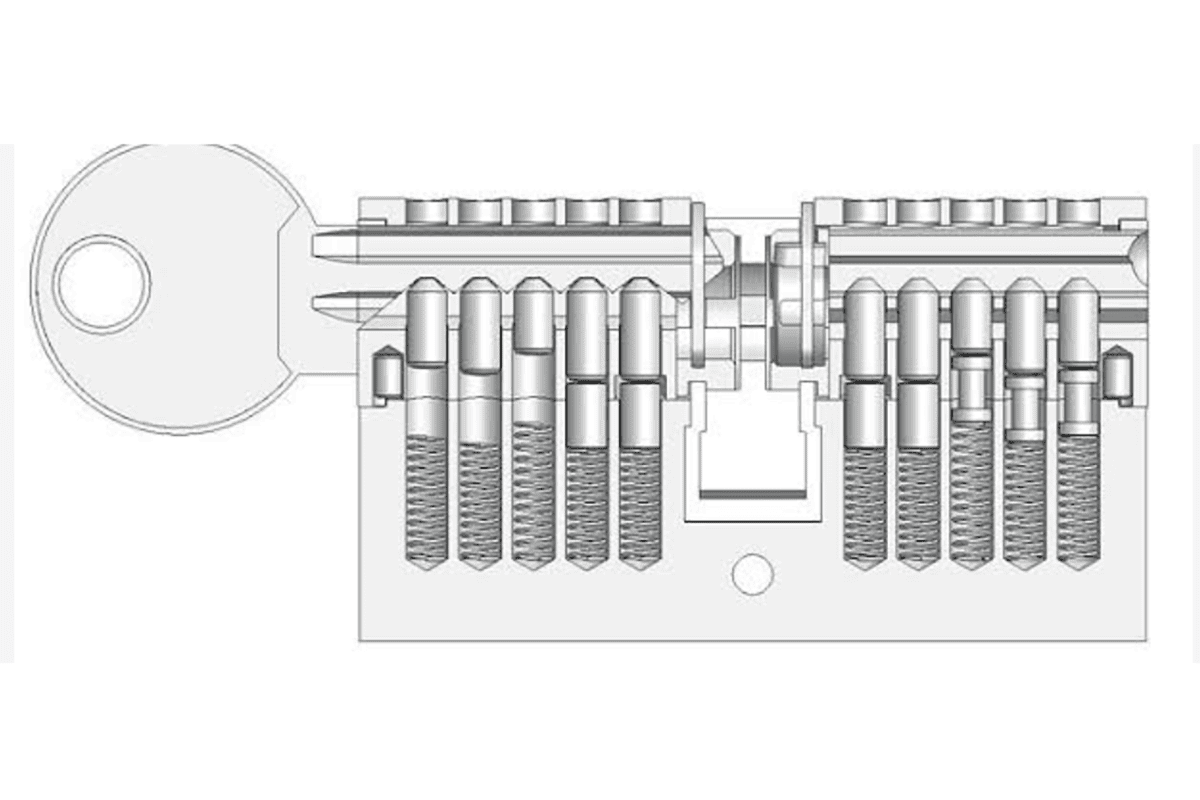
What to include in a professional specification
A good specification should avoid vague language. It should explain what the buyer wants the system to do.
For example, instead of writing:
“Supply high-security cylinder with patented key.”
A better B2B specification may say:
“Supply Euro profile cylinder with controlled key duplication. Matching key blanks shall not be openly distributed in the target market. Replacement keys shall require written authorization from the buyer or appointed project manager. If patent protection is claimed, supplier shall provide patent information for buyer verification. Cylinder security performance shall be evaluated separately according to the required project standard.”
This wording is clearer. It separates copy control, legal protection, and cylinder performance.
Key details to confirm before ordering
For door manufacturers, hardware brands, and importers, I suggest confirming these points before mass production:
Cylinder type
- Euro profile cylinder
- Oval cylinder
- Rim cylinder
- Mortise cylinder
- Thumbturn or double cylinder format
Key system type
- Open keyway
- Restricted keyway
- Patented key profile
- Master key system
- Construction key system
- Keyed alike or keyed different system
Authorization process
- Who can request duplicate keys?
- Is an authorization card required?
- Is a project code used?
- Are replacement records maintained?
Supply control
- Who holds the key blanks?
- Can the buyer stock blanks?
- Can local dealers cut keys?
- Is factory cutting required?
Branding and packaging
- Laser logo on key head
- Stamped logo on cylinder
- Custom color box
- Neutral packing
- Barcode or item code labels
Documentation
- Product drawings
- Material specifications
- Test reports
- CE-related documents where applicable
- Fire-rated documents where applicable
- Patent information if claimed
Comparing system options
The right choice depends on the buyer’s business model. A wholesaler may prioritize availability and price. A project supplier may prioritize authorization control. A brand enterprise may prioritize market differentiation and copy protection.
| Buyer type | Practical priority | Suitable direction |
|---|---|---|
| Door factory | Stable cylinder fit, lead time, repeat supply | Controlled keyway with clear reorder process |
| Hardware brand | Differentiation, channel control, packaging | Restricted or patented profile with branding |
| Bulk wholesaler | Inventory turnover, SKU simplicity | Semi-controlled system or selected restricted lines |
| Project contractor | Replacement-key accountability | Registered key system with authorization documents |
| Importer | Territory protection and legal clarity | Patent verification plus controlled blank supply |
At SDH Hardware, our business model includes OEM and ODM support, custom specifications, surface treatments, accessory configurations, logo services, packaging design, drawings after order confirmation, and inspection after order completion. For restricted keyways and patented keys, buyers should treat these services as part of the supply package, not separate decoration.
The most successful projects usually have one person or department responsible for the key schedule. This person controls orders for extra cylinders, replacement keys, keyed-alike groups, master keys, and future expansion. Without that responsibility, even a strong key-control system can become messy.
What Mistakes Should Buyers Avoid With Restricted Keyways & Patented Keys?
Mistakes in key-system purchasing often appear after installation, not during sampling. A buyer may approve a nice cylinder sample and later discover that replacement keys are slow, blanks are uncontrolled, patent claims are unclear, or the system cannot support future project phases.
Buyers should avoid treating restricted keyways and patented keys as identical, assuming patent protection is global, confusing key control with cylinder strength, ignoring replacement-key procedures, and failing to verify supplier support. The best results come from written rules, verified documents, and realistic security claims.
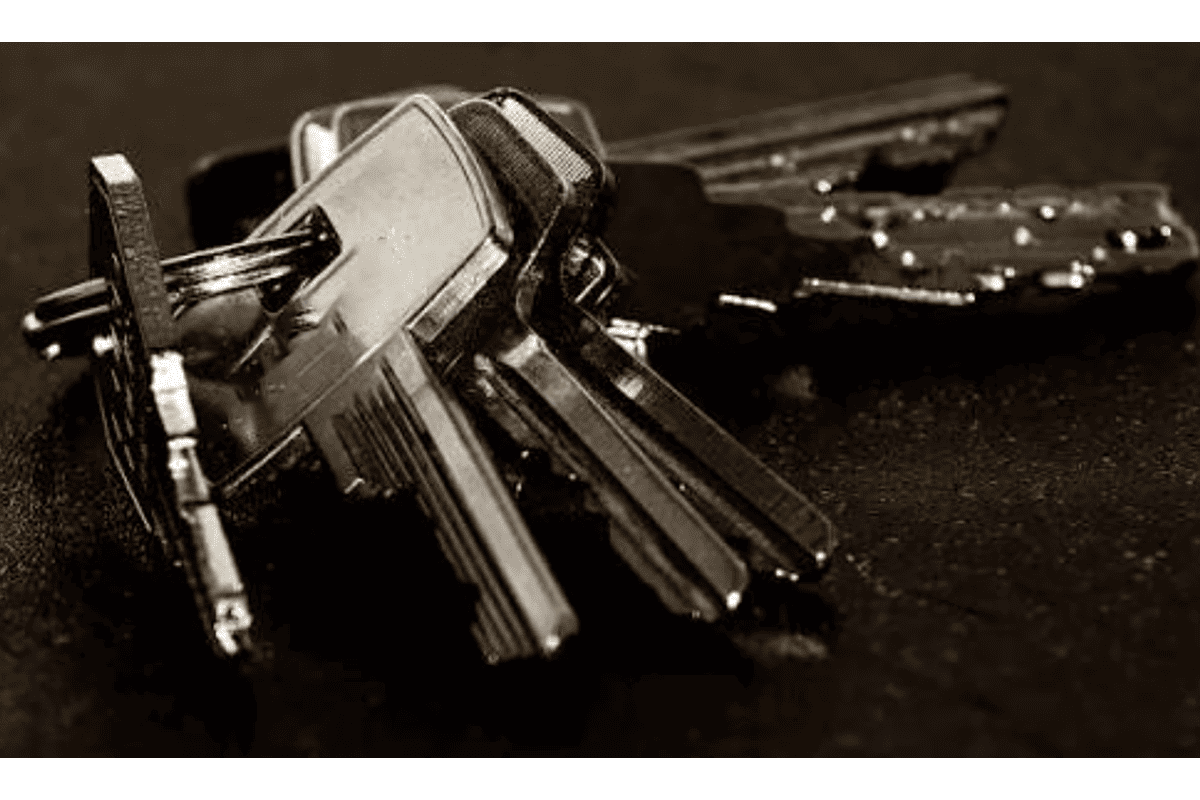
Mistake 1: Saying “patented” when you mean “restricted”
Some buyers use “patented key” to mean “a key that cannot be copied easily.” That is not always correct. A key can be restricted without being patented. A key can also be patented but poorly controlled in distribution. The words describe different forms of control.
The practical question should be:
- Do you need legal protection?
- Do you need blank supply control?
- Do you need both?
If the buyer mainly wants to stop ordinary users from copying keys freely, a restricted keyway with a strong authorization process may solve the issue. If the buyer also wants brand differentiation and legal protection in a market, patent status becomes more important.
Mistake 2: Assuming patent protection never expires
Patent protection has a limited term. It also applies by region.10 Buyers should ask for patent numbers and verify them locally. I would not recommend that an importer print strong legal claims on packaging without proper verification.
Safer wording may include:
- “Patent-protected in selected markets, subject to verification.”
- “Patented key profile where valid and applicable.”
- “Unauthorized duplication may be restricted depending on local patent status.”
This language is more careful and more professional.
Mistake 3: Ignoring after-sales service
A controlled key system needs service support. If a hotel project needs 200 replacement keys after two years, the supplier must know how to handle that request. If a door factory needs the same keyway for future projects, the platform should remain available.
Buyers should ask:
- How long will this profile remain available?
- What is the MOQ for replacement cylinders?
- What is the lead time for duplicate keys?
- Can the buyer hold emergency spare blanks?
- Can the supplier provide a key schedule?
- Can packaging and coding match future orders?
Mistake 4: Making unsupported security claims
Marketing teams sometimes want strong phrases. However, technical B2B products need careful claims. A restricted key does not automatically mean the cylinder resists drilling. A patented key does not automatically mean the door is secure against forced entry.
Better claims include:
- “Designed for controlled key duplication.”
- “Supports authorized replacement-key management.”
- “Restricted blank supply helps reduce unauthorized copying.”
- “Cylinder security performance should be evaluated according to project requirements.”
These phrases are accurate and defensible.
Mistake 5: Forgetting the complete door hardware system
A lock cylinder is only one part of the opening.11 Door security and performance also depend on the mortise lock body, strike plate, hinges, door leaf, frame, handle set, installation quality, and usage environment.
For fire-rated doors, buyers should verify that the complete hardware set is suitable for the required application. CE and fire-rated certification documents should be reviewed carefully, and buyers should confirm that the exact product model, door type, and installation conditions match the project requirements.
This is especially important in the Middle East, Europe, and Southeast Asia, where project requirements and approval processes can differ widely.
Frequently Asked Questions
Are restricted keyways and patented keys the same thing?
No. A restricted keyway controls access to matching key blanks and authorized duplication channels. A patented key may protect the key design through patent rights. They can be used together, but they are different mechanisms and should be specified separately.
Can a restricted key still be copied?
Yes, a restricted key can usually be copied through authorized channels. The point is not that duplication is impossible. The point is that duplication should require approval, controlled blanks, and a defined process managed by the supplier, owner, dealer, or project manager.
Does a patented key make a cylinder pick-proof?
No. A patented key does not automatically make a cylinder pick-proof, drill-proof, or bump-proof. Patent protection relates to the key design. Physical attack resistance depends on cylinder engineering, materials, tolerances, security pins, inserts, testing, and installation quality.
How should importers verify patent claims?
Importers should request patent numbers, target-market details, and supporting documents from the supplier. They should then verify the patent status, scope, and remaining term with a qualified local patent professional before making legal or marketing claims.
What is the main B2B benefit of key control?
The main B2B benefit is controlled responsibility. Door manufacturers, hardware brands, wholesalers, and project suppliers can manage who orders replacement keys, how duplicates are approved, and how after-sales service is handled across projects, dealers, and regions.
Conclusion
Restricted keyways and patented keys are valuable tools when buyers understand their real purpose. A restricted keyway manages access to blanks and duplication channels. A patented key may add legal control where the patent is valid and enforceable. Neither automatically proves higher cylinder attack resistance. If you are selecting lock cylinders for a project, brand line, or wholesale program, define the key-control policy, verify documents, and evaluate cylinder performance separately. If you need factory-direct support for architectural door hardware, SDH Hardware can help you discuss samples, specifications, and supply options clearly.
"Student Guide Course: Lock and Key Systems", https://www.cdse.edu/Portals/124/Documents/student-guides/PY104-guide.pdf. Industry and standards-based descriptions of cylinder performance treat key control and mechanical attack resistance as separate evaluation categories, supporting the distinction between controlled duplication and proven cylinder strength. Evidence role: general_support; source type: institution. Supports: A neutral source should distinguish administrative key-control functions from tested mechanical-security or attack-resistance characteristics of lock cylinders.. Scope note: This support is contextual because standards may define test categories rather than directly discuss the marketing terms used in the article. ↩
"Duplication Prohibited Key: What It Means | Key Control", https://www.easterslock.com/what-does-a-duplication-prohibited-key-mean-for-my/. Institutional key-control guidance commonly describes restricted key systems as limiting duplicate-key production to authorized parties or controlled blank sources, supporting the definition of restricted keyways as a duplication-control mechanism. Evidence role: definition; source type: education. Supports: A source should define restricted keyways as systems in which compatible key blanks and duplication are controlled through authorized channels.. Scope note: Such policies support the operational meaning of restricted keyways, although they may not cover every commercial implementation. ↩
"Claims is the section to define the scope of the patent", https://www.wipo.int/edocs/mdocs/africa/en/wipo_pat_hre_15/wipo_pat_hre_15_t_11.pdf. Patent-office guidance states that patent claims define the legal scope of the protected invention, supporting the article’s point that protection for a patented key depends on the specific claimed design features and patent validity. Evidence role: mechanism; source type: government. Supports: A source should support that patent protection is determined by the claims of a valid patent, rather than by a general product label.. Scope note: The source would support the legal mechanism generally, not the validity of any particular key patent. ↩
"Campus Key Control Policy", https://www.unlv.edu/sites/default/files/media/document/2024-04/CampusKeyPolicy.pdf. Government and institutional physical-security guidance treats key issuance, duplication, and records as controlled functions, supporting the view that unauthorized duplication can weaken access accountability. Evidence role: general_support; source type: government. Supports: A source should show that organizations treat unauthorized duplicate keys as a security and accountability risk.. Scope note: This evidence supports the risk-management principle rather than quantifying how often unauthorized duplication occurs. ↩
"Lock and key", https://en.wikipedia.org/wiki/Lock_and_key. Locksmithing reference material defines the keyway as the shaped opening in a lock cylinder or plug that receives the key, supporting the article’s technical description of the component. Evidence role: definition; source type: encyclopedia. Supports: A source should define a lock keyway as the shaped slot in the cylinder or plug that accepts the key.. ↩
"Managing a patent", https://www.uspto.gov/patents/basics/manage. Patent-office guidance describes a patent as a right to exclude others from making, using, selling, or importing the claimed invention, supporting the statement that a valid key patent may provide legal leverage against unauthorized blank makers. Evidence role: mechanism; source type: government. Supports: A source should explain that patent rights allow the patent owner to exclude others from making, using, selling, or importing the protected invention.. Scope note: This does not prove that any particular key blank infringes; infringement depends on the patent claims and local law. ↩
"Managing a patent", https://www.uspto.gov/patents/basics/manage. Patent-office materials distinguish patent applications from granted patents, supporting the article’s warning that a pending application should not be treated as equivalent to an issued patent right. Evidence role: definition; source type: government. Supports: A source should clarify the difference between a pending patent application and a granted patent right.. Scope note: Some jurisdictions may provide limited provisional or post-publication remedies, so local legal advice is still needed. ↩
"EN 1303:2026 - Cylinders and Master-Key-Systems for ...", https://standards.iteh.ai/catalog/standards/cen/bff2e636-92e6-474b-a6e0-fa3f5c0ce3ec/en-1303-2026?srsltid=AYCX9vLzLWu7k9u9wx5RBZ2f766ayMOcWrtFPnYfv8YuXfpp4pNqpE_s. Lock-cylinder and building-hardware standards specify separate tests or classifications for mechanical security and application suitability, supporting the need for independent evidence of anti-pick, anti-drill, anti-bump, torque, and fire-door claims. Evidence role: expert_consensus; source type: institution. Supports: A source should show that lock-cylinder standards and fire-door certification frameworks evaluate mechanical security and application suitability separately from duplication control.. Scope note: The exact required tests vary by jurisdiction, product type, and project specification. ↩
"EN 1303:2026 - Cylinders and Master-Key-Systems for ...", https://standards.iteh.ai/catalog/standards/cen/bff2e636-92e6-474b-a6e0-fa3f5c0ce3ec/en-1303-2026?srsltid=AYCX9vK3DQrZ4-Zli0h3FjRRtG3YmCwSSJud18TzhRmP86NcEvdiPud-. EN 1303 and comparable building-hardware standards set requirements and test methods for lock cylinders, supporting the recommendation that project cylinders be evaluated against the applicable standard rather than marketing descriptions alone. Evidence role: general_support; source type: institution. Supports: A source should establish that lock cylinders are subject to recognized performance standards that specify requirements and test methods.. Scope note: Standards documents may be paywalled, and the applicable standard depends on the region and project brief. ↩
"Frequently Asked Questions: Patents", https://www.wipo.int/en/web/patents/faq_patents. International patent guidance explains that patents are territorial rights granted for a finite period, supporting the article’s caution that patent protection cannot be assumed to be global or perpetual. Evidence role: historical_context; source type: institution. Supports: A source should confirm that patents have limited duration and territorial effect.. ↩
"PHYSICAL SECURITY OF DOOR ASSEMBLIES AND ...", https://ojp.gov/pdffiles1/nij/32269.pdf. Fire-door and building-code guidance treats doors, frames, and hardware as parts of an installed assembly, supporting the article’s statement that a lock cylinder alone does not determine the security or performance of the opening. Evidence role: general_support; source type: institution. Supports: A source should support that door performance and compliance are evaluated as part of a complete opening or assembly, including hardware, door, frame, and installation.. Scope note: This evidence is strongest for code and fire-door performance; general burglary resistance may require additional security-specific standards. ↩