
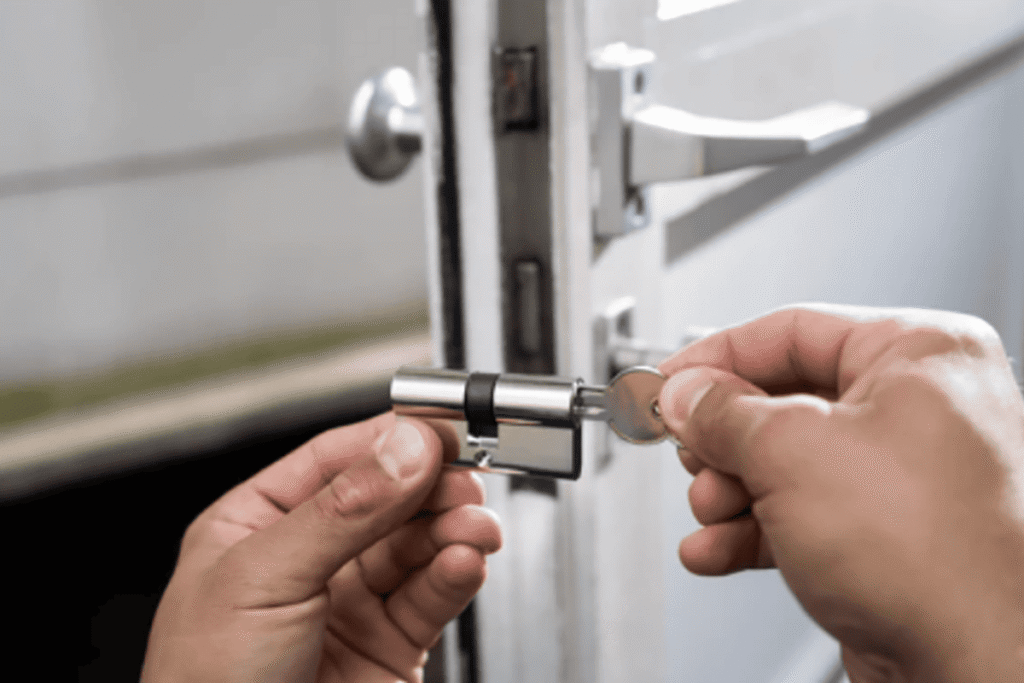
What is the Purpose of the Cylinder on a Door Lock?
The cylinder on a door lock is often misunderstood during door hardware sourcing. Buyers may focus on the keyhole, length, or finish, but that can lead to mismatched locksets, delayed projects, and avoidable returns. I explain it simply: the cylinder authorizes the key and transfers rotation to the lock body1.
The purpose of the cylinder on a door lock is to verify that the inserted key is correct, allow the key to rotate, and transmit that rotation to the lock body so the latch or deadbolt can lock or unlock the door. It is one part of a complete door locking system, not the whole lock.
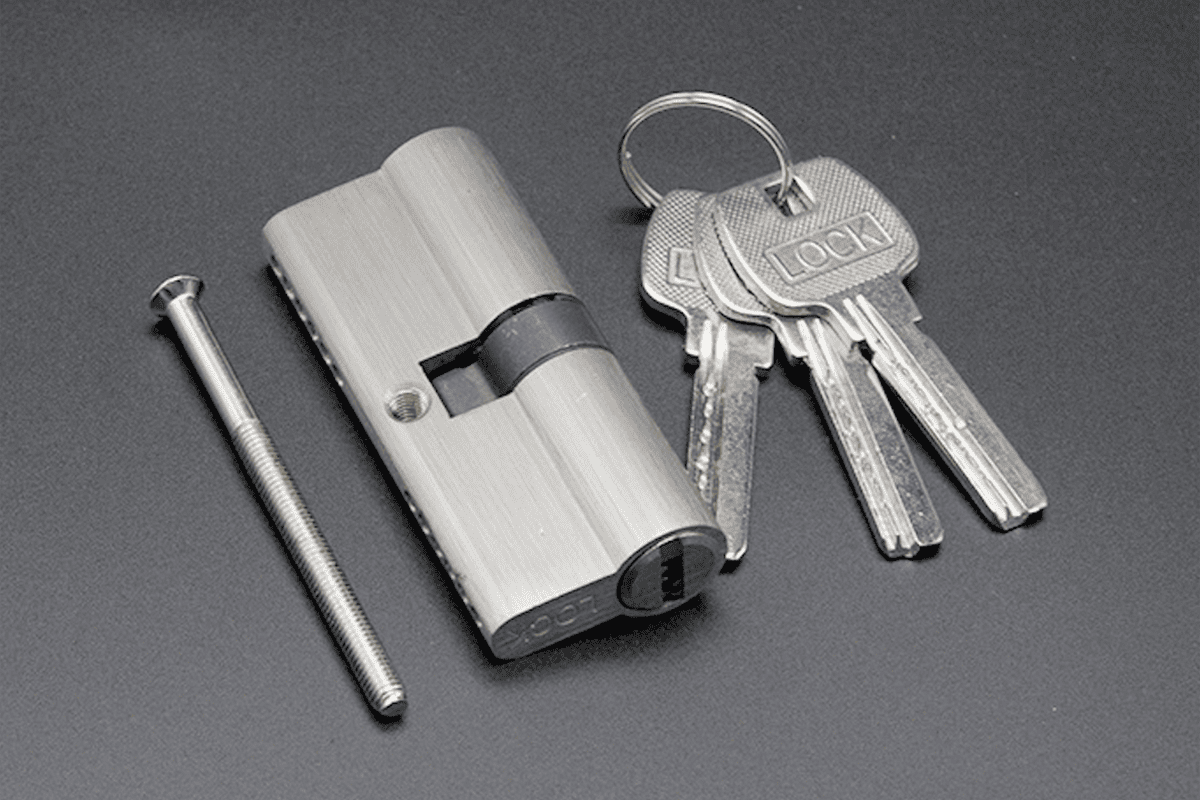
In my work with door factories, hardware wholesalers, and brand buyers, I often see one repeated issue: people treat the cylinder as the entire lock. That small misunderstanding can create big specification problems. So, I will break down what the cylinder does, what it does not do, and how buyers should evaluate it.
How does the cylinder on a door lock work?
The cylinder on a door lock creates many sourcing questions because it looks simple from the outside. However, the part behind the keyhole must match the key, rotate correctly, and drive the lock mechanism. If one detail is wrong, the door may not operate as expected.
The cylinder on a door lock works by accepting the correct key, aligning its internal mechanism, and allowing the key to turn. That turning motion is transferred through the cylinder cam or tailpiece into the lock body, which then moves the latch or deadbolt to lock or unlock the door.
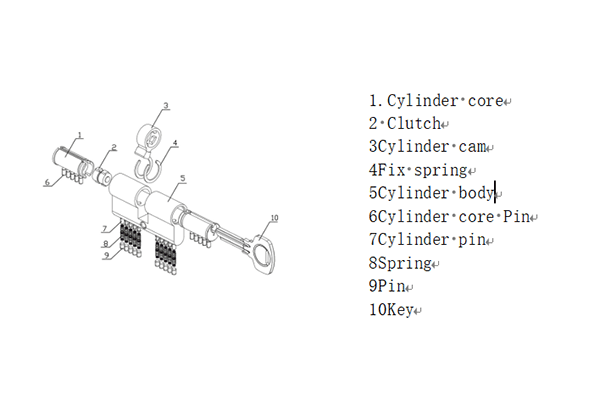
The cylinder checks authorization first
I usually explain the cylinder as the authorization component of the door lock system. The key is not just a handle for turning. It must match the internal structure of the cylinder. When the correct key is inserted, the mechanism aligns and allows rotation.2
For common architectural door hardware, this process may involve different cylinder types, such as:
- Euro profile cylinders3
- Oval cylinders
- Rim cylinders
- Mortise cylinders
- Knob or lever lock cylinders
For many commercial and residential projects in Europe, the Middle East, and Southeast Asia, I often see buyers specify Euro profile cylinders because they fit common mortise lock systems. At SDH Hardware, we handle many inquiries where customers ask for a “lock cylinder,” but what they really need is a matched cylinder, lock body, key function, and door hardware set.
The cylinder then transfers movement
The cylinder does not usually perform the final locking action by itself. Instead, it turns and transfers motion to the lock body. The lock body contains the latch, deadbolt, springs, followers, and other moving parts depending on the model.
Here is the basic flow:
- The user inserts the key.
- The cylinder verifies the key profile and cut.
- The key turns the cylinder plug.
- The cylinder cam or tailpiece rotates.
- The lock body receives the movement.
- The latch or deadbolt moves.
- The door locks or unlocks.
This is why I always tell buyers that the cylinder is not an isolated part. It must work with the lock body.
Simple comparison of functions
| Component | Main Role | Common Buyer Mistake |
|---|---|---|
| Key | Provides the correct operating pattern | Assuming any key can be copied or matched easily |
| Cylinder | Verifies the key and transfers rotation | Treating it as the whole lock |
| Lock body | Moves the latch or deadbolt | Forgetting compatibility with cylinder type |
| Handle or lever | Operates the latch for normal passage | Assuming handle style decides lock function |
| Strike plate | Receives latch or bolt in the frame | Ignoring frame alignment and installation |
The cylinder on a door lock is important because it decides whether the correct key can operate the lock. However, the actual physical locking force depends on the lock body, bolt, door material, frame condition, and installation quality4.
In factory-direct B2B supply, I have seen projects delayed because the buyer selected the cylinder length first and only later checked the lock body. That order is risky. The better approach is to confirm the door thickness, lock body standard, cylinder profile, key function, and project requirements together.
Is the cylinder on a door lock the same as the whole lock?
The cylinder on a door lock is easy to confuse with the full lock because it is the part most users see and touch with a key. That confusion can cause incorrect quotations, wrong samples, and poor customer explanations. I prefer to separate the system into clear parts.
No, the cylinder on a door lock is not the same as the whole lock. The cylinder verifies the key and sends rotational movement. The lock body performs the mechanical locking action by moving the latch or deadbolt. Handles, escutcheons, strikes, and door structure also affect complete lock performance.
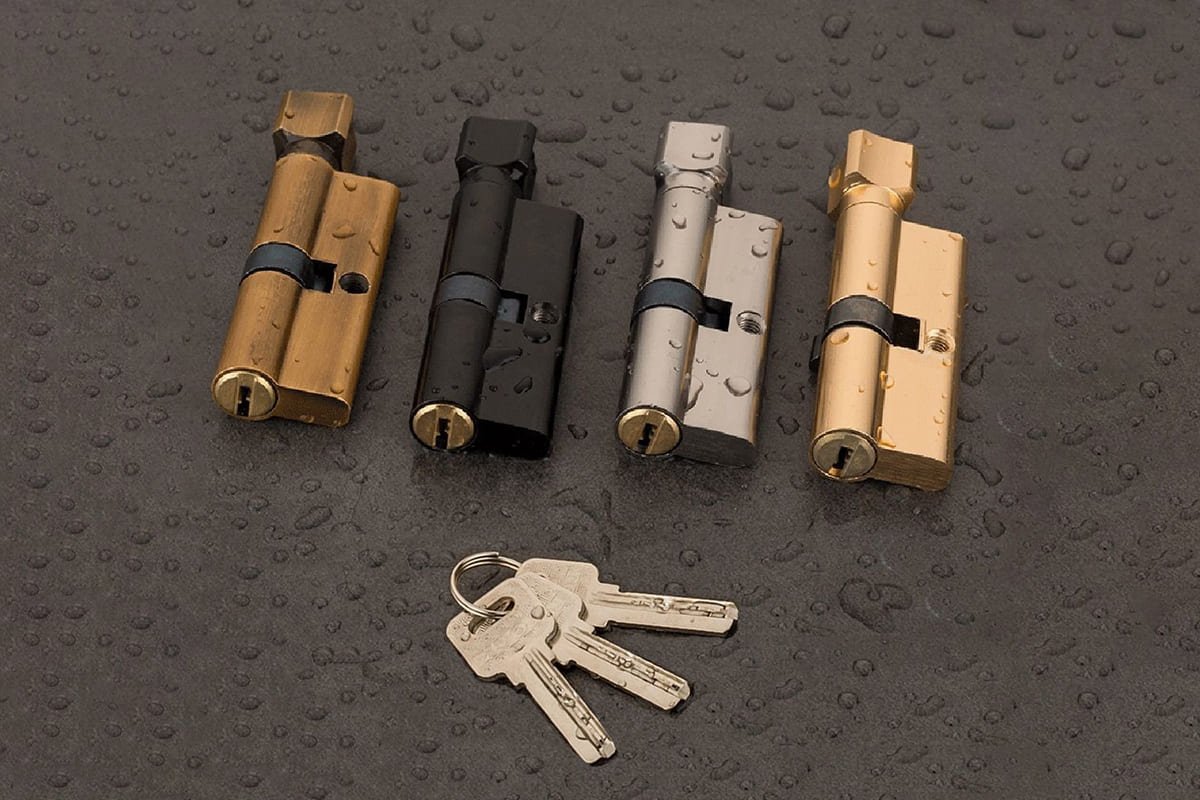
A door lock is a system
When I receive inquiries from door factories, customers sometimes ask, “Can you quote this lock cylinder?” Then they send a photo of a complete mortise lockset. Other times, they send a cylinder photo and expect us to know the lock body, door thickness, keying plan, and handle configuration.
That is why I usually define the system like this:
A lock cylinder controls access by key, but the lock body and bolt create the locking movement.
This distinction matters in procurement because each component has its own specification.
Main parts of a typical mortise lockset
For architectural door projects, a complete lockset may include:
- Cylinder
- Mortise lock body
- Lever handles
- Escutcheons or rosettes
- Strike plate
- Screws and accessories
- Keys
- Optional thumb turn
- Optional fire-rated hardware package
Each part must match the others. For example, a Euro profile cylinder must match a Euro mortise lock body. A bathroom lock function may need a thumb turn cylinder or privacy function. A main entrance may require a key-key cylinder, key-turn cylinder, or specific keying arrangement.
Cylinder functions vary by project
Different projects need different cylinder functions. A hotel room, apartment entrance, school classroom, and warehouse door may not use the same key operation.
| Cylinder Function | Typical Use | Buyer Checkpoint |
|---|---|---|
| Key-key cylinder | Entrance doors needing key operation on both sides | Check emergency egress requirements |
| Key-turn cylinder | Apartment or office doors needing inside thumb turn | Confirm inside operation and safety rules |
| Half cylinder | Cabinets, shutters, or special doors | Confirm lock body design |
| Master keyed cylinder | Projects with management key access | Confirm keying schedule early |
| Construction key system | Building sites before handover | Confirm handover process and documentation |
I avoid saying that one cylinder type is always “best.” The correct choice depends on the application, local standards, building type, and project requirements. For fire-rated doors or regulated projects, buyers should verify certificates, test reports, and approved hardware combinations. A qualified door hardware consultant, fire door professional, or locksmith should evaluate application-specific decisions.
Why this distinction protects buyers
When buyers understand that the cylinder on a door lock is only one part of the system, they ask better questions. They also reduce the risk of mismatched orders.
Before confirming a cylinder order, I suggest checking:
- Which lock body will be used?
- What is the door thickness?
- What cylinder profile is required?
- What cylinder length is needed?
- Is the function key-key, key-turn, or half cylinder?
- Does the project need master keying?
- Are CE, fire-rated, or regional documents required?
- Will the finish match the handles and accessories?
At SDH Hardware, our role is to help buyers match these product details during inquiry, quotation, and pre-sales communication. We can support manufacturing and configuration discussions, but buyers should still verify compliance documents and project-specific requirements before final installation.
How should B2B buyers specify the cylinder on a door lock?
The cylinder on a door lock can create procurement problems when buyers only provide a photo or a rough length. That approach may work for a small replacement, but it is risky for door factories, wholesalers, and brand buyers. Clear specifications reduce mistakes and improve production accuracy.
B2B buyers should specify the cylinder on a door lock by confirming the cylinder profile, total length, side lengths, door thickness, lock body type, key function, finish, keying requirements, certification documents, and packaging needs. A complete specification helps suppliers quote accurately and manufacture compatible products.
Start with the lock body and door thickness
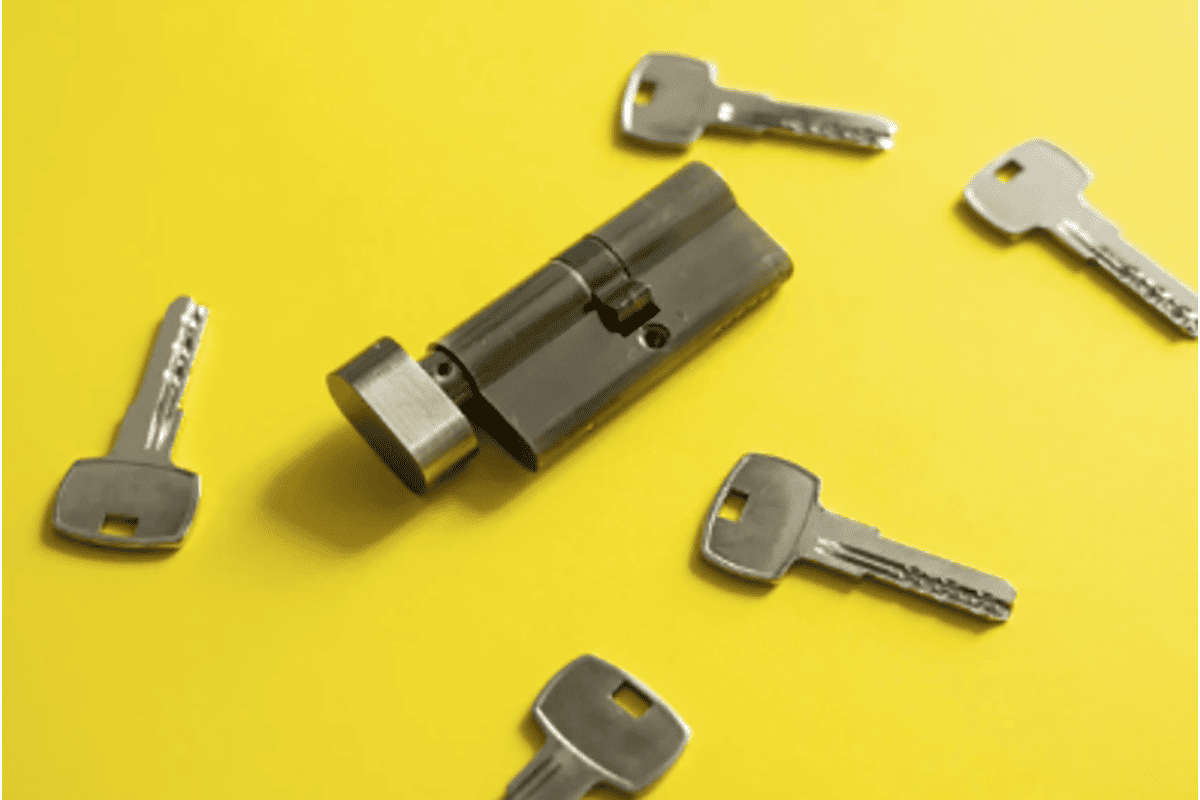
I always prefer to begin with the lock body. The lock body decides the cylinder profile and operating movement. The door thickness then helps determine the correct cylinder length.5
For example, a common Euro cylinder may be described as:
- 60 mm total length
- 30/30 mm split
- 70 mm total length
- 35/35 mm split
- 80 mm total length
- 40/40 mm split
- Key-key or key-turn function
However, the correct length depends on the door leaf, escutcheon thickness, rosette design, and installation position. A cylinder that is too short may not install properly. A cylinder that projects too far may look poor and may create additional risk depending on the door environment.6
Key specification points
A good B2B inquiry should include more than one dimension. I recommend preparing a simple checklist.
| Specification Item | Why It Matters | Example |
|---|---|---|
| Cylinder profile | Must match lock body | Euro profile, oval, rim |
| Cylinder length | Must fit door and trim | 30/30, 35/35, 40/40 |
| Function | Defines user operation | Key-key, key-turn, half cylinder |
| Finish | Must match hardware set | Satin nickel, brass, black, chrome |
| Key quantity | Affects packing and user handover | 3 keys, 5 keys, project keys |
| Keying system | Affects access control | KD, KA, MK, GMK |
| Certification documents | Needed for regulated projects | CE or fire-rated documents to verify7 |
| Packaging | Important for wholesalers and brands | Neutral box, color box, logo packing |
Understand common keying terms
Door hardware buyers often ask about key control. The terms can be confusing, especially across different markets. I normally explain them in simple language.
- KD, keyed different: Each cylinder has its own unique key.
- KA, keyed alike: Multiple cylinders use the same key.
- MK, master keyed: Each door has its own key, and a master key opens selected doors.
- GMK, grand master keyed: A higher-level master key opens multiple master key groups.
Master key planning should be handled early because it affects production organization, key records, packaging, and project management.8 It should not be treated as a last-minute packaging detail.
Confirm standards and documents
For B2B buyers, certification is not just a marketing phrase. It is a document package that should be checked against the project requirement. At SDH Hardware, our core products are available with CE certification and fire-rated certification according to product type and application. However, I always recommend that buyers verify:
- The product model on the certificate
- The test standard referenced
- The test report validity
- The approved hardware combination
- The project country or region requirement
- Whether the door assembly requires separate approval
This matters because a cylinder may be one item in a larger certified door assembly. A fire-rated door, for example, depends on the door leaf, frame, hinges, lock body, seals, closer, and installation. A cylinder alone does not make the full door fire-rated.9
Practical inquiry example
A weak inquiry may say:
“Please quote door lock cylinder, 70 mm, brass color.”
A stronger inquiry would say:
“Please quote Euro profile brass cylinder, 35/35 mm, key-key function, 3 brass keys, satin brass finish, compatible with Euro mortise lock body for 45 mm wooden doors. Please provide CE/fire-rated documents if available for this model.”
The second inquiry allows a supplier to respond with fewer assumptions. It also helps avoid incorrect samples and repeated revisions.
Can replacing a door lock cylinder improve security and convenience?
A door lock cylinder replacement is often requested when keys are lost, tenants change, or a project owner wants better key management. That is reasonable. However, I avoid telling buyers that a cylinder change alone upgrades the entire door security level. The full door system matters.
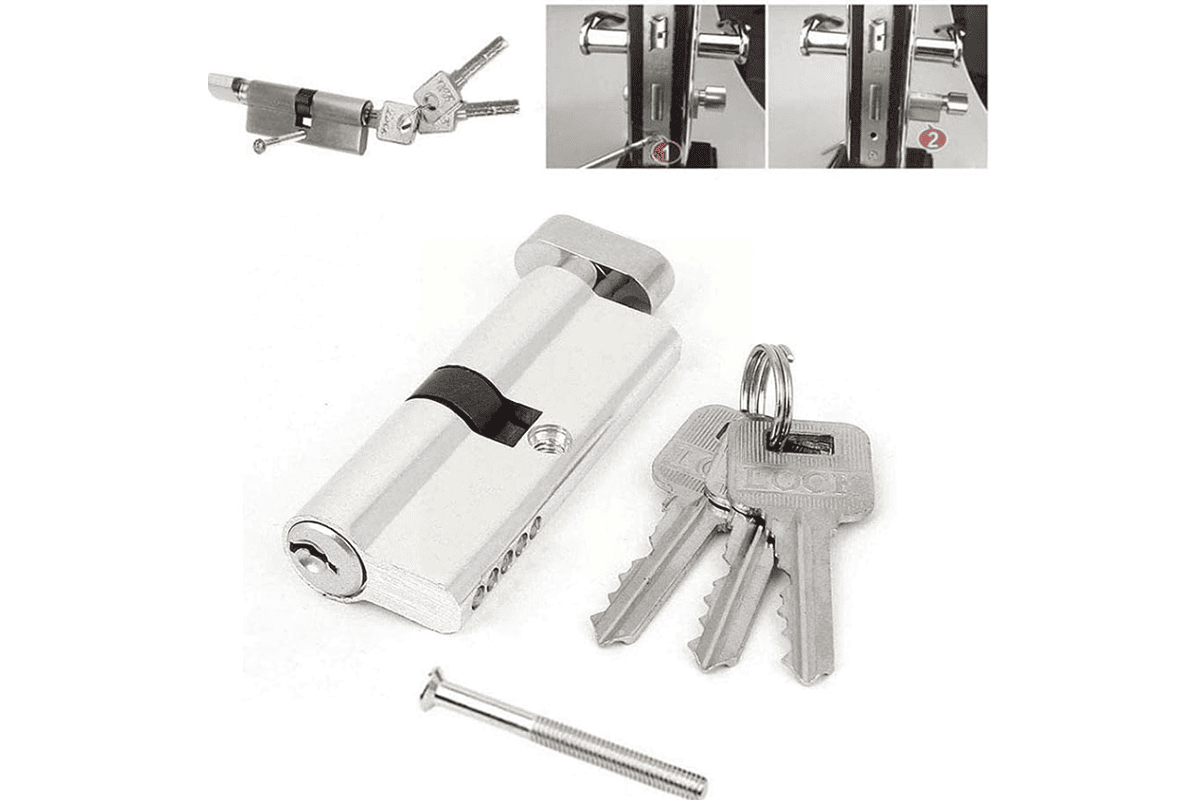
Replacing a door lock cylinder can improve key control, user convenience, and compatibility with a new keying system. However, it does not automatically improve total door security. Overall performance depends on the cylinder, lock body, door structure, strike plate, hinges, installation quality, and verified product standards.
What cylinder replacement can improve
A cylinder replacement can be useful in many B2B and project situations. For example, I have seen wholesalers request new cylinders because their market needed a different key function. I have also seen door factories change cylinder length after switching to a thicker door leaf or a different escutcheon design.
A replacement may help with:
- Lost key management
- Tenant turnover
- New master key systems
- Different inside operation
- Finish coordination
- Brand packaging updates
- Market-specific cylinder length
- Compatibility with a selected mortise lock body
If a buyer only needs a new key system, replacing the cylinder may be more efficient than replacing the full lockset10. This is one reason cylinders are popular as service parts in architectural hardware distribution.
What cylinder replacement cannot guarantee
A new cylinder is not a magic security upgrade. I say this carefully because buyers deserve realistic expectations.
A cylinder replacement may not solve:
- A weak door leaf
- A damaged frame
- Poor strike plate installation
- Loose hinges
- A low-quality lock body
- Incorrect screw fixing
- Wrong cylinder projection
- Non-compliant emergency exit requirements
Security is a system result. It is not created by one component alone. A high-quality cylinder installed into a weak door structure may still perform poorly in real conditions. A good lock body with poor alignment may also cause customer complaints.
Evaluate the full opening
For project doors, I recommend reviewing the complete opening. This includes the door leaf, frame, hinges, lock body, cylinder, handle set, strike plate, closer, and seals where needed.
| Evaluation Area | Why It Matters |
|---|---|
| Door thickness | Determines cylinder length and hardware fixing |
| Door material | Affects strength and screw holding |
| Frame alignment | Affects latch and bolt engagement |
| Lock body quality | Controls mechanical operation |
| Cylinder quality | Controls key authorization and rotation |
| Handle compatibility | Affects daily use and latch operation |
| Strike plate | Receives the latch or deadbolt |
| Installation | Determines whether parts perform as designed |
When to involve a professional
For general hardware sourcing, a manufacturer like SDH Hardware can help buyers select dimensions, finishes, functions, and compatible product groups. For legal compliance, emergency egress, burglary resistance, or fire-rated door assemblies, buyers should involve qualified professionals.
That may include:
- Certified locksmiths
- Fire door inspectors
- Door hardware consultants
- Project architects
- Local code specialists
- Testing or certification bodies
This is especially important for commercial buildings, public facilities, schools, hospitals, hotels, and apartment projects. In those applications, the cylinder on a door lock should be selected as part of a complete and compliant hardware schedule.
Frequently Asked Questions
What is the main purpose of a door lock cylinder?
The main purpose of a door lock cylinder is to verify the correct key and transfer the key’s rotation to the lock body. The lock body then moves the latch or deadbolt. The cylinder controls key access, but it is not the entire locking system.
Is the cylinder the same as the lock body?
No. The cylinder and lock body are different parts. The cylinder receives and verifies the key. The lock body contains the latch or deadbolt mechanism. In many mortise lock systems, the cylinder drives the lock body, and the lock body performs the physical locking movement.
Can I replace only the cylinder on a door lock?
Yes, you can often replace only the cylinder on a door lock if the new cylinder matches the lock body, door thickness, profile, length, and function. However, you should check compatibility carefully. For regulated projects, you should also verify relevant certificates and installation requirements.
How do I choose the correct cylinder length?
You choose the correct cylinder length by measuring the door thickness and considering the escutcheon, rosette, or trim thickness on both sides. For Euro cylinders, buyers often specify split lengths such as 30/30 mm or 35/35 mm. The cylinder should fit properly without excessive projection.
Does a better cylinder make the whole door secure?
A better cylinder can improve key control and may improve one part of the lock system, but it does not guarantee full door security. The door leaf, frame, lock body, strike plate, hinges, installation, and verified standards all affect total performance.
Conclusion
The cylinder on a door lock verifies the correct key and transfers rotation to the lock body, but it should never be treated as the whole lock. Buyers should evaluate the cylinder together with the lock body, door thickness, key function, finish, certification documents, and installation requirements. If you source door hardware in bulk, I recommend preparing a complete specification before requesting a quotation. SDH Hardware can help you review compatible lock cylinders, mortise locks, handles, hinges, and door hardware solutions for your project or product line.
"Pin tumbler lock", https://en.wikipedia.org/wiki/Pin_tumbler_lock. A technical encyclopedia source describes the lock cylinder as the keyed mechanism in which the correct key permits plug rotation, with that rotation used to operate the associated locking mechanism. Evidence role: definition; source type: encyclopedia. Supports: The source should define a lock cylinder as the keyed component that permits rotation only with the correct key and connects that rotation to the locking mechanism.. ↩
"Pin tumbler lock", https://en.wikipedia.org/wiki/Pin_tumbler_lock. Educational descriptions of pin-tumbler locks explain that the correct key positions internal pins at the shear line, allowing the plug to rotate and operate the lock. Evidence role: mechanism; source type: education. Supports: The source should explain that the correct key raises or positions internal elements to a shear line, enabling the plug to rotate.. Scope note: This directly supports pin-tumbler cylinders; other cylinder designs may use different internal elements while serving a similar authorization function. ↩
"Pin tumbler lock", https://en.wikipedia.org/wiki/Pin_tumbler_lock. European lock-cylinder standards and reference sources identify profile cylinders, including Euro-profile forms, as standardized cylinder formats used in building door hardware. Evidence role: definition; source type: institution. Supports: The source should show that Euro profile cylinders are a recognized type of lock cylinder in architectural hardware or standards contexts.. Scope note: This supports recognition of the cylinder type, not its suitability for every regional project or lock body. ↩
"Physical Security | Cybersecurity and Infrastructure ...", https://www.cisa.gov/topics/physical-security. Government physical-security guidance commonly evaluates door security as an assembly of door, frame, locking hardware, strike, hinges, and installation rather than as a function of the cylinder alone. Evidence role: general_support; source type: government. Supports: The source should explain that door security depends on the lock, bolt or strike, door, frame, hinges, and installation.. Scope note: Such guidance supports the system-level principle but may not evaluate the specific products discussed in the article. ↩
"SECTION 087111 - DOOR HARDWARE (SCHEDULED BY ...", https://fpm.usc.edu/wp-content/uploads/2021/11/087102-USC-HSC-door-hardware-Guide-Specification_1.pdf. Architectural hardware installation guidance describes cylinder length as a dimension selected from the door thickness and associated trim or escutcheon build-up so that the cylinder fits the installed opening correctly. Evidence role: general_support; source type: institution. Supports: The source should support that cylinder length selection depends on door thickness and the thickness of trim or escutcheons.. Scope note: This supports the general selection method; exact length tolerances vary by cylinder profile, trim design, and local installation practice. ↩
"1* vs 3* vs 3* ALPs Lock Cylinders: Comparison Guide", https://safewarehardware.com/1-vs-3-vs-3-al-lock-cylinders-comparison-guide. Security standards and certification guidance for door cylinders address the relationship between cylinder exposure, physical attack resistance, and protective hardware, indicating that excessive projection can be relevant to security performance. Evidence role: general_support; source type: institution. Supports: The source should support that exposed or protruding cylinders can be more vulnerable to physical attack, depending on cylinder and door configuration.. Scope note: This supports the risk concept generally; the actual risk depends on the cylinder design, escutcheon protection, door location, and applicable standard. ↩
"CE Marking for Construction Products", https://www.intertek.com/building/ce-marking/. Government and European regulatory materials on construction products explain that products in regulated building applications may require documented conformity or performance evidence, including CE-related documentation or fire-test classification where applicable. Evidence role: general_support; source type: government. Supports: The source should support that certain construction products or door hardware used in regulated contexts require documented conformity, performance declarations, or tested fire performance.. Scope note: This supports the need to verify documentation in regulated contexts, not that every cylinder model requires CE marking or fire-rating documentation. ↩
"46 U.S. Code § 3106 - Master key control system", https://www.law.cornell.edu/uscode/text/46/3106. University and institutional key-control policies typically require documented authorization, key records, and administrative controls for master-key systems, supporting the need to plan such systems before final production and handover. Evidence role: general_support; source type: education. Supports: The source should show that master key systems require documented key control, authorization records, and advance planning.. Scope note: This supports the administrative need for early planning; production and packaging effects depend on supplier workflow and project scale. ↩
"Bldg #7 Install Fire-rated Door Assembly", https://legacy.sba.gov/opportunity/bldg-7-install-fire-rated-door-assembly. Fire-door standards and certification guidance define fire performance at the assembly level, with the door leaf, frame, hardware, seals, and installation forming the rated system rather than any single component alone. Evidence role: expert_consensus; source type: institution. Supports: The source should explain that a fire door is evaluated as an assembly including the door leaf, frame, hardware, seals, and installation.. ↩
"Is it Better to Change Locks or Rekey?", https://www.ahs.com/home-matters/quick-tips/rekey-or-change-locks/. Facilities and locksmithing guidance commonly treats rekeying or cylinder replacement as a key-control measure that can preserve existing lock hardware when the lock body and trim remain serviceable. Evidence role: general_support; source type: education. Supports: The source should support that changing or rekeying the cylinder is a common response when key control changes are needed without replacing the full lock hardware.. Scope note: This supports the general service principle; it does not prove that cylinder replacement is more efficient in every case or for every lock design. ↩
