
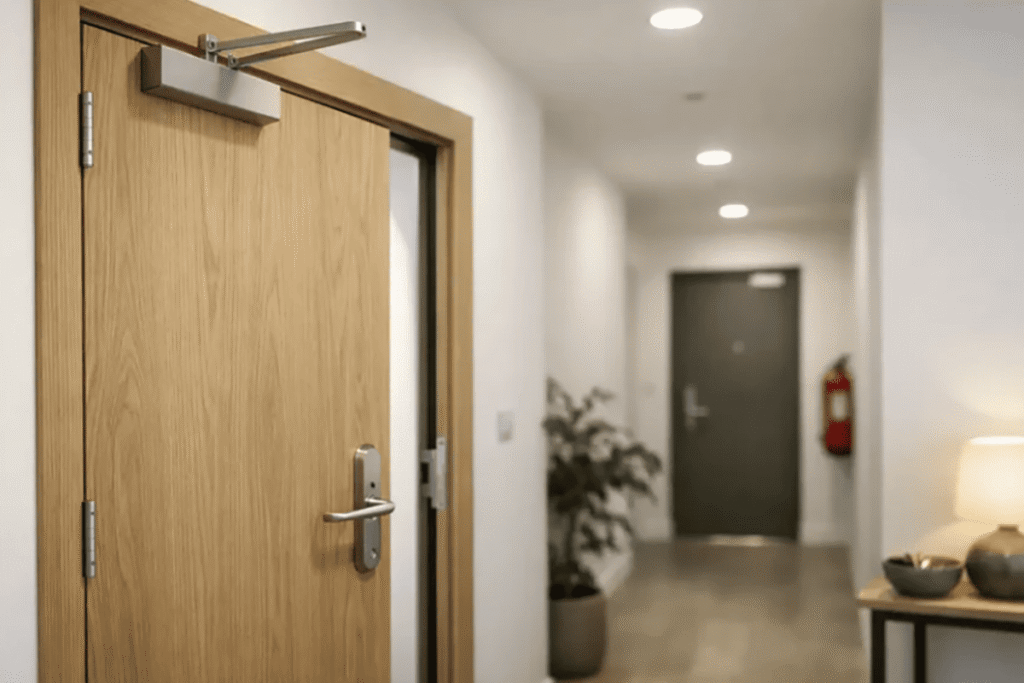
What is the most common security feature on commercial doors?
Commercial doors fail most often when the hardware set is treated as an afterthought. A weak cylinder, light-duty lock body, misaligned hinge, or unreliable closer can turn a strong door leaf into a vulnerable opening. In my experience supplying architectural hardware, the solution starts with a complete mechanical security configuration.
The most common security feature on commercial doors is the mechanical locking and hardware system, especially the lock cylinder and mortise lock.1 Electronic access control may manage who enters, but the physical resistance still depends on certified mechanical hardware2, correct installation, durable handles, suitable hinges, and a closer that helps the door return to the closed position.
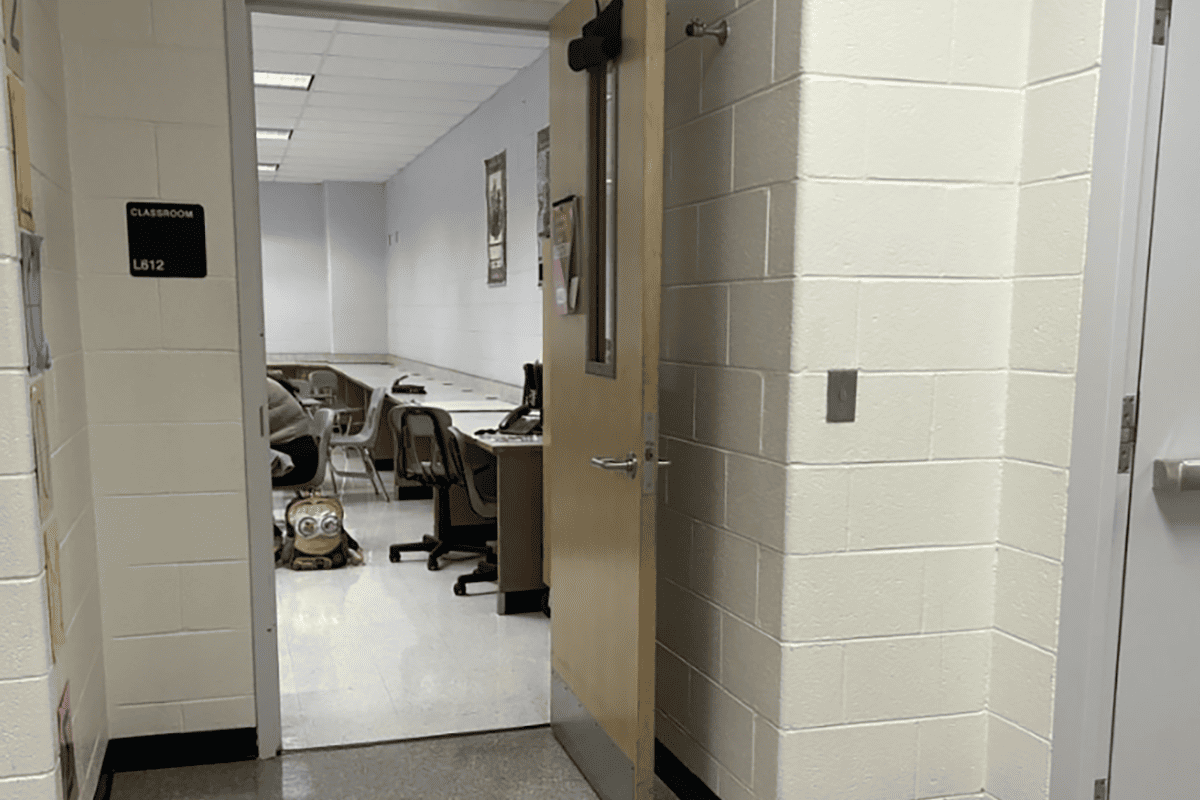
Many buyers ask this question because smart locks, card readers, and access control panels get most of the attention. However, I usually guide customers back to the basics first. A commercial opening is a system, and every visible and hidden part affects long-term security.
Why is the mechanical lock system the most common security feature on commercial doors?
Commercial doors often face heavy use, rough handling, and different levels of forced-entry risk. If the main locking system is weak, the rest of the door cannot perform as expected. This is why I always start security discussions with the mechanical lock set.
The mechanical lock system is the most common security feature on commercial doors because it provides the basic physical barrier against unauthorized entry. The cylinder controls key access, the mortise lock provides the locking structure, and the surrounding hardware keeps the door aligned, closed, and usable under daily commercial traffic.
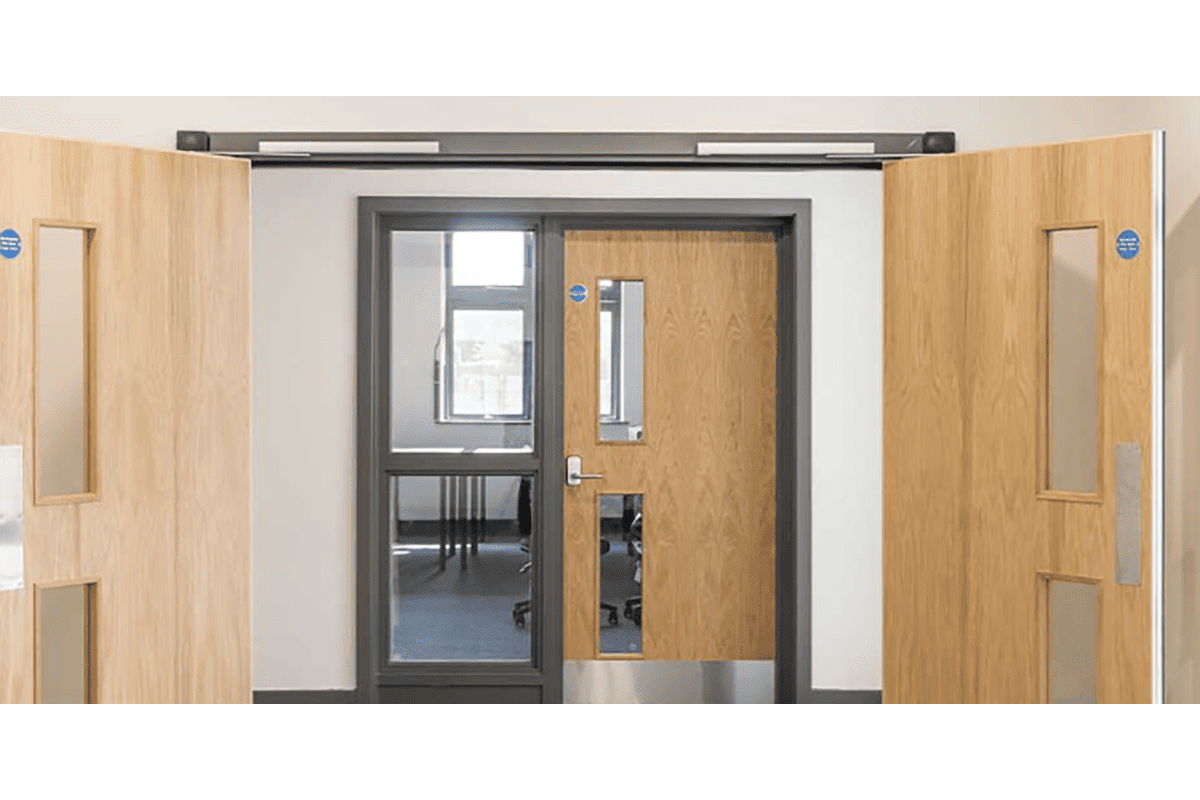
The lock is not one part
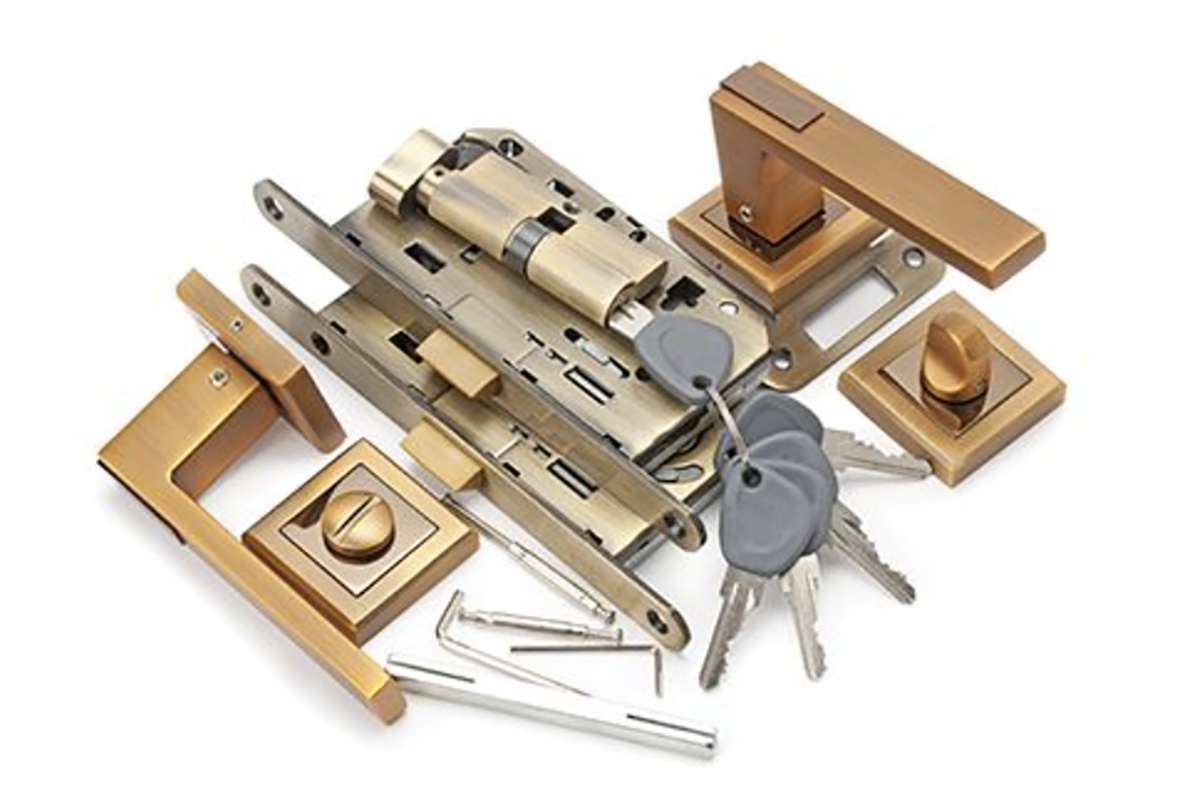
When people say “door lock,” they often mean the cylinder. In commercial hardware, I see it differently. The lock is a working assembly. It may include:
- Euro profile cylinder
- Mortise lock body
- Strike plate
- Lever handle or pull handle
- Escutcheon or lock case cover
- Hinges
- Door closer
- Door leaf and frame
- Fixing screws and installation tolerances
A strong cylinder cannot compensate for a weak lock body. A certified mortise lock cannot perform well if the door is badly aligned. A heavy commercial door may lose security if the hinges sag and the latch no longer engages correctly.
That is why I prefer the phrase mechanical locking and hardware system. It is more accurate than saying the cylinder alone is the most common feature.
Why mechanical security remains the baseline
Electronic access control is common in offices, hotels, schools, hospitals, warehouses, and public buildings. However, access control usually sits on top of physical hardware. A card reader can approve entry, but the door still needs a lock to resist pushing, prying, impact, and tampering.
In procurement discussions, I normally separate the two roles:
| System type | Main role | Common buyer concern |
|---|---|---|
| Mechanical lock system | Provides physical locking and resistance | Strength, durability, certification, key control |
| Electronic access control | Manages entry authorization | User management, audit records, integration |
| Door closer | Returns door to closed position | Fire-rated use, controlled access, durability |
| Hinges | Carry load and maintain alignment | Weight capacity, cycle life, fire suitability |
| Lever handle | Allows daily operation | Durability, finish, public-use grade |
This distinction matters. A commercial buyer should not assume that an electronic device automatically improves physical resistance. In many projects, the electronic system improves management, while the mechanical lock improves security at the door edge.
Standards make evaluation easier
I am not a building code authority, and each project should verify local requirements. Still, European standards help buyers compare products in a structured way. For commercial doors, I often see these standards used in product evaluation:
- EN 1303 for cylinders
- EN 12209 for mechanically operated locks and latches
- EN 1906 for lever handles and knob furniture
- EN 1935 for single-axis hinges
- Fire-rated certification documents where applicable
A cylinder compliant with EN 1303 may include performance classifications related to durability, key security, attack resistance, and other test categories. Depending on design, buyers may also request features such as anti-snap, anti-bump, anti-drill, or reinforced components.
A mortise lock evaluated under EN 12209 gives buyers a clearer way to compare durability, load, latch function, and security-related performance. This matters because the mortise lock is the part buried inside the door, yet it carries much of the locking function.
In my own quotation reviews, I treat certificates as documents to verify, not marketing decoration. I always recommend that buyers request valid reports, check product references, and confirm that the supplied model matches the tested model.
How do cylinders and mortise locks protect commercial doors?
Commercial doors need a locking core that can handle both access control and physical force. If buyers focus only on finish, price, or handle style, they may miss the most important security parts hidden inside the door.
Cylinders and mortise locks protect commercial doors by controlling key access and securing the door leaf into the frame. The cylinder manages who can operate the lock, while the mortise lock body provides latch and deadbolt engagement. Together, they form the central security structure of most commercial door hardware sets.
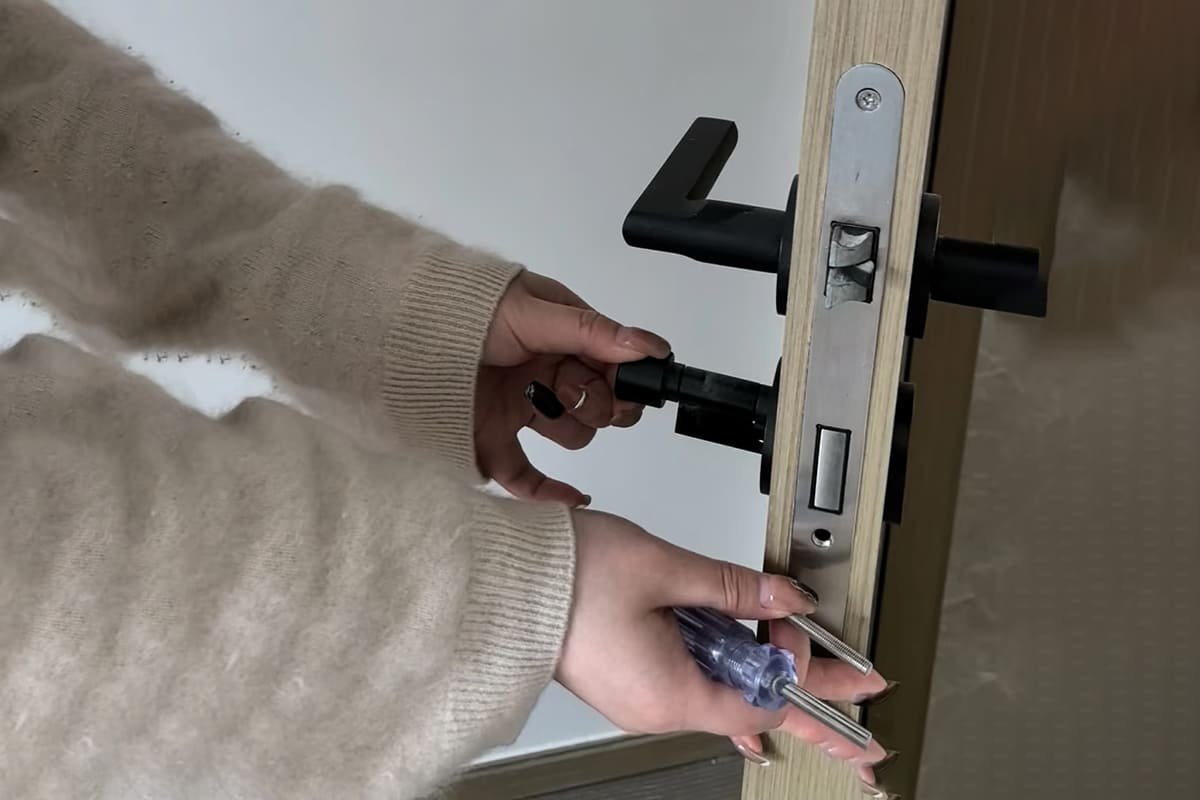
The cylinder controls key access
The cylinder is often the part buyers discuss first because it is easy to see and easy to compare. In many commercial projects, Euro profile cylinders are widely used because they fit standardized lock cases and allow flexible keying options.3
A good commercial cylinder may offer:
- Key control options
- Master key system compatibility
- Anti-pick design
- Anti-bump protection
- Anti-drill pins or inserts
- Anti-snap structure
- Emergency function or thumb-turn options
- Different lengths for different door thicknesses
However, I always remind buyers that not every project needs the same cylinder. A warehouse door, a hotel room door, an office fire door, and a retail entrance may require different combinations. The correct selection depends on door type, risk level, usage frequency, local market expectations, and project specifications.
EN 1303 as a buyer-friendly reference
For Euro cylinders, EN 1303 is one of the common standards buyers ask about. It classifies cylinders by different performance areas, including durability and key-related security. Some cylinder designs also include features that resist common attack methods.
Here is a simplified buyer view:
| Cylinder feature | What it helps with | Buyer note |
|---|---|---|
| Anti-snap design | Reduces vulnerability to snapping attacks | Confirm construction and test documents |
| Anti-bump pins | Helps resist bump-key manipulation | Verify actual model specification |
| Anti-drill inserts | Helps resist drilling at the cylinder face | Check material and placement |
| Key control | Reduces uncontrolled key duplication | Ask about keyway and key system options |
| Correct cylinder length | Reduces exposed cylinder risk | Match door thickness and hardware trim |
A cylinder that projects too far from the escutcheon can become more exposed.4 This is a simple but important detail. I have seen buyers spend money on better cylinders but ignore cylinder length. The result is not ideal.
The mortise lock provides the locking structure
The mortise lock is the body installed inside the door edge. It controls the latch, deadbolt, follower, springs, and locking action. It is less visible than the cylinder, but it is central to security.
A commercial mortise lock may be evaluated for:
- Durability cycles
- Latch bolt function
- Deadbolt throw
- Follower strength
- Backset and center distance
- Fire-rated suitability where applicable
- Compatibility with handles, cylinders, and accessories
- Resistance to side load or prying depending on grade and design
For many European-style commercial doors, an EN 12209 mortise lock gives buyers a familiar reference point. It helps compare performance categories, although buyers should still check the exact classification and intended use.
Cylinder and mortise lock must match
A strong cylinder and a weak lock body create an unbalanced system. The reverse is also true. A heavy-duty lock body with a very basic cylinder can still leave the opening exposed.
I usually ask buyers these questions before recommending a configuration:
What is the door material?
Steel, wood, aluminum, and fire-rated doors may require different hardware details.What is the door thickness?
Cylinder length, spindle length, screws, and trim must match.How often will the door be used?
High-traffic public doors need more durable components.Is fire-rated performance required?
If yes, buyers should verify complete door set requirements and certification documents.Is access control planned?
The mechanical lock should be compatible with the electronic system.What market standard does the buyer need?
Europe, Middle East, and Southeast Asia may have different project expectations.
As a manufacturer, I cannot decide final project suitability without the full door and building context. However, I can help buyers compare the hardware set and prepare options that match common commercial specifications.
Why do handles, hinges, and closers matter on commercial doors?
Commercial doors are opened, pulled, pushed, slammed, and sometimes abused thousands of times. If buyers only focus on the lock cylinder, they may overlook the parts that keep the opening functional, aligned, and properly closed over time.
Handles, hinges, and closers matter on commercial doors because they support the lock system. Handles allow reliable operation, hinges carry door weight and maintain alignment, and closers help the door return to the closed position. These parts do not replace the lock, but they protect the lock’s long-term performance.
Handles affect daily durability
Lever handles may look simple, but commercial handles work hard. In offices, schools, hospitals, shopping centers, and public buildings, handles can face frequent use every day. If the handle spring weakens or the lever sags, the latch may not retract smoothly. Over time, this can cause user complaints and even affect locking.
For commercial use, EN 1906 Grade 3 is often specified for door furniture used in high-frequency public applications. Buyers should verify the grade, test report, material, finish, and compatibility with the lock body.
Common handle evaluation points include:
- Material: stainless steel, aluminum, zinc alloy, or brass
- Spring strength: suitable for the lock follower
- Return action: lever should return cleanly
- Fixing method: through-bolts are often stronger than light screws
- Finish durability: especially in coastal, humid, or high-touch environments
- Fire-rated suitability: verify documents if used on fire-rated doors
At SDH Hardware, we often support buyers with stainless steel lever handles for commercial projects. However, I still suggest that customers confirm the final application. A handle used in a low-traffic office is not the same as one used in a school corridor.
Hinges protect alignment
Hinges are another part that buyers sometimes underestimate. A door lock works only when the latch and deadbolt meet the strike correctly. If the door drops by even a small amount, users may start lifting the handle, pushing harder, or leaving the door not fully latched.
For commercial doors, EN 1935 helps buyers evaluate single-axis hinges based on categories such as:
- Load capacity
- Durability
- Door mass suitability
- Fire and smoke door suitability where applicable
- Safety
- Corrosion resistance
- Security grade
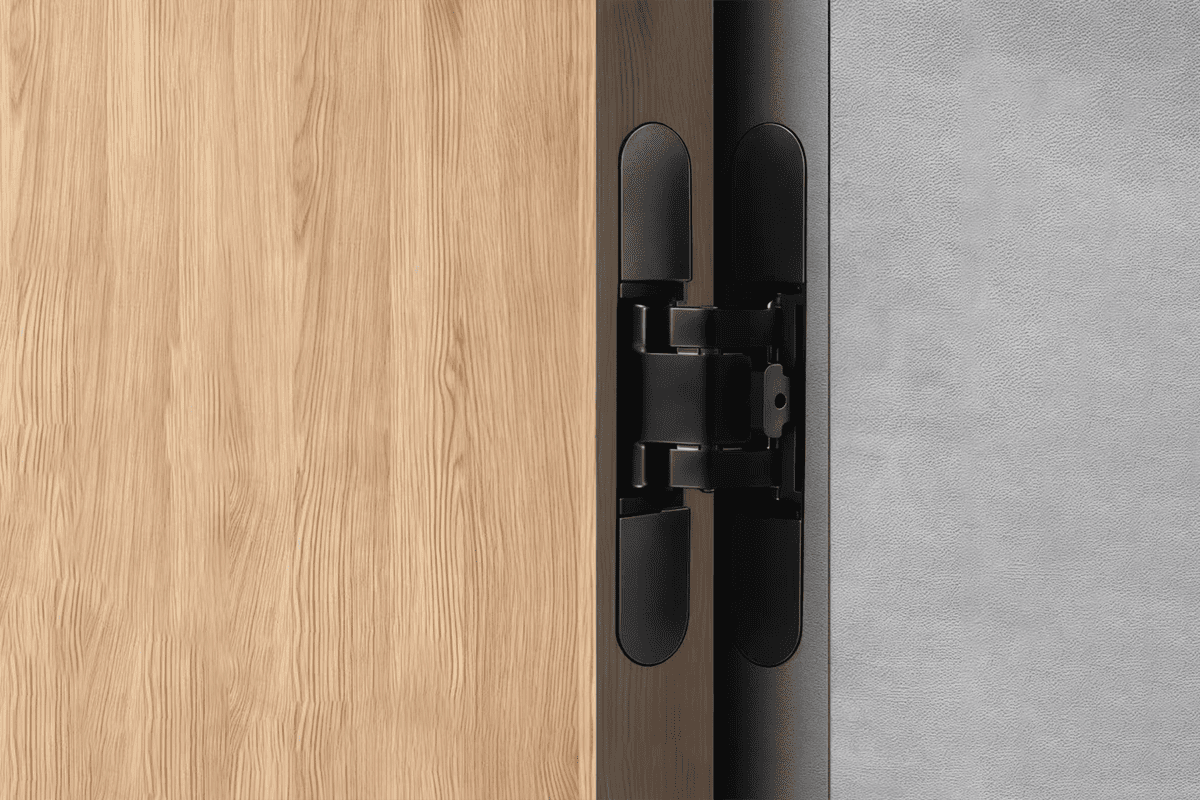
A heavy door needs hinges that can carry the door mass over time. In many commercial settings, stainless steel butt hinges are common because they offer durability and corrosion resistance. Concealed hinges may also be used when the design requires a cleaner appearance or better tamper resistance5, but they must be selected according to door weight and usage.
Door closers support controlled closing
A door closer does not usually stop forced entry by itself. However, it supports security by helping the door return to the closed position after use. This is especially important for controlled-access areas and fire-rated commercial doors.
For applicable fire-rated doors, closers help keep the door normally closed, which supports fire compartmentation.6 I avoid making legal compliance claims because requirements vary by project and market. Still, from a hardware configuration point of view, a closer is often part of a complete commercial door set.
Buyers should consider:
| Closer factor | Why it matters |
|---|---|
| Door width and weight | Determines closing force selection |
| Traffic level | Affects durability needs |
| Opening angle | Impacts mounting and arm type |
| Fire-rated requirement | Requires verified documentation |
| [Hold-open function | May not be suitable for some fire-rated openings](https://fo.umich.edu/fosg/door-hold-open-devices/)%%%FOOTNOTE_REF_7%%% |
| Closing speed and latching speed | Helps ensure the latch engages properly |
A poorly adjusted closer can create problems. If it closes too fast, users may complain about impact and noise. If it closes too slowly, the door may remain open. If the latching speed is too weak, the latch may not engage. These are practical details, but they affect the real security of commercial doors every day.
Non-lock parts are still security parts
I like to explain commercial door security with a chain example. The cylinder may be the most technical part, and the mortise lock may be the strongest hidden part. But the handle, hinge, closer, door leaf, frame, and installation all form links in the same chain.
A complete commercial hardware set should be evaluated as a system:
- Cylinder controls access
- Mortise lock secures the edge
- Handle operates the latch reliably
- Hinges carry and align the door
- Closer returns the door to closed position
- Strike plate receives the latch and deadbolt
- Frame supports the locking points
- Installation determines final performance
This is why I recommend that B2B buyers avoid choosing parts only by unit price. The cheaper item can become expensive when it causes claims, delays, replacements, or brand damage.
How should buyers evaluate a security feature on commercial doors?
Commercial doors are specified by many people, including door factories, importers, brand owners, contractors, and project consultants. If the evaluation process is unclear, buyers may receive mismatched parts, incomplete certificates, or hardware that looks acceptable but fails in daily use.
Buyers should evaluate a security feature on commercial doors by reviewing the complete hardware set, not just one device. They should check standards, materials, compatibility, test documents, installation requirements, production consistency, and supplier capability. For project-specific decisions, qualified professional review is still recommended.
Start with the door type and project use
Before choosing hardware, I usually ask buyers to define the door. This avoids many mistakes later.
Important starting questions include:
- Is the door wood, steel, aluminum, or fire-rated?
- Is it an interior or exterior door?
- Is it used in a public area or a restricted area?
- How many cycles or users are expected?
- Is key access, master keying, or electronic access control required?
- Is the market asking for CE, fire-rated, or other certification documents?
- Does the buyer need OEM branding, logo marking, or special packaging?
These details affect every part of the configuration. For example, a door factory producing fire-rated steel doors may need a different hardware package than a wholesaler supplying general interior doors.
Check the standards, but read the details
Standards are useful, but buyers should not treat them as a shortcut. A certificate should match the product model, size, material, and application.
Common reference standards include:
| Hardware item | Common standard reference | What buyers should verify |
|---|---|---|
| Euro cylinder | EN 1303 | Grade, attack resistance, key security, model match |
| Mortise lock | EN 12209 | Durability, security classification, fire suitability if needed |
| Lever handle | EN 1906 | Grade, material, cycle performance, fixing method |
| Hinges | EN 1935 | Load capacity, durability, corrosion resistance, fire suitability |
| Door closer | Relevant closer standards and fire documents | Closing force, cycle testing, fire-rated documentation |
I recommend buyers ask for:
- Test reports
- Certificates
- Product drawings
- Material specifications
- Installation instructions
- Finish samples when needed
- Production sample approval
- Final inspection records for bulk orders
At SDH Hardware, we often provide drawings after order confirmation and inspection service after production completion. This helps buyers reduce mismatch risk before shipment.
Compare supplier capability, not only price
For B2B hardware sourcing, supplier selection is part of security evaluation. A good sample means little if mass production is inconsistent. I always encourage buyers to review the manufacturer’s full process.
Useful supplier evaluation points include:
Production experience
A factory with long-term door hardware focus is more likely to understand compatibility between cylinders, locks, handles, hinges, and accessories.Product range
A one-stop supplier can reduce mismatch risk across the door set.Quality control process
Raw material inspection, production supervision, and finished product inspection should be clear.Testing equipment
Function testing, frame detection, cycle testing, and final checks support consistency.Customization ability
OEM and ODM support matters for hardware brands and door factories.Document support
Buyers should be able to request certificates, drawings, packaging details, and inspection reports.Export market experience
Suppliers with experience in Europe, the Middle East, and Southeast Asia may better understand regional preferences.
Evaluate the complete hardware package
A practical commercial door hardware package may include:
- Euro mortise lock
- Euro profile cylinder
- Stainless steel lever handle
- Butt hinges or concealed hinges
- Door closer
- Strike plate
- Escutcheon or rosette
- Screws and accessories
- Optional door accessories
A buyer should check whether these parts are compatible in dimension and function. For example:
- The cylinder length must match the door thickness and trim.
- The spindle size must match the lock follower.
- The handle spring must match the lock mechanism.
- The hinge load rating must suit the door weight.
- The closer force must suit the door width and usage.
- The strike plate must align with the latch and deadbolt.
- Fire-rated doors require verified compatible hardware documents.
When I review a hardware schedule, I look for these small connections. They often decide whether a door feels solid after installation.
Position access control correctly
Access control is valuable. I am not against electronic systems at all. Many commercial buildings need card readers, electric strikes, magnetic locks, smart cylinders, or networked systems.
However, the key point is simple:
Electronic access control manages permission. Mechanical hardware provides physical resistance.
A door can have advanced access control and still fail if the lock case is weak, the cylinder is exposed, the hinges sag, or the closer does not latch the door. Buyers should evaluate both sides together.
For many commercial doors, a balanced configuration may combine:
- Certified mechanical cylinder
- Durable mortise lock
- Commercial-grade handle
- Proper hinges
- Correct closer
- Electric strike or access control device, if needed
- Verified installation details
This balanced approach is usually safer than choosing one “advanced” device and ignoring the rest of the hardware.
Frequently Asked Questions
Is access control the most common security feature on commercial doors?
Access control is common, but it is not the baseline physical security feature. The mechanical lock system is usually the core security feature on commercial doors. Access control manages who is allowed to enter, while cylinders, mortise locks, hinges, and closers support physical resistance and reliable operation.
What standard should I check for commercial door cylinders?
For Euro profile cylinders, buyers commonly check EN 1303. This standard helps compare durability, key security, and attack resistance classifications. Buyers should verify that the certificate or report matches the exact cylinder model, size, and configuration being supplied.
Why is a mortise lock important for commercial doors?
A mortise lock is important because it forms the main locking body inside the door edge. It controls latch and deadbolt engagement with the frame. For commercial use, EN 12209 mortise locks are often specified because the standard helps buyers compare durability and security-related performance.
Do hinges affect commercial door security?
Yes. Hinges affect alignment, load support, and long-term operation. If hinges sag, the latch and deadbolt may not engage correctly. Buyers commonly refer to EN 1935 when evaluating hinge load capacity, durability, corrosion resistance, fire suitability, and security performance.
Are fire-rated commercial doors secured differently?
Fire-rated commercial doors often require compatible hardware, including locks, hinges, handles, and closers with verified documentation. Door closers help applicable doors return to the closed position, which supports fire compartmentation. Final requirements should always be verified by project, market, and qualified professionals.
Conclusion
The most common security feature on commercial doors is not one smart device. It is the complete mechanical locking and hardware system, led by the cylinder and mortise lock, then supported by handles, hinges, closers, frames, and correct installation. Electronic access control can improve entry management, but physical security still depends on reliable hardware. If you need a certifiable, factory-direct commercial door hardware configuration, I can help you review cylinders, mortise locks, handles, hinges, closers, and accessories for your target market.
"Physical security", https://en.wikipedia.org/wiki/Physical_security. General encyclopedic references on locks and access control describe locks as the fundamental physical barrier on doors, while access control governs authorization; this context supports the article’s framing of mechanical door hardware as the baseline security feature. Evidence role: general_support; source type: encyclopedia. Supports: That locks provide the primary physical security mechanism for doors and access control systems manage authorization rather than structural resistance.. Scope note: The source provides conceptual context but does not quantify “most common” usage rates across commercial installations. ↩
"Access control", https://en.wikipedia.org/wiki/Access_control. Encyclopedic overviews explain that physical access control technologies operate in tandem with mechanical door locks and that authorization and physical resistance are distinct aspects of door security, supporting the article’s role separation. Evidence role: general_support; source type: encyclopedia. Supports: That access control systems manage authorization and are typically used alongside mechanical locking hardware that provides physical resistance.. Scope note: This is a conceptual description; it does not evaluate specific products or certification requirements. ↩
"Pin tumbler lock", https://en.wikipedia.org/wiki/Pin_tumbler_lock. Encyclopedic entries on Euro profile cylinders describe their standardized form factor for European lock cases and common use with interchangeable and master-keyable systems, supporting the general rationale for their prevalence. Evidence role: general_support; source type: encyclopedia. Supports: That Euro profile cylinders are standardized components commonly used in European-style locks, enabling interchangeability and varied keying configurations.. Scope note: Prevalence varies by region and building type; the source provides general context rather than market share data. ↩
"Locks and Associated Hardware", https://www.securedbydesign.com/guidance/standards-explained/locks-associated-hardware. Professional guidance from locksmithing and crime-prevention institutions cautions that cylinders projecting beyond protective hardware increase the risk of forcible attack (e.g., snapping), supporting the article’s warning about excessive projection. Evidence role: mechanism; source type: institution. Supports: That professional security guidance advises minimizing cylinder projection to reduce susceptibility to attacks such as snapping.. Scope note: Recommendations may be region-specific and focused on Euro-profile cylinders; they are best interpreted alongside local standards and installation practices. ↩
"Types, Parts, and Requirements of Concealed Hinges", https://www.iqsdirectory.com/articles/hinges/concealed-hinge.html. Encyclopedic descriptions of concealed hinges note that their components are hidden when the door is closed, which reduces external access to hinge parts compared with exposed designs and supports the article’s statement about tamper resistance in principle. Evidence role: mechanism; source type: encyclopedia. Supports: That concealed hinges are not externally visible when the door is closed, reducing opportunities for external manipulation compared to exposed hinge knuckles.. Scope note: Concealment alone does not equate to a tested security grade; suitability depends on specific hinge design and door application. ↩
"Fire safety: Approved Document B", https://www.gov.uk/government/publications/fire-safety-approved-document-b. Government building guidance on fire safety states that fire doors must be self-closing to maintain compartmentation, which indicates that door closers serve to keep applicable doors closed under normal conditions and supports the article’s point. Evidence role: mechanism; source type: government. Supports: That fire safety regulations require or endorse self-closing fire doors to maintain compartmentation, implying the role of closers in keeping doors closed.. Scope note: Requirements vary by jurisdiction and door type; local codes and specific certifications should be consulted for project decisions. ↩
"Door Hold Open Devices - Facilities and Operations", https://fo.umich.edu/fosg/door-hold-open-devices/. NFPA standards specify that fire door hold-open devices must release automatically upon fire detection or alarm activation, supporting the caution that general hold-open functions are not suitable for many fire-rated openings unless code-compliant. Evidence role: definition; source type: institution. Supports: That fire door standards permit hold-open devices only when they are automatically released by approved fire detection or alarm systems.. Scope note: Adoption and enforcement of NFPA provisions depend on local jurisdictions; equivalent requirements may be specified in other regional codes. ↩
