
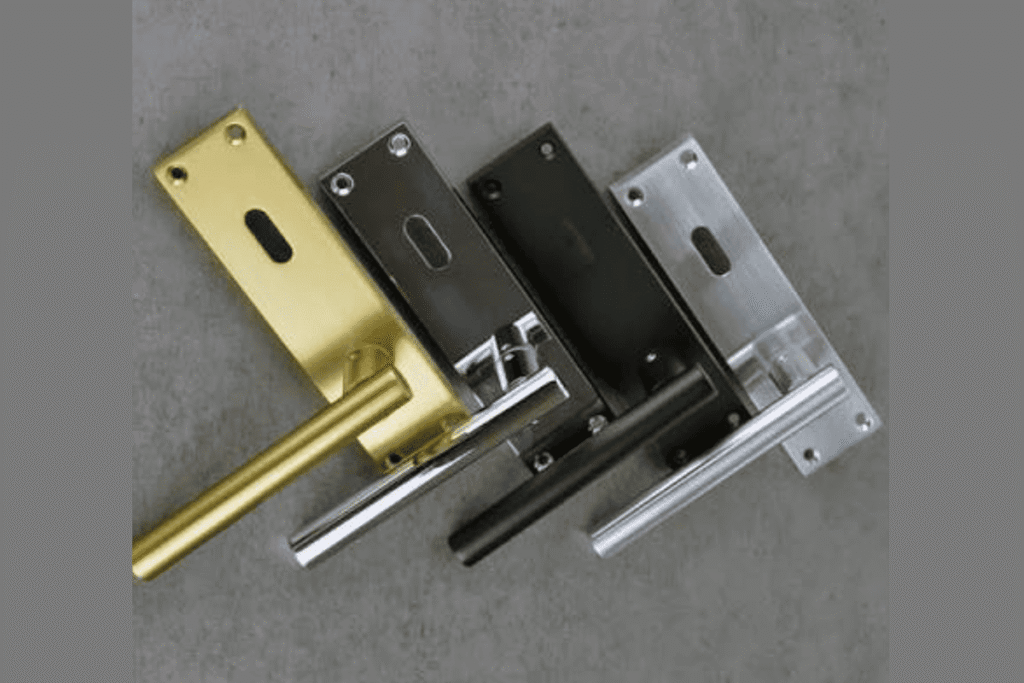
Which Lever Handle Is Suitable for Fire-Rated Doors?
A lever handle for fire-rated doors is often chosen on looks or price alone. That creates problems when certificates, corrosion resistance, and lock compatibility do not line up. The risk rises on escape routes. The solution is a system-level choice: material, geometry, EN 1906 performance, and documented compatibility with the tested fire door assembly.
The best lever handle for fire-rated doors combines 304-grade stainless steel, a rounded U-shaped return-to-door geometry for safe egress, EN 1906 heavy-duty classification, and proven compatibility with the lock, spindle, fixing method, and door thickness listed in the fire test evidence. Always verify documents against the project’s approval scope before procurement.
There is more to the answer than a material label or a style name. Below, I walk through what we check in real projects — from stainless steel grades and U-shaped safety, to EN 1906 reading, to lock-and-spindle matching — so you can de-risk your specification.
Why does material matter for a lever handle for fire-rated doors?
Many buyers assume “stainless” equals suitable. In reality, different grades age very differently, and coatings can hide weak substrates. In high-traffic, high-temperature, or coastal jobs, poor material choices corrode, loosen, and fail documentation checks. We prioritize base metal first, and finish second, to protect both performance and compliance.
A 304 stainless steel lever handle for fire-rated doors is generally the proven baseline for durability, corrosion resistance, and stability.1 It does not make a handle automatically fire-rated. But it gives a stronger foundation for EN 1906 performance and long-service projects. For marine or heavy chemical exposure, upgrade to 316 stainless and specify high corrosion resistance.
What we evaluate in material choice
- Base metal grade affects corrosion, mechanical strength, and lifecycle.
- Finish chemistry affects scratch resistance and color stability under heat.
- Sub-components (spindle sleeve, springs, screws) must also resist heat and fatigue.
Stainless steel grades at a glance
- 201 stainless: Lower nickel; cheaper, but weaker corrosion resistance.2 We avoid it for demanding fire-rated door projects.
- 304 stainless: Balanced cost-performance. Reliable corrosion resistance in most buildings. Our default for commercial interiors and exteriors away from sea spray.
- 316 stainless: Molybdenum added. Best for coastal or aggressive environments.3
Typical finish paths
- Satin stainless (SSS): Brushed 304/316. No plating to blister in heat cycles. Low-maintenance.
- PVD on stainless: Durable colors (e.g., black, bronze, gold) deposited in vacuum. Better abrasion and corrosion resistance than wet plating.4
- Electroplated over brass/zinc: Can be attractive, but substrate and plating integrity under heat, humidity, and high-touch use must be validated.
I once reviewed a hotel job near a coastline where a plated zinc lever looked fine in the catalog but showed pitting in mock-up within weeks. We switched to 316 stainless PVD. Corrosion complaints disappeared, and the EN 1906 corrosion class target was easier to meet. Material realism saves rework.
Procurement tips
- Request material certificates or grade declaration on drawings and POs.
- Ask for salt-spray/corrosion resistance class (per EN 1670, typically Grade 3 or 4 for projects).
- Inspect samples: magnet test (not definitive), surface uniformity, and edge finishing. Use XRF only if available to verify composition.
Is a U-shaped lever handle safer for emergency egress?
In panic or smoke, sharp corners and protrusions become hazards. I often see sleek but angular levers specified for corridors that double as escape routes. That raises snagging and injury risks when people move fast. A rounded, return-to-door shape reduces catches and guides the hand naturally.5
Yes. For escape doors, a U-shaped stainless steel lever with a return-to-door design is safer. The geometry eliminates sharp ends, lowers snagging on clothes or bags, and improves grip in a rush. Pair it with an appropriate escape lock and verify the door assembly’s tested configuration for emergency use.

Why geometry matters on fire doors
- Rounded profiles guide the hand even with poor visibility.
- Return-to-door ends reduce protruding edges that can snag.
- Adequate lever length and grip diameter reduce the torque needed to unlatch.
Practical geometry guidelines
- Return-to-door end: Aim for a smooth U-shape that points back toward the door face.
- Length: 130–145 mm typically balances torque and door clearance.
- Grip diameter: 19–22 mm suits most hands and improves control with gloves.
- Projection: Keep within code allowances for escape routes to avoid obstructing passage.
- Springing: A well-sprung lever returns to horizontal to signal a ready-to-use handle.
For escape applications, also confirm the lock function: many European projects rely on EN 179 (emergency exit devices using a lever handle) or EN 1125 (panic exit devices using a horizontal bar).6 If the door must satisfy these, the handle style, lock, and door assembly must match the tested configuration. A comfortable U-shaped lever helps, but compliance stems from the whole system.
Does EN 1906 mean a lever handle for fire-rated doors is approved?
I often get asked for “an EN 1906 handle for fire doors.” That phrasing blends two distinct approvals: lever performance versus door fire rating. EN 1906 is crucial for handle durability and strength, but it is not a door fire certificate. Buyers should read both sets of documents.
No. EN 1906 certifies lever handle performance (durability cycles, strength, security/torque, and corrosion resistance).7 It does not by itself approve the door as fire-rated.8 Use EN 1906 to select heavy-duty lever hardware, then verify that your exact handle is listed as suitable within the door assembly’s fire test evidence and local approvals.
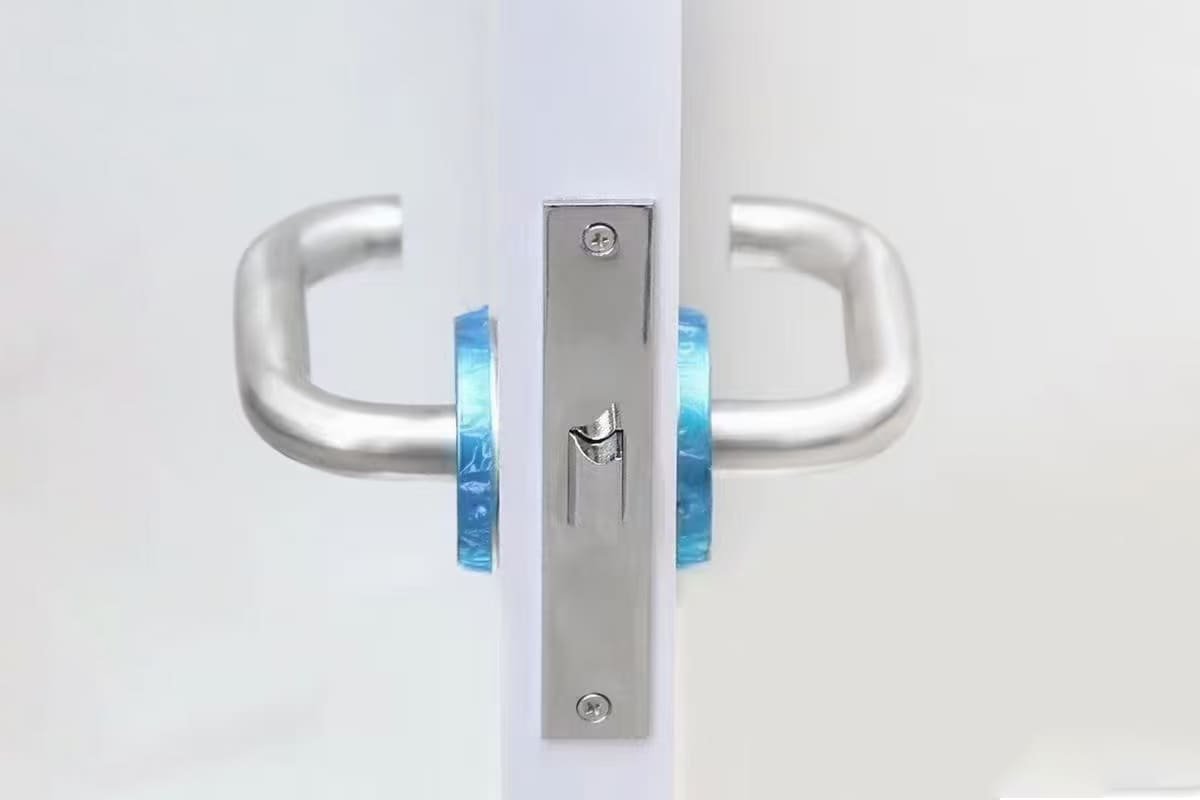
How to use EN 1906 correctly
EN 1906 assigns grades across several categories.9 The report helps you compare lever families on:
- Category of use (light to severe duty)
- Durability (cycle count)
- Door mass suitability
- Fire/smoke door suitability indicator
- Safety and torque performance
- Corrosion resistance (aligned with EN 1670)
- Security aspects
What to target for commercial fire-door projects
- Category of use: Grade 3 or 4 for high traffic.
- Durability: High cycle count suitable for heavy duty (e.g., 200,000+ cycles).10
- Corrosion: Grade 3 or 4 for aggressive environments or exterior use.
- Fire/smoke suitability: Look for the indicator showing suitability on fire/smoke doors in the EN 1906 classification.
- Construction: Metal-to-metal fixing, robust spring cassettes, and through-bolt capability.
Always request the original EN 1906 test report from an accredited lab. Confirm the lever’s model code on the report matches the product you are buying, including material, rose/backplate type, and spring cassette. Then, cross-reference that exact handle in the door manufacturer’s fire test evidence to avoid nonconformities in audits.
What system checks ensure a lever handle for fire-rated doors fits your lock?
A lever alone cannot guarantee compliance. Most issues we resolve come from mismatched spindles, unsprung locks with unsprung handles, or wrong through-bolt positions. System compatibility is the backbone of a reliable fire-rated door installation.
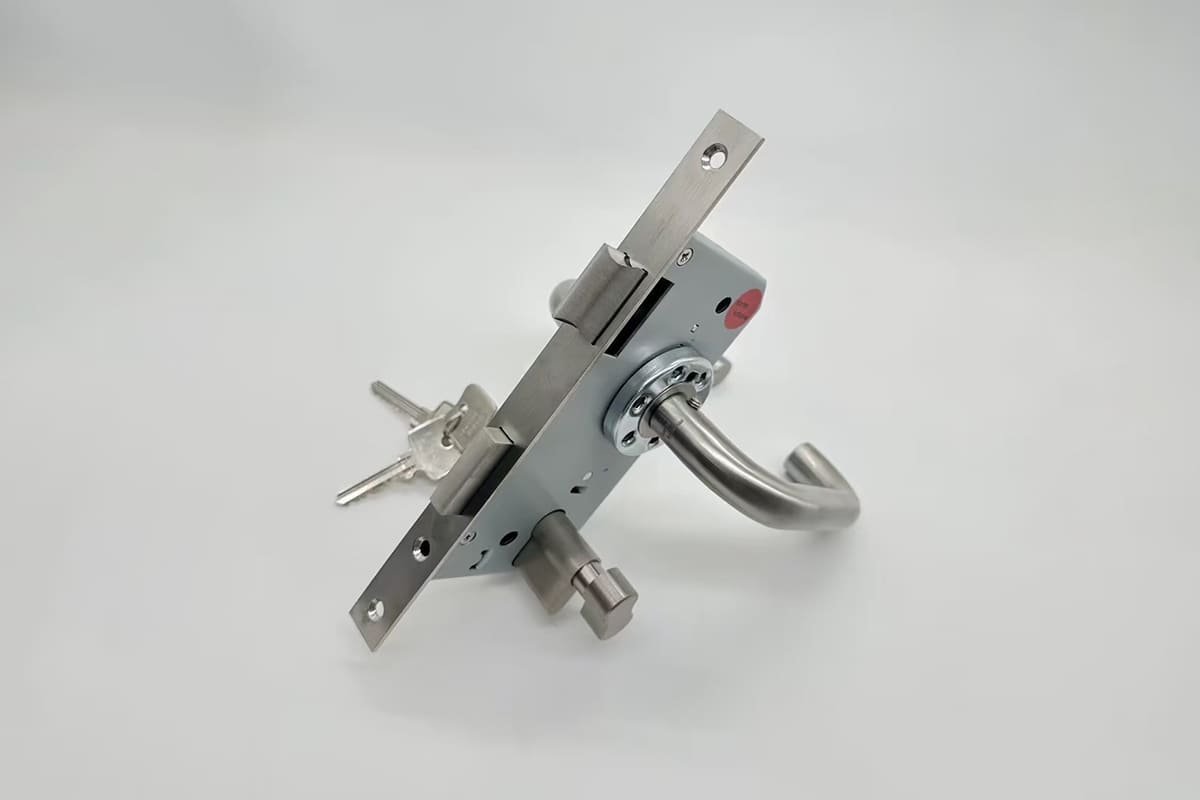
Verify the handle with the lockcase, spindle size, door thickness, fixing method, and hole pattern. For European projects, check the 8 mm spindle, backset and centers, through-bolt positions, and the lock’s fire rating. Test the exact assembly and confirm all components appear in the fire certificate’s scope.
The assembly checklist we use
- Lockcase: Fire-rated model with suitable function (passage, privacy, escape). Common European standards include EN 12209 for mechanical locks.
- Spindle: Typically 8 mm square in Europe. Match to lock follower. Confirm spindle length for door thickness.
- Springing: If the lock is unsprung, specify sprung levers to prevent droop and reduce latch wear.
- Fixing: Through-bolts across the door are preferred on fire-rated doors for strength and durability.
- Hole pattern: Align rose/backplate holes with lockcase through-fixing points.
- Door thickness: Ensure handle and bolts accommodate 38–60 mm or the actual site thickness.
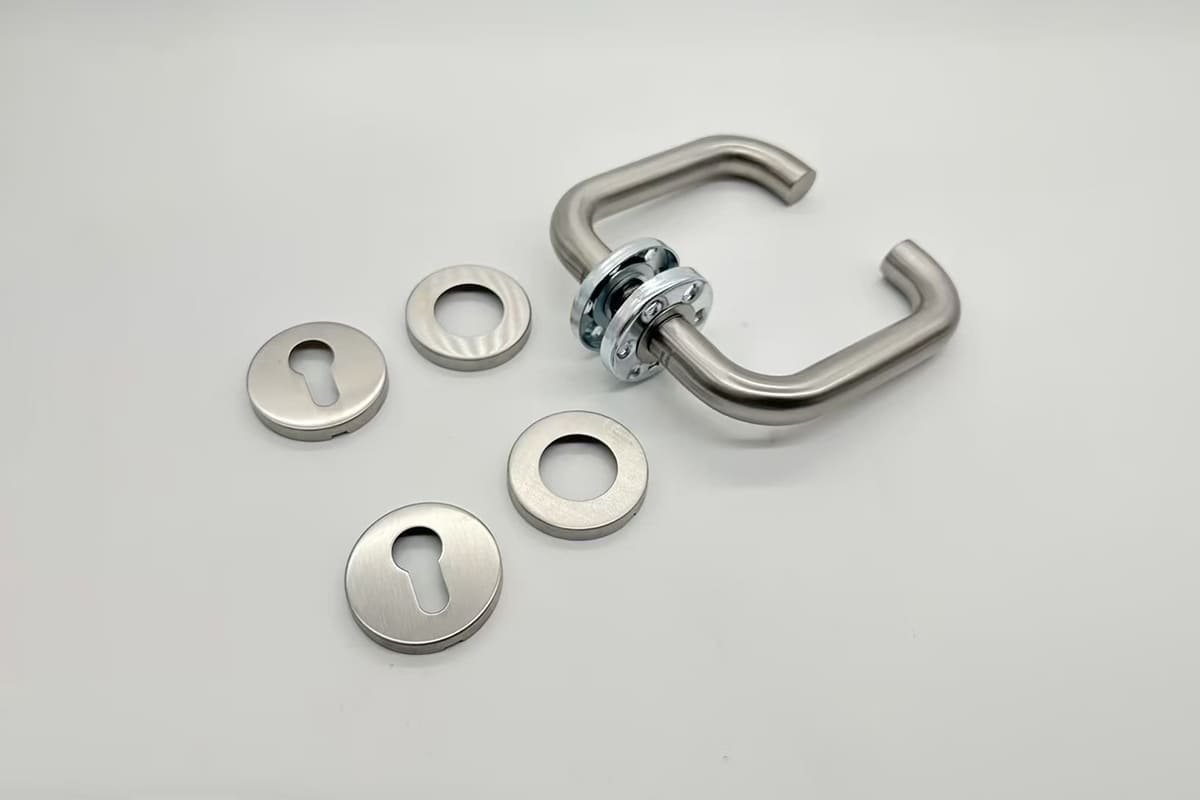
- Escutcheons/cylinders: Match Euro profile dimensions (e.g., 72 mm centers) and certification.
- Intumescent: Fit intumescent gaskets where required by the door certificate or local regulations.
Example dimension cross-checks
- Backset: 55 mm (example) — verify lever clearance from door frame and knuckle.
- Centers: 72 mm Euro profile (PZ) — align handle and cylinder.
- Through-bolt spacing: Match rose or plate drilling to lockcase template.
Run a mock-up installation on an offcut door leaf or jig. Measure lever return force, latch engagement, and any interference under door seals or intumescent. We perform this test before mass production to catch tolerances that drawings cannot reveal.
Which finishes and corrosion grades suit harsh environments?
A good lever can fail early with the wrong finish in the wrong environment. In coastal or chlorinated-air areas, low-grade plating blisters, and screws seize. I recommend selecting corrosion resistance as deliberately as you select geometry or lock function.
For harsh or exterior environments, pair a 304 or 316 stainless lever handle for fire-rated doors with a high corrosion resistance rating (e.g., Grade 4 per EN 1670).11 PVD finishes on stainless outperform most wet-plated options. Avoid lacquer-only protections where heat and UV are significant.
Matching environment to finish and grade
- Standard commercial interiors: 304 SSS (satin stainless) is reliable and low-maintenance.
- Coastal/high humidity: 316 stainless, uncoated or PVD, target corrosion Grade 4.
- Designer palettes: PVD colors on 304/316 provide durable aesthetics with strong abrasion resistance.
Finish selection table
| Environment/Use Case | Base Material | Finish Option | Target Corrosion Class | Notes |
|---|---|---|---|---|
| Offices, schools (interior) | 304 SS | Satin stainless (SSS) | Grade 3 | Balanced durability and cost |
| Hospitals, hotels (high touch) | 304 SS | PVD (black/bronze) | Grade 3–4 | Better scratch resistance and hygiene-friendly surfaces |
| Coastal/exterior | 316 SS | SSS or PVD | Grade 4 | Best defense against salt and humidity |
| Industrial/chemical exposure | 316 SS | SSS | Grade 4 | Verify against specific chemical agents |
Remember: finish or corrosion grade alone does not confer fire approval. Treat corrosion resistance as lifecycle assurance, and verify fire suitability through the door assembly’s certification.
How should buyers verify documentation and certificates for a lever handle for fire-rated doors?
Documentation gaps cause most procurement delays we see. A handle can be mechanically excellent but unusable if it is not recognized in the door’s certificate or local authority rules. A disciplined document review prevents rework and site disputes.
Collect the EN 1906 report, corrosion class evidence, and any fire/smoke suitability indication for the lever handle for fire-rated doors. Then, match the specific handle, lock, spindle, and fixings against the door assembly’s fire test evidence. Request drawings, installation instructions, and batch traceability for inspections.
A practical verification workflow
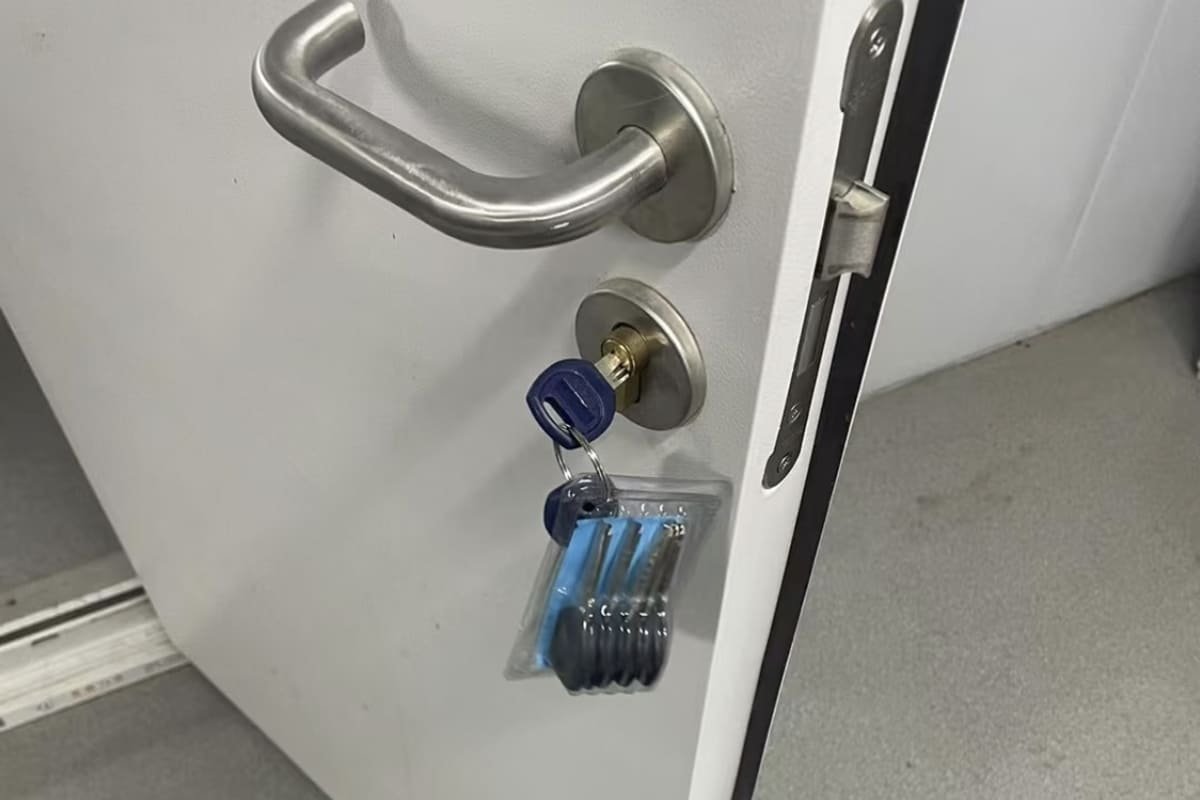
- Identify the door certificate owner (door manufacturer) and retrieve the fire test evidence and scope.
- List all hardware referenced: handle model, lock model, spindle, escutcheons, fixings, and any intumescent kits.
- Obtain the lever’s EN 1906 test report and confirm:
- Model name/code matches your product exactly
- Category of use, durability, and corrosion class meet project grade
- Fire/smoke suitability indicator is present if required
- Cross-check system compatibility:
- Lock standard and fire rating are correct
- Spindle size and through-bolt positions align
- Door thickness and hole pattern match
- Request manufacturer drawings, installation method, and QC checklist.
- For OEM/ODM changes (logos, finishes), document that such changes do not invalidate the certification scope.
- Keep records: batch numbers, production dates, and inspection reports for audits.
As a manufacturer, we prepare drawings upon order confirmation and provide inspection records after completion. Even then, I advise customers to run an in-house fit test on one door leaf and file photos with torque/functional notes. That small step simplifies later approvals.
Frequently Asked Questions
Does EN 1906 certification make a lever handle automatically suitable for fire-rated doors?
No. EN 1906 proves lever handle performance (durability, strength, corrosion, usage grade). Fire rating depends on the tested door assembly. Always check that the specific handle, lock, and fixings appear in the door’s fire test evidence and meet local project requirements.
Is 304 or 316 stainless better for fire-rated door lever handles?
304 stainless is the reliable, cost-effective default for most buildings. Choose 316 stainless in coastal, humid, or chemically aggressive environments due to its superior corrosion resistance. Either grade still requires EN 1906 performance evidence and fire-door assembly verification.
Can I use any lever shape on escape routes?
Prefer a U-shaped, return-to-door lever with rounded edges. It lowers snagging risk and improves grip during evacuation. Pair it with an appropriate escape lock and verify the entire configuration against EN 179/EN 1125 requirements as applicable and the door assembly’s fire evidence.
What spindle size do European fire-rated doors typically use?
Most European mortise locks use an 8 mm square spindle. Confirm follower size on the lockcase, door thickness, and the spindle length. Mismatch here causes loose operation or inadequate engagement, which is not acceptable on fire-rated doors.
Do I need intumescent gaskets under lever roses?
Follow the door manufacturer’s tested configuration. Some fire-rated assemblies require intumescent kits under roses or backplates to maintain integrity.12 If listed, they are mandatory. Use the specified kit and installation method to preserve the certificate.
Conclusion
The right lever handle for fire-rated doors is not only about style. It is a balanced decision across 304/316 stainless material, U-shaped egress-safe geometry, EN 1906 heavy-duty performance, and proven system compatibility with the lock, spindle, fixings, and certified door assembly. If you are evaluating a project, share your door certificate and hardware list with us. We will review, suggest compliant options, and supply drawings, samples, and documentation to de-risk your specification.
"304 vs 316 Stainless Steel: Differences, Corrosion, Cost & ...", https://www.ryerson.com/metal-resources/metal-market-intelligence/304-stainless-vs-316-stainless. A materials reference describes Type 304 stainless steel as an austenitic grade commonly used where general corrosion resistance and mechanical durability are required in ordinary atmospheric service. Evidence role: general_support; source type: institution. Supports: A neutral metallurgy or materials source should support that 304 stainless steel is widely used for general corrosion resistance and mechanical performance in normal atmospheric or building environments.. Scope note: This supports the material rationale generally; it does not prove that any specific lever handle is fire-rated or compliant. ↩
"201 Vs 304 Stainless Steel - What Is The Difference?", https://www.reidsupply.com/en-us/industry-news/201-vs-304-stainless-steel. A technical materials reference identifies Type 201 stainless steel as a lower-nickel austenitic grade and notes that its corrosion resistance is generally below that of Type 304 in comparable service conditions. Evidence role: general_support; source type: education. Supports: A university or technical materials reference should support that 201 stainless steel substitutes manganese and nitrogen for some nickel and is generally less corrosion-resistant than 304 in many environments.. Scope note: This is a general grade comparison and does not assess any particular manufacturer’s alloy control or finished hardware. ↩
"SAE 316L stainless steel", https://en.wikipedia.org/wiki/SAE_316L_stainless_steel. Materials guidance on austenitic stainless steels explains that the molybdenum content of Type 316 improves resistance to localized chloride corrosion, making it more appropriate for marine and aggressive environments than Type 304. Evidence role: mechanism; source type: institution. Supports: A materials source should explain that molybdenum in 316 stainless steel improves resistance to chloride-induced pitting and crevice corrosion compared with 304.. Scope note: The source supports corrosion-resistance selection, not fire-door approval of a finished hardware set. ↩
"PVD for Decorative Applications: A Review - PMC - NIH", https://pmc.ncbi.nlm.nih.gov/articles/PMC10381906/. Peer-reviewed coatings literature describes physical vapor deposition as a vacuum-based process and reports that hard PVD films can improve wear and corrosion performance of metallic substrates relative to uncoated or conventionally plated surfaces under tested conditions. Evidence role: mechanism; source type: paper. Supports: A peer-reviewed review or experimental paper should explain the PVD process and document wear or corrosion-resistance advantages of PVD coatings under relevant conditions.. Scope note: Performance depends on coating chemistry, thickness, substrate preparation, and test environment; the evidence is contextual unless the cited study tests the same finish system. ↩
"Chapter 4: Entrances, Doors, and Gates", https://www.access-board.gov/ada/guides/chapter-4-entrances-doors-and-gates/. Accessibility guidance for door hardware emphasizes operable shapes that can be used without tight grasping or hazardous protrusions, supporting the use of rounded lever geometry to reduce catching and improve usability. Evidence role: general_support; source type: government. Supports: A building accessibility or safety guidance source should support the principle that door hardware should be shaped to minimize catching, sharp edges, and difficult grasping during use.. Scope note: Such guidance supports the ergonomic rationale but may not specifically test U-shaped fire-door lever handles in smoke or panic conditions. ↩
"prEN 1125 - Panic Exit Devices Horizontal Bar ...", https://standards.iteh.ai/catalog/standards/cen/4ca1267a-5973-43a0-8535-f2bc84aa0b3c/pren-1125?srsltid=AYCX9vLNjJuRlVwgIrzjx13ia3Fce4IABRqcbHcxxWQUaoEfFACZ-J1T. A standards-body summary distinguishes EN 179 emergency exit devices, typically operated by a lever handle or push pad, from EN 1125 panic exit devices, which use a horizontal bar for operation in panic situations. Evidence role: definition; source type: institution. Supports: A standards-body summary should define EN 179 and EN 1125 and distinguish emergency exit devices from panic exit devices by operating hardware.. ↩
"EN 1906:2012 - Lever handles and knob furniture", https://standards.iteh.ai/catalog/standards/cen/98620aed-cd49-4257-aad1-4767b82e8c08/en-1906-2012?srsltid=AYCX9vKtzKiO1icSjcnCRbOae8OFzGXHlXq0LK6C3z2TS4fQGdV_ZRr-. A standards summary of EN 1906 states that the standard classifies lever handles and knobs for performance attributes including category of use, durability, fire and smoke door suitability, safety, corrosion resistance, security, and operating forces. Evidence role: definition; source type: institution. Supports: A standards source should support that EN 1906 classifies lever handles and knobs by performance characteristics including use category, durability, fire/smoke suitability, safety, corrosion, security, and operation.. ↩
"Doors, Windows and Related Hardware Application Guide", https://www.ul.com/thecodeauthority/knowledge/ul-fire-rated-doors-guide. Fire-door guidance describes fire resistance as an assembly-level property established by testing or assessment of the door leaf, frame, seals, and approved hardware configuration, so a handle performance certificate alone does not constitute fire-rating approval for the door. Evidence role: expert_consensus; source type: government. Supports: A government or accredited fire-safety guidance source should support that fire performance is determined for the tested door assembly and its approved components, rather than by isolated hardware performance alone.. Scope note: The exact legal route for approval varies by jurisdiction and project approval scheme. ↩
"DIN EN 1906 (Classification Key)", https://www.hoppe.com/us-us/door-handles/standards-and-solutions-door-handles/din-en-1906/din-en-1906-classification-key/. A standards summary of EN 1906 explains that lever furniture is classified through multiple graded categories covering use, durability, door mass, fire and smoke suitability, safety, corrosion resistance, security, and operating type. Evidence role: definition; source type: institution. Supports: A standards-body or technical standards summary should confirm that EN 1906 uses multiple classification digits or categories to describe lever-handle performance.. ↩
"BS EN 1906 – Lever Handle and Knob Furniture", https://www.hoppe.com/gb-en/contacts-service/standards/bs-en-1906/. Standards guidance on EN 1906 durability classification identifies high-use lever furniture by tested cycle counts, including classifications at approximately 200,000 operating cycles. Evidence role: general_support; source type: institution. Supports: A standards summary should support the durability-cycle levels used in EN 1906 classifications, including grades around 200,000 cycles.. Scope note: The cycle count indicates laboratory durability under the standard test method and does not predict exact service life in every installation. ↩
"Standards - BS EN 1670", https://www.aldridgesecurity.co.uk/standards-bs-en-1670. A standards summary of EN 1670 classifies corrosion resistance for building hardware and identifies Grade 4 as a high-resistance category established through standardized corrosion testing. Evidence role: definition; source type: institution. Supports: A standards-body or institutional source should define EN 1670 corrosion grades and identify Grade 4 as a high or very high corrosion-resistance category for building hardware.. Scope note: The standard grade indicates test performance, not immunity to all coastal, industrial, or chemical exposure conditions. ↩
"Fire Door Hardware UK: Hinges, Latches & Closers Guide", https://www.lovehandles.uk.com/blogs/articles/fire-door-hardware-uk-the-complete-guide?srsltid=AYCX9vIohRWpLknhmrct4uo2h8gF3lrA8XVcPS99oYLLaqHnWY8-hGXy. Fire-door installation guidance notes that hardware penetrations and ironmongery positions can require specified intumescent protection to maintain the tested fire-resisting performance of the door assembly. Evidence role: mechanism; source type: government. Supports: A fire-door installation or inspection source should support that penetrations and hardware areas may need intumescent protection when required by the tested assembly or installation instructions.. Scope note: The requirement is assembly-specific; the source supports the mechanism and compliance principle rather than proving that every lever rose or backplate needs an intumescent kit. ↩
