
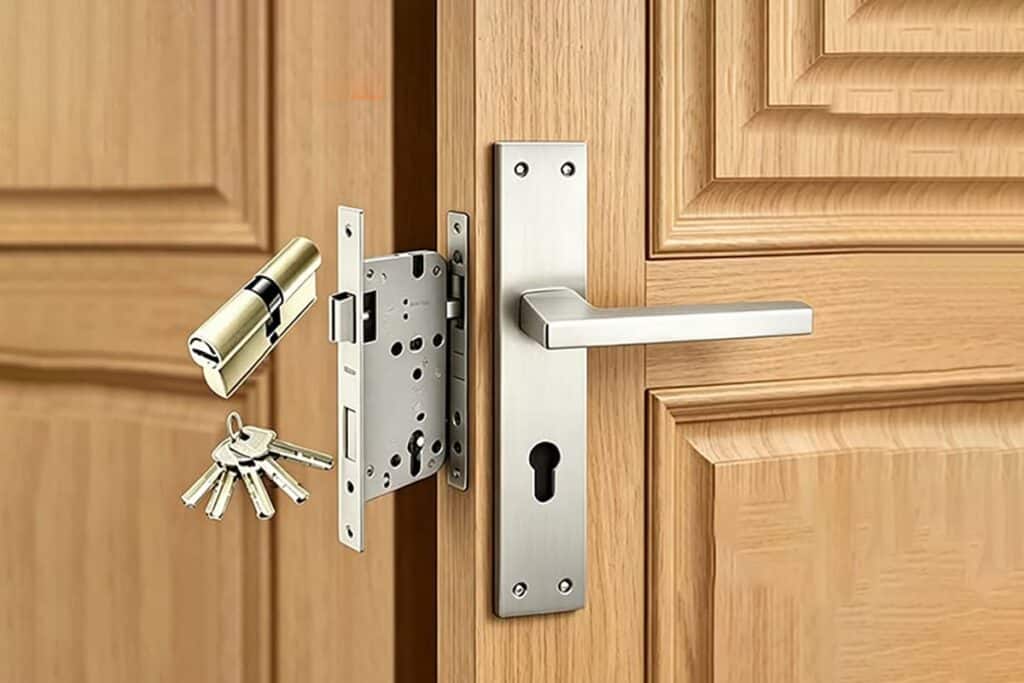
Square Corner vs Radius Corner Hinges and mortice lock front plate
Square Corner vs Radius Corner Hinges can become a silent cost driver in door projects when templates, jigs, and preps do not match. The wrong corner style slows installation, increases rework, and exposes edge finishes to chipping. The fix is simple: specify corner geometry early, align with door machining, and source hinges and mortice lock front plates that match.
Square Corner vs Radius Corner Hinges differ in their leaf-edge geometry, which dictates the door and frame prep. Radius corners install faster in routed wooden doors; square corners suit chiseled mortises or punched steel doors.1 Mortice lock front plates follow the same rule: pick square or radius corners to match door machining templates and certification needs.
You now know the headline answer. In the sections below, I break down how these corner styles impact machining time, tolerances, QC, certifications, and supplier selection. I also include practical tables and a procurement checklist you can share with your team.
What is the difference between square corner vs radius corner hinges for door projects?
Hinges look similar until you hit the corners. Square corners require perfectly squared mortises. Radius corners drop into routed pockets without chiseling. The choice affects cycle time, jig cost, and finish quality. Mismatched corners mean extra filing and paint touch-ups on site.
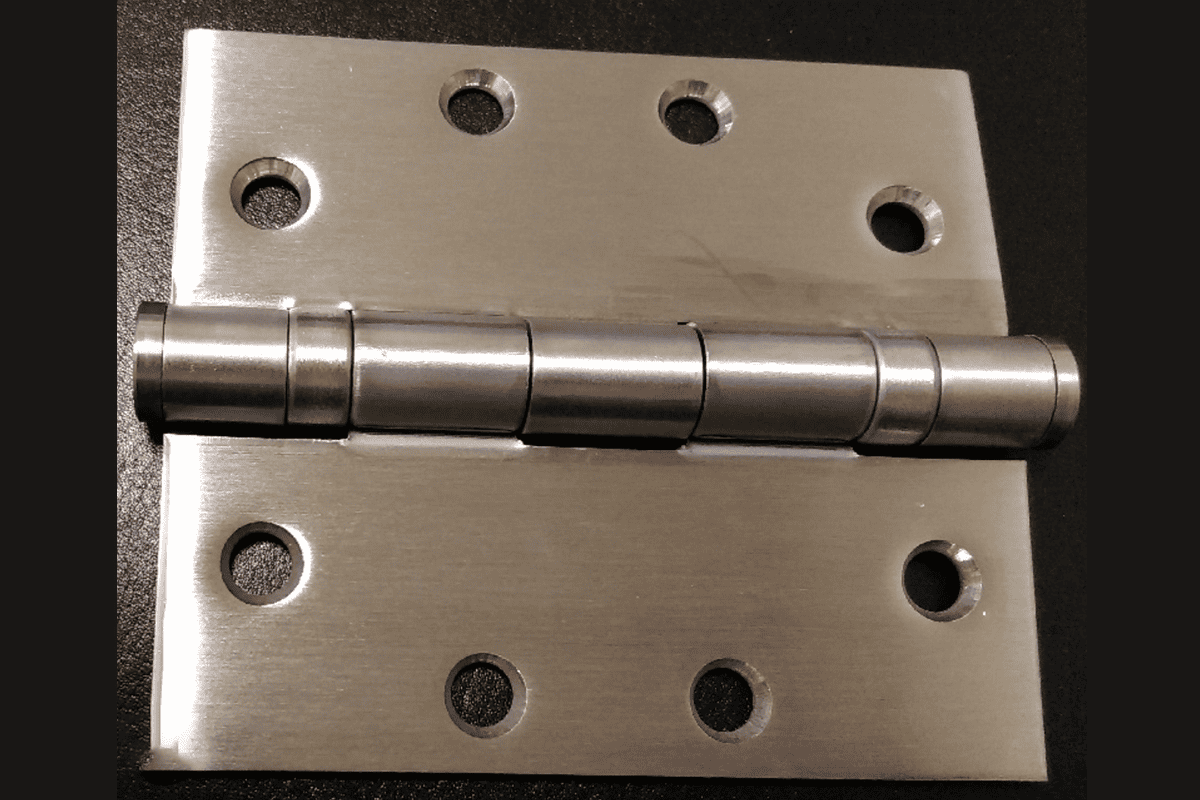
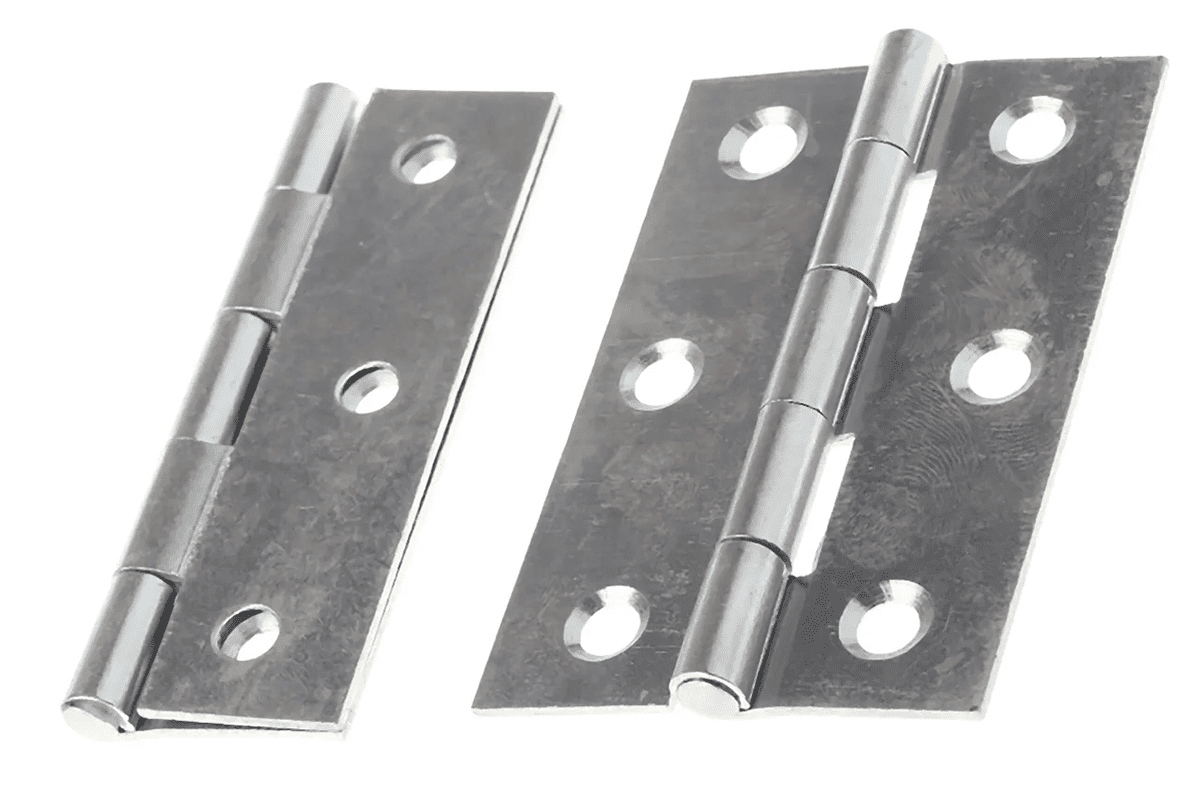
Square corner hinges have 90° leaf edges that require square mortises; radius corner hinges have rounded leaf edges (common radii include 1/4" and 5/8"2) that fit router-cut pockets. In wood doors, radius corners speed installation. In steel doors, either style works if the punch or prep matches.
Corner geometry and why it matters
- Corner geometry determines the mortise shape on both door and frame.
- Radius corners align with common router bits and factory CNC tooling.
- Square corners demand a chisel finish in wood, or a square punch in steel.
Common radii and naming
- North America: 1/4" radius (~R6 mm) and 5/8" radius (~R16 mm)
- Europe/ME: smaller radii such as R3–R5 mm are frequently specified on mortice lock front plates and hinges
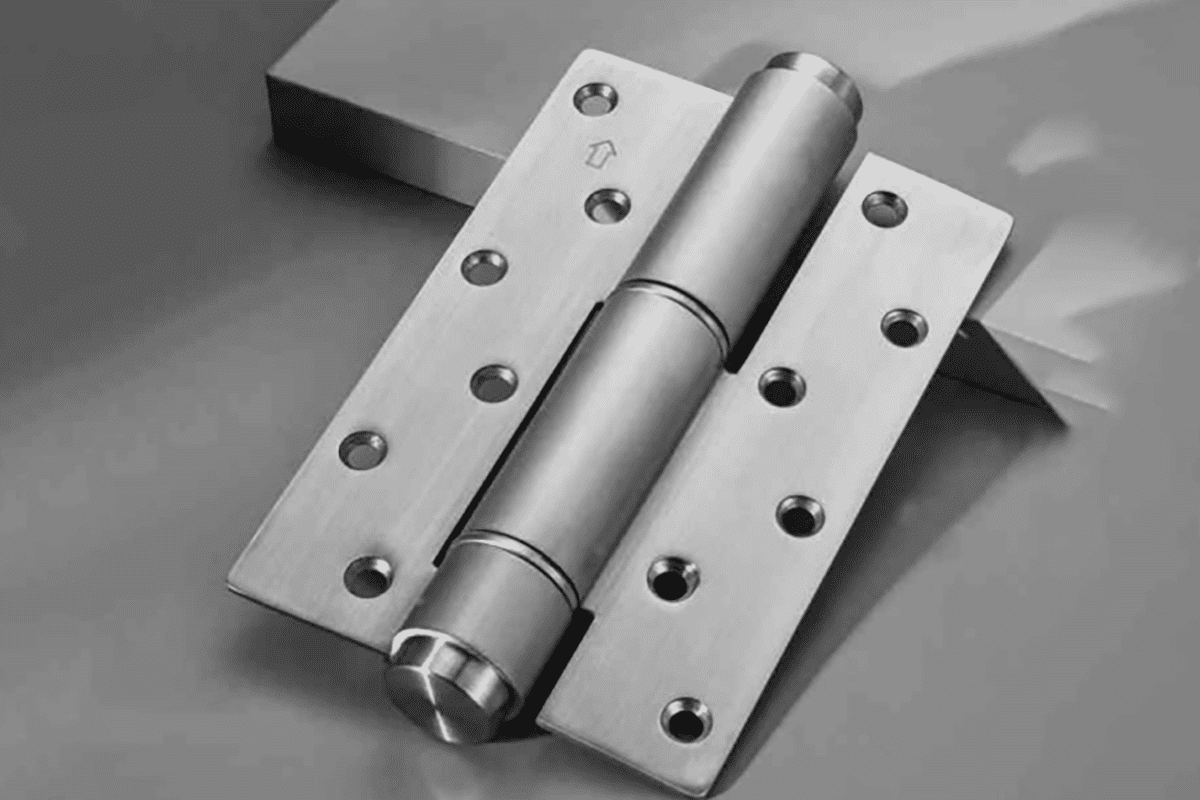
- Some “template hinges” in the ANSI/BHMA system standardize leaf and screw-hole patterns to match preps.3
Practical implications
- Cycle time: Radius corners can cut 1–3 minutes per hinge from manual chiseling in wood.
- Edge quality: Radius corners reduce chip-out on veneered or painted doors.
- Retrofits: Square-to-radius swaps (or vice versa) create visible gaps unless you sleeve or patch the mortise.
From my own production visits, the quickest prep I have seen in a high-volume wooden door line uses a 5/8" radius hinge paired with a CNC-routed mortise, zero handwork.
How does a mortice lock front plate interact with hinge corner styles?
When hinge corners and the mortice lock front plate geometry differ, the door edge looks inconsistent. Installers often overcut the neatest pocket to match the worst. That reduces bearing area and can void certifications on fire doors4.
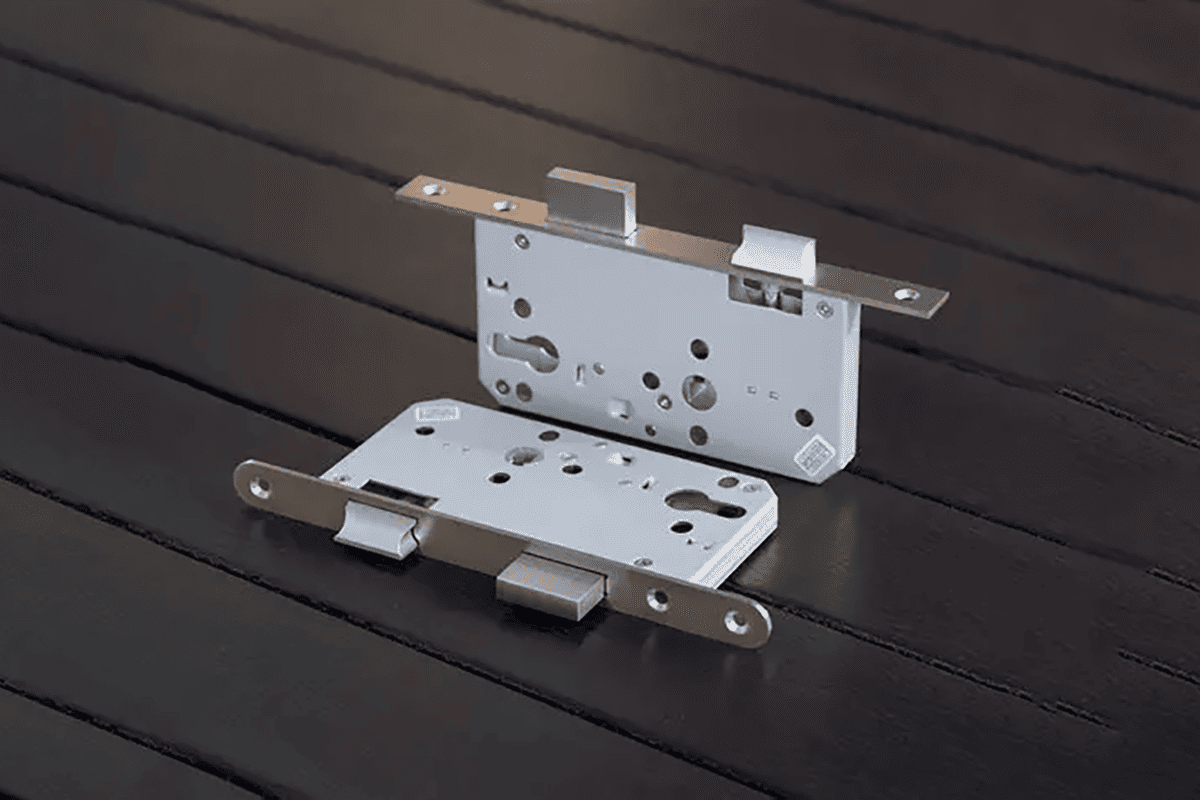
The mortice lock front plate (forend) should match the corner style used for hinges and the door-edge routing.5 Select a square or radius front plate to fit the same templates. This keeps edge lines aligned, speeds installation, and protects coatings on veneered or painted edges.
Key terms you will see in datasheets
- Forend/front plate: The visible faceplate on the door edge for a mortice lock.
- Rounded-end forend vs rounded-corner forend: Rounded ends are semicircular at top/bottom; rounded corners have radiused corners on a rectangular forend. Match your door templates accordingly.
- Common front plate thickness: 2.0–3.0 mm for architectural locks; verify with your door edge depth.
Fit and finish
- When both hinges and the front plate share the same corner spec, sightlines align.
- Square front plates on radius-milled door edges leave gaps at the corners.
- A mismatched mortise increases the risk of paint cracking during screw tightening.
At SDH Hardware, we offer mortice lock front plates in square corners, radiused corners (R3/R5 common), and rounded-end designs to align with regional templates. We provide detailed drawings upon order confirmation so your CNC programs and jigs match before the first production run.
圆角平合页和圆角面板的插芯锁通常用于木质门,安装时方便开槽。钢质门使用圆角或方角都可以。
When should I choose square corner vs radius corner hinges for wood vs steel doors?
Procurement teams often default to what their local market uses. That is fine until your doors come from a different factory. Think in terms of door material and machining method rather than habit or appearance.
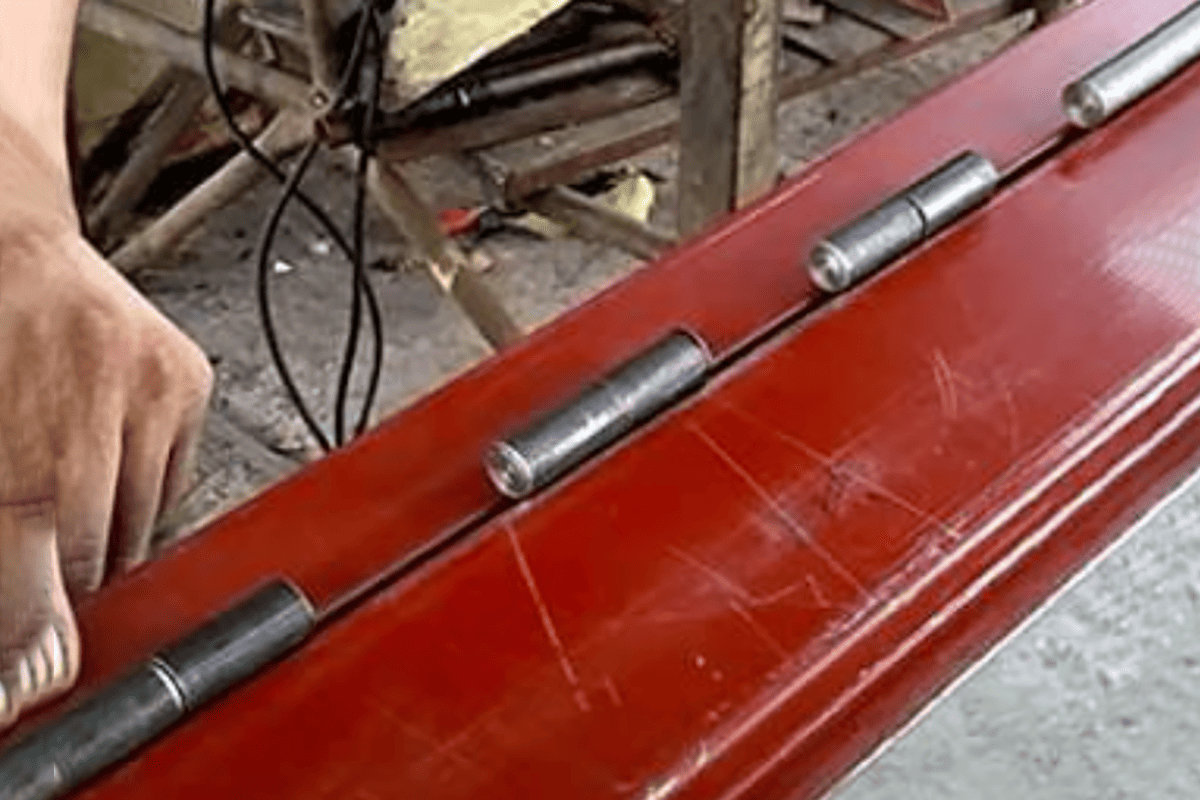
For wood doors, radius corner hinges install fastest because routers leave clean radiused pockets; square corners add handwork.6 For steel doors, both square and radius corner hinges work as long as your press tooling or edge prep matches. Choose one style across hinges and the mortice lock front plate.
Wood doors
- Best choice: Radius corner hinges and radius mortice lock front plates
- Why: Router/CNC preps, less chiseling, fewer edge chips on veneer
- Consider radii to match standard bits (e.g., 5/8" or 1/4" in the U.S.)
Steel doors
- Either style works: The prep is punched or laser cut7
- Ensure your hinge leaf and forend dimensions match the punch tool
- Watch burr control and surface treatment to avoid corrosion at edges
Mixed-material projects
- Hospitality and multi-family often mix steel frames and timber leaves.
- Decide a common corner spec at the schedule level. That solves installer confusion.
I learned the hard way on a hotel rollout: one floor used 5/8" radius hinges, the next had square corners. The rework killed the schedule. Since then, I lock the corner spec at the hardware set level.
Do square corner vs radius corner hinges affect machining, tolerances, and QC?
Yes, corner geometry touches critical tolerances for bearing, alignment, and edge finish. Production engineers and QC teams should treat corner style as a controlled attribute, not an aesthetic option.
Square corner vs radius corner hinges require different mortise geometry and tolerances. Radius corners are forgiving on wood because router bits are consistent. Square corners require precise chisel work or square punches. QC should verify leaf dimensions, radius accuracy, and door-edge mortise conformity.
Tolerance hotspots
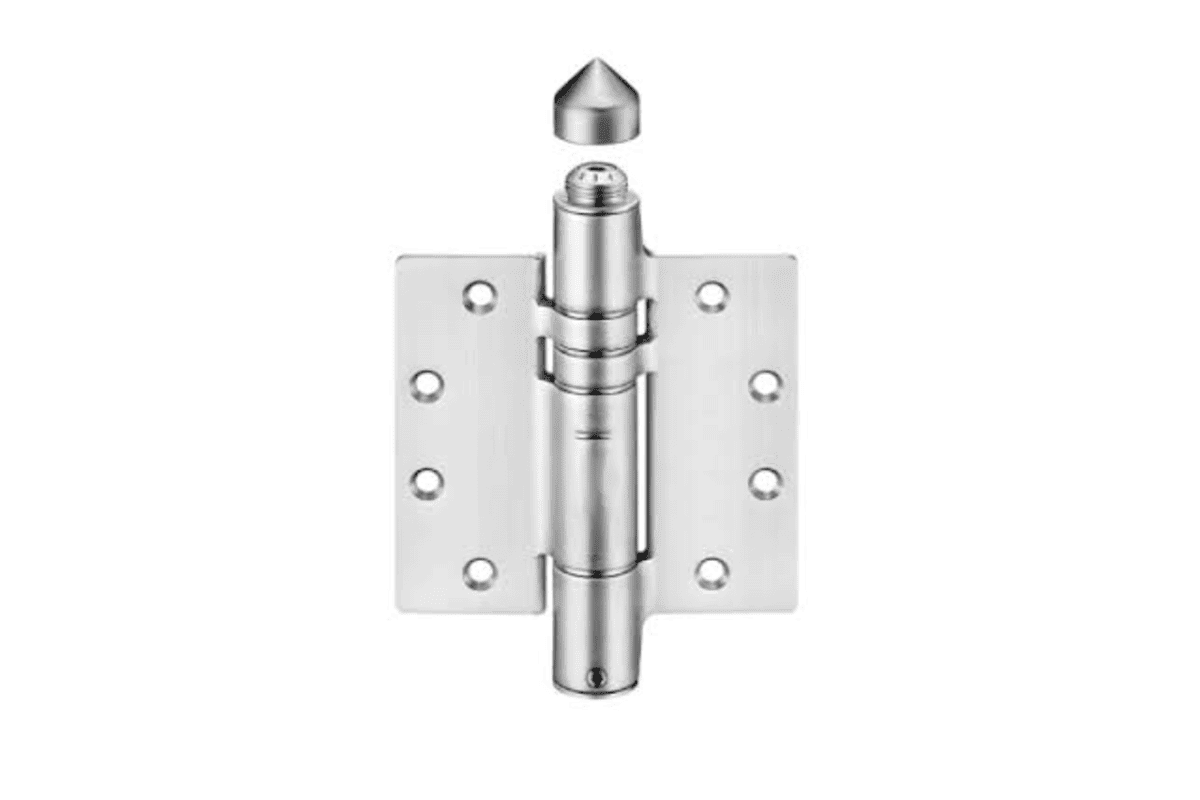
- Leaf thickness tolerance (e.g., 2.5 ± 0.1 mm) impacts flushness.
- Corner radius tolerance (±0.3–0.5 mm) affects seating in routed pockets.
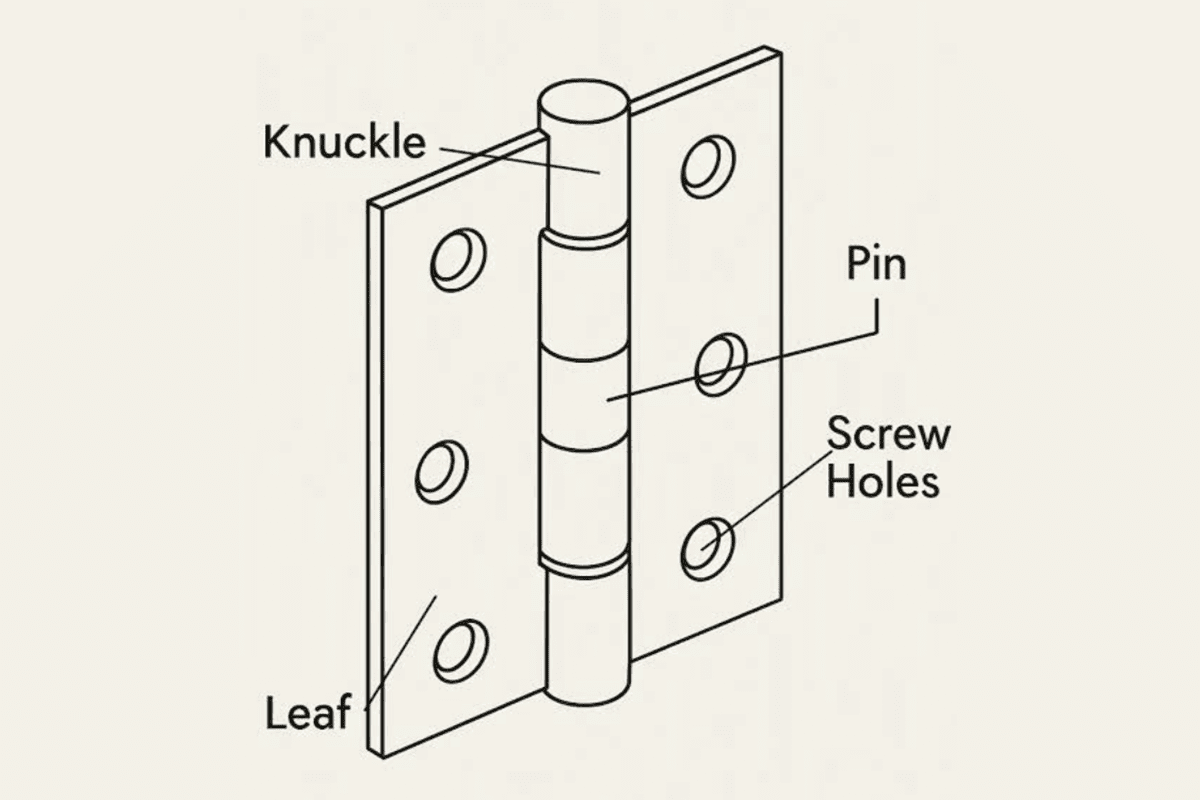
- Knuckle to leaf setback must match template hinge data (ANSI or EN).
QC checklist
- Verify corner radius with radius gauges or a template plate.
- Measure leaf height/width and hole pitch; cross-check against door CNC program.
- Inspect burrs at corners on stamped leaves; require complete deburring.
- Confirm forend (front plate) corner style matches the hinge corner style in the bill of materials.
Process capability
- Radius leaves from progressive dies yield consistent radii when tooling is maintained.
- Square corners demand perfect shearing and post-process deburring.
- In wood, CNC routers can hold ±0.2–0.3 mm on mortise size; hand chiseling is far looser.8
At SDH Hardware, we run in-house stamping and CNC processes with routine tool maintenance. We test corner radii using go/no-go plates and conduct finished product inspection. Ask us for sample plates to validate your door preps before you cut production.
Do standards treat square corner vs radius corner hinges differently?
Standards focus on performance and dimensions, not aesthetics. However, “template” dimensions, fire tests, and CE marking tie geometry back to prep repeatability. Corner styles must be compatible with standardized hole patterns and door-edge integrity during testing.
Standards such as EN 1935 (hinges) and EN 12209 (locks) specify performance and dimensional envelopes.9 They do not mandate square or radius corners.10 For certified assemblies, corner styles must match tested door preps to maintain CE and fire-rated compliance. Always verify documentation.
Relevant standards and what to check
- Hinges: EN 1935 for single-axis hinges; look at grade, load, and durability cycles.
- Locks: EN 12209 for mechanically operated locks; confirm forend dimensions and tolerances.
- Fire tests: EN 1634 series; corner style should match the tested prep for the door leaf/species.11
Certification guidance
- CE marking confirms conformity to relevant EN standards; request the DoP (Declaration of Performance).12
- Fire-rated certifications are assembly-specific. Ask for test reports and field-applied conditions.
- In North America, ANSI/BHMA standards and UL fire listings apply similar logic.
As a manufacturer, we treat certifications as project-critical documents. We supply CE and fire-rated paperwork on request and advise buyers to verify listing scope for their exact door construction, hardware set, and corner styles.
How to evaluate suppliers for square corner vs radius corner hinges and mortice lock front plates?
Sourcing on price alone risks rework in the field. Evaluate a supplier’s ability to hold geometry, support multiple corner styles, and align with your door machining. This is where factory-direct partners save time.
Select suppliers who offer both square corner and radius corner hinges, matching mortice lock front plates, and documented QC. Verify tooling capability, sample templates, and CE/fire documents. Ensure they can customize radii, finishes, and packaging for your market and door machining practices.
Procurement checklist
- Geometry options: Square, 1/4", 5/8", R3, R5 radii; matching front plates
- Material and finishes: SS304/SS201, brass, plated steel; PVD, satin, mirror
- Tolerances: Leaf thickness, radius tolerance, hole pitch, knuckle alignment
- Samples: Provide hinge and forend plates for CNC validation
- Certifications: CE for hinges/locks; fire-rated documents for assemblies
- Capacity: Lead time, MOQ, and ability to scale
- OEM/ODM: Custom logos, packaging, drawings, and post-shipment inspection
Why factory-direct matters
SDH Hardware runs independent production lines and advanced testing machines from function research to final product testing. We offer:
- Full-category, one-stop sourcing across hinges, mortise locks, cylinders, and accessories
- Flexible customization of corner styles, radii, and surface treatments
- Branding services and detailed drawings to lock in your templates before you cut stock
I have seen projects recover weeks by aligning corner styles in pre-production. The small decisions save big time later.
Quick comparison tables
Hinges: square vs radius
| Attribute | Square Corner Hinges | Radius Corner Hinges |
|---|---|---|
| Typical use | Steel doors with square punches; traditional joinery | Wood doors with router/CNC pockets |
| Installation speed | Slower in wood (chiseling) | Faster in wood (drop-in) |
| Edge aesthetics | Crisp, architectural lines | Softer edge, reduced chip-out |
| Common radii | N/A | 1/4" (~R6), 5/8" (~R16), R3–R5 mm |
| Tolerance sensitivity | High on chiseling quality | High on radius accuracy |
| Retrofit risk | Leaves gaps in radius preps | Leaves over-cuts in square preps |
Mortice lock front plates: corner options
| Front Plate Style | Match With | Notes |
|---|---|---|
| Square-corner rectangular forend | Square corner hinges | Requires square mortise; crisp lines |
| Radius-corner rectangular forend | Radius corner hinges | Matches routed door edges |
| Rounded-end forend | Regional templates | Ensure door-edge template matches forend curvature |
Frequently Asked Questions
Do square corner vs radius corner hinges change load capacity?
No. Load capacity depends on hinge grade, material, knuckle design, and pin/bearing system. Corner style affects installation and fit, not structural rating. Always confirm hinge grade (e.g., EN 1935) and door weight/size compatibility in the datasheet and test reports.
What radius should I choose for routed wood doors?
Pick the radius that matches your router bit and template. In North America, 1/4" and 5/8" are common. In Europe and parts of Asia, R3–R5 mm radii appear on both hinges and mortice lock front plates. Request sample plates and confirm fit on your CNC or jigs.
Can I retrofit square corner hinges into radius corner preps?
You can, but expect visible gaps at the corners unless you square the pocket, sleeve it, or patch with filler and repaint. The cleanest retrofit keeps the same corner style. If a change is unavoidable, plan a matching template and repaint step.
Do CE and fire-rated certificates specify corner style?
Certificates cover product performance and often the tested door assembly. While they may not explicitly state “square” or “radius,” the door-edge prep is part of the tested specimen. Keep your corner style consistent with the tested configuration and verify documentation with your supplier.
Conclusion
Choosing between Square Corner vs Radius Corner Hinges is not just a cosmetic decision. It drives machining time, fit quality, and compliance. For wood doors, radius corners usually win on speed and finish; steel doors accept both if preps match. Align hinge corners with your mortice lock front plate, verify certifications, and lock the spec before production. If you want factory-direct support, CE-compliant options, and customized corner styles, contact SDH Hardware for samples, drawings, and an OEM/ODM quote today.
"How To Mortise Door Hinges Using a Router - WOOD magazine",
. A woodworking or architectural-joinery source explains that routed mortises have rounded internal corners determined by the cutter radius, whereas square-corner mortises require additional chiseling or dedicated tooling. Evidence role: mechanism; source type: education. Supports: The source should explain that rotating router bits naturally produce rounded internal corners, while square internal corners require hand chiseling or square tooling.. Scope note: This would support the machining mechanism and likely installation-time rationale, but it may not quantify the exact time saved for door-hinge installation. ↩"8541 4" Door Hinge Template - 5/8" Corner Radius", https://woodhaven.com/products/woodhaven-8541-4-hinge-jig-5-8-radius?srsltid=AYCX9vJU9kag48UqPDkO5HfxlP5j1QSx6CxadoOhxnYa4rvSLwWINsNx. An architectural-hardware standards or template reference identifies 1/4-inch and 5/8-inch as recognized radius-corner dimensions for door hinges. Evidence role: definition; source type: institution. Supports: The source should document that 1/4-inch and 5/8-inch are recognized radius-corner sizes in architectural hinge templates or hinge specifications.. Scope note: The source may establish recognized dimensions rather than proving their frequency of use across all North American projects. ↩
"A156.7 - 2022 Template Hinge Dimensions", https://buildershardware.com/ANSI-BHMA-Standards/Hardware-Highlights/A1567-2016-Template-Hinge-Dimensions. ANSI/BHMA template-hinge standards define dimensional relationships, including leaf and screw-hole patterns, intended to coordinate hinges with prepared doors and frames. Evidence role: definition; source type: institution. Supports: The source should define template hinges and show that standardized leaf and screw-hole dimensions are used to match door and frame preparations.. Scope note: Full standards may be paywalled, so publicly accessible summaries may provide contextual rather than exhaustive dimensional detail. ↩
"Alterations to Fire Door Assemblies", https://idighardware.com/wp-content/uploads/2014/10/Decoded-Dec14-Alterations-to-Fire-Doors.pdf. Fire-door inspection and listing guidance states that fire-door assemblies are evaluated as tested or listed configurations and that field modifications to hardware preparations must remain within permitted limits to preserve compliance. Evidence role: expert_consensus; source type: institution. Supports: The source should state that fire-door assemblies are certified or listed as tested and that unauthorized field modifications to hardware preparations may affect the listing.. Scope note: The source may not mention hinge-corner radius specifically; it supports the broader principle that altered door-edge preparations can affect fire-door certification. ↩
"What is Standard Door Preparation", https://www.directdoorhardware.com/standard-door-preparation.htm?srsltid=AYCX9vLpdTiqucmSQE-GFA8t26H4WutWqEJjkuQfqJI_x5fuqCIj53Zj. Architectural-hardware installation guidance describes mortice lock forends as components seated in door-edge mortises, making the forend shape dependent on the prepared pocket geometry. Evidence role: mechanism; source type: institution. Supports: The source should show that mortice lock faceplates or forends must fit the corresponding door-edge mortise preparation.. Scope note: This supports the fit requirement for the lock forend, but it may not directly address visual matching between hinges and lock plates. ↩
"Mortise for hinge with rounded corners : r/handtools", https://www.reddit.com/r/handtools/comments/1lyko7q/mortise_for_hinge_with_rounded_corners/. Woodworking instruction materials note that router-cut mortises form rounded corners corresponding to the cutter radius, while square-corner mortises require additional chiseling or equivalent finishing operations. Evidence role: mechanism; source type: education. Supports: The source should explain that router-cut mortises have rounded corners and that making square corners requires hand chiseling or additional operations.. Scope note: This supports the installation mechanism but may not provide a measured comparison of total installation time. ↩
"Hollow Metal Doors and Frames", https://impusa.com/hollow-metal-doors-and-frames/. Hollow-metal door manufacturing guidance describes hardware preparations as formed by metal-fabrication operations such as punched or cut openings coordinated with specified hardware. Evidence role: general_support; source type: institution. Supports: The source should describe hollow-metal or steel-door hardware preparations as being produced with metal-fabrication processes such as punching, cutting, or laser processing.. Scope note: The source may describe punching or cutting generally and may not state that laser cutting is used in all steel-door factories. ↩
"Is CNC wood cutting accuracy within tolerance for ...", https://www.facebook.com/groups/makermadeowners/posts/5141623352555083/. Wood-machining research reports sub-millimetre dimensional accuracy for CNC-routed wood components under controlled tooling and setup conditions, supporting the use of CNC routing for tighter mortise-size control. Evidence role: statistic; source type: paper. Supports: The source should provide measured dimensional accuracy or tolerance ranges for CNC routing in wood, ideally compared with manual woodworking operations.. Scope note: Published results may depend on species, tooling, feed rate, machine rigidity, and measurement method, and may not directly evaluate door-hinge mortises or hand chiseling. ↩
"Understanding BS EN 1935:2002 single-axis hinge grades", https://uk.sfs.com/resources/article/understanding-bs-en-1935. Standards-body abstracts identify EN 1935 as the European standard for single-axis hinges and EN 12209 as the European standard for mechanically operated locks and latches, including requirements and test methods. Evidence role: definition; source type: institution. Supports: The source should confirm the scope of EN 1935 for hinges and EN 12209 for mechanically operated locks and latches.. Scope note: Public abstracts may summarize scope but not reproduce the full dimensional tables or performance classifications contained in the paid standards. ↩
"Replacing Door Hinges: 1/4 vs 5/8 Radius vs Square Corners", https://watersonusa.com/solutions/1-4-vs-5-8-radius-hinge. Standards summaries for EN 1935 and EN 12209 describe performance classifications, test methods, and dimensional requirements, without identifying square or radius corner geometry as a mandatory universal form. Evidence role: general_support; source type: institution. Supports: The source should show that these standards focus on classifications, durability, safety, corrosion, mass, and dimensional requirements rather than mandating a specific hinge-leaf or forend corner style.. Scope note: Because this is a negative claim, the strongest verification would require consulting the full standards text; public summaries can only provide contextual support. ↩
"EN 1634-1:2014+A1:2018 - Fire Resistance Test for Doors ...", https://standards.iteh.ai/catalog/standards/cen/ee7a69d2-0baa-438d-9ed2-dd5d2e3be429/en-1634-1-2014a1-2018?srsltid=AYCX9vKdxTKkTkyGZ-BFlaTzVh-rV8H6NYGppZzeKQRie5LvVdb7hLNc. Standards and fire-door certification guidance describe EN 1634 testing as applying to door assemblies in specified configurations, so hardware preparations and permitted variations must be assessed against the tested specimen. Evidence role: expert_consensus; source type: institution. Supports: The source should confirm that EN 1634 covers fire-resistance testing for door assemblies and that certified performance depends on the tested configuration and permitted variations.. Scope note: This supports the assembly-specific compliance principle, but the source may not address square-versus-radius hinge corners as a separate variable. ↩
"Declaration of Performance and conformity - CE Marking", https://single-market-economy.ec.europa.eu/sectors/construction/construction-products-regulation-cpr/ce-marking-and-declaration-performance-and-conformity_en. European Commission guidance on the Construction Products Regulation explains that CE marking for covered construction products is based on a Declaration of Performance against applicable harmonised technical specifications. Evidence role: definition; source type: government. Supports: The source should explain that CE marking under the EU Construction Products Regulation is linked to declared performance and harmonized technical specifications.. ↩
