
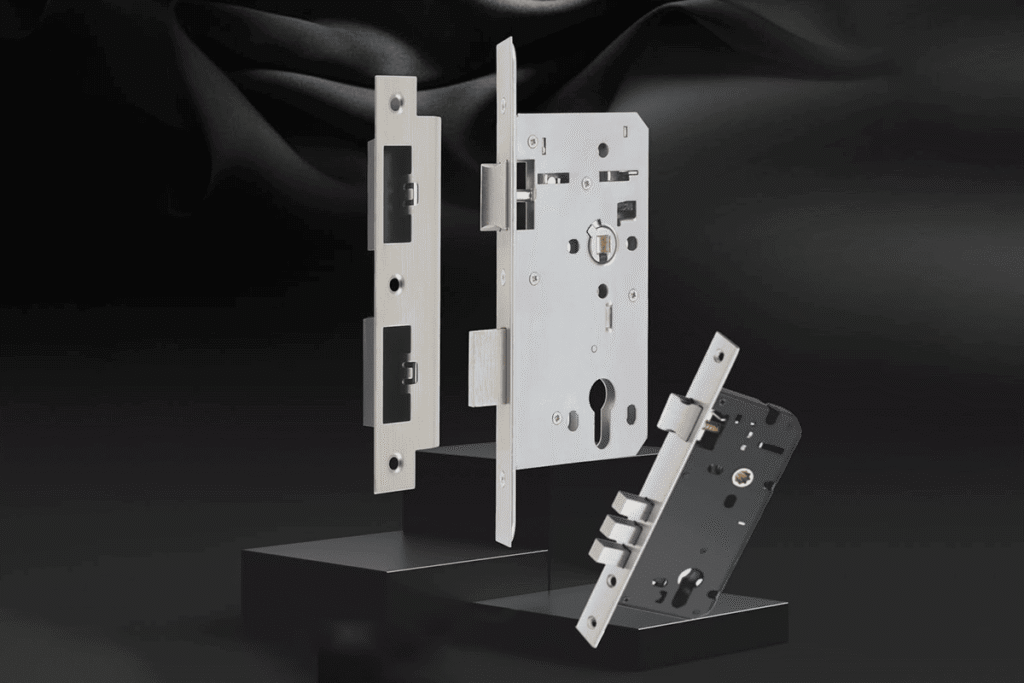
Euro Mortise Lock for Rebated Double Doors: Meeting Stiles, Rebate Kits and Closing Checks
A Euro Mortise Lock for Rebated Double Doors can look simple on a drawing, but small mistakes at the meeting stile can cause poor latching, cylinder misalignment, and callbacks on site. That risk grows when buyers source locks, handles, hinges, flush bolts, and accessories separately. I use a clear hardware checklist to reduce those problems before production starts.
A Euro mortise lock for rebated double doors should be selected together with the rebate kit, meeting stile detail, cylinder type, lever handle, flush bolts, and closing hardware. The key checks are lock case compatibility, forend and strike handing, rebate depth, latch engagement, door closing sequence, and certification documents for the project market.
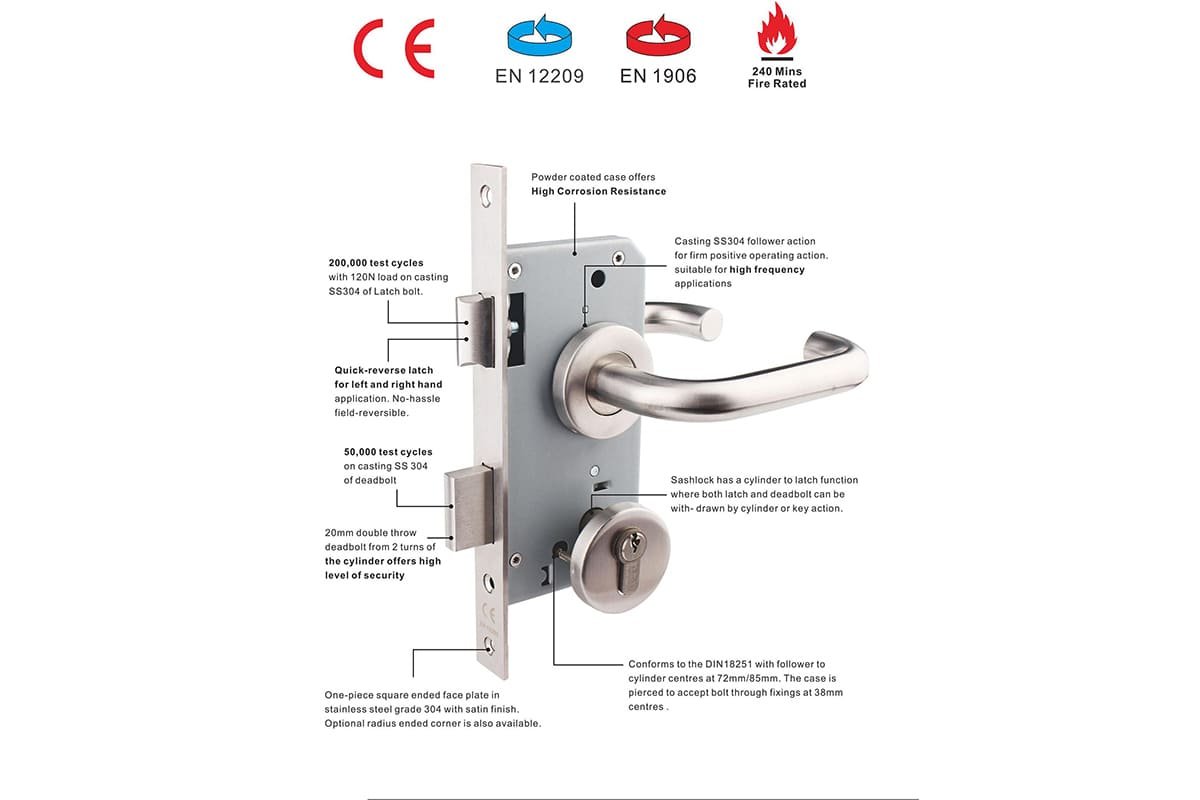
Rebated double doors need more coordination than single-leaf doors. The active leaf, inactive leaf, lock body, cylinder, handle set, bolts, hinges, and closer behavior all affect each other. Below, I break down the main procurement and quality checks I use when helping buyers compare factory-direct hardware options.
Why Does a Euro Mortise Lock for Rebated Double Doors Need Special Planning?
A Euro Mortise Lock for Rebated Double Doors sits in a more demanding door condition than a standard single door lock. The rebate changes the meeting line, and the two leaves must close in the right order1. If buyers skip this planning, the lock may pass inspection on a table but fail after installation.
A Euro mortise lock for rebated double doors needs special planning because the latch, deadbolt, strike plate, rebate kit, and closing sequence must align across two moving leaves. The hardware set should be evaluated as a system, not as separate parts, especially for OEM supply, fire-rated doors, and commercial projects.
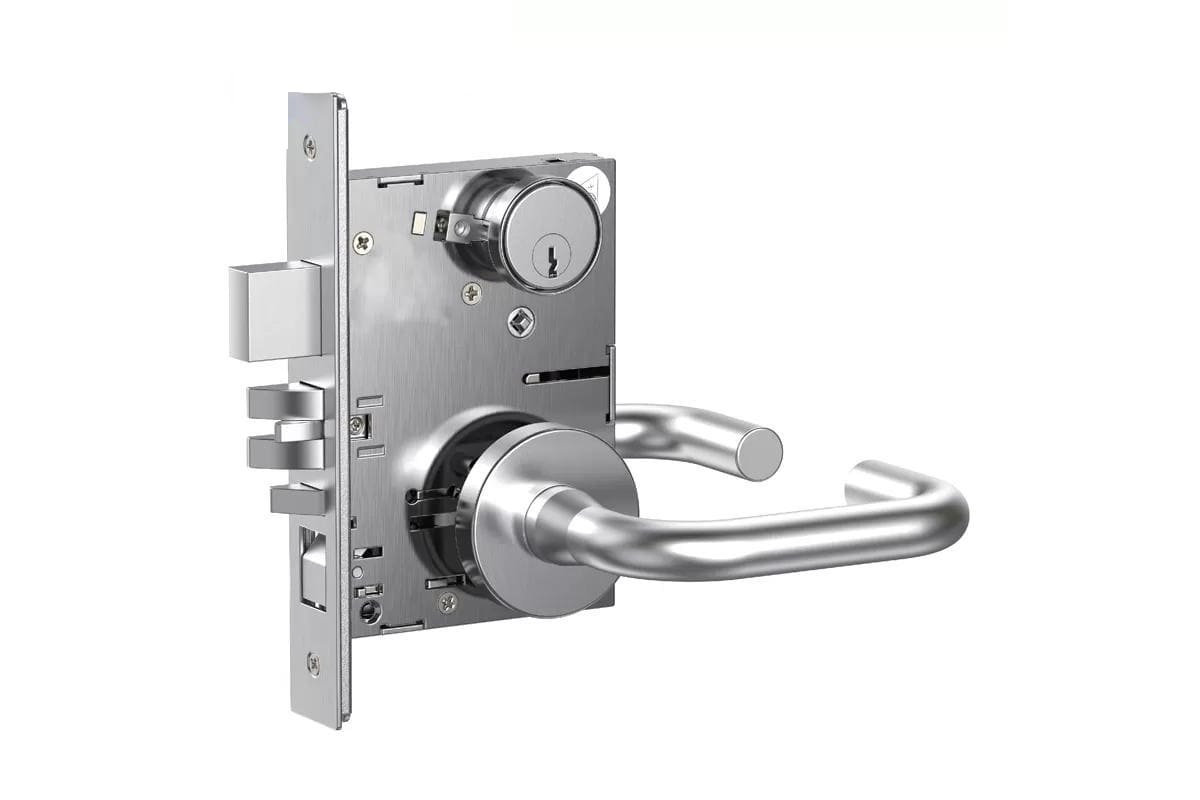
The basic door condition
A rebated double door usually has two leaves that overlap at the meeting stile. One leaf is normally the active leaf, which carries the lock and lever handle. The other leaf is usually the inactive leaf, which receives the strike plate and is held in place by flush bolts or surface bolts.
In Chinese project language, buyers often describe this as 双扇企口门. For this door type, the common hardware package includes:
- 插芯锁 — mortise lock case
- 单开或双开锁芯 — single-sided or double-sided euro profile cylinder
- 门把手 — lever handle set
- 插销 — flush bolt or door bolt for the inactive leaf
- 自闭隐藏合页 — self-closing concealed hinge
I often tell buyers that this list is a starting point, not a final specification. Each item must match the door thickness, frame type, opening direction, project standard, and local code requirement.
Why the rebate changes the lock choice
A rebate creates an offset at the meeting stile. That offset affects the lock forend, strike plate, latch position, and deadbolt throw.2 A standard flat-door mortise lock may not work unless the correct rebate kit is supplied.
A rebate kit normally includes special faceplates and strike components that compensate for the overlap between the two leaves. However, rebate kits are not universal. A 13 mm rebate, 15 mm rebate, and 18 mm rebate may require different accessories.
| Item to check | Why it matters | Buyer risk if ignored |
|---|---|---|
| Rebate depth | Determines rebate kit size | Latch misses strike |
| Door thickness | Affects lock case and spindle length | Handle feels loose or binds |
| Backset | Controls handle position | Lever conflicts with stile profile |
| Center distance | Must match cylinder and handle set | Wrong escutcheon or plate |
| Handing | Affects latch and strike orientation | Lock cannot be installed correctly |
| Closing sequence | Active leaf must meet stable inactive leaf | Latch bounces or damages edge |
My procurement view
From a factory perspective, I prefer to confirm the full door section before quoting. A simple front-view drawing is often not enough. I like to see the horizontal section at the meeting stile, because it shows the rebate shape, overlap direction, and available lock pocket space.
For B2B buyers, this early check saves time. It also helps suppliers confirm whether a standard EU-style mortise lock works or whether the project needs a modified forend, different strike plate, longer screws, or a custom accessory pack.
Which Meeting Stile Details Affect a Euro Mortise Lock for Rebated Double Doors?
A Euro Mortise Lock for Rebated Double Doors depends heavily on the meeting stile detail. The meeting stile controls how the two leaves overlap, how the inactive leaf supports the strike, and how the latch enters the keep. A small dimension error can create a large installation problem.
The meeting stile affects a Euro mortise lock through rebate depth, overlap direction, lock handing, strike plate position, latch projection, and door gap. Buyers should request door section drawings and confirm these details before approving mass production or ordering custom packaging for project supply.
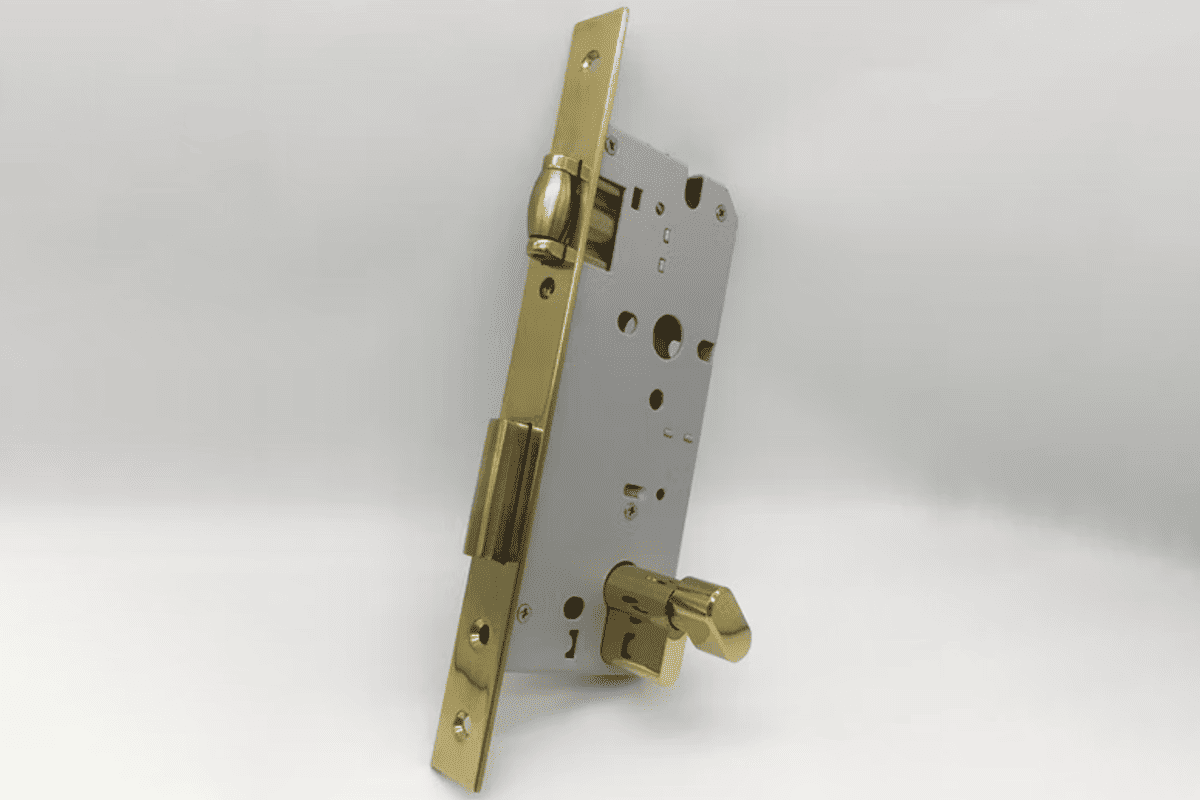
Key dimensions at the meeting stile
The meeting stile is the vertical edge where the two door leaves meet. For rebated double doors, this area is not flat. One leaf overlaps the other. That overlap improves sealing and appearance, but it also reduces tolerance.
I normally check these dimensions first:
Door thickness
Common commercial timber or steel doors may use 40 mm, 45 mm, 50 mm, or thicker leaves.3 The lock case, spindle, screws, and cylinder length must match.Rebate depth
Many projects use rebate sizes around 13 mm to 18 mm, but this varies by region and door system. The rebate kit must match the actual detail.Door gap
A typical working gap may be around 3 mm to 4 mm, depending on door type and local practice.4 Too little gap can cause rubbing. Too much gap can reduce latch engagement.Active and inactive leaf width
Unequal leaves are common. The active leaf must still provide enough stile width for the lock body and handle fixing.Frame and stop position
The frame stop can affect door closing behavior, especially when concealed hinges or self-closing hinges are used.
Handing and opening direction
Handing is a frequent source of mistakes in international orders. A lock may be described as left hand or right hand, but factories, installers, and project drawings may use different conventions.
For procurement, I prefer clear visual confirmation. The buyer should show:
- Pull side or push side
- Inward or outward opening
- Active leaf position
- Hinge side of each leaf
- Lock side of the active leaf
- Rebate overlap direction
A photo, sketch, or CAD section reduces misunderstanding. I have seen buyers order correct lock cases but wrong rebate strikes. The cost of the part was small, but the cost of delay was not.
Latch and deadbolt engagement
A mortise lock is only reliable when the latch and deadbolt enter the strike correctly.5 In a rebated double door, the inactive leaf must stay firm. If the inactive leaf moves, the latch may not hold.
This is where flush bolts become important. The inactive leaf usually needs top and bottom bolts.6 In some projects, buyers use concealed flush bolts for a cleaner appearance. In other projects, surface bolts are accepted because they are easier to maintain.
| Component | Function | Evaluation point |
|---|---|---|
| Latch bolt | Holds door closed during normal use | Smooth entry into strike |
| Deadbolt | Provides locking security | Full throw without rubbing |
| Strike plate | Receives latch and bolt | Matches rebate and handing |
| Flush bolt | Secures inactive leaf | Strong engagement into frame/floor |
| Dust socket | Receives bottom bolt | Easy cleaning and alignment |
| Meeting stile seal | Improves smoke, sound, or draft control | Must not block latch movement |
Quality control at the factory stage
For factory-direct supply, I recommend a sample approval process before bulk production. A buyer can ask for:
- Lock case sample
- Rebate kit sample
- Lever handle sample
- Cylinder sample
- Installation drawing
- Surface finish sample
- Packaging layout
- Inspection checklist
At SDH Hardware, according to our business context, we support standardized and customized architectural door hardware production. For project buyers, that means the lock can be reviewed together with related items such as stainless steel lever handles, euro brass cylinders, butt hinges, concealed hinges, and door accessories. However, final application suitability should always be checked by the door manufacturer, installer, or qualified project professional.
How Should Rebate Kits Be Matched With Euro Mortise Locks?
A rebate kit solves the offset created by the rebated meeting stile, but only when it matches the lock model, door handing, and rebate size. Buyers should not treat it as a generic accessory. A wrong rebate kit can make a good lock perform like a poor one.
A rebate kit should be matched by lock series, forend size, strike plate type, rebate depth, handing, finish, and certification requirement. Buyers should confirm whether the kit is tested or documented with the specific lock and should verify all CE or fire-rated documents before project approval.
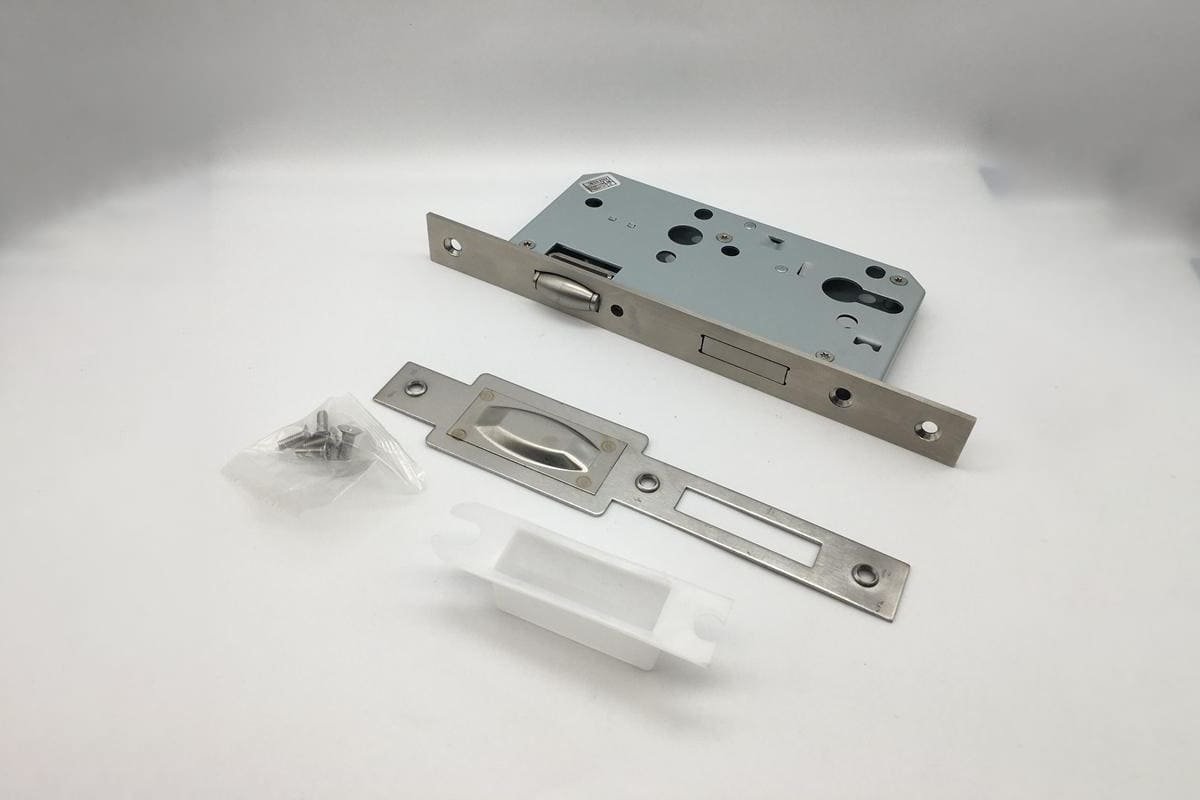
What a rebate kit usually includes
A rebate kit is designed to adapt a mortise lock to a rebated door pair. The exact contents vary by supplier and lock type, but a typical kit may include:
- Rebate forend plate
- Rebate strike plate
- Latch receiver component
- Deadbolt receiver component
- Fixing screws
- Spacer or packing pieces
- Installation guide
Some kits are handed. Some kits can be adjusted. Some are suitable only for latch locks, while others support sash locks with both latch and deadbolt. Buyers should confirm this before ordering.
Compatibility with lock standards
Euro mortise locks are commonly selected by dimensions such as backset, center distance, lock case height, forend width, and follower size.7 Common center distances include 72 mm, 85 mm, and 92 mm depending on market and lock function.8 Backsets may include 45 mm, 50 mm, 55 mm, 60 mm, or other project-specific dimensions.
The rebate kit must follow the same geometry. If the lock has a 20 mm forend, the rebate forend should be designed for that lock body. If the lock has a square forend or round forend, the kit must match the edge preparation.
| Specification | Common buyer question | Why it matters |
|---|---|---|
| Backset | Is it 45, 50, 55, or 60 mm? | Controls handle and cylinder position |
| Center distance | Is it 72, 85, or 92 mm? | Must match escutcheon or plate handle |
| Forend width | Is it 20, 22, or 24 mm? | Must match door edge machining |
| Follower size | Is it 8 mm or other? | Must match lever spindle |
| Cylinder profile | Euro profile or other? | Must match cylinder and market |
| Rebate size | 13, 15, 18 mm, or custom? | Must match meeting stile offset |
Finish and corrosion considerations
Commercial buyers often focus on lock function first. That is reasonable. However, finish compatibility matters when the full hardware set is visible.
For example, a stainless steel lever handle in satin finish should coordinate with the lock forend, strike, hinges, flush bolts, and accessories. In coastal or humid markets, corrosion resistance becomes more important.9 Buyers in the Middle East and Southeast Asia often ask about stainless steel grades, plated finishes, salt spray performance, and packaging protection.
I avoid giving one universal answer because project conditions vary. Instead, I suggest a simple evaluation method:
- Confirm indoor or outdoor exposure.
- Confirm humidity and cleaning chemical exposure.
- Select suitable base material and finish.
- Request test data or supplier inspection standards.
- Approve physical finish samples before mass production.
Certification and fire-rated door issues
For fire-rated doors, the lock and rebate kit cannot be selected only by size. The door assembly, lock, latch, hinges, seals, and closing device may all affect fire performance.10 Buyers should verify the relevant test reports, CE documents, and fire-rated certification documents for the specific market and door type.
SDH Hardware’s business context states that core products are available with authoritative CE certification and fire-rated certification. I would still advise buyers to request documents, check the product models covered, confirm validity, and involve qualified professionals for project-specific decisions. This is especially important for hotels, hospitals, schools, offices, and public buildings.
A certificate is not just a sales document. It is a procurement document that should be checked against the exact product, standard, and intended application.
What Hardware Set Is Needed for Rebated Double Doors?
A Euro Mortise Lock for Rebated Double Doors is only one part of the full hardware schedule. The door also needs a cylinder, lever handle, flush bolts, hinges, and closing control. If one item is missing or mismatched, the completed opening may not pass site inspection.
A rebated double door hardware set usually includes a mortise lock, single-sided or double-sided euro cylinder, lever handles, flush bolts for the inactive leaf, suitable hinges, and often self-closing concealed hinges or door closers.11 Buyers should specify these items together to control fit, finish, function, and installation quality.
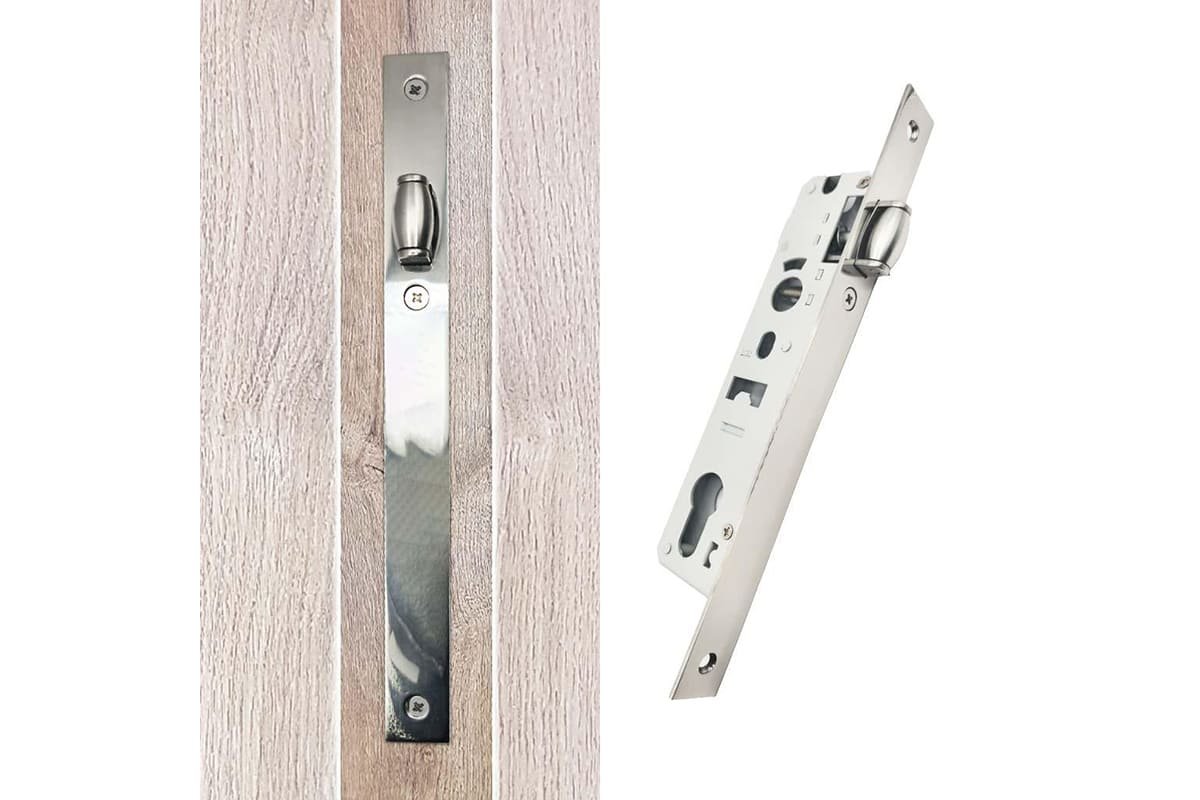
Core hardware checklist
For 双扇企口门, I normally build the hardware list around the active leaf and inactive leaf.
Active leaf hardware:
- Euro mortise lock case
- Rebate kit for the meeting stile
- Lever handle set
- Euro profile cylinder
- Cylinder escutcheon or plate handle
- Hinges or concealed hinges
- Optional closer or self-closing hinge
Inactive leaf hardware:
- Rebate strike components
- Top flush bolt
- Bottom flush bolt
- Dust socket for floor
- Hinges or concealed hinges
- Meeting stile accessories or seals
Frame and accessory items:
- Strike preparation
- Bolt keeps
- Door stops
- Seals if required
- Fixing screws
- Installation templates
This list sounds basic, but it prevents many procurement gaps. I once reviewed a project-style order where the buyer included locks and handles but forgot the inactive leaf bolts. The doors could close, but the strike leaf was not stable. The installer had to source bolts locally, and the finish did not match.
Single-sided or double-sided cylinder
The cylinder choice depends on access control needs and local safety requirements. A single-sided cylinder may be used where key operation is needed on one side only. A double-sided cylinder allows key operation from both sides. Some projects may require a thumbturn on the inside, but that depends on the room type, escape rules, and market standard.12
For procurement, buyers should confirm:
- Cylinder length by door thickness and escutcheon thickness
- Keyed alike, keyed different, or master key system
- Emergency function requirements
- Finish match with handle and forend
- Security grade or test requirement where applicable
Because cylinder systems can affect building security, I recommend professional review for hotels, offices, apartments, and institutional projects.
Hinges and closing hardware
The additional requirement mentions 自闭隐藏合页, or self-closing concealed hinges. These can be useful when buyers want a clean appearance and automatic closing behavior. However, the hinge must be suitable for door weight, door width, opening angle, and cycle performance.
Concealed hinges are not all the same. Some are purely concealed bearing hinges. Some include self-closing features. Some are adjustable in three directions. Some are suitable for timber doors, while others are designed for aluminum or steel systems.
| Hinge type | Main benefit | Main check |
|---|---|---|
| Butt hinge | Cost-effective and familiar | Load rating and finish |
| Concealed hinge | Clean appearance | Door preparation accuracy |
| Self-closing concealed hinge | Hidden closing function | Closing force and door weight |
| Fire-rated hinge | Suitable for rated assemblies | Verify certification documents |
| Heavy-duty hinge | Supports large leaves | Cycle test and screw fixing strength |
One-stop sourcing benefits
When a buyer sources the whole hardware set from one manufacturer, the main benefit is coordination. The handle spindle fits the lock follower. The cylinder length matches the door thickness. The rebate kit matches the lock body. The finish is more consistent across visible parts.
According to SDH Hardware’s business context, we provide factory-direct B2B supply, ODM/OEM services, flexible customization, customer logo options, custom packaging, product drawings after order confirmation, and inspection service after order completion. This type of support can help door factories, hardware brands, and wholesalers reduce coordination work across a broad product range.
However, buyers should still inspect samples and approve technical drawings. One-stop sourcing is not a substitute for project review. It is a better way to manage responsibility, communication, and repeat orders.
What Closing Checks Prevent Lock Failure on Rebated Double Doors?
Even a well-selected Euro Mortise Lock for Rebated Double Doors can fail if the doors do not close in the correct sequence. The inactive leaf must be stable before the active leaf latches. Closing force, hinge adjustment, flush bolt engagement, and floor alignment all affect final performance.
Closing checks should confirm leaf sequence, latch engagement, deadbolt throw, flush bolt stability, hinge adjustment, door gap, and closer speed. Buyers should test the complete door set after installation and should repeat checks after final building adjustment, especially on high-traffic commercial openings.
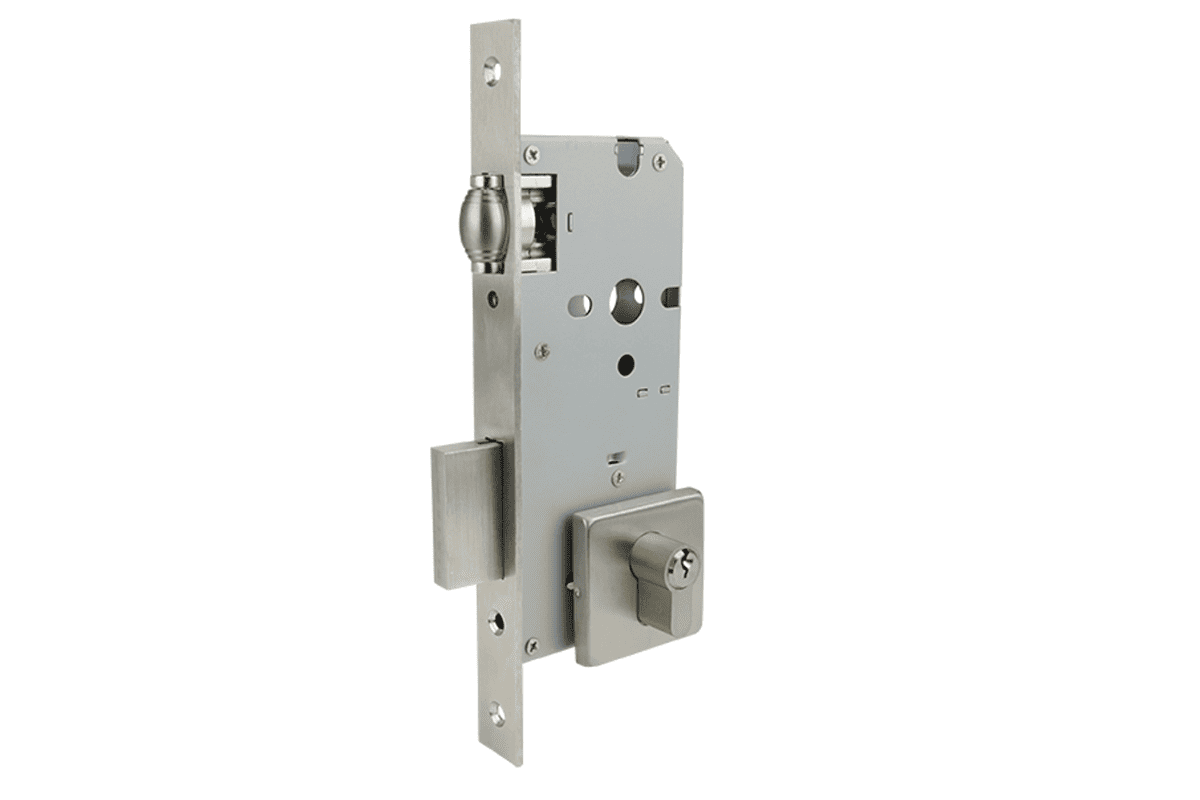
Closing sequence
The active leaf should close against a stable inactive leaf. If the inactive leaf closes after the active leaf, the latch may strike the wrong surface or bounce. If both leaves move at the same time, the latch may not engage cleanly.
For some double doors, a door coordinator is used to control closing order. For other doors, hinges, closers, or user behavior may control the sequence. The correct solution depends on the door type and local code requirements.
Practical site checks
I like simple checks because they reveal real problems quickly. After installation, the inspector can perform these steps:
- Open both leaves fully.
- Close the inactive leaf first.
- Engage top and bottom flush bolts.
- Close the active leaf slowly.
- Listen for latch entry into the strike.
- Operate the lever handle 5 to 10 times.
- Lock and unlock the deadbolt.
- Push and pull the closed doors lightly.
- Check the door gap from top to bottom.
- Repeat the test after hinge or closer adjustment.
These checks are not a replacement for formal inspection, but they help buyers catch obvious alignment issues.
Common failure symptoms
Many lock complaints are not caused by the lock case itself. They often come from door movement, poor preparation, or mismatched accessories.
| Symptom | Possible cause | Suggested check |
|---|---|---|
| Latch does not catch | Strike misalignment or moving inactive leaf | Check flush bolts and strike position |
| Lever feels stiff | Spindle misalignment or lock pocket pressure | Check handle fixing and mortise cutout |
| Deadbolt rubs | Incorrect strike depth | Check rebate kit and deadbolt path |
| Door bounces open | Closing speed too high | Adjust closer or self-closing hinge |
| Cylinder hard to turn | Lock body under stress | Loosen fixings and check alignment |
| Finish scratches at stile | Gap too small | Adjust hinges and door clearance |
Factory testing versus site testing
Factory testing confirms product consistency. Site testing confirms installed performance. Both are important.
At the factory stage, buyers may ask suppliers about:
- Function testing of lock cases
- Cycle testing method
- Salt spray or finish inspection where relevant
- Dimensional inspection
- Packaging drop protection
- Final product inspection report
At the site stage, installers should check:
- Door leaf alignment
- Hinge fixing strength
- Flush bolt engagement
- Strike plate position
- Latch and deadbolt movement
- Closing speed and force
- Compliance with project requirements
SDH Hardware’s business context notes full-process quality control, from raw material screening to production supervision and finished product inspection. That supports consistent supply. Still, site installation remains a separate responsibility. A high-quality lock cannot compensate for a twisted door leaf or a poorly fixed inactive panel.
When to request customization
Customization may be useful when the project uses unusual door thickness, non-standard rebate size, special finish, customer branding, or regional packaging requirements. For ODM/OEM buyers, customization can also support private-label product lines.
Typical custom options include:
- Special surface treatment
- Customer logo stamping or laser marking
- Custom color packaging
- Modified accessory configuration
- Product drawings for order confirmation
- Matched lock, handle, cylinder, and hinge sets
I suggest confirming customization early. Custom parts usually require sample approval and longer lead time. They also need clearer drawings because small dimension errors become expensive after tooling or bulk production.
Frequently Asked Questions
Can I use a standard Euro mortise lock on rebated double doors?
You can use a standard Euro mortise lock only if it has a compatible rebate kit and the lock dimensions match the meeting stile. Buyers should confirm rebate depth, handing, forend size, strike plate design, and latch alignment before ordering.
What is the most important dimension for a rebate kit?
The rebate depth is the first dimension to check, but it is not the only one. The kit must also match the lock model, forend width, door handing, latch position, deadbolt position, and finish requirement.
Do rebated double doors always need flush bolts?
Most rebated double doors need flush bolts or another secure method to hold the inactive leaf. Without stable inactive leaf fixing, the latch and deadbolt may not engage properly. Project requirements may define the exact bolt type.
Should I choose a single-sided or double-sided euro cylinder?
The choice depends on access needs, safety rules, and room function. A double-sided cylinder allows key operation from both sides. A single-sided cylinder or thumbturn option may suit some openings, but qualified project review is recommended.
Are CE and fire-rated certificates enough for project approval?
Certificates are important, but buyers should verify the exact product model, standard, test scope, validity, and application. Fire-rated door assemblies require careful review because the lock, hinges, seals, and closing hardware can all affect performance.
Conclusion
A Euro Mortise Lock for Rebated Double Doors should be evaluated as part of a complete door hardware system, not as a single isolated product. The meeting stile, rebate kit, cylinder, lever handle, flush bolts, concealed or butt hinges, and closing sequence all affect performance. I recommend confirming drawings, samples, certificates, and inspection requirements before bulk orders. If you source door hardware for a factory, brand, or wholesale channel, contact SDH Hardware to discuss factory-direct Euro mortise locks and matched hardware sets for your market.
"SUBMITTAL SHEET", https://mountainline.az.gov/wp-content/uploads/2023/12/RFB-2024-130-Security-Systems-Installation-and-Maintenance-Door-Hardware.pdf. A fire-door or building-hardware standard explains that double-leaf openings may require a coordinator to ensure the leaves close in the proper sequence, supporting the need to plan closing order at rebated meeting stiles. Evidence role: mechanism; source type: institution. Supports: A neutral building-code or fire-door source should support that paired doors may require coordinated closing so the active leaf closes after the inactive leaf and can latch correctly.. Scope note: This supports the general mechanism for paired doors, not the performance of any specific Euro mortise lock. ↩
"087100 – DOOR HARDWARE - Facilities and Campus Services", https://fcs.cornell.edu/087100-door-hardware. Technical door-hardware guidance describes the meeting stile as the interface where paired leaves meet and where the latch and strike must align, supporting the article’s explanation that a rebate changes lock and strike geometry. Evidence role: mechanism; source type: education. Supports: A technical door-hardware or architectural source should explain that the meeting-stile profile affects the position and engagement of latches, strikes, and bolts.. Scope note: The source would provide general technical context rather than measurements for the article’s specific door examples. ↩
"08 10 00 DOORS AND FRAMES 1. GENERAL 2. ...", https://www.architects.uga.edu/sites/default/files/documents/division_08.pdf. Architectural door references commonly specify commercial door leaves in thicknesses around 44–45 mm and thicker variants for special applications, providing contextual support for the article’s listed thickness range. Evidence role: general_support; source type: institution. Supports: A standards body, architectural institute, or technical guide should show typical commercial door leaf thickness ranges for timber or steel doors.. Scope note: Door thickness varies by jurisdiction, material, fire rating, and door system, so the source should be used as contextual support rather than a universal rule. ↩
"Statement of Deficiencies", https://qcor.cms.gov/ASCReportObject?cmsNumber=55C0001061&facilityName=Pacific+Eye+Institute&address=555+N+13th+Avenue&city=Upland&state=CA&surveyDate=2025-07-28&tag=K0761&formattedSurveyDate=07%2F28%2F2025. Fire-door installation standards commonly specify limited perimeter clearances, often around 1/8 inch, which is approximately 3.2 mm, supporting the article’s statement that working gaps near 3–4 mm are typical in some applications. Evidence role: general_support; source type: institution. Supports: A fire-door or door-installation standard should support that typical perimeter clearances are in the approximate 3 mm range, with requirements varying by application.. Scope note: Clearance limits depend on the applicable standard, door material, frame type, and rating, so this does not establish a universal tolerance for all rebated double doors. ↩
"087100 – DOOR HARDWARE - Facilities and Campus Services", https://fcs.cornell.edu/087100-door-hardware. Door-hardware installation guidance identifies alignment between the latch or bolt and the strike as a basic condition for proper lock operation, supporting the article’s claim that engagement is central to mortise-lock reliability. Evidence role: mechanism; source type: institution. Supports: A door-hardware standard or installation reference should explain that latches and deadbolts must align with and enter the strike or keep for proper operation.. Scope note: This is general hardware-installation support and does not verify any particular product’s reliability. ↩
"Laboratory Door Design Considerations", https://orf.od.nih.gov/TechnicalResources/Documents/News%20to%20Use%20PDF%20Files/2020%20NTU/Laboratory%20Door%20Design%20Considerations-November%202020%20News%20to%20Use_508.pdf. Architectural hardware guidance describes flush bolts as devices used to secure the inactive leaf of paired doors, commonly engaging at the head and sill, supporting the article’s inactive-leaf hardware recommendation. Evidence role: general_support; source type: institution. Supports: A technical guide should support that the inactive leaf of a pair of doors is commonly secured by flush bolts, surface bolts, or similar top and bottom devices.. Scope note: Specific bolt type and permissibility depend on door rating, egress requirements, and local code. ↩
"Mortise Lock (EN12209)", https://www.dirock.com/Mortise-Lock-EN12209-pl40667787.html. European lock standards and technical specifications identify dimensions such as backset, follower size, case dimensions, and forend configuration as relevant characteristics for mechanically operated locks, supporting the article’s dimensional selection criteria. Evidence role: definition; source type: institution. Supports: A lock standard or technical reference should define common mortise-lock dimensional parameters used in specification and selection.. Scope note: The source would support the categories of dimensions, not necessarily every commercial size listed in the article. ↩
"How to measure and choose the right mortise lock size", https://www.blue-id.com/en/blog/mortise-lock-mass. Technical lock specifications for European-style mortise locks commonly reference center distances such as 72 mm, 85 mm, and 92 mm, supporting the article’s description of market-dependent lock-center dimensions. Evidence role: general_support; source type: institution. Supports: A neutral technical source should show that 72 mm, 85 mm, and 92 mm lock centers are recognized common dimensions in European-style mortise lock applications.. Scope note: Availability of these centers varies by country, standard, and lock function, so the citation should not imply that all three are universal. ↩
"Projections of corrosion and deterioration of infrastructure ...", https://www.nist.gov/publications/projections-corrosion-and-deterioration-infrastructure-united-states-coasts-under. Corrosion research shows that moisture and chloride deposition in marine or coastal atmospheres increase the likelihood and rate of metallic corrosion, supporting the article’s emphasis on corrosion resistance in humid or coastal hardware applications. Evidence role: mechanism; source type: research. Supports: A materials-science or corrosion reference should explain that moisture and chloride exposure in coastal environments accelerate corrosion risk for metals.. Scope note: This supports the environmental mechanism generally and does not evaluate a specific finish, stainless grade, or salt-spray result. ↩
"NSPIRE Standard - Door - Fire", https://www.hud.gov/sites/dfiles/PIH/documents/NSPIRE-Standard-Door-Fire-Labeled_20230811.pdf. Fire-door guidance treats the door leaf, frame, latching hardware, hinges, seals, and closing devices as parts of a rated assembly, supporting the article’s statement that hardware selection can affect fire performance. Evidence role: expert_consensus; source type: government. Supports: A fire-safety code or government fire-door guide should support that rated fire doors are evaluated and maintained as assemblies with appropriate hardware components.. Scope note: The source would support the assembly principle, while project approval still depends on the specific tested configuration and local authority requirements. ↩
"SECTION 087111 - DOOR HARDWARE (SCHEDULED BY ...", https://fpm.usc.edu/wp-content/uploads/2021/11/087102-USC-HSC-door-hardware-Guide-Specification_1.pdf. Architectural hardware scheduling references commonly list locks or latches, cylinders, operating trim, hinges, inactive-leaf bolts, and closers as coordinated components for paired door openings, supporting the article’s complete-set approach. Evidence role: general_support; source type: education. Supports: A door-hardware scheduling source should support that paired doors commonly require coordinated locksets, cylinders, handles, bolts for inactive leaves, hinges, and closing devices.. Scope note: Actual hardware schedules vary by opening type, code requirements, fire rating, access control, and project specification. ↩
"California Code of Regulations, Title 8, Section 3235. Doors.", https://www.dir.ca.gov/title8/3235.html. Building and life-safety codes regulate how egress doors may be locked and operated from the egress side, supporting the article’s statement that thumbturn or cylinder choices depend on room function, escape requirements, and local standards. Evidence role: expert_consensus; source type: government. Supports: A building-code or life-safety source should support that egress-side lock operation is regulated and can vary by occupancy and door use.. Scope note: The citation should not be read as specifying one correct cylinder type for all markets or occupancies. ↩
