
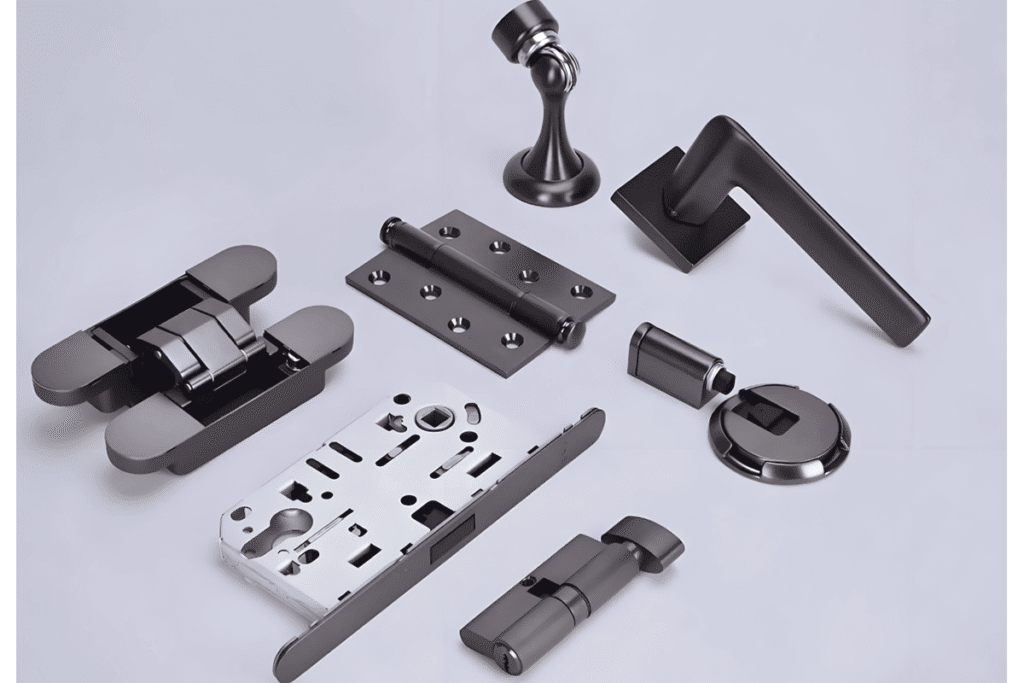
What is the most common commercial door hardware finish?
A commercial door hardware finish often looks like a small design choice, but it can affect corrosion resistance, cleaning, replacement planning, and the visual consistency of a whole project. If buyers choose only by appearance, they may face mismatched batches, early wear, or difficult maintenance. I usually start by comparing finish demand, base material, and project environment.
The most common commercial door hardware finish is satin stainless steel, often referenced as US32D or 630 depending on the market and product type.1 It is widely used because it offers a neutral appearance, good corrosion resistance2, easy maintenance, and strong compatibility with offices, hotels, schools, hospitals, and multi-family buildings.
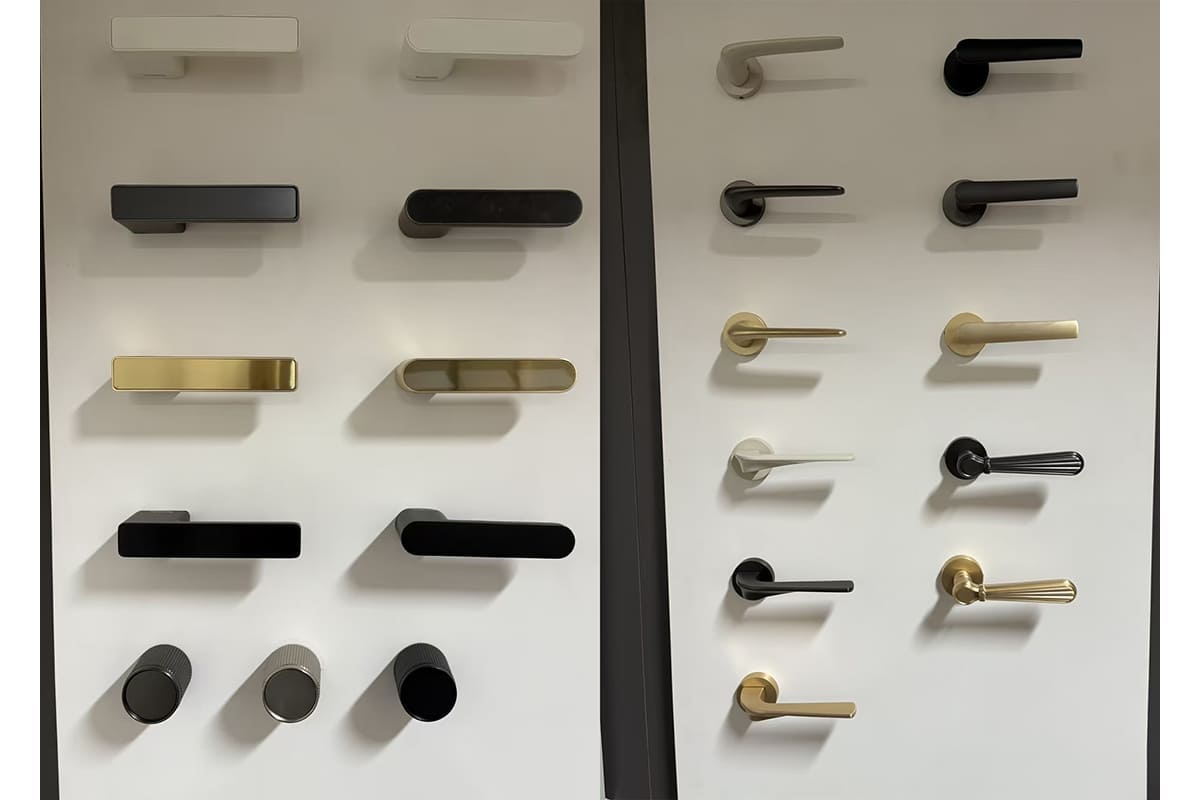
Satin stainless steel is not the only finish worth considering. However, it is usually the safest starting point for procurement teams because it balances cost, durability, availability, and design flexibility. Below, I will break down how I evaluate finishes for commercial projects and supplier selection.
Why is satin stainless steel the most common commercial door hardware finish?
A commercial door hardware finish must survive daily contact, cleaning chemicals, climate exposure, and visual inspection by building owners. Satin stainless steel became common because it reduces many of these risks at once. I have seen buyers choose it when they need one finish that works across many door types.
Satin stainless steel is the most common commercial door hardware finish because it offers a durable brushed appearance, hides fingerprints better than polished metal3, and fits most modern architectural designs. It is also widely available across lever handles, mortise locks, cylinders, hinges, pull plates, and door accessories.
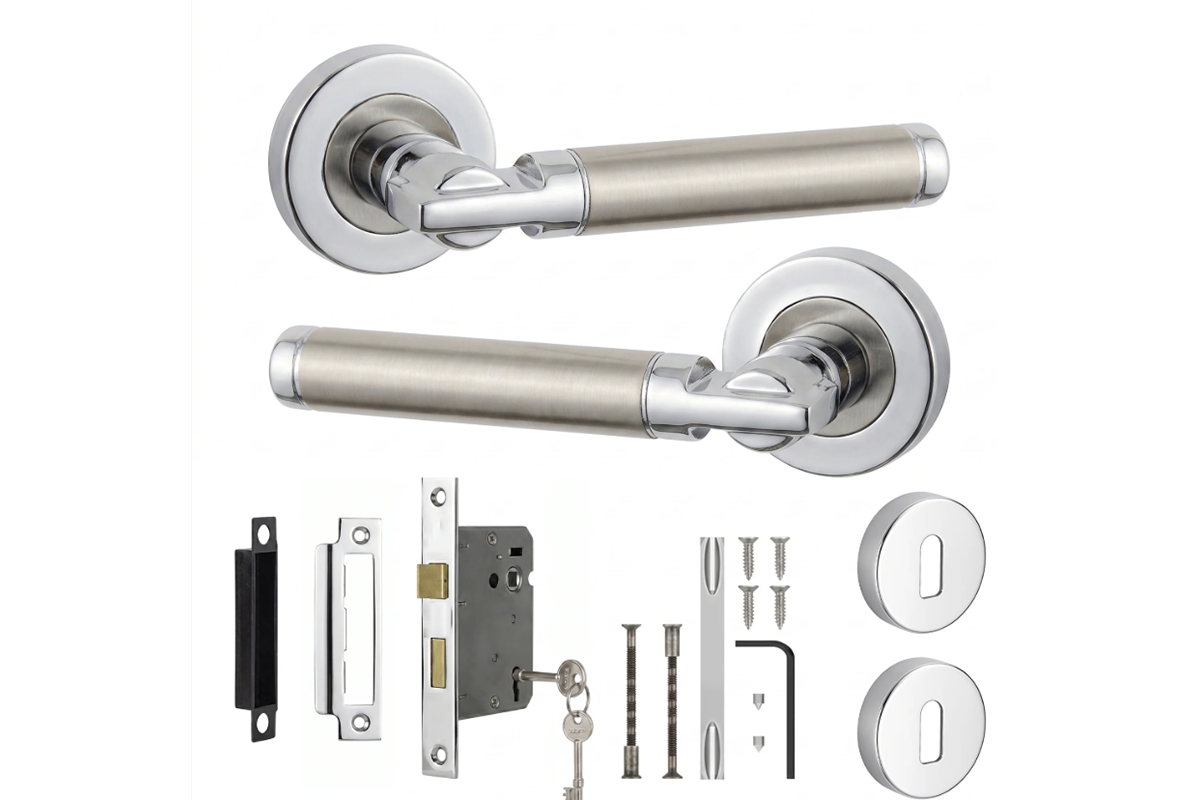
Why buyers like satin stainless steel
Satin stainless steel is popular because it solves both design and procurement problems. A buyer can use it on visible hardware, support components, and replacement parts without creating a strange visual mix. That matters on large projects where a door schedule may include hundreds or thousands of openings.
In many markets, the finish is connected with standards such as:
- US32D in ANSI/BHMA-style finish references
- 630 in common architectural hardware finish references
- Satin stainless steel in plain product descriptions
- Brushed stainless steel in some supplier catalogs
These references do not always mean the same thing in every market. I always recommend confirming the finish sample, base material, and test report rather than relying only on the code.
Practical reasons for its popularity
Satin stainless steel works well because it has a controlled brushed surface. This surface is not mirror-bright, so it hides small scratches better than polished stainless steel4. It also looks cleaner for longer in high-traffic buildings.
For procurement teams, the finish is easy to source. Many factories can produce satin stainless steel lever handles, butt hinges, lock faceplates, and accessories in consistent batches. At SDH Hardware, our product range covers more than 3,000 architectural hardware articles, so we often see buyers use satin stainless steel as the main finish for one-stop sourcing projects.
Here is a simple comparison:
| Finish option | Common use | Main advantage | Main concern |
|---|---|---|---|
| Satin stainless steel | Offices, hotels, schools, hospitals | Durable, neutral, widely available | Needs finish consistency control |
| Polished stainless steel | Decorative commercial areas | Bright appearance | Shows fingerprints and scratches |
| Satin nickel | Interior commercial spaces | Warm modern look | Coating quality varies |
| Matte black | Hotels, apartments, retail | Trendy and bold | Scratches can be more visible |
| Antique brass | Hospitality, heritage projects | Classic appearance | Harder to match across suppliers |
How I evaluate it for a project
I do not choose satin stainless steel only because it is common. I check whether it fits the door type, base material, and maintenance plan.
For example, I would ask:
Is the door interior or exterior?
Exterior doors may need higher corrosion resistance and more careful stainless steel grade selection.5Will the building use strong cleaning chemicals?
Hospitals, schools, and public buildings may clean hardware often.6Does the project require fire-rated or CE documentation?
Buyers should verify certificates, test reports, and product scope with the supplier before placing bulk orders.Can the supplier keep the same finish across categories?
A lever handle, lock forend, hinge, and cylinder escutcheon should not look like four different tones.
In my experience, satin stainless steel wins many B2B evaluations because it reduces uncertainty. It may not be the most dramatic finish, but it is often the most practical commercial door hardware finish for global procurement.
How should buyers compare a commercial door hardware finish before ordering?
A commercial door hardware finish can look good in a catalog and still fail in real use. The problem is that photos hide surface texture, coating thickness, and color variation. If a buyer skips finish evaluation, the first shipment may reveal visible differences between locks, handles, hinges, and accessories.
Buyers should compare a commercial door hardware finish by reviewing physical samples, base material, finish code, corrosion resistance, cleaning requirements, batch consistency, and supplier quality control. For B2B projects, I recommend confirming approved samples before mass production and keeping one signed reference sample for inspection.
What I check first
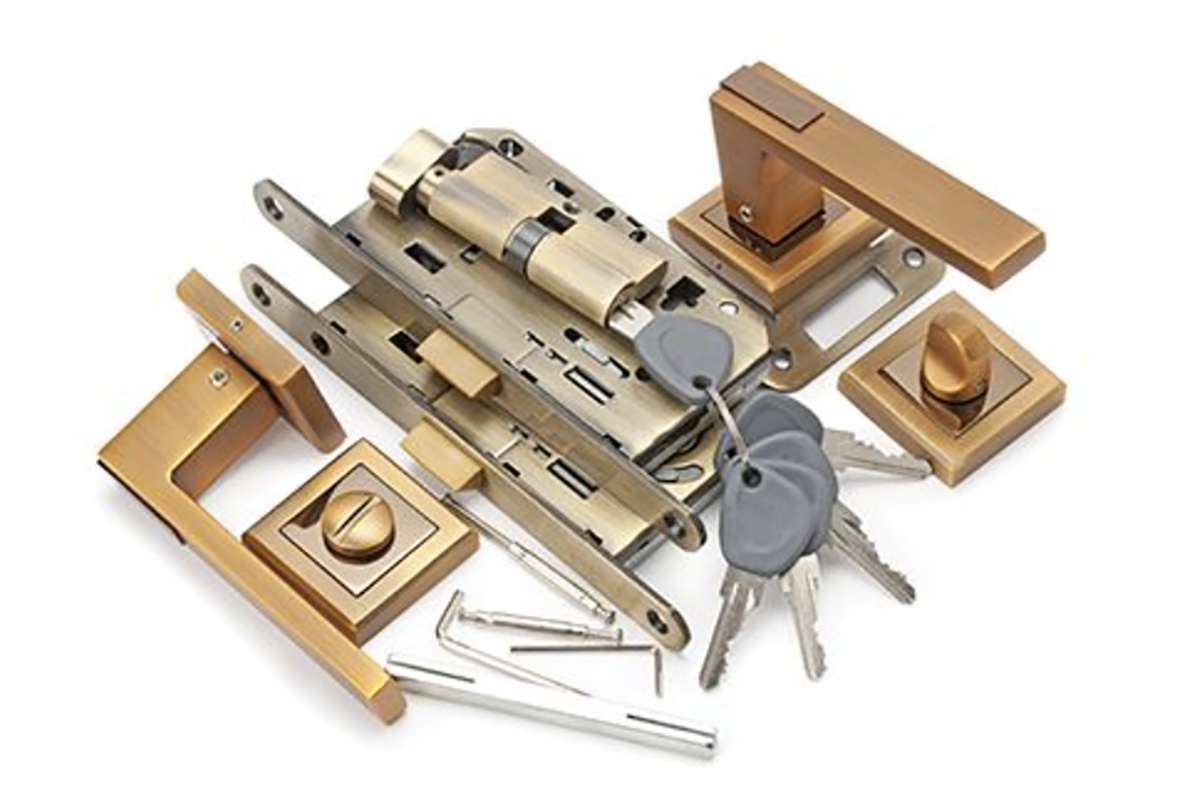
I start with the physical sample, not the brochure image. A finish has three important visual elements:
- Color tone: silver, warm grey, black, brass, bronze, or antique tone
- Gloss level: polished, satin, matte, or textured
- Surface direction: brushed lines, bead-blasted texture, or coated smooth finish
Two suppliers may both write “satin stainless steel,” but one sample may look warmer, darker, or rougher. This can create problems if a wholesaler sources several products from different factories.
Key inspection points for commercial projects
When I evaluate a commercial door hardware finish, I usually build a checklist like this:
| Evaluation point | What to ask | Why it matters |
|---|---|---|
| Base material | Is it stainless steel, brass, zinc alloy, or aluminum? | The same finish behaves differently on different metals7 |
| Surface process | Is it brushed, plated, PVD, powder coated, or painted? | The process affects durability and repairability |
| Color tolerance | Can the supplier control batch variation? | Large projects need consistent appearance |
| Corrosion test | Is there salt spray or other test data? | Coastal and humid markets need stronger protection |
| Cleaning advice | What chemicals should be avoided? | Poor cleaning can damage coatings |
| Certification scope | Does the certificate cover the exact item? | Buyers must verify compliance documents |
I use this kind of table because finish problems are often not technical surprises. They are communication problems. The buyer assumed one thing, the supplier produced another, and nobody kept an approved sample.
Why base material matters
A stainless steel lever handle with a satin brushed finish is not the same as a zinc alloy handle with a stainless-looking coating. Both may look similar at first. However, the wear behavior can differ.8
Common base materials include:
- Stainless steel: strong corrosion resistance and good durability
- Brass: good machining, premium feel, common for cylinders and decorative hardware
- Zinc alloy: flexible for shapes and cost-sensitive products
- Aluminum: light and useful for some accessories
For door hardware manufacturers, the material choice also affects machining, polishing, plating, assembly, and final inspection. At SDH Hardware, we work across product categories such as Euro mortise locks, stainless steel lever handles, butt hinges, concealed hinges, Euro brass cylinders, and door accessories. Because these items use different materials and processes, finish matching requires a planned quality control process.
Documentation buyers should request
For serious procurement, I suggest asking the supplier for:
- Approved finish sample with signature or written confirmation
- Product drawing after order confirmation
- Material specification for visible parts
- Surface treatment description
- Inspection report after production
- Relevant CE or fire-rated documentation, where applicable
Certifications should be treated as documents to verify, not as marketing slogans. The buyer should check the certificate holder, tested product model, validity, standard, and issuing body. If a project has fire door, escape route, or authority approval requirements, a qualified professional should review the application-specific compliance.
A finish comparison is not just about beauty. It is part of risk control. When I work through a finish sample carefully, I can often prevent expensive disputes before production starts.
Which commercial door hardware finish works best for different buildings?
A commercial door hardware finish should match the building’s traffic level, cleaning routine, climate, and design language. The challenge is that one finish may perform well in an office but poorly in a coastal hotel or hospital. I try to connect finish choice with real use conditions.
The best commercial door hardware finish depends on the building type. Satin stainless steel suits most offices, schools, hospitals, and public buildings. Matte black often fits hotels and modern apartments. Brass or antique finishes can work for premium hospitality or heritage designs, but they need tighter sample control.

Finish selection by project type
Different buildings create different stress on hardware. A private office door may be opened dozens of times per day. A hospital corridor door or school classroom door may be opened hundreds of times per day.9 Exterior entrance doors also face humidity, dust, rain, and temperature changes.
Here is how I often compare finish options:
| Building type | Practical finish choice | Reason |
|---|---|---|
| Office building | Satin stainless steel, satin nickel | Neutral design and easy replacement |
| Hotel guest room | Satin stainless steel, matte black, PVD brass | Design impact and brand style |
| Hospital | Satin stainless steel | Clean appearance and strong durability |
| School | Satin stainless steel | Good wear resistance and simple maintenance |
| Apartment project | Satin stainless steel, matte black | Cost control and modern appearance |
| Retail store | Matte black, polished stainless, brass tone | Stronger visual branding |
| Coastal building | Higher-grade stainless steel or protected finish | Better corrosion resistance needed |
This table is a starting point, not a final engineering decision. Coastal environments, industrial pollution, swimming pool areas, and chemical cleaning routines can change the right answer.
Office and education projects
For office buildings and schools, I usually see buyers choose satin stainless steel because it is conservative and practical. It does not compete with interior design. It also helps facility managers replace damaged or missing items later.
For example, if a school needs replacement lever handles after five years, satin stainless steel will likely still be available from multiple suppliers. A rare bronze tone may be harder to match.
Key benefits include:
- Easy maintenance
- Broad market availability
- Good scratch concealment
- Consistent look across many doors
- Reasonable cost for bulk orders
Hotels and residential developments
Hotels and apartment projects often pay more attention to style. Matte black has become popular because it looks modern and photographs well. Brass tone, champagne, and bronze finishes can also create a premium feeling.
However, trend finishes need careful evaluation. A matte black lever handle may show bright scratches if the coating is thin or poorly bonded. A brass-tone finish may vary between batches if the process is not controlled. I recommend asking for production samples, not just showroom samples.
For hotel and apartment buyers, I usually ask:
- Will the finish still look acceptable after daily guest use?
- Can the supplier match locks, hinges, handles, and accessories?
- Can the project buy extra stock for future replacement?
- Does the finish require special cleaning instructions?
Healthcare and public buildings
Hospitals and high-traffic public buildings usually need simple, durable finishes. Satin stainless steel is often a strong choice because it looks clean and resists many normal wear conditions. Still, buyers should check cleaning chemical compatibility.
In healthcare procurement, the finish decision may also interact with accessibility, fire safety, and door performance requirements. I would not treat finish selection as separate from hardware function. A qualified professional should confirm whether the selected hardware set meets local code, fire door listing, and accessibility requirements.
The main point is simple: the most common finish is common for a reason, but the best finish is the one that matches the building’s real operating conditions.
What finish standards and certifications should buyers verify?
A commercial door hardware finish can be described with codes, but codes alone do not prove performance. This creates confusion in international sourcing. A buyer may see US32D, 630, satin stainless steel, or brushed stainless steel and assume they are identical. I prefer to verify the product, process, and documentation.
Buyers should verify finish codes, product standards, material specifications, corrosion test data, CE documents, fire-rated certificates, and the exact product models covered. A commercial door hardware finish should be approved by sample and supported by supplier inspection records, especially for large OEM or ODM orders.
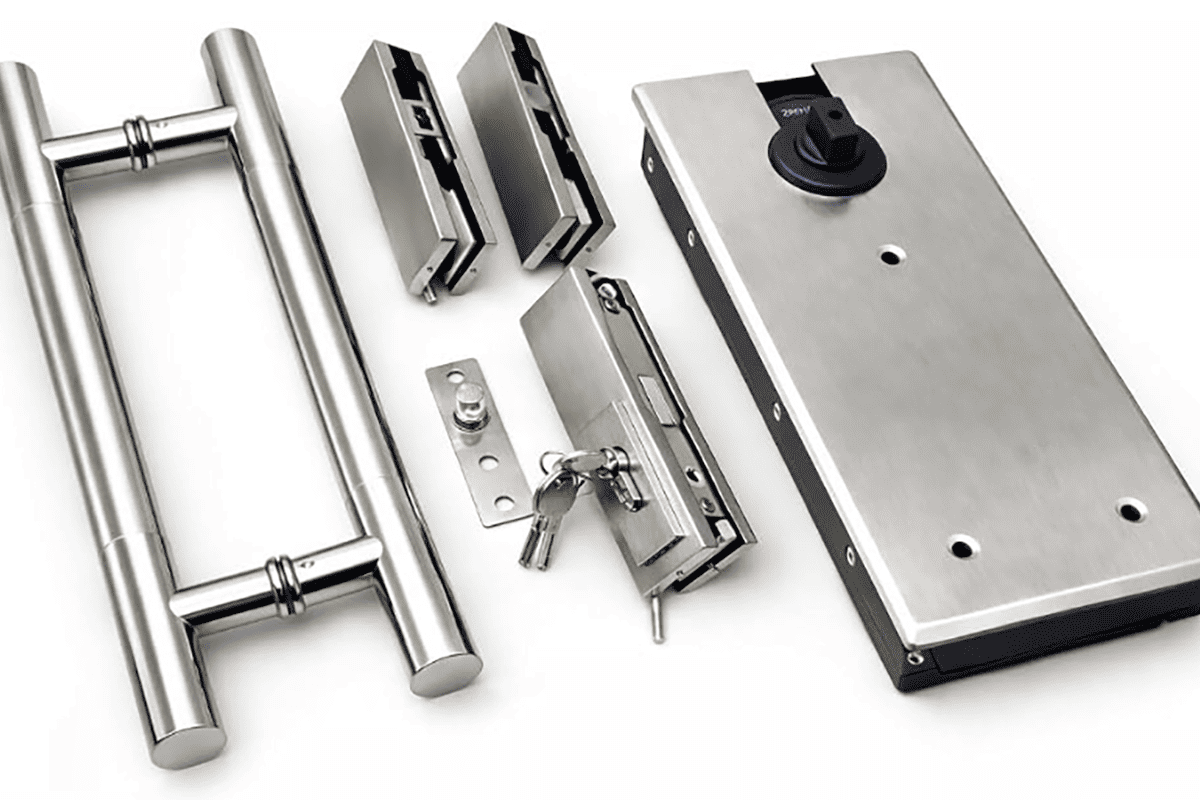
Common finish code confusion
Finish codes are useful, but they are not magic. They help buyers communicate, yet they do not replace inspection. In global sourcing, the same project may involve European standards, American finish references, local fire requirements, and customer-specific packaging or branding.
Common references include:
- US32D / 630: usually satin stainless steel
- US32 / 629: usually polished stainless steel
- US10B / 613: often oil-rubbed bronze style, with variation
- US15 / 619: satin nickel
- US19 / 622: flat black or matte black, depending on catalog
The problem is that suppliers and buyers sometimes use these terms loosely. I always ask for a sample and a written finish description.
What documentation can support finish evaluation?
For finish-related procurement, buyers may request:
| Document | What it confirms | Buyer action |
|---|---|---|
| Finish sample approval | Visual target for production | Keep one reference sample |
| Material report | Base metal or grade | Check against project requirements |
| [Salt spray report | Corrosion resistance indication | Confirm test method and hours](https://industrial.sherwin-williams.com/na/us/en/protective-marine/media-center/articles/the-limitations-of-astm-b117-salt-spray--fog--testing.html)%%%FOOTNOTE_REF_10%%% |
| Production inspection report | Batch quality result | Review before shipment |
| CE certificate | Product compliance claim | Verify scope and validity |
| Fire-rated certificate | Fire door application claim | Confirm exact hardware model and door use |
| Drawing/spec sheet | Dimensions and configuration | Match door schedule requirements |
At SDH Hardware, our business context includes CE certification and fire-rated certification for core products. I still advise buyers to verify the documents for the specific item, project, and market. A certificate may apply to a product series, a configuration, or a tested assembly. That difference matters.11
Why supplier quality control matters
A finish standard is only useful if the factory can repeat it. In-house quality control can reduce risk because the supplier can monitor raw materials, production, assembly, and finished product inspection.
For architectural door hardware, I look for quality control at these stages:
Raw material screening
The factory checks the base material before production.Machining and forming control
The hardware shape and surface preparation affect the final finish.Polishing or brushing control
The direction, depth, and uniformity of brushing must stay consistent.Surface treatment control
Plating, PVD, coating, or passivation must follow a stable process.Assembly inspection
Visible parts should match after assembly.Final inspection
The supplier should check function, appearance, packaging, and labeling.
I like factory-direct supply when the buyer needs customization because communication is shorter. For ODM and OEM orders, the buyer can define finish, stamping or laser logo, packaging design, and inspection criteria before production. However, buyer discipline still matters. A vague purchase order creates vague results.
When to seek professional review
Finish selection can affect performance, but it does not replace engineering judgment. For fire-rated doors, escape routes, coastal projects, healthcare buildings, and public tenders, the buyer should involve qualified professionals. They can confirm local codes, door assembly compatibility, and environmental risks.
A good supplier can provide product information and manufacturing support. A qualified project consultant or authority can confirm whether the selected hardware is suitable for a specific application.
How can wholesalers and brands source a consistent commercial door hardware finish?
A commercial door hardware finish becomes harder to manage when a wholesaler buys many product categories at once. The lever handle, mortise lock, cylinder, hinge, and accessories may come from different production lines. If the finish control is weak, the final product set can look inconsistent on the same door.
Wholesalers and hardware brands can source a consistent commercial door hardware finish by using one approved sample standard, consolidating categories with a capable factory, defining color tolerance, checking pre-shipment samples, and ordering spare stock for future replacement. Clear specifications reduce batch variation.
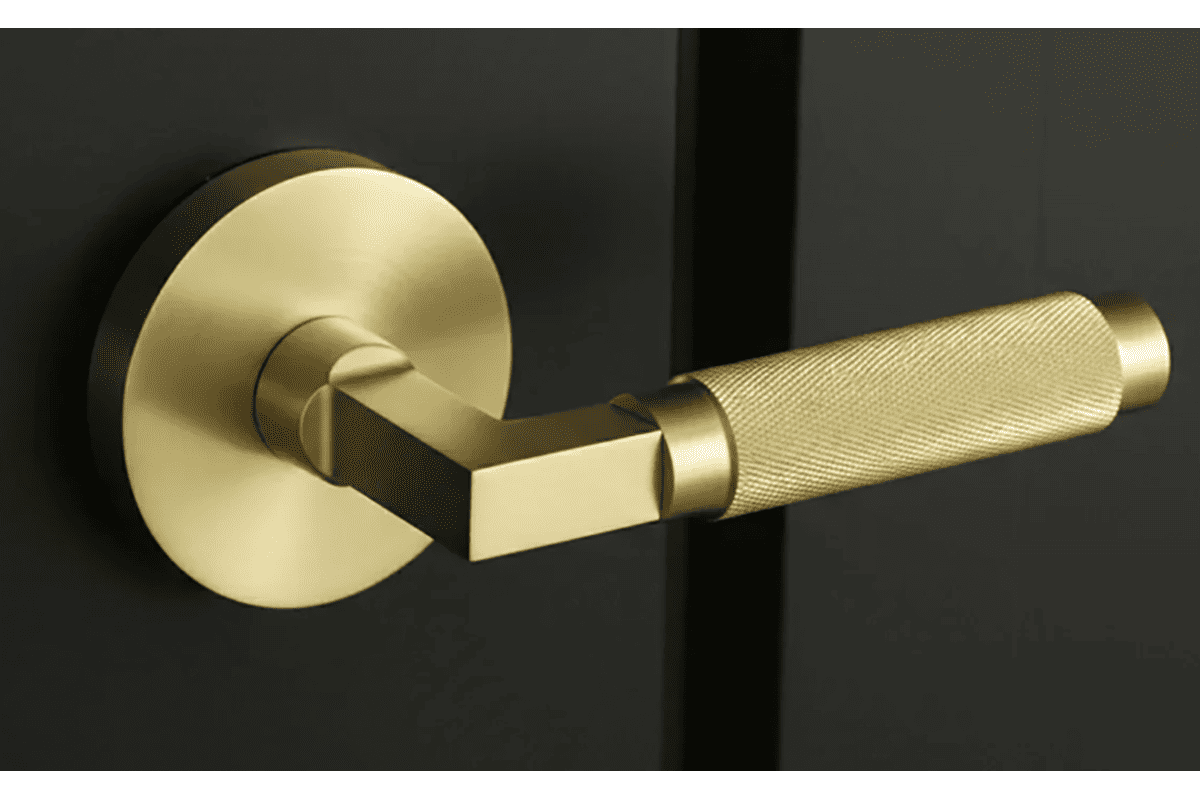
Why consistency is difficult
Finish consistency sounds simple until the order includes 10 or 20 item types. A door set may include:
- Lever handles
- Euro mortise locks
- Lock forends and strike plates
- Euro profile cylinders
- Escutcheons or roses
- Butt hinges or concealed hinges
- Door stops and accessories
- Screws and visible fasteners
Each item may have a different shape, material, and surface process. A flat lock forend reflects light differently from a curved lever handle. A hinge leaf may be brushed in a different direction. A cylinder face may use brass with a plated or coated surface.
This is why I do not recommend judging consistency only under warehouse lighting. I prefer to review samples under neutral light and, when possible, install the parts on a sample door.
Sourcing checklist for B2B buyers
Before placing a bulk order, I suggest using this checklist:
Define the primary finish name and code
Example: satin stainless steel, US32D/630 reference, brushed direction required.Approve a master sample
The master sample should become the production target.List all visible components
Hidden parts do not need the same visual control as exposed parts.Confirm base material and treatment process
This avoids surprises between stainless steel, brass, zinc alloy, and coated parts.Request pre-production samples for customized orders
This is important for OEM branding, logos, packaging, and special colors.Set inspection criteria
Define acceptable scratches, stains, color variation, and packaging condition.Keep replacement stock
This is useful for wholesalers, hotel projects, and large apartment developments.
Conclusion
The most common commercial door hardware finish is satin stainless steel because it is durable, neutral, widely available, and easy to match across many building types. Still, buyers should evaluate samples, base materials, finish codes, certifications, and supplier quality control before ordering. If you need factory-direct door hardware with consistent finishes across locks, handles, hinges, cylinders, and accessories, I invite you to contact SDH Hardware for project-based sourcing support.
"Complete ANSI / BHMA Numbers for Materials & Finishes", https://www.jlmwholesale.com/wp-content/uploads/2015/08/complete-finish-chart.pdf. ANSI/BHMA finish-code references identify 630/US32D with satin stainless steel architectural hardware finishes; this supports the code terminology, although it does not by itself prove market share or sales prevalence. Evidence role: definition; source type: institution. Supports: A neutral source should verify that US32D and 630 are standard references for satin stainless steel architectural hardware finishes.. Scope note: Supports the finish-code portion directly; the 'most common' portion would still require market data or a broad industry survey. ↩
"Revealing the Corrosion Resistance of 316 L Stainless Steel ...", https://pmc.ncbi.nlm.nih.gov/articles/PMC9920300/. Stainless steels generally resist corrosion through the formation of a chromium-rich passive oxide film, but their performance varies with alloy composition, surface condition, and exposure environment. Evidence role: mechanism; source type: education. Supports: A source should explain that stainless steels resist corrosion because chromium forms a passive oxide layer, while noting that resistance depends on alloy grade and environment.. Scope note: This supports the material basis for corrosion resistance, not the performance of every satin stainless steel hardware product. ↩
"Surface-specific performance of metal and metal oxide ... - PMC", https://pmc.ncbi.nlm.nih.gov/articles/PMC12508418/. Research and technical guidance on metal surface finishes indicate that lower-gloss or brushed surfaces scatter reflected light and can make fingerprints and minor handling marks less conspicuous than on mirror-polished surfaces. Evidence role: mechanism; source type: research. Supports: A source should support that directional brushing or lower-gloss surface texture reduces the visibility of fingerprints compared with highly polished reflective metal.. Scope note: The support is contextual because actual fingerprint visibility depends on lighting, cleaning residue, skin oils, and the specific finish roughness. ↩
"Polished surfaces are better than brushed steel when it ...", https://www.reddit.com/r/watchHotTakes/comments/1x4zbuc/polished_surfaces_are_better_than_brushed_steel/. Studies of surface texture and gloss show that rougher or directional finishes can reduce the contrast of fine scratches relative to highly polished surfaces, where specular reflection makes surface defects more visible. Evidence role: mechanism; source type: paper. Supports: A source should explain how surface finish and gloss influence the visibility of abrasions and scratches on stainless steel.. Scope note: This is a general optical and materials principle rather than a direct test of the specific door hardware products discussed. ↩
"316, 305, 304 or 410 for Coastal and Marine Construction", https://www.buildersstainless.com/stainless-steel-grades-marine-coastal-construction?srsltid=AYCX9vI87fsENzUh-n_vUKK7I7Vfa97pelczx1Gc7Xy2vdOePya9X-UW. Stainless steel selection guidance for architectural applications notes that exterior exposure, especially in chloride-rich or polluted environments, requires grade selection based on corrosion risk rather than appearance alone. Evidence role: expert_consensus; source type: institution. Supports: A source should support that stainless steel grade selection for exterior use depends on chloride exposure, humidity, pollution, and maintenance.. ↩
"Environmental Cleaning Procedures | HAIs", https://www.cdc.gov/healthcare-associated-infections/hcp/cleaning-global/procedures.html. Public-health cleaning guidance commonly classifies door handles and similar contact points as high-touch surfaces requiring routine cleaning or disinfection, particularly in healthcare and institutional settings. Evidence role: general_support; source type: government. Supports: A source should show that door handles and similar hardware are treated as high-touch surfaces in healthcare, school, or public-building cleaning guidance.. Scope note: This supports the need for cleaning compatibility in such buildings, but cleaning frequency varies by facility policy and risk level. ↩
"Effects of Substrate Surface Characteristics on the Adhesion ...", https://pmc.ncbi.nlm.nih.gov/articles/PMC9016865/. Coating and metal-finishing literature shows that substrate composition and surface preparation influence adhesion, corrosion resistance, and wear behavior, so visually similar finishes may perform differently on different base metals. Evidence role: mechanism; source type: paper. Supports: A source should explain that coating adhesion, corrosion behavior, and wear performance depend on substrate material and surface preparation.. ↩
"Zinc Alloy vs Stainless Steel", https://www.xometry.com/resources/materials/zinc-alloy-vs-stainless-steel/. Materials research distinguishes between bulk stainless steel corrosion resistance and the performance of coated zinc alloys, where durability depends heavily on coating integrity, adhesion, and exposure to wear. Evidence role: mechanism; source type: research. Supports: A source should support that bulk stainless steel and coated zinc alloy differ in corrosion and wear mechanisms even when their surface appearance is similar.. Scope note: The citation would support the material mechanism generally, not rank every commercial handle made from these materials. ↩
"Operating Room Traffic, Door Opening and Closing", https://pubmed.ncbi.nlm.nih.gov/41527873/. Building-use and access-frequency studies report that doors in institutional and high-traffic settings can experience substantially higher daily cycle counts than private office doors, supporting the need to consider traffic level in hardware selection. Evidence role: statistic; source type: research. Supports: A source should provide measured or estimated door-use frequencies in institutional buildings or high-traffic commercial settings.. Scope note: The exact number of daily openings depends on building layout, occupancy, schedule, and whether the door is normally held open or closed. ↩
"The Limitations of ASTM B117 Salt Spray (Fog) Testing", https://industrial.sherwin-williams.com/na/us/en/protective-marine/media-center/articles/the-limitations-of-astm-b117-salt-spray--fog--testing.html. Standard salt spray methods such as ASTM B117 or ISO 9227 specify controlled corrosive exposure conditions and reporting parameters, so test method, duration, and evaluation criteria are necessary to interpret a corrosion-resistance claim. Evidence role: definition; source type: institution. Supports: A source should define salt spray testing and explain why test method and exposure hours matter when interpreting results.. Scope note: Salt spray results are comparative laboratory indicators and may not directly predict service life in a specific building environment. ↩
"Doors, Windows and Related Hardware Application Guide", https://www.ul.com/thecodeauthority/knowledge/ul-fire-rated-doors-guide. Conformity-assessment and fire-door guidance emphasize that certificates and test evidence apply only within their stated scope, including the tested product, configuration, standard, and assembly conditions. Evidence role: expert_consensus; source type: government. Supports: A source should explain that compliance documentation must be checked for product scope, tested configuration, and applicable standard before being applied to a project.. ↩
