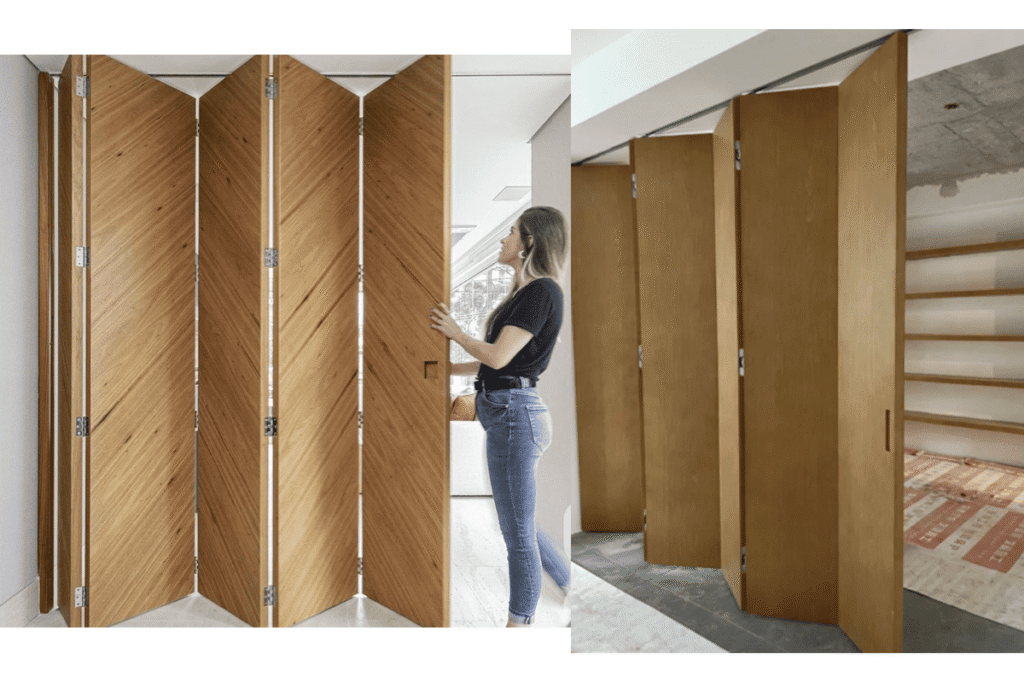
How to Choose the Right Folding Door Hinge for Your Door Weight and Width
A folding door hinge looks simple until the door starts sagging, gaps become uneven, or the finished panel does not close cleanly. Buyers often begin with door weight and width, but that is not enough. The better solution is to match hinge type, door thickness, drilling dimensions, appearance goals, and adjustment needs together.
To choose the right folding door hinge, first confirm whether your door needs a visible butt hinge or a concealed adjustable hinge. Then check single-leaf weight1, door width, door thickness, number of folding leaves, opening direction, drilling size, usage frequency, and expected gap standard before confirming the final hinge model.
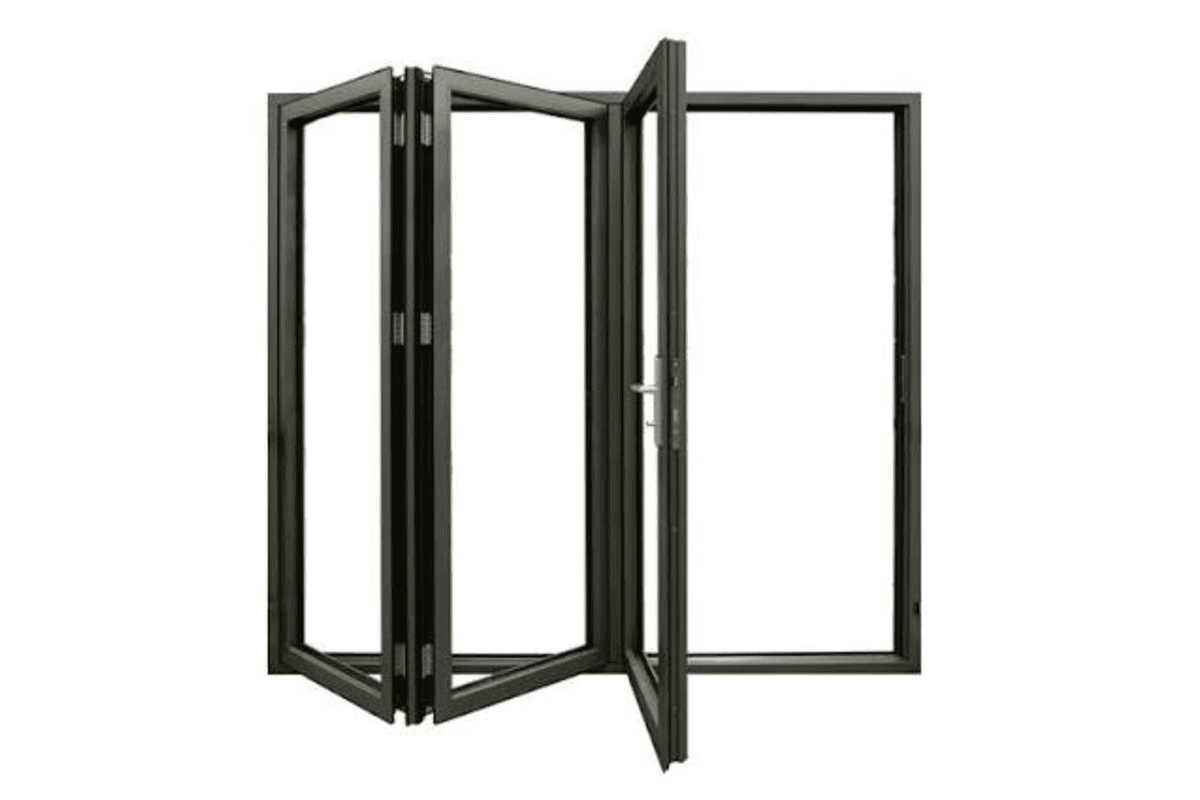
In my work with door factories and hardware buyers, I see one pattern often: the first question is usually about load capacity. That matters, of course. However, the hinge that performs well in real production is the one that fits the whole door system, not only the weight chart.
What Is the First Step in Choosing a Folding Door Hinge?
Choosing a folding door hinge can become confusing when buyers compare load ratings without confirming hinge type. The risk is simple. A hinge may carry the door, but it may not match the visual finish, door gap, drilling pattern, or adjustment standard required by the project.
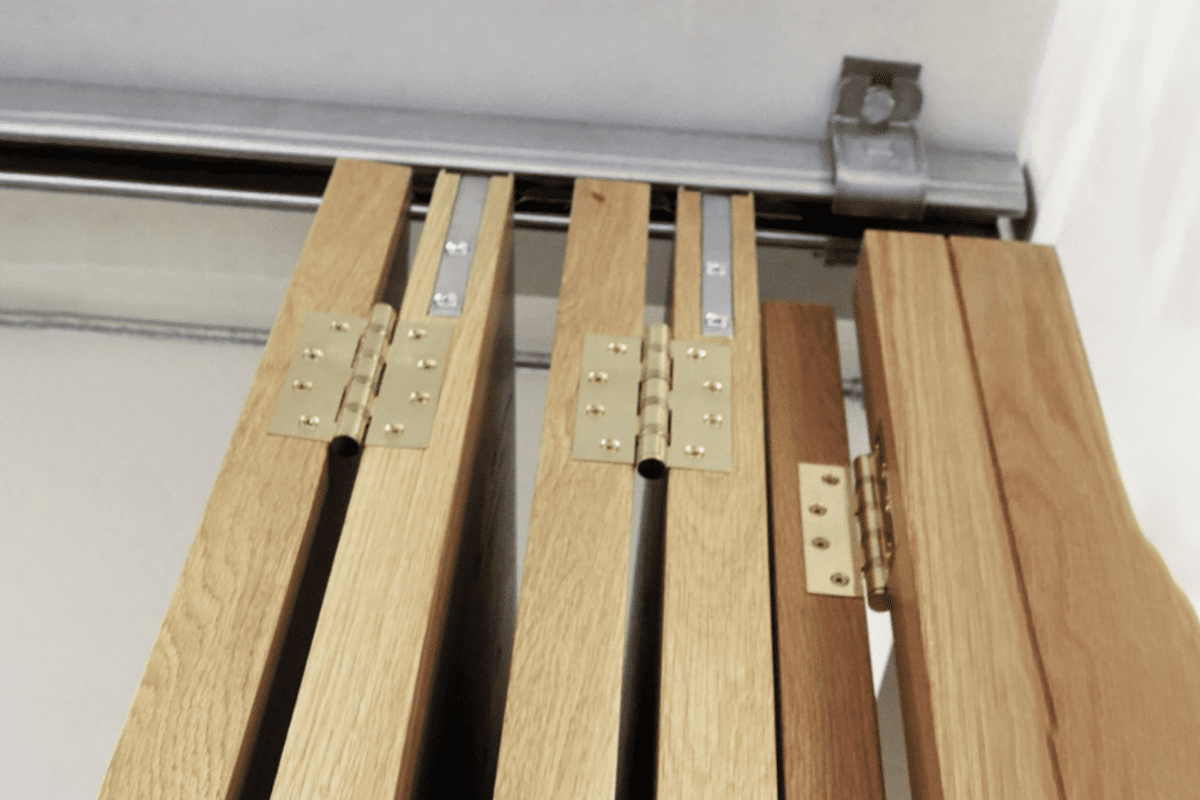
The first step is to decide whether the application needs a visible flat or butt hinge, or a concealed adjustable hinge. Butt hinges can work on folding doors, but concealed hinges are often preferred for higher-end doors because they hide the hinge barrel, reduce visible gaps, and allow post-installation adjustment.
Why Hinge Type Comes Before Load Rating
Many buyers send me a short inquiry like this:
“We need a hinge for a 35 kg folding door. What model do you recommend?”
I understand why they ask this way. Weight is easy to measure and easy to compare. But from a manufacturer’s side, I cannot give a responsible recommendation from weight alone. A folding door hinge must match the full door structure.
The first decision is usually between two hinge families:
| Hinge Type | Main Advantage | Main Limitation | Best-Fit Use Case |
|---|---|---|---|
| Visible butt hinge / flat hinge | Simple structure, familiar installation, broad availability | Barrel remains visible, gap is usually larger, limited adjustment | Standard utility doors, cost-sensitive folding panels |
| Concealed adjustable hinge | Cleaner appearance, smaller visible gap, adjustment after installation | Requires correct door thickness and drilling dimensions | Higher-end folding doors, modern interiors, branded door systems |
Butt Hinges Are Practical, But They Are Not Invisible
A butt hinge can be used on many folding door systems. It is simple and proven. It is also easy for many workshops to install because the structure is familiar.
However, the hinge barrel remains exposed when the door closes. This affects the finished appearance, especially on painted doors, laminated doors, aluminum-wood systems, and modern minimalist door designs. The closing gap is also often larger than what buyers expect for high-end interior systems.
For a door factory selling a basic series, this may be acceptable. For a brand building a premium product line, it can become a problem.
Concealed Hinges Are Popular for Better Visual Control
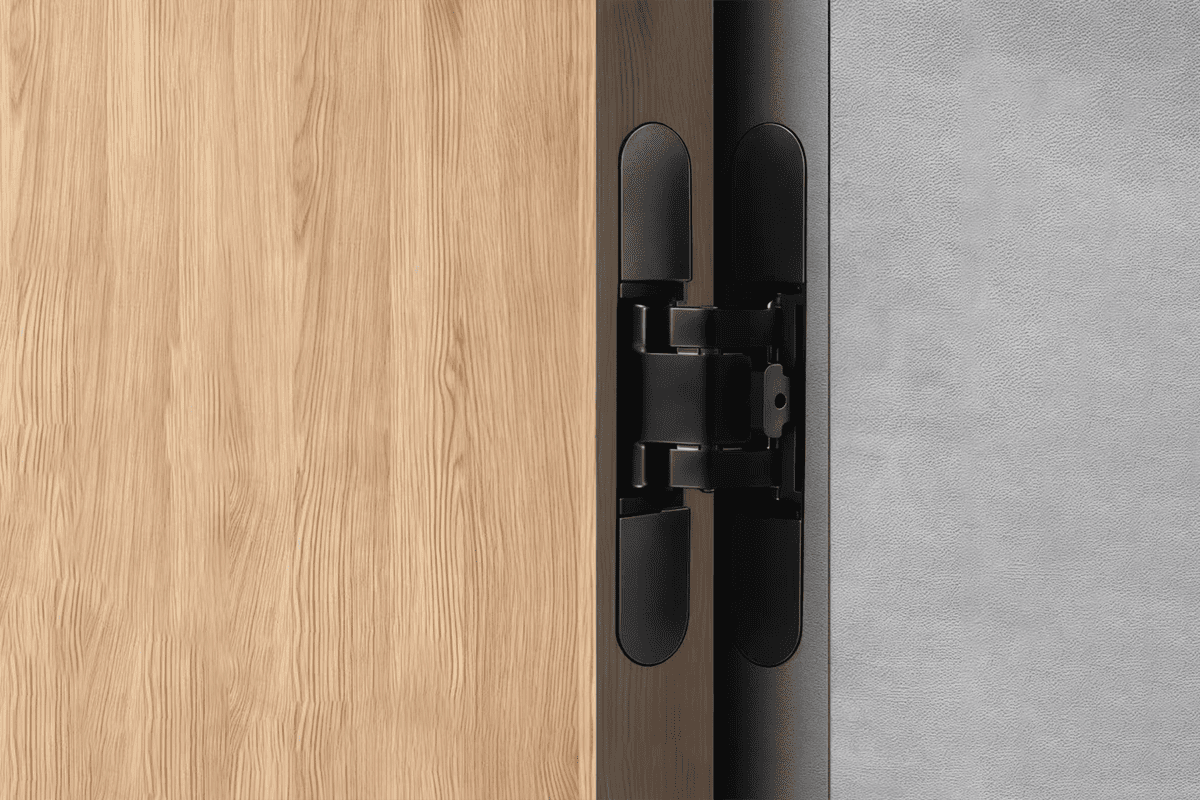
A concealed hinge changes the selection logic. It is not only a load-bearing part. It is also part of the door’s appearance system.
A suitable concealed adjustable hinge can help with:
- Cleaner front and side appearance
- Reduced visible hinge barrel
- Smaller and more controlled door gaps
- Adjustment after installation
- Better alignment across multiple folding leaves
Still, I do not treat concealed hinges as automatically better in every case. They must match the door thickness, routing depth, opening dimensions, screw position, panel material, and load requirement. If those details are wrong, even a premium hinge can perform poorly.
How Do Door Weight and Width Affect Folding Door Hinge Selection?
Door weight and width affect a folding door hinge because they influence load, leverage, sagging risk, and long-term alignment. A wider door creates more torque on the hinge side2, while a heavier door increases vertical load. Both factors must be checked with hinge quantity, hinge position, and panel structure.
The right hinge must support the single door leaf weight and control movement across the full door width. Buyers should not choose by load rating alone. They should also confirm the number of hinges per leaf, door height, center of gravity, material, usage frequency, and whether the hinge has enough adjustment range.
Weight Is Only One Part of the Load
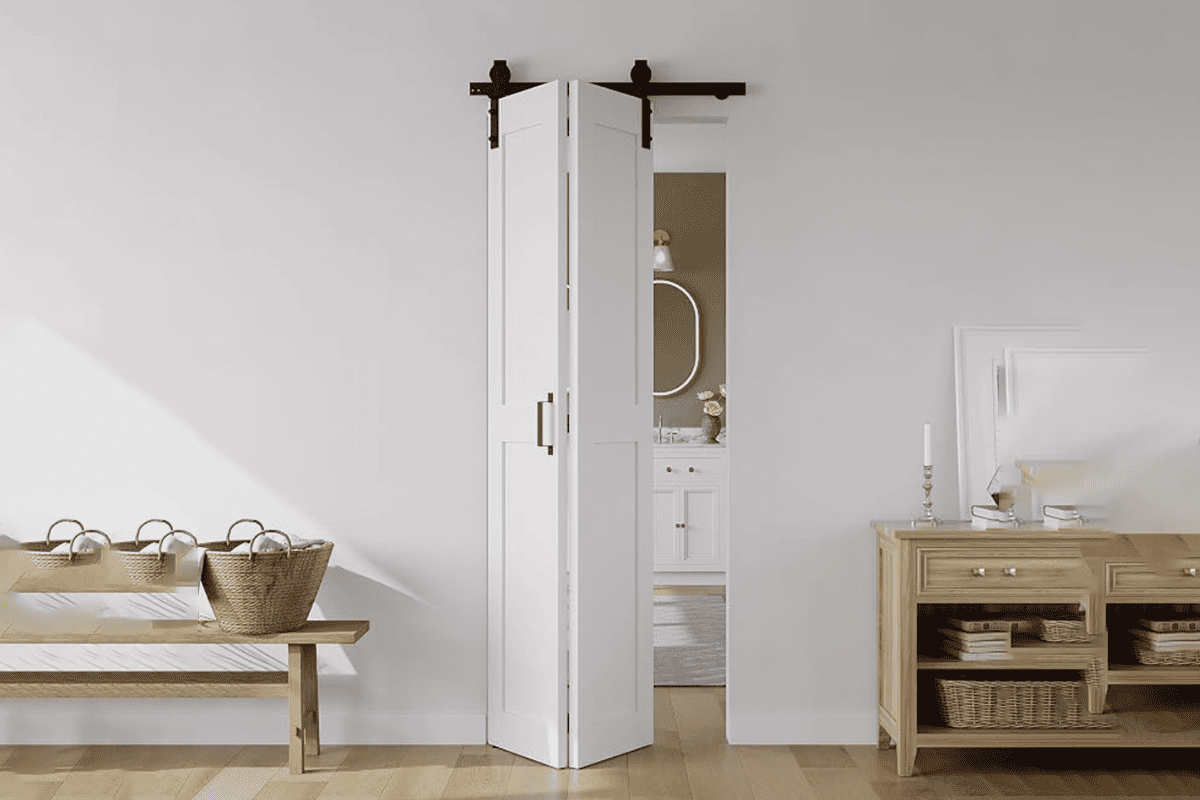
When I discuss hinge selection with customers, I always ask for single-leaf weight, not only total set weight. A four-leaf folding door may look heavy as a full unit, but hinge selection depends on how the weight is distributed leaf by leaf.
For example:
| Door Detail | Why It Matters |
|---|---|
| Single-leaf weight | Determines vertical load on hinge set |
| Door width | Affects leverage and sagging force |
| Door height | Influences hinge quantity and spacing |
| Door material | Affects screw holding strength and deformation risk |
| Number of leaves | Changes movement pattern and load distribution |
| Usage frequency | Impacts durability expectations |
A 35 kg narrow panel and a 35 kg wide panel do not behave the same way.3 The wide panel creates more leverage. That leverage can pull on screws, increase sagging risk, and make closing gaps harder to control.
Width Creates Leverage
Door width matters because the hinge does not only carry dead weight. It also resists twisting and pulling forces when the panel opens, folds, and closes.
A wider door can cause:
- More downward pull at the outer edge
- More stress on screw fixing points
- Greater risk of uneven gaps
- More noticeable sagging over time
- Higher sensitivity to installation errors
This is why I avoid giving a universal formula such as “X kg equals Y hinge.” A basic formula may look convenient, but it can mislead buyers. The correct selection depends on the complete installation condition.
Hinge Quantity and Position Also Matter
The number of hinges affects stability. Many folding door systems use two or three hinges per connection point, depending on the panel size, height, and weight. Taller or heavier panels often need more support points to distribute load evenly.4
A general evaluation should consider:
Top hinge position
This helps control upper alignment and reduces twisting.Middle hinge position
This supports smooth movement and load distribution.Bottom hinge position
This reduces lower-edge movement and helps maintain gap consistency.
For production buyers, hinge spacing must also be compatible with drilling templates, CNC routing, and assembly workflow. A hinge that looks strong in a catalog may cause problems if it slows production or requires inconsistent manual adjustment.
Ask for Tested Data, But Verify the Context
Suppliers may provide load capacity values, cycle test information, CE documents, or fire-rated certification documents. These are useful for procurement evaluation. However, buyers should verify the test standard, hinge installation condition, test door size, and certificate scope5.
At SDH Hardware, we manufacture architectural door hardware and provide documents for buyers to review during project and supplier evaluation. Still, for application-specific safety decisions, I always recommend that buyers confirm the final specification with their technical team, door system engineer, or qualified professional.
Why Does Door Thickness Matter for a Folding Door Hinge?
Door thickness matters for a folding door hinge because concealed hinge bodies need enough material depth for routing, screw fixing, and stable movement6. If the door is too thin, the hinge may not install correctly. If the drilling size is wrong, the door gap, alignment, and load support can all suffer.
A folding hinge must fit the physical door construction. Buyers should confirm door thickness, routing depth, frame profile, edge material, and screw holding strength before choosing a concealed hinge. This prevents installation conflicts and improves appearance, adjustment, and long-term stability.
Concealed Hinges Need Installation Space
A visible butt hinge sits on the door edge or surface. It usually needs less internal routing. A concealed hinge is different. Its body sits inside the door and frame area, so it needs enough depth and clearance.
That means the buyer must check:
- Door thickness
- Frame thickness
- Routing depth
- Opening size
- Screw position
- Internal reinforcement
- Edge banding or surface material
- Clearance during folding movement
If the door thickness is not suitable, the hinge body may break through the panel surface, weaken the edge7, or interfere with door movement. This is especially important for engineered wood doors, aluminum-framed doors, and composite panels.
Drilling Dimensions Affect Production Quality8
For door factories, drilling size is not a small detail. It affects repeatability.
If the opening is too large, the hinge may not sit tightly. If it is too small, workers may force the hinge into position, which can damage the finish or misalign the door. If screw holes are not accurate, adjustment range may be used up before the door is properly aligned.9
A practical inquiry should include drilling information such as:
| Detail | Why It Affects Selection |
|---|---|
| Door thickness | Confirms whether the hinge body can fit |
| Hinge cup or body depth | Prevents routing through the door face |
| Opening length and width | Ensures correct machining |
| Screw hole position | Supports stable fixing |
| Frame clearance | Prevents interference during folding |
| Edge material | Affects screw strength and finish quality |
Door Material Changes the Fixing Strength
Two doors with the same thickness may not hold a hinge in the same way. Solid wood, MDF, particle board, aluminum profile, steel-reinforced frame, and composite structures all behave differently.10
For example, a thick MDF door may still need careful screw selection because repeated movement can weaken fixing points11. An aluminum profile door may need specific screw types or reinforcement. A fire-rated door may require hardware that matches the tested door assembly and documentation.12
This is one reason I ask customers to send drawings when possible. A drawing shows more than a weight number. It helps identify whether the hinge can be machined cleanly, fixed securely, and adjusted after assembly.
Door Thickness Also Affects Gap Control
A concealed adjustable hinge can support a smaller visible gap, but only if the door thickness and routing position allow correct movement. If the hinge is not positioned correctly, the door may rub, bind, or leave an uneven gap.
This matters for modern folding doors because buyers often expect:
- Narrow and consistent closing gaps
- Hidden hardware appearance
- Smooth folding movement
- Minimal visible barrel or screw exposure
- Better alignment between multiple leaves
In my experience, appearance complaints often come from early specification mistakes, not from the hinge alone. The hinge may be acceptable, but the opening dimension, edge clearance, or door thickness may not match the selected model.
When Should You Choose a Concealed Adjustable Folding Door Hinge?
You should choose a concealed adjustable folding door hinge when the project requires a cleaner appearance, smaller visible gaps, and alignment correction after installation. It is especially useful for higher-end folding doors, multi-leaf systems, and branded door lines where visual consistency matters as much as load support.
A concealed adjustable hinge is suitable when door thickness, drilling size, weight, and frame structure match the hinge design. It helps compensate for small installation deviations, improves closing alignment, and supports better gap control. However, it should be confirmed by drawings, samples, or professional technical evaluation before mass production.
Adjustability Solves Real Production Problems
In perfect drawings, every door is straight, every screw position is accurate, and every opening is square. In real production, small deviations happen. A panel may be slightly heavy on one side. A drilling position may move by a small amount. A frame may not be perfectly aligned after installation.
This is where adjustability becomes valuable.
A concealed adjustable hinge may allow correction in different directions, depending on the model. Common adjustment functions may include:
- Horizontal adjustment
- Vertical adjustment
- Depth adjustment
- Gap correction
- Panel alignment correction
These functions help installers and door factories fine-tune the final result. They do not replace accurate production, but they provide a useful tolerance buffer.
Cleaner Appearance Is a Commercial Advantage
For hardware brands and door system manufacturers, appearance is not a minor issue. It affects product positioning.
A visible hinge barrel may be acceptable for a standard door line. But for high-end interiors, hotel projects, office partitions, villas, or modern residential doors, buyers often prefer hidden hardware.
A concealed hinge supports:
| Buyer Expectation | How Concealed Hinges Help |
|---|---|
| Minimalist appearance | Hinge body is hidden when the door closes |
| Smaller visible gap | Better geometry can reduce exposed spacing |
| Premium product feel | Hardware does not interrupt the door surface |
| Brand consistency | Cleaner design supports high-end positioning |
| After-sales flexibility | Adjustment helps correct small alignment issues |
I remember one selection discussion with a customer who first requested a standard flat hinge because the load seemed suitable. After reviewing their door photos, the real concern was not only strength. Their end customer wanted a cleaner side view and a smaller gap after closing. In that case, a concealed adjustable hinge became the more suitable direction, but only after we checked the door thickness and opening requirements.
Concealed Hinges Are Not Automatically Correct
A concealed hinge can fail as a selection choice if the door is not compatible. This is why I avoid overselling it.
A concealed hinge may not be suitable when:
- The door is too thin for the hinge body
- The frame has no space for routing
- The door material has weak screw holding strength
- The project cannot support accurate machining
- The load exceeds the hinge’s tested range
- The folding movement requires a different geometry
- Fire-rated or certified assemblies require specific approved hardware
For procurement teams, the key is balance. A concealed adjustable hinge may provide better appearance and gap control, but it must be technically compatible with the door design.
What Details Should Buyers Provide Before Confirming a Folding Door Hinge?
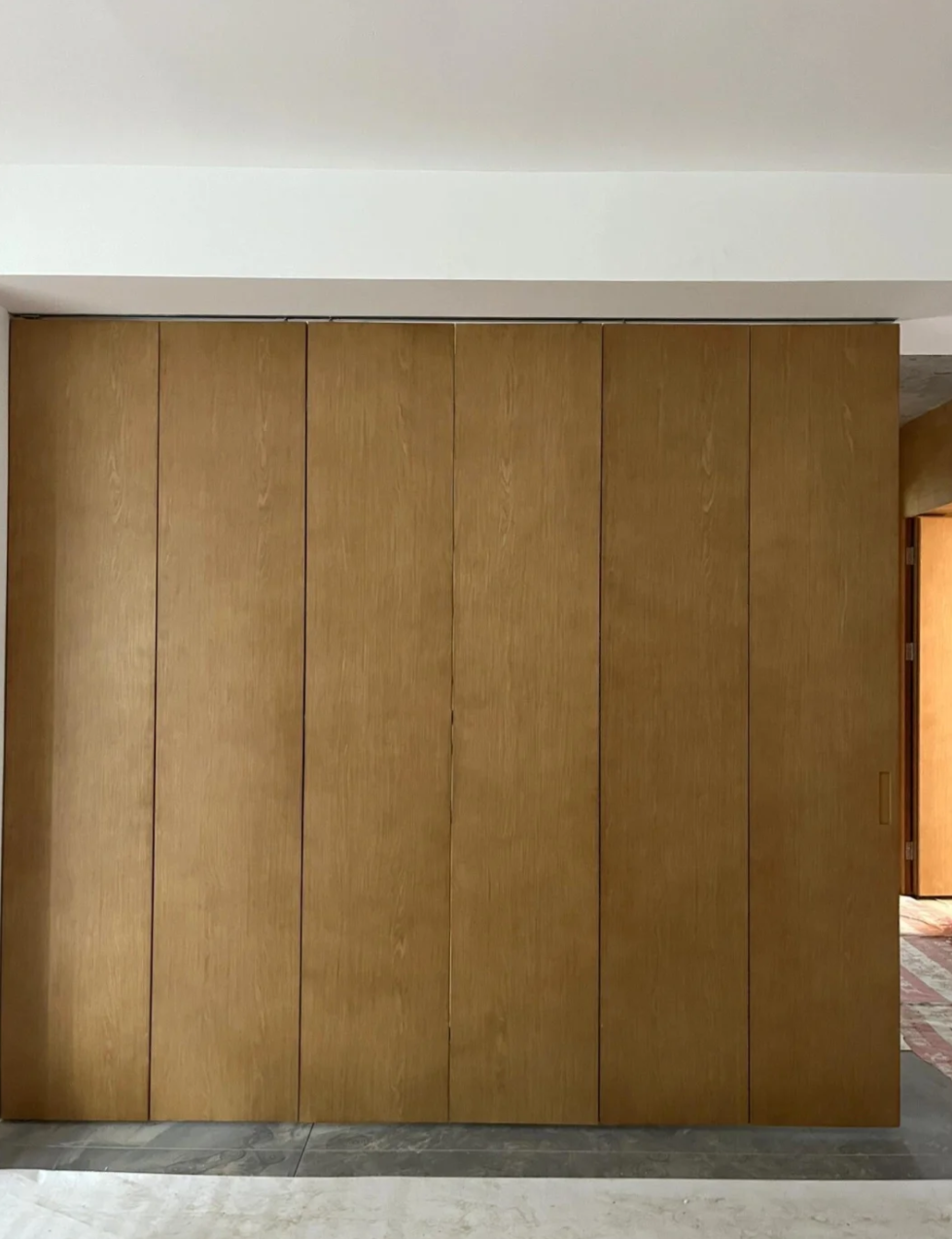
Buyers should provide complete door and project details before confirming a folding door hinge. The most important information includes door thickness, single door weight, door width and height, number of folding leaves, door material, opening direction, drilling requirements, expected usage frequency, and target visible gap standard.
Complete inquiry details help manufacturers match the correct hinge type, load range, routing size, finish, screw configuration, and adjustment function. This reduces sample failure, avoids production delays, and improves the chance that the selected hinge performs well in both testing and mass production.
A Complete Inquiry Saves Time
A short inquiry can start a conversation, but a complete inquiry helps suppliers give useful answers faster. In B2B hardware supply, the wrong sample costs time, shipping fees, and sometimes project confidence.
When a buyer sends only “door weight and width,” I usually need to ask several follow-up questions. When a buyer sends a drawing, photos, and usage requirements, the selection process becomes much more accurate.
Here is a practical checklist.
| Inquiry Detail | What I Use It For |
|---|---|
| Door thickness | Confirms concealed hinge body compatibility |
| Single-leaf weight | Checks load support requirement |
| Door width and height | Evaluates leverage and hinge quantity |
| Number of folding leaves | Understands movement and load distribution |
| Door material | Reviews screw holding and routing feasibility |
| Frame type | Confirms installation space and clearance |
| Opening direction | Checks hinge movement and layout |
| Drilling or opening dimensions | Matches hinge body and machining process |
| Expected usage frequency | Helps evaluate durability needs |
| Visible gap target | Supports appearance and adjustment selection |
| Finish requirement | Matches color, surface treatment, and brand style |
| Certification needs | Helps identify documents buyers should verify |
Sample Confirmation Is More Reliable Than Guesswork
For project or product-line development, sample confirmation is often necessary. A sample allows the buyer to check actual fit, movement, finish, screw fixing, and gap result.
A useful sample test can include:
Routing trial
The door factory checks whether the hinge opening is easy to machine.Assembly check
The hinge is installed into the actual door and frame structure.Movement test
The buyer checks folding movement, closing smoothness, and possible interference.Gap measurement
The buyer compares the result against the target visible gap standard.Adjustment check
The installer confirms whether the adjustment range is practical.Finish review
The hardware brand checks color, surface, and visual consistency.
At SDH Hardware, we often support sample confirmation and specification matching for door factories, hardware brands, and wholesalers. We can provide product drawings upon order confirmation and product inspection service after order completion. Buyers should still verify documents, samples, and final specifications against their own project requirements.
Supplier Evaluation Should Include More Than Price
Price matters in wholesale and OEM supply. However, hinge selection becomes risky when buyers compare only unit price.
A stronger supplier evaluation should include:
- Manufacturing experience with similar hinge types
- Ability to support OEM or ODM requirements
- Drawing and sample confirmation process
- Quality control during raw material screening
- Production supervision and finished product inspection
- Testing machine availability for function and frame checks
- Certification documents available for buyer verification
- Packaging, branding, and surface treatment capability
- Response speed when technical details are unclear
As a manufacturer with independent production operations, I see hinge selection as a joint technical and commercial decision. The best result usually comes when the buyer shares enough door data, and the supplier explains the limits clearly.
How Can You Compare Butt Hinges and Concealed Hinges for Folding Doors?
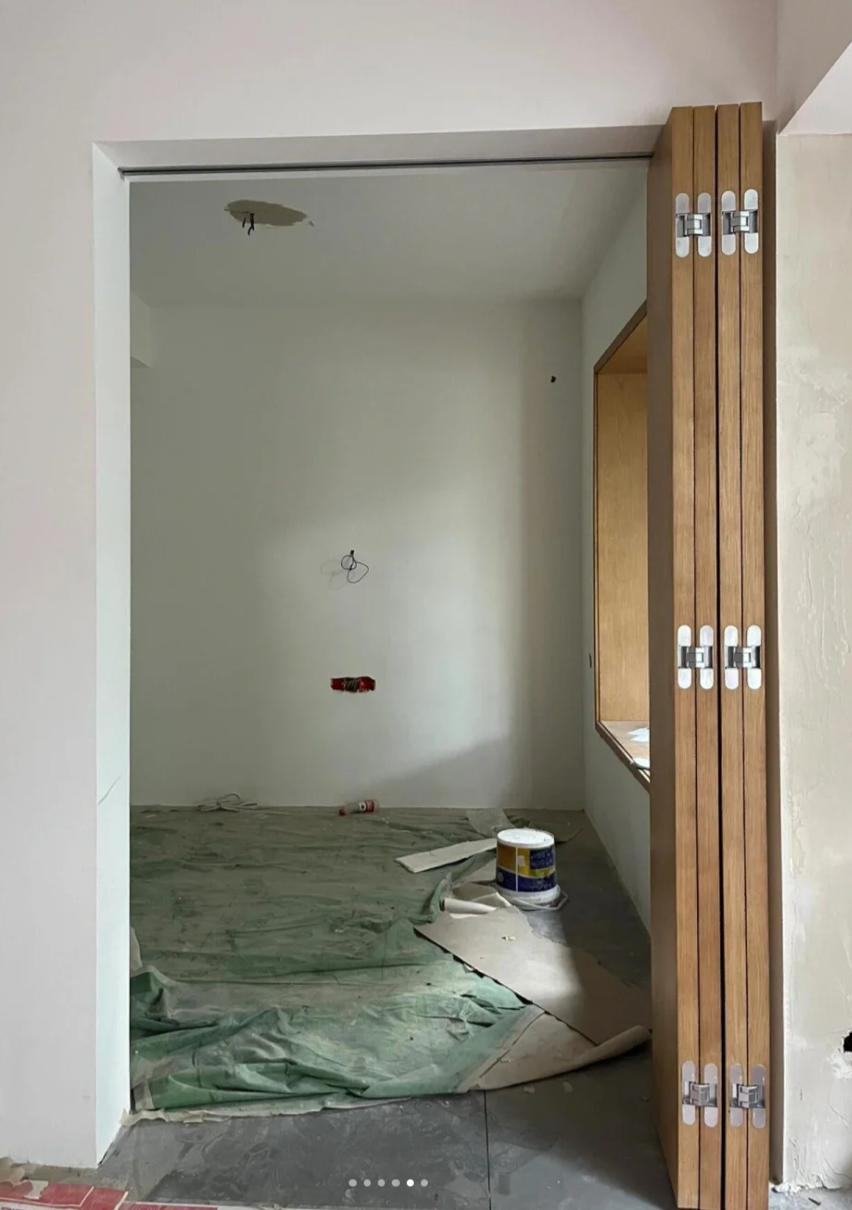
You can compare butt hinges and concealed hinges for folding doors by looking at appearance, visible gap, adjustability, machining needs, cost, and door compatibility. A butt hinge is simpler and more visible. A concealed adjustable hinge is cleaner and more precise, but it needs correct thickness, routing, and load matching.
A visible butt hinge may suit standard or cost-sensitive folding doors. A concealed adjustable hinge may suit premium doors where appearance, small gaps, and alignment control are important. The final choice should reflect the door structure, market positioning, production process, and performance expectations.
Comparison Table for B2B Buyers
The right comparison is not “which hinge is better?” The better question is “which hinge matches this door system and market requirement?”
| Selection Factor | Visible Butt Hinge | Concealed Adjustable Hinge |
|---|---|---|
| Appearance | Hinge barrel is visible | Hinge is hidden when closed |
| Visible gap | Usually larger | Usually smaller and cleaner |
| Adjustment | Limited or none | Often adjustable after installation |
| Machining requirement | Simpler | More precise routing needed |
| Door thickness sensitivity | Lower | Higher |
| Installation tolerance | More forgiving in basic use | Requires accurate opening dimensions |
| Premium market fit | Moderate | Strong |
| Cost level | Often lower | Often higher |
| Best use | Standard folding doors | High-end folding doors and modern systems |
Use Market Positioning to Guide the Choice
A bulk wholesaler may carry both options because customers have different price levels. A door factory developing a premium folding door system may prefer concealed hinges from the beginning. A hardware brand may choose concealed adjustable hinges to differentiate its product line.
Here is how I usually think about it:
- If the door is standard, utility-focused, and price-sensitive, a visible butt hinge may be practical.
- If the door is modern, design-focused, and gap-sensitive, a concealed adjustable hinge deserves serious evaluation.
- If the door is thin or difficult to route, a concealed hinge may not be compatible.
- If the door requires fire-rated documentation, the buyer should verify whether the selected hinge fits the certified assembly requirements.
- If the door line will be mass-produced, the machining process must be stable and repeatable.
Conclusion
Choosing the right folding door hinge requires more than checking door weight and width. I always recommend that buyers first confirm hinge type, then review door thickness, drilling size, door material, hinge quantity, visible gap target, and adjustment needs. Butt hinges remain practical for standard applications, while concealed adjustable hinges are often better for premium folding doors. If you are developing a folding door line or sourcing hinges in bulk, share your drawings and project details with SDH Hardware so we can help you evaluate suitable options for sampling and production.
"Understanding BS EN 1935:2002 single-axis hinge grades", https://uk.sfs.com/resources/article/understanding-bs-en-1935. Door-hinge standards such as EN 1935 and ANSI/BHMA A156.1 classify hinge performance in relation to door mass and use conditions, supporting the use of individual leaf weight as a selection parameter. Evidence role: expert_consensus; source type: institution. Supports: Door hinge standards classify or test hinges against specified door mass, supporting the practice of matching hinges to the mass of the supported leaf.. Scope note: The standards address hinge-rated door mass generally and may not prescribe the exact calculation method for every folding-door configuration. ↩
"Static Equilibrium - Rotational Forces", https://www.ux1.eiu.edu/~addavis/1350/12Statics/rot.html. A statics reference supports the mechanism that moment increases with the perpendicular distance between a force and the rotation axis; applied to doors, this explains why greater leaf width can increase hinge-side loading. Evidence role: mechanism; source type: education. Supports: Torque or moment is the product of force and its perpendicular distance from the axis of rotation, so a wider door can increase hinge-side moment for the same weight.. Scope note: This is contextual mechanical support rather than a folding-door-specific test. ↩
"What is a Moment?", https://web.mit.edu/4.441/1_lectures/1_lecture5/1_lecture5.html. Statics texts explain that the moment produced by a force depends on both the force magnitude and its distance from the axis; therefore equal-weight panels can impose different hinge moments when their widths differ. Evidence role: mechanism; source type: education. Supports: For the same weight, increasing the distance from the hinge axis increases the resulting moment, making a wider panel mechanically different from a narrower panel.. Scope note: This supports the mechanical principle, not a particular hinge model or capacity rating. ↩
"Division 06 - Interior Architectural Woodwork", https://fdo.wwu.edu/division-06-interior-architectural-woodwork. Architectural hardware guidance commonly specifies hinge quantity with reference to door height, mass, and service conditions, supporting the statement that taller or heavier panels may require more support points. Evidence role: expert_consensus; source type: institution. Supports: Architectural door hardware guidance commonly relates hinge quantity to door height, weight, and service conditions.. Scope note: Such guidance is usually written for hinged doors generally and must be adapted to the geometry of a specific folding-door system. ↩
"Understanding BS EN 1935:2002 single-axis hinge grades", https://uk.sfs.com/resources/article/understanding-bs-en-1935. Hardware standards and certification schemes define hinge performance by specified test methods, installation arrangements, door mass classes, and certificate scope, supporting the need to verify the context behind reported ratings. Evidence role: general_support; source type: institution. Supports: Hinge and fire-door hardware standards define performance ratings by test methods, installation conditions, classifications, and scope.. Scope note: This supports the verification principle rather than confirming any supplier's specific certificate. ↩
"087100 – DOOR HARDWARE - Facilities and Campus Services", https://fcs.cornell.edu/087100-door-hardware. Woodworking and hardware installation references describe concealed hinges as requiring bored or routed recesses of specified depth, supporting the need to match hinge body depth with available door and frame material. Evidence role: mechanism; source type: education. Supports: Concealed hinges require routed or bored recesses of defined depth, so door thickness and remaining material affect installation feasibility.. Scope note: The source may describe concealed hinges broadly rather than folding-door hinges specifically. ↩
"Wood Handbook, Chapter 08: Fastenings", https://research.fs.usda.gov/download/treesearch/37424.pdf. Studies of fastener performance in wood and wood-based panels show that screw withdrawal and connection strength depend on substrate properties and edge conditions, supporting the concern that excessive routing can reduce the strength of the hinge area. Evidence role: mechanism; source type: paper. Supports: Research on wood and wood-based panels shows that fastener strength depends on material properties, remaining section, and edge conditions.. Scope note: This is contextual support for the failure mechanism and may not test the exact hinge geometry discussed in the article. ↩
"A novel accuracy allocation method for machine tools", https://www.sciencedirect.com/science/article/pii/S2590123026011084. Manufacturing-quality research links dimensional tolerance control and process capability with repeatable assembly outcomes, supporting the claim that drilling and routing accuracy affect production quality. Evidence role: general_support; source type: paper. Supports: Manufacturing research links dimensional tolerances and process capability with assembly repeatability and product quality.. Scope note: The evidence is from general manufacturing and assembly research, not a dedicated folding-door hinge production study. ↩
"Design for tolerance of electro-mechanical assemblies", https://nvlpubs.nist.gov/nistpubs/Legacy/IR/nistir6223.pdf. Assembly tolerance-analysis literature explains that accumulated dimensional deviations can consume the available range of adjustment mechanisms, supporting the claim that inaccurate screw-hole placement can prevent final door alignment. Evidence role: mechanism; source type: paper. Supports: Assembly tolerance analysis explains how dimensional deviations accumulate and can limit the ability of adjustment mechanisms to achieve final alignment.. Scope note: This is a general assembly principle and does not quantify the adjustment range of any particular hinge. ↩
"Screw Withdrawal Resistance from WPC Profiles Used in ...", https://pubmed.ncbi.nlm.nih.gov/41976639/. Research on screw withdrawal resistance in solid wood and wood-based panels shows that material type, density, and panel structure substantially influence fastener-holding performance, supporting the need to evaluate door material during hinge selection. Evidence role: mechanism; source type: paper. Supports: Material type, density, and construction influence screw withdrawal resistance and connection performance.. Scope note: The evidence most directly covers wood and wood-based panels; aluminum or steel-reinforced systems may require separate fastening data. ↩
"Effect of Abutment Screw Design on Torque Loss Under Cyclic ...", https://pmc.ncbi.nlm.nih.gov/articles/PMC12561121/. Research on screwed joints under cyclic loading indicates that repeated movement can reduce connection reliability or promote loosening, supporting the concern that frequently operated doors may weaken fixing points over time. Evidence role: mechanism; source type: paper. Supports: Cyclic loading can degrade or loosen mechanical fastener connections, and wood-based panel screw performance is sensitive to repeated loading.. Scope note: The cited studies may use laboratory joint specimens rather than complete door assemblies. ↩
"Fire Doors and NFPA 80 FAQs", https://www.nfpa.org/news-blogs-and-articles/blogs/2025/04/11/fire-doors-faqs. Fire-door standards such as NFPA 80 require fire-door assemblies and their hardware to be installed and maintained in accordance with listing, labeling, and tested assembly requirements, supporting the need to verify hardware compatibility with fire-rated documentation. Evidence role: expert_consensus; source type: institution. Supports: Fire-door standards require components and hardware to be suitable for, listed for, or installed according to the tested and labeled fire-door assembly.. Scope note: Specific requirements vary by jurisdiction, certification scheme, and the particular listed door assembly. ↩