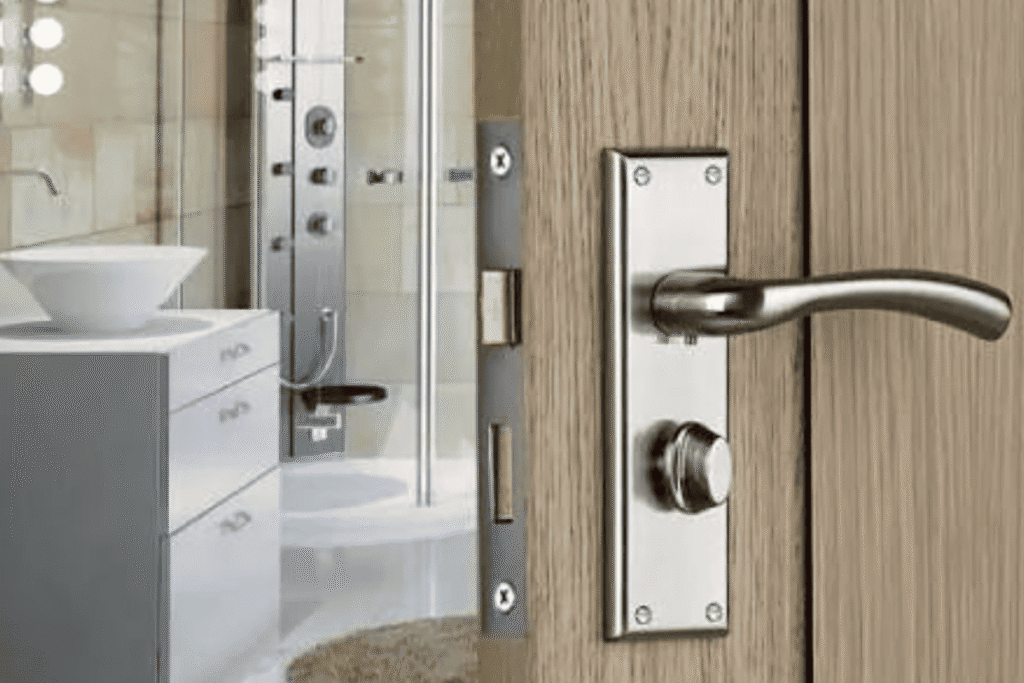
Ironmongery for a Disabled Toilet Door: Accessibility and Safety Solutions
Ironmongery for a Disabled Toilet Door can seem simple until a user struggles with the handle, the door closes too fast, or emergency access becomes difficult. That risk creates safety concerns and after-sales complaints. I prefer to treat the door as a complete accessibility hardware system, not a single visible fitting.
Ironmongery for a disabled toilet door should include an easy-to-operate handle or pull, a privacy lock with emergency release, suitable hinges, a delayed-action door closer, and a kick plate where wheelchair impact is likely.1 The goal is to protect user dignity, support safe access, reduce door damage, and improve long-term project reliability.
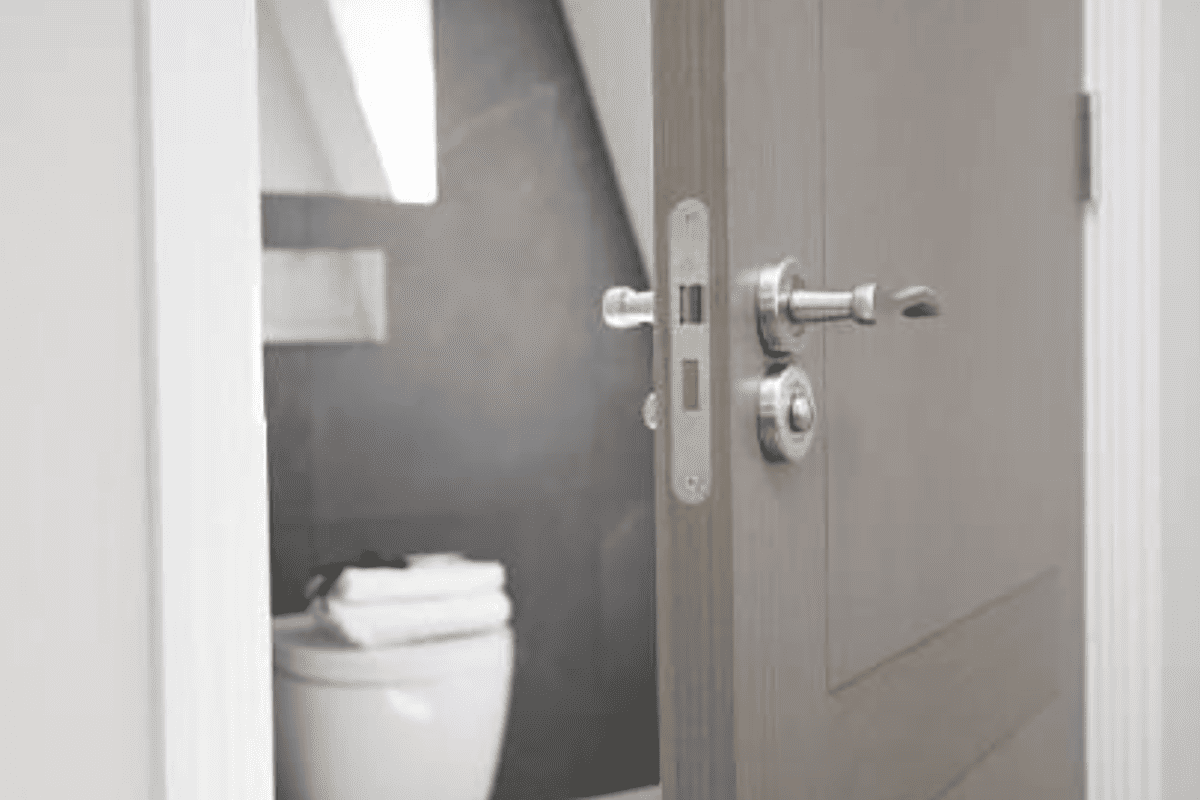
Many buyers first ask me about the handle design. That is understandable because the handle is visible. However, the safer question is broader: does the full hardware set support accessibility, privacy, emergency rescue, durability, and maintenance? Let’s break down the specification step by step.
Why Should Ironmongery for a Disabled Toilet Door Be Specified as a Complete Set?
A disabled toilet door creates more demands than a standard washroom door. A weak specification can cause difficult operation, damaged door surfaces, mismatched components, and complaints after installation. A complete ironmongery set reduces those risks because every item supports a safety or access function.2
Ironmongery for a disabled toilet door should be specified as a coordinated hardware set because the handle, lock, closer, hinges, and protection plates work together. Each component affects user access, privacy, emergency release, door movement, and long-term maintenance. Buyers should verify the final configuration against local accessibility standards and project requirements.
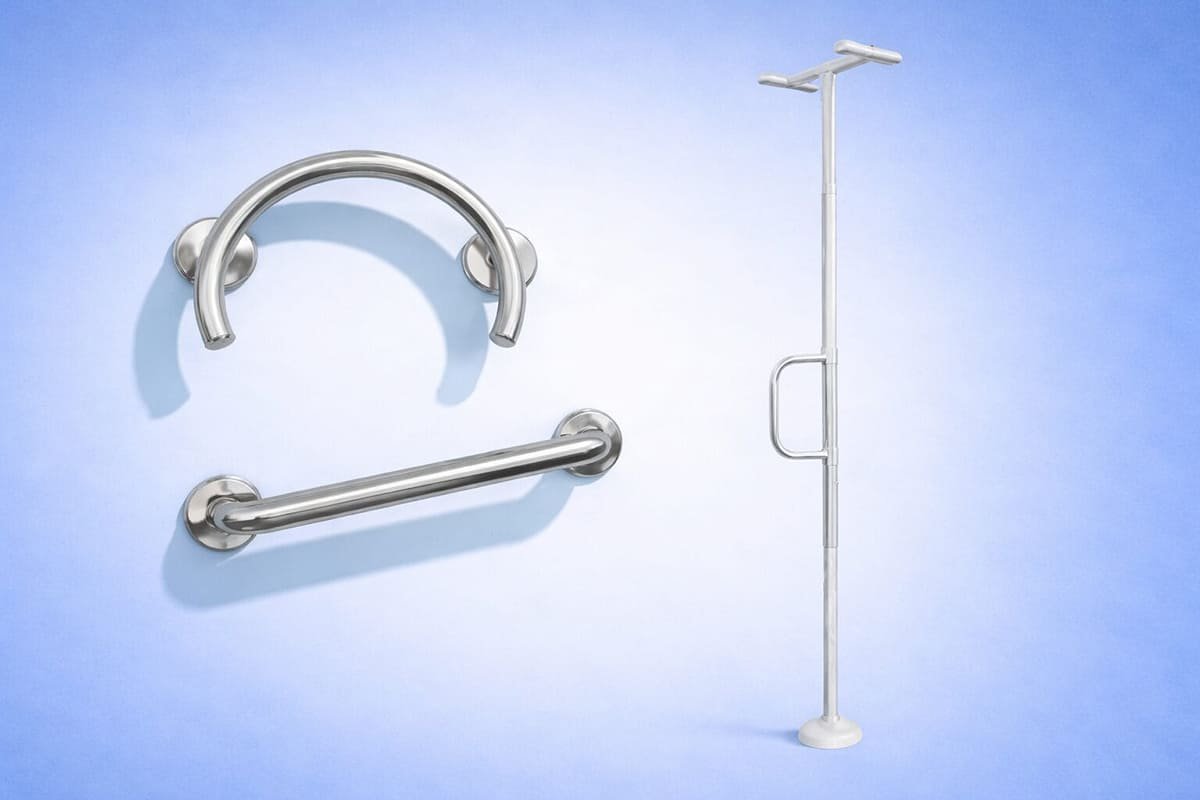
The door is a system, not a handle
In B2B sourcing conversations, I often see buyers start with one question: “Which disabled toilet handle do you have?” That is a reasonable starting point, but it is not enough for a reliable specification. The handle matters, yet the door also needs privacy, rescue access, controlled closing, wheelchair impact protection, and durable installation hardware.
A practical disabled toilet door hardware set usually includes:
- Lever handle or pull handle for easy gripping and operation
- Privacy lock with emergency release to protect dignity and allow rescue access
- Door closer with delayed action to give users more time to pass through
- Butt hinges or concealed hinges matched to door weight and usage level
- Kick plate or push plate to protect the lower part of the door
- Clear signage and indicator function where the project requires it
- Coordinated finishes for corrosion resistance and visual consistency
Why each component matters
| Component | Accessibility Role | Safety Role | Procurement Check |
|---|---|---|---|
| Lever handle or pull handle | Easier grip and movement | Reduces strain during opening | Check size, projection, finish, and grip comfort |
| Privacy lock | Gives normal toilet privacy | Should allow external emergency release | Confirm function, indicator, and override method |
| Door closer | Controls door closing | Prevents uncontrolled slamming | Ask for delayed-action options where needed |
| Hinges | Support door weight and swing | Reduce sagging and misalignment | Match hinge type, material, and load capacity |
| Kick plate | Allows wheelchair contact | Protects door from dents and scratches | Confirm height, thickness, material, and finish |
| Accessories | Complete user experience | Improve visibility and operation | Check signage, screws, spindle, and fixing kits |
A buyer’s view of risk
For door factories, hardware brands, and wholesalers, the risk is not only installation failure. The risk is also repeat complaints. A door may look correct in a catalogue, but users may still experience problems if the closer is too aggressive, the lock is hard to release, or the lower door surface becomes damaged after several months of wheelchair contact.
I usually recommend that buyers evaluate the set with these questions:
- Can a user open the door with limited hand strength?
- Can a wheelchair user pass before the door closes?
- Can staff release the lock from outside during an emergency?
- Will the door surface resist daily impact?
- Are all components compatible with the door thickness and lock case?
- Can the supplier provide drawings, finish options, and inspection support?
At SDH Hardware, I approach this from a manufacturer and supplier perspective. I do not present myself as a local accessibility-code authority. Local standards can vary by country, project type, and authority having jurisdiction. Still, I can help buyers prepare a practical ironmongery configuration for review by their project consultant, architect, contractor, or compliance specialist.
What Lock Function Works Best for Ironmongery for a Disabled Toilet Door?
A disabled toilet needs privacy, but it also needs emergency access. If the lock only protects privacy and ignores rescue needs, a user may become trapped after a fall or sudden illness. If the lock is too easy to release, privacy may be compromised.
The best lock function for ironmongery for a disabled toilet door is usually a privacy lock with an external emergency release and a clear occupied/vacant indicator.3 It should allow normal locking from inside while enabling authorized release from outside when urgent assistance is needed. Buyers should confirm compatibility with local standards and door preparation.
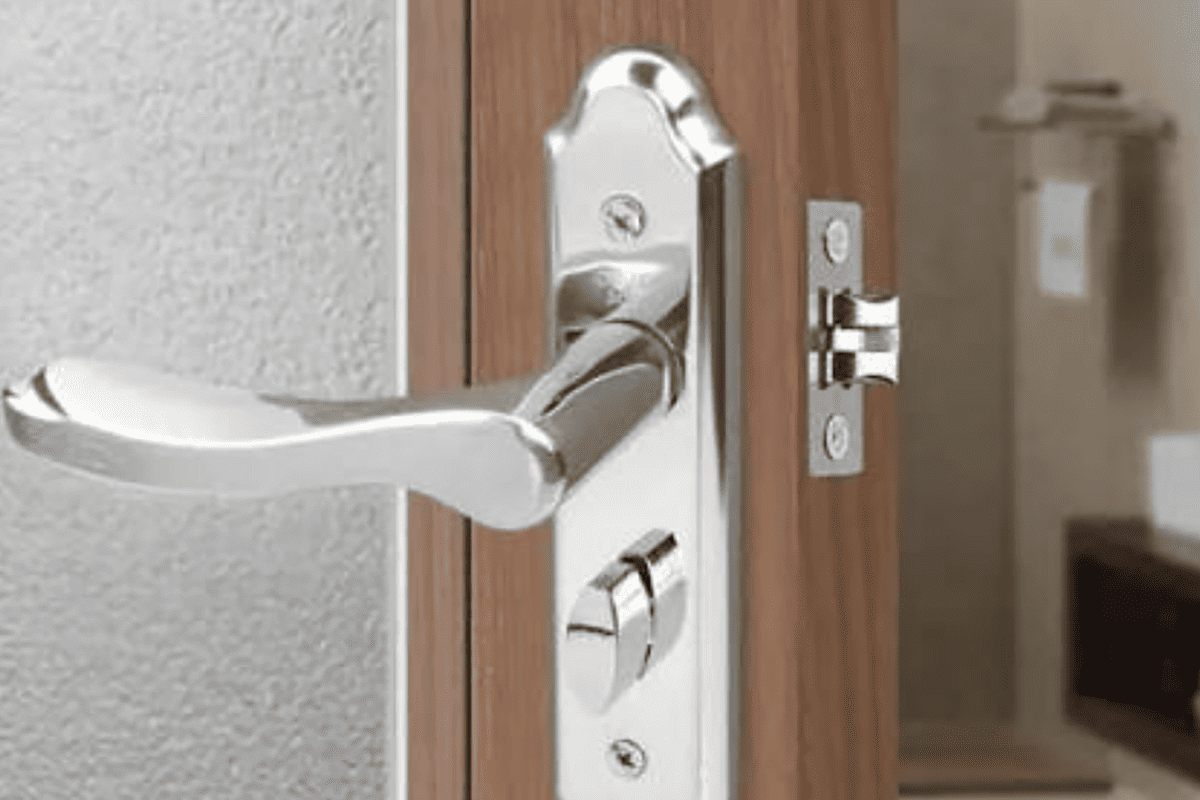
Privacy and emergency access must be balanced
In a disabled toilet application, dignity matters. The user should be able to lock the door normally and feel secure. However, public washrooms also need a rescue path. A user may slip, faint, drop an aid, or be unable to operate the lock after entering. In that situation, staff or responders need a safe way to open the door from outside.
A suitable privacy lock set commonly includes:
- Inside turn or accessible locking control
- Outside emergency release
- Occupied/vacant indicator
- Compatible latch or mortise lock body
- Suitable strike plate
- Spindle and fixing accessories
- Clear operating direction
Some catalogues include dedicated disabled toilet functions. If a product reference such as an A72ZPWC function is confirmed by the relevant catalogue and matches the project requirement, I would treat it as one possible function example. I would not treat any one reference as the only acceptable solution. Buyers should compare the function, dimensions, certification documents, and installation details before confirming an order.
What buyers should check before ordering
A privacy lock can look correct but still be unsuitable if the function is wrong. For bulk procurement, I suggest checking the lock specification in writing before production.
| Check Item | Why It Matters | What to Confirm |
|---|---|---|
| Emergency release method | Enables rescue access | Coin release, tool release, or approved override method |
| Indicator visibility | Helps users and staff | Clear occupied/vacant display |
| Door thickness range | Prevents installation problems | Spindle length and fixing bolt length |
| Lock body compatibility | Avoids mismatched sets | Backset, case size, follower size, and latch direction |
| Finish durability | Supports public washroom use | Stainless steel, plated finish, or project finish |
| Local compliance | Reduces approval risk | Verify with consultant or code professional |
Material and finish considerations
Disabled toilet doors are often installed in commercial or public areas. Hardware may face frequent touching, cleaning chemicals, humidity, and accidental impact. For that reason, finish selection should be practical, not only decorative.
Common options include:
- Stainless steel finish for corrosion resistance and neutral appearance
- Satin stainless steel look for reduced fingerprint visibility
- PVD or coated finishes when the project needs color matching
- Brass or zinc alloy components where the design and budget allow
The best choice depends on project use level, budget, maintenance routine, and regional market expectations. In export supply, I also like to confirm whether the buyer needs CE documentation, fire-rated documentation, or specific test reports. These documents should be reviewed carefully by the buyer and the project team. A certificate is not just a marketing line. It should match the product type, standard, size, and intended application.4
A manufacturer’s practical advice
From my side, the most common mistake is incomplete communication. A buyer may request a “disabled toilet lock” but not provide door thickness, lock case size, handedness, finish, packaging needs, or market standard. That creates a risk of rework.
For smoother procurement, I recommend sharing:
- Door material and thickness
- Door opening direction
- Required lock case size or existing cut-out
- Finish and material preference
- Indicator style
- Emergency release requirement
- Quantity and packaging method
- Required documentation for the market
This level of detail helps a supplier configure the set correctly before mass production.
How Does a Delayed-Action Door Closer Improve Accessibility?
A standard door closer may shut too quickly for a wheelchair user or a person with limited mobility. That creates stress and increases collision risk. In some projects, users may have to fight against the door movement, which makes the washroom feel less accessible.
A delayed-action door closer improves accessibility by holding the door open longer during the early closing cycle.5 This gives wheelchair users, elderly users, and people with mobility aids more time to pass through safely. Buyers should confirm the closer strength, delay range, fire-door suitability, and project compliance before specification.
Why closing speed matters
Door control is a major part of accessible design. The door must close reliably, but it should not rush the user. A delayed-action closer allows the door to remain open for a short period before closing at a controlled speed. This can reduce pressure on users who need extra time to enter or exit.
A closer may need adjustment for:
- Opening force
- Delayed closing section
- Main closing speed
- Latch speed
- Backcheck
- Door width and weight
- Wind pressure or air pressure
- Fire door requirements
Not every closer is suitable for every door. A light-duty closer may not control a heavy commercial door. A strong closer may make the door too hard to open.6 This is why the specification should consider the door size, door weight, usage frequency, and any fire or smoke control requirement.
Comparing closer options
| Door Closer Type | Best Use | Accessibility Benefit | Buyer Caution |
|---|---|---|---|
| Standard surface closer | General commercial doors | Controlled closing | May not provide enough passage time |
| Delayed-action closer | Accessible washrooms and public areas | Allows slower users to pass | Must be adjusted correctly |
| Cam-action closer | Lower opening resistance in some designs | Easier opening feel | Cost may be higher |
| Concealed closer | Minimal visual impact | Cleaner design | Installation and maintenance may be more complex |
| Floor spring | Heavy doors or design projects | Strong door control | May not suit all toilet door designs |
Delayed action is not the same as weak closing
A common misunderstanding is that accessible closing means weak closing. That is not correct. The door should still close securely and latch properly. The difference is timing and control. The closer can allow more time at the start of the closing cycle, then complete the closing action in a safe and controlled way.
For procurement, I would check:
- Is the closer adjustable?
- Does it have a delayed-action function?
- Is it suitable for the door width and weight?
- Does the project require fire-rated door hardware?
- Can the supplier provide product drawings and instructions?
- Will the closer arm interfere with signage, frame, or other hardware?
Installation affects performance
Even a good closer can perform poorly if it is installed or adjusted incorrectly.7 Screw positions, arm geometry, mounting method, and closing speed settings all matter. For large projects, I suggest buyers request drawings and installation guidance before confirming production.
In procurement communication, I also recommend separating two issues:
- Product capability: What the closer is designed to do
- Site adjustment: How the installer sets it after fitting
A supplier can provide a suitable closer, but the final performance depends on site conditions and installation quality. For application-specific decisions, especially on fire doors or regulated public buildings, buyers should involve a qualified professional.
Why Add a Kick Plate to a Disabled Toilet Door?
A disabled toilet door often receives impact at lower levels. Wheelchair footrests, wheels, walking frames, cleaning equipment, and shoes can scratch or dent the door. Without protection, the door may look old quickly and require more maintenance.
A kick plate protects the lower door surface from wheelchair impact, foot traffic, and cleaning damage.8 It is especially useful in high-use public washrooms, hospitals, transport buildings, schools, shopping centers, and commercial projects. Buyers should confirm plate height, thickness, material, finish, edge treatment, and fixing method.
Protection is part of accessibility
A kick plate is sometimes treated as a small accessory. I see it differently. It supports the real way people use the door. A wheelchair user may push the lower door area with a footrest. A cleaner may hit the door with equipment. A user carrying bags may push the door with a knee or foot.
The kick plate does not make the door accessible by itself. However, it helps the door remain usable and presentable after repeated contact. This reduces long-term cost for building owners and reduces complaints for suppliers.
Common kick plate materials
| Material | Advantages | Considerations |
|---|---|---|
| Stainless steel | Durable, corrosion resistant, common in commercial projects | Higher cost than some basic plates |
| Aluminum | Lightweight and cost-effective | May dent more easily depending on thickness |
| Brass | Decorative appearance | Needs suitable maintenance and budget |
| PVC or plastic | Lower cost and color options | May not suit heavy-duty public use |
| Powder-coated metal | Color matching possible | Coating quality and scratch resistance matter |
Specification details that matter
For bulk sourcing, small details can create big differences. I recommend confirming these points before ordering:
- Height: A taller plate gives more protection, but the project may have design limits.
- Thickness: Thicker plates usually resist dents better, but they may cost more.
- Width: The plate should suit the door leaf width and allow edge clearance.
- Corners: Rounded corners can reduce sharp-edge risk.
- Edges: Smooth or beveled edges improve safety and finish quality.
- Fixing: Screws are common, but adhesive or concealed fixing may be requested.
- Finish: The plate should coordinate with lever handles, hinges, and locks.
- Fire door use: Any added plate on a fire door should be checked against the door assembly requirements.9
Maintenance and lifecycle value
A kick plate is not only a protection item. It is also a lifecycle cost decision. In high-traffic toilets, lower door damage can appear quickly. Once the face of the door is dented or scratched, repair can be inconvenient. Replacement is even more expensive.
A protective plate can help reduce:
- Surface scratches
- Impact dents
- Moisture-related edge damage
- Cleaning marks
- Early door replacement
- Visual deterioration in public areas
From a wholesaler’s point of view, including kick plates in a disabled toilet door hardware package can also make the offer more complete. It reduces the chance that the customer buys a handle and lock but later discovers the door needs protection. In my experience, complete configurations create fewer misunderstandings than partial lists.
How Should Buyers Evaluate Suppliers for Disabled Toilet Door Hardware?
A disabled toilet door hardware set must work in real projects, not only in a catalogue image. If the supplier cannot confirm function, finish, drawings, packaging, inspection, and documentation, the buyer may face delays or mismatched components.
Buyers should evaluate suppliers by checking product range, manufacturing control, customization ability, documentation support, quality inspection, packaging options, and communication accuracy. For disabled toilet door hardware, the best supplier is not just the cheapest one. The better supplier helps buyers configure a complete, compatible, and verifiable hardware set.
What a reliable supplier should support
For door factories, hardware brands, and bulk wholesalers, procurement is rarely just one SKU. Buyers often need a full series that includes locks, handles, hinges, cylinders, closers, and accessories. A supplier with a broader architectural hardware range can help coordinate finishes, packaging, and technical details.
At SDH Hardware, our business context is factory-direct architectural door hardware manufacturing. We produce and supply products such as:
- Euro mortise locks
- Stainless steel lever handles
- Butt hinges
- Concealed door hinges
- Euro brass cylinders
- Door accessories
We also support OEM and ODM orders, custom packaging, logo options, product drawings after order confirmation, and inspection service after order completion. Buyers should still verify certificates, samples, and product suitability for each project.
Supplier evaluation checklist
| Evaluation Area | Why It Matters | Questions to Ask |
|---|---|---|
| Product range | Helps build complete sets | Can the supplier provide lock, handle, hinges, closer, and accessories? |
| Manufacturing control | Reduces quality variation | Does the factory control key production steps in-house? |
| Customization | Supports market needs | Can finish, logo, packaging, and dimensions be adjusted? |
| Documentation | Supports project approval | Are CE or fire-rated documents available for the relevant product? |
| Quality inspection | Reduces defect risk | What raw material, production, and finished product checks are used? |
| Communication | Prevents wrong orders | Does the supplier confirm drawings, functions, and accessories clearly? |
| Export experience | Supports smoother delivery | Does the supplier understand target markets and packing needs? |
Do not buy only by price
Price matters in wholesale and project supply. I understand that clearly. However, the lowest unit price can become expensive if the hardware set is incomplete or incompatible. A lock with the wrong backset, a closer without the required function, or a finish that does not match the handle can create extra cost.
A balanced procurement review should consider:
- Unit price
- Component compatibility
- Material and finish
- Testing and inspection process
- Certification documents
- Lead time
- Packaging and branding
- After-sales communication
- Supplier willingness to confirm technical details
Samples and pre-production confirmation
For large orders, samples are valuable. A sample allows the buyer to check finish, function, grip comfort, indicator visibility, fixing quality, and packaging. A pre-production confirmation can reduce misunderstandings before mass production.
I suggest a simple approval flow:
- Confirm project requirement and market standard
- Select proposed hardware set
- Review drawings and key dimensions
- Check certificates or test documents where needed
- Approve sample finish and function
- Confirm packaging and logo details
- Start bulk production
- Conduct final inspection before shipment
This process is not complicated, but it protects both sides. It also makes the final supply more predictable.
Frequently Asked Questions
What is included in ironmongery for a disabled toilet door?
A typical set includes an accessible handle or pull, privacy lock with emergency release, hinges, delayed-action door closer, kick plate, and related fixings. Some projects also require signage, indicator functions, or coordinated accessories. Buyers should verify local accessibility and fire requirements before final selection.
Does every disabled toilet door need a delayed-action door closer?
Not every project uses the same closer, but delayed action is often helpful for accessibility. It gives wheelchair users and people with limited mobility more time to pass through. The closer must still match door size, weight, fire requirements, and local project standards.
Why does the privacy lock need emergency release?
The emergency release allows authorized access from outside if a user falls, becomes unwell, or cannot unlock the door. This feature balances privacy with safety. Buyers should confirm the release method, indicator design, lock body compatibility, and local compliance requirements before ordering.
Is a kick plate required for a disabled toilet door?
A kick plate may not be required in every project, but it is strongly practical where wheelchair impact or high traffic is expected. It protects the lower door surface from dents, scratches, and cleaning damage. The material, height, thickness, and fixing method should match the project.
Can SDH Hardware provide customized disabled toilet door hardware sets?
Yes. SDH Hardware supports B2B factory-direct supply, OEM and ODM customization, finish options, logo services, packaging design, drawings after order confirmation, and inspection support. Buyers should share project details so we can help configure suitable door hardware for review and approval.
Conclusion
Ironmongery for a Disabled Toilet Door should be treated as a complete accessibility and safety solution. The best specification considers the handle, privacy lock, emergency release, delayed-action closer, hinges, kick plate, finish durability, and supplier support. Buyers should also verify local standards and project-specific requirements with qualified professionals. If you source architectural door hardware in bulk, I can help you configure a practical disabled toilet door hardware set for your market, brand, or project.
"Chapter 4: Entrances, Doors, and Gates", https://www.access-board.gov/ada/guides/chapter-4-entrances-doors-and-gates/. Government accessibility standards such as the ADA Standards for Accessible Design address door hardware operation, clear opening, opening force, and closing speed, supporting the treatment of accessible toilet-door ironmongery as a coordinated access system, although they do not mandate every accessory listed here in every jurisdiction. Evidence role: general_support; source type: government. Supports: Government accessibility standards regulate accessible door operation, hardware usability, maneuvering clearances, opening force, and closing speed, supporting the need to specify multiple coordinated door-hardware elements.. Scope note: Contextual support; exact required components vary by country, project type, and local authority. ↩
"Chapter 4: Entrances, Doors, and Gates", https://www.access-board.gov/ada/guides/chapter-4-entrances-doors-and-gates/. The U.S. Access Board’s guidance on accessible doors discusses hardware, maneuvering clearance, opening force, thresholds, and closing speed together, supporting a systems-based view of accessible door specification, while not directly measuring complaint reduction. Evidence role: general_support; source type: government. Supports: Accessibility guidance treats doors as assemblies affected by hardware, clearances, opening force, thresholds, and closing speed.. Scope note: Contextual support; it supports the systems approach but not the article’s specific commercial-risk outcome. ↩
"ADA Accessibility Standards", https://www.access-board.gov/ada/. Government guidance for accessible sanitary accommodation commonly addresses privacy locking, emergency release from outside, and clear user information, supporting the use of a privacy lock with external release and occupied/vacant indication, although the exact hardware format is jurisdiction-dependent. Evidence role: general_support; source type: government. Supports: Accessible toilet guidance supports privacy locking, external emergency release, and clear indication of whether the facility is occupied.. Scope note: Contextual support; the source may support the functions without naming the same product category used in the article. ↩
"Declaration of Performance and conformity - CE Marking", https://single-market-economy.ec.europa.eu/sectors/construction/construction-products-regulation-cpr/ce-marking-and-declaration-performance-and-conformity_en. The EU Construction Products Regulation links declarations of performance and CE marking to the construction product’s product-type, intended use, harmonised technical specification, and declared performance characteristics, supporting the need to verify that documentation matches the actual door-hardware application. Evidence role: definition; source type: government. Supports: Construction-product compliance documents are linked to product type, intended use, applicable technical specification, and declared performance.. Scope note: Directly relevant for EU-regulated construction products; other markets use different certification systems. ↩
"Entrances, Doors, and Gates", https://www.access-board.gov/files/ada/guides/entrances.pdf. The ADA Standards for Accessible Design require door closers on accessible doors to be adjusted so that closing from 90 degrees to 12 degrees from the latch takes at least five seconds, supporting the accessibility rationale for providing users more passage time. Evidence role: mechanism; source type: government. Supports: Accessible design standards regulate door-closing speed so users have adequate time to pass through the opening.. Scope note: The standard addresses closing speed generally and does not require every accessible toilet door to use a delayed-action closer specifically. ↩
"Chapter 4: Entrances, Doors, and Gates", https://www.access-board.gov/ada/guides/chapter-4-entrances-doors-and-gates/. The ADA Standards for Accessible Design limit the opening force of many accessible interior hinged doors to five pounds, excluding the force needed to retract latches, supporting the claim that excessive closer strength can impair access. Evidence role: mechanism; source type: government. Supports: Accessible door standards limit opening force for many interior doors, showing why closer strength affects accessibility.. Scope note: Fire doors and some exterior doors may be governed by different force requirements or by the authority having jurisdiction. ↩
"NFPA 80 Fire Door Requirements: 13 Point Inspection ...", https://watersonusa.com/solutions/nfpa-80-fire-door-requirements. NFPA 80 treats self-closing devices as functional parts of fire-door assemblies that must be inspected and maintained so the door closes and latches, supporting the point that closer performance depends on installation and adjustment as well as product selection. Evidence role: mechanism; source type: institution. Supports: Door-closing devices must be installed, adjusted, inspected, and maintained so doors close and latch properly.. Scope note: Directly applicable to fire-door assemblies; it provides contextual support for non-fire toilet doors. ↩
"ADA Accessibility Standards", https://www.access-board.gov/ada/. The U.S. Access Board explains that the lower push-side surface of accessible doors must be smooth to prevent wheelchair footrests from catching, contextualizing the use of protective lower-door plates where repeated wheelchair contact is expected. Evidence role: mechanism; source type: government. Supports: Accessible door guidance recognizes that the lower push-side surface can be contacted by wheelchair footrests and should avoid features that obstruct passage.. Scope note: Contextual support; the guidance addresses accessibility and obstruction risk rather than directly measuring reductions in scratches, dents, or cleaning damage. ↩
"Decoded: Protection Plates on Fire Doors", https://idighardware.com/2017/10/decoded-protection-plates-on-fire-doors-november-2017/. NFPA 80 includes requirements for protection plates and field modifications on fire-door assemblies, supporting the need to verify that any added kick plate remains compatible with the labeled assembly and applicable approval conditions. Evidence role: expert_consensus; source type: institution. Supports: Fire-door standards regulate protection plates and field modifications as part of the labeled fire-door assembly.. Scope note: The exact allowance depends on the edition of the standard, plate dimensions, installation method, door listing, and local authority requirements. ↩