
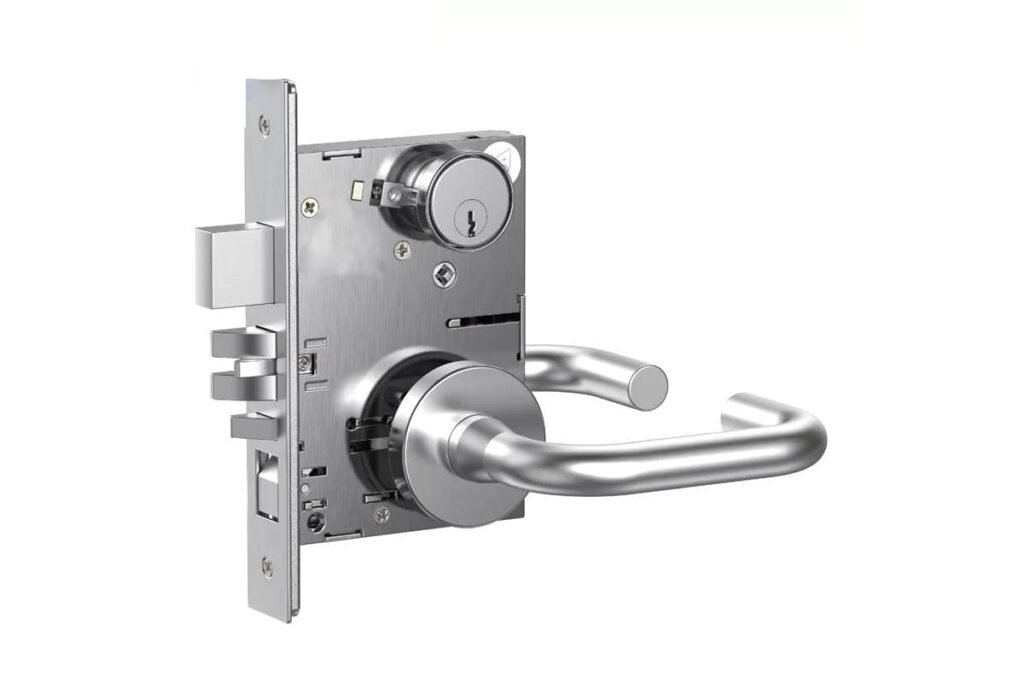
Euro Mortise Lock Corrosion Resistance: How to Review Salt Spray Evidence
Euro Mortise Lock Corrosion Resistance matters when buyers must approve hardware for apartments, hotels, commercial doors, and export markets. The problem is that salt spray evidence often looks simple. The risk is that “hours” can be misunderstood as real service life. I prefer to review the evidence as a procurement-risk tool.
Salt spray evidence for Euro mortise lock corrosion resistance should be reviewed by checking the test standard, sample identity, material, finish, tested component, exposure time, corrosion result, photos, report date, and product match. Salt spray hours support comparison under controlled conditions, but they do not directly predict real-world service life.1
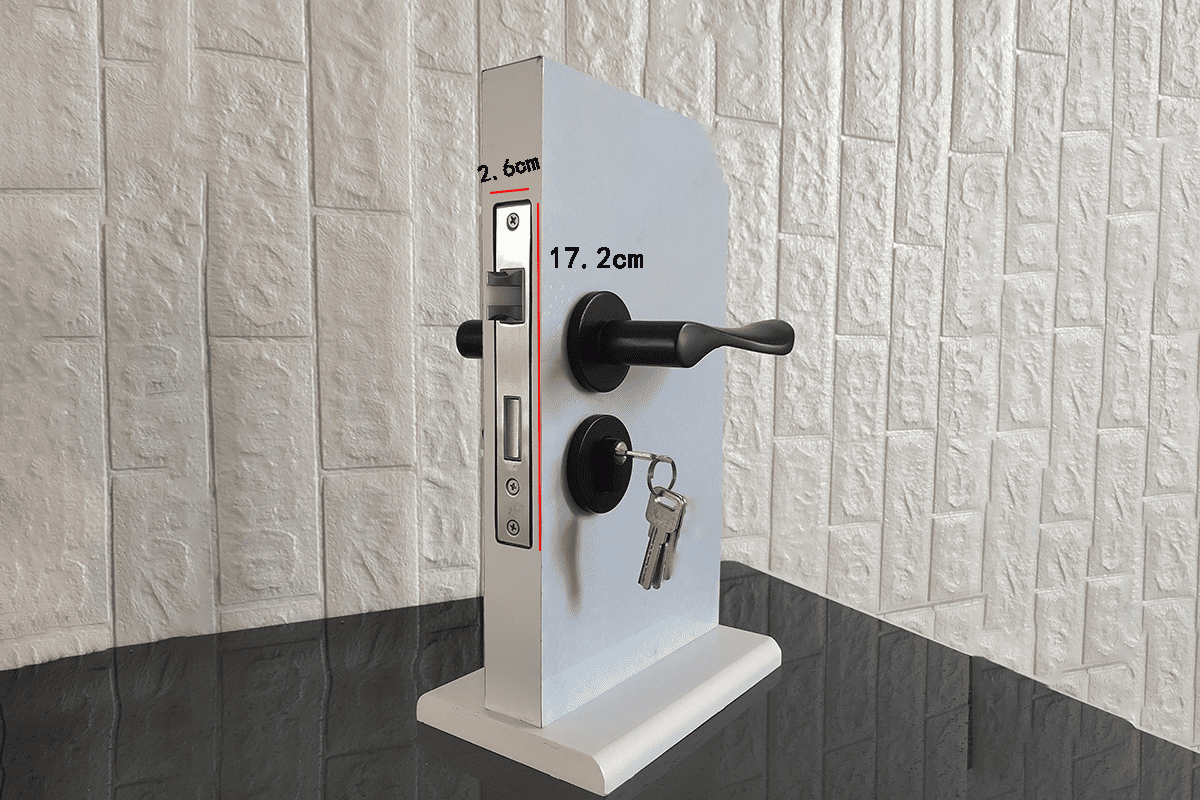
I often explain this during pre-sales communication with door factory buyers and OEM hardware brands. A salt spray report can be useful, but only when the buyer understands what it proves, what it does not prove, and whether it applies to the exact Euro mortise lock being purchased.
Why does Euro mortise lock corrosion resistance need careful review?
Euro mortise lock corrosion resistance needs careful review because the same lock can face very different environments. A dry indoor apartment, a humid coastal villa, and a high-traffic hotel corridor do not create the same risk.2 If buyers only compare salt spray hours, they may miss the actual project requirement.
Euro mortise lock corrosion resistance should be reviewed by matching the lock material, surface treatment, tested component, and salt spray result with the project environment and after-sales risk. A higher salt spray hour can be useful, but it is not automatically the best purchasing choice if the evidence does not match the product or application.
Salt spray hours are a controlled comparison, not a service-life promise
I always tell buyers that neutral salt spray testing is a quality comparison method3. It is not a simple calendar that says, “96 hours equals X years outdoors.” The test creates a controlled corrosive environment, often using a sodium chloride solution, stable temperature, and defined observation method.4 This helps manufacturers, buyers, and quality teams compare finishes and materials under repeatable conditions.
However, real doors are not salt spray chambers. Real doors face:
- Indoor humidity
- Cleaning chemicals5
- Finger sweat and hand contact6
- Coastal air
- Industrial pollution
- Temperature changes
- Door usage frequency
- Installation quality
- Maintenance habits
This is why I use salt spray evidence as one part of a broader quality review.
EN 16707 is relevant, but buyers should read the evidence
For Euro architectural hardware, buyers often refer to EN 1670 when discussing corrosion resistance. I treat this standard as a serious technical reference, not as a marketing slogan. A supplier should be able to explain which product or component was tested, which grade or result was achieved, and whether the evidence relates to the buyer’s exact order.
A practical procurement review may look like this:
| Review point | Why it matters for buyers |
|---|---|
| Test standard | It confirms the test method and evaluation basis |
| Test type | Neutral salt spray and other methods may not be equal |
| Sample identity | It shows what was actually tested |
| Material | Zinc alloy, stainless steel, brass, and steel behave differently8 |
| Surface finish | Plating, painting, PVD, and stainless brushing have different risks |
| Tested component | A faceplate result may not prove the full lock body result9 |
| Exposure time | It supports controlled comparison |
| Corrosion grade/result | It shows the actual evaluation outcome |
| Photos | They help buyers verify visual evidence |
| Report date | It shows whether the evidence is current |
| Product match | It confirms whether the report applies to the purchased item |
In my experience, the most common mistake is not accepting a weak report. The most common mistake is using a valid report too broadly. For example, a report for one faceplate finish should not automatically be treated as evidence for every lock case, latch, deadbolt, screw, and strike plate in the full set.
Buyers should connect evidence to market risk
Door factories and OEM hardware brands usually need documentation for internal approval. They also need stable after-sales performance. I suggest that buyers divide applications into simple risk levels:
Low-risk indoor use
Dry residential interiors may not require the highest salt spray target.Medium-risk humid environments
Kitchens, bathrooms, humid regions, and high-use apartments may need stronger evidence.High-risk coastal or project use
Coastal areas, hotels, public buildings, and export projects may need stricter specifications and more complete documentation.
The key point is simple: Euro Mortise Lock Corrosion Resistance should match the real project, not only the highest number on a report.
What should buyers check in Euro Mortise Lock Corrosion Resistance evidence?
Buyers should check Euro Mortise Lock Corrosion Resistance evidence with a structured list, not a quick glance at the test hours. The problem is that many reports look official. The risk is that the tested sample may not be the same as the ordered product. A checklist reduces misunderstanding.
Buyers should verify the test standard, test type, sample identity, material, surface treatment, tested component, exposure time, corrosion grade, photos, report date, laboratory information, and relationship to the exact purchased Euro mortise lock. The evidence is strongest when the report clearly matches the product specification and order configuration.
1. Confirm the test standard and test type
The first step is to check the named standard and method. For European architectural hardware, EN 1670 is commonly discussed for corrosion resistance classification. Neutral salt spray testing is also commonly used because it gives buyers a controlled way to compare materials and finishes.
Buyers should ask:
- Which standard was used?
- Was the test a neutral salt spray test?
- Was the evaluation method clearly stated?
- Does the report include the result or grade, not only the exposure time?
- Does the report show who performed the test?
I do not recommend accepting “salt spray passed” as a complete answer. The buyer should see the details.
2. Confirm the exact sample identity
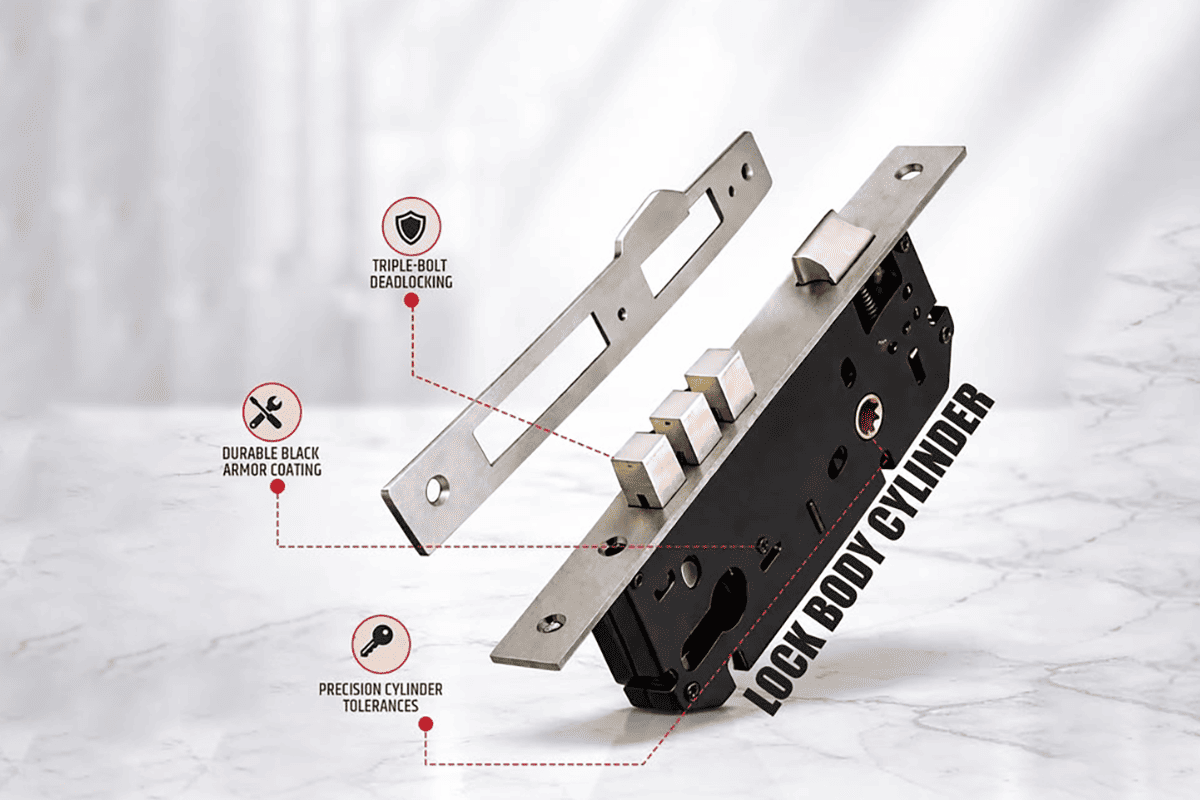
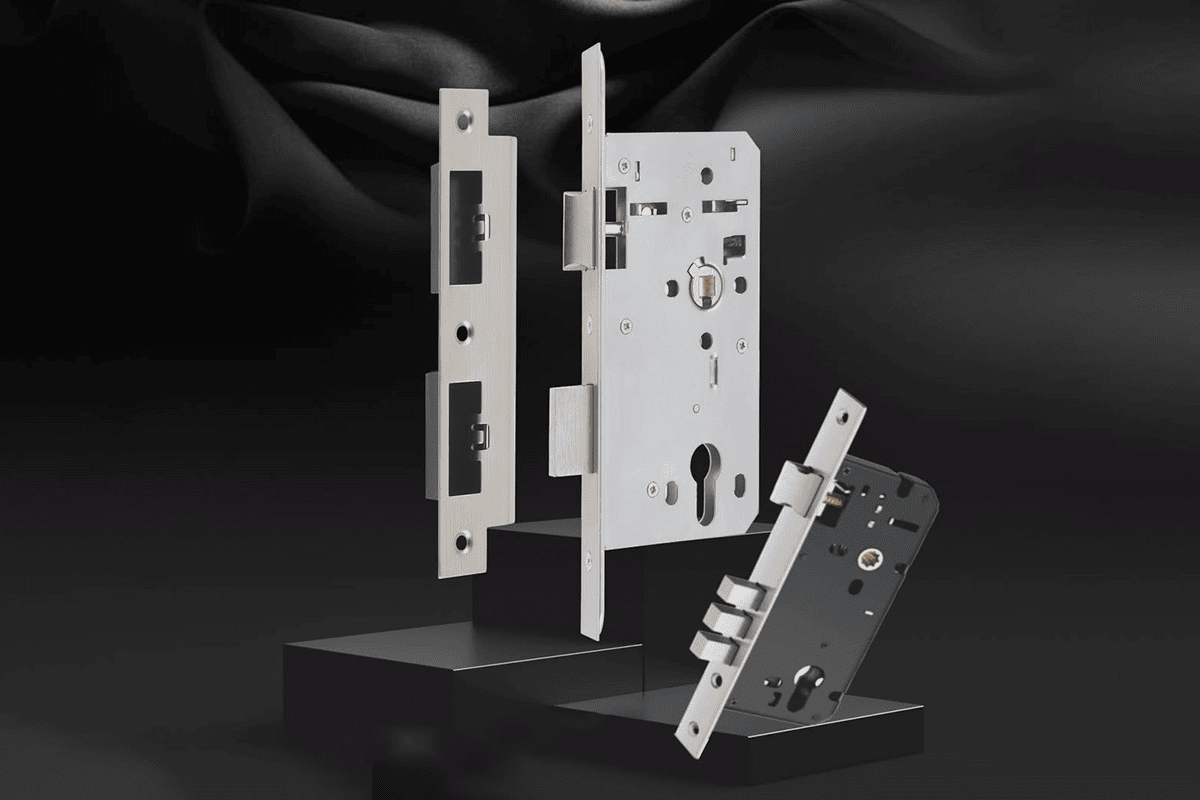
This point is critical. The report should identify what was tested. A Euro mortise lock includes several parts, and each part may use different materials and finishes.
Common components include:
- Lock case
- Faceplate
- Forend
- Latch bolt
- Deadbolt
- Strike plate
- Screws
- Springs
- Internal transmission parts
If the report only tests one visible part, the buyer should not assume the full lock has the same corrosion performance. A faceplate made from stainless steel may perform differently from internal parts made from other materials. A plated part may behave differently from a painted part.
3. Confirm material and finish
Material is only one part of the story. Surface treatment can change the corrosion result significantly.10 A supplier may offer stainless steel, steel, zinc alloy, brass, or mixed material configurations. The finish may include brushing, polishing, electroplating, powder coating, PVD, or other processes.
I often recommend that buyers request a specification table like this:
| Item | Buyer should verify |
|---|---|
| Main material | Stainless steel, steel, brass, zinc alloy, or other |
| Grade | For example, SUS304 if applicable |
| Finish | Satin, polished, plated, painted, PVD, or custom |
| Coating thickness | If relevant to the finish |
| Tested part | Full product or selected component |
| Salt spray time | Exposure duration under the stated method |
| Result | Corrosion grade or visual condition after test |
4. Review photos and date
Photos are useful because they show the condition before and after testing. They do not replace formal results, but they help procurement and quality teams understand the evidence. The report date also matters. An old test may still be useful, but buyers should confirm whether the current production process, material supplier, and finish are still the same.11
5. Ask whether the report applies to the order
This is the most practical question. A buyer may order a custom finish, private logo, special faceplate dimension, or modified accessory package. If the ordered configuration changes the tested material or finish, the buyer should request updated evidence or at least a written technical explanation from the supplier.
At SDH Hardware, we often discuss this during OEM and ODM projects. I prefer to clarify these points before mass production because it reduces approval delays and after-sales disputes. A clear report protects both sides.
How should buyers interpret salt spray hours for a Euro mortise lock?
Buyers should interpret salt spray hours for a Euro mortise lock as controlled laboratory exposure time, not as a direct prediction of real door service life. The problem is that a simple number feels easy to compare. The risk is that the number may hide differences in materials, finishes, and test scope.
Salt spray hours help buyers compare corrosion resistance under controlled conditions. They show how a tested sample performed in a defined test environment. They should not be converted directly into years of use. Buyers should interpret the result together with EN 1670 references, material data, finish details, project environment, and supplier quality control.
Why “more hours” is not always better purchasing value
It is natural for buyers to ask for higher hours. A higher salt spray target may be appropriate for humid or coastal markets. However, the best requirement is not always the highest possible number. The best requirement is the one that matches the real use environment, documentation needs, price target, and after-sales risk.
For example, a buyer sourcing locks for dry indoor apartment doors may not need the same corrosion specification as a buyer sourcing for coastal hotel rooms. If both buyers demand the same high salt spray hour without understanding the environment, one buyer may overpay, and the other may still miss important component risks.
A practical example: stainless steel 304
Stainless steel 304 is often used in architectural hardware because it offers good corrosion resistance for many indoor and moderately humid environments. In practical communication, buyers may hear that 304 stainless steel components commonly reach around 96 hours in neutral salt spray testing12. I would frame this as a general reference or a company/product-specific benchmark, not as a universal guarantee.
The result can vary because of:
- Surface finish quality
- Welding or forming process
- Cleaning and passivation condition
- Component geometry
- Test method and evaluation criteria
- Supplier process control
- Whether the sample is pure 304 or part of a mixed assembly
This is especially important for Euro mortise locks because the visible faceplate may be stainless steel, while other parts may use different materials. Buyers should ask which component achieved the stated result.
How to read the number in context
A salt spray hour figure becomes more meaningful when buyers place it inside a full specification. I suggest this approach:
Start with the project environment
Buyers should define whether the lock will be used indoors, outdoors, in a humid area, near the sea, or in a high-traffic building.Define the required documentation
Buyers should confirm whether their client, brand, or local market requires EN 1670-related evidence, CE documentation, fire-rated documentation, or internal test records.Confirm the tested sample
Buyers should match the test report to the exact model, material, and finish.Check the result, not only the exposure time
A report should show the condition after testing. Exposure time alone is incomplete.Review supplier consistency
A good test result is more useful when the supplier has stable raw material control, production supervision, and finished product inspection.
At SDH Hardware, our production and quality teams use full-process control, from raw material screening to final product inspection. I still recommend that buyers review actual documents for their order. Certifications and test reports should be verified as part of procurement approval, not accepted only as verbal claims.
Simple interpretation table
| Salt spray evidence item | Weak interpretation | Stronger interpretation |
|---|---|---|
| “96 hours passed” | Assumes 96 hours means long service life | Checks standard, sample, finish, result, and photos |
| “Stainless steel tested” | Assumes all components are stainless steel | Confirms which part was tested |
| “EN 1670 available” | Treats the standard as a slogan | Reviews grade, method, and product match |
| “Same product series” | Applies one result to all models | Confirms the exact model and configuration |
| “Supplier says it is okay” | Relies on verbal assurance | Requests formal documentation and inspection plan |
This approach helps buyers make a balanced decision. It also helps suppliers respond with better evidence.
How can procurement teams specify Euro Mortise Lock Corrosion Resistance?
Procurement teams can specify Euro Mortise Lock Corrosion Resistance more effectively by writing clear requirements before placing the order. The problem is that vague phrases like “good anti-rust” are difficult to verify. The risk is disagreement after production. A written specification gives both sides a shared standard.
Procurement teams should specify the target standard, test type, exposure time, acceptable corrosion result, tested components, material, finish, application environment, inspection documents, and approval samples. The specification should also state whether the requirement applies to the full Euro mortise lock or only selected visible parts.
Start with the use environment
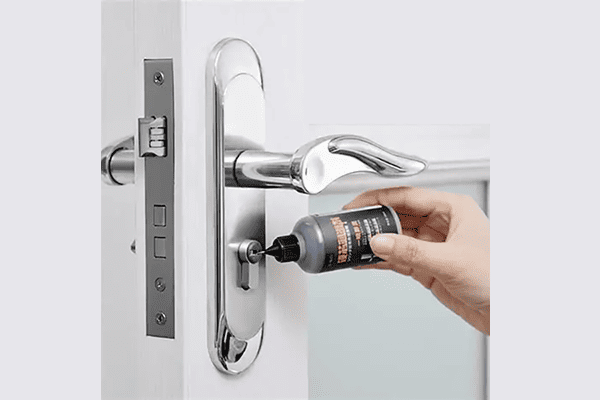
I usually ask buyers about the door application before discussing the salt spray number. This keeps the decision practical. A lock used in a dry interior project has different requirements from a lock used near the sea.
Useful questions include:
- Will the lock be installed indoors or outdoors?
- Is the project near a coast or high-humidity region?
- Will the building use strong cleaning chemicals?
- Is the door for residential, commercial, hotel, school, or public use?
- Does the buyer need EN 1670-related evidence for approval?
- Does the buyer need CE or fire-rated documentation for the full door hardware package?
These questions help define a realistic corrosion-resistance requirement.
Specify the component scope
A Euro mortise lock is an assembly. Buyers should decide whether they need evidence for:
- The visible faceplate only
- The lock case
- The latch and deadbolt
- The strike plate
- The full assembled lock
- A complete door hardware set, including handles, cylinders, hinges, and accessories
If buyers need full-set approval, they should not rely on one component report. They should request evidence for the relevant items. This is especially important for door factories that must submit a complete hardware package to a project consultant or distributor.
Build a procurement specification
A simple specification can prevent many disputes. Buyers may write something like this:
“The Euro mortise lock shall use the agreed material and finish. Corrosion-resistance evidence shall identify the tested product or component, test standard, neutral salt spray exposure time, result/grade, photos, and report date. The supplier shall confirm whether the report applies to the exact ordered model and finish.”
This wording is not a substitute for legal or engineering review, but it helps procurement teams ask the right questions.
Example specification table
| Specification item | Example wording |
|---|---|
| Product | Euro mortise lock, model confirmed by drawing |
| Material | As agreed in technical sheet |
| Finish | Satin stainless steel / plated / painted / custom |
| Test reference | EN 1670-related corrosion resistance evidence, where applicable |
| Test type | Neutral salt spray test, if required |
| Exposure time | Buyer-defined target based on project risk |
| Tested component | Full lock or specified parts |
| Result | Corrosion grade/result and visual photos |
| Documents | Test report, product drawing, inspection record |
| Supplier confirmation | Report applies to the exact ordered configuration |
Balance quality, cost, and risk
A buyer should not chase the highest salt spray number without considering cost and application. Higher requirements may require different materials, upgraded finishes, stricter process control, or additional testing. These steps can be worthwhile for the right project, but they should be justified by the market need.
I suggest that procurement teams evaluate three factors together:
Project risk
Humidity, coastal exposure, traffic level, and client expectations matter.Documentation risk
Some markets need stronger evidence for approval and customs or consultant review.After-sales risk
If corrosion claims would be expensive to handle, the buyer should specify stronger controls.
For OEM hardware brands, this approach is especially useful. The buyer can align the product grade with the brand positioning. A budget line, standard line, and project line may each need different corrosion-resistance specifications.
How should buyers evaluate a Euro mortise lock supplier’s quality control?
Buyers should evaluate a Euro mortise lock supplier’s quality control because salt spray evidence is only one part of reliable sourcing. The problem is that a good report does not always prove stable mass production. The risk is receiving products that differ from the tested sample. Supplier evaluation closes that gap.
Buyers should evaluate the supplier’s raw material control, production process, surface treatment management, in-house inspection, testing capability, sample approval process, documentation accuracy, and export experience. A reliable supplier should explain Euro mortise lock corrosion resistance clearly and provide evidence that matches the buyer’s actual order.
Review the factory’s process control
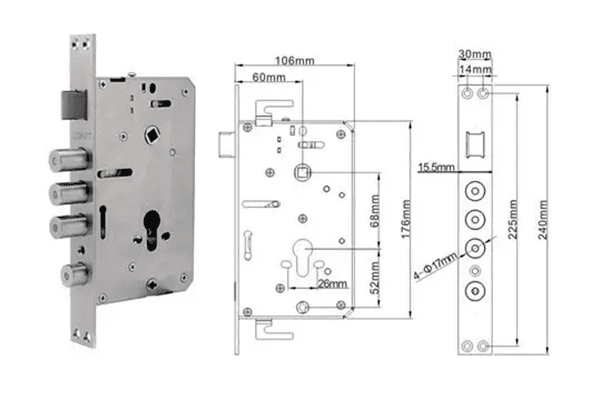
A supplier should have a clear process from material purchase to final inspection. At SDH Hardware, we operate as a professional architectural door hardware manufacturer with independent factory operations. We focus on R&D, precision manufacturing, and global sales for standardized and customized hardware products.
For corrosion-related quality, buyers should ask how the supplier controls:
- Raw material sourcing
- Material grade verification
- Surface preparation
- Plating or finishing process
- Cleaning and packaging
- In-process inspection
- Final inspection before shipment
- Sample retention and traceability
This matters because corrosion resistance depends on consistency. One tested sample is useful, but stable production is the real procurement goal.
Check documentation discipline
A good supplier should not only say, “We can provide certificates.” The supplier should provide documents that buyers can review. For Euro architectural hardware, buyers may ask for CE certification, fire-rated documentation, EN 1670-related corrosion evidence, product drawings, inspection records, and packing details. Buyers should verify all certifications and reports based on the project requirement.
SDH Hardware’s core products are available with CE certification and fire-rated certification, and we recommend that buyers verify relevant documents during approval. This is especially important when locks are part of a door assembly that has its own fire, safety, or market-entry requirements.
Ask about customization impact
Many OEM buyers request custom faceplate sizes, finishes, logos, packaging, and accessory configurations. Customization is valuable, but it can affect corrosion evidence. If a buyer changes the finish from satin stainless steel to a plated color, the previous report may not apply. If a buyer changes screws or strike plates, those parts may need separate attention.
I suggest that buyers confirm these points before mass production:
- Does the requested finish match the tested finish?
- Does the custom logo process affect the surface coating?
- Are screws and accessories included in the corrosion requirement?
- Will the supplier provide pre-production samples?
- Will the supplier inspect finished goods after production?
- Will the supplier provide photos or inspection records before shipment?
Conclusion
Euro Mortise Lock Corrosion Resistance should be reviewed as a practical quality and procurement-risk topic, not as a simple contest of salt spray hours. Buyers should check the test standard, sample identity, material, finish, tested component, exposure time, result, photos, and product match. They should also connect the evidence to the real installation environment. If you need Euro mortise locks with clear specifications, OEM support, and export-ready documentation, I welcome you to contact SDH Hardware for a project-based review.
"ISO 9227 Salt Spray Testing Guide", https://ecqa.com/iso-9227-salt-spray-testing-guide/. ISO 9227 and ASTM B117 describe salt spray exposure as a controlled laboratory corrosion test and caution that exposure duration should not be treated as a direct measure of service life in natural environments. Evidence role: expert_consensus; source type: institution. Supports: Salt spray standards and corrosion-testing guidance distinguish controlled laboratory comparison from prediction of field durability.. ↩
"Atmospheric Site Data – Corrosion", https://public.ksc.nasa.gov/corrosion/atmospheric-site-data/. ISO 9223 classifies atmospheric corrosivity using environmental factors such as humidity, chloride deposition, and sulfur dioxide pollution, supporting the distinction between dry indoor, humid, coastal, and higher-exposure service environments. Evidence role: mechanism; source type: institution. Supports: Humidity, chloride deposition, pollution, and exposure conditions influence atmospheric corrosion risk.. ↩
"Salt spray test", https://en.wikipedia.org/wiki/Salt_spray_test. Standard salt spray methods such as ISO 9227 and ASTM B117 define neutral salt spray testing as a controlled exposure procedure used to evaluate and compare corrosion behavior of specimens under specified conditions. Evidence role: definition; source type: institution. Supports: Neutral salt spray testing is a standardized comparative corrosion exposure method.. ↩
"Salt spray test", https://en.wikipedia.org/wiki/Salt_spray_test. ISO 9227 and ASTM B117 specify the use of a sodium chloride spray atmosphere under controlled conditions, including solution composition, chamber temperature, and procedures for assessing exposed specimens. Evidence role: mechanism; source type: institution. Supports: Salt spray standards specify sodium chloride solution, temperature control, and observation requirements for corrosion exposure testing.. ↩
"Stainless Steel Trap Corrosion - Office of Research Facilities", https://orf.od.nih.gov/TechnicalResources/Documents/DTR%20White%20Papers/FinalTrapCorrosionWhitePaperdocsanitized_508.pdf. Studies of metallic corrosion in cleaning and disinfectant environments show that chloride-containing or otherwise aggressive cleaning agents can accelerate corrosion or surface degradation on stainless steels and coated metals. Evidence role: mechanism; source type: paper. Supports: Certain cleaning agents, especially chloride-containing or aggressive disinfecting chemicals, can contribute to corrosion or coating degradation on metal surfaces.. Scope note: This supports cleaning chemicals as a plausible corrosion factor, but the effect on a specific mortise lock depends on chemical concentration, contact time, rinsing, alloy, and finish. ↩
"'Rusters'. The corrosive action of palmar sweat", https://pubmed.ncbi.nlm.nih.gov/84491/. Research using artificial sweat solutions shows that perspiration constituents, particularly chlorides and organic acids, can influence corrosion and staining behavior on metal surfaces handled by users. Evidence role: mechanism; source type: paper. Supports: Human sweat contains salts such as chlorides that can promote corrosion or staining on susceptible metal surfaces.. Scope note: The source would support the mechanism of sweat-related corrosion, not the corrosion rate of any specific Euro mortise lock component. ↩
"SIST-EN-1670-2007.pdf", https://cdn.standards.iteh.ai/samples/26759/228db58ce386417d8de729ae297c1771/SIST-EN-1670-2007.pdf. EN 1670 is a European building-hardware standard that classifies corrosion resistance for hardware products, providing a relevant reference point for evaluating architectural door hardware components. Evidence role: definition; source type: institution. Supports: EN 1670 is a European standard used for corrosion resistance requirements and classification in building hardware.. Scope note: The standard supports the relevance of corrosion-resistance classification, but the exact applicability depends on the specific product category and certification scope. ↩
"Guide to the Selection and Use of High Performance ...", https://www.nrc.gov/docs/ML0334/ML033490048.pdf. Materials-science references distinguish the corrosion behavior of zinc alloys, stainless steels, brasses, and carbon steels, including differences in passivation, dezincification risk, rust formation, and galvanic potential. Evidence role: mechanism; source type: education. Supports: Common engineering metals and alloys differ in corrosion mechanisms and resistance, especially in chloride-containing or humid environments.. ↩
"Corrosion Testing Needs and Considerations for Additively ...", https://inldigitallibrary.inl.gov/sites/sti/sti/Sort_68056.pdf. ISO/IEC 17025 requires laboratory reports to identify tested items and conditions, supporting the principle that a corrosion result for one component applies to the tested specimen rather than automatically to an entire untested assembly. Evidence role: general_support; source type: institution. Supports: Laboratory test results are tied to the tested item or sample and should not be generalized to untested components without a documented basis.. Scope note: This supports the evidentiary logic of sample identity; it does not itself specify mortise-lock component testing requirements. ↩
"Effect of Surface Treatment on the Surface Characteristics ...", https://ntrs.nasa.gov/api/citations/20120003602/downloads/20120003602.pdf. Corrosion and coating studies show that surface preparation, passivation, coating chemistry, and coating thickness can significantly alter corrosion behavior and salt-spray test outcomes. Evidence role: mechanism; source type: paper. Supports: Surface preparation, coating type, coating thickness, and passivation can materially affect corrosion performance in accelerated tests and service environments.. Scope note: This supports the general mechanism; it does not prove that any particular supplier’s finish will achieve a stated salt spray duration. ↩
"Quality Management Systems: 2021 Virtual Conference", https://www.fda.gov/media/156345/download. ISO 9001 quality-management principles require organizations to control changes affecting production and product conformity, supporting the need to verify whether material sources, processes, and finishes remain unchanged when using older corrosion-test reports. Evidence role: general_support; source type: institution. Supports: Quality management standards require control of changes that may affect product conformity, making process and material continuity relevant when relying on older test evidence.. Scope note: This is contextual support for procurement verification rather than direct proof that a specific old report is invalid. ↩
"Corrosion resistance of surface-conditioned 301 and 304 ...", https://www.academia.edu/70489961/Corrosion_resistance_of_surface_conditioned_301_and_304_stainless_steels_by_salt_spray_test. Studies of AISI 304 stainless steel in chloride and salt-spray environments show that corrosion response depends on passivation, surface finish, fabrication condition, and evaluation criteria, so a 96-hour figure should be treated as a contextual benchmark rather than a universal property of all 304 components. Evidence role: general_support; source type: paper. Supports: Published studies can contextualize the salt-spray behavior of AISI 304 stainless steel and show that performance varies with surface condition and test criteria.. Scope note: The source may support variability and contextual interpretation more directly than the exact commercial benchmark of 96 hours. ↩
