
What Type Of Hinges Are Best for Concealed Doors?
Hinges for concealed doors can look simple from the outside, but the wrong choice can create uneven gaps, difficult installation, noisy operation, and after-sales complaints1. Buyers often focus on the hidden look first. I usually recommend starting with door weight, thickness, usage frequency, opening control, and adjustment needs2.
The best hinges for concealed doors depend on the project priority. Concealed hinges are best for a seamless flush appearance. Butt hinges with a door closer are practical for durable, easy installation. Self-closing butt hinges suit light-duty ordinary doors when premium hidden aesthetics are not required.
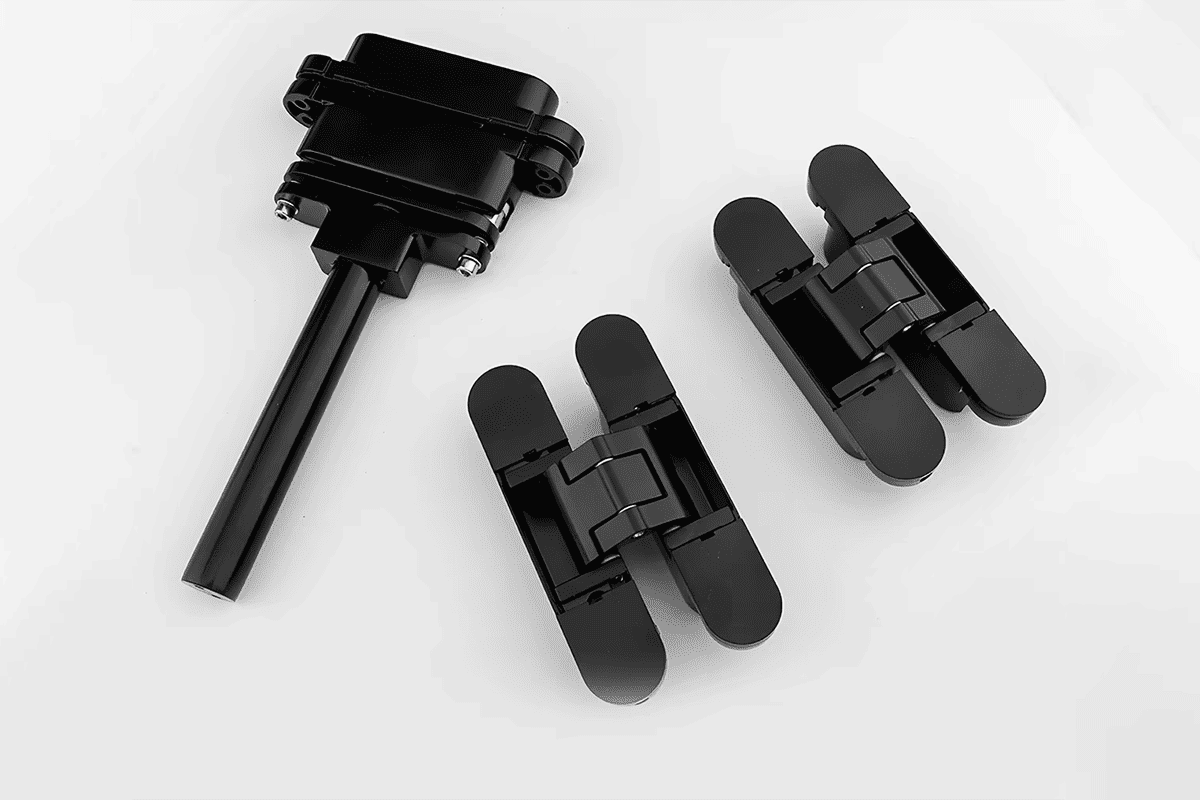
This choice is not about finding one universal hinge. It is about matching the hinge structure to the door, frame, installation skill, and long-term service conditions. From a manufacturer’s view, this decision affects not only appearance, but also production tolerance, fitting time, and after-sales risk.
Are concealed hinges for concealed doors best when appearance is the priority?
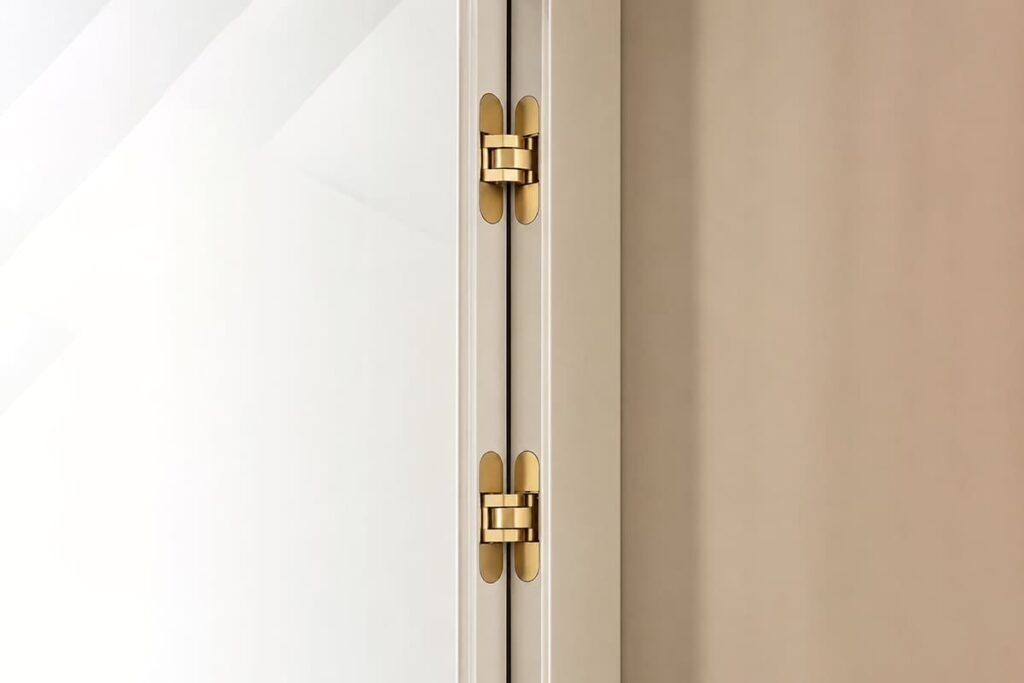
A concealed door often fails visually when the hinge line, uneven reveal, or wide door gap breaks the flush effect. That problem becomes more obvious in minimalist interiors, hotel corridors, and high-end residential projects. Concealed hinges solve this by hiding the hinge body when the door is closed.
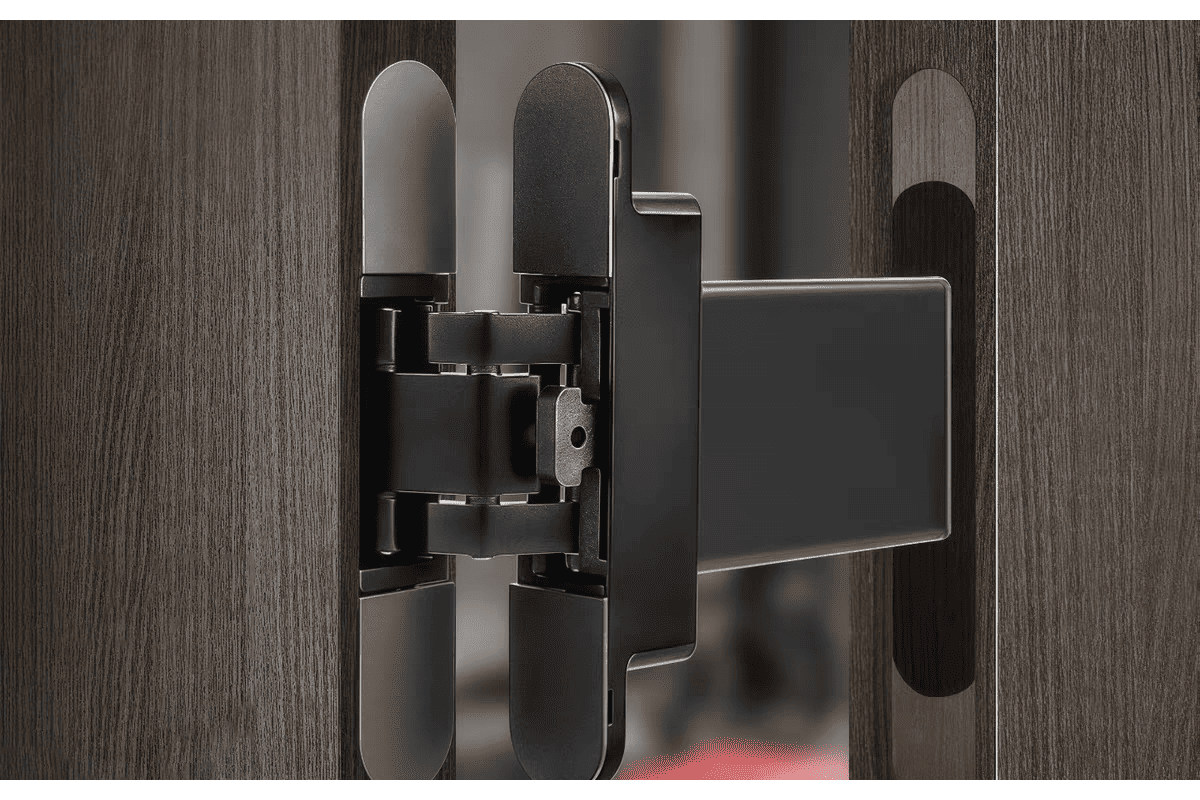
Concealed hinges for concealed doors are usually the best choice when the main goal is a clean, seamless, flush appearance. Their hidden structure and 3D adjustment allow installers to fine-tune door gaps, alignment, and closing position3, which supports a premium concealed-door finish.
Why concealed hinges create the cleanest hidden effect
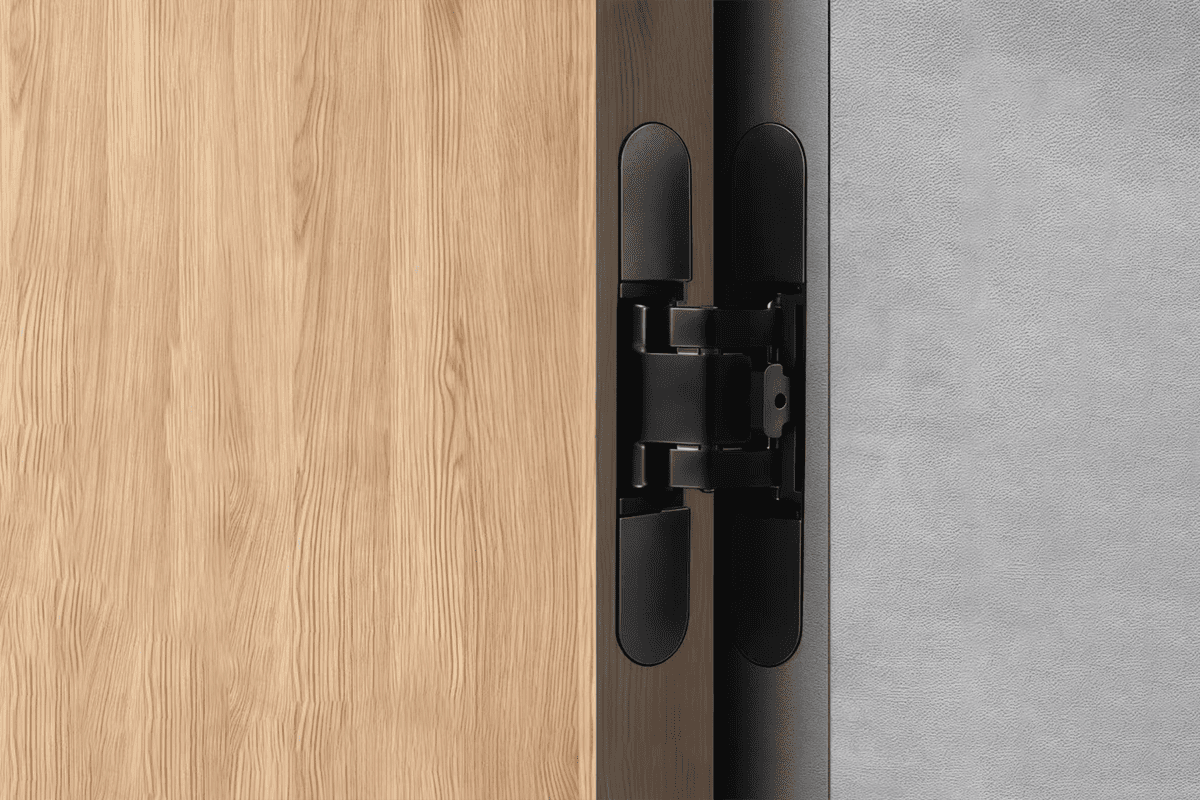
Concealed hinges are installed inside the door leaf and frame. When the door closes, the hinge knuckle is not visible from the outside.4 This makes them especially suitable for:
- Flush wall doors
- Minimalist interior doors
- Invisible doors in luxury apartments
- Hotel room entrance or service doors
- Premium office partitions
- Architectural projects where the door should blend with the wall
In my experience working around architectural door hardware production, buyers often choose concealed hinges because they want the door surface to remain visually uninterrupted. The hinge is not just a mechanical part in this case. It becomes part of the design strategy.
Why 3D adjustment matters
The hidden effect depends on more than the hinge being invisible. The door must also sit correctly in the frame. This is where 3D adjustable concealed hinges become valuable.
A typical 3D adjustment system may allow fine correction in:
| Adjustment direction | Why it matters for concealed doors |
|---|---|
| Height adjustment | Helps align the top and bottom door gaps |
| Side adjustment | Helps create an even reveal between door and frame |
| Depth adjustment | Helps the door sit flush with the wall or frame face |
These adjustments are important because concealed doors often have strict visual expectations. A small gap difference can look obvious on a plain wall panel.5 If the door leaf is slightly heavy, the wall is not perfectly straight, or the frame installation has minor deviation, adjustment helps recover the final look.
Where concealed hinges need careful evaluation
Concealed hinges are excellent for appearance, but they also require more accurate preparation. The mortise pocket must be cut cleanly. The door and frame structure must support the hinge body. The installer must understand alignment before final fixing.
Before selecting hinges for concealed doors, I normally ask buyers to confirm:
- Door weight
- Door thickness
- Door height and width
- Frame material and structure
- Opening angle requirement
- Wall or panel finish
- Installer experience
- Need for 3D adjustment
This is where procurement teams should avoid choosing by catalog appearance only. Two hinges may look similar online, but their internal structure, adjustment range, screw position, and machining requirements can be different.
For premium concealed doors, I usually treat the hinge as part of the door system, not as a separate accessory.
If your project requires a nearly seamless finish, concealed hinges are usually the preferred solution. However, the product data sheet, installation drawing, and physical sample should be checked before bulk ordering. For fire-rated or certified door assemblies, buyers should verify the relevant certification documents and confirm that the hinge is suitable for the specific door system.6
Are butt hinges for concealed doors a better choice for durability and simple installation?
Some projects need a hidden or semi-hidden door concept, but they also need fast installation, familiar hardware, and strong daily performance. If buyers choose only by appearance, they may increase installation difficulty. Butt hinges with a door closer can be a practical alternative.
Butt hinges for concealed doors are not the cleanest visual solution, but they can be better when durability, simple installation, and stable daily use matter more than a fully invisible hinge line. Combined with a suitable door closer, they work well for many commercial and frequent-use doors.
Why butt hinges remain popular
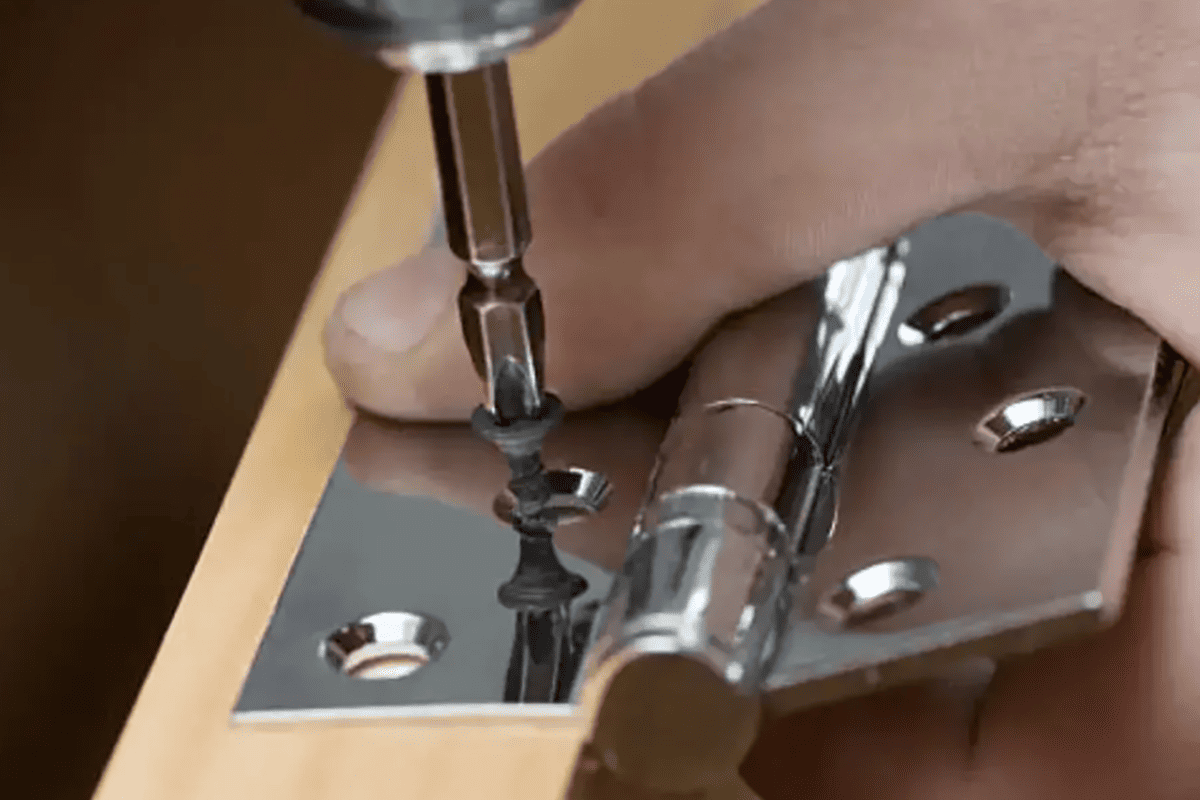
Butt hinges are familiar to door factories, installers, and maintenance teams. They are simple in structure and widely used across residential, commercial, and institutional doors.7 For many projects, that familiarity reduces risk.
A butt hinge normally has a visible knuckle when the door is closed. So it does not create the same seamless effect as a concealed hinge. Still, it can support a practical concealed-door concept when the visual requirement is moderate.
For example, a commercial project may use a flush door design with simple lines, but not require the hinge to disappear completely. In that case, a durable butt hinge plus a door closer may be easier to specify, install, and maintain.
Butt hinge plus door closer: a practical pairing
A butt hinge mainly supports rotation and load. A door closer controls closing speed and final latching.8 This separation can be useful because each component does its own job.
| Option | Main benefit | Main limitation | Suitable use |
|---|---|---|---|
| Concealed hinge | Best hidden appearance | Requires accurate machining and installation | Premium flush doors |
| Butt hinge + door closer | Durable and familiar | Hinge knuckle remains visible | Frequent-use commercial doors |
| Self-closing butt hinge | Simple closing function | Limited for heavy or premium doors | Light-duty ordinary doors |
When I discuss hinge choices with buyers, I often see one concern: after-sales risk. A beautiful hinge solution can still become a problem if the site team cannot install it correctly or if the door is used more heavily than expected.
Butt hinges are often easier for local installers because:
- The installation method is familiar.
- Replacement is simpler.
- Maintenance teams understand the hardware.
- Door alignment is easier to inspect visually.
- The hinge body is less complex than many concealed models.
Where butt hinges make sense for concealed-door projects
Butt hinges can be a strong choice when the project has one or more of these conditions:
- High traffic frequency
- Tight installation schedule
- Limited installer experience with concealed hinges
- Need for simple future replacement
- Commercial or utility doors
- Moderate aesthetic requirements
- Separate door closer required for controlled closing
This does not mean butt hinges are better than concealed hinges in every case. They simply solve a different problem. If the buyer’s top priority is the cleanest visual finish, concealed hinges remain stronger. If the top priority is predictable installation and stable daily use, butt hinges deserve serious consideration.
Procurement note for B2B buyers
For door factories and hardware brand companies, the hinge decision also affects production planning. Butt hinges usually require simpler preparation than concealed hinges.9 That can reduce machining complexity, especially when producing many door sets.
However, buyers still need to check:
- Hinge material and finish
- Pin structure
- Screw specification
- Corrosion resistance requirements
- Door closer compatibility
- Door weight suitability
- Relevant certification documents, if required by the project
At SDH Hardware, I view this as a supplier selection issue as much as a product issue. A reliable manufacturer should provide drawings, product inspection support, packaging options, and consistent batch quality. The right hinge solution should help the buyer reduce both installation problems and long-term service complaints.
Are self-closing hinges for concealed doors suitable for light-duty applications?
Some buyers want the door to close by itself without adding a separate door closer. That goal sounds simple, but it can create problems if the door is too heavy, too wide, or used too often. Self-closing hinges need realistic application limits.
Self-closing hinges for concealed doors can be suitable for light-duty ordinary doors when the door weight is within the hinge’s practical range and a premium seamless appearance is not required. Spring hinges and hydraulic hinges offer basic closing support, but they should not replace heavy-duty door control hardware in demanding applications.
What self-closing butt hinges do
Self-closing butt hinges usually include a mechanism that helps pull the door back toward the closed position. Common types include:
- Spring hinges
- Hydraulic hinges
- Adjustable-tension self-closing hinges
These hinges can reduce the need for a separate door closer in light-use situations. They can be helpful for residential interior doors, small office rooms, storage doors, or simple partition doors.
However, buyers should be careful with expectations. A self-closing hinge is not always equal to a dedicated door closer. It may not provide the same level of control over closing speed, latching speed, hold-open function, or long-term adjustment.10
Best-fit scenarios for self-closing hinges
Self-closing hinges are often suitable when the project has these conditions:
| Project condition | Suitability |
|---|---|
| Light or medium-light door | Usually suitable after checking specifications |
| Ordinary interior door | Often suitable |
| Premium invisible door | Usually not the best visual solution |
| Heavy commercial door | Usually needs stronger evaluation |
| High-frequency public door | Door closer may be more appropriate |
| Need for exact closing control | Door closer may be more reliable |
In my experience, the main mistake is using self-closing hinges to solve every closing problem. Buyers may want to save cost or simplify hardware, but the hinge must still support the door safely and consistently.
Spring hinge vs hydraulic hinge
The two common options have different characteristics.
| Type | Basic advantage | Basic concern |
|---|---|---|
| Spring hinge | Simple structure and economical | Closing action may feel less controlled |
| Hydraulic hinge | Smoother closing feel in many cases | More complex and needs careful selection |
A spring hinge can work well for simple doors where precise closing comfort is not the main concern. A hydraulic hinge may offer a softer motion, but buyers should still review the supplier’s specifications and installation instructions.
Why self-closing hinges are not always ideal for premium concealed doors
For high-end concealed doors, the visual goal is often a flush, uninterrupted surface. Many self-closing butt hinges remain visible. That means they do not provide the same hidden effect as a concealed hinge.
Also, premium concealed doors may be taller, heavier, or finished with panels that add weight. In those cases, hinge selection should be based on verified product data, door construction, and professional evaluation.
Before choosing self-closing hinges for concealed doors, I suggest confirming:
- Door weight and dimensions
- Door thickness
- Door material
- Opening frequency
- Desired closing speed
- Whether latching must be guaranteed
- Whether local codes require specific hardware
- Whether the project needs a certified door assembly
This is especially important for fire-rated or commercial projects. Certifications should be treated as documents buyers verify for the exact product and application, not as general marketing claims. A qualified professional should evaluate application-specific decisions when safety, fire rating, or code compliance is involved.
Self-closing hinges are useful, but they are not a universal shortcut. They work best when the door is ordinary, light-duty, and not expected to deliver a premium invisible-door appearance.
How should buyers choose hinges for concealed doors before ordering?
A wrong hinge choice can affect the whole door package. It can slow down production, increase installation corrections, and create complaints after delivery. Buyers need a structured selection method instead of relying on photos, catalog names, or one general recommendation.
Buyers should choose hinges for concealed doors by matching the hinge type to door weight, thickness, height, usage frequency, frame structure, visual requirements, opening control, and installation tolerance. Concealed hinges suit premium seamless doors, butt hinges suit durable frequent-use doors, and self-closing hinges suit light-duty ordinary doors.
Step 1: Define the project priority
The first question should not be, “Which hinge looks best?” The better question is, “What problem must this hinge solve?”
Most concealed-door projects fall into one of three groups:
| Project priority | Recommended hinge direction |
|---|---|
| Seamless appearance | Concealed hinges with suitable adjustment |
| Durability and easy installation | Butt hinges with door closer |
| Light self-closing function | Spring or hydraulic self-closing butt hinges |
This simple grouping helps buyers avoid over-specifying or under-specifying the hinge. A luxury apartment invisible door and a back-office service door should not always use the same hinge.
Step 2: Check door weight and size
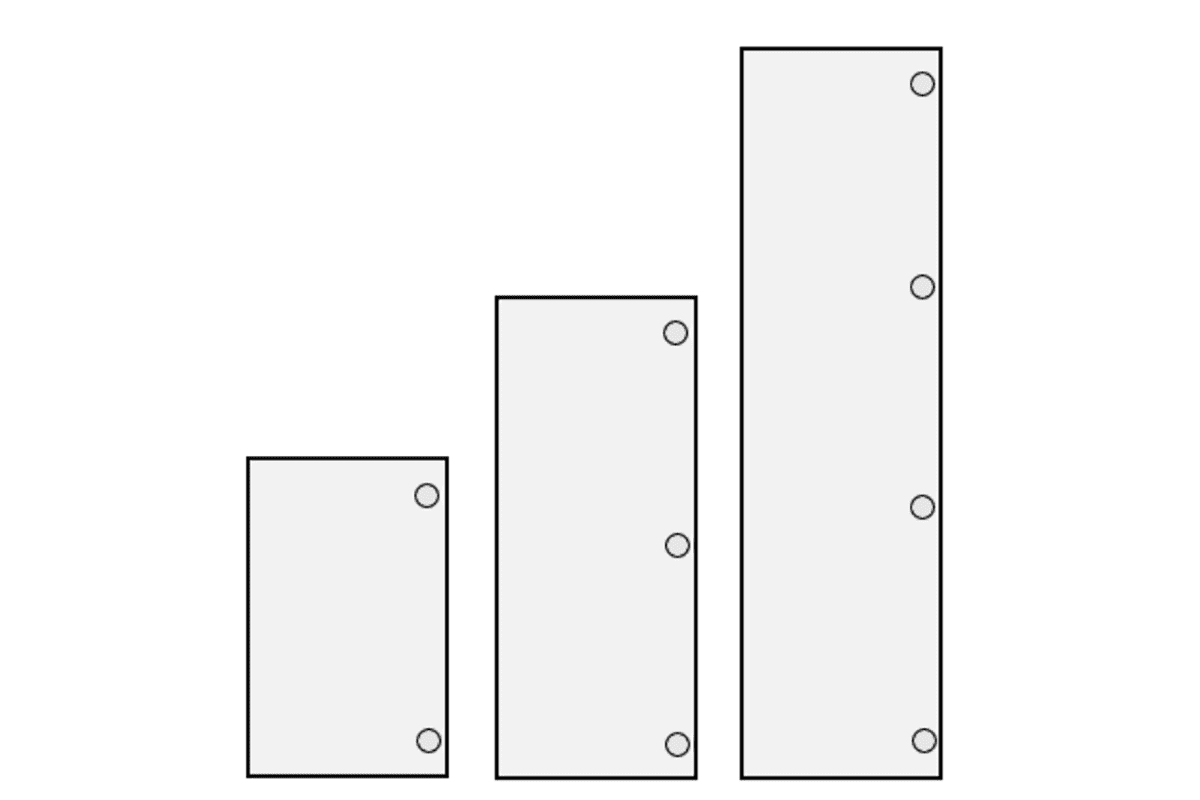
Door weight is one of the most important selection factors. A taller or thicker door may require a stronger hinge structure or more hinge points.11 Door finish can also add weight. For example, a decorative panel, metal skin, or dense core can change the load condition.
Buyers should provide the supplier with:
- Door height
- Door width
- Door thickness
- Door leaf weight
- Door core material
- Frame material
- Number of hinges planned per door
- Opening angle requirement
I always prefer receiving these details early. It allows a manufacturer or hardware supplier to recommend a more suitable product range instead of guessing from a general door description.
Step 3: Review installation tolerance
Concealed hinges often need more accurate mortising than standard butt hinges. If the project uses CNC machining at the door factory, this may be manageable. If the site relies on manual cutting, the risk may increase.
Buyers should ask:
- Does the supplier provide a detailed installation drawing?
- Is a routing template available?
- What adjustment directions are supported?
- Can the installer access adjustment screws after installation?
- Does the hinge require special frame preparation?
- Is the hinge compatible with the selected door and frame material?
For bulk orders, I recommend sample testing before mass production. A small trial can reveal issues with screw positions, pocket depth, frame clearance, and final door gap.
Step 4: Consider after-sales risk
A hinge failure or poor fit does not only affect one component. It affects the door brand, the installer, and the project owner. In B2B supply, after-sales risk matters because repeat complaints can damage long-term customer relationships.
Common after-sales problems include:
- Door sagging
- Uneven gaps
- Rubbing against the frame
- Noise during opening
- Difficult adjustment
- Poor closing control
- Finish mismatch
- Loose screws caused by weak substrate
The hinge supplier should support buyers with consistent manufacturing, quality inspection, drawings, packaging, and communication. At SDH Hardware, our business context is factory-direct architectural door hardware supply, so I tend to look at the complete purchasing process, not only the unit price.
Step 5: Verify documents and samples
For technical door hardware, buyers should verify product documents before placing larger orders. This may include:
- Product drawings
- Material information
- Finish options
- Installation instructions
- Inspection reports where available
- CE or fire-rated certification documents where applicable
- Packaging details
- Logo or branding requirements
Certifications should be checked carefully for the exact product model and intended use. A document is only useful when it matches the application and project requirements.
Practical selection guide
Here is a simple way to narrow the choice:
| If your project needs... | Consider this hinge solution |
|---|---|
| Maximum hidden appearance | 3D adjustable concealed hinges |
| Reliable commercial use | Butt hinges plus door closer |
| Simple self-closing on light doors | Spring or hydraulic self-closing butt hinges |
| Easier installation | Butt hinges |
| Fine door gap control | Concealed hinges with 3D adjustment |
| Lower maintenance complexity | Standard butt hinge solution |
| Premium minimalist finish | Concealed hinge system |
The best hinges for concealed doors are not chosen by appearance alone. They are chosen by matching the hinge to the door structure, the project environment, and the buyer’s tolerance for installation complexity.
Frequently Asked Questions
Are concealed hinges always the best hinges for concealed doors?
No. Concealed hinges are usually best for the most seamless visual effect, especially on flush or minimalist doors. However, butt hinges with a door closer may be better for durability, easy installation, and frequent-use commercial doors.
Can I use butt hinges on a concealed door?
Yes. Butt hinges can be used when the project accepts a visible hinge knuckle or a less-than-perfect hidden effect. They are practical, strong, familiar to installers, and often suitable for commercial doors that need stable daily performance.
Are self-closing hinges strong enough for concealed doors?
Self-closing hinges can work for light-duty ordinary doors, but they should be selected carefully. Door weight, thickness, width, usage frequency, and closing expectations all matter. Heavy or high-frequency doors may need a separate door closer.12
Why is 3D adjustment important for concealed hinges?
3D adjustment helps installers fine-tune height, side position, and depth. This is important for concealed doors because small gap differences can affect the flush appearance. Adjustment also helps reduce installation tolerance problems.
What information should I send before ordering hinges?
You should send door weight, thickness, height, width, frame structure, door material, opening frequency, opening angle, and whether you need 3D adjustment or self-closing function. These details help the supplier recommend a safer and more suitable hinge solution.
Conclusion
The best hinges for concealed doors depend on the project goal. Concealed hinges are preferred for a premium seamless appearance. Butt hinges with a door closer are practical for durable and easy installation. Self-closing hinges are mainly suitable for light-duty ordinary doors. If you are comparing options for a door factory or hardware brand project, share your door weight, thickness, height, usage frequency, frame structure, and whether you need 3D adjustment or self-closing function. SDH Hardware can help you evaluate a suitable factory-direct hinge solution.
"Easy Fix For Sagging Doors",
. A building-construction or carpentry reference notes that hinge selection and installation influence door alignment, clearance, rubbing, and operating noise; this supports the general mechanism behind service complaints, although it may not quantify after-sales complaint rates. Evidence role: general_support; source type: education. Supports: A neutral building or carpentry reference should support that hinge selection and installation affect door alignment, rubbing, noise, and long-term function.. Scope note: Contextual support rather than direct evidence of complaint frequency. ↩"SECTION 087111 - DOOR HARDWARE (SCHEDULED BY ...", https://fpm.usc.edu/wp-content/uploads/2021/11/087102-USC-HSC-door-hardware-Guide-Specification_1.pdf. Architectural-hardware guidance identifies door size, door weight, frequency of use, and operating requirements as key factors in hinge specification, supporting the article’s selection framework. Evidence role: expert_consensus; source type: institution. Supports: A standards or architectural-hardware organization should support that hinge selection depends on door size, weight, frequency of use, and operating requirements.. ↩
"How to Adjust in 3D", https://www.tectushinges.com/how-to-adjust-in-3d. Technical descriptions of 3D adjustable concealed hinges state that height, lateral, and depth adjustments are used to correct the installed position of the door leaf and refine the reveal, supporting the mechanism described here. Evidence role: mechanism; source type: research. Supports: A neutral technical reference should describe three-axis hinge adjustment and its role in correcting door position.. Scope note: Support is likely based on technical descriptions of hinge mechanisms rather than comparative performance testing. ↩
"Concealed hinge jig", https://en.wikipedia.org/wiki/Concealed_hinge_jig. A reference definition of concealed hinges describes them as hinges mounted so that the hinge components are hidden when the door is closed, supporting the article’s definition of their visual function. Evidence role: definition; source type: encyclopedia. Supports: A reference source should define concealed hinges as hinges hidden from view when the door is closed.. ↩
"Studies in visual perception of architectural spaces and ...", https://pubmed.ncbi.nlm.nih.gov/5399423/. Architectural detailing guidance emphasizes that consistent reveals and aligned joints are important to the perceived quality of flush surfaces, supporting the claim that small gap variations can become visually apparent on plain wall panels. Evidence role: general_support; source type: education. Supports: An architectural or construction-tolerance source should support that reveal consistency and alignment are important for visual quality on flush surfaces.. Scope note: This supports the design principle generally and may not provide a measured threshold for when a gap becomes noticeable. ↩
"NFPA 80 Fire Door Requirements: Code Guide", https://www.cdfdistributors.com/blog/post/nfpa-80-fire-door-requirements?srsltid=AYCX9vL-r9yvASPUv18Igl2sZWbYmic3smn2aif88ILASbpQeEUA9Gyc. Fire-door standards and certification guidance require hardware used on rated door assemblies to be compatible with the labeled assembly, supporting the need to verify hinge documentation for the exact application. Evidence role: expert_consensus; source type: institution. Supports: A fire-door standard or certification body should support that hardware used on fire-rated door assemblies must be appropriate for the labeled assembly.. ↩
"Hinge", https://en.wikipedia.org/wiki/Hinge. General hardware references describe the butt hinge as a common hinge type for swinging doors, supporting the article’s statement that it is familiar and widely used across building applications. Evidence role: definition; source type: encyclopedia. Supports: A general reference should support that butt hinges are a common form of door hinge used for typical swinging doors.. Scope note: The source may establish common use generally but may not separately quantify residential, commercial, and institutional market share. ↩
"Backcheck, latching speed and closing delay – what does ...", https://www.assaabloy.com/uk/en/knowledge-centre/door-controls/backcheck-latching-speed-closing-delay-what-does-it-all-mean. Architectural-hardware references distinguish hinges, which support the door leaf and provide a pivot, from door closers, which regulate closing and latching speed; this supports the functional separation described in the article. Evidence role: mechanism; source type: institution. Supports: A door-hardware reference should support the separate functions of hinges and door closers.. ↩
"How to Install No-Mortise Hinges",
. Installation guidance for concealed hinges describes recessed pockets and precise alignment requirements in the door and frame, while standard butt-hinge installation is typically a simpler mortising operation; this supports the article’s comparison of preparation complexity. Evidence role: general_support; source type: education. Supports: A carpentry or architectural-hardware installation source should support that concealed hinges require more precise recesses or pockets than standard butt hinges.. Scope note: The degree of complexity varies by product model, tooling, and installer skill. ↩"How To Adjust a Commercial Door Closer",
. Door-closer technical guidance identifies adjustable sweep speed, latch speed, and optional control functions such as hold-open or backcheck, supporting the statement that self-closing hinges do not necessarily provide equivalent closing control. Evidence role: mechanism; source type: institution. Supports: A neutral hardware reference should support that door closers commonly provide adjustable sweep, latch speed, and other control functions that self-closing hinges may lack.. Scope note: Some specialized self-closing hinges may offer limited adjustment, so the support is comparative rather than universal. ↩"Everything you need to know about Commercial Door Hinges", https://www.mckinneyhinge.com/en/resource-library/knowledge-center/blog/blog-post.aehdynamic-everything-you-need-to-know-about-commercial-door-hinges-top-10-commercial-contractors-hinge-installation-questions-633f18001fa7df003d7c229b_mckinney.html. Hinge-selection guidance states that door weight, height, width, and thickness are used to determine hinge size, grade, and quantity, supporting the article’s emphasis on weight and dimensions before ordering. Evidence role: expert_consensus; source type: institution. Supports: A hinge sizing or architectural-hardware guide should support that door dimensions and weight determine hinge size, grade, and quantity.. ↩
"Best Commercial Door Closers", https://www.amazon.com/Best-Sellers-Commercial-Door-Closers/zgbs/industrial/10773895011. Architectural-hardware guidance links door closer selection to door size, weight, and frequency of use, supporting the article’s caution that heavy or high-frequency doors may require dedicated closing hardware. Evidence role: expert_consensus; source type: institution. Supports: An architectural-hardware standard or guide should support selecting door closers according to door size, weight, and frequency of use.. Scope note: The source would support the selection principle, while the exact need still depends on the specific door, closer size, and local code requirements. ↩
