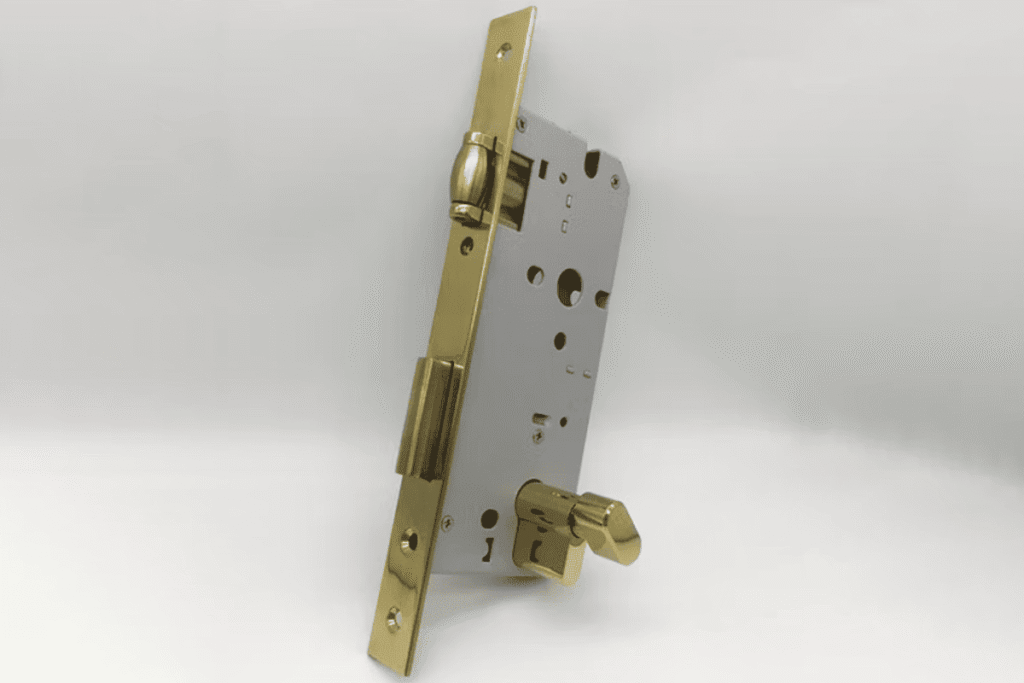
Euro Mortise Lock Finish Matching: Forend, Strike, Latch and Hardware Samples
Euro Mortise Lock Finish Matching becomes difficult when buyers rely only on finish names, catalog photos, or digital renderings. A “satin nickel” or “black” label may look acceptable on paper, but it can shift after production. The safer solution is a sample-based approval process before bulk manufacturing starts.
Euro Mortise Lock Finish Matching means confirming the visible lock parts—such as the forend, strike plate, latch bolt, and deadbolt—against approved hardware samples before production. Buyers should check base material, surface treatment, gloss, texture, wear behavior, and acceptable color tolerance instead of relying only on color names or catalog images.
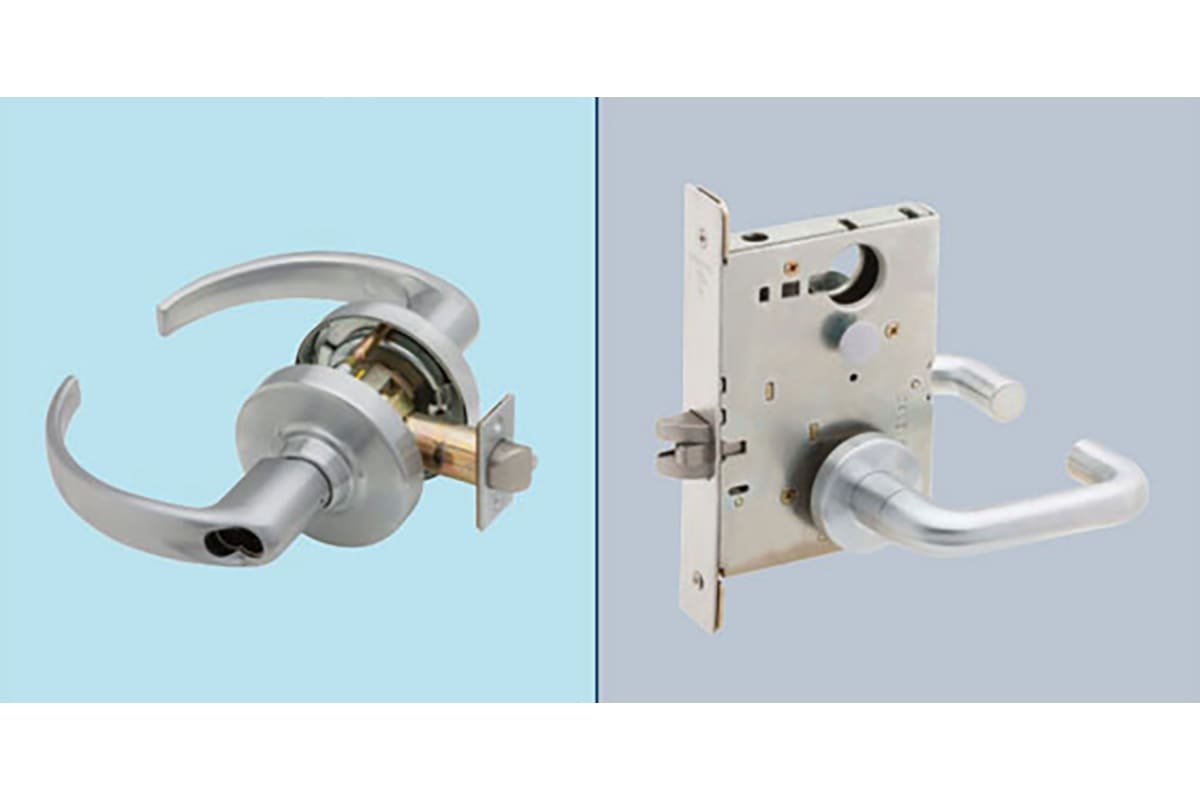
In my factory-side experience, finish approval is not only a design question. It is also a procurement risk-control step. When a door factory or hardware brand wants handles, hinges, cylinders, and locks to look coordinated, the approval process must be practical, documented, and repeatable.
Why Is Euro Mortise Lock Finish Matching More Than a Color Name?
Finish names create a useful starting point, but they can also create false confidence.1 A buyer may assume that one “brushed brass” finish will match another supplier’s “brushed brass.” In real production, the same name can look different because the material, process, and surface preparation are different.
Euro Mortise Lock Finish Matching is more than choosing a color name because visible lock parts have different substrates, shapes, friction points, and finishing processes. A proper match requires physical samples, agreed gloss and texture, confirmed process routes, and signed reference pieces that both buyer and manufacturer can use during bulk production.
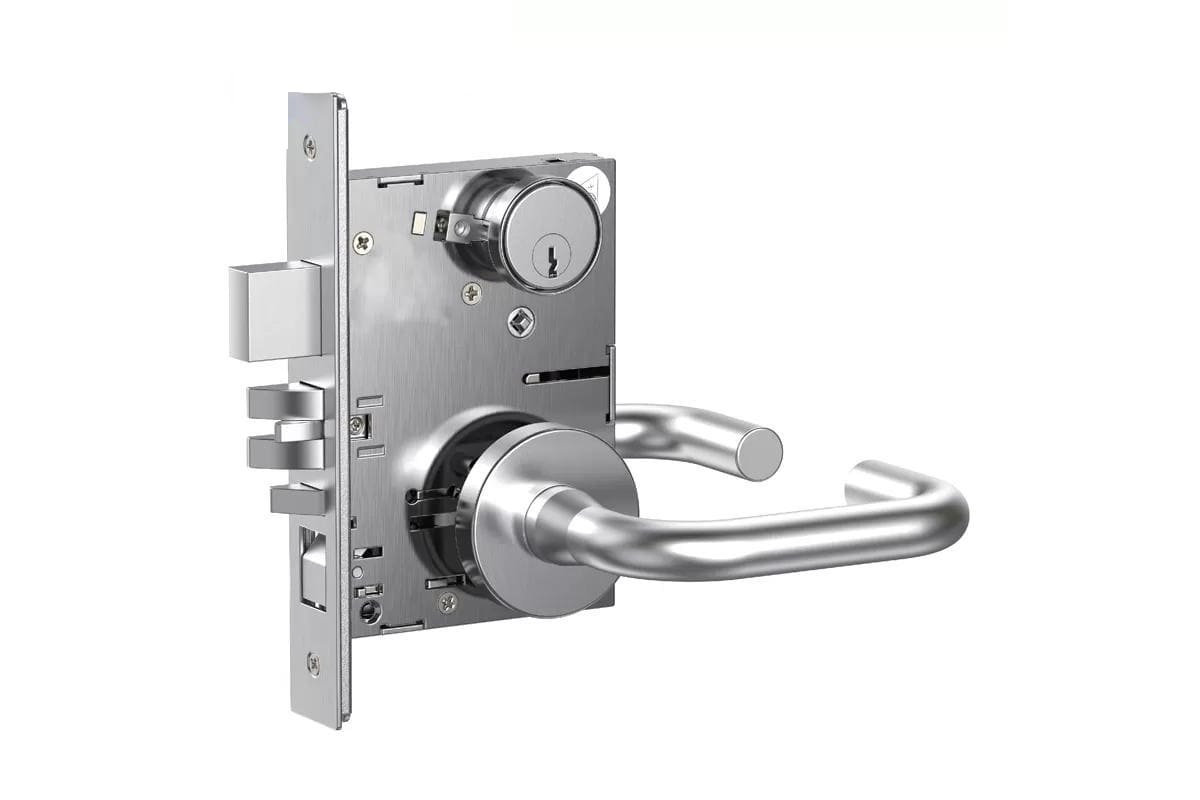
Dive deeper: color names are not production standards
I often see buyers send a message like, “Please make the lock forend in satin gold to match our handle.” That instruction is understandable, but it is not enough for controlled production. A color name can mean different things across factories, regions, and product categories.
For example, one supplier may produce a gold finish by electroplating. Another may use PVD coating. A third may use a lacquered decorative treatment. Even if all three finishes are called “gold,” the final appearance may differ in:
- Hue: yellow gold, champagne gold, rose gold, or darker antique gold
- Gloss: mirror, semi-gloss, satin, or matte
- Texture: brushed, bead-blasted, polished, or hairline
- Depth: thin surface color versus deeper metallic reflection
- Wear behavior: especially on moving or friction parts
In a Euro mortise lock, the visible components usually include the forend plate, strike plate, latch bolt face, and deadbolt face. These pieces may sit close to lever handles, escutcheons, cylinders, hinges, and door accessories. When the door is installed, the human eye compares them as one hardware set.
That is why I treat Euro Mortise Lock Finish Matching as a sample approval process, not a catalog selection.
A practical approval process usually includes:
Buyer sends target sample
This may be a handle, hinge, color chip, or previous approved lock part.Factory confirms base material and feasible process
Stainless steel, brass, zinc alloy, and aluminum do not always receive finishes in the same way.2Factory makes matching samples
The sample should use the real material and intended finishing process when possible.Buyer checks under realistic lighting
Office lighting, daylight, warehouse light, and showroom light may show different tones.Both sides sign or seal reference samples
These samples guide production inspection and reduce disputes.
| Approval factor | Why it matters | Buyer action |
|---|---|---|
| Finish name | Useful but not precise | Treat it as a starting point |
| Physical sample | Shows real appearance | Approve before production |
| Base material | Affects final tone | Confirm material on visible parts |
| Gloss level | Changes perceived color | Define matte, satin, or polished |
| Texture | Affects reflection | Confirm brushing or polishing direction |
| Tolerance | Prevents disputes | Agree acceptable color difference |
From our production experience at SDH Hardware, we can make stainless steel visible lock parts with different surface treatments. However, I never describe different materials and processes as “exactly identical” unless there is verified test data and a defined tolerance method. In real procurement, the better phrase is visually coordinated within an approved tolerance.
Which Parts Matter Most in Euro Mortise Lock Finish Matching?
Buyers often focus on the forend because it is the most visible lock surface when the door edge is open. However, the strike plate, latch bolt, and deadbolt also affect the final appearance. If one visible part is ignored, the installed door set can look inconsistent.
The most important parts in Euro Mortise Lock Finish Matching are the forend, strike plate, latch bolt, and deadbolt. Buyers should also compare these parts with handles, hinges, cylinders, escutcheons, and door accessories because the installed hardware set is judged visually as one coordinated package.
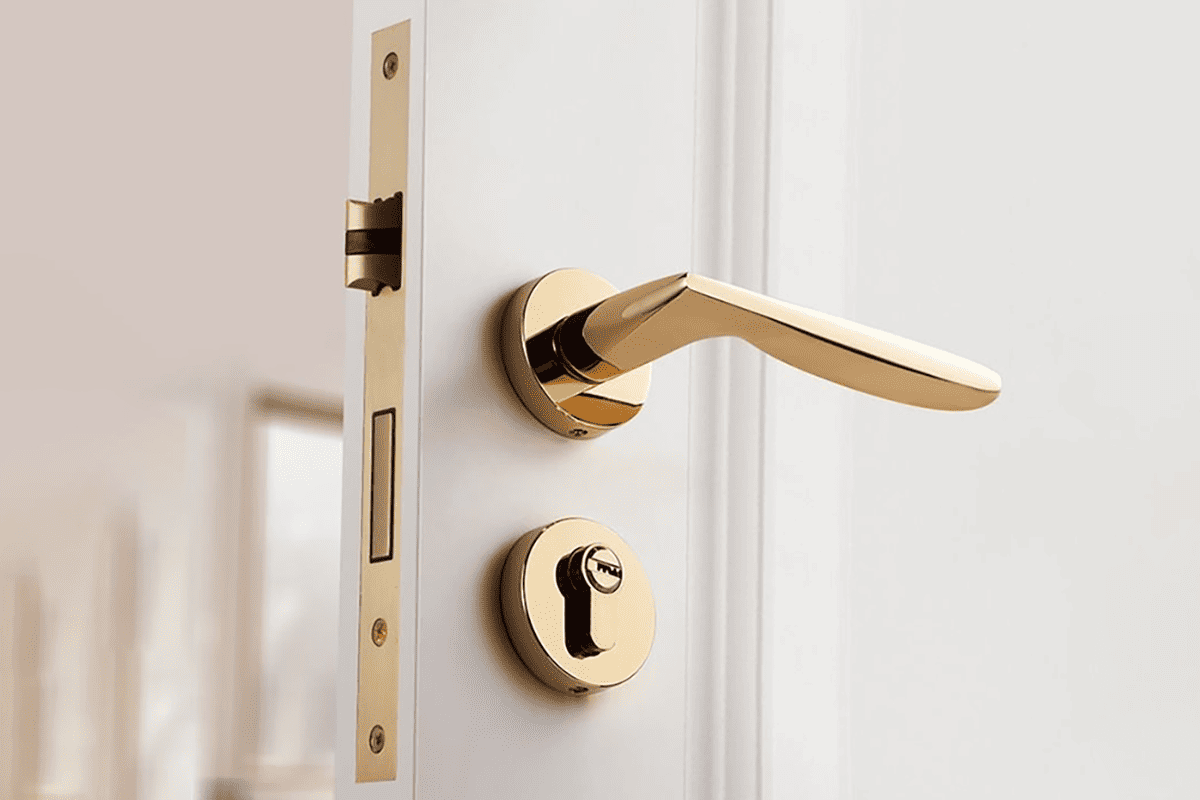
Dive deeper: each visible part has a different risk profile
A Euro mortise lock is installed inside the door, but several parts remain visible or partly visible after installation. Each part has a different function, so each part has a different finish-matching risk.
1. Forend plate
The forend is the long metal plate on the door edge. It is usually one of the first parts buyers check during finish approval. It often needs to match:
- Lever handle rosettes or backplates
- Escutcheons
- Hinges on the door edge
- Cylinder trim
- Door viewer, stopper, or other accessories
Because the forend has a larger visible surface than the latch bolt, gloss and texture are easier to notice. A brushed stainless forend, for example, may look different if the brushing direction or surface roughness changes.
2. Strike plate
The strike plate is installed on the frame. It receives the latch and deadbolt during closing. Buyers sometimes approve the lock forend but forget the strike. This creates a problem because the strike is visible when the door is open, and it sits directly opposite the lock edge.
For coordinated projects, I recommend approving the forend and strike together. They should be made with compatible base material and treatment when possible.
3. Latch bolt
The latch bolt is easy to overlook, but it has a high-frequency friction function. It moves every time the door opens or closes. Even when the latch bolt finish matches at approval stage, the coating may show scratches or wear faster than static parts.
This point is important. A decorative plated or PVD latch bolt should not be promised as scratch-free under repeated contact. The correct approach is to discuss:
- Frequency of door use
- Door closer force
- Strike alignment
- Expected wear tolerance
- Whether the latch finish is mainly decorative or functional
4. Deadbolt
The deadbolt moves less frequently than the latch in many applications, but it still contacts the strike. Its front face may be visible when extended. If a project requires a unified hardware color, the deadbolt should be included in sample checking.
| Lock part | Visibility | Main risk | Recommended check |
|---|---|---|---|
| Forend plate | High | Color, gloss, brushing | Match with handle and hinge samples |
| Strike plate | Medium to high | Different tone from forend | Approve together with forend |
| Latch bolt | Medium | Scratches and friction wear | Discuss use frequency and coating limits |
| Deadbolt | Medium | Contact wear and tone difference | Check extended bolt face |
| Screws | Small but visible | Wrong finish can stand out | Include screw finish in approval |
In our work with door factories and hardware brands, I prefer to prepare a full visible-part sample board when the project has strict color requirements. This board can include the forend, strike, latch bolt, deadbolt, screws, handle sample, hinge sample, and cylinder trim. The process takes more time at the beginning, but it reduces confusion before mass production.
How Should Euro Mortise Lock Finish Matching Samples Be Approved Before Production?
Sample approval is the safest way to control finish expectations before bulk orders. Without a signed reference sample, both buyer and supplier may interpret the same finish differently. That can lead to rework, shipment delays, and disputes after production is complete.
Euro Mortise Lock Finish Matching samples should be approved through a clear process: confirm the target sample, make real-material lock samples, compare gloss and texture under agreed lighting, define acceptable tolerance, sign reference samples, and keep one approved set at the factory and one with the buyer.

Dive deeper: a practical approval workflow for buyers
I like to separate finish approval into clear steps because it prevents vague communication. A simple email saying “color approved” is often not enough for a technical B2B order. A structured approval process gives the purchasing team, quality team, and production team the same reference point.
Step 1: define the target
The buyer should first confirm what the lock must match. The target may be:
- An existing lever handle
- A hinge sample
- A cylinder escutcheon
- A brand color standard
- A previous production batch
- A project architect’s approved sample
If the target is a photo, I treat it as only a visual direction. Photos can change because of lighting, camera settings, screen brightness, and editing.3 Physical samples are safer.
Step 2: confirm the visible parts
The buyer and supplier should list all visible components that require finish matching. For Euro mortise locks, the list usually includes:
- Forend plate
- Strike plate
- Latch bolt
- Deadbolt
- Screws
- Faceplate accessories if applicable
This list avoids the common problem where the forend is approved, but the latch or screws are produced in another finish.
Step 3: confirm material and process
The factory should confirm whether the visible lock parts are stainless steel, brass, zinc alloy, or another base material. The process may include electroplating, PVD, polishing, brushing, blasting, or other surface treatments.
At SDH Hardware, our team often works with stainless steel lock components and surface treatments such as electroplating and PVD, depending on the order requirement. Still, I prefer to confirm feasibility on actual parts because geometry and material affect the result.
Step 4: make sample parts
A flat color chip does not always represent the final lock part. A forend has edges, screw holes, countersinks, and brushing direction. A latch bolt has movement and contact areas. So the best sample is a real or near-real production part.
Step 5: approve tolerance
Buyers should not expect unlimited precision unless a lab-grade color-control method has been specified and verified. For most commercial door hardware procurement, the goal is a reasonable visual match within agreed tolerance.
A useful approval note may say:
“Approved based on physical sample dated [date]. Acceptable production color difference shall be visually consistent with the signed reference sample under agreed lighting conditions. Minor batch variation within approved tolerance is acceptable.”
Step 6: seal and store reference samples
Both sides should keep signed samples. The factory can use its sample for incoming material inspection, process control, and final inspection. The buyer can use its sample for receiving inspection.
| Approval step | Responsible party | Output |
|---|---|---|
| Provide target sample | Buyer | Physical sample or approved reference |
| Review feasibility | Manufacturer | Process and material recommendation |
| Produce lock samples | Manufacturer | Real-material sample parts |
| Compare and comment | Buyer + manufacturer | Revision notes |
| Sign reference sample | Buyer + manufacturer | Approved production standard |
| Inspect production | Manufacturer, then buyer | Batch compared with reference |
This workflow may sound basic, but it protects both sides. I have seen projects become difficult when buyers approve only a catalog image. In contrast, when both teams work from the same signed sample, discussions become much faster and more objective.
How Do Base Material, PVD, and Electroplating Affect Euro Mortise Lock Finish Matching?
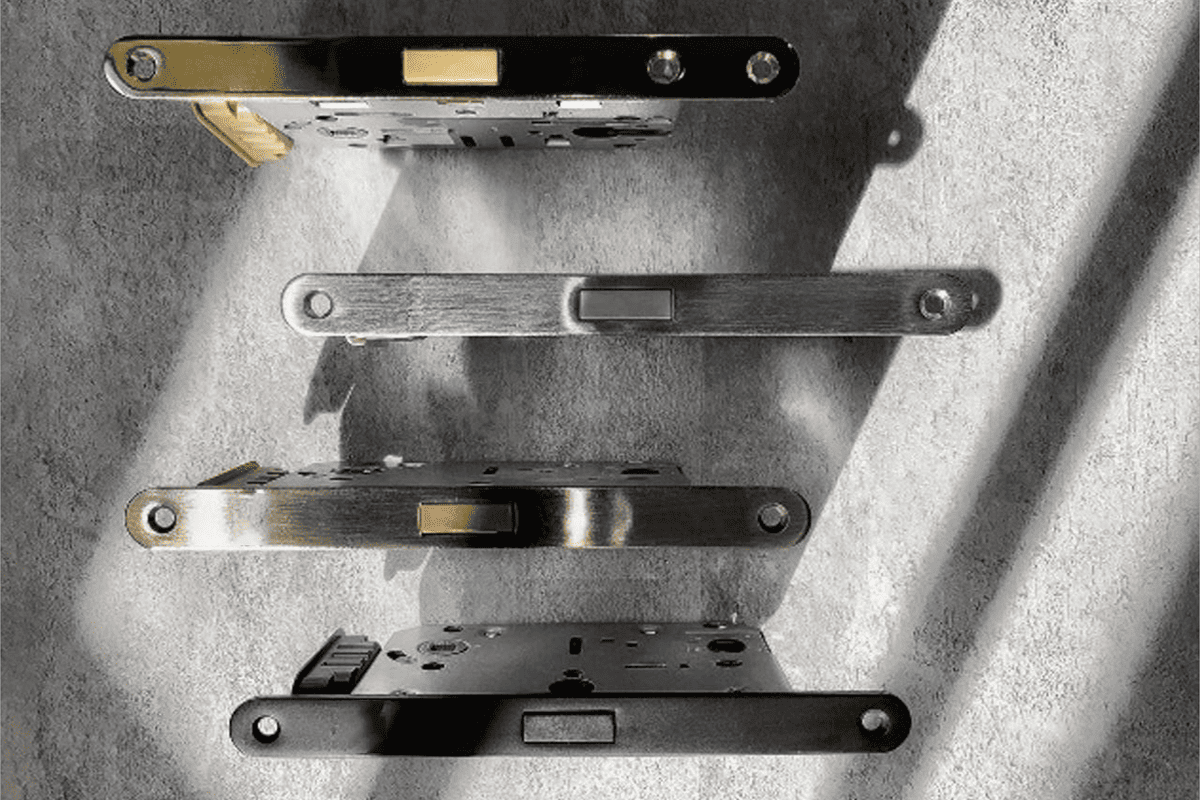
Surface treatment is only one part of the final appearance. The base material under the coating also matters. Stainless steel, brass, zinc alloy, and aluminum can reflect light differently, and they may respond differently to polishing, brushing, electroplating, or PVD coating.
Base material, PVD, and electroplating affect Euro Mortise Lock Finish Matching because they influence color depth, gloss, surface texture, adhesion, and wear behavior. Buyers should confirm the actual material and treatment route for each visible lock part instead of assuming that one finish name will look identical on all components.
Dive deeper: the same finish can shift on different substrates
When buyers compare door hardware from different product categories, material differences become important. A stainless steel lever handle, a brass cylinder, a zinc alloy escutcheon, and a stainless steel lock forend may all receive a “black” or “gold” finish. However, the finished appearance may not be perfectly identical.
Base material influences appearance
The substrate can affect the finish in several ways:
- Surface hardness affects polishing and scratch resistance.
- Natural color may influence thin or semi-transparent finishes.
- Surface smoothness affects gloss and reflection.
- Edge geometry affects coating thickness and visible tone.
- Corrosion behavior affects long-term appearance in certain environments.
Stainless steel is widely used for visible architectural hardware because it can provide good mechanical properties and corrosion resistance when properly specified.4 For lock forends and strike plates, stainless steel base material can also support consistent brushing and surface treatment. However, the final match still depends on the selected process and production control.
PVD finishing
PVD, or physical vapor deposition, is often used for decorative and functional metallic finishes. It can provide a hard surface layer, and it is common in architectural hardware. PVD may be selected for colors such as black, gold, rose gold, or bronze tones, depending on the process capability.
PVD can be a good option for visible parts, but buyers should still approve samples.5 PVD color may vary with chamber conditions, part geometry, and process settings.6 It is not enough to say “PVD gold” without a target sample.
Electroplating
Electroplating is another common surface treatment method. It can create decorative metallic finishes such as nickel, chrome, brass-like tones, bronze-like tones, and other finishes. It may be suitable for certain lock components depending on material, design, and project needs.
Electroplated finishes can also vary based on bath chemistry, process time, pre-treatment, polishing, and sealing.7 A plated sample should be checked against the actual production material.
Other surface preparations
Before PVD or electroplating, parts may be:
- Polished
- Brushed
- Sanded
- Bead-blasted
- Degreased
- Cleaned
- Activated
These preparation steps strongly affect final appearance.8 A satin brushed finish and a polished finish can use a similar color treatment but still look different because the reflection is different.
| Factor | PVD | Electroplating | Buyer note |
|---|---|---|---|
| Common use | Decorative metallic finishes | Decorative metallic finishes | Both require sample approval |
| Appearance control | Depends on process settings | Depends on bath and pre-treatment | Do not rely only on finish name |
| Wear behavior | Often selected for durability | Varies by coating system | Confirm application and test data |
| Material sensitivity | Yes | Yes | Check actual substrate |
| Best practice | Approve real parts | Approve real parts | Keep signed reference samples |
For technical projects, buyers may ask for testing information such as salt spray tests, adhesion checks, or wear tests. These can be useful, but the buyer should verify the documents and confirm whether the test applies to the exact material, finish, and part being ordered. Certifications and reports are not just marketing files. They are procurement documents that should be checked carefully.
What Tolerances and Wear Risks Should Buyers Confirm in Euro Mortise Lock Finish Matching?
Even with careful samples, production batches can have small differences. The goal is to control variation within an acceptable range, not to promise impossible uniformity. Buyers should define what level of color difference, gloss difference, and wear behavior is acceptable for the project.
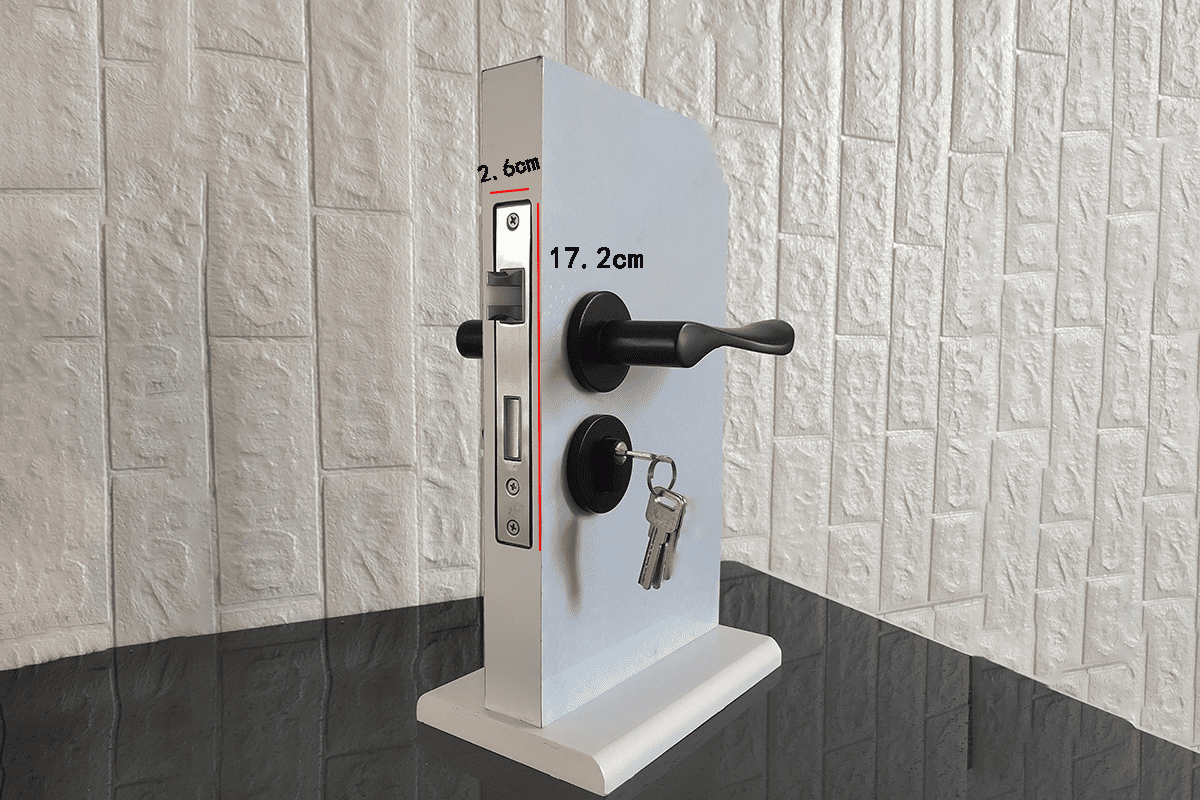
Buyers should confirm color tolerance, gloss tolerance, texture direction, batch consistency, and wear expectations during Euro Mortise Lock Finish Matching. They should pay special attention to latch bolts because repeated contact with the strike plate can make decorative coatings more prone to visible scratches or wear over time.
Dive deeper: tolerance prevents unrealistic expectations
Finish matching is not only about creating a good sample. It is also about agreeing how much variation is acceptable in mass production. This is especially important for B2B buyers who purchase thousands of lock bodies, handles, hinges, and accessories across multiple shipments.
Visual tolerance
Many commercial hardware orders use visual comparison against signed samples. The inspection team compares production parts with the approved reference under agreed lighting and viewing distance.
A basic visual inspection method may define:
- Lighting condition, such as daylight or standard inspection light
- Viewing distance, such as 50–100 cm
- Viewing angle
- Whether parts are checked individually or as installed sets
- Whether minor variation is accepted between batches
For stricter projects, buyers may request instrument-based color measurement. That may involve color difference values such as Delta E.9 However, I would only recommend that if both sides have suitable equipment, agreed measurement points, and a written standard. Otherwise, the number may create more confusion than clarity.
Gloss tolerance
Gloss changes how color is perceived.10 A matte black forend may look grey next to a glossy black handle. A polished gold strike plate may look brighter than a satin gold forend even if the coating chemistry is similar.
Buyers should confirm:
- Matte, satin, semi-gloss, or mirror appearance
- Brushing direction
- Surface roughness expectation if required
- Whether screws must match the same gloss level
Wear risk on latch bolts
The latch bolt deserves special attention. It is a moving part. It contacts the strike plate repeatedly. In hotels, offices, apartments, and public buildings, a door may open and close many times per day.11 This creates friction.
A plated or PVD latch bolt may look coordinated during sample approval. However, it may show surface marks after use.12 This does not always mean the lock is defective. It may be a normal result of repeated mechanical contact, depending on the finish system, door alignment, closer speed, and usage frequency.
Buyers should discuss these practical points before ordering:
- Is the latch bolt finish mainly decorative?
- Will the door be used in a high-traffic area?
- Is the strike plate correctly aligned?
- Will the door closer slam the latch into the strike?
- What level of visible wear is acceptable after use?
Batch control
For large orders, buyers should also consider batch consistency. If one project ships in several lots, each lot should be compared with the same approved reference sample. If the buyer orders additional quantities six months later, the supplier should confirm whether the previous process and reference sample are still available.
| Risk | Cause | Control method |
|---|---|---|
| Color shift | Different process batch | Compare with signed sample |
| Gloss mismatch | Different polishing or brushing | Define gloss and texture |
| Latch scratches | Repeated strike contact | Discuss wear expectations |
| Different screw color | Screws sourced separately | Include screws in sample approval |
| Reorder mismatch | New batch after long interval | Keep reference samples and records |
In our factory, I prefer to discuss these points before production because it creates a more professional relationship. A buyer may not need lab-level color control for every order, but every buyer benefits from clear expectations.
Frequently Asked Questions
Can Euro mortise lock forends and strike plates match lever handles exactly?
They can often be made visually coordinated, but buyers should not assume exact identity across different materials or processes. The safest method is to send a physical handle sample, make lock samples on the actual material, and approve a tolerance range before bulk production.
Should the latch bolt be finished to match the lock forend?
The latch bolt can be finished to match the forend for a unified appearance. However, it is a high-frequency friction part, so decorative coatings may show scratches or wear during repeated use. Buyers should confirm wear expectations before approval.
Are catalog photos enough for finish confirmation?
Catalog photos are not enough for bulk finish confirmation. Camera settings, lighting, screen display, and editing can change the perceived color. Physical samples and signed reference parts provide a safer standard for production and inspection.
What should buyers include in a finish approval sample set?
A useful sample set should include the forend, strike plate, latch bolt, deadbolt, screws, and related hardware such as handles, hinges, cylinders, or escutcheons. This helps the buyer judge the installed door hardware as a complete set.
Do CE or fire-rated certificates confirm finish matching?
No. CE and fire-rated documents relate to specific compliance and performance requirements, not decorative color matching. Buyers should verify certificates separately and still approve physical finish samples for visible hardware coordination.
Conclusion
Euro Mortise Lock Finish Matching is a practical approval process, not a simple color selection. Buyers should check the forend, strike plate, latch bolt, deadbolt, screws, and surrounding hardware against physical samples before production. They should also confirm base material, PVD or electroplating process, gloss, texture, tolerance, and wear expectations. If you need factory-direct Euro mortise locks with coordinated hardware samples, I can help you review specifications, prepare samples, and support OEM or ODM production through SDH Hardware.
"CIE 1931 color space", https://en.wikipedia.org/wiki/CIE_1931_color_space. Color-science guidance from institutions such as CIE or ISO indicates that color appearance and comparison depend on defined illuminants, observers, and measurement or viewing conditions, supporting the point that a finish name is not a sufficient production standard. Evidence role: general_support; source type: institution. Supports: A neutral color-science or standards source should support that color appearance and color specification require controlled references, illuminants, and observation conditions rather than informal names alone.. Scope note: This would provide contextual support for finish control generally, not direct evidence from Euro mortise lock production. ↩
"Different Types of Metal Finishing: Processes & Techniques", https://www.metalsupermarkets.com/different-types-metal-finishing/. Surface-engineering references describe substrate composition and preparation as factors that influence coating adhesion, corrosion behavior, and final appearance, supporting the claim that different metals cannot be assumed to accept finishes identically. Evidence role: mechanism; source type: research. Supports: A materials-engineering source should support that substrate composition, surface preparation, and metallurgy affect coating adhesion, appearance, and finishing route.. Scope note: The support is general to metal finishing and should be applied cautiously to any specific lock alloy or supplier process. ↩
"Editorial: Advances in color science: From color perception to ...", https://pmc.ncbi.nlm.nih.gov/articles/PMC9927385/. Digital color-imaging literature explains that recorded and displayed color is affected by illumination, camera processing, color profiles, and monitor calibration, supporting the claim that photographs are an unreliable sole standard for finish approval. Evidence role: mechanism; source type: education. Supports: A university or research source should explain that image color depends on illumination, camera capture settings, color management, and display calibration.. Scope note: The source would explain the imaging mechanism generally rather than evaluating lock-finish photographs specifically. ↩
"Stainless Steel (SS): Meaning, Properties, Uses", https://www.xometry.com/resources/materials/what-is-stainless-steel/. Materials guidance from stainless-steel and architectural-engineering institutions identifies corrosion resistance, strength, and durability as reasons stainless steel is used in architectural components, supporting its use for visible door hardware. Evidence role: general_support; source type: institution. Supports: An institutional materials source should support that stainless steel is used in architectural applications because of corrosion resistance, durability, and mechanical performance.. Scope note: This supports the material rationale broadly, not the performance of a particular stainless-steel grade or lock component. ↩
"PVD for Decorative Applications: A Review - PMC - NIH", https://pmc.ncbi.nlm.nih.gov/articles/PMC10381906/. Peer-reviewed reviews of physical vapor deposition describe PVD as a method for producing decorative and functional thin coatings whose color, hardness, and performance depend on deposition conditions, supporting the need to verify visible parts by sample. Evidence role: general_support; source type: paper. Supports: A peer-reviewed coating review should support that PVD is used for decorative and functional coatings and that coating properties depend on process parameters.. Scope note: The source would support PVD technology generally, not prove suitability for every Euro mortise lock design. ↩
"Fabrication of Ultra-thin Color Films with Highly Absorbing ...", https://pmc.ncbi.nlm.nih.gov/articles/PMC5614389/. Thin-film coating studies show that deposition parameters, coating composition, thickness distribution, and part geometry affect optical appearance, providing mechanistic support for possible PVD color variation. Evidence role: mechanism; source type: paper. Supports: A thin-film or PVD source should support that coating thickness, composition, deposition parameters, and geometry influence optical appearance and color uniformity.. Scope note: The evidence would be mechanistic and may not quantify variation for the exact PVD system used on a lock component. ↩
"Electrochemical Processes - Electro Deposition", https://www.eng.utah.edu/~gale/mems/Lecture%2012%20Electrodeposition.pdf. Electroplating references explain that bath composition, deposition time, pretreatment, and post-treatment influence coating thickness, adhesion, appearance, and durability, supporting the claim that plated finishes may vary with process conditions. Evidence role: mechanism; source type: education. Supports: A university or technical reference should explain that bath composition, current/process conditions, time, and pretreatment affect electrodeposited coating properties.. Scope note: The source would address electroplating generally rather than a particular decorative lock finish. ↩
"Metal Finishing Processes", https://www.rit.edu/affiliate/nysp2i/sites/rit.edu.affiliate.nysp2i/files/docs/resources/Metal_Finishing_Processes_Best_Practices.pdf. Surface-engineering literature identifies cleaning, activation, roughness, polishing, and blasting as determinants of coating adhesion and optical appearance, supporting the statement that preparation steps influence the final finish. Evidence role: mechanism; source type: research. Supports: A surface-engineering source should support that roughness, cleaning, activation, and mechanical finishing affect coating adhesion, reflection, gloss, and appearance.. Scope note: The source would establish the mechanism broadly and may not rank the relative importance of each preparation step for mortise lock parts. ↩
"Color difference", https://en.wikipedia.org/wiki/Color_difference. CIE colorimetry standards define Delta E color-difference metrics as numerical methods for comparing measured colors, supporting the use of instrument-based color measurement in stricter finish-control projects. Evidence role: definition; source type: institution. Supports: A standards or colorimetry source should define Delta E as a numerical measure of perceived color difference in a color space.. Scope note: Delta E measurement still requires agreed geometry, illuminant, instrument settings, and measurement locations, so it is not by itself a complete acceptance standard. ↩
"Surface gloss and color perception of 3D objects - PMC - NIH", https://pmc.ncbi.nlm.nih.gov/articles/PMC2538579/. Research on surface appearance and visual perception shows that gloss and reflectance properties influence perceived color and lightness, supporting the claim that finish gloss can change apparent color. Evidence role: mechanism; source type: paper. Supports: A visual perception or color-appearance paper should support that gloss and surface reflectance alter perceived lightness, saturation, or color appearance.. Scope note: The evidence concerns visual perception generally and does not directly measure door-lock finishes. ↩
"087100 – DOOR HARDWARE - Facilities and Campus Services", https://fcs.cornell.edu/087100-door-hardware. Door-hardware standards such as ANSI/BHMA or EN lock standards use operating-cycle durability tests to classify locks and latches, providing contextual support for treating public and multi-user doors as repeated-use applications. Evidence role: historical_context; source type: institution. Supports: A door-hardware standards source should support that locks and latches are classified or tested by operating cycles to account for repeated use.. Scope note: Cycle-test standards show how durability is evaluated but do not state the exact daily opening frequency for a specific hotel, office, or apartment building. ↩
"Comparison to Micro Wear Mechanism of PVD Chromium ...", https://pmc.ncbi.nlm.nih.gov/articles/PMC10096296/. Tribology studies of coated surfaces show that repeated contact and sliding can produce wear tracks, scratches, or coating degradation, supporting the expectation that a coated latch bolt may develop visible marks in service. Evidence role: mechanism; source type: paper. Supports: A tribology or coatings paper should support that repeated sliding or impact contact can produce wear, scratches, or visible surface damage on coatings.. Scope note: The source would support the wear mechanism generally; actual wear depends on lock geometry, strike alignment, coating system, and use frequency. ↩