
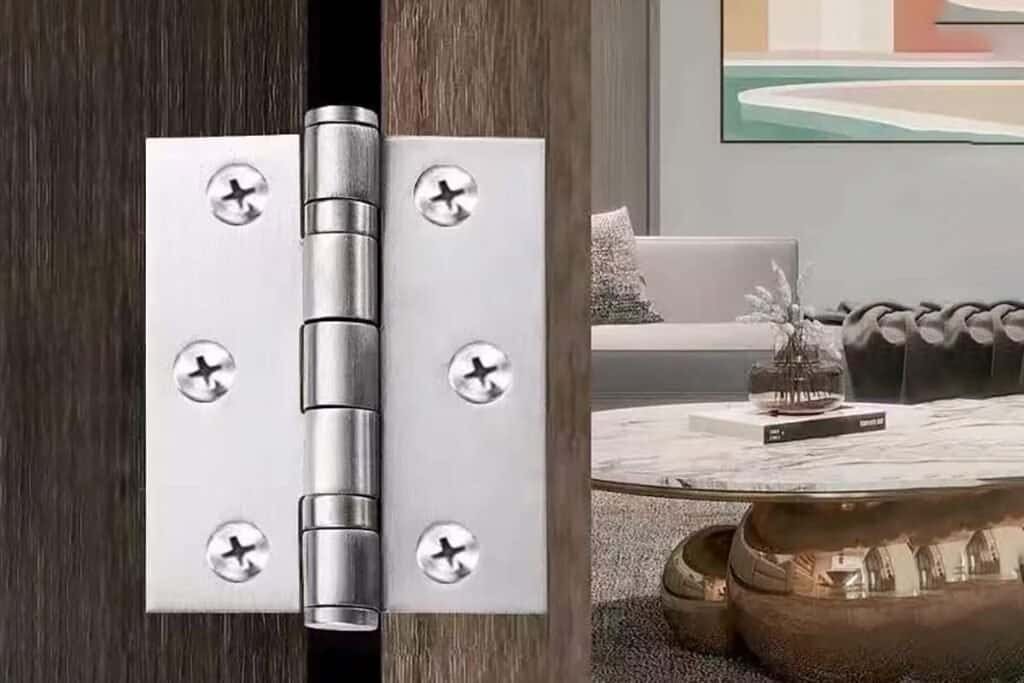
Can Butt Hinges Be Surface Mounted Without Mortising?
Butt hinges look simple, but the installation method can create costly problems when buyers choose the wrong hinge type. If a standard butt hinge is surface mounted without mortising, the door gap may become too large. I usually guide buyers to compare hinge geometry, leaf thickness, and door clearance before confirming bulk orders.
Standard butt hinges are generally not recommended for surface mounting without mortising. The reason is hinge thickness: two leaves stack together when the door closes1, often creating about 6 mm of thickness from two 3 mm leaves2. If the door gap is only 3–5 mm, the hinge can affect alignment, appearance, and closing performance.
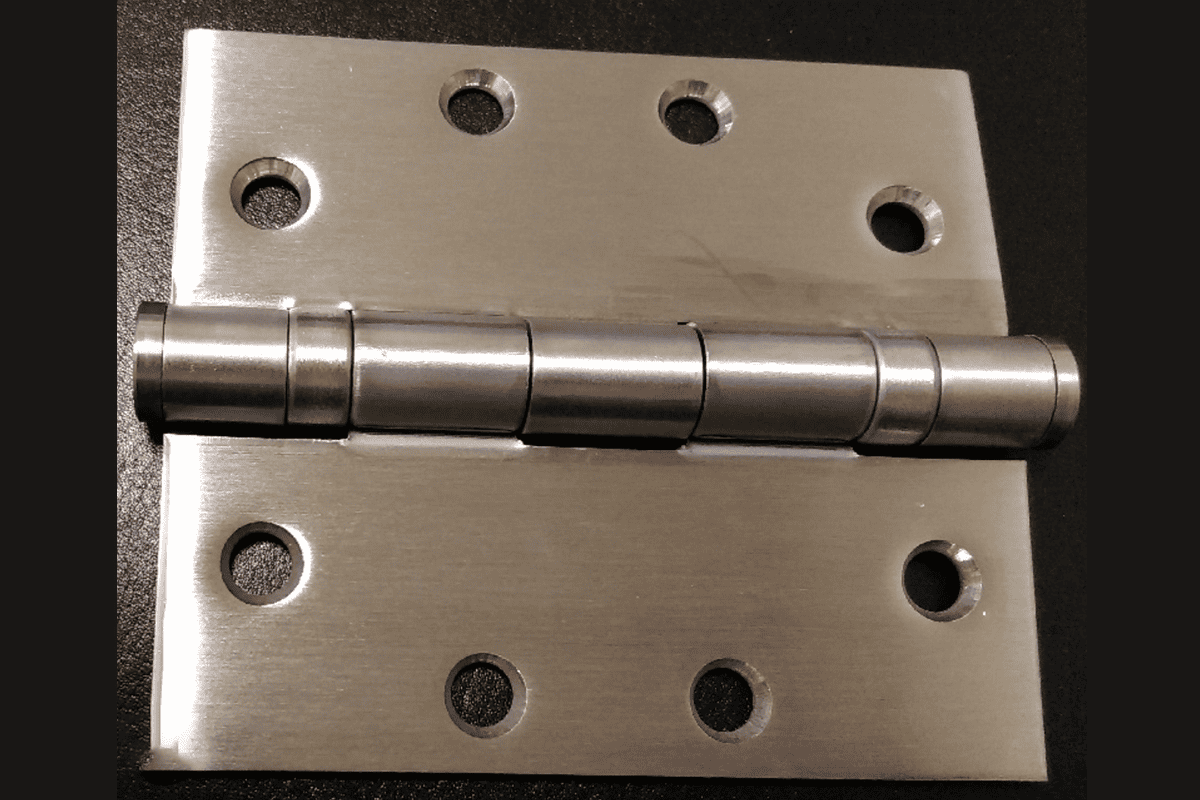
This does not mean surface mounting is impossible in every case. It means the hinge must match the door design. In my experience at SDH Hardware, many hinge-selection issues start when buyers treat mortised butt hinges and no-mortise hinges as interchangeable products.
Why Are Butt Hinges Usually Mortised Into the Door and Frame?
Butt hinges are often selected because they are familiar, strong, and widely used on architectural doors. The problem starts when the buyer assumes the same hinge can be installed in any way. Without the right recess, even a quality hinge can create a poor finished result.
Standard butt hinges are usually mortised because each hinge leaf is designed to sit inside a shallow recess in the door edge and frame. This recess offsets the leaf thickness, keeps the door clearance controlled, and allows the door to close with a clean and predictable gap.
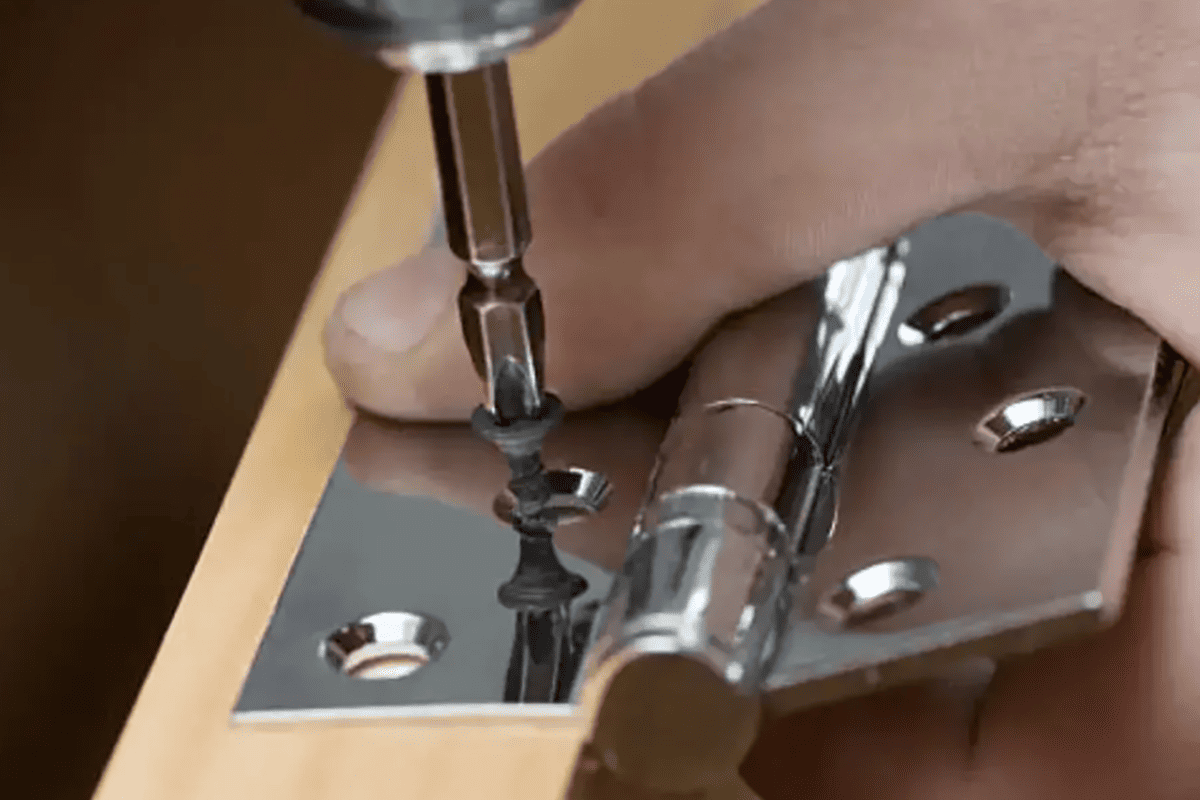
The basic geometry matters
A standard butt hinge has two flat leaves connected by a knuckle and pin. When the door closes, the two leaves come together. If each leaf is 3 mm thick, the closed stack at the hinge side can be about 6 mm, before considering tolerances, plating, paint, or door movement.
When the hinge is mortised, one leaf is recessed into the door and the other leaf is recessed into the frame. This means the final closed position is much closer to the intended door gap. The visible hardware remains neat, and the hinge axis stays where the door design expects it to be.
I often explain it this way to buyers: the hinge screw is not the main concern. A screw can hold a surface-mounted hinge in many cases. The bigger question is whether the door and frame can accept the extra stacked thickness after the door closes.
Typical door clearance is limited
Door clearance depends on project drawings, regional standards, fire-rated assembly requirements, frame type, seals, and door material. However, many architectural door designs work with a relatively controlled hinge-side gap, often around 3–5 mm in ordinary commercial applications.
If a standard butt hinge creates a closed stack of around 6 mm, the door manufacturer may need to increase the gap. That can cause several issues:
- The door may look uneven from the front elevation.
- The latch side may not align correctly with the lock or strike plate.
- The perimeter gap may exceed the project drawing.
- Smoke seals, acoustic seals, or fire-rated seals may not compress as designed.3
- The door factory may face batch rework after installation trials.
For certified or fire-rated doors, I always recommend that buyers verify the hinge type, clearance, and installation method against the applicable test report, certification document, and project drawings. A factory should not assume that a different installation method remains compliant unless the documentation supports it.4
Mortised butt hinge logic in one table
| Item | Mortised Butt Hinge | Surface-Mounted Standard Butt Hinge |
|---|---|---|
| Leaf position | Recessed into door and frame | Sits on top of surfaces |
| Closed leaf thickness effect | Mostly absorbed by mortise depth | Full leaf stack affects gap |
| Example with 3 mm leaves | Designed to maintain normal clearance | May create about 6 mm stack |
| Appearance | Cleaner hinge-side reveal | Wider hinge-side gap may show |
| Best use | Machined door and frame | Only if door design allows thickness |
This is why I consider standard butt hinges a machined-hardware product in most door production planning. They are excellent when matched with the correct door preparation. They are less suitable when the production process avoids routing, recessing, or mortising.
Product matching is more important than habit
Many door factories use butt hinges because their machines, templates, and drawings are already built around them. That is a good reason when the door and frame are prepared for recessing. It becomes a problem when the same buyer asks for “no-mortise butt hinges” but still expects the appearance and clearance of a mortised hinge.
In that case, I usually ask three questions before recommending a hinge:
- Will the door edge and frame be machined?
- What hinge-side clearance is shown in the drawing?
- Does the project require fire-rated, CE-marked, or other documented performance?
These questions help separate a true butt hinge application from a no-mortise hinge requirement.
What Happens If Butt Hinges Are Surface Mounted Without Mortising?
Butt hinges can sometimes be physically screwed onto the surface, but the result may not meet the door design. The risk is not only mechanical strength. The bigger risk is that the stacked leaves push the door away from the frame and change the final clearance.
If standard butt hinges are surface mounted without mortising, the closed hinge thickness can become too large for the intended door gap. This can force wider clearance, create visible misalignment, affect closing, and cause lock, seal, or frame fit problems in production or installation.
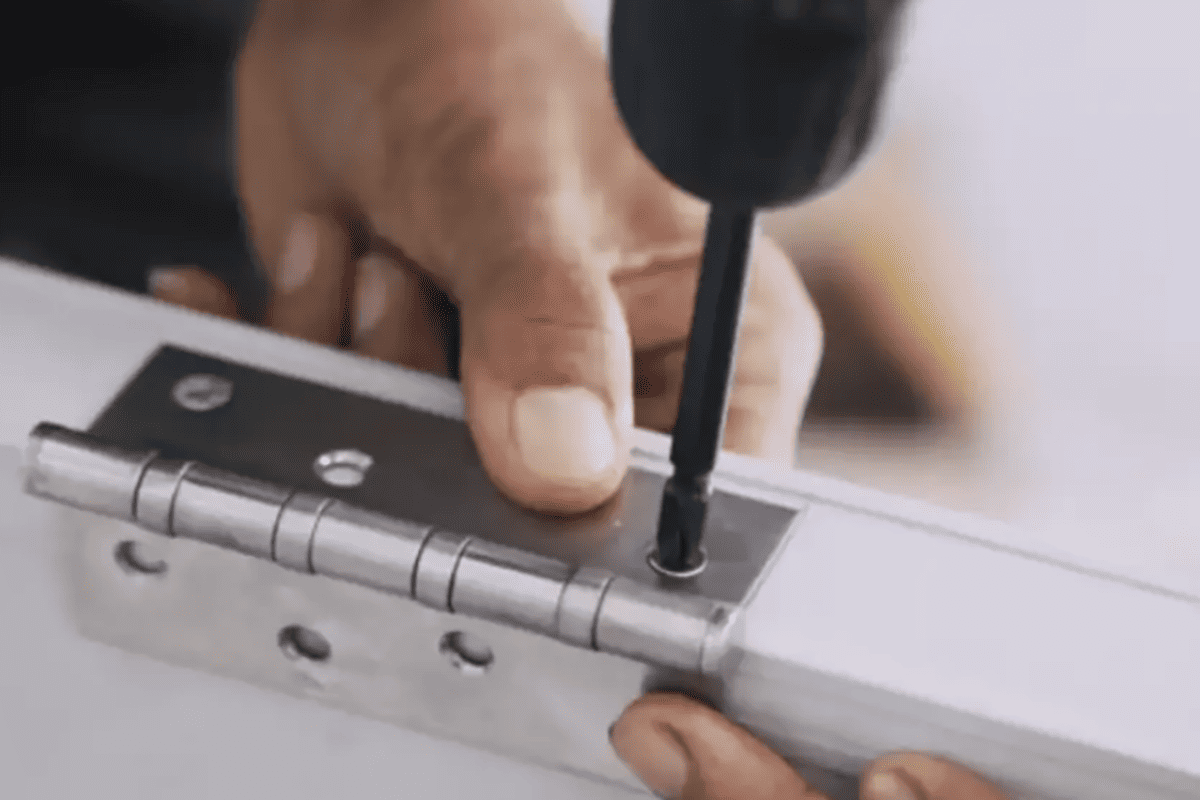
The 3 mm leaf example is easy to understand
Let us use a common example. If one hinge leaf is 3 mm thick, the two leaves together can create around 6 mm of closed stack. If the door design allows only 3–5 mm of hinge-side clearance, a surface-mounted standard butt hinge can immediately exceed the normal space.
This is why I do not answer the question with only “yes” or “no.” The better answer is: check the hinge thickness against the designed clearance.
In procurement, this point matters because a buyer may approve samples that “look strong” but discover later that the complete door set does not close as expected. The hinge may be made correctly, but the product type may be wrong for the application.
Common problems after surface mounting
When butt hinges are used without mortising, I usually ask buyers to watch for these risks:
Oversized hinge-side gap
The door may sit farther from the frame than the drawing allows.Uneven perimeter reveal
The hinge side may look wider than the top, bottom, or latch side.Latch misalignment
The lock latch may not enter the strike smoothly if the door position shifts.Seal interference or seal under-compression
Door seals may either rub too much or fail to compress properly.Poor appearance on painted or veneer doors
A wider gap can be very visible on finished doors.Batch rejection risk
If a door factory repeats the same mismatch across hundreds of doors, the cost becomes serious.
Why screw holding strength is not the main issue
Some buyers ask whether longer screws can solve the problem. In my view, that question misses the main issue. Screws may improve holding power, but they do not reduce the closed thickness of the hinge leaves.
A standard butt hinge works as part of a door system. The hinge position affects:
- Door swing geometry
- Door-to-frame clearance
- Lock and strike alignment
- Seal compression
- Finished appearance
- Long-term wear pattern
A stronger screw does not change these relationships. The hinge may remain firmly attached, but the door may still sit incorrectly.
A practical comparison for buyers
| Evaluation Point | Acceptable Situation | Risk Situation |
|---|---|---|
| Door gap | Gap allows the full hinge stack | Gap is smaller than the stack |
| Appearance | Wider gap is designed and approved | Wider gap looks like a defect |
| Lock alignment | Strike location is adjusted accordingly | Standard strike position is unchanged |
| Certification | Installation method is documented | Installation differs from tested assembly |
| Production | Door factory plans for surface mounting | Mortised drawings are used without changes |
This comparison is especially important for door factories and wholesalers. A sample door may seem acceptable in isolation. However, when the buyer supplies a full project, every door must match the drawings, the quality standard, and the project expectation.
When surface mounting may be acceptable
I do not say surface mounting is impossible in every case. A standard butt hinge may be surface mounted if the door design specifically allows the extra thickness. For example, some special utility doors, temporary structures, industrial access panels, or non-standard assemblies may accept a larger hinge-side gap.
However, that should be a design decision, not an accidental shortcut. The buyer should confirm:
- The allowed hinge-side clearance
- The door and frame material
- The lock and strike position
- The visual requirement
- The seal requirement
- Any required certification or test documentation
For B2B orders, I prefer to confirm these details before mass production. A hinge can be manufactured to specification, but the application must still be suitable.
Which No-Mortise Hinge Types Work Better Than Butt Hinges?
Buyers often ask for butt hinges when they actually need a no-mortise hinge. This confusion is common because many hinge types look similar in catalogs. However, the closing geometry is different, and that difference decides whether surface mounting will work.
Flush hinges, butterfly hinges, and flag hinges are usually better choices than standard butt hinges when a door must be surface mounted without mortising. These hinge types are designed so the closed thickness is closer to one leaf thickness, making them more suitable for normal door gaps.
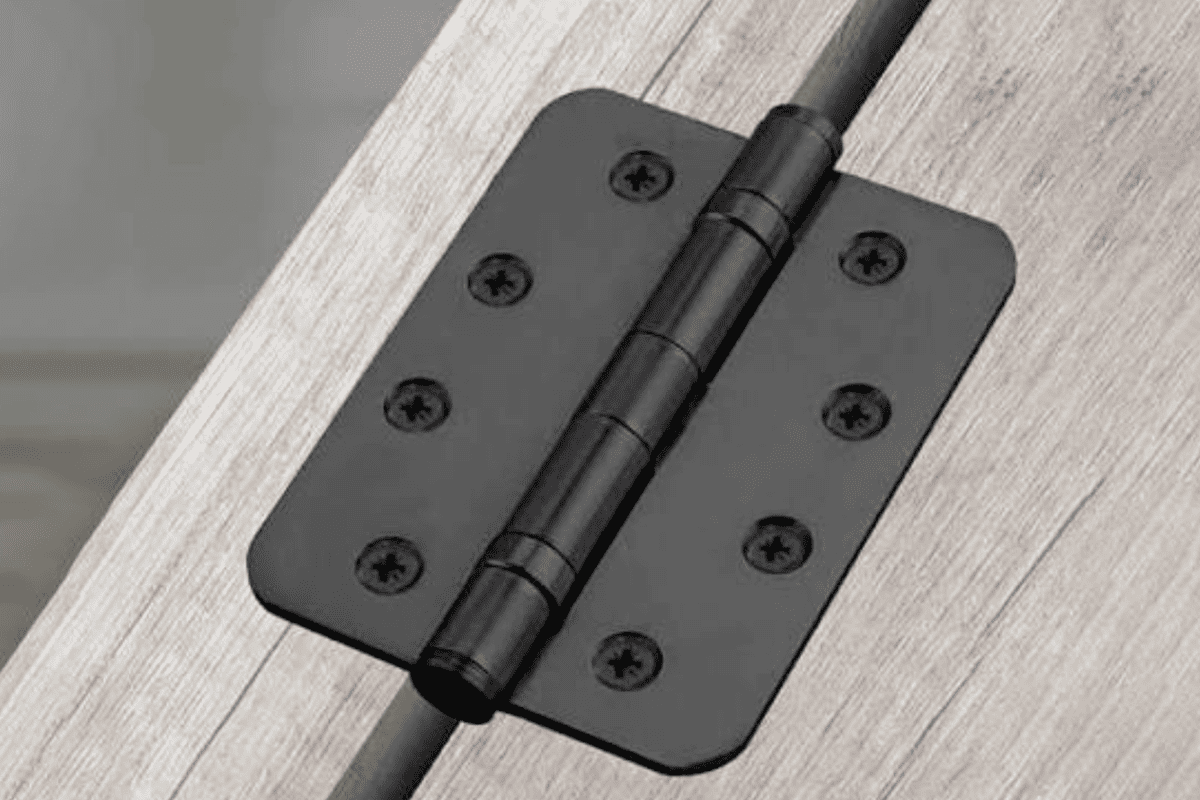
Flush or butterfly hinges
A flush hinge, sometimes called a butterfly hinge in certain markets, is designed so one leaf fits into the open shape of the other leaf when closed5. This reduces the closed thickness compared with a standard butt hinge.
For example, if the material thickness is about 3 mm, the closed hinge thickness may remain close to 3 mm, rather than stacking to 6 mm. This is why flush hinges are commonly considered for surface-mounted applications.
However, the buyer should still check load capacity, screw position, door weight, finish, and appearance. A flush hinge is not simply a “better butt hinge.” It is a different product with its own design limits.
Flag hinges
Flag hinges are another common no-mortise option.6 They are often used where the door or panel needs to be lifted off7, or where the hinge shape supports surface mounting. Depending on the design, a flag hinge may provide easier assembly and maintenance.
In procurement, flag hinges can be useful for:
- Metal frames
- Utility doors
- Equipment doors
- Cabinet-like panels
- Doors that require lift-off function
- Projects where machining must be reduced
The exact suitability depends on door weight, duty cycle, screw fixing, hinge size, and the project standard. I always recommend checking drawings and test requirements before replacing one hinge type with another.
Standard butt hinge versus no-mortise hinge
| Feature | Standard Butt Hinge | Flush / Butterfly Hinge | Flag Hinge |
|---|---|---|---|
| Typical installation | Mortised | Surface mounted | Surface mounted |
| Closed thickness behavior | Two leaves stack | Leaves nest or offset | Design-dependent, often surface-friendly |
| Machining required | Usually yes | Usually no | Usually no |
| Best for | Architectural doors with prepared edges | Light to medium no-mortise applications | Utility, lift-off, or special frame applications |
| Main buyer risk | Oversized gap if not mortised | Load and durability mismatch | Wrong handedness or fixing pattern |
Why the name matters in RFQs
In export hardware business, product names can create confusion. One buyer may say “butt hinge” when they mean any two-leaf hinge. Another buyer may say “flush hinge” but send a drawing of a standard butt hinge. I have seen RFQs where the description, photo, and drawing all suggested different products.
To reduce errors, I recommend that buyers include these details in hinge inquiries:
- Hinge drawing with dimensions
- Leaf thickness
- Open width and height
- Knuckle diameter
- Screw hole pattern
- Door weight and size
- Door/frame material
- Mortised or no-mortise installation
- Required finish
- Certification or test document requirement
At SDH Hardware, we manufacture architectural door hardware for door factories, hardware brands, and wholesalers. From a manufacturer’s view, the inquiry becomes much clearer when the buyer defines the installation method first. Once I know whether the hinge is mortised or surface mounted, I can help compare suitable product structures.
No-mortise does not mean no evaluation
A no-mortise hinge can reduce door preparation, but it does not remove the need for engineering review.8 Buyers should still check whether the selected hinge meets the project’s load, durability, corrosion resistance, fire-rating, or CE documentation requirements.
For fire-rated or regulated doors, the hinge must be part of the approved assembly or supported by relevant documentation. Buyers should verify certificates, test reports, and scope of use. I can provide product documents when available, but the project decision should be checked against the applicable standard and authority requirements.
How Should Door Factories Choose Between Mortised Butt Hinges and No-Mortise Hinges?
Door factories often focus on unit price, but hinge selection affects machining, assembly, rework, and customer complaints. A low-cost hinge can become expensive if it forces a process change or creates an unacceptable door gap across a production batch.
Door factories should choose mortised butt hinges when the door and frame are machined for recessing. They should choose proper no-mortise hinges when the production process requires surface mounting. The decision should be based on door clearance, hinge thickness, load, appearance, certification, and production workflow.
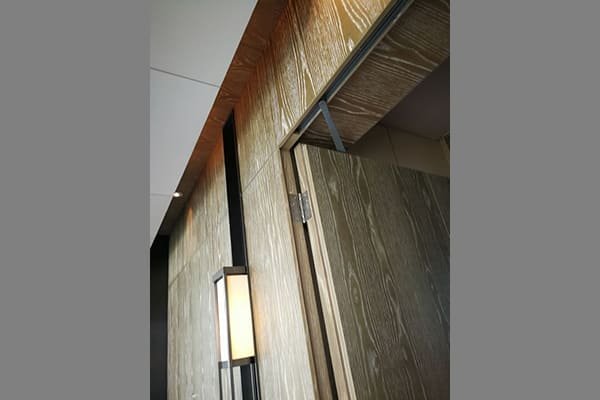
Start with the door preparation method
The first question should be simple: Will the door edge and frame be mortised?
If the answer is yes, then standard butt hinges may be the correct choice. They are widely used in architectural doors and can provide clean alignment when the mortise depth, leaf thickness, and screw positions are controlled.
If the answer is no, then the buyer should not automatically use the same butt hinge. The buyer should evaluate no-mortise hinge types instead, such as flush hinges, butterfly hinges, or flag hinges.
Match hinge type to production workflow
Door factories care about repeatability. A hinge that works on one sample but slows the production line may not be the best choice for a full order.
Here is a practical selection table:
| Factory Requirement | Better Hinge Direction | Reason |
|---|---|---|
| CNC or routing process already prepared | Mortised butt hinges | Clean fit and predictable gap |
| No routing allowed | Flush or butterfly hinges | Designed for surface mounting |
| Fast removable door or panel | Flag hinges | Lift-off function may help |
| Fire-rated door project | Documented approved hinge type | Certification scope must be verified |
| Premium architectural appearance | Mortised butt hinges or concealed hinges | Cleaner reveal and hardware integration |
| Light utility door | No-mortise hinge may be acceptable | Machining can be reduced |
Check the real total cost
The hinge unit price is only one part of the cost. A buyer should also consider machining time, assembly labor, rework risk, and packaging requirements.
For example, a mortised butt hinge may require more door preparation, but it may produce a better architectural finish. A no-mortise hinge may reduce machining, but it may need careful review for load rating and appearance. Neither choice is always cheaper in total.
I usually suggest that buyers compare:
- Hinge purchase cost
- Door machining cost
- Assembly time
- Rework risk
- Quality inspection requirements
- Packaging and labeling
- After-sales complaint risk
- Certification documentation needs
This approach helps procurement teams avoid looking only at the hinge price. It also helps technical teams explain why a certain hinge type is required.
Evaluate quality control before bulk orders
For bulk hinge orders, I recommend that buyers confirm inspection points before production. At SDH Hardware, our production and quality control process includes raw material screening, standardized production supervision, and finished product inspection. Buyers should still verify product specifications against their own drawings and project needs.
Important inspection points include:
- Leaf thickness tolerance
- Pin and knuckle fit
- Hole position accuracy
- Flatness of hinge leaves
- Surface treatment consistency
- Opening and closing smoothness
- Corrosion resistance requirement
- Packaging protection
- Logo or branding accuracy
- Certificate and document availability
For customized orders, the buyer should approve drawings before tooling or mass production. For OEM or ODM projects, clear drawings reduce misunderstanding between purchasing, engineering, and production teams.
Do not ignore regional expectations
Different markets may expect different hinge sizes, finishes, and standards. Our customers in Europe, the Middle East, and Southeast Asia often ask different questions because their door systems and project habits vary.
For example:
- European buyers may focus heavily on CE documentation, fire-rated compatibility, and precise dimensional drawings.
- Middle East project suppliers may ask about finish durability, door weight, and large project delivery.
- Southeast Asian wholesalers may focus on flexible specifications, packaging, and product range consistency.
These are general market observations from our B2B work, not universal rules. Each project should still be checked by its drawings, specifications, and applicable standards.
What Should Buyers Confirm Before Ordering Butt Hinges for a Project?
Butt hinges may look like a small item in a door package, but a wrong hinge can affect the whole door set. Buyers often confirm finish and size but forget the most important question: how the hinge will actually sit between the door and frame.
Before ordering butt hinges, buyers should confirm whether the hinge is mortised or surface mounted, the leaf thickness, the designed door gap, the door weight, the frame material, finish requirements, and any certification documents needed for the project or market.
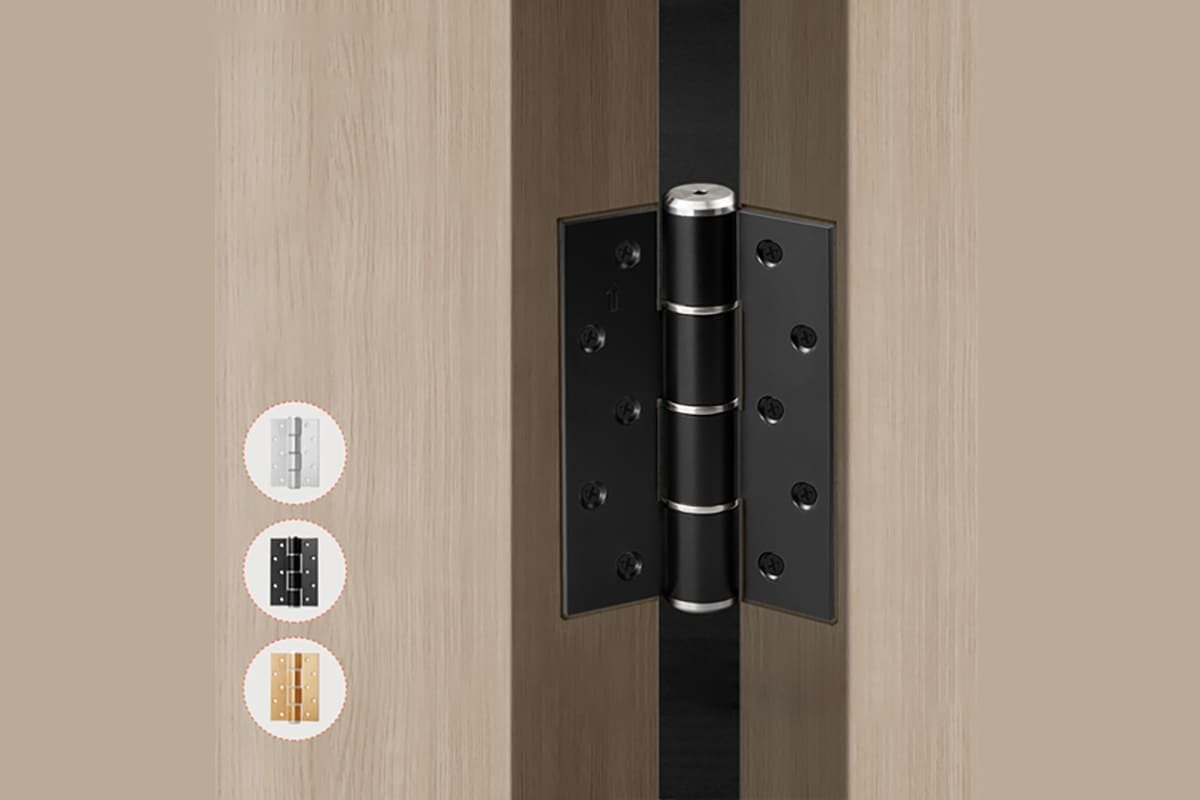
A clear RFQ prevents hinge mismatch
A good RFQ should describe the application, not only the product name. If a buyer simply writes “butt hinge, stainless steel, 4 inch,” the supplier still needs many details before confirming suitability.
I recommend that buyers include:
- Hinge type: butt hinge, flush hinge, flag hinge, concealed hinge, or other
- Installation method: mortised or no-mortise
- Material: stainless steel, brass, steel, or zinc alloy
- Size: height, open width, leaf width, and thickness
- Knuckle and pin details: diameter, fixed pin, loose pin, or bearing type
- Screw hole pattern: countersunk, oval, or custom
- Finish: satin stainless steel, polished, PVD, painted, or plated
- Door details: height, width, thickness, weight, and material
- Frame details: timber, steel, aluminum, or composite
- Standards: CE, fire-rated documentation, or project-specific test reports
This information allows the supplier to recommend a suitable product structure. It also gives the buyer a stronger basis for comparison between quotations.
Sample approval should include door gap testing
For door factories, I prefer sample approval to include a real door and frame check. A hinge may pass visual inspection on a table but fail when installed in the door set. The sample test should verify the clearance, swing, screw fixing, and closing alignment.
A simple evaluation can include:
- Confirm hinge dimensions against the drawing.
- Fit the hinge into the intended door preparation.
- Check hinge-side and latch-side gaps.
- Test opening and closing smoothness.
- Check lock and strike alignment.
- Inspect the finished appearance.
- Confirm packaging and labeling.
This is not a DIY installation guide. It is a procurement and quality-control checklist for buyers who need repeatable results in production.
Documents should be verified, not assumed
Many architectural hardware projects require CE certification, fire-rated certification, or other compliance documents.9 SDH Hardware can provide certification documents for applicable product lines, but buyers should always verify the scope.
A document should be checked for:
| Document Point | Why It Matters |
|---|---|
| Product model | The certificate must match the ordered hinge |
| Material and size | Some documents apply only to specific configurations |
| Fire rating scope | Door type and installation method may be limited |
| Standard reference | The buyer must confirm regional acceptance |
| Validity and issuer | The document should be current and traceable |
For application-specific decisions, I recommend that buyers consult qualified engineers, certification bodies, or project authorities. This is especially important when the hinge is used on fire-rated doors, escape doors, or other regulated assemblies.
Supplier capability also matters
A capable hinge supplier should do more than quote a price. The supplier should help confirm whether the product type matches the application. In our work with door manufacturers, hardware brands, and wholesalers, I see the best outcomes when the buyer and factory discuss drawings early.
At SDH Hardware, our product range includes Euro mortise locks, stainless steel lever handles, butt hinges, concealed door hinges, Euro brass cylinders, and door accessories. Because we support ODM and OEM orders, we can adjust specifications, finishes, logos, packaging, and accessory configurations when the project requires it.
However, customization should still follow the door system logic. A custom surface finish cannot fix an unsuitable hinge geometry. The hinge type must match the installation method first.
Conclusion
Butt hinges are usually designed to be mortised into the door and frame, not simply surface mounted without preparation. The key issue is the stacked leaf thickness, which can exceed the intended door gap and cause alignment or appearance problems. If your project requires no-mortise installation, I recommend evaluating flush, butterfly, or flag hinges instead. For door factories, hardware brands, and wholesalers, SDH Hardware can help review drawings, specifications, finishes, and production requirements before you confirm bulk hinge orders.
"Hinge", https://en.wikipedia.org/wiki/Hinge. General hinge references define a butt hinge as two leaves joined by a knuckle and pin, supporting the article’s explanation that the leaves meet at closure and can add thickness at the hinge side when not recessed. Evidence role: mechanism; source type: encyclopedia. Supports: A reference source should define a butt hinge as two leaves joined by a knuckle and pin, which explains why leaf thickness matters when the hinge closes.. Scope note: The source would support the mechanism, not the exact clearance outcome for every hinge size. ↩
"Leaf width | Anatomy of Hinges | Glossary", https://www.guden.com/anatomy-of-hinges/leaf-width. Architectural-hinge standards treat leaf thickness as a dimensional property of the hinge, which supports using the combined thickness of two unrecessed leaves to assess door clearance; the cited standard may not specify the exact 3 mm example used here. Evidence role: general_support; source type: institution. Supports: A hinge standard or technical reference should show that leaf thickness is a specified hinge dimension and is relevant to installation clearances.. Scope note: The 6 mm figure follows from the article’s example rather than from a universal hinge dimension. ↩
"Acoustic Door Seals and Drop Bottoms", https://www.memtechacoustics.com/products/door-seal-systems. Guidance on fire, smoke, and acoustic door assemblies describes perimeter gaps and seal compression as performance-critical conditions, supporting the article’s claim that altered hinge-side clearance can reduce seal effectiveness. Evidence role: mechanism; source type: institution. Supports: A fire-door, smoke-control, or acoustic-door guidance source should explain that perimeter seals depend on specified gaps and compression to perform as intended.. Scope note: The support is contextual because actual seal performance depends on the tested assembly, seal profile, door material, and installation tolerances. ↩
"NSPIRE Standard - Door - Fire", https://www.hud.gov/sites/dfiles/PIH/documents/NSPIRE-Standard-Door-Fire-Labeled_20230811.pdf. Fire-door standards and certification guidance require rated assemblies and their hardware to remain within the conditions of listing or approved test evidence, supporting the caution that an undocumented change in hinge installation should not be presumed compliant. Evidence role: expert_consensus; source type: institution. Supports: A fire-door code or certification-body source should confirm that rated assemblies must be installed and maintained according to their listing, test evidence, or approved documentation.. Scope note: The source would support the compliance principle, while the acceptability of a specific hinge change must be determined from the relevant certificate or authority having jurisdiction. ↩
"Hinge", https://en.wikipedia.org/wiki/Hinge. Technical descriptions of flush hinges explain that their leaves are shaped to nest or sit flush when closed, supporting the article’s distinction between flush-hinge geometry and the stacked leaves of a standard butt hinge. Evidence role: definition; source type: education. Supports: A neutral technical or educational source should define flush hinges and explain that one leaf can sit within the other when closed.. Scope note: Terminology such as “butterfly hinge” varies by market, and not every product sold under that name has the same load capacity or geometry. ↩
"Hinge", https://en.wikipedia.org/wiki/Hinge. Reference descriptions of flag hinges identify them as hinges with leaves arranged in a flag-like form and commonly used in surface-mounted door or panel applications, supporting the article’s classification of them as a no-mortise option. Evidence role: definition; source type: encyclopedia. Supports: A neutral reference should define flag hinges and describe their surface-mounted form or common use on doors and panels.. Scope note: The source would establish general hinge type and use, not suitability for every door weight or certification requirement. ↩
"What are lift-off hinges?", https://www.essentracomponents.com/en-gb/news/solutions/access-hardware/what-are-lift-off-hinges. Descriptions of lift-off hinge mechanisms explain that one hinge component can be raised off the pin or mating part, supporting the article’s statement that certain flag-hinge designs are used where removable doors or panels are required. Evidence role: mechanism; source type: encyclopedia. Supports: A reference source should explain lift-off hinge operation and its relevance to removable doors or panels.. Scope note: This support applies only to flag hinges designed with lift-off geometry, not to all flag hinges. ↩
"A156.1 - 2025 Butts and Hinges", https://buildershardware.com/ANSI-BHMA-Standards/Hardware-Highlights/A1561-2025-Butts-and-Hinges. Architectural-hinge standards classify hinges by performance factors such as load, durability, corrosion resistance, and application conditions, supporting the article’s point that no-mortise installation does not replace engineering review. Evidence role: expert_consensus; source type: institution. Supports: A hinge performance standard should show that hinges are evaluated by load, durability, corrosion resistance, and other classifications beyond installation style.. Scope note: The standard supports the need for evaluation but does not determine whether any specific no-mortise hinge is adequate for a particular project. ↩
"EN 1935: Building hardware - Single-axis hinges", https://www.intertek.com/building/standards/en-1935/. EU construction-product rules and harmonised building-hardware standards require applicable products to be assessed and documented for declared performance, supporting the article’s statement that CE, fire-rating, or comparable compliance documents may be necessary for architectural hardware projects. Evidence role: general_support; source type: government. Supports: An official regulatory or standards source should confirm that construction products and door hardware may require CE marking or documented fire-performance evidence when used in regulated applications.. Scope note: The requirement depends on jurisdiction, product category, intended use, and whether the product falls within a harmonised standard or project-specific approval scheme. ↩
